
Article

Spatiotemporal Variations and Driving Factors of Water Hardness in Drinking-Water Sources in Taihu Lake (2011–2023)


1
College of Environment, Hohai University, Nanjing 210098, China
2
Institute of Water Science, Hohai University, Nanjing 211106, China
3
Suzhou Advanced Research Institute, Hohai University, Suzhou 215131, China
4
Suzhou Water Supply Co., Ltd., Suzhou 215002, China
5
Institute of Agricultural and Resource Environment, Suzhou Academy of Agricultural Sciences, Suzhou 215168, China
6
Soil Quality Xiangcheng Field Scientific Observation and Research Station, Ministry of Agriculture and Rural Affairs, Suzhou 225001, China
*
Author to whom correspondence should be addressed.
Water 2025, 17(23), 3415; https://doi.org/10.3390/w17233415 (registering DOI)
Submission received: 15 October 2025 / Revised: 18 November 2025 / Accepted: 27 November 2025 / Published: 1 December 2025
(This article belongs to the Section Water Quality and Contamination)

Abstract

Water hardness, an important factor influencing both human health and aquatic ecosystems, is controlled by natural processes and human activities. This study examined spatiotemporal variations in water hardness in Jinshu Port (JP) and Yuyang Mountain (YM) water sources in Suzhou from 2011 to 2023. The JP source exhibited a higher total hardness (92–182 mg/L) than the YM source (87–179 mg/L), and both sites showed clear seasonal patterns. Long-term trends diverged: the JP source remained stable, while the YM source declined significantly. Carbonate hardness increased, whereas non-carbonate hardness decreased in both sites. These changes were associated with the acid rain frequency, which correlated positively with non-carbonate hardness but negatively with carbonate hardness. Land use also strongly affected hardness: farmland-dominated rivers in Huxi (90–210 mg/L) had higher levels than forest-dominated rivers in Zhexi (76–164 mg/L). Water-soluble calcium and magnesium in farmland soils were about 4.5 times higher than those in forest soils and roughly doubled with fertilization. Overall, human activities—including land use, fertilizer application, and acid rain—strongly influenced hardness patterns. Over the past decade, the hardness in both regions has generally remained stable with a slight decrease, suggesting that the strict environmental protection in the Taihu Lake Basin effectively mitigated anthropogenic impacts on water sources.

1. Introduction

Water hardness, defined by the concentration of dissolved calcium and magnesium ions, is an important water quality indicator. It plays an important role in both human health and aquatic ecosystems. Adequate calcium intake is essential for adults (recommended about 650 mg/day), with 40% to 50% typically obtained through drinking water [1,2]. Water hardness is also closely related to cardiovascular and cerebrovascular diseases [3]. The long-term consumption of low-hardness water is prone to induce cardiovascular diseases [4]. When the hardness of drinking water is below 120 mg/L, it can change the brain’s structure and increase the risk for Alzheimer’s disease by 30% [5]. Furthermore, prolonged exposure of skin to high-hardness water may increase the risk for psoriasis [6]. Moreover, in aquatic ecosystems, calcium and magnesium ions have similar action targets for heavy metals and can antagonize the absorption of heavy metals, thereby reducing the toxicity of heavy metals for aquatic organisms [7]. Additionally, calcium ions can facilitate the aggregation of extracellular polymeric substances (EPS) in Microcystis, promoting cyanobacterial bloom formation [8]. Therefore, studying the characteristics of and variations in water hardness is essential for both water environmental protection and high-quality water supply in water sources.
Water hardness is primarily due to the weathering of carbonate rocks. Under natural conditions, CO2 can cause the weathering of carbonate rocks and flow into water bodies. However, human activities have accelerated the dissolution of carbonates into basins, increasing the water hardness [9]. From 1960 to 1990, the calcium ion concentration in the Tuojiang and Wujiang tributaries of the Yangtze River increased by 0.46 mg/L and 0.27 mg/L annually, respectively, while the calcium ion concentration in the main stream of the upper Yangtze River increased by 0.09 mg/L annually [9]. Similar trends were also observed in the lower reaches of the Yangtze River. The hardness of the Changzhou water source increased from 56 mg/L in 1983 to 143 mg/L in 1992 [10]. Fan and Zhang [11] collected data from 174 hydrological stations in the Yangtze River basin from 1990 to 2000, determining that 36% of the stations experienced increasing trends in water hardness, which was the most obvious upward trend among all the chemical indicators. In the Taihu Lake Basin, calcium concentrations increased from 20 mg/L in 1985 to 30 mg/L in 2000, an increase of about 0.7 mg/L each year. Magnesium concentrations increased from 6 mg/L to 8 mg/L, an increase of about 0.13 mg/L each year [12]. In natural conditions, the hardness–alkalinity ratio of carbonate water bodies dissolved by CO2 is close to 1. However, the ratio exceeds 1 and continues to rise annually in tributaries such as the Wujiang and Tuojiang [9]. This increase is largely driven by accelerated carbonate rock dissolution due to acidic rain produced by industrial coal burning [9].
In addition, non-point source pollution can also lead to an increase in water hardness. Generally, as the flow increases, the water hardness tends to decrease. However, the hardness of Taihu Lake gradually increases with rising water levels, suggesting that non-point source pollution is a significant contributor to the increase in water hardness [9,10,11,12]. Soil acidification caused by nitrogen fertilizer can intensify the dissolution of carbonate and the leaching of soil calcium ions, which are the dominant cations in agricultural non-point source pollution [13]. From the 1990s to the 2010s, due to the influence of human activities, the water hardness in Taihu Lake increased by approximately 23 mg/L per decade [12]. However, in the past decade, with the promotion of various environmental protection measures in the Taihu Lake Basin, the water quality of Taihu Lake has been significantly improved [14]. Hence, the hardness variation characteristics and driving factors of Taihu water sources deserve in-depth exploration.
The Jinshu Port (JP) and Yuyang Mountain (YM) water sources are vital drinking water sources for Suzhou, serving approximately 2.5 million people, about 40% of the city’s population. The land use types around JP and YM are farmland and forest land, respectively, offering a typical comparison for investigating land use effects on water hardness. Therefore, the JP and YM sources were selected as the research objects. Based on the long-term monitoring data of these water sources from 2011 to 2023, the spatiotemporal variations and characteristics of water hardness were analyzed. The potential driving factors of hardness variations were also investigated through the correlation analysis of environmental data, such as acid rain frequency, cyanobacterial bloom area, rainfall, and land use types. Additionally, we examined the spatial distribution of hardness in major tributaries feeding into Taihu Lake and compared the effects of different land use types on the water hardness. The study aims to explore the following questions: (1) What are the spatiotemporal distribution patterns of water hardness in Taihu Lake? (2) What are the driving factors behind the variation in water hardness? (3) How does land use influence water hardness?

2. Materials and Methods

2.1. Study Area Overview

The Taihu Lake Basin is located in the middle and lower reaches of the Yangtze River in China. The average annual temperature is approximately 16 °C, and the average annual rainfall is 1445 mm. The basin covers an area of 36,900 km2, with farmland accounting for 52%, built-up land for 24%, forest land for 12%, and water bodies for 12%. The weathering of carbonate rocks is a key factor shaping the hydrochemical characteristics of Taihu Lake [15]. As the third-largest freshwater lake in China, Taihu Lake covers an area of about 2338 km2 and has an average water volume of 5.14 billion m3. The major inflowing rivers are mainly located in the western part of Taihu, where the water quality is highly affected by upstream inputs and tends to be poorer compared to the eastern part. Therefore, the main water sources of Taihu Lake are located along the eastern coast of the lake.
Notably, JP and YM are the main drinking water sources for Suzhou city: the JP water source is located at the southeastern corner of the Gonghu Bay in Taihu Lake. Its water quality has been consistently stable at Class III standards. The designed water intake capacity is 600,000 m3/day, and it is jointly shared by the Baiyangwan and Xiangcheng water plants. The YM water source is located on the western side of the Yuyangshan Scenic Area. The maximum designed water intake capacity is 450,000 m3/day. Currently, it supplies the Xujiang Water Plant (300,000 m3/day) and New District No. 1 Plant (150,000 m3/day).

2.2. Historical Data Collection and Sample Collection

The rainfall and inflow data for Taihu Lake were obtained from the “Taihu Lake Annual Hydrological Report” (https://www.tba.gov.cn/slbthlyglj/taihu/taihu.html, accessed on 21 March 2025) (Figure 1). The acid rain frequency data for the same period were sourced from the “Suzhou Environmental Status Report” (https://sthjj.suzhou.gov.cn/szhbj/index.shtml, accessed on 21 March 2025) (Figure 1). The cyanobacterial bloom area in Taihu from 2011 to 2023 was referenced from the study by Song et al. [16] (Figure 1). The land use type data of the Taihu Basin were sourced from the National Earth System Science Data Center, National Science and Technology Resources Sharing Service Platform (Lake-Basin Subcenter) (https://lake.geodata.cn/, accessed on 21 March 2025). The water hardness and alkalinity data were provided by Suzhou Water Supply Company.
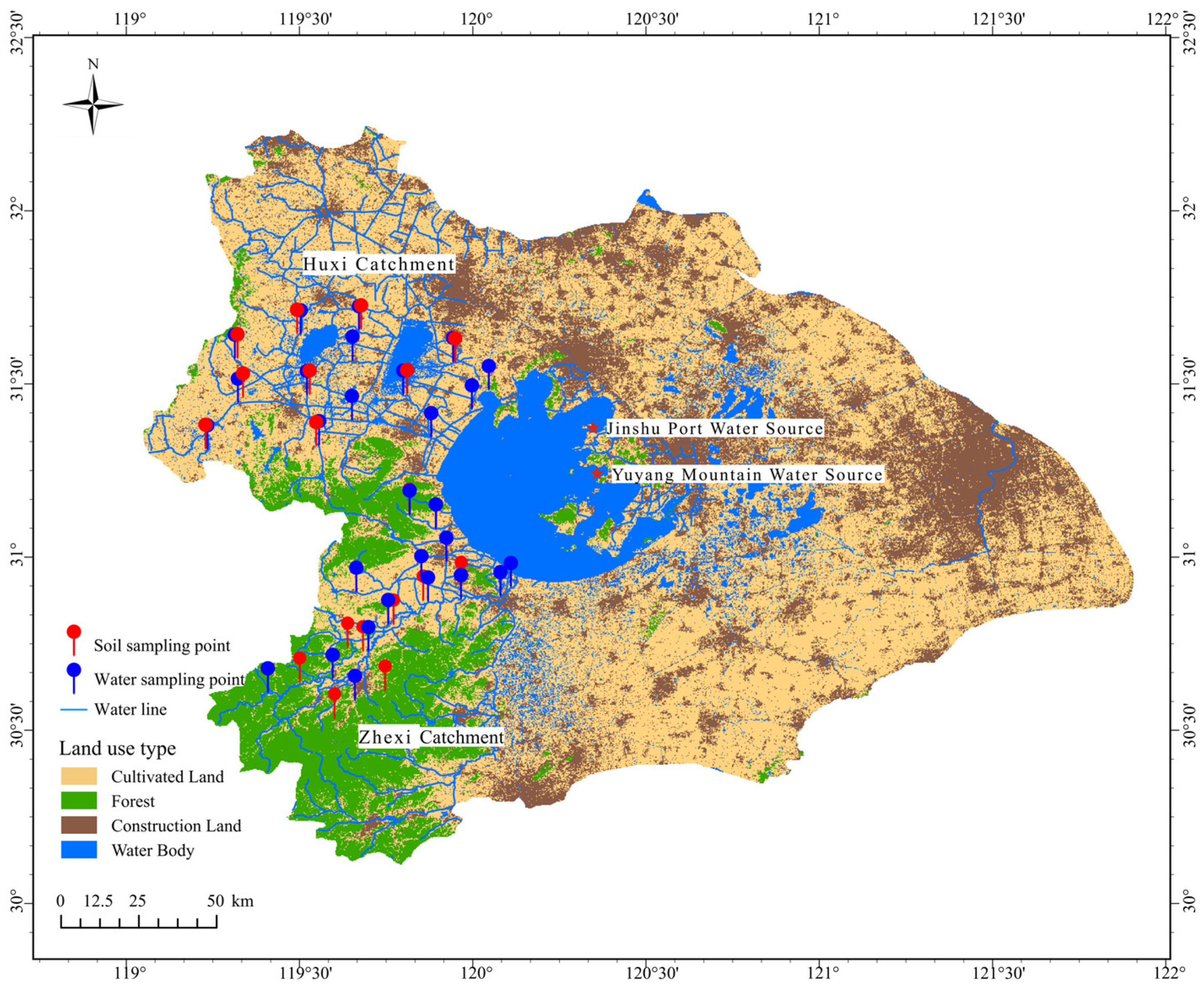
To further clarify the sources of water hardness, we sampled the main rivers located upstream of Taihu Lake, including the Huxi and Zhexi catchments (Figure 2). The layout of the sampling sites was selected based on the following principles: (1) the sites should be located near a cross-river bridge to facilitate water sample collection; (2) the sites should be evenly distributed from upstream to downstream; (3) the sites should cover the main land use types within the sampling area. Water samples were collected about 20 cm below the water surface using a sample collector. The collection bags were rinsed twice with original river water, and then the water was poured into the bag. After being transported back to the laboratory, the samples were stored at 4 °C. The determination of the water hardness and alkalinity was completed within 24 h. Additionally, soil samples of typical land use types near the rivers were collected (Figure 2). Five soil samples were collected from each sampling site, with each site separated by at least 20 m. At each site, soil cores were drilled from the 0–10 cm layer. Then, they were mixed evenly, air-dried, and ground to pass through a 2 mm sieve for determination of the water-soluble calcium and magnesium contents.
In this study, the soil samples from different fertilization treatments were collected from the Suzhou Academy of Agricultural Science, National Soil Quality Xiangcheng Experimental Station (31°32′45″ N, 120°41′57″ E). This long-term positioning experiment began in 1980 and adopted a randomized repetitive design. Each treatment zone had an area of 20 m2 (4 m × 5 m), and the zones were separated by 35 to 40 cm deep cement boards. The treatments applied in this study were as follows: (1) no fertilizer (CK); (2) conventional fertilization (NPK: N: 225–300 kg/ha, P: 55.8 kg/ha, K: 137.5 kg/ha); (3) conventional fertilization combined with organic fertilizer (NPKM: N: 225–300 kg/ha, P: 55.8 kg/ha, K: 137.5 kg/ha, M: 2.2 t/ha). The fertilizers used were as follows: urea as the nitrogen source, calcium superphosphate as the phosphorus source, potassium chloride as the potassium source, and rapeseed cake as the organic fertilizer.
To investigate the impact of nitrogen fertilizer application on carbonate rock dissolution, three farmland samples near Jinshu Port were mixed evenly (Figure 2), and three experimental treatments were set up: (1) simulated nitrogen fertilizer (20 g soil shaken in 100 mL of 20 mg/L NH4Cl solution for 24 h) + limestone; (2) simulated nitrogen-free (20 g soil shaken in 100 mL of pure water for 24 h) + limestone; (3) control (20 g soil in shaken 100 mL of pure water for 24 h) without limestone. Specifically, the oscillation solution of each treatment was centrifuged at 8000 r/min for 4 min, and then 50 mL of the supernatant was taken. The supernatants of the simulated nitrogen and nitrogen-free groups were mixed with 1 g of limestone, while no limestone was added to the control treatment. Air was introduced at a rate of about 1 L/min, and the hardness of the water was measured after 24 h of cultivation.

2.3. Analytical Testing

The total water hardness, expressed as mg/L of CaCO3, was determined via EDTA titration [9]. Briefly, an appropriate volume of water sample was buffered to pH = 10.0 using an ammonium chloride–ammonia buffer solution. Then, Eriochrome Black T was added as an indicator, and the solution was titrated with a standardized 0.01 M ethylenediaminetetraacetic acid disodium salt (EDTA-Na2) solution until the color changed from wine red to pure blue. The total hardness was calculated according to the volume of EDTA consumed.
The alkalinity (carbonate hardness) was determined via acid titration [15]. A water sample was titrated with a standardized 0.02 mol/L hydrochloric acid (HCl) solution. The titration was performed to two endpoints: first to pH 8.3 (phenolphthalein endpoint, indicating carbonate) and then continued to pH 4.5 (methyl orange endpoint, indicating bicarbonate). The total alkalinity was calculated based on the total acid consumed to reach pH 4.5 and was expressed as mg/L of CaCO3, which is defined as the carbonate hardness. The non-carbonate hardness was calculated as the arithmetic difference between the total hardness and the carbonate hardness.
The water-soluble calcium and magnesium ions in soil samples were extracted and measured according to Wang [12]. Specifically, a soil-to-water ratio of 1:5 (w/v) was shaken for 3 min and centrifuged. The calcium and magnesium ions in the clear supernatant were then determined using the same EDTA titration method described above for the total water hardness. For consistency and comparison purposes, the concentrations of both calcium and magnesium ions were uniformly calculated and reported as equivalent calcium ion (Ca2+) concentration.

2.4. Data Analysis

ArcGIS Pro 3.4.3 was used to visualize the geographic information of the sampling sites. The data statistical analysis and visualization were performed using R software (R 4.4.1). The t-test was conducted using the “t-test” function, analysis of variance was performed using the “anova” function, and the ggplot2 package was used to visualize the statistical data. The trends, seasonality, and randomness of the time series were analyzed using the “decompose” function in the stats package. Specifically, this decomposition was carried out using the classical additive decomposition method. The additive model is defined as Y t = T t + S t + R t , where Y t is the observed time series at time t, T t is the trend component, S t is the seasonal component, and R t is the random (remainder) component.
Prior to decomposition, the water hardness data were converted into a time series object using the ts() function, with a seasonal frequency set to 12 to account for the annual cycle (12 months per year). The decompose function was then applied, which uses a centered moving average to estimate the trend component T t . Subsequently, the seasonal component S t for each month was calculated by averaging the detrended values ( Y t T t ) for that specific month across all years. Finally, the random component R t was obtained by subtracting both the trend and seasonal components from the original series ( R t = Y t T t S t ). To quantify the relative strength of the identified patterns, the trend intensity ( F T ) and seasonal intensity ( F S ) were calculated according to the method described by Wang et al. [17], using the following formulas:
F T = m a x ( 0,1 V a r ( R t ) V a r ( T t + R t ) )
F S = m a x ( 0,1 V a r ( R t ) V a r ( S t + R t ) )
In these equations, Var() denotes the variance. The variables T t , S t , and R t are the trend, seasonal, and random components directly extracted from the output of the decompose function. According to this metric, an intensity value closer to 0 indicates a less dominant pattern, while a value closer to 1 indicates a more dominant one. A common interpretation threshold is 0.5; values below this suggest that the variation (trend or seasonality) is weak and comparable to random noise, whereas values above 0.5 indicate a significant pattern.

3. Results

3.1. Variation Characteristics of the Water Hardness in the JP and YM Water Sources

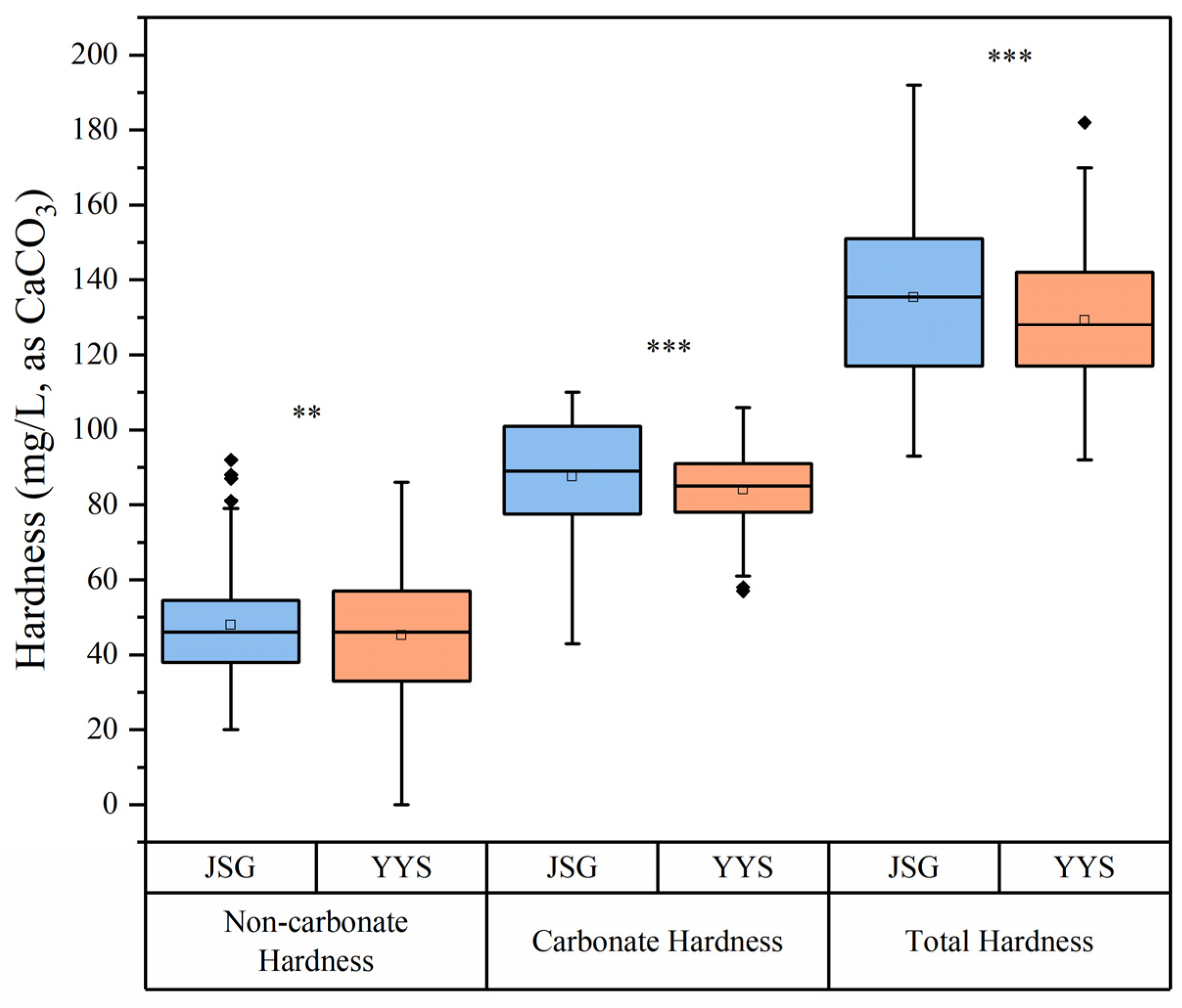
The total hardness (as CaCO3) ranges in the JP and YM water sources from 2011 to 2023 were 92–182 mg/L (average 134 mg/L) and 87–179 mg/L (average 129 mg/L), respectively. Among them, the carbonate hardness (as CaCO3) ranged from 43 to 125 mg/L (average 87 mg/L) at JP and from 57 to 106 mg/L (average 84 mg/L) at YM. The non-carbonate hardness (as CaCO3) ranged from 6 to 76 mg/L (average 43 mg/L) at JP and from 0 to 86 mg/L (average 45 mg/L) at YM (Figure 3). A paired t-test analysis of the water sources showed that the total hardness, carbonate hardness, and non-carbonate hardness at JP were significantly higher than those at YM (Figure 3).
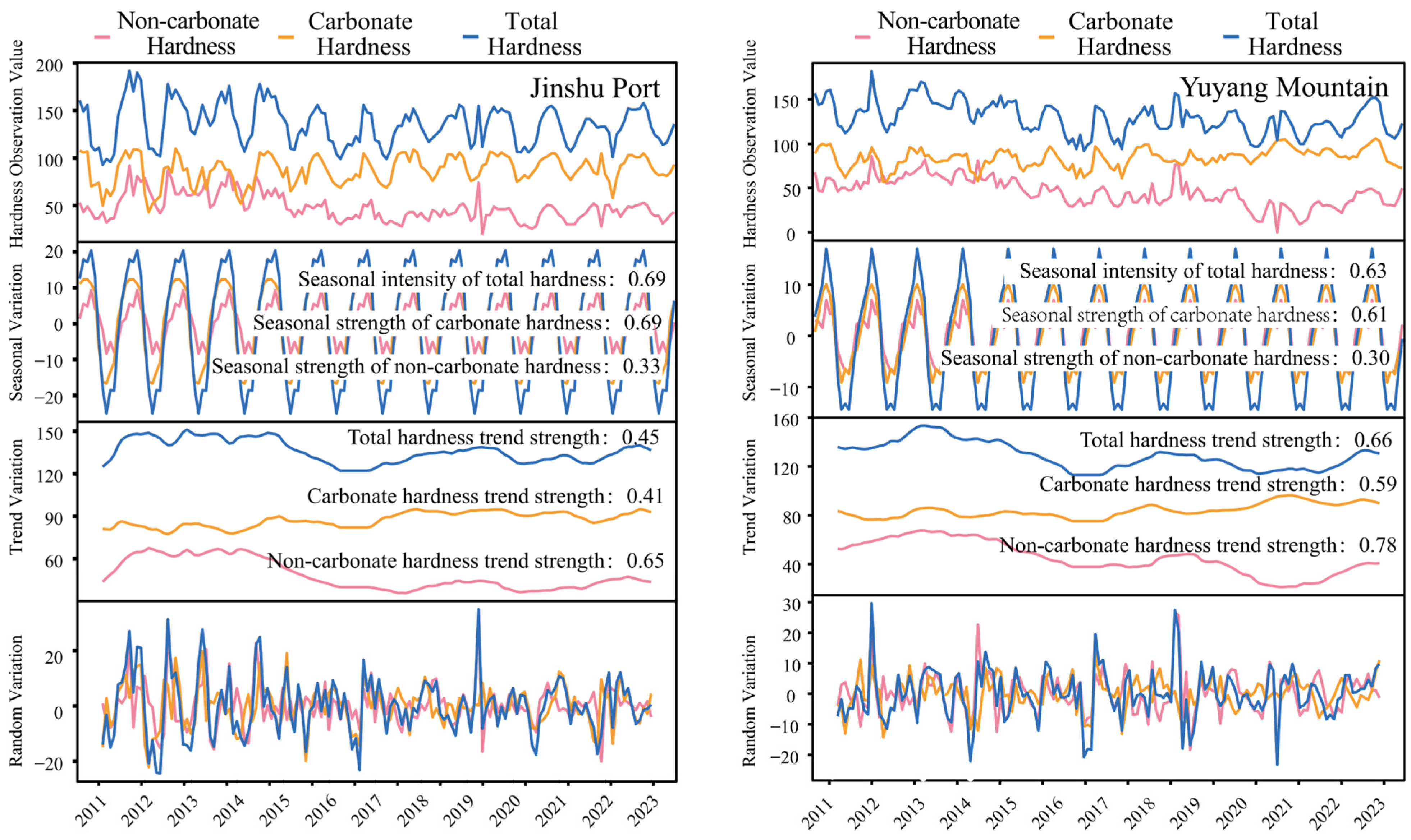
The seasonal, trend, and randomness decomposition of the temporal variation characteristics of the water hardness revealed that both the total hardness and carbonate hardness in the JP and YM sources exhibited clear seasonal variations (seasonality strength values greater than 0.5), while the non-carbonate hardness showed no clear seasonal variation (seasonality strength values lower than 0.5) (Figure 4). In terms of trend variations, the total hardness and carbonate hardness in the JP source showed no significant variation (trend strength values of 0.45 and 0.41, respectively), while both the total hardness and carbonate hardness in the YM source showed significant decreasing and increasing trends, respectively (trend strength values of 0.66 and 0.59) (Figure 4). Moreover, both the JP and YM sources showed decreasing trends in non-carbonate hardness, with trend strength values of 0.65 and 0.78, respectively (Figure 4).

3.2. Correlation Analysis Between Water Hardness and Environmental Factors

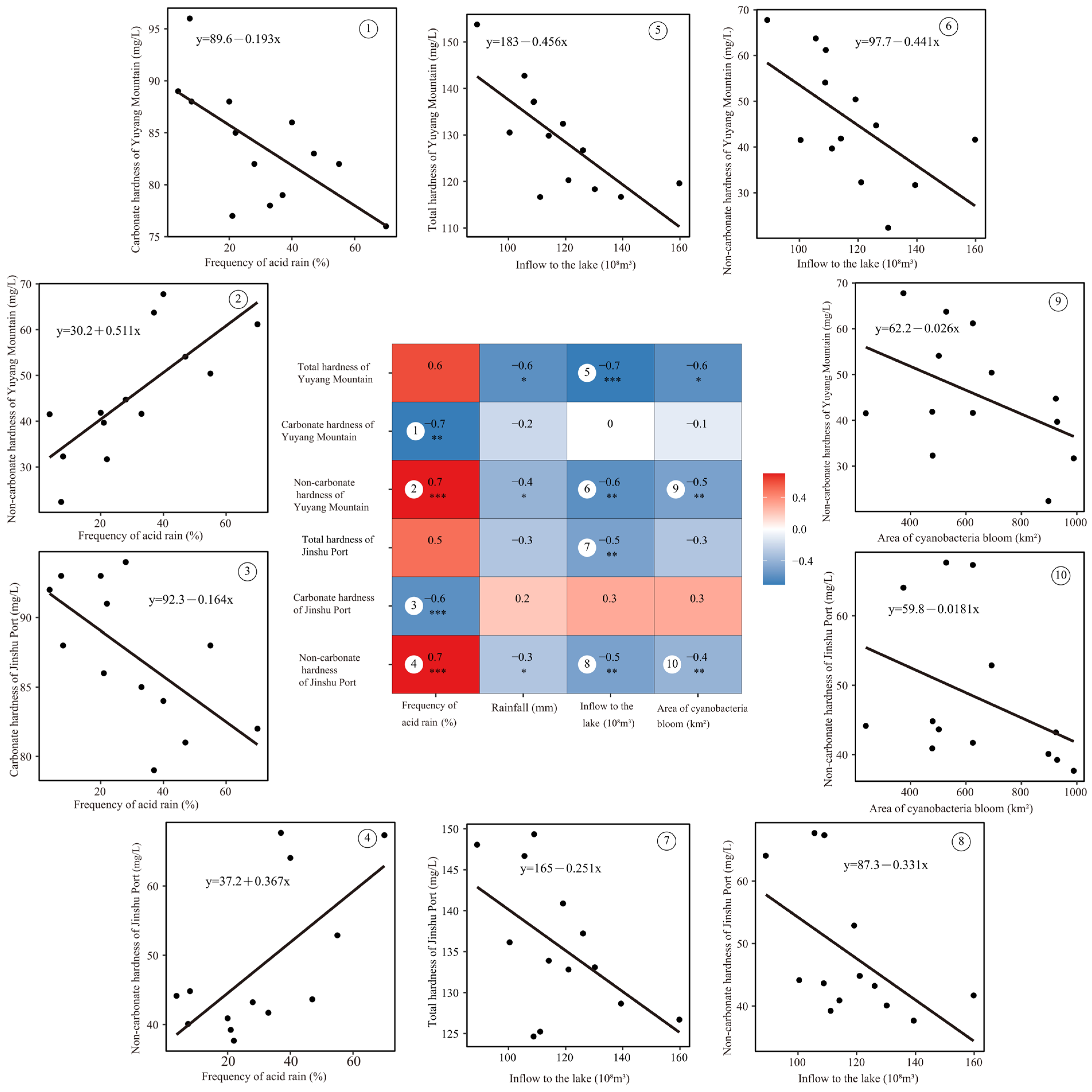
Further correlation analysis revealed that the total hardness of the JP and YM water sources was significantly negatively correlated with the lake inflow (r = −0.5 for JP and r = −0.7 for YM). In addition, the total hardness of the YM source was also significantly negatively correlated with the rainfall (r = −0.6) and cyanobacterial bloom area (r = −0.6) (Figure 5). When the total hardness was further divided into carbonate and non-carbonate hardness, the correlating factors of the two water sources were the same. Namely, the carbonate hardness was significantly negatively correlated with the acid rain frequency (r = −0.6 for JP and r = −0.7 for YM), but it was not significantly correlated with the rainfall, lake inflow, or cyanobacterial bloom area. The non-carbonate hardness was extremely significantly positively correlated with the acid rain frequency (r = 0.7 for JP and r = 0.7 for YM) and significantly negatively correlated with the rainfall (r = −0.3 for JP and r = −0.4 for YM), lake inflow (r = −0.5 for JP and r = −0.6 for YM), and cyanobacterial bloom area (r = −0.4 for JP and r = −0.5 for YM) (Figure 5).

3.3. Hardness Distribution Characteristics of Major Inflow Rivers to Taihu Lake

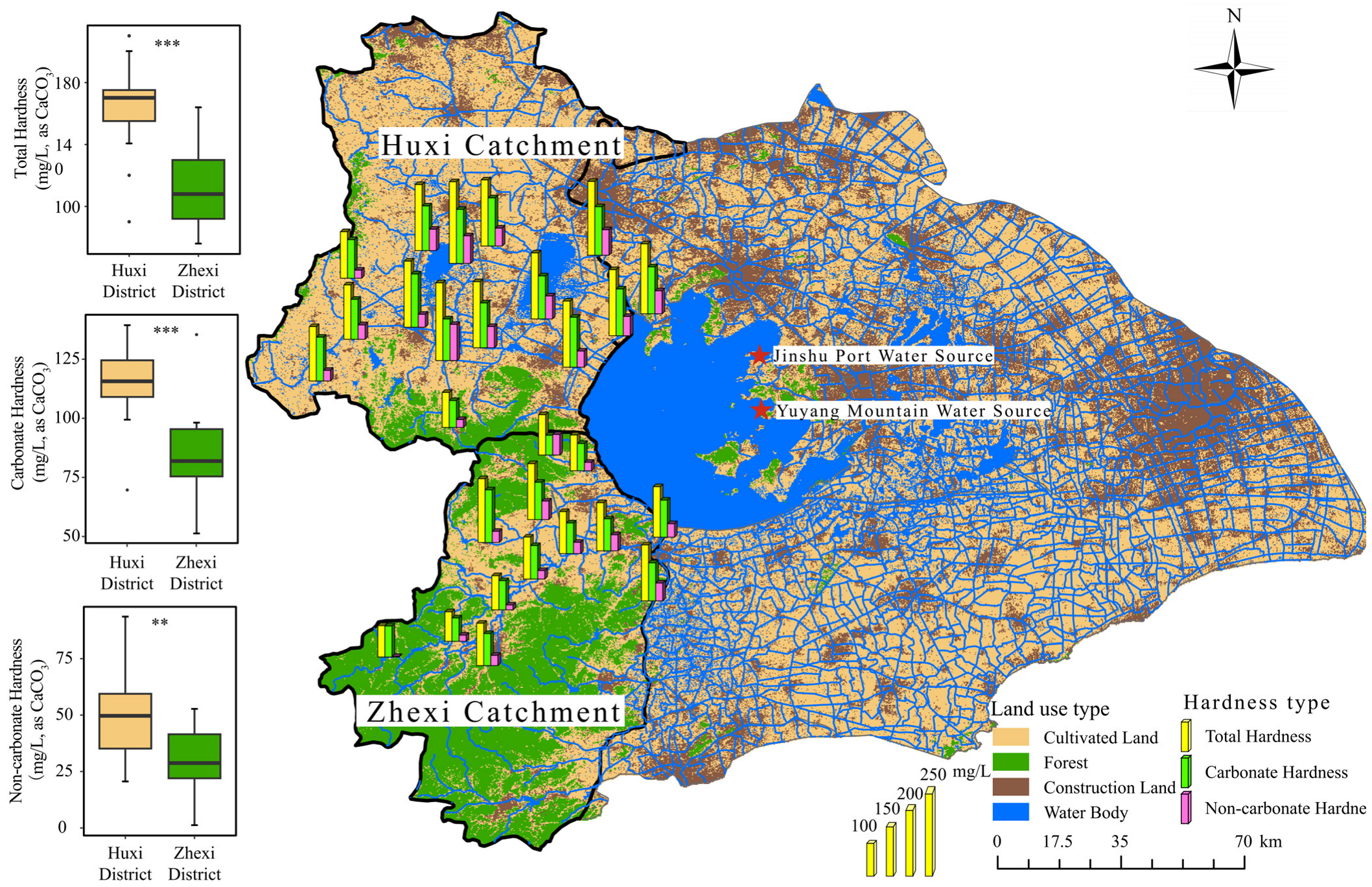
To further clarify the main source areas of water hardness (as CaCO3), we analyzed the hardness in rivers in the Huxi and Zhexi catchments of the Taihu Lake Basin. We found that the total hardness ranges of the rivers in Huxi and Zhexi were 90–210 mg/L and 76–164 mg/L, respectively. Meanwhile, the carbonate hardness of the Huxi and Zhexi catchments ranged from 65 to 139 mg/L and 51 to 135 mg/L, and the non-carbonate hardness ranged from 20 to 93 mg/L and 1 to 52 mg/L, respectively (Figure 6). T-test analysis showed that the total hardness, carbonate hardness, and non-carbonate hardness of the rivers in Huxi were significantly higher than those in the Zhexi catchment (Figure 6).

3.4. Soil Water-Soluble Calcium and Magnesium Under Different Land Use Types

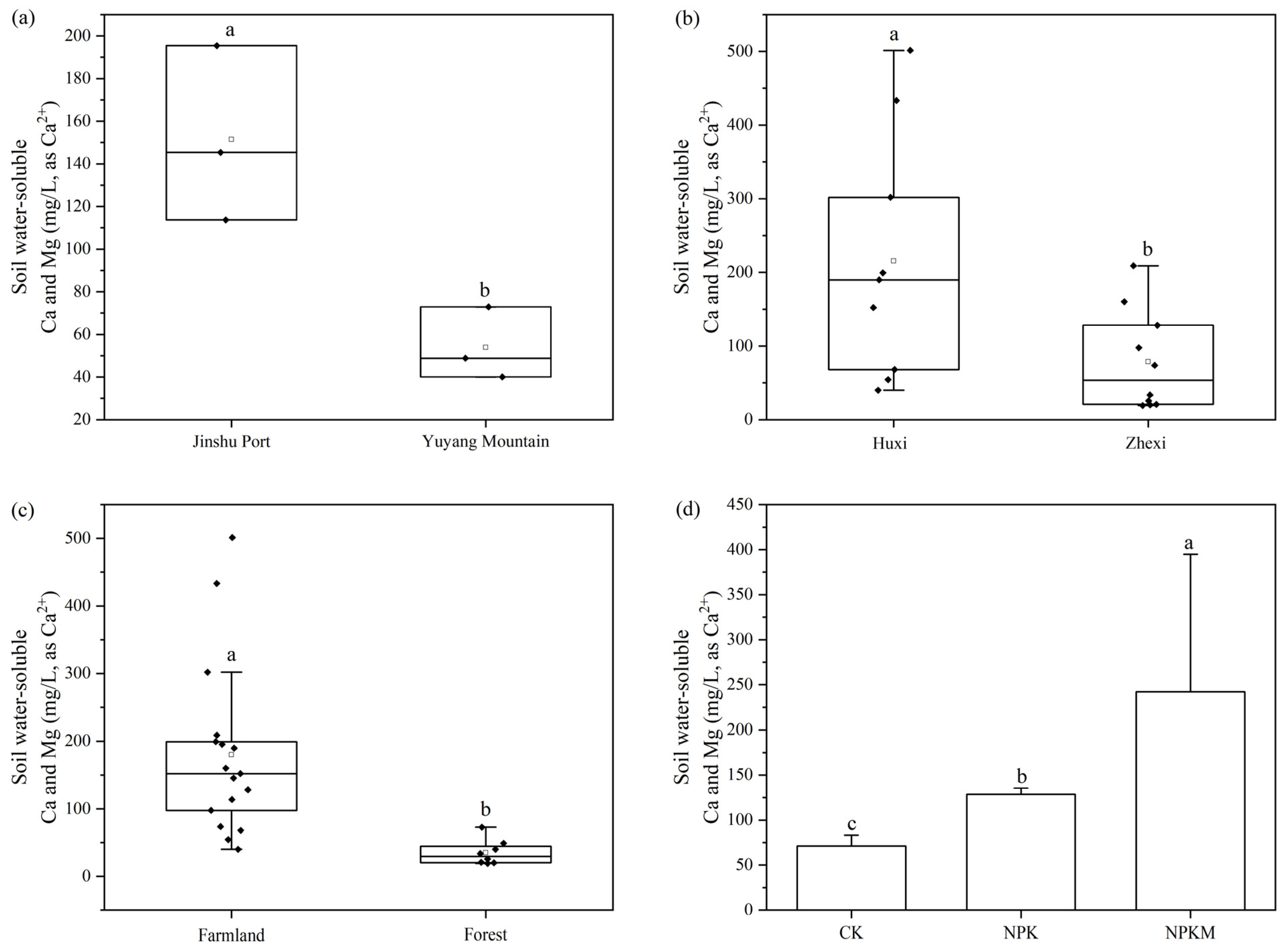
To further explore the reasons for the differences in water hardness, we analyzed the water-soluble calcium and magnesium in the soil samples near the JP and YM water sources, as well as from the Huxi and Zhexi catchments. The area near the JP water source is mainly farmland, while the area near the YM is forest land (Figure 2). The water-soluble calcium and magnesium content in the farmland soil near JP (Ca2+:113–195 mg/kg) was significantly higher than the forest soil near YM (Ca2+: 40–72 mg/kg) (Figure 7a). Similarly, the land use type in the Huxi catchment is mainly farmland, while that in the Zhexi catchment is mainly forest land. The water-soluble calcium and magnesium in the soil of Huxi (Ca2+: 40–501 mg/kg) was significantly higher than that in Zhexi (Ca2+: 19–209 mg/kg) (Figure 7b). t-test analysis on the soil water-soluble calcium and magnesium under different land use types revealed that the water-soluble calcium and magnesium content in the farmland soil (Ca2+: 40–501 mg/kg, average 180 mg/kg) was approximately 4.5 times higher than that in the forest soil (Ca2+: 19–72 mg/kg, average 39 mg/kg) (Figure 7c).
To further clarify the sources of water-soluble calcium and magnesium in the farmland soil, we compared the water-soluble calcium and magnesium in soils under different fertilization treatments. The results showed that the water-soluble calcium and magnesium content in the CK treatment was 71 ± 13 mg/kg; in the NPK treatment, it was 129 ± 6 mg/kg; and in the NPKM treatment, it was 242 ± 132 mg/kg (Figure 7d). Analysis of variance showed significant differences among the different fertilization treatments, with NPKM significantly higher than NPK and NPK significantly higher than CK (Figure 7d).

3.5. Effect of Nitrogen Fertilizer Application on Carbonate Rock Dissolution

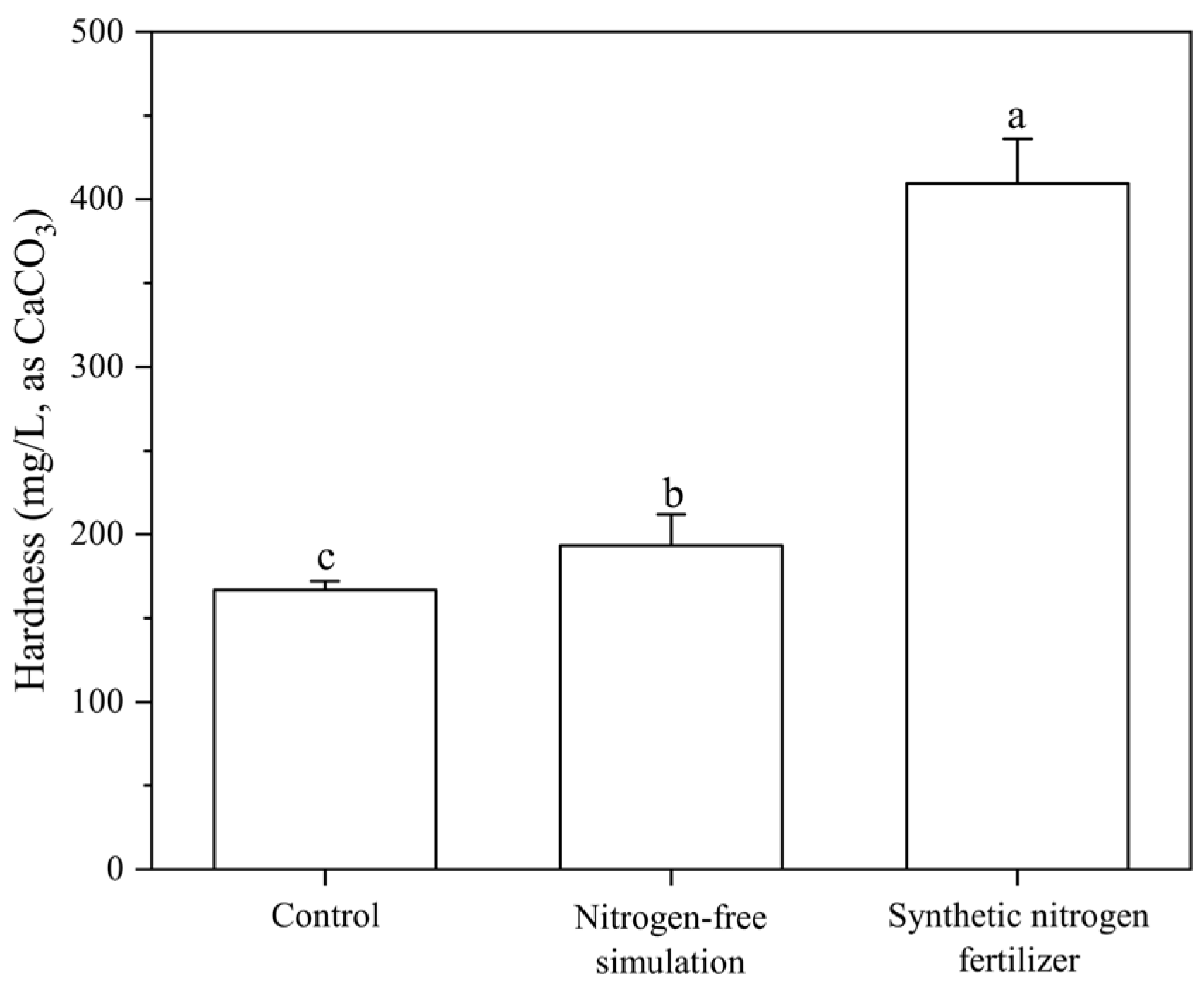
We further simulated the effect of nitrogen fertilizer application on carbonate rock dissolution. The results showed that the total hardness of the soil aqueous solution in the simulated nitrogen treatment was 409 ± 20 mg/L; in the simulated nitrogen-free treatment, it was 193 ± 14 mg/L; and in the control treatment, it was 166 ± 4 mg/L (Figure 8). The analysis of variance showed that the total hardness in the simulated nitrogen treatment was significantly higher than in the simulated nitrogen-free treatment, and in the simulated nitrogen-free treatment, it was significantly higher than in the control. The dissolution rate of carbonate rock in the simulated nitrogen treatment was 24.3 mg/day (as CaCO3), while in the simulated nitrogen-free treatment, it was 2.7 mg/day (as CaCO3). The dissolution rate in the simulated nitrogen treatment was nine times higher than in the simulated nitrogen-free treatment.

4. Discussion

4.1. The Variation Characteristics of Water Hardness

In this study, the average total hardness of the JP and YM water sources from 2011 to 2023 was 130 ± 18 mg/L (Figure 3), which was similar to that of Dongting Lake (134 ± 28 mg/L) [18] but higher than that of Poyang Lake (30 ± 11 mg/L) [19]. This difference is related to the geological background of the basin. The Taihu and Dongting Lake Basins are mainly composed of carbonate rocks, while the Poyang Lake Basin is mainly composed of silicate rocks [20]. The weathering rate of carbonate rocks is approximately 100 times that of silicate rocks [21]. The rock characteristics not only directly affect the background value of water hardness but also further influence the sensitivity of water hardness to human activities. In the 1990s, the hardness of Poyang Lake was 26 mg/L [20], and it was 30 mg/L in 2009, with no obvious change. In contrast, the total hardness of Taihu Lake increased from 95 mg/L in 1980 to 144 mg/L in 2018 due to soil acidification and acid rain [12].
The long-term trends were different between the JP and YM water sources. The total hardness of the JP source showed no significant trends from 2011 to 2023, while the total hardness of the YM source showed a significant decline (Figure 4). The total hardness of water can be divided into carbonate and non-carbonate hardness. Carbonate hardness stems from the dissolution of carbonate rocks by CO2, while non-carbonate hardness is influenced by human activities, mainly from anthropogenic acidification and the leaching of soil calcium ions [22]. We found that the non-carbonate hardness of both the YM and JP sources showed a significant downward trend (Figure 4). This result indicates that the impact of human activities on the water hardness in Taihu Lake has been gradually weakening over the past decade.
In addition to the inter-annual trend, the total hardness of the JP and YM water sources showed a significant seasonal cycle (Figure 4), which was mainly influenced by the seasonal cycle of carbonate hardness; the non-carbonate hardness did not exhibit a clear seasonal cycle (Figure 4). The carbonate hardness increased from October to April of the next year, peaking in April. Then, it decreased from April to August and reached its lowest value between August and October (Figure 4). Similar results were also observed by Bytsyura et al. [23]. They showed that bicarbonate tended to peak during late winter to early spring and declined in summer months [23]. This periodic characteristic is related to temperature variations. The carbonate hardness is sensitive to temperature variations, and the solubility reaches its maximum value at 10–15 °C [24]. When the temperature is below 15 °C, the bicarbonate concentration increases with the rise in temperature; when the temperature is above 15 °C, the amount of calcium carbonate decreases with the increase in the temperature [25]. According to the historical weather data of Suzhou from 2011 to 2023, the average temperature in April was 16.5 °C, which was conducive to the dissolution of calcium bicarbonate. After May, the average temperature increased to 22 °C, the solubility of calcium bicarbonate decreased, and it precipitated in the form of calcium carbonate [25]; so, the carbonate hardness gradually decreased. The average temperature in August was 29 °C, and the carbonate hardness also reached its lowest point. In contrast, the solubility of non-carbonate hardness is not affected by seasonal factors such as temperature and thus does not exhibit clear seasonal variations.

4.2. The Influencing Factors of Water Hardness

The water hardness in the JP and YM sources demonstrated similar correlation patterns with environmental factors. Both carbonate and non-carbonate hardness showed significant but opposing correlations with acid rain frequency: a positive correlation for carbonate hardness (r = 0.7 for both JP and YM) and a negative one for non-carbonate hardness (r = −0.6 for JP and r = −0.7 for YM) (Figure 5). This contrasting relationship likely arises from their distinct chemical interactions with acid rain. Specifically, acid rain promotes the conversion of carbonate hardness into non-carbonate hardness, thereby reducing the former while increasing the latter [26]. The correlation data also showed that non-carbonate hardness is more sensitive to the frequency of acid rain than carbonate hardness (Figure 5). The correlation slopes between acid rain and carbonate hardness were 0.19 (JP) and 0.16 (YM), while those with non-carbonate hardness were steeper, at 0.511 and 0.37, respectively (Figure 5). This pattern is potentially attributed to two mechanisms. First, acid rain accelerates carbonate rock weathering, releasing ions that contribute to both carbonate and non-carbonate hardness [27]. Furthermore, upon reaching river systems, acid rain promotes the conversion of carbonate hardness to non-carbonate hardness, reducing the former while increasing the latter [26].
Non-carbonate hardness was also associated with three other key factors: rainfall (r = −0.3 for JP and r = −0.4 for YM), lake inflow (r = −0.5 for JP and r = −0.6 for YM), and cyanobacterial bloom area (r = −0.4 for JP and r = −0.5 for YM) (Figure 5). Increased rainfall and inflow volumes tend to dilute non-carbonate hardness. Therefore, non-carbonate hardness showed a significant negative correlation with rainfall and lake inflow volume. However, the carbonate hardness showed no significant correlation with rainfall or inflow volume (Figure 5). This might be due to the buffering effect of carbonate in sediments: the dilution of carbonate hardness is conducive to the dissolution of calcium carbonate in sediments [28], thereby counterbalancing the dilution effect of rainfall or lake inflow on carbonate hardness. Similarly, the cyanobacterial bloom area showed no significant correlation with carbonate hardness, but it was significantly correlated with the non-carbonate hardness (Figure 5). The photosynthetic mineralization of cyanobacteria can promote the conversion of bicarbonate to calcium carbonate, thereby reducing carbonate hardness [29]. However, the precipitated calcium carbonate may dissolve back into the water due to acid rain [30]; so, the area of cyanobacteria blooms has no significant effect on the interannual variation of carbonate hardness. In contrast, we found that the area of cyanobacterial blooms was significantly correlated with the non-carbonate hardness (Figure 5). During the bloom, calcium ions play a crucial role in the cross-linking of EPS in cyanobacteria, with the EPS adsorbing calcium ions [8], thereby reducing the non-carbonate hardness.

4.3. The Effects of Land Use Types on Water Hardness

The rivers in the Huxi and Zhexi catchments are the main sources of water for Taihu Lake. According to the 2023 “Taihu Lake Annual Hydrological Report”, the total inflow to Taihu Lake was 10.04 billion m3, with 7.53 billion m3 from Huxi, 1.5 billion m3 from Zhexi, and 0.97 billion m3 from other areas. To further clarify the main sources of hardness in Taihu Lake, we analyzed the water hardness of rivers in the Huxi and Zhexi catchments. The results showed that the total hardness, carbonate hardness, and non-carbonate hardness of rivers in the Huxi were significantly higher than those in Zhexi (Figure 6). This result is similar to Cheng et al. [31]. This difference is related to land use types in the region. In the Huxi catchment, the main land use type is farmland, while in Zhexi, it is mainly forest land (Figure 6). The water-soluble calcium and magnesium content in farmland soils was significantly higher than in forest soils, about 4.5 times (Figure 7c). In addition, the fertilized soils further increased the water-soluble calcium and magnesium content by about 1.8 times compared to the non-fertilized soils (Figure 7d). This is mainly because superphosphate is a common phosphate fertilizer in the Taihu basin, and exogenous fertilizers introduce calcium elements into the soil, contributing to the observed differences in water hardness [32].
In addition to the non-carbonate hardness, the carbonate hardness in Huxi was also significantly higher than that in Zhexi (Figure 6). This is because the forest land in Zhexi is mainly exposed silicate rocks, while the farmland in Huxi is buried carbonate rocks [31]. Furthermore, fertilization in farmland can accelerate carbonate rock dissolution (Figure 8). Compared to non-fertilization, the soil leaching solution treated with fertilizer showed a stronger dissolution rate of carbonate rocks and a higher bicarbonate content (Figure 8), which aligns with findings from Barnes and Raymond [33]. They reported that the amount of bicarbonate produced in watersheds dominated by farmland was four times that of adjacent forested areas [26].
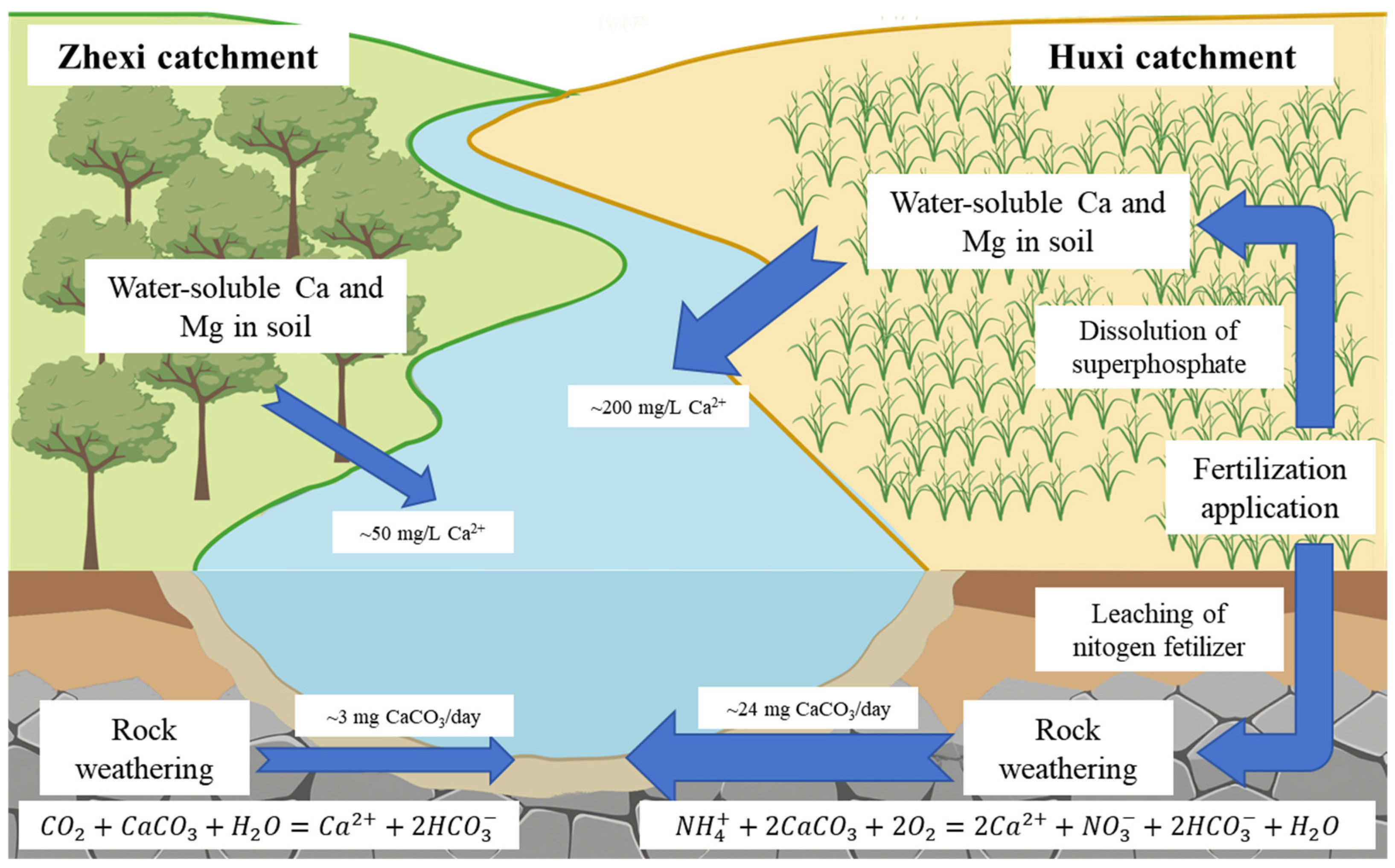
Similarly to the water hardness differences between Huxi and Zhexi, we also observed that the total hardness, carbonate hardness, and non-carbonate hardness at JP were significantly higher than those at YM, and the difference in carbonate hardness was larger than that in non-carbonate hardness. This might be attributed to the fact that the JP water source is mainly surrounded by farmland, while the YM water source is located in a mountainous and forested area. Therefore, compared to the YM source, more calcium and bicarbonate ions will be leached into the JP source (Figure 9). These results underscore that the rational management of soils adjacent to water sources is crucial for water source protection.

5. Conclusions

In summary, the key findings of this study included the following: (1) Compared to the CK treatment, the fertilized treatments could enhance the water-soluble calcium and magnesium in the soil by 1.8 times, from 71 to 129 mg/kg, and promoted the dissolution of carbonate rocks by 9 times, from 2.7 to 24.3 mg CaCO3/day, thereby increasing the hardness of adjacent water bodies. (2) Affected by the land use types around the water source, the total hardness of the JP source was dominated by farmlands and was significantly higher than that of the YM source dominated by forests. Meanwhile, the total hardness showed a long-term trend difference: the JP source remained relatively stable, while the YM source showed a clear downward trend, decreasing at the rate of 1.9 mg/L per year (as CaCO3). (3) Land use types, fertilizer application, and acid rain jointly constituted the potential anthropogenic driving factors for the water hardness variations. In the past decade, the total hardness of the two water sources has shown a stable and slightly decreasing trend. This indicates that the strict environmental protection policies in the Taihu Lake Basin have effectively reduced the impact of human activities on the increase in water hardness.

Author Contributions

Investigation, M.G., X.L. (Xiaonuo Li) and D.L.; Writing—Original Draft Preparation, Y.W.; Writing—Review and Editing, Y.W., H.X. and T.H.; Supervision, X.L. (Xinhua Li), X.Z., X.X. and Y.Z.; Funding Acquisition, H.X. and T.H. All authors have read and agreed to the published version of the manuscript.

Funding

This research was supported by Suzhou Water Resources and Water Services Technology Project (2024005) and the Fundamental Research Funds for the Central Universities (B250201184).

Data Availability Statement

Some or all data, models, or code that support the findings of this study are available from the corresponding author upon reasonable request.

Acknowledgments

The authors acknowledge the support from the National Earth System Science Data Center, National Science and Technology Resources Sharing Service Platform, for providing the basic data. The authors also acknowledge the Suzhou Academy of Agricultural Science, National Soil Quality Xiangcheng Experimental Station, for providing the soil samples. Special acknowledgments to Haoxuan Yang, Mingda Wang, and Baofeng Yue for their assistance in sample collection and hardness testing.

Conflicts of Interest

Authors Xinhua Li, Xun Zhou and Xingyu Xia were employed by the company Suzhou Water Supply Co., Ltd. The remaining authors declare that the research was conducted in the absence of any commercial or financial relationships that could be construed as a potential conflict of interest.

Abbreviations

EPSExtracellular polymeric substances
JPJinshu Port
YMYuyang Mountain

References

  1. Morr, S.; Cuartas, E.; Alwattar, B.; Lane, J.M. How Much Calcium is in your Drinking Water? A Survey of Calcium Concentrations in Bottled and Tap Water and Their Significance for Medical Treatment and Drug Administration. HSS J. ®: Musculoskelet. J. Hosp. Spec. Surg. 2006, 2, 130–135. [Google Scholar] [CrossRef] [PubMed]
  2. Peng, H.; Lu, T.; Xiong, S.; Ferrer, A.S.N.; Wang, Y. Calcium and magnesium in China’s public drinking water and their daily estimated average requirements. Environ. Geochem. Health 2023, 45, 3447–3464. [Google Scholar] [CrossRef] [PubMed]
  3. Sengupta, P. Potential Health Impacts of Hard Water. Int. J. Prev. Med. 2013, 4, 866–875. [Google Scholar] [PubMed]
  4. Kubis, M. Relation of water hardness to the occurrence of acute myocardial infarct. Acta Univ. Palacki. Olomuc. Fac. Medicae 1985, 111, 321–324. [Google Scholar]
  5. Bao, Y.; Li, Y.; Zhou, Y.; Zhou, J.; Mu, W.; Deng, X.; Shen, C.; Han, L.; Ran, J. Water quality and neurodegenerative disease risk in the middle-aged and elderly population. Ecotoxicol. Environ. Saf. 2025, 289, 117647. [Google Scholar] [CrossRef]
  6. Mao, R.; Zhang, T.; Zhong, Y.; Meng, X.; Yi, C.; Wang, F.; Li, J. Associations between domestic hard water exposure and incident psoriasis in adults: Insights from the UK Biobank cohort study. J. Autoimmun. 2025, 151, 103373. [Google Scholar] [CrossRef]
  7. Rathore, R.S.; Khangarot, B.S. Effects of Water Hardness and Metal Concentration on a Freshwater Tubifex tubifex Muller. Water Air Soil Pollut. 2003, 142, 341–356. [Google Scholar] [CrossRef]
  8. Xu, H.; Lv, H.; Liu, X.; Wang, P.; Jiang, H. Electrolyte Cations Binding with Extracellular Polymeric Substances Enhanced Microcystis Aggregation: Implication for Microcystis Bloom Formation in Eutrophic Freshwater Lakes. Environ. Sci. Technol. 2016, 50, 9034–9043. [Google Scholar] [CrossRef]
  9. Chen, J.; Wang, F.; Xia, X. Geochemistry of water quality of the Yangtze River basin. Earth Sci. Front. 2006, 13, 74–85. [Google Scholar] [CrossRef]
  10. Tan, L. Analysis of Total Hardness of Drinking Water in Changzhou City. Jiangsu J. Prev. Med. 1995, 1, 22–23. [Google Scholar]
  11. Fan, K.; Zhang, J. Analysis of evolution tendency of surface water quality in the Yangtze River Basin. Yangtze River 2008, 39, 82–84. [Google Scholar] [CrossRef]
  12. Wang, R. Effect of Watershed Acidification on Calcium and Magnesium (Hardness) in Taihu Lake. Master’s Thesis, Yangzhou University, Yangzhou, China, 2019. [Google Scholar]
  13. Li, R.; Wang, Z. Hydrogeochemical characteristics and genesis analysis of main ions in Zhangjiachong small watershed. Hydraul. Sci. Technol. 2019, 2, 21–25+28. [Google Scholar]
  14. Yan, X.; Xia, Y.; Ti, C.; Shan, J.; Wu, Y.; Yan, X. Thirty years of experience in water pollution control in Taihu Lake: A review. Sci. Total Environ. 2024, 914, 169821. [Google Scholar] [CrossRef] [PubMed]
  15. Dai, D.; Zhang, Y.; Han, X.; Feng, S.; Yu, T. Impact of sewage discharge on the water chemistry of Lake Taihu. Acta Sci. Circumstantiae 2015, 35, 3121–3130. [Google Scholar] [CrossRef]
  16. Song, T.; Zhang, H.; Xu, Y.; Dai, X.; Fan, F.; Wang, Y.; Liu, G. Cyanobacterial blooms in Lake Taihu: Temporal trends and potential drivers. Sci. Total Environ. 2024, 942, 173684. [Google Scholar] [CrossRef] [PubMed]
  17. Wang, X.; Smith, K.; Hyndman, R. Characteristic-Based Clustering for Time Series Data. Data Min. Knowl. Discov. 2006, 13, 335–364. [Google Scholar] [CrossRef]
  18. Xiao, P.; Wan, J.; Cheng, J.; Wang, X.; Zhao, X. Study on Hydrochemical Characteristics and Interactions between Groundwater and Surface Water in the Dongting Lake Plain. Water 2024, 16, 964. [Google Scholar] [CrossRef]
  19. Hu, C.; Zhou, W. Spatiotemporal variations of hydrochemistry parameters in the Poyang lake catchment. Resour. Environ. Yangtze Basin 2014, 23, 427–433. [Google Scholar]
  20. Chetelat, B.; Liu, C.Q.; Zhao, Z.Q.; Wang, Q.L.; Li, S.L.; Li, J.; Wang, B.L. Geochemistry of the dissolved load of the Changjiang Basin rivers: Anthropogenic impacts and chemical weathering. Geochim. Cosmochim. Acta 2008, 72, 4254–4277. [Google Scholar] [CrossRef]
  21. Liu, Z.; Dreybrodt, W.; Liu, H. Atmospheric CO2 sink: Silicate weathering or carbonate weathering. Quat. Sci. 2011, 31, 426–430. [Google Scholar] [CrossRef]
  22. Lyu, X.; Tao, Z.; Gao, Q.; Peng, H.; Zhou, M. Chemical Weathering and Riverine Carbonate System Driven by Human Activities in a Subtropical Karst Basin, South China. Water 2018, 10, 1524. [Google Scholar] [CrossRef]
  23. Bytsyura, L.; Szczepanik-Scislo, N.; Desyatnyuk, O.; Shakhovska, N.; Scislo, L.; Sachenko, A.; Lototska, O.; Shevchuk, I.; Sofinska, O. Research on Surface Water State for Rivers in Western Ukraine Using Time Series Forecasting Methods. Water 2025, 17, 3148. [Google Scholar] [CrossRef]
  24. Romero-Mujalli, G.; Hartmann, J.; Börker, J. Temperature and CO2 dependency of global carbonate weathering fluxes—Implications for future carbonate weathering research. Chem. Geol. 2019, 527, 118874. [Google Scholar] [CrossRef]
  25. Zeng, S.; Liu, Z.; Kaufmann, G. Sensitivity of the global carbonate weathering carbon-sink flux to climate and land-use changes. Nat. Commun. 2019, 10, 5749. [Google Scholar] [CrossRef] [PubMed]
  26. Huang, T.; Fan, Y.; Long, Y.; Pang, Z. Quantitative calculation for the contribution of acid rain to carbonate weathering. J. Hydrol. 2019, 568, 360–371. [Google Scholar] [CrossRef]
  27. Wang, Q.; Yu, S.; Jiang, P.; Sun, P.a. Water Chemical Characteristics and Influence of Exogenous Acids in the Yangtze River Basin. Environ. Sci. 2021, 42, 4687–4697. [Google Scholar] [CrossRef]
  28. Dan, D.; Tao, Y.; Yixiang, D.; Fuhong, S.; Jian, Z.; Chengda, H. Acid deposition induced base cation loss and different responses of soils and sediments in Taihu Lake watershed, China. Chemosphere 2019, 226, 149–158. [Google Scholar] [CrossRef]
  29. Lamérand, C.; Shirokova, L.S.; Bénézeth, P.; Rols, J.-L.; Pokrovsky, O.S. Carbon sequestration potential of Mg carbonate and silicate biomineralization in the presence of cyanobacterium Synechococcus. Chem. Geol. 2022, 599, 120854. [Google Scholar] [CrossRef]
  30. Tao, Y.; Dan, D.; Chengda, H.; Qiujin, X.; Fengchang, W. Response of sediment calcium and magnesium species to the regional acid deposition in eutrophic Taihu Lake, China. Environ. Sci. Pollut. Res. 2016, 23, 22489–22499. [Google Scholar] [CrossRef]
  31. Zhonghua, C.; Yan, Z.; Xiaoke, Z.; Gaoying, X.; Tao, Y. Shift of major driver for chemical weathering from the natural control to human dominance since 1980s in the Taihu watershed, China. Environ. Sci. Pollut. Res. 2023, 30, 20558–20569. [Google Scholar] [CrossRef]
  32. Guo, H.; Yu, M.; He, X.; Luo, Y. Pollution Characteristics Analysis in Shallow Groundwater of Typical Farmland Area, Southern China. Environ. Sci. 2016, 37, 4680–4689. [Google Scholar] [CrossRef]
  33. Barnes, R.T.; Raymond, P.A. The contribution of agricultural and urban activities to inorganic carbon fluxes within temperate watersheds. Chem. Geol. 2009, 266, 318–327. [Google Scholar] [CrossRef]
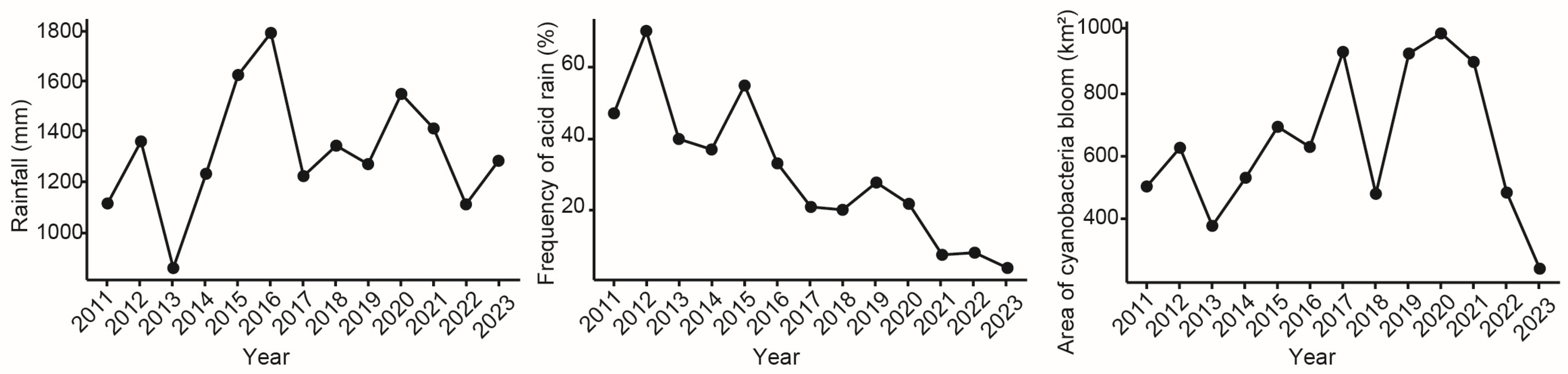
Figure 1. Rainfall, acid rain frequency, and cyanobacterial bloom area in the Taihu Basin (2011–2023).
Water 17 03415 g001
Figure 2. Distribution of the water and soil sampling sites.
Water 17 03415 g002
Figure 3. Hardness (as CaCO3) of the water sources at JP and YM. Their significance levels are indicated by asterisk(s) (** for p < 0.01, *** for p < 0.001). The black rhombuses (◆) represents an outlier of group.
Water 17 03415 g003
Figure 4. Variation characteristics of water hardness (as CaCO3) in the JP (left) and YM (right) water sources from 2011 to 2023.
Water 17 03415 g004
Figure 5. Correlation analysis of the water hardness (as CaCO3) with environmental factors (acid rain, rainfall, lake inflow, and cyanobacteria bloom) at the Yuyang Mountain and Jinshu Port sources. The numbers in the central table of the heatmap display Pearson correlation coefficients, and their significance levels are indicated by asterisk(s) (* for p < 0.05, ** for p < 0.01, *** for p < 0.001). To better illustrate the heatmap correlations, scatter plots with regression curves are presented around them, with circled numbers indicating corresponding relationships.
Water 17 03415 g005
Figure 6. The distribution characteristics of water hardness (as CaCO3) in the Huxi and Zhexi catchments of the Taihu Basin. Their significance levels are indicated by asterisk(s) (** for p < 0.01, *** for p < 0.001).
Water 17 03415 g006
Figure 7. Soil water-soluble Ca and Mg under different land use types (ac) and fertilization treatments (d). Different letters above the columns indicate significant differences (p < 0.05) as determined via t-test (ac) or one-way ANOVA (d). The rhombuses (◆) represent the data points observed in this study, and the hollow square (□) represents the average value of these points.
Water 17 03415 g007
Figure 8. Effect of nitrogen fertilizer on carbonate rock dissolution. Different letters above the columns indicate significant differences (p < 0.05) as determined via one-way ANOVA.
Water 17 03415 g008
Figure 9. Diagram summarizing the quantified findings in the Huxi and Zhexi catchments of the Taihu Lake Basin.
Water 17 03415 g009
Disclaimer/Publisher’s Note: The statements, opinions and data contained in all publications are solely those of the individual author(s) and contributor(s) and not of MDPI and/or the editor(s). MDPI and/or the editor(s) disclaim responsibility for any injury to people or property resulting from any ideas, methods, instructions or products referred to in the content.