1. Introduction
Across Europe, many underground mines are being decommissioned for economic or climate policy reasons [
1,
2]. Over the past decade, this trend has been particularly evident in the hard coal mining sector, reflecting the implementation of European Union climate and environmental policies aimed at reducing greenhouse gas emissions under the European Green Deal [
3,
4]. However, closures also increasingly affect other long-operating mines extracting different raw materials, where deposits have been depleted or further extraction is no longer economically justified [
5,
6]. Mine closure is frequently carried out by controlled flooding, which restores groundwater levels within aquifer systems previously drained during mining. As hydraulic heads rise within the former depression cone, increasing hydrostatic pressure can induce land uplift [
7,
8]. These subsurface geomechanical processes often manifest at the surface through the formation of open water bodies and wetlands, changes in soil moisture and vegetation [
9,
10]. Furthermore, local geological hazards such as sinkholes or landslides may occur, particularly in areas undergoing rapid groundwater rebound in post-mining settings characterized by shallow workings or complex geological and hydrogeological conditions [
11,
12].
At the same time, Europe has been experiencing progressive climate change, including warming and steppe-formation processes, which intensify moisture deficits [
13,
14]. Recent decades have brought higher mean air temperatures, more frequent but short-lived intense rainfall events, longer dry periods, and shorter snow seasons [
15,
16]. In this context, post-mining areas are subject to two overlapping pressures. On the one hand, climatic trends drive regional drying and reduced water availability [
17]. On the other hand, mine closure induces local hydrogeological changes that may raise groundwater levels and alter surface hydrology. These processes can, at least partially, counteract regional water deficits. Consequently, water-based reclamation, such as the formation of pit lakes and wetlands, has become an increasingly common management strategy, offering both ecological and recreational benefits [
18,
19]. However, its effective implementation depends on a thorough understanding of groundwater-surface water interactions to support sustainable planning and risk mitigation.
Such an understanding is well established for the operational phase of mining [
20]. Mining-induced subsidence and aquifer-system dewatering during operation have been extensively documented and are routinely monitored using geodetic and remote sensing techniques, including terrestrial laser scanning [
21], unmanned aerial vehicle [
22,
23] and satellite radar interferometry (InSAR) [
24,
25], complemented by dense networks of piezometers [
26]. Moreover, numerous reliable modeling approaches have been developed, enabling credible forecasts of subsidence and mining-related dewatering [
27,
28,
29].
In contrast, post-closure groundwater rebound and associated land uplift are less frequently studied and more difficult to quantify [
30,
31,
32]. These processes are particularly challenging to analyze due to the long-term geomechanical alterations of the aquifer system caused by mining, which have modified the original geological and hydrogeological conditions [
26,
33,
34]. Previous studies indicate that uplift rates associated with groundwater rebound are typically lower than subsidence during active drainage, and that the uplift zone often extends beyond the formal mining boundary into areas previously affected by groundwater drawdown [
32,
35,
36]. Although land uplift related to groundwater rebound can be tracked using InSAR, and groundwater rise can be monitored with piezometers, in practice dynamic environmental changes and surface transformations make effective monitoring difficult, especially in areas with dense vegetation where signal quality is low [
34,
37]. At the same time, after a mine closure, piezometer networks are often poorly maintained, providing limited temporal and spatial information on the rebound process. Additionally, the superposition of hydrogeological processes and regional climate-driven storage changes makes it difficult to separate the contribution of rebound-induced uplift from background subsidence or climate-related effects [
35,
38]. In many post-mining settings, land deformation represents a superposition of direct mechanical subsidence caused by ore extraction and indirect compaction of aquifer systems due to prolonged dewatering, followed by rebound related to mine flooding and re-saturation of the rock mass [
26,
39,
40,
41,
42].
To monitor environmental changes related to variations in surface water and soil moisture, remote sensing, particularly multispectral satellite imagery, remains a valuable research tool [
43,
44]. Such data make it possible to derive hydrospectral indices that serve as proxies for vegetation condition, near-surface soil moisture, and the presence of surface water [
45]. Commonly applied indices include the Normalized Difference Vegetation Index (NDVI), which reflects vegetation vigor and canopy density; the Normalized Difference Water Index (NDWI), sensitive to surface water and vegetation water content; and the Normalized Difference Moisture Index, used to assess soil and vegetation moisture status [
46]. Time series of these indices can capture both gradual and seasonal variations in hydrological and ecological conditions, and their spatial distribution often corresponds closely to hydrogeological gradients, which are typically well expressed in post-mining landscapes [
43,
47,
48]. The main advantages of this approach include the ability to analyze large areas, reconstruct temporal dynamics over long periods, and detect subtle environmental shifts that may be difficult to observe directly.
Nevertheless, relying solely on hydrospectral indices does not allow for a comprehensive assessment of environmental transformations in post-mining settings. These indicators provide indirect information and cannot fully capture subsurface processes or their timing. Many previous assessments have analyzed land deformation, groundwater levels, and hydrospectral signals separately [
47,
49,
50], without integrating them into a broader climatic and environmental framework. In reality, changes induced by mine closure are strongly interconnected, namely groundwater rebound drives land uplift, alters hydrological conditions, and affects land cover. Only an integrated analysis of these parameters enables a more complete understanding of post-mining environmental transformations following mine flooding [
51].
This study addresses this gap for the Olkusz–Pomorzany zinc–lead underground mine in southern Poland, which was closed and flooded between 2021 and 2022 after several decades of operation [
52]. Since the closure, the area has experienced rapid groundwater rebound, land uplift, the emergence of surface water bodies, and growing public concern over environmental impacts and safety [
53]. At the same time, the region has been subject to climatic changes typical of Central Europe, characterized by growing pressure on water resources [
54].
This study integrates in situ meteorological records, groundwater head observations, InSAR-based vertical land motion, and Sentinel-2-derived hydrospectral indices and land cover data to analyze the temporal sequence and spatial coherence of environmental transformations before and after mine closure in the context of climate change. Specifically, the objectives of the study are as follows:
Characterize the long- and short-term climatic conditions in the area of the former mine and their relevance for regional hydroclimatic context;
Quantify the vertical land movement within the mine and in a control area outside the mining impact zone, distinguishing background subsidence from post-closure uplift and regional climate-related land elevation changes;
Analyze the groundwater rebound using piezometric monitoring inside and outside the former depression cone and relate its timing and magnitude to land movement and climatic drivers;
Assess the environmental response to these hydrogeological changes using hydrospectral indices and land cover classification, with particular emphasis on the emergence of open water and wetlands.
This integrated approach provides a more complete basis for understanding the relationships between groundwater rebound, land surface deformation, and environmental change under changing climate conditions.
2. Study Area
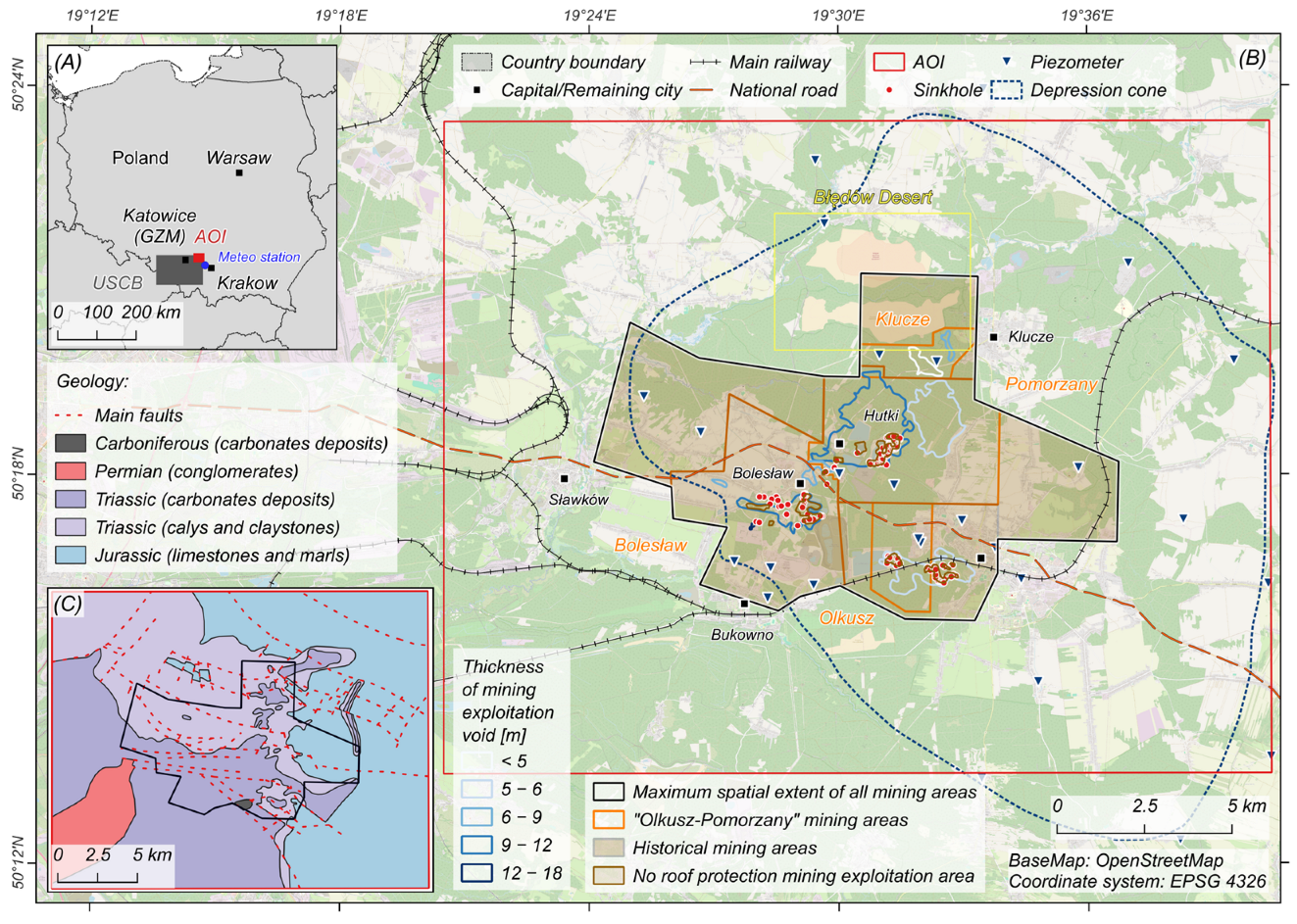
The Area of Interest (AOI) is located in southern Poland in the historical zinc and lead ore mining district around Olkusz. The AOI covers approximately 400 km
2 and encompasses the entire zone of past and recent mining activities, which extends over roughly 130 km
2 (
Figure 1A,B).
The landscape of the AOI is dominated by forested and semi-natural areas, while agricultural and urban land use is relatively limited, and surface water bodies cover only a minor fraction of the territory [
55]. One of its most distinctive natural features is the Błędów Desert, the largest inland dune field in Central Europe. Soils are generally of low fertility, developed mostly on postglacial sands and skeletal rendzinas on limestone, with localized patches of brown soils on loess [
56,
57].
Elevation ranges from approximately 300 to 430 masl, gradually increasing toward the east and south-east [
57]. Erosional valleys cross the southern and south-eastern parts of the AOI. Due to the high permeability of the carbonate bedrock, surface drainage is poorly developed; many valleys are ephemeral, with flow occurring only after heavy precipitation events. Springs and karst outlets are relatively common [
55,
56].
The AOI lies in one of the most economically important regions in Poland, positioned between Cracow Metropolitan Area and the Upper Silesian–Zagłębie Metropolis (GZM), together inhabited by over 3.5 million people (
Figure 1A,B) [
57]. Within the AOI, the towns of Olkusz, Bukowno, and Sławków, along with several smaller villages, are home to a combined population of more than 150,000 [
57]. Owing to its central location, the AOI functions as a major transportation corridor, traversed by a national road, a national railway line, and the Broad Gauge Metallurgy Line [
57], which connects the Polish–Ukrainian border with Sławków and the Katowice Steelworks, one of the largest steel producers in Poland [
58].
2.1. Geological Conditions
The AOI is situated on the northern and north-eastern margin of the Upper Silesian Coal Basin (USCB;
Figure 1A), a geologically complex region in southern Poland that hosts one of the world’s largest Mississippi Valley-Type zinc and lead ore provinces [
59,
60].
At the base, the geological structure is dominated by Permian–Mesozoic carbonate formations, forming a monoclinal sequence overlying Paleozoic sedimentary rocks. This sequence is intersected by a major fault zone extending from the north-west to the south-east, along which Carboniferous–Permian acidic and alkaline magmatic and volcanic rocks occur [
61]. The stratigraphic succession ranges from Devonian to Jurassic units, with mineralization hosted primarily within Middle Triassic dolomites [
62] (
Figure 1C).
The zinc and lead ore bodies occur as stratiform lenses, pseudo-beds, and irregular cavity fillings associated with the ore-bearing dolomites of the Muschelkalk [
59,
60]. Mineralization developed through a combination of dolomitization, brecciation, and dissolution processes, strongly influenced by karst development and tectonic evolution, including the formation of numerous fault zones. The principal ore minerals are polymorphic varieties of zinc, lead, and iron sulfides. Economically significant mineralization is concentrated in carbonate rocks of the Triassic sequence, particularly between the Röt and Muschelkalk units. The ore-bearing series is overlain by diplopore dolomites, Jurassic limestones, and Keuper clay formations [
59].
Above the Jurassic formations, Quaternary sediments of glacial and fluvial origin occur. These deposits are generally poorly consolidated and mechanically weak, which makes them particularly susceptible to deformation processes associated with underground mining exploitation [
62].
2.2. Hydrogeological Conditions
The hydrogeological system within the AOI comprises five aquifer systems: Quaternary, Jurassic, Triassic, Carboniferous, and Devonian [
63]. The Quaternary aquifer occurs in heterogeneous sands and gravels of variable thickness that infill erosional forms at the top of older geological formations. These sediments form a porous aquifer with high permeability. The Jurassic aquifer is developed in fractured and karstified Upper Jurassic limestones and forms a fissure and karst groundwater reservoir. The Triassic aquifer, which is the most important in the context of mining, consists of carbonate rocks of the Röt and Muschelkalk formations. It forms a complex system that is porous, fissured, and karstified, with high transmissivity and hydraulic connectivity; this system historically controlled mine inflows and now governs groundwater rebound after mine closure. The Carboniferous and Devonian aquifers are less well studied and occur at greater depths [
64].
Figure 1.
(
A) Location of the AOI within Poland and position of the meteorological station. (
B) Map of the AOI showing landscape features, urban areas, major roads, railway lines, rivers, and mining-related factors, including the spatial extent of the depression cone prior to mine closure in 2019, the network of piezometers monitoring groundwater head in the Jurassic aquifer, and the location of sinkholes. (
C) Main geological formations and spatial distribution of faults within the AOI. Data sources: National Geoportal of Poland [
57]; Polish Geological Institute—National Research Institute [
65]. Basemap: OpenStreetMap contributors [
66].
Figure 1.
(
A) Location of the AOI within Poland and position of the meteorological station. (
B) Map of the AOI showing landscape features, urban areas, major roads, railway lines, rivers, and mining-related factors, including the spatial extent of the depression cone prior to mine closure in 2019, the network of piezometers monitoring groundwater head in the Jurassic aquifer, and the location of sinkholes. (
C) Main geological formations and spatial distribution of faults within the AOI. Data sources: National Geoportal of Poland [
57]; Polish Geological Institute—National Research Institute [
65]. Basemap: OpenStreetMap contributors [
66].
Between the Triassic and Paleozoic aquifers lies a Permian aquitard composed mainly of conglomerates, which locally grade into clay deposits. This unit generally acts as a hydraulic barrier separating the younger Triassic aquifer from the deeper Paleozoic system. However, in some zones, tectonic disturbances and mining-induced fracturing created local permeable pathways, allowing for limited hydraulic connections. During the development of underground workings at the “Olkusz–Pomorzany” mine, several water inflows from these fractured Permian strata were recorded, reaching several tens of liters per minute [
67].
Groundwater flow within the AOI is influenced by both natural and anthropogenic hydraulic connections between aquifers [
68]. Natural pathways are formed mainly by erosional features within karstified strata and by fault zones [
69], while anthropogenic pathways developed through mining-induced fracturing and deformation of the rock mass [
67]. During the operation of the “Olkusz-Pomorzany” mine, these connections controlled the volume and spatial variability of inflows. Following mine closure, they control the rate and spatial pattern of groundwater rebound within the former depression cone [
52].
2.3. Mining Exploitation in the Olkusz Region
Mining of zinc and lead ores in the Olkusz region dates back to at least the 12th century, with the first records from 1257 [
70]. Early mining focused on shallow, near-surface deposits of lead-silver ores. Large-scale industrial operations began after World War II. The “Olkusz-Pomorzany” mine was established in 1974, exploiting several ore fields, including “Bolesław”, “Olkusz”, “Klucze”, and “Pomorzany”. Ore extraction at “Bolesław” ended in 1996, at “Olkusz” in 2001, and finally at “Pomorzany” in 2020. Over the entire operational period, approximately 71.8 million tons of ore were mined, yielding about 3.0 million tons of zinc and 0.9 million tons of lead [
71].
The deposits are irregular and structurally complex. Mining was carried out using room-and-pillar and cut-and-fill methods with hydraulic backfill to reduce surface deformation [
70,
71]. Ore extraction required intensive drainage of the aquifer system due to substantial water inflow into the underground workings. Dewatering depths reached about 65 m at “Bolesław”, 95 m at “Olkusz”, and 140 m at “Pomorzany”. This drainage significantly altered both groundwater and surface water flow [
72]. By 2019, the depression cone in the Triassic aquifer covered an area of approximately 400 km
2 [
52]
Between December 2021 and January 2022, the staged flooding of the mine began, and groundwater pumping was gradually stopped at successive shafts [
52]. This initiated groundwater rebound and progressive infilling of the depression. The rebound rate varies spatially and is mainly controlled by a large recharge area of the depression cone, hydraulic connections through erosional windows in Upper Triassic clays linking Quaternary sands with Triassic carbonates, and karst conduit systems flushed during mine drainage [
69]. Additional recharge from precipitation and surface watercourses further accelerates the process [
52]. After pumping ceased, several rivers previously sustained by mine drainage dried up [
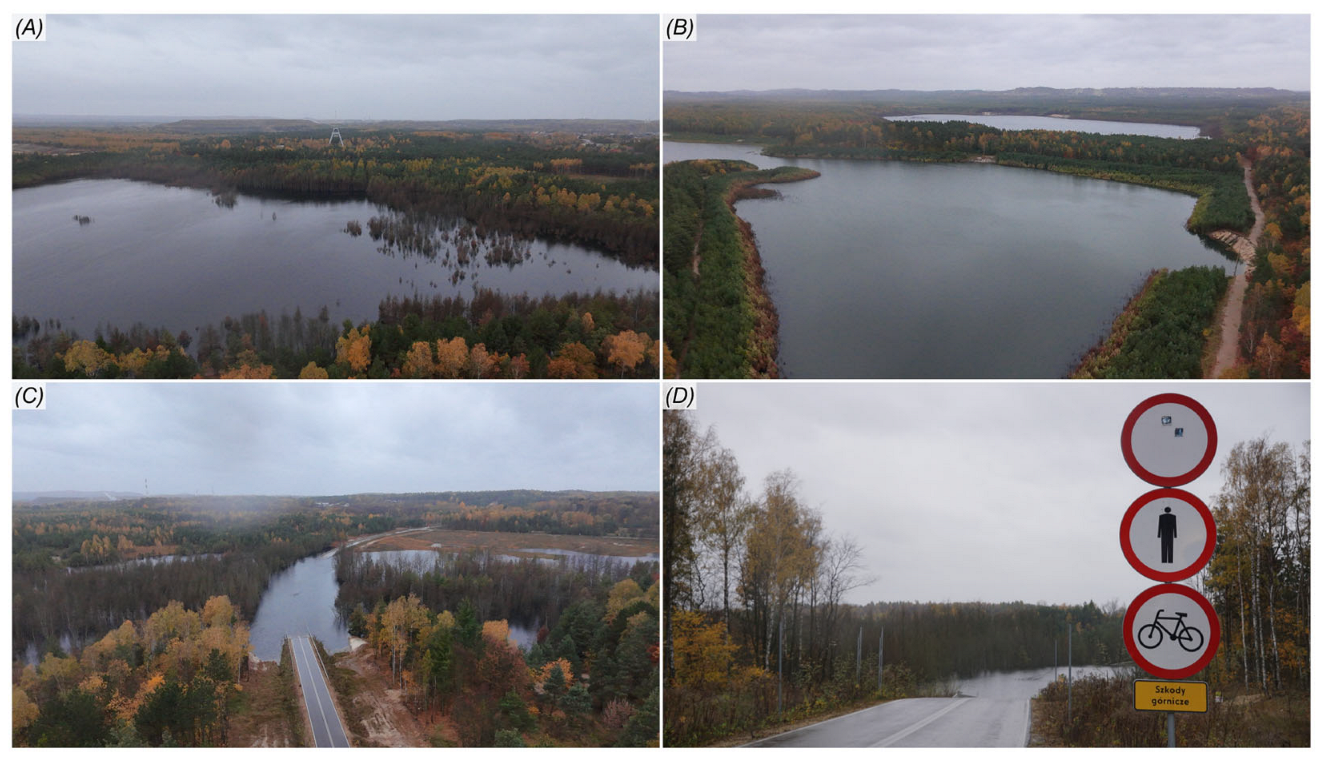
52,
73]. At the same time, rising groundwater levels have led to the formation of new inundation zones and wetlands, particularly in closed depressions such as former sand pits located within the former mining area (
Figure 2A,B,
Supplementary Video) [
74,
75]. In some places, water levels in these ponds have been rising at rates of several centimeters per day [
75]. In early 2024, rising water inundated a newly built bypass road in Bolesław, forcing its closure just weeks after opening (
Figure 2C,D) [
75]. These processes have been accompanied by changes in water chemistry [
76] and reduced geotechnical stability of the ground, leading to local slope failures and small landslides [
53].
Long-term mining has also resulted in extensive geotechnical impacts. The relatively shallow depth of workings, in many areas less than 100 m, combined with unfavorable geological conditions and caving mining methods, has led to the formation of numerous sinkholes, some of which were already observed during active stage of mining (
Figure 1B) [
77,
78]. The rapid groundwater rebound has led to land uplift of up to several tens of millimeters per year and has intensified suffusion processes, further weakening the rock mass already disturbed by decades of mining activity [
35]. Since 2022, many new sinkholes have appeared, with diameters of several dozen meters and depths reaching up to 20 m [
53]. These features pose direct hazards to land use, infrastructure, and residents. A recent inventory identified 1260 sinkholes, including more than 200 located within 20 m of buildings or roads [
53]. Many of them are relict structures that were previously backfilled during mining. Recent collapses occur mainly above historical shafts and shallow workings, where insufficient infill fails, potentially due to increased hydrostatic pressure and groundwater flow [
12]. Similar mechanisms of overburden failure, cumulative damage, and fracture propagation have also been documented in other mining regions affected by repeated exploitation and stress redistribution within multi-layered rock systems [
79,
80,
81,
82]. Overall, deformation processes in the “Olkusz–Pomorzany” mine result from the combined effects of shallow mining-induced subsidence, gradual compaction of dewatered aquifers, and rebound caused by mine flooding and re-saturation of the depleted aquifer system. These mechanisms together explain the complex spatial pattern of vertical ground movement observed in the AOI. At present, no active subsidence is recorded, given the time elapsed since the cessation of ore extraction in most parts of the mine [
53,
77,
83]. Only minor residual displacements may still occur locally above former workings, while ongoing deformation is mainly associated with groundwater rebound and the increase in pore pressure after mine closure [
52,
53].
3. Materials and Methods
The methodology of this study consisted of three main components.
In the first stage, meteorological time series were analyzed to characterize climatic conditions in the AOI. The analysis focused on air temperature, total and maximum daily precipitation, the number of precipitation days, snow cover duration, cloud cover, relative humidity, and wind speed. Based on these data, reference evapotranspiration () and Vertical Water Exchange () were calculated to quantify the regional climatic water balance. As the data came from a single measurement station, they were considered representative of the entire AOI. This assumption is justified because mining activities do not influence climatic parameters, which are controlled by regional atmospheric processes. These variables and derived indices have a direct impact on the water balance and are important for interpreting hydrological and hydrogeological conditions.
The second stage was based on InSAR data to identify and analyze vertical land movement within the AOI. This made it possible to distinguish between displacements caused by mining (e.g., residual subsidence due to the convergence of mine voids and mining-induced dewatering) and those linked to broader regional or climatic factors (e.g., hydrological drought). Additionally, time series of vertical land movement were cross-correlated with groundwater head measurements from piezometers to assess how groundwater level fluctuations influence ground deformation.
In the third stage, the analysis focused on hydrospectral indices sensitive to surface and near-surface water content, namely NDVI, NDWI, and Moisture Index. These indices are useful for tracking changes in vegetation water content and soil moisture, which are relevant for assessing drought processes related to both mining and regional climatic variability. Land cover maps combined with Sentinel-2 imagery were also used to detect changes in inundation and wetland areas associated with groundwater rebound after mine closure.
The InSAR and hydrospectral indices–land cover change analyses were conducted separately for the “Olkusz-Pomorzany” mine area and a control area located outside the zone of mining influence. This approach allowed for environmental changes related to mining or post-mining processes to be distinguished from those driven by broader regional trends.
The datasets used in this study covered different temporal ranges. Meteorological data were available for the longest period (January 1981–December 2024), providing a basis for long-term climate assessments. InSAR data were available for March 2018–December 2022 and March 2019–December 2023, while groundwater head measurements from piezometers covered January 2022–December 2024. NDVI, NDWI, and Moisture Index time series were available from July 2015 to December 2024, and annual land cover maps for 2019–2024. Considering these data availability ranges and the timing of mine closure (December 2021–01.2022), three analytical periods were defined.
To examine climatic variability at different temporal scales, three time intervals were used: January 1981–December 2024 for long-term trends; January 2016–December 2024 for conditions before and after mine closure; and January 2022–December 2024 for post-closure changes, enabling direct comparison with remote sensing datasets.
Two InSAR intervals (March 2018–December 2022 and March 2019–December 2023) were used to capture vertical land movement patterns before and after mine closure. The latter period was also combined with groundwater head data (January 2022–December 2024) to examine the relationship between ground deformation and groundwater rebound.
The periods January 2016–December 2024 and January 2022–December 2024 were selected to assess pre-closure, transitional, and post-closure conditions, enabling evaluation of how groundwater rebound and related hydrological changes are reflected in vegetation, surface water dynamics, and land cover.
3.1. Meteorological Data
To assess the influence of both long- and short-term meteorological trends on environmental change, time series of meteorological data were analyzed from the Polish Institute of Meteorology and Water Management—National Research Institute synoptic station in Kraków-Balice [
84]. This is the closest first-order synoptic station to the AOI, located approximately 23 km away (
Figure 1A). The station is part of the national meteorological observation network, which includes 981 stations in total: 63 first-order synoptic stations, 220 second-order climatological stations, 690 precipitation stations, and 8 special stations.
Although the analysis relied on data from a single meteorological station, this approach is justified because Kraków-Balice represents the same regional climatic zone as the AOI. Mining operations do not influence atmospheric conditions, and thus the Balice station provides reliable regional climatic input for hydrological interpretation. Consequently, these data were used to characterize the regional net hydraulic balance and to assess how broader climatic variability may have influenced water conditions within the AOI.
Historical meteorological data from this network are homogenized, so that the recorded variability reflects actual climatic changes rather than artifacts related to measurement or site modifications. Observations are performed hourly at eight standard times (00, 03, 06, 09, 12, 15, 18, and 21 UTC). The following parameters were used in the analysis: mean, maximum and minimum monthly air temperature, monthly total and maximum daily precipitation, mean monthly cloud cover, number of days with rainfall, snowfall and snow cover, mean monthly relative humidity, wind speed at 2 m, and water vapor pressure [
84]. Air temperature was measured using automated sensors placed 2 m above ground level. Daily maximum and minimum temperatures were reported for the standard 24 h period from 18:01 UTC of the previous day to 18:00 UTC of the current day. Precipitation was recorded at 00, 06, 12, and 18 UTC using rain gauges with a 200 cm
2 catchment area placed 1 m above ground. Daily totals were calculated for the period from 06:01 UTC to 06:00 UTC the following day. Cloud cover was expressed in oktas (eighths of the sky dome), ranging from 0 (clear sky) to 8 (overcast). Wind speed was measured at 2 m using an automated cup anemometer integrated with the synoptic station system. Relative humidity and water vapor pressure were recorded by hygrometric sensors operating at the same level. The vapor pressure data were derived from continuous humidity and temperature readings and expressed as monthly means in hPa [
65].
In addition to the descriptive analysis, the dataset was used to quantify climatic drivers of hydrological balance by
and
. The
was computed using the FAO-56 Penman–Monteith method [
85], according to Equation (1):
where
is the reference evapotranspiration [mm/day];
is net radiation at the surface [MJ/(m
2day)];
is soil flux heat density [MJ/(m
2day)];
is mean air temperature [°C];
is wind speed at 2 m height [m/s];
and
are the saturation and actual vapor pressure [kPa];
is the slope of vapor pressure-temperature curve [kPa/°C]; and
is the psychrometric constant [kPa/°C].
The actual vapor pressure was derived directly from the observed monthly mean water vapor pressure, which improved the accuracy of estimates. Monthly values of were obtained by multiplying daily means by the number of days in each month.
To assess the climatic water balance, the
was calculated as Equation (2):
where
is the monthly total precipitation [mm]. Positive values of VWE indicate potential groundwater recharge (water surplus), while negative values denote a climatic deficit and potential drought stress.
The calculated VWE represents the regional net hydraulic balance and provides a basis for assessing the impact of climate on the hydrological system within the AOI. Long-term VWE trends were used to establish the regional background of water deficit and potential climate-driven subsidence, serving as a reference for comparing climatic and mine-related influences in subsequent analyses.
The analysis covered the time intervals defined in
Section 3, with emphasis on both long-term climate variability and the period surrounding mine closure. Linear trends were fitted to the time series of selected variables to identify changes over multi-decadal and shorter periods. Linear functions were applied because they offer a consistent means of describing gradual climatic trends. All periods were defined from January to January to minimize the influence of seasonal variability on trend estimation [
86].
Meteorological information from these analyses was then used to interpret hydrological and hydrogeological changes, including vertical land movement, groundwater rebound, and variations in hydrospectral indices and land cover patterns.
3.2. EGMS-Based Vertical Land Movement and Groundwater Head Monitoring Data
Land movement was analyzed using data from the European Ground Motion Service (EGMS), which provides harmonized, high-resolution information on land movement across Europe with millimetric accuracy [
87,
88]. The dataset is derived from interferometric analysis of Sentinel-1 radar imagery acquired at six-day intervals, offering dense spatial coverage and consistent temporal resolution. Data are updated annually and generated using Persistent Scatterer Interferometry and Distributed Scatterer Interferometry techniques. EGMS is the first publicly available continental-scale land movement product and has been validated in multiple studies across Europe, confirming its reliability [
89,
90,
91,
92].
EGMS data were downloaded in CSV format and included time series of land movement, mean velocity, standard deviation, mean quadratic error, and spatial coordinates of observation points. The analysis used the Ortho product, which provides vertical and horizontal land movement components referenced to the European Terrestrial Reference Frame and resampled to a 100 m grid [
87,
88]. Given the low magnitude of horizontal land movement in the AOI, the analysis focused on the vertical component, which typically exhibits greater amplitude and clearer temporal patterns [
93]. Spatial and temporal patterns of land movement were analyzed using Geographic Information System (GIS) environment.
To complement this analysis, groundwater level data were obtained from the piezometric monitoring network established in the AOI (
Figure 1B) [
52]. This network consists of observation wells installed in former shafts and technological boreholes, designed based on long-term hydrogeological monitoring experience. A total of 36 piezometers were monitored, 26 located within the range of the former depression cone and 10 outside it. Most of them are screened in the Triassic aquifer, while four are screened in Upper Jurassic limestones. Groundwater head measurements were performed quarterly by accredited personnel from the “Olkusz-Pomorzany” mine using an electronic well whistle. Measurement errors were minimized through repeated readings [
52]. Groundwater level measurements were carried out according to certified industrial procedures commonly applied in the Polish mining sector. Although the exact instrumental accuracy is not publicly documented, the magnitude of the observed groundwater head variations substantially exceeds potential measurement uncertainty, confirming the reliability of the recorded data.
For this study, groundwater head analysis included 15 piezometers for which verified and temporally consistent records were available [
52]. The selected wells are distributed across the central part of the former “Olkusz–Pomorzany” mine, where the most intensive dewatering occurred, as well as in peripheral parts of the former depression cone and outside its range. This spatial configuration enables the assessment of both mine-related groundwater rebound and climate-driven groundwater fluctuations in zones weakly or not affected by mining drainage.
To investigate interrelations between groundwater head and land movement, each of the 15 piezometers was paired with the nearest EGMS observation point. Linear trends in vertical land movement were then estimated separately for the pre-closure (March 2019–December 2021) and post-closure (January 2022–December 2023) periods. Subsequently, average groundwater level dynamics were calculated for the same post-closure period to facilitate joint interpretation. This allowed for assessing the effects of groundwater rebound on vertical land movement, including potential time lags depending on the distance from the drainage center [
41]. Moreover, analyzing land movement patterns before mine flooding provided a baseline for identifying subsequent uplift related to groundwater rebound [
35].
3.3. Hydrospectral Indices and Land Cover Data
Changes in near-surface water conditions in the AOI are driven by two main factors: mining-related processes, including long-term dewatering and subsequent groundwater rebound, and regional climatic variability. These processes affect surface and subsurface hydrology, resulting in shifts in soil moisture, vegetation condition, and the extent of surface water bodies. Such changes can be effectively monitored using hydrospectral indices derived from satellite remote sensing [
46,
94].
In this study, three hydrospectral indices were analyzed: NDVI, NDWI, and Moisture Index.
NDVI reflects the condition and density of vegetation by contrasting reflectance in the near-infrared (NIR) and red bands. Its values range from −1 to +1, with negative values corresponding to water surfaces, values near zero indicating bare ground, and high positive values indicating dense, healthy vegetation. It is widely used to assess vegetation dynamics and their relationship with soil moisture and climatic variability [
95].
NDWI, using green and NIR bands, enhances the spectral response of open water bodies due to their strong absorption of NIR radiation. It is particularly useful for tracking changes in the extent of lakes, ponds, wetlands, and inundation zones, especially in areas affected by hydrological shifts such as groundwater rebound [
96].
Moisture Index, based on NIR and shortwave infrared (SWIR) bands, is sensitive to vegetation water content and canopy moisture. Because SWIR reflectance decreases with increasing water content in leaves, this index is commonly used to detect vegetation drought stress and surface moisture variations [
97].
Together, these indices provide complementary information on surface water distribution, soil moisture, and vegetation condition, supporting the interpretation of hydrological drought and groundwater rebound effects in post-mining environments [
43,
98].
Time series of NDVI, NDWI, and Moisture Index were derived from Copernicus Browser using Sentinel-2 Level 1C imagery [
99]. The Sentinel-2 mission provides global optical data at 10–20 m spatial resolution and 5–10 day temporal resolution, acquired by the Multi-Spectral Instrument with 13 spectral bands [
100].
To minimize atmospheric and radiometric noise, only cloud-free scenes acquired over the AOI were used. This approach is commonly applied in long-term vegetation and moisture trend studies to ensure stable and comparable reflectance values over time [
101,
102]. After filtering, 115 scenes were used for the “Olkusz–Pomorzany” mine area (
Table 1) and 65 for the control area outside the mine (
Table 2).
The analysis covered the time intervals defined in
Section 3, with emphasis on both long-term environmental variability and the period surrounding mine closure. Linear trends were fitted to the time series of NDVI, NDWI, and Moisture Index to identify gradual changes over multi-year periods and shorter intervals. All periods were defined from January to January to minimize the influence of seasonal variability on trend estimation.
To better understand how these hydrological changes are expressed at the landscape scale, annual land cover data were incorporated into the analysis. Land cover maps for 2019–2024 were obtained from Polish Space Agency [
103]. These maps are produced using the Sentinel-2 Global Land Cover methodology developed by Space Research Centre of the Polish Academy of Sciences. This approach applies automated classification of multi-temporal Sentinel-2 imagery to generate high-resolution (10 m) maps with ten land cover classes, including built-up areas, agricultural land, deciduous and coniferous forests, grasslands, wetlands, peatlands, bare ground, and surface water [
104].
Raster datasets were processed in GIS to calculate the surface area of each land cover class for each year. This allowed for the quantification of wetland expansion, formation of new water bodies, and other land cover transformations associated with hydrological changes induced by groundwater rebound in the AOI.
Since surface water changes were most significant in the central part of the former “Olkusz–Pomorzany” mine area, this zone was selected for additional visual inspection using Sentinel-2 true-color imagery. These images were obtained from Copernicus Browser and originate from the same Sentinel-2 Level 1C dataset used to derive NDVI, NDWI, and Moisture Index time series [
99]. One cloud-free image was selected for each year in mid-June to provide a consistent reference point within the growing season and to minimize seasonal variability in visual interpretation. The following scenes were analyzed: 12 June 2019, 13 June 2020, 21 June 2021, 26 June 2022, 1 June 2023, and 15 June 2024. This step enabled detailed mapping of new inundation zones, wetland expansion, and other surface changes that may not be fully captured through automated classification alone.
4. Results and Discussion
4.1. Observed Climatic Trends and Variability
The AOI’s climate reflects typical Central European conditions, with distinct seasonality, cold winters, warm summers, and most precipitation occurring during the warmer part of the year. Snow cover usually persists for several months, with most snowfall between December and March, contributing to spring groundwater recharge.
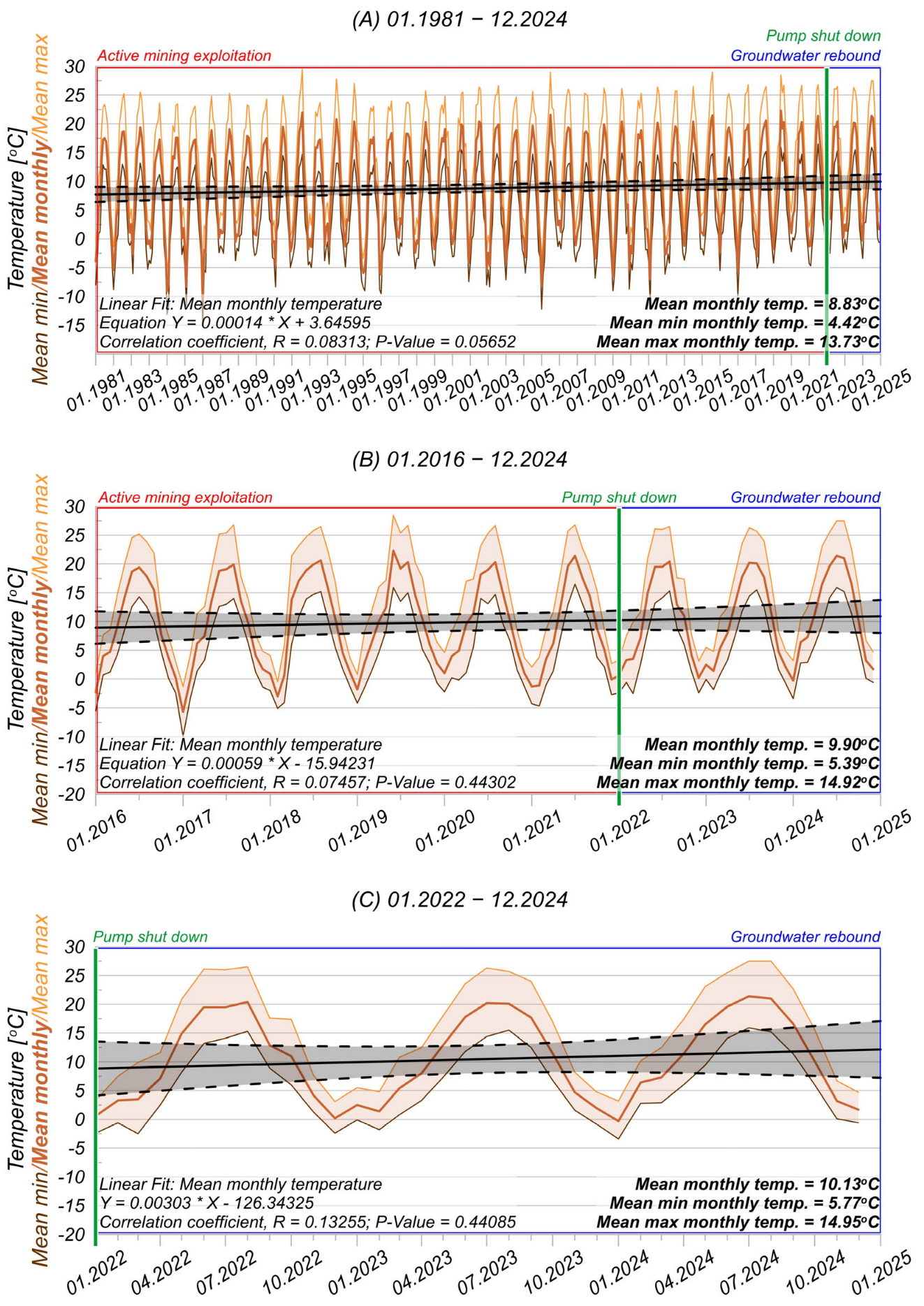
The AOI is situated in a moderately cool temperate climate zone on the Silesian–Kraków Upland. Long-term meteorological records from the synoptic station in Kraków–Balice (1981–2024) indicate that the mean annual air temperature is 8.83 °C, with July being the warmest month (19.05 °C) and January the coldest (−1.67 °C). Mean monthly temperatures typically range from about −2 °C in winter to +19 °C in summer (
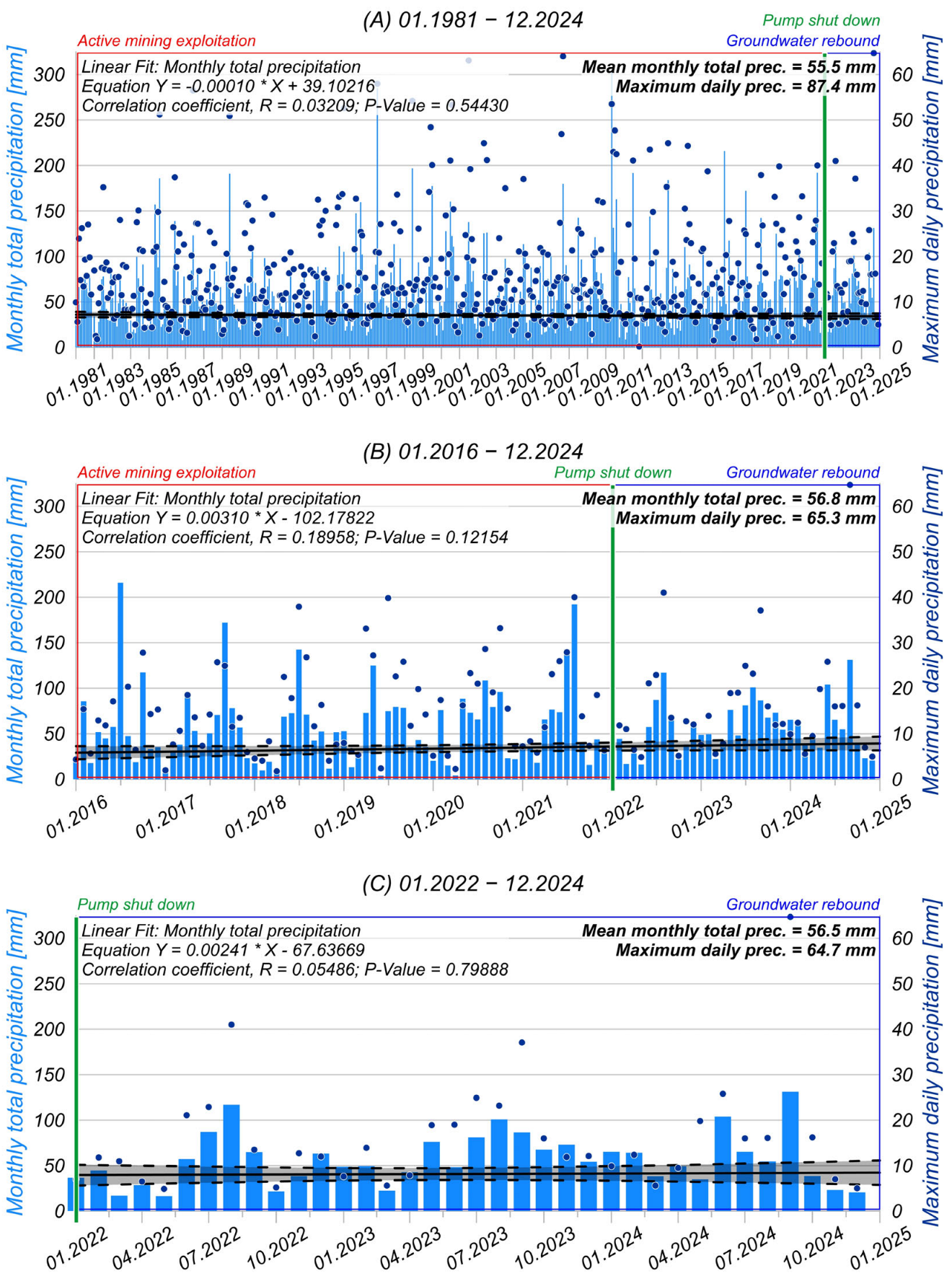
Figure 3). The mean annual precipitation during this period is 656.6 mm, with the highest monthly values recorded in July (90.6 mm) and June (81.1 mm), and the lowest in February (31.9 mm) and January (37.7 mm). Precipitation is strongly seasonal, with the wettest months typically occurring between May and August (
Figure 4).
Over the full 1981–2024 period, air temperature shows a clear seasonal cycle with a gradual warming trend of 0.0168 °C per year. Although the increase may appear small, it represents a steady rise in temperature over several decades. The mean monthly temperature for this period is 8.83 °C, with mean minimum and maximum values of 4.42 °C and 13.73 °C, respectively. In the short-term intervals corresponding to the final years of mine operation (2016–2024) and the post-closure rebound phase (2022–2024), mean temperatures are higher. For 2022–2024, the mean monthly temperature reached 10.13 °C, with minimum and maximum values of 5.77 °C and 14.95 °C, exceeding the long-term averages by approximately 1.3 °C for the mean and showing similar increases for the extremes (
Figure 3).
These warm anomalies are consistent with broader climatic trends across Central Europe. The rise in minimum temperatures indicates milder winters and fewer cold extremes, while higher maximum temperatures increase the frequency of warm days in spring and summer. Together, these shifts can shorten the snow season, accelerate spring melt, and intensify summer evapotranspiration, all of which affect the local water balance [
38,
105].
Precipitation has remained relatively stable over the 1981–2024 period, with no significant long-term trend in total amounts. In the shorter intervals, mean annual precipitation was approximately 682 mm for 2016–2024 and 678 mm for 2022–2024, slightly above the long-term average (
Figure 4).
This indicates that, despite year-to-year variability, the overall precipitation regime has remained largely unchanged. Rainfall remains strongly seasonal, with most precipitation between May and August. Short but intense rainfall events are also hydrologically important. Maximum daily precipitation reached 87.4 mm during the full record, and 65.3 mm and 64.7 mm in 2016–2024 and 2022–2024, respectively. Although the frequency of such events shows no clear trend, their hydrological impact is considerable. Notably, extreme rainfall episodes in 1997 and 2010 coincided with major floods across Central Europe, including Poland, and resulted in unusually high water inflows to the “Olkusz–Pomorzany” mine [
52]. Even if infrequent, such events can temporarily dominate groundwater recharge and surface water dynamics.
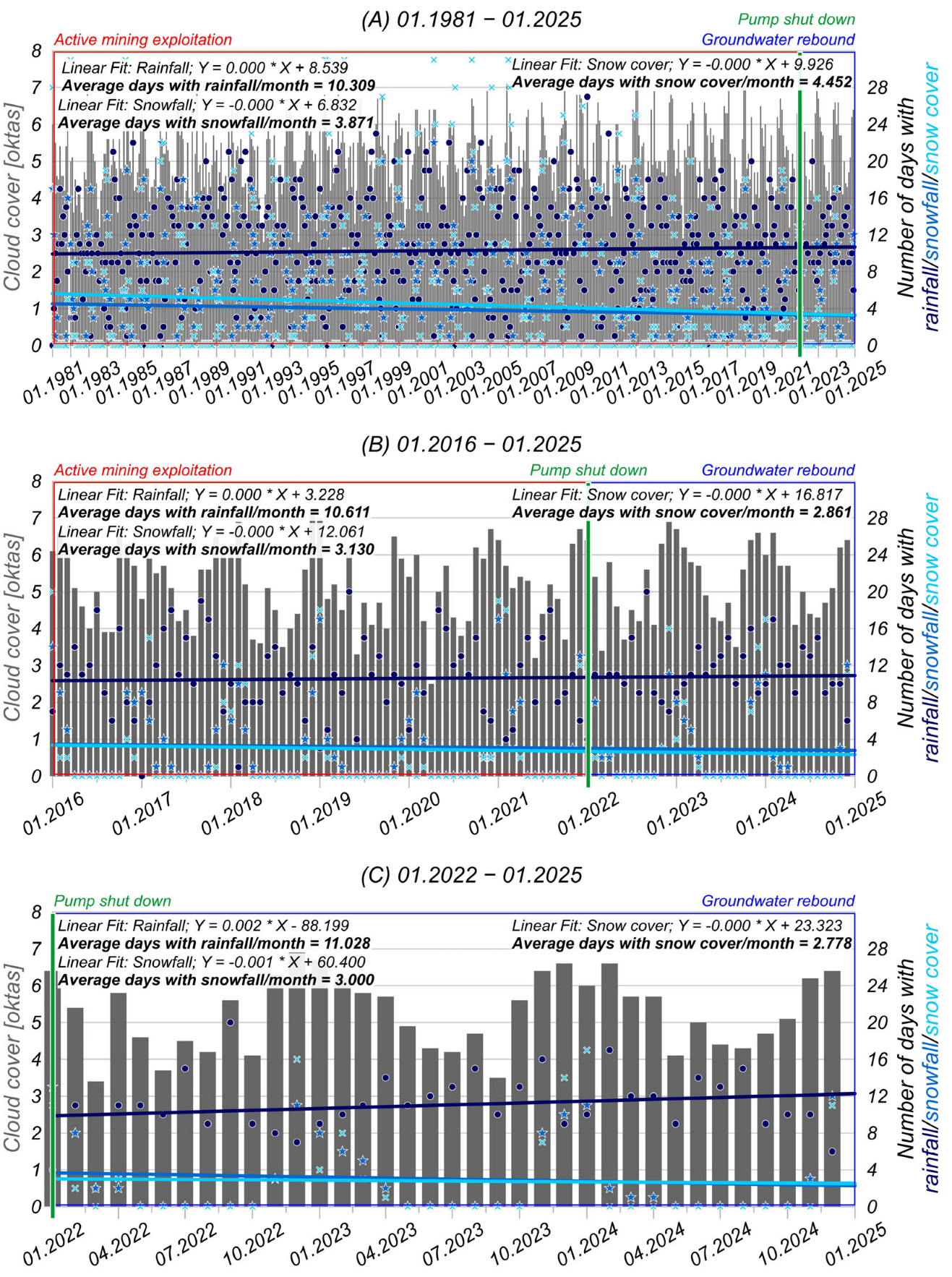
Supplementary meteorological indicators provide further context (
Figure 5). Average cloud cover remained stable at around 5 oktas throughout the 1981–2024 period. The average number of rainy days per month increased slightly, from 10.3 in the long-term record to 11.0 in 2022–2024, suggesting slightly wetter conditions in recent years despite stable total precipitation. In contrast, the number of days with snowfall and snow cover has gradually declined. On average, there were 3.9 days with snowfall and 4.5 days with snow cover per month in the long-term period, compared to 3.1 and 2.8 days, respectively, in the post-closure phase. These changes indicate milder winters and a shorter snow season, consistent with broader regional climatic shifts in Central Europe [
106,
107].
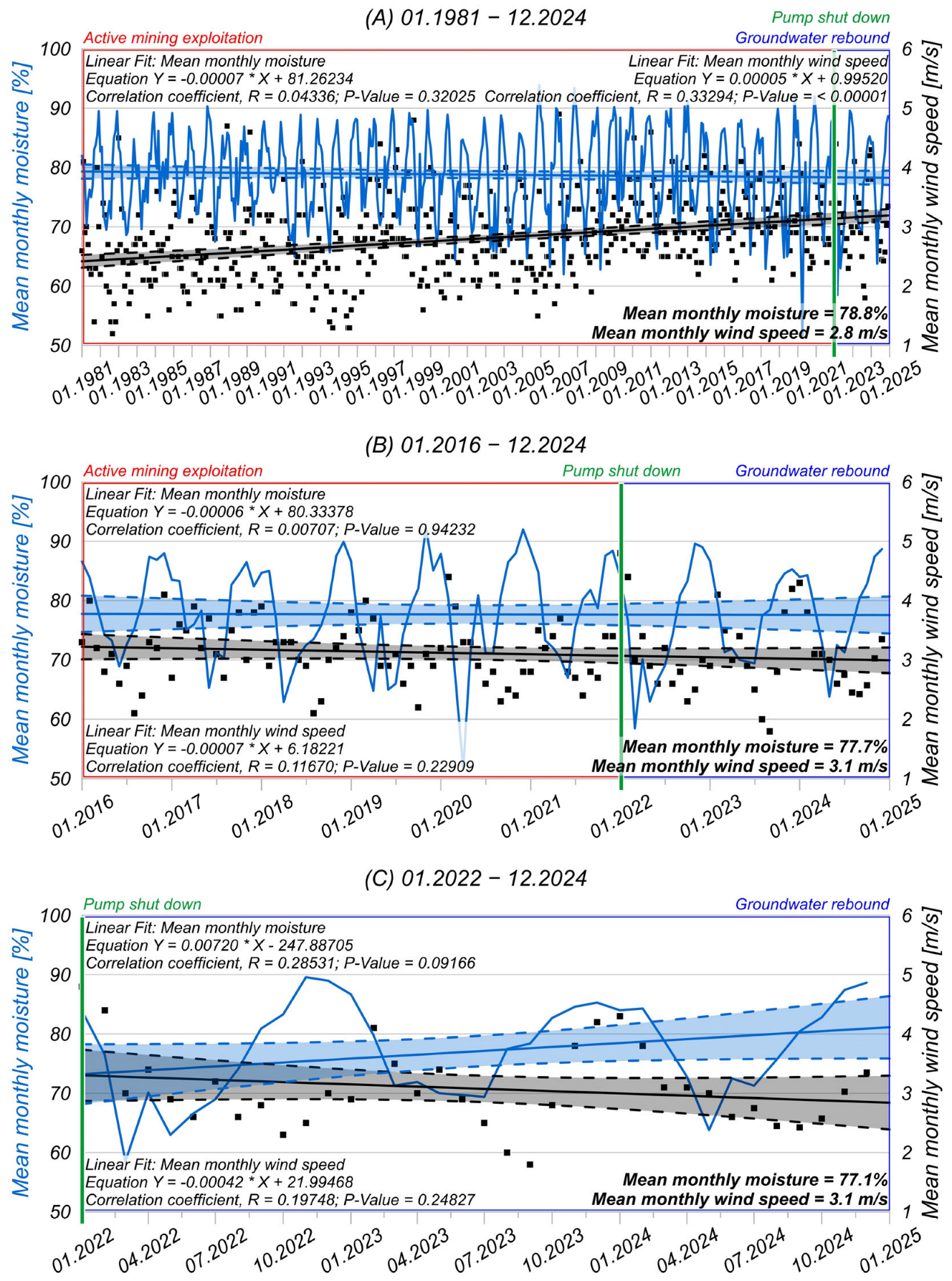
Additional parameters describing atmospheric moisture and air circulation further illustrate temporal variability relevant to hydrological processes (
Figure 6). Mean monthly moisture in the AOI shows strong annual seasonality, with the highest values observed in summer months and the lowest in winter. Overall, mean monthly moisture decreased slightly across all analyzed periods, averaging 78.8% for 1981–2024, 77.7% for 2016–2024, and about 77.1% for 2022–2024. In the two earlier intervals, a weak downward trend was observed, whereas in the most recent period (2022–2024) a slight upward tendency is evident. However, this increase is minor and observed over a short time interval, which limits the possibility of drawing robust conclusions about long-term tendencies.
Wind speed also exhibits clear seasonality, with the highest values in winter and the lowest in late summer (
Figure 6). Despite this cyclic pattern, a slight but statistically significant upward trend was identified, with mean values increasing from 2.8 m/s in the long-term record (1981–2024) to 3.1 m/s in both 2016–2024 and 2022–2024. These changes affect evaporation and surface–atmosphere water exchange, with stronger winds in recent years enhancing potential evapotranspiration, particularly during warmer months [
108]. Due to ongoing climate change, extreme wind events are becoming more frequent, and higher wind speeds tend to increase evaporation rates by transporting water vapor away from the surface, lowering local humidity and facilitating further vapor loss [
108,
109]. However, no consistent long-term trend in wind speed is evident across Europe, as regional observations indicate both increasing extreme events and a general decrease in mean wind speeds in parts of Central Europe, suggesting a complex and spatially variable pattern [
110].
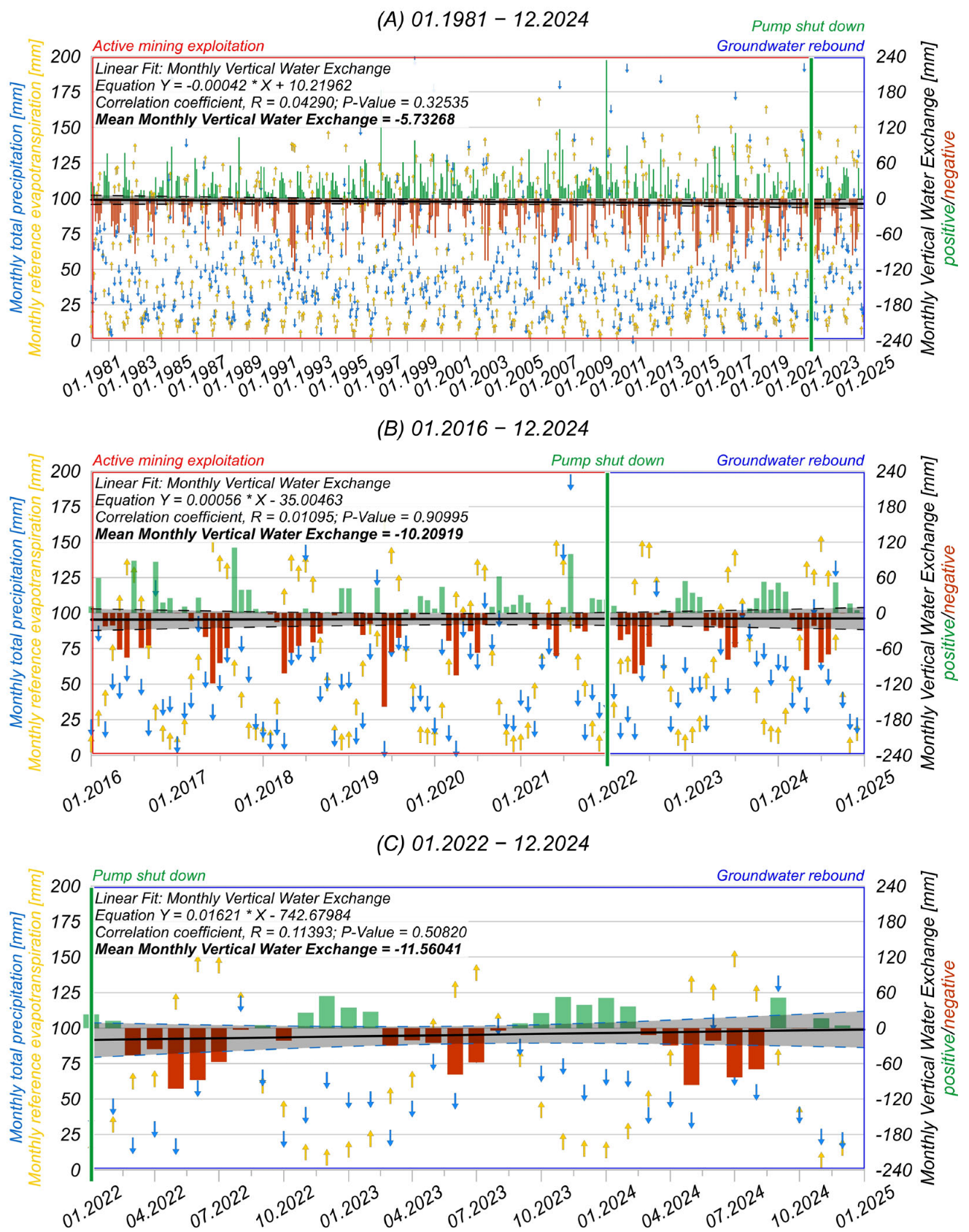
To evaluate the climatic water balance,
and
were calculated (
Figure 7). The long-term mean
shows strong annual seasonality, with the highest values observed in summer and the lowest in winter, following a temporal pattern similar to precipitation and other analyzed meteorological parameters (
Figure 3,
Figure 4,
Figure 5 and
Figure 6). The calculated mean monthly
, defined as the difference between precipitation and
, averaged −5.7 mm/month for 1981–2024, indicating a persistent regional water deficit. In 2016–2022, this deficit deepened to −10.2 mm/month, and in 2022–2024 it reached −11.6 mm/month, suggesting that despite comparable precipitation totals, enhanced evapotranspiration under changing climatic conditions reduced the potential for effective groundwater recharge within the AOI.
These climatic shifts have direct implications for the local water balance. Shorter snow seasons and warmer winters limit spring recharge of aquifers, which historically depended substantially on snowmelt infiltration. Higher temperatures increase evapotranspiration, leading to soil moisture deficits and more intense summer droughts. Extreme rainfall events, although sometimes abundant in total volume, often produce rapid surface runoff rather than infiltration, further constraining groundwater replenishment. Similar patterns have been documented elsewhere in Poland, where rising temperatures and altered precipitation regimes have caused shallow aquifer depletion and measurable land subsidence [
35]. Long-term, climate-driven groundwater decline, as observed in the AOI, can lead to aquifer compaction rates of several millimeters per year even in the absence of active dewatering [
38,
54,
111].
In the AOI, these climatic influences interact with post-mining processes. The warming trend, changing precipitation regime, and reduced snow cover act together with groundwater rebound, shaping both hydrogeological conditions and surface deformation. This creates a complex environmental response that requires distinguishing regional climatic effects from mining-related impacts. These interactions are examined in the following sections through the analysis of vertical land movement and hydrospectral indices derived from satellite data for both the mining-affected zone and the external control area.
4.2. Vertical Land Movement Patterns and Groundwater Rebound Dynamics
4.2.1. General Characteristics of Vertical Land Movement
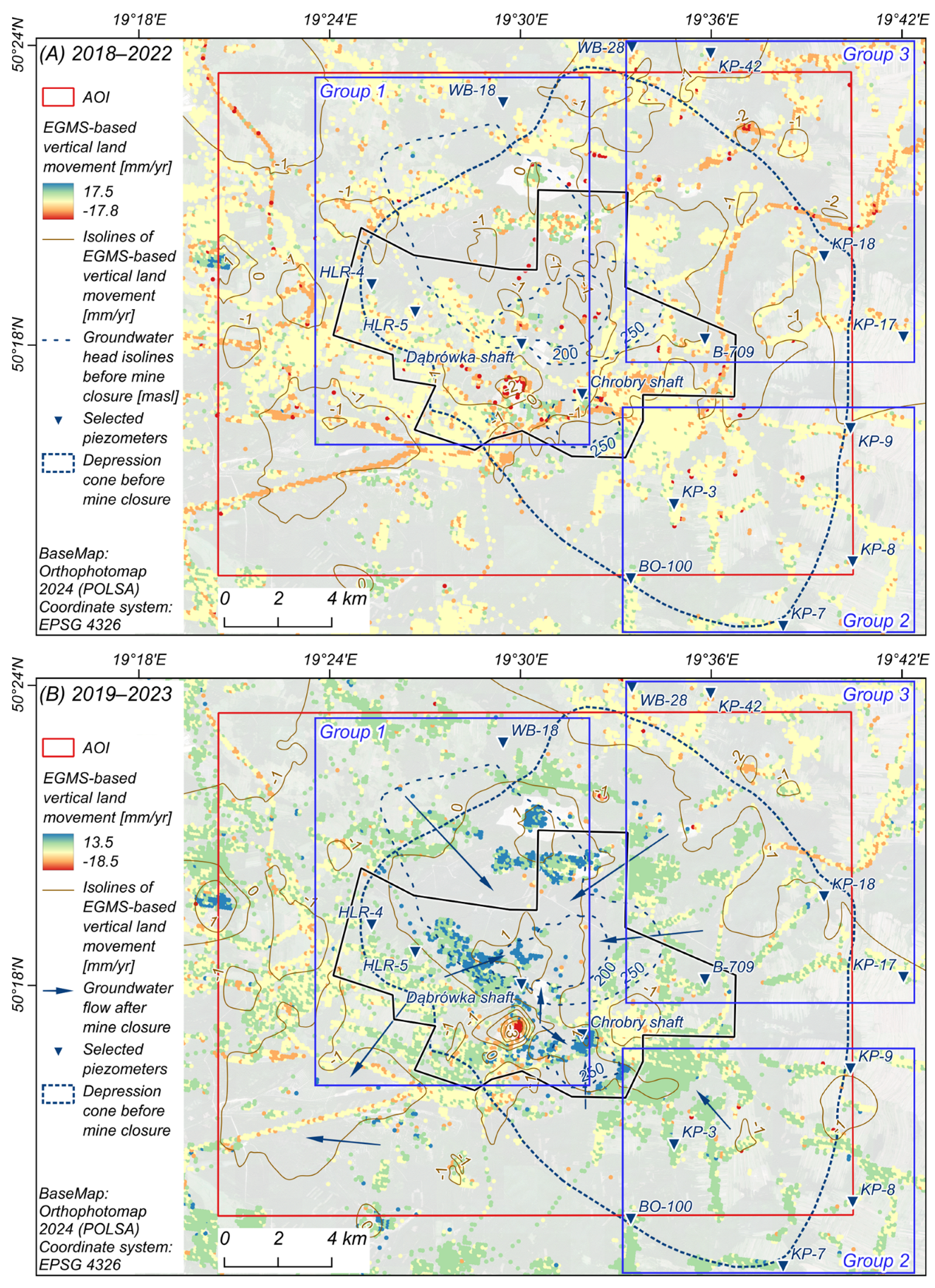
Vertical land movement in the AOI is generally low, ranging from −17.8 to +17.5 mm/year during 2018–2022 and from −18.5 to +13.5 mm/year during 2019–2023. The mean rate of vertical movement for the entire AOI was −0.8 mm/year in 2018–2022 and −0.6 mm/year in 2019–2023, indicating minor but continuous subsidence. Similar values were recorded in the control area (−0.8 mm/year and −0.7 mm/year, respectively) (
Table 3 and
Table 4,
Figure 8). This suggests that land surface beyond the mining zone experienced slow and ongoing subsidence, likely related to regional climatic effects described in
Section 4.1.
In contrast, land deformation patterns within the “Olkusz–Pomorzany” mine area show clear spatial variability between the two analyzed periods (
Table 3 and
Table 4). During 2018–2022, vertical movement rates in the mine area were comparable to those outside the mine, showing a generally uniform and slow subsidence (mean −0.9 mm/year). In the later period (2019–2023), the spatial pattern changed significantly. The mean rate of vertical movement in the mine area was −0.4 mm/year, lower than the mean for the AOI (−0.6 mm/year) and the control area (−0.7 mm/year). A broad uplift zone developed over the central part of the “Olkusz–Pomorzany” mine, extending northward toward the Błędów Desert. The maximum uplift reached almost +2 mm/year in the former drainage center, where the largest historical groundwater drawdown had occurred (
Table 3 and
Table 4,
Figure 8).
The geometry of this uplift zone closely corresponds to the extent of the former depression cone within the Triassic aquifer, elongated north–north-east in the direction of regional groundwater flow following mine flooding in late 2021–early 2022 (
Figure 1B and
Figure 6). Outside this zone, vertical movement rates remained similar to those from the earlier observation period, indicating stable but slight ongoing subsidence across areas unaffected by mining.
Apart from these regional subsidence and uplift trends, in both periods, a small zone of localized subsidence (around −2 to −3 mm/year) was observed south of the Dąbrówka shaft. This area corresponds to former tailings ponds, where loose post-processing materials continue to compact. A small uplift zone (up to +3 mm/year) was also recorded at the western edge of the AOI, near a wastewater treatment facility, likely reflecting continuous material deposition over time. Their magnitudes and extents remained nearly unchanged between the two analyzed intervals (
Figure 8).
The density of EGMS measurement points was comparable in both periods, averaging around 19 points/km
2 in the control area and 30 points/km
2 in the mine area (
Table 3 and
Table 4) [
103]. Spatial coverage was uneven, however, particularly in forested regions, which may obscure the full extent of observed uplifts in 2019–2023. Incomplete EGMS coverage could lead to under- or overestimation of deformation amplitudes after spatial interpolation, especially within the uplift zone (
Figure 6). Although most of the observed deformation rates fall within the nominal precision range of EGMS (±1 mm/year), these values refer to the velocity precision under optimal conditions rather than absolute accuracy [
92]. Nevertheless, the spatial coherence of the detected uplift pattern, its correspondence with the extent of the former depression cone, and the clear temporal shift from pre-closure subsidence to post-closure uplift strongly suggest that the observed deformation reflects a genuine physical process rather than random measurement noise. Similar results were independently validated in the nearby Trzebinia mining area (approximately 15 km south-east of Olkusz), where EGMS-derived velocities showed very good agreement with precise leveling data [
11]. Therefore, the EGMS data used in this study are considered reliable within the expected uncertainty range. Despite the relatively small uplift values visible in the interpolated EGMS maps (
Figure 8), localized deformation within the former mining zone is higher, as shown in the piezometer-based time series discussed in
Section 4.2.2.
4.2.2. Groundwater Rebound and Related Surface Uplift
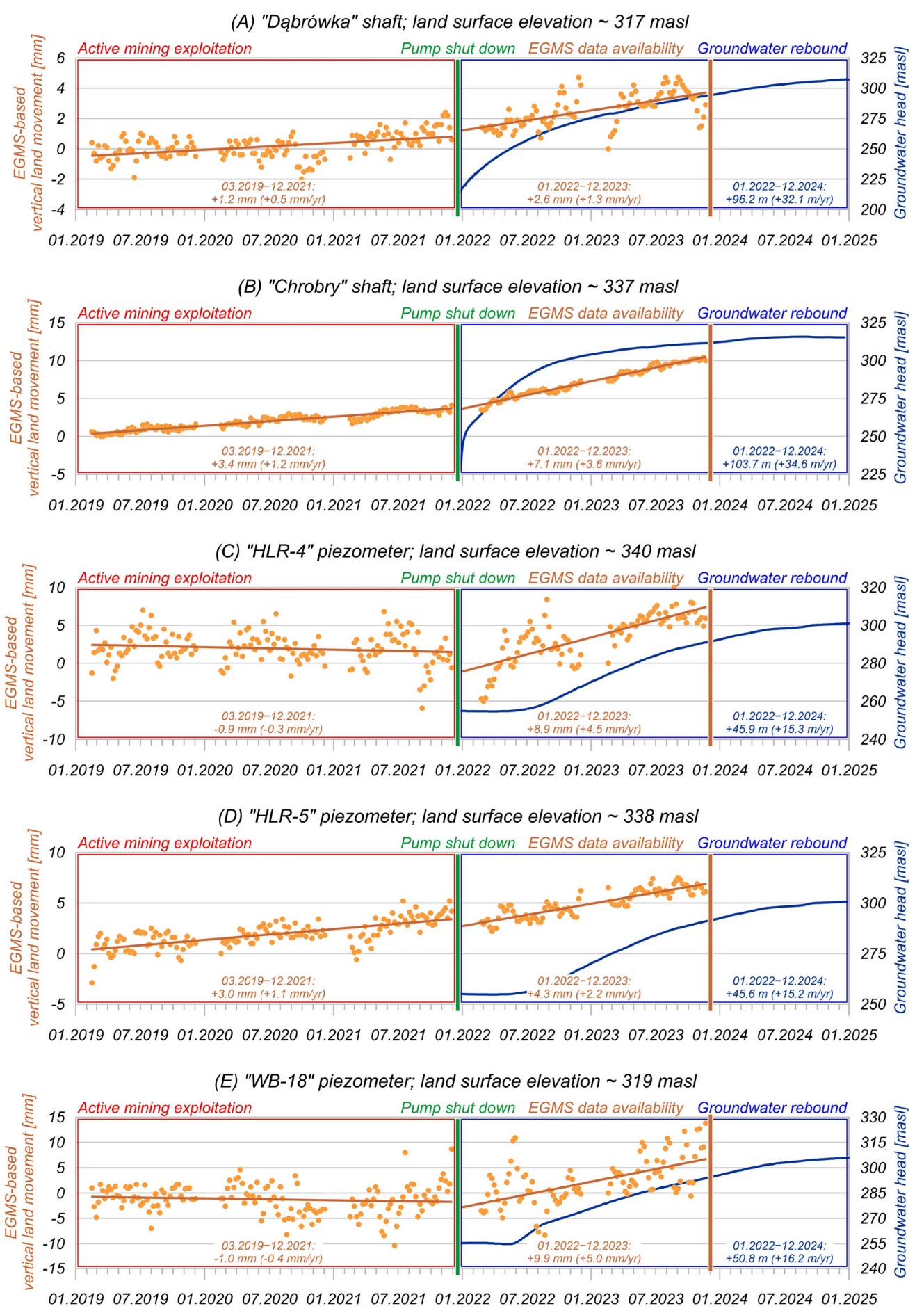
Groundwater monitoring data from fifteen piezometers show spatial differences in groundwater rebound and the link with vertical land movement after the closure and flooding of the “Olkusz–Pomorzany” mine (
Figure 9,
Figure 10 and
Figure 11). On the basis of their spatial distribution, three groups of piezometers were distinguished, corresponding to the main hydrogeological zones of the AOI (
Figure 8) [
52]. Group 1 covers the central, western, and north-western parts of the former mine, where historical groundwater drawdown was greatest and where rebound is now strongest. Group 2 includes piezometers in the south-eastern part of the AOI, in the peripheral zone of the former depression cone. Group 3 comprises sites in the eastern and north-eastern parts of the area, largely outside the cone of depression, where the impact of mining on groundwater conditions has been small.
The strongest rebound and highest uplift rates occur in the central part of the AOI, in the former shafts “Dąbrówka” and “Chrobry”, where dewatering was most intensive (
Figure 8A and
Figure 9A,B). Between January 2022 and December 2024, groundwater heads rose by about 96.2 m (32.1 m/year) in the Dąbrówka shaft and by about 103.7 m (34.6 m/year) in the Chrobry shaft. The groundwater rise follows an exponential recovery curve that gradually flattens towards the end of 2024. The related land uplift reaches about 1.3 mm/year at Dąbrówka and about 3.6 mm/year at Chrobry. Small uplift (0.5–1.2 mm/year) was already visible before mine flooding, most likely due to early recovery of the groundwater system after ore extraction ceased in 2020, when drainage was gradually reduced but pumping was still in operation [
52].
In the western part of the mine area, at piezometers HLR-4 and HLR-5, groundwater rebound is around 45–46 m (roughly 15 m/year) (
Figure 8 and
Figure 9C,D). At HLR-4, located farther from the former drainage center, post-closure uplift is about 4.5 mm/year, whereas at HLR-5, closer to the mine center, uplift is about 2.2 mm/year. This difference probably reflects local geological variability that controls aquifer system compressibility and vertical stress transfer. Before mine flooding, HLR-4 showed a slight subsidence trend (about −0.3 mm/year) and HLR-5 a small uplift (about +1 mm/year), which points to generally stable conditions during the final phase of drainage.
Farther north, at WB-18, located beyond the formal depression cone but within a zone of strong regional groundwater inflow, groundwater rebound reached about 50.8 m (16.2 m/year) (
Figure 8 and
Figure 9E). This rise was accompanied by land uplift of about 5.0 mm/year, more than five times higher than before mine closure (−0.4 mm/year). The parallel development of groundwater rebound and uplift shows a strong link between aquifer system recovery and surface deformation in this part of the AOI. Overall, piezometers in Group 1 show the clearest and most direct response to mine flooding, with uplift magnitude closely following the local rate of groundwater rebound (
Figure 9). Here, mine-induced pore pressure recovery in the Triassic aquifer, which had been most heavily drained, is the dominant control.
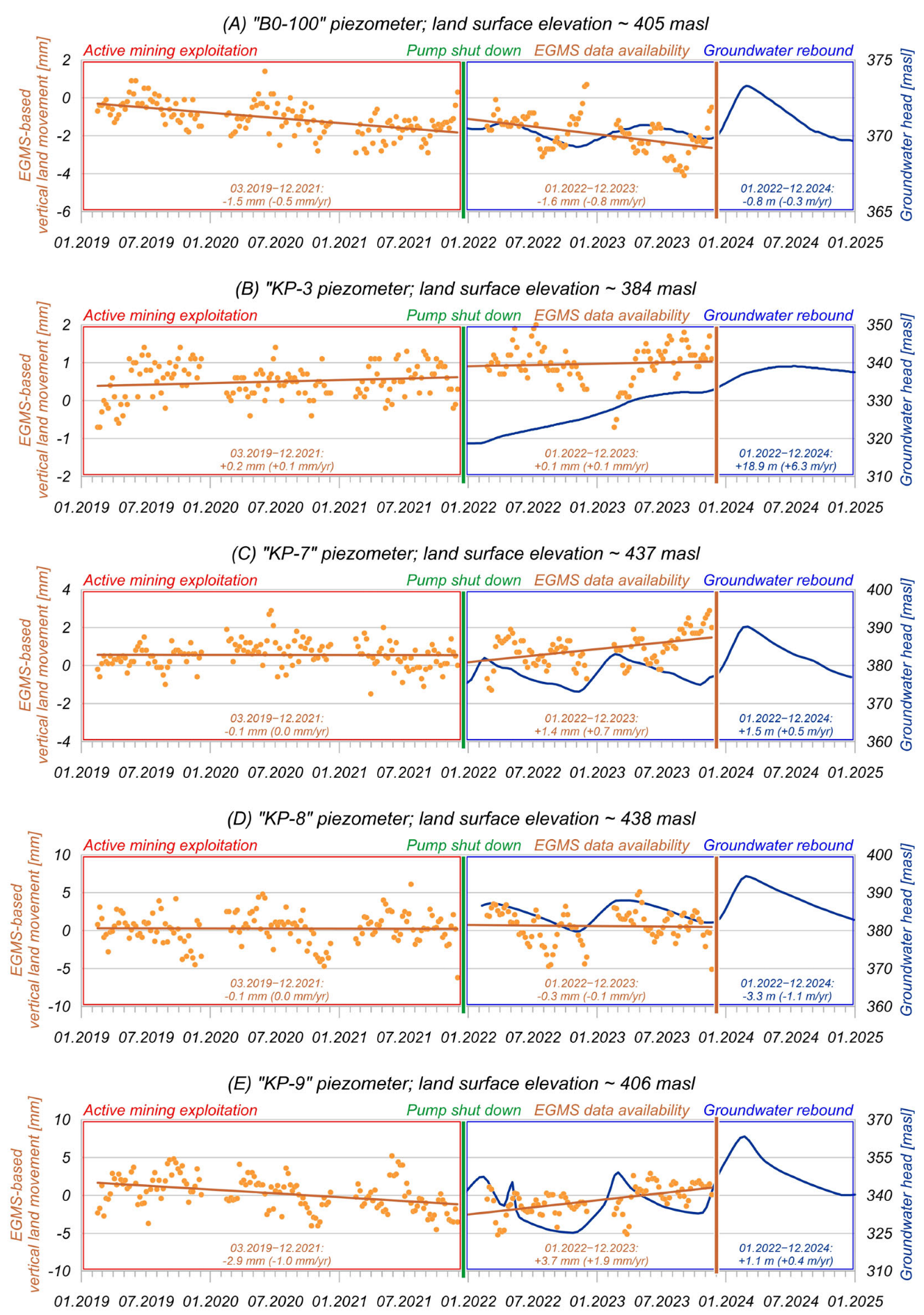
Group 2 includes piezometers in the south-eastern and southern parts of the AOI, where the depression cone gradually passes into unaffected conditions (
Figure 8). The largest rebound in this group is observed at KP-3, the piezometer closest to the former drainage center (
Figure 8 and
Figure 10B). Between 2022 and 2024, groundwater heads rose by about 19 m (6 m/year), while land uplift remained very small, about 0.1 mm/year. The time series shows a slight increase in uplift towards the end of 2023, which may reflect a delayed surface response to increasing pore pressure. Such time lags are expected and depend on local geological, hydrogeological, and geomechanical factors, including aquifer thickness and compressibility [
7,
8].
In the remaining Group 2 piezometers (BO-100, KP-7, KP-8, KP-9), groundwater levels show moderate but clearly seasonal changes, from about −1 m/year to +0.5 m/year (
Figure 10). This pattern points to a strong hydraulic connection with the surface and a major role of precipitation and vertical recharge (see
Section 4.1). Before mine closure, EGMS data indicate small subsidence of up to about −1 mm/year; after closure, the trends change slightly. KP-3, KP-7, and KP-9 now show small uplifts of up to about +1.9 mm/year, while BO-100 and KP-8 still show minor subsidence (down to about −0.8 mm/year). Deformation in this zone therefore seems to depend mainly on local hydrogeology and seasonal moisture balance, with only a weak signal from mine-related rebound (
Figure 10).
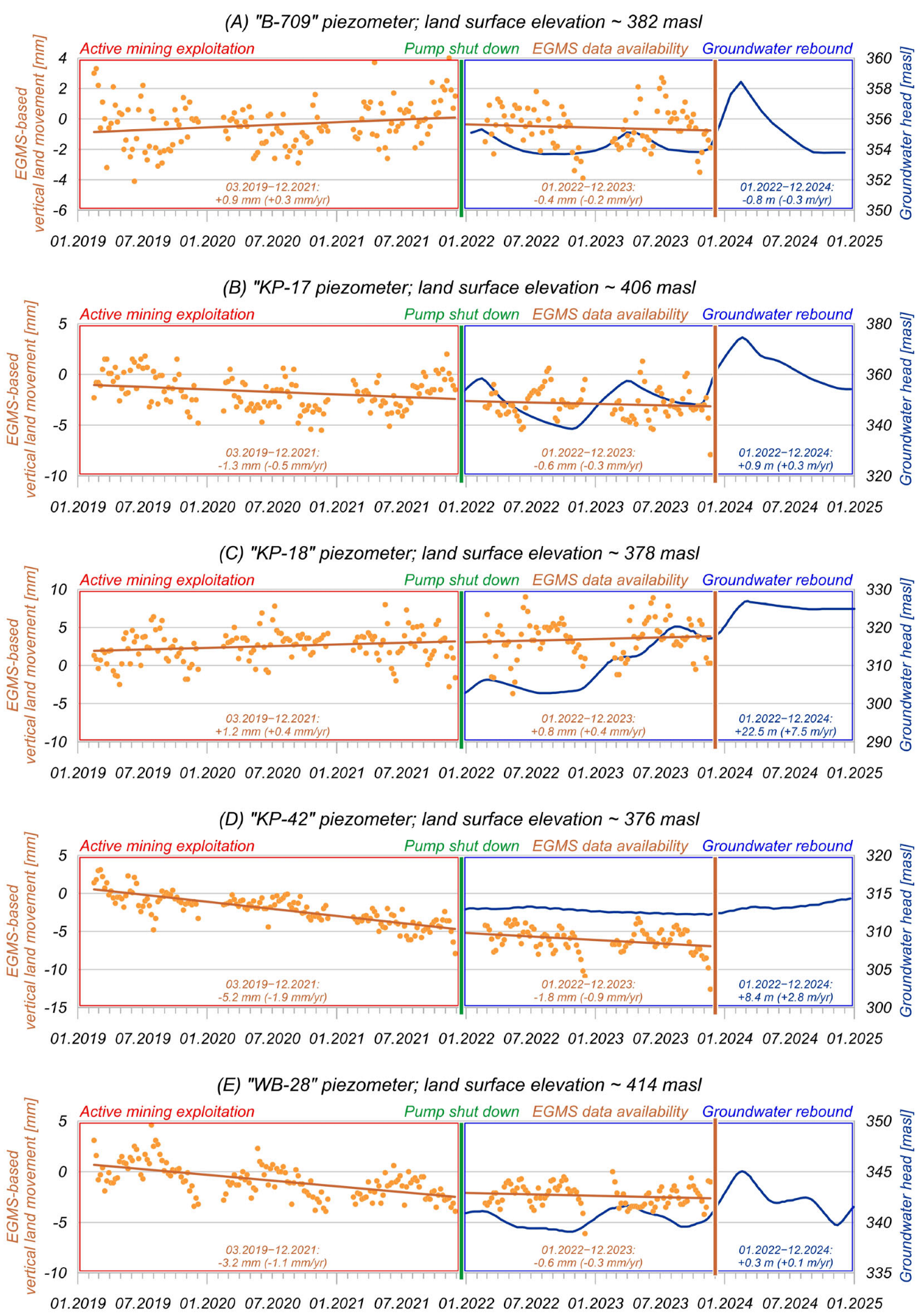
Piezometers in Group 3 are located in the eastern and north-eastern parts of the AOI, where the influence of mining dewatering was limited or absent (
Figure 8). The largest rebound in this group occurs at KP-18, near the edge of the former depression cone, where groundwater heads rose by about 22.5 m (around 7.5 m/year) after mine closure (
Figure 11C). The associated uplift is about 0.4 mm/year, similar to the pre-closure trend, which suggests that rebound is damped here by lower local transmissivity.
At B-709, the piezometer closest to the mining-induced drainage center within Group 3, groundwater rebound is very small (about +0.9 m between 2022 and 2024, or 0.3 m/year), and the time series is dominated by seasonal changes driven by meteorological conditions (
Figure 11A). Vertical land movement is also small, with rates of about +0.3 mm/year before flooding and −0.2 mm/year after, therefore this location is not affected by regional rebound.
The northernmost piezometers, KP-42 and WB-28, located beyond the depression cone, show substantial seasonal variability in groundwater head together with a consistent downward trend of the land surface (
Figure 8 and
Figure 11D,E). Mean vertical movement here is between −1 and −2 mm/year both before and after mine flooding, which points to slow consolidation of near-surface deposits under climatic forcing. In KP-42, the deeper groundwater level (around 310–315 m a.s.l.) and higher surface elevation (about 376 m a.s.l.) likely weaken short-term coupling between head changes and surface motion, leading to gradual but steady subsidence. The smaller uplift values compared to other mines also reflect the geological conditions of the “Olkusz–Pomorzany” mine. The rebound occurs primarily within shallow Triassic carbonate formations of low compressibility, which limits vertical deformation even under substantial pore-pressure recovery [
30,
35,
112,
113,
114]. In addition, EGMS data cover the period only until December 2023, while groundwater rebound began in early 2022; thus the deformation signal likely represents an early stage of the post-closure response and may increase as rebound progresses.
Nevertheless, taken together, the three groups show that the strength of land-surface uplift decreases with distance from the former drainage center and with diminishing groundwater rebound. In the central and north-western parts of the AOI, uplift is controlled mainly by mine flooding and pore pressure recovery, whereas towards the margins and beyond the former depression cone, deformation is increasingly driven by climatic and lithological factors only [
52].
4.3. Hydrospectral Indices and Land Cover Change
4.3.1. Surface Moisture and Vegetation Response Derived from Hydrospectral Indices Before and After the Mine Closure
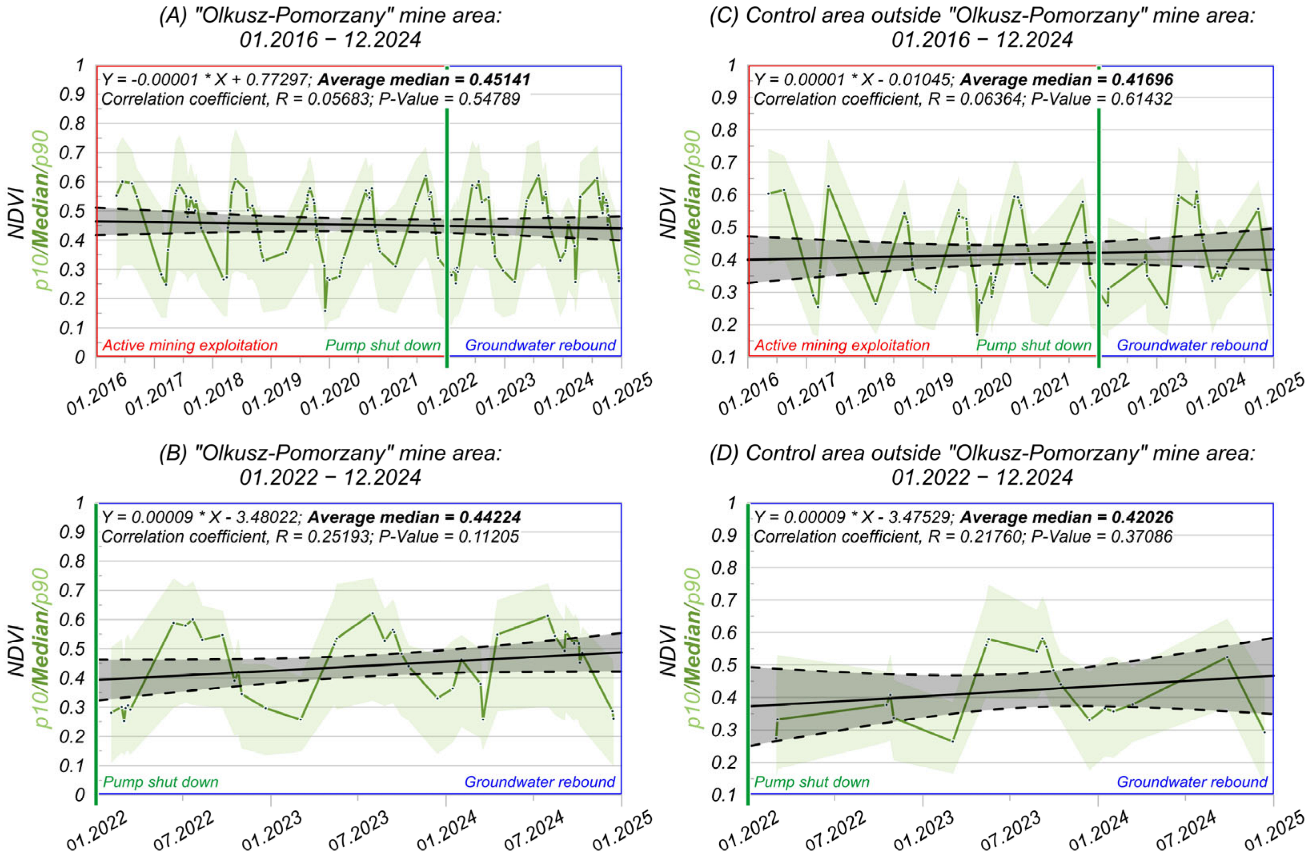
The temporal variability of NDVI, NDWI, and Moisture Index reflects seasonal vegetation dynamics and changes in surface moisture conditions in both the Olkusz–Pomorzany mine area and the control area outside the mine (
Figure 12,
Figure 13 and
Figure 14). All three indicators show a seasonal cycle, with peak values during late spring and summer and minima in the winter months, which is consistent with the regional climatic regime. This seasonal pattern corresponds well with the groundwater-level fluctuations observed in the peripheral piezometers (Groups 2 and 3 in
Figure 10,
Figure 11 and
Figure 12), where head variations follow the same climatic cycle described in
Section 4.1.
For NDVI, the median value in the Olkusz–Pomorzany mine area during 2016–2024 was 0.45, slightly higher than in the control area (0.42). A weak decreasing trend was observed over the entire period, while in 2022–2024 the trend became slightly positive. In the control area, NDVI increased during both intervals (
Figure 12). These results suggest an improvement in vegetation conditions after mine closure, most likely related to increasing soil moisture and rising groundwater levels.
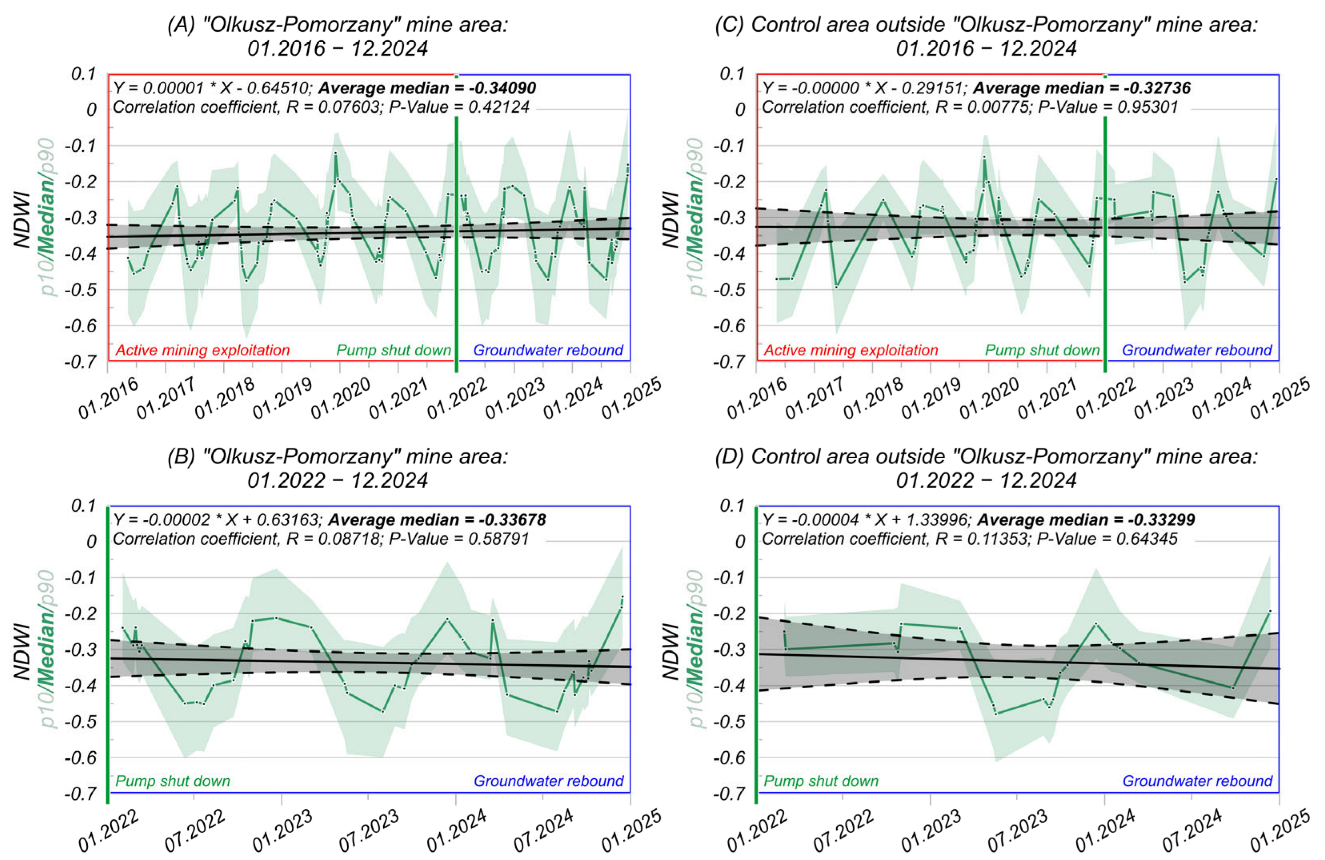
NDWI values remained negative throughout the study period (around −0.34 in the mine area and −0.33 in the control area), which reflects the dominance of non-aquatic surfaces in the AOI. Linear trends were weak: slightly increasing for 2016–2024 and slightly decreasing for 2022–2024 in the mine area, and decreasing in the control area for both intervals (
Figure 13). This can be explained by the fact that larger flooded areas only started to appear in the second half of 2024, and water levels continue to rise in 2025. NDWI analysis for the period ending in 2024 therefore does not fully capture these surface water changes. However, the limited increase in NDWI is consistent with the generally negative
indicating a climatic water deficit in the AOI (
Figure 7), so that only in areas with strong groundwater rebound, as documented by Group 1 piezometers (
Figure 9), surface water has started to appear.
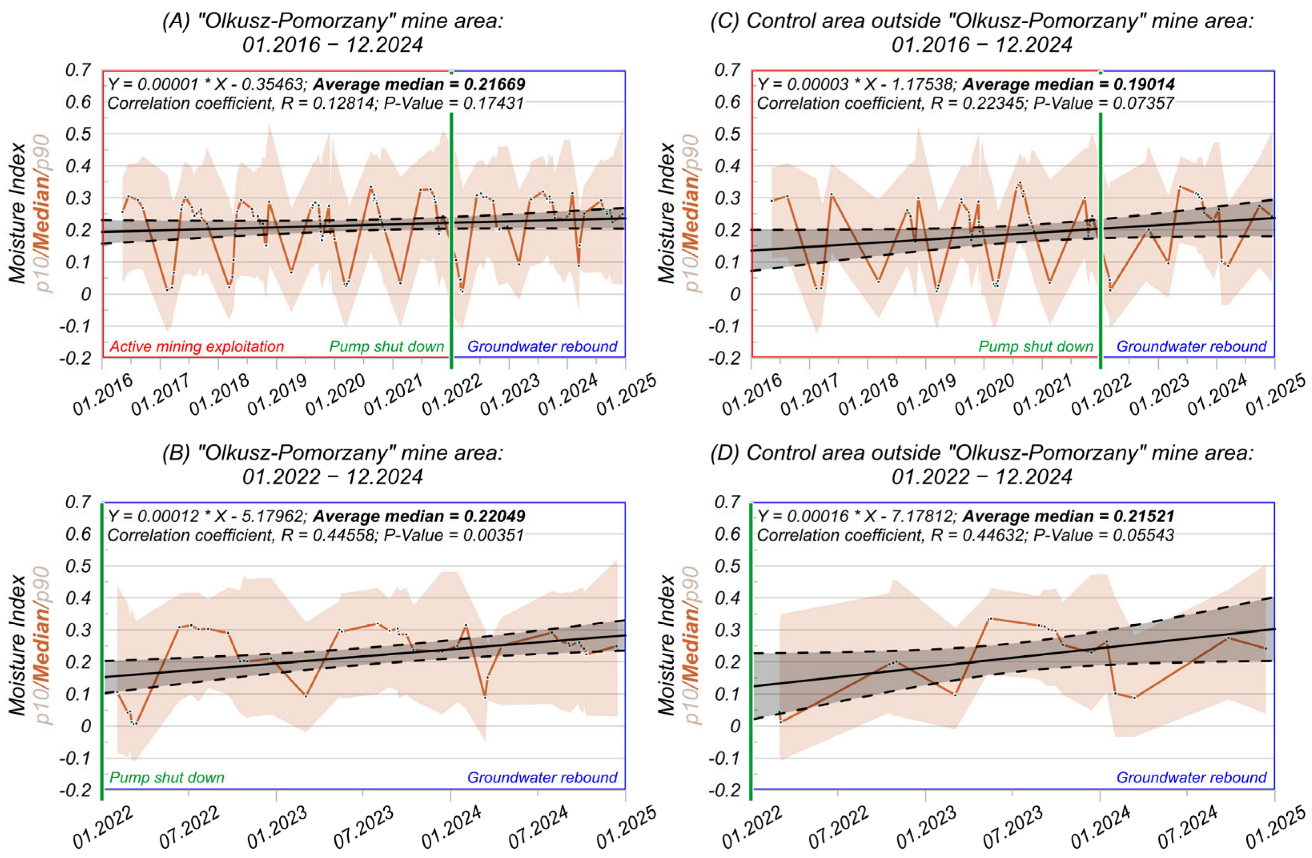
The Moisture Index showed positive changes. Median values in the mine area increased from below 0.22 in 2016–2024 to slightly above 0.22 in 2022–2024, and from 0.19 to 0.22 in the control area. The strongest increase was observed in the mine area after flooding, which is consistent with enhanced soil and surface moisture conditions caused by groundwater rebound (
Figure 14). This local increase in moisture contrasts with the overall negative
and regional water deficit (
Figure 7), which suggests that mine flooding and groundwater rebound partly compensate for climate-driven drying in the central part of the AOI.
Based on these results, vegetation productivity and soil moisture in the AOI are strongly seasonal but also increasing in response to post-closure hydrogeological changes. The most visible changes occur in the mine area, overlapping with the zone of the strongest groundwater decline and ongoing land surface uplift. The increase in NDVI, NDWI, and Moisture Index is not very large, but it is noticeable compared to the control area. This suggests that groundwater rebound contributes to increased moisture and vegetation growth in the AOI, even though the region is generally subject to water deficits potentially linked to regional warming trends. The coincidence of higher NDVI and Moisture Index values with the zone of strongest groundwater rebound and uplift (
Figure 8,
Figure 9,
Figure 10 and
Figure 11) indicates that the environmental response observed in the satellite indices is closely tied to the groundwater dynamics quantified in
Section 4.1 and
Section 4.2.
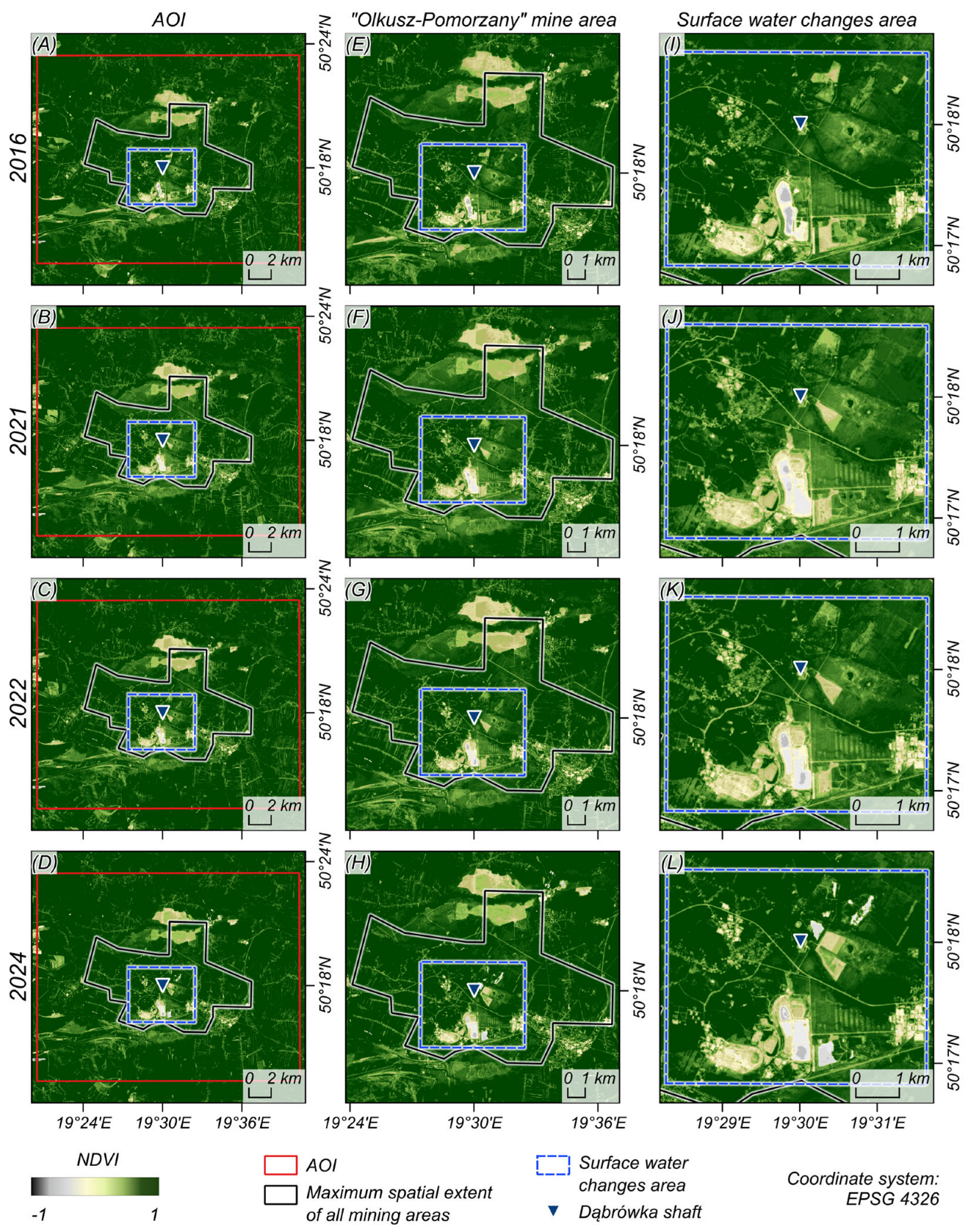
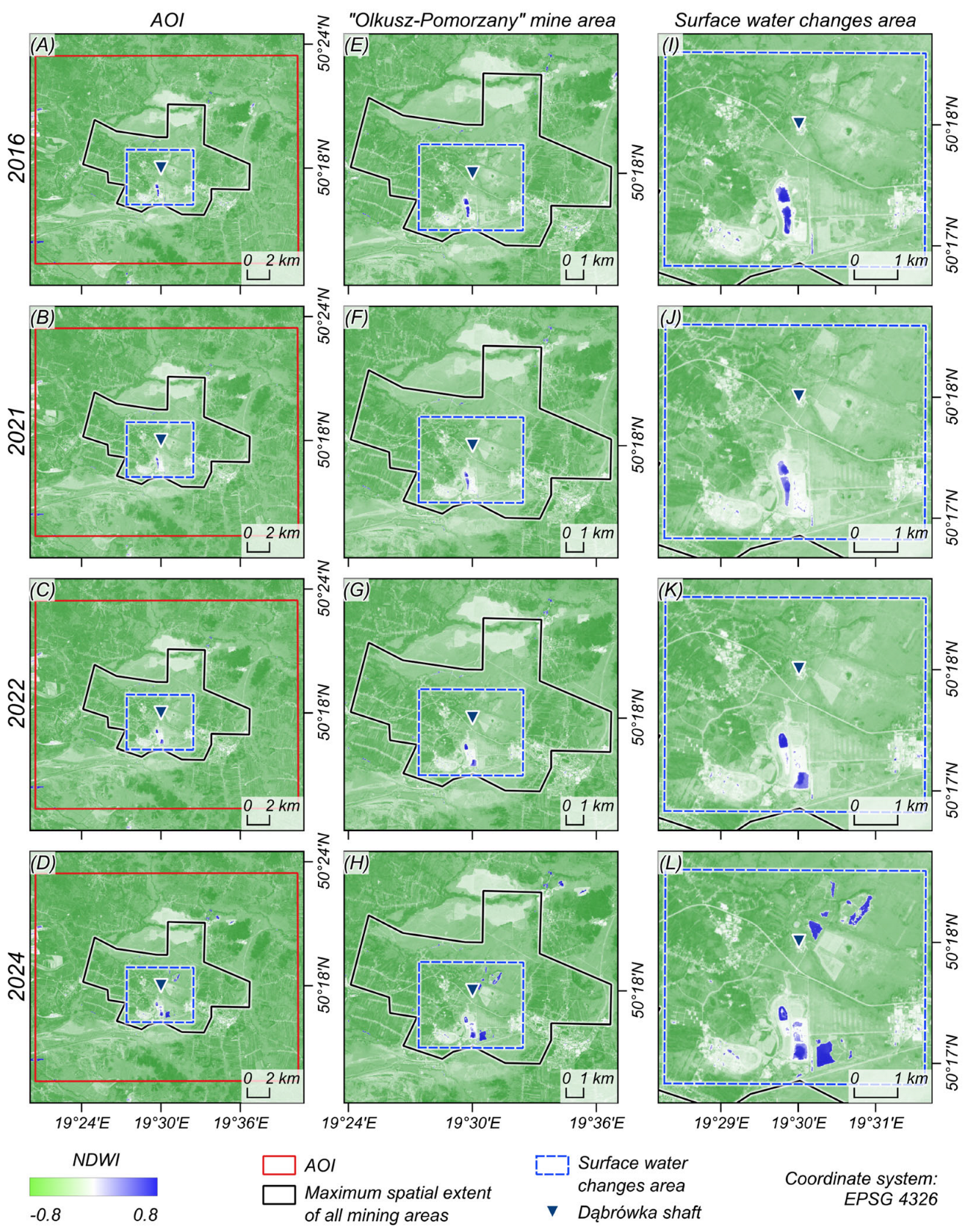
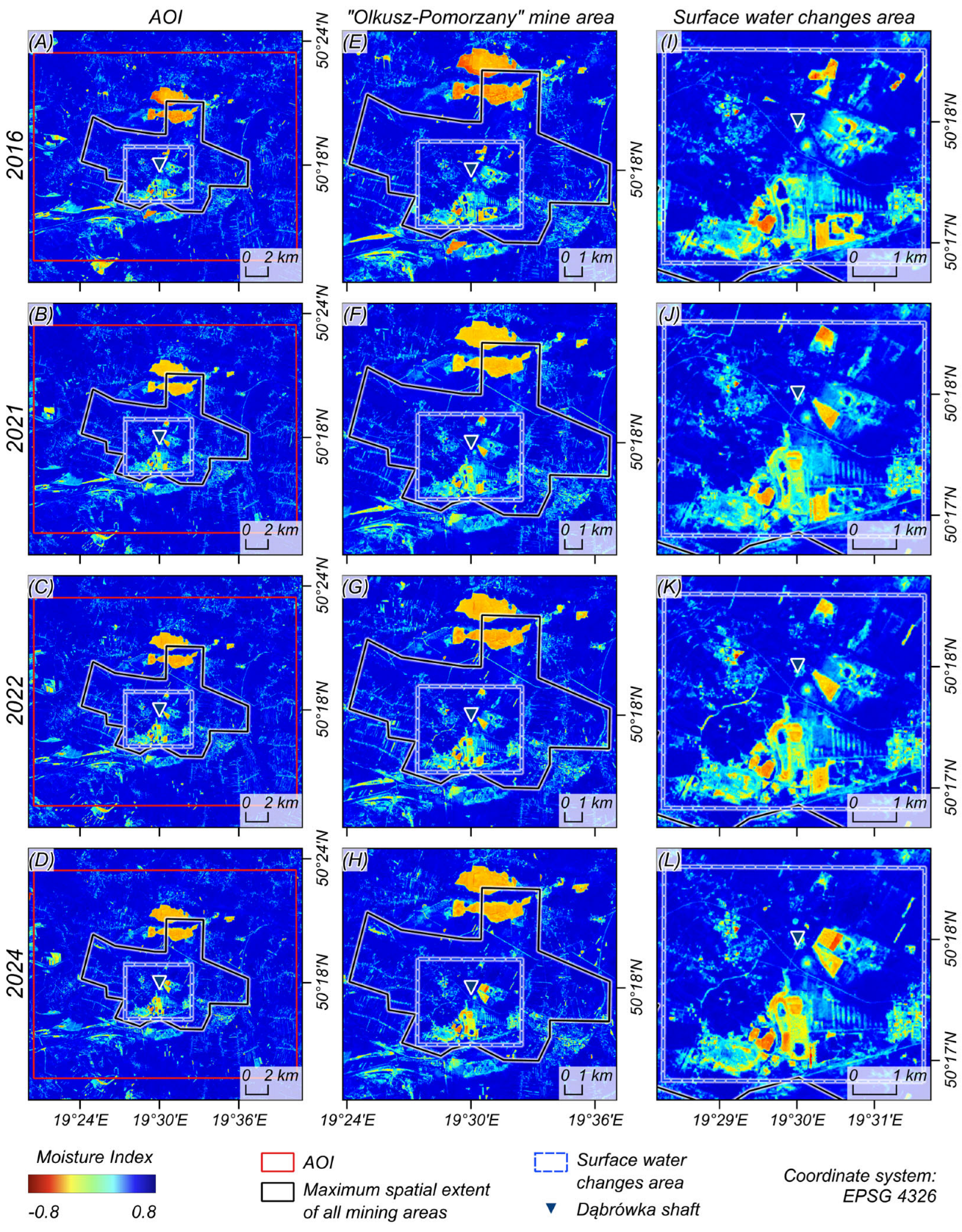
To complement the time series analysis, spatial distributions of NDVI, NDWI, and Moisture Index were mapped for June 2016, 2021, 2022, and 2024, using cloud-free Sentinel-2 images acquired on 29 June 2016, 21 June 2021, 26 June 2022, and 15 June 2024 (
Figure A1,
Figure A2 and
Figure A3 in
Appendix A). These dates correspond to the beginning of data availability, the period immediately before mine flooding, the early flooding stage, and the end of the observation period. Only these four years were used, because of the large number of available images and since the full temporal evolution is already represented in the time series (
Figure 12,
Figure 13 and
Figure 14). The maps show that the largest changes in NDVI, NDWI, and Moisture Index occurred in the central part of the former mine, where groundwater rebound is strongest. NDWI and Moisture Index values clearly increased between 2022 and 2024, indicating rising soil moisture and the appearance of surface water (
Figure A2 and
Figure A3). NDVI remained relatively stable over most of the AOI, with local decreases in areas where surface water replaced vegetation (
Figure A1). Outside the mining zone, spatial patterns of all three indices remained stable, confirming that changes are concentrated in the central part of the former mine. Outside the mining zone, spatial patterns of all three indices remained stable, confirming that changes are concentrated in the central part of the former mine and spatially overlap with the uplift zone and the strongest rebound (
Figure 8).
4.3.2. Land Cover Transformation Associated with Groundwater Rebound
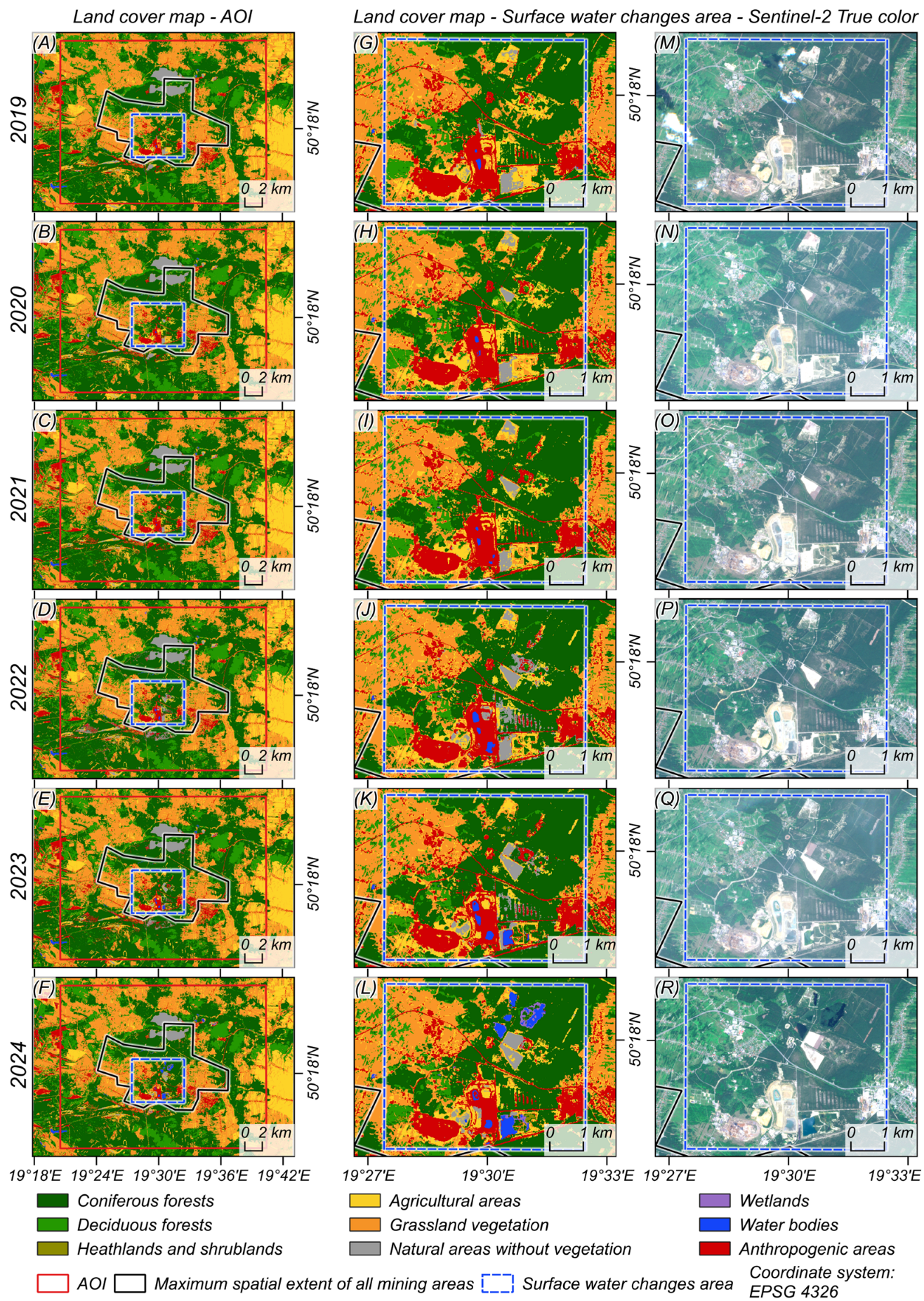
For most of the observation period (2019–2023), the land cover structure in the AOI remained stable, with coniferous and deciduous forests, grassland vegetation, and anthropogenic areas dominating the landscape. The shift appeared only in 2024, when new surface water bodies formed in the central part of the former mining area, corresponding to the zone of the greatest historical groundwater drawdown and the present uplift of the land surface (
Table 5,
Figure 1B,
Figure 8 and
Figure 15).
The total area of open water bodies in the mine increased from 0.08 km
2 in 2019 to 0.71 km
2 in 2024. Most of this change occurred in 2024, in parallel with a rapid rise in groundwater levels recorded in the same period. The new water bodies developed mainly within former sand open-pit excavations and adjacent depressions, where the groundwater table has reached the land surface. Wetlands expanded from 0.09 to 0.36 km
2 in the mine area between 2019 and 2024, mainly around the edges of the newly formed water bodies. This indicates that progressively larger areas are becoming waterlogged. At the same time, grassland vegetation decreased slightly from 24.9 to 23.0 km
2, which is consistent with a change from dry to wetter surface conditions. Forest and agricultural areas showed only small year-to-year fluctuations, suggesting that the upland land cover types outside the flooding zone remained stable during the study period (
Table 5,
Figure 15).
In the control area, land cover remained practically unchanged, with only a small increase in surface water (from 0.23 to 0.35 km
2), most likely reflecting normal hydrometeorological variability rather than processes related to mine closure (
Table 5,
Figure 15). The surface water change area shows the spatial concentration of these transformations. In this area, water bodies expanded from 0.04 to 0.67 km
2. Sentinel-2 images confirm that no permanent surface water was visible in June 2023 (
Figure 15Q), whereas by June 2024 water was present in several locations, including around the Dąbrówka shaft (
Figure 15R). These changes closely follow the area of the former drainage center and the current uplift zone.
Overall, the observed land cover changes indicate that post-closure hydrogeological processes are driving surface water and wetland ecosystems change in the central part of the former mine. These transformations are concentrated in the zone of strongest groundwater rebound, while the surrounding landscape remains largely unaffected. The increase in soil moisture, the development of open water, and the appearance of wetland illustrate the early stages of landscape adjustment after the end of mining-induced aquifer system dewatering. These changes are still localized, but show a direction of environmental evolution as groundwater levels continue to rise and stabilize in the coming years, as already indicated by the ongoing rebound in the central part of the AOI and by the negative climatic water balance.
5. Conclusions
This study integrates in situ meteorological data and groundwater head monitoring with remote sensing information, including EGMS-based vertical land motion, hydrospectral indices, and Sentinel-2-derived land cover datasets, to assess the environmental changes triggered by the flooding of the “Olkusz–Pomorzany” zinc and lead underground mine between 2021 and 2022, following several decades of mining activity. The results show a relationship between vertical land motion, groundwater rebound, and land cover transformation in a temperate climate context characterized by increasing water deficits and climatic pressure.
The analysis of vertical land deformation reveals minor but continuous subsidence, with a mean value of −0.8 mm/year across the AOI prior to mine closure and the development of a distinct uplift zone afterwards, with rates of about 1–2 mm/year. The spatial extent of this uplift corresponds to the former depression cone, especially in the area of the most intensive historical aquifer system drainage in the central part of the mine. The maximum groundwater rebound was recorded in the former shaft “Chrobry”, reaching about +104 m between 2021 and 2024, accompanied by surface uplift of 3.6 mm/year. The onset of groundwater rise and related uplift was delayed by up to several months depending on the distance from the drainage center, indicating the non-linear propagation of hydraulic head recovery within the aquifer system.
Meteorological trends show gradual regional warming, particularly over the last decade, compared to the long-term 1981–2024 record. The mean monthly temperature increased from 8.83 °C (1981–2024) to 10.13 °C (2022–2024). Snowfall and snow cover duration declined, while the number of rainy days increased, despite the absence of a clear trend in total annual precipitation. These changes form a climatic background of increasing moisture deficits and persistently negative VWE, with mean values of −5.7 mm/month for 1981–2024 and −11.6 mm/month for 2022–2024. Against this climatic context, hydrospectral indices show a slight but consistent increase in vegetation activity and soil moisture in the former mine area after flooding, while conditions in the control area remained stable. This indicates that groundwater rebound can locally improve hydrological and ecological conditions, partly offsetting broader regional drying trends.
Land cover mapping between 2019 and 2024 shows that environmental transformations are primarily concentrated in the central part of the former mine. In this region, surface water area increased from 0.08 to 0.71 km2 and wetland area increased from 0.09 to 0.36 km2, mainly within former sand-pit excavations and adjacent depressions, where shallow groundwater levels intersect the land surface. Land cover outside the mine remained largely unchanged over the same period.
The results of this study confirm that post-closure hydrogeological processes are already reshaping the local environment, with the strongest transformations occurring in the areas most affected by past mining-induced drainage. The appearance of surface water and wetland areas marks the early stage of landscape adjustment following mine flooding (
Figure 2,
Supplementary Video). As groundwater levels continue to rise, further expansion of inundation zones and related ecological changes can be expected in the coming years, although the duration of these processes remains uncertain. Therefore, they should be systematically monitored and analyzed to better understand their development and to support science-based strategies for land use planning, infrastructure protection, and groundwater management in post-mining areas.
Certain limitations of the study should be noted. The analysis of vertical land movement was based on EGMS data, which approaches the detection threshold for millimeter-scale displacements. In addition, the EGMS point density is relatively low in the forested and vegetated areas that constitute a substantial part of the AOI, potentially reducing the spatial continuity of deformation results. Future research should therefore focus on a more detailed assessment of InSAR data under local AOI conditions to achieve the highest possible measurement point density, particularly in densely vegetated zones. Since increasing InSAR point density in such environments remains challenging, supplementary ground-based monitoring methods could be considered. Establishing a precise geodetic observation network, comprising leveling and GNSS measurement points, would strengthen vertical land motion monitoring and provide an independent validation dataset for InSAR observations. Furthermore, integrating InSAR observations with other remote sensing datasets (e.g., optical, thermal, and LiDAR) would improve the spatial resolution and reliability of deformation analyses, particularly in areas with limited radar coherence.
Groundwater monitoring was limited to a small number of piezometers within and outside the mine area. Expanding this network and combining the resulting observations with the development of a local-scale numerical groundwater flow model would enable more detailed and predictive assessments of groundwater rebound and its surface expression. Such modeling would also require a broader geological and hydrogeological characterization of the AOI, which remains highly complex due to the mining history and structural heterogeneity of the region, and currently is not thoroughly studied.
The analysis of hydrospectral indices was conducted up to the end of 2024, whereas major surface water changes became evident only in the second half of 2024 and continue into 2025. As more post-closure data become available, extended time series will allow for a more comprehensive analysis of the indices and a better characterization of the dynamics of surface water and vegetation changes.
Finally, integrating geodetic, InSAR, hydrogeological, and remote sensing datasets, supported by data fusion techniques and numerical modeling, would allow for a more precise quantification of the combined effects of climatic recharge and mining-related rebound on groundwater resources. Although technically demanding, such integrated and multi-source approaches represent a promising direction for future research.