1. Introduction
The growing global population, economic expansion, and changing consumption patterns have driven an ever-increasing demand for water resources. Over the past century, global water use has risen sixfold and continues to grow at a steady rate of approximately 1% annually [
1,
2]. To address this challenge, the advancement of water treatment technologies is essential. Among these, coagulation is a mature and widely applied process for water and wastewater treatment, proven effective in removing suspended solids, dissolved organic matter, and various contaminants [
3]. Coagulation aggregates colloidal particles into larger flocs, which are subsequently removed during sedimentation [
4]. The choice of coagulant is therefore critical to treatment performance [
5,
6].
Iron-based coagulants are increasingly employed in water treatment due to their higher adsorption site density compared to aluminum-based coagulants, enabling effective pollutant removal at lower dosages and over a broader pH range [
7,
8]. The coagulation efficiency of ferric salts is strongly influenced by water pH. For instance, ferrous salts (e.g., FeSO
4) perform well within narrow pH ranges, whereas ferric salts (e.g., FeCl
3) exhibit effective coagulation over broader ranges. The selection of the appropriate iron-based coagulant thus requires tailoring to water pH to achieve optimal results [
9,
10].
Ferric chloride (FeCl
3), a commonly used iron-based coagulant, offers broad applicability but undergoes complex hydrolysis reactions, often forming Fe(OH)
3 precipitates, which complicates process control [
11]. Consequently, research has turned to developing more stable, controllable, and efficient iron-based coagulants.
Pre-hydrolyzed polymeric coagulants [
12], particularly polyferric sulfate (PFS), have gained attention for their superior performance over simple ferric salts, offering improved flocculation, broader pH adaptability, and lower alkalinity consumption [
5,
10]. Controlled hydrolysis during synthesis reduces unwanted reactions, allowing simpler and more precise coagulation control [
12,
13]. PFS has demonstrated high efficiency in removing turbidity, algae, phosphates [
10], and dissolved organic matter, especially natural organic matter (NOM) [
5,
13]. However, challenges remain in achieving rapid floc sedimentation and enhancing the removal efficiency of specific contaminants like dissolved organics.
Traditionally, PFS is synthesized from commercial chemical reagents, increasing production costs and wasting resources [
14]. Recent studies highlight waste-to-resource approaches as a sustainable alternative. For example, iron-rich sludge from groundwater treatment plants can serve as an effective raw material for PFS production. Utilizing such waste streams not only reduces costs but also enhances environmental benefits [
15,
16,
17,
18].
However, the coagulation process is challenging for removing the low molecular weight and hydrophilic fraction of organic pollutants [
19]. Improving coagulants or coupling them with other processes is a promising direction. Magnetic separation is an efficient and rapid method widely used in many fields: the nuclear industry, water purification, pharmaceuticals, and biochemistry [
20]. The addition of magnetic nanoparticles during coagulation has become a topic of growing interest. For example, combinations of magnetic nanoparticles with coagulants (such as polyaluminum chloride [
21], FeCl
3 [
22], alum [
23]) or polyacrylamide [
24] have been used to remove turbidity, heavy metals (e.g., arsenic [
25], chromium [
26], molybdenum [
27], lead [
28]), oily wastewater [
29], phosphate, and microorganisms in wastewater [
30,
31]. Based on these studies, magnetic nanoparticles can not only enhance sedimentation efficiency but also increase the probability of collision with pollutants, serving roles in adsorption and bridging [
32]. Even with lower coagulant dosages, magnetic coagulation can improve water treatment efficiency [
33].
To further enhance the removal efficiency of dissolved organic matter, especially low molecular weight organic compounds, during coagulation using PFS, this study employs magnetic nanoparticles Fe
3O
4@C—prepared from backwash iron sludge from a groundwater treatment plant in previous research—in combination with PFS. Due to their magnetic properties, these nanoparticles accelerate floc sedimentation and enable magnetic separation of contaminants [
32,
33]. Importantly, carbon doping enhances the nanoparticles’ stability, reduces aggregation, and provides additional adsorption sites, particularly beneficial for removing dissolved organic pollutants [
34]. Both the PFS and the Fe
3O
4@C magnetic nanoparticles can be derived from groundwater plant iron sludge, further lowering costs and waste disposal burdens [
17] while creating a uniquely sustainable and high-performance composite coagulant.
The objectives of this work were to (1) optimize acid leaching conditions (temperature, time, liquid–solid ratio) for recovering ferric salts from waste iron sludge; (2) compare the performance of synthesized PFS (B = 0.1–0.4) with commercial PFS (CPFS) in simulated water treatment in terms of turbidity and UV
254 removal, sedimentation rate, and efficiency; (3) combine synthesized PFS with Fe
3O
4@C [
34] magnetic nanoparticles (from prior research) for rapid domestic wastewater purification and evaluate thr removal of turbidity, chemical oxygen demand (COD), and total phosphorus (TP); and (4) compare the cost of synthesized PFS and CPFS to demonstrate economic advantages.
2. Materials and Methods
2.1. Materials and Chemicals
Hydrochloric acid (HCl) and sodium hydroxide (NaOH) were purchased from Beijing Yili Fine Chemicals Co., Ltd. (Beijing, China). Concentrated sulfuric acid (H
2SO
4), kaolin, PFS, Fe
3O
4, and 7-iodo-8-hydroxyquinoline-5-sulfonic acid were obtained from Tianjin Fuchen Chemical Reagents Factory (Tianjin, China). Humic acid (HA) was supplied by Shanghai Yuanye Bio-Technology Co., Ltd. (Shanghai, China). All reagents were of analytical grade or higher. For clarity, the specific purposes of these chemicals are summarized as follows: sulfuric acid (H
2SO
4) was employed for iron leaching from water treatment residues; hydrochloric acid (HCl) and sodium hydroxide (NaOH) were used for pH adjustment during experiments; kaolin was used to simulate inorganic turbidity in water in accordance with the Chinese national standard method (GB/T 5750-2023) [
35]; and HA was used to simulate NOM in water [
36], consistent with common jar-test protocols.
The iron-containing water treatment residuals (WTRs) used in this study were collected from a groundwater treatment plant in Harbin, China. The bulk sludge was first sun-dried and air-cured on clean surfaces for approximately 3 days (weather permitting) until it could be easily crushed by hand. This practical drying method simulates a potential low-cost field deployment. The dried clumps were then ground in a mortar and sieved through a 100-mesh screen to create a homogeneous powder. All subsequent dosages for experiments are reported based on the mass of this processed, sun-dried material [
37].
First, laboratory-prepared water was used for the performance experiment. A total of 1.0 g of HA was dissolved in 1 L of deionized water, and the pH 11 using sodium hydroxide. The solution was stirred evenly to prepare the humic acid stock solution. Then, 10.0 g of kaolin was dispersed in 1 L of deionized water and vigorously stirred for 3 h. After allowing the suspension to settle for 1 h, the supernatant was taken as the kaolin stock solution. For the raw water, 10 mL of HA stock solution and 5 mL of kaolin stock solution were mixed with 1 L of tap water. The resulting water had a turbidity of 31–32 NTU, a UV254 absorbance of 0.288–0.309 cm−1, and pH 7.54–7.85.
Domestic wastewater treated with PFS and magnetic coagulant (MPFS) was obtained from actual household wastewater of the faculty residential area of a university. The specific water quality parameters are as follows: The wastewater had a turbidity of 130 ± 2 NTU, COD of 173 ± 30 mg/L, total phosphorus (P) of 6.3 ± 0.3 mg/L, and pH 6.8–7.8.
2.2. Synthesis and Haracterization of PFS
Firstly, the trivalent iron salts in the iron sludge were recovered using sulfuric acid leaching. The optimal leaching conditions were determined by controlling the concentration of sulfuric acid, temperature, stirring time and the liquid–solid ratio of sulfuric acid to iron sludge. And the recovery rate of iron elements is improved. The procedure was as follows: 1.00 g of dried iron sludge was accurately weighed and placed in a 100 mL beaker. (1) sulfuric acid of 3 mol/L was added until the liquid–solid ratio is 10:1, then stirred for 30 min at 20, 40, 50, 60, 70, and 80 °C, respectively. (2) The mixture was stirred for 2, 5, 10, 20, 30, 40, and 60 min at 70 °C, respectively. (3) 3 mol/L sulfuric acid was added at liquid–solid ratios (mass ratios) of 2, 5, 8, 10, 15, 20, and 30, respectively, with stirring at 70 °C for 30 min. After the leaching reaction, the mixture was vacuum-filtered through a 0.45 µm filter membrane to separate the solid residue from the leachate containing the dissolved Fe
3+ and converted to g(Fe)/g dry iron sludge. The conversion formula is as follows:
where
ω refers to the iron content that can be leached per g of dry iron sludge by acid leaching,
C refers to the iron concentration in the leachate,
v is the total leachate volume (L),
D is the dilution factor, and
mdry is the mass of the dried iron sludge sample (g).
PFS was synthesized using a slow-drop method [
18]. A predetermined volume of the leachate with a known Fe
3+ concentration was subjected to hydrolytic polymerization under continuous stirring on a magnetic mixer at 50 °C and 350 rpm. A 0.3 mol L
−1 NaOH solution was added dropwise via a peristaltic pump at a rate of 0.35 mL min
−1. The alkalinity degree (B), defined as the molar ratio of the alkali added to the total iron content in the solution, was adjusted to 0, 0.1, 0.2, 0.3, and 0.4. Following dropwise addition, the suspension was allowed to age statically at ambient temperature for 24 h, yielding the PFS product [
38,
39].
The morphology and microstructural composition of the samples were examined by scanning electron microscopy (SEM; S-4800, Hitachi, Tokyo, Japan) operated at an acceleration voltage of 120 kV. The crystalline structure was characterized using X-ray diffraction (XRD; Bruker D8 Advance, Karlsruhe, Germany) with Co Kα radiation over a 2θ range of 20–90°, at a working current and voltage of 40 mA and 40 kV, respectively. The scan range of 2θ = 20–90° was selected to cover the primary diffraction peaks of ferric salt crystals and related phases. The mineral phases were identified by matching the patterns with standard reference data from the JCPDS database. Fourier transform infrared spectroscopy (FTIR; Nicolet iS10, NewYork, NY, USA) was employed to identify the molecular structure and characteristic functional groups within the samples. Spectra were recorded in the range of 400–4000 cm−1, and characteristic absorption frequencies were used to classify unknown compounds.
2.3. Coagulation Experiments
Coagulation experiments were conducted using a programmable six-paddle jar test apparatus (MY3000-6N, Wuhan Meiyu Instrument Co., Ltd., Wuhan, China) equipped with six 1.0 L beakers. The mixing program was set as follows: rapid mixing at 200 rpm for 2 min, followed by slow mixing at 30 rpm for 15 min, and a settling period of 30 min. After sedimentation, water samples were collected at a depth of 3 cm below the surface for analysis of turbidity and UV254.
The treatment performance of CPFS at predetermined dosages and pH values was compared with that of laboratory-prepared PFS at different alkalinity levels (B = 0.1–0.4). In the coagulation experiments, a total of 0.5 mL of 0.1% polyacrylamide (PAM) solution was introduced as a coagulant aid after 90 s of rapid mixing to enhance floc growth and settlement. Optimal coagulant dose and pH were determined from these tests for subsequent experiments.
MPFS was prepared by mixing pre-synthesized Fe
3O
4@C [
34] with PFS on an orbital shaker at 250 rpm and 25 °C for 2 h. For experiments involving the MPFS, after the settling period, a neodymium magnet was placed against the beaker for 5 min to facilitate the separation of magnetic flocs before sampling the supernatant. The resulting MPFS was applied to the treatment of real domestic wastewater, and its removal efficiencies for turbidity, COD, and TP were evaluated.
2.4. Analytical Methods
The pH, turbidity, and UV254 were measured using a water quality analyzer (pH/Oxi 340i, WTW, Weilheim, Germany), a turbidity meter (WZS-185, Lei Magnetic, Shanghai, China), and an ultraviolet spectrophotometer (UV–755B, YOKE, Shanghai, China), respectively. The UV254 value represents the absorbance of partial organic matter in water at a wavelength of 254 nm, reflecting the content of humic-like macromolecular organic matter and aromatic compounds containing C=C and C=O bonds. Residual Fe concentrations were determined using an inductively coupled plasma optical emission spectrometer (ICP-OES; ICPOES730, Agilent, Santa Clara, CA, USA). COD and TP were quantified with a COD multi-parameter rapid tester. The model of the multi-parameter water quality analyzer is 5B-6C (V8), which is manufactured by Lanzhou Lianhua Environmental Protection Technology Co., Ltd. (Lanzhou, China).
In this study, the total Fe content in the leachate was determined by the 1,10-phenanthroline spectrophotometric method (HJ345-2024) [
40] and expressed as g(Fe)/g dry iron sludge. Briefly, an aliquot of the filtered leachate was reduced with hydroxylamine hydrochloride, buffered to pH 3.5–4.0 with ammonium acetate, and complexed with 1,10-phenanthroline. The absorbance of the orange-red complex was measured at 510 nm, and the Fe concentration was calculated from a calibration curve. The content of iron is calculated by the following formula:
where
m is the iron content (µg) in the water sample calculated based on the calibration curve,
V is the sampling volume (mL).
2.5. Fe-Ferron Complexation Timed Spectrophotometry Method
In polymeric ferric coagulants, hydrolysis and polymerization reactions give rise to different forms of Fe species, which play distinct roles in coagulation. These species are conventionally categorized into three fractions using the Fe–Ferron timed complexation method. Fe(a) represents monomeric Fe
3+ species and simple mononuclear hydroxy complexes. These are low-molecular-weight, unpolymerized or minimally polymerized species that are highly reactive and readily participate in charge neutralization of colloids. Fe(b) refers to intermediate, partially polymerized ferric hydroxyl complexes. These are small oligomeric species with slower reactivity, which act as transitional forms that can further transform into larger polymers. Fe(c) corresponds to highly polymerized ferric species with stable structures. These macromolecular polymers exhibit very limited reactivity under standard conditions, but they play a crucial role in bridging and enmeshment during floc formation. The Fe–Ferron timed complexation spectrophotometric method was employed to quantify these species [
41].
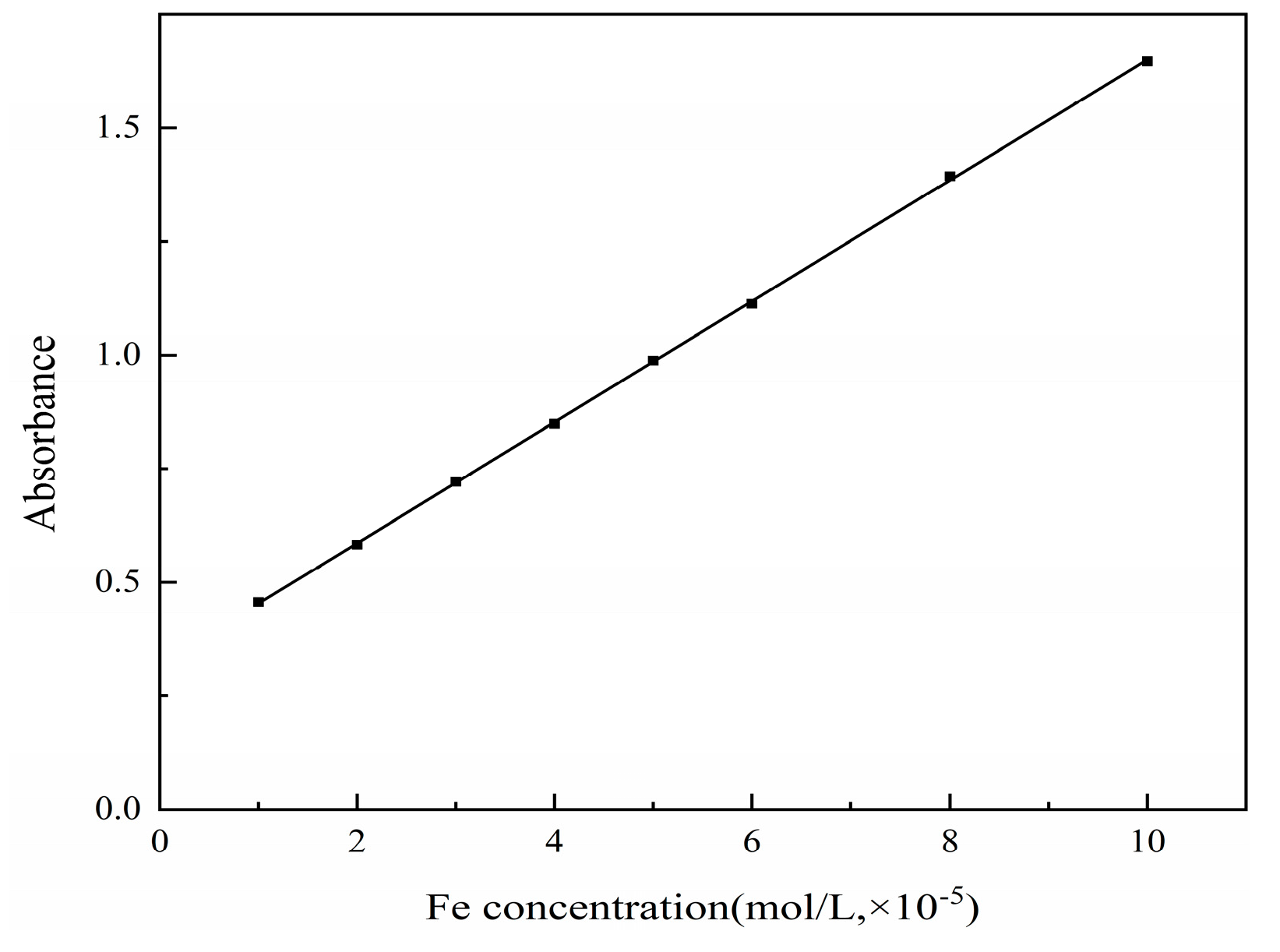
Ferron reagent (7-iodo-8-hydroxyquinoline-5-sulfonic acid) forms green complexes with Fe species, but with distinct reaction rates: Fe(a) reacts rapidly, Fe(b) reacts gradually, and Fe(c) shows minimal change over time. Absorbance was measured at various intervals using a spectrophotometer, and concentrations were calculated from a calibration curve. The corresponding working curve and standard curve are provided in
Appendix A.
3. Results and Discussion
3.1. Recovery of Iron Salts from Iron Sludge
Sulfuric acid serves as an acidifying agent to extract ferric ions from iron sludge under strong acidic conditions. In practice, the amount of acid used in leaching often exceeds the theoretical stoichiometric requirement. This is partly due to incomplete reactions—ferric species with complex morphologies can crosslink with other components in the sludge to form aggregates or large particles, hindering complete dissolution. Additionally, other minerals and organic matter in the sludge can also dissolve in acid, consuming substantial amounts of acid [
42,
43].
Acid leaching is widely applied in engineering practice for ferric salt recovery due to its simplicity and efficiency [
44]. By adjusting the system pH to an optimal range and promoting solid–liquid contact through ultrasonic agitation or mechanical stirring, ferric ions can dissolve into the liquid phase within a short period [
45]. However, drawbacks include high corrosion resistance requirements for leaching tanks and pipelines [
46] and the co-dissolution of other impurities such as minerals and organic matter [
43]. These impurities may cause secondary pollution if the recovered ferric salts are used for coagulant synthesis, thus requiring caution in application.
3.1.1. Effect of Acid Leaching Temperature
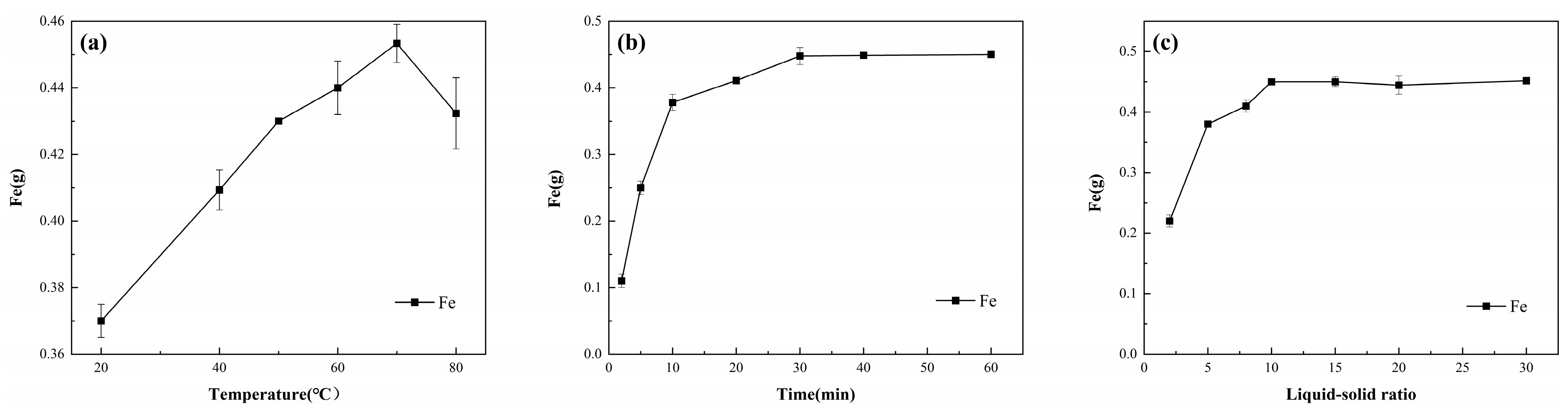
The elemental iron amounts obtained at acid leaching temperatures of 20, 40, 50, 60, 70, and 80 °C were 0.37, 0.41, 0.43, 0.44, 0.45, and 0.43 g, respectively. As shown in
Figure 1a, at lower temperatures, the amount of Fe leached increased rapidly with temperature, reaching a maximum at 70 °C, after which it decreased. This suggests that excessively high temperatures may inhibit the acidic dissolution of Fe. Since Fe
3+ hydrolysis is an endothermic reaction, higher temperatures accelerate Fe
3+ hydrolysis to Fe(OH)
3, reducing the Fe
3+ concentration in solution. The results indicate that the optimal leaching temperature is 70 °C, yielding 0.45 g Fe per g of dry sludge.
3.1.2. Effect of Acid Leaching Time
The iron amounts obtained at stirring times of 2, 5, 10, 20, 30, 40, and 60 min were 0.11, 0.26, 0.38, 0.41, 0.45, 0.45, and 0.45 g, respectively. As shown in
Figure 1b, the amount of Fe leached increased with leaching time and stabilized after 30 min. Prolonged leaching allows the dissolution of not only trivalent iron salts but also other minerals and organic matter. Therefore, a reaction time of 30 min was selected to maximize Fe recovery while minimizing the co-dissolution of impurities.
3.1.3. Effect of Acid Leaching Liquid–Solid Ratio
The iron contents obtained at liquid–solid ratios of 2, 5, 8, 10, 15, 20, and 30 were 0.22, 0.38, 0.41, 0.45, 0.44, 0.45, and 0.45 g, respectively. The liquid–solid ratio was used to control the acid dosage, with acid concentration also considered. Concentrated sulfuric acid can cause clumping and mineralization of the sludge, inhibiting reaction, whereas excessively diluted acid may result in incomplete Fe leaching. A sulfuric acid concentration of 3 mol L
−1 was selected. As shown in
Figure 1c, increasing the acid dosage improved Fe leaching until a plateau was reached, beyond which no further increase occurred and impurity dissolution was likely. A liquid–solid ratio of 10 was chosen, which corresponds to a [SO
42−]
t/[Fe]
t molar ratio of 1.5, within the optimal range (1.2–1.5) for PFS synthesis [
3].
In summary, the optimal leaching conditions were as follows: 1.00 g of dry iron sludge treated with 3 mol L−1 sulfuric acid at a liquid–solid ratio of 10:1, stirred for 30 min at 70 °C. Under these conditions, the Fe leaching yield reached 0.45 g Fe per g dry sludge and remained stable.
3.2. Characterization of PFS
CPFS, prepared PFS (B = 0.2), and PFS (B = 0.4) were taken for characterization and comparison.
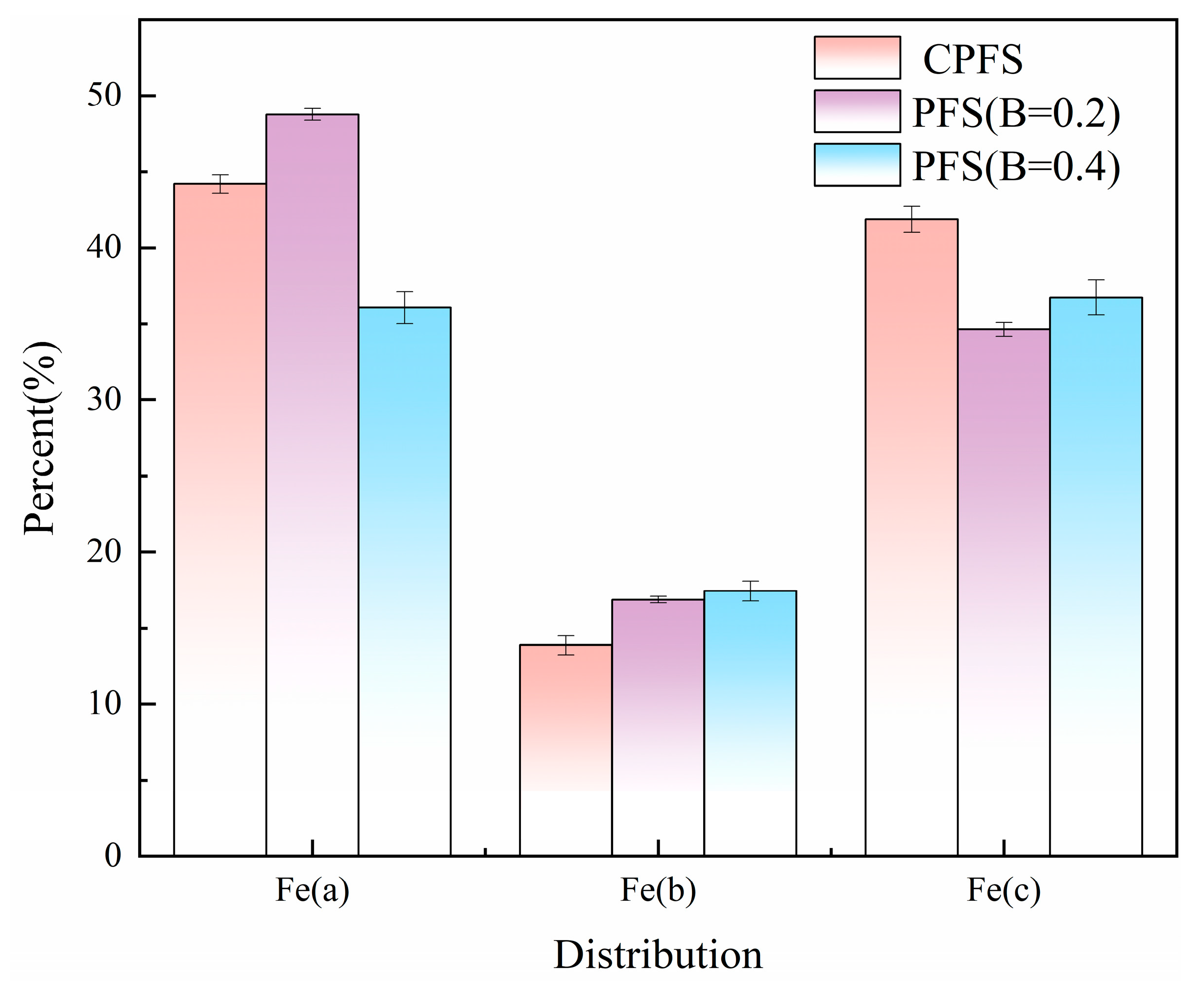
As shown in
Figure 2, the proportions of mononuclear iron Fe(a) and polymeric iron Fe(c) in CPFS are comparable, at 44.2% and 41.9%, respectively, whereas the content of unstable oligomeric and polyhydroxy-complexed iron Fe(b) accounts for only 13.9%. This suggests that the majority of the stable ferric species in CPFS are composed of polymeric and mononuclear iron, with only a small fraction of oligomeric species. Since Fe(b) generally represents an intermediate form that gradually transforms into polymeric ferric species, a higher Fe(c) content facilitates the formation of large, dense flocs, thereby enhancing coagulation and sedimentation efficiency. For the synthesized PFS at B = 0.2, the Fe(a) and Fe(b) contents are higher and the Fe(c) content decreases to 34.6%, compared with PFS at B = 0.4, which exhibits a higher Fe(a) content. This is likely due to insufficient hydroxyl groups for complete hydrolytic polymerization of mononuclear iron at lower alkalinity, leading to the higher Fe(b) and Fe(c) levels observed in PFS (B = 0.4) [
47,
48,
49]. In PFS, multiple iron species coexist, and hydroxyl ions reach equilibrium after a series of hydrolytic polymerization reactions, resulting in a stable ratio of oligomeric to polymeric iron. From a polymerization perspective, the prepared PFSs closely resemble the characteristics of CPFS.
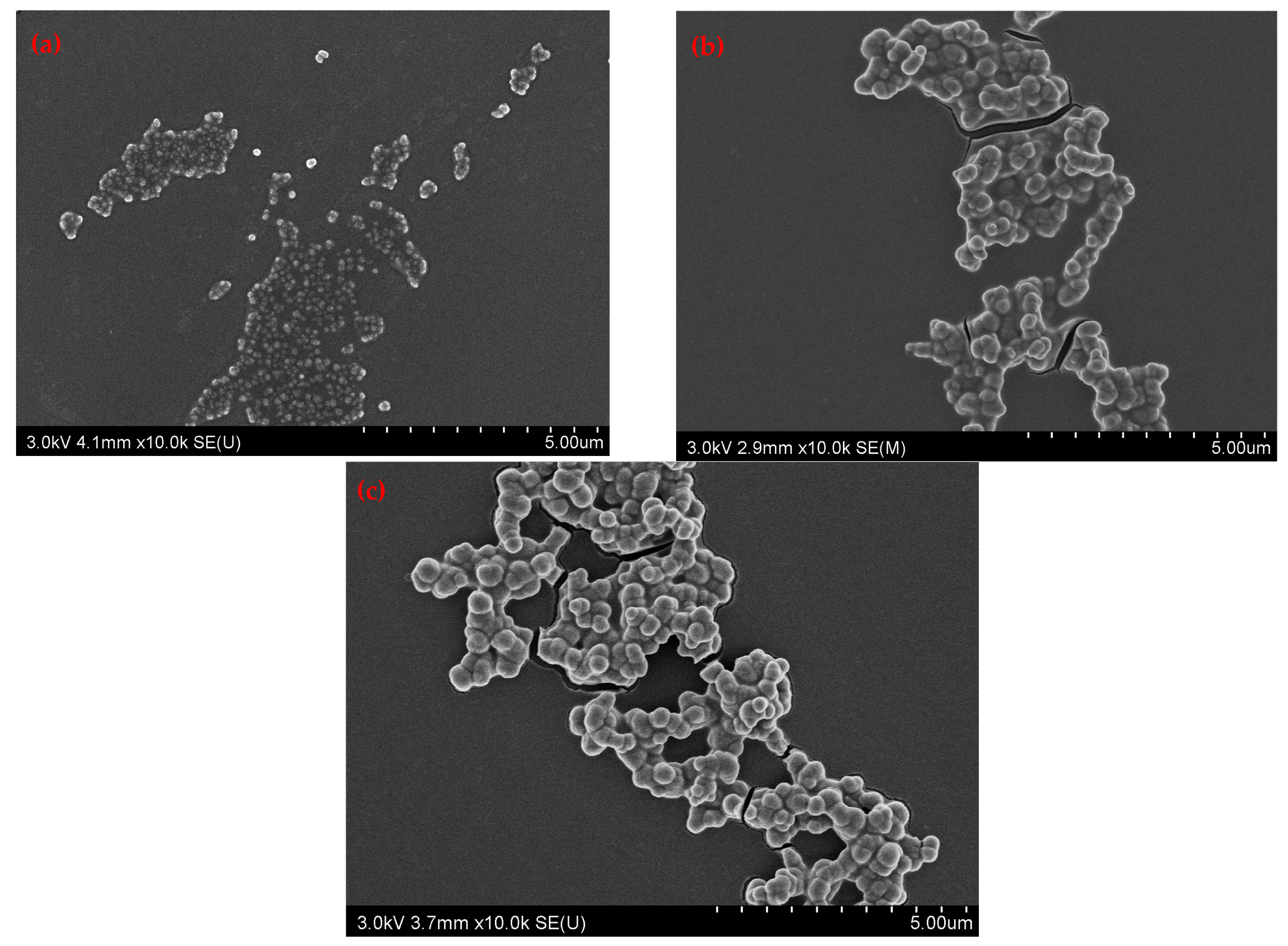
The SEM images of the three PFS samples are shown in
Figure 3. All samples exhibit protruding particles on the surface, producing a rough and uneven texture. The PFSs display an overall amorphous structure, with most particles agglomerating randomly into irregular clusters, consistent with previous reports [
38]. However, the particle size of CPFS is notably smaller than that of iron-sludge-based PFS. Coagulation experiments indicated that particle size had no significant influence on coagulation performance, and the prepared PFS demonstrated comparable efficiency to CPFS.
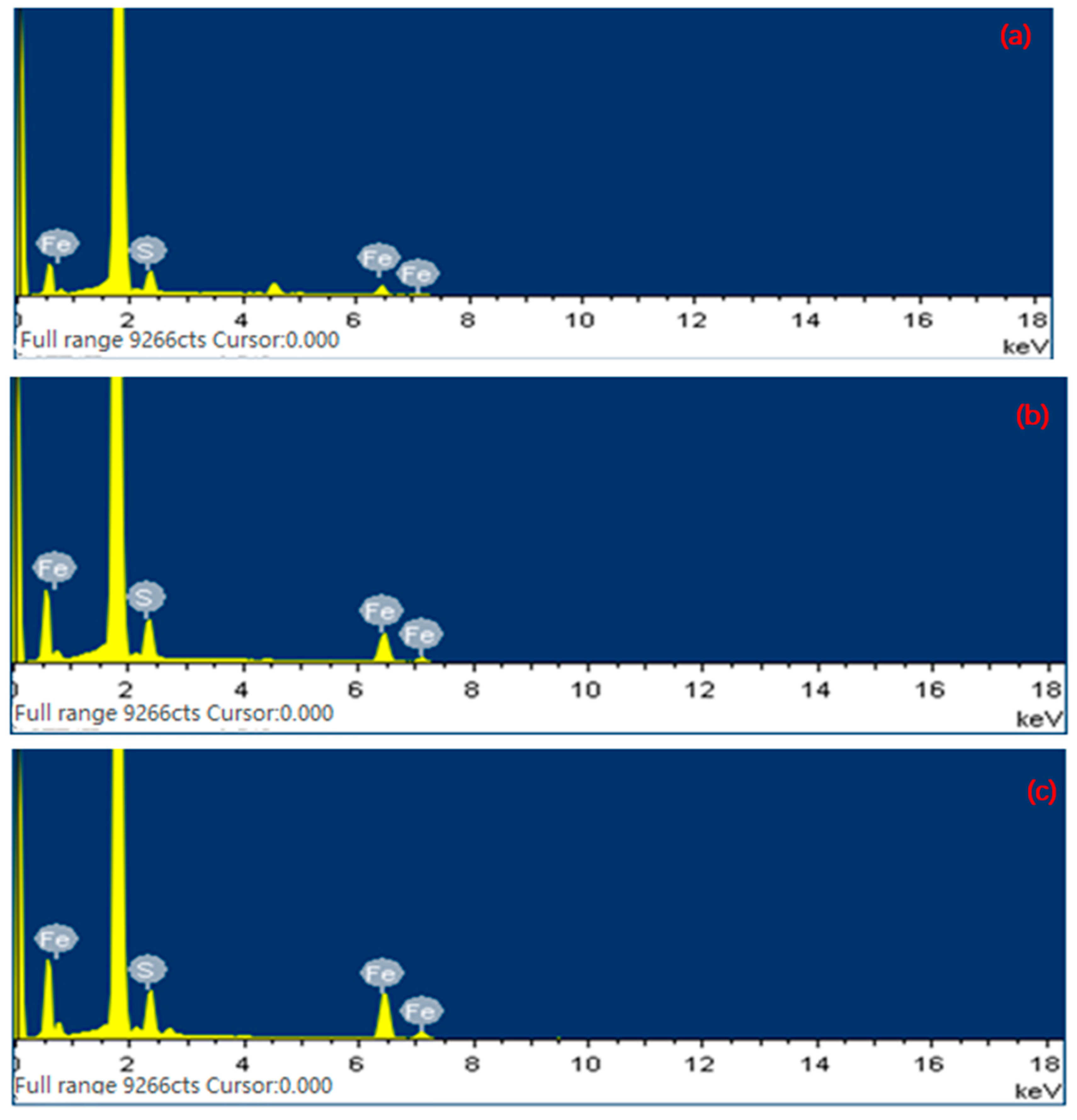
Elemental analysis of the microregions of the three PFSs was performed using energy-dispersive X-ray spectroscopy (EDS; S-4800, Hitachi, Tokyo, Japan).
As shown in
Figure 4, the three samples share similar peak positions, though with varying intensities, confirming the successful synthesis of PFS. The atomic Fe:S ratios were 4.6:5.4, 5.8:4.2, and 6.5:3.5, respectively. The synthesized PFSs exhibited higher Fe content than CPFS, and, in general, iron-based coagulants with higher Fe content demonstrate superior treatment performance. Moreover, PFS with higher alkalinity displayed higher Fe content than those with lower alkalinity, explaining why PFS (B = 0.4) achieved better pollutant removal than PFS (B = 0.1). However, high-alkalinity PFS suffers from stability issues [
38] and may undergo self-precipitation during storage.
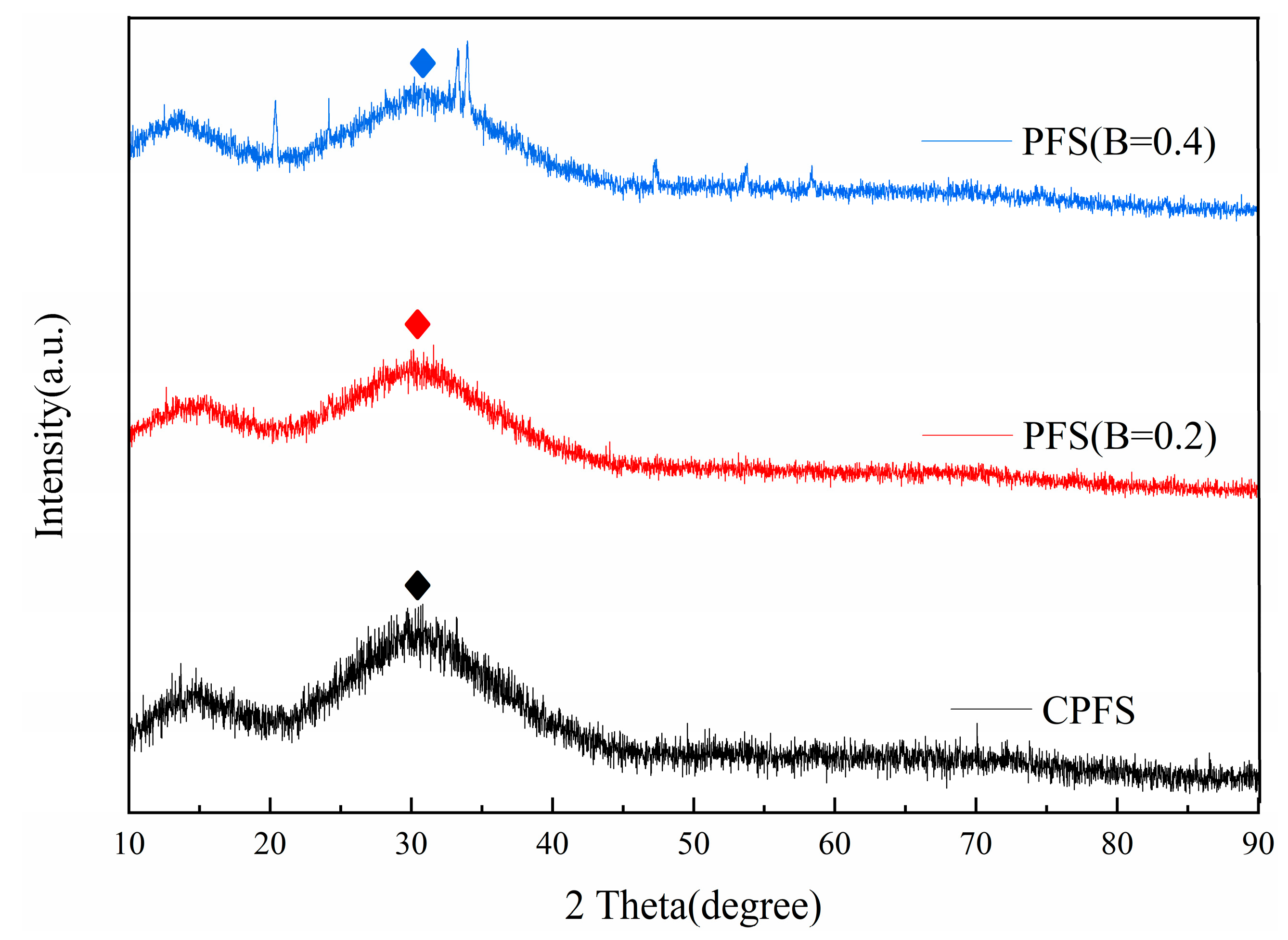
The XRD patterns of the three PFS samples (
Figure 5) exhibited broadly similar profiles, characterized by multiple diffuse peaks lacking sharp diffraction reflections. This indicates that the materials were predominantly amorphous ferric hydroxy sulfate polymers, consistent with their polymeric and highly hydrated nature. A weak diffraction peak near 2θ ≈ 30° suggested the presence of a minor crystalline fraction, possibly arising from residual ferric oxide or sulfate phases embedded within the amorphous matrix. This observation is in agreement with previous reports [
38], which also noted that trace crystalline domains can persist in otherwise amorphous PFS systems. In contrast, polymeric ferric sulfate synthesized at elevated temperatures (e.g., 85 °C) has been shown to develop pronounced crystalline peaks [
50], implying that higher synthesis temperatures promote dehydration, polymer rearrangement, and ordered lattice formation. In the present work, the reaction temperature was maintained at 50 °C, favoring the formation of an amorphous polymeric network with only limited crystalline inclusions. Such an amorphous-dominated structure may provide more reactive surface sites and higher adsorption potential, which can be advantageous for coagulation performance.
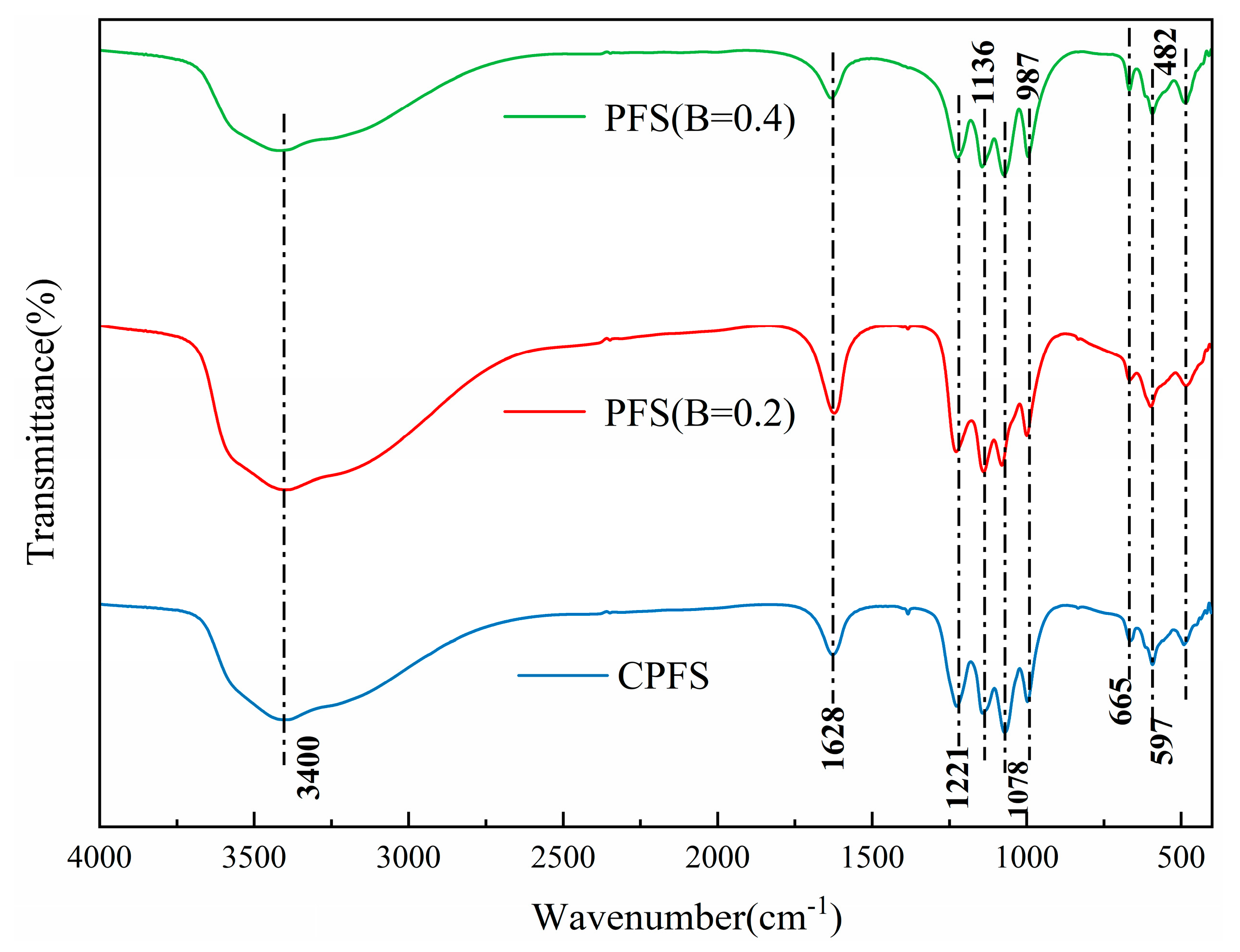
The FTIR spectra of the three PFS samples are shown in
Figure 6. The number and positions of peaks are nearly identical among the spectra, confirming the successful synthesis of PFS. The broad absorption bands at approximately 3400 cm
−1 and 1628 cm
−1 are attributed to the stretching vibration of –OH groups, corresponding to hydroxyl groups coordinated to Fe ions in the polymeric structure and to water molecules, respectively. The broad band in the range of 1000–1400 cm
−1 corresponds to SO
42− vibrations, which can be assigned to S=O and O=S=O stretching. The absorption band at 997–1000 cm
−1 is associated with the bending vibration of Fe–OH–Fe or Fe–O–Fe bonds, indicating the presence of polymerized iron species. The band at 490–667 cm
−1 corresponds to Fe–O stretching. These FTIR results confirm that PFS consists of polymeric iron species bridged by hydroxyl groups. The similarity in the spectra suggests that alkalinity variation does not significantly alter the fundamental structure of PFS, although it affects both the Fe content and the degree of polymerization. Since the degree of polymerization is a key factor influencing coagulation performance, the prepared PFS samples with B = 0.2 and 0.4 exhibited characteristics comparable to commercial PFS.
Overall, the characterization results confirm the successful synthesis of PFS, with coagulation performance comparable to that of commercial products.
3.3. Coagulation Effect of PFS
In this section, the coagulation efficiency of CPFS and laboratory-prepared PFS with varying alkalinity was evaluated using simulated water. Previous studies suggest that the alkalinity (B) of PFS should remain below 0.4 [
51,
52] to avoid instability and precipitation; thus, B values from 0 to 0.4 were selected, with B = 0 corresponding to conventional ferric sulfate (FS in
Figure 7).
Coagulant dosage significantly affects coagulation performance. In general, turbidity removal increases with dosage until an optimum level is reached; beyond this point, excessive dosing can decrease efficiency. Overdosing leads to increased sludge production, making compression and sedimentation more difficult, and may also result in a “colloidal protection” effect [
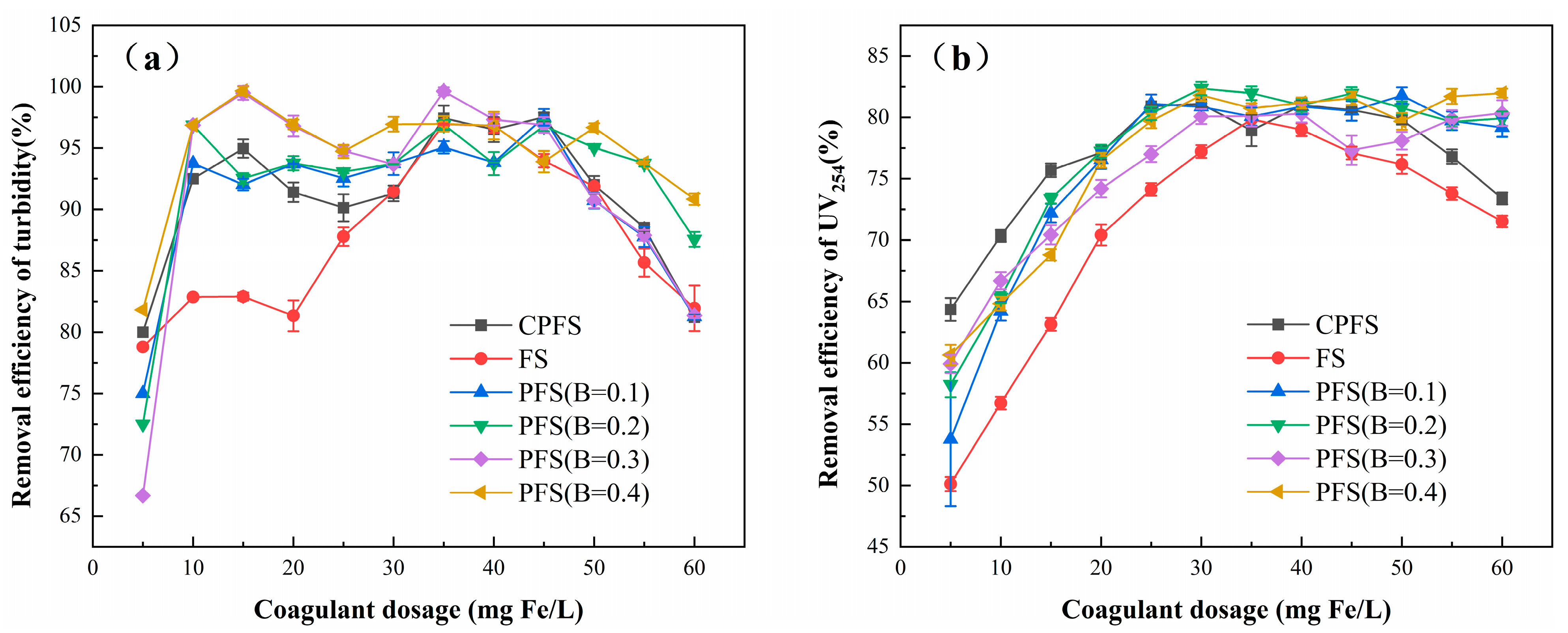
53]. As shown in
Figure 7a, all six coagulants achieved >90% turbidity removal within 10–50 mg Fe/L. Among them, PFS with B = 0.3 and B = 0.4 achieved near-complete removal, whereas CPFS achieved ~95% removal at 10 mg Fe/L, and FS required 30 mg Fe/L to reach >92% removal. These results demonstrate the superior efficiency and lower dosage requirements of polymeric coagulants compared to monomeric inorganic salts. The optimal dosage for the five PFS samples (excluding FS) was in the range of 10–45 mg Fe/L, with PFS (B = 0.4) showing the highest turbidity removal efficiency. While alkalinity and polymerization degree are generally positively correlated [
52,
54], excessive alkalinity during synthesis may lead to instability and precipitation of Fe(OH)
3. Longer polymer chains improve pollutant removal by increasing cationic charge density and providing a more effective adsorption substrate for colloidal particles.
As shown in
Figure 7b, UV
254 removal followed a similar trend. For PFS, removal increased rapidly between 5 and 20 mg Fe/L, with CPFS showing slightly higher UV
254 removal than prepared PFS. Between 20 and 30 mg Fe/L, removal rates increased gradually, and beyond 30 mg Fe/L no significant improvement was observed, with some decline at higher dosages. At 30 mg Fe/L, turbidity and UV
254 removal by CPFS reached 91.42% and 81.00%, respectively, while PFS (B = 0.4) achieved 96.88% and 81.87%. In all cases, UV
254 removal (as a proxy for humic acid and other organics) was lower than turbidity removal, with maximum values just above 80%. To enhance organic matter removal,
Section 3.4 investigates magnetic coagulation using Fe
3O
4@C combined with PFS, leveraging the carbonaceous component for adsorption of dissolved small organic molecules.
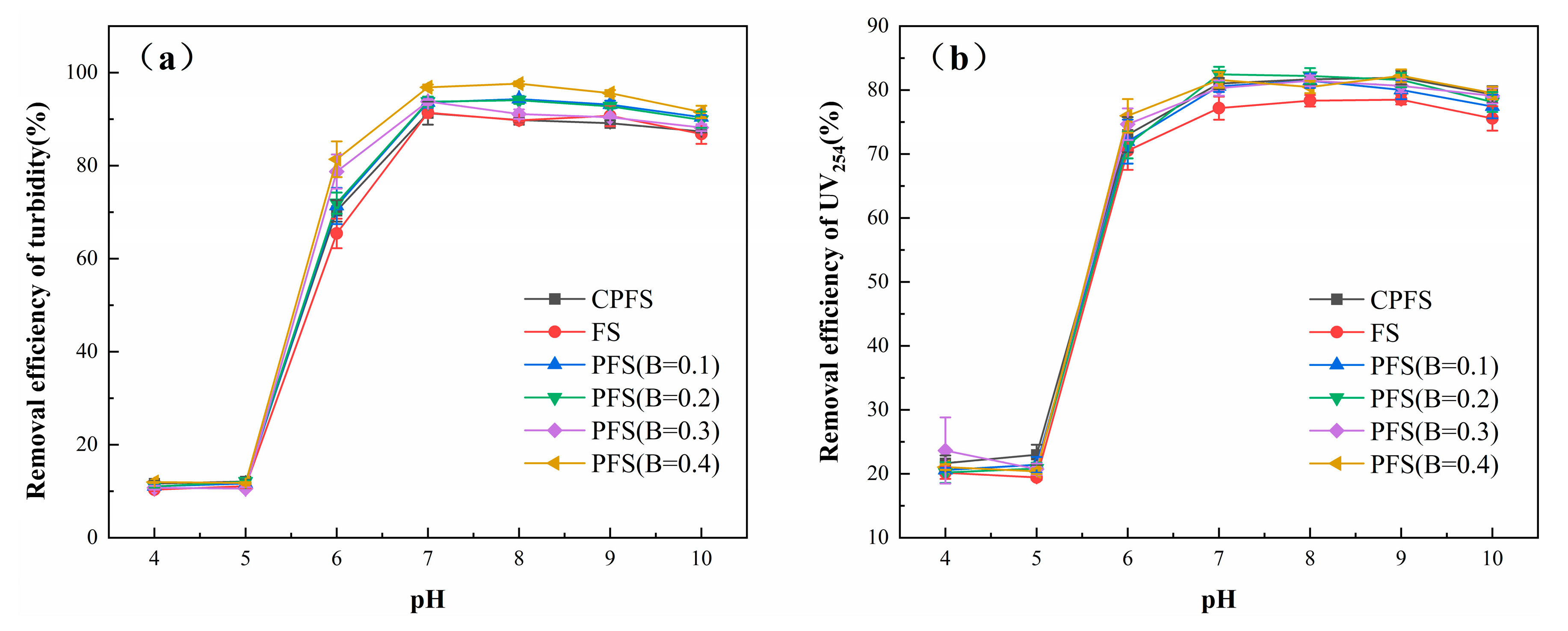
The effect of pH (4–10) on coagulation performance was also examined at a dose of 30 mg Fe/L (
Figure 8). pH influences coagulation by altering the concentrations of H
+ and OH
− ions, thereby affecting charge neutralization, electric double-layer compression, and the hydrolysis–polymerization equilibrium of ferric species. At low pH (4–5), both turbidity and UV
254 removal were minimal because polyferric species exist mainly as dissolved Fe
3+ ions [
30], producing few small, stable flocs. Removal efficiency increased sharply from acidic to neutral and weakly alkaline conditions, peaking at pH 8–9, before declining at pH 10. Under weakly alkaline conditions, polyhydroxy iron flocs form more readily, enhancing coagulation. At very high pH, ferric species form negatively charged complexes that hinder charge neutralization, limiting destabilization of colloids.
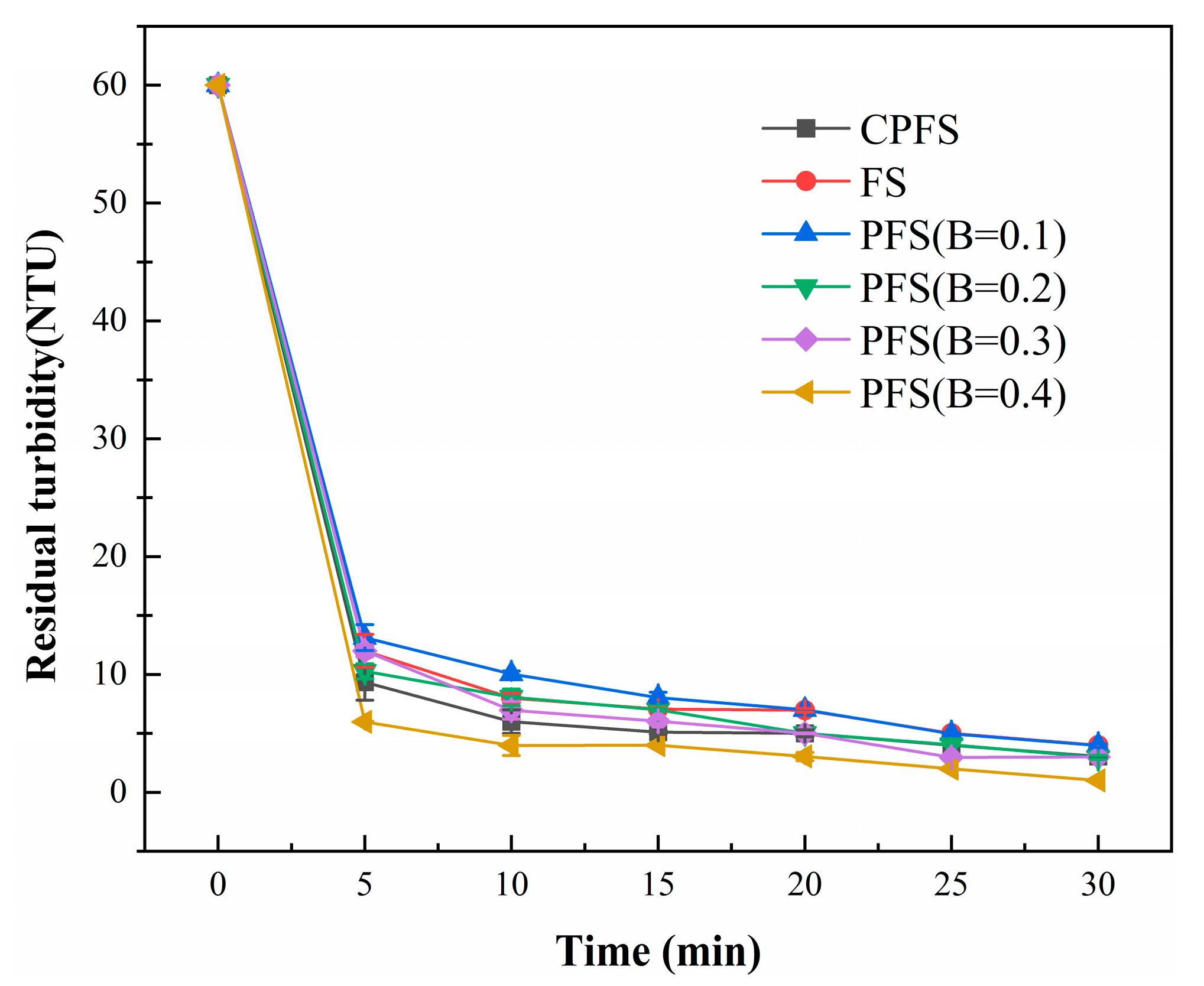
Floc settling performance was evaluated at pH 7 and 30 mg Fe/L, with turbidity measured at 5 min intervals (
Figure 9). PFS (B = 0.4) exhibited superior settling behavior, achieving the same final turbidity in 5–10 min as other coagulants did in 25 min, and outperforming CPFS with a final turbidity of 1 NTU (vs. 3–4 NTU for others). Flocs from PFS (B = 0.4) were denser, darker, and redder, settling rapidly, while those from lower-alkalinity PFS were lighter, looser, and slower to settle.
Although Fe is an essential trace element, excessive concentrations pose health risks. According to the Chinese “Sanitary Standard for Drinking Water” (GB5749-2022) [
55], the permissible limit for Fe is ≤0.30 mg/L. Residual Fe concentrations after coagulation (
Table 1) were lower for CPFS and PFS (B = 0.4) than for FS, indicating that PFS is both a more efficient and environmentally friendly coagulant. Among the prepared coagulants, PFS (B = 0.4) had the lowest residual Fe, further confirming its superior treatment performance.
3.4. Application of Fe3O4@C and PFS in Real Wastewater
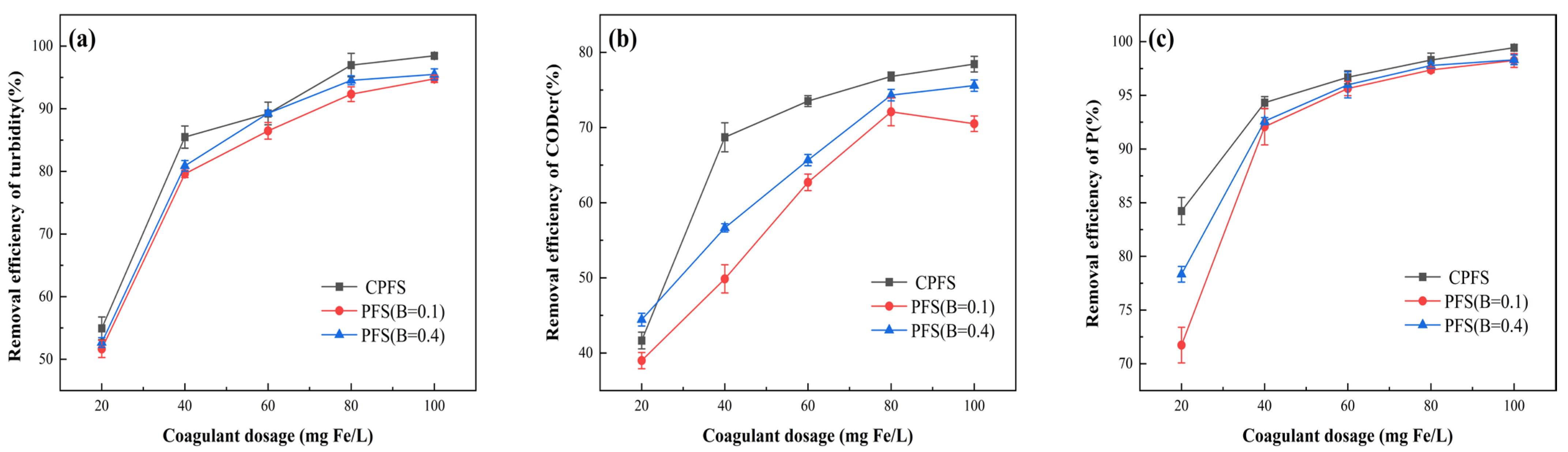
Firstly, the prepared PFS (B = 0.1 vs. 0.4) was investigated for the removal of turbidity, COD, and P from real domestic wastewater.
The treatment performance of PFS for real domestic wastewater is presented in
Figure 10. Due to the complex composition of domestic wastewater, the optimal dosage was determined to be 80 mg Fe/L, which is significantly higher than the optimal dosage for synthetic laboratory water. At lower dosages (e.g., 20 mg Fe/L), the removal efficiency for certain pollutants was unsatisfactory. Overall, turbidity, COD, and total phosphorus (P) removal efficiencies increased with dosage, but the improvement plateaued beyond 80 mg Fe/L. CPFS exhibited slightly better performance than the laboratory-prepared PFS, while among the prepared samples, PFS with B = 0.4 achieved higher removal efficiencies than that with B = 0.1. At the optimal dosage, the removal efficiencies of CPFS for turbidity, COD, and P were 96.95%, 76.83%, and 98.14%, respectively, compared with 94.66%, 74.42%, and 97.86% for PFS (B = 0.4). The relatively high phosphorus removal efficiency can be attributed to the reaction between phosphate and the coagulant, forming insoluble phosphorus-containing precipitates and flocs. In contrast, COD removal was less effective, likely due to the limited impact of coagulation on dissolved organic matter.
To address the limited removal of dissolved organic matter, magnetic flocculation was performed using the previously synthesized Fe3O4@C in combination with PFS. Both the coagulant and magnetic particles were prepared in the laboratory from iron sludge. For MPFS synthesis, dosages of 80 mg Fe/L for PFS and 100 mg/L for Fe3O4@C were selected.
As summarized in
Table 2, the introduction of magnetic particles enhanced the removal efficiency of all coagulants. In particular, PFS (B = 0.1) exhibited an approximately 9% increase in COD removal, a greater improvement compared to phosphorus removal. This can be explained by the already high baseline phosphorus removal and the additional adsorption capacity of Fe
3O
4@C toward dissolved low-molecular-weight organic matter. This synergistic effect can be attributed to the high specific surface area and surface oxygen-containing functional groups of Fe
3O
4@C. During the coagulation process, it can not only form a stable adsorption bridging structure with the hydrolysis products of PFS, but also act as microflocs to accelerate the aggregation of colloids. Meanwhile, the magnetic responsiveness of Fe
3O
4@C promotes the rapid aggregation and separation of fine flocs under an external magnetic field, thereby significantly enhancing the removal efficiency of dissolved low-molecular-weight organic substances while maintaining a high phosphorus removal rate. Between the two magnetic coagulants—CPFS + Fe
3O
4 and CPFS + Fe
3O
4@C—the latter achieved higher removal rates due to the superior adsorption properties of carbon-doped magnetite. Although prepared PFS exhibited slightly lower removal efficiencies than CPFS, it demonstrated strong resource utilization potential, achieving COD and P removal rates of 71.96–81.97% and 97.41–98.73%, respectively. Furthermore, the flocs generated by MPFS were denser, more compact, and settled rapidly under magnetic separation, significantly improving sedimentation efficiency compared with conventional PFS.
The prepared PFS + Fe
3O
4@C magnetic coagulant offers a substantial cost advantage over the combination of CPFS and Fe
3O
4, while achieving comparable treatment performance. The effluent COD and P concentrations were 33.11 mg/L and 0.117 mg/L, respectively—well below the Class A discharge standard in the
Pollutant Discharge Standard for Urban Wastewater Treatment Plants (GB 18918-2002) [
56]. This demonstrates the considerable potential of MPFS in municipal wastewater treatment.
The PFS preparation process is simple and easy to operate, and it has a positive effect on the removal of pollutants such as COD and total phosphorus. The cost of chemical reagents for the laboratory production of 10 L PFS (B = 0.4) is calculated below, and the results are shown in
Table 3. The amount of CPFS required to prepare 10 L PFS solution was calculated to be 1000 g.
In addition, the production process needs to be heated and stirred, taking 0.4883 RMB/kWh of electricity for Beijing residents as an example; since power is also affected by the heating temperature and stirring speed, etc., roughly calculate the other costs required for production:
As shown in
Table 3 and
Table 4, the cost of laboratory prepared PFS is about 19.813 RMB/10 L. Compared with CPFS as well as other coagulants, the cost is lower, and the removal effect is favorable. If it can be produced on a large scale, it can provide a reference for water plants to reduce costs.
3.5. Impact on the Environment and Economy
Iron-containing WTRs are rich in recoverable iron, representing a potentially valuable secondary resource. However, without effective reuse strategies, WTRs may pose environmental risks through leaching or improper disposal. In this study, a mild and efficient method was developed to extract iron from recycled iron sludge and synthesize a polymeric ferric sulfate coagulant. During the acid leaching process, sulfuric acid usage was optimized to minimize chemical consumption while ensuring efficient ferric salt recovery. The optimized liquid–solid ratio (10:1) and acid concentration (3 mol·L
−1) not only improved leaching efficiency but also reduced the residual acid content in the leachate. The residual solids after leaching were primarily composed of inert mineral particles and trace organic matter. These residues were neutralized to pH 7–8 for safe landfill disposal or potential reuse as construction fillers, complying with China’s hazardous waste standards (GB 18598-2019) [
57].
This approach enables the separation of iron from waste sludge at substantially lower cost and with reduced pollutant emissions compared to conventional methods, thereby addressing a major challenge in WTR management. The synthesized PFS demonstrated strong potential for wastewater treatment applications, indicating both technical feasibility and commercial viability. By converting waste iron sludge into a high-performance coagulant, this work not only provides a novel route for producing PFS but also expands the technical framework for iron sludge resource recovery. Furthermore, it offers practical support for sustainable socio-economic development by integrating waste minimization, resource recycling, and pollution control into a single process [
58,
59].
4. Conclusions
This study utilized waste iron sludge from a groundwater treatment plant as a resource to successfully synthesize PFS with different degrees of basification. By integrating Fe3O4@C magnetic nanoparticles, a highly efficient magnetic coagulant was developed. Through systematic optimization of acid leaching parameters (70 °C, 30 min, liquid-to-solid ratio of 10:1, 3 mol/L H2SO4), the maximum iron leaching efficiency reached 0.45 g/g dry iron sludge. The synthesized PFS exhibited high consistency with CPFS in terms of surface structure, polymerization degree, and characteristic functional groups. Moreover, it demonstrated excellent performance in real domestic wastewater treatment, achieving high removal efficiencies for turbidity, COD, and total phosphorus. Furthermore, the composite magnetic coagulant, prepared by combining PFS with Fe3O4@C nanoparticles, not only enhanced the adsorption and removal of small-molecule organic pollutants but also improved floc settling velocity and reduced residual iron content, demonstrating strong potential for engineering applications. However, this study has certain limitations, including a lack of long-term stability assessment of PFS, incomplete mechanisms for magnetic nanoparticle recovery, and insufficient validation of adaptability to complex wastewater matrices. Future research should focus on multi-source raw material screening, coagulant storage stability, the optimization of magnetic separation systems, and adaptability to diverse wastewater types to facilitate the practical implementation of this technology.