Abstract
The objective of this study was to propose a multidimensional model capable of evaluating, in a participatory method, the pressures agricultural production systems cause to aquatic ecosystems. The model was structured with information compiled from scientific articles, doctoral theses, public documents, and field research performed with the participation of stakeholders through interviews, questionnaires, and group evaluations. The evaluation matrix combines seven criteria and twenty-five sub-criteria with different weights to evaluate two main aspects: (i) land occupation and soil management and (ii) agricultural waste production and disposal. The model was tested in 14 agricultural farms, representing four productive arrangements, in a large watershed (2400 km2) in southern Brazil. The geophysical characteristics of the site (18.3%), land use and occupation (28.2%), management practices (soil and water) (25.4%), manure and fertilizers (12.6%), pesticides (14.1%), agricultural waste and discards (1.4%) were the criteria and their respective weights used in the structure of the proposed evaluation model. The evaluation showed that the combination of the fragility of cultivated environments and the absence of conservation practices represented the greatest risks (72.9%) to maintaining the sound environmental conditions of aquatic ecosystems. For future research, it is recommended that a cost-effectiveness analysis be carried out to evaluate environmental conflicts.
1. Introduction
The expansion of production of goods and services to meet growing human needs has compromised the natural regeneration of ecosystems, decreased biodiversity, and caused the extinction of many species [1]. The production models of contemporary society generate high emissions of greenhouse gases to the atmosphere [2], soil and water pollution [3], and compromise landscape and cultural values [4], among other negative implications for ecosystems [5,6].
The pressures exerted by human activities on the environment include changes in the natural state of aquatic ecosystems. The impacts monitored, both quantitative and qualitative, indicate modifications in hydrological cycles [7]. Changes in rainfall regime (temporal and spatial) and an increase in the volume of surface runoff immediately after rainfall are some of the observed variations related to water availability in terrestrial ecosystems [8,9,10]. In addition to physical changes in rivers, lakes and oceans, human activities (which include animal husbandry) accelerate the transfer of pollutants to aquatic ecosystems. Industrial chemical elements, organic compounds used in agriculture (pesticides and pharmaceuticals, especially), and even in human medical treatments, hygiene, and aesthetics have modified the quality of hydric resources [11,12].
While the planet’s population has doubled in the last 60 years, water consumption has increased sevenfold [13]. By the year 2030, water withdrawal will be 25% greater than the current volume [14]. The increase in per capita consumption is mainly determined by changes in global food consumption habits—higher consumption of meat and dairy products. In addition to consuming more water, the current development model has not safely safeguarded natural areas from the effects of anthropogenic activities on aquatic ecosystems. For instance, wetlands across the planet have declined by 40% since the 1970s [15].
The concentration of urbanized areas and the expansion of agricultural areas in recent years have intensified the uncertainties around water resource management. Occupying about 50% of the planet’s habitable land and using approximately 70% of the freshwater volume, agriculture has been the subject of several studies. Research conducted in distinct watersheds [3,12,16,17] has linked the degradation and pollution of aquatic ecosystems directly to agricultural activities. Agricultural land use has been indicated to be an important factor affecting the nutrient status and sedimentation of streams [18], imposing restrictions on fish and the human community [3,19].
Agricultural production systems, consisting of a combination of crop and livestock systems with distinct technical factors structured from different measures of agricultural area, knowledge, and capital [20,21] have put pressure on aquatic ecosystems at a level many times greater than their natural renewal capacity. Even systems characterized by smallholder production and the use of primarily family labor cause changes in the natural characteristics of water resources. Agricultural pressures are related to two main factors: (i) use of natural resources and (ii) waste generated, transported, or disposed of in the environment. The former refers to the different land uses and landscape changes, while the latter refers to the use of products and inputs. Isolated or accompanied by extreme natural events (climate oscillations), waste can have serious impacts on the environment and human well-being [22].
The identification and characterization of environmental problems is a challenge for scientists, starting with defining the methods used since not all techniques can adequately recognize agri–environmental interactions [23,24]. Because of this, our objective was to structure and test a multidimensional model to identify and measure the pressures that different agricultural production systems exert at the watershed level. To this end, we used the MCDA (Multicriteria Decision Aid) methodology, with the participation of stakeholders through interviews, questionnaires, and group evaluation. We developed a “multi-criteria aid evaluation model” [25], which took into account the perceptions of managers who make public decisions, as well as seeking to raise awareness among farmers who live in the area and use the natural resources evaluated. The hypothesis was that models structured through participatory processes have the potential to identify and solve complex problems such as the management of natural ecosystems, since these approaches shorten the distance between decision makers and the identification of problems, as well as bringing them closer to the formulation of alternatives.
2. Theoretical and Methodological Framework
The diagnosis and resolution of problems with a socio-environmental dimension are faced with a series of uncertainties that can be of a technical, epistemological, methodological, and even ethical nature. At the same time, the decisions at stake, in general, involve costs, benefits, compromise, and the distinct interests of the various agents involved [26].
A set of methods called Multicriteria Decision Aid (MCDA), originating from the European School, which is based on the scientific paradigm of constructivism, can be used as an alternative to ponder and minimize these uncertainties [27]. These methods integrate multiple dimensions into problems to incorporate the preferences of those interested in the phenomenon, to sort, rank, or elect the alternatives constructed for a given context [28].
The studies of [27,29,30,31] are theoretical-conceptual references of the principles and bases of the multicriteria methods. Operationally, such methods establish ways to model complex situations and can cover both qualitative (environmental, social, and organizational factors) and quantitative factors (costs involved, physical variables, among others) [31].
Multicriteria methods, unlike monocriteria methods in which alternatives are evaluated based on a single immediate criterion, bring together a considerable variety of aspects relevant to the problem, including taking into account the psychological aspects of the behavior of stakeholders [32]. More precisely, the multicriteria methods start from the rationality that underlies fuzzy set theories to compare preferences through a set of alternatives subjected to a series of criteria. A criterion is a “tool” that allows for comparing alternatives according to a particular “axis of meaning” or a “point of view” [33] (p. 59).
Relations between alternatives are classified into three properties: Strict preference, when an alternative is preferable to another (a P b); Indifference, when there is no preference between alternatives (a I b); and Incomparability, in this case it is not possible to compare two alternatives (a R b) [34]. The literature organizes multicriteria methods as of the following approaches: (i) interactive methods, (ii) outranking methods, and (iii) single synthesizing criterion [34]. The single synthesizing criterion make use of the Multi-Attribute Utility Theory (MAUT) to identify a marginal utility function in each criterion and subsequently group individual utility functions into a global utility function [33] (Table 1).
Table 1.
Additive aggregation decision matrix.
According to the additive aggregation matrix presented in Table 1, the value of each alternative results from the weighted sum of the criteria. This value is obtained for each alternative, according to Equation (1):
The global value of the multicriteria model—G(.)—is obtained for the i-th criterion in the n-th alternative, according to Equation (2):
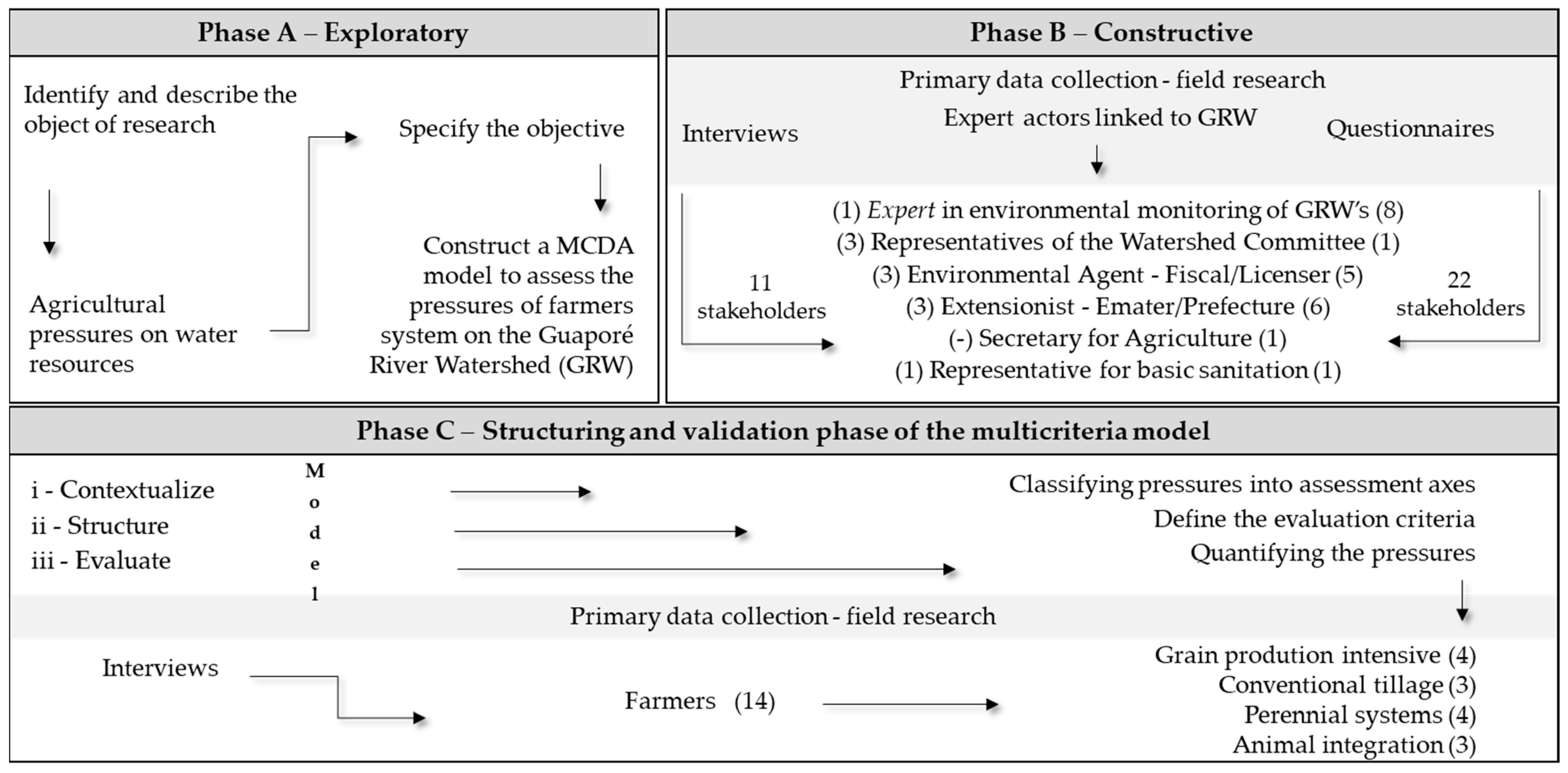
The main implication of using this mathematical model is the compensation between criteria—the loss of value in one criterion may be mutually offset by the gain in another (pareto optimum). Compensations are also called trade-offs [35]. The model used in this research (which includes the criteria used) was built with the participation of stakeholders through interviews, questionnaires, and group evaluation. The criteria and weights were built from the knowledge and experience of experts who know the location and, consequently, the problems related to agricultural production and natural ecosystems in the region. In summary, such processes occur in three consecutive steps: (i) identification of the context and delimitation of the problem (Phase Exploratory); (ii) structuring of the multicriteria model (Phase Constructive); and (iii) evaluation of the different alternatives and model results (Phase the of Structuring and Evaluation) (Figure 1).
Figure 1.
Research development phases.
2.1. Stages of the Investigation
Phase A—Exploratory. At this moment, we delimited the problem through the collection and analysis of secondary and primary data made available by the following units: Brazilian Institute of Geography and Statistics (IBGE), United States Geological Survey (USGS), National Water Agency (ANA, as in Portuguese abbreviation), Rio Grande do Sul Secretariat of Environment and Infrastructure (SEMA, as in Portuguese abbreviation), Scopus, Web of Science, and Science Direct.
In this stage, a regional zoning was also carried out to identify and characterize the different agrarian landscapes of the GRW. The process was carried out on the basis of the Agricultural Systems Theory, which has been developed since the 1960s in France (AgroParisTech (which includes the former National Agronomic Institute of Paris-Grignon—INA-PG) [36]. This analytical tool makes it possible to understand the complexity and classify—through organization and functioning—different forms of agriculture. The main stages were as follows: (i) retrieval of the historical formation of agriculture in the region; and (ii) characterization of agro-ecological and socio-economic conditions (based on the description of climatic, geological, hydro-sedimentological, relief, flora, and the main physical characteristics of the watershed) [20].
Phase B—Constructive. In this stage, major assessment areas to be included in the multicriteria model were identified and defined through primary data collection in field research. To obtain this information, 11 interviews were conducted and 22 questionnaires were applied, with social actors able to analyze the situation of water resources in the GRW in the period between July 2018 and October 2019.
The actors who made up the sample were chosen based on purposeful sampling criterion [37] according to the following profile: experts in the public supply and sanitary sewage, authorities in environmental licensing, enforcement and sanitary surveillance, rural development agents, and researchers in soil management, conservation, and environmental monitoring of watersheds.
The contact with the informants selected to participate in the research was carried out by the procedures of ‘network systems’ [38]. Operationally, geographic micro-regions of interest were defined within the GRW and, subsequently, the social agents with horizontal amplitude were framed in pole elements of the network of micro-regions of interest.
Phase C—Structuring and validation phase of the multicriteria model. The information collected from the social agents identified during the previous phase was organized into evaluation axes, also called Fundamental Viewpoints—FPV in the literature [39]. They were arranged in a tree structure using two techniques: (i) Cognitive mapping [40], designed to answer the following question: which aspects must be considered to preserve the natural characteristics of aquatic ecosystems? (ii) Frame mode of the decision-making context [41] to decompose the cognitive map into clusters with similar evaluation themes. After defining and organizing them hierarchically, the evaluation axes and each FPV was transformed into a criterion through an attribute (measurement scale) and a value function associated with this attribute [42], which enables measuring, in the least ambiguous manner possible, the performance of the available alternatives for each axis [32]. Complex FPVs were subdivided into two or more Elementary Viewpoints (EPVs), each generating a sub-criterion as well.
The attributes can be classified as direct, constructed, or indirect (proxy). They can also be qualitative or quantitative, and continuous or discrete. Once the attributes were defined, they were ordered from most attractive to least attractive. Subsequently, a value function was associated with each attribute’s impact level through the Direct Rating method [33,35]. This function is obtained using interval scales estimated with arbitrary values 0 (zero) and 100 (one hundred). Respectively, the maximum level represents the most desirable situation; on the other hand, the minimum level represents the least desirable but possible situation. The values of the intermediate impacts are scaled to the minimum and maximum values. Table 2, for example, illustrates the value function for Elementary Points of View (sub-criterion). The structures of the other criteria is available in Appendix A.
Table 2.
Sub-criterion “C1.3 Distance from ploughing to streams or springs”.
After defining the value function, the reference impact levels were identified, which represent regions of “Good” and “Neutral” expectations—regions where the alternatives to be evaluated are neither very attractive nor very repulsive. Actions with an effect above the good level on the scale generate scores higher than 100 (one hundred), while actions below the neutral level generate negative scores. The transformation of the value function is performed using the linear Equation (3) of positive type.
The properties of this transformation are as follows:
where v′(a) is the score transformed for action a; v(a) is the original score of action a; and α and β are linear constants of the scale, where α > 0. The new scale should be obtained by solving a 1st-degree equation system with two unknowns. Further information is presented by [35]. Finally, all resulting weights were standardized into values defined between zero and one. Thus, once the descriptors and their respective value functions were in place, it was possible to measure the performance of alternatives intra-criteria.
v′(a) = v(a). α + β
To obtain a global evaluation of alternatives, in which all criteria and sub-criteria are simultaneously considered, it was necessary to weight the weights by means of compensation rates and sum-weighted coefficients. To achieve this, the balance weighting method was employed, which is based on attributing utility weights to each criterion via the linear scale ϵ [0,1], whereby utility value 1 refers to the best alternative and 0 to the worst [35,43]. The additive model used to aggregate the value functions into a global assessment is represented by Equation (2).
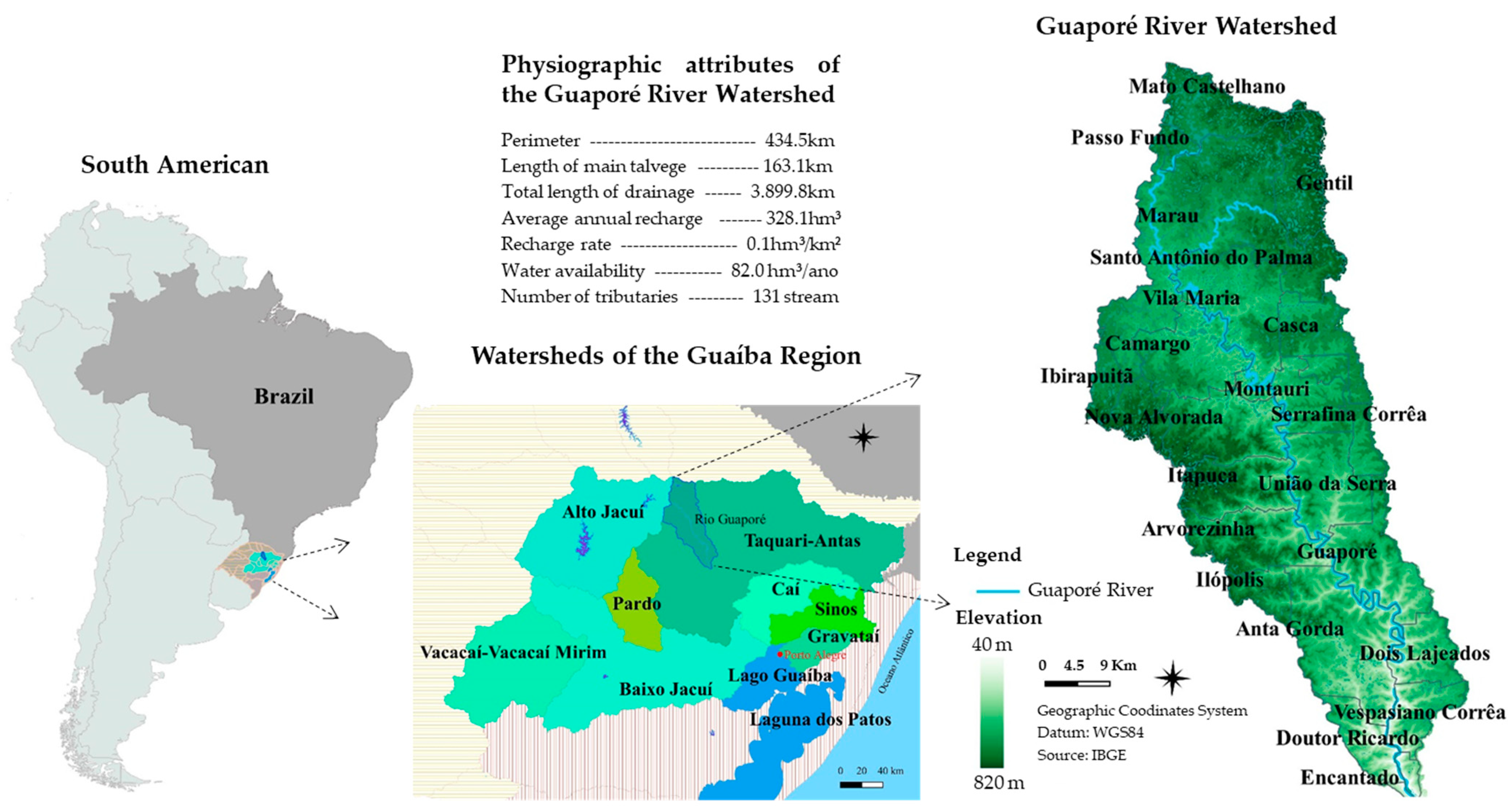
The model was tested in 14 agricultural establishments to measure and compare the pressures exerted by the four main agricultural production systems identified in the watershed (Figure 2). An agricultural production system is defined by combinations of crops, livestock, and technical factors available to a farm unit, such as labor, technical knowledge, agricultural area, equipment, and capital [20]. The results of the global assessment and the criteria impact profile are the result of the average score of the establishments belonging to each of the four production systems. The agricultural establishments were chosen by employing purposive sampling directed [37] with the support of the actors interviewed in the previous stage, especially by indication of rural extensionists and agents linked to the agrarian or environmental area of municipal governments.
Figure 2.
Guaporé River Watershed—RS, Brazil.
The techniques used were interviews and in loco passive observation to complement the information acquired via interviews [44]. The in loco observation technique helped to characterize the environment and the soil, including (a) classifying the slope of the cultivated land, (b) the degree of soil compaction, (c) the stability of soil aggregates, (d) verifying the presence of signs of erosion and gauging the percentage of soil coverage by residues. The soil texture was determined based on the clay content presented in the soil analyses carried out by the farmers themselves.
2.2. Study Area
The Guaporé River Watershed (GRW) is located in the northeast region of the state of Rio Grande do Sul, Brazil (420.900–366.400 mE and 6.874.286–6.772.536 mS, zone 22S). With 2400 km2 of drained area, it encompasses 25 municipalities, 5 of which are fully inserted in the HB (Figure 2). The GRW presents a wide and diverse drainage network with a predominantly dendritic shape. The average monthly flow rate was 31.3 m3 s−1 in 2012 and 2013 [45]. The climate type of the region is subtropical and superhumid mesothermal, without a defined dry season [46], and with an average annual temperature of 17.9 °C (Cfa Köppen system). The average annual rainfall varies between 1550 and 1700 mm, with 1861 and 1434 mm in 2018 and 2019, respectively [47].
The topography varies from gently to moderately undulating in the northern portion of the GRW and strongly undulating to steep relief classes in the southern region. Approximately one-third of the GRW area has slopes between 15 and 30%. The Prevailing vegetation is composed of Seasonal Deciduous Forest, Mixed Ombrophylous Forest, and areas of Grassy Steppe. The geological formation is characterized by volcanic lava flows of the Serra Geral formation, typified by Caxias, Gramado, and Paranapanema, covering, respectively, 72.2, 26.1, and 1.7% of the area. The soil classes found in the catchment are as follows: Ferralsols (31.2%), Luvisols (24.2%), Nitosols (21.4%), Acrisols (16.6%), and Leptosols (6.6%) [16].
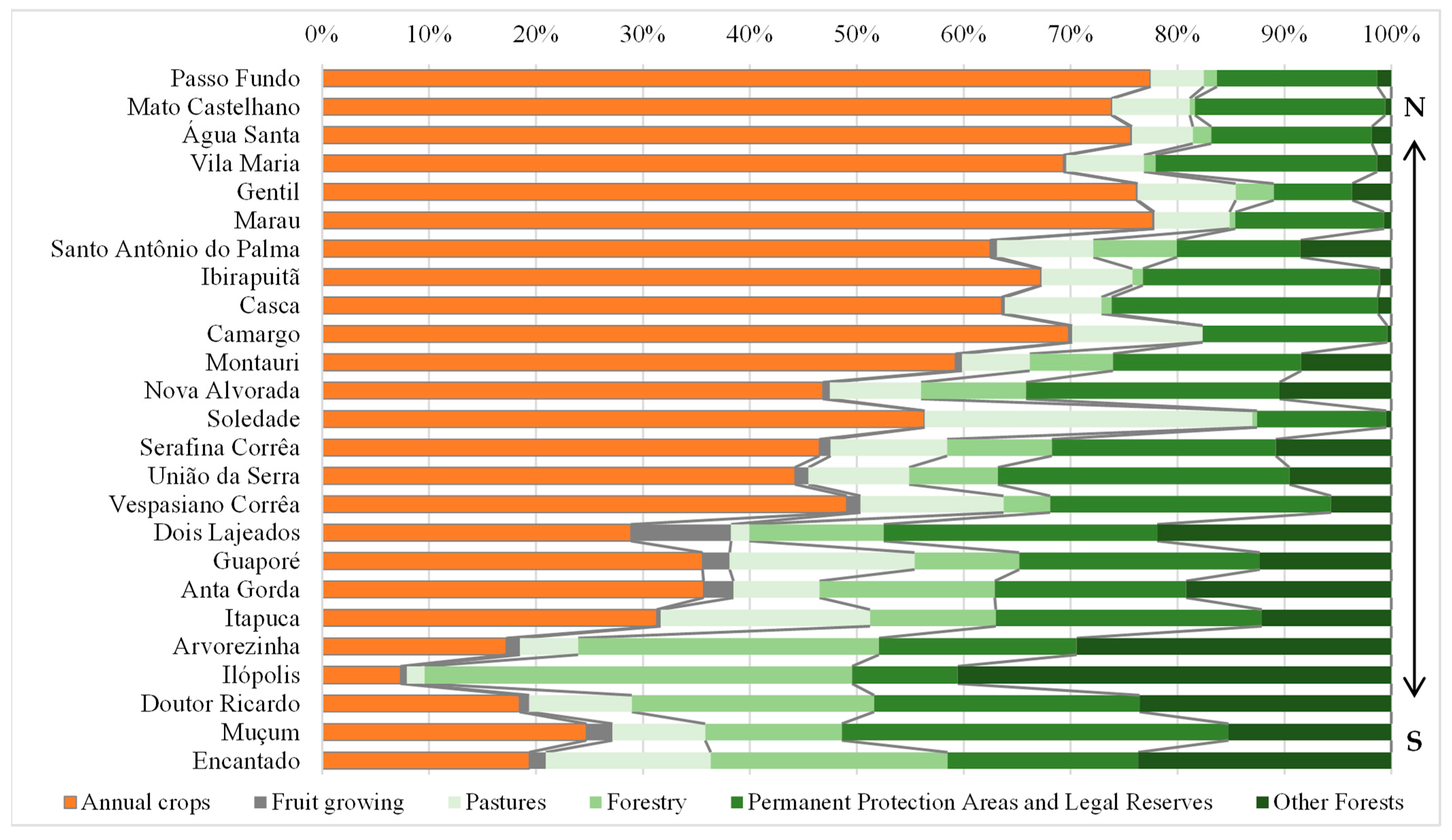
Annual crops cover 54.6% of the watershed area, being more expressive in the north, while forests cover 36.8% of the area, especially in the southern portion. Grassland covers 4.8% of the area; forestry, 2.6%; urban areas correspond to 0.7%, and the water body class to 0.5% of the watershed. According to the Brazilian Institute of Geography and Statistics (IBGE, as in Portuguese abbreviation), the average surface of agricultural establishments in the GRW is 34 hectares. The establishments with more than 100 hectares are equivalent to 5.3% of the total area, contrasting with more than 86% of the establishments with less than 50 ha, and more than 57% of them with less than 20 ha [48].
Soybeans (Glycine max L. Merr) and corn (Zea mays) under no-till systems are predominant in the northern part of the watershed in the spring/summer. At the same time, in the fall/winter, oat (Avena sativa) and wheat (Triticum aestivum) are usually grown in these areas. Land use in the southern region is more diversified. However, the conventional system, with intense soil disturbance predominates, especially in the tobacco (Nicotiana tabacum L.) production areas. In contrast, in sloping and even mountainous areas, yerba mate (Ilex paraguariensis A. St. Hil.) cultivation predominates, and the soil surface remains constantly protected. Although pig, poultry, and dairy farming in the intensive system is recurrent in the GRW, it is more notorious in the south–central region (Appendix B).
In summary, the watershed landscape is representative of family and farmer agriculture in South America: agriculture, animal husbandry, agro-industries, and small urban settlements imbricated in the rural landscape [49]. The agricultural production systems are typically based on family, and most of them occupy ecologically fragile environments and sloping areas, with the presence of springs and aquifer recharge [50]. Additionally, the GRW provides drinking water to more than half a million local inhabitants, and the Guaporé River is one of the main tributaries of the Taquari River, a tributary of the Guaíba River Watershed, which supplies a large part of the more than four million inhabitants of the metropolitan region of Porto Alegre [51].
3. Results and Discussion
There are two main results. One refers to the structuring of the model for assessing agricultural pressures on aquatic ecosystems, with criteria and weights assigned to them by the stakeholders who participated in the research. The other result is the performance assessment of the different production systems practiced by farmers living in the Guaporé River Watershed.
3.1. Structure of the Model
The model is designed to assess two broad clusters of criteria: (i) land cover and management, and (ii) agricultural residue production and disposal. Land cover, land management, and landscape characteristics are the main drivers of material transfer, deposition, and redistribution over time in a watershed. The impact of the pressure exerted by anthropic activities, especially by agriculture, on aquatic ecosystems depends on the natural ecosystem’s characteristics, land occupation, and soil management. Our model, therefore, is conceptualized using three phenomenological criteria (three basic axes) in the first cluster: (a) land use—arrangement of crops in the agricultural space, (b) landscape features and soil properties—buffering capacity of the impacts of anthropic pressure, and (c) soil management. These axes were broken down into eleven less complex levels (sub-criteria) to detail the assessment.
A second criteria cluster—agricultural residues and discards—was included in the model, since Guaporé River is one of the watersheds with the highest concentration of pig, poultry, and dairy production in Latin America. These axes were also broken down into four criteria and fourteen less complex levels (sub-criteria) to detail the assessment. The amounts, application forms, and care with the use of (d) industrialized fertilizers, (e) animal wastes, and (f) pesticides by the farmers were monitored and included in the model. Finally, we introduced some data to the model regarding (g) disposal of products of industrial origin and products generated on the farms themselves. Specifically, we evaluated the disposal of agrochemical and medicine packaging, old tires, machinery and equipment parts, lubricating oil, grease, batteries, hardware, plastic pipes, and glass, among other industrial materials used in agriculture, as well as the disposal of dead animals and non-hazardous agricultural waste.
The result of structuring the multicriteria model to evaluate pressures exerted by agricultural production systems on aquatic ecosystems was configured in a tree arrangement of hierarchical ramifications of seven criteria (with different weights, whose sum is 100) and twenty-five sub-criteria. The sum of the weights of sub-criteria in the same level should be 100%, as pictured in Table 3.
Table 3.
Hierarchical structure of the model: clusters, criteria, and sub-criteria with their respective weights.
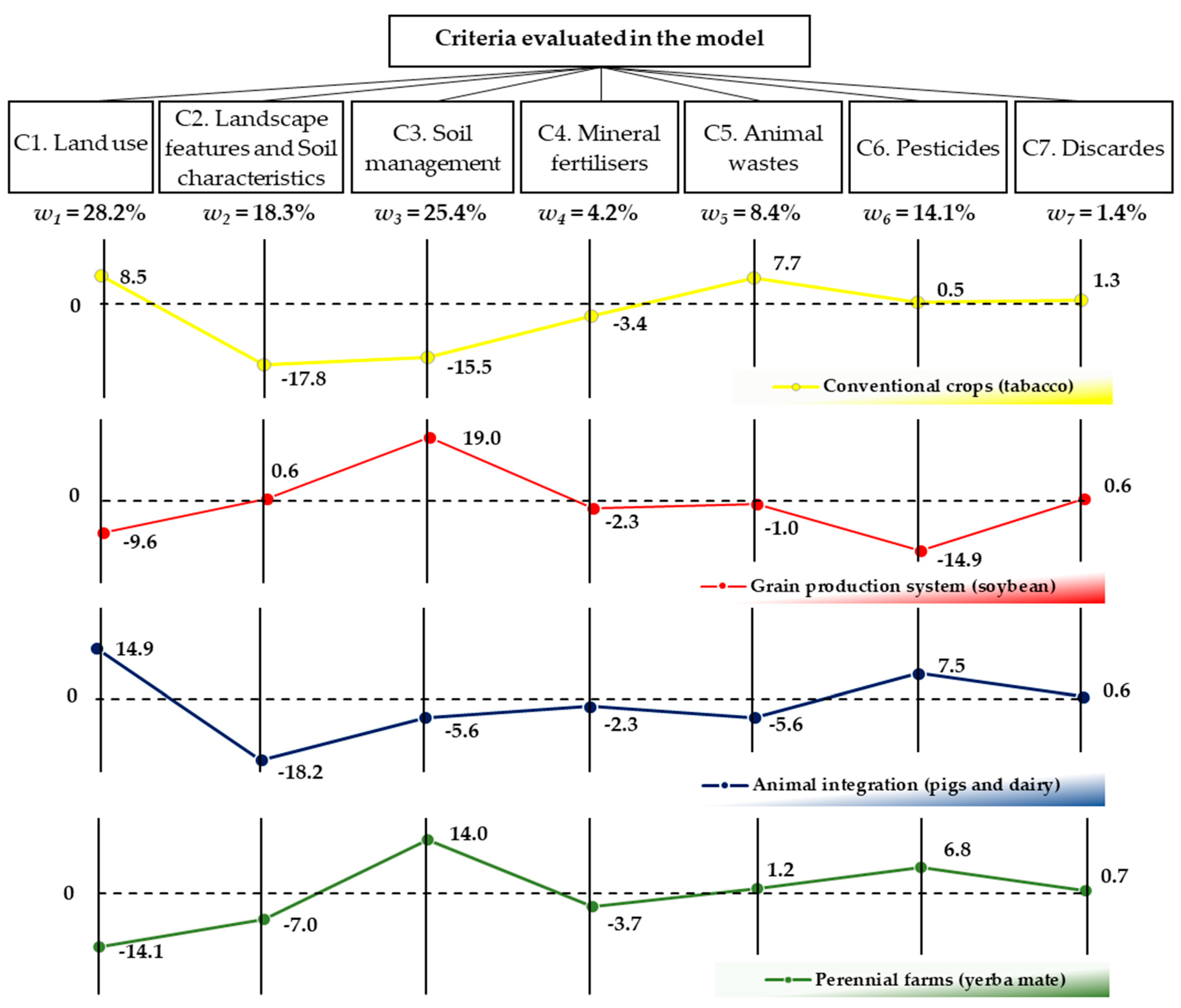
Coupling the remarks of farmers, technicians, and public managers with the scientific support of renowned agrarian science researchers, we attributed more than two-thirds of the total weight of our model of evaluation (71.9% of 100%) to the first cluster: land occupation and soil management (Figure 3). This result is because the transformation of natural biomes into agro-ecosystems has inexorably caused changes in natural biogeochemical cycles [52], among them, the water cycle is completely modified [7]. Both the quality and flow of water in the atmosphere–soil–vegetation are less favorable for biota (including plants), favoring its rapid transfer to the oceans. Changing natural land use (forest, savannah, native grasslands, caatinga, and other biomes) to agricultural production areas (reforestation, pasture, and especially annual crops) puts significant pressure on aquatic ecosystems [7].
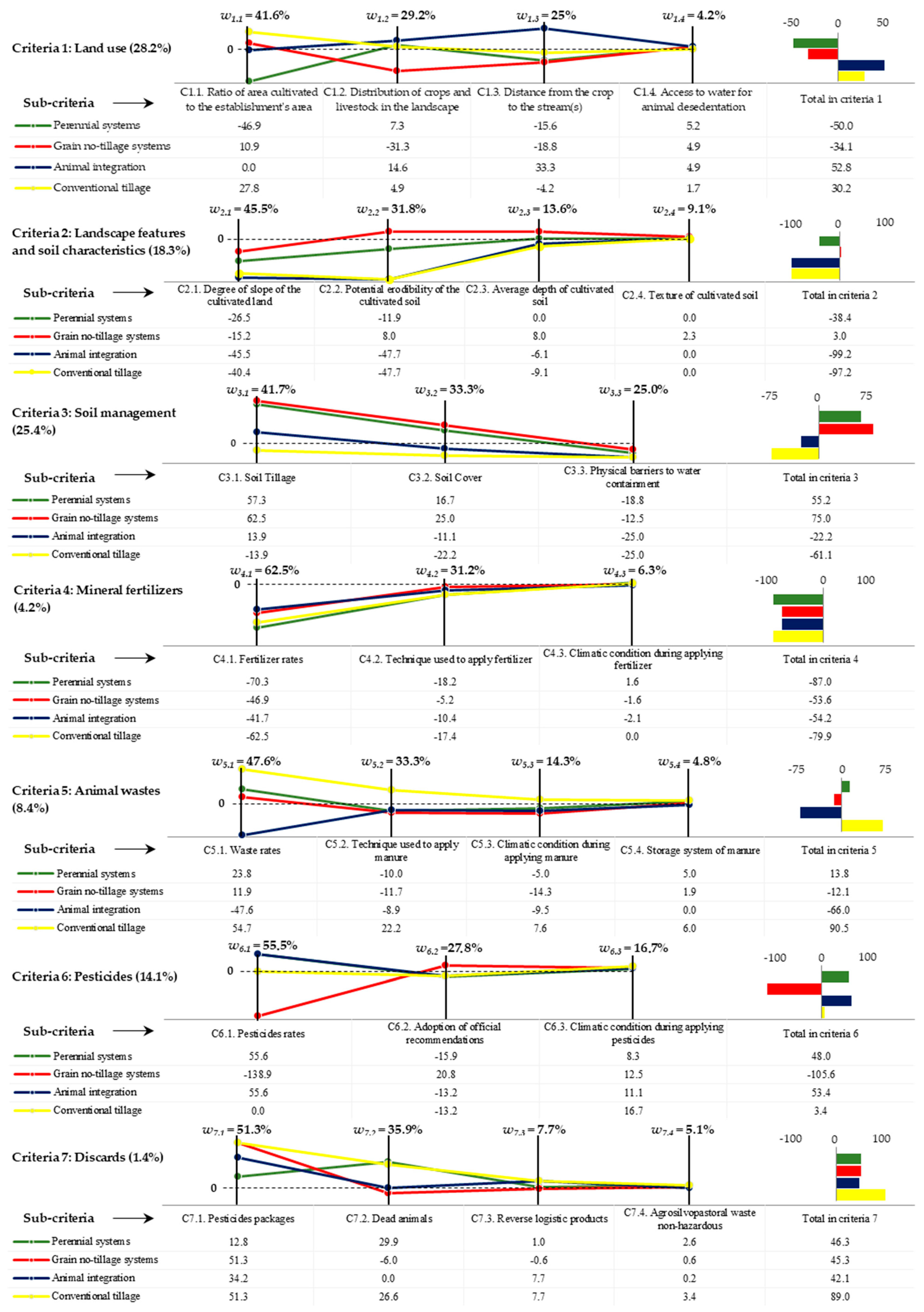
Figure 3.
Level of pressure in each criterion in the four production systems analyzed (alternatives). w1, w2, …, wi = weight of the different criteria in the model.
Land use (28.2%) was represented mainly by the ratio between crop areas and natural vegetation (41.6% of 28.2%); soil management (25.4%) with emphasis on soil tillage (41.7% of 25.4%); and landscape features and soil properties (18.3%) were especially represented by the slope of cultivated areas (45.5% of 18.3%), constituting a starting point for planning the management of water resources considering agricultural activities carried out in the GRW. The weights assigned to soil characteristics, land use, and management are in accordance with soil erosion models, especially the Revised Universal Soil Loss Equation (RUSLE) model [53].
For the second cluster, agricultural residue production and disposal with a weight of 28.1% (of 100%) was assigned. Since the inputs used to meet the demands of farming systems and increase their production efficiencies have generated different types of waste [54], off-farm agricultural inputs and organic waste produced on the farm were parameterized and included in the model. Pesticides were given the highest scores (14.1%), organic wastes (manure animal) participated with 8.4%, industrialized fertilizers made up 4.2%, and other discards 1.4% (pesticides packages, dead animals, reverse logistic, products, agrosilvopastoral waste) (Table 3).
3.2. Performance of the Alternatives (Production Systems)
The Guaporé River Watershed can be divided into two large agricultural regions [12,16]. The Northern region has a smooth to moderately wavy relief, where deep soils predominate, cultivated with genetically modified soybeans and corn in the spring–summer, and cereals and forage crops in the autumn–winter, under no-till farming systems. There are farmers specialized in the production of milk, pigs, and poultry in the integration system with regional agribusinesses.
The second region, which occupies two-thirds of the GRW’s surface area, is agroecologically very fragile: hilly terrain and shallow soils that make agricultural mechanization difficult. The land use is more diversified, with small parcels of land intermingled with natural or re-vegetated forest intensively exploited under the conventional tillage system [12,16]. In addition to the family’s subsistence crops, there are many tobacco-growing farmers integrated in partnership with large tobacco corporations. In addition, this is one of the regions in Latin America with the highest density of pigs, poultry, and dairy cattle. Finally, this is the region where yerba mate was historically grown and has recently registered a significant increase in the area with this crop. Inclusively, in the last two decades, the conversion of small agricultural establishments producing yerba mate into agro–industrial complexes in the sector has been ongoing [55].
Therefore, we identified and organized crop and livestock systems into four alternatives: (1) grain no-tillage systems, represented by soybean fields; (2) production systems under conventional tillage, and areas cultivated with tobacco; (3) perennial systems, grown with yerba mate; and (4) animal integration of pigs and dairy cattle farming systems. To evaluate and compare the pressures these different agricultural production systems cause on aquatic ecosystems, the evaluation model presented above was adopted.
Through the local evaluation of the criteria (Figure 3) and sub-criteria (Figure 4), it was possible to identify the virtues and vulnerabilities of each of the selected production systems. Therefore, the environmental conflicts of the production systems conventional tillage (tobacco)—Alternative 2 of our model—can be explained mainly for three criteria. The first of these is the technique used to apply fertilizers. The results are in line with the studies [56,57], identifying applied doses higher than those needed by the crop. In addition, the technique used to apply the mineral fertilizer is regularly mistaken, as it has been applied on the soil surface instead of applied in the furrow. This condition is aggravated since fertilization and transplanting of the tobacco seedlings takes place in September and October, when the most significant rainfall is recorded in the region.
Figure 4.
Level of pressure in each sub-criterion for the four production systems analyzed. w1.1, w1.2, …, w1.i = weight of sub-criteria in each criterion.
The second criterion that contributes negatively to the evaluation of tobacco production is soil management. In the GRW, there are two groups of tobacco farmers in terms of soil management: those who use minimum tillage (they only turn the soil over to prepare the ridge), and those who use a conventional tillage system to later make the ridge. In the conventional tillage system, the soil surface remains uncovered much of the year, which favors the erosion process. The study in [58] has shown that soil management practiced by tobacco farmers leads to rapid, intense degradation of some natural soil properties, especially those related to the dynamics of soil organic matter, compared with more conservationist uses. Complementarily, the soils cultivated with tobacco in general are fragile, shallow, and of medium texture, and the environment is sloping, generally with a gradient above 16 degrees [56].
Thus, the landscape features and soil properties were the criterion that weighed most negatively in the evaluation of the tobacco farming system. These characteristics indicate a low water-storage capacity and the high susceptibility of the soil to erosion. Testing soil management systems for tobacco cropped using animal traction on shallow soil on steep lands showed that the total soil loss was 15 Mg ha−1 for conventional tillage, and was reduced about five times for minimal- and no-tillage systems [58]. This same trend was observed for total losses of phosphorus and potassium, where no-tillage systems reduced about 97- and 57-times the losses of these nutrients compared to conventional tillage.
Although tobacco cultivation is labeled for consuming high amounts of agrochemicals, our monitoring has shown that consumption is lower than in the crop fields under no-tillage for grain production. Herbicides are mostly used to control unwanted weeds and anti-sprouting agents that inhibit the growth of axial buds. Herbicides occasionally include 2,4-D, which is extremely toxic [12].
Tobacco cultivation systems have some peculiarities, such as high added value and the possibility of being cultivated in small areas on rocky slopes without large technological investments in equipment and facilities. Much of the work is performed manually, which allows for the inclusion of less capitalized farmers. Moreover, the tobacco production chain is very well structured in the GRW, especially regarding the availability of inputs, technical assistance to farmers, logistics, and demand (leaf tobacco).
Studies with perennial crops have shown that the degree of soil degradation and the contamination of surface watercourses are relatively lower than when used with annual crops [59]. For example, monitoring two-paired catchments (eucalyptus and degraded grassland) showed that twofold smaller surface runoff and sediment yield occurred in the eucalyptus catchment [60]. It was also found that the reconstitution of natural forests of degraded soils by conventional tillage recovered the soil carbon stock quickly. Forestlands have negligible soil losses in comparison with the other vegetation covers [61]. In contrast, the intense soil tillage and mechanical weed control for tea plantations in central China lead to high erosion rates, especially at slopes higher than 30°.
In our study, although tobacco and yerba mate systems occupy similarly fragile environments—shallow soils and hilly terrain located on the slopes—in yerba mate cultivation there is no constant soil disturbance and, in most cases, the areas remain covered most of the year. The yerba mate production system, regarding the distribution of plots in the landscape, transplanting and establishment of the orchard, and cultural management, resembles Argentine organic or agroforestry systems [62]. Yerba mate has become an attractive production system for the region’s farmers, consolidating it as the largest production hub in Brazil. In the last two decades, many farmers have seen this system as an interesting option in terms of income generation and low labor demand in an increasingly sparse and aged rural population. The greatest environmental adversity assessed is related to land occupation, since yerba mate is native to the region and farmers make the most of this comparative advantage by cultivating it in permanent preservation areas, provided for in Law 12.651 of 2012 [63]. With minor adjustments in land occupation, this production system can present even less harmful impacts on the environment.
The performance of Alternative 1—grain no-tillage systems (soybean)—presents intermediate values between the two crops presented above. The relief favors mechanization and the adoption of no-tillage systems. The grain crops practically occupy the entire surface of the establishments, including areas that legislation does not allow for agricultural use, as is the case of marginal strips along water courses. Furthermore, most establishments do not comply with what is determined by Law No. 12,651 of 2012 [63] regarding maintaining that 20% of the establishment’s area be covered by native vegetation. A second aspect that disfavors assessment of the grain production system is the volume of pesticides applied to the crops. Soybean production, par example, may include up to ten applications of pesticides in a crop cycle. In general, 2,4-D is applied before sowing—to control glyphosate-resistant plants; after sowing (between 30 and 50 days), a second application is made to control undesirable plants, this time with glyphosate. During the soybeans cycle, between three and four applications of fungicides and three or four applications of insecticides are made. Accordingly, it is not surprising to find that several pesticides and their metabolites are present in the water of the dense drainage network of the GRW [12]. Of even greater concern is the fact biofilms are already impregnated with pesticides [64], including glyphosate and AMPA. Furthermore, the doses used are commonly higher than those officially recommended by the National Health Surveillance Agency (ANVISA, as in Portuguese abbreviation). According to data from the Brazilian Institute of Environment and Renewable Natural Resources, after glyphosate and 2,4-D, atrazine and simazine are the most commercialized pesticides in the southern region of Brazil [65]. The farmers of the GRW seem to follow this pattern of pesticide use.
Improvements in landscape and soil properties are positive impacts (buffering anthropic impacts on environmental degradation) of the grain production system. The soil is deep and well-structured, with high infiltration capacity, and practically 100% of the surface is managed with no-tillage. Studies have shown that no-till farming systems increase the stability of aggregates, the infiltration and availability of water, the cycling of nutrients by microbial action, the content of organic matter, and the capacity of the soil to retain nutrients [66]. However, we have found that farmers have removed the terraces to speed up sowing, cultivation, and harvesting operations. Also, we did not find any other type of physical barrier to runoff. The study in [8] has demonstrated that the absence of terraces makes no-tillage ineffective in controlling runoff and soil erosion. Over a long period of monitoring, they found that the presence of the terraces reduced peak flow rates by 79%, sediment yield from 0.44 to 0.16 Mg ha−1, and the total surface runoff from 1622 to 363 m3 ha−1 (reduced 77%).
The performance of Alternative 4—animal integration (pig and dairy cattle farming systems)—reflects the unfavorable characteristics of the environment and the soil in which most of the animal-raising systems in the GRW are found. The soils are fragile and located on an extremely rugged terrain. Generally, the rearing system is accompanied by corn crops, where the waste from animal rearing is distributed. These crops are predominantly managed with no-till farming systems, in which the lack of disturbance of the fragile soils favors water infiltration and regulates the flow into watercourses. However, the continuous use of waste in the same area, without eventual incorporation, may cause an imbalance in the soil’s physical, chemical, and biological properties. High concentrations of nutrients in the topsoil increase the propensity of transfers to water bodies, mainly N and P, which can trigger the eutrophication process [67].
Although the environment in which the animal husbandry systems are located is considered to be ecologically fragile, it should be noted that the model positively evaluated land use (Figure 4) because the ratio between the establishment area and the cultivated area is significantly high compared with the other productive systems in the region. Pig and dairy cattle systems (also the poultry breeding systems) of the GRW occupy agricultural production units that have important reserves with natural forest areas. The cultivated areas are distributed in the natural landscape, which plays an important role in mitigating the negative effects of both agricultural practices and the inputs used. Similarly, pollutants need to travel long distances occupied by natural forests that separate crops from springs and streams, which hinders the transfer of agricultural residues from crops to water bodies.
Another less-impacting criterion of the animal husbandry system, verified using the model, is the fact that it uses a relatively low volume of agrochemicals. Normally, one or two applications a year are used to control undesirable plants in the crop areas that complement the production system of the establishments. Furthermore, most of the products used are classified as low or moderately toxic according to their toxicity class.
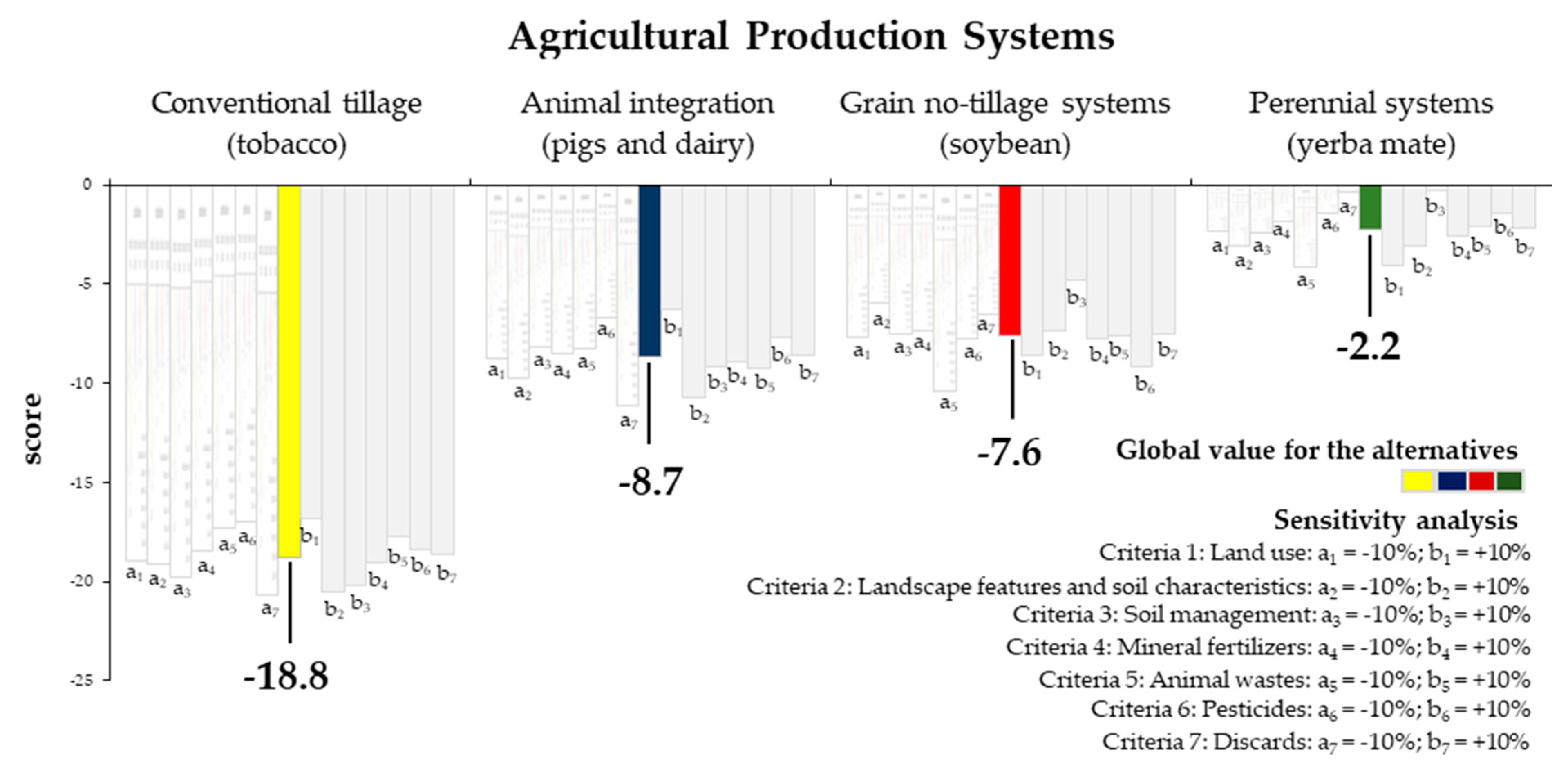
Based on the multicriteria model (Table 3), Alternative 3—perennial system (yerba mate)—is the one with the least negative interference for the maintenance of the natural characteristics of the water resources of the GRW. In contrast, conventional tillage (tobacco) manifested the worst conditions for water resources (Figure 5).
Figure 5.
Global assessment of alternatives (production systems).
The representation provided by the multicriteria model derives from scaled measurements in mathematics, psychology, and philosophy [68]. Thus, it is recommended to produce small variations in the raw values of the compensation rates assigned to the criteria to verify model sensitivity. In this case, we proceeded with changes of 10% up and down. As can be seen in Figure 5, the model does not present significant changes in performance due to modifications in the compensation rates; therefore, it can be considered robust concerning the parameters evaluated.
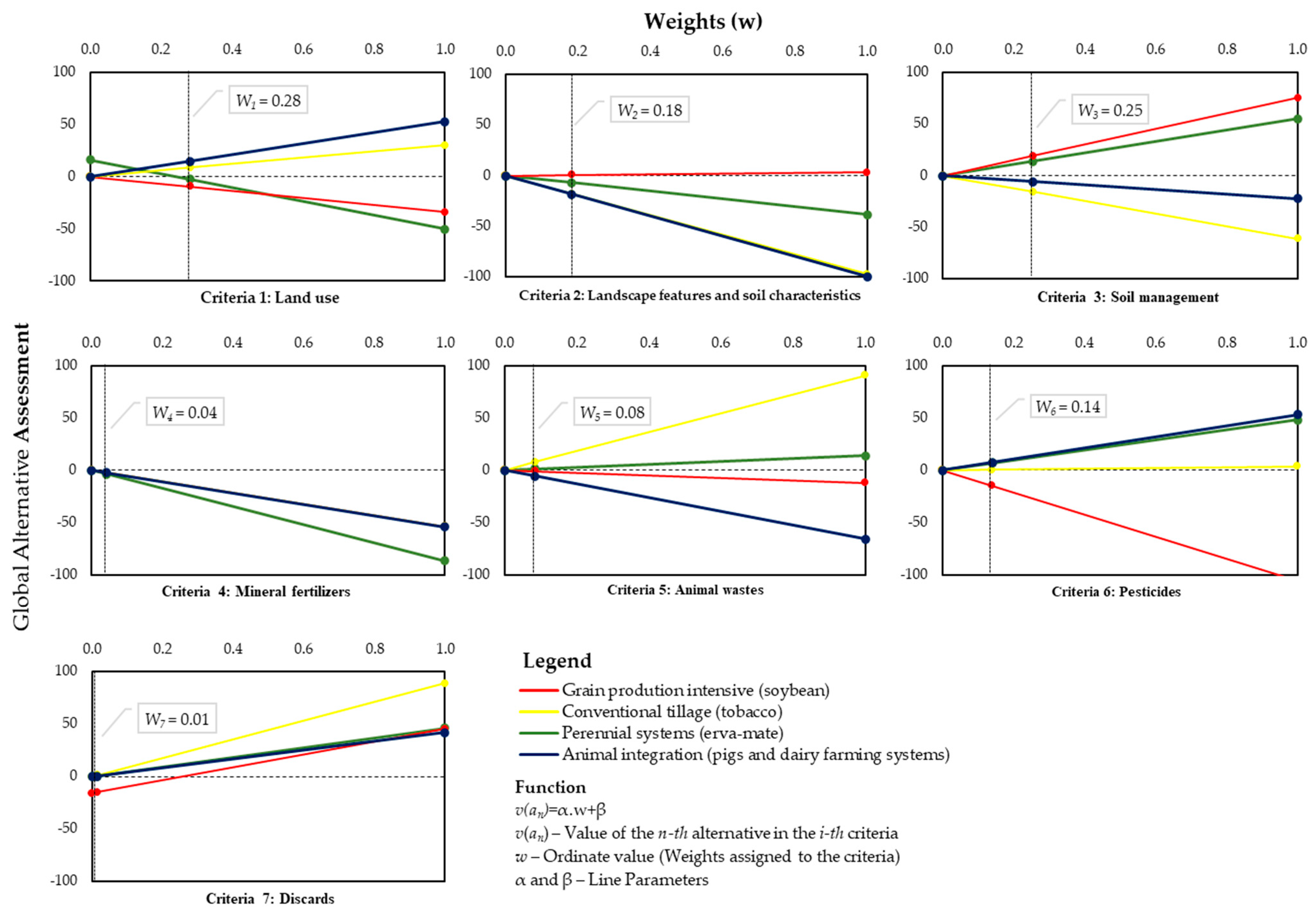
Figure 6 shows the equations that represent the overall evaluation of the production systems as a function of the compensation rate between criteria. Straight lines represent the global evaluation of the alternatives as a function of the variation in the substitution rate of one of the model’s criterion in graphical form [32].
Figure 6.
Representation of the evaluation as a function of variation in compensation rates.
Finally, it is necessary to emphasize that the scores attributed to the production systems in the multicriteria model are adimensional and, therefore, a physical degree is not applied to the estimated scores. The values of −2.2, −7.6, −8.7, and −18.8 (Figure 5), although satisfactory to represent the differences in pressure performance of the alternatives, do not necessarily represent the absolute polluting potential at the watershed scale. Therefore, it is necessary to relativize them. In this case, two conditioning factors were sought to understand the behavior of the model’s pressures: cultivated surface and the number of establishments corresponding to each production system in the watershed.
The first test to relativize the pressures of the production systems in the GRW can be carried out using the proportional area occupied by the different cultivation systems in the watershed. Soybean, yerba mate, and tobacco crops represent 29.8%, 3.5%, and 1.4%, respectively, of the total watershed area. By multiplying the scores associated with each production system by the area occupied, it becomes evident that grain production systems (soybeans) have the greatest impact on water resources (−2.3) in comparison with the other systems assessed. Yerba mate and tobacco crops have much lower impacts than grain crops (−0.1 and −0.3, respectively).
The same procedure can be used to scale the score of production and rearing systems concerning the number of establishments in the GRW. Soybean, yerba mate, tobacco, and pig and cattle farming are present in 41.8%, 23.6%, 10.3%, and 44.9% of establishments, respectively, with scaled scores of −3.2; −0.5; −1.9, and −3.9. Despite the overall pressure of the tobacco farming system being the highest among the models analyzed (−18.8), this production system occupies a small area and is present in a restricted number of establishments if compared to other systems in the region. For this reason, it is inferred that the pressure related to tobacco cultivation is much more intense locally than on a regional scale considering the drainage area of the watershed BH. In contrast, the soybean cultivation system and the animal husbandry system demonstrate a greater negative influence on water resources at the regional level since they have a greater presence in terms of area and agricultural establishments in the region under analysis.
Brazil is a continental country possessing one of the planet’s largest reserves of available fresh water, and it is one of the world’s leading agricultural producers. If, on the one hand, “modern” Brazilian agriculture—more technical, represented by capitalized farmers and with commercial relations unified with global economic cycles—has contributed to significantly increasing the regional production of soy, corn, poultry, pigs, and dairy cattle, etc., on the other hand, it has stimulated the exploitation of natural resources to a level beyond which the environment can support.
This seems to be the situation detected in the agricultural area comprising the Guaporé River Watershed, whose water resources are part of the drainage area that contributes to the water supply for a population of almost 4 million inhabitants of the Porto Alegre metropolitan region. Without being too rigorous, the studied watershed represents the dynamics of the main productive systems developed in Brazil, so that the local manifestations identified correspond satisfactorily to a large part of the regional- and global-scale problems of Brazilian agriculture.
The model was designed and developed with the participation of interested parties; thus, the systematized information is associated with their perception of the regional context in which the watershed was studied. Therefore, to extrapolate the results to other watersheds (other regions), it is necessary to adapt the criteria and weights to the local agricultural systems. Moreover, methodologically, the research indicates a starting point for those interested in constructing environmental indicators for agricultural activities. Among the limiting factors is the need to consult numerous times with stakeholders to reach a consensus on the organization of the criteria and weights assigned to them.
4. Conclusions
The hypothesis that models structured through participatory processes can identify and solve complex problems, such as the management of natural ecosystems, has been confirmed. The participatory approach is fully capable of providing objective and useful data for a model that aims to assess how and to what extent different production systems put pressure on (or even impact) aquatic ecosystems. Such a model, which combines seven criteria and twenty-five sub-criteria, has proved to be robust enough to assess and compare different agricultural pressures at the watershed scale.
To reduce the pressures arising from regional (and even national) agriculture, the following is suggested:
- i.
- Land use should be adjusted to agricultural suitability, and conservationist practices of soil and water management should be incorporated, restoring permanent preservation areas, especially in springs and waterways functioning as buffer zones from agricultural pressures.
- ii.
- Legislative and governance structures should encourage agricultural models with lower impacts on natural ecosystems through compensatory policy instruments and market instruments to take advantage of positive linkages between economic development and the environment. It is also necessary to create a political/institutional environment favorable to sustainability that works through negotiation and is dialogical among all actors involved in the process (farmers and state agents).
- iii.
- Control mechanisms foreseen in the Brazilian environmental policy must be applied, particularly (a) licenses to authorize the installation and operation of potentially polluting agricultural projects and activities; (b) environmental zoning to regulate land use; and (c) monitoring and guidance on the parameters and targets set for the emission of pollutants into the environment.
Author Contributions
Conceptualization, A.T., M.C.G. and D.d.S.R.; Data curation, T.T.; Formal analysis, A.T. and D.d.S.R.; Acquisition of funding, D.d.S.R.; Research, A.T.; Methodology, A.T. and M.C.G.; Project administration, J.M.R.; Resources, D.d.S.R. and A.T.; Supervision, J.M.R.; Validation, T.T.; Writing—original draft, A.T.; Writing—revision and editing, T.T., M.B.P., D.d.S.R. and J.M.R. All authors have read and agreed to the published version of the manuscript.
Funding
This research was funded by Coordination for the Improvement of Higher Education Personnel (Coordenação de Aperfeiçoamento de Pessoal de Nível Superior—CAPES—finance code 001) and Conselho Nacional de Desenvolvimento Cientifico e Tecnológico (CNPq) (152604/2022-7).
Data Availability Statement
Data are contained within the article.
Acknowledgments
Department of Soils in Federal University of Santa Maria and the postgraduate program in Family Farming Production Systems in Federal University of Pelotas.
Conflicts of Interest
The authors declare no conflicts of interest and the funders had no role in the design of the study; in the collection, analyses, or interpretation of data; in the writing of the manuscript; or in the decision to publish the results.
Appendix A
Table A1.
Structure of the Model: Criteria and Sub-Criteria with Their Respective Weights, and the Impact Levels of the Descriptors.
Table A1.
Structure of the Model: Criteria and Sub-Criteria with Their Respective Weights, and the Impact Levels of the Descriptors.
| Criteria | C1. Land use | 28.2% | ||||
| Sub-criteria | C1.1. Ratio of area cultivated to the establishment’s area | 41.6% | ||||
| Attributes | Forest areas x < 30 | Forest areas 20 < x > 30 | Forest areas x > 30% | |||
| Weights | −150 | 0 | 100 | |||
| Impact levels | Neutral | Good | ||||
| Sub-criteria | C1.2. Distribution of crops and livestock in the landscape | 29.2% | ||||
| Attributes | One plot of cultivated land | Two plots of cultivated land | Three plots of cultivated land | Equal four plots of cultivated land | More than four plots of cultivated land | |
| Weights | −100 | 0 | 50 | 100 | 150 | |
| Impact levels | Neutral | Good | ||||
| Sub-criteria | C1.3. Distance from the crop to the stream(s) | 25.0% | ||||
| Attributes | x < 30 m streams and x < 50 m water sources | 30 < x > 40 m streams and x > 50 m water sources | 40 < x > 50 m streams and x > 50 m water sources | 50 < x > 60 m streams and x > 50 m water sources | x > 60 m streams and x > 50 m water sources | |
| Weights | −100 | 0 | 50 | 100 | 150 | |
| Impact levels | Neutral | Good | ||||
| Sub-criteria | C1.4. Access to water for animal desedentation | 4.2% | ||||
| Attributes | Access water through streams with no defined corridor | Access water through streams in specific corridors | Access the water by means of swamps | Access water by means of weirs | Do not access water in the natural environment | |
| Weights | −125 | −50 | 0 | 100 | 125 | |
| Impact levels | Neutral | Good | ||||
| Criteria | C2. Landscape features and soil characteristics | 18.3% | ||||
| Sub-criteria | C2.1. Degree of slope of the cultivated land | 45.5% | ||||
| Attributes | Slope x > 25% and occupied by annual crops | Slope x > 25% and occupied by natural pastures or forestry | Slope 16% > x < 25% and occupied by annual crops | Slope 16% > x < 25% and occupied by natural pastures or forestry | Slope < 16% and occupied by annual crops | Slope < 16% and occupied by natural pasture or forestry |
| Weights | −200 | −166 | −66 | 0 | 100 | 133 |
| Impact levels | Neutral | Good | ||||
| Sub-criteria | C2.2. Potential erodibility of the cultivated soil | 31.8% | ||||
| Attributes | Soil erodibility potential is strong | Soil erodibility potential is moderate | Soil erodibility potential is incipient | |||
| Weights | −150 | 0 | 100 | |||
| Impact levels | Neutral | Good | ||||
| Sub-critéria | C2.3. Average depth of cultivated soil | 13.6% | ||||
| Attributes | Average soil depth < 50 cm | Average soil depth ranges around 50 > x < 100 cm | Average soil depth varies around 100 > x < 150 cm | Average soil depth x > 150 cm | ||
| Weights | −66 | 0 | 66 | 100 | ||
| Impact levels | Neutral | Good | ||||
| Sub-criteria | C2.4. Texture of cultivated soil | 9.1% | ||||
| Attributes | Clay content x < 15% | Clay content 15 > x < 35% | Clay content x > 35% | |||
| Weights | −100 | 0 | 100 | |||
| Impact levels | Neutral | Good | ||||
| Criteria | C3. Soil management | 25.4% | ||||
| Sub-criteria | C3.1. Soil Tillage | 41.7% | ||||
| Attributes | Conventional tillage | Minimal tillage or where there is little soil movement between rows for perennial farms | No-tillage system or where there is no soil movement in the case of perennial farms | No-tillage system | ||
| Weights | −100 | 0 | 100 | 150 | ||
| Impact levels | Neutral | Good | ||||
| Sub-criteria | C3.2. Soil Cover | 33.3% | ||||
| Attributes | <20% of soil surface covered in the post-harvest period until sowing/transplanting | 25 > x < 40% of soil surface covered in the post-harvest period until sowing/transplanting | 40 > x < 60% of the soil surface covered in the post-harvest period until sowing/transplanting | 60 > x < 80% of soil surface area covered in the post-harvest period until sowing/transplanting | x > 80% of the soil surface covered by straw in the post-harvest period until sowing/transplanting | |
| Weights | −200 | −100 | 0 | 100 | 133 | |
| Impact levels | Neutral | Good | ||||
| Sub-criteria | C3.3. Physical barriers to water containment | 25.0% | ||||
| Attributes | No physical barriers are used to contain runoff, nor is level planting | No barriers are used to contain runoff, however, planting is on the level | Barriers are used to contain runoff and planting is level | |||
| Weights | −100 | 0 | 100 | |||
| Impact levels | Neutral | Good | ||||
| Criteria | C4. Mineral fertilizers | 4.2% | ||||
| Sub-criteria | C4.1. Fertilizer rates | 62.% | ||||
| Attributes | Above the recommended dose | At the recommended dose | Below the recommended dose | |||
| Weights | −150 | 0 | 100 | |||
| Impact levels | Neutral | Good | ||||
| Sub-criteria | C4.2. Technique used to apply fertilizer | 31.2% | ||||
| Attributes | All applied in the sowing | Incorporated in the seeding and part applied to the haulm | Incorporated in sowing | Incorporated by correction and part in the sowing by replacement | ||
| Weights | −66 | −33 | 0 | 100 | ||
| Impact levels | Neutral | Good | ||||
| Sub-criteria | C4.3. Climatic condition during applying fertilizer | 6.3% | ||||
| Attributes | Does not observe weather conditions | Sometimes observes weather conditions | Always observe the climatic conditions | |||
| Weights | −100 | 0 | 100 | |||
| Impact levels | Neutral | Good | ||||
| Criteria | C5. Animal wastes | 8.4% | ||||
| Sub-criteria | C5.1. Waste rates | 47.6% | ||||
| Attributes | Pig x > 80 m3 ha−1; cattle x > 200 m3 ha−1; poultry x > 8 T ha−1 | Pig 60 > x < 80 m3 ha−1; cattle 150 < x < 200 m3 ha−1; poultry 4 > x < 8 T ha−1 | Pig 40 > x < 60 m3 ha−1; beef 100 < x < 150 m3 ha−1; poultry 3 > x < 5 T ha−1 | Pig x < 40 m3 ha−1; cattle x < 100 m3 ha−1; poultry x < 3 T ha−1 | Manure is not applied to the farm | |
| Weights | −100 | −44 | 0 | Good | 122 | |
| Impact levels | Neutral | |||||
| Sub-criteria | C5.2. Technique used to apply manure | 33.3% | ||||
| Attributes | Surface applied at post-planting or transplanting | Always applied to the soil surface | Surface application and sporadically incorporated into the soil | Not applied | ||
| Weights | −100 | −40 | 0 | 100 | ||
| Impact levels | Neutral | Good | ||||
| Sub-criteria | C5.3. Climatic condition during applying manure | 14.3% | ||||
| Attributes | Does not observe weather conditions | Sometimes observes weather conditions | Always observe the climatic conditions | Not applied | ||
| Weights | −100 | −40 | 0 | 100 | ||
| Impact levels | Neutral | Good | ||||
| Sub-criteria | C5.4. Storage system | 4.8% | ||||
| Attributes | Storage is not covered, waterproofed, or has a drainage channels | Storage is not covered, waterproofed, and has drainage channels | Storage is covered, waterproofed, without drainage channels | Storage is covered, waterproofed, and has drainage channels | It does not have a breeding system | |
| Weights | −60 | 0 | 60 | 100 | 140 | |
| Impact levels | Neutral | Good | ||||
| Criteria | C6. Pesticides | 14.1% | ||||
| Sub-criteria | C6.1. Pesticides rates | 43.5% | ||||
| Attributes | Volume x > 10 L ha year−1 | Volume 10 > x > 5 L ha year−1 | Volume 5 > x > 3 L ha year−1 | Volume x < 3 L ha year−1 | Do not use pesticide | |
| Weights | −250 | −125 | 0 | 100 | 250 | |
| Impact levels | Neutral | Good | ||||
| Sub-criteria | C6.2. Adoption of official recommendations | 34.8% | ||||
| Attributes | Never adopts official recommendations, does not read package leaflets, does not observe markings, stripes and drawings on packages | Sometimes adopts official recommendations and does not always read package leaflets, observe colours, stripes and designs on packages | Sometimes adopts official recommendations and always reads package leaflets, observes colours, stripes and designs on packaging | Official recommendations adopted, do not always read package leaflets, observe colours, stripes and designs on packaging | Official recommendations are adopted and package leaflets are always read, and the colours, stripes and designs on the packaging are observed | |
| Weights | −142 | −42 | 0 | 100 | 142 | |
| Impact levels | Neutral | Good | ||||
| Sub-criteria | C6.3. Climatic condition during applying pesticides | 21.7% | ||||
| Attributes | Does not observe weather conditions | Sometimes observes weather conditions | Always observe the climatic conditions | |||
| Weights | −100 | 0 | 100 | |||
| Impact levels | Neutral | Good | ||||
| Criteria | C7. Discards | 1.4% | ||||
| Sub-criteria | C7.1. Pesticides packages | 51.3% | ||||
| Attributes | Packages are discarded in an inadequate place and without triple washing | The packages are discarded in a place that is considered adequate, without carrying out the triple rinse | The packages are discarded at a place that is considered adequate, after being triple rinsed | The packages are delivered to the collection points after being triple rinsed | Packages are delivered to collection points without undergoing the triple rinse | |
| Weights | −125 | −25 | 0 | 100 | 125 | |
| Impact levels | Neutral | Good | ||||
| Sub-criteria | C7.2. Dead animals | 35.9% | ||||
| Attributes | Dead animals are disposed of “in the open” | Dead animals are buried in mass graves | Dead animals are disposed of in the conventional compost bin | Dead animals are incinerated | It has no animal husbandry system | |
| Weights | −111 | −22 | 0 | 100 | 111 | |
| Impact levels | Neutral | Good | ||||
| Sub-criteria | C7.3. Reverse logistic products | 7.7% | ||||
| Attributes | Are discarded without being separated | Are separated and discarded in a place considered appropriate | Are delivered to the collection points without being separated | They are separated and delivered to the collection points | ||
| Weights | −50 | 0 | 100 | 116 | ||
| Impact levels | Neutral | Good | ||||
| Sub-criteria | C7.4. Agrosilvopastoral waste non-hazardous | 5.1% | ||||
| Attributes | It is disposed of “in the open” | It is burned | It is buried | It is destined for recycling without being separated | Separated according to its constitution or composition and destined for recycling | |
| Weights | −26 | 0 | 40 | 100 | 106 | |
| Impact levels | Neutral | Good | ||||
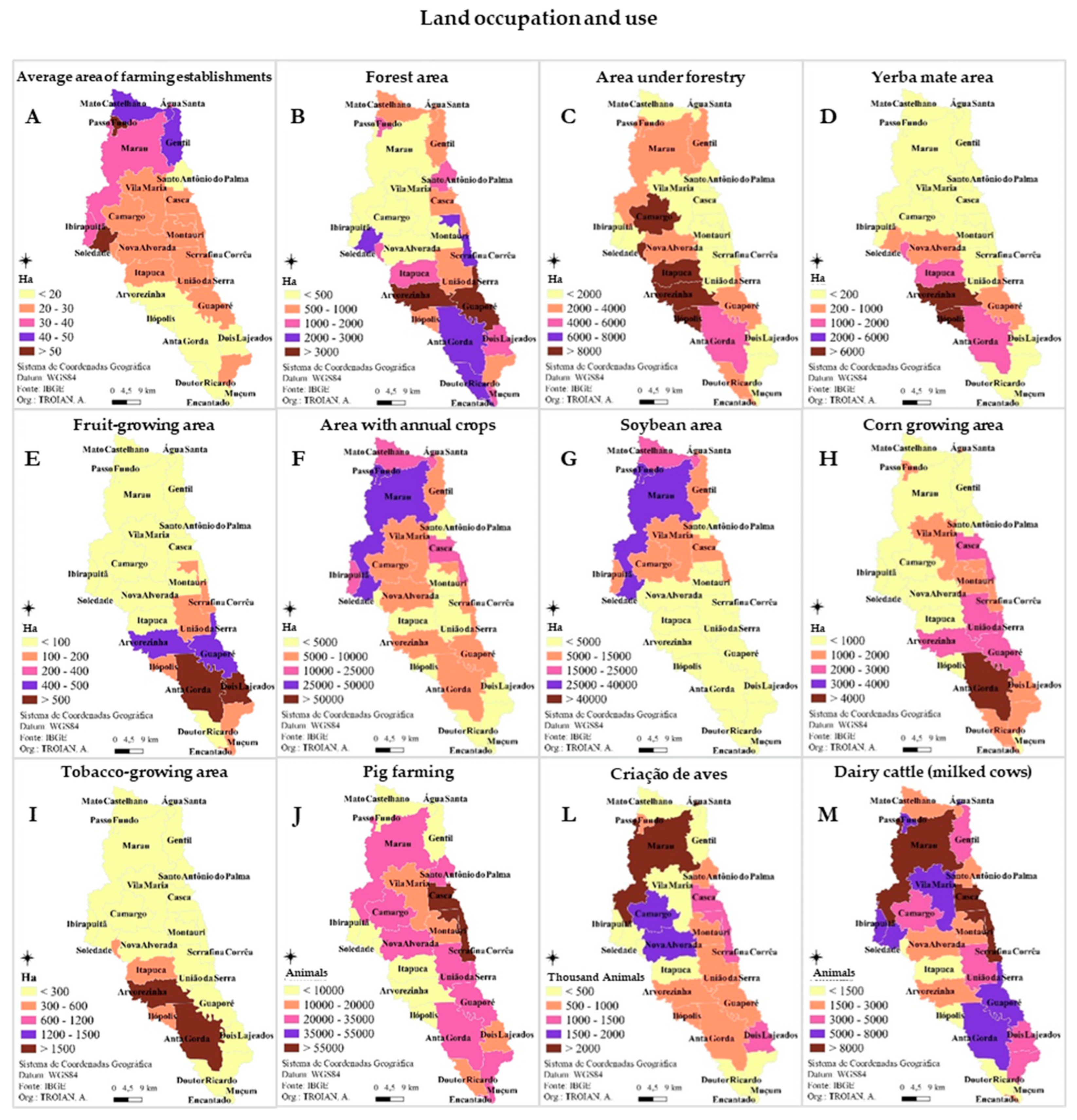
Appendix B
Figure A1.
Land occupation and use.
Figure A2.
Land use and occupation.
References
- Bayramoglu, B.; Chakir, R.; Lungarska, A. Impacts of land use and climate change on freshwater ecosystems in France. Environ. Model. Assess. 2020, 25, 147–172. [Google Scholar] [CrossRef]
- IPCC (Intergovernmental Panel on Climate Change). Global Warming of 1.5 °C. An IPCC Special Report on the Impacts of Global Warming of 1.5 °C above Pre-Industrial Levels and Related Global Greenhouse Gas Emission Pathways, in the Context of Strengthening the Global Response to the Threat of Climate Change, Sustainable Development, and Efforts to Eradicate Poverty. 2018. Available online: https://www.ipcc.ch/sr15/download/#full (accessed on 24 August 2021).
- Becker, A.G.; Moraes, B.S.; Menezes, C.C.; Loro, V.L.; Santos, D.R.; Reichert, J.M.; Baldisserotto, B. Pesticide contamination of water alters the metabolism of juvenile silver catfish, Rhamdia quelen. Ecotoxicol. Environ. Saf. 2009, 72, 1734–1739. [Google Scholar] [CrossRef]
- Antrop, M. The Role of Cultural Values in Modern Landscapes. In Landscape Interfaces; Palang, H., Fry, G., Eds.; Landscape Series; Springer: Dordrecht, The Netherlands, 2003; pp. 91–108. [Google Scholar] [CrossRef]
- Reichert, J.M.; Gubiani, P.I.; Rheinheimer dos Santos, D.; Reinert, D.J.; Aita, C.; Giacomini, S.J. Soil properties characterization for land-use planning and soil management in watersheds under family farming. Soil Water Conserv. Res. 2022, 10, 119–128. [Google Scholar] [CrossRef]
- Troian, A.; Gomes, M.C.; Tiecher, T.; Berbel, J.; Gutiérrez-Martín, C. The drivers-pressures-state-impact-response model to structure cause-effect relationships between agriculture and aquatic ecosystems. Sustainability 2021, 13, 9365. [Google Scholar] [CrossRef]
- Capel, P.D.; McCarthy, K.A.; Coupe, R.H.; Grey, K.M.; Amenumey, S.E.; Baker, N.T.; Johnson, R.L. Agriculture—A River Runs through It—The Connections between Agriculture and Water Quality; U.S. Geological Survey Circular; U.S. Geological Survey: Reston, Virginia, 2018; Volume 1433, 201p. [CrossRef]
- Londero, A.L.; Minella, J.P.G.; Deuschle, D.; Schneider, F.J.A.; Boeni, M.; Merten, G.H. Impact of broad-based terraces on water and sediment losses in no-till (paired zero-order) catchments in southern Brazil. J. Soils Sediments 2017, 18, 1159–1175. [Google Scholar] [CrossRef]
- Ebling, E.D.; Reichert, J.M.; Minella, J.P.G.; Holthusen, D.; Broetto, T.; Srinivasan, R. Rainfall event-based surface runoff and erosion in small watersheds under dairy and direct-seeding grain production. Hydrol. Process. 2022, 36, e14688. [Google Scholar] [CrossRef]
- Silva, T.P.; Bressiani, D.; Ebling, E.D.; Deus Júnior, J.C.; Reichert, J.M. Evaluating hydrological and soil erosion processes in different time scales and land uses in southern Brazilian paired watersheds. Hydrol. Sci. J. 2023, 68, 1391–1408. [Google Scholar] [CrossRef]
- Volf, G.; Atanasova, N.; Škerjanec, M.; Ožanić, N. Hybrid modeling approach for the northern Adriatic watershed management. Sci. Total Environ. 2017, 635, 353–363. [Google Scholar] [CrossRef]
- Castro Lima, J.A.M.; Labanowski, J.; Bastos, M.C.; Zanella, R.; Prestes, O.; Damian, M.L.; Granado, E.; Tiecher, T.; Zafar, M.; Troian, A.; et al. “Modern agriculture” transfers many pesticides molecules to watercourses: A case study of a representative rural catchment of southern Brazil. Environ. Sci. Pollut. Res. 2020, 27, 10581–10598. [Google Scholar] [CrossRef]
- UNDP (United Nations Development Programme). A Água Para lá da Escassez: Poder, Pobreza e a Crise Mundial da Água; Relatório do Desenvolvimento Humano: New York, NY, USA, 2006; Available online: http://hdr.undp.org/sites (accessed on 5 October 2021).
- National Water Agency (ANA, as in Portuguese abbreviation). Conjuntura dos Recursos Hídricos no Brasil 2019: Relatório Anual; National Water Agency: Brasília, Brazil, 2019. Available online: https://www.ana.gov.br/ (accessed on 14 January 2020).
- UNDP (United Nations Development Programme). Perspectivas del Medio Ambiente Mundial, GEO 6: Planeta Sano, Personas Sanas; Resumen Para Responsables de Formular Políticas: Nairobi, Kenya, 2019; Available online: https://www.unep.org/es/resources/perspectivas-del-medio-ambiente-mundial-6 (accessed on 5 October 2021).
- Tiecher, T.; Minella, J.P.G.; Caner, L.; Zafar, M.; Capoane, V.; Evrard, O.; Le Gall, M.; Rheinheimer, D.S. Quantifying land use contributions to suspended sediment in a large cultivated catchment of Southern Brazil (Guaporé River, Rio Grande do Sul). Agric. Ecosyst. Environ. 2017, 237, 95–108. [Google Scholar] [CrossRef]
- Barros, C.A.P.; Govers, G.; Minella, J.P.G.; Ramon, R. How water flow components affect sediment dynamics modeling in a Brazilian catchment. J. Hydrol. 2021, 597, 126111. [Google Scholar] [CrossRef]
- Knott, J.; Mueller, M.; Pander, J.; Geist, J. Effectiveness of catchment erosion protection measures and scale-dependent response of stream biota. Hydrobiologia 2019, 830, 77–92. [Google Scholar] [CrossRef]
- Bierschenk, A.M.; Mueller, M.; Pander, J.; Geist, J. Impact of catchment land use on fish community composition in the headwater areas of Elbe, Danube and Main. Sci. Total Environ. 2019, 652, 66–74. [Google Scholar] [CrossRef] [PubMed]
- Mazoyer, M.; Roudart, L. História das Agriculturas no Mundo: Do Neolítico à Crie Contemporânea; Instituto Piaget: Lisboa, Portugal, 2001; 520p. [Google Scholar]
- Dufumier, M. Projetos de Desenvolvimento Agrícola: Manual Para Especialistas, 2nd ed.; EDUFBA: Salvador, Brazil, 2010; 330p. [Google Scholar]
- Stanners, D.; Bosch, P.; Dom, A.; Gabrielsen, P.; Gee, D.; Martin, J.; Weber, J.L. Frameworks for environmental assessment and indicators at the EEA. In Sustainability Indicators: A Scientific Assessment; HÁK, T., Moldan, B., Dahl, L.A., Eds.; Island Press: Covelo, CA, USA, 2007. [Google Scholar]
- Westbury, D.B.; Park, J.; Mauchline, A.; Crane, R.; Mortimer, S. Assessing the environmental performance of English arable and livestock holdings using data from the Farm Accountancy Data Network (FADN). J. Environ. Manag. 2011, 92, 902–909. [Google Scholar] [CrossRef] [PubMed]
- Ravier, C.; Prost, L.; Jeuffroy, M.; Wezel, A.; Paravano, L.; Reau, R. Multi-criteria and multi-stakeholder assessment of cropping systems for a result-oriented water quality preservation action programme. Land Use Policy 2015, 42, 131–140. [Google Scholar] [CrossRef]
- Rousval, B. Aide Multicritère à L’évaluation de L’impact des Transports sur L’environnement. Modélisation et Simulation. 267 f. Ph.D. Thesis, University of Paris Dauphine, Paris, France, 2005. Available online: https://tel.archives-ouvertes.fr/tel-00543658v1 (accessed on 7 October 2021).
- Funtowicz, S.; Ravetz, J. Ciência Pós-Normal e comunidades ampliadas dos pares face aos desafios ambientais. Hist. Cienc. Saúde 1997, 4, 219–230. [Google Scholar] [CrossRef]
- Romero, C. Teoría de la Decisión Multicriterio: Conceptos, Técnicas y Aplicaciones; Alianza Editorial: Madrid, Spain, 1993; 98p. [Google Scholar]
- Bana e Costa, C.A.; Pirlot, M. Thoughts on the Future of the Multicriteria Field: Basic Convictions and Outlines for a General Methodology. In Multicriteria Analysis; Clímaco, J., Ed.; Springer: Berlin/Heidelberg, Germany, 1997; pp. 562–568. [Google Scholar]
- Romero, C. 1996. Análisis de las Decisiones Multicriterios; Conceptos, Técnicas y Aplicaciones; Gráficas Algorán: Madrid, Spain, 1996; 115p. [Google Scholar]
- Doumpos, M.; Zopounidis, C. Multicriteria Decision Aid Classification Methods; Kluwer Academic Publishers: Dordrecht, The Netherlands, 2002; 271p. [Google Scholar]
- Ehrgott, M.; Figueira, J.; Greco, S. Trends in Multiple Criteria Decision Analysis; Springer: New York, NY, USA, 2010; 429p. [Google Scholar] [CrossRef]
- Ensslin, L.; Montibeller Neto, G.; Noronha, S.M. Apoio à Decisão: Metodologia para Estruturação de Problemas e Avaliação Multicritério de Alternativas; Insular: Florianópolis, Brazil, 2001; 293p. [Google Scholar]
- Bouyssou, D. Building Critcria: A Prerequisite for MCDA. ln Readings in Mnltiple Criteria Decision Aid; Bana e Costa, C.A., Ed.; Springer: Berlin/Heidelberg, Germany, 1990; pp. 91–151. [Google Scholar]
- Roy, B. Multicriteria Methodology for Decision Aiding; Kluwer Academic Publishers: Dordrecht, The Netherlands, 1996; 303p. [Google Scholar]
- Beinat, E. Value Functions for Environmental Management; Springer Science and Business Media Dordrecht: Dordrecht, The Netherlands, 1997; 249p. [Google Scholar]
- Silva Neto, B. Análise-Diagnóstico de Sistemas Agrários: Uma interpretação baseada na Teoria da Complexidade e no Realismo Crítico. In Desenvolvimento em Questão; Unijuí: Ijuí, Brazil, 2007; pp. 33–58. [Google Scholar]
- Patton, M.Q. Qualitative Research and Evaluation Methods, 3rd ed.; Sage Publications: London, UK, 2002; 179p. [Google Scholar]
- Martins, R.C. A Construção Social do Valor Econômico da Água: Estudo Sociológico Sobre Agricultura, Ruralidade e Valoração Ambiental no Estado de São Paulo; Ph.D. Thesis, (Doctorte in Environmental Engineering Science). Escola de Engenharia de São Carlos, Universidade de São Paulo. 2004. Available online: https://www.teses.usp.br/?lang=pt-br (accessed on 5 September 2021).
- Bana e Costa, C.A. Processo de Apoio à Decisão: Problemáticas, Actores e Acções; Apostila do Curso de Metodologias Multicritério em Apoio à Decisão; ENE, UFSC: Florianópolis, Brazil, 1995; 35p. [Google Scholar]
- Eden, C.; Ackermann, F. Analysing and comparing idiographic causal maps. In Managerial and Organizational Cognition; Eden, C., Spender, J.C., Eds.; Sage: London, UK, 1998; 272p. [Google Scholar]
- Keeney, R.L. Value-Focused Thinking: A Path to Creative Decision Making; Harvard University Press: Cambridge, MA, USA, 1992; 416p. [Google Scholar]
- Xavier, J.H.V.; Gomes, M.C.; Sacco dos Anjos, F.; Scopel, E.; Macena, F.A.; Corbeels, M. Participatory multicriteria assessment of maize cropping systems in the context of family farmers in the Brazilian Cerrado. Int J. Agric. Sustain. 2020, 18, 410–426. [Google Scholar] [CrossRef]
- Keeney, R.; Raiffa, H. Decisions with Multiple Objectives: Preferences and Value Tradeoffs; John Willey & Sons: Hoboken, NJ, USA, 1976; 565p. [Google Scholar]
- Gil, A.C. Métodos e Técnicas de Pesquisa Social; Atlas: São Paulo, Brazil, 2008; 220p. [Google Scholar]
- Scotto, M.A.L. Fluxos de fósforo em uma Bacia Hidrográfica sob cultivo intensivo no sul do Brasil. Master’s dissertation (Master in Soil Science)–Programa de Pós-graduação em Ciência do Solo da Universidade Federal de Santa Maria, Santa Maria-RS/BR. 2014. Available online: https://repositorio.ufsm.br/ (accessed on 7 October 2021).
- Alvares, C.A.; Stape, J.L.; Sentelhas, P.C.M.; Gonçalves, J.L.; Sparovek, G. Köppen’s climate classification map for Brazil. Meteorol. Z. 2014, 22, 711–728. [Google Scholar] [CrossRef]
- National Institute of Meteorology (INMET, as in Portuguese abbreviation). 2024 Estações Automáticas. Available online: https://portal.inmet.gov.br/paginas/catalogoaut (accessed on 21 February 2024).
- Brazilian Institute of Geography and Statistics (IBGE, as in Portuguese abbreviation). Censo Agropecuário 2017a, Brasília, 2017a. Available online: https://censos.ibge.gov.br/agro/2017 (accessed on 14 October 2021).
- Veiga, J.E. Cidades Imaginárias. O Brasil é Menos Urbano do que se Calcula; Editora Autores Associados: Campinas, Brazil, 2002; 304p. [Google Scholar]
- Merten, G.H.; Minella, J.P. Qualidade da água em bacias hidrográficas rurais: Um desafio atual para a sobrevivência futura. Agroecol. E Desenvolv. Rural. Sustentável 2002, 3, 33–40. [Google Scholar]
- Brazilian Institute of Geography and Statistics (IBGE, as in Portuguese abbreviation). Estimativas de População; Brasília, Brazil. 2018. Available online: https://sidra.ibge.gov.br/tabela/6579 (accessed on 14 October 2019).
- Ellis, E.C.; Klein Goldewijk, K.; Siebert, S.; Lightman, D.; Ramankutty, N. Anthropogenic transformation of the biomes, 1700 to 2000. Global Ecol. Biogeogr. 2010, 19, 589–606. [Google Scholar] [CrossRef]
- Thomas, J.; Joseph, S.; Thrivikramji, K.P. Assessment of soil erosion in a tropical mountain river basin of the southern Western Ghats, India using RUSLE and GIS. Geosci. Front. 2017, 9, 893–906. [Google Scholar] [CrossRef]
- Rossol, C.D.; Filho, H.S.; Berté, L.N.; Jandrey, P.E.; Schwantes, D.; Gonçalves, A.C., Jr. Caracterização, classificação e destinação de resíduos da agricultura. Sci. Agrar. Parana. 2012, 11, 33–43. [Google Scholar] [CrossRef]
- Brazilian Institute of Geography and Statistics (IBGE, as in Portuguese abbreviation). Produção Agrícola Municipal, Brasília, Brazil. 2017. Available online: https://sidra.ibge.gov.br/pesquisa/pam/tabelas (accessed on 7 October 2021).
- Kaiser, D.R.; Sequinatto, L.; Reinert, D.J.; Reichert, J.M.; Rheinheimer, D.S.; Dalbianco, L. High nitrogen fertilization of tobacco crop in headwater watershed contaminates subsurface and well waters with nitrate. J. Chem. 2015, 282500, 283000. [Google Scholar] [CrossRef]
- Bender, M.A.; Rheinheimer, D.S.; Tiecher, T.; Minella, J.P.G.; Barros, C.A.P.; Ramon, R. Phosphorus dynamics during storm events in a subtropical rural catchment in southern Brazil. Agric. Ecosyst. Environ. 2018, 261, 93–102. [Google Scholar] [CrossRef]
- Reichert, J.M.; Pellegrini, A.; Rodrigues, M.F.; Tiecher, T.; Rheinheimer, D.S. Impact of tobacco management practices on soil, water and nutrients losses in steeplands with shallow soil. Catena 2019, 183, 104215. [Google Scholar] [CrossRef]
- Hartemink, A.E. Soil erosion: Perennial crop plantations. In Encyclopedia of Soil Science; Board, A., Arnold, R.W., Finkl, C.W., Cortizas, A.M., Parkin, G., Semoka, J., Singer, A., Soon, Y.K., Spaargaren, O., Vázquez, F.M., Eds.; Taylor and Francis: New York, NY, USA, 2006; pp. 1613–1617. [Google Scholar]
- Valente, M.L.; Reichert, J.M.; Legout, C.; Tiecher, T.; Cavalcante, R.B.L.; Evrard, O. Quantification of sediment source contributions in two paired catchments of the Brazilian Pampa using conventional and alternative fingerprinting approaches. Hydrol. Process. 2020, 34, 2965–2986. [Google Scholar] [CrossRef]
- El Kateb, H.; Zhang, H.; Zhang, P.; Mosandl, R. Soil erosion and surface runoff on different vegetation covers and slope gradients: A field experiment in Southern Shaanxi Province, China. Catena 2013, 105, 1–10. [Google Scholar] [CrossRef]
- Montagnini, F.; Eibl, B.I.; Barth, S.R. Organic yerba mate: An environmentally, socially and financially suitable agroforestry system. Bois For. Trop. 2011, 308, 59–74. [Google Scholar] [CrossRef]
- Brazil. Law No. 12.651 of 25 May 2012. Provides for the protection of native vegetation; amends Laws Nos. 6.938, of 31 August 1981, 9.393, of 19 December 1996, and 11.428, of 22 December 2006; repeals Laws Nos. 4.771, of 15 September 1965, and 7.754, of 14 April 1989, and Provisional Measure No. 2.166-67, of 24 August 2001; and makes other provisions. Official Gazette of the Federative Republic of Brazil, Brasília, DF, 28 May 2012. Available online: https://www.planalto.gov.br/ccivil_03/_ato2011-2014/2012/lei/l12651.htm (accessed on 26 February 2024).
- Rheinheimer, D.S.; Monteiro de Castro Lima, J.A.; Paranhos Rosa de Vargas, J.; Camotti Bastos, M.; Santanna dos Santos, M.A.; Mondamert, L.; Labanowski, J. Pesticide bioaccumulation in epilithic biofilms as a biomarker of agricultural activities in a representative watershed. Environ. Monit. Assess. 2020, 192. [Google Scholar] [CrossRef] [PubMed]
- Brazilian Institute for the Environment and Renewable Natural Resources, (IBAMA, as in Portuguese abbreviation). Boletins Anuais de Produção, Importação, Exportação e Vendas de Agrotóxicos no Brasil; Brasília, Brazil. 2022. Available online: https://www.gov.br/ibama/pt-br (accessed on 25 March 2019).
- Ambus, J.V.; Awe, G.O.; Faccio de Carvalho, P.C.; Reichert, J.M. Integrated crop-livestock systems in lowlands with rice cultivation improve root environment and maintain soil structure and functioning. Soil Tillage Res. 2023, 227, 105592. [Google Scholar] [CrossRef]
- Ceretta, C.A.; Basso, C.J.; Vieira, F.C.B.; Herbes, M.G.; Moreira, I.C.L.; Berwanger, A.L. Dejeto líquido de suínos: I-perdas de nitrogênio e fósforo na solução escoada na superfície do solo, sob plantio direto. Ciênc. Rural. 2005, 35, 1296–1304. [Google Scholar] [CrossRef]
- Saaty, T.L. How to Make a Decision: The Analytic Hierarchy Process. Eur. J. Oper. Res. 1990, 48, 9–26. [Google Scholar] [CrossRef]
Disclaimer/Publisher’s Note: The statements, opinions and data contained in all publications are solely those of the individual author(s) and contributor(s) and not of MDPI and/or the editor(s). MDPI and/or the editor(s) disclaim responsibility for any injury to people or property resulting from any ideas, methods, instructions or products referred to in the content. |
© 2024 by the authors. Licensee MDPI, Basel, Switzerland. This article is an open access article distributed under the terms and conditions of the Creative Commons Attribution (CC BY) license (https://creativecommons.org/licenses/by/4.0/).