Article

Stability Assessment of Tunnels Excavated in Loess with the Presence of Groundwater—A Case Study


1
Faculty of Architecture, Civil and Transportation Engineering, Beijing University of Technology, Beijing 100124, China
2
China Railway 22 Bureau Group Co., Ltd., Beijing 100043, China
3
School of Civil Engineering, Southwest Jiaotong University, Chengdu 610031, China
4
School of Emergency Management, Xihua University, Chengdu 610039, China
5
College of Civil Engineering, Chongqing Jiaotong University, Chongqing 400074, China
*
Authors to whom correspondence should be addressed.
Water 2024, 16(4), 581; https://doi.org/10.3390/w16040581
Submission received: 25 December 2023 / Revised: 7 February 2024 / Accepted: 14 February 2024 / Published: 16 February 2024
(This article belongs to the Special Issue Effects of Groundwater and Surface Water on the Natural Geo-Hazards)

Abstract

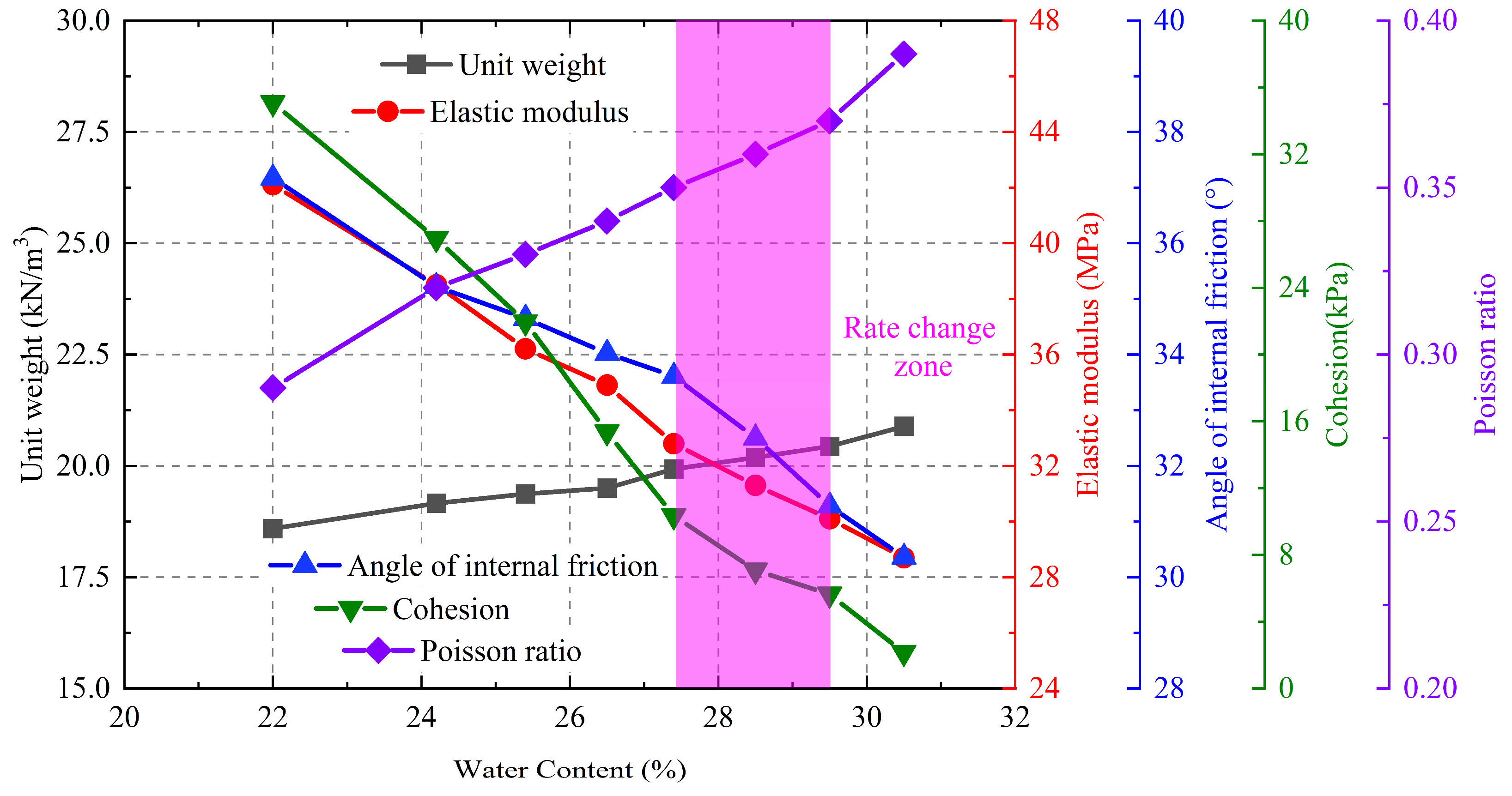
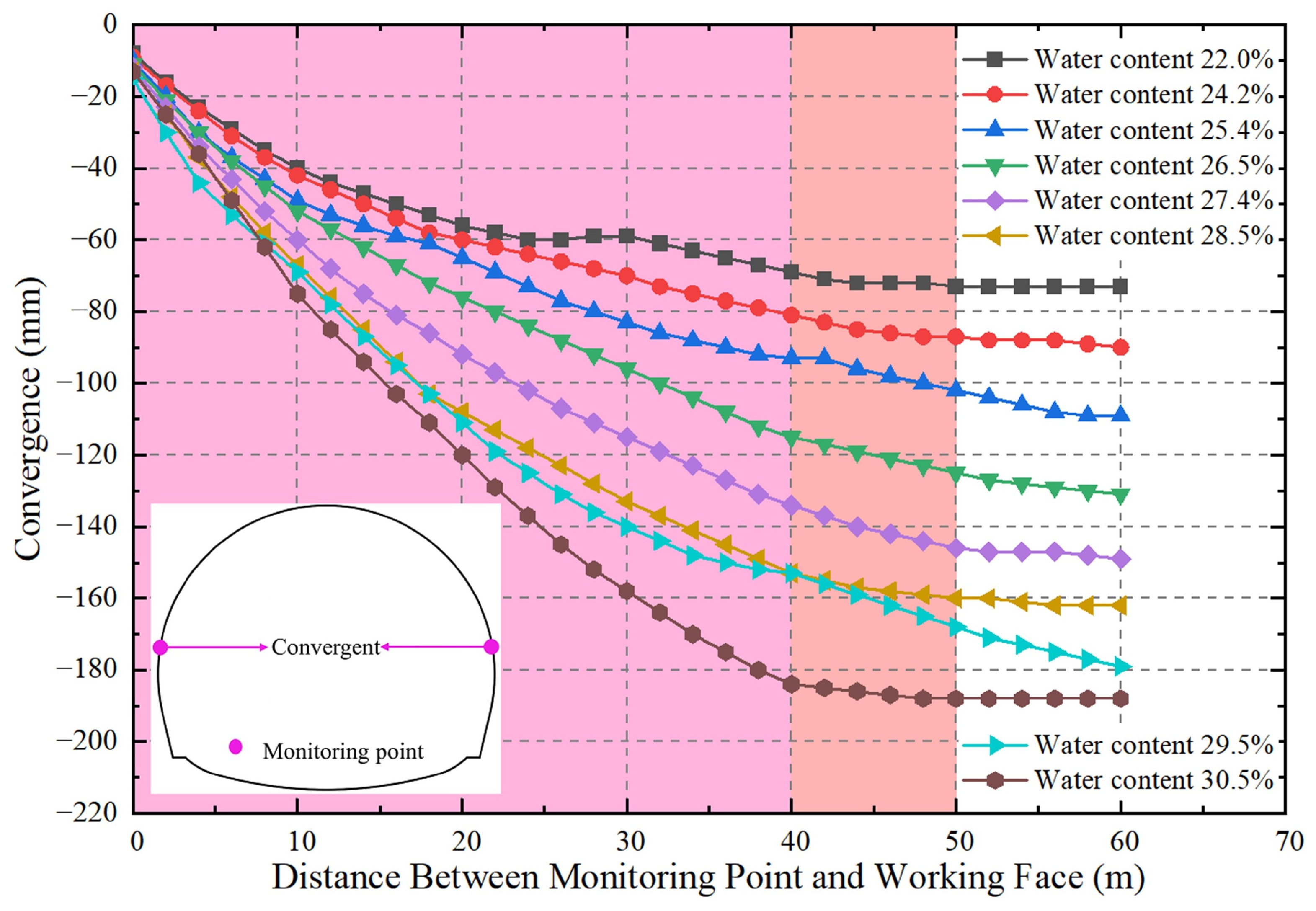
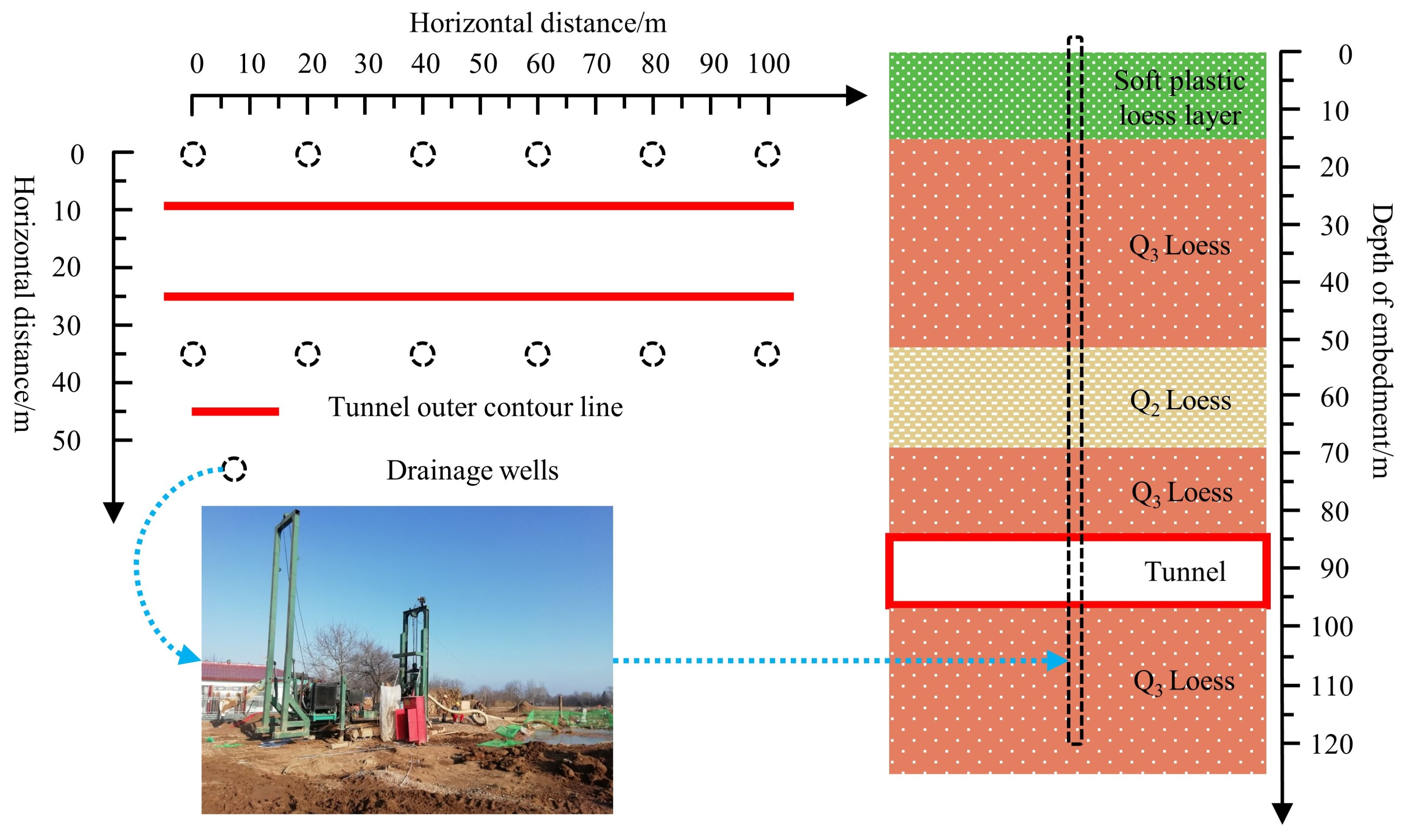
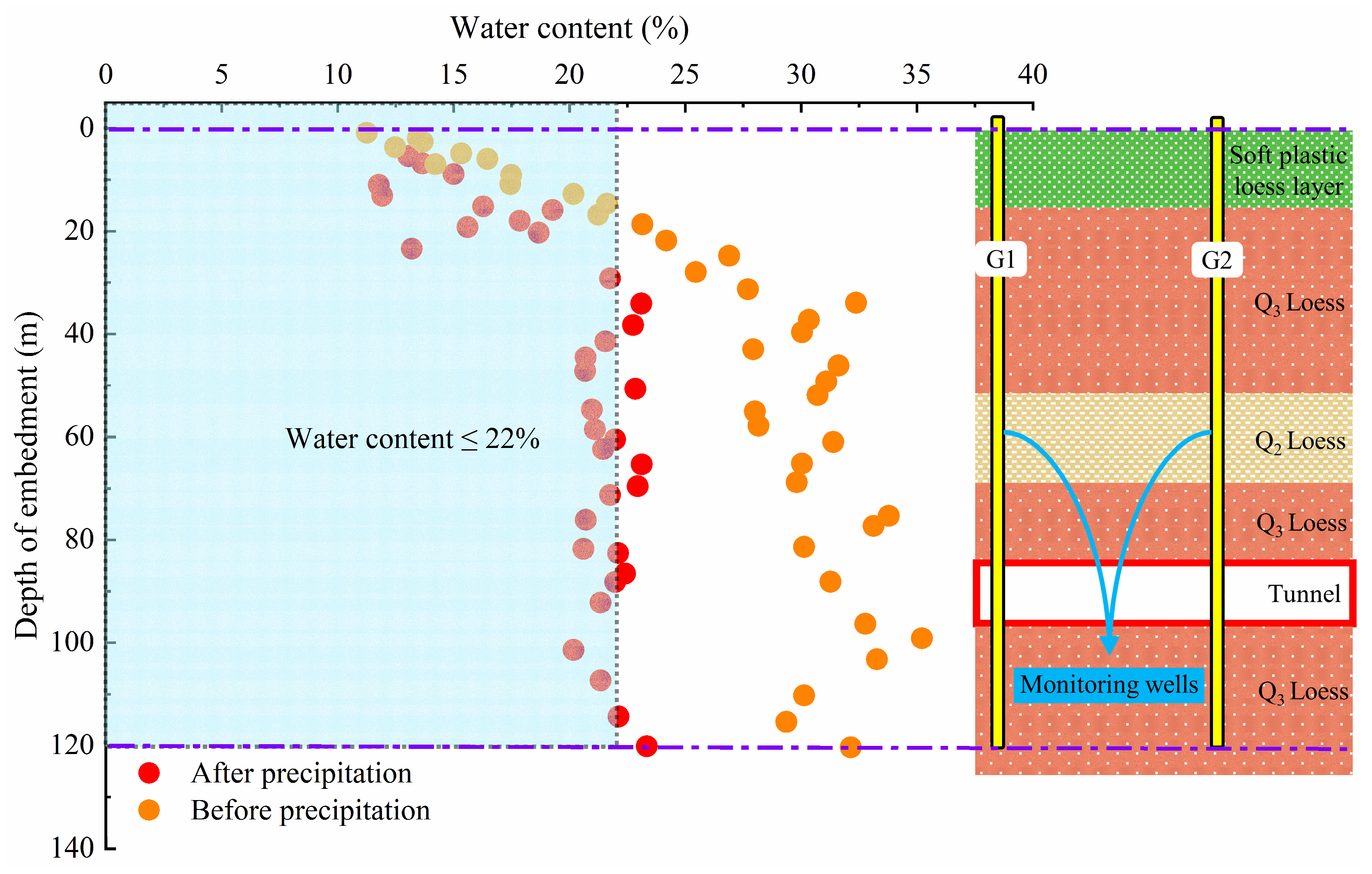
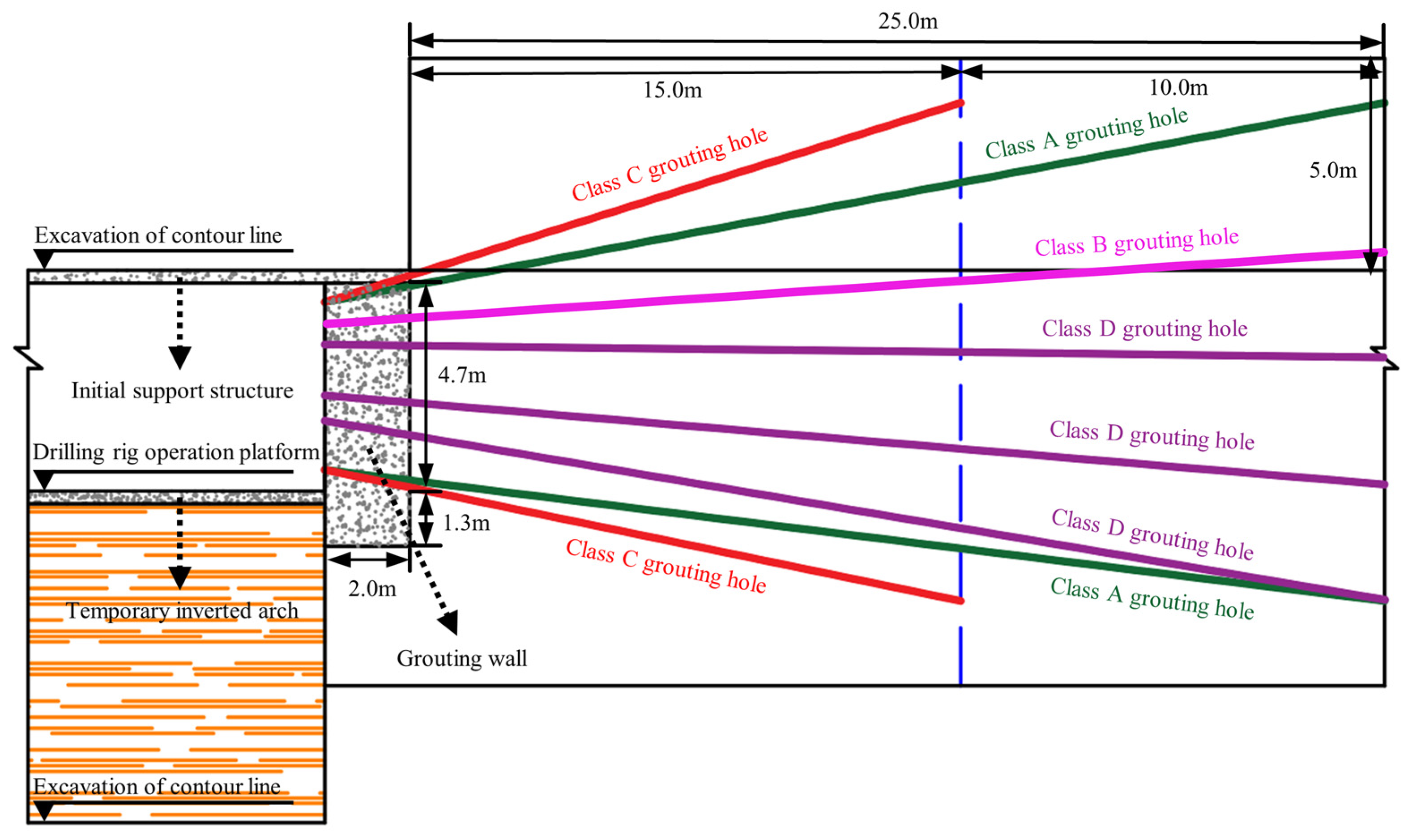
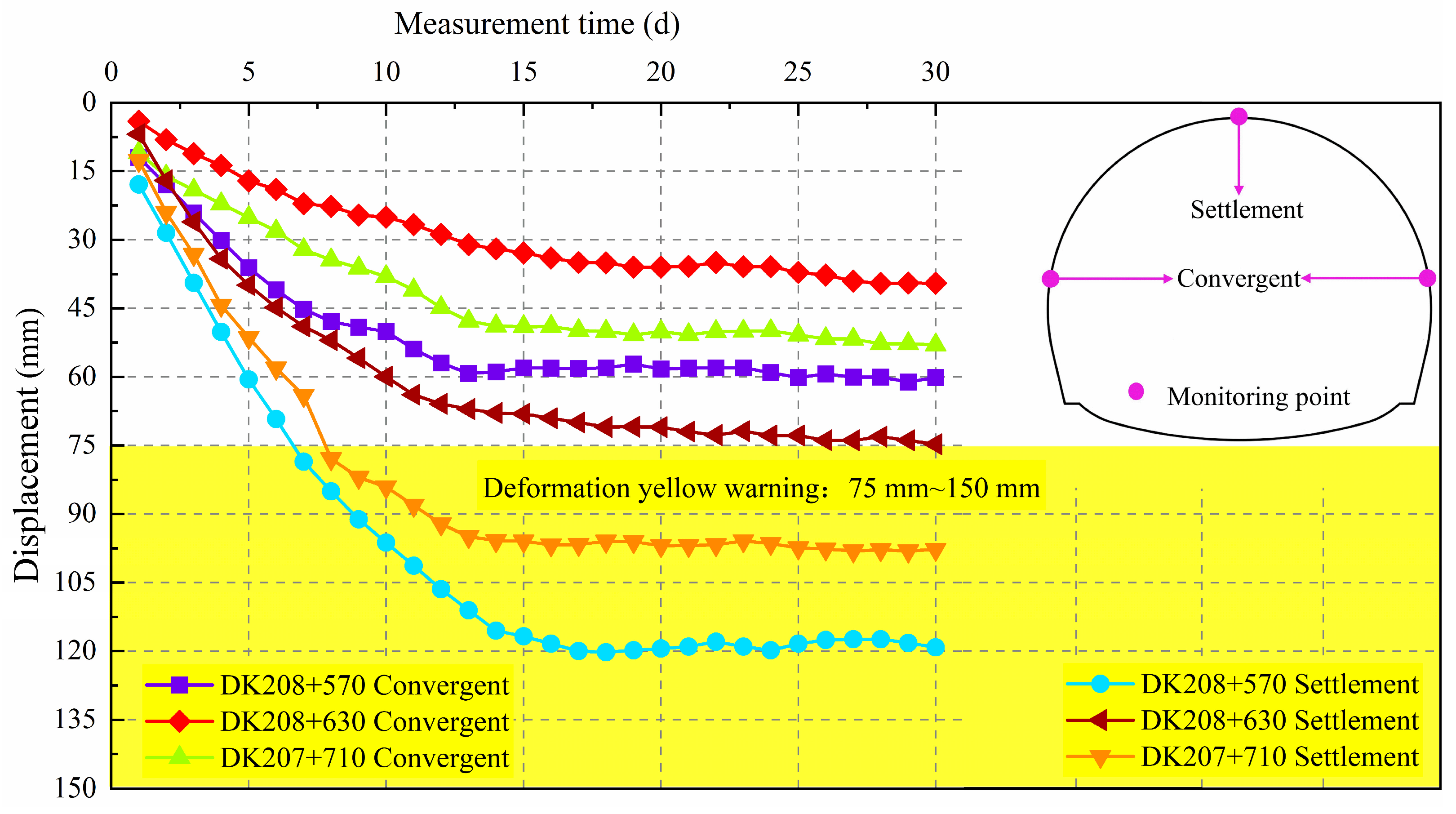
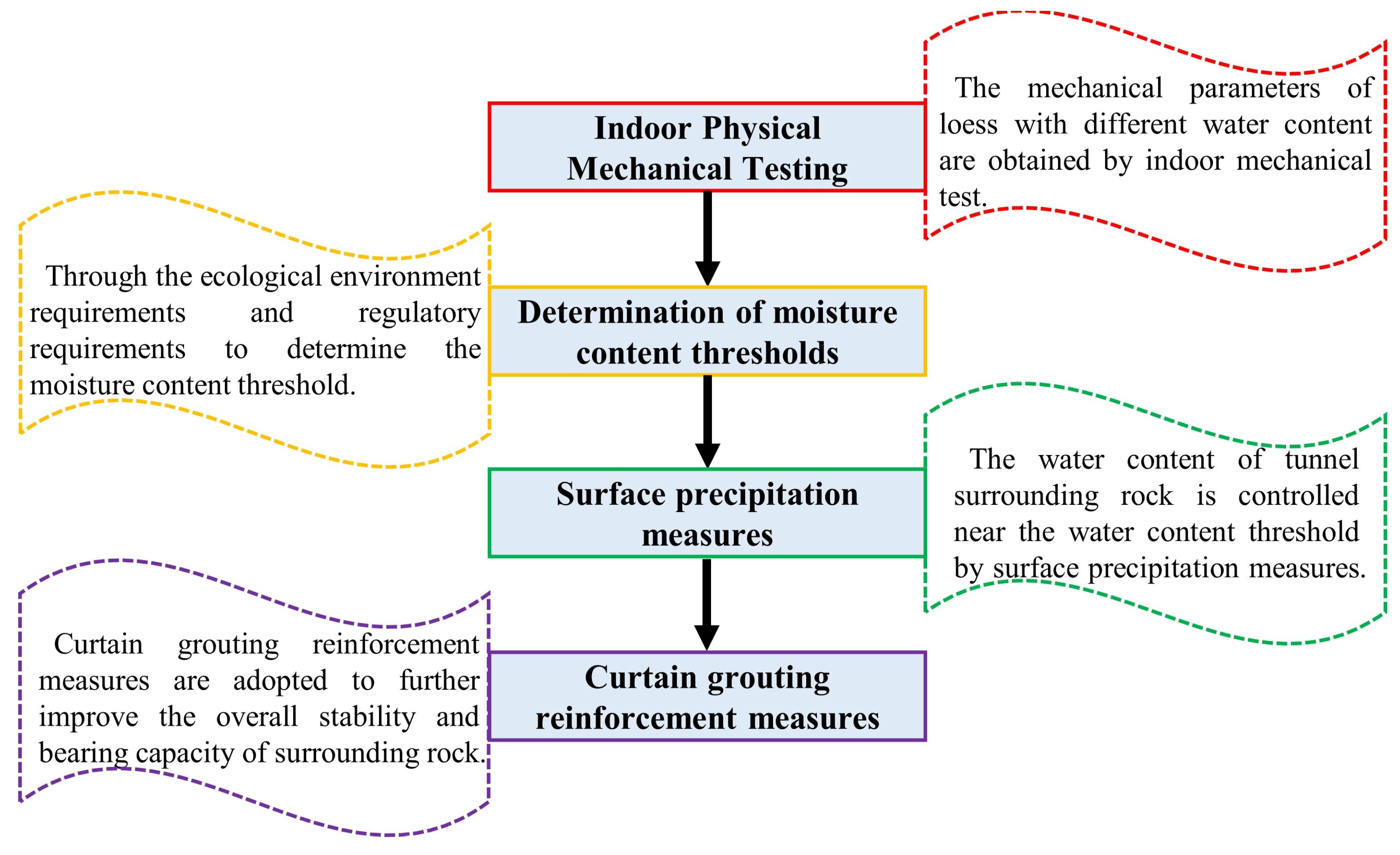
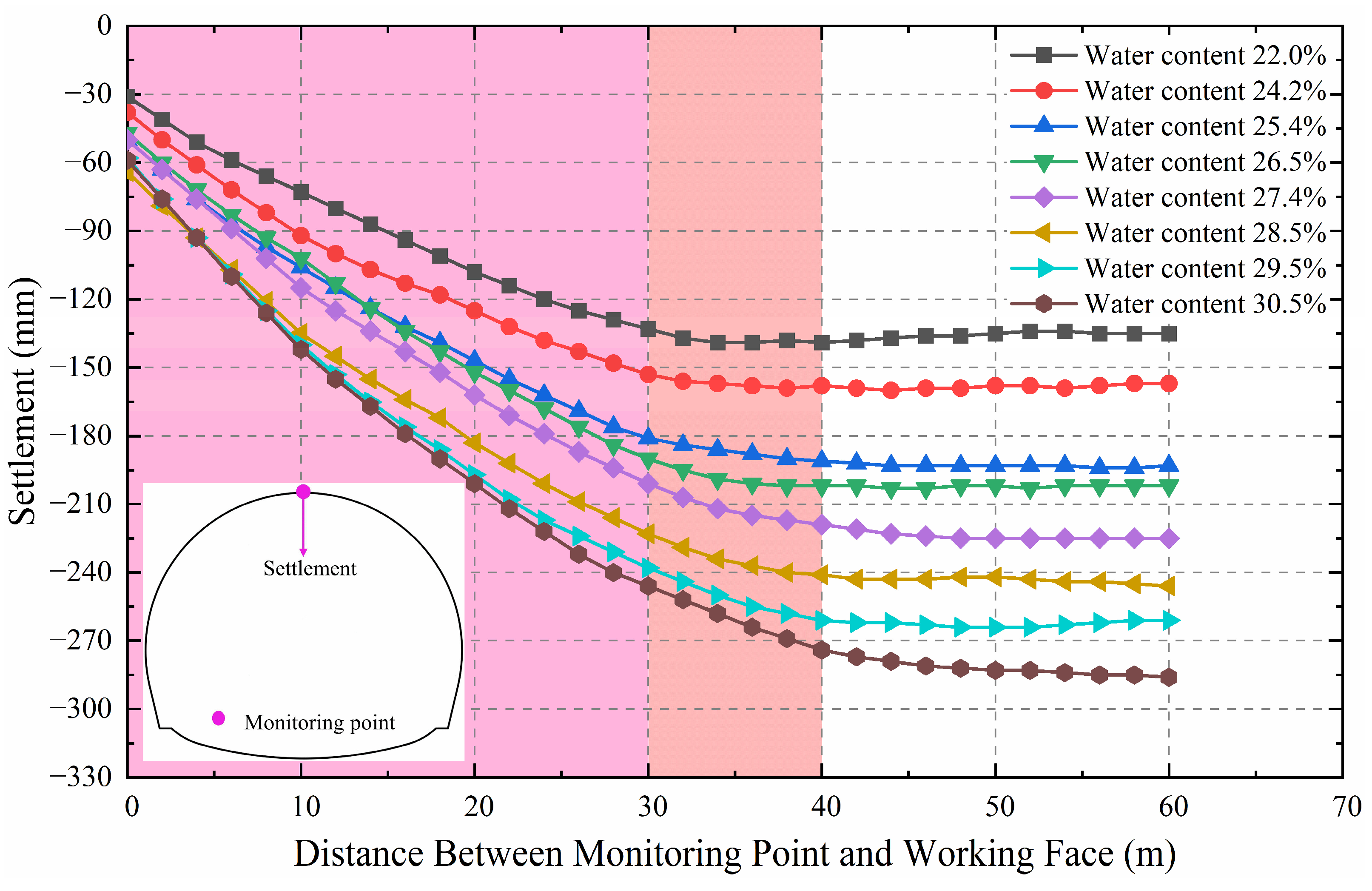
The high water content of the surrounding rock in loess tunnels will lead to the deterioration of rock strength, causing deformation and damage to the initial support structure and thereby affecting safety during construction and operation. This article first analyzes the strength characteristics of loess under different water contents through indoor physical and mechanical tests. Secondly, based on numerical simulation results, the ecological environment, and design requirements, the water content threshold is determined. Finally, a reinforcement scheme combining surface precipitation measures and curtain grouting measures is proposed, and the reinforcement effect is analyzed based on on-site monitoring data. The results show that as the water content of loess increases, the cohesion, internal friction angle, and elastic modulus of the surrounding rock all decrease, leading to an increase in the sensitivity of the surrounding rock to excavation disturbances and a deterioration in strength. During the construction process, it shows an increase in the vault settlement and sidewalls’ convergence. During the process of increasing the distance between the monitoring section and the palm face, the settlement and convergence of the tunnel show a rapid growth stage, slow growth stage, and stable stage. The water content threshold is determined to be 22%. The reinforcement scheme of combining surface precipitation measures with curtain grouting measures not only meets the requirements of the ecological environment but also makes the settlement and convergence values lower than the yellow warning deformation values required by the design.
Keywords: loess tunnel; water content; deformation law; monitoring measurement; countermeasures loess tunnel; water content; deformation law; monitoring measurement; countermeasures