Article

Interactions between Aquatic Plants and Cyanobacterial Blooms in Freshwater Reservoir Ecosystems


1
Institute of Hydrobiology of the National Academy of Sciences of Ukraine, Geroiv Stalingrada Ave., 12, 04210 Kyiv, Ukraine
2
Institute of Hydrobiology and Aquatic Ecosystem Management (IHG), University of Natural Resources and Life Sciences, Gregor-Mendel-Straße 33/DG, 1180 Vienna, Austria
3
Spatiolab, 03189 Kyiv, Ukraine
4
M.G. Kholodny Institute of Botany of the National Academy of Sciences of Ukraine, Tereshchenkivska St., 2, 01601 Kyiv, Ukraine
5
BIOME Lab, Department of Biological, Geological and Environmental Sciences—BiGeA, Alma Mater Studiorum, University of Bologna, Via Selmi 3, 40126 Bologna, Italy
*
Author to whom correspondence should be addressed.
Water 2023, 15(4), 672; https://doi.org/10.3390/w15040672
Submission received: 22 December 2022 / Revised: 30 January 2023 / Accepted: 6 February 2023 / Published: 8 February 2023

Abstract

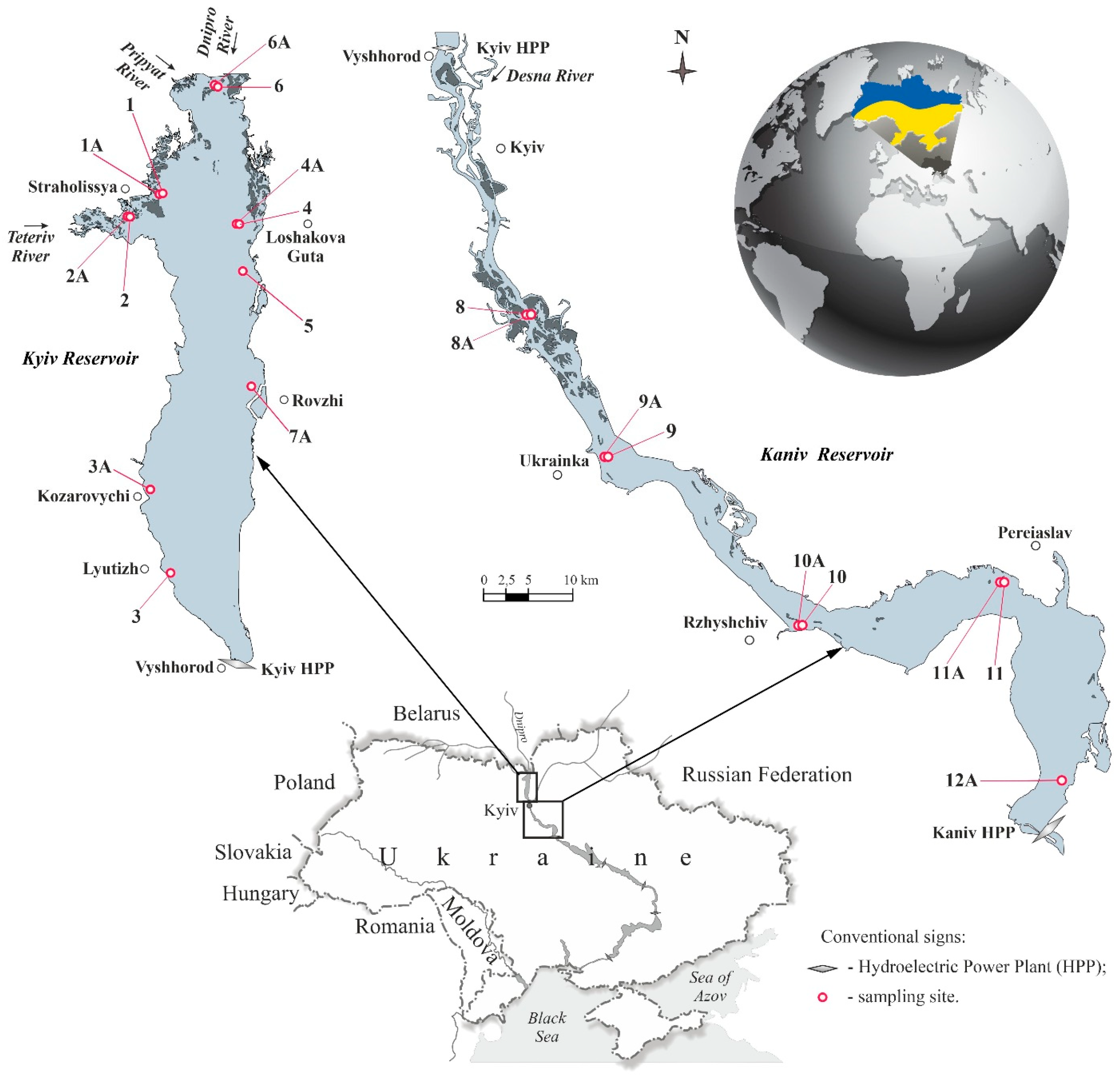
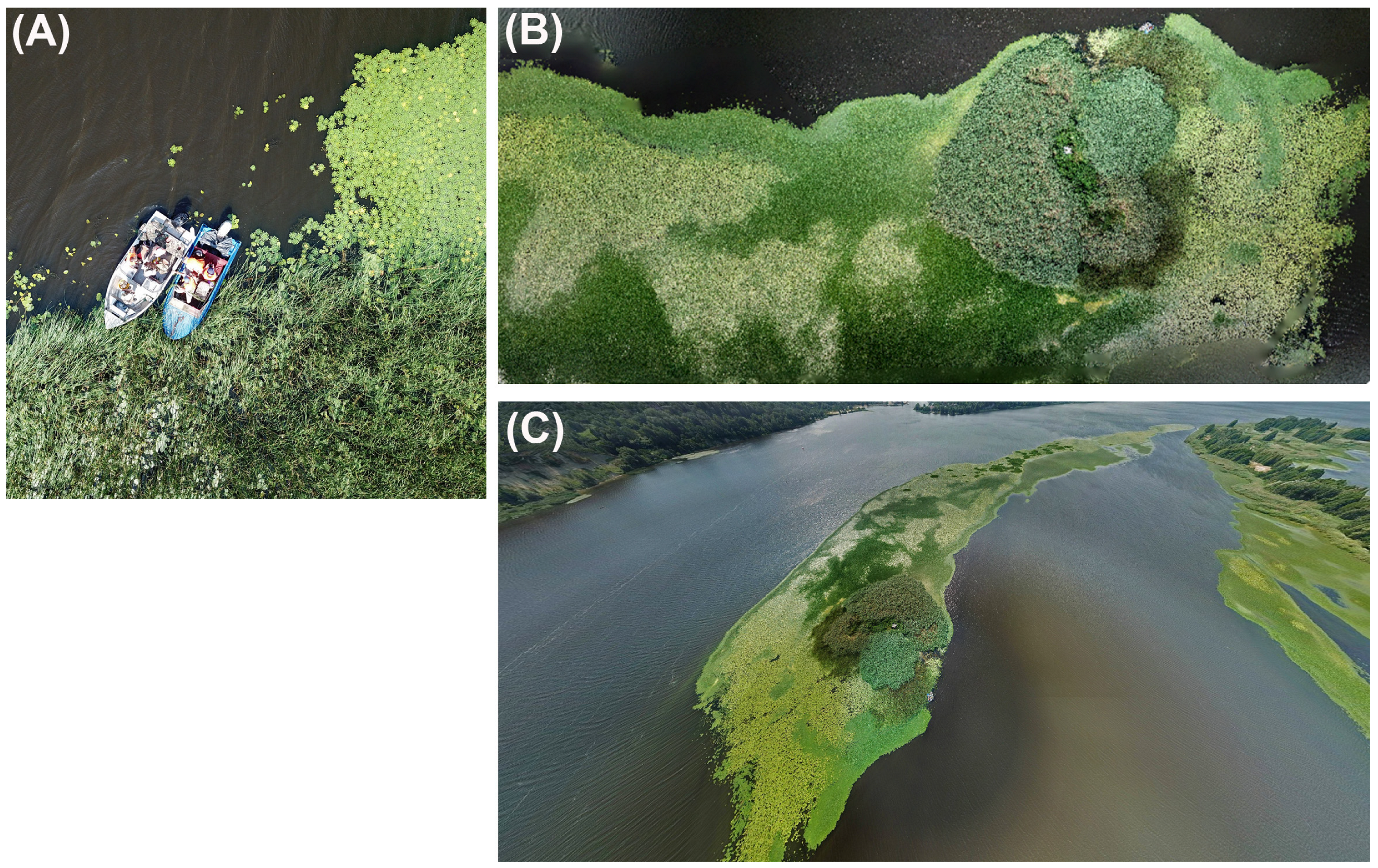
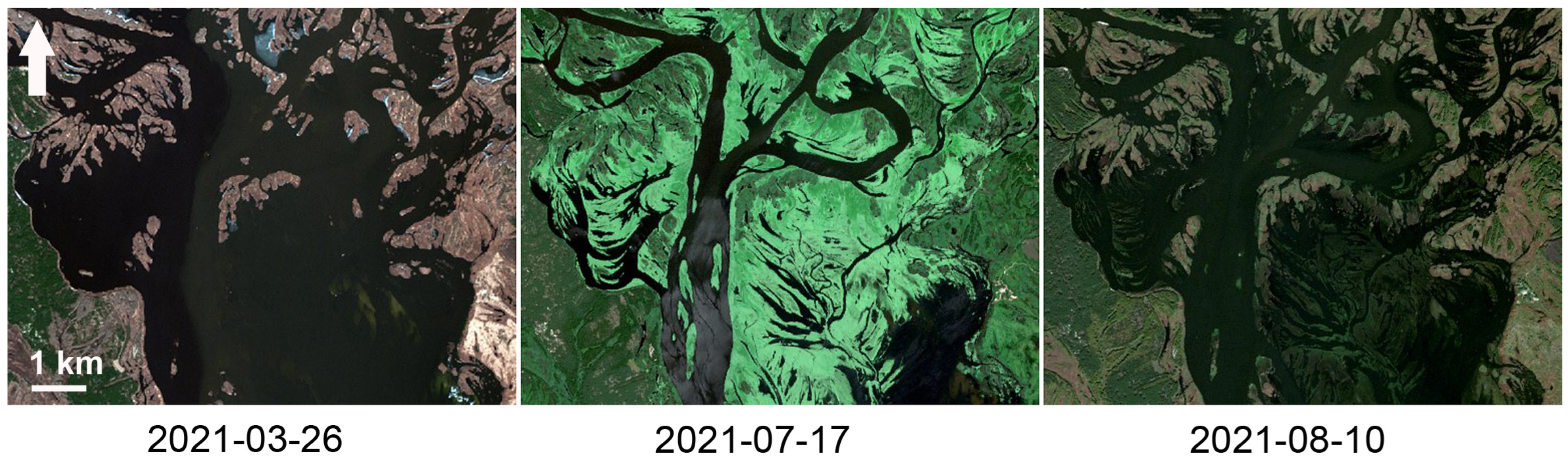
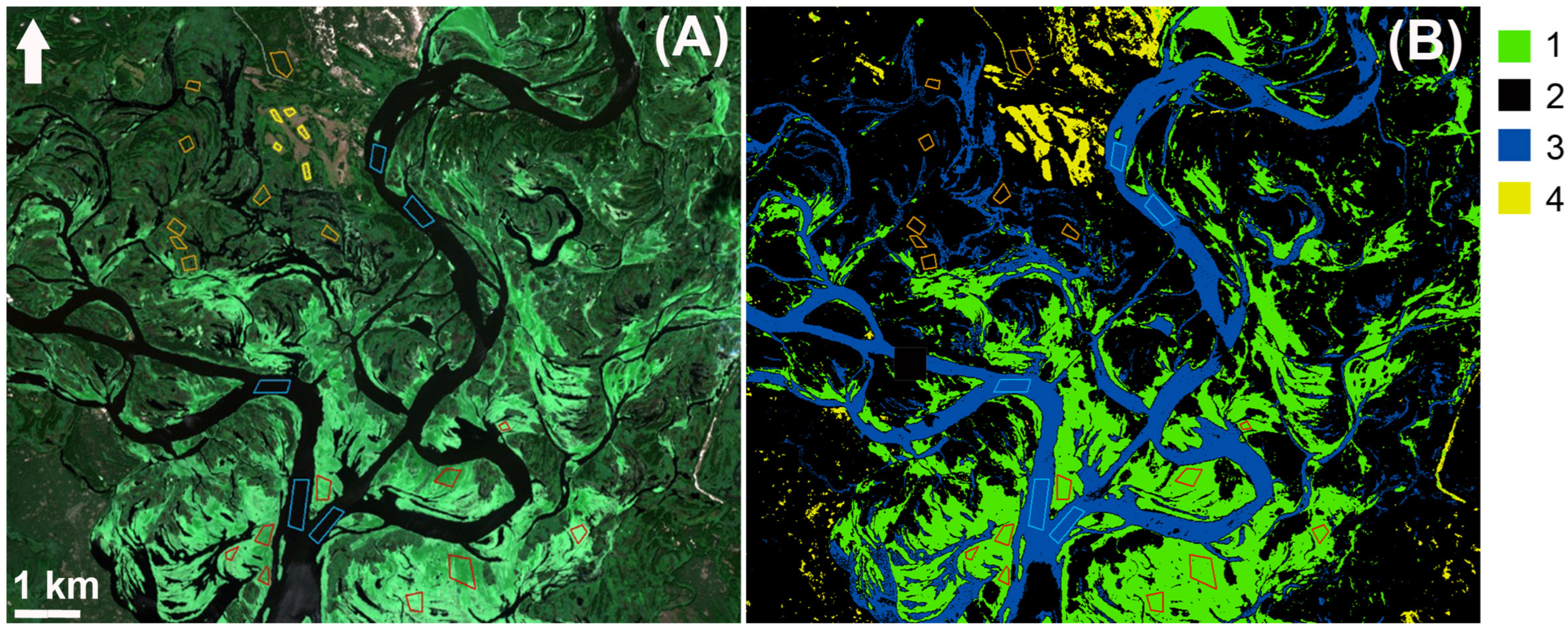
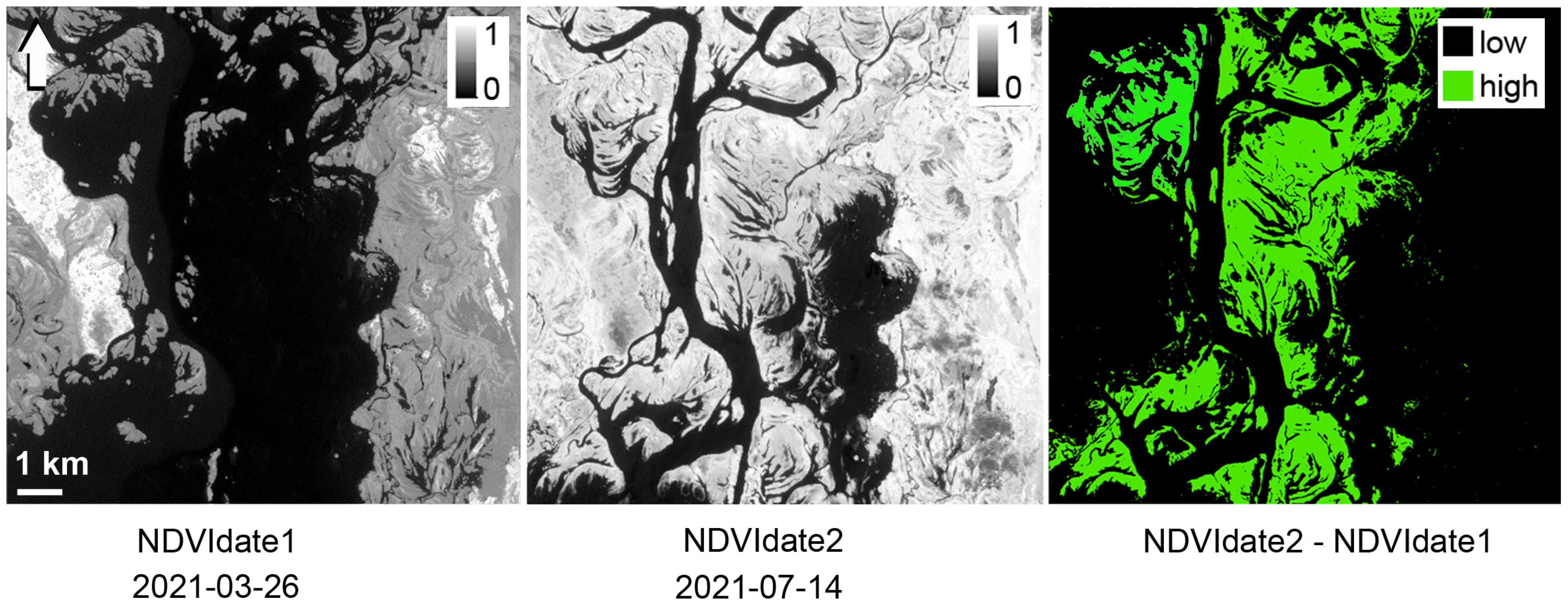
Climate change and nutrient pollution are echoed by worldwide increasing trends in the frequency, duration, and toxicity of cyanobacterial (blue-green algal) blooms. Therefore, searching for the best options to mitigate blooms is relevant and timely. Aquatic vascular plants offer a promising solution through biological control. In this study, we use reservoirs regularly affected by intensive blooms (the Kyiv and Kaniv Reservoirs of the Dnipro River, Ukraine) to investigate whether macrophytes may inhibit or reduce the massive development of cyanobacteria. Special attention was paid to plants with floating leaves and free-floating plants since data on their effects on cyanobacteria are controversial. On the basis of field and satellite observations, the spatial distribution of cyanobacterial blooms and aquatic macrophyte patches was assessed. Multispectral images captured by satellites Sentinel-2a (S2A) and Sentinel-2b (S2B) were used. In addition, based on data from field observations, a comparative analysis of phytoplankton and physical and chemical parameters between areas of the reservoirs overgrown and not overgrown by macrophytes was carried out. The obtained results indicate that in macrophyte patches phytoplankton structure differed from that observed in open waters. However, in areas of reservoirs dominated by floating-leaf plants or free-floating plants, a significant decrease in phytoplanktic or cyanobacterial biomass was not observed. This is most likely due to the fact that these macrophytes did not reduce the concentration of biogenic substances to a level that would limit cyanobacterial growth. On the contrary, intensive overgrowth of floating-leaf plants (in particular, Trapa natans) along the river sections of the reservoirs, as well as other factors, contributed to nitrogen and phosphorus enrichment. Therefore, in the face of relevant nutrient supply, these ecological groups of macrophytes (floating-leaf plants and free-floating plants) have not shown statistically significant effectiveness in controlling the process of cyanobacterial blooms in reservoir ecosystems.
Keywords: cyanobacterial blooms; macrophytes; floating-leaf plants; free-floating plants; freshwater reservoirs cyanobacterial blooms; macrophytes; floating-leaf plants; free-floating plants; freshwater reservoirs