Article

Three-Dimensional Numerical Simulation of Flow Structure in Annular Flume Based on CFD Study of Water


1
School of Water Conservancy, North China University of Water Resources and Electric Power, Zhengzhou 450046, China
2
Key Laboratory of Lower Yellow River Channel and Estuary Regulation, MWR, Yellow River Institute of Hydraulic Research, YRCC, Zhengzhou 450003, China
3
Department of Power Grid Construction, Wuhan Electric Power Technical College, Wuhan 430072, China
*
Author to whom correspondence should be addressed.
Water 2023, 15(4), 651; https://doi.org/10.3390/w15040651
Submission received: 9 December 2022 / Revised: 6 February 2023 / Accepted: 6 February 2023 / Published: 7 February 2023

Abstract

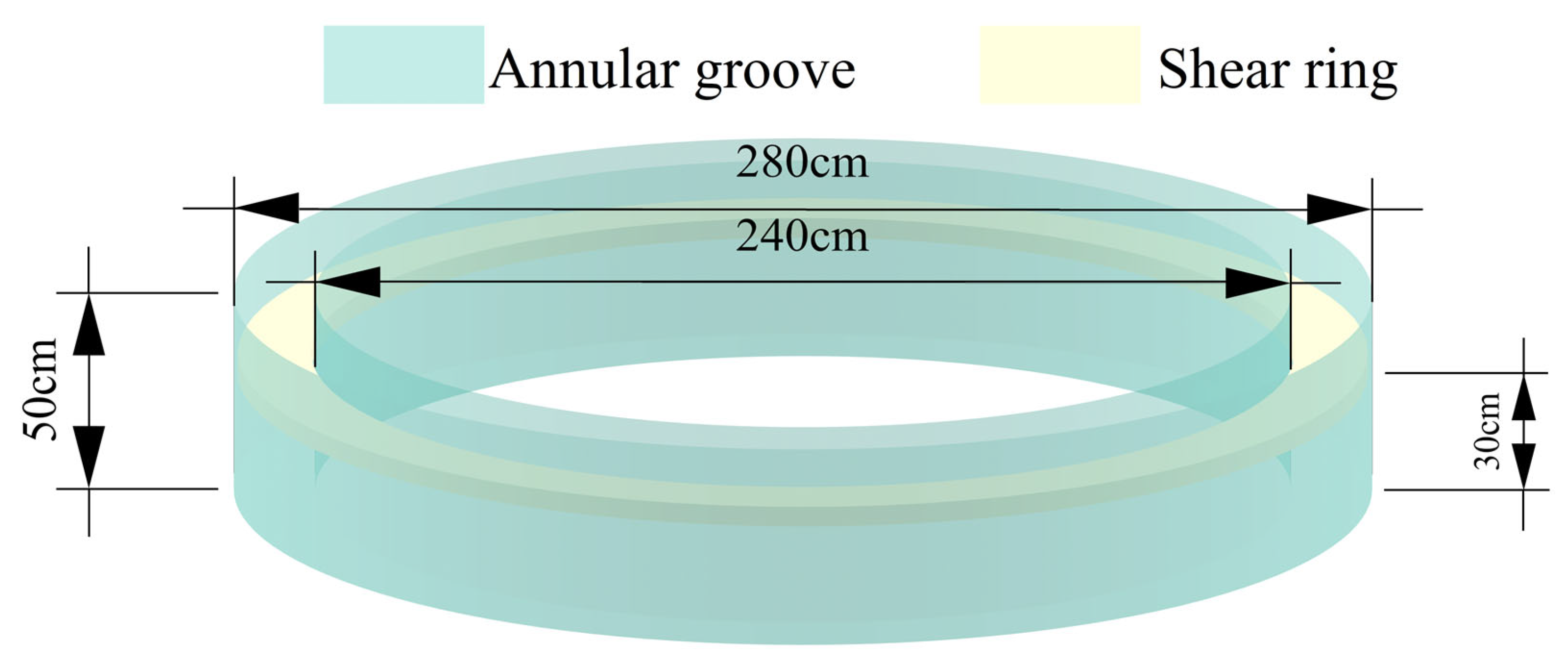
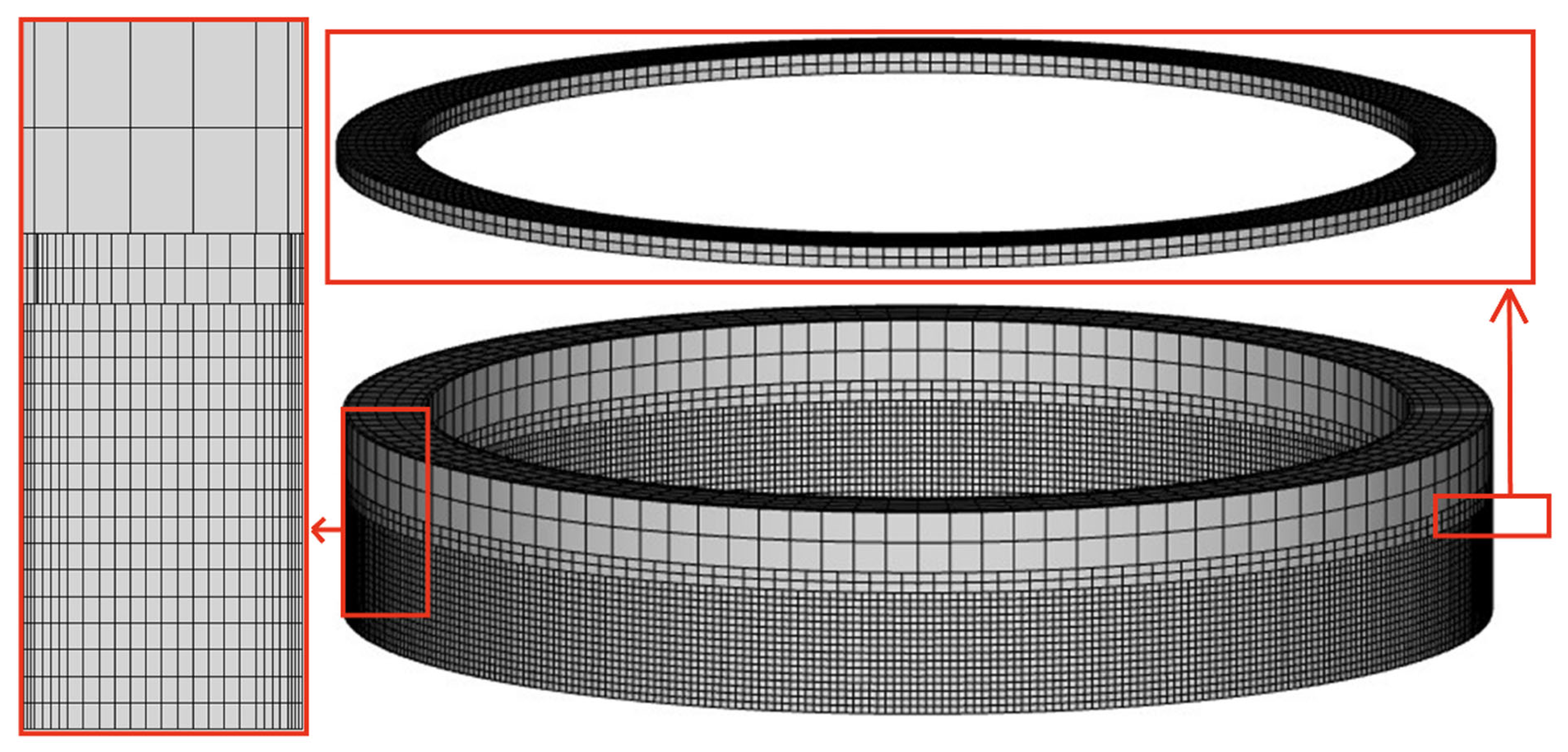
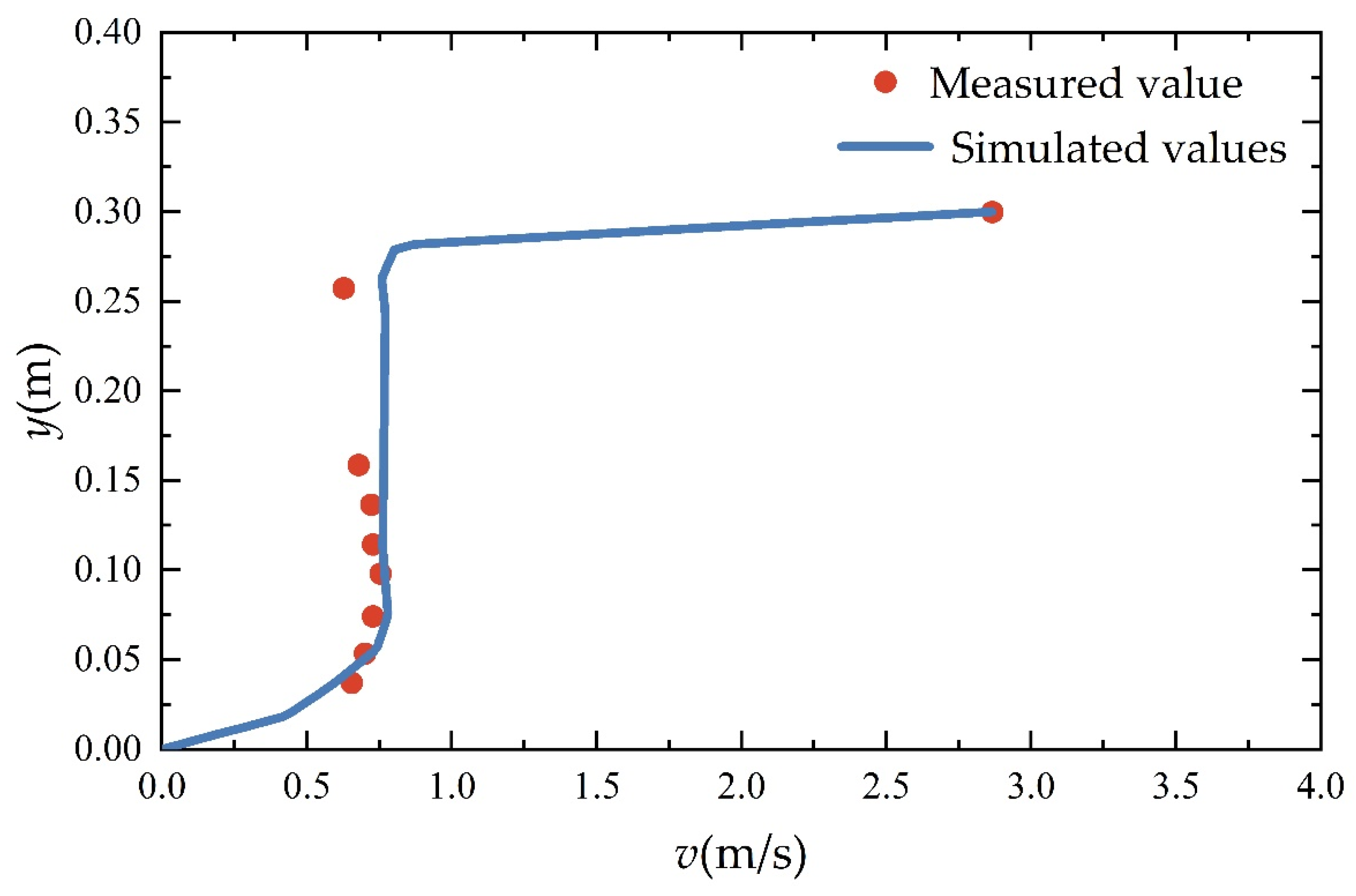
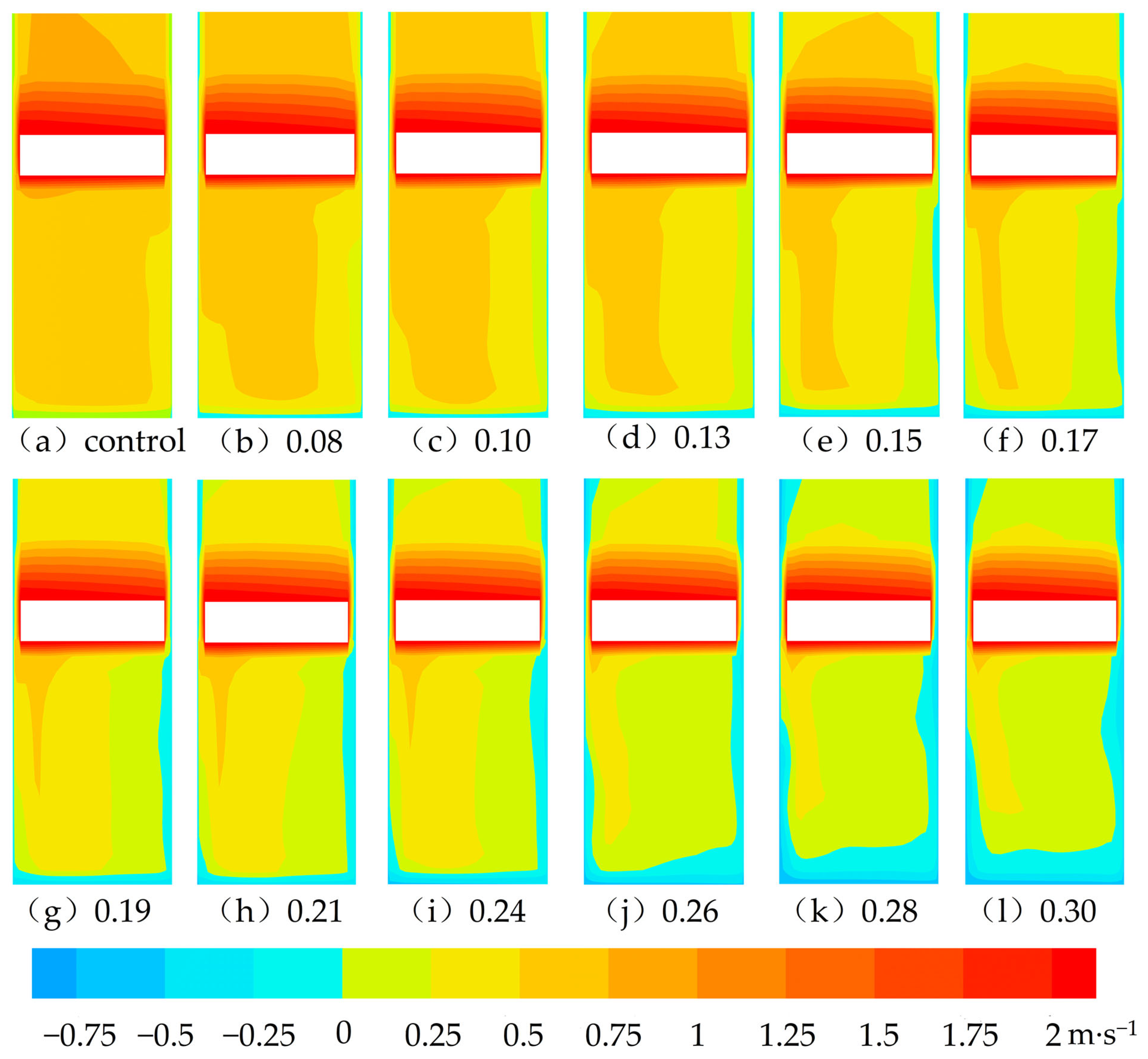
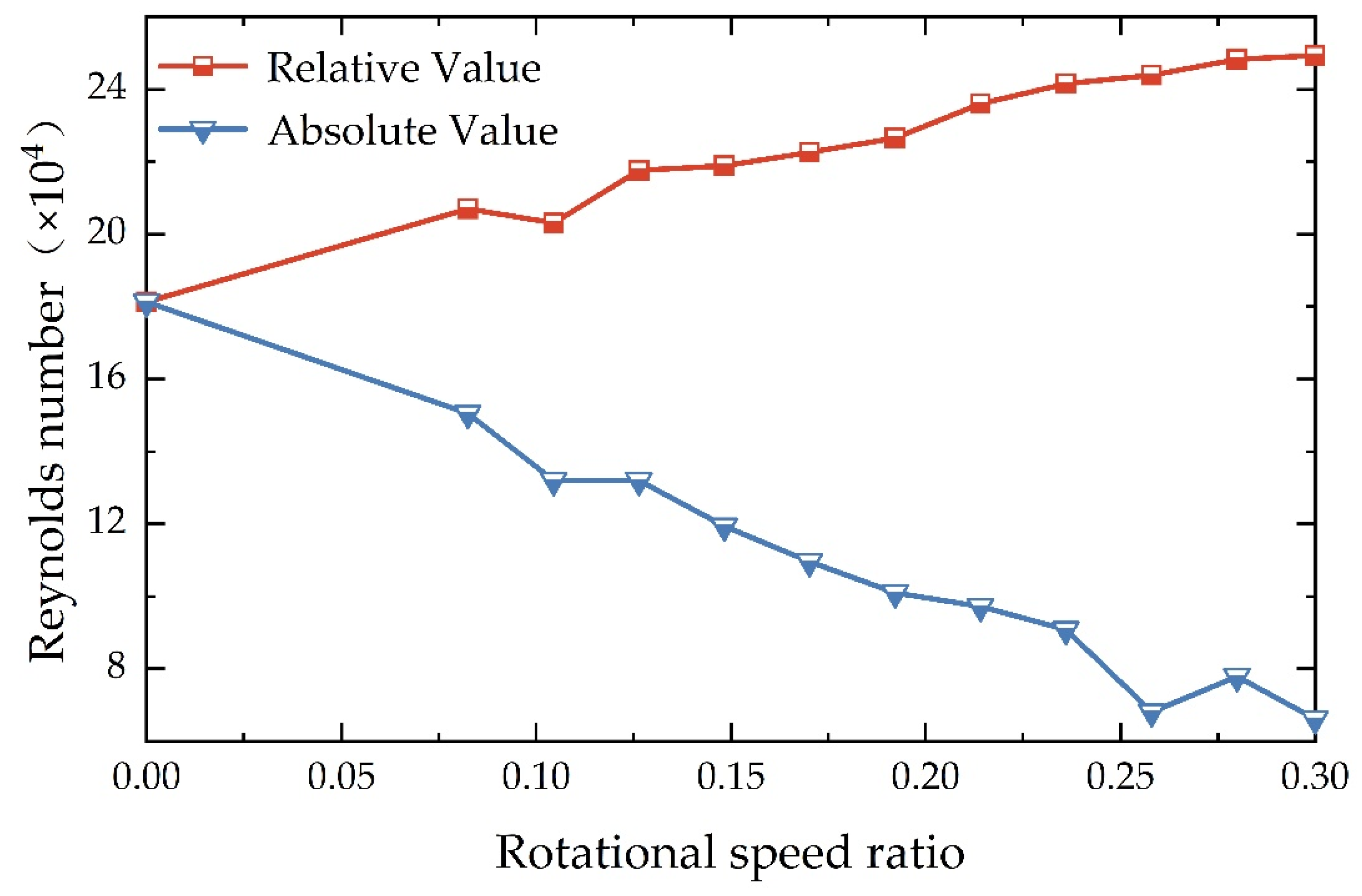
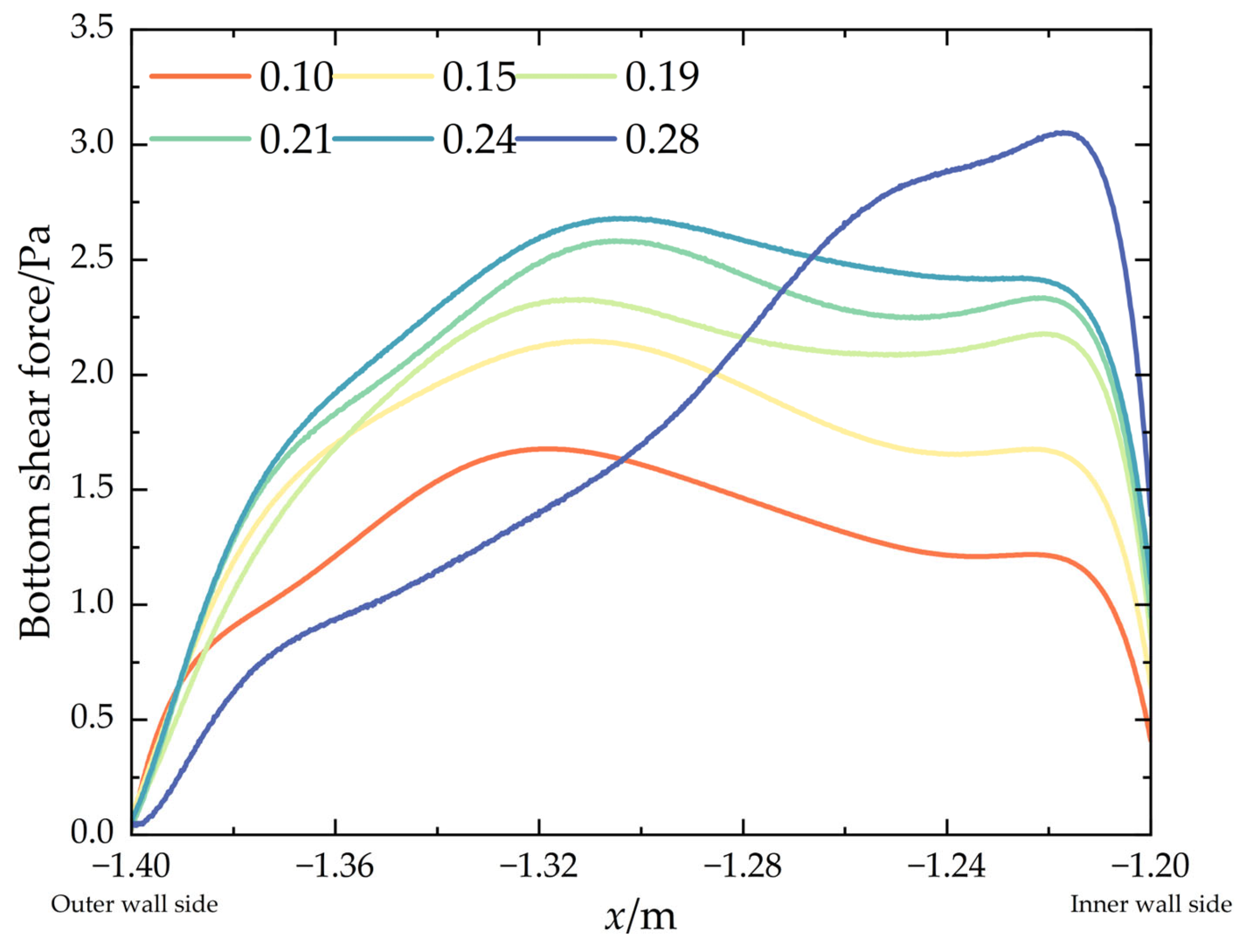
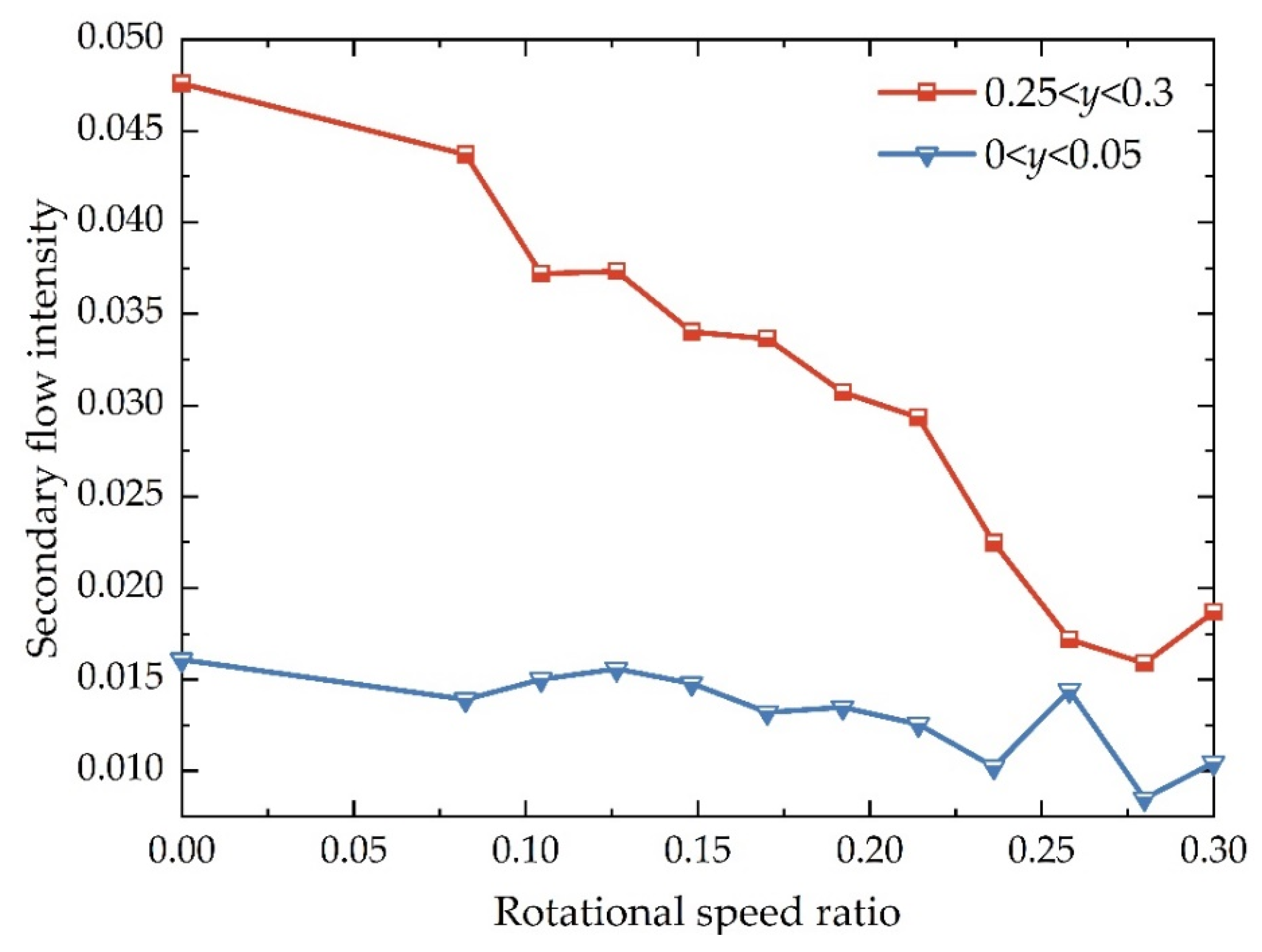
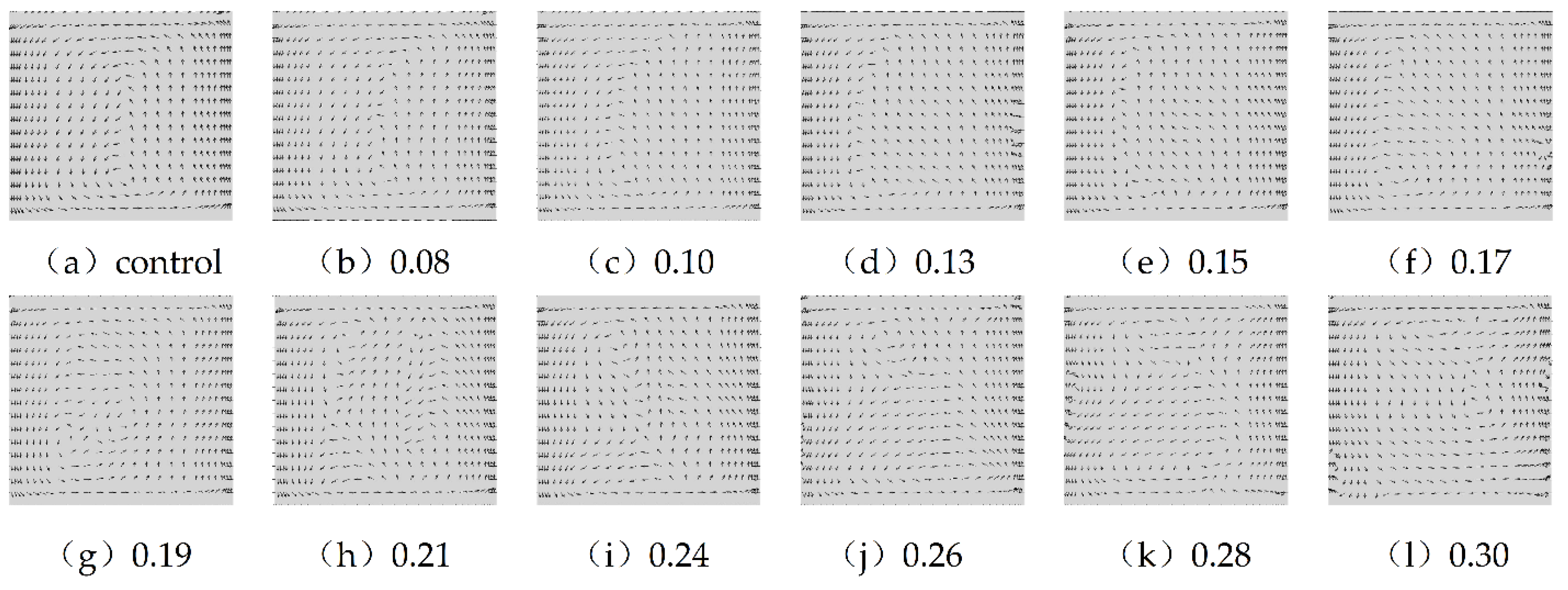
The annular flume is an ideal hydrodynamic test device for studying river sediment, and it has been widely used in recent years to study the movement patterns of sediment and other particulate matter. Annular flumes have made outstanding contributions to research in fields related to sediment transport and the diffusion and migration of pollutants. The existence of circumfluence structures in annular flumes leads to complex and variable flow structures. To obtain a more stable and controllable water flow structure, a sophisticated three-dimensional mathematical model based on the Fluent software was established to study the development law of water flow structure in the flume by changing the size of the annular flume speed ratio. The results show the following: (1) The overall trend of the simulation results basically matched with the measured results; the average relative error was 3.54% and the Nash efficiency coefficient was 0.9934, close to 1. The model calculation data were highly credible. (2) The axial flow velocity of the water tank gradually showed a “U”-shape distribution with the increase in the speed ratio. (3) When the speed ratio was R ≤ 0.17 (where the speed ratio R refers to the ratio of annular groove to shear ring speed), there was only one vortex in the tank; when the speed ratio was R > 0.17, there were multiple vortices in the tank, and the flow pattern was more complicated. (4) When the rotational speed ratio R = 0.28, the secondary flow intensity of the annular flume reached the lowest point, which was only 39.28% of the secondary flow intensity of the conventional annular flume. (5) It was determined that the annular flume water flow structure was most stable and controllable when the rotational speed ratio R = 0.24. The results of the study can provide a further theoretical basis for research on sediment dynamics and its related fields conducted by applying an annular flume.
Keywords: annular flume; secondary flow; eddy flow; fluid–solid coupling; rotational speed ratio; water flow structure; VOF method annular flume; secondary flow; eddy flow; fluid–solid coupling; rotational speed ratio; water flow structure; VOF method