Article

Monitoring the Efficiency of a Catchment Restoration to Further Reduce Nutrients and Sediment Input into a Eutrophic Lake

by
Solveig Nachtigall
1 and
Christine Heim
2,3,*
1
Institute of Biology and Environmental Sciences, University of Oldenburg, Ammerländer Heerstr. 114-118, 26129 Oldenburg, Germany
2
Geoscience Centre, University of Göttingen, Goldschmidtstr. 3, 37077 Göttingen, Germany
3
Institute for Geology and Mineralogy, University of Cologne, Zülpicher Str. 49a, 50674 Cologne, Germany
*
Author to whom correspondence should be addressed.
Water 2023, 15(21), 3794; https://doi.org/10.3390/w15213794
Submission received: 30 June 2023 / Revised: 22 September 2023 / Accepted: 24 September 2023 / Published: 30 October 2023
(This article belongs to the Special Issue Lake Processes and Lake’s Climate Effects under Global Warming)

Abstract

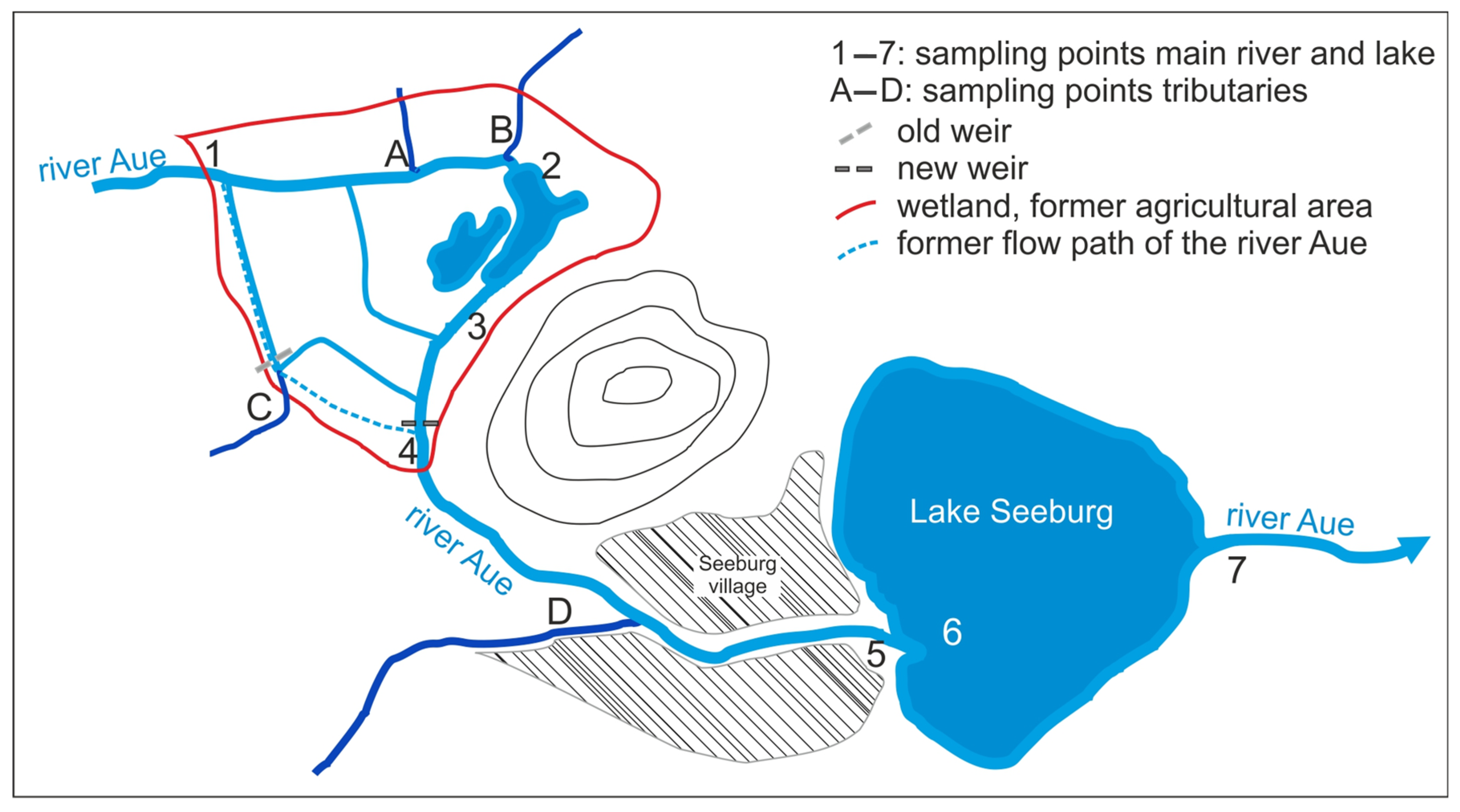
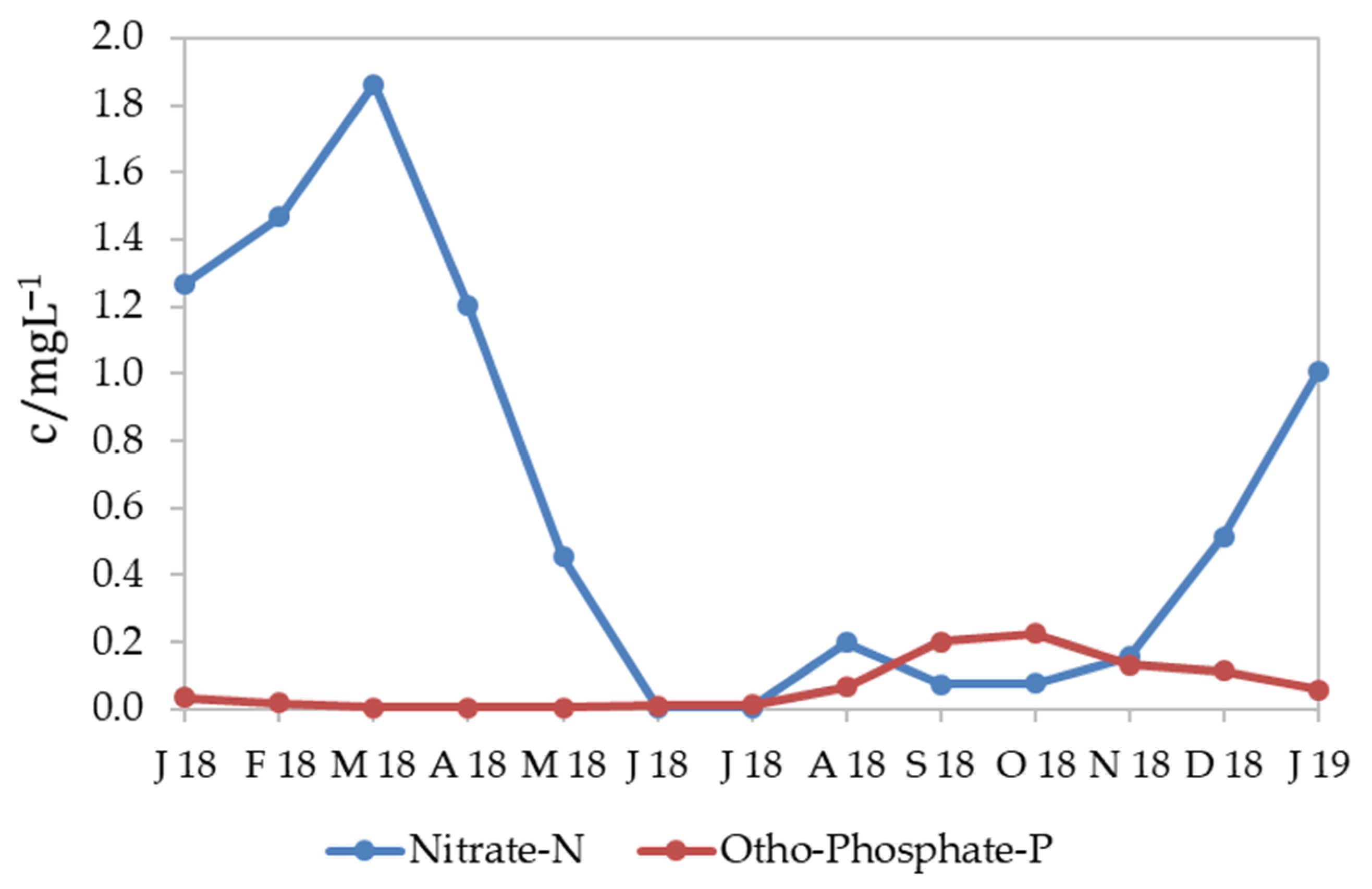
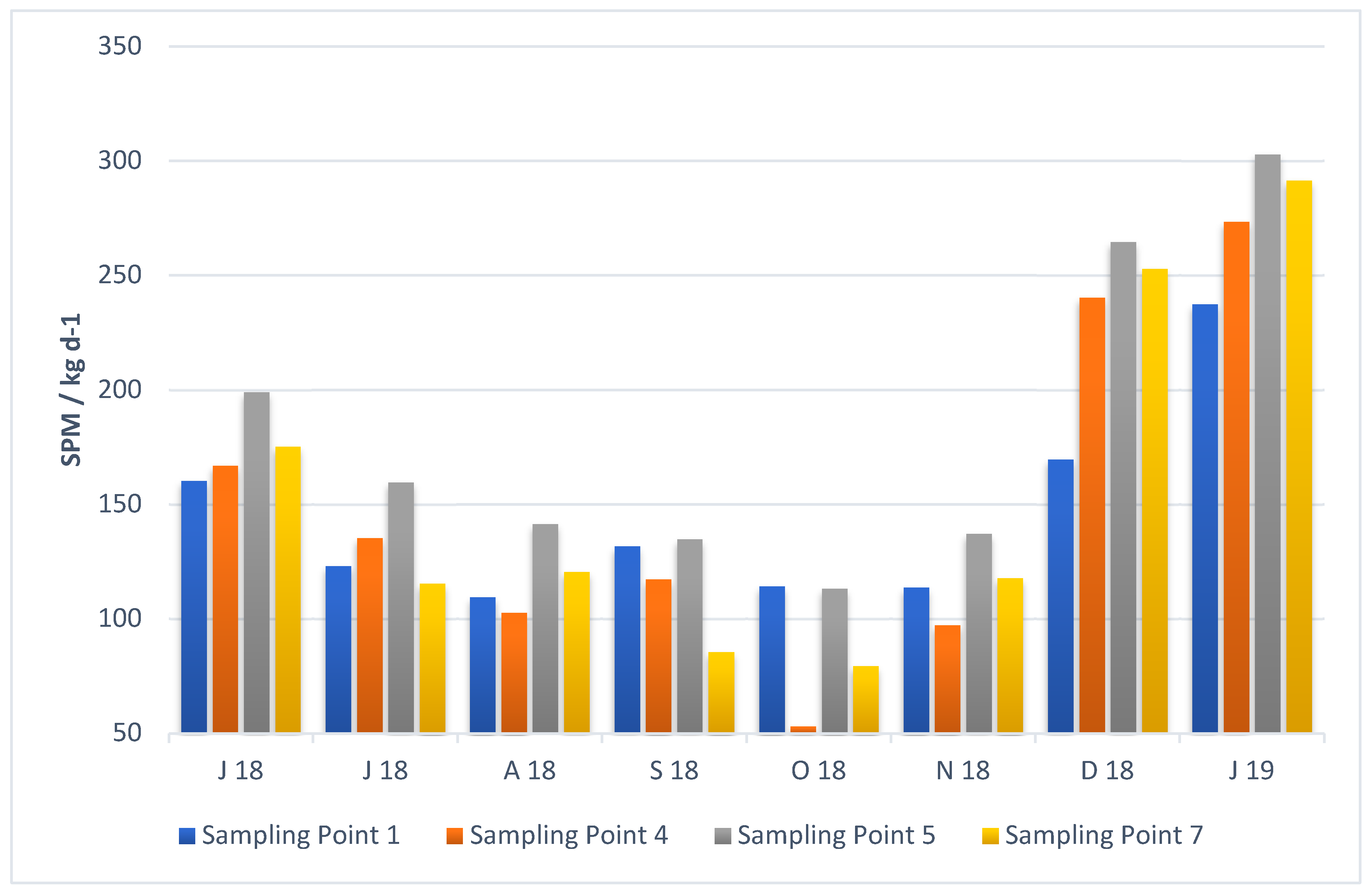
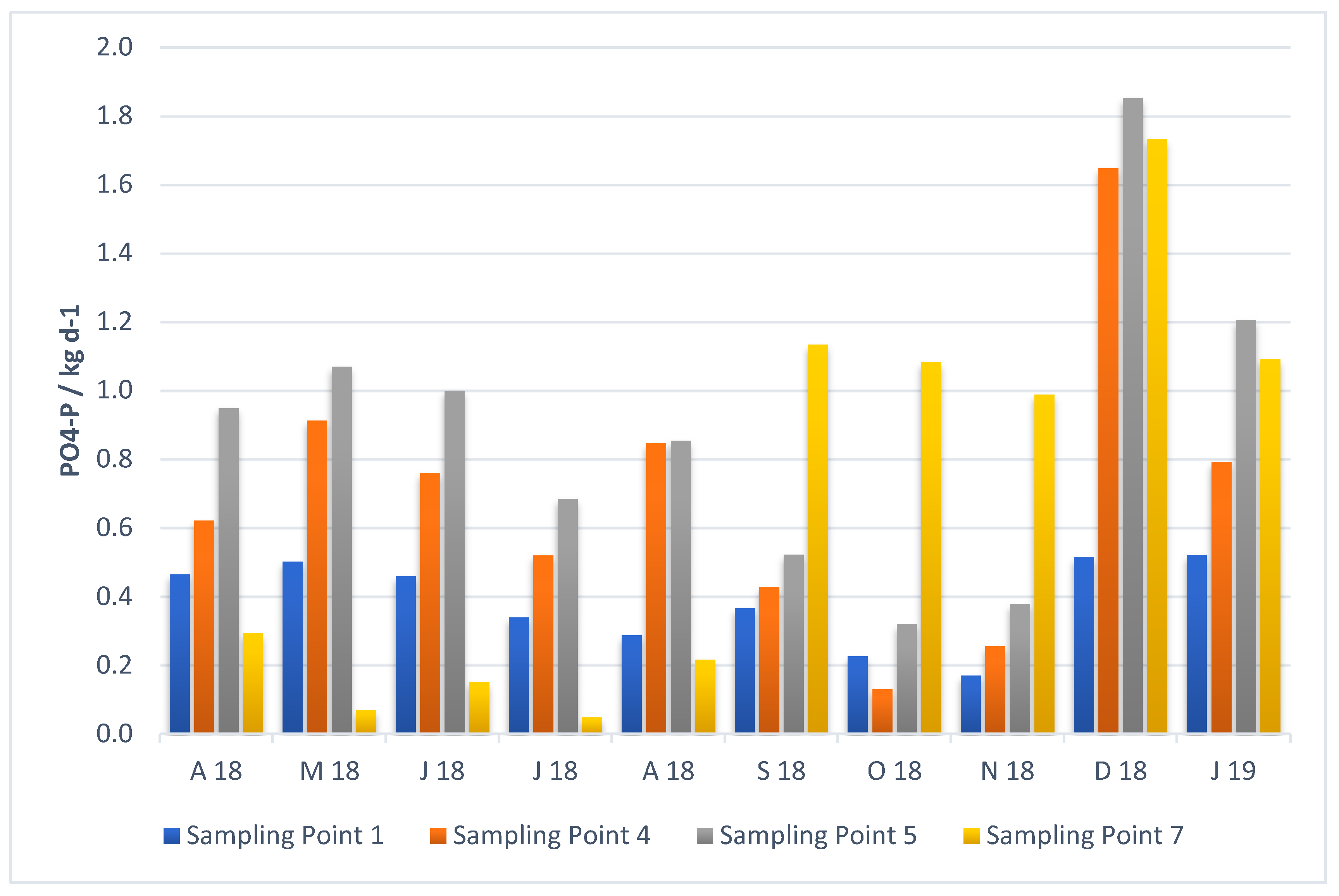
The restoration of eutrophic river and lake ecosystems is an important task that has been conducted in numerous ways and at many locations around the world. However, such improvements of water quality are often temporary, as such ecosystems are dynamic, and restoration measures must be reassessed and modified. The restored catchment of a shallow eutrophic lake, Lake Seeburg, in central Germany, was monitored over a 13-month period. The restoration of the inflowing river a decade earlier included riverbed prolongation, gradient reduction, and the construction of wetlands upstream, which reduced the sediment input and silting up of the lake. As nutrient fluxes in the tributaries were still high, these restoration measures seemed to be insufficiently effective. This study aimed to locate nutrient hotspots and quantify the nutrient balances of the catchment. Nitrogen and phosphorous concentrations, river discharge, hydrochemical parameters (pH, temperature, oxygen concentrations) and turbidity, as a proxy for suspended particulate matter (SPM), were monitored monthly. Our data show that the lake functions as a nitrogen sink, whereas the phosphorous fluxes follow a seasonal trend with the negative balance in winter turning into a positive balance in summer with the onset of cyanobacterial blooms. The release of phosphorous from the wetland throughout the year indicates supersaturation and thus a permanent input of phosphorous into the lake. Consequently, phosphorus loading in the lake is quite high, fostering eutrophication. Furthermore, the very low precipitation rates during the study highlighted that the lake was not only controlled by external nutrient loads but rather was sustained by high internal phosphorous loading. Consequently, the remediation action of creating the wetland to restore the sedimentation trap and nutrient accumulation capacity was not sufficient.
Keywords: lake eutrophication; cyanobacteria; phosphate remobilization lake eutrophication; cyanobacteria; phosphate remobilization