Article

Comparison of Disinfection By-Product Formation and Distribution during Breakpoint Chlorination and Chlorine-Based Disinfection in Drinking Water

1
Hevesy György PhD School of Chemistry, Institute of Chemistry, Eötvös Loránd University, Pázmány Péter Street 2, 1117 Budapest, Hungary
2
Department of Public Health Laboratories, National Public Health Center, Albert Flórián Street 2-6, 1097 Budapest, Hungary
3
Department of Inorganic and Analytical Chemistry, Budapest University of Technology and Economics, Műegyetem Rakpart 3, 1111 Budapest, Hungary
4
Danube Research Institute, Centre for Ecological Research, Hungarian Academy of Sciences, Karolina Street 29-31, 1113 Budapest, Hungary
*
Author to whom correspondence should be addressed.
Water 2022, 14(9), 1372; https://doi.org/10.3390/w14091372
Submission received: 18 March 2022 / Revised: 17 April 2022 / Accepted: 20 April 2022 / Published: 23 April 2022
(This article belongs to the Section Water Quality and Contamination)

Abstract

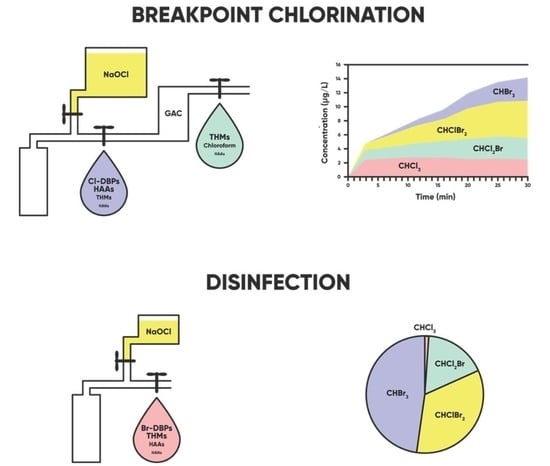
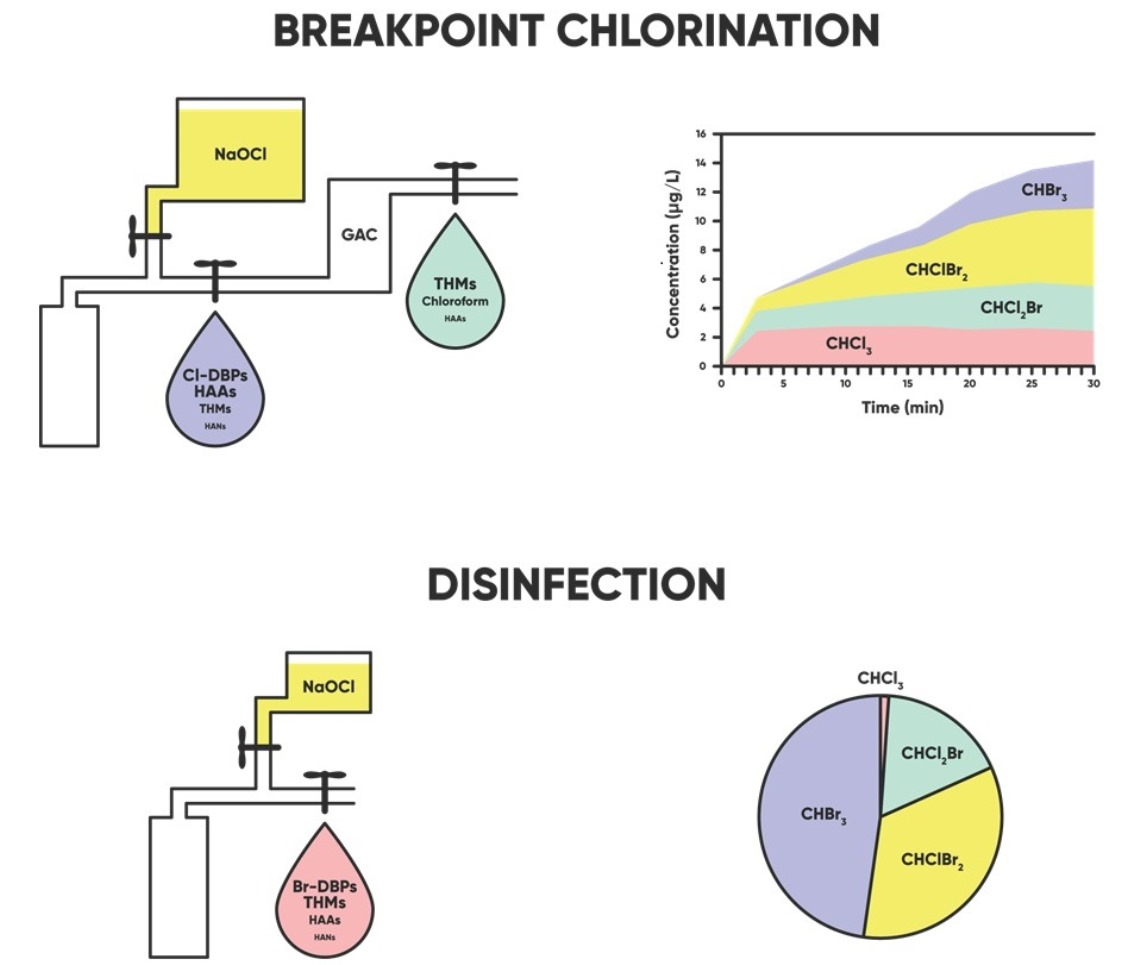
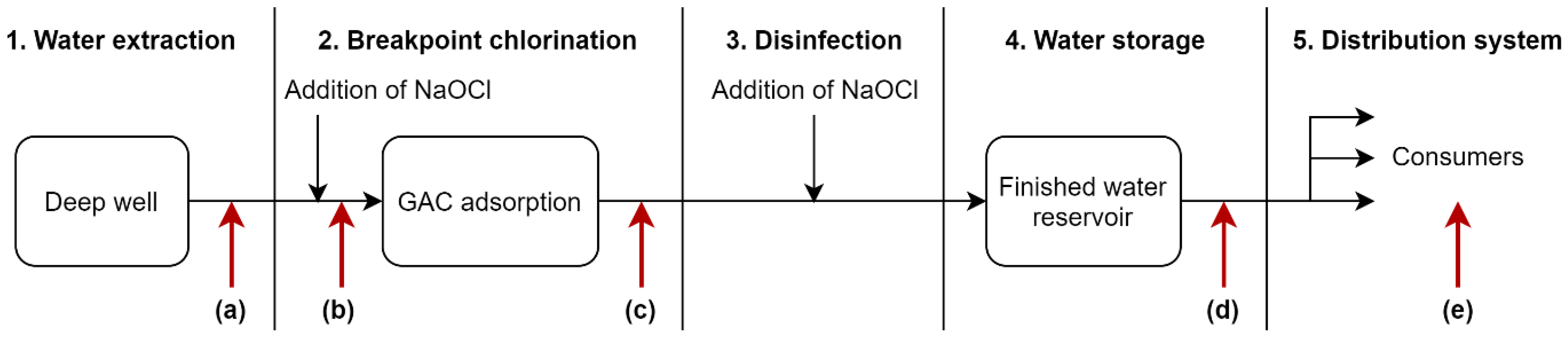
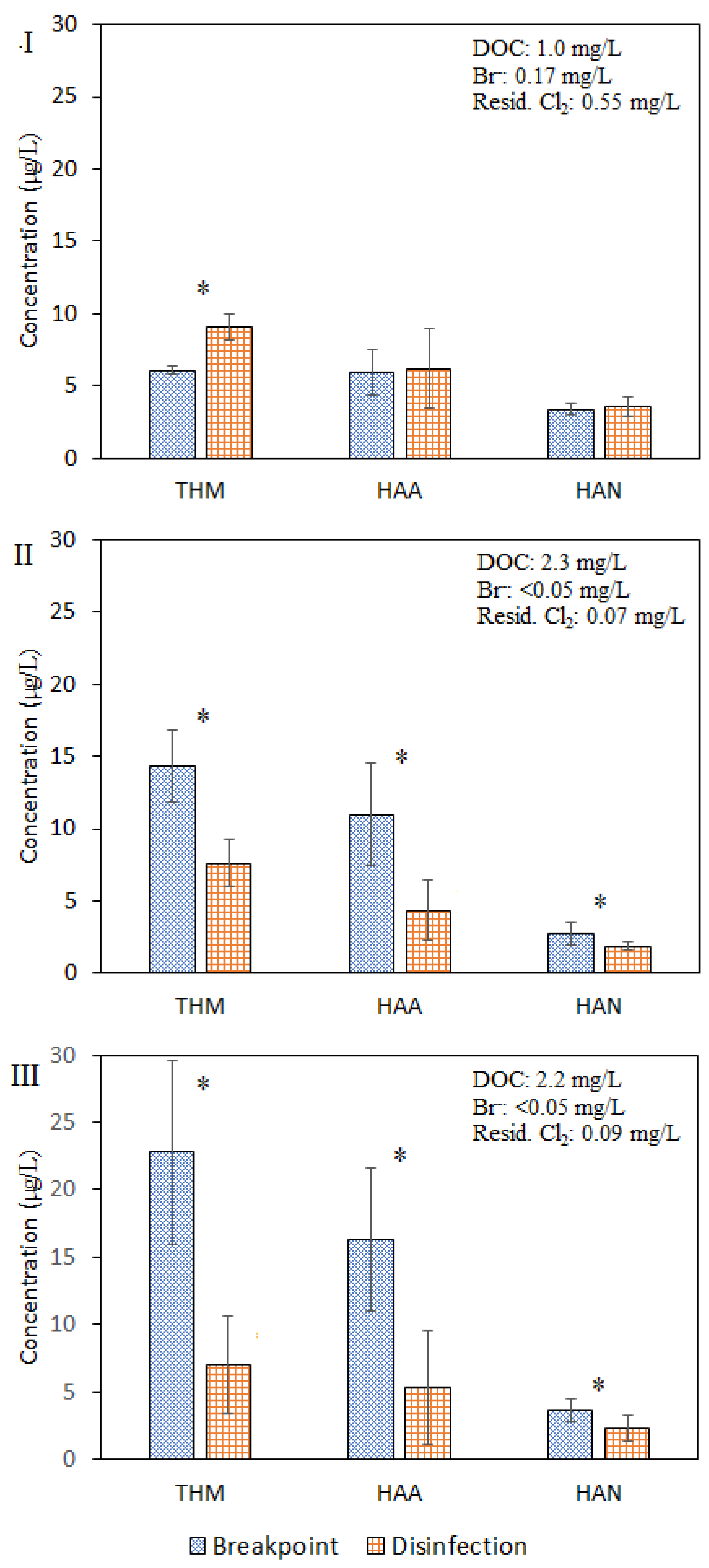
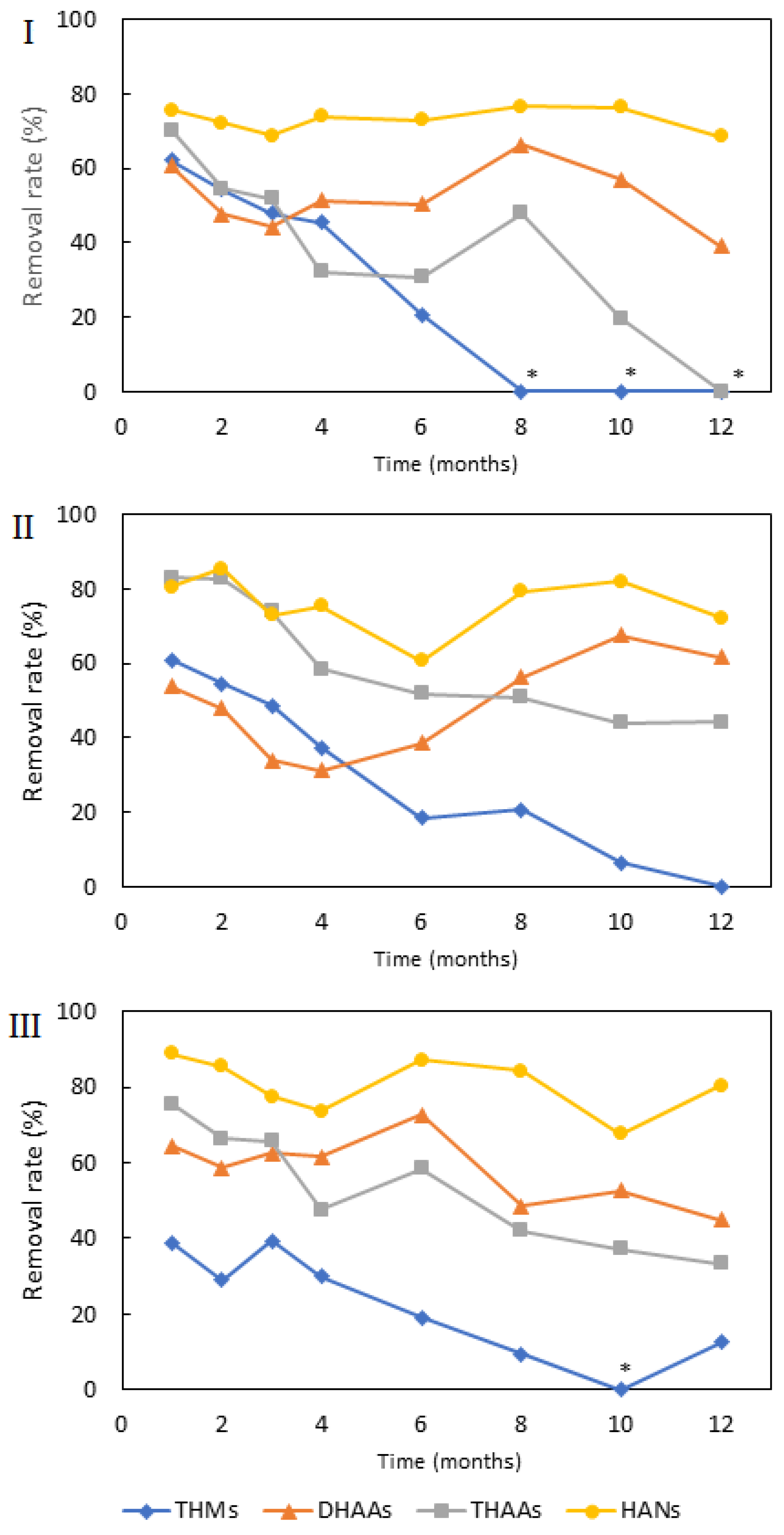
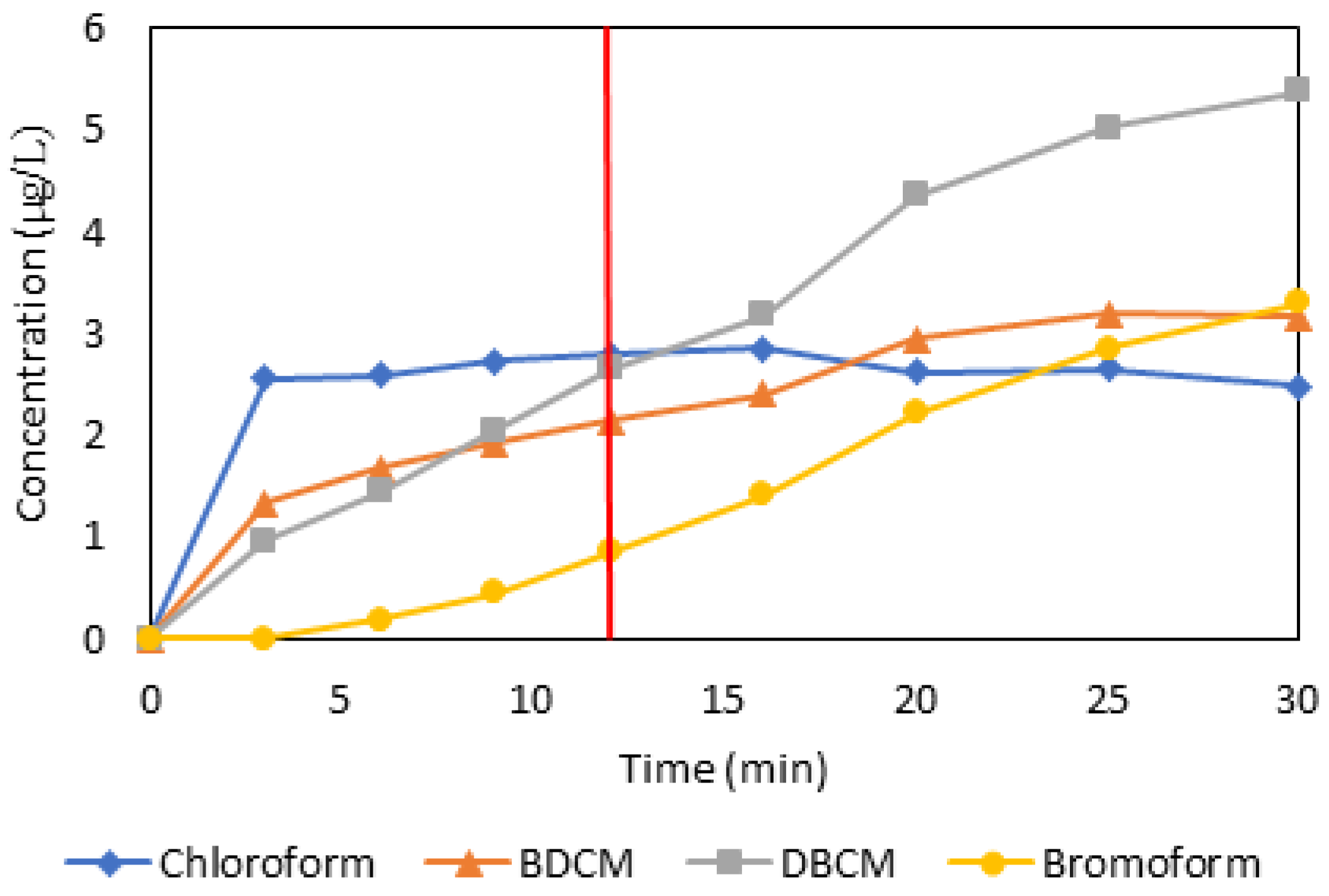
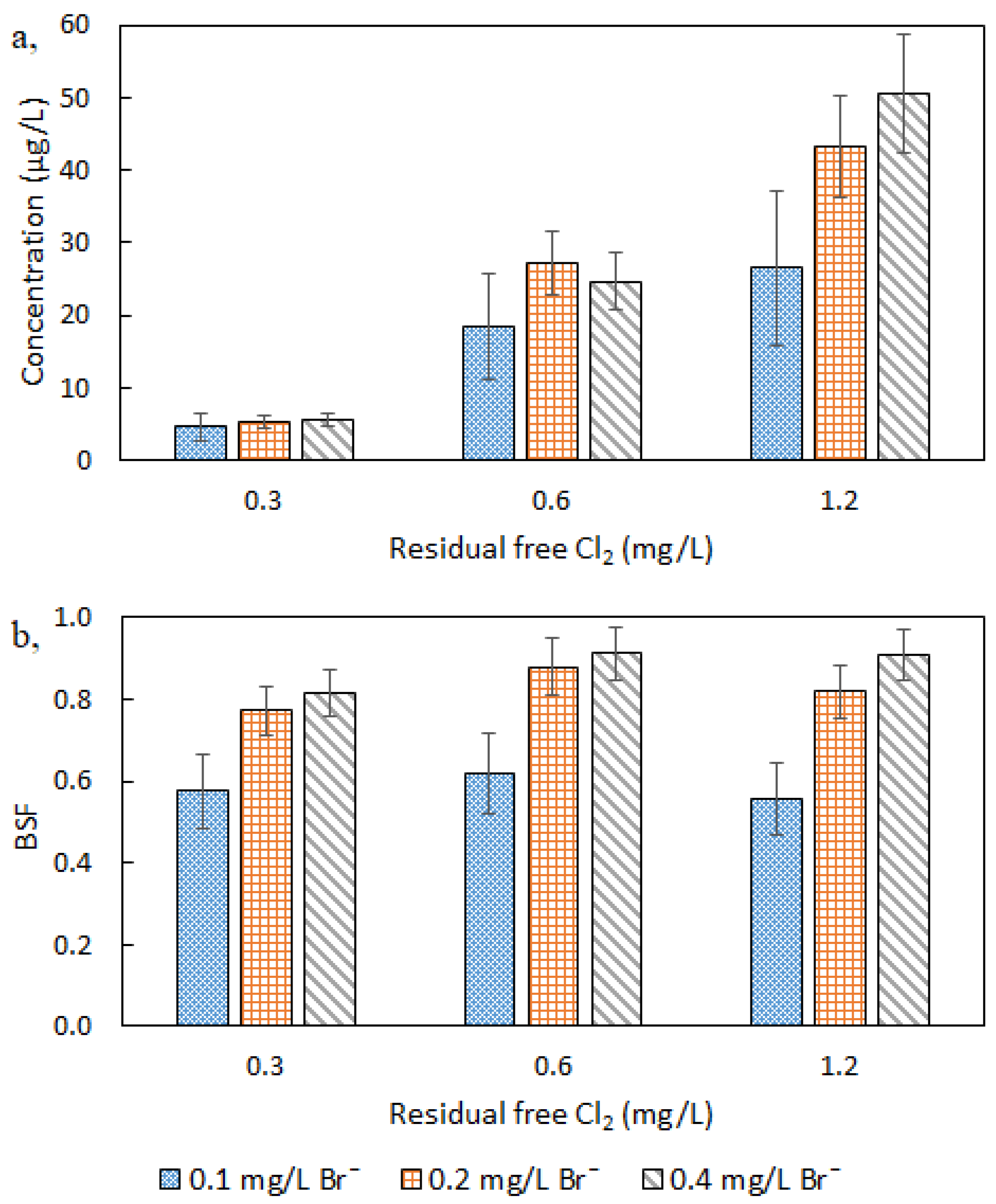
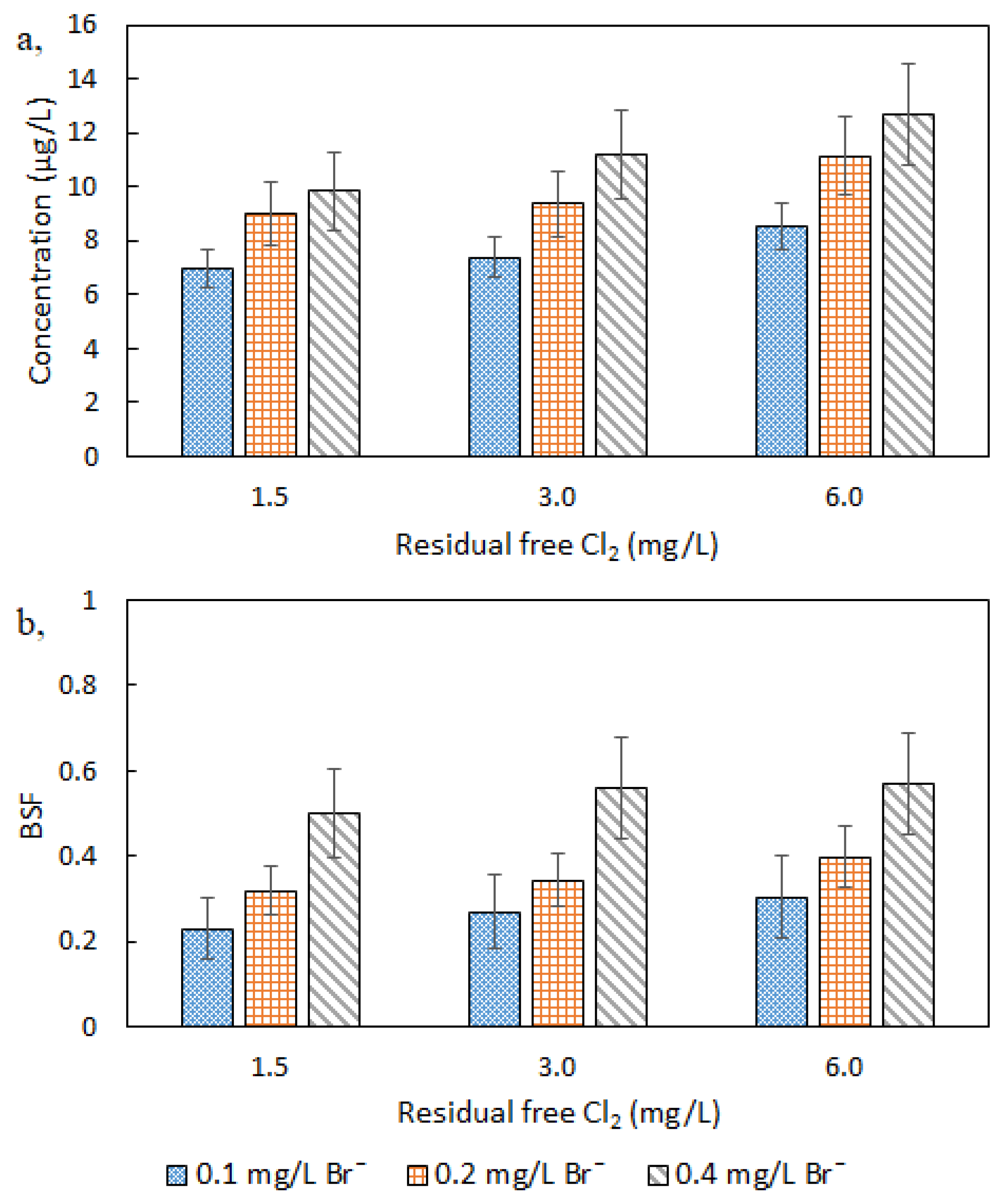
Breakpoint chlorination (BC) and disinfection with chlorine-based disinfectant are widely used procedures in drinking water production. Both involve dosing chlorine into the raw water, where it can react with organic compounds, forming disinfection by-products (DBPs) of health concern. However, technological parameters (e.g., contact time, chlorine dosage, and bromide to residual free chlorine ratio) of the two chlorination procedures are different, which can lead to differences in DBP formation. To better understand this, a year-long sampling campaign was carried out at three waterworks in Hungary, where both BC and chlorine disinfection are used. To confirm the results of the field sampling, bench-scale experiments were carried out, investigating the impact of (a) bromide concentration in raw water, (b) residual free chlorine (bromide to residual chlorine ratio), and (c) contact time on DBP formation. The measured DBPs were trihalomethanes (THMs), haloacetic acids (HAAs), haloacetonitriles (HANs), and chlorate. During BC, the DBPs were formed in higher concentration, with the exception of one waterwork having elevated bromide content in the raw water. Bromine substitution factors (BSFs) were significantly higher during disinfection than BC in both field and laboratory experiments. After BC, the chlorate concentration range was 0.15–1.1 mg/L, and 96% of the samples exceeded the European Union (EU) parametric value (0.25 mg/L), whereas disinfection contributed only slightly. Granular activated carbon (GAC) filters used to remove DBPs in waterworks were exhausted after 6–8 months of use, first for those chlorinated THMs, which are generated predominantly during BC. The biological activity of the filters started to increase after 3–6 months of operation. This activity helps to remove the biodegradable compounds, such as disubstituted haloacetic acid (DHAAs) and HANs, even if the adsorption capacity of the GAC filters are low.
Keywords: breakpoint chlorination; bromine substitution factors; chlorate; disinfection; disinfection by-products; aging of GAC adsorbents breakpoint chlorination; bromine substitution factors; chlorate; disinfection; disinfection by-products; aging of GAC adsorbents
Graphical Abstract