Article

A New Rainfall-Runoff Model Using Improved LSTM with Attentive Long and Short Lag-Time
1
Key Laboratory of Geographic Information Science (Ministry of Education of China), East China Normal University, Shanghai 200241, China
2
School of Geographical Sciences, East China Normal University, Shanghai 200241, China
3
Shanghai Key Laboratory of Multidimensional Information Processing, East China Normal University, Shanghai 200241, China
4
The Affiliated High School of Hangzhou Normal University, Hangzhou 310030, China
5
Key Laboratory of Marine Environment Monitoring and Information Processin, The School of Electronics and Information Engineering, Harbin Institute of Technology, Ministry of Industry and Information Technology, Harbin 150001, China
6
Department of Automation, Shanghai Jiao Tong University, Shanghai 200240, China
7
Henan Key Laboratory of Smart Lighting, Huanghuai University, Zhumadian 463000, China
8
School of Computer Science and Technology, University of Chinese Academy of Sciences, Beijing 100049, China
*
Author to whom correspondence should be addressed.
Water 2022, 14(5), 697; https://doi.org/10.3390/w14050697
Submission received: 24 December 2021 / Revised: 7 February 2022 / Accepted: 9 February 2022 / Published: 23 February 2022

Abstract

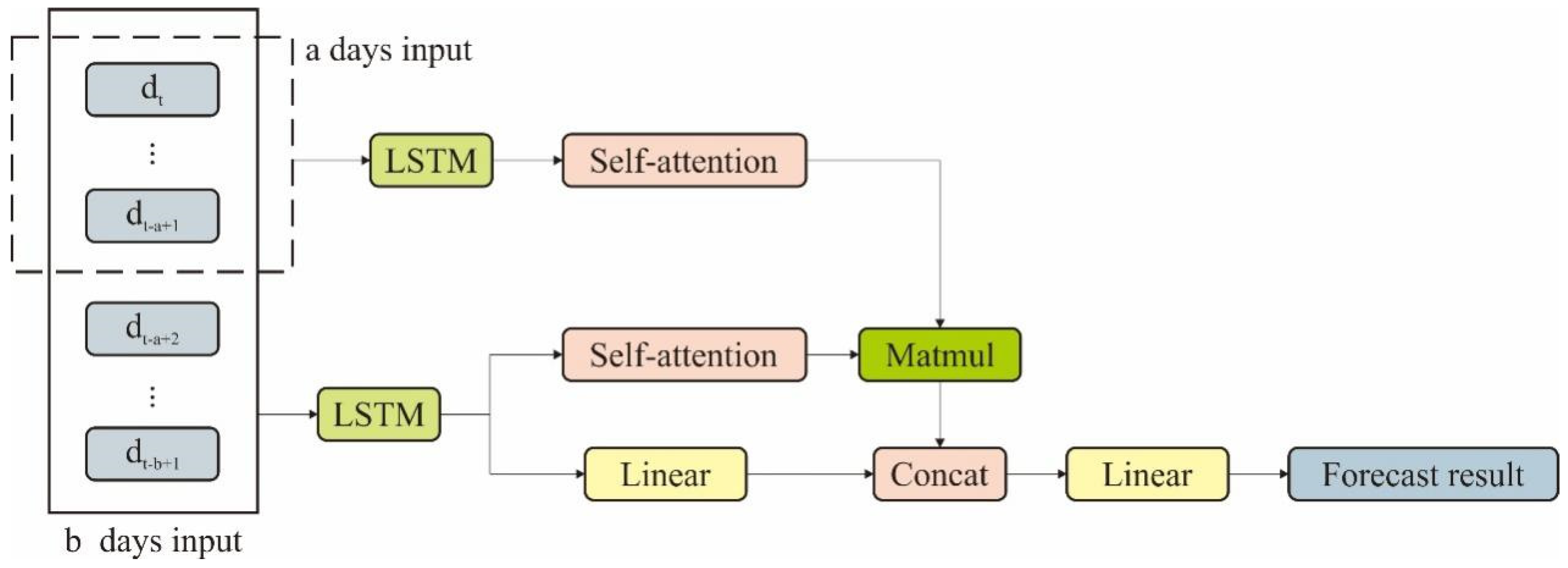
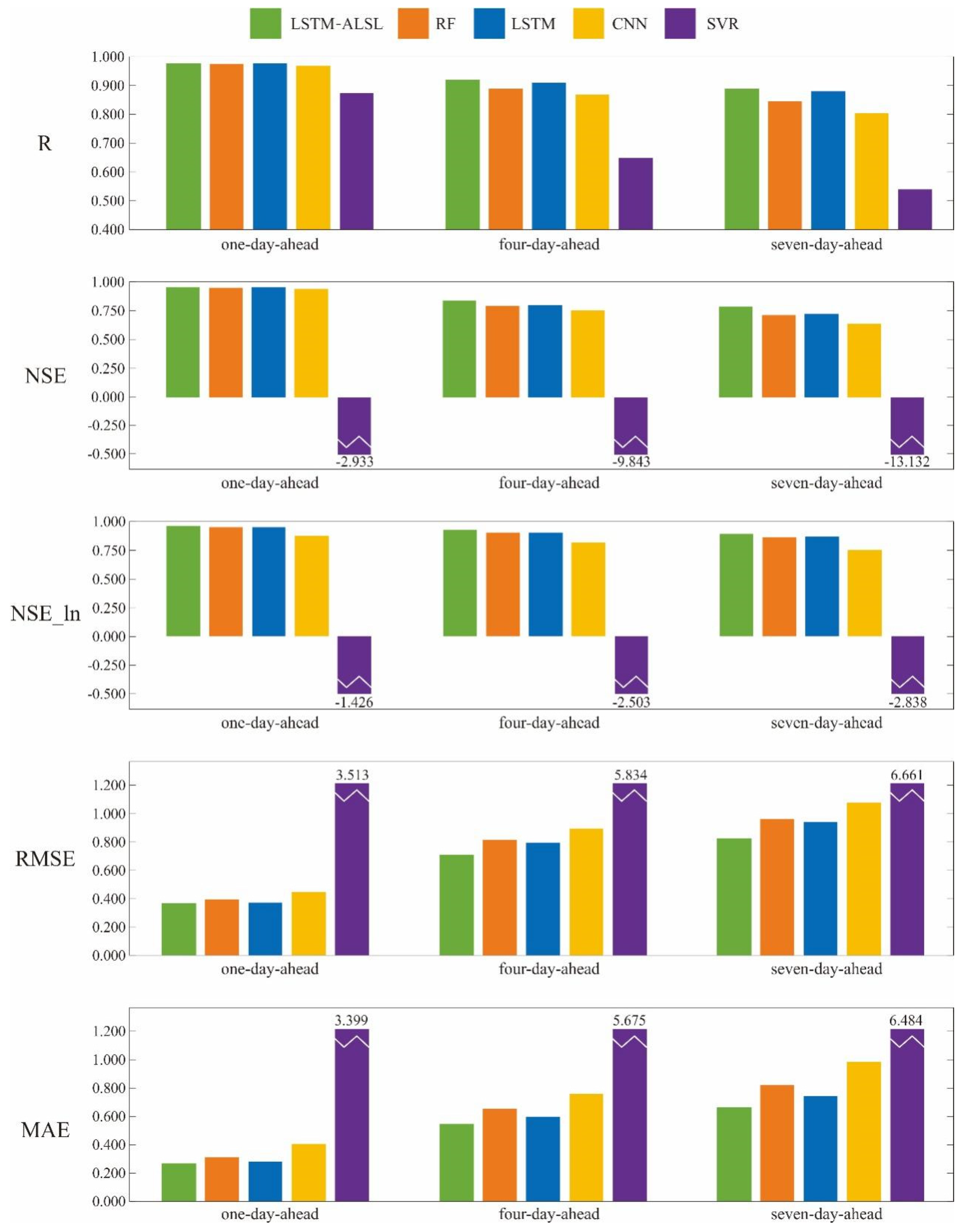
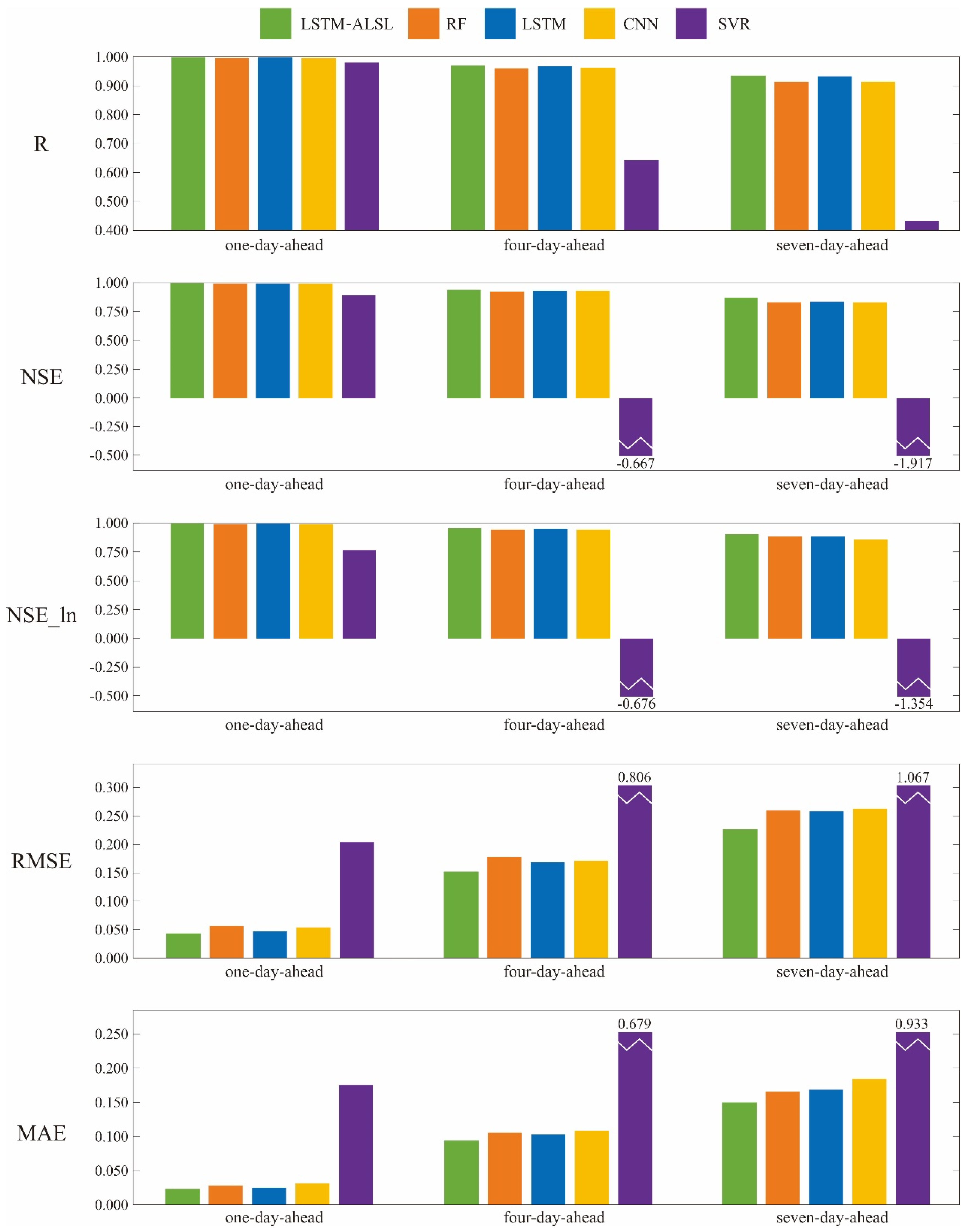
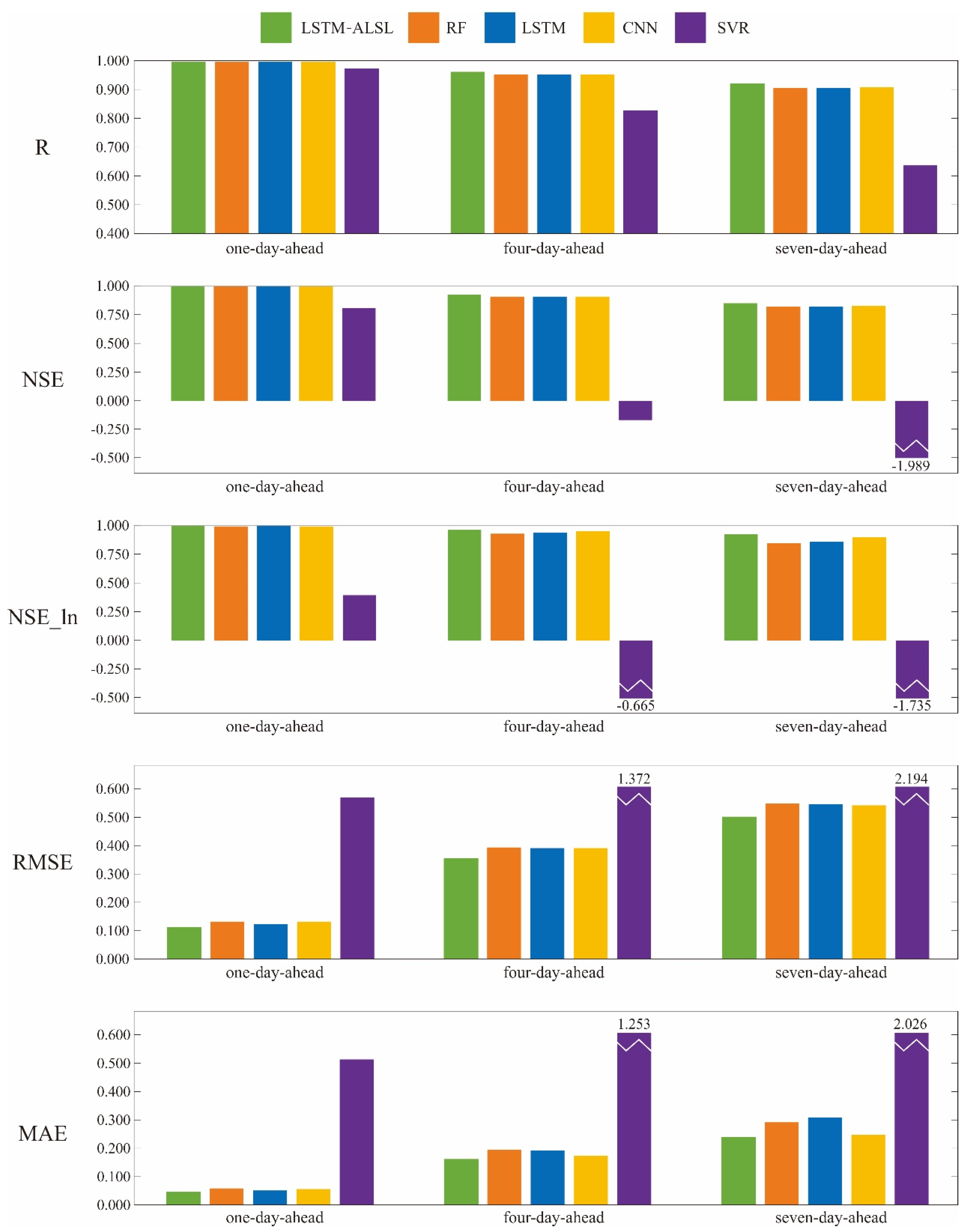
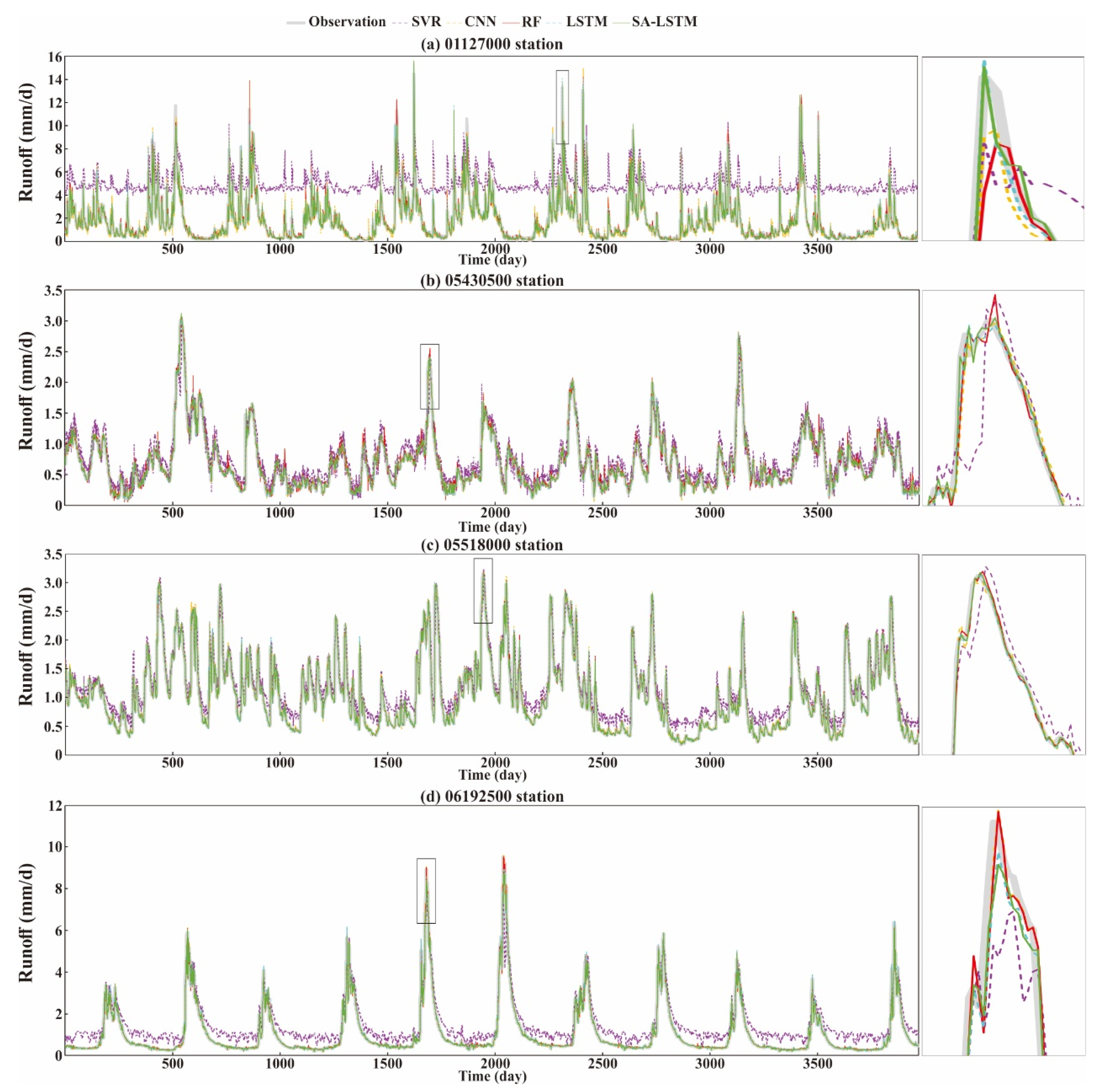
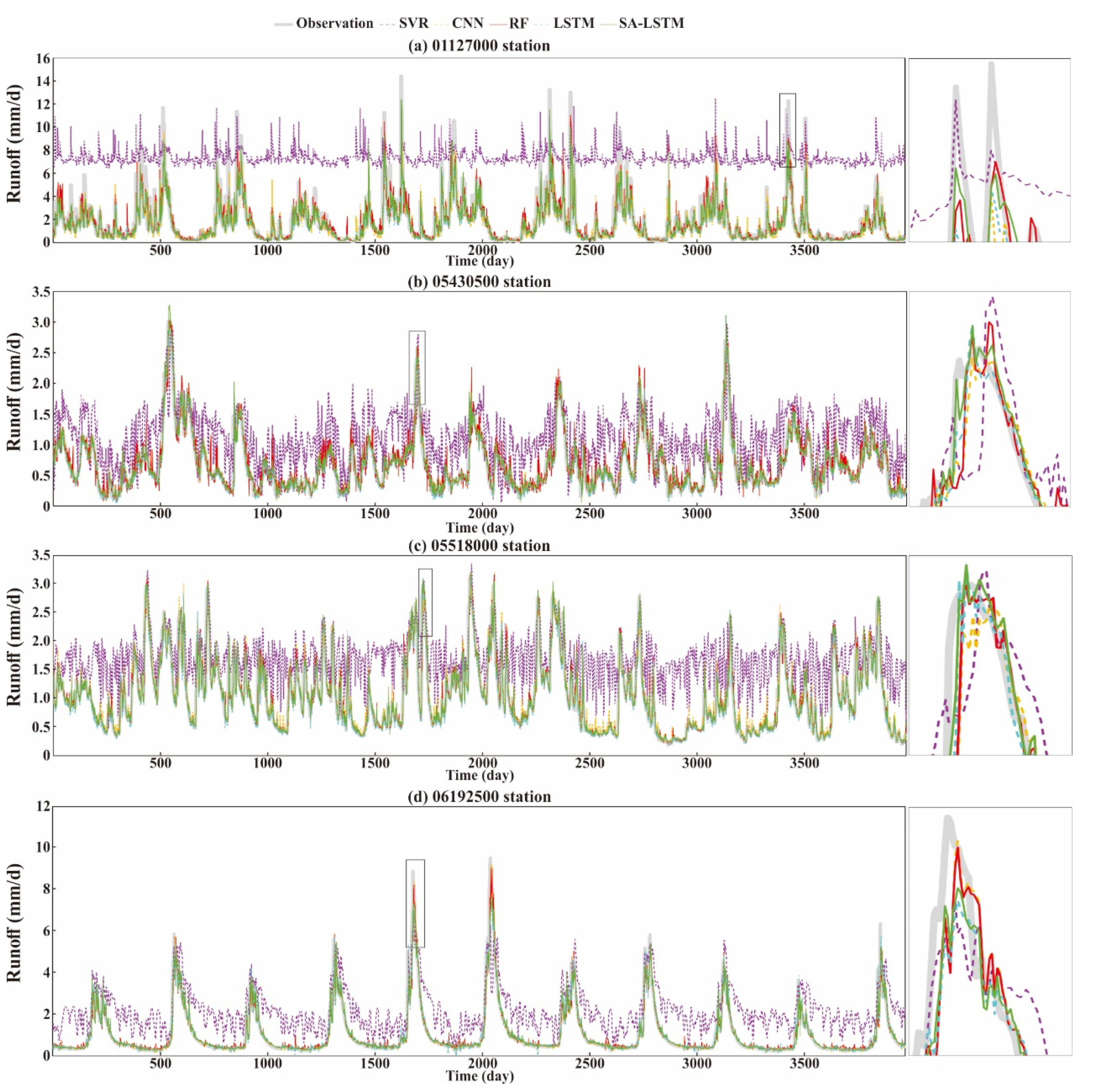
It is important to improve the forecasting performance of rainfall-runoff models due to the high complexity of basin response and frequent data limitations. Recently, many studies have been carried out based on deep learning and have achieved significant performance improvements. However, their intrinsic characteristics remain unclear and have not been explored. In this paper, we pioneered the exploitation of short lag-times in rainfall-runoff modeling and measured its influence on model performance. The proposed model, long short-term memory with attentive long and short lag-time (LSTM-ALSL), simultaneously and explicitly uses new data structures, i.e., long and short lag-times, to enhance rainfall-runoff forecasting accuracy by jointly extracting better features. In addition, self-attention is employed to model the temporal dependencies within long and short lag-times to further enhance the model performance. The results indicate that LSTM-ALSL yielded superior performance at four mesoscale stations (1846~9208 km2) with humid climates (aridity index 0.77~1.16) in the U.S.A., for both peak flow and base flow, with respect to state-of-the-art counterparts.
Keywords: runoff forecasting; self-attention; time series; deep learning; rainfall-runoff modeling runoff forecasting; self-attention; time series; deep learning; rainfall-runoff modeling