Article

Propagation Characteristics of Hydrological Drought Based on Variable and Fixed Threshold Methods in Snowmelt and Rainfall Driven Catchments


1
State Key Laboratory of Hydrology-Water Resources and Hydraulic Engineering, Nanjing Hydraulic Research Institute, Nanjing 210000, China
2
Key Laboratory of Hydrometeorological Disaster Mechanism and Warning of Ministry of Water Resources, Collaborative Innovation Center on Forecast and Evaluation of Meteorological Disasters, Nanjing University of Information Science and Technology, Nanjing 210044, China
3
Inland Water Unit, Environmental Monitoring and Reporting Branch, Ontario Ministry of Environment, Conservation and Parks, Dorset, ON P0A 1E0, Canada
*
Authors to whom correspondence should be addressed.
Water 2022, 14(20), 3219; https://doi.org/10.3390/w14203219
Submission received: 1 September 2022 / Revised: 30 September 2022 / Accepted: 10 October 2022 / Published: 13 October 2022
(This article belongs to the Special Issue Challenges of Hydrological Drought Monitoring and Prediction)

Abstract

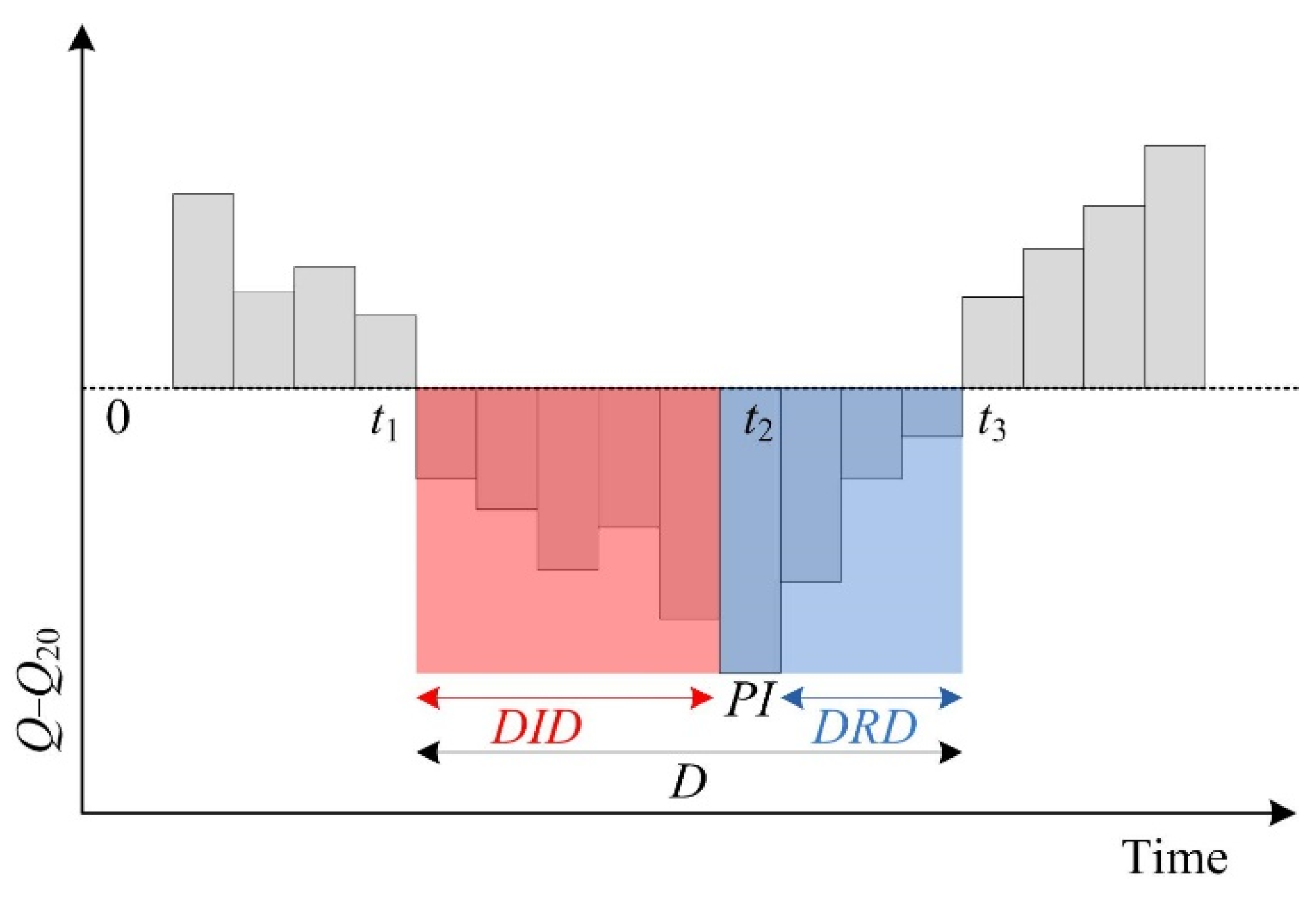
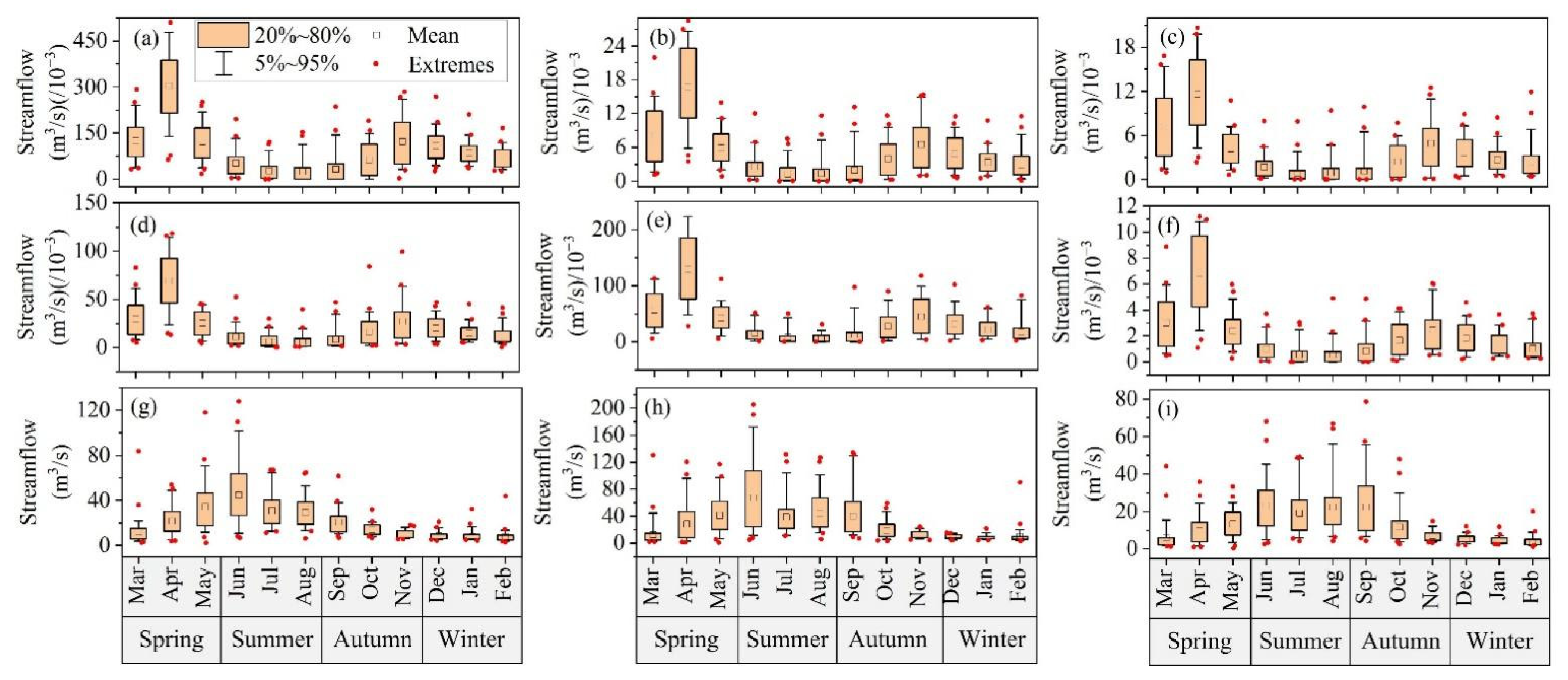
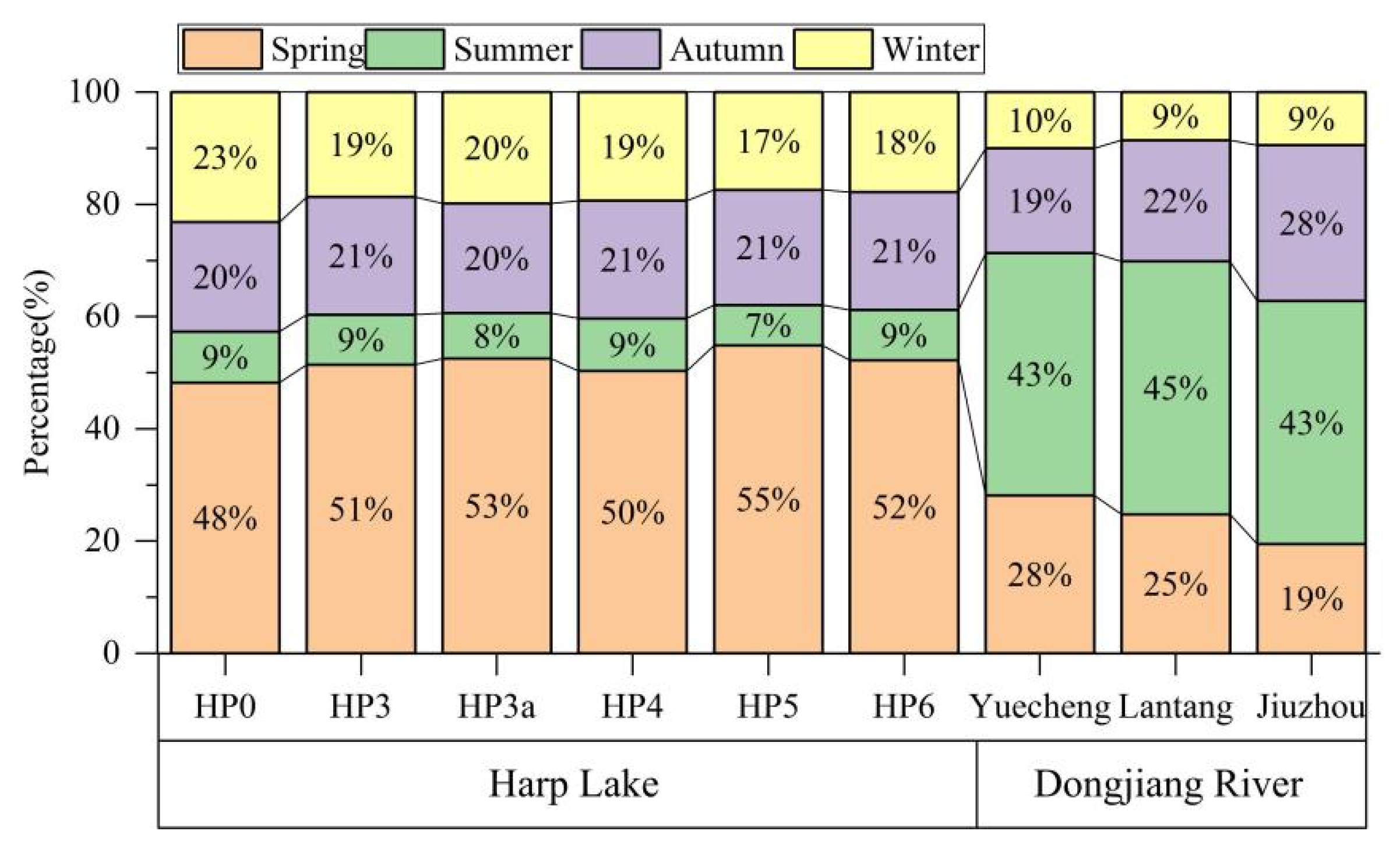
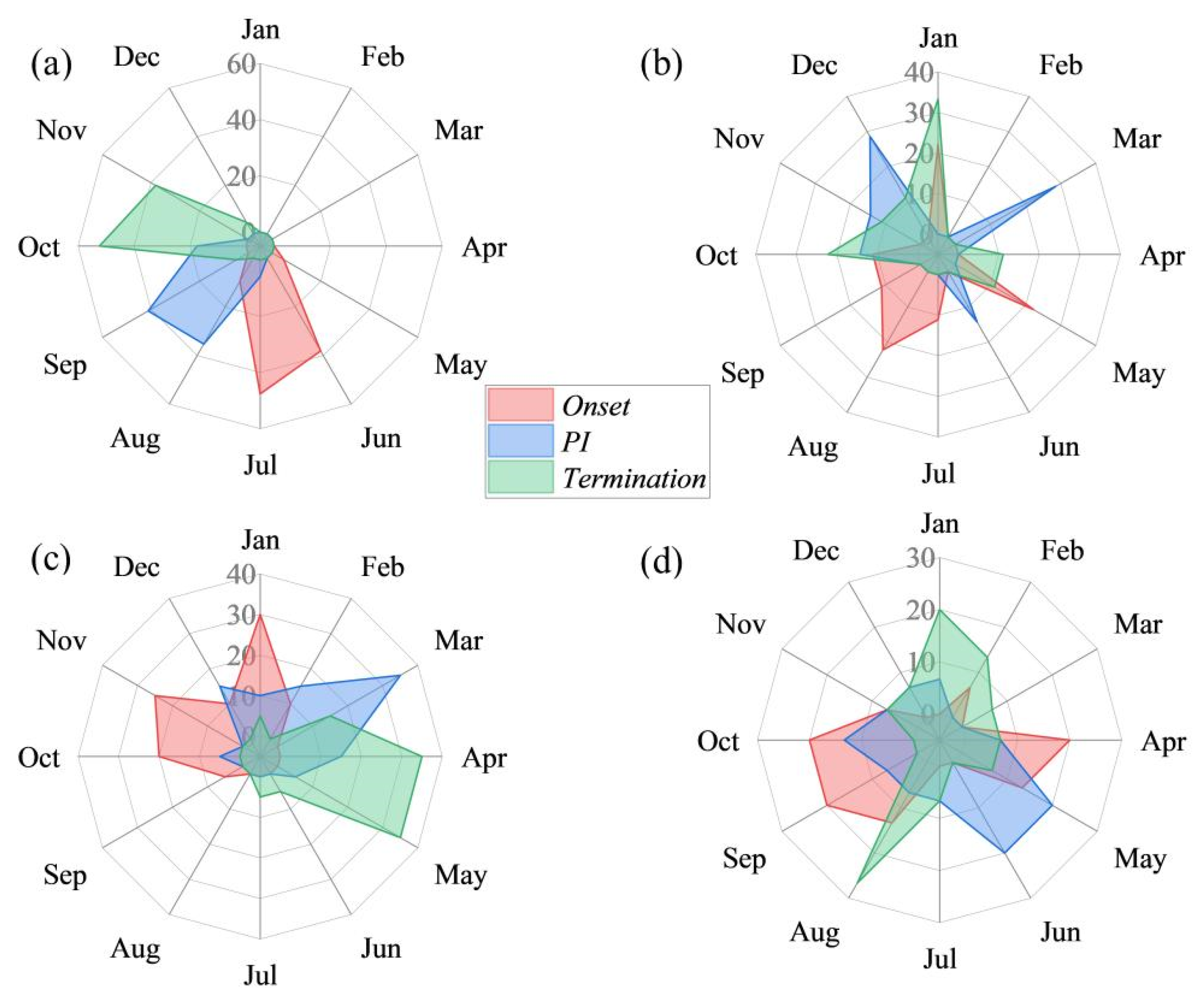
Based on long-term (>30 years) monthly streamflow data from two catchments with different hydrological features, i.e., snowmelt-driven in Harp Lake, south-central, Canada and rainfall-driven in Dongjiang river, south China, the differences in the hydrological drought (HD) propagation characteristics identified by fixed (FDT) and variable drought thresholds (VDT) were explored. The results showed that (i) despite both FDT and VDT methods being able to describe HD propagation patterns well (i.e., slow intensification but quick recovery), the onset time, peak intensity time, and termination time of HD within a year were significantly different between the two methods, due to the different drought conceptual backgrounds of the methods. (ii) The HD months identified by VDT were close to evenly distributed in each month of the year, while the HD months identified by FDT were mainly concentrated in the dry season. (iii) The onset, peak intensity, and termination time of HD identified by FDT were in good agreement with the dryness/wetness attributes of the two study basins and can be recommended in the study case. (iv) More methods for monitoring and predicting HD, and for revealing the driving mechanisms for HD propagation, are needed.
Keywords: hydrological drought; propagation; fixed drought threshold; variable drought threshold; intensification and recovery hydrological drought; propagation; fixed drought threshold; variable drought threshold; intensification and recovery