

Abstract
It is well known that large wood affects geomorphic processes and functions in rivers. It enhances the quality of the habitat but it can also cause a threat to the population. These processes and functions of the environment can be transformed into ecosystem (dis)services, which represent direct or indirect (dis)benefits that the society obtains from nature. The goal of this paper was to describe the current relations between large wood and ecosystem services and map the related knowledge gaps. Firstly, we conducted a systematic literature review that was elaborated according to the six-stage and PRISMA protocols and workflow diagram. We found 499 papers; however, only 137 were eligible for the following analyses. Secondly, we made a transformation of research information from the articles (n = 135) into ecosystem services. The highest number of ecosystem services detected in the articles belonged to the regulation and maintenance section (n = 126), followed by the provisioning (n = 15) and cultural (n = 11) sections. The detected classes with the highest frequency of studies were specific habitat creation and increased channel heterogeneity. The findings show that the number of research papers on this topic is still insufficient; however, anaylzing ecosystem services could be useful to advocate the presence of large wood in the rivers.
1. Introduction
Over the past several decades, there has been a gradual increase in the publication of research on large wood [1,2]. Large wood (LW) is defined as wood material that is located in rivers or riparian zones and has defined dimensions that usually depend on the channel width or other characteristics [3]. It has previously been observed that LW in rivers influences geomorphic and ecologic aspects of the river [1]. First, LW in rivers alters channel morphology—e.g., the configuration of riverbeds [4]—the stabilization of riverbanks [5], the storage of sediment [6] and organic matter [7]. It was shown that LW also affects water temperature [8]. In this way, LW provides a specific habitat for aquatic fauna, e.g., macroinvertebrates [9,10], and fish populations. The list of the interactions between LW and the environment would be quite long; however, it is not easy to collect all bibliographic information from scientific databases because of the different terminology used by individual scientists. One of the most commonly used terms is “large wood”; however, other terms are also used, such as “log jam”, “deadwood”, and “woody debris”. Therefore, the nonuniformity of the key term to indicate large wood can be problematic for collecting all information about and knowledge of this phenomenon.
Ecosystem services (ES) can be defined as the ecological characteristics, functions, or processes that directly or indirectly contribute to human well-being, that is, the benefits that people derive from functioning ecosystems [11]. Originally, ES can be divided into four main categories: provisioning services, regulating services, cultural services, and supporting services. In our study, the common international classification (CICES V 5.1) will be used. The CICES classification has a slightly different schema than the main classical categories and includes three main biotic and abiotic sections: provisioning of material and energy needs, regulation and maintenance of the environment for humans, and a cultural section, comprising those nonmaterial characteristics of ecosystems that affect the physical and mental state of people [12]. These sections are divided into divisions, groups, and classes. The advantage of this classification is the possibility of creating an originally tailored class of ecosystem services. This can be used especially when some specific components of the ecosystem, e.g., LW, are evaluated. In this sense, a previous work [13] reported that there have been a few discussions about ecosystem services and LW.
We decided to conduct a systematic literature research (SLR) focusing on LW and ES. In the past years, a literature review focused on large wood was already published [1]; however, the connection to ES was insufficiently captured. We performed a preliminary SLR to identify possible problems and obstacles in our designed research. In this phase of the research, we noted that there was a minimal number of papers focused on LW that presented ES directly. Thus, we aimed to prepare for the possibility that only a small number of papers would present ES directly. Therefore, we decided to create a transformation method of primary information based on the benefit transfer method of ES. This method is usually employed in ES research when there is not enough time to collect all relevant data or there is a lack of available information about the study site [14]. Similarly, we collected information about large wood and the consequences of its presence and transformed it into exact ecosystem services classified according to CICES. This solution dealt with possible problems connected to an insufficient number of papers focused on LW and ES and also provided a new way to obtain information about this research topic, especially, to gain knowledge about the ES of LW. We bear in mind that this process is connected to a bias of interpretation of the results and conclusions of the articles, but we assume that our proposed method could help other researchers who are also mapping knowledge gaps.
The aim of our systematic literature review was to map the knowledge gap between ecosystem services and large wood and carry out the following research tasks:
- To describe the current state of ecosystem services and large wood
- To identify the possible knowledge gap between ecosystem services and large wood
- To transform primary data from the literature to classified ecosystem services
2. Materials and Methods
2.1. Preparation for a Systematic Literature Research
We adapted the common method of SLR [15] of the six essential stages of work, namely, the Preferred Reporting Items for Systematic Reviews and Meta-Analysis (PRISMA) protocol with later adjustments, previously described [16] (Table 1).
Table 1.
The six stages of the systematic literature review (adapted from [15]).
For the search of relevant articles, we chose the literature database Scopus. The PRISMA protocol is divided into four main steps: identification, screening, eligibility, and inclusion. According to our research goal, we added a fifth step, which extracted data about ES from the evaluated papers and subsequently classified ES into 13 categories according to CICES (Table 2). Categories were based on the knowledge provided by three comprehensive reviews [1,13,17] and additional relevant articles summarizing complex information about LW [18,19,20,21].
Table 2.
The 13 categories of large wood according to the common international classification of ES (CICES).
The goal of the identification section of the PRISMA protocol is to identify all articles based on key terms and database searches (e.g., Scopus, Science Direct). The screening is focused on skim reading and decision making based on specified criteria (e.g., defined year or country of research). In this phase, duplicates are also excluded. The eligibility section of the research is a challenging and time-consuming process because all articles are read. Based on accurately defined criteria, some of the articles were removed from the research. After this phase, the rest of the papers were prepared for data extraction from the database and qualitative or quantitative analyses.
2.2. Key Terms of the Search
We created a search list of 28 key terms. The aim was to detect articles focused on the connection between LW and ES. Search key terms were composed of two keywords. The first keyword corresponded to LW and its synonyms (log jam, woody debris, large woody debris). We found it very problematic to choose the right keywords because various terms are used when referring to woody material in rivers. The keyword “large wood” can be substituted by “log jam”, “woody debris”, and “large woody debris”. The second keyword represented ES and words connected to this term (ecosystem services, regulation service *, cultural service *, provisioning service *, ecosystem, gaps, approach, hazard, and perception). In the case of “regulation service *”, “cultural service *”, and “provisioning service *”, we added an asterisk, which allowed us to swap “service” for “services” in the search engine of the database.
2.3. Search of the Literature
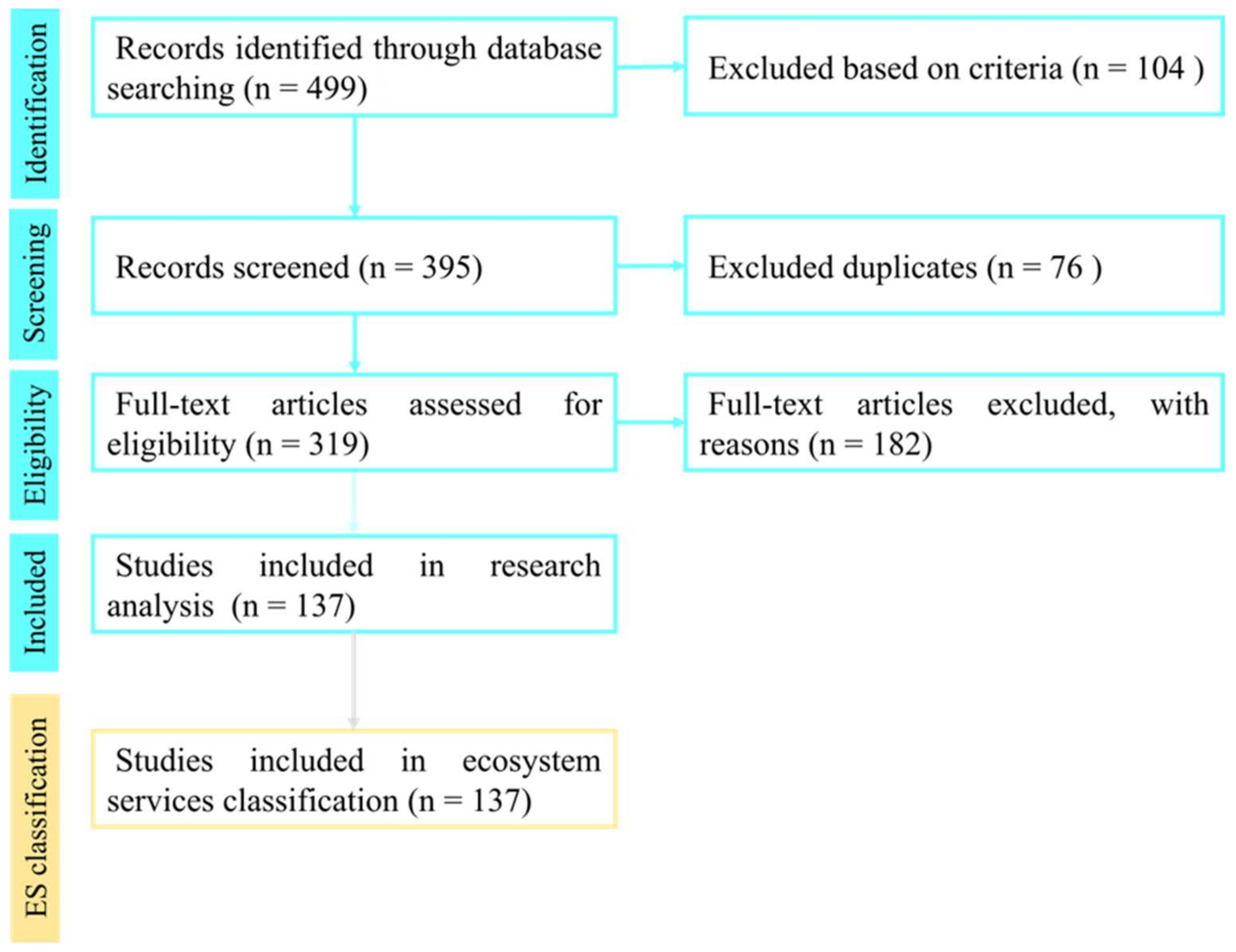
We chose the Scopus database because it is an international and well-established broad source of abstracts and citations. Data were collected twice, in December 2020 and May 2021. The whole process of data collection is described in Figure 1. We used title, abstract, and keywords (TITLE-ABS-KEY) as the default search field. To achieve the best outcomes of the search, we used criteria to exclude inappropriate articles. Articles that described LW and its impact in a specific area of interest were considered eligible.
Figure 1.
PRISMA flow chart for the SLR search of papers (adapted, original retrieved from [22]).
The criteria were that the literature should not be published prior to 1990 to allow us to access all full papers. In this step, we excluded “gray literature” (conference papers, reviews, book chapters) and languages other than English. In total, we recorded 499 articles in the Scopus database and we used Scopus tools to convert data from the online database to download them in *.CSV format and create an Excel database. We collected the name of the authors, title of the study, year of publication, journal title, source, and language. Based on our criteria, we eliminated gray literature (n = 96), articles in languages other than English (n = 6), and literature published before 1990 (n = 2). For a more detailed screening, 395 articles were prepared. From these, we eliminated 76 duplicate records. In total, 319 articles were prepared for abstract reading. After abstract reading, 181 articles were excluded because their main focus was different (e.g., dead wood in forests instead of fluvial environment) or the key term used was vague or used insufficiently.
In some cases [1,2,13], it was a review that was not originally detected by the Scopus database. In the case of debatable articles, we performed a cross-check reading. Finally, 138 studies were retained for detailed reading, analysis of the data, and classification of ecosystem services.
2.4. Process of Elaboration of the Data
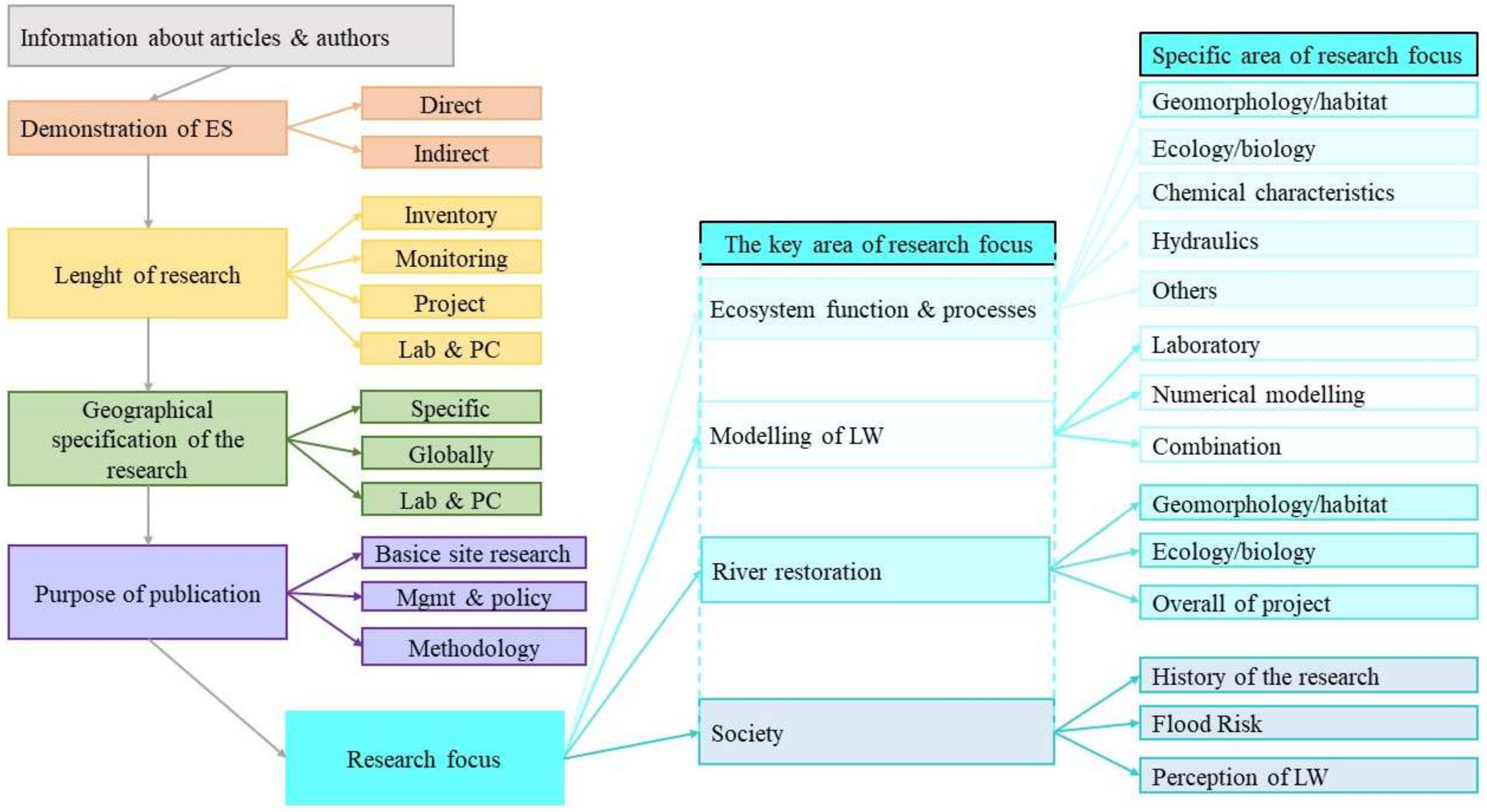
Based on the Excel database, we made a systematic literature research database containing information about the articles (year of publication, name of journal) and authors (identity of the research team). After that, we collected data from each of the 138 articles to capture all important data (Figure 2). We extracted information on whether ES data of LW were presented directly; the duration of the research (inventory <1 year, monitoring 1–3 years, project >3 years, and laboratory and numerical modeling); geographical specifications of the research area (geographical location with continent and country of the research, including only research with applied location and excluding laboratory and modeling research without a particular studied locality); the purpose of the publication (basic site research, management and policy, methodology); the main area of the research focus (ecosystem function and processes, modeling of LW, river restoration, society); the specific area of the research focus. Basic site research was characterized papers focused on field survey with the goal of mapping LW and its characteristics. Management and policy papers focused on recommendations on the inclusion of LW for river management, and methodology papers described new methodological approaches mainly regarding field surveys. These data were prepared for further ecosystem services classification.
Figure 2.
Flow diagram of the process of data extraction from the papers.
2.5. Ecosystem Services Classification
Based on the findings of our preliminary research that very few articles presented ES of LW directly, we decided to create our own ES classification from eligible articles by a transfer of information. The transfer of information from the systematic literature research database into ecosystem services categories was a challenging process. The first step in this process was to prepare categories of ES for the following classification. Based on our knowledge and the evaluated articles, we established 13 categories (Table 2). To allow a broader public (e.g., ecosystem services economists) to work with the database, we arranged each category according to the CICES database.
We extended the original CICES categories by adding two additional categories: influence on channel sediment flux and organic matter input. The regulation and maintenance section of the classification includes nine ES (increased channel heterogeneity, specific habitat creation, channel sediment flux, erosion control, invertebrates, flood regulation, organic matter input, water quality, and carbon sequestration); the provisioning section consists of one ES (fish provisioning); the cultural section contains two ES (recreation and aesthetics). In the second step, we examined each article that was accepted in the previous evaluation (n = 138), especially focusing on the results and conclusions of the paper. We classified each paper into the appropriate ES category (Table 2). Each paper could be assigned to more than one category. We are aware that this process involved a simplification, which will be discussed.
3. Results
3.1. Results of the Search of Eligible Articles
Based on the exclusion criteria, only 137 of 499 articles were eligible for SLR (Table 3), which corresponds to 27% of the recorded literature. The main reason for excluding the articles was its inappropriate source (n = 96; book chapter, review, or conference paper). Only six articles were excluded because they were written in a language other than English or because they were published before 1990. As seen in Table 3, key terms connected to “provisioning service *”, “regulation service *”, and “cultural service *” resulted in 0 articles. The second-lowest number of articles was obtained using the key terms “log jam” and “ecosystem services” (n = 1) and “woody debris” and “cultural service *” (n = 1). Key terms connected closely to ecosystem services provided a lower number of recorded articles than more general key terms (e.g., ecosystem or hazard). The highest number of recorded articles was retrieved with the key terms “large wood” and “ecosystem” (n = 170), followed by “large wood” and “approach” (n = 115).
Table 3.
The search terms and number of articles for each search (&—and, T—total found, G—grey literature, A—articles, O—other language than English, Y—year of publishing <1990).
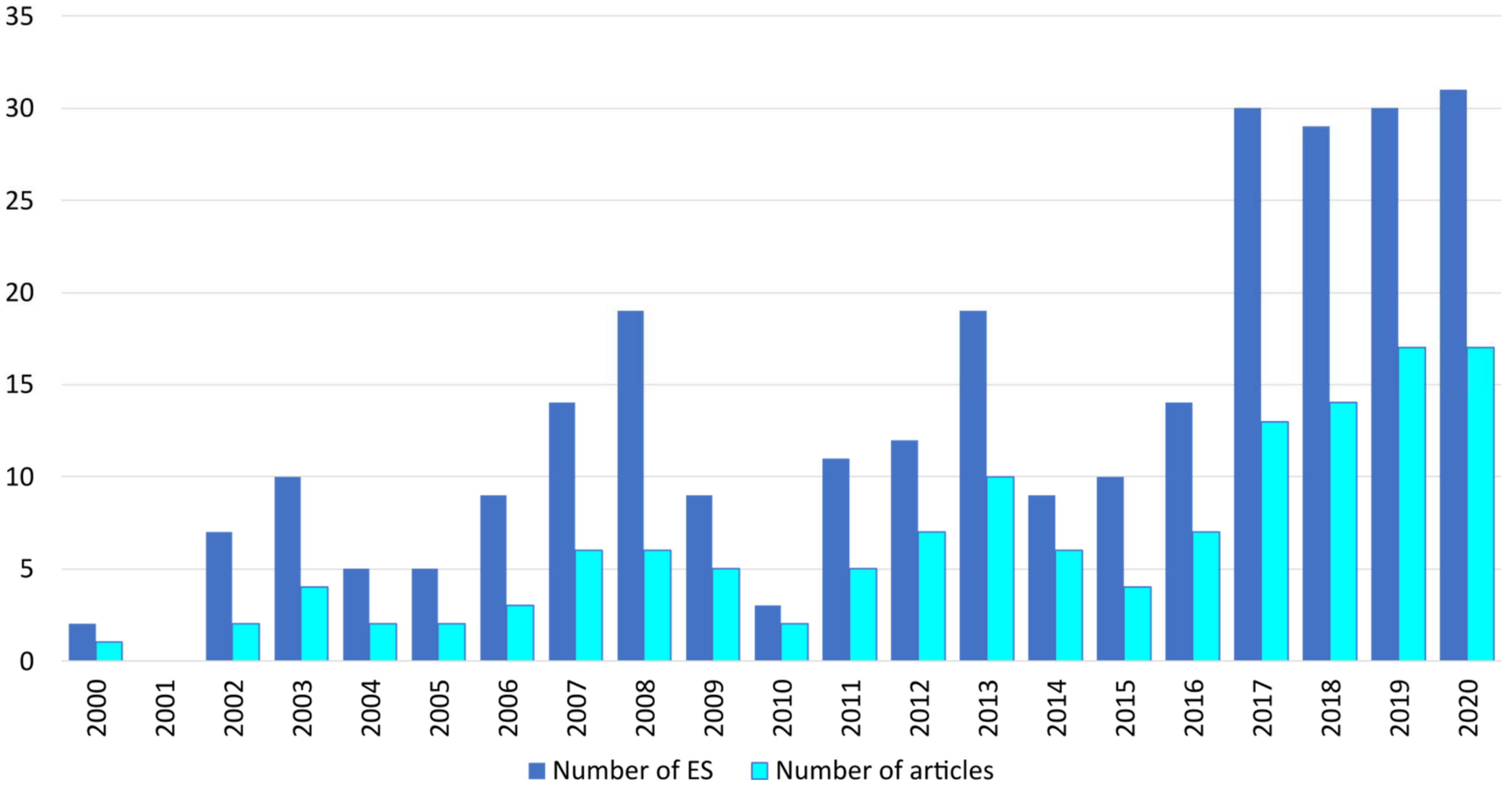
The number of annually published articles has been gradually increasing since 2000 (Figure 3). The highest number of papers (n =17) was published in 2019 and 2020, whereas in 2001, the lowest number was published (n = 0). The number of ES is directly correlated with the number of articles since 2017, when a high number of ES appeared. We suggest that this can indicate a more holistic approach to research. Between 1990 and 2000, only one article was published (1993). The authors of SLR articles were predominantly affiliated with one country (n= 85) rather than to international teams (n = 52). The country with the highest number of affiliated articles (including cooperation with other countries) was the USA (n = 62), followed by the UK (n = 20), Switzerland (n = 20), and Spain (n = 16).
Figure 3.
Time distribution of the published articles and detected ES per year (between 2000 and 2020).
3.2. General Results and Geographical Aspects of the Systematic Literature Research
Of 137 articles, only 2 articles directly presented ES of LW. The remaining 135 articles included raw data ready for transformation into ES. The results showed that 104 articles were field inventories, and 33 were laboratory works (including physical and numerical modeling). Articles based on field inventories and experiments were classified based on the duration of the research, namely, <1 year, (n = 52), 1–3 years of monitoring (n = 32), and projects with a duration of research >3 years (n = 20). The articles from Asia were only from three countries (India, China, and Japan). Table 4 shows that in Asia, Africa, and South America, a minimal number of investigations were conducted, in contrast to North America and Europe. The country with the highest number of research studies was the USA (n = 49), followed by the UK (n = 11). We found that 69% of the recorded articles were focused on basic site research (n = 94). Only 25% (n = 33) of them were focused on methodological development, and 7% (n = 10) were focused on management and policy.
Table 4.
Geographical distribution of research sites globally.
3.3. Results of the Key Area and Specific Area of Research
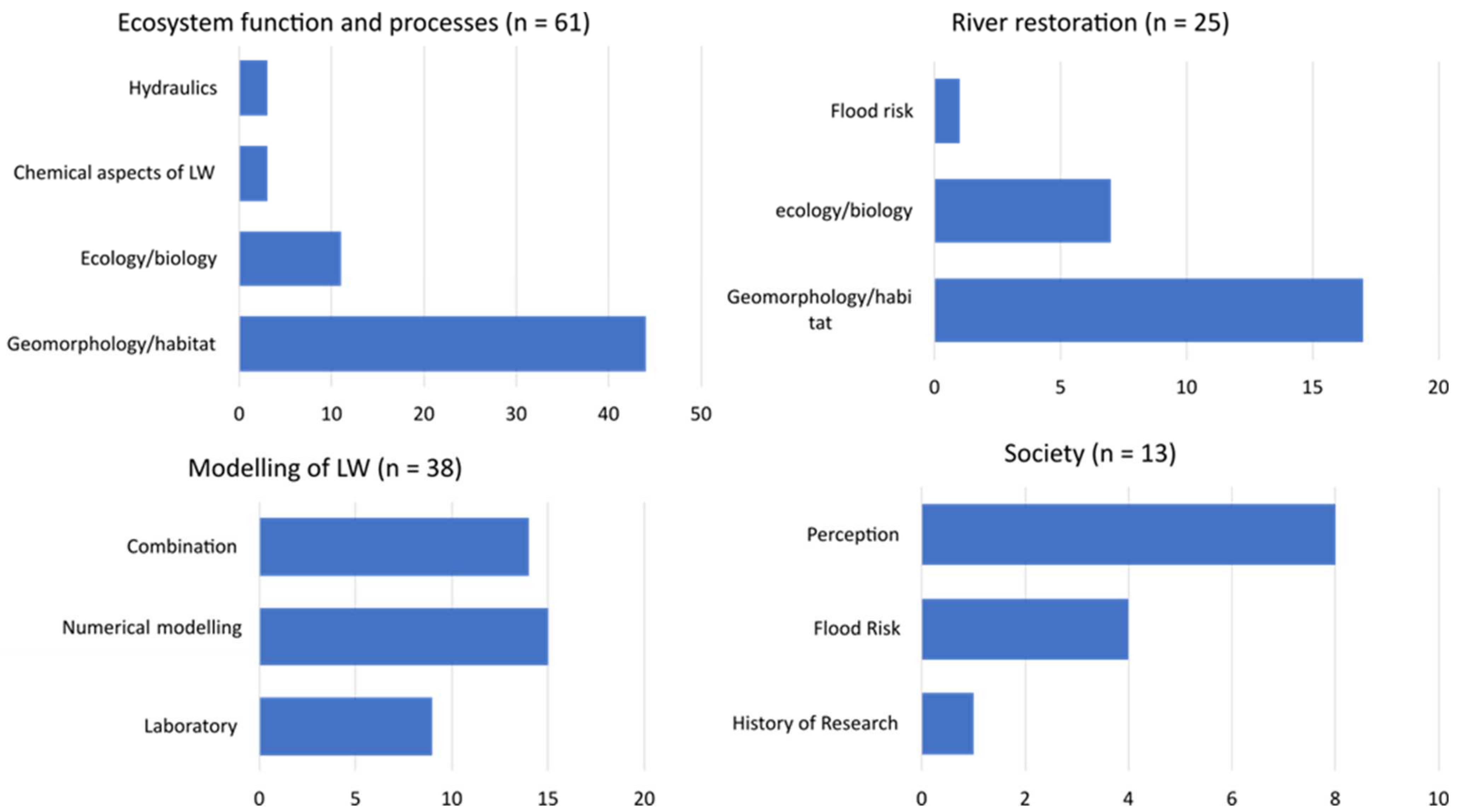
First, we classified each article depending on its key area of research. The highest number of articles were classified as ecosystem function and processes (n = 61), followed by modeling of LW (n = 38), river restoration (n = 25) and society (n = 13). The dominant purpose of ecosystem function and processes articles was basic site research (n = 53), which shows that ecosystem function and processes is not well connected to management and policy or to methodological development. For modeling of LW, the highest number of studies were on methodological development (n = 26). This corresponds to the fact that modeling LW is a new area of research where methodological development is crucial for the progress of the discipline. The main purpose of river restoration articles was basic site research (n = 24). This is because many of the river restoration articles focused on the particular effect of LW by comparing the river state before and after LW installation. The key areas of research society were basic site research (n = 6) and management and policy (n = 6), reflecting the process of integrating the knowledge of LW into the management and policy of river stakeholders, e.g., cities, urban planners, and others.
Figure 4 presents an overview of the specific research areas. Most of the papers classified into ecosystem function and processes were on geomorphology/habitat (n = 44). We found it interesting that only a small number of articles were focused on the chemical aspects of LW (n = 3). We consider this topic important because it regards water quality and carbon sequestration. Numerical modeling (n = 15) was more used than laboratory modeling. A considerable number of articles (n = 14) combined numerical modeling with another type of research, e.g., laboratory experiments that were later tested in the field. The highest number of articles categorized as river restoration focused on geomorphology/habitat (n = 17), and only few articles considered the flood risk of river restoration (n = 1). As shown in Figure 4, the society papers included the flood risk (n = 4), perception of LW (n = 8), and history of LW research (1) categories.
Figure 4.
Categories of key areas of research and article distribution.
3.4. Transformation of Information into ES Classification
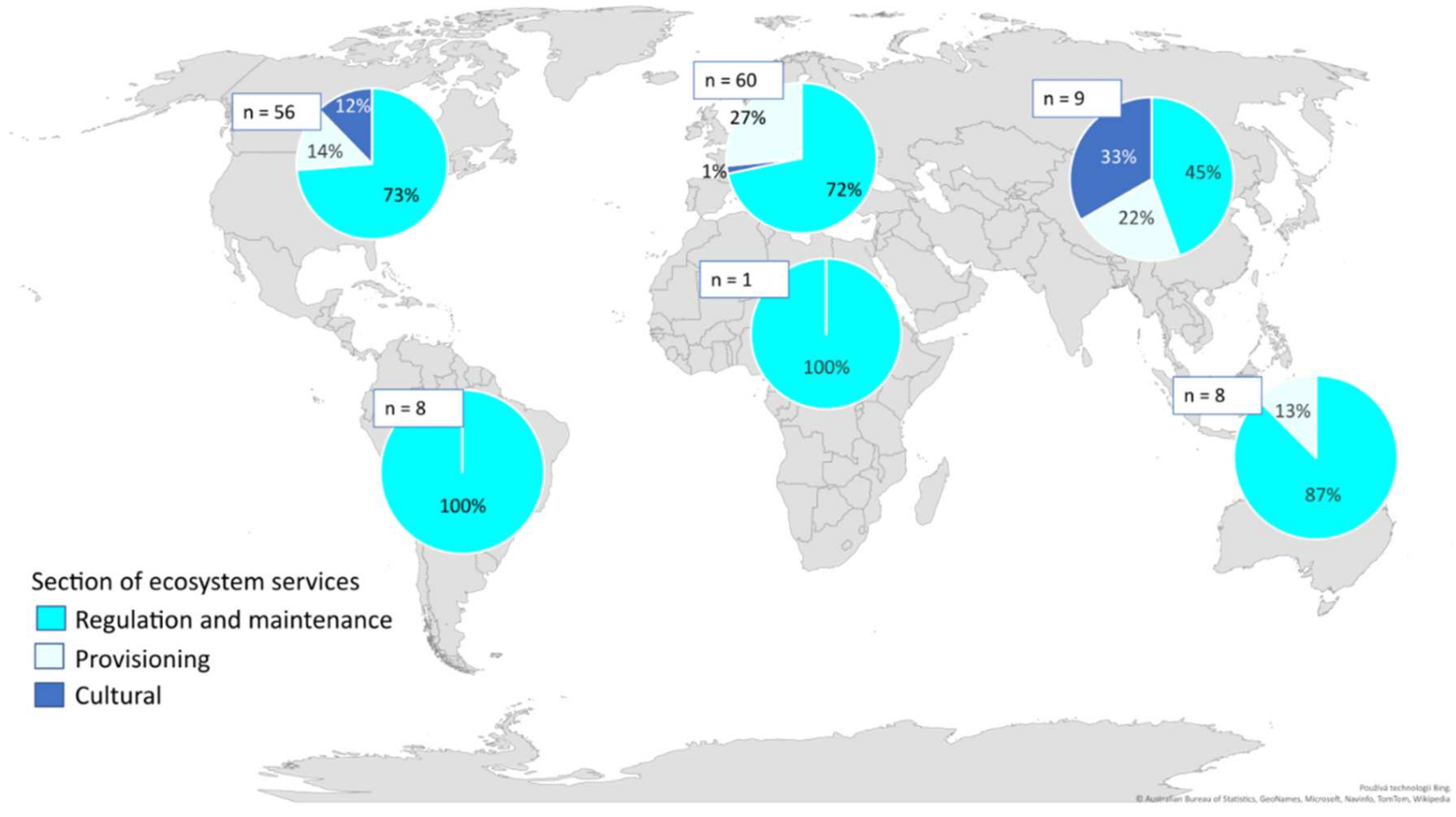
We summarize the results obtained from the transformation of information from the articles into ES. First, we calculated the number of articles relevant to each category. If data from one article were appropriate for two categories, we classified the article into both. The highest number of articles was classified in the regulation and maintenance section (n = 125), followed by the provisioning section (n = 16), and the cultural section (n = 11). The geographical distribution of the detected ES section was disproportional (Figure 5). Figure 5 shows the geographical distribution of ES sections on each continent.
Figure 5.
Geographical distribution of sections of ES based on SLR.
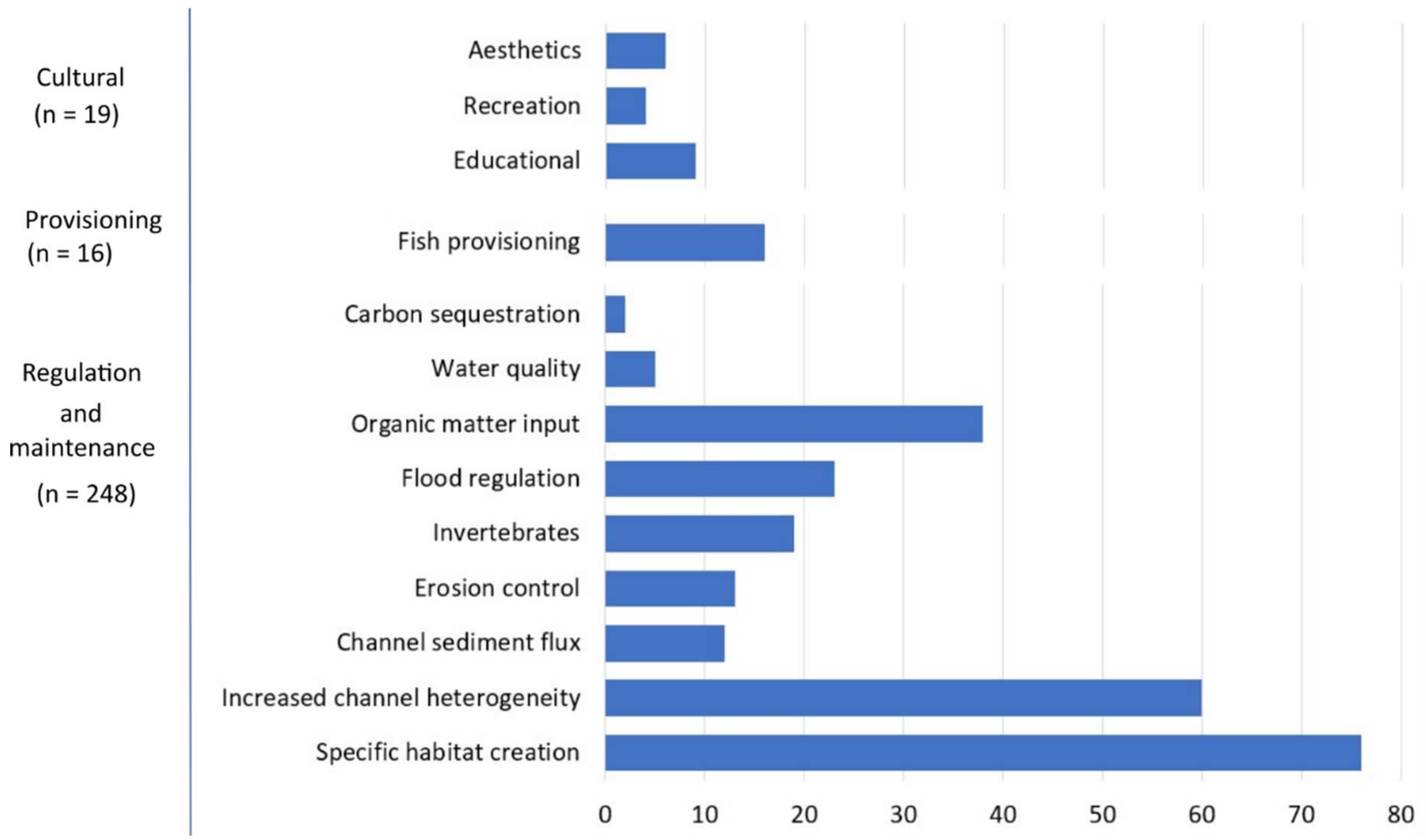
Focusing on individual ES classes from each section (Figure 6), the highest number of articles was classified in the specific habitat creation (n = 76) and increased channel heterogeneity (n = 60) classes from the regulation and maintenance section. The lowest number of articles was in the carbon sequestration class (n = 2). The provisioning section was represented only by fish provisioning (n = 16) and included articles that focused on the different effects of LW on the fish population. The cultural section included aesthetics, recreation, and education. We found that aesthetics and education were associated and appeared together six times. The lowest number of articles involved recreation (n = 3), which reflects the limited interaction between LW and society.
Figure 6.
Distribution of ES in different sections (n corresponds to the sum of the detected ES classes in the examined articles).
4. Discussion
4.1. Systematic Literature Review Process
Our SLR aimed to assess the current knowledge of ES related to LW. Additionally, we mapped existing knowledge gaps in this research. SLR indicated that LW and ES are not sufficiently associated. The results showed that there was a minimum of articles that directly focused on the ES of LW (n = 2). The rest of the eligible articles contained data from which raw information could be transformed into ES. The process of transformation and classification of the recorded articles can be very challenging, although we noticed it is effective in describing the ES associated with LW. We identified a few gaps and limitations in the relationship between ES and LW. The first limitation is represented by the search process itself and the key terms used. The second limitation regards the process of transformation and its possible simplification. Finally, we found an unequal geographical distribution of ES.
At the beginning of the process, we defined keywords and key terms. However, we noticed a terminology problem. First, key terms are in the title, abstract, or keywords; “large wood” [23] or “woody debris” [24] are used in different articles. The key term “large wood” was found in the title of articles in the SLR database 63 times. Some articles, first published in 2000, used different keywords, e.g., in-stream wood and in-channel wood [25]. We noticed that some key terms had no recorded articles, especially when they were connected to ecosystem services and their sections. This suggests a lack of research on these two topics. The only record found was “woody debris” AND “cultural service *”, but unfortunately, the article [26] regarded the forest ecosystem and its ES; thus, it was not included in the eligible literature. The highest number of recorded publications in the literature was obtained using the terms “large wood” and “ecosystem” (n = 170) and “large wood” and “approach” (n = 115). However, from the “large wood” and “ecosystem” search, only 33% of the articles were considered eligible for SLR. For the terms “large wood” and “approach”, only 29% of the articles were eligible. In both cases, more than half of the recorded articles were considered ineligible.
SLR can have other limitations and biases. In our SLR, we minimized these problems by using proper protocols and methodology. The first limitation concerns the whole process of SLR. The process of SLR can be disorganized because it is not easy to deal with a high number of articles. Because of this issue, we used a protocol that provided transferable, transparent, and time-efficient work [16,22]. In addition, we created a six-step protocol and conducted preliminary research [15]. Preliminary research is always crucial for a successful research [27]. In our case, it highlighted the limits of our SLR, especially the small number of articles that directly presented the ES of LW. Therefore, we could prepare for this limit. The second limitation (bias) was the choice of the eligible literature and its extraction to the SLR database. We minimized the possibility of subjective judgment by creating criteria for eligible literature. Selected articles were read twice, and we cross-checked the disputed papers. The last possible limitation of our results was linked to transferring the ES from each article. In this process, we used cross-checked reading and classification to one of the 13 prepared categories. This process was performed by two different investigators. A relatively large number of categories were used to prevent the possibility of oversimplification of the ecosystem processes and functions.
4.2. The Current State of the Relationship between ES and LW
Based on our SLR database, we discovered that the number of published articles each year slightly increased, although between 1993 and 2000, only one article was found. Our findings of the annual number of articles correspond to the results of a previous study [2], reporting a graph of the annual number of articles using the keywords “wood” and “river”, and to the other published findings [1]. In both cases, there was a slight increase in the number of published articles each year during the past two decades, which shows that the scientific community has been gradually attributing more importance to LW. Regarding the demonstration of ecosystem services, most of the papers presented it indirectly. Based on [13], this outcome could be expected, as it was noted that ecosystem services are not sufficiently associated with LW. However, we did not expect that the ratio would be 135:2 (indirect/direct). In addition, as [11] noted, the greatest number of papers on ecosystem services (in all environments) were published after 2012, which was linked to the establishment of the journal Ecosystem Services. We think that the current stage of the research on ES and LW is at the beginning, and that more effort can be expected to fill this knowledge gap.
Most of the studies were conducted by a team from one country (n = 85), and international collaborative teams were less common (n = 52). We encourage more international research that would bring together different perspectives on the same topic. The calculation of all affiliated countries highlighted that the USA (n = 62) had the highest number of team affiliations, followed by the UK (n = 20) and Switzerland (n = 20). The greatest number of papers published in the USA corresponds to the long tradition of using LW in restoration projects and pioneering works in the Pacific Northwest focusing on relations between LW, geomorphic processes, and the function of ecosystems. The geographical distribution of the research sites was very disproportional. Ref. [1] and [28] noted that the majority of the research is conducted in North America and Europe. In our SLR, we discovered that the highest number of site studies was carried out in Europe (n = 68) and North America (n = 55). At the country level, the USA was, unsurprisingly, dominant (n = 49), followed by the UK (n = 11), Italy (n = 10), and Spain (n = 10). We found that there were a few papers that focused on Asia (n = 9) or Africa (n = 1). Ref. [1] observed that only a few exemplars are located on these continents. Ref. [13] recommended more regional and location-specific field studies. Therefore, we call for more research in global regions with insufficient data because it is important to fill knowledge gaps on various processes connected with LW based on different hydrological regimes, characteristics of riparian vegetation, and social perceptions.
We discovered that the greatest number of articles were related to ecosystem functions and processes, with a specific focus on geomorphology and habitat. This is in agreement with a review [28] that found that the highest number of articles were focused on regulating services. We also found that basic site research dominated. It was pointed out that there is a great urgency for more studies focused on the management and policy of LW [1,2,13]. This also aligns with [14] that noted that there is a need for research connecting primary data and policymakers. In our SLR, we detected that only in the society research area did 46% of articles put their attention on management and policy. In terms of ecosystem function and processes, only 10% of all papers focused on management and policy. Management and policy are very important topics because they reflect society’s conditions and perceptions, e.g., flood risk connected to LW [29].
4.3. Process of Classification of ES Provided by LW
The process of transformation and classification required an accurate methodology and understanding of the function of LW in fluvial geosystems. This process was inspired by the benefit transfer method, which is used in ES research. This method is quite popular in the process of working with ES and allows filling research gaps by using primary data from one location and applying them to another [14,30]. Moreover, it is a time- and cost-effective method [30]. In our SLR, we transferred the primary data of ecosystem processes and functions described in the articles into CICES classifications (sections and classes). The benefit transfer method requires following rules to exclude possible biases [30]. Notably, only two articles showed ecosystem services directly. The first article was about the carbon sequestration ES of large wood and riparian vegetation in Australia [31]. However, we considered that only another article [32] adopted a holistic approach, which included a description of the state, monitoring, and valuation of ES. The raw data from the rest of the articles (n = 135) were transformed and classified as ES.
The detected geographical research gap of SLR (Africa and Asia could be considered a little-known area) was also found for the areas of ES; however, there were geographic differences. In North America, Europe, and Asia, all three sections of ES were included. In Africa and South America, only the regulation and maintenance section was considered. In Oceania and Australia, the regulation and maintenance and provisioning sections were detected. It is important to extend the research on other ES sections in these continents. Focusing on a section of ES, most of the articles were classified within the maintenance and regulation section. This result was expected if we consider the fact that the highest research focus (of SLR) was ecosystem function and processes. This corresponds to [2] that stated that most of the research focused on field inventories to map the functions and processes of LW. In the context of ES, [33] noted that regulation and maintenance ES are not so well perceived by individuals. Therefore, on the one hand, it is very positive that research on LW disposes of this knowledge, which can be easily assessed (e.g., benefit transfer method). On the other hand, it is necessary to transform this knowledge for the relevant audience, policymakers, and stakeholders. If we connect it with the geographical distribution of research, we could say that we have a solid basis for the benefit transfer method applied in Europe and North America. This could be used especially in river management and policy. Focusing on the number of classes in the ES sections, the highest number of papers was found for habitat creation (n = 76) and channel heterogeneity (n = 60). The lowest numbers were observed for carbon sequestration (n = 2) and recreation (n = 4). This implies that classes with lower numbers of studies should be investigated more deeply to better present the benefits of LW for the society. It is important to understand the interpretation of the data because ES are often misinterpreted [33]. From the beginning of our investigation, the goal was to identify the connections and gaps and, thus, to find the strengths and weaknesses in the relationship between ES and LW. A strong aspect of this study is the availability of sufficient primary (raw) data, which could be used in the process of ES transformation and evaluation. A weakness that can be highlighted is an insufficient connection of the framework of ES and LW as an important component of fluvial systems: this was also reflected by the low number of articles recovered that focused on LW management.
In our SLR, we created an overview of ES from eligible literature. We described the frequency and geographic distribution of the research and detected ES. The remaining question is how to continue in this process. We assume that at this moment, it is important to create a methodology that could directly evaluate the ES of LW. This could help to develop important knowledge about the presence/absence of LW and its ES depending on the volume of LW and the geographical location of the research, as well as on other important characteristics. Another possible solution to fill the research gap is to establish a multidisciplinary team of researchers. Unfortunately, in many cases, research teams consist of specialists in one or two disciplines with insufficient overlap to other disciplines, e.g., ecosystem services or urban planning. The cooperation of specialists from different study fields could result in much more complex research with understandable goals and the same terminology. A good example are papers in which the demonstration of ES was direct, e.g., [32]. In this paper, the authors created complex research with a synthesis of the results. The presence of LW is an issue not just for fluvial geomorphologists, biologists, ecologists, or risk experts but also for urban planners, ecosystem services practitioners, and sociologists. One of the possible reasons why these experts do not work together is that their perceptions of the LW are different. Previous research [34] highlighted differences in the perception of LW by the university students. It clearly showed cultural and education bias due to different students’ background. We believe that one of the ways to break this bias is via further expanding internet communication channels. Social media, data sharing, or online webinars allow changing perception and sharing best practices between practitioners. They can connect experts from different fields with the same interest and, moreover, represent a way to make a holistic approach to the very complex phenomenon of LW (and ES).
5. Conclusions
The purpose of this study was to determine the current state of large wood research and its application in the framework of ecosystem services at the global level. We found that there were not enough articles about the ES of LW, and only two articles were considered direct presentations. The rest of the findings of the articles were successfully transformed and classified according to the CICES database.
The most frequently detected ES belonged to the regulation and maintenance sections, followed by the provisioning and cultural sections. The main purpose of the articles was basic site research; neither methodology nor management and policy of LW were discussed frequently. The geographical distribution of LW research was nonuniform, and North America and Europe were predominant. Most of the articles were affiliated with researchers from one country; therefore, more international collaboration is needed to increase the transfer of knowledge and management practices. Our findings could be used as a basis for future research, e.g., benefit transfer method or implementation into some methodology for policymakers. They clearly show the importance of more holistic articles integrating processes with society (e.g., the general public, policymakers, and stakeholders) and translating research to practice.
Author Contributions
Conceptualization; Z.P. and T.G.; Methodology; Z.P., Validation; Z.P., Investigation; Z.P. and T.G., Formal analysis; Z.P. and T.G., Writing—Original Draft; Z.P., Review & Editing; Z.P. and T.G. All authors have read and agreed to the published version of the manuscript.
Funding
This work was supported by grant of Ostravská Univerzita—SGS 10/PŘF/21.
Institutional Review Board Statement
Not applicable.
Informed Consent Statement
Not applicable.
Data Availability Statement
Data sets used and/or analyzed during the current study are avail-able from the corresponding author on reasonable request.
Acknowledgments
Authors would like to thank three anonymous reviewers for their work and valuable comments which significantly helped to improve the initial version of the manuscript.
Conflicts of Interest
The authors declare no conflict of interest.
References
- Wohl, E. Bridging the gaps. An overview of wood across time and space in diverse rivers. Geomorphology 2017, 279, 3–26. [Google Scholar] [CrossRef]
- Swanson, F.J.; Gregory, S.V.; Iroumé, A.; Ruiz-Villanueva, V.; Wohl, E. Reflections on the history of research on large wood in rivers. Earth Surf. Process. Landf. 2021, 46, 55–66. [Google Scholar] [CrossRef]
- Wohl, E.; Cenderelli, D.A.; Dwire, K.A.; Ryan-Burkett, S.E.; Young, M.K.; Fausch, K.D. Large in-stream wood studies: A call for common metrics. Earth Surf. Process. Landf. 2010, 35, 618–625. [Google Scholar] [CrossRef]
- Brooks, A.P.; Gehrke, P.C.; Jansen, J.D.; Abbe, T.B. Experimental reintroduction of woody debris on the Williams River, NSW: Geomorphic and ecological responses. River Res. Appl. 2004, 20, 513–536. [Google Scholar] [CrossRef] [Green Version]
- Cordova, J.M.; Rosi-Marshall, E.J.; Yamamuro, A.M.; Lamberti, G.A. Quantity, controls and functions of large woody debris in Midwestern USA streams. River Res. Appl. 2007, 23, 21–33. [Google Scholar] [CrossRef]
- Galia, T. Controls on log step occurrence in steep headwater streams draining Carpathian managed forests. Ecol. Eng. 2018, 120, 384–396. [Google Scholar] [CrossRef]
- Elosegi, A.; Flores, L.; Díez, J. The importance of local processes on river habitat characteristics: A Basque stream case study. Limnetica 2011, 30, 183–196. Available online: https://www.limnetica.com/documentos/limnetica/limnetica-30-2-p-183.pdf. (accessed on 24 May 2021).
- Nichols, R.A.; Ketcheson, G.L. A Two-Decade Watershed Approach to Stream Restoration Log Jam Design and Stream Recovery Monitoring: Finney Creek, Washington. JAWRA 2013, 49, 1367–1384. [Google Scholar] [CrossRef]
- Entrekin, S.A.; Tank, J.L.; Rosi-Marshall, E.J.; Hoellein, T.J.; Lamberti, G.A. Response of secondary production by macroinvertebrates to large wood addition in three Michigan streams. Freshw. Biol. 2009, 54, 1741–1758. [Google Scholar] [CrossRef]
- Johnson, L.B.; Breneman, D.H.; Richards, C. Macroinvertebrate community structure and function associated with large wood in low gradient streams. Riv. Res. Appl. 2003, 19, 199–218. [Google Scholar] [CrossRef]
- Costanza, R.; d’Arge, R.; de Groot, R.; Farber, S.; Grasso, M.; Hannon, B.; Limburg, K.; Naeem, S.; O’Neill, R.V.; Paruelo, J.; et al. The value of the world’s ecosystem services and natural capital. Nature 1997, 387, 253–260. [Google Scholar] [CrossRef]
- Haines-Young, R.; Potschin, M.B. Common International Classification of Ecosystem Services (CICES) V5.1 and Guidance on the Application of the Revised Structure; Fabis Consulting Ltd.: Nottingham, UK, 2018. [Google Scholar]
- Grabowski, R.C.; Gurnell, A.M.; Burgess-Gamble, L.; England, J.; Holland, D.; Klaar, M.J.; Morrissey, I.; Uttley, C.; Wharton, G. The current state of the use of large wood in river restoration and management. Water Environ. J. 2019, 33, 366–377. [Google Scholar] [CrossRef]
- Wong, C.P.; Jiang, B.; Kinzig, A.P.; Lee, K.N.; Ouyang, Z.; Knops, J. Linking ecosystem characteristics to final ecosystem services for public policy. Ecol. Lett. 2015, 18, 108–118. [Google Scholar] [CrossRef] [PubMed] [Green Version]
- Jesson, J.; Matheson, L.; Lacey, F. Doing Your Literature Review: Traditional and Systematic Techniques, 1st ed.; Sage Publications: London, UK, 2011; p. 192. ISBN 978-1848601543. [Google Scholar]
- Mengist, W.; Soromessa, T.; Legese, G. Ecosystem services research in mountainous regions: A systematic literature review on current knowledge and research gaps. Sci. Total Environ. 2020, 702, 1–7. [Google Scholar] [CrossRef]
- Ruiz-Villanueva, V.; Piégay, H.; Gurnell, A.M.; Marston, R.A.; Stoffel, M. Recent advances quantifying the large wood dynamics in river basins: New methods and remaining challenges. Rev. Geophys. 2016, 54, 611–652. [Google Scholar] [CrossRef] [Green Version]
- England, J.; Dobbek, L.; Finn Leeming, B.; Gurnell, A.M.; Wharton, G. Restoration of a chalk stream using wood: Assessment of habitat improvements using the Modular River Survey. Water Environ. J. 2019, 33, 378–389. [Google Scholar] [CrossRef]
- Elosegi, A.; Elorriaga, C.; Flores, L.; Martí, E.; Díez, J. Restoration of wood loading has mixed effects on water, nutrient, and leaf retention in Basque mountain streams. Fresh. Sci. 2016, 35, 41–54. [Google Scholar] [CrossRef]
- Tullos, D.; Walter, C. Fish use of turbulence around wood in winter: Physical experiments on hydraulic variability and habitat selection by juvenile coho salmon, Oncorhynchus kisutch. Environ. Biol. Fish. 2014, 98, 115–154. [Google Scholar] [CrossRef]
- Piégay, H.; Gregory, K.J.; Bondarev, V.; Chin, A.; Dahlstrom, N.; Elosegi, A.; Gregory, S.V.; Joshi, V.; Mutz, M.; Rinaldi, M.; et al. Public Perception as a Barrier to Introducing Wood in Rivers for Restoration Purposes. Environ. Manag. 2005, 36, 665–674. [Google Scholar] [CrossRef]
- Page, M.J.; McKenzie, J.E.; Bossuyt, P.M.; Boutron, I.; Hoffmann, T.C.; Mulrow, C.D.; Shamseer, L.; Tetzlaff, J.M.; Akl, E.A.; Brennan, S.E.; et al. The PRISMA 2020 statement: An updated guideline for reporting systematic reviews. Syst. Rev. 2021, 10, 1–9. [Google Scholar] [CrossRef]
- Keys, T.A.; Govenor, H.; Jones, C.N.; Hession, W.C.; Hester, E.T.; Scott, D.T. Effects of large wood on floodplain connectivity in a headwater Mid-Atlantic stream. Ecol. Eng. 2018, 118, 134–142. [Google Scholar] [CrossRef] [Green Version]
- Deane, A.; Norrey, J.; Coulthard, E.; McKendry, D.C.; Dean, A.P. Riverine large woody debris introduced for natural flood management leads to rapid improvement in aquatic macroinvertebrate diversity. Ecol. Eng. 2021, 163, 1–10. [Google Scholar] [CrossRef]
- Chin, A.; Daniels, M.D.; Urban, M.A.; Piégay, H.; Gregory, K.J.; Bigler, W.; Butt, A.Z.; Grable, J.L.; Gregory, S.V.; Lafrenz, M.; et al. Perceptions of Wood in Rivers and Challenges for Stream Restoration in the United States. Environ. Manag. 2008, 41, 893–903. [Google Scholar] [CrossRef] [PubMed]
- Sutherland, I.J.; Gergel, S.E.; Bennett, E.M. Seeing the forest for its multiple ecosystem services: Indicators for cultural services in heterogeneous forests. Ecol. Indic. 2016, 71, 123–133. [Google Scholar] [CrossRef]
- Disman, M. Jak se vyrábí sociologická znalost: Příručka pro uživatele, 4th ed.; Karolinum: Prague, Czech Republic, 2011; p. 372. ISBN 9788024619668. [Google Scholar]
- Vihervaara, P.; Rönkä, M.; Walls, M. Trends in Ecosystem Service Research: Early Steps and Current Drivers. AMBIO 2010, 39, 314–324. [Google Scholar] [CrossRef]
- Ruiz-Villanueva, V.; Díez-Herrero, A.; García, J.A.; Ollero, A.; Piégay, H.; Stoffel, M. Does the public’s negative perception towards wood in rivers relate to recent impact of flooding experiencing? Sci. Total Environ. 2018, 635, 294–307. [Google Scholar] [CrossRef] [PubMed] [Green Version]
- Plummer, M.L. Assessing benefit transfer for the valuation of ecosystem services. Front. Ecol. Environ. 2009, 7, 38–45. [Google Scholar] [CrossRef] [Green Version]
- Maraseni, T.N.; Mitchell, C. An assessment of carbon sequestration potential of riparian zone of Condamine Catchment, Queensland, Australia. Land Use Policy 2016, 54, 139–146. [Google Scholar] [CrossRef]
- Acuña, V.; Díez, J.R.; Flores, L.; Meleason, M.; Elosegi, A.; Jones, J. Does it make economic sense to restore rivers for their ecosystem services? J. Appl. Ecol. 2013, 50, 988–997. [Google Scholar] [CrossRef]
- Costanza, R.; de Groot, R.; Braat, L.; Kubiszewski, I.; Fioramonti, L.; Sutton, P.; Farber, S.; Grasso, M. Twenty years of ecosystem services: How far have we come and how far do we still need to go? Ecosyst. Serv. 2017, 28, 1–16. [Google Scholar] [CrossRef]
- Le Lay, Y.; Piégay, H.; Gregory, K.; Chin, A.; Dolédec, S.; Elosegi, A.; Mutz, M.; Wyżga, B.; Zawiejska, J. Variations in Cross-Cultural Perception of Riverscapes in Relation to In-Channel Wood. Trans. Inst. Br. Geogr. 2008, 33, 268–287. [Google Scholar] [CrossRef]
Publisher’s Note: MDPI stays neutral with regard to jurisdictional claims in published maps and institutional affiliations. |
© 2021 by the authors. Licensee MDPI, Basel, Switzerland. This article is an open access article distributed under the terms and conditions of the Creative Commons Attribution (CC BY) license (https://creativecommons.org/licenses/by/4.0/).