Article

A Comparison of In-Sample and Out-of-Sample Model Selection Approaches for Artificial Neural Network (ANN) Daily Streamflow Simulation
1
Department of Water Management & Hydrological Science, Texas A&M University, College Station, TX 77843, USA
2
Department of Biological & Agricultural Engineering, Texas A&M University, College Station, TX 77843, USA
*
Author to whom correspondence should be addressed.
Water 2021, 13(18), 2525; https://doi.org/10.3390/w13182525
Submission received: 5 August 2021 / Revised: 6 September 2021 / Accepted: 11 September 2021 / Published: 15 September 2021
(This article belongs to the Section Hydrology)

Abstract

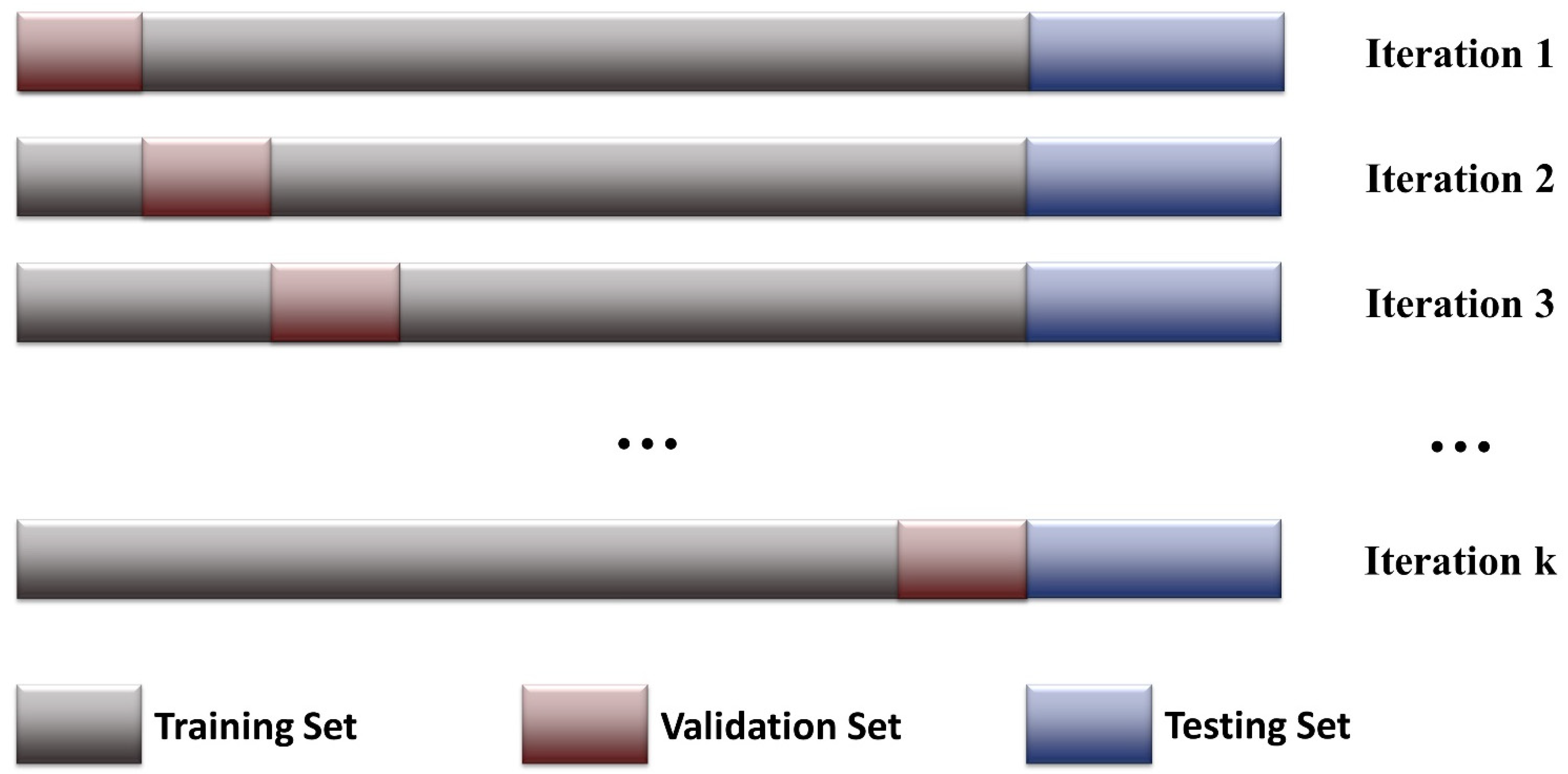
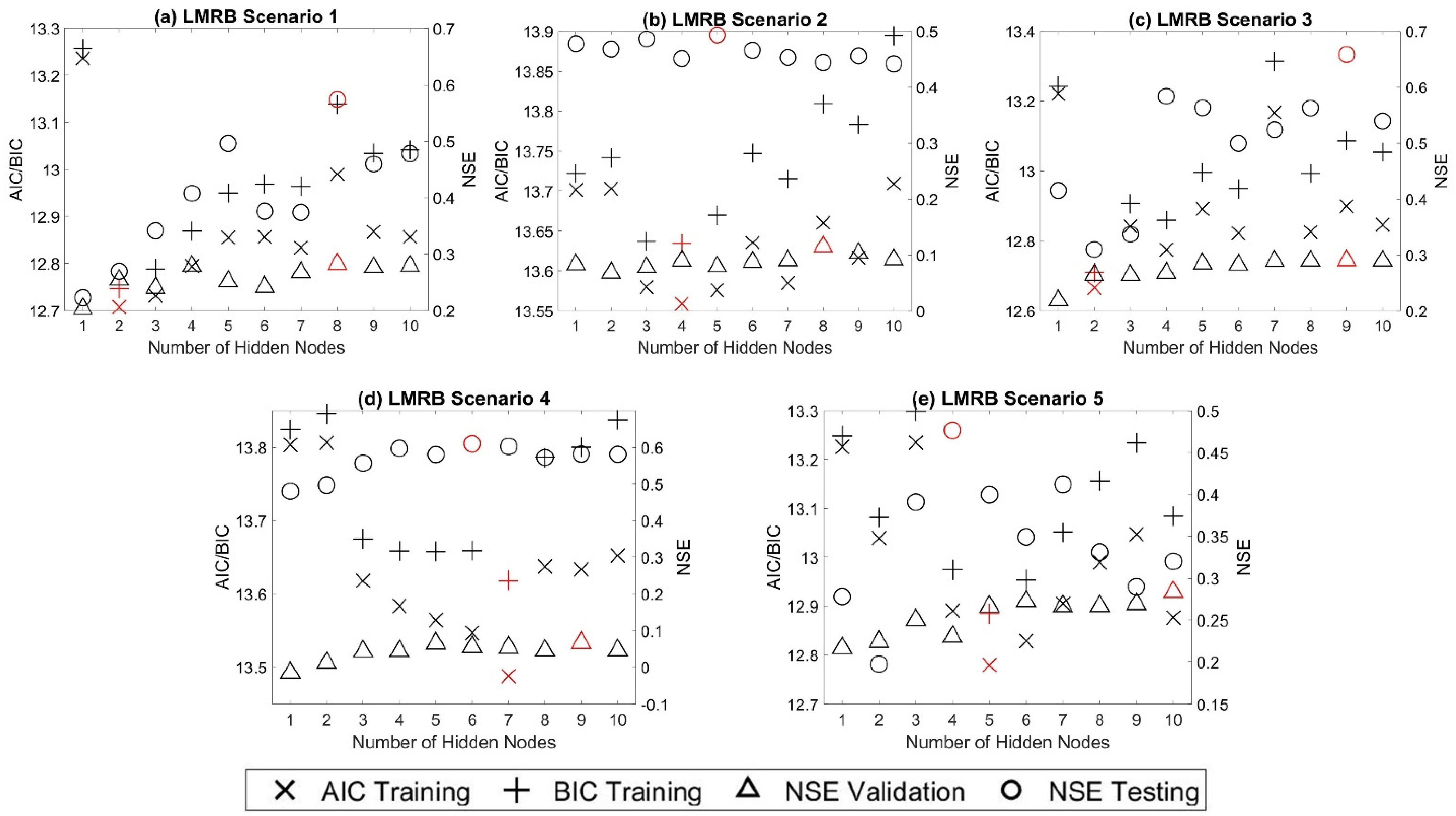
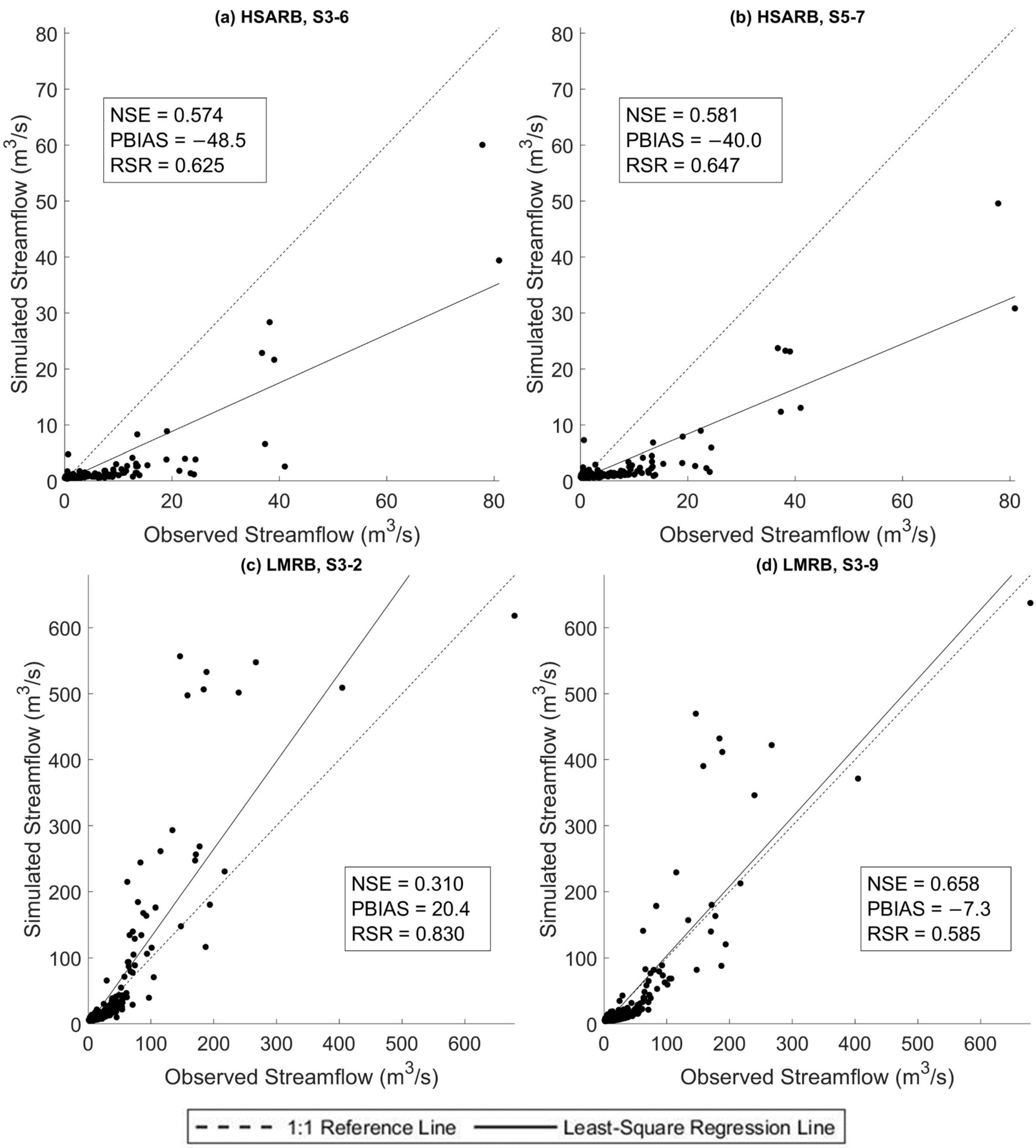
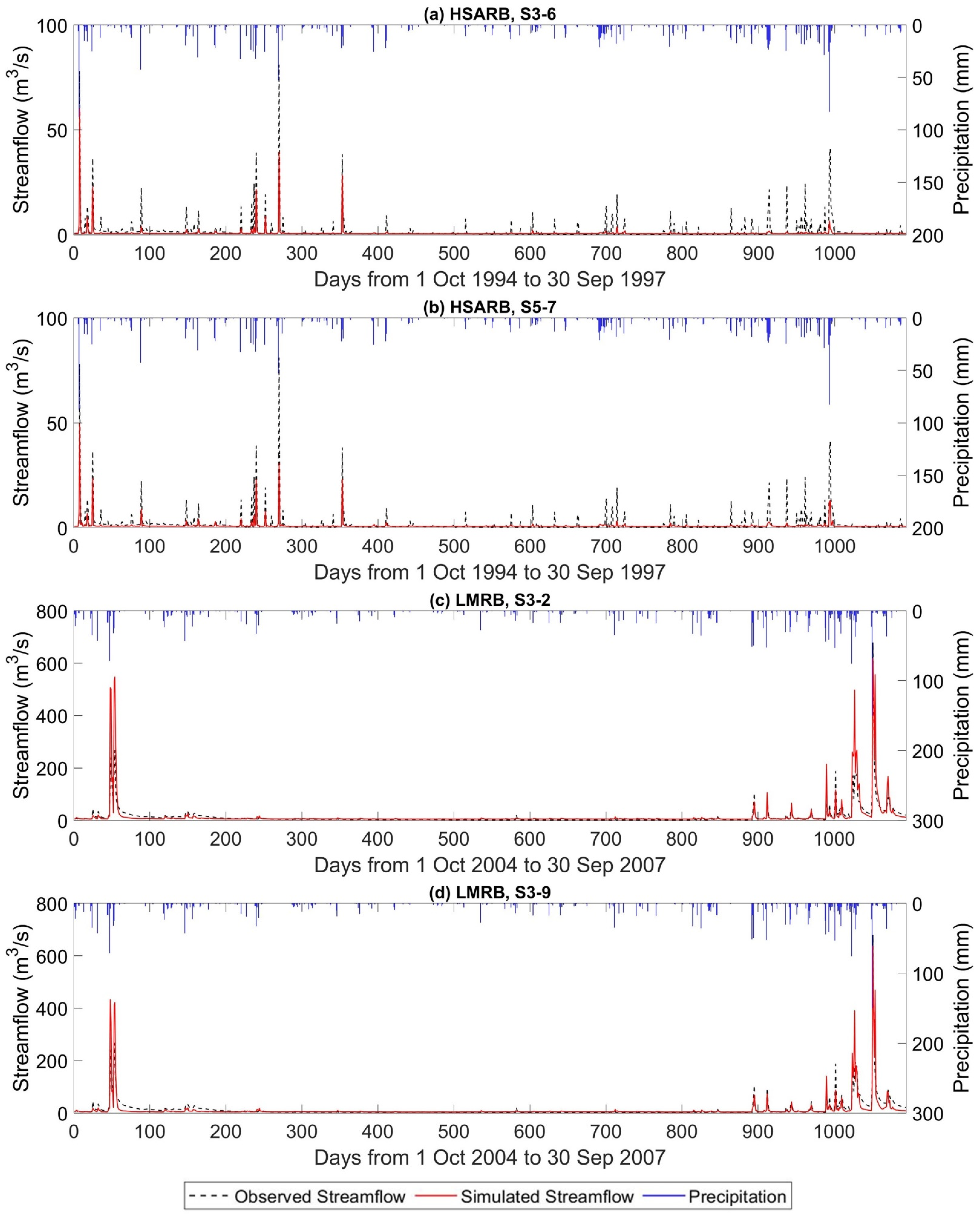
Artificial Neural Networks (ANN) have been widely applied in hydrologic and water quality (H/WQ) modeling in the past three decades. Many studies have demonstrated an ANN’s capability to successfully estimate daily streamflow from meteorological data on the watershed level. One major challenge of ANN streamflow modeling is finding the optimal network structure with good generalization capability while ameliorating model overfitting. This study empirically examines two types of model selection approaches for simulating streamflow time series: the out-of-sample approach using blocked cross-validation (BlockedCV) and an in-sample approach that is based on Akaike’s information criterion (AIC) and Bayesian information criterion (BIC). A three-layer feed-forward neural network using a back-propagation algorithm is utilized to create the streamflow models in this study. The rainfall–streamflow relationship of two adjacent, small watersheds in the San Antonio region in south-central Texas are modeled on a daily time scale. The model selection results of the two approaches are compared, and some commonly used performance measures (PMs) are generated on the stand-alone testing datasets to evaluate the models selected by the two approaches. This study finds that, in general, the out-of-sample and in-sample approaches do not converge to the same model selection results, with AIC and BIC selecting simpler models than BlockedCV. The ANNs were found to have good performance in both study watersheds, with BlockedCV selected models having a Nash–Sutcliffe coefficient of efficiency (NSE) of 0.581 and 0.658, and AIC/BIC selected models having a poorer NSE of 0.574 and 0.310, for the two study watersheds. Overall, out-of-sample BlockedCV selected models with better predictive ability and is preferable to model streamflow time series.
Keywords: artificial neural network (ANN); rainfall–runoff modeling; model selection; cross-validation; Akaike’s information criterion; Bayesian information criterion artificial neural network (ANN); rainfall–runoff modeling; model selection; cross-validation; Akaike’s information criterion; Bayesian information criterion