Article

The Use of a Microscale Physical Model to Simulate Bankfull Discharge in the Lower Reaches of the Yellow River


1
College of Water Resources and Civil Engineering, China Agricultural University, Beijing 100083, China
2
Agriculture, Forestry and Water Affairs Bureau of the National Linyi Economic & Technological Development Area, Linyi 276000, China
3
China Water Resources Bei Fang Investigation, Design & Research CO.LTD, Tianjin 300222, China
*
Author to whom correspondence should be addressed.
Water 2020, 12(1), 13; https://doi.org/10.3390/w12010013
Submission received: 8 November 2019 / Revised: 13 December 2019 / Accepted: 17 December 2019 / Published: 19 December 2019
(This article belongs to the Special Issue Physical Modelling in Hydraulics Engineering)

Abstract

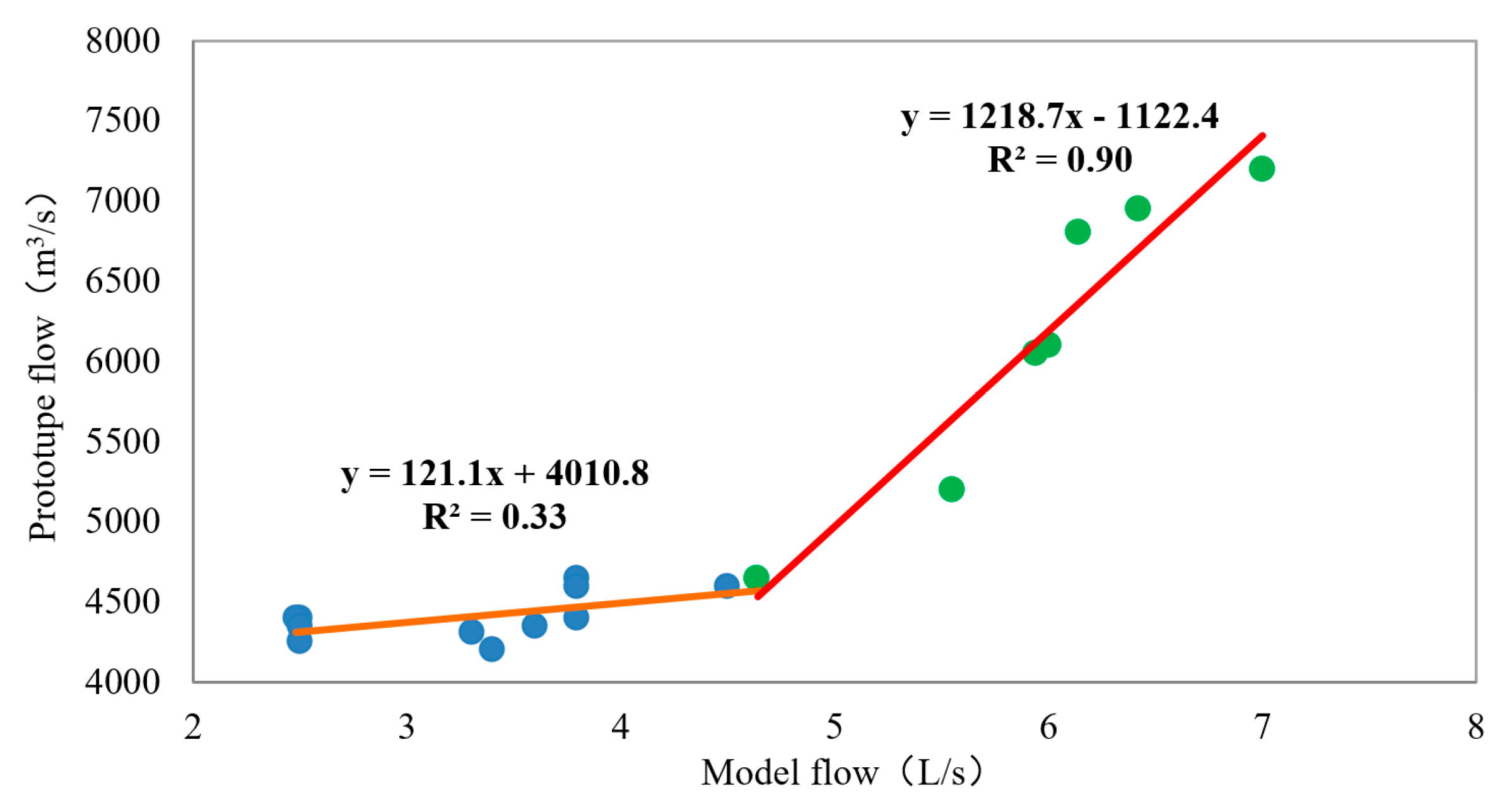
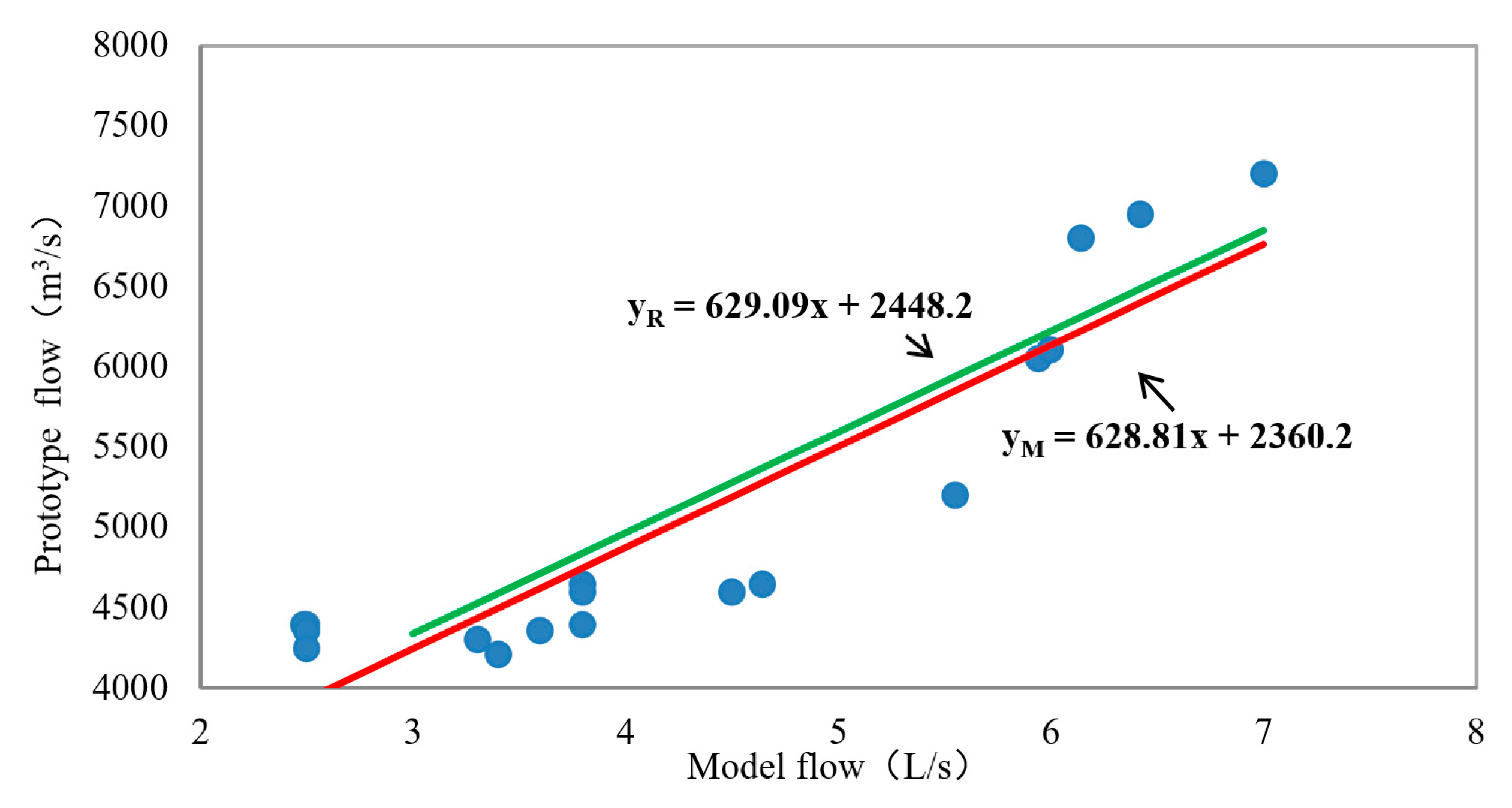
Microscale physical models (MSPMs) were once widely used in flood planning in large basins. They fell out of favor but are now being used again. This paper explores the benefits of using such a model for understanding a flood problem on the Lower Yellow River (LYR). We constructed an indoor MSPM of a nearly 800-km reach of the LYR. The model had different scales in the longitudinal, transverse, and vertical directions, and we adjusted the slope of the model. Meanwhile, a real-time water level monitoring system and an automatic flow control system were built on the MSPM to automatically control hydrodynamic testing. Through several discharge experiments, bankfull discharge for multiple MSPM sections was obtained and compared with measured data from the corresponding hydrological section of the prototype during the early flood season of 2016. The comparison demonstrated good linear correlation. The analysis of model similarity showed that although there was some deviation in gravity similarity between the MSPM and the prototype, the model discharge scale derived from resistance similarity adequately described the relationship between the model and the prototype bankfull discharge. Further analysis of the relationship between the model and the prototype bankfull discharge revealed that a split-line line may be better than a single regression line. A MSPM could reproduce the bankfull discharge of the LYR with the nearly 800-km reach in the laboratory which is impossible for a small distortion rate physical model, and obtain a result close to that of the assimilated numerical model.
Keywords: microscale physical model; the Lower Yellow River; bankfull discharge; similarity law microscale physical model; the Lower Yellow River; bankfull discharge; similarity law