Enhanced Coagulation with Mn(III) Pre-Oxidation for Treatment of Micro-Polluted Raw Water



Abstract
1. Introduction
2. Materials and Methods
2.1. Preparation of Simulated Water
2.2. Chemicals
2.3. Coagulation Method for Simulating Waterworks Treatment Process
2.4. Analysis
3. Result and Discussion
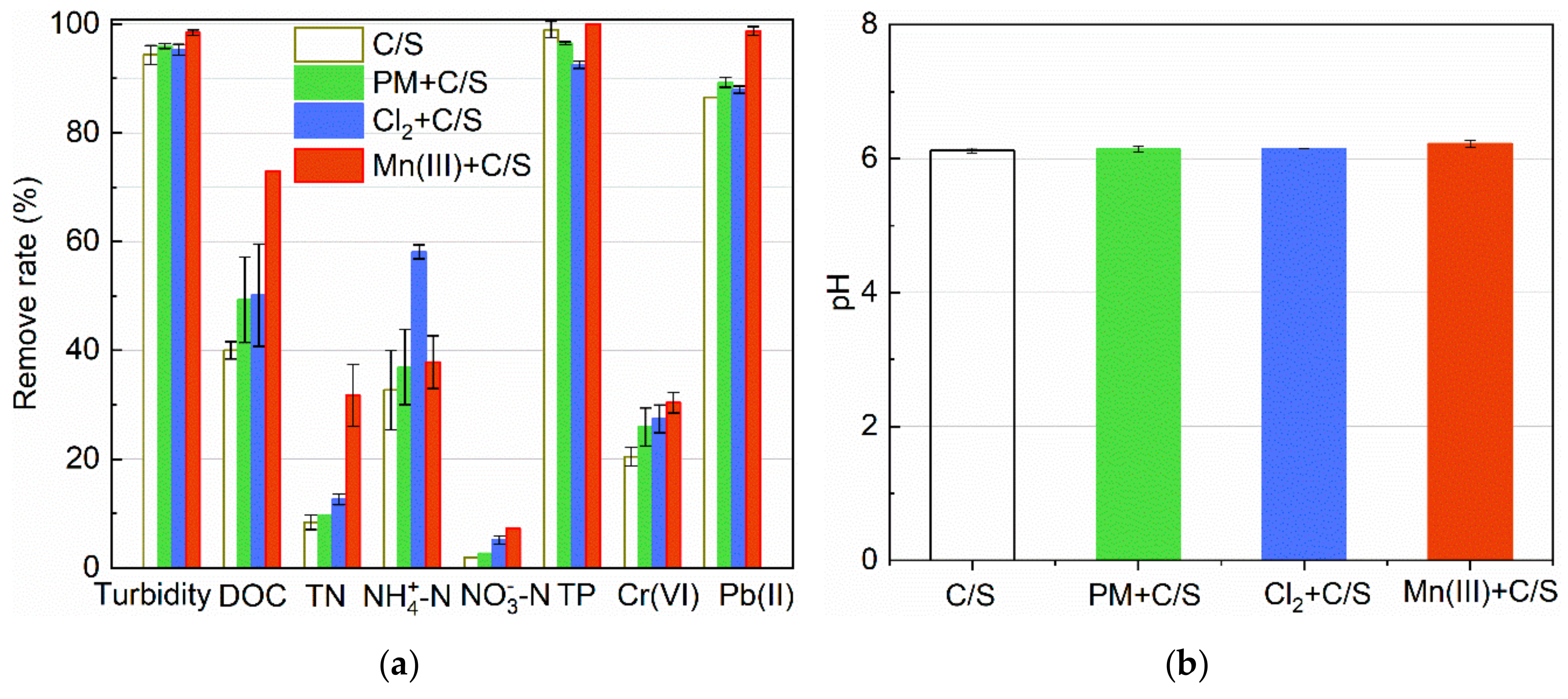
3.1. Mn(III) Pre-Oxidation Enhanced Coagulation and Sedimentation Process to Remove the Conventional Pollutants
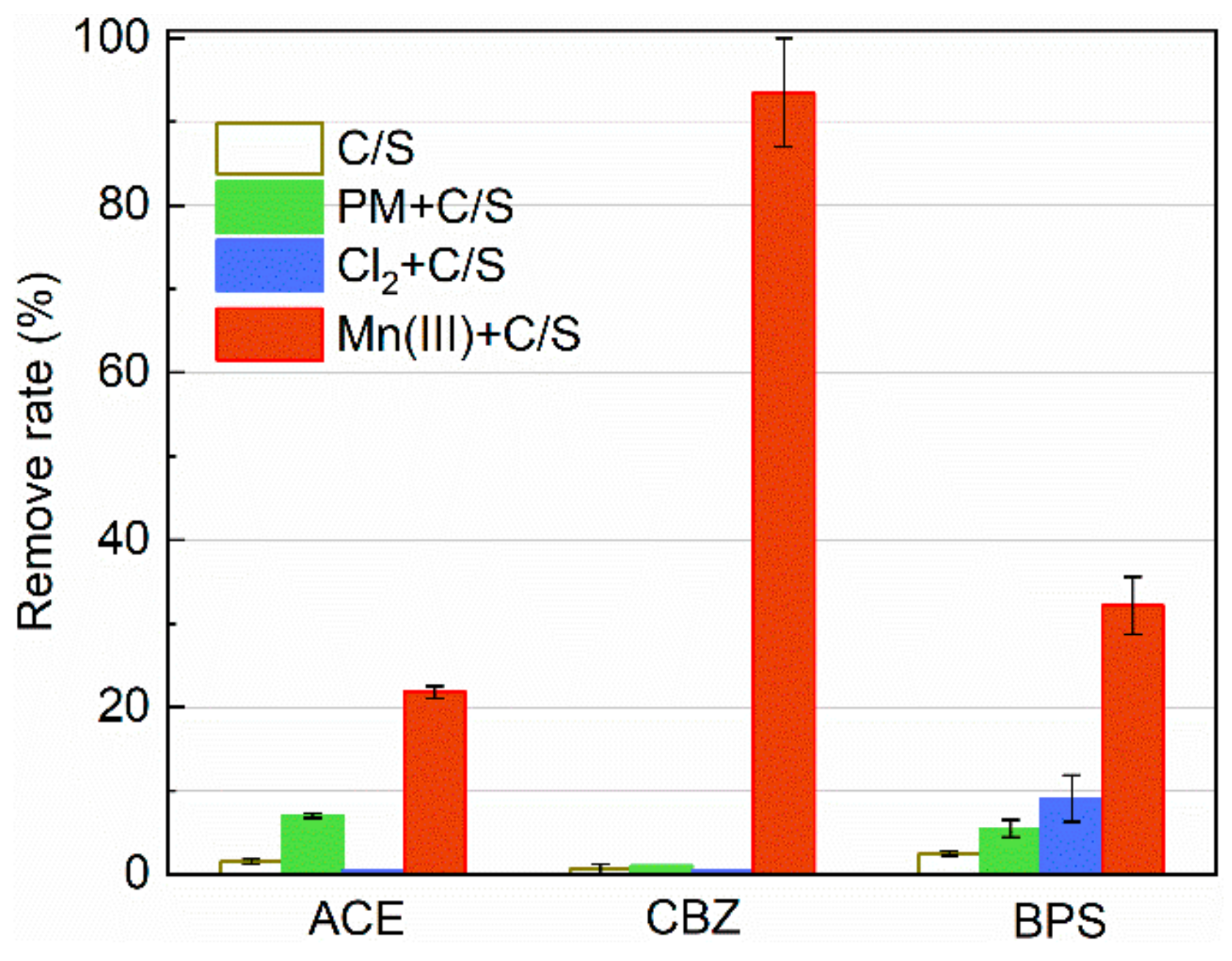
3.2. Removal of Emerging Micro-Pollutants by Mn(III)+C/S
3.2.1. Emerging Organic Pollutants
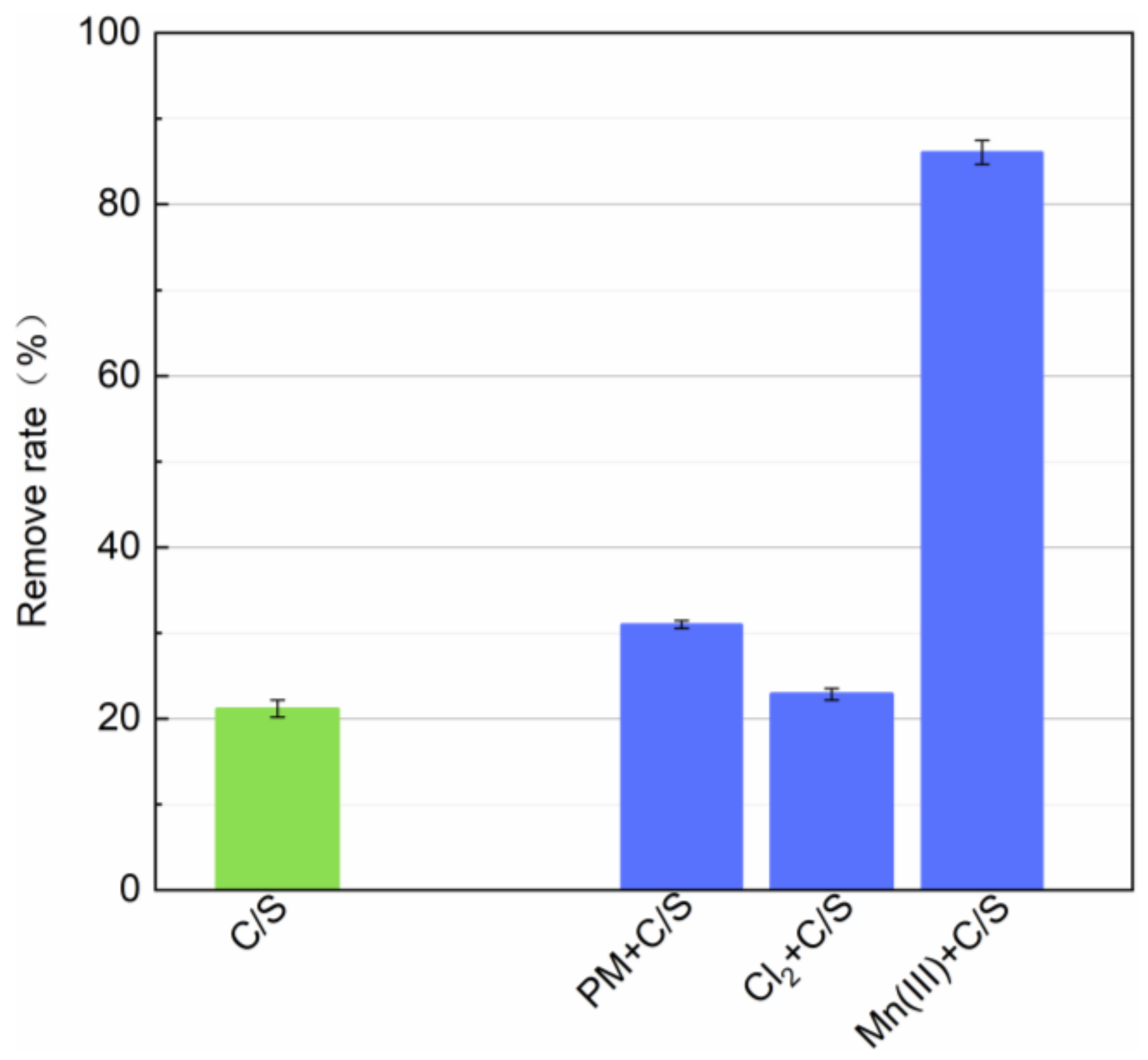
3.2.2. Nanoparticle Contaminant
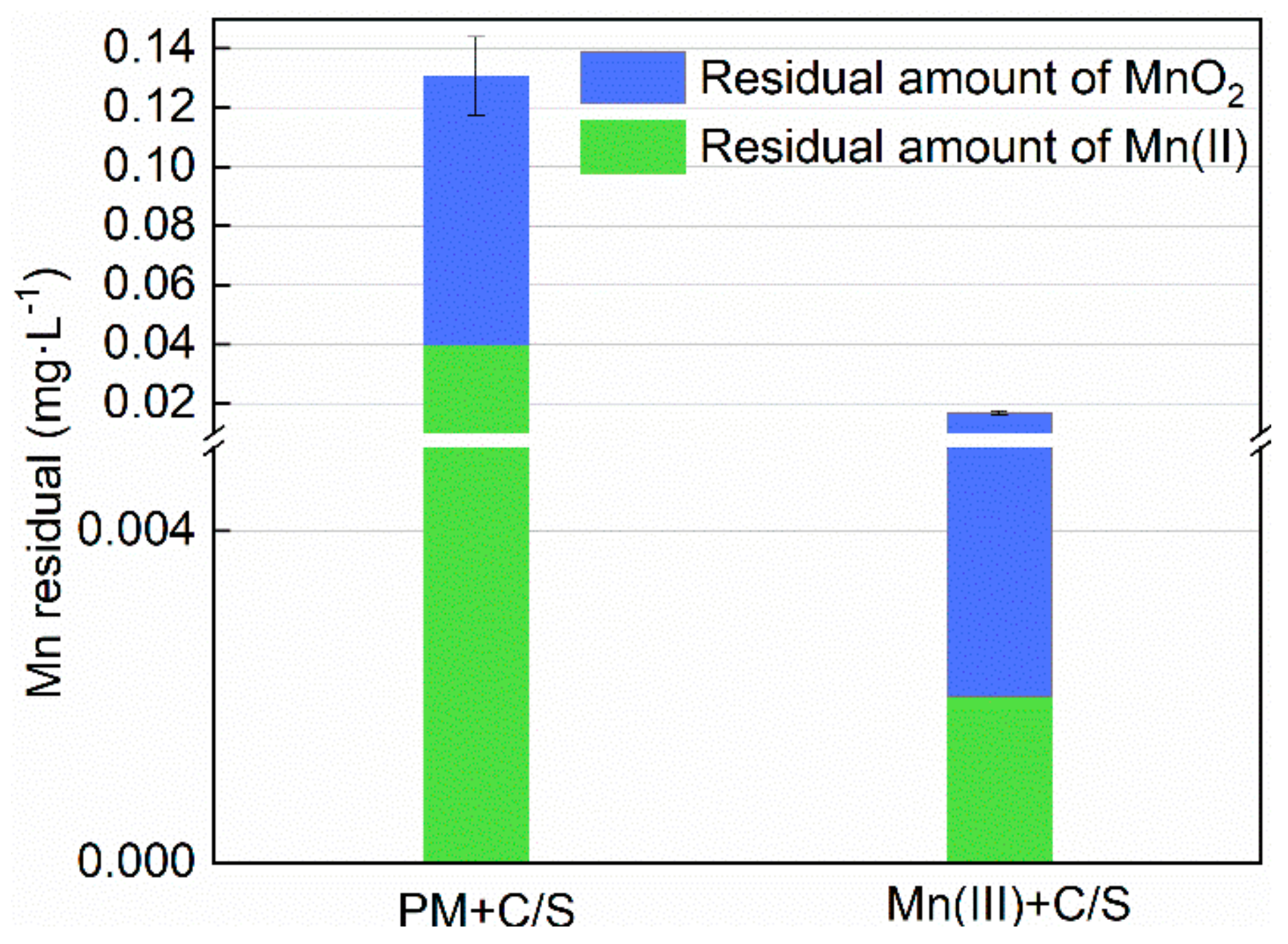
3.3. Residual Mn in Treated Water
3.4. Floc Characteristics
Dynamic Analysis of Floc Size in the Coagulation Process
3.5. Acute Bio-Toxicity Evaluation
4. Conclusions
- Mn(III) shows a stronger oxidation power than PM and hypochlorite at a neutral pH.
- Disproportionation reaction of Mn(III) resulted in-situ formation of MnO2 which could adsorb pollutants and then co-precipitate.
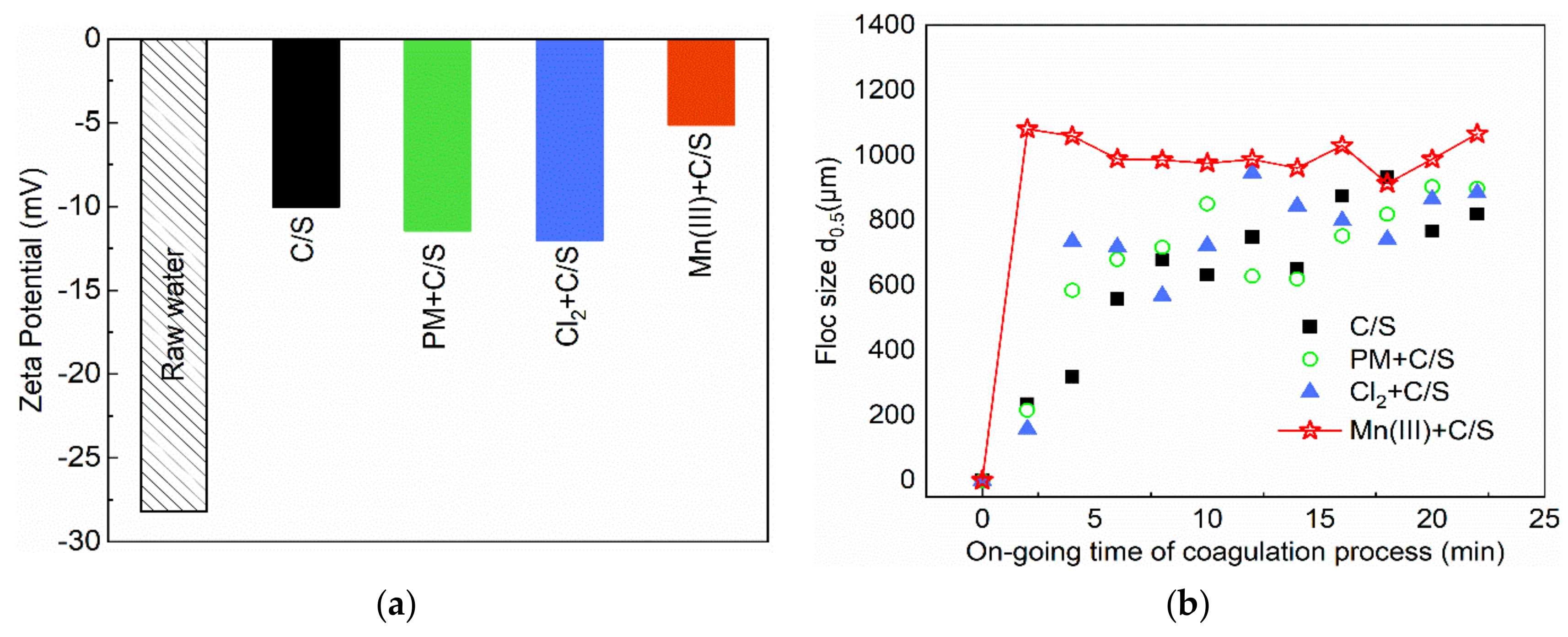
- Mn(III) oxidation decreased electrostatic repulsion between the colloids and in-situ formed MnO2 acted as the flocculation core, which made the flocs grow fast.
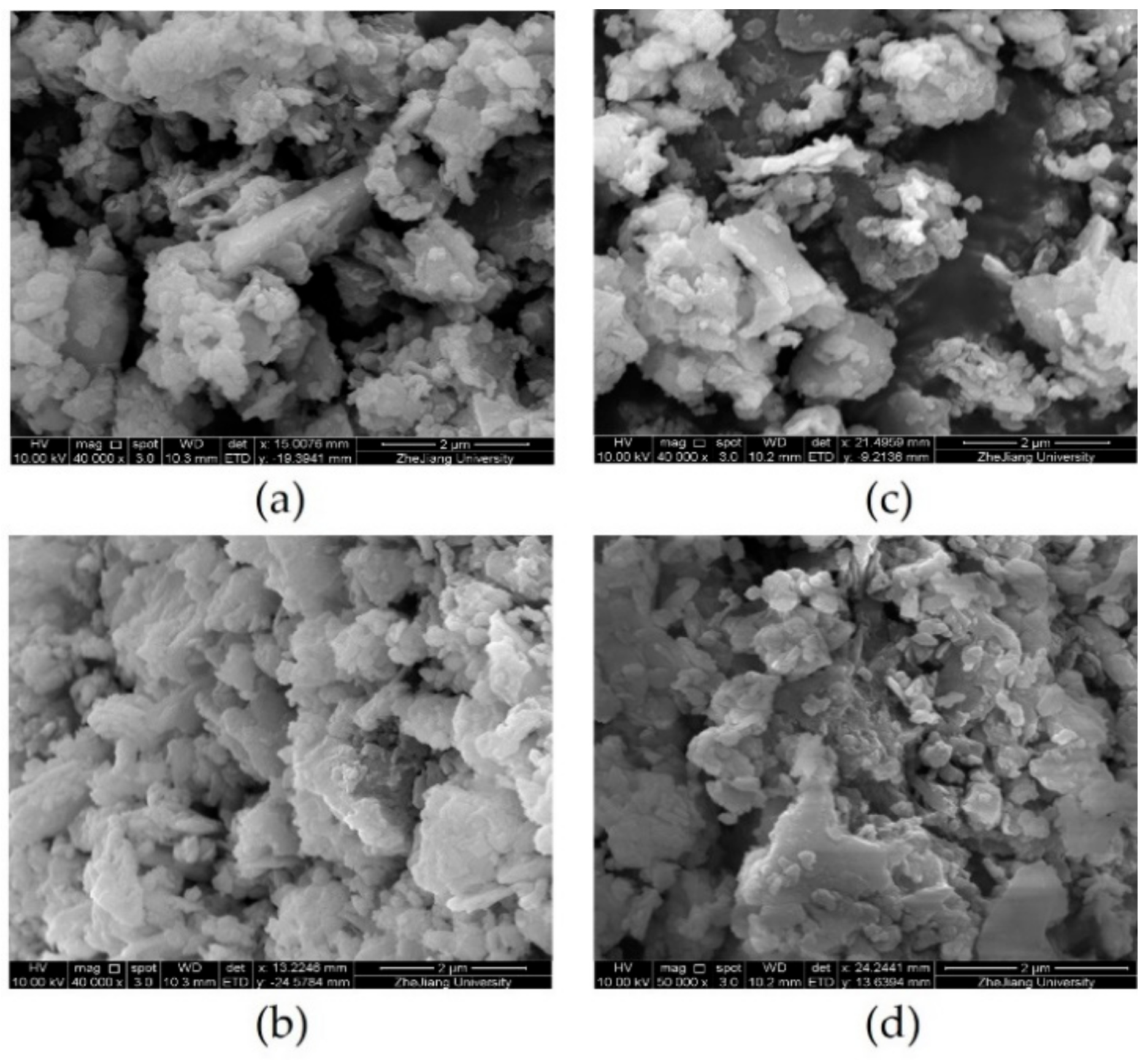
- In-situ formed MnO2 incorporated into the hydrolysate of Fe3+, to generate compact and easy settleable flocs.
Author Contributions
Funding
Conflicts of Interest
Appendix A
References
- Chu, H.; Cao, D.; Dong, B.; Qiang, Z. Bio-diatomite dynamic membrane reactor for micro-polluted surface water treatment. Water Res. 2010, 44, 1573–1579. [Google Scholar] [CrossRef]
- Yan, M.; Wang, D.; Qu, J.; Ni, J.; Chow, C. Enhanced coagulation for high alkalinity and micro-polluted water: The third way through coagulant optimization. Water Res. 2008, 42, 2278–2286. [Google Scholar] [CrossRef]
- Yan, Z.; Dong, B. Study on coagulation/UF process for treatment of micropolluted raw water. Water Purif. Technol. 2005, 6, 4–6. [Google Scholar]
- Lu, S.; Yang, L.; Chen, Y.; Liu, Z. High-rate UBAF for pretreatment of micro-polluted raw water. Chin. Water Wastewater 2009, 18, 65–70. [Google Scholar]
- Pan, L. Progress of treatment technology of water from micro-polluted water sources in China. Ind. Water Treat. 2006, 26, 6–10. [Google Scholar]
- Liu, W.; Liang, Y. Use of ferrate pre-oxidation in enhancing the treatment of NOM-rich lake waters. Water Sci. Technol. Water Supply 2004, 4, 121–128. [Google Scholar]
- Schneider, O.D.; Tobiason, J.E. Preozonation effects on coagulation. J. Am. Water Works Assoc. 2000, 92, 74–87. [Google Scholar] [CrossRef]
- Sedlak, D.L.; Von Gunten, U. The chlorine dilemma. Science 2011, 331, 42–43. [Google Scholar] [CrossRef]
- Feng, X.; Huang, J.; Zhang, B.J.; Cui, C.W. Effects of low temperature on coagulation kinetics and floc surface morphology using alum. Desalination 2009, 237, 201–213. [Google Scholar]
- Aguilar, M.I.; Sáez, J.; Lloréns, M.; Soler, A.; Ortuño, J.F.; Meseguer, V.; Fuentes, A. Improvement of coagulation–flocculation process using anionic polyacrylamide as coagulant aid. Chemosphere 2005, 58, 47–56. [Google Scholar] [CrossRef]
- Singer, P.C.; Bilyk, K. Enhanced coagulation using a magnetic ion exchange resin. Water Res. 2002, 36, 4009–4022. [Google Scholar] [CrossRef]
- Song, S.; Lopez-Valdivieso, A.; Hernandez-Campos, D.; Peng, C.; Monroy-Fernandez, M.; Razo-Soto, I. Arsenic removal from high-arsenic water by enhanced coagulation with ferric ions and coarse calcite. Water Res. 2006, 40, 364–372. [Google Scholar] [CrossRef] [PubMed]
- Mishra, S.; Mukul, A.; Sen, G.; Jha, U. Microwave assisted synthesis of polyacrylamide grafted starch (St-g-PAM) and its applicability as flocculant for water treatment. Int. J. Biol. Macromol. 2011, 48, 106–111. [Google Scholar] [CrossRef] [PubMed]
- Yan, M.; Wang, D.; You, S.; Qu, J.; Tang, H. Enhanced coagulation in a typical North-China water treatment plant. Water Res. 2006, 40, 3621–3627. [Google Scholar] [CrossRef]
- Zhao, Y.; Chen, F.; Li, Y.; Zhang, C. Experimental research of micro-chemical oxidation treatment of high iron and manganese contaminated groundwater. J. Shenyang Jianzhu Univ. 2012, 28, 1098–1102. [Google Scholar]
- Lu, J.; Zhang, T.; Ma, J.; Chen, Z.; Wang, Q.; Shen, J. Aldehydes, ketones and ketoacids produced during ozonation of NOM fractions isolated from filtrated water. Environ. Sci. 2007, 28, 1268–1273. [Google Scholar]
- Deborde, M.; Von Gunten, U. Reactions of chlorine with inorganic and organic compounds during water treatment—kinetics and mechanisms: A critical review. Water Res. 2008, 42, 13–51. [Google Scholar] [CrossRef]
- Rodriguez, E.; Onstad, G.D.; Kull, T.P.; Metcalf, J.S.; Acero, J.L.; Von Gunten, U. Oxidative elimination of cyanotoxins: Comparison of ozone, chlorine, chlorine dioxide and permanganate. Water Res. 2007, 41, 3381–3393. [Google Scholar] [CrossRef]
- Bruchet, A.; Duguet, J.P. Role of oxidants and disinfectants on the removal, masking and generation of tastes and odors. Water Sci. Technol. 2004, 49, 297–306. [Google Scholar] [CrossRef]
- Gordon, G.; Rosenblatt, A.A. Chlorine dioxide: The current state of the art. Ozone Sci. Eng. 2005, 27, 203–207. [Google Scholar] [CrossRef]
- Sharma, V.K.; Sohn, M. Reactivity of chlorine dioxide with amino acids, peptides, and proteins. Environ. Chem. Lett. 2012, 10, 255–264. [Google Scholar] [CrossRef]
- Walker, G.S.; Lee, F.P.; Aieta, E.M. Chlorine dioxide for taste and odor control. J. Am. Water Works Assoc. 1986, 78, 84–93. [Google Scholar] [CrossRef]
- Finch, G.; Liyanage, L.; Belosevic, M. Effect of Chlorine Dioxide on Cryptosporidium and Giardia. In Proceedings of the Third International Symposium on Chlorine Dioxide: Drinking Water, Process Water and Wastewater Issues, New Orleans, LA, USA, 14–15 September 1995. [Google Scholar]
- Eskicioglu, C.; Prorot, A.; Marin, J.; Droste, R.L.; Kennedy, K.J. Synergetic pretreatment of sewage sludge by microwave irradiation in presence of H2O2 for enhanced anaerobic digestion. Water Res. 2008, 42, 4674–4682. [Google Scholar] [CrossRef] [PubMed]
- Ma, J.; Li, G.; Chen, Z.; Xu, G.; Cai, G. Enhanced coagulation of surface waters with high organic content by permanganate peroxidation. Water Sci. Technol. Water Supply 2001, 1, 51–61. [Google Scholar] [CrossRef]
- Weber, W.J.; Borchardt, J.A. Physicochemical Processes for Water Quality Control; Wiley-Interscience: New York, NY, USA, 1972. [Google Scholar]
- Sun, B.; Guan, X.; Fang, J.; Tratnyek, P.G. Activation of manganese oxidants with bisulfite for enhanced oxidation of organic contaminants: The involvement of Mn (III). Environ. Sci. Technol. 2015, 49, 12414–12421. [Google Scholar] [CrossRef]
- Zeng, Y.; Wang, J.; Wu, Z. Enhancing coagulation performance of nascent state manganese dioxide to remove humic acid. Environ. Sci. Technol. 2015, 38, 27–31. [Google Scholar]
- Zhang, L. Enhanced Remove of Organic Contaminants from Water by Manganese Dioxide Formed in Situ. Ph.D. Thesis, Harbin Institute of Technology, Harbin, China, 2008. [Google Scholar]
- Gao, M. Research on Characteristics of Newly Formed Manganese Dioxide Floc Size Distribution and Its Effect of Enhanced Coagulation. Master’s Thesis, Harbin Institute of Technology, Harbin, China, 2010. [Google Scholar]
- Li, X.; Liu, Y.; Zhang, M.; Li, X.; Yang, B.; Hua, R.; Liu, Y. Adsorption of U(VI) in aqueous solution using δ-MnO2. J. East China Inst. Technol. 2016, 39, 283–287. [Google Scholar]
- Zhai, Y. Study on Mechanism of Adsorption of Organic/Cd Complex Contaminants by Nano-Hydrated Manganese Dioxide. Master’s Thesis, Beijing Forestry University, Beijing, China, 2015. [Google Scholar]
- Jee, J.E.; Bakac, A. Reactions of Mn (II) and Mn (III) with alkyl, peroxyalkyl, and peroxyacyl radicals in water and acetic acid. J. Phys. Chem. A 2010, 114, 2136–2141. [Google Scholar] [CrossRef]
- Davies, S.H.; Morgan, J.J. Manganese (II) oxidation kinetics on metal oxide surfaces. J. Colloid Interface Sci. 1989, 129, 63–77. [Google Scholar] [CrossRef]
- Lume-Pereira, C.; Baral, S.; Henglein, A.; Janata, E. Chemistry of colloidal manganese dioxide. 1. Mechanism of reduction by an organic radical (a radiation chemical study). J. Phys. Chem. 1985, 89, 5772–5778. [Google Scholar] [CrossRef]
- Davies, G.; Kirschenbaum, L.J.; Kustin, K. Kinetics and stoichiometry of the reaction between manganese (III) and hydrazoic acid in acid perchlorate solution. Inorg. Chem. 1969, 8, 663–669. [Google Scholar] [CrossRef]
- Pick-Kaplan, M.; Rabani, J. Pulse radiolytic studies of aqueous manganese (II) perchlorate solutions. J. Phys. Chem. 1976, 80, 1840–1843. [Google Scholar] [CrossRef]
- Stackelberg, P.E.; Gibs, J.; Furlong, E.T.; Meyer, M.T.; Zaudd, S.D.; Lippincott, R.L. Efficiency of conventional drinking-water-treatment processes in removal of pharmaceuticals and other organic compounds. Sci. Total Environ. 2007, 377, 255–272. [Google Scholar] [CrossRef] [PubMed]
- Gan, Z.; Hong, H.; Feng, B. Fate of artificial sweeteners in waste water and drinking water treatment processes. Res. Environ. Sci. 2012, 25, 1250–1256. [Google Scholar]
- Atari, L.; Esmaeili, S.; Zahedi, A.; Mohammadi, M.J.; Zahedi, A.; Babaei, A.A. Removal of heavy metals by conventional water treatment plants using poly aluminum chloride. Toxin Rev. 2018, 38, 127–134. [Google Scholar] [CrossRef]
- Shanghai Municipal Engineering Design Institute. Water Supply and Drainage Design Manual-Urban Water Supply, 2nd ed.; China Architecture & Building Press: Beijing, China, 1986. [Google Scholar]
- Wan, Z.; Wang, J. Fenton-like degradation of sulfamethazine using Fe3O4/Mn3O4 nanocomposite catalyst: Kinetics and catalytic mechanism. Environ. Sci. Pollut. Res. Int. 2017, 24, 1–10. [Google Scholar] [CrossRef]
- Chen, J.; Qu, R.; Pan, X.; Wang, Z. Oxidative degradation of triclosan by potassium permanganate: Kinetics, degradation products, reaction mechanism, and toxicity evaluation. Water Res. 2016, 103, 215–223. [Google Scholar] [CrossRef]
- Jiang, J.; Lloyd, B. Progress in the development and use of ferrate (VI) salt as an oxidant and coagulant for water and wastewater treatment. Water Res. 2002, 36, 1397–1408. [Google Scholar] [CrossRef]
- Lu, J.; Liu, W.; Zheng, W. The removal mechanisms of fluoride ion by aluminum salt coagulant. Acta Sci. Circum. 2000, 20, 709–713. [Google Scholar]
- Ye, Y.; Jiang, Z.; Xu, Z.; Zhang, X.; Wang, D.; Lv, L.; Pan, B. Efficient removal of Cr(III)-organic complexes from water using UV/Fe(III) system: Negligible Cr(VI) accumulation and mechanism. Water Res. 2017, 126, 172–178. [Google Scholar] [CrossRef]
- Petrović, M.; Gonzalez, S.; Barcelo, D. Analysis and removal of emerging contaminants in wastewater and drinking water. TrAC Trend. Anal. Chem. 2003, 22, 685–696. [Google Scholar] [CrossRef]
- Hu, L.; Martin, H.M.; Arce-Bulted, O.; Sugihara, M.N.; Keating, K.A.; Strathmann, T.I. Oxidation of carbamazepine by Mn(VII) and Fe(VI): Reaction kinetics and mechanism. Environ. Sci. Technol. 2009, 43, 509–515. [Google Scholar] [CrossRef] [PubMed]
- Soufan, M.; Deborde, M.; Delmont, A.; Legube, B. Aqueous chlorination of carbamazepine: Kinetic study and transformation product identification. Water Res. 2013, 47, 5076–5087. [Google Scholar] [CrossRef] [PubMed]
- Yin, K.; Li, F.; Wang, Y.; He, Q.; Deng, Y.; Chen, S.; Liu, C. Oxidative transformation of artificial sweetener acesulfame by permanganate: Reaction kinetics, transformation products and pathways, and ecotoxicity. J. Hazard. Mater. 2017, 330, 52–60. [Google Scholar] [CrossRef] [PubMed]
- Gao, Y.; Jiang, J.; Zhou, Y.; Pang, S.; Ma, J.; Jiang, C.; Wang, Z.; Wang, P.; Wang, L.; Li, J. Unrecognized role of bisulfite as Mn(III) stabilizing agent in activating permanganate (Mn(VII)) for enhanced degradation of organic contaminants. Chem. Eng. J. 2017, 327, 418–422. [Google Scholar] [CrossRef]
- Gao, Y.; Jiang, J.; Zhou, Y.; Pang, S.; Ma, J.; Jiang, C.; Yang, Y.; Huang, Z.; Gu, J.; Guo, Q.; et al. Chlorination of bisphenol S: Kinetics, products, and effect of humic acid. Water Res. 2018, 131, 208–217. [Google Scholar] [CrossRef] [PubMed]
- Hu, E.; Zhang, Y.; Wu, S.; Wu, J.; Liang, L.; He, F. Role of dissolved Mn(III) in transformation of organic contaminants: Non-oxidative versus oxidative mechanisms. Water Res. 2017, 111, 234–243. [Google Scholar] [CrossRef]
- Sousa, V.S.; Corniciuc, C.; Teixeira, M.R. The effect of TiO2 nanoparticles removal on drinking water quality produced by conventional treatment C/F/S. Water Res. 2017, 109, 1–12. [Google Scholar] [CrossRef]
- Surette, M.C.; Nason, J.A. Nanoparticle aggregation in a freshwater river: The role of engineered surface coatings. Environ. Sci. Nano 2019, 6, 540–553. [Google Scholar] [CrossRef]
- Tang, L.; Xu, J.; Xu, J. Standards of US drinking water quality. Water Purif. Technol. 1995, 1, 27–32. [Google Scholar]
- Ko, W.; Liu, Y.; Lai, J.; Chung, C.; Lin, K. Vertically standing MnO2 nanowalls grown on AgCNT-modified carbon fibers for high-performance supercapacitors. ACS Sustain. Chem. Eng. 2018, 7, 669–678. [Google Scholar] [CrossRef]
- Sun, L.; Liu, R.; Xia, S.; Yang, Y.; Li, G. Enhanced As(III) removal with permanganate oxidation, ferric chloride precipitation and sand filtration as pretreatment of ultrafiltration. Desalination 2009, 243, 122–131. [Google Scholar]
- Weng, W.; Wang, L. Case study on testing emergency water supply by integrated toxicity monitoring system. J. Guangxi Acad. Sci. 2010, 26, 360–362. [Google Scholar]
- Liu, Y.; Yi, H.; Qiu, J.; Chen, S.; Zhang, Z. Testing of toxicity of rain-source river water and industrial wastewater by using luminescent bacteria. Chin. Water Wastewater 2015, 31, 113–116. [Google Scholar]
- Ma, M.; Shang, W.; Wang, Z.; Wang, W.; Zhang, B.; Zhang, S. The toxicity variation of organic extracts in drinking water treatment processes. Environ. Sci. 2001, 22, 49–52. [Google Scholar]




| Index | Value | Index | Value |
|---|---|---|---|
| NO3−-N (mg·L−1) | 0.41 | NH4+-N (mg·L−1) | 0.53 |
| HCO3− (mg·L−1) | 25.42 | Pb2+ (mg·L−1) | 0.19 |
| Cl− (mg·L−1) | 22.08 | Cr(VI) (mg·L−1) | 0.18 |
| Total phosphorus (TP, mg·L−1) | 0.13 | Nano-ZnO (mg·L−1) | 0.10 |
| TN (mg·L−1) | 1.16 | CBZ (mg·L−1) | 0.05 |
| Ca2+ (mg·L−1) | 9.01 | ACE (mg·L−1) | 0.05 |
| UV254 (cm−1) | 0.03 | BPS (mg·L−1) | 0.05 |
| pH | 7.6 | Turbidity (NTU) | 100 |
| Temperature (°C) | 19.0 | Ionic strength (mol·kg−1) | 1.4 × 10⁻³ |
| Source of Sample | 15 min Light Inhibition Rate |
|---|---|
| Raw water | −5.78% |
| C/S | −0.01% |
| KMnO4+C/S | −1.63% |
| Cl2+C/S | 42.63% |
| Mn(III)+C/S | 12.96% |
© 2019 by the authors. Licensee MDPI, Basel, Switzerland. This article is an open access article distributed under the terms and conditions of the Creative Commons Attribution (CC BY) license (http://creativecommons.org/licenses/by/4.0/).
Share and Cite
Yan, D.; Sun, Z.; Wang, J.; Wang, L.; Pan, R.; Wu, Q.; Liu, X. Enhanced Coagulation with Mn(III) Pre-Oxidation for Treatment of Micro-Polluted Raw Water. Water 2019, 11, 2302. https://doi.org/10.3390/w11112302
Yan D, Sun Z, Wang J, Wang L, Pan R, Wu Q, Liu X. Enhanced Coagulation with Mn(III) Pre-Oxidation for Treatment of Micro-Polluted Raw Water. Water. 2019; 11(11):2302. https://doi.org/10.3390/w11112302
Chicago/Turabian StyleYan, Dingyun, Zhe Sun, Jiajie Wang, Lili Wang, Ruijun Pan, Qiang Wu, and Xiaowei Liu. 2019. "Enhanced Coagulation with Mn(III) Pre-Oxidation for Treatment of Micro-Polluted Raw Water" Water 11, no. 11: 2302. https://doi.org/10.3390/w11112302
APA StyleYan, D., Sun, Z., Wang, J., Wang, L., Pan, R., Wu, Q., & Liu, X. (2019). Enhanced Coagulation with Mn(III) Pre-Oxidation for Treatment of Micro-Polluted Raw Water. Water, 11(11), 2302. https://doi.org/10.3390/w11112302