

Crop Upgrading Strategies and Modelling for Rainfed Cereals in a Semi-Arid Climate—A Review

 ,
,
Abstract
1. Introduction
2. Materials and Methods
- Peer-reviewed articles on crop UPS and modelling in English published in 1990 and after. The UPS that were included were categorized as rainwater harvesting, soil moisture conservation, means of water application and productivity, nutrient addition to the soil, soil conservation, drought coping measures and measurements of rainfall variability.
- Reports with qualitative or quantitative empirical findings and perceptions and views discussed in relation to UPS and modelling.
- Conference proceedings papers related to UPS and modelling.
3. Results
3.1. Roles of Crop Upgrading Strategies for Cereal Production
3.2. Modelling Cereal Crops UPS for Enhancing Production
4. Discussion
4.1. Contour Ridges and Tied Ridges
4.2. Micro-Fertilization
4.3. Varying Sowing/Planting Dates as a Measure to Counteract Rainfall Uncertainties
4.4. Spatial Plot Distribution as a Measure to Combat Spatial Rainfall Variability
4.5. Roles of Models for Cereal UPS
4.5.1. Description of DSSAT-Models
4.5.2. Description of APSIM Model
4.5.3. Description of the AquaCrop Model
5. Conclusions
Acknowledgments
Author Contributions
Conflicts of Interest
References
- World Food Summit. World Food Summit in FAO, Volume 1; World Food Summit: Rome, Italy, 1996; pp. 23–30. [Google Scholar]
- Bawadi, H.A.; Tayyem, R.F.; Dwairy, A.N.; Al-Akour, N. Prevalence of Food Insecurity among Women in Northern Jordan. J. Health Popul. Nutr. 2012, 30, 49–55. [Google Scholar] [CrossRef] [PubMed]
- Food and Agriculture Organization. Comprehensive Food Security & Vulnerability Analysis (CFSVA), Tanzania; FAO: Rome, Italy, 2013. [Google Scholar]
- Brown, M.E.; Hintermann, B.; Higgins, N. Markets, Climate Change, and Food Security in West Africa. Environ. Sci. Technol. 2009, 43, 8016–8020. [Google Scholar] [CrossRef] [PubMed]
- Haug, R.; Hella, J. The art of balancing food security: Securing availability and affordability of food in Tanzania. Food Secur. 2013, 5, 415–426. [Google Scholar] [CrossRef]
- Webber, H.; Gaiser, T.; Ewert, F. What role can crop models play in supporting climate change adaptation decisions to enhance food security in Sub-Saharan Africa? Agric. Syst. 2014, 127, 161–177. [Google Scholar] [CrossRef]
- Hussein, K. Food security: Rights, livelihoods and the World Food Summit—Five years later. Soc. Policy Adm. 2002, 36, 626–647. [Google Scholar] [CrossRef]
- Paul, K.H.; Muti, M.; Khalfan, S.S.; Humphrey, J.H.; Caffarella, R.; Stoltzfus, R.J. Beyond food insecurity: How context can improve complementary feeding interventions. Food Nutr. Bull. 2011, 32, 244–253. [Google Scholar] [CrossRef] [PubMed]
- McCoy, S.I.; Ralph, L.J.; Njau, P.F.; Msolla, M.M.; Padian, N.S. Food Insecurity, Socioeconomic Status, and HIV-Related Risk Behavior among Women in Farming Households in Tanzania. Aids Behav. 2014, 18, 1224–1236. [Google Scholar] [CrossRef] [PubMed][Green Version]
- Asfaw, S.; Shiferaw, B.; Simtowe, F.; Lipper, L. Impact of modern agricultural technologies on smallholder welfare: Evidence from Tanzania and Ethiopia. Food Policy 2012, 37, 283–295. [Google Scholar] [CrossRef]
- Shiferaw, B.; Kassie, M.; Jaleta, M.; Yirga, C. Adoption of improved wheat varieties and impacts on household food security in Ethiopia. Food Policy 2014, 44, 272–284. [Google Scholar] [CrossRef]
- Lal, R. Sustainable horticulture and resource management. In Proceedings of the International Symposium on Sustainability through Integrated and Organic Horticulture; Prange, R.K., Bishop, S.D., Eds.; International Society for Horticultural Science: Leuven, Belgium, 2008; pp. 19–43. [Google Scholar]
- Bakewell-Stone, P.; Lieblein, G.; Francis, C. Potentials for organic agriculture to sustain livelihoods in Tanzania. Int. J. Agric. Sustain. 2008, 6, 22–36. [Google Scholar] [CrossRef]
- Berry, E.M.; Dernini, S.; Burlingame, B.; Meybeck, A.; Conforti, P. Food security and sustainability: Can one exist without the other? Public Health Nutr. 2015, 18, 2293–2302. [Google Scholar] [CrossRef] [PubMed]
- FAO. Regional Overview of Food Insecurity: African Food Security Prospects Brighter Than Ever; FAO: Accra, Ghana, 2015. [Google Scholar]
- Baro, M.; Deubel, T.F. Persistent hunger: Perspectives on vulnerability, famine, and food security in Sub-Saharan African. In Annual Review of Anthropology; Annual Reviews: Palo Alto, CA, USA, 2006; pp. 521–538. [Google Scholar]
- Kassie, B.T.; van Ittersum, M.K.; Hengsdijk, H.; Asseng, S.; Wolf, J.; Rotter, R.P. Climate-induced yield variability and yield gaps of maize (Zea mays L.) in the Central Rift Valley of Ethiopia. Field Crops Res. 2014, 160, 41–53. [Google Scholar] [CrossRef]
- Kassie, M.; Jaleta, M.; Shiferaw, B.; Mmbando, F.; Mekuria, M. Adoption of interrelated sustainable agricultural practices in smallholder systems: Evidence from rural Tanzania. Technol. Forecast. Soc. Chang. 2013, 80, 525–540. [Google Scholar] [CrossRef]
- Akinyoade, A.; Dietz, T.; Leliveld, A. Agricultural Pockets of Effectiveness in Africa a Comparative Inventory of Nigeria, Kenya, Tanzania and Uganda since 2000. In Digging Deeper: Inside Africa’s Agricultural, Food and Nutrition Dynamics; Akinyoade, A., Klaver, W., Soeters, S., Foeken, D., Eds.; Brill: Leiden, The Netherlands, 2014; pp. 55–82. [Google Scholar]
- Graef, F.; Schneider, I.; Fasse, A.; Germer, J.U.; Gevorgyan, E.; Haule, F.; Hoffmann, H.; Kahimba, F.C.; Kashaga, L.; Kissoly, L.; et al. Assessment of upgrading strategies to improve regional food systems in Tanzania: Food processing, waste management and bioenergy, and income generation. Outlook Agric. 2015, 44, 179–186. [Google Scholar] [CrossRef]
- Martinez-Alvarez, V.; Garcia-Bastida, P.A.; Martin-Gorriz, B.; Soto-Garcia, M. Adaptive strategies of on-farm water management under water supply constraints in south-eastern Spain. Agric. Water Manag. 2014, 136, 59–67. [Google Scholar] [CrossRef]
- Dile, Y.T.; Karlberg, L.; Daggupati, P.; Srinivasan, R.; Wiberg, D.; Rockstrom, J. Assessing the implications of water harvesting intensification on upstream-downstream ecosystem services: A case study in the Lake Tana basin. Sci. Total Environ. 2016, 542, 22–35. [Google Scholar] [CrossRef] [PubMed]
- Wichelns, D.; Qadir, M. Achieving sustainable irrigation requires effective management of salts, soil salinity, and shallow groundwater. Agric. Water Manag. 2015, 157, 31–38. [Google Scholar] [CrossRef]
- Zhang, B.B.; Feng, G.; Kong, X.B.; Lal, R.; Ouyang, Y.; Adeli, A.; Jenkins, J.N. Simulating yield potential by irrigation and yield gap of rainfed soybean using APEX model in a humid region. Agric. Water Manag. 2016, 177, 440–453. [Google Scholar] [CrossRef]
- Yan, N.N.; Wu, B.F.; Perry, C.; Zeng, H.W. Assessing potential water savings in agriculture on the Hai Basin plain, China. Agric. Water Manag. 2015, 154, 11–19. [Google Scholar] [CrossRef]
- Guo, K.; Liu, X.J. Infiltration of meltwater from frozen saline water located on the soil can result in reclamation of a coastal saline soil. Irrig. Sci. 2015, 33, 441–452. [Google Scholar] [CrossRef]
- Njeru, P.N.M.; Mugwe, J.; Maina, I.; Mucheru-Muna, M.; Mugendi, D.; Lekasi, J.K.; Kimani, S.K.; Miriti, J.; Oeba, V.O.; Esilaba, A.O.; et al. Integrating Farmers and Scientific Methods for Evaluating Climate Change Adaptation Options in Embu County. In Adapting African Agriculture to Climate Change: Transforming Rural Livelihoods; Filho, W.L., Esilaba, A.O., Rao, K.P.C., Sridhar, G., Eds.; Springer: Cham, Switzerland, 2015; pp. 185–197. [Google Scholar]
- Hunink, J.E.; Contreras, S.; Soto-Garcia, M.; Martin-Gorriz, B.; Martinez-Alvarez, V.; Baille, A. Estimating groundwater use patterns of perennial and seasonal crops in a Mediterranean irrigation scheme, using remote sensing. Agric. Water Manag. 2015, 162, 47–56. [Google Scholar] [CrossRef]
- Graef, F.; Haigis, J. Spatial and temporal rainfall variability in the Sahel and its effects on farmers’ management strategies. J. Arid Environ. 2001, 48, 221–231. [Google Scholar] [CrossRef]
- Babatolu, J.S.; Akinnubi, R.T. Smallholder Farmers Perception of Climate Change and Variability Impact and Their Adaptation Strategies in the Upper and Lower Niger River Basin Development Authority Areas, Nigeria. J. Petroleum Environ. Biotechnol. 2016, 7, 279. [Google Scholar]
- Kristjanson, P.; Neufeldt, H.; Gassner, A.; Mango, J.; Kyazze, F.B.; Desta, S.; Sayula, G.; Thiede, B.; Forch, W.; Thornton, P.K.; et al. Are food insecure smallholder households making changes in their farming practices? Evidence from East Africa. Food Secur. 2012, 4, 381–397. [Google Scholar] [CrossRef]
- Lana, M.A.; Eulenstein, F.; Schlindwein, S.; Guevara, E.; Meira, S.; Wurbs, A.; Sieber, S.; Svoboda, N.; Bonatti, M. Regionalization of climate scenarios impacts on maize production and the role of cultivar and planting date as an adaptation strategy. Reg. Environ. Chang. 2016, 16, 1319–1331. [Google Scholar] [CrossRef]
- Liu, S.; Yang, J.Y.; Zhang, X.Y.; Drury, C.F.; Reynolds, W.D.; Hoogenboom, G. Modelling crop yield, soil water content and soil temperature for a soybean-maize rotation under conventional and conservation tillage systems in Northeast China. Agric. Water Manag. 2013, 123, 32–44. [Google Scholar] [CrossRef]
- Gautam, S.; Mbonimpa, E.G.; Kumar, S.; Bonta, J.V.; Lal, R. Agricultural Policy Environmental eXtender model simulation of climate change impacts on runoff from a small no-till watershed. J. Soil Water Conserv. 2015, 70, 101–109. [Google Scholar] [CrossRef]
- Nasim, W.; Ahmad, A.; Beihouchette, H.; Fahad, S.; Hoogenboom, G. Evaluation of the OILCROP-SUN model for sunflower hybrids under different agro-meteorological conditions of Punjab-Pakistan. Field Crops Res. 2016, 188, 17–30. [Google Scholar] [CrossRef]
- Nasim, W.; Belhouchette, H.; Ahmad, A.; Habib-ur-Rahman, M.; Jabran, K.; Ullah, K.; Fahad, S.; Shakeel, M.; Hoogenboom, G. Modelling climate change impacts and adaptation strategies for sunflower in Pakistan. Outlook Agric. 2016, 45, 39–45. [Google Scholar] [CrossRef]
- Roost, N.; Cai, X.L.; Turral, H.; Molden, D.; Cui, Y.L. Adapting to intersectoral transfers in the Zhanghe Irrigation System, China—Part II: Impacts of in-system storage on water balance and productivity. Agric. Water Manag. 2008, 95, 685–697. [Google Scholar] [CrossRef]
- Samuel, M.P.; Satapathy, K.K. Concerted rainwater harvesting technologies suitable for hilly agro-ecosystems of Northeast India. Curr. Sci. 2008, 95, 1130–1132. [Google Scholar]
- Das, A.; Munda, G.C.; Thakur, N.S.A.; Yadav, R.K.; Ghosh, P.K.; Ngachan, S.V.; Bujarbaruah, K.M.; Lal, B.; Das, S.K.; Mahapatra, B.K.; et al. Rainwater harvesting and integrated development of agri-horti-livestock-cum-pisciculture in high altitudes for livelihood of Tribal farmers. Indian J. Agric. Sci. 2014, 84, 643–649. [Google Scholar]
- Tuppad, P.; Santhi, C.; Wang, X.; Williams, J.R.; Srinivasan, R.; Gowda, P.H. Simulation of conservation practices using the apex model. Appl. Eng. Agric. 2010, 26, 779–794. [Google Scholar] [CrossRef]
- Zairi, A.; el Amami, H.; Slatni, A.; Pereira, L.S.; Rodrigues, P.N.; Machado, T. Coping with drought: Deficit irrigation strategies for cereals and field horticultural crops in Central Tunisia. In Tools for Drought Mitigation in Mediterranean Regions; Rossi, G., Cancelliere, A., Pereira, L.S., Oweis, T., Shatanawi, M., Zairi, A., Eds.; Springer: Dordrecht, The Netherlands, 2003; pp. 181–201. [Google Scholar]
- Singh, R.; van Dam, J.C.; Feddes, R.A. Water productivity analysis of irrigated crops in Sirsa district, India. Agric. Water Manag. 2006, 82, 253–278. [Google Scholar] [CrossRef]
- Koocheki, A.; Seyyedi, S.M.; Eyni, M.J. Irrigation levels and dense planting affect flower yield and phosphorus concentration of saffron corms under semi-arid region of Mashhad, Northeast Iran. Sci. Hortic. 2014, 180, 147–155. [Google Scholar] [CrossRef]
- Zhou, L.F.; Feng, H.; Zhao, Y.; Qi, Z.J.; Zhang, T.B.; He, J.Q.; Dyck, M. Drip irrigation lateral spacing and mulching affects the wetting pattern, shoot-root regulation, and yield of maize in a sand-layered soil. Agric. Water Manag. 2017, 184, 114–123. [Google Scholar] [CrossRef]
- Yang, Y.H.; Watanabe, M.; Zhang, X.Y.; Zhang, J.Q.; Wang, Q.X.; Hayashi, S. Optimizing irrigation management for wheat to reduce groundwater depletion in the piedmont region of the Taihang Mountains in the North China Plain. Agric. Water Manag. 2006, 82, 25–44. [Google Scholar] [CrossRef]
- Fan, Z.B.; Lin, S.; Zhang, X.M.; Jiang, Z.M.; Yang, K.C.; Jian, D.D.; Chen, Y.Z.; Li, J.L.; Chen, Q.; Wang, J.G. Conventional flooding irrigation causes an overuse of nitrogen fertilizer and low nitrogen use efficiency in intensively used solar greenhouse vegetable production. Agric. Water Manag. 2014, 144, 11–19. [Google Scholar] [CrossRef]
- Meng, W.W.; Yu, Z.W.; Zhang, Y.L.; Shi, Y.; Wang, D. Effects of supplemental irrigation on water consumption characteristics and grain yield in different wheat cultivars. Chil. J. Agric. Res. 2015, 75, 216–223. [Google Scholar]
- Bouraima, A.K.; Zhang, W.H.; Wei, C.F. Irrigation water requirements of rice using Cropwat model in Northern Benin. Int. J. Agric. Biol. Eng. 2015, 8, 58–64. [Google Scholar]
- Wang, Y.J.; Xie, Z.K.; Malhi, S.S.; Vera, C.L.; Zhang, Y.B.; Wang, J.N. Effects of rainfall harvesting and mulching technologies on water use efficiency and crop yield in the semi-arid Loess Plateau, China. Agric. Water Manag. 2009, 96, 374–382. [Google Scholar] [CrossRef]
- Yeboah, S.; Zhang, R.; Cai, L.; Li, L.; Xie, J.; Luo, Z.; Liu, J.; Wu, J. Tillage effect on soil organic carbon, microbial biomass carbon and crop yield in spring wheat-field pea rotation. Plant Soil Environ. 2016, 62, 279–285. [Google Scholar] [CrossRef]
- Corbeels, M.; Chirat, G.; Messad, S.; Thierfelder, C. Performance and sensitivity of the DSSAT crop growth model in simulating maize yield under conservation agriculture. Eur. J. Agron. 2016, 76, 41–53. [Google Scholar] [CrossRef]
- Baudron, F.; Delmotte, S.; Corbeels, M.; Herrera, J.M.; Tittonell, P. Multi-scale trade-off analysis of cereal residue use for livestock feeding vs. soil mulching in the Mid-Zambezi Valley, Zimbabwe. Agric. Syst. 2015, 134, 97–106. [Google Scholar] [CrossRef]
- Nielsen, D.C.; Vigil, M.F. Intensifying a semi-arid dryland crop rotation by replacing fallow with pea. Agric. Water Manag. 2017, 186, 127–138. [Google Scholar] [CrossRef]
- Jiang, J.S.; Guo, S.L.; Zhang, Y.J.; Liu, Q.F.; Wang, R.; Wang, Z.Q.; Li, N.N.; Li, R.J. Changes in temperature sensitivity of soil respiration in the phases of a three-year crop rotation system. Soil Tillage Res. 2015, 150, 139–146. [Google Scholar] [CrossRef]
- Gozubuyuk, Z.; Sahin, U.; Adiguzel, M.C.; Ozturk, I.; Celik, A. The influence of different tillage practices on water content of soil and crop yield in vetch-winter wheat rotation compared to fallow-winter wheat rotation in a high altitude and cool climate. Agric. Water Manag. 2015, 160, 84–97. [Google Scholar] [CrossRef]
- Fernandez-Getino, A.P.; Santin-Montanya, M.I.; Zambrana, E.; de Andres, E.F.; Tenorio, J.L. The response of barley to rainfall and temperature in different tillage and crop rotation systems in semi-arid conditions. Ann. Appl. Biol. 2015, 166, 143–153. [Google Scholar] [CrossRef]
- Sarani, M.; Oveisi, M.; Mashhadi, H.R.; Alizade, H.; Gonzalez-Andujar, J.L. Interactions between the tillage system and crop rotation on the crop yield and weed populations under arid conditions. Weed Biol. Manag. 2014, 14, 198–208. [Google Scholar] [CrossRef]
- Srinivasarao, C.; Venkateswarlu, B.; Lal, R.; Singh, A.K.; Kundu, S.; Vittal, K.P.R.; Ramachandrappa, B.K.; Gajanan, G.N. Long-term effects of crop residues and fertility management on carbon sequestration and agronomic productivity of groundnut-finger millet rotation on an Alfisol in southern India. Int. J. Agric. Sustain. 2012, 10, 230–244. [Google Scholar] [CrossRef]
- Aulakh, M.S.; Manchanda, J.S.; Garg, A.K.; Kumar, S.; Dercon, G.; Nguyen, M.L. Crop production and nutrient use efficiency of conservation agriculture for soybean-wheat rotation in the Indo-Gangetic Plains of Northwestern India. Soil Tillage Res. 2012, 120, 50–60. [Google Scholar] [CrossRef]
- Soler, C.M.T.; Bado, V.B.; Traore, K.; Bostick, W.M.; Jones, J.W.; Hoogenboom, G. Soil organic carbon dynamics and crop yield for different crop rotations in a degraded ferruginous tropical soil in a semi-arid region: A simulation approach. J. Agric. Sci. 2011, 149, 579–593. [Google Scholar] [CrossRef] [PubMed]
- Gwenzi, W.; Gotosa, J.; Chakanetsa, S.; Mutema, Z. Effects of tillage systems on soil organic carbon dynamics, structural stability and crop yields in irrigated wheat (Triticum aestivum L.)-cotton (Gossypium hirsutum L.) rotation in semi-arid Zimbabwe. Nutr. Cycl. Agroecosyst. 2009, 83, 211–221. [Google Scholar] [CrossRef]
- Malley, Z.J.U.; Kayombo, B.; Willcocks, T.J.; Mtakwa, P.W. Ngoro: An indigenous, sustainable and profitable soil, water and nutrient conservation system in Tanzania for sloping land. Soil Tillage Res. 2004, 77, 47–58. [Google Scholar] [CrossRef]
- Mupangwa, W.; Twomlow, S.; Walker, S. Dead level contours and infiltration pits for risk mitigation in smallholder cropping systems of southern Zimbabwe. Phys. Chem. Earth 2012, 47–48, 166–172. [Google Scholar] [CrossRef]
- Nyakudya, I.W.; Stroosnijder, L.; Nyagumbo, I. Infiltration and planting pits for improved water management and maize yield in semi-arid Zimbabwe. Agric. Water Manag. 2014, 141, 30–46. [Google Scholar] [CrossRef]
- Gheysari, M.; Miriatifi, S.M.; Bannayan, M.; Homaee, M.; Hoogenboom, G. Interaction of water and nitrogen on maize grown for silage. Agric. Water Manag. 2009, 96, 809–821. [Google Scholar] [CrossRef]
- Li, W.L.; Li, W.D.; Li, Z.Z. Irrigation and fertilizer effects on water use and yield of spring wheat in semi-arid regions. Agric. Water Manag. 2004, 67, 35–46. [Google Scholar] [CrossRef]
- Wen, J.L.; Li, J.S.; Li, Y.F. Response of maize growth and yield to different water and nitrogen schemes on very coarse sandy loam soil under sprinkler irrigation in the semi-arid region of china. Irrig. Drain. 2015, 64, 619–636. [Google Scholar] [CrossRef]
- Jia, X.C.; Shao, L.J.; Liu, P.; Zhao, B.Q.; Gu, L.M.; Dong, S.T.; Bing, S.H.; Zhang, J.W.; Zhao, B. Effect of different nitrogen and irrigation treatments on yield and nitrate leaching of summer maize (Zea mays L.) under lysimeter conditions. Agric. Water Manag. 2014, 137, 92–103. [Google Scholar] [CrossRef]
- Devkota, K.P.; McDonald, A.J.; Khadka, L.; Khadka, A.; Paudel, G.; Devkota, M. Fertilizers, hybrids, and the sustainable intensification of maize systems in the rainfed mid-hills of Nepal. Eur. J. Agron. 2016, 80, 154–167. [Google Scholar] [CrossRef]
- Rezaei, E.E.; Gaiser, T.; Siebert, S.; Ewert, F. Adaptation of crop production to climate change by crop substitution. Mitig. Adapt. Strateg. Glob. Chang. 2015, 20, 1155–1174. [Google Scholar] [CrossRef]
- Biederbeck, V.O.; Janzen, H.H.; Campbell, C.A.; Zentner, R.P. Labile soil organic-matter as influenced by cropping practices in an arid environment. Soil Biol. Biochem. 1994, 26, 1647–1656. [Google Scholar] [CrossRef]
- Balwinder, S.; Humphreys, E.; Sudhir, Y.; Gaydon, D.S. Options for increasing the productivity of the rice-wheat system of north-west India while reducing groundwater depletion. Part 1. Rice variety duration, sowing date and inclusion of mungbean. Field Crops Res. 2015, 173, 68–80. [Google Scholar] [CrossRef]
- Jalota, S.K.; Vashisht, B.B. Adapting. cropping systems to future climate change scenario in three agro-climatic zones of Punjab, India. J. Agrometeorol. 2016, 18, 48–56. [Google Scholar]
- Folberth, C.; Gaiser, T.; Abbaspour, K.C.; Schulin, R.; Yang, H. Regionalization of a large-scale crop growth model for sub-Saharan Africa: Model setup, evaluation, and estimation of maize yields. Agric. Ecosyst. Environ. 2012, 151, 21–33. [Google Scholar] [CrossRef]
- Waongo, M.; Laux, P.; Kunstmann, H. Adaptation to climate change: The impacts of optimized planting dates on attainable maize yields under rainfed conditions in Burkina Faso. Agric. For. Meteorol. 2015, 205, 23–39. [Google Scholar] [CrossRef]
- Nyagumbo, I.; Mkuhlani, S.; Mupangwa, W.; Rodriguez, D. Planting date and yield benefits from conservation agriculture practices across Southern Africa. Agric. Syst. 2017, 150, 21–33. [Google Scholar] [CrossRef]
- Nyakudya, I.W.; Stroosnijder, L. Effect of rooting depth, plant density and planting date on maize (Zea mays L.) yield and water use efficiency in semi-arid Zimbabwe: Modelling with AquaCrop. Agric. Water Manag. 2014, 146, 280–296. [Google Scholar] [CrossRef]
- Abou-Hadid, A.F. The agro-climate application information system for crop production and protection in Egypt. In Proceedings of the International Symposium on Mediterranean Horticulture: Issues and Prospects; Sansavini, S., Janick, J., Eds.; ISHS Acta Horticulturae: Leuven, Belgium, 2002; pp. 41–51. [Google Scholar]
- Sarvari, M.; Futo, Z.; Zsoldos, M. Effect of sowing date and plant density on maize yields in 2001. Novenytermeles 2002, 51, 291–307. [Google Scholar]
- Oweis, T.; Hachum, A.; Pala, M. Water use efficiency of winter-sown chickpea under supplemental irrigation in a mediterranean environment. Agric. Water Manag. 2004, 66, 163–179. [Google Scholar] [CrossRef]
- Yau, S.K.; Nimah, M.; Farran, M. Early sowing and irrigation to increase barley yields and water use efficiency in Mediterranean conditions. Agric. Water Manag. 2011, 98, 1776–1781. [Google Scholar] [CrossRef]
- Moradi, R.; Koocheki, A.; Mahallati, M.N.; Mansoori, H. Adaptation strategies for maize cultivation under climate change in Iran: Irrigation and planting date management. Mitig. Adapt. Strateg. Glob. Chang. 2013, 18, 265–284. [Google Scholar] [CrossRef]
- Al Khamisi, S.A.; Prathapar, S.A.; Ahmed, M. Conjunctive use of reclaimed water and groundwater in crop rotations. Agric. Water Manag. 2013, 116, 228–234. [Google Scholar] [CrossRef]
- Ghamarnia, H.; Farmanifard, M. Yield production and water-use efficiency of wheat (Triticum aestivum L.) cultivars under shallow groundwater use in semi-arid region. Arch. Agron. Soil Sci. 2014, 60, 1677–1700. [Google Scholar]
- Wu, Y.; Liu, T.X.; Paredes, P.; Duan, L.M.; Pereira, L.S. Water use by a groundwater dependent maize in a semi-arid region of Inner Mongolia: Evapotranspiration partitioning and capillary rise. Agric. Water Manag. 2015, 152, 222–232. [Google Scholar] [CrossRef]
- Liu, Z.; Huang, W.C. Drought early warning in irrigation area by integrating surface water and groundwater. Paddy Water Environ. 2015, 13, 145–157. [Google Scholar] [CrossRef]
- Wu, X.; Zheng, Y.; Wu, B.; Tian, Y.; Han, F.; Zheng, C.M. Optimizing conjunctive use of surface water and groundwater for irrigation to address human-nature water conflicts: A surrogate modeling approach. Agric. Water Manag. 2016, 163, 380–392. [Google Scholar] [CrossRef]
- Brouwer, J.; Fussell, L.K.; Herrmann, L. Soil and crop growth microvariability in the West-African semiarid tropics—A possible risk-reducing factor for subsistence farmers. Agric. Ecosyst. Environ. 1993, 45, 229–238. [Google Scholar] [CrossRef]
- Filintas, A.; Dioudis, P.; Prochaska, C. GIS modeling of the impact of drip irrigation, of water quality and of soil’s available water capacity on Zea mays L. biomass yield and its biofuel potential. Desalination Water Treat. 2010, 13, 303–319. [Google Scholar] [CrossRef]
- Anzai, T.; Kitamura, Y.; Shimizu, K. The influence of seepage from canals and paddy fields on the groundwater level of neighboring rotation cropping fields: A case study from the lower Ili River Basin, Kazakhstan. Paddy Water Environ. 2014, 12, 387–392. [Google Scholar] [CrossRef]
- Schmitter, P.; Zwart, S.J.; Danvi, A.; Gbaguidi, F. Contributions of lateral flow and groundwater to the spatio-temporal variation of irrigated rice yields and water productivity in a West-African inland valley. Agric. Water Manag. 2015, 152, 286–298. [Google Scholar] [CrossRef]
- Bayu, W.; Rethman, N.F.G.; Hammes, P.S. Effects of tied-ridge, nitrogen fertilizer and cultivar on the yield and nitrogen use efficiency of sorghum in semi-arid Ethiopia. Arch. Agron. Soil Sci. 2012, 58, 547–560. [Google Scholar] [CrossRef]
- Bijanzadeh, E.; Emam, Y. Evaluation of assimilate remobilization and yield of wheat cultivars under different irrigation regimes in an arid climate. Arch. Agron. Soil Sci. 2012, 58, 1243–1259. [Google Scholar] [CrossRef]
- Haghshenas, A.; Emam, Y.; Ghadiri, H.; Kazemeini, S.A.; Kamgar-Haghighi, A.A. Effect of Mixed Cropping of an Early- and a Middle-ripening Wheat Cultivar on Mitigation of Competition during Post-anthesis Moisture Stress. J. Agric. Sci. Technol. 2013, 15, 491–503. [Google Scholar]
- Meena, L.R.; Meena, S.L. Production potential, nutrient uptake, economics and soil properties as influenced by fodder sorghum (Sorghum bicolor) cultivars, nitrogen levels and FYM under semi-arid condition of Rajasthan. Range Manag. Agrofor. 2012, 33, 171–176. [Google Scholar]
- Fan, F.; Spiertz, J.H.J.; Han, L.P.; Liu, Z.X.; Xie, G.H. Sweet sorghum performance under irrigated conditions in north-west China: Biomass and its partitioning in inbred and hybrid cultivars at two nitrogen levels. Res. Crops 2013, 14, 459–470. [Google Scholar]
- Wang, X.L.; Chen, Y.L.; Zhang, S.Q. Cultivar mixture improved yield and water use efficiency via optimization of root properties and biomass distribution in maize (Zea mays L.). Emir. J. Food Agric. 2017, 29, 264–273. [Google Scholar] [CrossRef]
- Patane, C.; Saita, A.; Sortino, O. Comparative Effects of Salt and Water Stress on Seed Germination and Early Embryo Growth in Two Cultivars of Sweet Sorghum. J. Agron. Crop Sci. 2013, 199, 30–37. [Google Scholar] [CrossRef]
- Perazzo, A.F.; de Carvalho, G.G.P.; Santos, E.M.; Pinho, R.M.A.; Campos, F.S.; Macedo, C.H.O.; Azevedo, J.A.G.; Tabosa, J.N. Agronomic evaluation of 32 sorghum cultivars in the Brazilian semi-arid region. Rev. Bras. Zootecnia Braz. J. Anim. Sci. 2014, 43, 232–237. [Google Scholar] [CrossRef]
- Mourice, S.K.; Rweyemamu, C.L.; Tumbo, S.D.; Amuri, N. Maize Cultivar Specific Parameters for Decision Support System for Agrotechnology Transfer (DSSAT) Application in Tanzania. Am. J. Plant Sci. 2014, 5, 821–833. [Google Scholar] [CrossRef]
- Miriti, J.M.; Kironchi, G.; Esilaba, A.O.; Heng, L.K.; Gachene, C.K.K.; Mwangi, D.M. Yield and water use efficiencies of maize and cowpea as affected by tillage and cropping systems in semi-arid Eastern Kenya. Agric. Water Manag. 2012, 115, 148–155. [Google Scholar] [CrossRef]
- Wright, J.P.; Posner, J.L.; Doll, J.D. The effect of tied ridge cultivation on the yield of maize and a maize cowpea relay in the Gambia. Exp. Agric. 1991, 27, 269–279. [Google Scholar] [CrossRef]
- Kabanza, A.K.; Rwehumbiza, F.B.R. Assessment of the contribution of tied ridges and farmyard manure application to sorghum production in semi-arid areas of Tanzania. In Advances in Integrated Soil Fertility Management in Sub-Saharan Africa: Challenges and Opportunities; Bationo, A., Waswa, B., Kihara, J., Kimetu, J., Eds.; Springer: Dordrecht, The Netherlands, 2007; pp. 723–729. [Google Scholar]
- Araya, A.; Stroosnijder, L. Effects of tied ridges and mulch on barley (Hordeum vulgare) rainwater use efficiency and production in Northern Ethiopia. Agric. Water Manag. 2010, 97, 841–847. [Google Scholar] [CrossRef]
- Odunze, A.C.; Mando, A.; Sogbedji, J.; Amapu, I.Y.; Tarfa, B.D.; Yusuf, A.A.; Sunday, A.; Bello, H. Moisture conservation and fertilizer use for sustainable cotton production in the sub-humid Savanna zones of Nigeria. Arch. Agron. Soil Sci. 2012, 58, S190–S194. [Google Scholar] [CrossRef]
- Saha, S.; Chakraborty, D.; Sharma, A.R.; Tomar, R.K.; Bhadraray, S.; Sen, U.; Behera, U.K.; Purakayastha, T.J.; Garg, R.N.; Kalra, N. Effect of tillage and residue management on soil physical properties and crop productivity in maize (Zea mays)-Indian mustard (Brassica juncea) system. Indian J. Agric. Sci. 2010, 80, 679–685. [Google Scholar]
- Choudhury, S.G.; Srivastava, S.; Singh, R.; Chaudhari, S.K.; Sharma, D.K.; Singh, S.K.; Sarkar, D. Tillage and residue management effects on soil aggregation, organic carbon dynamics and yield attribute in rice-wheat cropping system under reclaimed sodic soil. Soil Tillage Res. 2014, 136, 76–83. [Google Scholar] [CrossRef]
- Temesgen, M.; Savenije, H.H.G.; Rockstrom, J.; Hoogmoed, W.B. Assessment of strip tillage systems for maize production in semi-arid Ethiopia: Effects on grain yield, water balance and water productivity. Phys. Chem. Earth 2012, 47–48, 156–165. [Google Scholar] [CrossRef]
- Verhulst, N.; Sayre, K.D.; Vargas, M.; Crossa, J.; Deckers, J.; Raes, D.; Goyaerts, B. Wheat yield and tillage-straw management system x year interaction explained by climatic co-variables for an irrigated bed planting system in northwestern Mexico. Field Crops Res. 2011, 124, 347–356. [Google Scholar] [CrossRef]
- Verhulst, N.; Nelissen, V.; Jespers, N.; Haven, H.; Sayre, K.D.; Raes, D.; Deckers, J.; Govaerts, B. Soil water content, maize yield and its stability as affected by tillage and crop residue management in rainfed semi-arid highlands. Plant Soil 2011, 344, 73–85. [Google Scholar] [CrossRef]
- Malhi, S.S.; Soon, Y.K.; Brandt, S. Effect of growing season rainfall and tillage on the uptake and recovery of (15)N-labelled urea fertilizer by spring wheat in a semi-arid environment. Can. J. Soil Sci. 2009, 89, 403–411. [Google Scholar] [CrossRef]
- Iqbal, M.; Anwar-Ul-Hassan; Lal, R. Nutrient content of maize and soil organic matter status under various tillage methods and farmyard manure levels. Acta Agric. Scand. Sect. B Soil Plant Sci. 2007, 57, 349–356. [Google Scholar]
- Iqbal, M.; Anwar-Ul-Hassan; Ibrahim, M. Effects of tillage systems and mulch on soil physical quality parameters and maize (Zea mays L.) yield in semi-arid Pakistan. Biol. Agric. Hortic. 2008, 25, 311–325. [Google Scholar] [CrossRef]
- Iqbal, M.; Anwar-Ul-Hassan; van Es, H.M. Influence of Residue Management and Tillage Systems on Carbon Sequestration and Nitrogen, Phosphorus, and Potassium Dynamics of Soil and Plant and Wheat Production in Semi-arid Region. Commun. Soil Sci. Plant Anal. 2011, 42, 528–547. [Google Scholar] [CrossRef]
- Scopel, E.; da Silva, F.A.M.; Corbeels, M.; Affholder, F.O.; Maraux, F. Modelling crop residue mulching effects on water use and production of maize under semi-arid and humid tropical conditions. Agronomie 2004, 24, 383–395. [Google Scholar] [CrossRef]
- Mugabe, F.T.; Chitata, T.; Kashaigili, J.; Chagonda, I. Modelling the effect of rainfall variability, land use change and increased reservoir abstraction on surface water resources in semi-arid southern Zimbabwe. Phys. Chem. Earth 2011, 36, 1025–1032. [Google Scholar] [CrossRef]
- Shao, H.; Baffaut, C.; Gao, J.E.; Nelson, N.O.; Janssen, K.A.; Pierzynski, G.M.; Barnes, P.L. Development and application of algorithms for simulating terraces within swat. Trans. Asabe 2013, 56, 1715–1730. [Google Scholar]
- Biazin, B.; Stroosnijder, L. To tie or not to tie ridges for water conservation in Rift Valley drylands of Ethiopia. Soil Tillage Res. 2012, 124, 83–94. [Google Scholar] [CrossRef]
- Iqbal, S.; Guber, A.K.; Khan, H.Z. Estimating nitrogen leaching losses after compost application in furrow irrigated soils of Pakistan using HYDRUS-2D software. Agric. Water Manag. 2016, 168, 85–95. [Google Scholar] [CrossRef]
- Ngugi, L.W.; Rao, K.P.C.; Oyoo, A.; Kwena, K. Opportunities for Coping with Climate Change and Variability through Adoption of Soil and Water Conservation Technologies in Semi-arid Eastern Kenya. In Adapting African Agriculture to Climate Change: Transforming Rural Livelihoods; Filho, W.L., Esilaba, A.O., Rao, K.P.C., Sridhar, G., Eds.; Springer: Cham, Switzerland, 2015; pp. 149–157. [Google Scholar]
- Shamudzarira, Z.; Robertson, M.J. Simulating response of maize to nitrogen fertilizer in semi-arid Zimbabwe. Exp. Agric. 2002, 38, 79–96. [Google Scholar] [CrossRef]
- Kisaka, M.O.; Mucheru-Muna, M.; Ngetich, F.K.; Mugwe, J.N.; Mugendi, D.N.; Mairura, F.; Muriuki, J. Using apsim-model as a decision-support-tool for long-term integrated-nitrogen-management and maize productivity under semi-arid conditions in Kenya. Exp. Agric. 2016, 52, 279–299. [Google Scholar] [CrossRef]
- Ahmed, M.; Aslam, M.A.; Ul, H.F.; Asif, M.; Hayat, R. Use of APSIM to Model Nitrogen Use Efficiency of Rain-fed Wheat. Int. J. Agric. Biol. 2014, 16, 461–470. [Google Scholar]
- Gaiser, T.; de Barros, I.; Lange, F.M.; Williams, J.R. Water use efficiency of a maize/cowpea intercrop on a highly acidic tropical soil as affected by liming and fertilizer application. Plant Soil 2004, 263, 165–171. [Google Scholar] [CrossRef]
- Azizian, A.; Sepaskhah, A.R.; Zand-Parsa, S. Modification of a maize simulation model under different water, nitrogen and salinity levels. Int. J. Plant Prod. 2015, 9, 609–632. [Google Scholar]
- Anwar, M.R.; Takahashi, S.; Itoh, S.; Nakatsuji, T. Modeling yield and grain protein of Japanese wheat by DSSAT cropping system model. In Plant Growth Modeling and Applications; Hu, B.G., Jaeger, M., Eds.; Liama, Chinese Agricultural University: Beijing, China, 2003; pp. 312–320. [Google Scholar]
- Jagtap, S.S.; Abamu, F.J. Matching improved maize production technologies to the resource base of farmers in a moist savanna. Agric. Syst. 2003, 76, 1067–1084. [Google Scholar] [CrossRef]
- Liu, H.L.; Yang, J.Y.; Drury, C.F.; Reynolds, W.D.; Tan, C.S.; Bai, Y.L.; He, P.; Jin, J.; Hoogenboom, G. Using the DSSAT-CERES-Maize model to simulate crop yield and nitrogen cycling in fields under long-term continuous maize production. Nutr. Cycl. Agroecosyst. 2011, 89, 313–328. [Google Scholar] [CrossRef]
- Gerardeaux, E.; Giner, M.; Ramanantsoanirina, A.; Dusserre, J. Positive effects of climate change on rice in Madagascar. Agron. Sustain. Dev. 2012, 32, 619–627. [Google Scholar] [CrossRef]
- Jeong, H.; Jang, T.; Seong, C.; Park, S. Assessing nitrogen fertilizer rates and split applications using the DSSAT model for rice irrigated with urban wastewater. Agric. Water Manag. 2014, 141, 1–9. [Google Scholar] [CrossRef]
- Rezaei, E.E.; Gaiser, T.; Siebert, S.; Sultan, B.; Ewert, F. Combined impacts of climate and nutrient fertilization on yields of pearl millet in Niger. Eur. J. Agron. 2014, 55, 77–88. [Google Scholar] [CrossRef]
- Abedinpour, M.; Sarangi, A.; Rajput, T.B.S.; Singh, M.; Pathak, H.; Ahmad, T. Performance evaluation of AquaCrop model for maize crop in a semi-arid environment. Agric. Water Manag. 2012, 110, 55–66. [Google Scholar] [CrossRef]
- Heng, L.K.; Asseng, S.; Mejahed, K.; Rusan, M. Optimizing wheat productivity in two rain-fed environments of the West Asia-North Africa region using a simulation model. Eur. J. Agron. 2007, 26, 121–129. [Google Scholar] [CrossRef]
- Soltani, A.; Meinke, H.; de Voil, P. Assessing linear interpolation to generate daily radiation and temperature data for use in crop simulations. Eur. J. Agron. 2004, 21, 133–148. [Google Scholar] [CrossRef]
- Toumi, J.; Er-Raki, S.; Ezzahar, J.; Khabba, S.; Jarlan, L.; Chehbouni, A. Performance assessment of AquaCrop model for estimating evapotranspiration, soil water content and grain yield of winter wheat in Tensift Al Haouz (Morocco): Application to irrigation management. Agric. Water Manag. 2016, 163, 219–235. [Google Scholar] [CrossRef]
- Abrha, B.; Delbecque, N.; Raes, D.; Tsegay, A.; Todorovic, M.; Heng, L.; Vanutrecht, E.; Geerts, S.; Garcia-Vila, M.; Deckers, S. Sowing strategies for barley (Hordeum vulgare L.) Based on modelled yield response to water with aquacrop. Exp. Agric. 2012, 48, 252–271. [Google Scholar] [CrossRef]
- Alemaw, B.F.; Chaoka, T.R.; Totolo, O. Soil moisture modeling and application in agricultural water management. In Proceedings of the IASTED International Conference on Environmentally Sound Technology in Water Resources Management: Science and Technology for Development in the 21st Century; Totolo, O., Ed.; ACTA Press: Calgary, AB, Canada, 2006; pp. 120–125. [Google Scholar]
- Hurtado, S.M.C.; Paglis, C.M.; von Pinho, R.G. Ceres-Maize model efficiency in corn yield prediction within spatial variable areas. Cienc. Agrotecnol. 2005, 29, 1153–1160. [Google Scholar] [CrossRef]
- Al-Bakri, J.; Suleiman, A.; Abdulla, F.; Ayad, J. Potential impact of climate change on rainfed agriculture of a semi-arid basin in Jordan. Phys. Chem. Earth 2011, 36, 125–134. [Google Scholar] [CrossRef]
- Sandhu, S.S.; Prabhjyot, K.; Tripathi, P.; Patel, S.R.; Prasad, R.; Solanki, N.S.; Kumar, R.; Singh, C.B.; Dubey, A.P.; Rao, V.U.M. Effect of intra-seasonal temperature on wheat at different locations of India: A study using CERES-Wheat model. J. Agrometeorol. 2016, 18, 222–233. [Google Scholar]
- MacCarthy, D.S.; Adiku, S.G.K.; Freduah, B.S.; Gbefo, F.; Kamara, A.Y. Using CERES-Maize and ENSO as Decision Support Tools to Evaluate Climate Sensitive Farm Management Practices for Maize Production in the Northern Regions of Ghana. Front. Plant Sci. 2017, 8, 31. [Google Scholar] [CrossRef] [PubMed]
- Bacon, S.A.; Mau, R.; Neto, F.M.; Williams, R.L.; Turner, N.C. Effect of climate warming on maize production in Timor-Leste: Interaction with nitrogen supply. Crop Pasture Sci. 2016, 67, 156–166. [Google Scholar]
- Manfreda, S.; Scanlon, T.M.; Caylor, K.K. On the importance of accurate depiction of infiltration processes on modelled soil moisture and vegetation water stress. Ecohydrology 2010, 3, 155–165. [Google Scholar] [CrossRef]
- Prucha, B.; Graham, D.; Watson, M.; Avenant, M.; Esterhuyse, S.; Joubert, A.; Kemp, M.; King, J.; le Roux, P.; Redelinghuys, N.; et al. MIKE-SHE integrated groundwater and surface water model used to simulate scenario hydrology for input to DRIFT-ARID: The Mokolo River case study. Water SA 2016, 42, 384–398. [Google Scholar] [CrossRef]
- White, J.W.; Hoogenboom, G.; Kimball, B.A.; Wall, G.W. Methodologies for simulating impacts of climate change on crop production. Field Crops Res. 2011, 124, 357–368. [Google Scholar] [CrossRef]
- Critchley, W.; Reij, C.; Seznec, A. Water Harvesting for Plant Production, Volume II: Case Studies and Conclusions for Sub-Saharan Africa; World Bank Technical Paper No. 157; Africa Technical Department Series 134; The World Bank: Washington, DC, USA, 1992. [Google Scholar]
- Nyamangara, J.; Nyagumbo, I. Interactive effects of selected nutrient resources and tied-ridging on plant growth performance in a semi-arid smallholder farming environment in central Zimbabwe. Nutr. Cycl. Agroecosyst. 2010, 88, 103–109. [Google Scholar] [CrossRef]
- Patrick, C.; Kechavarzi, C.; James, I.T.; O’Dogherty, M.; Godwin, R.J. Developing reservoir tillage technology for semi-arid environments. Soil Use Manag. 2007, 23, 185–191. [Google Scholar] [CrossRef]
- Hunink, J.E.; Droogers, P.; Kauffman, S.; Mwaniki, B.M.; Bouma, J. Quantitative simulation tools to analyze up- and downstream interactions of soil and water conservation measures: Supporting policy making in the Green Water Credits program of Kenya. J. Environ. Manag. 2012, 111, 187–194. [Google Scholar] [CrossRef] [PubMed]
- Biazin, B.; Sterk, G.; Temesgen, M. Participatory Planning of Appropriate Rainwater Harvesting and Management Techniques in the Central Rift Valley Dry Lands of Ethiopia. Environ. Nat. Resour. Res. 2014, 4. [Google Scholar] [CrossRef]
- Twomlow, S.; Rohrbach, D.; Dimes, J.; Rusike, J.; Mupangwa, W.; Ncube, B.; Hove, L.; Moyo, M.; Mashingaidze, N.; Mahposa, P. Micro-dosing as a pathway to Africa’s Green Revolution: Evidence from broad-scale on-farm trials. Nutr. Cycl. Agroecosyst. 2010, 88, 3–15. [Google Scholar] [CrossRef]
- Sankar, G.R.M.; Sharma, K.L.; Dhanapal, G.N.; Shankar, M.A.; Mishra, P.K.; Venkateswarlu, B.; Grace, J.K. Influence of Soil and Fertilizer Nutrients on Sustainability of Rainfed Finger Millet Yield and Soil Fertility in Semi-arid Alfisols. Commun. Soil Sci. Plant Anal. 2011, 42, 1462–1483. [Google Scholar] [CrossRef]
- Tan, Z.X.; Lal, R.; Wiebe, K.D. Global soil nutrient depletion and yield reduction. J. Sustain. Agric. 2005, 26, 123–146. [Google Scholar] [CrossRef]
- Wickama, J.; Okoba, B.; Sterk, G. Effectiveness of sustainable land management measures in West Usambara highlands, Tanzania. Catena 2014, 118, 91–102. [Google Scholar] [CrossRef]
- Gessesse, B.; Bewket, W.; Brauning, A. Model-Based Characterization and Monitoring of Runoff and Soil Erosion in Response to Land Use/land Cover Changes in the Modjo Watershed, Ethiopia. Land Degrad. Dev. 2015, 26, 711–724. [Google Scholar] [CrossRef]
- Bationo, A.; Mokwunye, A.U. Alleviating soil fertility constraints to increased crop production in West Africa—The experience in the Sahel. Fertil. Res. 1991, 29, 95–115. [Google Scholar] [CrossRef]
- Mashingaidze, N.; Belder, P.; Twomlow, S.; Hove, L.; Moyo, M. Improving maize (Zea mays L.) performance in semi-arid zimbabwe through micro-dosing with ammonium nitrate tablets. Exp. Agric. 2013, 49, 179–196. [Google Scholar] [CrossRef]
- Ibrahim, A.; Abaidoo, R.C.; Fatondji, D.; Opoku, A. Integrated use of fertilizer micro-dosing and Acacia tumida mulching increases millet yield and water use efficiency in Sahelian semi-arid environment. Nutr. Cycl. Agroecosyst. 2015, 103, 375–388. [Google Scholar] [CrossRef]
- Ibahim, A.; Pasternak, D.; Fatondji, D. Impact of depth of placement of mineral fertilizer micro-dosing on growth, yield and partial nutrient balance in pearl millet cropping system in the Sahel. J. Agric. Sci. 2015, 153, 1412–1421. [Google Scholar] [CrossRef]
- Ibrahim, A.L.I.; Abaidoo, R.C.; Fatondji, D.; Opoku, A. Determinants of Fertilizer Microdosing-Induced Yield Increment of Pearl Millet on an Acid Sandy Soil. Exp. Agric. 2015, 52, 562–578. [Google Scholar] [CrossRef]
- ICRISAT. Fertilizer-Microdosing: Boosting Production in Unproductive Lands; Institute for Semi-Arid Tropics: Patancheru, India, 2009. [Google Scholar]
- Bielders, C.L.; Gerard, B. Millet response to microdose fertilization in south-western Niger: Effect of antecedent fertility management and environmental factors. Field Crops Res. 2015, 171, 165–175. [Google Scholar] [CrossRef]
- Lamers, J.P.A.; Bruentrup, M.; Buerkert, A. Financial performance of fertilization strategies for sustainable soil fertility management in Sudano-Sahelian West Africa. 2: Profitability of long-term capital investments in rockphosphate. Nutr. Cycl. Agroecosyst. 2015, 102, 149–165. [Google Scholar] [CrossRef]
- Bagayoko, M.; Maman, N.; Palé, S.; Sirifi, S.; Taonda, S.J.B.; Traore, S.; Mason, S.C. Microdose and N and P fertilizer application rates for pearl millet in West Africa. Afr. J. Agric. Res. 2011, 6, 1141–1150. [Google Scholar]
- Kijazi, A.L.; Reason, C.J.C. Analysis of the 1998 to 2005 drought over the northeastern highlands of Tanzania. Clim. Res. 2009, 38, 209–223. [Google Scholar] [CrossRef]
- Flaounas, E.; Bastin, S.; Janicot, S. Regional climate modelling of the 2006 West African monsoon: Sensitivity to convection and planetary boundary layer parameterisation using WRF. Clim. Dyn. 2011, 36, 1083–1105. [Google Scholar] [CrossRef]
- Recha, C.W.; Makokha, G.L.; Traore, P.S.; Shisanya, C.; Lodoun, T.; Sako, A. Determination of seasonal rainfall variability, onset and cessation in semi-arid Tharaka district, Kenya. Theor. Appl. Climatol. 2012, 108, 479–494. [Google Scholar] [CrossRef]
- Sacks, W.J.; Deryng, D.; Foley, J.A.; Ramankutty, N. Crop planting dates: An analysis of global patterns. Glob. Ecol. Biogeogr. 2010, 19, 607–620. [Google Scholar] [CrossRef]
- Nasim, W.; Ahmad, A.; Wajid, S.A.; Usman, M.; Hussain, A.; Khaliq, T.; Sultana, S.R.; Muddasir, M.A.; Ahmad, S. Modeling the Effect of Climate Change on Sowing Dates, Yield and Yield Components in Various Wheat Cultivars under Different Agro-ecological Zones of Punjab-Pakistan. In Progress in Environmental Science and Technology, Vol. II, Parts A and B; Li, S.C., Wang, Y.J., Cao, F.X., Huang, P., Zhang, Y., Eds.; Science Press, Cop.: Beijing, China, 2009; pp. 69–74. [Google Scholar]
- Kalita, H.; Bora, P.C.; Debnath, M.C. Effect of sowing date and tillage on soil properties, nutrient uptake and yield of linseed (Linum usitatissimum) grown in winter rice (Oryza sativa)-fallows. Indian J. Agron. 2005, 50, 70–72. [Google Scholar]
- Bashir, M.U.; Akbar, N.; Iqbal, A.; Zaman, H. Effect of different sowing dates on yield and yield components of direct seeded coarse rice (Oryza sativa L.). Pak. J. Agric. Sci. 2010, 47, 361–365. [Google Scholar]
- Futo, Z.; Sarvari, M. Effect of sowing date on the yield of maize (Zea mays L.) in different years. Novenytermeles 2003, 52, 543–558. [Google Scholar]
- Yamusa, A.M.; Abubakar, I.U.; Falaki, A.M. Rainfall Variability and Crop Production in the Northern-Western Semi-arid Zone of Nigeria. J. Soil Sci. Environ. Manag. 2015, 6, 125–131. [Google Scholar]
- Almodares, A.; Darany, S.M.M. Effects of planting date and time of nitrogen application on yield and sugar content of sweet sorghum. J. Environ. Biol. 2006, 27, 601–605. [Google Scholar] [PubMed]
- Teetor, V.H.; Duclos, D.V.; Wittenberg, E.T.; Young, K.M.; Chawhuaymak, J.; Riley, M.R.; Ray, D.T. Effects of planting date on sugar and ethanol yield of sweet sorghum grown in Arizona. Ind. Crops Prod. 2011, 34, 1293–1300. [Google Scholar] [CrossRef]
- Nafchi, M.A.M.; Golparvar, A.R. Effect of planting dates on protein percentage and yield components of sorghum cultivars grown in Isfahan province of Iran. Res. Crops 2012, 13, 1023–1025. [Google Scholar]
- Akossou, A.Y.J.; Attakpa, E.Y.; Fonton, N.H.; Sinsin, B.; Bosma, R.H. Spatial and temporal analysis of maize (Zea mays) crop yields in Benin from 1987 to 2007. Agric. For. Meteorol. 2016, 220, 177–189. [Google Scholar] [CrossRef]
- Rowe, E.C.; van Wijk, M.T.; de Ridder, N.; Giller, K.E. Nutrient allocation strategies across a simplified heterogeneous African smallholder farm. Agric. Ecosyst. Environ. 2006, 116, 60–71. [Google Scholar] [CrossRef]
- Jones, J.W.; Keating, B.A.; Porter, C.H. Approaches to modular model development. Agric. Syst. 2001, 70, 421–443. [Google Scholar] [CrossRef]
- Ahmed, M.; Akram, M.N.; Asim, M.; Aslam, M.; Hassan, F.U.; Higgins, S.; Stockle, C.O.; Hoogenboom, G. Calibration and validation of APSIM-Wheat and CERES-Wheat for spring wheat under rainfed conditions: Models evaluation and application. Comput. Electron. Agric. 2016, 123, 384–401. [Google Scholar] [CrossRef]
- Brilli, L.; Bechini, L.; Bindi, M.; Carozzi, M.; Cavalli, D.; Conant, R.; Dorich, C.D.; Doro, L.; Ehrhardt, F.; Farina, R.; et al. Review and analysis of strengths and weaknesses of agro-ecosystem models for simulating C and N fluxes. Sci. Total Environ. 2017, 598, 445–470. [Google Scholar] [CrossRef] [PubMed]
- Keating, B.A.; Carberry, P.S.; Hammer, G.L.; Probert, M.E.; Robertson, M.J.; Holzworth, D.; Huth, N.I.; Hargreaves, J.N.G.; Meinke, H.; Hochman, Z.; et al. An overview of APSIM, a model designed for farming systems simulation. Eur. J. Agron. 2003, 18, 267–288. [Google Scholar] [CrossRef]
- Steduto, P.; Hsiao, T.C.; Raes, D.; Fereres, E. AquaCrop-The FAO Crop Model to Simulate Yield Response to Water: I. Concepts and Underlying Principles. Agron. J. 2009, 101, 426–437. [Google Scholar] [CrossRef]
- Hsiao, T.C.; Heng, L.; Steduto, P.; Rojas-Lara, B.; Raes, D.; Fereres, E. AquaCrop-The FAO Crop Model to Simulate Yield Response to Water: III. Parameterization and Testing for Maize. Agron. J. 2009, 101, 448–459. [Google Scholar] [CrossRef]
- Raes, D.; Steduto, P.; Hsiao, T.C.; Fereres, E. AquaCrop-The FAO Crop Model to Simulate Yield Response to Water: II. Main Algorithms and Software Description. Agron. J. 2009, 101, 438–447. [Google Scholar] [CrossRef]
- Araya, A.; Habtu, S.; Hadgu, K.M.; Kebede, A.; Dejene, T. Test of AquaCrop model in simulating biomass and yield of water deficient and irrigated barley (Hordeum vulgare). Agric. Water Manag. 2010, 97, 1838–1846. [Google Scholar] [CrossRef]
- Wellens, J.; Raes, D.; Traore, F.; Denis, A.; Djaby, B.; Tychon, B. Performance assessment of the FAO AquaCrop model for irrigated cabbage on farmer plots in a semi-arid environment. Agric. Water Manag. 2013, 127, 40–47. [Google Scholar] [CrossRef]

| Keywords | Combinations Used |
|---|---|
| Upgrading strategies | Upgrading strategies for cereals |
| Cereals | Cereal crop management |
| Crop management | Rainfall in arid and semi-arid |
| Arid | Drought and harvest risk |
| Semi-arid | Adoption of crop management |
| Modelling | Spatiotemporal rainfall variability |
| Rainfall variability | Spatial plot distribution |
| Drought | Modelling tied ridges |
| Adoption | Food security and hunger for poor farmers |
| Food security | Food security in semi-arid areas |
| Climate change | Crop management strategies |
| Hydrology | Temporal rainfall variability |
| Tied ridges | Spatiotemporal rainfall variability in semi-arid areas |
| Planting dates | Crop management strategies for rainfall variability |
| Agricultural water | Crop management in poor soils |
| Spatiotemporal | Fertilizer management in drought areas |
| Spatial | Crop management strategies for poor farmers |
| Temporal | Spatiotemporal rainfall variability and crop yield |
| Plot scattering | Modelling of crop management |
| Microdose fertilization | Biophysical models for cereals in arid and semi-arid |
| Hunger | Rainfall variability and harvest risk of cereals |
| Risk | Simulation of cereals growth in semi-arid |
| Harvest Soil fertility | Arid-semi-maize-rainfall-variability-management-yield |
| Criteria | Criteria Definition | Constraints | Constraint Definition (Questions) |
|---|---|---|---|
| Importance | It significantly improves production in semi-arid environments under production constraints, has high social acceptance, is easy to implement and is sustainable | Social acceptance | Is it likely to be adopted by most people? |
| Labor | Does it involve much labor to implement? | ||
| Sustainability | Can it be maintained easily? | ||
| Environment | Will it have a reduced effect or no harm to the environment? | ||
| Rainfall variability | Does it reduce the effect of rainfall variability? | ||
| Soil fertility | Can it enhance soil fertility? | ||
| Land availability | Does it require much land for its implementation? | ||
| Productivity | Does it enhance crop productivity? | ||
| Affordability | It should be less limited by financial constraints, labor and is easily purchased | Costs | Can it be implemented with a minimum cost? |
| Labor | Is there a cheap labor available for its implementation? | ||
| Availability/easy to implement | Are there cheap materials available for its implementation? | ||
| Possibility | It should be possible to implement with less difficulty and is socially and culturally acceptable | Easy to implement | Does it require much knowledge in implementing? |
| Social acceptance | Are there any traditional limitations in implementing? | ||
| Labor | Does it involve much labor in implementing? | ||
| Land availability | Is it limited by land availability? | ||
| Effectiveness | It should be effective in reducing the risk of rainfall variability (prolongs soil moisture) and preserving soil nutrients | Rainfall variability | Does it prolong crop growth under rainfall variability? |
| Soil fertility | Does it conserve soil fertility? | ||
| Productivity | Can it increase crop yield? |
| UPS | Countries and References | General Results | Challenges for Adoption |
|---|---|---|---|
| On-farm pond/well management | China [37], India [38,39,40], Ethiopia [22] | Prolonged water availability for crops, leaching requirements and crop productivity | Farm size limitations and costs of excavation |
| Irrigation | Tunisia [41], India [42], Iran [43], China [44,45,46,47], Benin [48] | Irrigation provides water for crop requirements at all stages of plant growth and increases crop yield | Availability of a reliable source of water |
| Mulching | China [44,49,50], Zambia [51], Zimbabwe [52] | Enhance infiltration rate of rainfall and reduces evaporation of moisture from soil | Availability of mulch to cover large fields |
| Crop rotation, and intercropping | Ohio [53], China [54], Turkey [55], Spain [56], Iran [57], India [58,59], Burkina Faso [60], Zimbabwe [61] | Crop rotation enhances soil structure and hence reduces runoff and soil erosion | Enough land is needed to allow the rotation of the same amount of land for cultivation |
| Reservoir tillage or Pit cultivation | Tanzania [62], Zimbabwe [63,64] | Potential for improved soil water availability and crop productivity. Additionally, reservoir tillage of sandy loam is effective for the infield harvesting of high-intensity rainfall | Care should be given to harvest rainwater so as not to destruct the water balance of the catchment, especially groundwater storage |
| Micro-dose fertilization | Iran [65], China [66,67,68], Nepal [69] | Micro-dose fertilization improves nutrient availability to the soil and grain yield and provides income for poor communities | Limited by availability of sufficient soil moisture |
| Crop substitution | Iran [70], Canada [71] | Substitution of maize with pearl millet was found as the best option in future climates for the production of fodder | Traditional and cultural practice challenges |
| Varying planting/sowing dates | India [72,73], Brazil [32], Nigeria [74], Burkina Faso [75], Tanzania [74], South Africa [74,76], Zimbabwe [77], Egypt [78], Hungary [79], Syria [80], Lebanon [81], Nepal [69], Iran [82] | Reduces the effects of yield loss due to temporal rainfall variability | Timing of the start of planting dates |
| Use of groundwater | Oman [83], Iran [84], China [85,86,87] | Adds to the fresh water that can be made available for agriculture | Requires energy to lift water from below ground to the fields |
| Spatial plot distribution | Niger [88], [29], Greece [89], Kazakhstan [90], Benin [91] | Reduces the risk of complete production failure | Requires ownership of spatially distinct land |
| Change of cultivars | Ethiopia [92], Iran [84,93,94], India [95], China [96,97], Italy [98], Brazil [99], Tanzania [100] | Reduce the risk of complete production failure | Social preferences and fear of loss of indigenous species |
| Contour strips (ridges) and tied ridges | Kenya [27,101], Gambia [102], Tanzania [103], Ethiopia [92,104], Nigeria [105] | Contour strips and tied ridges decrease soil erosion, enhance groundwater recharge and prolong soil moisture availability | Requires labor and is not easily mechanized |
| Reduced tillage and zero tillage | India [106,107], Ethiopia [108], Mexico [109,110], Canada [111], Pakistan [112,113,114] | It may be applied when onset is uncertain and for conserving soil moisture and nutrients | Reduced yield due to a less favorable crop growth environment |
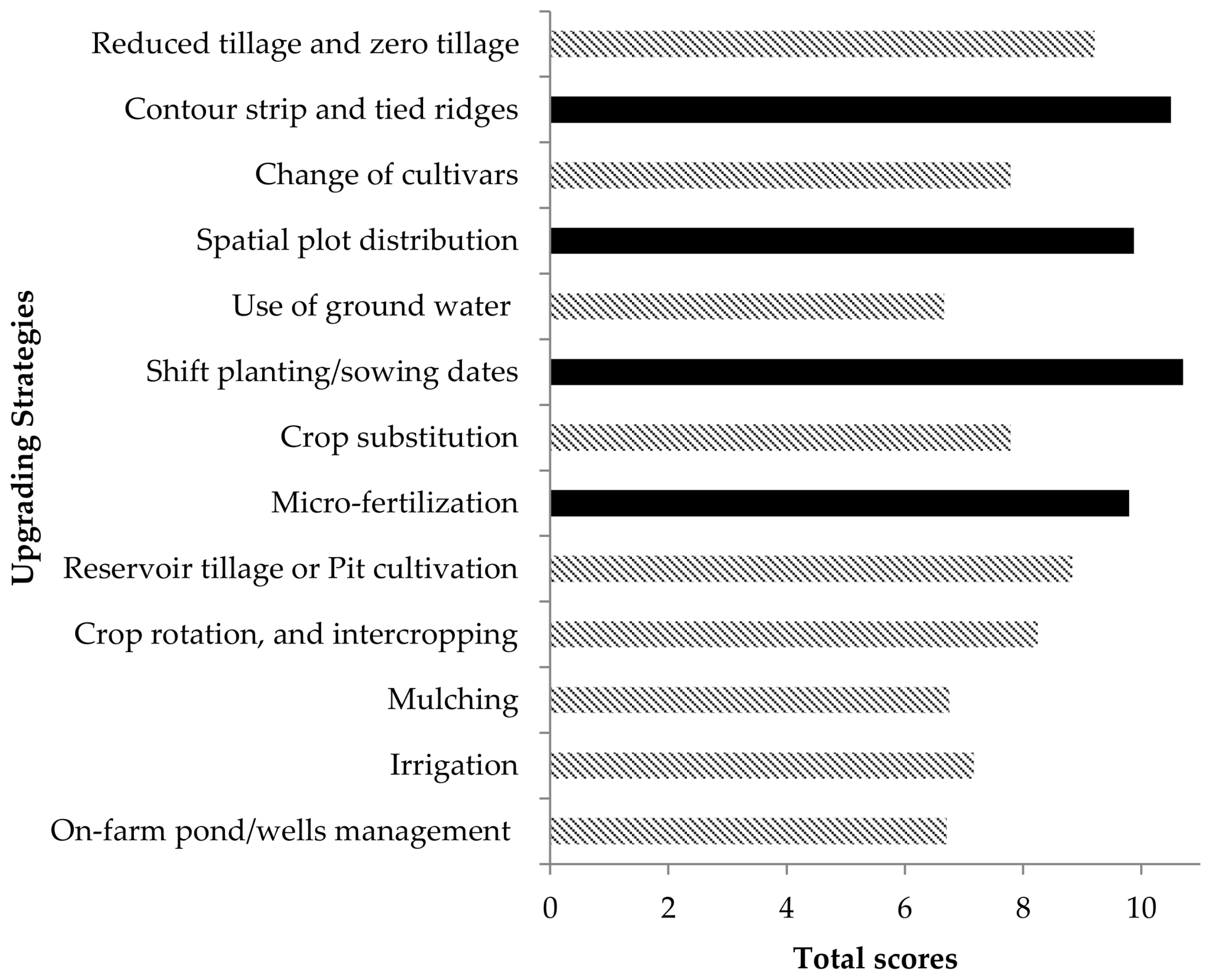
| Criteria | Constraints | On-Farm Pond/Wells Management | Irrigation | Mulching | Crop rotation, and Intercropping | Reservoir Tillage or Pit Cultivation | Micro-Fertilization | Crop Substitution | Shift Planting/Sowing Dates | Use of Groundwater | Spatial Plot Distribution | Change of Cultivars | Contour Strip and Tied Ridges | Reduced Tillage and Zero Tillage |
|---|---|---|---|---|---|---|---|---|---|---|---|---|---|---|
| Importance | Social acceptance | 1 | 3 | 3 | 2 | 3 | 3 | 2 | 3 | 1 | 3 | 2 | 3 | 2 |
| Labor | 2 | 1 | 2 | 2 | 1 | 3 | 3 | 3 | 1 | 3 | 3 | 2 | 2 | |
| Sustainability | 2 | 2 | 3 | 3 | 2 | 2 | 1 | 3 | 1 | 3 | 2 | 3 | 3 | |
| Environment | 2 | 2 | 3 | 3 | 3 | 2 | 3 | 3 | 1 | 3 | 2 | 3 | 3 | |
| Rainfall variability | 2 | 2 | 1 | 2 | 3 | 2 | 2 | 3 | 3 | 3 | 2 | 3 | 2 | |
| Soil fertility | 2 | 2 | 2 | 2 | 2 | 3 | 1 | 2 | 1 | 2 | 1 | 2 | 2 | |
| Land availability | 1 | 1 | 2 | 2 | 2 | 3 | 3 | 3 | 1 | 1 | 3 | 3 | 3 | |
| Productivity | 3 | 3 | 2 | 2 | 2 | 3 | 2 | 3 | 3 | 3 | 2 | 3 | 2 | |
| Average | 2.1 | 2.0 | 2.3 | 2.3 | 2.3 | 2.6 | 2.1 | 2.9 | 1.5 | 2.6 | 2.1 | 2.8 | 2.4 | |
| Affordability | Costs | 1 | 1 | 2 | 2 | 2 | 2 | 2 | 3 | 1 | 3 | 2 | 2 | 2 |
| Labor | 1 | 1 | 1 | 2 | 2 | 2 | 3 | 2 | 1 | 1 | 2 | 2 | 2 | |
| Availability/easy to implement | 1 | 1 | 1 | 2 | 2 | 2 | 1 | 3 | 2 | 3 | 2 | 3 | 3 | |
| Average | 1.0 | 1.0 | 1.3 | 2.0 | 2.0 | 2.0 | 2.0 | 2.7 | 1.3 | 2.3 | 2.0 | 2.3 | 2.3 | |
| Possibility | Easy to implement | 1 | 1 | 1 | 2 | 2 | 2 | 1 | 3 | 2 | 3 | 2 | 3 | 3 |
| Social acceptance | 2 | 3 | 1 | 2 | 2 | 3 | 1 | 3 | 1 | 3 | 1 | 3 | 2 | |
| Labor | 1 | 1 | 1 | 2 | 2 | 2 | 3 | 2 | 1 | 1 | 2 | 2 | 2 | |
| Land availability | 1 | 1 | 3 | 2 | 3 | 3 | 3 | 2 | 2 | 2 | 3 | 3 | 3 | |
| Average | 1.3 | 1.5 | 1.5 | 2.0 | 2.3 | 2.5 | 2.0 | 2.5 | 1.5 | 2.3 | 2.0 | 2.8 | 2.5 | |
| Effectiveness | Rainfall variability | 2 | 3 | 1 | 2 | 3 | 2 | 2 | 3 | 3 | 3 | 2 | 3 | 2 |
| Soil fertility | 2 | 2 | 2 | 2 | 2 | 3 | 1 | 2 | 1 | 2 | 1 | 2 | 2 | |
| Productivity | 3 | 3 | 2 | 2 | 2 | 3 | 2 | 3 | 3 | 3 | 2 | 3 | 2 | |
| Average | 2.3 | 2.7 | 1.7 | 2.0 | 2.3 | 2.7 | 1.7 | 2.7 | 2.3 | 2.7 | 1.7 | 2.7 | 2.0 |
| UPS | Models and Authors | Country | Crops |
|---|---|---|---|
| Contour strip and tied ridges | ACRU [116], SWAT [117], AquaCrop model [118], HYDRUS-2D Software [119], APSIM [120] | Zimbabwe, Kenya, Ethiopia, China | Maize |
| Micro-fertilization | APSIM [121,122,123], EPICSEAR [124], MSM [125], DSSAT [126,127,128,129,130,131], AquaCrop [132] | Zimbabwe, Kenya, Madagascar, Niger, Brazil China, Canada, Korea, Pakistan | Maize, Wheat, Rice, Pearl, Millet, Barley |
| Shifting planting/sowing dates | APSIM [121,133], GIS-based EPIC [74], DSSAT [134], AquaCrop model [135,136], CropSyst model [73], Soil moisture model [137] | Zimbabwe, Mozambique, Morocco, Botswana, Malawi, China, India, Iran, Jordan | Maize, Wheat, Rice, Sorghum, Barley |
| Spatial plot distribution | DSSAT [73,138-141], APSIM [142] | Brazil, Jordan, India, Timor-Leste | Maize, Sorghum, Rice, Wheat, Barley |
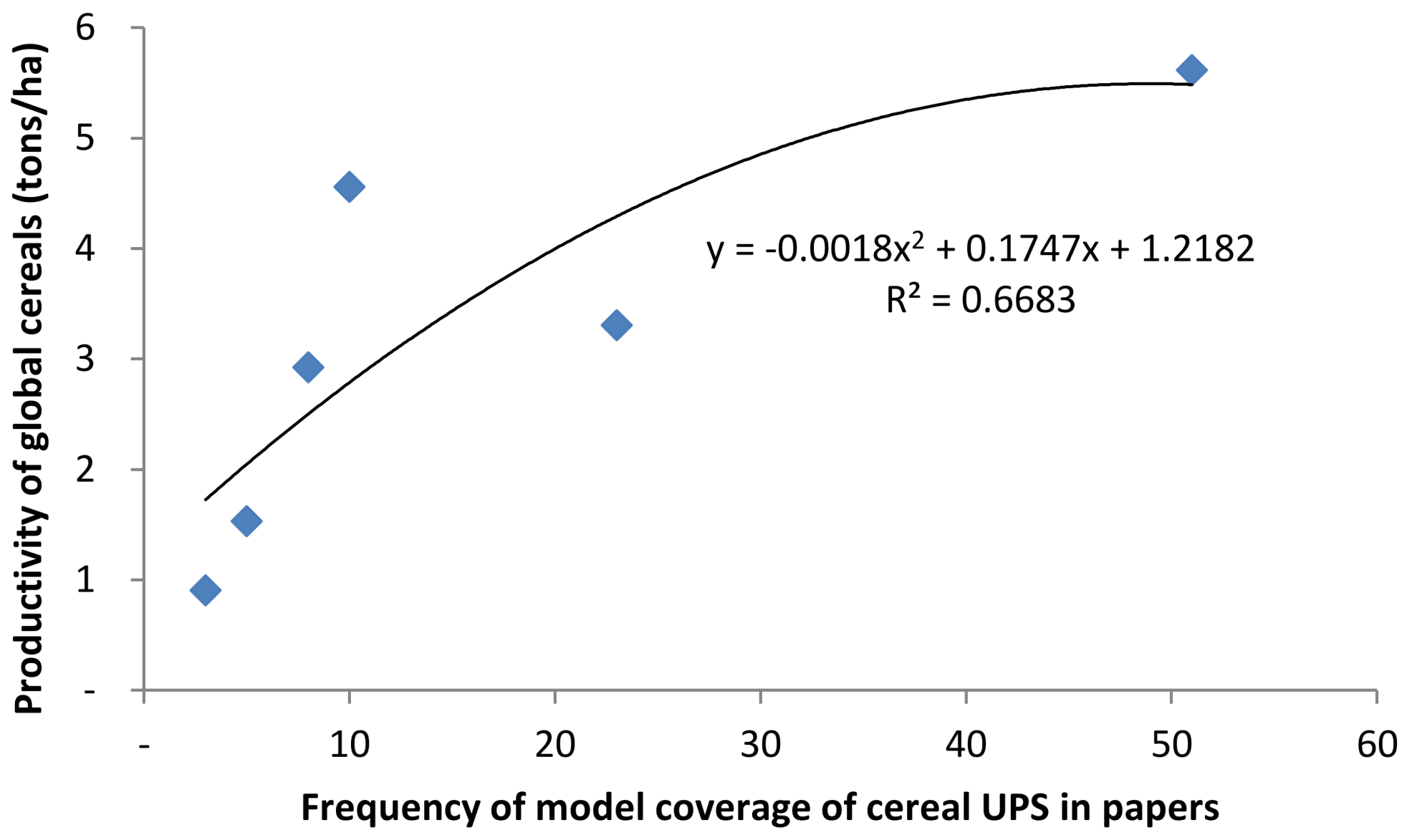
| Crop | Production tons/ha |
|---|---|
| Barley | 2.92 |
| Maize | 5.62 |
| Millet | 0.90 |
| Rice | 4.56 |
| Sorghum | 1.53 |
| Wheat | 3.31 |
© 2018 by the authors. Licensee MDPI, Basel, Switzerland. This article is an open access article distributed under the terms and conditions of the Creative Commons Attribution (CC BY) license (http://creativecommons.org/licenses/by/4.0/).
Share and Cite
Silungwe, F.R.; Graef, F.; Bellingrath-Kimura, S.D.; Tumbo, S.D.; Kahimba, F.C.; Lana, M.A. Crop Upgrading Strategies and Modelling for Rainfed Cereals in a Semi-Arid Climate—A Review. Water 2018, 10, 356. https://doi.org/10.3390/w10040356
Silungwe FR, Graef F, Bellingrath-Kimura SD, Tumbo SD, Kahimba FC, Lana MA. Crop Upgrading Strategies and Modelling for Rainfed Cereals in a Semi-Arid Climate—A Review. Water. 2018; 10(4):356. https://doi.org/10.3390/w10040356
Chicago/Turabian StyleSilungwe, Festo Richard, Frieder Graef, Sonoko Dorothea Bellingrath-Kimura, Siza Donald Tumbo, Frederick Cassian Kahimba, and Marcos Alberto Lana. 2018. "Crop Upgrading Strategies and Modelling for Rainfed Cereals in a Semi-Arid Climate—A Review" Water 10, no. 4: 356. https://doi.org/10.3390/w10040356
APA StyleSilungwe, F. R., Graef, F., Bellingrath-Kimura, S. D., Tumbo, S. D., Kahimba, F. C., & Lana, M. A. (2018). Crop Upgrading Strategies and Modelling for Rainfed Cereals in a Semi-Arid Climate—A Review. Water, 10(4), 356. https://doi.org/10.3390/w10040356

