Application of Fe-Cu/Biochar System for Chlorobenzene Remediation of Groundwater in Inhomogeneous Aquifers

Abstract
1. Introduction
2. Materials and Methods
2.1. Chemicals, Biochars and Sands
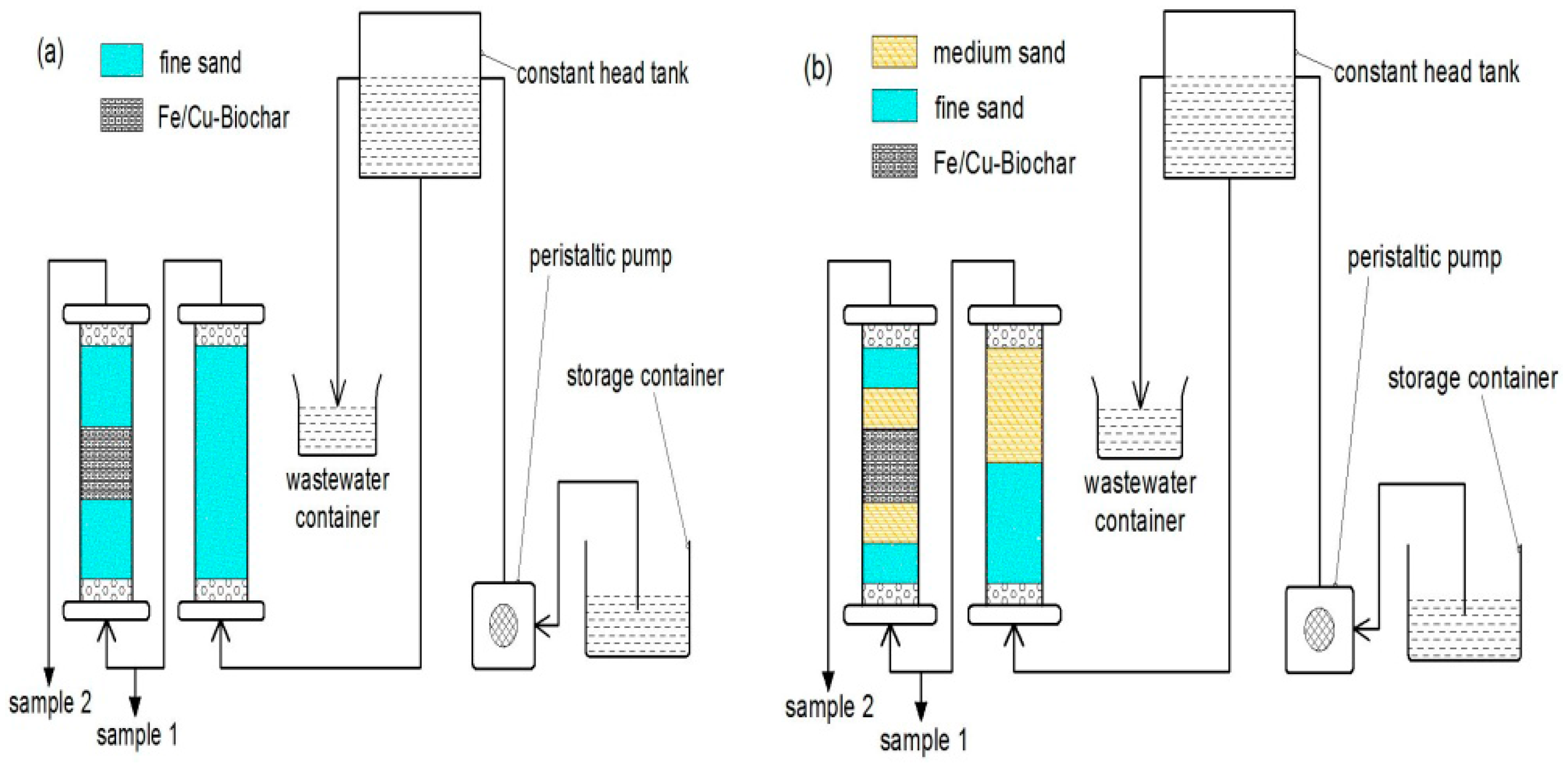
2.2. Column Test
2.3. Characterization
2.4. Analytical Methods
3. Discussion
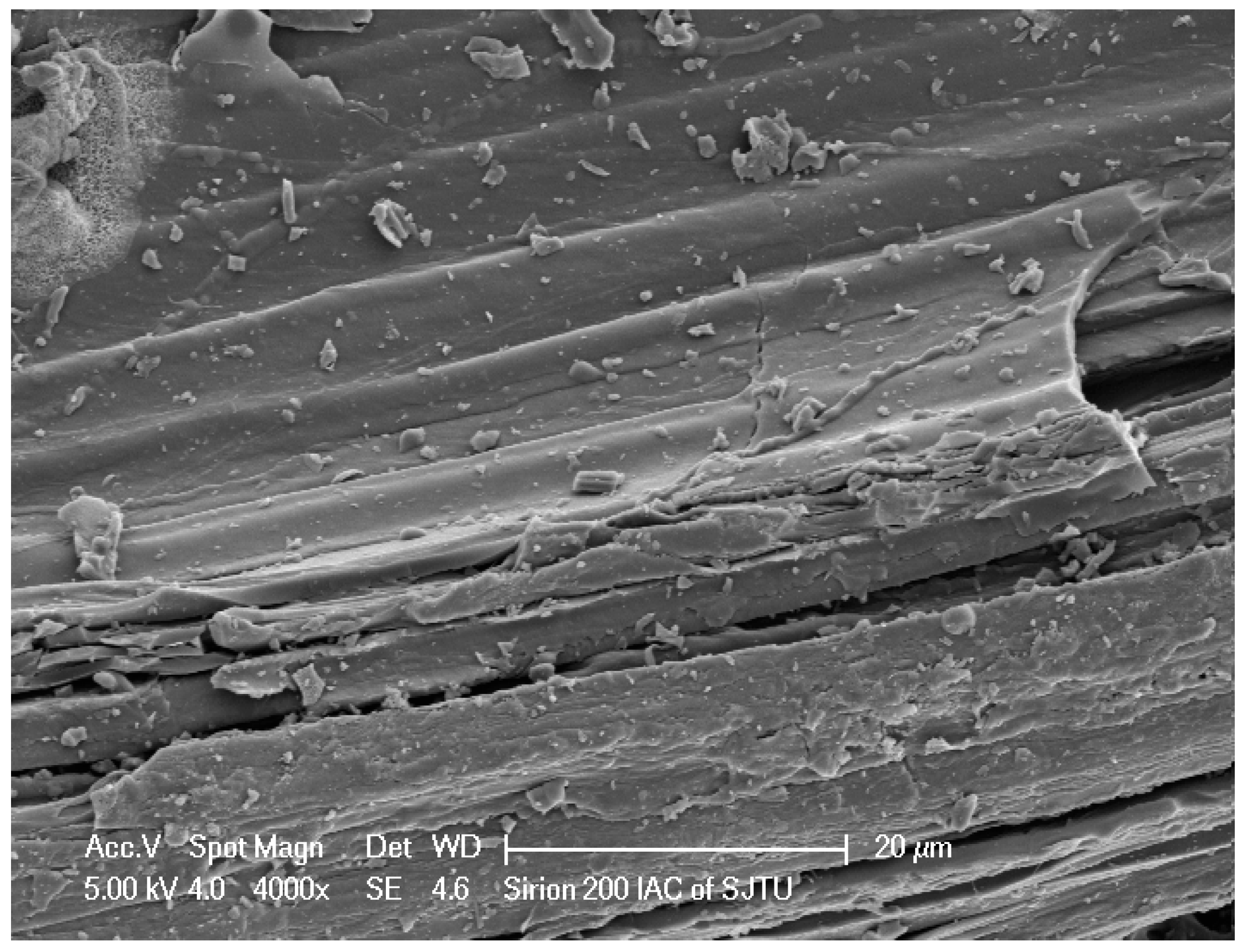
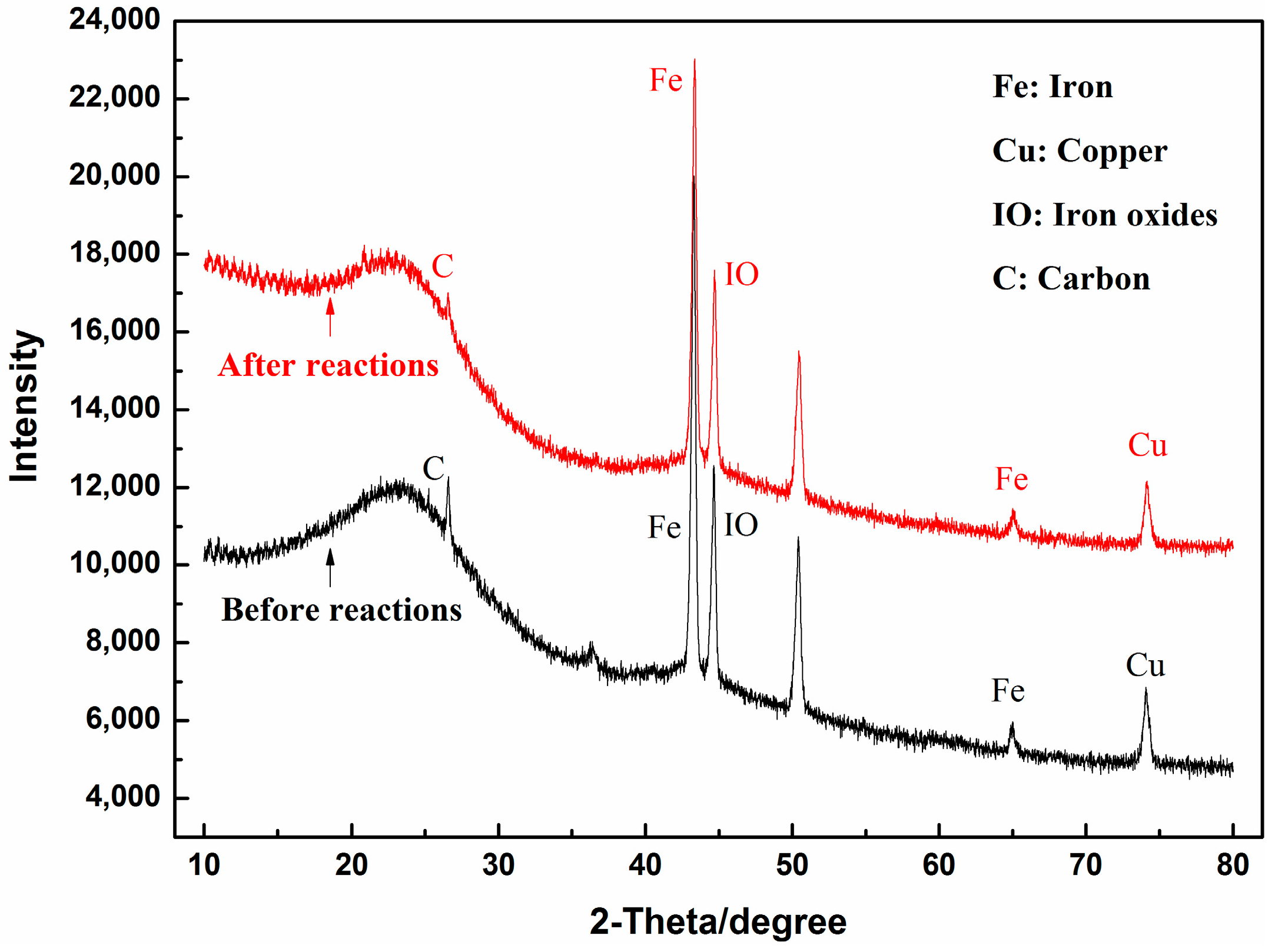
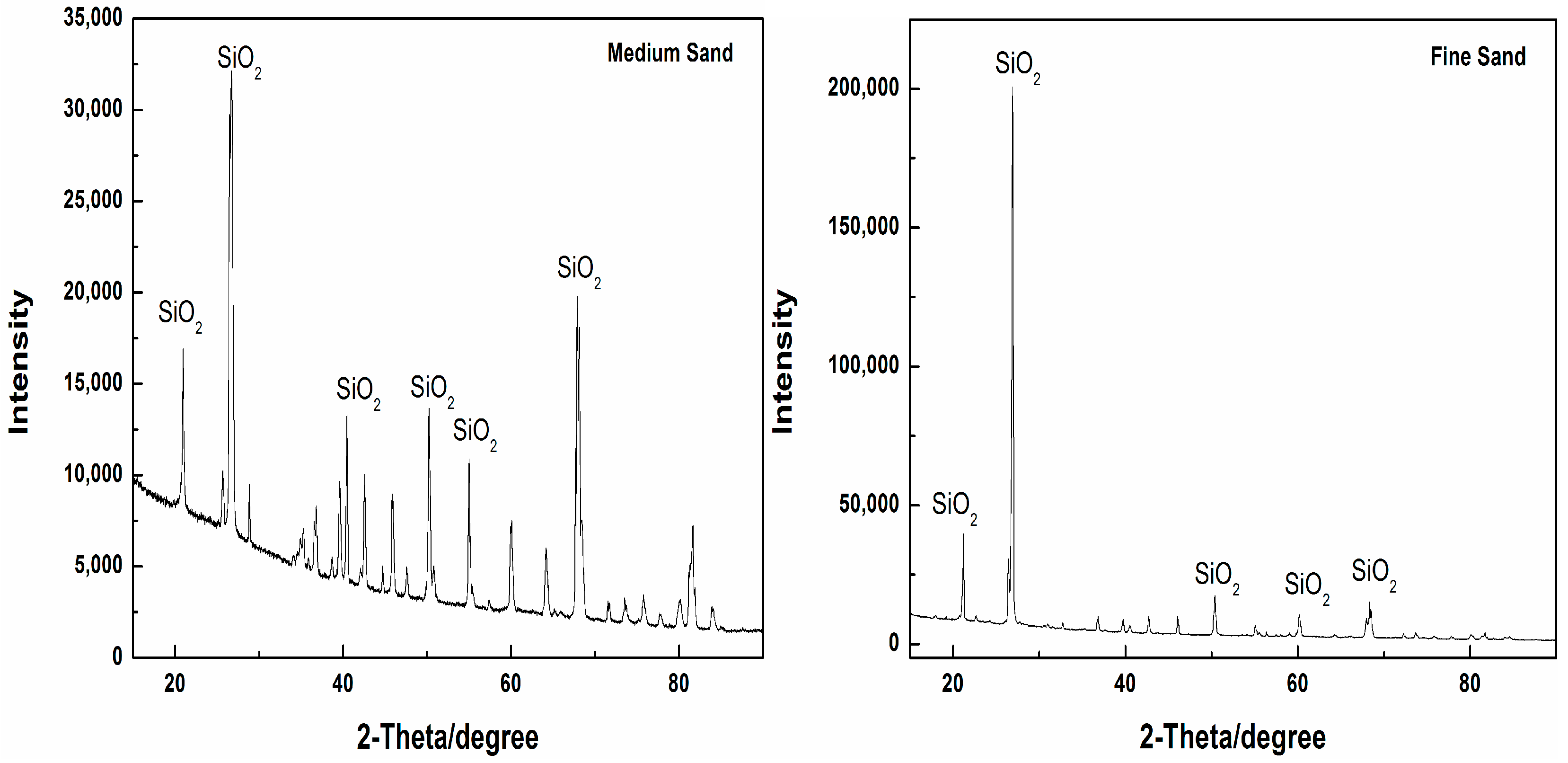
3.1. Characterization of the Fe-Cu/Biochar System
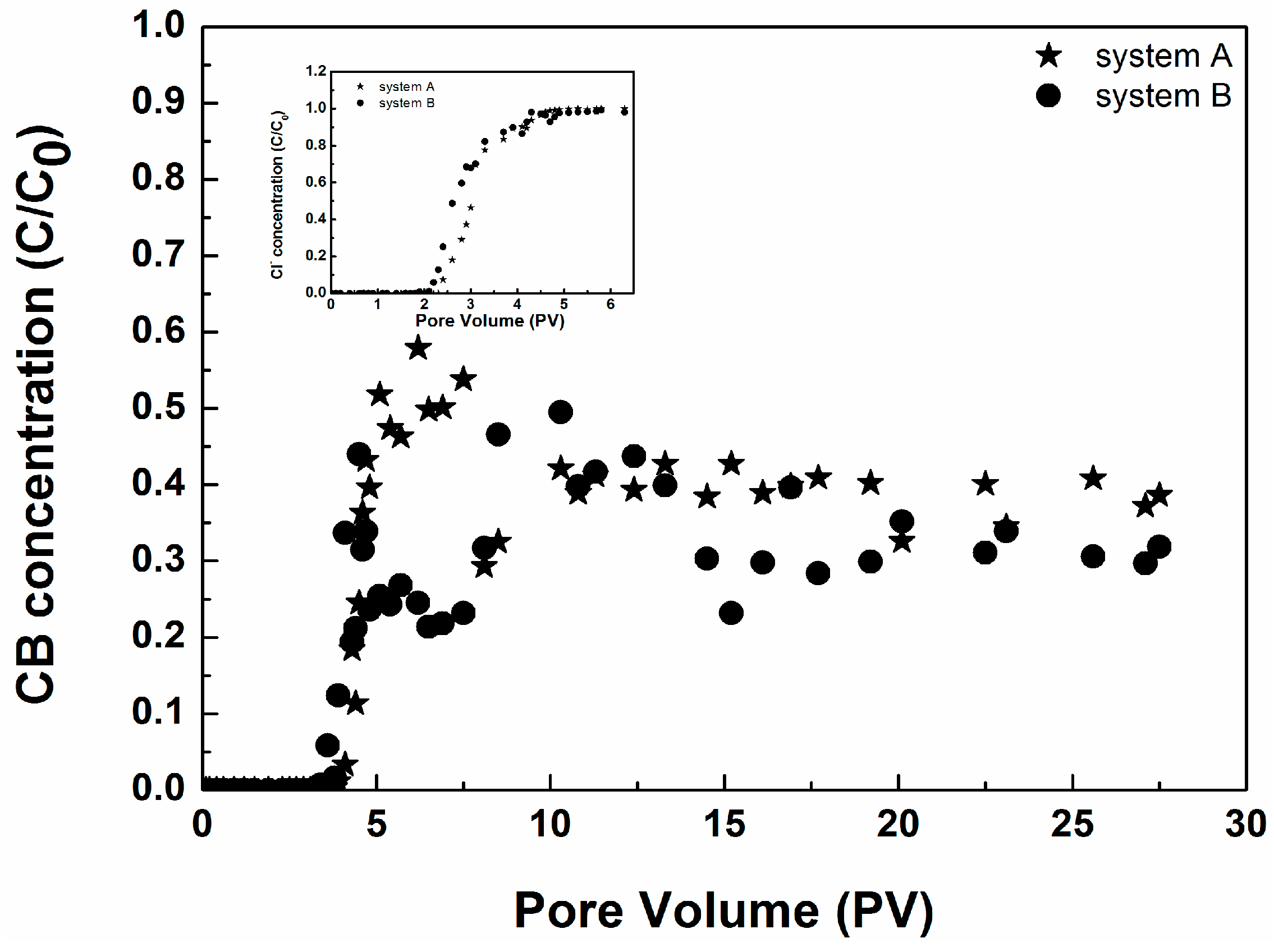
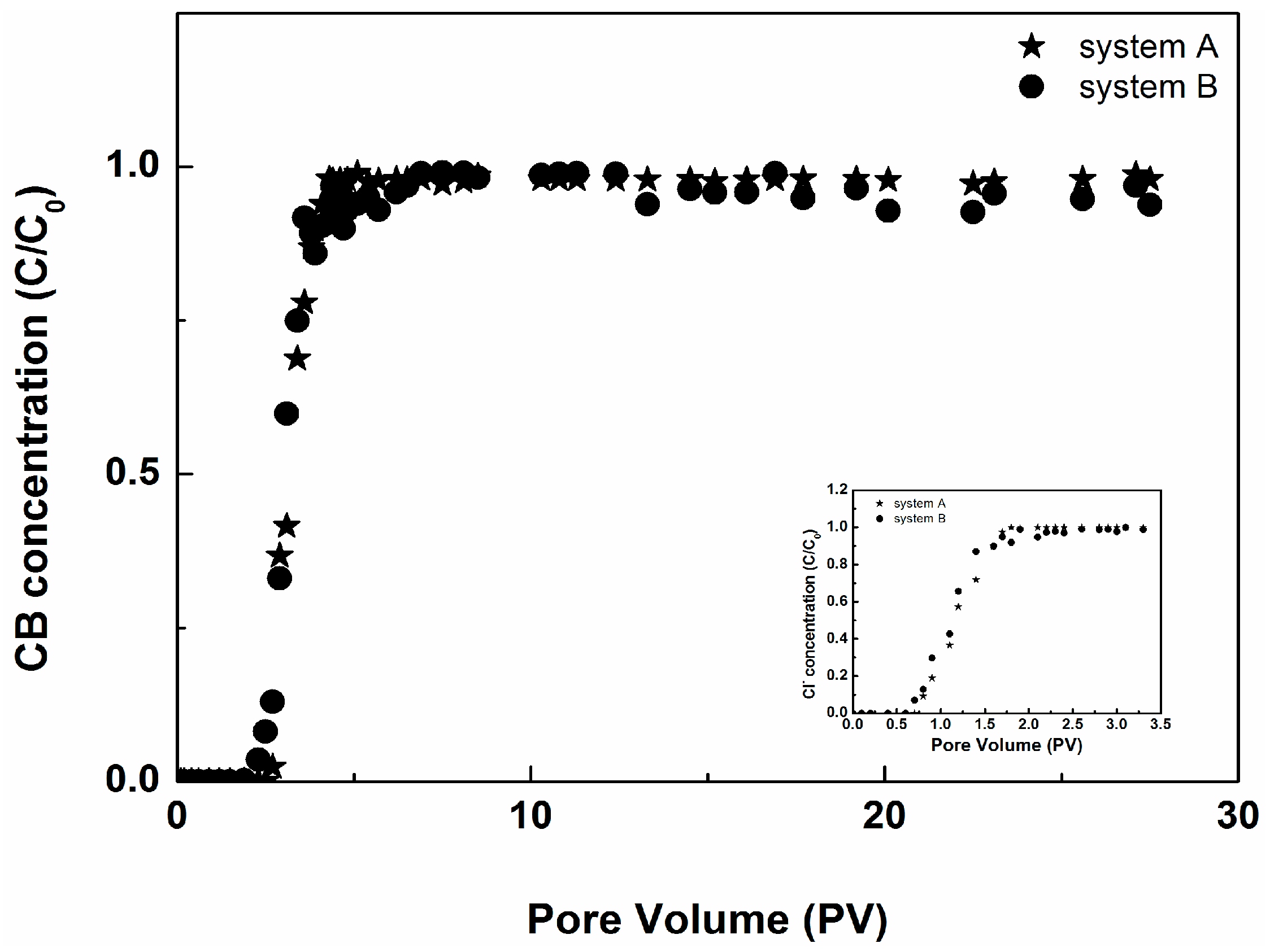
3.2. Column Tests in Homogeneous and Heterogeneous Porous Media
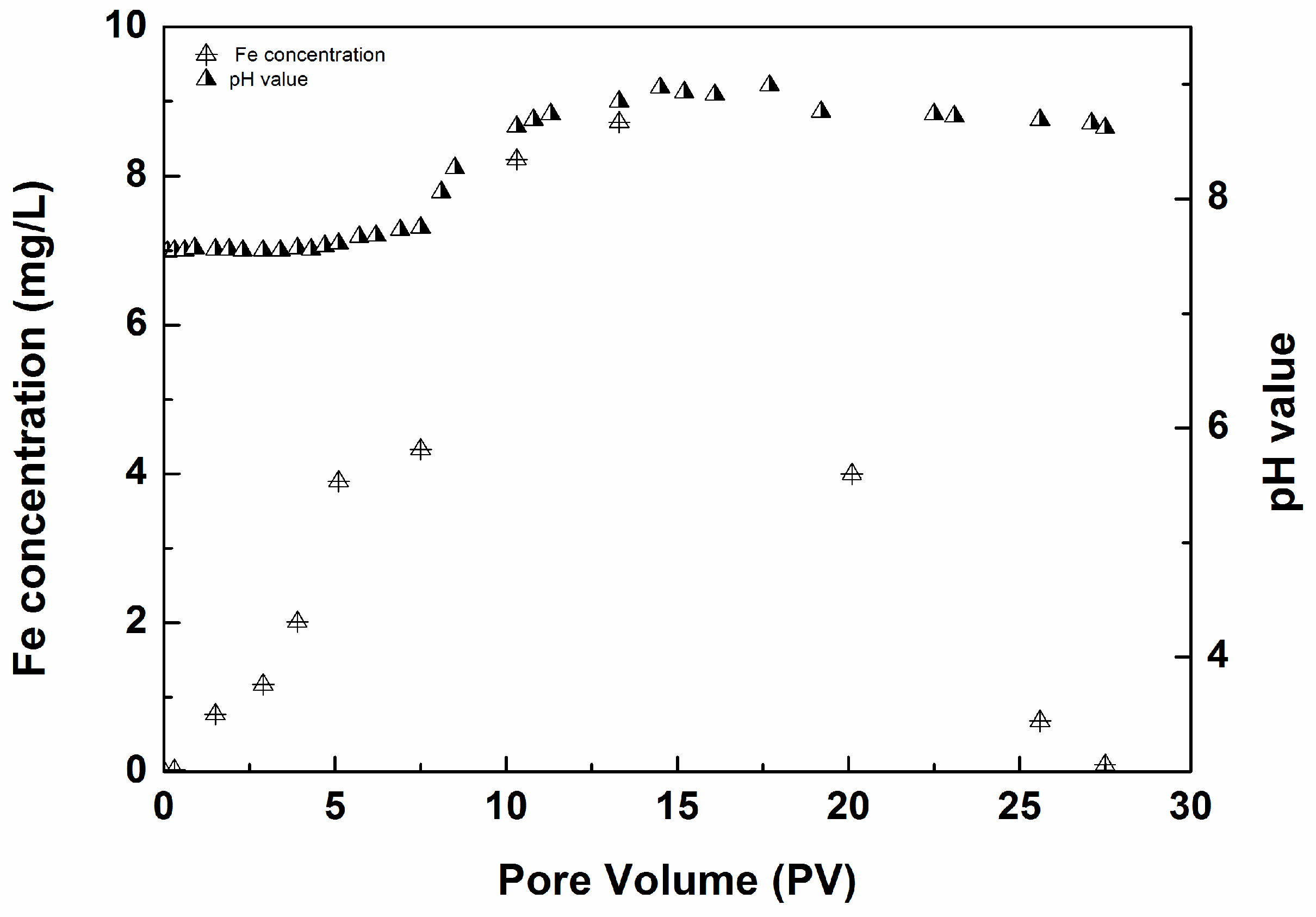
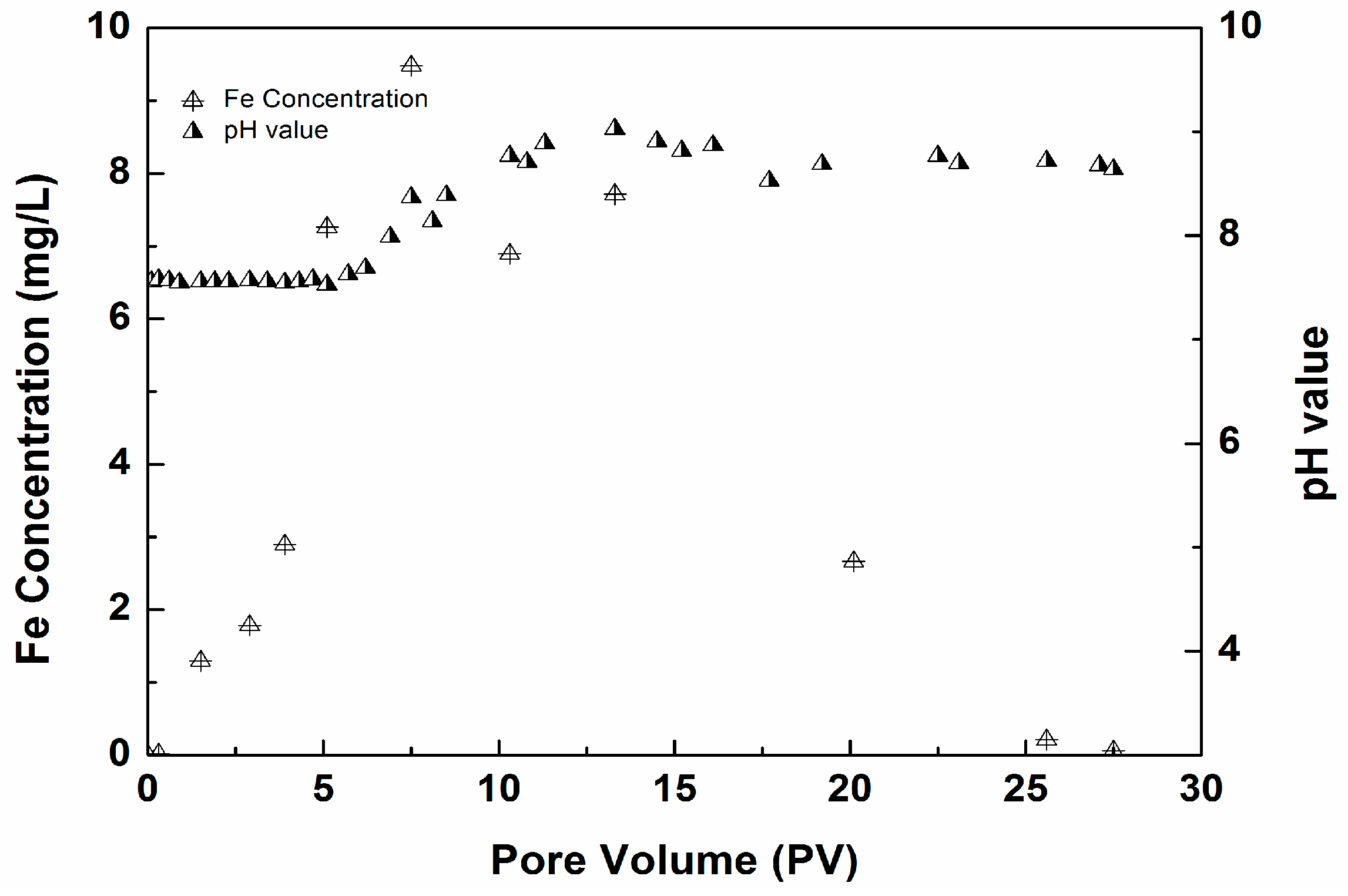
3.3. Released Iron Ion Concentration in Effluents
3.4. pH Changes of the Effluents
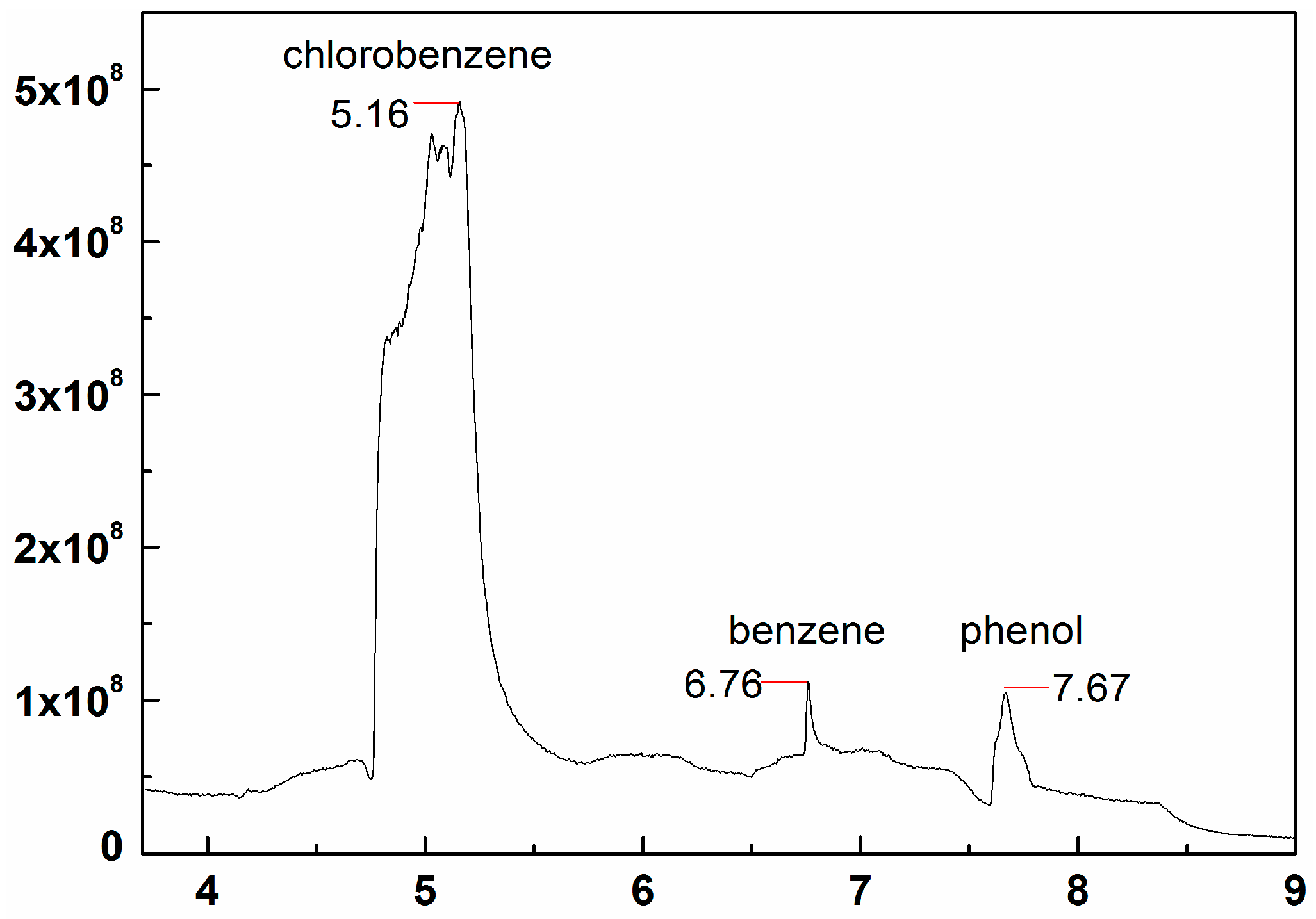
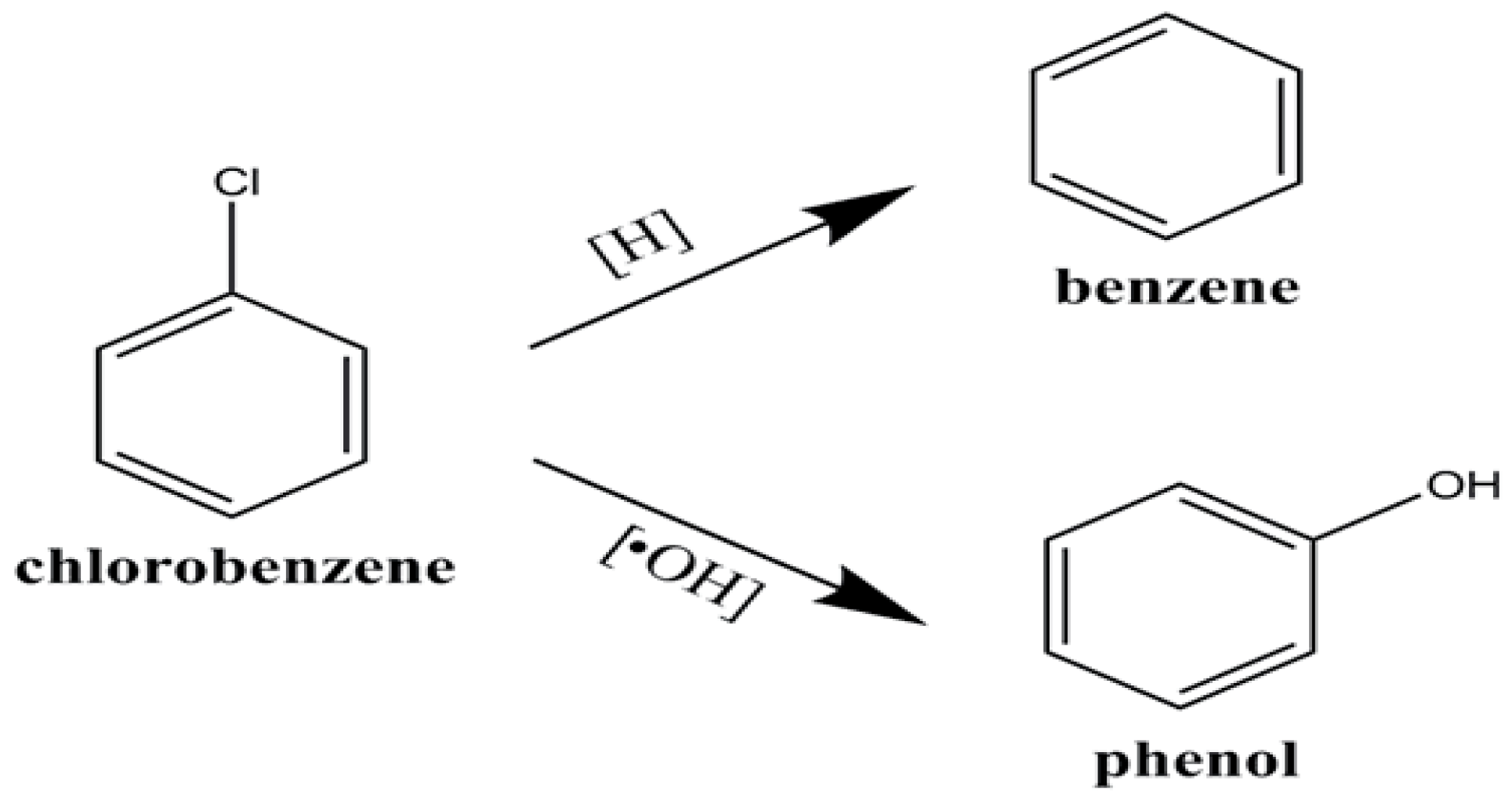
3.5. Intermediates of CB-Contaminated Groundwater
4. Conclusions
Acknowledgments
Author Contributions
Conflicts of Interest
References
- Morris, B.L.; Lawrence, A.; Chilton, J.; Adams, B.; Calow, R.C.; Klinck, B.A. Groundwater and Its Susceptibility to Degradation: A Global Assessment of the Problem and Options for Management; British Geological Survey: Nottingham, UK, 2003. [Google Scholar]
- Liu, Y.; Mou, H.; Chen, L.; Mirza, Z.A.; Liu, L. Cr(VI)-contaminated groundwater remediation with simulated permeable reactive barrier (PRB) filled with natural pyrite as reactive material: Environmental factors and effectiveness. J. Hazard. Mater. 2015, 298, 83–90. [Google Scholar] [CrossRef] [Scilit] [PubMed]
- Stroo, H.F.; Leeson, A.; Marqusee, J.A.; Johnson, P.C.; Ward, C.H.; Kavanaugh, M.C.; Sale, T.C.; Newell, C.J.; Pennell, K.D.; Lebrón, C.A. Chlorinated ethene source remediation: Lessons learned. Environ. Sci. Technol. 2012, 46, 6438–6447. [Google Scholar] [CrossRef] [Scilit] [PubMed]
- Blad, M.C.; Gutierrezwing, M.T.; Constant, W.D. Characterization of mass transfer of lower chlorinated benzenes from contaminated sediment into water. J. Hazard. Mater. 2012, 221–222, 109–117. [Google Scholar] [CrossRef] [Scilit] [PubMed]
- Oh, Y.S.; Bartha, R. Design and performance of a trickling air biofilter for chlorobenzene and o-dichlorobenzene vapors. Appl. Environ. Microbiol. 1994, 60, 2717–2722. [Google Scholar] [PubMed]
- Braune, B.M.; Outridge, P.M.; Fisk, A.T.; Muir, D.C.G.; Helm, P.A.; Hobbs, K.; Hoekstra, P.F.; Kuzyk, Z.A.; Kwan, M.; Letcher, R.J. Persistent organic pollutants and mercury in marine biota of the Canadian Arctic: An overview of spatial and temporal trends. Sci. Total Environ. 2005, 351–352, 4–56. [Google Scholar] [CrossRef] [Scilit] [PubMed]
- Maria, G.; Maria, C. A review of accidental release simulated case studies on dispersion and bioaccumulation of PCB and CB persistent pollutants in riverbeds. Rev. Chim. Bucharest Orig. Ed. 2009, 60, 699–705. [Google Scholar]
- Oliver, B.G.; Nicol, K.D. Chlorobenzenes in sediments, water and selected fish from Lakes Superior, Huron, Erie and Ontario. Environ. Sci. Technol. 1982, 16, 260–286. [Google Scholar] [CrossRef] [Scilit]
- Harper, D.J.; Ridgeway, I.M.; Leatherland, T.M. Concentrations of hexachlorobenzene, trichlorobenzenes and chloroform in the waters of the Forth Estuary, Scotland. Mar. Pollut. Bull. 1992, 24, 244–249. [Google Scholar] [CrossRef] [Scilit]
- Ogata, M.; Taguchi, T.; Hirota, N.; Shimada, Y.; Nakae, S. Quantitation of urinary chlorobenzene metabolites by HPLC: Concentrations of 4-chlorocatechol and chlorophenols in urine and of chlorobenzene in biological specimens of subjects exposed to chlorobenzene. Int. Arch. Occup. Environ. Health 1991, 63, 121–128. [Google Scholar] [CrossRef] [Scilit] [PubMed]
- Wang, J. Chlorobenzene degradation by electro-heterogeneous catalysis in aqueous solution: Intermediates and reaction mechanism. J. Environ. Sci. 2008, 20, 1306–1311. [Google Scholar] [CrossRef] [Scilit]
- Tosco, T.; Papini, M.P.; Viggi, C.C.; Sethi, R. Nanoscale zerovalent iron particles for groundwater remediation: A review. J. Clean. Prod. 2014, 77, 10–21. [Google Scholar] [CrossRef] [Scilit]
- Do, S.H.; Kwon, Y.J.; Kong, S.H. Feasibility study on an oxidant-injected permeable reactive barrier to treat BTEX contamination: Adsorptive and catalytic characteristics of waste-reclaimed adsorbent. J. Hazard. Mater. 2011, 191, 19–25. [Google Scholar] [CrossRef] [Scilit] [PubMed]
- Rivett, M.O.; Chapman, S.W.; Allen-King, R.M.; Feenstra, S.; Cherry, J.A. Pump-and-Treat Remediation of Chlorinated Solvent Contamination at a Controlled Field-Experiment Site. Environ. Sci. Technol. 2006, 40, 6770–6781. [Google Scholar] [CrossRef] [Scilit] [PubMed]
- Liang, S.H.; Chen, K.F.; Wu, C.S.; Lin, Y.H.; Kao, C.M. Development of KMnO4-releasing composites for in situ chemical oxidation of TCE-contaminated groundwater. Water Res. 2014, 54, 149–158. [Google Scholar] [CrossRef] [Scilit] [PubMed]
- Kebria, D.Y.; Taghizadeh, M.; Camacho, J.V.; Latifi, N. Remediation of PCE contaminated clay soil by coupling electrokinetics with zero-valent iron permeable reactive barrier. Environ. Earth Sci. 2016, 75, 1–11. [Google Scholar] [CrossRef] [Scilit]
- Feitz, A.J.; Joo, S.H.; Guan, J.; Sun, Q.; Sedlak, D.L.; Waite, T.D. Oxidative transformation of contaminants using colloidal zero-valent iron. Colloids Surf. Physicochem. Eng. Asp. 2005, 265, 88–94. [Google Scholar] [CrossRef] [Scilit]
- Zhang, W.X. Nanoscale Iron Particles for Environmental Remediation: An Overview. J. Nanopart. Res. 2003, 5, 323–332. [Google Scholar] [CrossRef] [Scilit]
- Joo, S.H.; Feitz, A.J.; Sedlak, D.L.; Waite, T.D. Quantification of the oxidizing capacity of nanoparticulate zero-valent iron. Environ. Sci. Technol. 2005, 39, 1263–1268. [Google Scholar] [CrossRef] [Scilit] [PubMed]
- Lehmann, J. A handful of carbon. Nature 2007, 447, 143–144. [Google Scholar] [CrossRef] [Scilit] [PubMed]
- Yao, Y.; Gao, B.; Chen, J.; Zhang, M.; Inyang, M.; Li, Y.; Alva, A.; Yang, L. Engineered carbon (biochar) prepared by direct pyrolysis of Mg-accumulated tomato tissues: Characterization and phosphate removal potential. Bioresour. Technol. 2013, 138, 8–13. [Google Scholar] [CrossRef] [Scilit] [PubMed]
- Zhang, M.; Gao, B. Removal of arsenic, methylene blue and phosphate by biochar/AlOOH nanocomposite. Chem. Eng. J. 2013, 226, 286–292. [Google Scholar] [CrossRef] [Scilit]
- Ruan, X.C.; Liu, M.Y.; Zeng, Q.F.; Ding, Y.H. Degradation and decolorization of reactive red X-3B aqueous solution by ozone integrated with internal micro-electrolysis. Sep. Purif. Technol. 2010, 74, 195–201. [Google Scholar] [CrossRef] [Scilit]
- Feng, H.; Zhao, D. Preparation and Characterization of a New Class of Starch-Stabilized Bimetallic Nanoparticles for Degradation of Chlorinated Hydrocarbons in Water. Environ. Sci. Technol. 2005, 39, 3314–3320. [Google Scholar]
- Cao, J.; Xu, R.; Tang, H.; Tang, S.; Cao, M. Synthesis of monodispersed CMC-stabilized Fe–Cu bimetal nanoparticles for in situ reductive dechlorination of 1,2,4-trichlorobenzene. Sci. Total Environ. 2011, 409, 2336–2341. [Google Scholar] [CrossRef] [Scilit] [PubMed]
- Wang, J.; Liu, C.; Li, J.; Luo, R.; Hu, X.; Sun, X.; Shen, J.; Han, W.; Wang, L. In situ incorporation of iron-copper bimetallic particles in electrospun carbon nanofibers as an efficient Fenton catalyst. Appl. Catal. B Environ. 2017, 207, 316–325. [Google Scholar] [CrossRef] [Scilit]
- Wan, J.; Li, Z.; Yuan, S.; Lu, X. Removal of Hexachlorobenzene from Kaolin by Electrokinetics Coupled with Cu/Fe PRB. Pract. Period. Hazard. Toxic Radioact. Waste Manag. 2010, 15, 175–179. [Google Scholar] [CrossRef] [Scilit]
- Bransfield, S.J.; Cwiertny, D.M.; Roberts, A.L.; Fairbrother, D.H. Influence of copper loading and surface coverage on the reactivity of granular iron toward 1,1,1-trichloroethane. Environ. Sci. Technol. 2006, 40, 1485–1490. [Google Scholar] [CrossRef] [Scilit] [PubMed]
- Teerakun, M.; Reungsang, A.; Lin, C.; Liao, C. Coupling of zero valent iron and biobarriers for remediation of trichloroethylene in groundwater. J. Environ. Sci. 2011, 23, 560–567. [Google Scholar] [CrossRef] [Scilit]
- Zhou, D.; Li, Y.; Zhang, Y.; Zhang, C.; Li, X.; Chen, Z.; Huang, J.; Li, X.; Flores, G.; Kamon, M. Column test-based optimization of the permeable reactive barrier (PRB) technique for remediating groundwater contaminated by landfill leachates. J. Contam. Hydrol. 2014, 168, 1–16. [Google Scholar] [CrossRef] [Scilit] [PubMed]
- Liang, S.H.; Kao, C.M.; Kuo, Y.C.; Chen, K.F. Application of persulfate-releasing barrier to remediate MTBE and benzene contaminated groundwater. J. Hazard. Mater. 2011, 185, 1162–1168. [Google Scholar] [CrossRef] [Scilit] [PubMed]
- Liang, S.H.; Kao, C.M.; Kuo, Y.C.; Chen, K.F.; Yang, B.M. In situ oxidation of petroleum-hydrocarbon contaminated groundwater using passive ISCO system. Water Res. 2011, 45, 2496–2506. [Google Scholar] [CrossRef] [Scilit] [PubMed]
- Chokejaroenrat, C.; Comfort, S.; Sakulthaew, C.; Dvorak, B. Improving the treatment of non-aqueous phase TCE in low permeability zones with permanganate. J. Hazard. Mater. 2014, 268C, 177–184. [Google Scholar] [CrossRef] [Scilit] [PubMed]
- Garajvrhovac, V.; Kopjar, N.; Raem, D.; Veki, B.; Miljani, S.; Ranogajeckomor, M. Improving the Sweeping Efficiency of Permanganate into Low Permeable Zones To Treat TCE: Experimental Results and Model Development. Environ. Sci. Technol. 2013, 47, 13031–13038. [Google Scholar]
- Jackson, R.E.; Dwarakanath, V.; Meinardus, H.W.; Young, C.M. Mobility control: How injected surfactants and biostimulants may be forced into low-permeability units. Remediat. J. 2003, 13, 59–66. [Google Scholar] [CrossRef] [Scilit]
- Robert, T.; Martel, R.; Conrad, S.H.; Lefebvre, R.; Gabriel, U. Visualization of TCE recovery mechanisms using surfactant-polymer solutions in a two-dimensional heterogeneous sand model. J. Contam. Hydrol. 2006, 86, 3–31. [Google Scholar] [CrossRef] [Scilit] [PubMed]
- Silva, J.A.; Smith, M.M.; Munakata-Marr, J.; Mccray, J.E. The effect of system variables on in situ sweep-efficiency improvements via viscosity modification. J. Contam. Hydrol. 2012, 136–137, 117–130. [Google Scholar] [CrossRef] [Scilit] [PubMed]
- Elder, C.R.; Benson, C.H.; Eykholt, G.R. Effects of heterogeneity on influent and effluent concentrations from horizontal permeable reactive barriers. Water Resour. Res. 2002, 38, 27:1–27:19. [Google Scholar] [CrossRef] [Scilit]
- Zheng, F.; Gao, Y.; Sun, Y.; Shi, X.; Xu, H.; Wu, J. Influence of flow velocity and spatial heterogeneity on DNAPL migration in porous media: Insights from laboratory experiments and numerical modelling. Hydrogeol. J. 2015, 23, 1703–1718. [Google Scholar] [CrossRef] [Scilit]
- Fan, J.H.; Ma, L.M. The pretreatment by the Fe-Cu process for enhancing biological degradability of the mixed wastewater. J. Hazard. Mater. 2009, 164, 1392–1397. [Google Scholar] [CrossRef] [Scilit] [PubMed]
- Wu, S.; Qi, Y.; He, S.; Fan, C.; Dai, B.; Zhou, W.; Lei, G.; Huang, J. Preparation and application of novel catalytic-ceramic-filler in a coupled system for TNT manufacturing wastewater treatment. Chem. Eng. J. 2015, 280, 417–425. [Google Scholar] [CrossRef] [Scilit]
- Wang, K.S.; Lin, C.L.; Wei, M.C.; Liang, H.H.; Li, H.C.; Chang, C.H.; Fang, Y.T.; Chang, S.H. Effects of dissolved oxygen on dye removal by zero-valent iron. J. Hazard. Mater. 2010, 182, 886–895. [Google Scholar] [CrossRef] [Scilit] [PubMed]
- GB/T 14848-93, China. Quality Standard for Groundwater. 1994. Available online: http://kjs.mep.gov.cn/hjbhbz/bzwb/shjbh/shjzlbz/199410/t19941001_66500.shtml (accessed on 22 December 2017).
- Wu, S.; Qi, Y.; Fan, C.; He, S.; Dai, B.; Huang, J.; Zhou, W.; Gao, L. Application of novel catalytic-ceramic-filler in a coupled system for long-chain dicarboxylic acids manufacturing wastewater treatment. Chemosphere 2015, 144, 2454–2461. [Google Scholar] [CrossRef] [Scilit] [PubMed]
- Jou, C.J.G.; Hsieh, S.C.; Lee, C.L.; Lin, C.; Huang, H.W. Combining zero-valent iron nanoparticles with microwave energy to treat chlorobenzene. J. Taiwan Inst. Chem. Eng. 2010, 41, 216–220. [Google Scholar] [CrossRef] [Scilit]
- Shih, Y.H.; Hsu, C.Y.; Su, Y.F. Reduction of hexachlorobenzene by nanoscale zero-valent iron: Kinetics, pH effect and degradation mechanism. Sep. Purif. Technol. 2011, 76, 268–274. [Google Scholar] [CrossRef] [Scilit]
- Gallard, H.; Laat, J.D. Kinetics of oxidation of chlorobenzenes and phenyl-ureas by Fe(II)/H2O2 and Fe(III)/H2O2. Evidence of reduction and oxidation reactions of intermediates by Fe(II) or Fe(III). Chemosphere 2001, 42, 405–413. [Google Scholar] [CrossRef] [Scilit]
- Hsiao, Y.L.; Nobe, K. Oxidative reactions of phenol and chlorobenzene with in situ electrogenerated Fentons reagent. Chem. Eng. Commun. 1993, 126, 97–110. [Google Scholar] [CrossRef] [Scilit]




| Media Type | Column Code | Components | Porosity | Particle Diameter (mm) |
|---|---|---|---|---|
| Homogeneous | 1 | F | 0.411 | 0.055–0.125 |
| Homogeneous | 2 | Fe | 0.317 | 0.019–0.067 |
| Homogeneous | 2 | Cu | 0.317 | 0.015–0.076 |
| Homogeneous | 2 | B | 0.317 | 0.035–0.144 |
| Homogeneous | 2 | F | 0.317 | 0.055–0.125 |
| Media Type | Column Code | Components | Porosity | Particle Diameter (mm) |
|---|---|---|---|---|
| Heterogeneous | 1 | M + F | 0.429 | 0.046–0.454 |
| Heterogeneous | 2 | Fe | 0.339 | 0.019–0.067 |
| Heterogeneous | 2 | Cu | 0.339 | 0.015–0.076 |
| Heterogeneous | 2 | B | 0.339 | 0.035–0.144 |
| Heterogeneous | 2 | M + F | 0.339 | 0.046–0.454 |
© 2017 by the authors. Licensee MDPI, Basel, Switzerland. This article is an open access article distributed under the terms and conditions of the Creative Commons Attribution (CC BY) license (http://creativecommons.org/licenses/by/4.0/).
Share and Cite
Zhang, X.; Wu, Y.; Zhao, P.; Shu, X.; Zhou, Q.; Dong, Z. Application of Fe-Cu/Biochar System for Chlorobenzene Remediation of Groundwater in Inhomogeneous Aquifers. Water 2018, 10, 13. https://doi.org/10.3390/w10010013
Zhang X, Wu Y, Zhao P, Shu X, Zhou Q, Dong Z. Application of Fe-Cu/Biochar System for Chlorobenzene Remediation of Groundwater in Inhomogeneous Aquifers. Water. 2018; 10(1):13. https://doi.org/10.3390/w10010013
Chicago/Turabian StyleZhang, Xu, Yanqing Wu, Pingping Zhao, Xin Shu, Qiong Zhou, and Zichen Dong. 2018. "Application of Fe-Cu/Biochar System for Chlorobenzene Remediation of Groundwater in Inhomogeneous Aquifers" Water 10, no. 1: 13. https://doi.org/10.3390/w10010013
APA StyleZhang, X., Wu, Y., Zhao, P., Shu, X., Zhou, Q., & Dong, Z. (2018). Application of Fe-Cu/Biochar System for Chlorobenzene Remediation of Groundwater in Inhomogeneous Aquifers. Water, 10(1), 13. https://doi.org/10.3390/w10010013