Article

Effects of Luzon Topography on Track Deflection During the Early Development of Typhoon Yagi (2024)

1
School of Atmospheric Sciences, Sun Yat-sen University, Zhuhai 519080, China
2
Southern Marine Science and Engineering Guangdong Laboratory (Zhuhai), Zhuhai 519082, China
*
Author to whom correspondence should be addressed.
Atmosphere 2026, 17(9), 888; https://doi.org/10.3390/atmos17090888
Submission received: 16 July 2026 / Revised: 3 September 2026 / Accepted: 3 September 2026 / Published: 11 September 2026
(This article belongs to the Section Meteorology)

Abstract

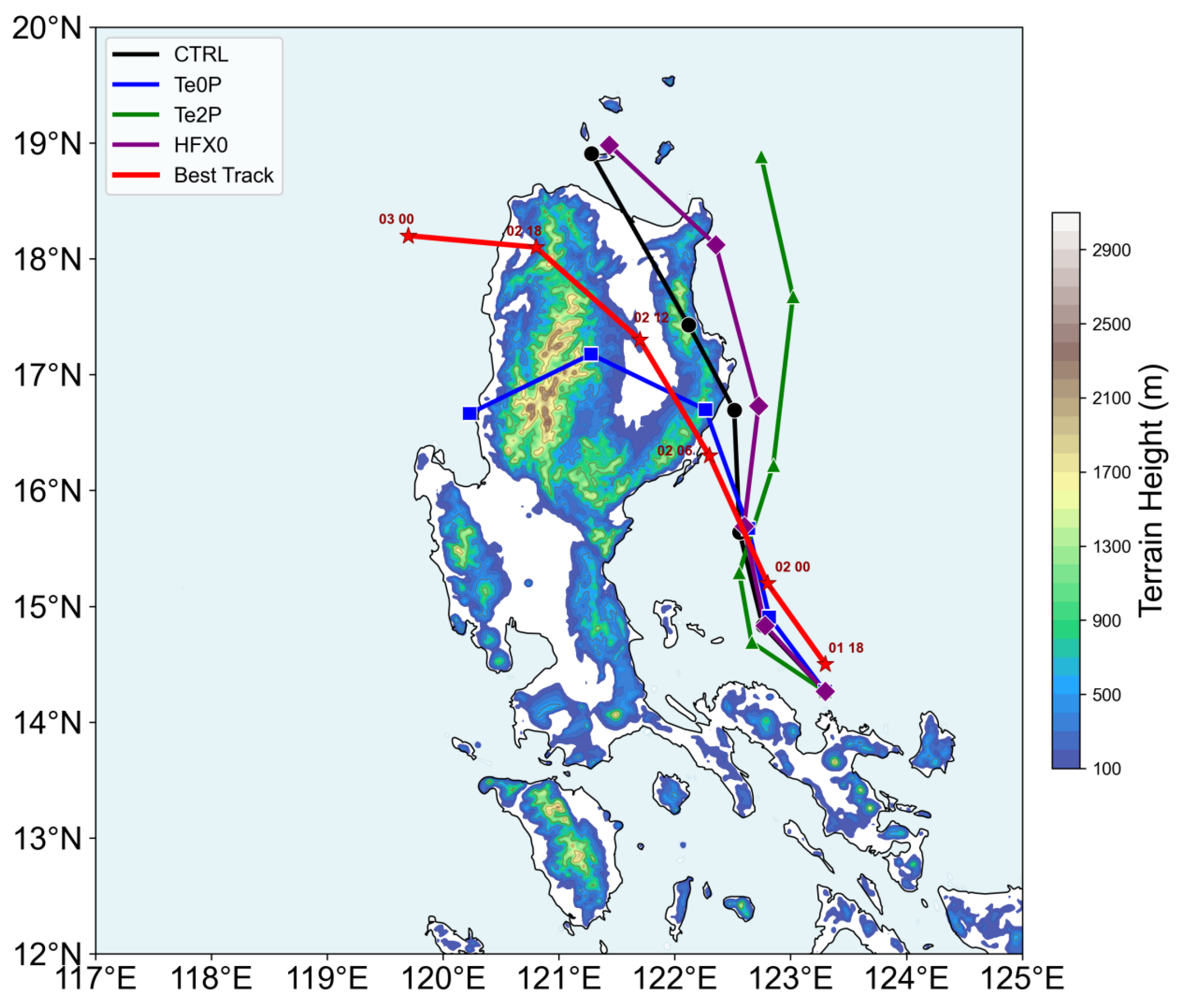
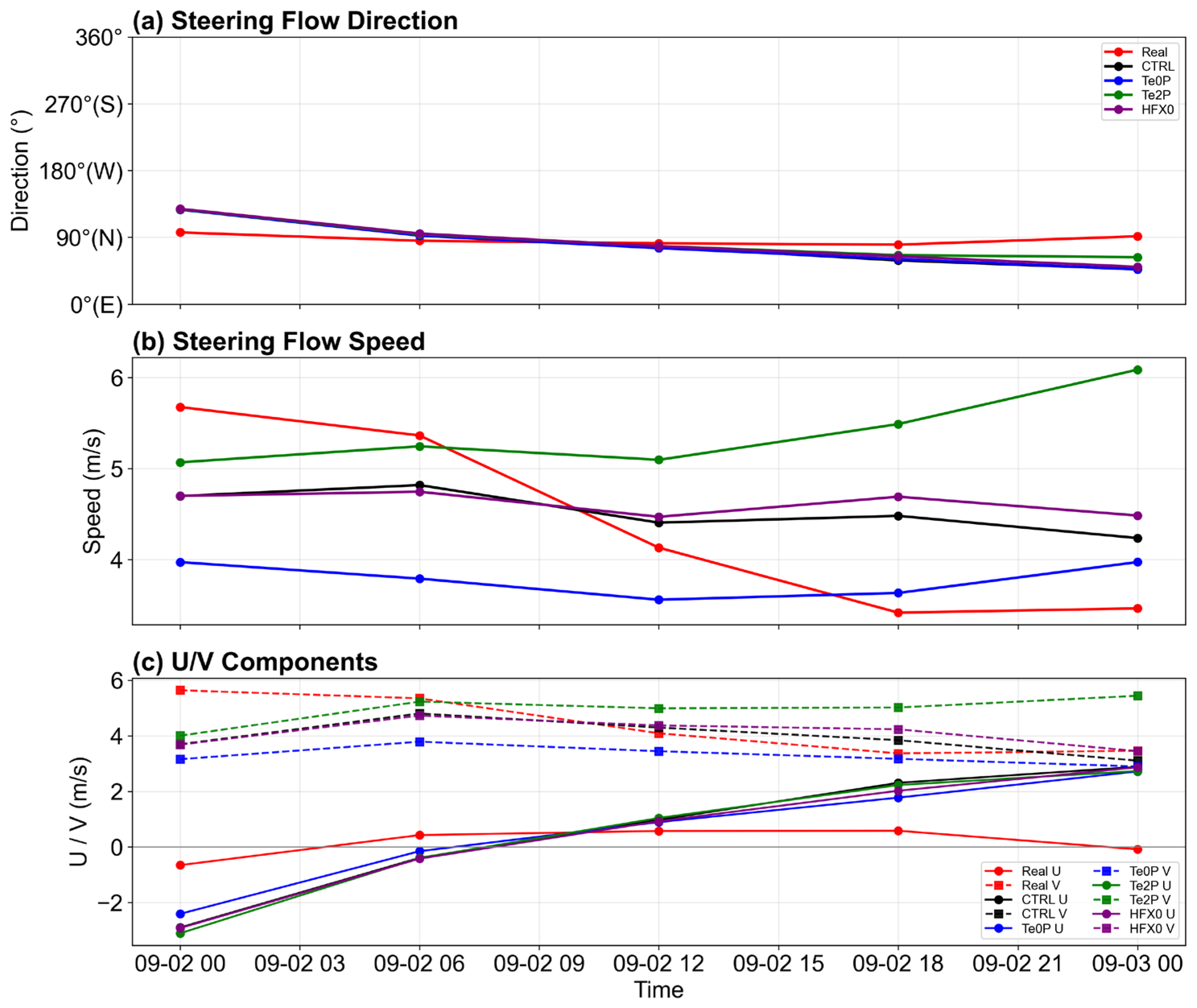
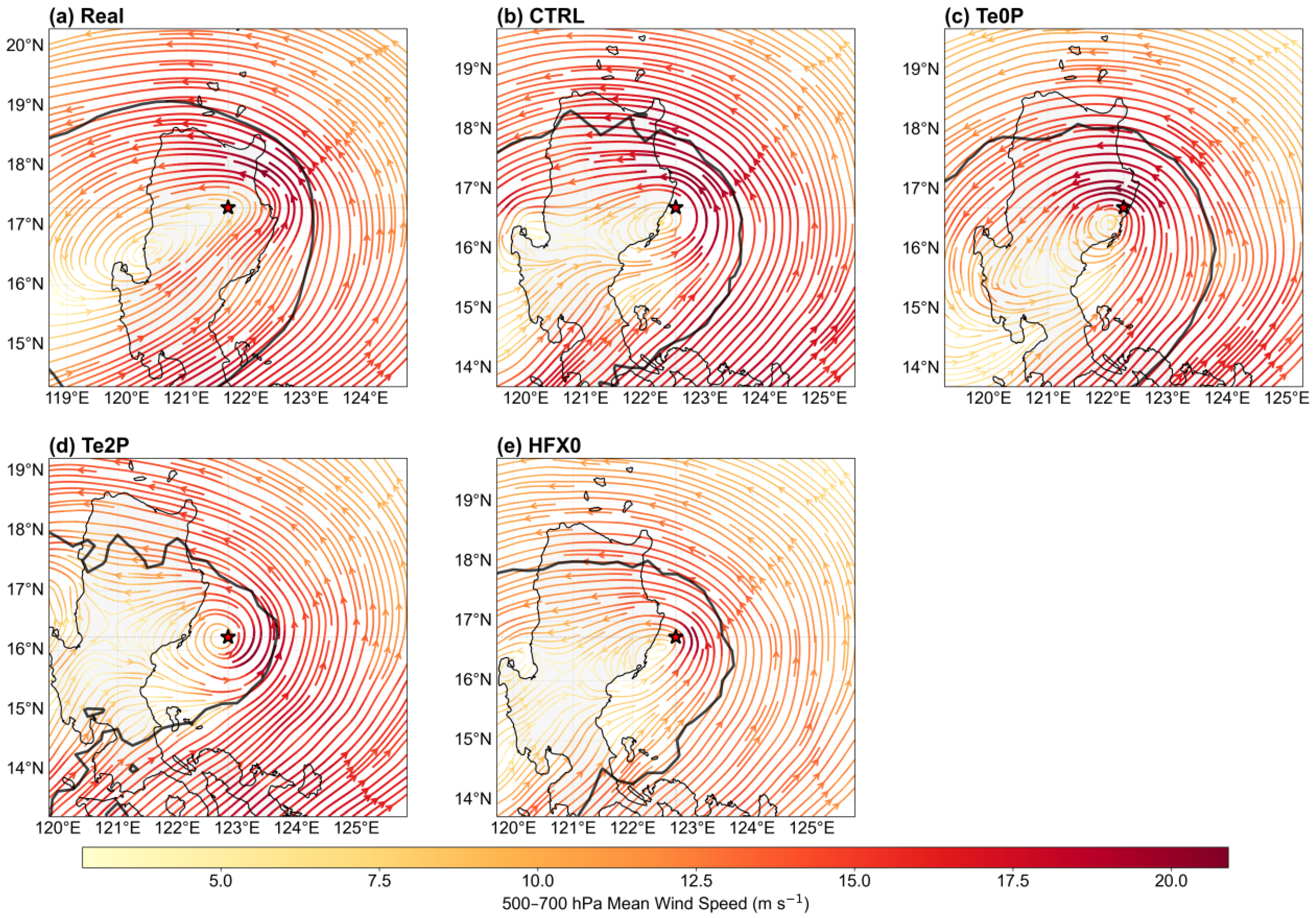
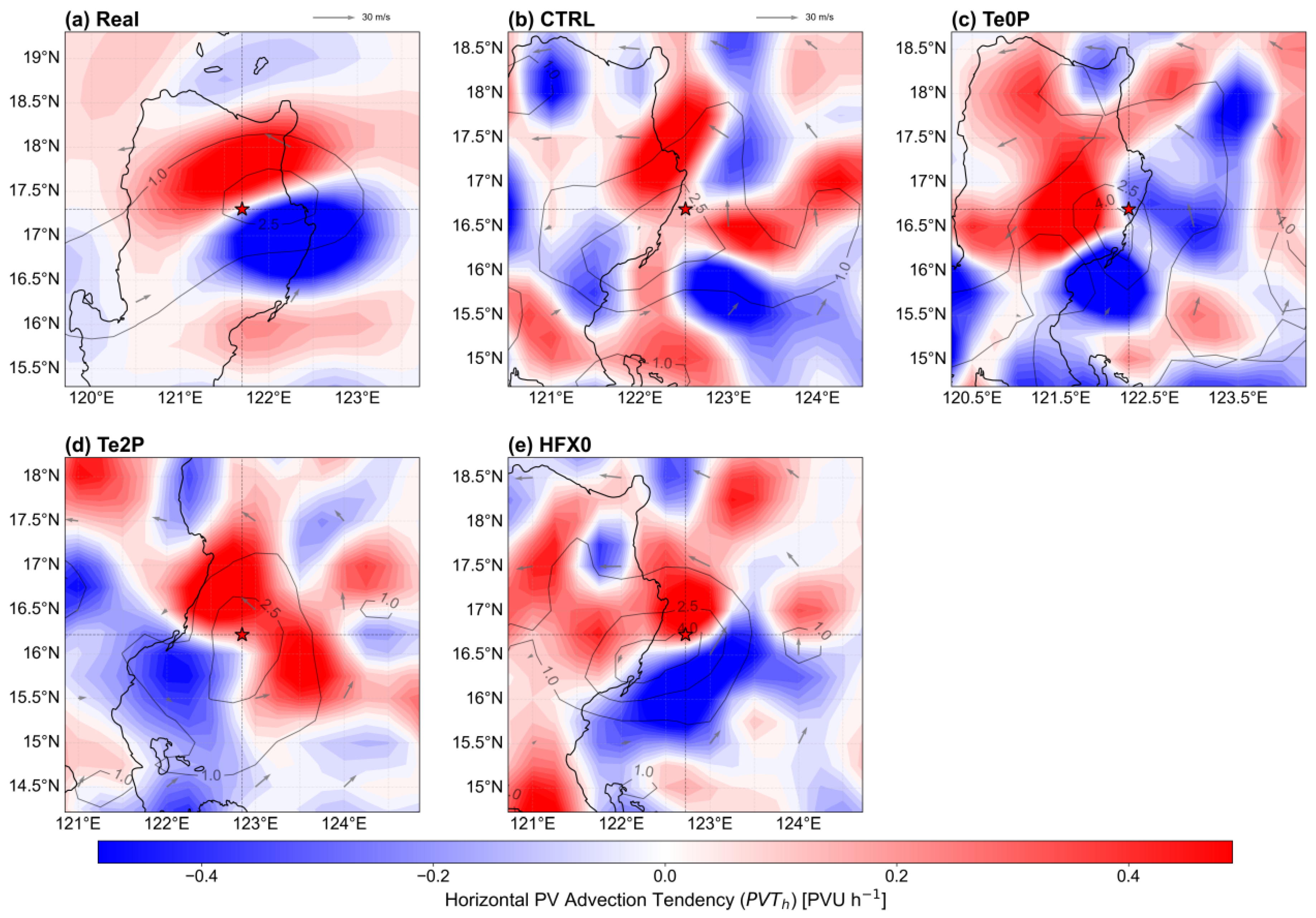
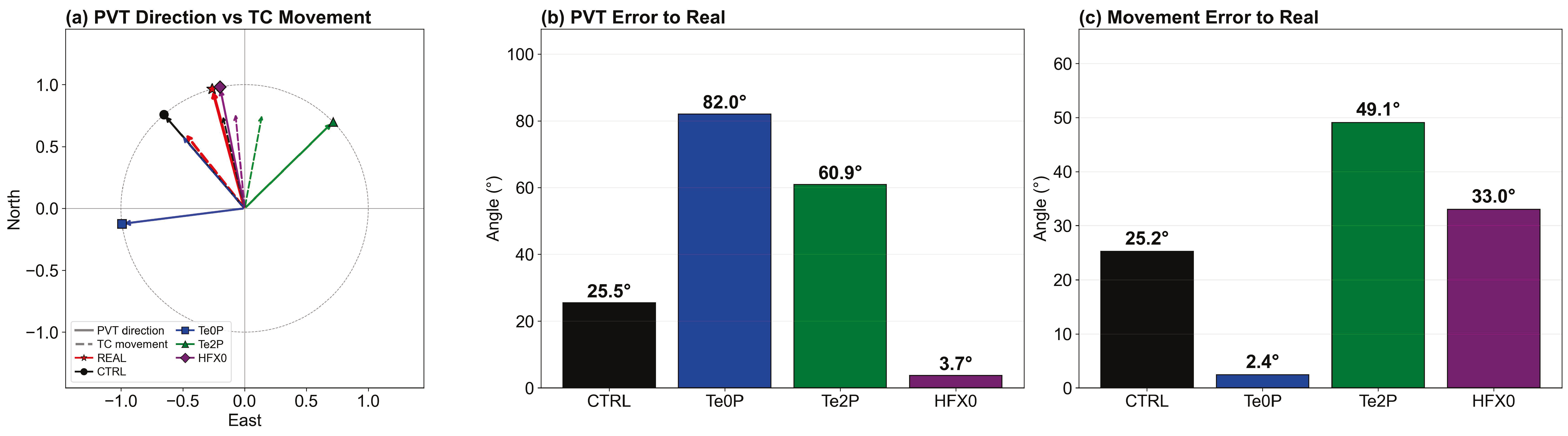
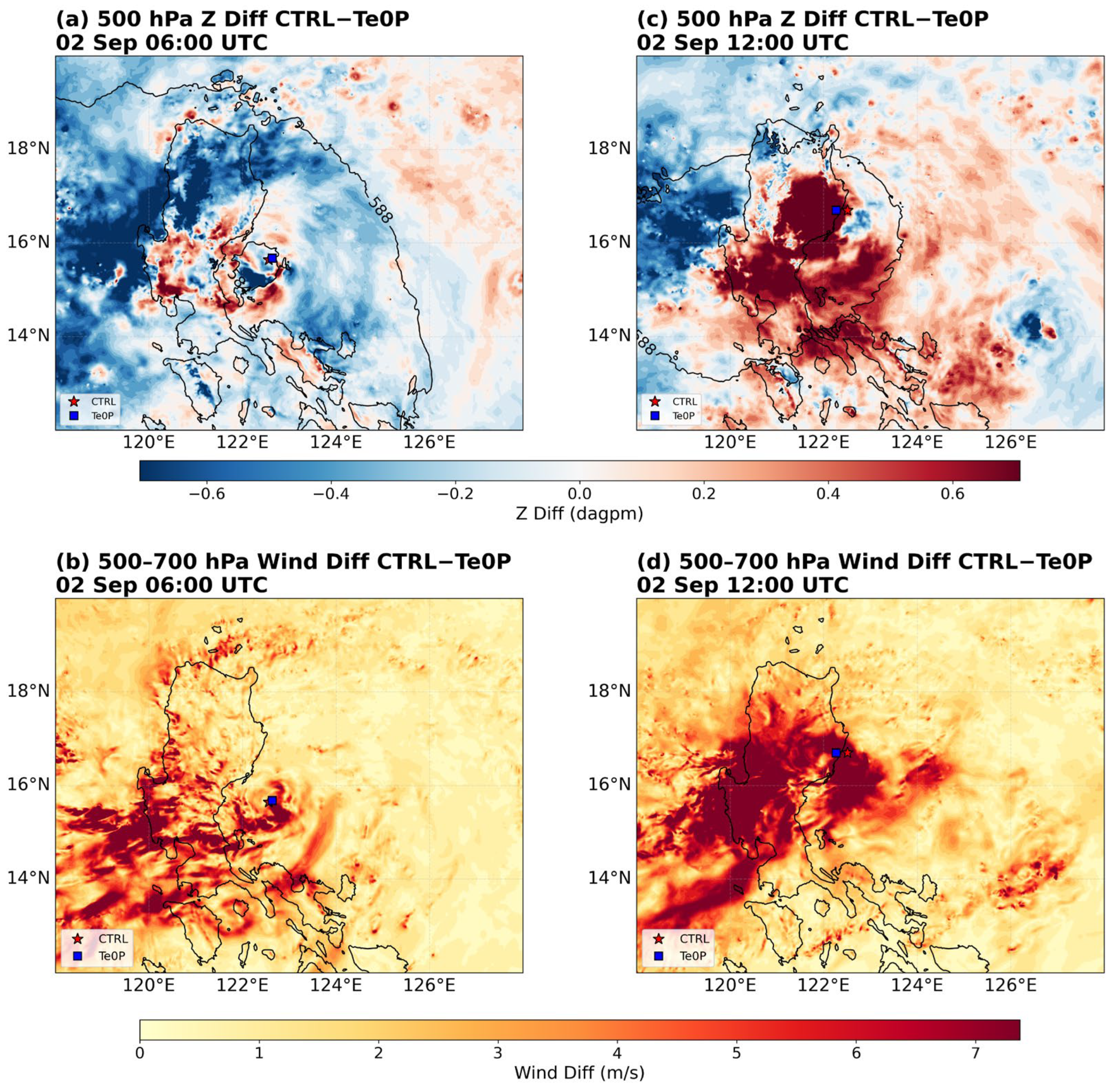
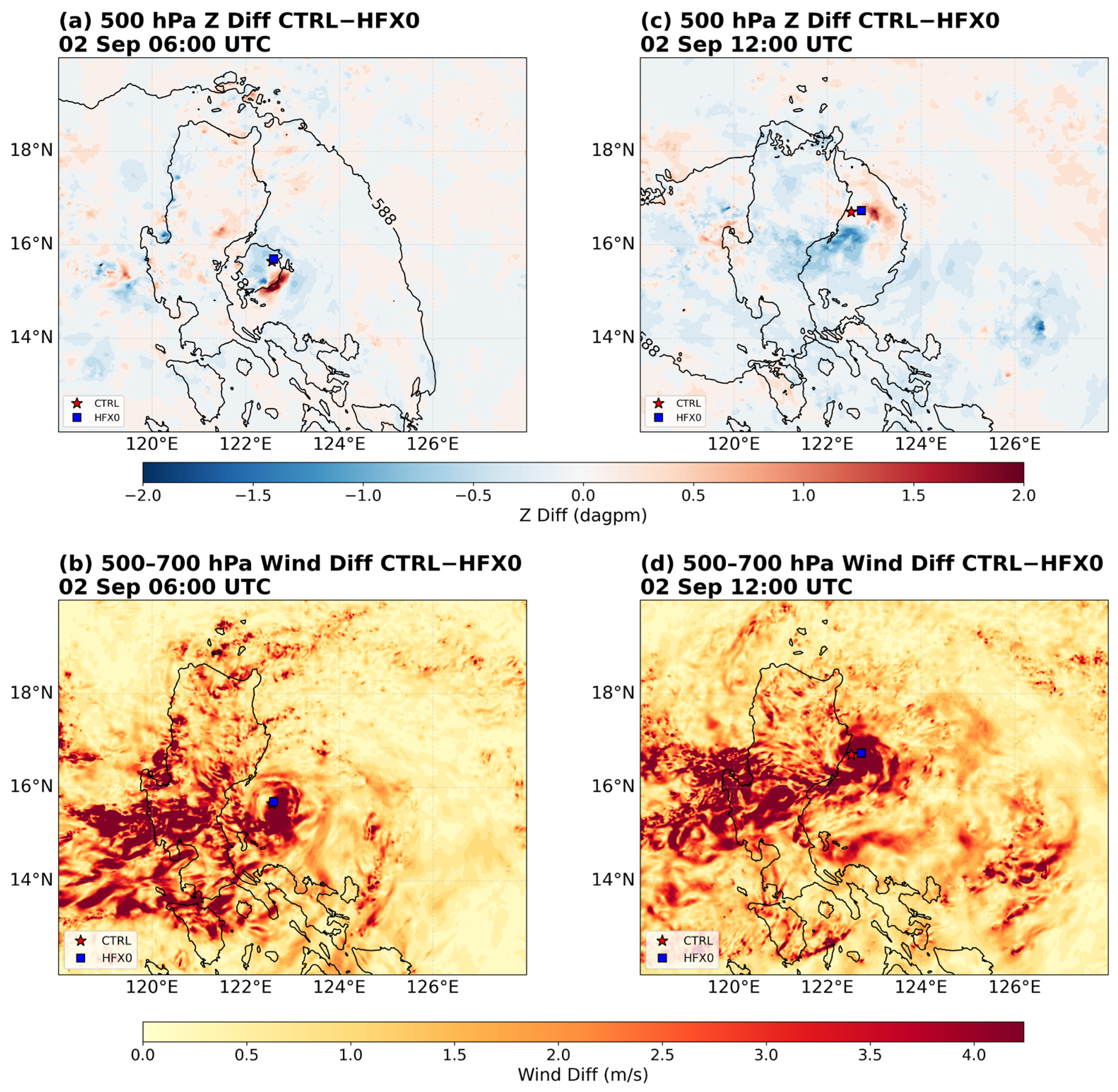
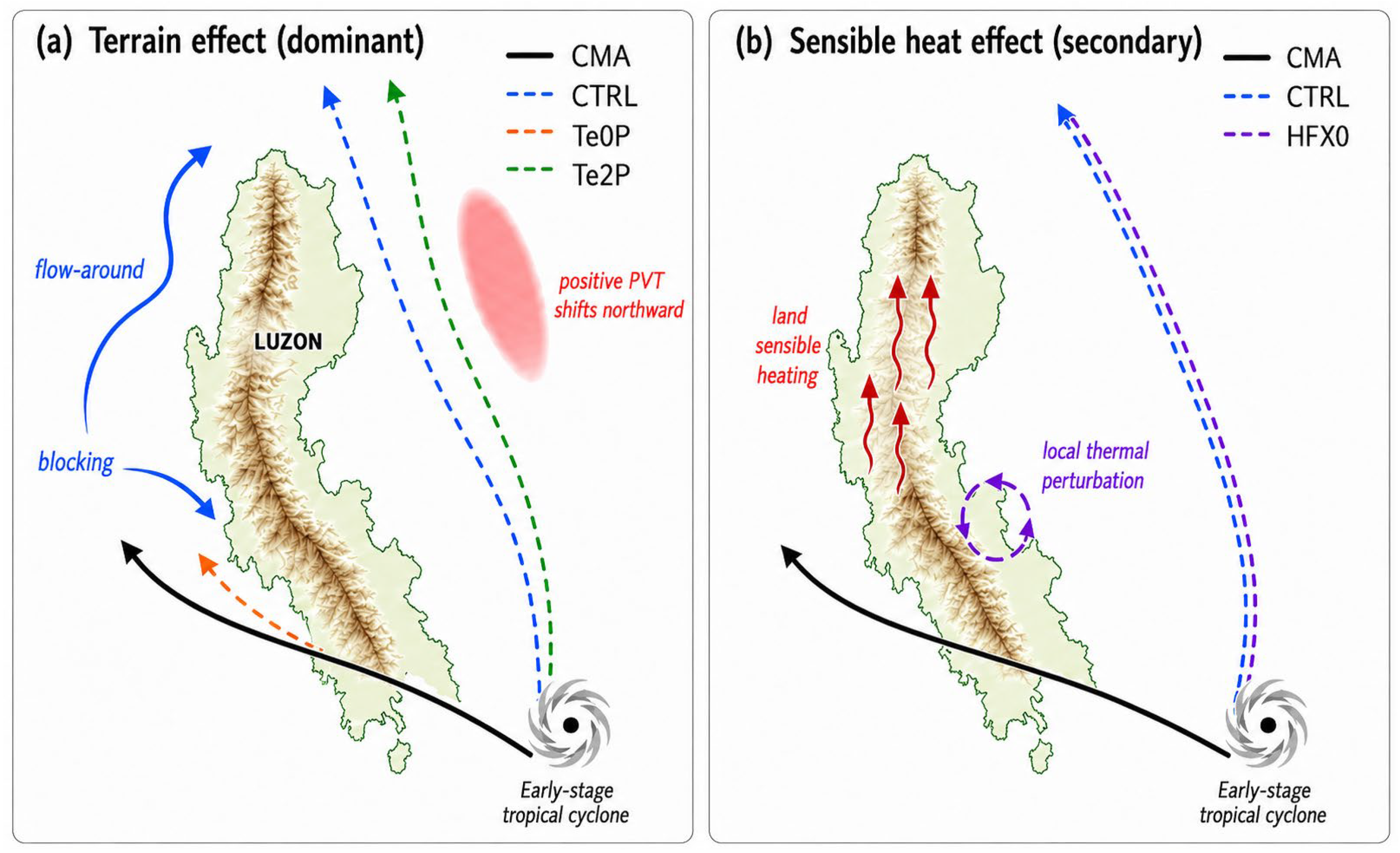
Island terrain poses a significant challenge in tropical cyclone (TC) track prediction, particularly during the early development of TCs. Using the Weather Research and Forecasting (WRF) model, China Meteorological Administration (CMA) best-track data, and ERA5 reanalysis, we conducted control (CTRL), terrain-removal (Te0P), terrain-enhancement (Te2P), and no-land-sensible-heat (HFX0) experiments for Typhoon Yagi (2024) near Luzon during 1–3 September. CTRL showed a pronounced northward track bias. Te0P shifted westward and closer to observations, whereas Te2P further amplified the northward bias; HFX0 remained close to CTRL. Terrain-height changes substantially modified the surrounding mid-tropospheric environmental flow and asymmetric horizontal-advection potential-vorticity tendency (PVTh). Although Te0P produced the closest track, its PVTh orientation deviated most from ERA5, suggesting that the track improvement partly reflects a compensating reduction in the excessive northward response in CTRL rather than a uniformly more realistic dynamical structure. Land sensible heating mainly affected the boundary layer and nearby circulation, with weaker effects on the broader mid-tropospheric flow and track. These results show that terrain dynamics dominate the simulated track response, while land sensible heat provides secondary modulation, and highlights the need to evaluate track, environmental flow, and PVTh jointly near complex islands.
Keywords: tropical cyclone track; Luzon topography; WRF model; potential-vorticity tendency; sensible heat flux tropical cyclone track; Luzon topography; WRF model; potential-vorticity tendency; sensible heat flux