Full-Cloud Numerical Simulation of a Translating Isolated Thunderstorm Producing a Wet Downburst



Abstract
1. Introduction
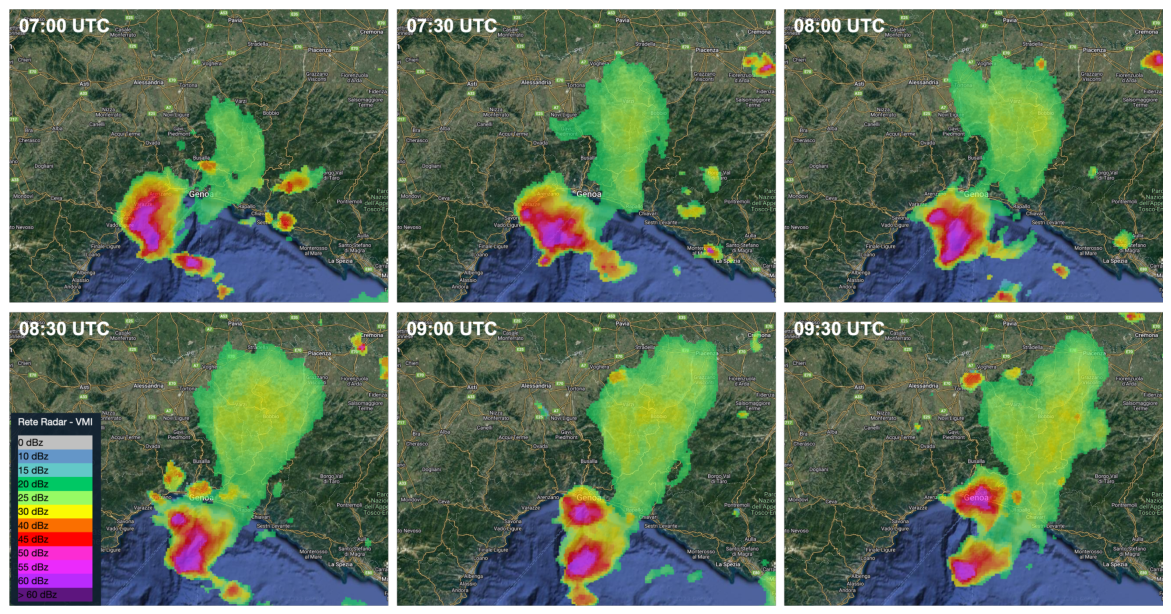
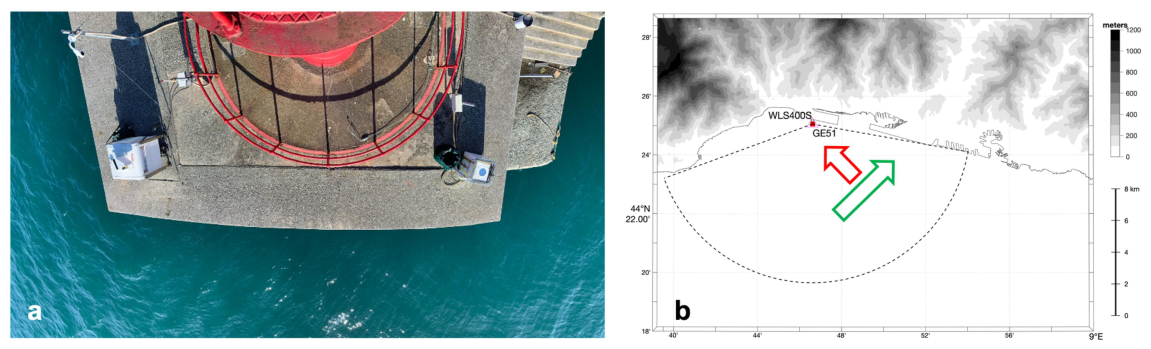
2. Description of the Event and Wind Measurements
3. Numerical Model Configuration
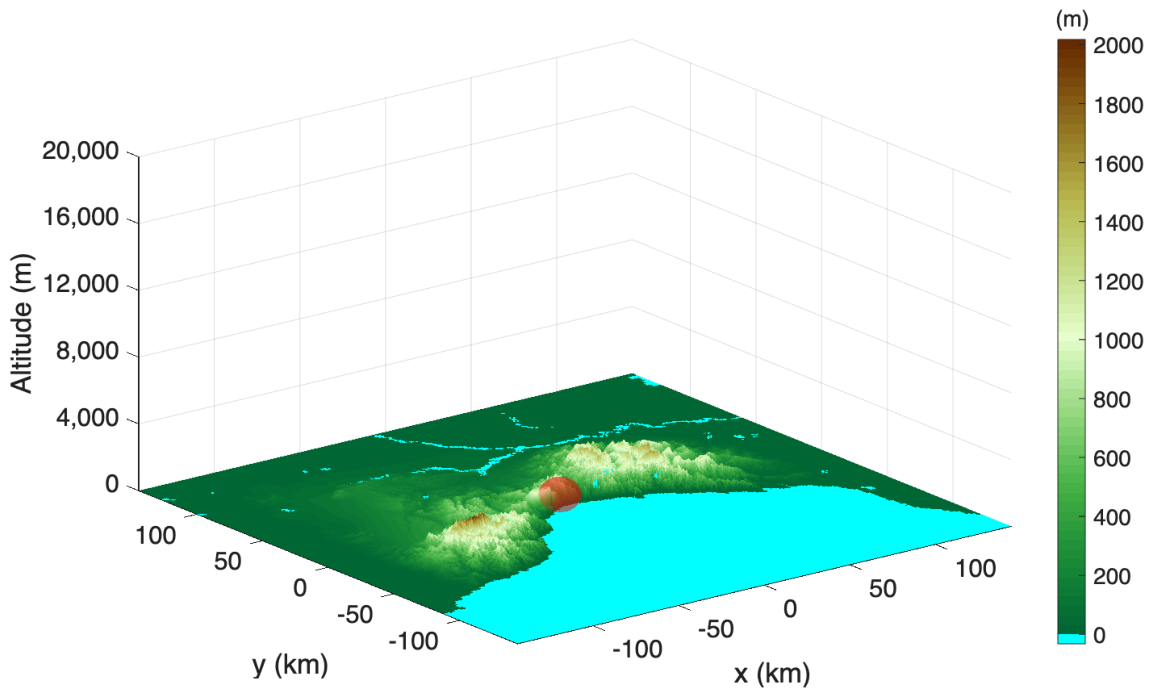
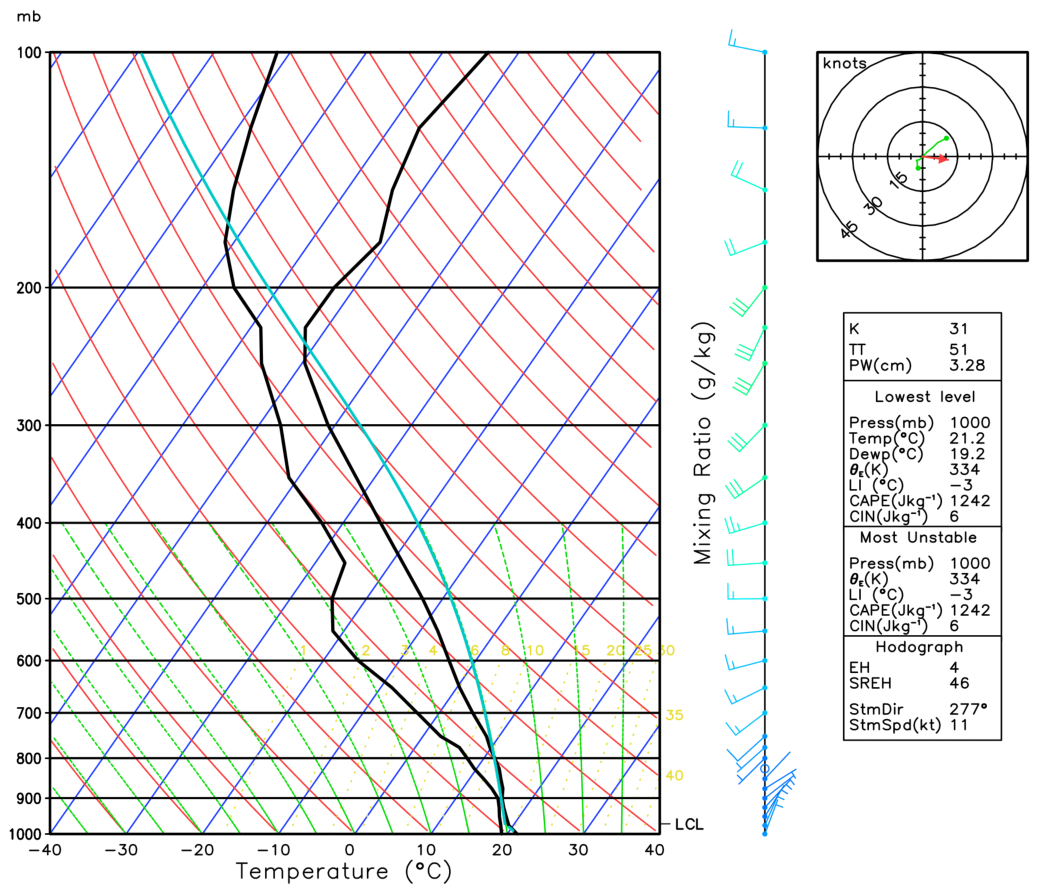
3.1. Model Grid and Input Data
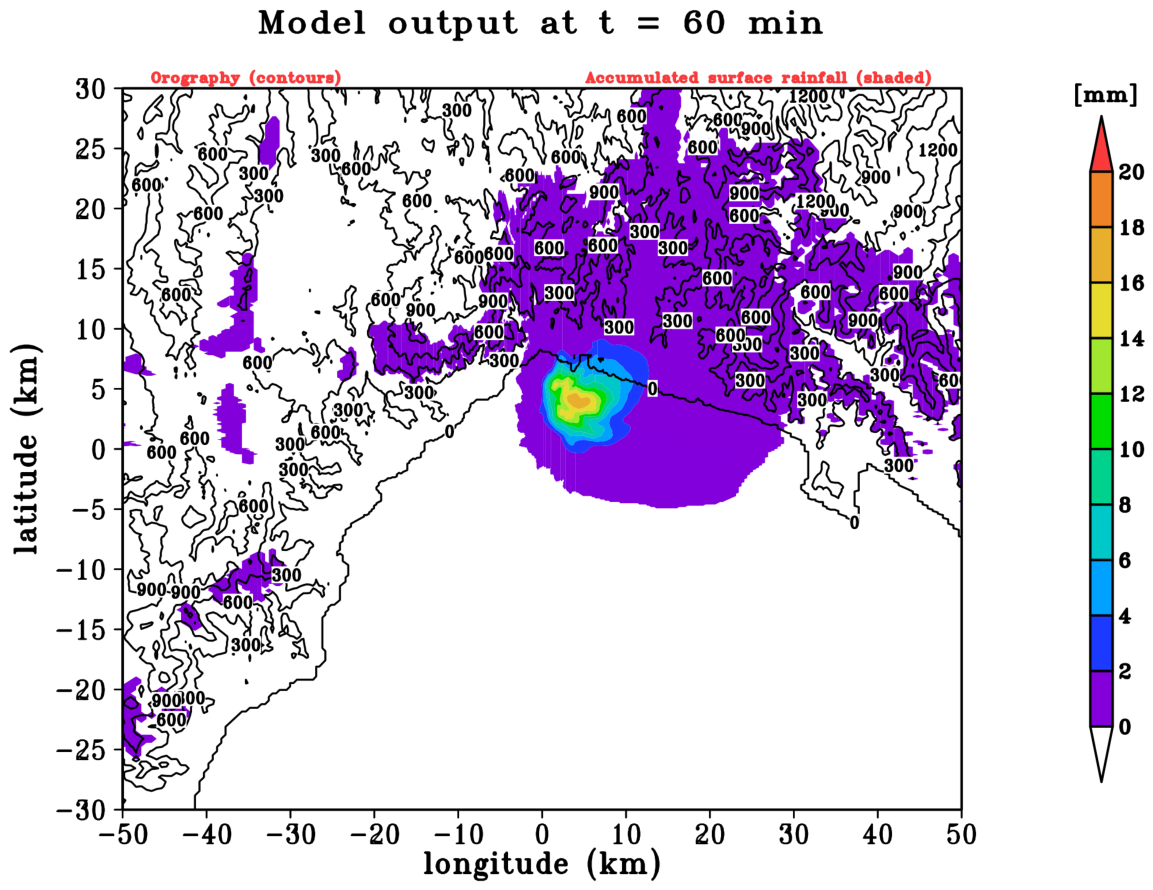
3.2. Thunderstorm Initiation
3.3. Details on the Computing Resources
4. Validation of the Thunderstorm Simulations
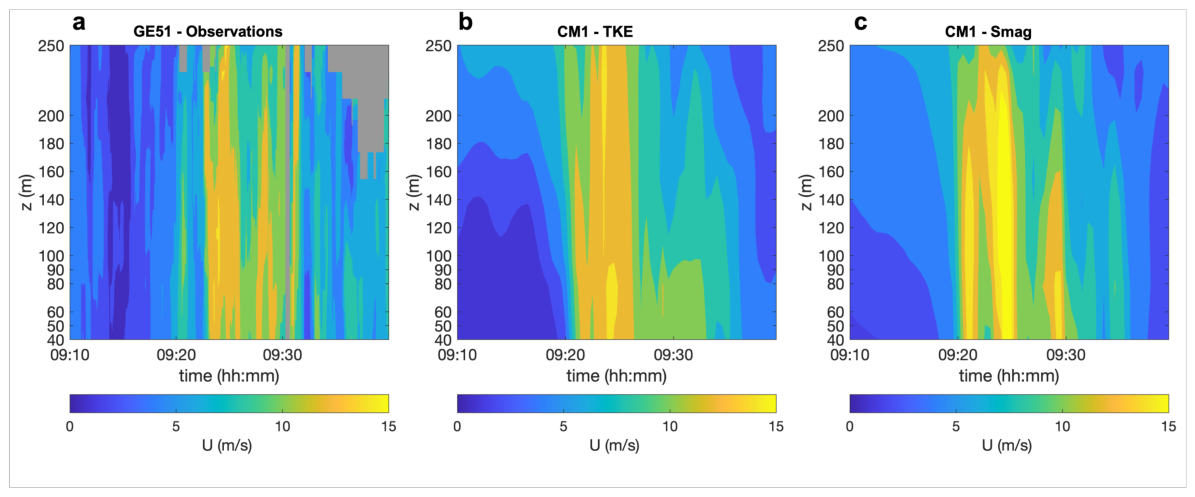
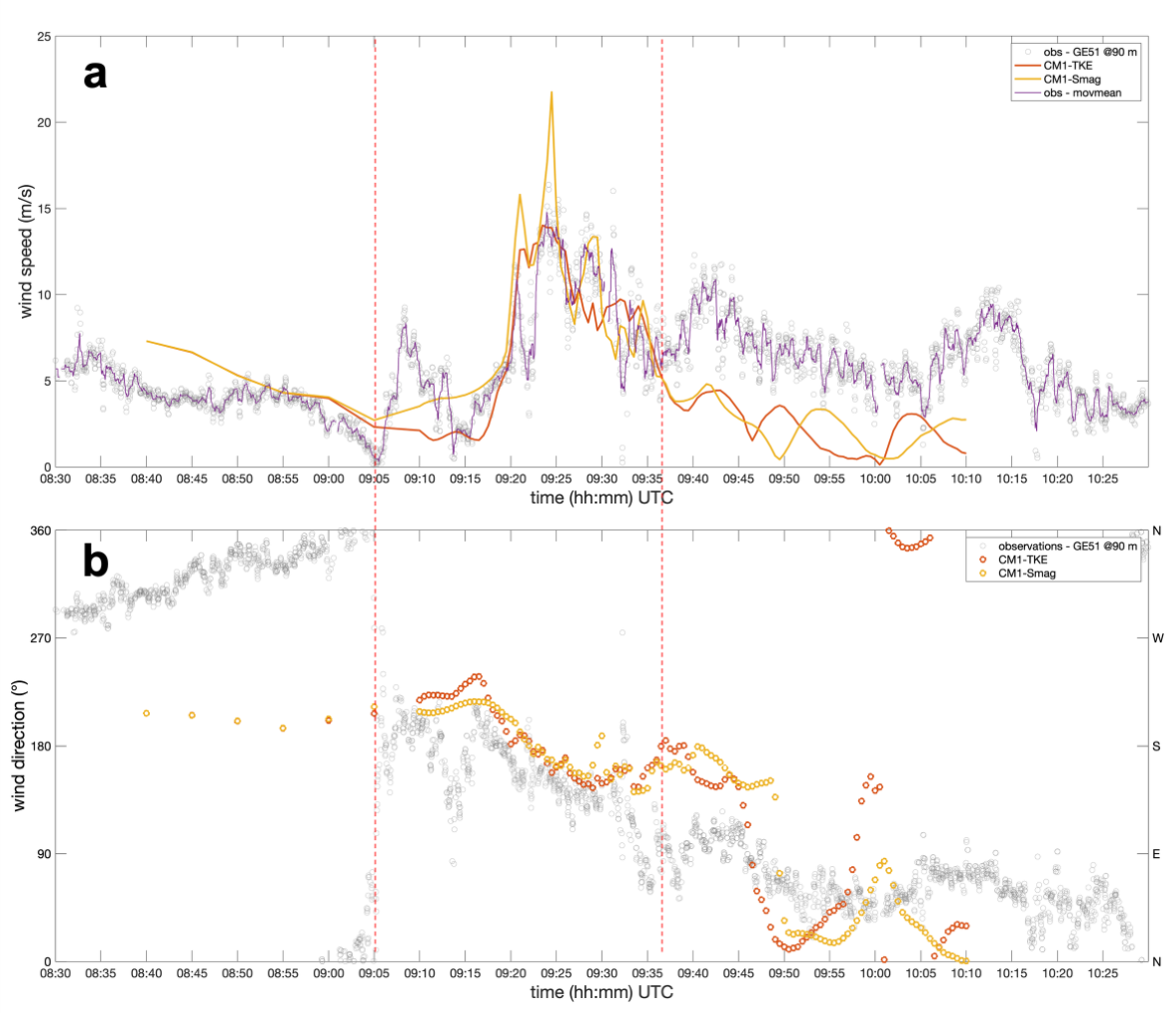
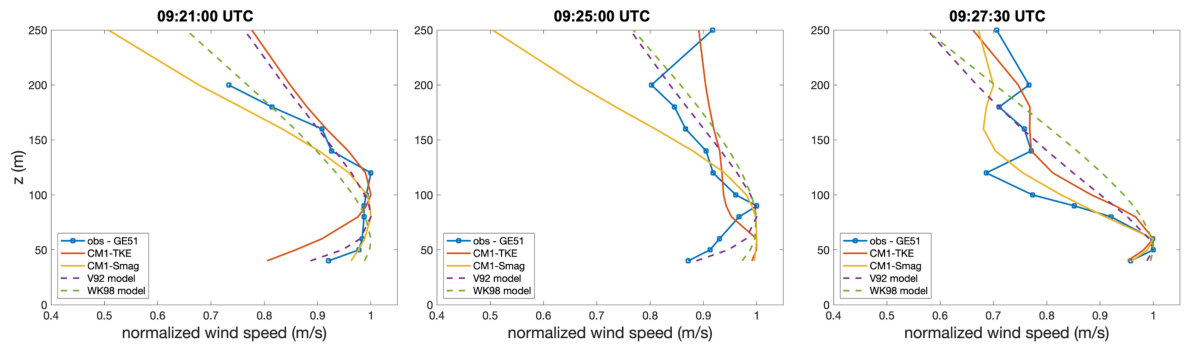
4.1. Comparison with the Measurements of the LiDAR Vertical Profiler
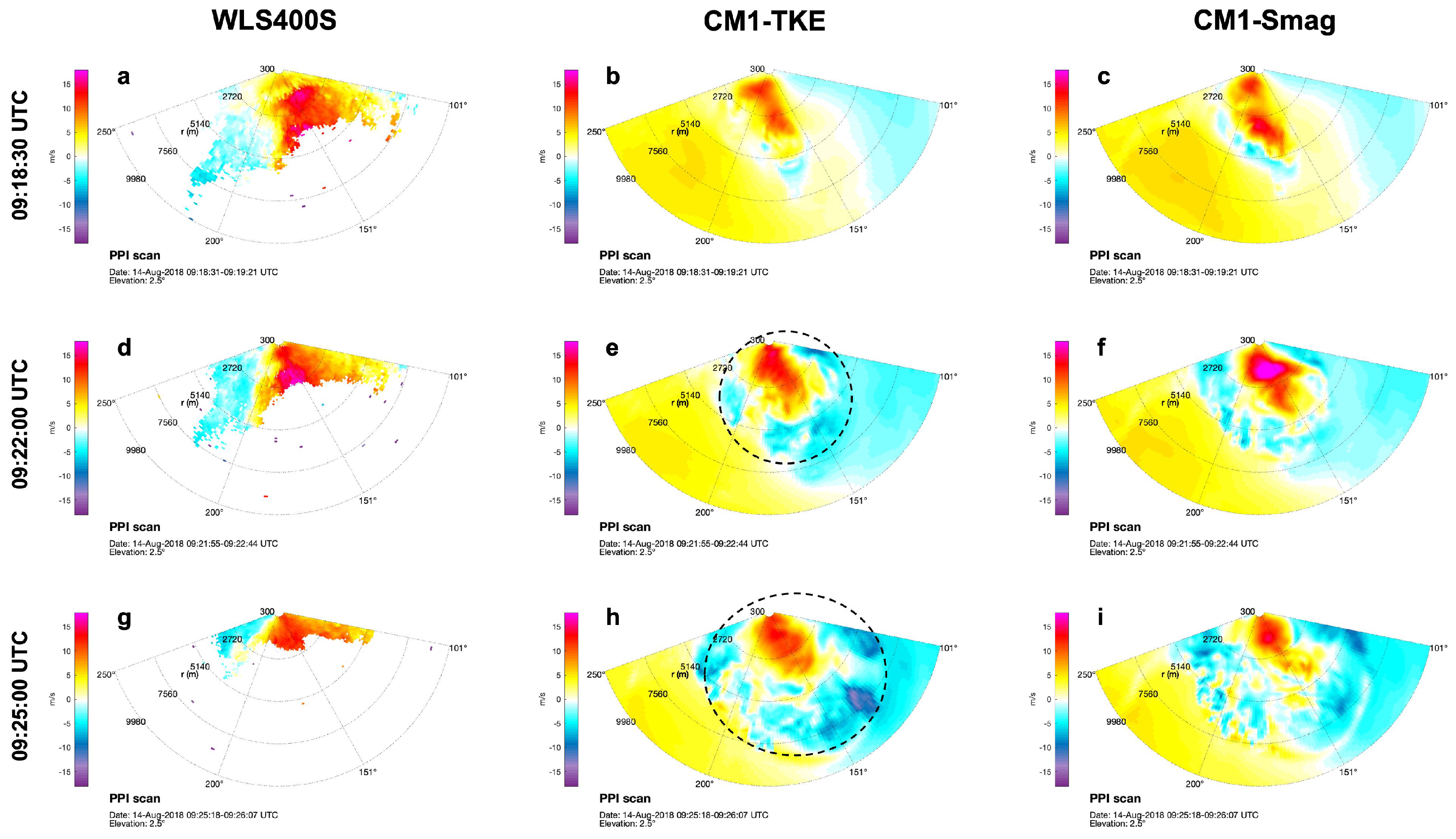
4.2. Comparison with the Measurements of the Scanning LiDAR
5. Discussion
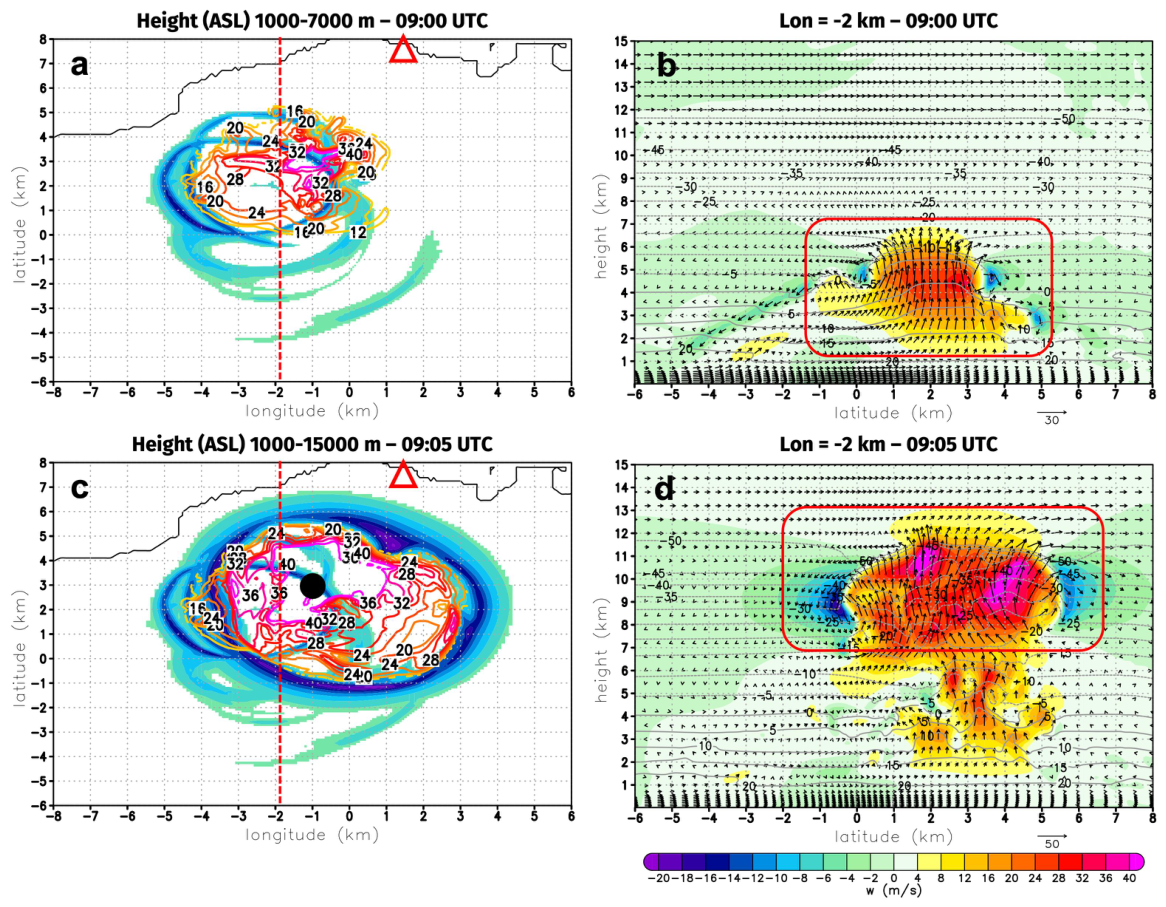
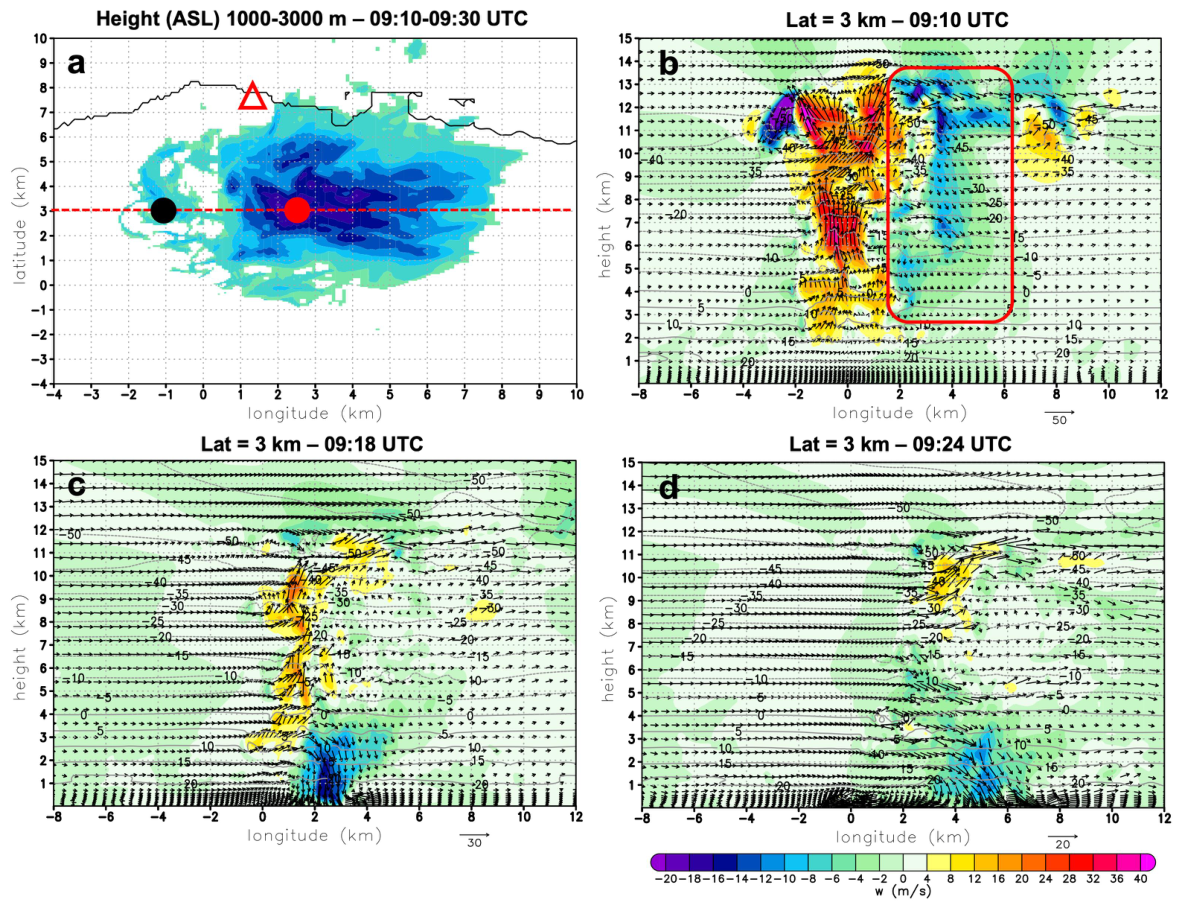
5.1. Morphology and Evolution of Updraft and Downdraft
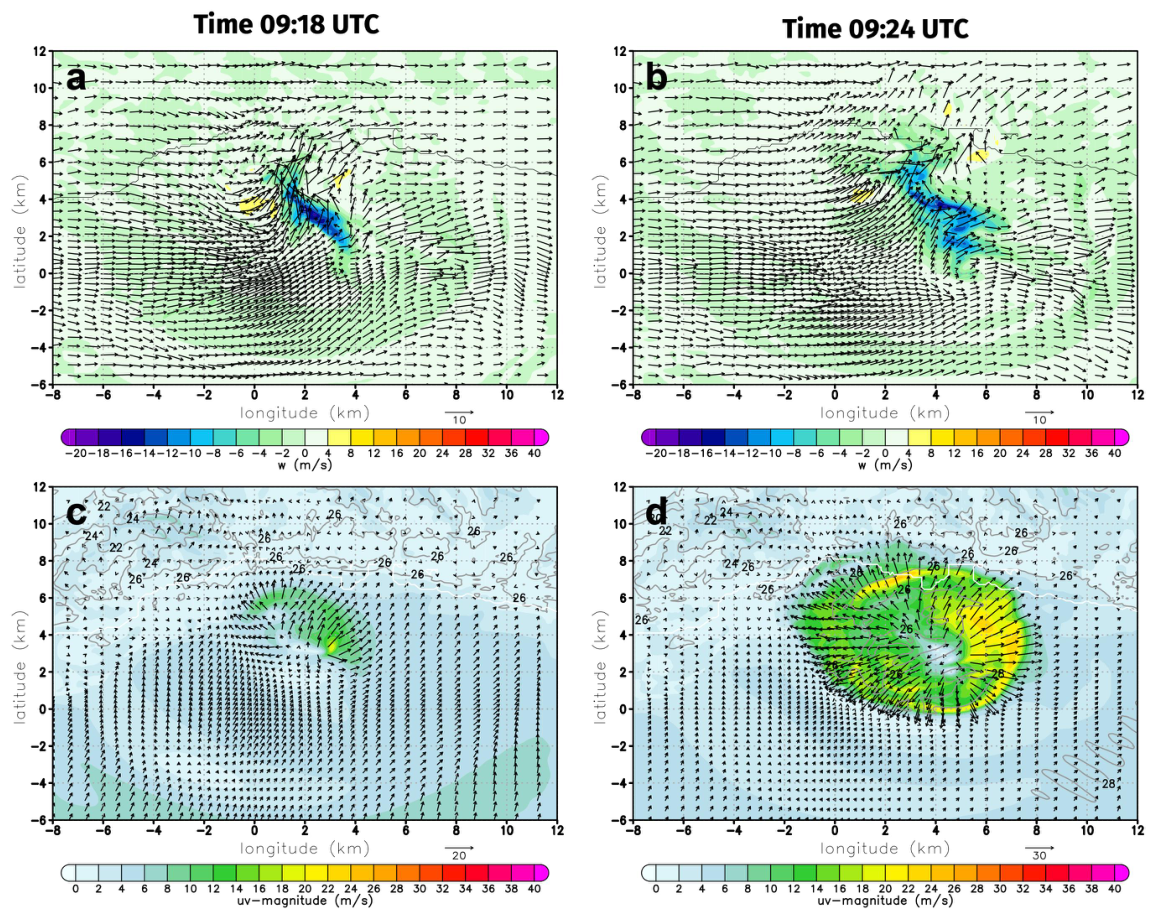
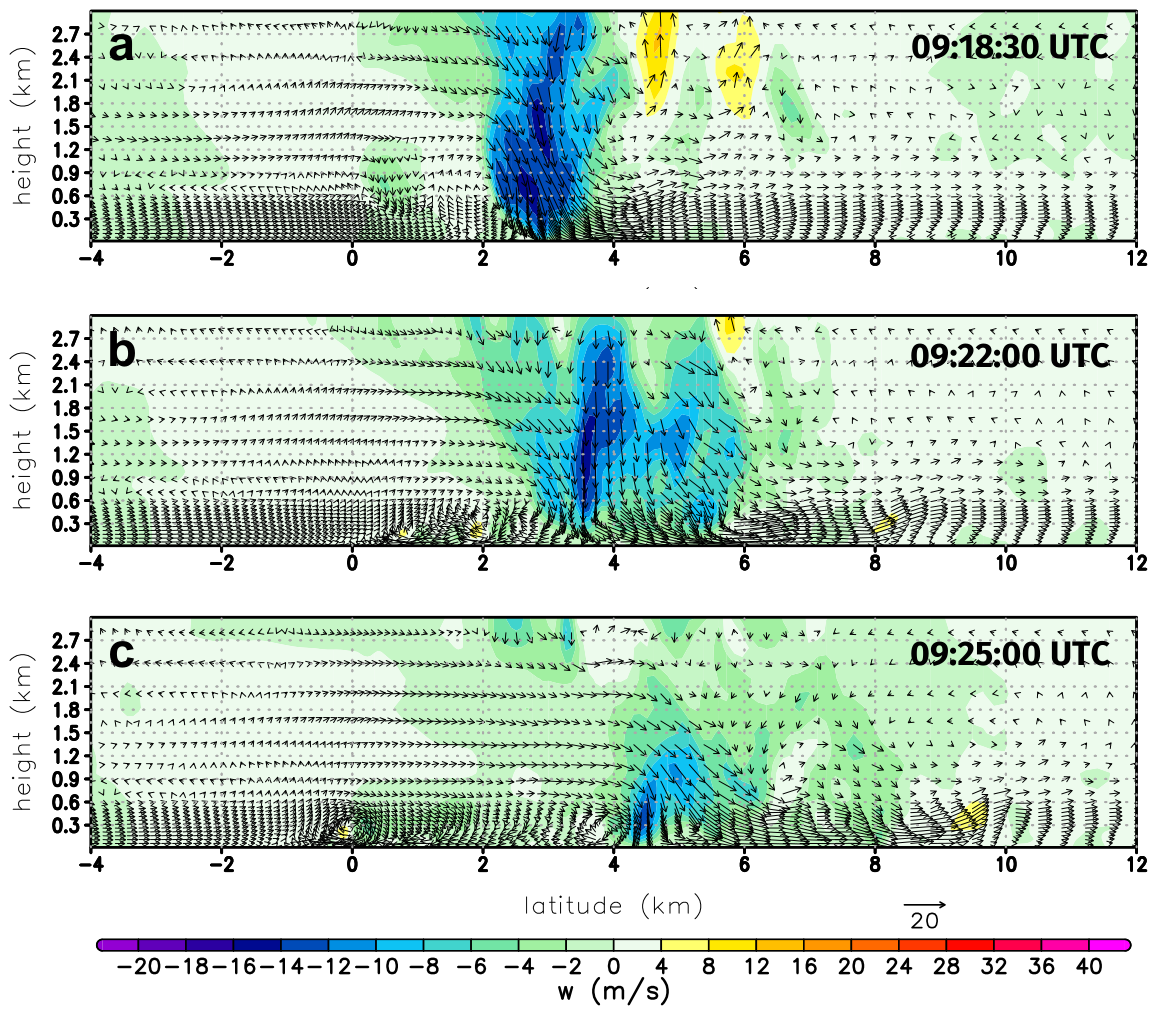
5.2. Downburst Development and Characteristics
6. Conclusions
- 1.
- To test several microphysics schemes for cloud model simulations and their performances in reproducing a real case study event and its main features.
- 2.
- To demonstrate, through validating the simulated wind fields against LiDAR measurements, that full cloud models can realistically simulate the downbursts produced at the ground during thunderstorms.
- 3.
- To enhance our understanding of the kinematic processes within the cumulonimbus cloud, specifically in terms of updraft and downdraft development.
- 4.
- To provide the scientific community with the simulated wind fields in a public repository. The ultimate goal is to share a validated test case of a downburst, creating a benchmark accessible to scholars, researchers, and students in alignment with the Open Science principles.
Author Contributions
Funding
Data Availability Statement
Acknowledgments
Conflicts of Interest
Abbreviations
| CM1 | Cloud Model 1 |
| IPCC | Intergovernmental Panel on Climate Change |
| SST | Sea Surface Temperature |
| CS | Cooling Sources |
| IJ | Impinging Jet (IJ) |
| ABL | Atmospheric Boundary Layer |
| VMI | Mertical Maximum Intensity |
| MSG | Meteosat Second Generation |
| ASL | Abobe the Sea Level |
| GS-Windyn | Giovanni Solari Wind Engineering and Structural Dynamics |
| GE51 | Windcube V2 |
| AGL | Above Ground Level |
| PV | Primary Vortex |
| PPI | Plan Position Indicator |
| LES | Large-Eddy Simulation |
| TKE | Turbolence Kinetic Energy |
| ERA5 | ECMWF Reanalysis v5 |
| LCL | Lifting Condensation Level |
| CIN | Convective Inhibition |
| CINECA | Italian Northeastern Inter-University Consortium for Automatic Computing |
| V92 | Oseguera-Bowles-Vicroy model |
| WK98 | Wood and Kwok model |
References
- Dotzek, N.; Groenemeijer, P.; Feuerstein, B.; Holzer, A.M. Overview of ESSL’s severe convective storms research using the European Severe Weather Database ESWD. Atmos. Res. 2009, 93, 575–586. [Google Scholar] [CrossRef]
- Pörtner, H.O.; Roberts, D.C.; Adams, H.; Adler, C.; Aldunce, P.; Ali, E.; Begum, R.A.; Betts, R.; Kerr, R.B.; Biesbroek, R.; et al. Climate Change 2022: Impacts, Adaptation and Vulnerability; IPCC: Geneva, Switzerland, 2022. [Google Scholar]
- Púčik, T.; Groenemeijer, P.; Rädler, A.T.; Tijssen, L.; Nikulin, G.; Prein, A.F.; van Meijgaard, E.; Fealy, R.; Jacob, D.; Teichmann, C. Future changes in European severe convection environments in a Regional Climate Model ensemble. J. Clim. 2017, 30, 6771–6794. [Google Scholar] [CrossRef]
- Miglietta, M.M.; Mazon, J.; Motola, V.; Pasini, A. Effect of a positive Sea Surface Temperature anomaly on a Mediterranean tornadic supercell. Sci. Rep. 2017, 7, 12828. [Google Scholar] [CrossRef] [PubMed]
- Rädler, A.T.; Groenemeijer, P.H.; Faust, E.; Sausen, R.; Púčik, T. Frequency of severe thunderstorms across Europe expected to increase in the 21st century due to rising instability. npj Clim. Atmos. Sci. 2019, 2, 30. [Google Scholar] [CrossRef]
- Catto, J.L.; Ackerley, D.; Booth, J.F.; Champion, A.J.; Colle, B.A.; Pfahl, S.; Pinto, J.G.; Quinting, J.F.; Seiler, C. The future of midlatitude cyclones. Curr. Clim. Change Rep. 2019, 5, 407–420. [Google Scholar] [CrossRef]
- Bouchard, R.; Romanic, D. Monte Carlo modeling of tornado hazard to wind turbines in Germany. Nat. Hazards 2023, 116, 3899–3923. [Google Scholar] [CrossRef]
- Prein, A.F. Thunderstorm straight line winds intensify with climate change. Nat. Clim. Change 2023, 13, 1353–1359. [Google Scholar] [CrossRef]
- Giorgi, F.; Lionello, P. Climate change projections for the Mediterranean region. Glob. Planet. Change 2008, 63, 90–104. [Google Scholar] [CrossRef]
- Giorgi, F. Climate change hot-spots. Geophys. Res. Lett. 2006, 33, L08707. [Google Scholar] [CrossRef]
- Reale, O.; Feudale, L.; Turato, B. Evaporative moisture sources during a sequence of floods in the Mediterranean region. Geophys. Res. Lett. 2001, 28, 2085–2088. [Google Scholar] [CrossRef]
- Rebora, N.; Molini, L.; Casella, E.; Comellas, A.; Fiori, E.; Pignone, F.; Siccardi, F.; Silvestro, F.; Tanelli, S.; Parodi, A. Extreme rainfall in the Mediterranean: What can we learn from observations? J. Hydrometeorol. 2013, 14, 906–922. [Google Scholar] [CrossRef]
- Turato, B.; Reale, O.; Siccardi, F. Water vapor sources of the October 2000 Piedmont flood. J. Hydrometeorol. 2004, 5, 693–712. [Google Scholar] [CrossRef]
- Pinto, J.G.; Ulbrich, S.; Parodi, A.; Rudari, R.; Boni, G.; Ulbrich, U. Identification and ranking of extraordinary rainfall events over Northwest Italy: The role of Atlantic moisture. J. Geophys. Res. Atmos. 2013, 118, 2085–2097. [Google Scholar] [CrossRef]
- Gallus, W.A.J.; Parodi, A.; Maugeri, M. Possible impacts of a changing climate on intense Ligurian Sea rainfall events. Int. J. Climatol. 2018, 38, e323–e329. [Google Scholar] [CrossRef]
- Cassola, F.; Ferrari, F.; Mazzino, A.; Miglietta, M.M. The role of the sea on the flash floods events over Liguria (northwestern Italy). Geophys. Res. Lett. 2016, 43, 3534–3542. [Google Scholar] [CrossRef]
- Lebeaupin, C.; Ducrocq, V.; Giordani, H. Sensitivity of torrential rain events to the sea surface temperature based on high-resolution numerical forecasts. J. Geophys. Res. Atmos. 2006, 111, D12110. [Google Scholar] [CrossRef]
- Parodi, A.; Lagasio, M.; Maugeri, M.; Turato, B.; Gallus, W. Observational and modelling study of a major downburst event in Liguria: The 14 October 2016 case. Atmosphere 2019, 10, 788. [Google Scholar] [CrossRef]
- Knupp, K.R.; Cotton, W.R. Precipitating convective cloud downdraft structure: An interpretive survey. Rev. Geophys. 1985, 23, 183–215. [Google Scholar] [CrossRef]
- Proctor, F.H. Numerical simulations of an isolated microburst. Part I: Dynamics and structure. J. Atmos. Sci. 1988, 45, 3137–3160. [Google Scholar] [CrossRef]
- Proctor, F.H.; Bowles, R.L. Three-dimensional simulation of the Denver 11 July 1988 microburst-producing storm. Meteorol. Atmos. Phys. 1992, 49, 107–124. [Google Scholar] [CrossRef]
- Orf, L.; Kantor, E.; Savory, E. Simulation of a downburst-producing thunderstorm using a very high-resolution three-dimensional cloud model. J. Wind. Eng. Ind. Aerodyn. 2012, 104–106, 547–557. [Google Scholar] [CrossRef]
- Bryan, G.H.; Fritsch, J.M. A benchmark simulation for moist nonhydrostatic numerical models. Mon. Weather. Rev. 2002, 130, 2917–2928. [Google Scholar] [CrossRef]
- Markowski, P.M.; Dotzek, N. A numerical study of the effects of orography on supercells. Atmos. Res. 2011, 100, 457–478. [Google Scholar] [CrossRef]
- Markowski, P.M.; Richardson, Y.P. The influence of environmental low-level shear and cold pools on tornadogenesis: Insights from idealized simulations. J. Atmos. Sci. 2014, 71, 243–275. [Google Scholar]
- Smith, G.M.; Lin, Y.L.; Rastigejev, Y. Orographic effects on supercell: Development and structure, intensity and tracking. arXiv 2016, arXiv:1603.00539. [Google Scholar]
- Orf, L.; Wilhelmson, R.; Lee, B.; Finley, C.; Houston, A. Evolution of a long-track violent tornado within a simulated supercell. Bull. Am. Meteorol. Soc. 2017, 98, 45–68. [Google Scholar] [CrossRef]
- Jo, E.; Lasher-Trapp, S. Entrainment in a simulated supercell thunderstorm. Part II: The influence of vertical wind shear and general effects upon precipitation. J. Atmos. Sci. 2022, 79, 1429–1443. [Google Scholar] [CrossRef]
- Vich, M.; Romero, R. Exploring severe weather environments using CM1 simulations: The 29 August 2020 event in the Balearic Islands. Atmos. Res. 2023, 290, 106784. [Google Scholar] [CrossRef]
- Hannah, W.M. Entrainment versus dilution in tropical deep convection. J. Atmos. Sci. 2017, 74, 3725–3747. [Google Scholar] [CrossRef]
- Lin, E.; Orf, L.; Savory, E.; Novacco, C. Proposed large-scale modelling of the transient features of a downburst outflow. Wind. Struct. 2007, 10, 315–346. [Google Scholar] [CrossRef]
- Kim, J.; Hangan, H. Numerical simulations of impinging jets with application to thunderstorm downbursts. J. Wind. Eng. Ind. Aerodyn. 2007, 95, 279–298. [Google Scholar] [CrossRef]
- Zuzul, J.; Ricci, A.; Burlando, M.; Blocken, B.; Solari, G. CFD analysis of the WindEEE dome produced downburst-like winds. J. Wind. Eng. Ind. Aerodyn. 2023, 232, 105268. [Google Scholar]
- Zhang, Y.; Hu, H.; Sarkar, P.P. Modeling of microburst outflows using impinging jet and cooling source approaches and their comparison. Eng. Struct. 2013, 56, 779–793. [Google Scholar] [CrossRef]
- Oreskovic, C.; Orf, L.G.; Savory, E. A parametric study of downbursts using a full-scale cooling source model. J. Wind. Eng. Ind. Aerodyn. 2018, 180, 168–181. [Google Scholar] [CrossRef]
- Burlando, M.; Romanic, D.; Boni, G.; Lagasio, M.; Parodi, A. Investigation of the weather conditions during the collapse of the Morandi Bridge in Genoa on 14 August 2018 using field observations and WRF model. Atmosphere 2020, 11, 724. [Google Scholar] [CrossRef]
- Solari, G.; Burlando, M.; Repetto, M.P. Detection, simulation, modelling and loading of thunderstorm outflows to design wind-safer and cost-efficient structures. J. Wind. Eng. Ind. Aerodyn. 2020, 200, 104142. [Google Scholar] [CrossRef]
- Repetto, M.P.; Burlando, M.; Solari, G.; De Gaetano, P.; Pizzo, M. Integrated tools for improving the resilience of seaports under extreme wind events. Sustain. Cities Soc. 2017, 32, 277–294. [Google Scholar] [CrossRef]
- Repetto, M.P.; Burlando, M.; Solari, G.; De Gaetano, P.; Pizzo, M.; Tizzi, M. A web-based GIS platform for the safe management and risk assessment of complex structural and infrastructural systems exposed to wind. Adv. Eng. Softw. 2018, 117, 29–45. [Google Scholar] [CrossRef]
- Hjelmfelt, M.R. Structure and life cycle of microburst outflows observed in Colorado. J. Appl. Meteorol. 1988, 27, 900–927. [Google Scholar] [CrossRef]
- Canepa, F.; Burlando, M.; Solari, G. Vertical profile characteristics of thunderstorm outflows. J. Wind. Eng. Ind. Aerodyn. 2020, 206, 104332. [Google Scholar] [CrossRef]
- Bryan, G.H. The Governing Equations for CM1—Version 10; National Center for Atmospheric Research: Boulder, CO, USA, 2021. [Google Scholar]
- Morrison, H.C.J.A.; Curry, J.A.; Khvorostyanov, V.I. A new double-moment microphysics parameterization for application in cloud and climate models. Part I: Description. J. Atmos. Sci. 2005, 62, 1665–1677. [Google Scholar] [CrossRef]
- Deardorff, J.W. Stratocumulus-capped mixed layers derived from a three-dimensional model. Bound.-Layer. Meteorol. 1980, 18, 495–527. [Google Scholar] [CrossRef]
- Stevens, B.; Moeng, C.H.; Sullivan, P.P. Large-eddy simulations of radiatively driven convection: Sensitivities to the representation of small scales. J. Atmos. Sci. 1999, 56, 3963–3984. [Google Scholar] [CrossRef]
- George, J.J. Weather Forecasting for Aeronautics; Academic Press: Cambridge, MA, USA, 1960. [Google Scholar]
- Cimini, D.; Nelson, M.; Güldner, J.; Ware, R. Forecast indices from a ground-based microwave radiometer for operational meteorology. Atmos. Meas. Tech. 2015, 8, 315–333. [Google Scholar] [CrossRef]
- Naylor, J.; Gilmore, M.S. Convective initiation in an idealized cloud model using an updraft nudging technique. Mon. Weather. Rev. 2012, 140, 3699–3705. [Google Scholar] [CrossRef]
- Allen, K.Q.; Pan, Y.; Markowski, P.M. Numerical Simulations of Supercell Storms Employing the Thin Boundary Layer Equations. J. Atmos. Sci. 2024, 83, 237–253. [Google Scholar]
- Hiris, Z.A.; Gallus, W.A., Jr. On the relationship of cold pool and bulk shear magnitudes on upscale convective growth in the Great Plains of the United States. Atmosphere 2021, 12, 1019. [Google Scholar] [CrossRef]
- Zhang, S.; Solari, G.; De Gaetano, P.; Burlando, M.; Repetto, M. A refined analysis of thunderstorm outflow characteristics relevant to the wind loading of structures. Probabilistic Eng. Mech. 2018, 54, 9–24. [Google Scholar] [CrossRef]
- Mughal, M.O.; Lynch, M.; Yu, F.; McGann, B.; Jeanneret, F.; Sutton, J. Wind modelling, validation and sensitivity study using Weather Research and Forecasting model in complex terrain. Environ. Model. Softw. 2017, 90, 107–125. [Google Scholar] [CrossRef]
- Murcia, J.P.; Koivisto, M.J.; Luzia, G.; Olsen, B.T.; Hahmann, A.N.; Sørensen, P.E.; Als, M. Validation of European-scale simulated wind speed and wind generation time series. Appl. Energy 2022, 305, 117794. [Google Scholar] [CrossRef]
- Oseguera, R.M.; Bowles, R.L. A Simple, Analytic 3-Dimensional Downburst Model Based on Boundary Layer Stagnation Flow; Technical Report No. NASA-TM-100632; NASA Langley Research Center: Hampton, VA, USA, 1988; 19p. [Google Scholar]
- Vicroy, D.D. A Simple, Analytical, Axisymmetric Microburst Model for Downdraft Estimation; Technical Report No. NASA-TM-104053; NASA Langley Research Center: Hampton, VA, USA, 1991; 14p. [Google Scholar]
- Vicroy, D.D. Assessment of microburst models for downdraft estimation. J. Aircr. 1992, 29, 1043–1048. [Google Scholar] [CrossRef]
- Wood, G.S.; Kwok, K.C.S. An empirically derived estimate for the mean velocity profile of a thunderstorm downdraft. In Proceedings of the 7th Australasian Wind Engineering Society Workshop, Auckland, New Zealand, 28–29 September 1998. [Google Scholar]
- Wood, G.S.; Kwok, K.C.S.; Motteram, N.A.; Fletcher, D.F. Physical and numerical modelling of thunderstorm downbursts. J. Wind. Eng. Ind. Aerodyn. 2001, 89, 552. [Google Scholar] [CrossRef]
- Wienhoff, Z.B.; Bluestein, H.B.; Wicker, L.J.; Snyder, J.C.; Shapiro, A.; Potvin, C.K.; Houser, J.B.; Reif, D.W. Applications of a spatially variable advection correction technique for temporal correction of Dual-Doppler analyses of tornadic supercells. Mon. Weather Rev. 2018, 146, 2949–2971. [Google Scholar] [CrossRef]
- Fujita, T.T. Tornadoes and downbursts in the context of generalized planetary scales. J. Atmos. Sci. 1981, 38, 1511–1534. [Google Scholar] [CrossRef]
- Canepa, F.; Burlando, M.; Romanic, D.; Solari, G.; Hangan, H. Experimental investigation of the near-surface flow dynamics in downburst-like impinging jets. Environ. Fluid Mech. 2022, 22, 921–954. [Google Scholar] [CrossRef]
- Canepa, F.; Burlando, M.; Hangan, H.; Romanic, D. Experimental investigation of the near-surface flow dynamics in downburst-like impinging jets immersed in ABL-like winds. Atmosphere 2022, 13, 621. [Google Scholar] [CrossRef]
- Chay, M.; Albermani, F.; Wilson, R. Numerical and analytical simulation of downburst wind loads. Eng. Struct. 2006, 28, 240–254. [Google Scholar] [CrossRef]
- Abd-Elaal, E.S.; Mills, J.E.; Ma, X. A coupled parametric-CFD study for determining ages of downbursts through investigation of different field parameters. J. Wind. Eng. Ind. Aerodyn. 2013, 123, 30–42. [Google Scholar] [CrossRef]
- Le, T.H.; Caracoglia, L. Computer-based model for the transient dynamics of a tall building during digitally simulated Andrews AFB thunderstorm. Comput. Struct. 2017, 193, 44–72. [Google Scholar] [CrossRef]
- Fujita, T.T.; Wakimoto, R.M. Five scales of airflow associated with a series of downbursts on 16 July 1980. Mon. Weather. Rev. 1981, 109, 1438–1456. [Google Scholar] [CrossRef]
- Skamarock, W.C.; Klemp, J.B.; Dudhia, J.; Gill, D.O.; Liu, Z.; Berner, J.; Wang, W.; Powers, J.G.; Duda, M.G.; Barker, D.M.; et al. A Description of the Advanced Research WRF Version 4; Tech. Note NCAR/TN-556+STR; NCAR: Boulder, CO, USA, 2019; 145p. [Google Scholar]







| Namelist Option | Choice |
|---|---|
| Numerical approach | Large Eddy Simulation |
| Subgrid turbulence | Deardorff’s [44] and Smagorinsky’s [45] scheme |
| Microphysics | Morrison’s [43] scheme |
| Lateral boundary conditions | Open radiative |
| Top boundary condition for wind | Free slip |
| Bottom boundary condition for wind | Semi-slip |
| Surface conditions | Temperature (land and sea) and moisture fixed over time |
| Metric | CM1-TKE | CM1-Smag |
|---|---|---|
| (-) | 0.82 | 0.79 |
| U ME (m/s) | −0.23 | 0.95 |
| U RMSE (m/s) | 2.42 | 2.72 |
| ME (deg) | 36.6 | 34.7 |
| RMSE (deg) | 47.0 | 42.8 |
Disclaimer/Publisher’s Note: The statements, opinions and data contained in all publications are solely those of the individual author(s) and contributor(s) and not of MDPI and/or the editor(s). MDPI and/or the editor(s) disclaim responsibility for any injury to people or property resulting from any ideas, methods, instructions or products referred to in the content. |
© 2026 by the authors. Licensee MDPI, Basel, Switzerland. This article is an open access article distributed under the terms and conditions of the Creative Commons Attribution (CC BY) license.
Share and Cite
Hourngir, D.; Burlando, M. Full-Cloud Numerical Simulation of a Translating Isolated Thunderstorm Producing a Wet Downburst. Atmosphere 2026, 17, 721. https://doi.org/10.3390/atmos17080721
Hourngir D, Burlando M. Full-Cloud Numerical Simulation of a Translating Isolated Thunderstorm Producing a Wet Downburst. Atmosphere. 2026; 17(8):721. https://doi.org/10.3390/atmos17080721
Chicago/Turabian StyleHourngir, Dario, and Massimiliano Burlando. 2026. "Full-Cloud Numerical Simulation of a Translating Isolated Thunderstorm Producing a Wet Downburst" Atmosphere 17, no. 8: 721. https://doi.org/10.3390/atmos17080721
APA StyleHourngir, D., & Burlando, M. (2026). Full-Cloud Numerical Simulation of a Translating Isolated Thunderstorm Producing a Wet Downburst. Atmosphere, 17(8), 721. https://doi.org/10.3390/atmos17080721