Article

A Tropical Depression over the South China Sea in June 2025—Observational and Forecasting Aspects


1
Hong Kong Observatory, Hong Kong, China
2
School of Intelligent Civil and Marine Engineering, Harbin Institute of Technology, Shenzhen 518055, China
*
Author to whom correspondence should be addressed.
Atmosphere 2026, 17(4), 396; https://doi.org/10.3390/atmos17040396
Submission received: 6 March 2026 / Revised: 5 April 2026 / Accepted: 10 April 2026 / Published: 14 April 2026
(This article belongs to the Section Meteorology)

Abstract

A tropical depression (TD) formed over the northern part of the South China Sea and affected Hong Kong during 25–26 June 2025. Based on the historical database, there were not many TDs following a similar track in the past, namely, a northwestward track towards Hainan Island and the Leizhou Peninsula. This paper serves to document a number of aspects of the forecasting service for this TD, including: (1) consideration of the upgrade of the system from a tropical disturbance to a TD, possible further upgrade into a tropical storm, and the location of the centre in “multiple centre” situation (broad tropical cyclone centre and a mesocyclone embedded in the convection near the centre); (2) forecasting of the intensity and the impact on local winds; and (3) wind structure analysis based on dropsonde and wind profiler data. Moreover, this case demonstrates that artificial intelligence models are proven to provide earlier alerting of the possible occurrence of this TD and its subsequent movement towards the coast of southern China, whereas the conventional physics-based models remain useful in the forecasting of the impact of TD on the winds in Hong Kong for the operation of the tropical cyclone warning signal services.

1. Introduction

Tropical depressions (TDs, defined as tropical cyclones (TCs) with maximum 10 min sustained wind speeds near the centre of 41–62 km/h according to the classification used by the Hong Kong Observatory (HKO)) over the South China Sea (SCS) present unique forecasting challenges due to their relatively short development timescales, proximity to densely populated coastal regions, and possible complex interactions with the Asian monsoon system [1,2]. While much attention in the literature has focused on intense TCs or typhoons making landfall [3,4], weaker TDs can also produce significant societal impacts through squally showers and disruptions to daily activities.
The forecasting of TC genesis and intensification over the SCS has been a longstanding challenge for numerical weather prediction (NWP) models. Conventional physics-based models often struggle with the initial development stages of TCs, particularly for weaker systems where the convective organization is poor and the circulation is not well-established. Recent advances in artificial intelligence (AI) for weather forecasting [5] have opened new possibilities for TC prediction. Models such as Pangu-Weather [6], GraphCast [7], FuXi [8], and Fengwu [9] have demonstrated remarkable skill in medium-range weather forecasting, often outperforming traditional NWP models. These AI models learn from reanalysis datasets and can capture complex patterns that may not be fully resolved by physics-based parameterizations [10,11].
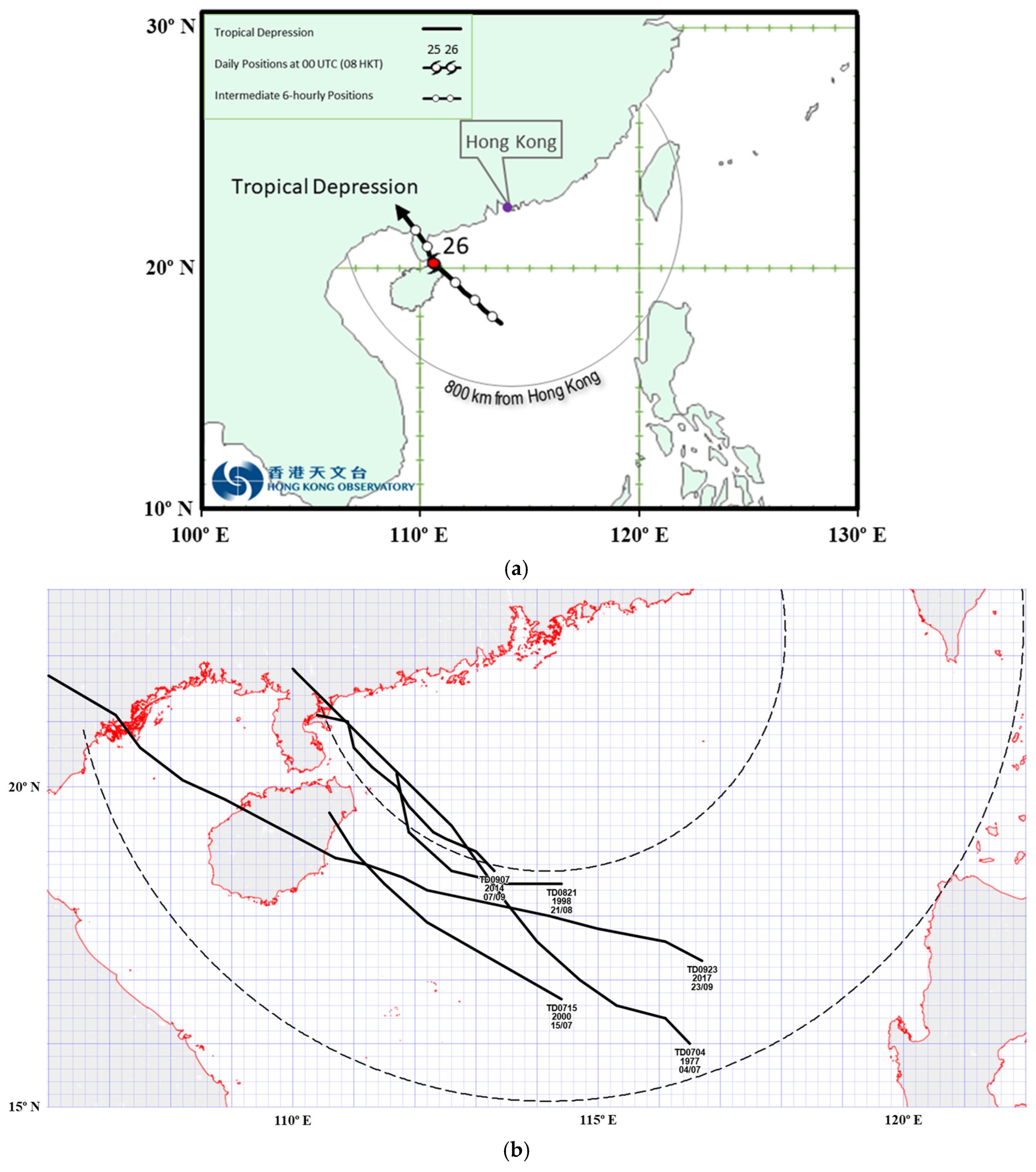
A broad trough of low pressure affected the central part of the SCS and the Philippines during 23–24 June 2025. Under favourable sea surface temperature (SST), and together with the positive vertical vorticity jointly contributed by the subtropical ridge and the southwesterly airstream, an area of low pressure within the broad trough gradually developed into a TD over the central part of the SCS, adopted a northwesterly track moving towards Hainan and Leizhou Peninsula under the steering flow by the subtropical ridge, and subsequently affected the coastal areas of southern China during 25–26 June 2025. It is not well captured by the conventional NWP models, and thus major weather centres in the region do not expect the occurrence of TD even a few days before its occurrence. On the other hand, the AI-based models all point to the occurrence of a surface closed isobar several days ahead, and they are proven to provide earlier alerting of a tropical cyclone, even for a relatively weak system, a few days in advance compared to NWP models. AI models also generally forecast well the movement of this TD, namely, moving northwestwards over the northern part of the South China Sea in the general direction of Hainan Island and Leizhou Peninsula of Guangdong province. The provisional track of the TD is shown in Figure 1a.
Based on historical records of the HKO since 1961, there are not many TDs taking this track in the region in the period June to September of a year. Only five similar cases have been identified in the database, as shown in Figure 1b. Though such TDs remain relatively far away from Hong Kong (with a distance of around 400 km to the west) and are generally weak systems, their combined effect together with a ridge of high pressure along the southeastern coast of China may bring about widespread strong winds to Hong Kong, e.g., as in the case of the TD on 15–16 July 2000 (denoted by “TD0715”) when generally strong winds occurred over the territory (four reference stations out of eight in Hong Kong recorded sustained strong winds). As such, for the TD in June 2025, due caution had been paid to the system because it may lead to strengthening of the local winds, and may have consequences for the daily life of the people of Hong Kong, e.g., suspension of some classes for the little children. Thanks to the AI models, the movement of the TD had been well forecast a few days in advance. Together with the wind structure forecast provided by conventional NWP models, the changes in the strength of the local winds had been well anticipated, and thus a timely alerting service could be provided to the public.
Another important aspect for accurate TC forecasting and early warning is the availability of high-resolution observations. Aircraft reconnaissance remains the most direct method for obtaining detailed measurements of TC structure, particularly for weak or developing systems where satellite-based intensity estimates may be uncertain [12,13]. Dropsonde deployments provide critical information on the thermodynamic and kinematic structure of the boundary layer, including radial inflow, tangential wind profiles, and equivalent potential temperature distributions [14,15]. These observations are essential for understanding the processes that govern TC intensification [16]. The Government Flying Service (GFS) of Hong Kong conducted a rare reconnaissance flight for this TD, yielding valuable dropsonde data that are analyzed in this paper. In addition, ground-based remote-sensing instruments, such as wind profilers and lidars, offer continuous observations of the vertical wind structure associated with landfalling TCs [17,18]. Wind profiler data can reveal boundary layer jets, inflow layers, and the depth of the TC circulation, providing insights into TC structure that complement aircraft observations [19]. For the Haikou wind profiler located on Hainan Island, the data captured the boundary layer characteristics of the TD as it approached the coast.
This study aims to document a detailed case study of this TD, with three primary contributions to the literature: (1) to document the operational forecasting challenges posed by a weak TC; (2) to provide a focused evaluation of the performance of state-of-the-art AI models against conventional NWP models for this challenging case; and (3) to present a unique set of in situ and remote sensing observations (dropsondes, aircraft probe, and wind profilers) that helps clarify the wind structure and intensification potential of a weak TC.

2. Materials and Methods

2.1. Observations

2.1.1. Dropsonde

Dropsondes were deployed by the GFS of Hong Kong using a fixed-wing Bombardier Challenger aircraft. Deployments occurred when the TC entered the Hong Kong Flight Information Region (HKFIR) over the SCS, with dropsondes released from an altitude of approximately 9 km above mean sea level. During descent, the dropsondes measure wind speed at 4 Hz based on Global Positioning System (GPS) positioning, while pressure, temperature, and relative humidity are sampled at 2 Hz. Given a typical falling rate of ~12 m s−1, the effective vertical resolution is approximately 3 m for wind measurements and 6 m for thermodynamic parameters. The manufacturer-specified accuracies are 0.5 m s−1 for wind speed, 0.5 hPa for pressure, 0.2 °C for temperature, and 2% for relative humidity.
All dropsonde data underwent rigorous quality control using the Atmospheric Sounding Processing Environment (ASPEN) software version 3.4.9., developed by the Earth Observing Laboratory (EOL) of the National Center for Atmospheric Research (NCAR). The quality control process included automated checks for gross errors, a hydrostatic consistency check to ensure thermodynamic profile integrity, and manual inspection of each sounding to remove anomalous spikes or unrealistic values. Post-quality control data were used for subsequent analysis of tangential wind, radial wind, and equivalent potential temperature profiles following established methodologies (e.g., [20,21]).

2.1.2. Aircraft Probe

In situ flight-level measurements were collected using the Aircraft Integrated Meteorological Measuring System (AIMMS20), manufactured by Aventech Research Inc. (Barrie, ON, Canada), installed on the GFS Bae Jetstream 4100 (J41) fixed-wing aircraft. The AIMMS20 measures three orthogonal wind components, temperature, relative humidity, and pressure at 20 Hz. A comprehensive description of the system is provided by [22], with the specific installation for the Hong Kong GFS aircraft detailed in previous studies (e.g., [23]).
The system comprises four primary components: (a) Air data probe: Under-wing mounted, measuring true airspeed, flow angle, temperature, and relative humidity. (b) GPS module: Dual-wing antennas determining position, velocity, and true heading via differential carrier-phase techniques. (c) Inertial measurement unit (IMU): Near the centre of gravity, recording three-axis accelerations (±5 g, 0.005 g accuracy) and angular rates (roll, pitch, yaw) at 40 Hz. (d) Central processing module: In-cabin, collecting and correcting data from the probe, GPS, and IMU, outputting meteorological and aircraft data at 20 Hz.
Wind velocity data were corrected for aircraft motion and flow distortion by integrating inputs from the GPS module, IMU, and central processing module. The final output includes high-frequency turbulence parameters such as turbulent kinetic energy (TKE) and eddy dissipation rate (EDR), derived from the 20 Hz wind measurements following established methods [23].

2.1.3. Wind Profiler

Vertical wind profile data were available from a number of wind profilers at Hainan and the western coast of Guangdong. The example of the Haikou wind profiler, located on the northern coast of Hainan Island, is analyzed. The profiler operates in the very high frequency band and provides continuous measurements of horizontal wind speed and direction at multiple height levels from near the surface up to several kilometres above sea level. The lowest measurement gate is at 150 m above sea level, with a gate interval of 120 m between 150 and 630 m, and a gate interval of 240 m for heights above 630 m. Wind data are provided as 30 min averages, which serve as the fundamental temporal resolution for analysis.
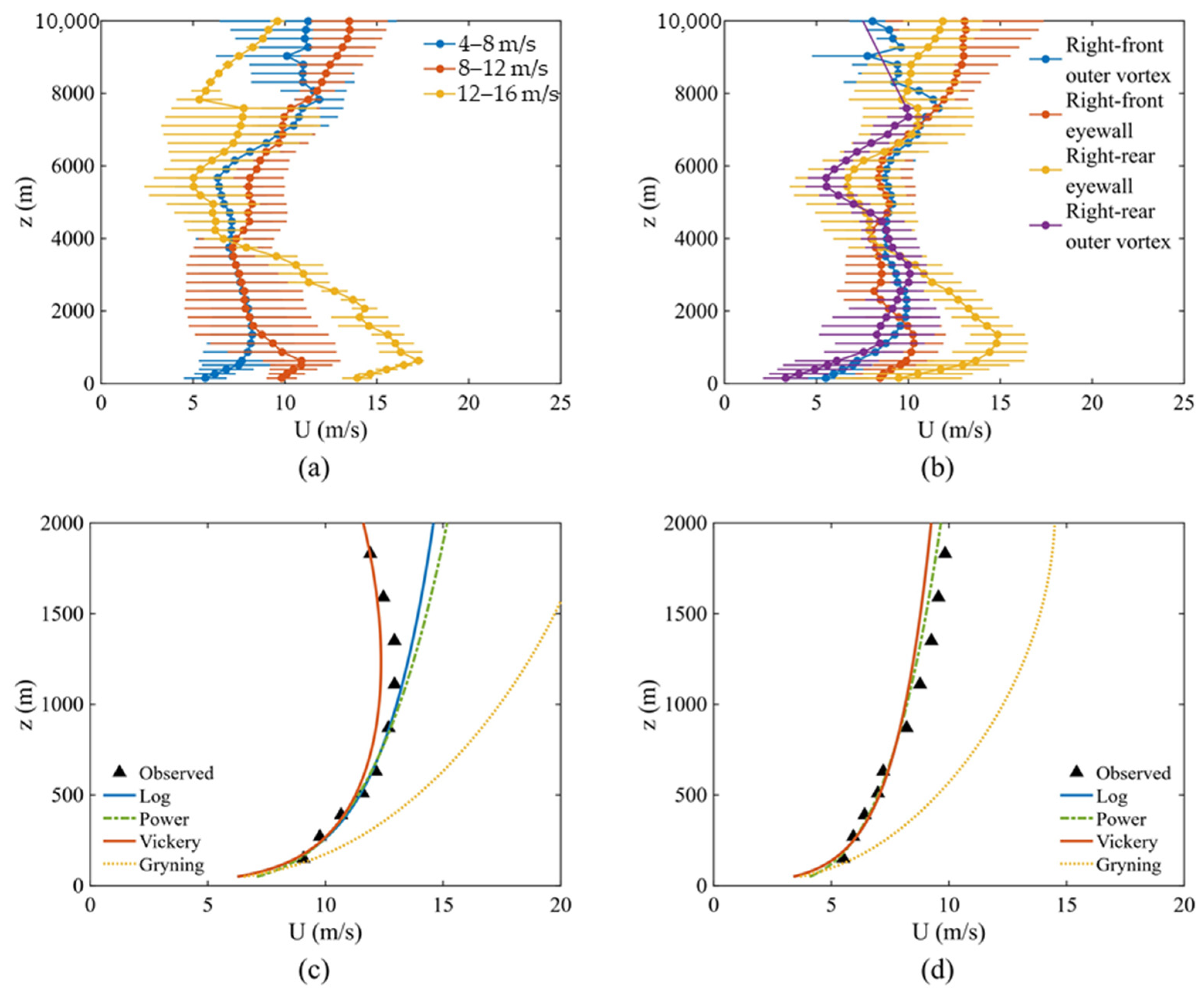
To characterize the boundary layer wind structure associated with the TD, wind profiles were stratified according to the wind speed at the lowest measurement level (150 m above sea level) or the storm-relative locations. For each wind speed category, mean vertical profiles and standard deviations were calculated. The boundary layer portion of the profiles (below 2000 m) was further analyzed by fitting to wind profile models, e.g., the logarithmic law, power law, Vickery model [24], and Gryning model [25], allowing comparison with previous studies on boundary layer wind structure.

2.2. Forecasting Models

Forecast tracks and intensities from several operational NWP and AI models were evaluated. The NWP models included global models from the European Centre for Medium-Range Weather Forecasts (ECMWF IFS), the National Centers for Environmental Prediction (NCEP GFS), and a mesoscale atmosphere-ocean-wave coupled model [26]. The AI models evaluated were Pangu-Weather [6], GraphCast [7], FuXi [8], and Fengwu [9]. Forecasts were verified against the operational TC analysis produced by the HKO. Root-mean-square errors (RMSE) for track position and maximum wind speed were calculated for lead times up to 72 h, homogenizing the number of cases across each lead time for consistency.

3. Results

3.1. Operational Considerations in the Life of TD

There are some special considerations in the warning service for the TD, e.g., whether it remained as a tropical disturbance or should it be upgraded to a TC? [27]. Does it remain as a TD only or is it a marginal tropical storm (TS, defined as TCs with maximum 10 min sustained wind speeds near the centre of 63–87 km/h)? How do we locate the centre of this rather weak system whilst it remained over the seas, especially when rotating convection had been identified in the weather radar imageries? These operational considerations, which directly impacted the timing and nature of public warnings, are documented as follows.

3.1.1. Upgrade into a Tropical Cyclone

One major concern is whether the low-pressure area over the seas west of Luzon, the Philippines, should be regarded as remaining as a tropical disturbance or should it be upgraded to a TC, in view of the rather loosely organized convection on 25 June 2025, as shown in the geostationary satellite imageries. Apart from sustained convection near the centre of the system, HKO upgraded the system into a TC at 03 UTC, 25 June, mainly taking into account the ASCAT-B scatterometer wind earlier on that day, with strong winds of more than 20 knots analyzed to the north of the system. This consideration is well justified afterwards, as surface strong winds had been recorded by a couple of weather buoys and weather stations on oil rig afterwards and the convection became better organized from both satellite and weather radar images. The timely upgrade of this system into a TC provided long enough lead time for alerting the public and for enabling public response for the possible occurrence of windy weather and squally showers. In fact, later on that day, before midnight, strong winds were recorded occasionally over an offshore station in Hong Kong and generally on the high grounds. Squally showers also set in early on the following day, representing a rapid deterioration of the local weather compared to the mainly fine and very hot weather (maximum temperature of 34.5 degrees Celsius as recorded at HKO Headquarters in the urban area of Hong Kong) on 25 June 2025.

3.1.2. Location of Centre and Mesocyclone in Convection

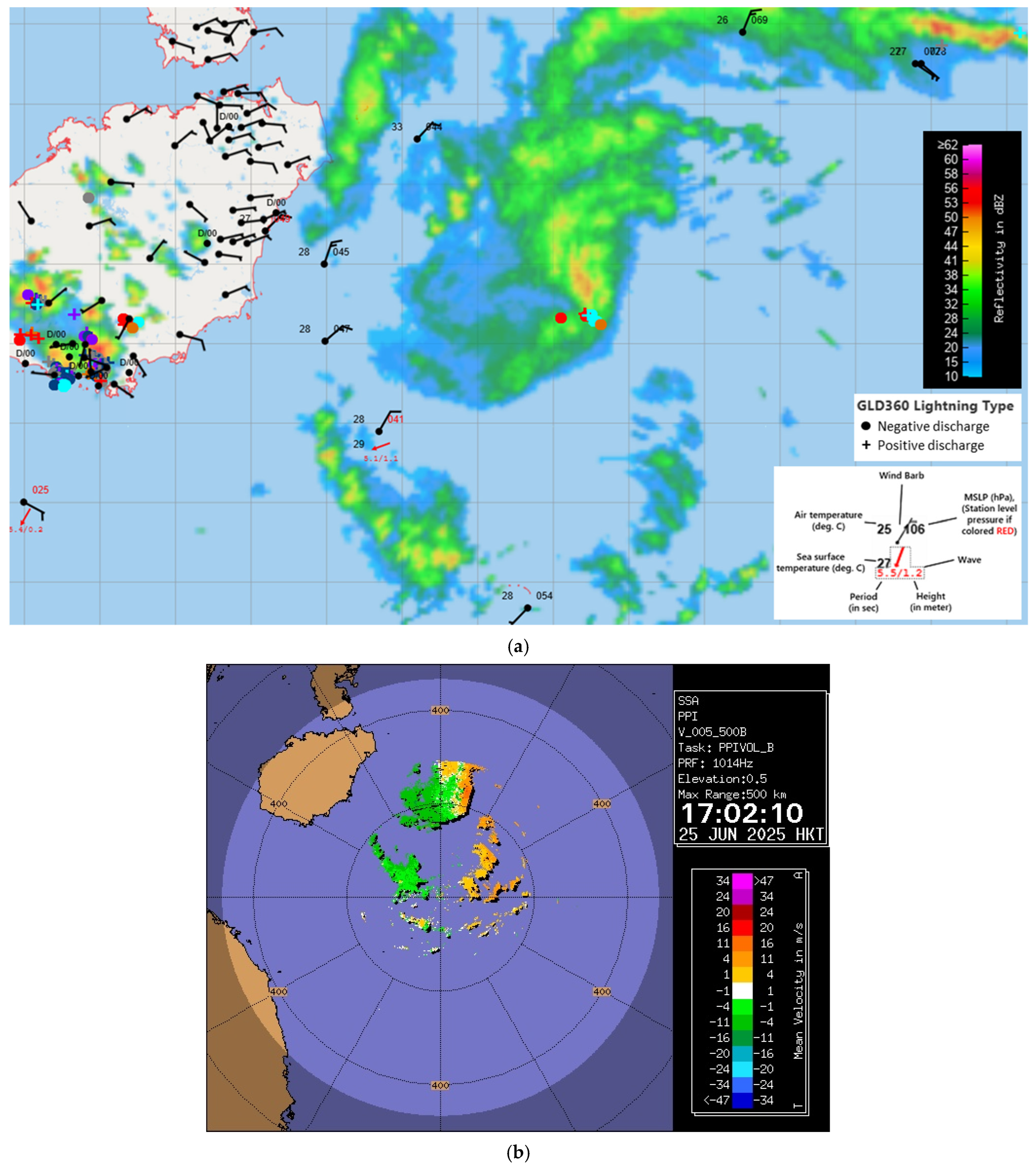
For a rather weak TC system at the start, the determination of its centre may become a challenge. Thanks to the availability of the weather radar imagery, the centre of the system was generally well depicted. However, in the convection to the north of the broad centre of this TD, there seemed to be rotating radar echoes (a snapshot shown in Figure 2a, and the sense of rotation is even more apparent in the animation of weather imageries). Such stronger radar echoes took on the shape of a ‘tropical cyclone symbol” with active cloud-to-ground lightning in Figure 2a. There may be a mesocyclone embedded in the intense convection, as shown in the Doppler velocity imagery in Figure 2b—within the outbound flow (yellow to orange), there is a tiny area of inbound flow (green). It appears to be a mesocyclone within the broad eye structure. Unfortunately, there were no surface observations nor human observations to support the occurrence of a mesocyclone with possibly a waterspout in this region.

3.1.3. A Marginal Tropical Storm?

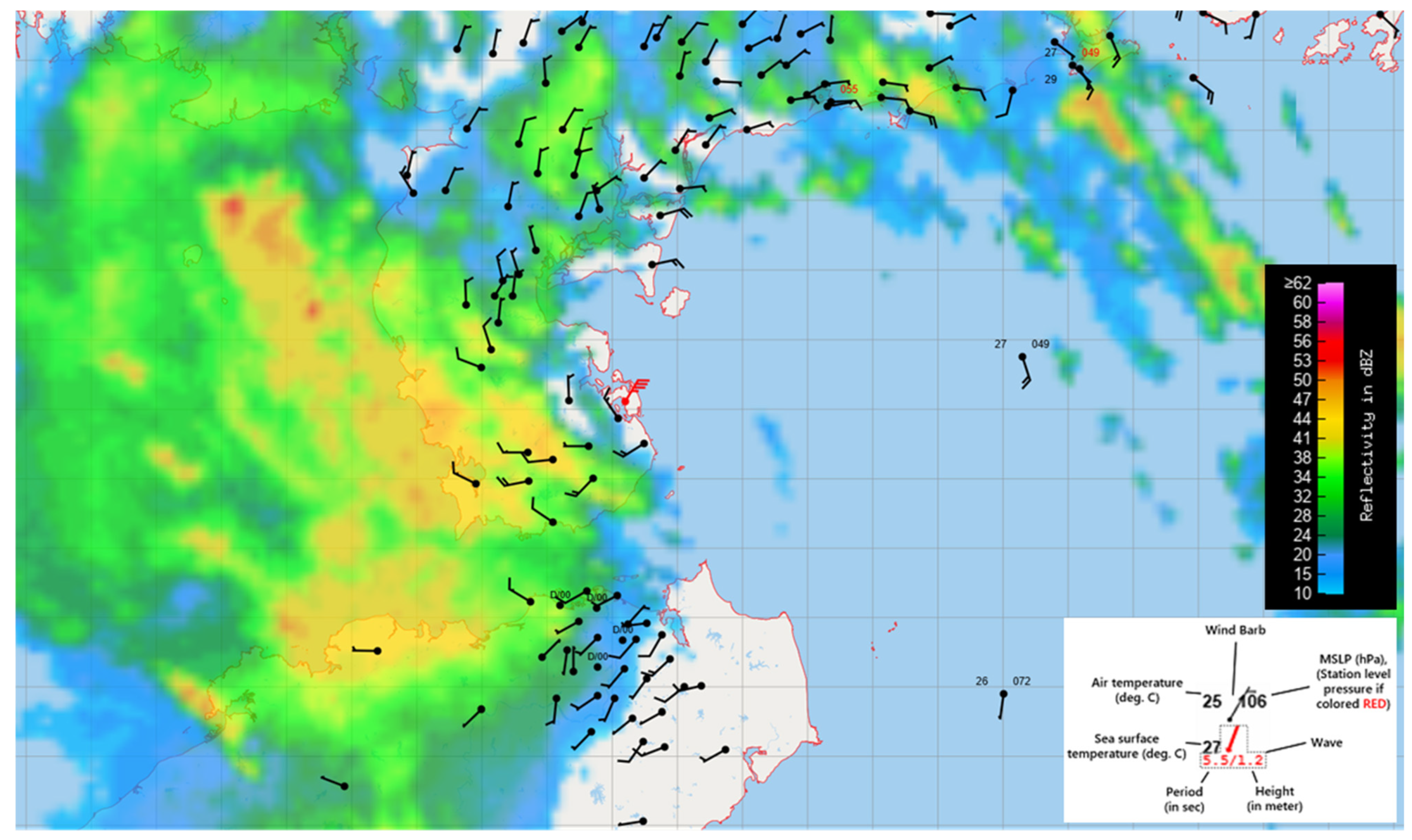
As the TD headed towards Leizhou Peninsula, its structure became better organized, as shown in the weather radar imagery. There was a broad band of significant convection to the west, with curving lines of weather radar echoes wrapping into the centre. A sample picture is shown in Figure 3. However, the available surface winds (over land, islands, buoys and oil rigs) are just moderate to strong only. Until the moment when the TC just made landfall over the Leizhou peninsula, there was a time when a station recorded about 35 knots surface wind for 15 to 20 min or so (Figure 3). The lowest pressure at that time from the available surface observations was about 998 hPa. The short period of occurrence of marginal gale-force winds and the rather high surface pressure may not justify the sustained attainment of TS strength for this TC. But it may be possible that the system itself had once been a marginal TS for a very short period of time.

3.2. Forecasting Analysis and Model Performance

3.2.1. Track and Intensity Forecasts from NWP and AI Models

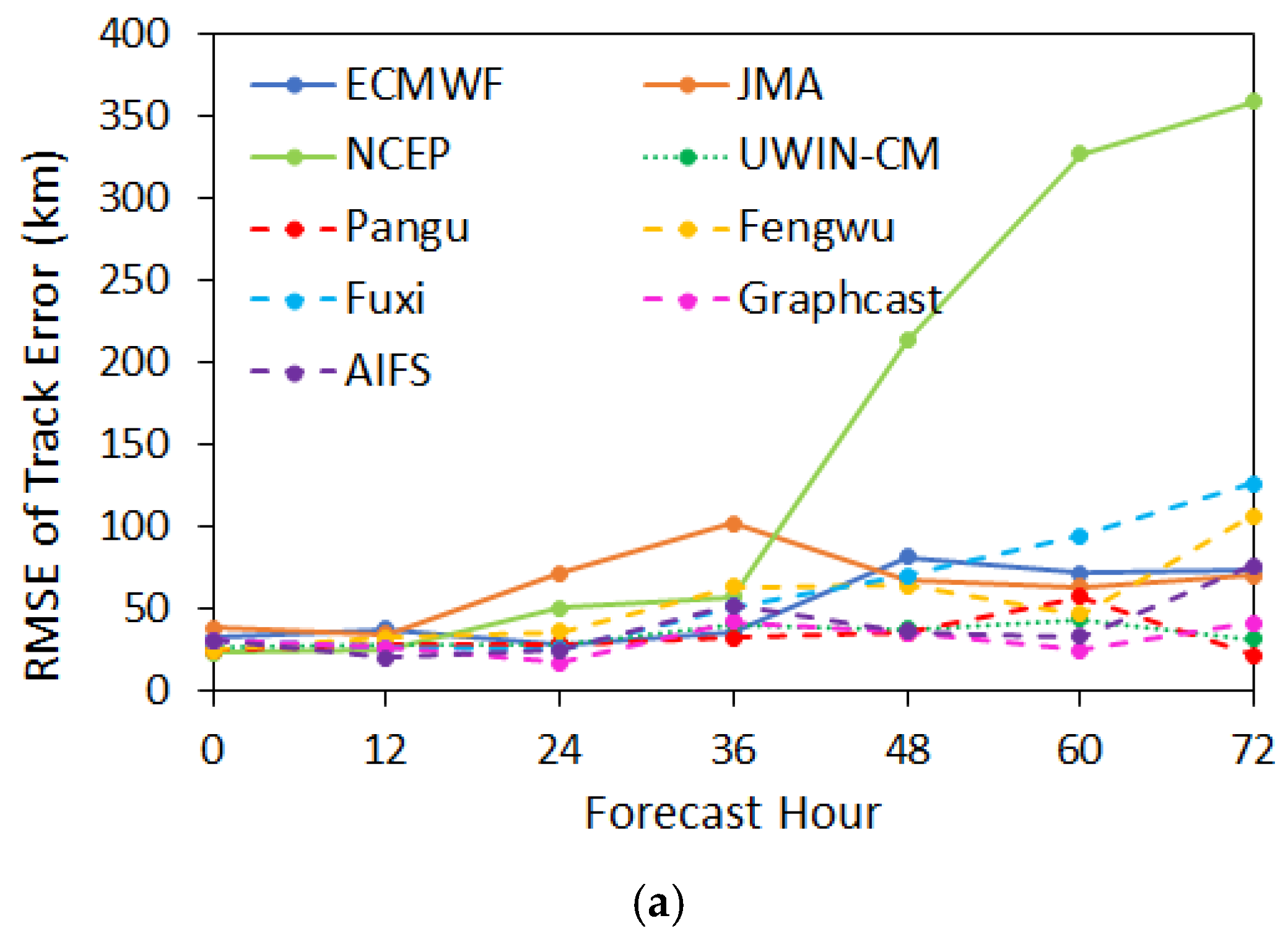
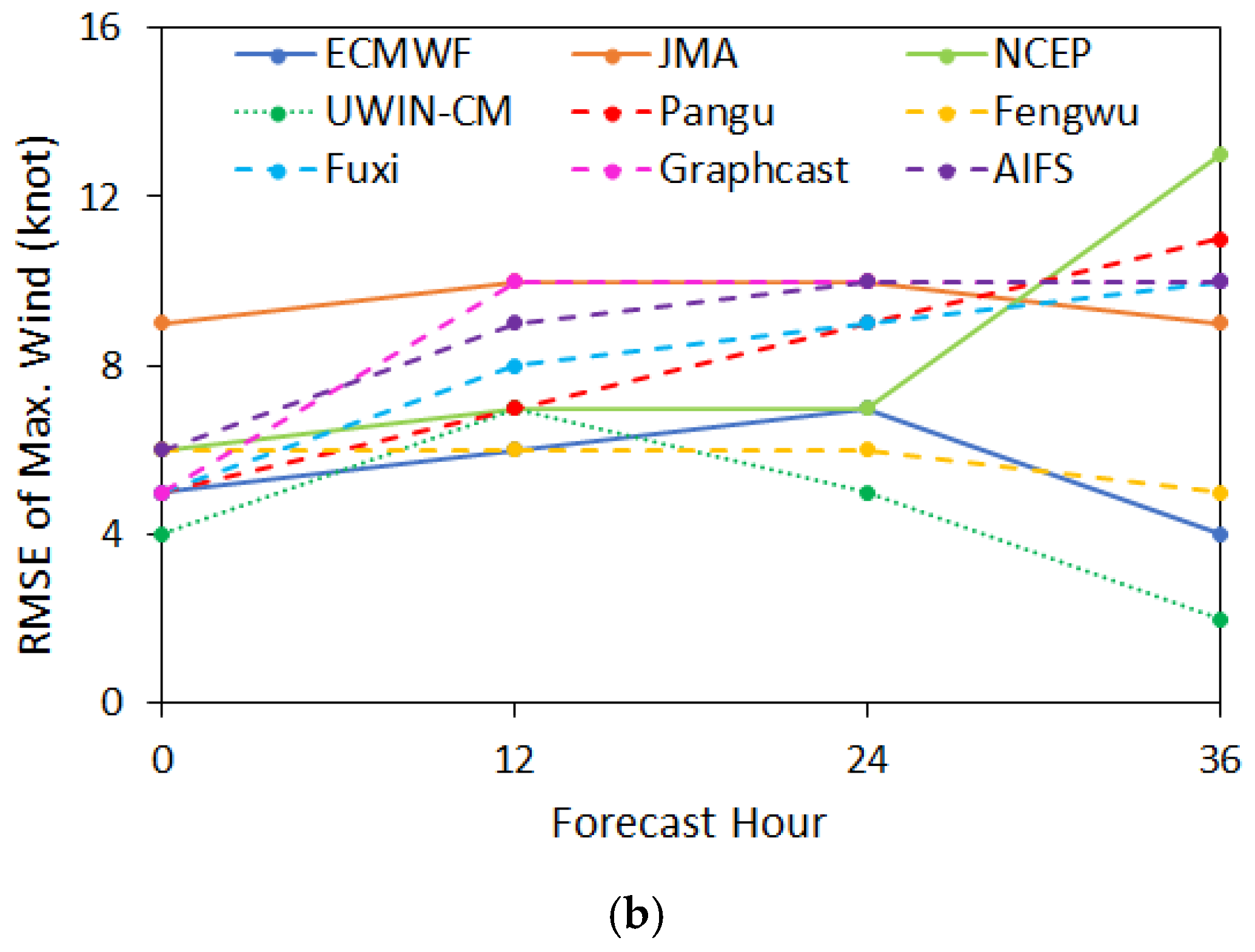
Due to the short life-span of the TD, only forecasts up to 72 h are considered in the calculation of root-mean-square errors for TC track and intensity. The results are shown in Figure 4. Both global NWP models and global AI models, e.g., Pangu, FuXi, Fengwu, and GraphCast, are considered. For the mesoscale model, the atmosphere-ocean-wave coupled model [26] is included in the error comparison. For the forecast track, AI models generally outperform NWP models, particularly in the forecast region of 36 to 60 h. For the intensity forecast, the various global models are similar. It is noted that the coupled model has the lowest error, which is consistent with the previous findings in a larger sample [26].

3.2.2. Intensity Forecast from Oceanic Parameters

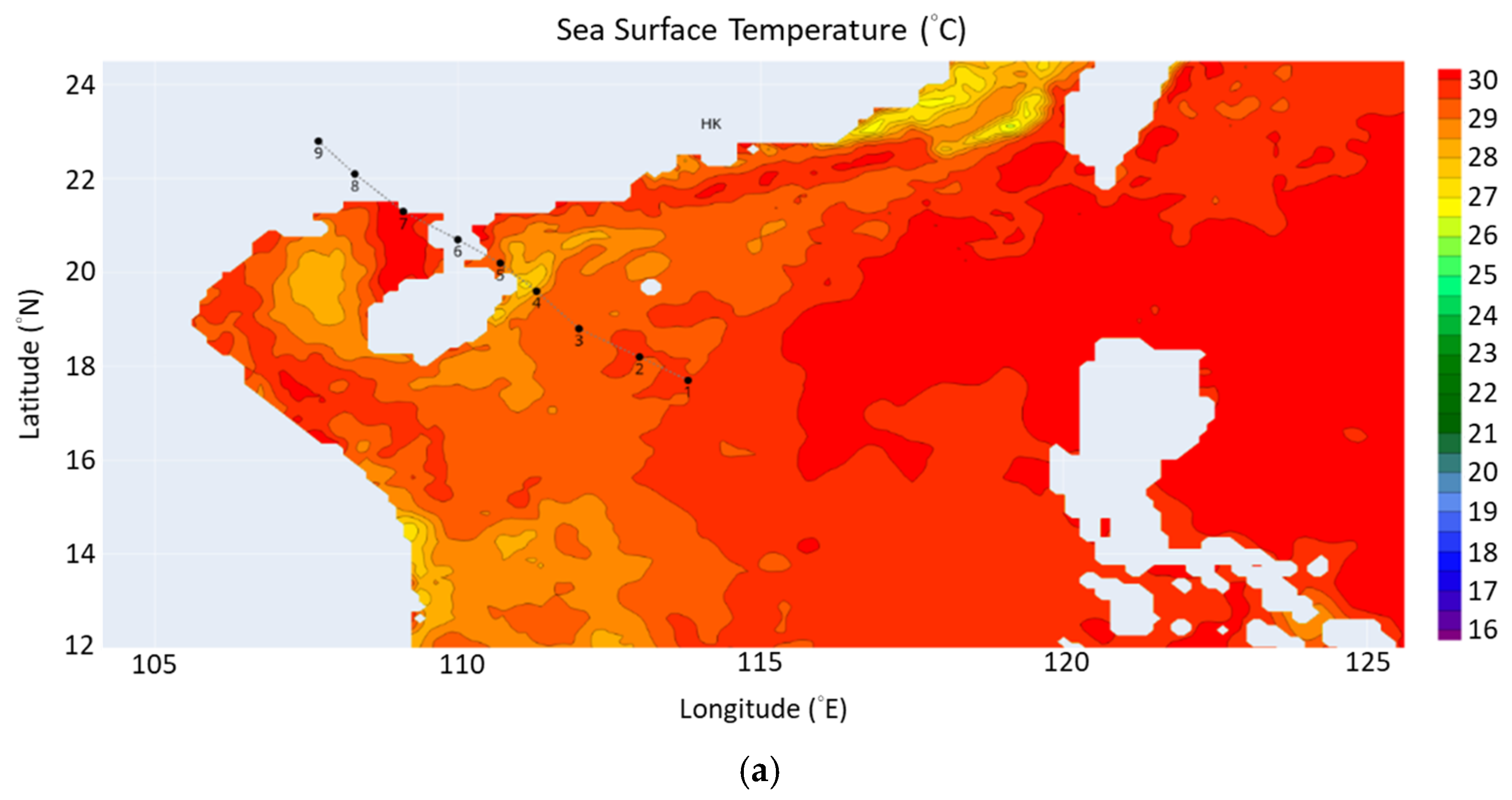
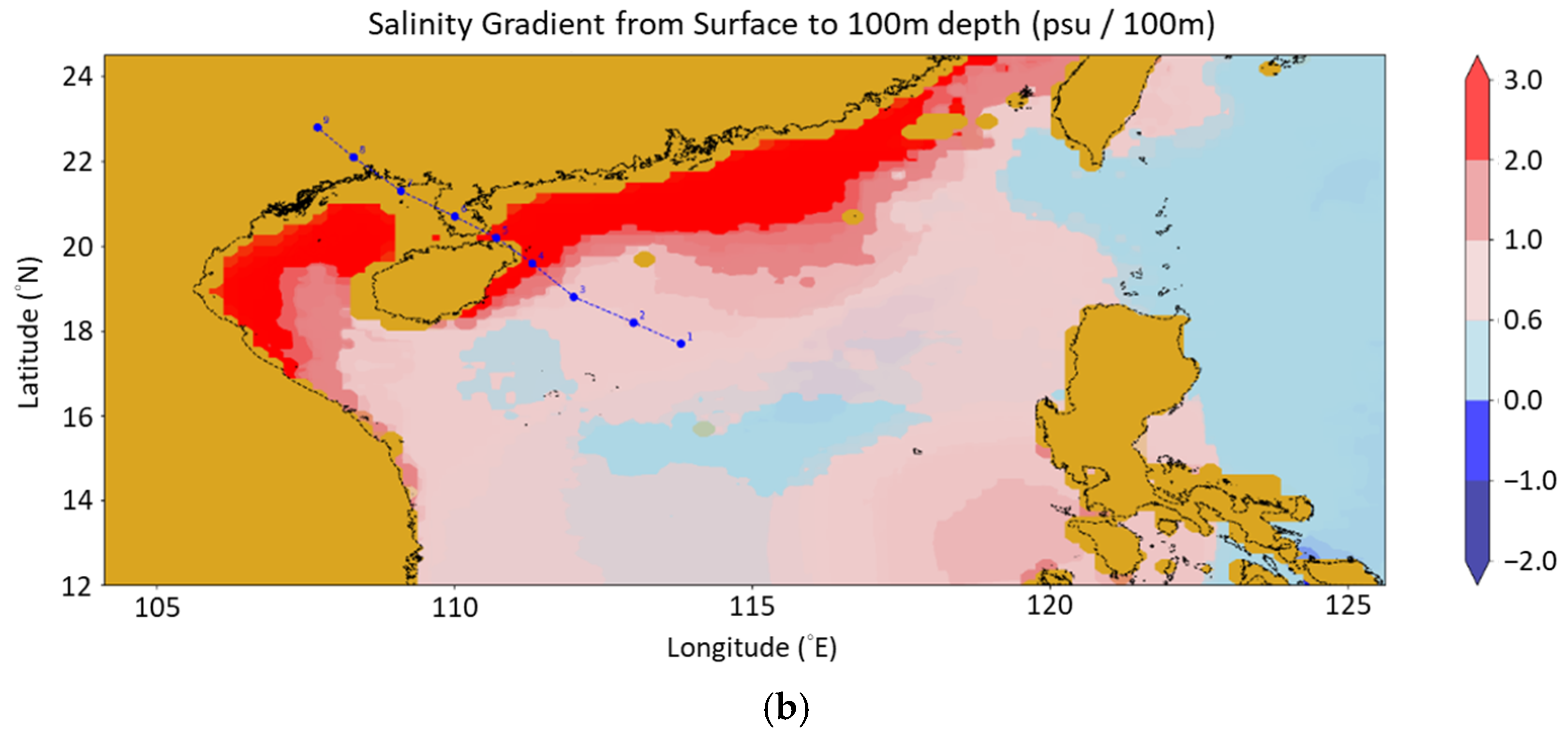
As discussed in Chan et al. [28] and the associated reference, SST and sub-sea-surface salinity may be good indications for the potential intensification of TC over the South China Sea. The analyses of the SST and salinity gradient on 25 June 2025 are shown in Figure 5a and Figure 5b, respectively. The SST is generally rather high, in the region of 29 to 30 degrees Celsius. The salinity gradient is also higher than the 0.6 psu per 100 m in the sea surface. Both parameters suggest that the oceanic conditions are favourable for the intensification of this TC. This is indeed supported by the analyzed intensity of this system, from a low-pressure area as a start, and eventually getting to a TD with sustained maximum winds of around 30 knots on landfall over Leizhou Peninsula (with the possibility of a marginal TS).

3.2.3. Impact on the Winds in Hong Kong

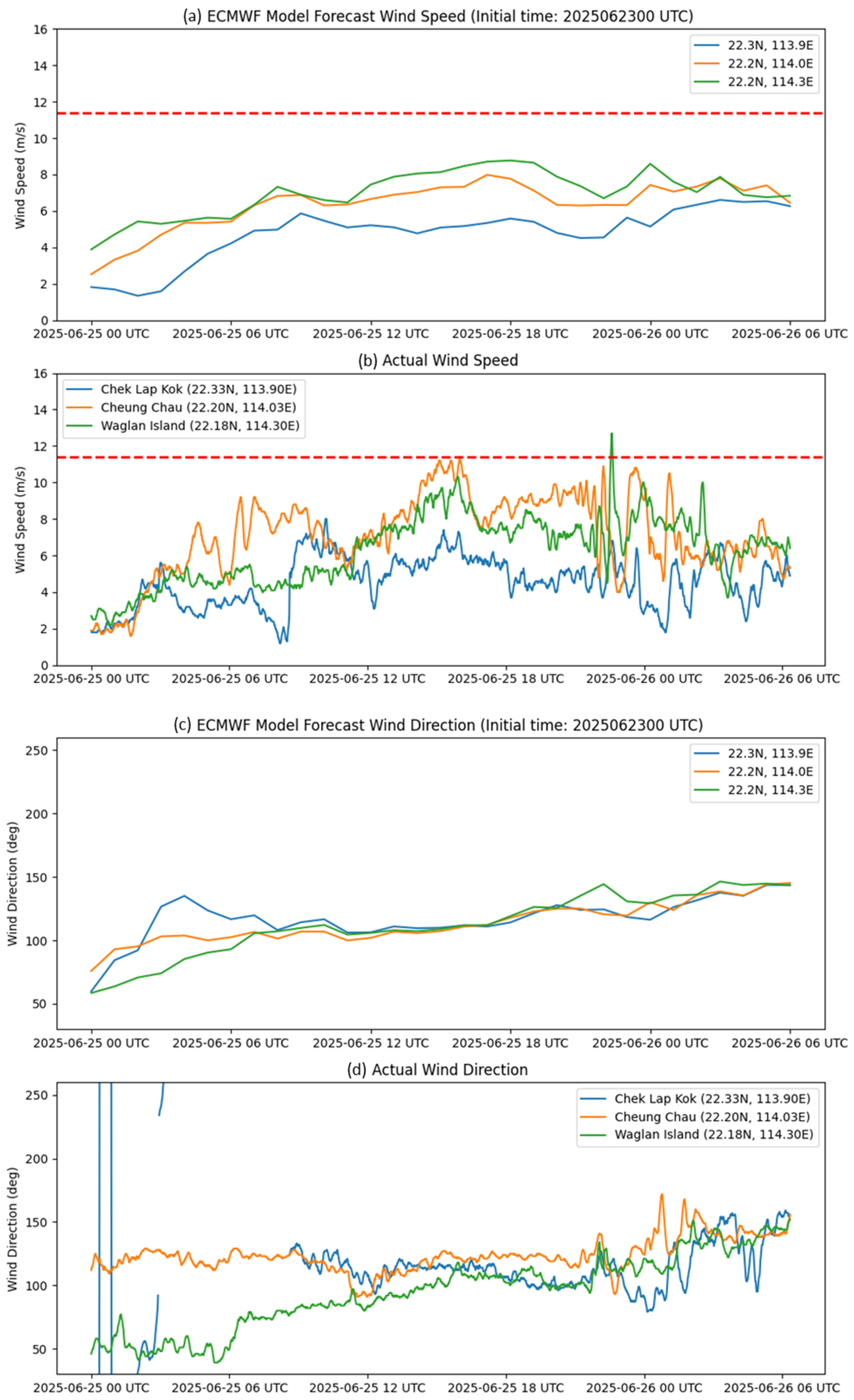
In the operation of the tropical cyclone warning services, the forecast wind speeds at various locations of Hong Kong, particularly the offshore stations, would be an essential input. Given that the European Centre for Medium Range Weather Forecast (ECMWF) Integrated Forecast System (IFS) demonstrated generally better forecast performance for TC track in the region, as well as for this particular case, the forecast wind speed and wind direction from ECMWF IFS outputs at the three grid points along the southern coast of Hong Kong are considered. The forecast winds and the observed data from the anemometers nearby are shown in Figure 6 (from west to east of the territory). ECMWF IFS correctly forecast that strong winds would mostly not occur at these locations, and as such, Standby Signal No.1 would be sufficient. In the actual observations, because of squally showers, brief periods of strong winds were recorded at a couple of offshore stations, but the periods are so short that they do not warrant the issuance of Strong Wind Signal No.3 for this TC. The general trends of wind speed and wind direction from these stations are well captured. As such, the track, intensity and structure of the TC are all quite well captured so that the wind forecast from a global model provides reliable information for operating a TC warning signal service in advance.

3.3. Observational Analysis

3.3.1. Dropsonde

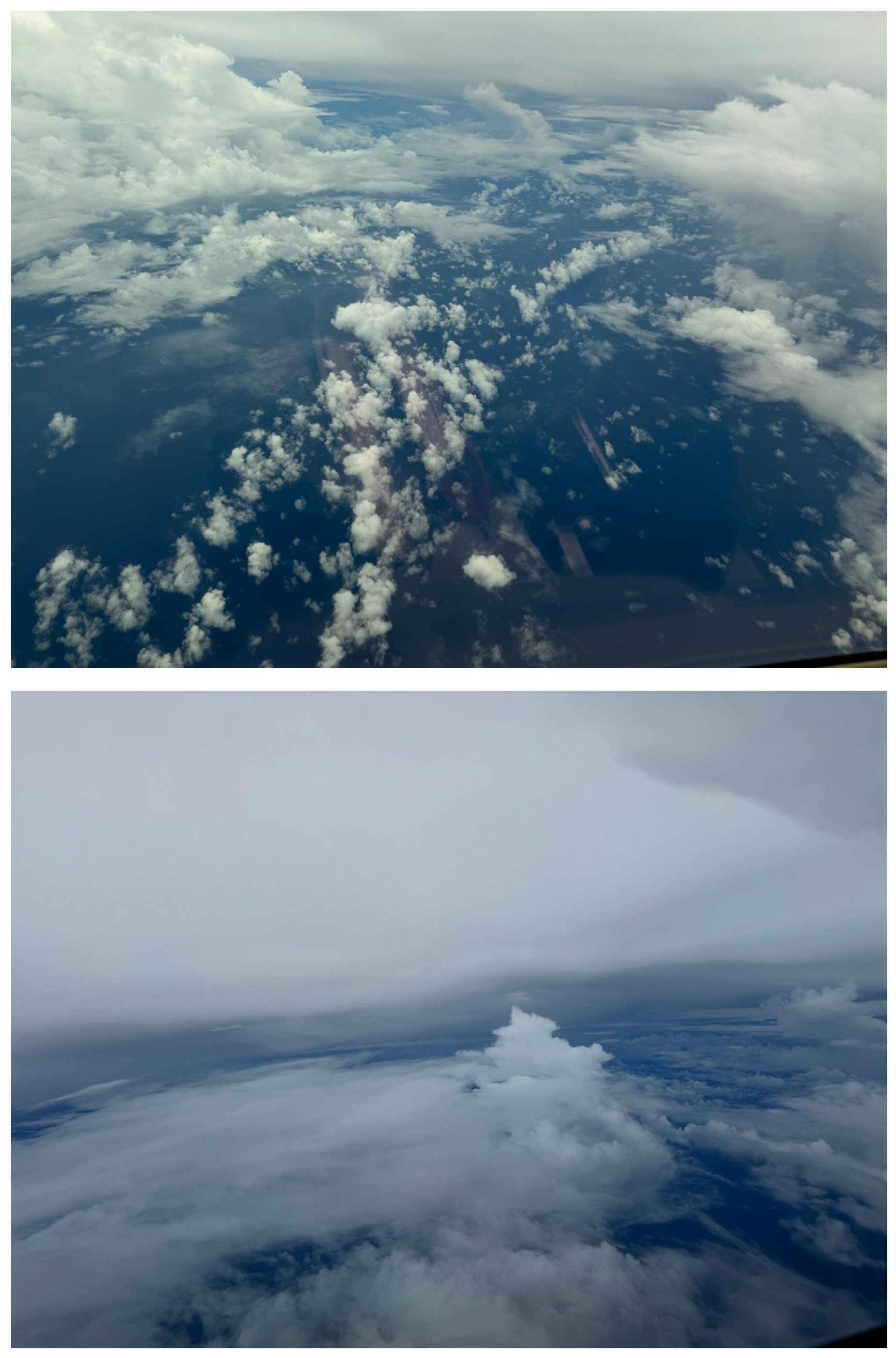
In view of the potential impact of this TC on the weather in Hong Kong, HKO had been liaising with the Government Flying Service (GFS) of the Hong Kong Government to conduct an aircraft reconnaissance flight for this TC, though it was considered to be a relatively weak system. Photos had been taken by the crew when the aircraft was close to the centre of the TC, as shown in Figure 7. The top panel of Figure 7 shows the isolated cumuli surrounding the centre of this TC, with cumulus towers and altostratus aloft. The bottom panel of Figure 7 was taken at a greater altitude, showing the convection over the centre of this TC. The photos confirmed that the TC was still a rather weak system at that time (around 05 UTC of 25 June 2025)—there was no mature eyewall, but significant convection did occur over areas surrounding the centre.
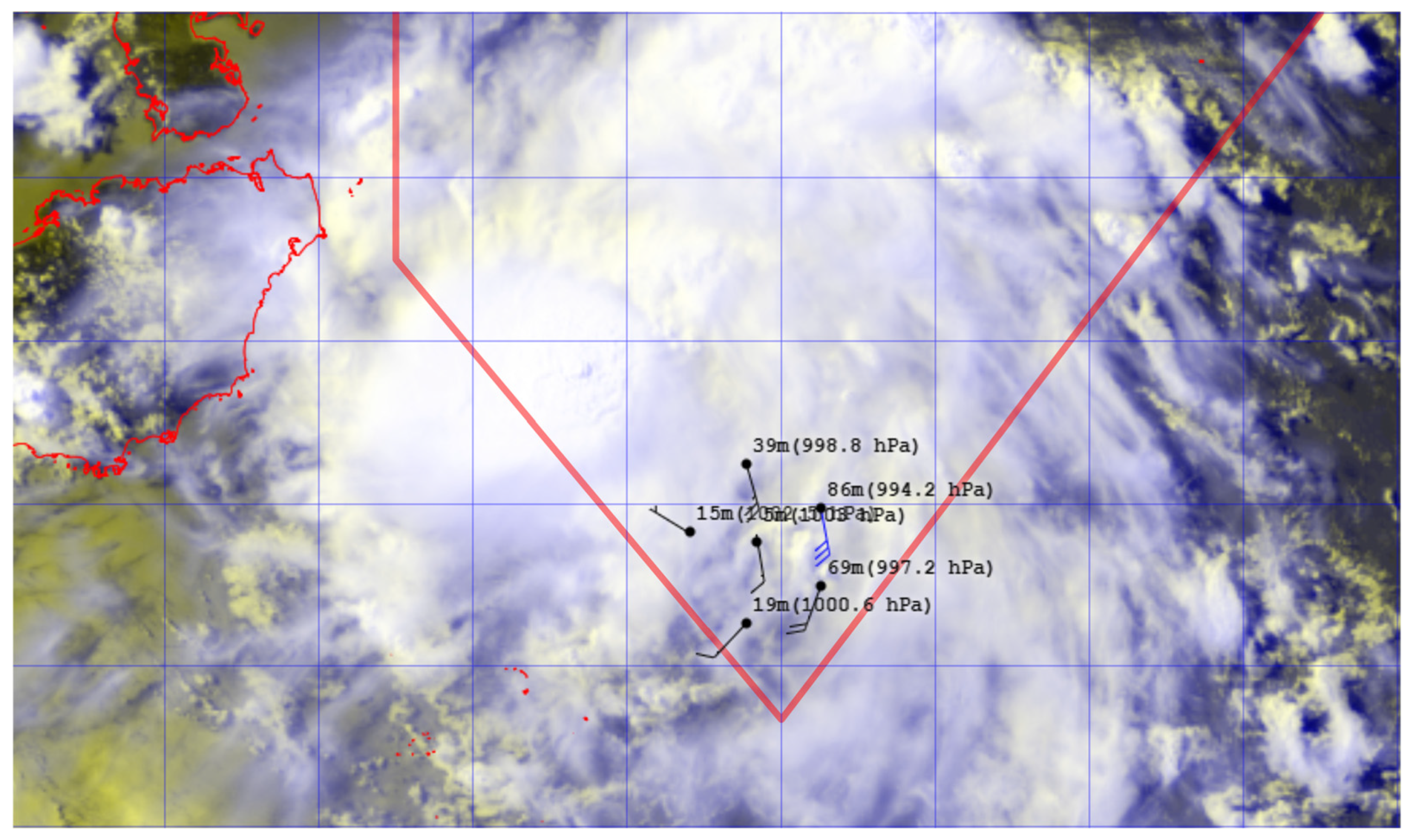
Six dropsondes successfully dropped to near-surface-level altitudes and provided useful data about the near-surface pressures and winds. The results are shown in Figure 8. The lowest pressure near the surface is in the region of 1002 to 1003 hPa. Maximum wind speed was recorded to be around 30 knots at a height of about 86 m above sea level. Such pressure values and wind strength again support the upgrade of the system into a TD.
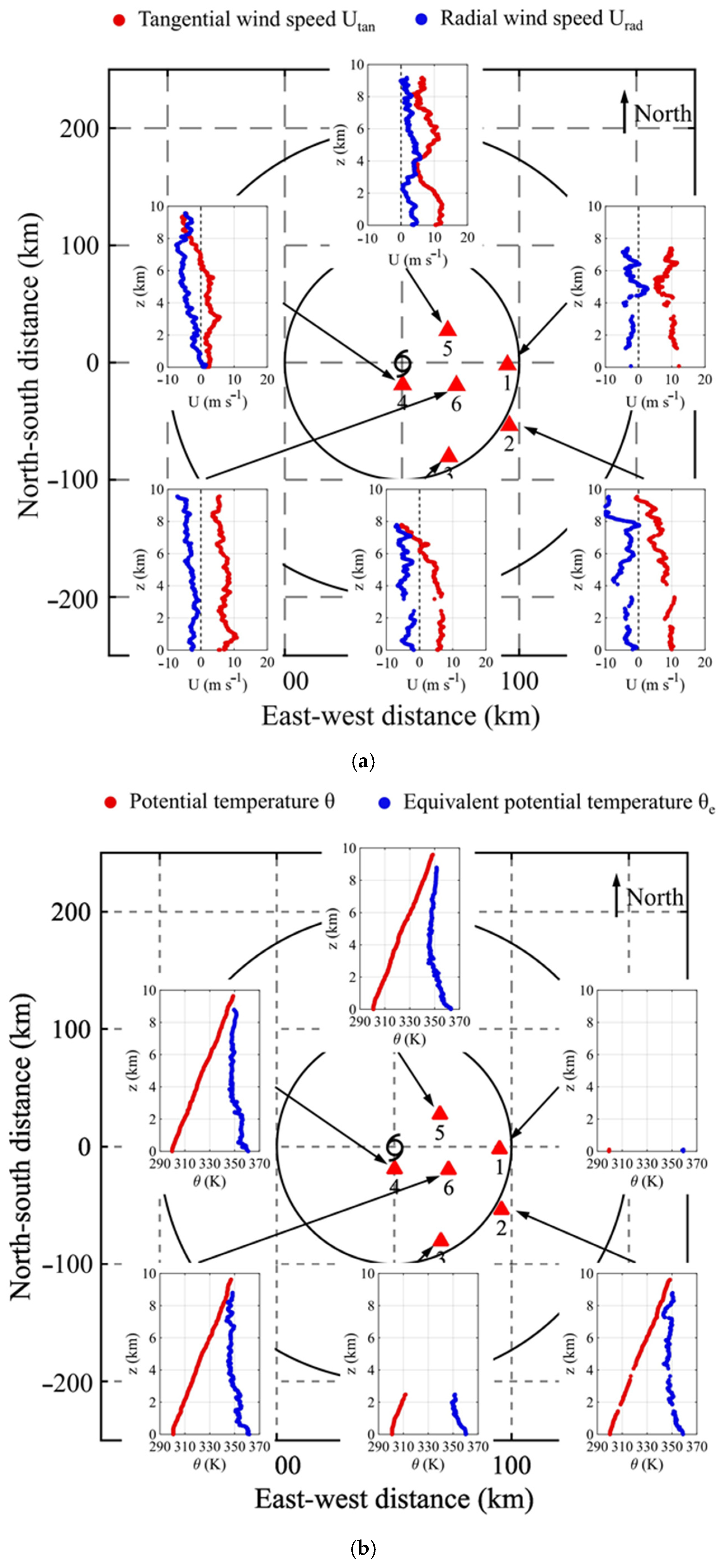
Following the method of Ming et al. [20], He et al. [21], among others, the dropsonde data are used to calculate the vertical profiles of tangential wind/radial wind (Figure 9a), and equivalent potential temperature (Figure 9b). Inflow is analyzed from the sondes to the east and southeast of the centre of the TC, suggesting some inflow associated with the southwest monsoon to feed moisture and momentum into the system for its possible further intensification. Low-level jets with a jet height of about 1 km can be found near the eyewall (Sondes 5 and 6, with distance to storm centre of about 50 km) but are not evident in the eye (Sonde 4) or the outer vortex (Sondes 1, 2, and 3). The boundary layer is generally unstable from the equivalent potential temperature profiles, which is also favourable for the system to intensify further.

3.3.2. Aircraft Probe

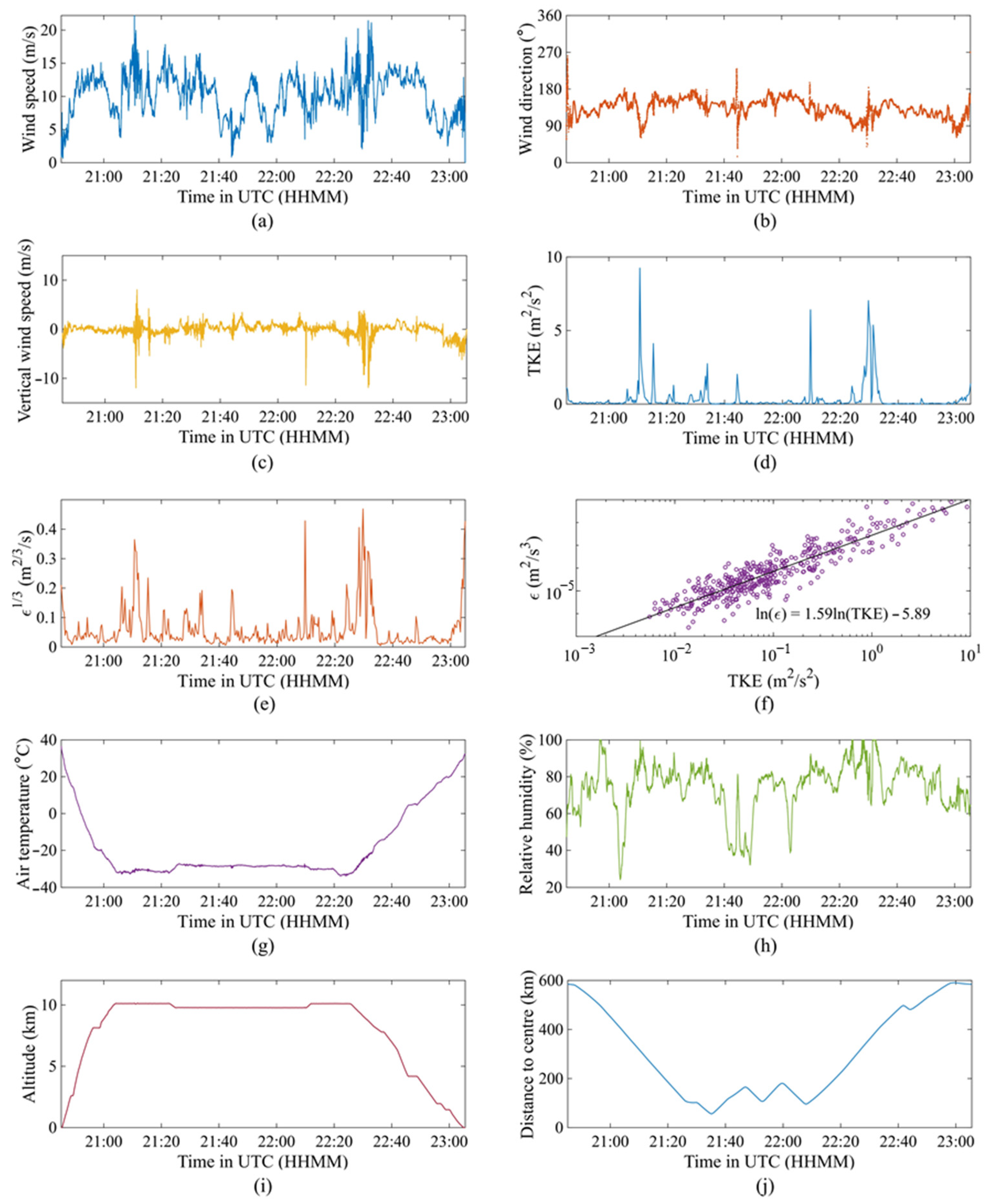
While the aircraft was performing dropsonde flight, in situ measurements of the atmospheric conditions were also made using a probe under the wing of the aircraft. The results are shown in Figure 10. At an altitude of about 10 km above sea level, the maximum wind speed is in the region of 20 m/s, with the wind direction mainly from east through southeast to the south. The vertical velocity spans between +5 m/s and −10 m/s, resulting in TKE in the region of 9 m2·s−2 and EDR to reach 0.5 m2/3·s−1, i.e., severe turbulence occasionally. As in the previous studies, the TKE and EDR are highly correlated, and the equation of the best-fit straight line is similar to the previous TCs, e.g., [23]. Significant fluctuations are seen in the relative humidity, which suggests significant intrusions of relatively drier air into the generally moist environment in association with the convection.

3.3.3. Wind Profilers

A number of wind profilers have been operating at Hainan and the western coast of Guangdong, and their wind data during the period of the TD are analyzed. Figure 11 shows the example of the Haikou wind profiler at the northern coast of Hainan Island. Figure 11a refers to the vertical wind speed profiles stratified by the wind speed at the lowest measurement level of 150 m, while Figure 11b presents wind profiles stratified by the storm-relative location, where the eyewall is defined as 50 ≤ d ≤ 100 km (d: distance to storm centre), and outer vortex as 100 ≤ d ≤ 200 km. At higher wind speeds near the eyewall, a low-level jet at a height of about 1000 m above sea level is apparent, and this is the boundary layer jet associated with the TD. As such, the TD has quite a prominent boundary layer wind structure of a TC, though it is a relatively weak system. At 4000 m or so above sea level, the wind profiles at various wind speed stratification converge. This may hint at the upper boundary of the circulation of the TD. In Figure 11c,d, the boundary layer winds (below 2000 m above sea level) are fitted with several wind profile models commonly used in meteorological and engineering applications, including the logarithmic (log) law, power law, Vickery model, and Gryning model. As in typical TC cases, both the log and the power laws work reasonably for fitting the wind speed profiles within the lowest 1000 m, but neither accurately reproduces the low-level jet feature near the eyewall. These again support that the TD has a quite mature wind structure [24,29].

4. Discussion

The wind profiler and dropsonde observations revealed a well-defined low-level jet within the boundary layer near the TD eyewall (50 to 100 km from the storm centre), whereas such a feature was absent in the outer vortex region (Figure 9a and Figure 11b). Low-level jets have been frequently documented in TCs across a wide range of intensities (e.g., [24,29]) and can be explained by the boundary-layer spin-up mechanism [30]. As air parcels converge in the TC boundary layer, they lose absolute angular momentum to the surface. However, if the rate of angular momentum loss is sufficiently small relative to the rate of radius decrease, the corresponding wind speed may increase. Consequently, at certain inner radii, the wind speed within the boundary layer can exceed the local gradient wind above the boundary layer, giving rise to supergradient jets [30]. Of particular interest is the observed asymmetry in jet strength, which appears higher in the right-rear quadrant than in the right-front quadrant. This pattern aligns with the theoretical predictions of Kepert [31] using a linear TC model. The presence of such a mature boundary layer structure in a weak TD suggests that the fundamental dynamics governing TC boundary layer winds may be established early in the TC life cycle, prior to significant intensification.
The performance of AI models in this case study aligns with recent operational evaluations. DeMaria et al. [10] demonstrated that AI-based weather prediction models can produce TC track forecasts competitive with, and sometimes superior to, traditional NWP models, though their intensity forecasts remain less skillful. Ho et al. [32] found that the state-of-the-art AI weather forecasting models generally perform better than the physics-based ECMWF IFS for tropical cyclone genesis forecasts in the western North Pacific in 2024. Our findings extend this to a weak TD genesis scenario where conventional NWP models often exhibit larger uncertainties due to poorly resolved initial circulations. The superior track performance of AI models in the 36–60 h lead time range (Figure 4a) suggests that these data-driven models, trained on decades of reanalysis, might have implicitly learned the precursor patterns for TC formation in the SCS that are not fully captured by the physical parameterizations in NWP models.
While this case study provides detailed insights into a unique TD event, several limitations must be acknowledged. First, the single-case nature limits statistical generalizability. The finding that AI models provided earlier warnings is promising but requires validation across a larger sample of TCs using rigorous metrics. Second, the observational dataset, while rich, is limited to a single reconnaissance flight and several sites in a single TC. More extensive sampling would be needed to fully characterize the three-dimensional structure of such weak systems.
Despite these limitations, the findings have broader applicability. The operational challenges documented, including centre location, intensity assessment, and upgrade decisions, are common to all weak TCs globally. The observed boundary layer structure, particularly the low-level jet near the eyewall region, is remarkably similar to that documented for more intense TCs [24,29]), suggesting that the physical processes governing TC boundary layer wind profiles may be scale-invariant. This has implications for the parameterization of boundary layer processes in NWP models across the full spectrum of TC intensities.

5. Conclusions

This paper documents the observational and forecasting aspects of a TD over the South China Sea in June 2025, with findings that reveal coherent relationships between the system’s structure, its environment, and the performance of different forecasting approaches.
In the forecasting and warning service for this TD, there have been a number of critical considerations, including its timely upgrade from a tropical disturbance into a TC, possible intensification into a marginal TS, and the determination of its centre in “multiple centre” situation as depicted by weather radar imagery (i.e., a broad TC centre and embedded mesocyclone occurring at the same time). The relevant considerations are documented in this paper for future reference. These challenges are common to weak TC forecasting globally and highlight the value of high-resolution radar, scatterometer, and aircraft reconnaissance data for operational decision-making.
The observational analysis revealed a remarkably mature wind structure for a system of this intensity. Dropsonde profiles showed persistent inflow from the southwest monsoon and an unstable boundary layer conducive to further intensification. The aircraft probe data documented severe turbulence (EDR reaching 0.5 m2/3·s−1) occasionally and significant dry air intrusions within the convective environment. Both the wind profiler and dropsonde data revealed a well-defined low-level jet near 1000 m height, which is a feature typically observed within TC eyewalls. This supergradient jet can be explained by the boundary-layer spin-up mechanism and suggests that fundamental dynamics governing TC boundary layer winds may be established early in the TC life cycle.
AI-based weather prediction models can produce TC track forecasts competitive with, and sometimes superior to, traditional NWP models, though their intensity forecasts remain less skillful. As in other TC systems, AI models play an important role in the forecasting of the intensification of the system into a TC and its future movement. Statistical analysis of AI models in these two aspects would be conducted with the accumulation of more TC cases in the South China Sea.

Author Contributions

Conceptualization, P.W.C.; investigation, Y.S.L., Y.L.N., C.K.H., C.C.L. and S.K.L.; data curation, Y.S.L., Y.L.N., C.K.H., C.C.L. and S.K.L.; formal analysis, P.W.C. and J.H.; writing—original draft preparation, P.W.C. and J.H.; writing—review and editing, P.W.C. and J.H. All authors have read and agreed to the published version of the manuscript.

Funding

This research received no external funding.

Institutional Review Board Statement

Not applicable.

Informed Consent Statement

Not applicable.

Data Availability Statement

The data are available upon reasonable request to the Hong Kong Observatory.

Acknowledgments

Thanks to the National Marine Data and Information Service of Ministry of Natural Resources of China for providing sea temperature and salinity analysis data over the South China Sea and the western North Pacific from the China Ocean Real-Time Analysis (CORTA) 2.0 in this study.

Conflicts of Interest

The authors declare no conflicts of interest.

Abbreviations

The following abbreviations are used in this manuscript:
TDTropical depression
SCSSouth China Sea
TCTropical cyclone
NWPNumerical weather prediction
AIArtificial intelligence
HKOHong Kong Observatory
GFSGovernment Flying Service
TSTropical storm
SSTSea surface temperature
ECMWFEuropean Centre for Medium Range Weather Forecast
IFSIntegrated Forecast System
TKETurbulent kinetic energy
EDREddy dissipation rate

References

  1. Oo, K.T.; Chen, H.; Dong, Y.; Jonah, K. Investigating the link between Mainland-Indochina monsoon onset dates and cyclones over the Bay of Bengal basin. Clim. Dyn. 2024, 62, 8475–8496. [Google Scholar] [CrossRef]
  2. Xu, J.; Zhao, P.; Chan, J.C.L.; Shi, M.; Yang, C.; Zhao, S.; Xu, Y.; Chen, J.; Du, L.; Wu, J.; et al. Increasing tropical cyclone intensity in the western North Pacific partly driven by warming Tibetan Plateau. Nat. Commun. 2024, 15, 310. [Google Scholar] [CrossRef]
  3. FernáNdez-Cabán, P.L.; Addison Alford, A.; Bell, M.J.; Biggerstaff, M.I.; Carrie, G.D.; Hirth, B.; Kosiba, K.; Phillips, B.M.; Schroeder, J.L.; Waugh, S.M.; et al. Observing hurricane harvey’s eyewall at landfall. Bull. Am. Meteorol. Soc. 2019, 100, 759–775. [Google Scholar] [CrossRef]
  4. Ming, J.; Zhang, J.A.; Li, X.; Pu, Z.; Momen, M. Observational estimates of turbulence parameters in the atmospheric surface layer of landfalling tropical cyclones. J. Geophys. Res. Atmos. 2023, 128, e2022JD037768. [Google Scholar] [CrossRef]
  5. Hou, B.; Fu, H.; Li, X.; Song, T.; Zhang, Z. Predicting significant wave height in the South China Sea using the SAC-ConvLSTM model. Front. Mar. Sci. 2024, 11, 1424714. [Google Scholar] [CrossRef]
  6. Bi, K.; Xie, L.; Zhang, H.; Chen, X.; Gu, X.; Tian, Q. Accurate medium-range global weather forecasting with 3D neural networks. Nature 2023, 619, 533–538. [Google Scholar] [CrossRef] [PubMed]
  7. Lam, R.; Sanchez-Gonzalez, A.; Willson, M.; Wirnsberger, P.; Fortunato, M.; Alet, F.; Ravuri, S.; Ewalds, T.; Eaton-Rosen, Z.; Hu, W.; et al. Learning skillful medium-range global weather forecasting. Science 2023, 382, 1416–1421. [Google Scholar] [CrossRef]
  8. Chen, L.; Zhong, X.; Zhang, F.; Cheng, Y.; Xu, Y.; Qi, Y.; Li, H. FuXi: A cascade machine learning forecasting system for 15-day global weather forecast. npj Clim. Atmos. Sci. 2023, 6, 190. [Google Scholar] [CrossRef]
  9. Chen, K.; Han, T.; Ling, F.; Gong, J.; Bai, L.; Wang, X.; Luo, J.-J.; Fei, B.; Zhang, W.; Chen, X.; et al. The operational medium-range deterministic weather forecasting can be extended beyond a 10-day lead time. Commun. Earth Environ. 2025, 6, 518. [Google Scholar] [CrossRef]
  10. DeMaria, M.; Franklin, J.L.; Chirokova, G.; Radford, J.; DeMaria, R.; Musgrave, K.D.; Ebert-Uphoff, I. An operations-based evaluation of tropical cyclone track and intensity forecasts from artificial intelligence weather prediction models. Artif. Intell. Earth Syst. 2025, 4, 240085. [Google Scholar] [CrossRef]
  11. Lv, T.; Yu, H.; Lin, L.; Tao, Y.; Qi, X. Research on typhoon prediction by integrating numerical simulation and deep learning methods. Atmosphere 2025, 16, 111. [Google Scholar] [CrossRef]
  12. Rogers, R.; Aberson, S.; Aksoy, A.; Annane, B.; Black, M.; Cione, J.; Dorst, N.; Dunion, J.; Gamache, J.; Goldenberg, S.; et al. NOAA’S hurricane intensity forecasting experiment: A progress report. Bull. Am. Meteorol. Soc. 2013, 94, 859–882. [Google Scholar] [CrossRef]
  13. Rogers, R. Recent advances in our understanding of tropical cyclone intensity change processes from airborne observations. Atmosphere 2021, 12, 650. [Google Scholar] [CrossRef]
  14. Zhang, J.A.; Rogers, R.F.; Nolan, D.S.; Marks, F.D. On the characteristic height scales of the hurricane boundary layer. Mon. Weather Rev. 2011, 139, 2523–2535. [Google Scholar] [CrossRef]
  15. Zhang, J.A.; Uhlhorn, E.W. Hurricane sea surface inflow angle and an observation-based parametric model. Mon. Weather Rev. 2012, 140, 3587–3605. [Google Scholar] [CrossRef]
  16. Ahern, K.; Bourassa, M.A.; Hart, R.E.; Zhang, J.A.; Rogers, R.F. Observed kinematic and thermodynamic structure in the hurricane boundary layer during intensity change. Mon. Weather Rev. 2019, 147, 2765–2785. [Google Scholar] [CrossRef]
  17. Tang, S.; Wang, K.; Yu, H.; Li, T.; Tang, J. A comparative study on wind profiles and surface aerodynamic parameters of typhoons over coastland and coastal sea. J. Geophys. Res. Atmos. 2024, 129, e2023JD040449. [Google Scholar] [CrossRef]
  18. Tsai, Y.; Miau, J.; Yu, C.; Chang, W. Lidar observations of the typhoon boundary layer within the outer rainbands. Bound.-Layer Meteorol. 2019, 171, 237–255. [Google Scholar] [CrossRef]
  19. Knupp, K.R.; Walters, J.; Biggerstaff, M. Doppler profiler and radar observations of boundary layer variability during the landfall of tropical storm Gabrielle. J. Atmos. Sci. 2006, 63, 234–251. [Google Scholar] [CrossRef]
  20. Ming, J.; Zhang, J.A.; Rogers, R.F. Typhoon kinematic and thermodynamic boundary layer structure from dropsonde composites. J. Geophys. Res. Atmos. 2015, 120, 3158–3172. [Google Scholar] [CrossRef]
  21. He, J.Y.; Hon, K.K.; Chan, P.W.; Li, Q.S. Dropsonde observations and numerical simulations for intensifying and weakening tropical cyclones over the northern part of the South China Sea. Weather 2022, 77, 332–338. [Google Scholar] [CrossRef]
  22. Beswick, K.M.; Gallagher, M.W.; Webb, A.R.; Norton, E.G.; Perry, F. Application of the Aventech AIMMS20AQ airborne probe for turbulence measurements during the Convective Storm Initiation Project. Atmos. Chem. Phys. 2008, 8, 5449–5463. [Google Scholar] [CrossRef]
  23. Mak, B.; Choy, C.W.; Chan, P.W.; He, J.Y.; Li, Q.S. Aircraft observations of Typhoon Nesat (2022) over the northern part of South China Sea. Weather 2023, 79, 61–67. [Google Scholar] [CrossRef]
  24. Vickery, P.J.; Wadhera, D.; Powell, M.D.; Chen, Y. A hurricane boundary layer and wind field model for use in engineering applications. J. Appl. Meteorol. Climatol. 2009, 48, 381–405. [Google Scholar] [CrossRef]
  25. Gryning, S.E.; Batchvarova, E.; Brümmer, B.; Jørgensen, H.; Larsen, S. On the extension of the wind profile over homogeneous terrain beyond the surface boundary layer. Bound.-Layer Meteorol. 2007, 124, 251–268. [Google Scholar] [CrossRef]
  26. Lai, S.K.; Chan, P.W.; He, Y.; Chen, S.S.; Kerns, B.W.; Su, H.; Mo, H. Real-time operational trial of atmosphere–ocean–wave coupled model for selected tropical cyclones in 2024. Atmosphere 2024, 15, 1509. [Google Scholar] [CrossRef]
  27. Lui, Y.S.; Wong, S.W.; Choy, C.W.; Chan, Y.W.; Chan, P.W. A rare passage of a tropical disturbance over Hong Kong on 21 September 2024: Challenges and insights. Weather 2025, 80, 356–365. [Google Scholar] [CrossRef]
  28. Chan, P.W.; Lam, C.C.; Hui, T.W.; Gao, Z.; Fu, H.; Sun, C.; Su, H. The effects of upper-ocean sea temperatures and salinity on the intensity change of tropical cyclones over the Western North Pacific and the South China Sea: An observational study. Atmosphere 2024, 15, 674. [Google Scholar] [CrossRef]
  29. Powell, M.D.; Vickery, P.J.; Reinhold, T.A. Reduced drag coefficient for high wind speeds in tropical cyclones. Nature 2003, 402, 279–283. [Google Scholar] [CrossRef]
  30. Kepert, J. The dynamics of boundary layer jets within the tropical cyclone core. Part I: Linear theory. J. Atmos. Sci. 2001, 58, 2469–2484. [Google Scholar] [CrossRef]
  31. Montgomery, M.T.; Smith, R.K. Recent developments in the fluid dynamics of tropical cyclones. Annu. Rev. Fluid Mech. 2017, 49, 541–574. [Google Scholar] [CrossRef]
  32. Ho, C.H.; Leung, M.Y.; He, Y.H.; Chan, P.W. Comparative evaluation of data-driven weather forecast models performance for medium-to extended-range weather forecasting and tropical cyclone genesis in 2024. Weather 2026, 81, 119–126. [Google Scholar] [CrossRef]
Figure 1. (a) Track of the TD and (b) TDs in the past with similar tracks.
Atmosphere 17 00396 g001
Figure 2. (a) Weather radar imagery, surface observations and lightning activities associated with the TD at 1739 HKT on 25 June 2025, and (b) a sample Doppler velocity imagery of the TD at 1702 HKT on 25 June 2025 from a weather radar at Xisha. The elevation angle of the scan is 0.5 degrees with a range of 500 km.
Atmosphere 17 00396 g002
Figure 3. Occurrence of gale force wind (10-min mean wind speed, with wind barb highlighted in red) when the TD just made landfall over Leizhou Peninsula, Guangdong province, China.
Atmosphere 17 00396 g003
Figure 4. (a) Root-mean-square error of models’ forecast positions and (b) maximum winds for the TD as a function of lead time. Forecasts are verified against the operational analyses at HKO and homogenized to have a consistent number of cases across each lead time among models.
Atmosphere 17 00396 g004aAtmosphere 17 00396 g004b
Figure 5. (a) SST analysis and (b) salinity gradient analysis on 25 June 2025.
Atmosphere 17 00396 g005aAtmosphere 17 00396 g005b
Figure 6. Wind speed and wind direction based on (a,c) the ECMWF IFS forecast at three grid points near Hong Kong (from west to east) and (b,d) the corresponding actual observations from nearby anemometers. The model run initialized at 00 UTC on 25 June 2025 is used. The red broken line indicates the threshold for strong wind (11.4 m/s or 41 km/h).
Atmosphere 17 00396 g006
Figure 7. Two photos taken by the crew during the GFS reconnaissance flight.
Atmosphere 17 00396 g007
Figure 8. Dropsonde observations nearest the sea surface, including the wind (wind barb), pressure (in brackets) and the corresponding lowest possible height when data are still available (in metres above sea level).
Atmosphere 17 00396 g008
Figure 9. (a) Vertical profiles of tangential (red) and radial (blue) wind speeds in tropical depression at 0600UTC 25 June 2025. Tangential wind speed: anti-clockwise positive; radial wind speed: outflow positive. Red triangles represent dropsonde locations relative to the storm center. (b) Vertical profiles of potential temperature (red) and equivalent potential temperature (blue).
Atmosphere 17 00396 g009
Figure 10. Time series of the (a) wind speed, (b) wind direction, (c) vertical wind speed, (d) turbulent kinetic energy (TKE), (e) cube root of the eddy dissipation rate (ε1/3), (f) variation in ε with TKE, (g) air temperature, (h) relative humidity, (i) flight altitude, and (j) distance to storm center based on the aircraft data in the tropical depression between 20:45 and 23:05 UTC 24 June 2025. The black line in (f) represents the linear fit between ln(ε) and ln(TKE).
Atmosphere 17 00396 g010
Figure 11. Analysis of the wind profiles from the Haikou wind profiler: (a) vertical profiles of wind speed stratified by the lowest-level (150 m) wind speed during 1600 UTC 24 June 2025 to 2300 UTC 26 June 2025, with dot: mean, error bar: standard deviation; (b) wind profiles stratified by the storm-relative locations, where eyewall refers to 50 ≤ d (distance to storm centre) ≤ 100 km, and outer vortex refers to 100 ≤ d ≤ 200 km; (c) eyewall wind profile at the lowest 2000 m fitted with the wind profile models, including the logarithmic (log) law, power law, Vickery model [24], and Gryning model [25]; and (d) outer vortex wind profile at the lowest 2000 m fitted with the wind profile models.
Atmosphere 17 00396 g011
Disclaimer/Publisher’s Note: The statements, opinions and data contained in all publications are solely those of the individual author(s) and contributor(s) and not of MDPI and/or the editor(s). MDPI and/or the editor(s) disclaim responsibility for any injury to people or property resulting from any ideas, methods, instructions or products referred to in the content.