1. Introduction
Maritime transport underpins global trade, accounting for most of the international freight movement, and is generally regarded as more energy-efficient per tonne-kilometre than road and air transport. Nevertheless, the sector remains a significant source of atmospheric pollution, particularly in coastal zones and port–city interfaces where ship activities occur close to densely populated areas. Recent studies have increasingly focused on the assessment and validation of ship emission models under real operating conditions and in port environments, combining onboard measurements, operational data, and AIS-based activity reconstruction to improve the accuracy of port emission inventories and support mitigation strategies [
1,
2,
3,
4,
5,
6,
7,
8,
9,
10,
11,
12]. Although not directly focused on atmospheric emissions, experimental investigations on ship hydrodynamics and operational behaviour provide complementary insights into real-world vessel performance and conditions that may influence energy demand and associated emissions. Emissions from marine engines and onboard auxiliary systems include nitrogen oxides (NO
x), sulfur oxides (SO
x), particulate matter (PM), carbon monoxide (CO), non-methane volatile organic compounds (NMVOC), and greenhouse gases such as carbon dioxide (CO
2), methane (CH
4), and nitrous oxide (N
2O). These pollutants contribute to climate forcing, acidification, eutrophication, secondary aerosol formation, and adverse human health outcomes, including cardiopulmonary disease and premature mortality [
10,
11,
12,
13].
Cruise ships represent a distinctive segment within maritime transport because their energy demand is not limited to propulsion but also includes extensive “hotel” loads (HVAC, lighting, catering, entertainment, and other auxiliary services) that remain high during port stays. Consequently, emissions can be dominated by hotelling (berth) operations rather than manoeuvring, making cruise activity particularly relevant for urban air quality management in port cities. The proximity of cruise terminals to city centres further amplifies population exposure, increasing the importance of local emission inventories to support evidence-based mitigation and regulatory decision-making.
In coastal urban environments, emissions from cruise ships at berth may directly influence local air quality due to their proximity to densely populated areas. In particular, sustained auxiliary engine operation during hotelling contributes to the release of NOx, SO2, and primary particulate matter, which may promote ozone formation and secondary aerosol production under favorable atmospheric conditions. Therefore, accurate quantification of port-related emissions represents a fundamental prerequisite for subsequent air quality and exposure assessments.
International regulations aimed at reducing ship-sourced air pollution are primarily framed under the International Maritime Organization (IMO) MARPOL Annex VI, which establishes global limits for fuel sulfur content and tiered NO
x standards depending on engine speed category and vessel construction date [
14]. Complementary guidance documents and inventory frameworks—such as the IMO greenhouse gas studies, the EMEP/EEA air pollutant emission inventory guidebook, and U.S. EPA methodologies—support the estimation of ship emissions and the assessment of abatement [
13,
14,
15,
16,
17,
18,
19,
20]. In the Mediterranean context, the progressive tightening of sulfur requirements and the expansion of emission control measures are expected to influence the emission profiles of ships calling at regional ports, while local/national rules can further shape compliance practices and fuel choices [
14].
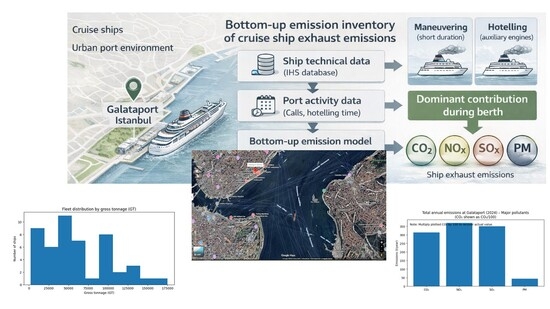
Within this framework, the present study develops a bottom-up emission inventory for cruise ship operations at Istanbul Galataport during the 2024 season. The objective of this study is to develop a transparent, activity-based bottom-up emission inventory for cruise ship operations at Istanbul Galataport in 2024. The inventory quantifies emissions during manoeuvring and hotelling from both main and auxiliary engines and provides an annual baseline to support port-level mitigation planning (e.g., shore power, fuel switching, and operational strategies). Emissions during navigation outside the port area are outside the scope of this study and are not included in the reported totals.
The analysis estimates emissions of CO
2, NO
x, SO
x, and PM from 164 cruise ship calls during manoeuvring and hotelling phases. Ship technical characteristics (engine type, installed power, rpm, and construction year) were compiled from the IHS database, while port call activity information was provided by the port operator. Baseline emission factors were adopted primarily from the IMO Third Greenhouse Gas Study and supplemented with established literature sources to address missing vessel information and ensure consistency with internationally applied methodologies [
13,
18,
19]. The resulting inventory is compared with published estimates from other major cruise ports to contextualize the magnitude of emissions and to support the discussion of potential mitigation strategies such as shore power, cleaner fuels, and operational measures. For a broader context, cruise-ship emissions concentrated at berth can be comparable in relevance to other urban point sources, although direct comparisons depend strongly on system boundaries and metrics (annual mass, hourly peaks, or population exposure). The present results should therefore be considered primarily as a port-area baseline for mitigation, rather than as a comprehensive cross-sector urban inventory.
State of the Art
Over the past decades, the growth in maritime traffic and fleet capacity has intensified the contribution of shipping to atmospheric pollution at both global and regional scales. Early studies highlighted that marine emissions represent a non-negligible fraction of anthropogenic air pollution and can significantly influence coastal atmospheric chemistry [
21,
22,
23]. Subsequent global assessments quantified shipping contributions to NO
x and SO
x burdens and linked them to secondary particle formation and climate-relevant aerosol effects [
12,
22]. Beyond climate and atmospheric impacts, shipping-related air pollution has been associated with substantial health burdens, including increased cardiopulmonary morbidity and premature mortality, particularly in regions with dense shipping lanes and port clusters [
12].
From an inventory perspective, ship emissions are commonly estimated using two main approaches: top-down and bottom-up. Top-down methods derive emissions from aggregated fuel consumption statistics and average emission factors, offering broad-scale estimates but limited spatial and operational resolution. Bottom-up methods, by contrast, rely on vessel-specific technical parameters (engine type, installed power, fuel type) and activity data (speed, time-in-mode, operational phase), enabling higher accuracy at port or regional scale and supporting targeted mitigation analysis [
15,
19]. In practice, bottom-up frameworks are frequently adopted in port emission studies because they can distinguish between cruise, cargo, and ferry operations and can separate manoeuvring, at-sea, and hotelling contributions. Standardized guidance for estimating ship emissions has been developed by international bodies and is widely used in both academic and regulatory applications. IMO reports provide baseline emission factors and methodological recommendations for greenhouse gas inventories and pollutant estimation across engine categories and operational conditions [
13,
14]. In Europe, the EMEP/EEA guidebook offers harmonized factors and calculation approaches for air pollutant inventories, supporting consistency across national reporting frameworks [
16]. Similarly, the U.S. EPA has developed detailed guidance documents for port and shipping inventories, including default auxiliary loads, activity assumptions, and pollutant-specific factors applicable to port environments [
17]. Classic technical references such as [
18,
19] have also been extensively used to define operational modes, engine load factors, and emission factor selections in bottom-up port studies, especially when vessel-specific data are incomplete.
A recurring finding in the literature is that emissions in ports are often dominated by auxiliary engines during hotelling, particularly for cruise vessels, due to continuous onboard service demand. This pattern is reported consistently across inventories and measurement-based studies, highlighting the relevance of shore power and hotel-load management as mitigation levers [
19]. Several studies have specifically quantified how maritime emissions affect coastal air quality and urban exposure, highlighting the role of NO
x in ozone formation and the contribution of sulfate aerosols and PM to near-port concentration increments in Europe and other coastal regions [
23,
24,
25]. Moreover, pollutant profiles differ depending on fuel type and compliance strategy: SO
x and sulfate PM are closely tied to fuel sulfur content, while NO
x depends strongly on combustion temperature, engine design, and regulatory tier requirements [
13,
14]. For LNG-fuelled ships, reductions in SO
x and PM are generally observed, but methane slip can introduce climate trade-offs if not controlled [
23].
Cruise shipping has attracted substantial research attention because its environmental footprint is concentrated in tourist destinations and port cities, where emissions may directly affect urban populations. Measurement campaigns in Venice demonstrated the contribution of ship traffic to PM
2.
5, PM
10 and PAH concentrations, confirming the role of cruise vessels as significant local pollution sources [
24]. Similar evidence has been reported for Barcelona, where chemical tracers and receptor modelling linked maritime activity to coastal air pollution, particularly during cruise port calls [
25]. In other ports, modelling and inventory approaches have quantified emissions at berth and evaluated externalities, showing that cruise-related hotelling emissions can dominate total port contributions [
26]. More recent assessments have also connected port emission inventories to economic and health considerations, reinforcing the need for mitigation measures such as shore power, cleaner fuels, and emission control technologies.
Comparative studies across ports highlight that emission magnitudes depend on port call frequency, berth time, ship size, and the adopted system boundary (e.g., within port area vs. within 12 nautical miles). Although methodological definitions differ, such comparisons are valuable for contextualizing local inventories and identifying ports where targeted interventions could deliver the highest air quality benefits.
2. Case Study
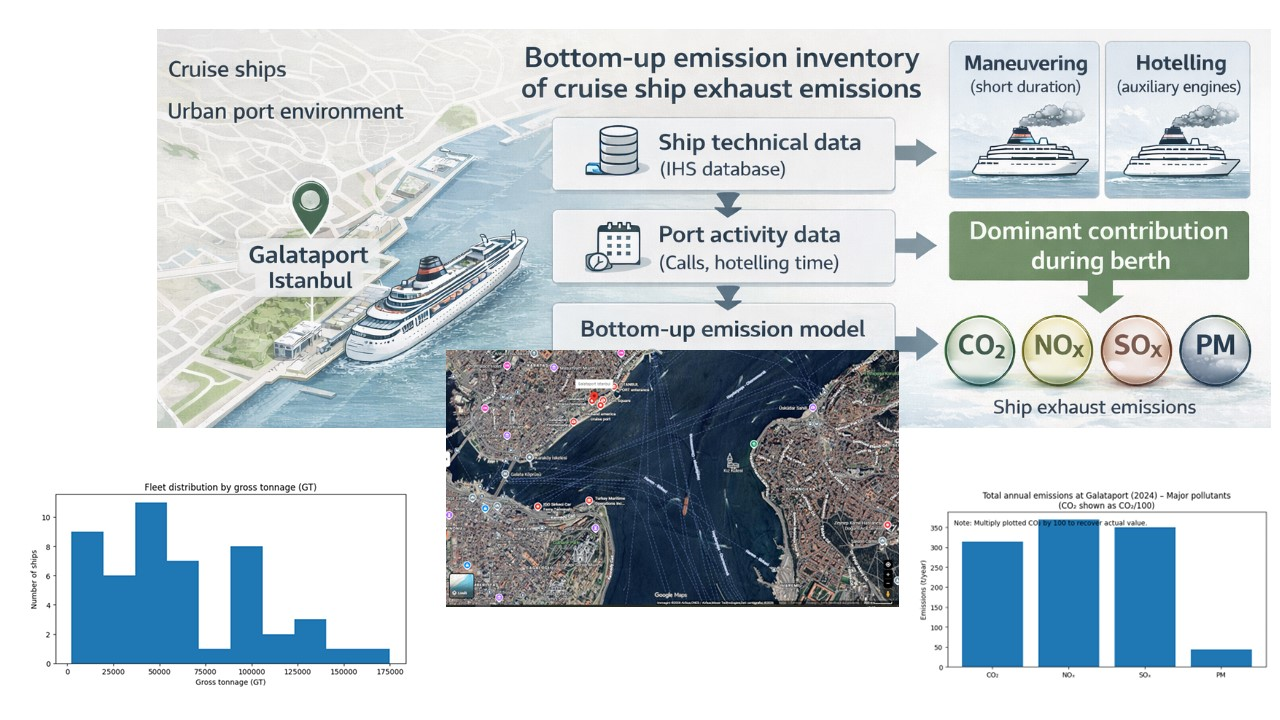
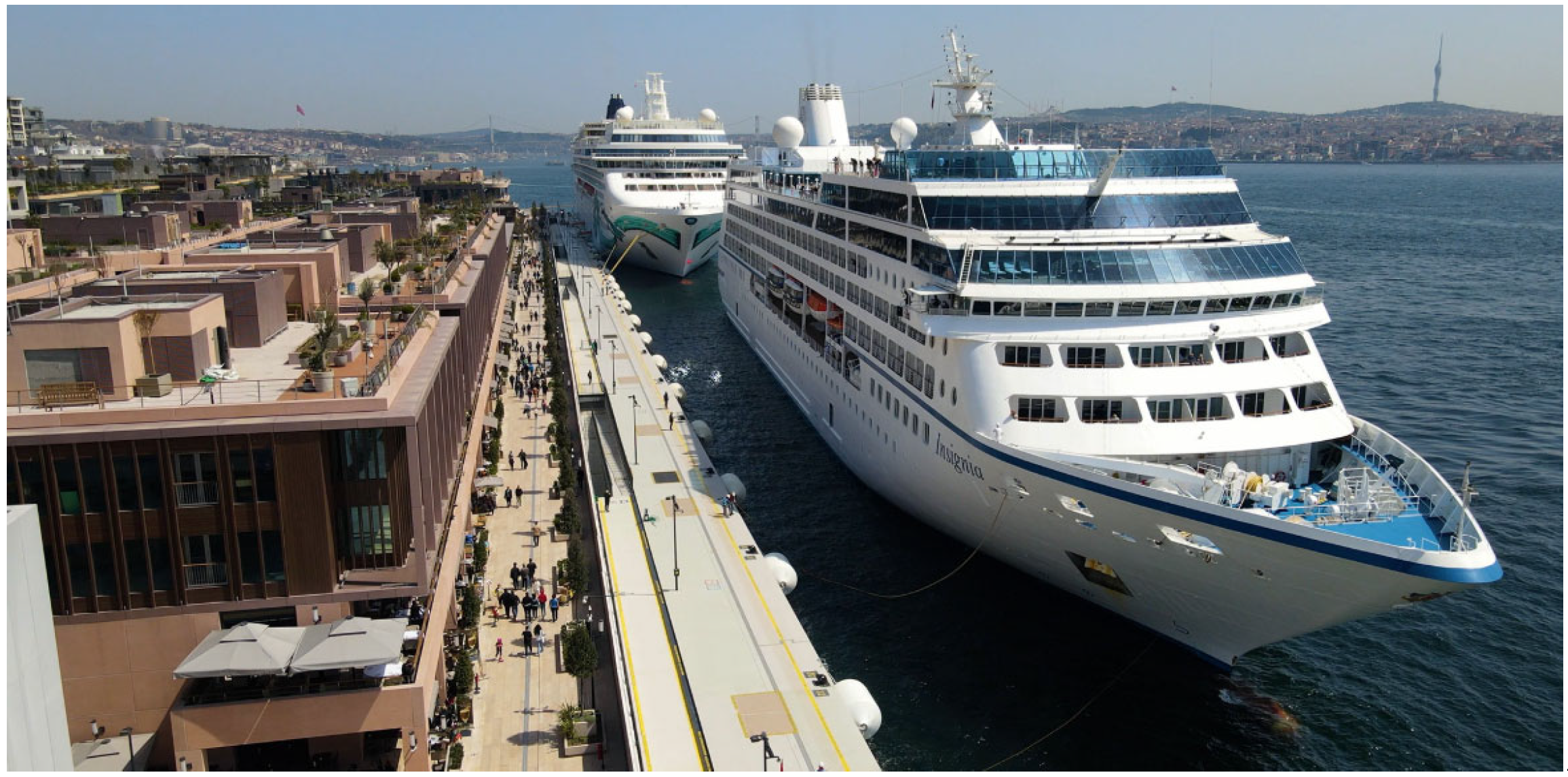
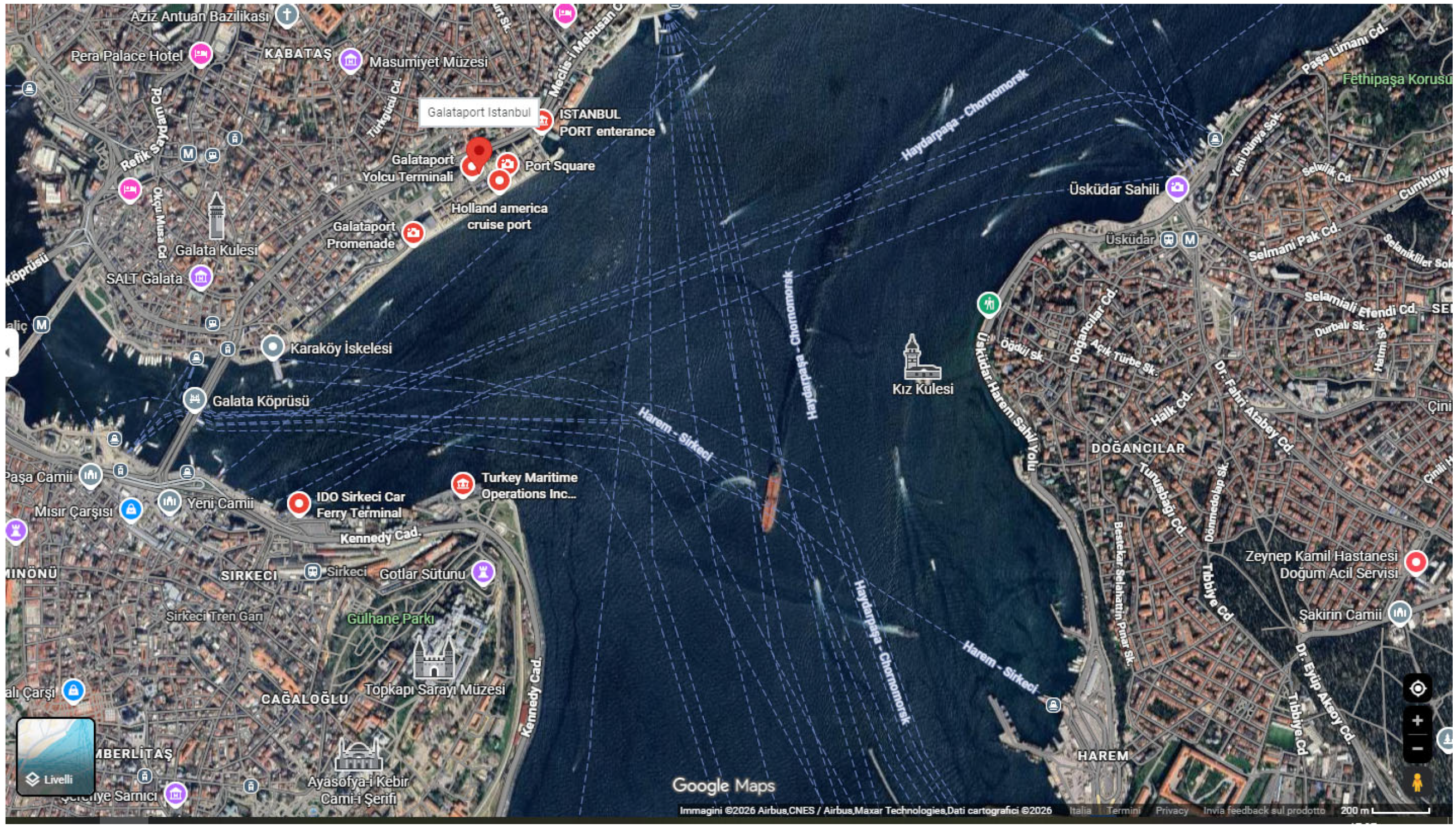
The Turkish Straits (Istanbul and Çanakkale) and the Sea of Marmara represent one of the busiest maritime corridors globally, with dense international navigation between the Black Sea and the Mediterranean, near highly populated urban areas. Istanbul alone hosts over 13 million international tourists in the first nine months of 2025, supported by its strategic geographic position as a crossroads of Europe and Asia and its extensive maritime infrastructure, which includes passenger and cruise terminals integrated into the city’s urban fabric. Maritime emissions in this context have both regional and local air quality implications, making detailed emission assessments critical for environmental management. Galataport is part of a large urban regeneration initiative that transformed a historically strategic port district—active since the Ottoman period as a gateway for goods and passengers—into a modern mixed-use waterfront complex after decades of functional decline and physical separation from the surrounding city. The redevelopment, launched in the 2010s through a public–private partnership, culminated in the opening of the new cruise terminal in 2021, marking the transition from traditional docklands to an integrated facility combining maritime operations with commercial, cultural, and public-space functions. A distinctive feature is its underground passenger terminal concept, which enables customs, security, and baggage handling below street level while preserving uninterrupted pedestrian access along the waterfront. The terminal is designed to accommodate up to two large cruise ships simultaneously and handle up to 15,000 passengers per day, positioning it among the largest cruise facilities in the region; see
Figure 1 and
Figure 2.
Despite Istanbul’s role as a major cruise and passenger hub, detailed cruise-focused emission inventories at the terminal scale remain limited. Previous AIS-based and statistical studies, such as [
24], developed bottom-up inventories for the Turkish Straits region, estimating a broad set of emission species and highlighting the influence of vessel activity patterns, engine categories, and fuel characteristics. Earlier work also identified passenger vessels as significant contributors to NO
x emissions in the Istanbul Strait, with a large share of total NO
x attributed to this traffic segment.
This gap is particularly relevant for Galataport Istanbul, the main cruise terminal on the European shore of the Bosphorus, located in the Karaköy–Salıpazarı waterfront area within the metropolitan core. The Galataport Istanbul Cruise Terminal is characterized by a large-scale underground passenger facility covering approximately 29,000 m
2. The terminal is equipped with 176 hatches with a height of about 3 m, designed to support operational flexibility during embarkation and disembarkation. In terms of capacity, the infrastructure is designed to handle up to three cruise ships per day, corresponding to a maximum throughput of roughly 15,000 passengers daily. The baggage handling system includes storage capacity for around 15,000 pieces of luggage, supported by five access ramps and an internal conveyor network extending for approximately 1200 m, which facilitates efficient passenger and luggage flows throughout the terminal [
27,
28]. In 2022, the port hosted over 150 cruise calls and approximately 350,000 passengers, confirming Istanbul’s renewed competitiveness within Eastern Mediterranean itineraries. In 2024, Galataport recorded 164 cruise ship calls, consolidating its role as a high-capacity urban terminal. Its proximity to dense residential and cultural districts, together with the high auxiliary power demand of cruise ships during berths, makes Galataport a relevant case study for assessing localized emission hotspots and supporting mitigation planning. Accordingly, this study quantifies exhaust emissions from cruise ships calling at Galataport in 2024 using a bottom-up approach, focusing on manoeuvring and hotelling phases and estimating CO
2, NO
x, SO
x, and PM emissions from both main and auxiliary engines.
3. Input Data and Ship Technical Characteristics
In this study, the bottom-up approach has been selected because it provides higher resolution and greater reliability at the port scale than aggregated top-down methods, especially in urban environments where ship activity patterns strongly influence exposure and local impacts. Vessel technical data required for the emission inventory were retrieved from the IHS database, including installed engine power, engine speed class (rpm), year of build, and machinery configuration. These parameters were used to assign pollutant-specific emission factors and to account for differences in engine technology and regulatory tier classification, particularly for NO
x. Port activity data, including ship calls and hotelling durations, were provided by the Galataport Operations Directorate and were used to allocate operating hours to manoeuvring and hotelling phases. For vessels with incomplete IHS records, missing parameters were estimated using literature-based procedures described in this report [
12]. Technical data for eight vessels were completed following the approach proposed by [
19], ensuring inclusion of the full fleet in the annual inventory.
3.1. IHS Database
Accurate ship emission inventories at the port scale require detailed vessel-specific technical characteristics combined with reliable activity data. In this study, cruise ship technical information was obtained from the IHS Sea-Web database, which provides standardized ship identifiers and machinery specifications for individual vessels. For each cruise ship call at Istanbul Galataport during the 2024 season, the dataset was compiled by linking port-call records to the corresponding vessel entry using unique ship identifiers (IMO number and vessel name). The extracted parameters included year of build, gross tonnage (when available), installed main engine power (ME, kW), installed auxiliary engine power (AE, kW), and engine speed category (rpm class), which are required to assign emission factors and calculate power-based emissions consistently across pollutants. Operational activity data were provided by Galataport and included the number of cruise calls and the time spent in port. These records were used to allocate ship activity into manoeuvring and hotelling phases, ensuring that time-in-mode was representative of real operations at berth. The final dataset included 164 cruise ship calls in 2024 and covered emissions from both main engines and auxiliary engines. The inventory reported CO
2, NO
x, SO
x, and PM, allowing an integrated assessment of both air-quality pollutants and greenhouse gases. A structured data processing and quality-control workflow was applied before emission calculations (see
Table 1). First, ship-call matching and duplicate checks were performed to ensure a one-to-one correspondence between each port call and the correct vessel technical record. Second, plausibility checks were applied to key parameters (installed powers, build year, and engine class) to avoid unrealistic values that could bias the emission totals. For a limited number of ships with incomplete IHS information, missing technical parameters were estimated using established relationships between vessel size and installed power and by applying auxiliary-to-main engine power ratios. This ensured that all port calls could be retained in the annual inventory without excluding vessels due to incomplete technical metadata. The resulting integrated dataset (technical + operational) enabled consistent calculation of call-based emissions and aggregation to annual totals. The approach also supports further statistical analysis of the fleet composition calling at Galataport, including distributions of ship age, installed power ranges, and the relative contribution of different operational phases to total emissions. The main characteristics of the case study, including the study year, fleet activity, operational phases, engines, and pollutants considered, are summarized in
Table 2.
Before emission calculations, the dataset was quality-checked through a structured workflow including ship-call matching to IHS vessel records (using IMO number and vessel name), removal of duplicates after data merging, plausibility checks on key technical parameters (installed power and year of build), completion of missing ME/AE data using literature-based GT–power relationships and AE/ME ratios, and final consistency checks to ensure correct assignment of engine speed class for emission factor selection.
To characterize the technical profile of the cruise fleet calling at Istanbul Galataport, vessel-specific characteristics were extracted from the IHS database and processed as descriptive statistics. The IHS dataset includes 53 cruise ships and provides key parameters relevant for bottom-up emission modelling, including gross tonnage (GT), service speed, installed main engine power (ME), auxiliary engine power (AE), engine speed category, and year of build. These variables are critical to define the representative fleet typology and support the interpretation of emission estimates, as vessel size and installed power are directly linked to energy demand, while engine speed class determines the selection of emission factors in IMO-based methodologies.
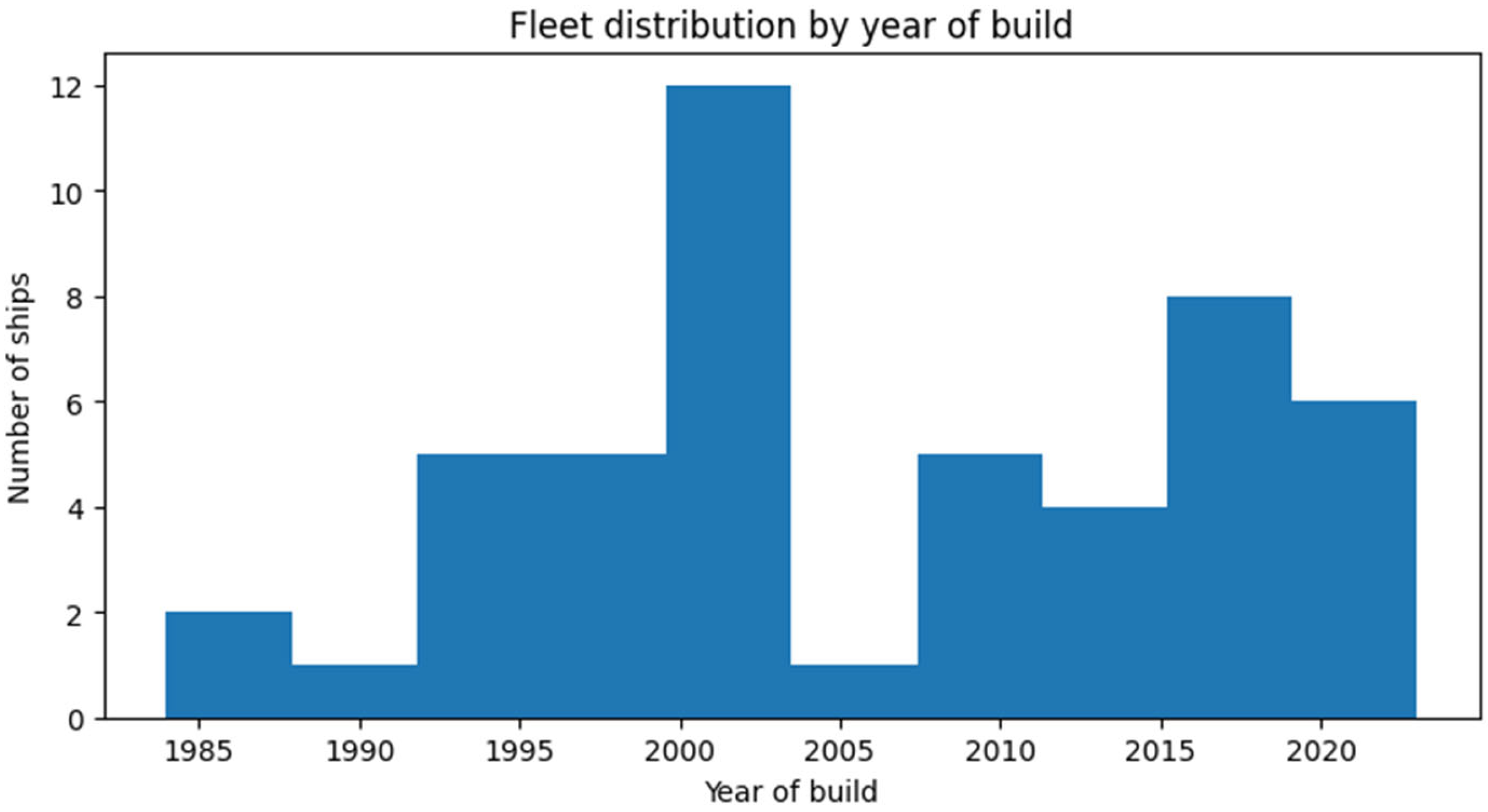
The fleet exhibits a broad distribution of ship sizes, spanning from small cruise vessels to large modern units. Gross tonnage ranges approximately from below 10,000 GT up to about 175,000 GT, with a concentration in the mid-size segment. A similar variability is observed for installed main engine power, ranging from a few thousand kW to above 70,000 kW, confirming that the Galataport cruise fleet includes both boutique-class ships and high-capacity cruise vessels. Engine speed classification is dominated by medium-speed engines, consistent with typical cruise ship propulsion and power generation configurations. The year-of-build distribution indicates a mixed fleet composed of older vessels (mid-1980s–1990s) and a substantial number of more recent ships built after 2010, which is relevant for NOx tier differentiation and potential differences in efficiency and emission performance.
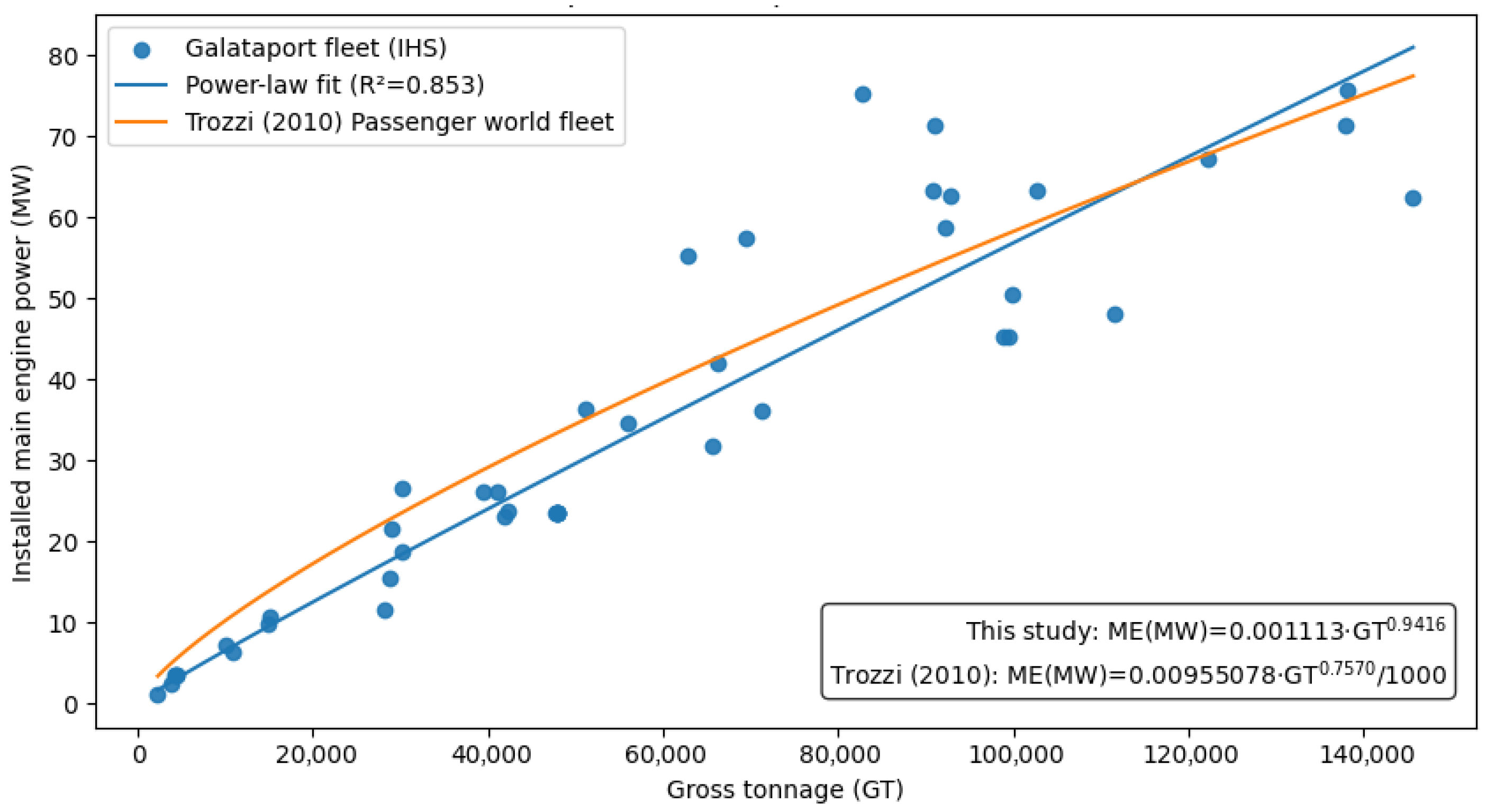
The relationship between ship size and installed main engine power shows a clear positive trend, confirming that gross tonnage is a useful proxy for propulsion capacity in the absence of complete machinery metadata. This fleet characterization provides essential context for the emission inventory and supports the interpretation of hotelling-dominated results, as larger vessels generally require higher auxiliary power demand to sustain onboard hotel services during berths.
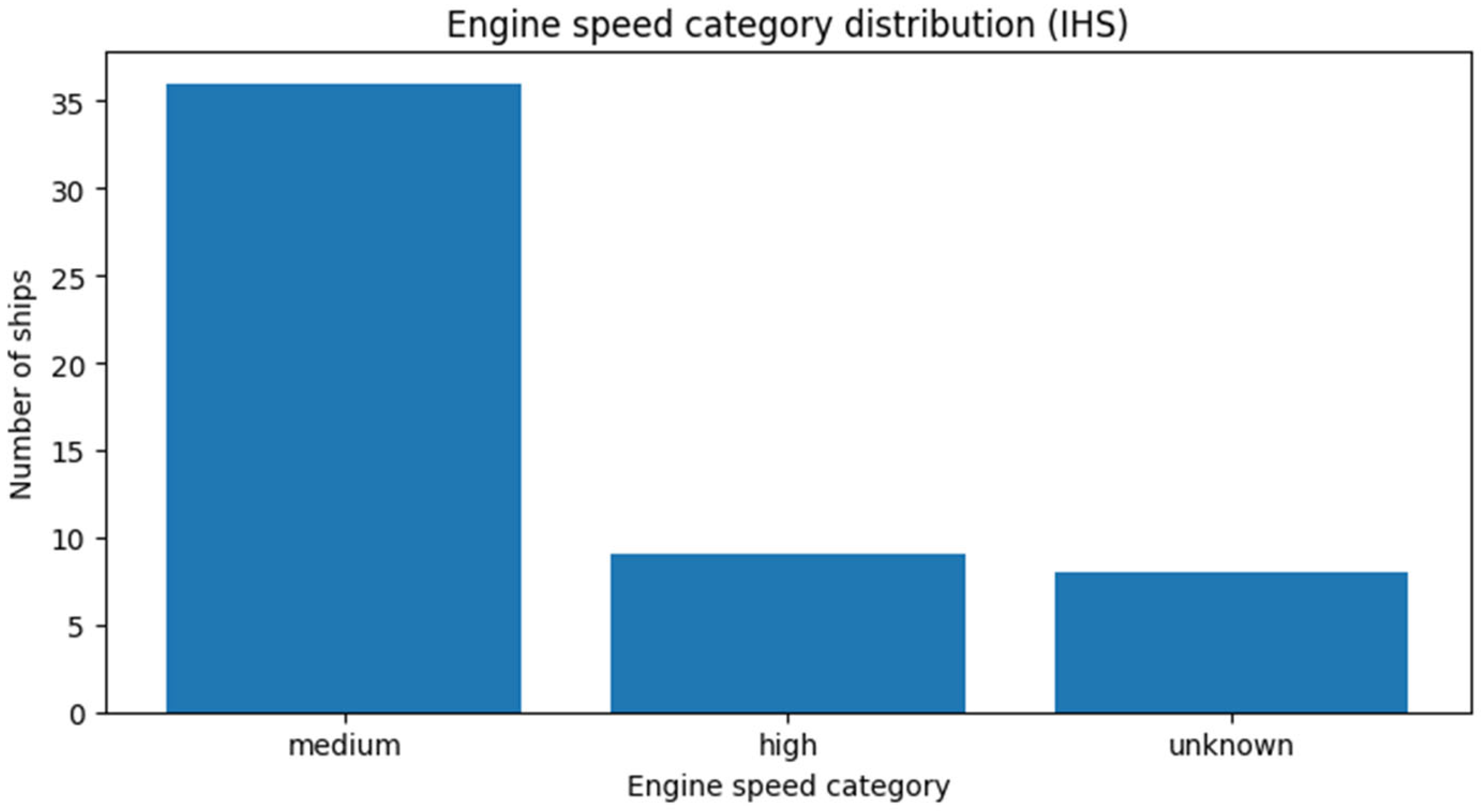
Figure 3 reports bar chart showing the number of ships classified as medium-speed and high-speed engines in the IHS dataset, with a limited share of unknown entries.
Figure 3 shows that the fleet is dominated by medium-speed engines, supporting the use of MSD emission factors as the baseline for the emissions estimation.
The histogram in
Figure 4 shows the distribution of ship construction years, indicating a mixed fleet with both older and newer cruise vessels; this graph indicates a mixed age profile, which is relevant for NO
x tier differentiation and potential technology-related variability.
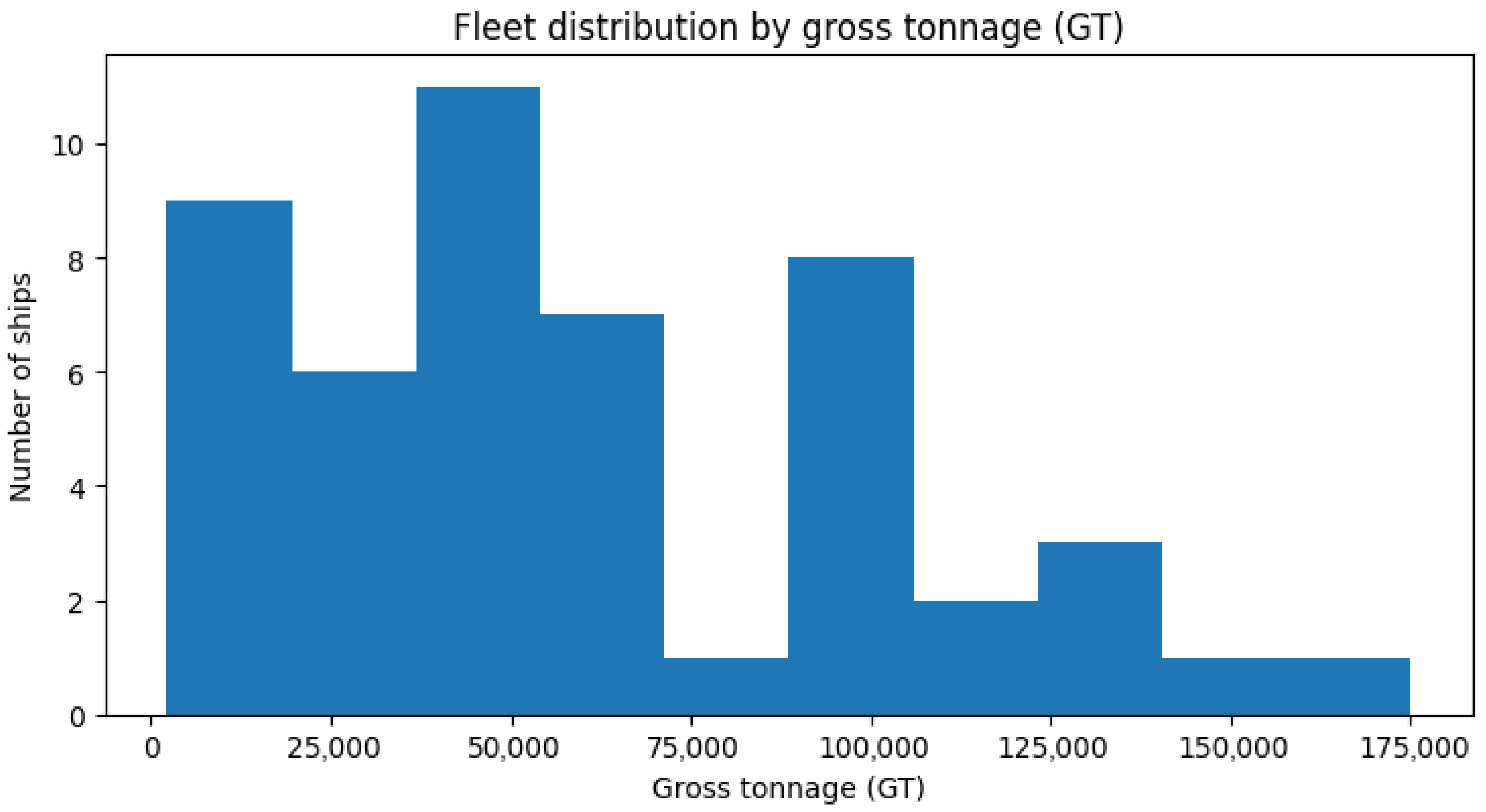
Histogram of gross tonnage values for the cruise fleet extracted from IHS (n= 53) is reported in
Figure 5, showing a wide range from small vessels to large cruise ships. Finally, in
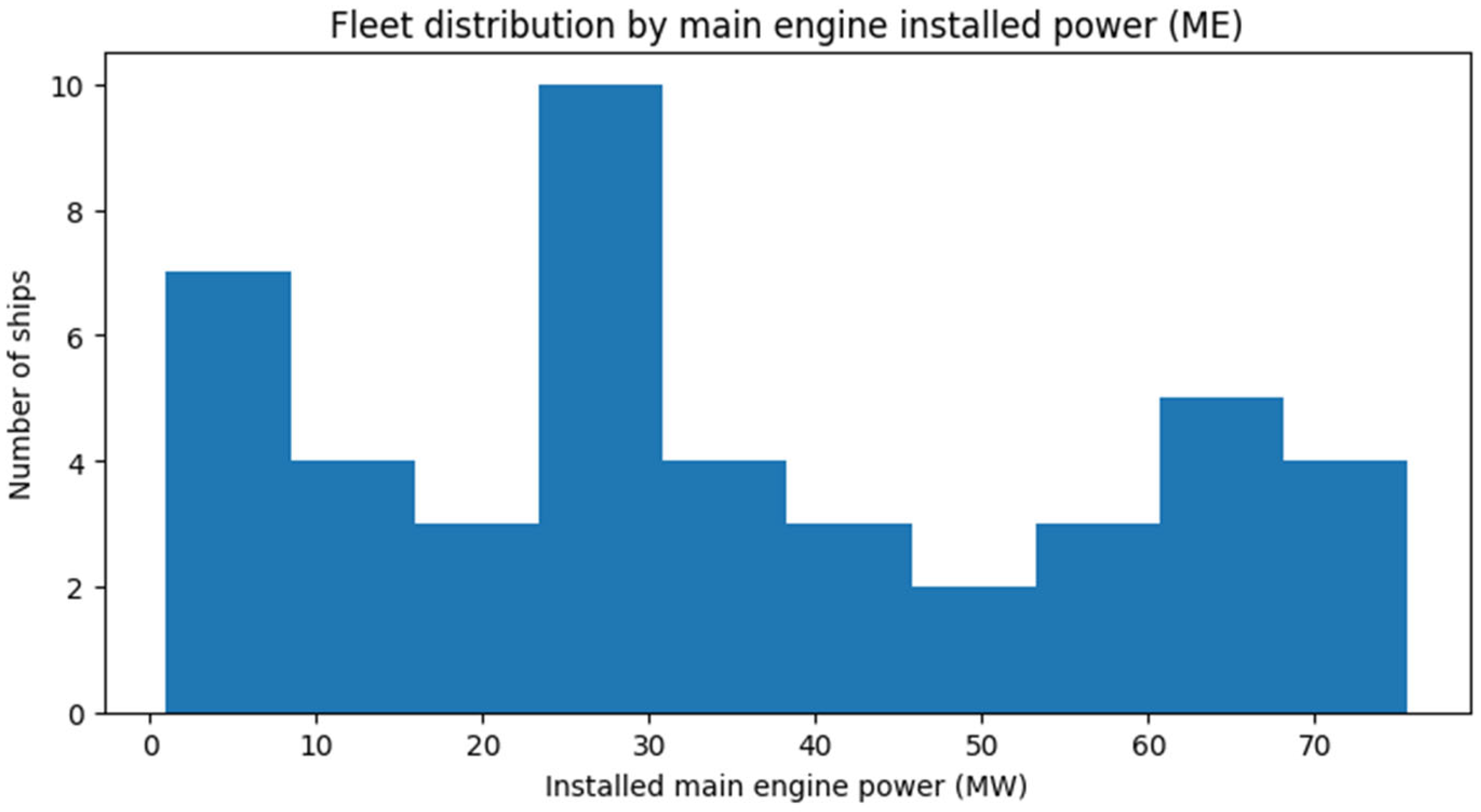
Figure 6, the Histogram of installed main engine power expressed in MW for the cruise fleet extracted from IHS (n = 53), highlighting the wide variability in propulsion capacity across vessels. As a result,
Figure 5 and
Figure 6 highlight the widespread in GT and installed power, implying substantial heterogeneity in auxiliary demand and hotelling emissions; consequently, a bottom-up approach is needed to avoid bias from ‘average-ship’ assumptions.
For ships not fully covered by IHS, main engine power was estimated using the relationship between gross tonnage and installed main engine power derived from the 2010 world fleet passenger ship dataset (
Table 3). For vessels with missing gross tonnage (GT) information, GT values were estimated using the supervised statistical learning approach proposed by [
29], enabling the subsequent regression-based derivation of installed main engine power. This regression formula was applied only to vessels for which installed engine power data were not available in the IHS database, representing approximately 10% of the fleet considered. Among these vessels, only one ship has a gross tonnage below 20,000 GT. Consequently, the higher estimation error observed for this GT class does not significantly influence the overall annual emission totals. The majority of emission calculations are based on ship-specific installed power data (90%).
Scatter plot showing the relationship between gross tonnage (GT) and installed main engine power expressed in MW for the cruise fleet extracted from IHS (n = 53), highlighting the expected positive association between vessel size and propulsion capacity (see
Figure 7).
The comparison between the IHS-based fleet data and the reference regression proposed by [
19] for passenger ships shows that the Trozzi relationship provides a reasonable first-order approximation of the GT–main engine power trend. Although the best-fit power-law derived for the Galataport fleet exhibits a slightly steeper scaling exponent, the Trozzi curve remains broadly consistent with the observed data range and captures the expected increase in installed propulsion power with vessel size. Therefore, the Trozzi passenger–ship regression can be considered an appropriate and practical proxy for estimating missing main-engine power values in bottom-up emission inventories when vessel-specific technical data are unavailable, supporting dataset completion without introducing large systematic deviations.
Table 4 summarizes the ranked error statistics of the [
19] passenger–ship regression against IHS-derived main engine power values for the Galataport cruise fleet. This analysis shows that the [
19] relationship performs substantially better for medium- to large-sized cruise vessels. While the overall mean percentage error (i.e., the average signed deviation, indicating systematic over- or underestimation) is +26.9%, the error decreases markedly for ships above 50,000 GT, with an average deviation close to 0% in the 50–100 k GT range and a mean absolute percentage error (MAPE) of 11–19% for vessels above 50,000 GT. Here, MAPE represents the average magnitude of the relative error irrespective of its sign, providing a direct measure of typical prediction accuracy. Conversely, for smaller ships (<20,000 GT), Trozzi systematically overestimates main engine power, resulting in higher uncertainty. These findings support the use of the Trozzi regression as a practical proxy for gap filling in the absence of vessel-specific machinery data, especially for medium and large cruise ships, while suggesting caution when applying it to small passenger vessels.
3.2. Emission Calculation Model (Bottom-Up Formulation)
Total emissions were calculated following the standard power-based bottom-up structure, where pollutant mass is derived from engine power, load, operating time, and emission factors. The general equation applied in this study (Equation (1)) is:
where
E is the emitted mass (g),
P is rated engine power (kW),
LF is the engine load factor (-),
T is operating time (h), and
EF is the emission factor for the specific pollutant (g/kWh).
For each pollutant, the total port-call emission is computed as (
ET =
Emanouver +
Ehotelling), and annual totals are obtained by summing (
ET) across all calls. Hotelling durations were taken directly from the port activity dataset provided by Galataport, while manoeuvring time was assumed constant at 0.8 h per call, consistent with common port inventory practice for manoeuvring in confined port waters [
24].
Engine load factors, reported in
Table 5, representing the fraction of installed power used in each operational phase, were applied for manoeuvring and hotelling according to established assumptions commonly adopted in bottom-up port emission inventories [
24]. These values are consistent with IMO methodological guidance and the framework proposed by [
19] and are essential to quantify fuel consumption and pollutant emissions under different operating conditions [
13,
19]. The separation between manoeuvring and hotelling is particularly important for cruise ships, as hotelling is typically dominated by auxiliary power demand to sustain onboard services (e.g., HVAC, lighting, catering, and entertainment), while manoeuvring involves shorter durations and different engine loads.
When auxiliary engine power was not available in the IHS dataset, it was estimated using the passenger–ship ratio proposed by [
19],assuming auxiliary installed power equal to 16% of main engine power, i.e.,
. This approach enables consistent gap filling and ensures full fleet coverage in the emission inventory.
Pollutant-specific emission factors were primarily adopted from [
14] baseline emission factor dataset, which provides values differentiated by engine speed category (high-, medium-, and slow-speed) [
20]. Since most cruise ships in the Galataport fleet were equipped with medium-speed engines, these factors were used as the baseline for the majority of calculations.
For high-speed engines where main engine factors were not available, the study assumed equivalence with auxiliary engine factors, ensuring completeness and internal consistency across the dataset.
The emission factors used in the calculations are summarized in
Table 6. This table reports the baseline emission factors (g/kWh) used to estimate cruise ship emissions of CO
2, NO
x, SO
x, and PM at Istanbul Galataport. Values were primarily taken from [
14] and are differentiated by engine speed class (slow-, medium-, and high-speed) [
20]. When emission factors differ between main engines and auxiliary engines, they are reported in the format ME/AE to ensure transparency and consistency in the calculation framework. These internationally recognized factors support comparability with previous bottom-up port emission inventories.
Emissions were calculated using the standard power-based bottom-up approach, combining vessel technical characteristics (installed engine power), operational load factors, activity time in each phase, and pollutant-specific emission factors (see
Table 6). This methodology ensures a consistent and reproducible estimation of port-level emissions and aligns with established guidance used in shipping emission inventories. Emission factors were selected from the IMO baseline dataset according to engine type and speed class: medium-speed main and auxiliary engines were assigned the corresponding IMO MSD (Medium Speed Diesel) factors, while for High-Speed Diesel engines, the IMO HSD auxiliary factors were applied, and, where high-speed main-engine values were not available for a given pollutant, main-engine emission factors were assumed equal to auxiliary-engine factors to ensure full dataset consistency.
PM factors were adopted directly from the IMO baseline dataset and were not further adjusted via an explicit sulfur-to-sulfate conversion term. SO
x and a fraction of PM are linked to fuel sulfur content; this linkage is acknowledged in the Discussion and taken into account in the uncertainty/sensitivity discussion. Emissions were first calculated per ship call and then aggregated across the full 2024 dataset to obtain annual totals for each pollutant. Results were reported by pollutant and by operational phase, enabling identification of the dominant emission drivers in the port area and supporting comparisons with literature inventories and regulatory benchmarks. As discussed in the IMO Fourth GHG Study [
14], uncertainties in shipping emission inventories arise primarily from fuel consumption estimation, emission factor variability, and operational assumptions. The bottom-up approach adopted in this study, based on ship-specific technical data and call-level activity, aligns with the methodology considered more robust than aggregated fuel-based estimates.
4. Results
Although emissions from near-port navigation would increase the overall annual emission totals, their inclusion would not alter the primary conclusion regarding phase dominance within the port boundary. Manoeuvring durations are typically limited compared to berth stays, whereas hotelling involves sustained auxiliary engine operation over several hours per call. Consequently, even when considering potential additional emissions from navigation immediately outside the port, the hotelling phase would remain the dominant contributor within the port operational context. Moreover, the focus on in-port activities aligns with the decision-making scope of port authorities, for whom mitigation strategies such as shore power infrastructure are directly applicable.
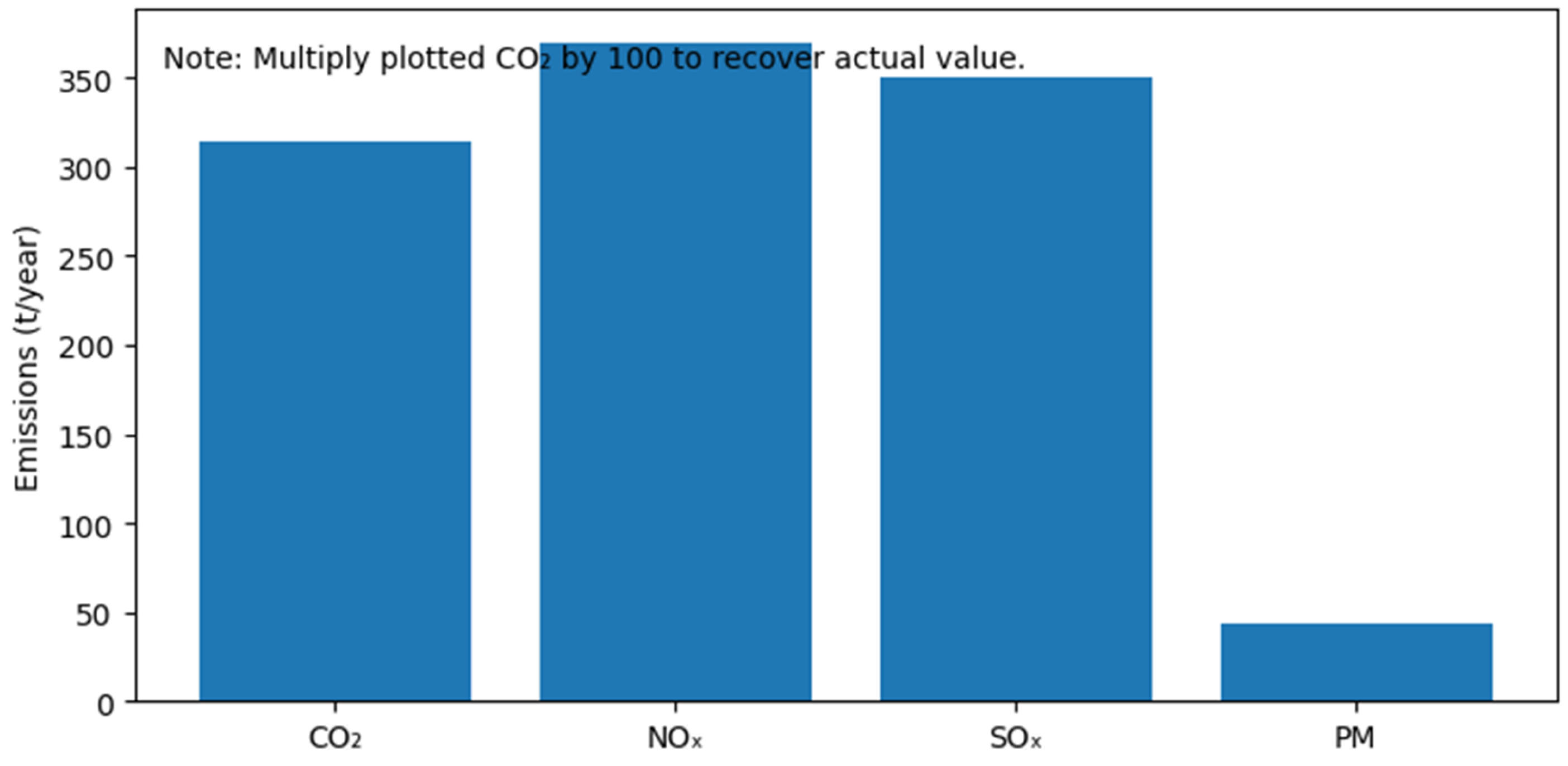
Figure 8 summarizes the total annual emissions generated by cruise ship activity at Istanbul Galataport during the 2024 season. As expected, CO
2 dominates the emission profile by mass (GHG), while NO
x, SO
x and PM are discussed separately as air pollutants, reflecting the high fuel consumption associated with both propulsion and onboard energy generation. Among air-quality pollutants, NO
x and SO
x represent the largest contributions, while PM emissions remain lower in absolute terms but are environmentally relevant due to their direct health implications and role in urban exposure. The ranking of pollutants is consistent with the typical emission signature of cruise ships operating on conventional marine fuels, where NO
x emissions are driven by high-temperature combustion processes in marine engines and SO
x/PM emissions are strongly linked to fuel sulfur content and associated particulate formation mechanisms. Overall, the distribution shown in
Figure 8 confirms that cruise ship operations can generate substantial pollutant loads even in a single terminal, supporting the need for port-scale inventories to quantify and manage localized emission hotspots.
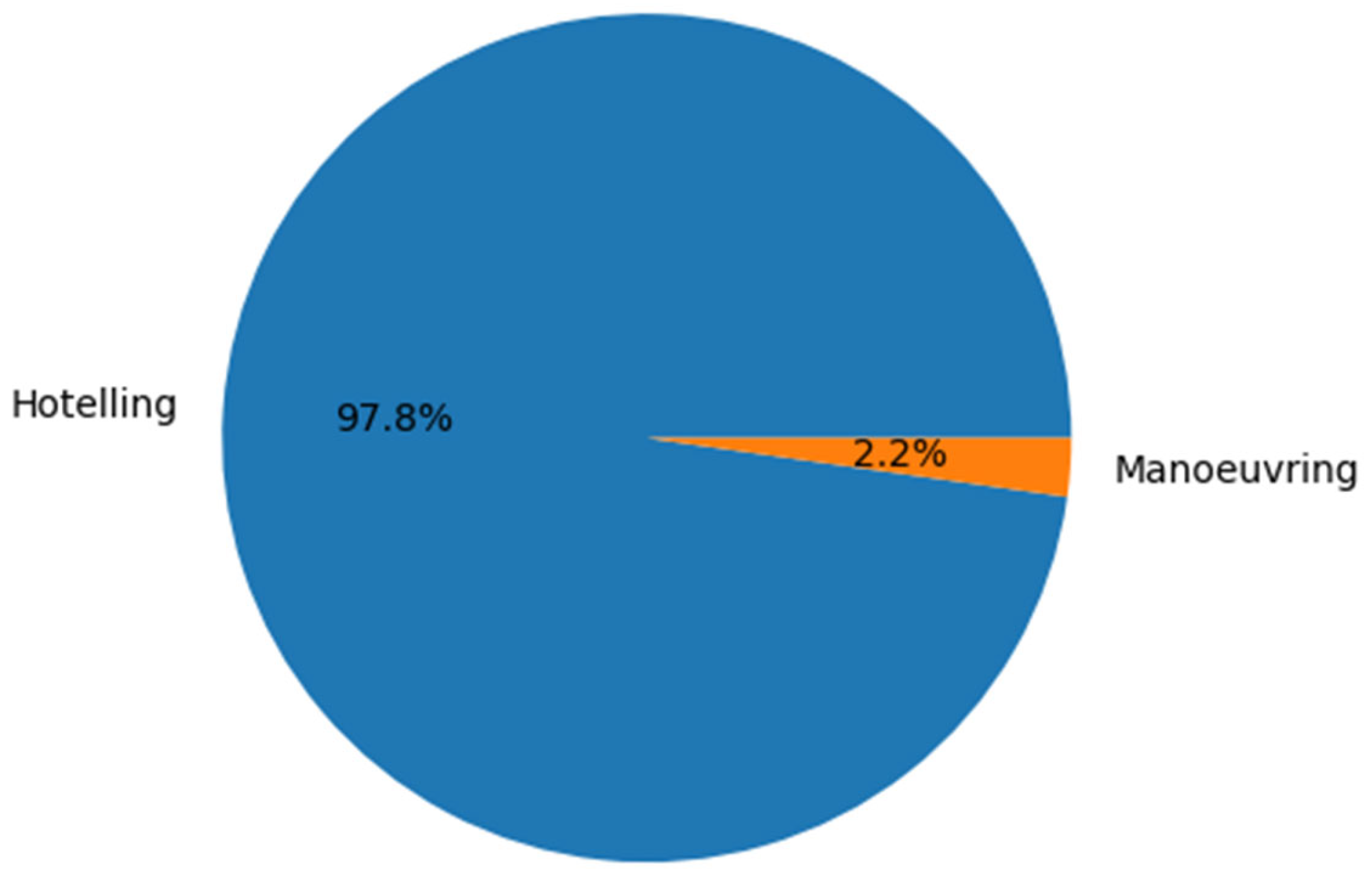
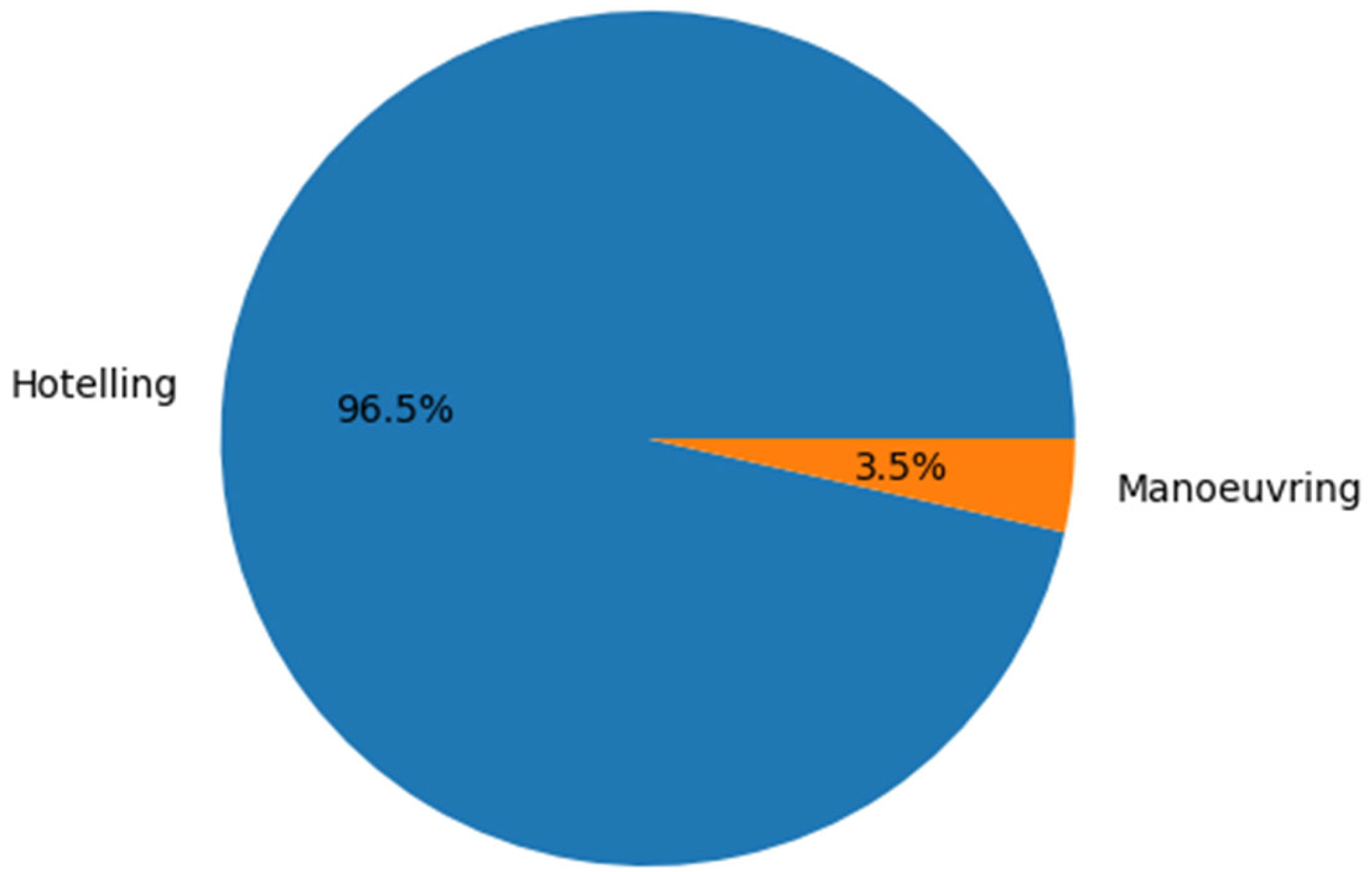
Figure 9 shows the relative contribution of manoeuvring and hotelling to total annual CO
2 emissions. The results highlight a strong dominance of hotelling, which accounts for nearly the entire annual CO
2 burden. This outcome is mainly explained by the extended duration of berth stays combined with the continuous auxiliary engine demand required to supply hotel services (e.g., HVAC, lighting, catering, and onboard facilities). In contrast, manoeuvring represents a short operational phase with limited duration and lower overall energy consumption, thus contributing marginally to the annual CO
2 total. The phase distribution confirms that for cruise terminals located in dense urban settings, at-berth emissions are the most critical target for mitigation measures, particularly through shore power adoption and energy-efficiency improvements during port stays.
Figure 10 presents the phase split for NO
x emissions, showing again that hotelling is the dominant contributor, although manoeuvring accounts for a slightly larger share compared to CO
2. This difference is consistent with the fact that NO
x formation is strongly influenced by combustion conditions and engine load, and main engine operation during manoeuvring can produce relevant NO
x even over shorter timescales. Nevertheless, the overwhelming contribution of hotelling confirms that auxiliary engine operation at berth remains the primary source of NO
x emissions at Galataport, reinforcing the importance of reducing auxiliary engine use through shore power or alternative low-emission energy supply solutions.
Figure 8 shows annual emissions of CO
2, NO
x, SO
x, and PM estimated for cruise ship activity at Istanbul Galataport in 2024. For visual comparability, CO
2 is plotted as CO
2/100; the actual CO
2 value is obtained by multiplying the plotted bar by 100.
Figure 9 and
Figure 10 show the pie chart for the relative contribution of hotelling and manoeuvring to total annual CO
2 emissions and SO
x, NO
x, and PM, respectively, at Galataport in 2024. To contextualize the magnitude and structure of the estimated cruise ship emissions at Istanbul Galataport, the 2024 inventory results were compared with values reported in previous international studies (
Table 7). Consistent with global-scale assessments, CO
2 is the dominant emission component, while NO
x and SO
x remain key pollutants affecting regional air quality and atmospheric chemistry [
21,
22]. Galataport CO
2 emissions (31360 t·y
−1) fall within the range of earlier estimates, being higher than [
21] and close to [
11]. Similarly, NO
x and SO
x emissions (370 and 350 t·y
−1, respectively) are comparable with literature benchmarks and lie between the lower values reported by [
21] and the higher estimates of [
11]. PM emissions (44 t·y
−1) are also consistent with previous port-level studies, aligning closely with [
30]. A key outcome of this study is the dominance of hotelling emissions, confirming that auxiliary engine operation at berth represents the primary driver of port-related pollution, in line with established inventory approaches [
19]. This finding is consistent with previous evidence showing that hotelling can account for the majority of NO
x and SO
x emissions in cruise ports [
30]. Overall, the comparison supports the robustness of the Galataport inventory and highlights the relevance of mitigation options targeting emissions at berth, such as shore power, cleaner fuels, and operational measures to reduce auxiliary engine use in urban port environments.
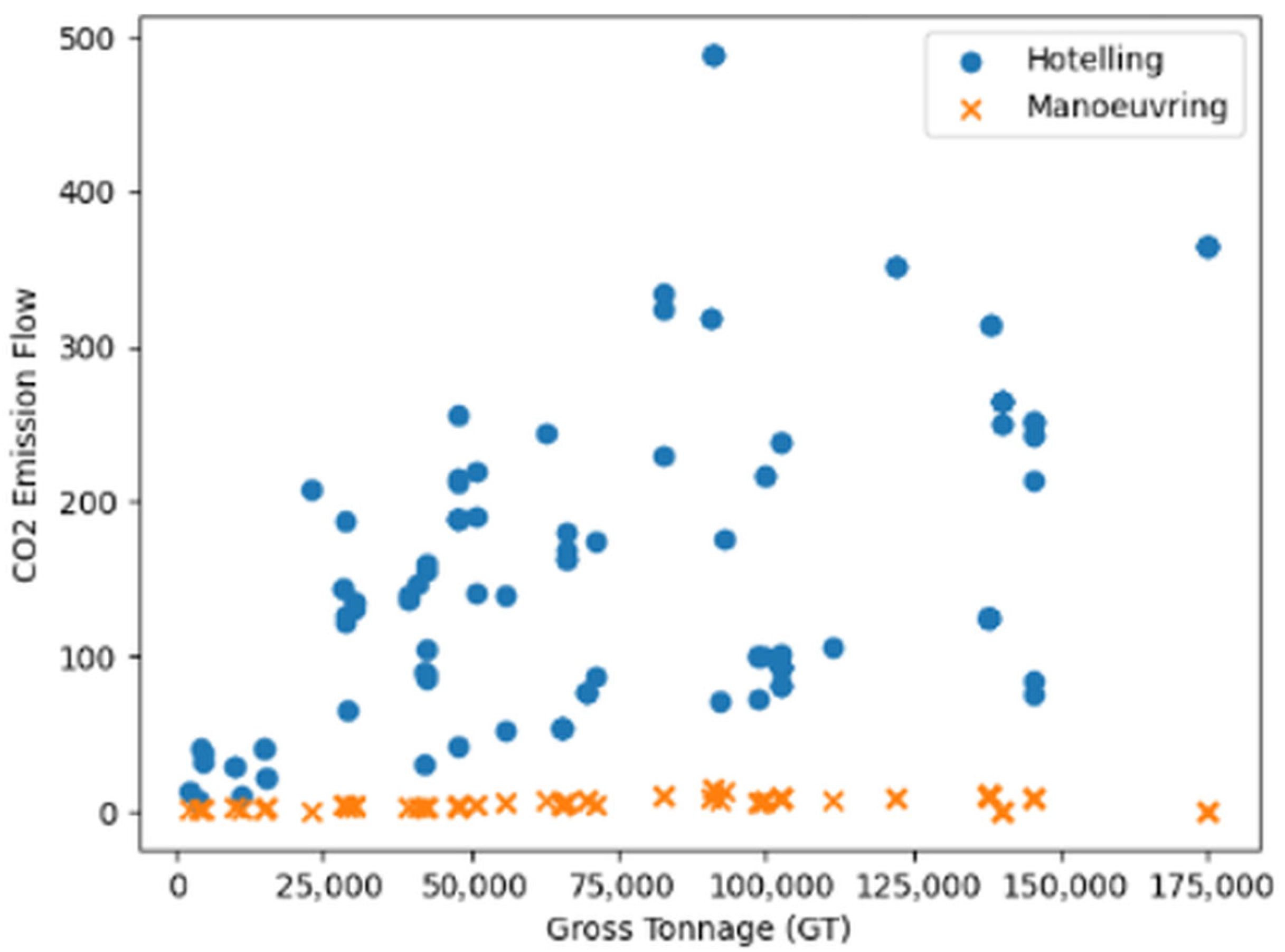
The scatter analysis represented in
Figure 11 demonstrates that while emissions generally increase with vessel size, significant dispersion exists, particularly in the hotelling phase, reflecting differences in auxiliary power demand and berth duration. This reinforces the importance of a bottom-up, ship-specific approach rather than relying on fleet-average assumptions.
Although the primary focus of this study is the estimation of annual emissions, the call-level calculation framework inherently reflects the temporal structure of port operations. Emissions are directly linked to the duration of manoeuvring and, in particular, hotelling phases, which vary depending on cruise schedules and operational logistics. Consequently, longer berth stays result in proportionally higher auxiliary engine operation and associated pollutant release within the port area.
While detailed temporal aggregation (e.g., hourly or seasonal emission profiles) is beyond the scope of the present analysis, the results clearly indicate that emission intensity is strongly driven by operational duration at berth. This finding is particularly relevant for port authorities and urban planners, as it highlights the importance of targeting hotelling-related emissions through measures such as shore power infrastructure or optimized berth management strategies.
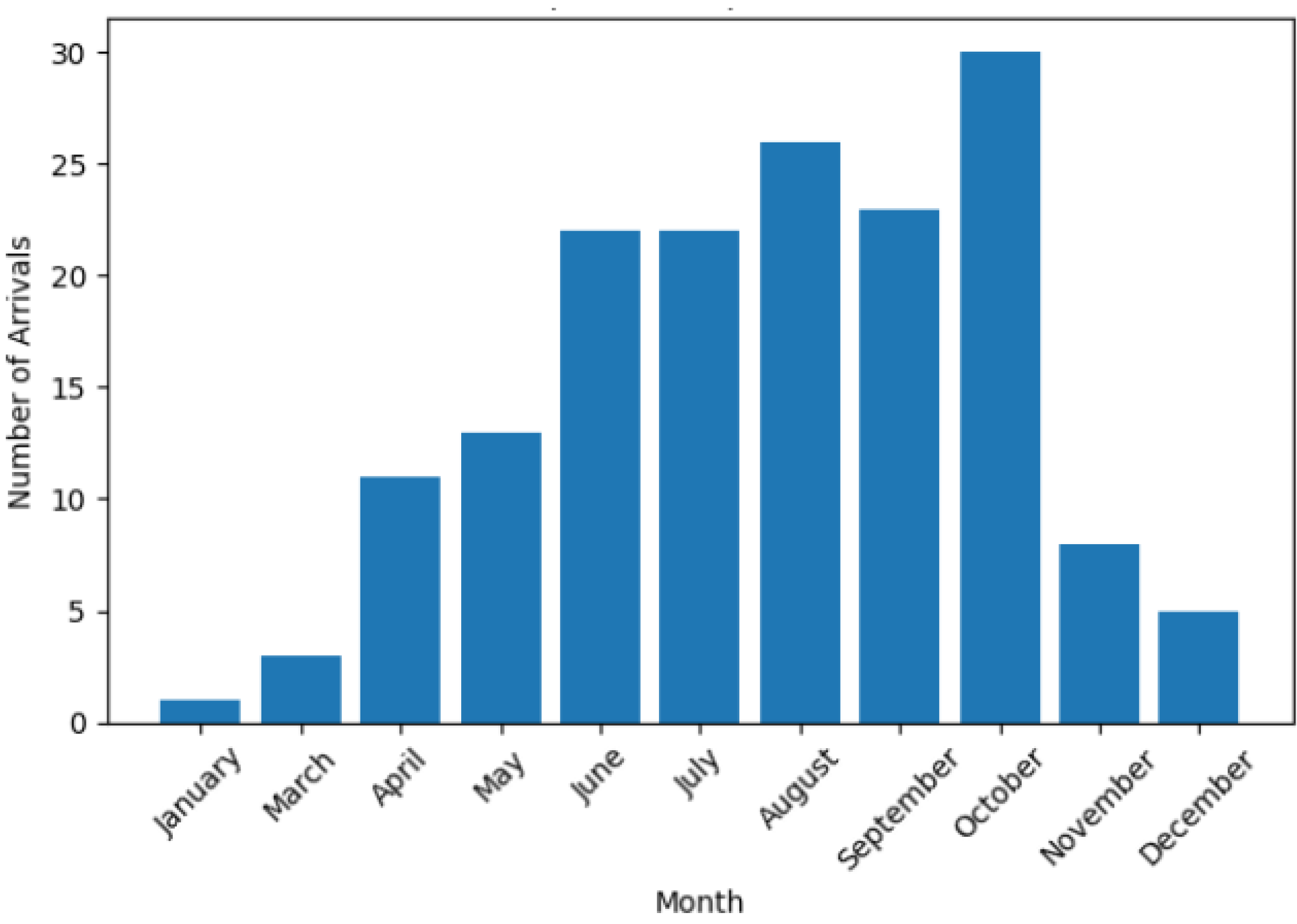
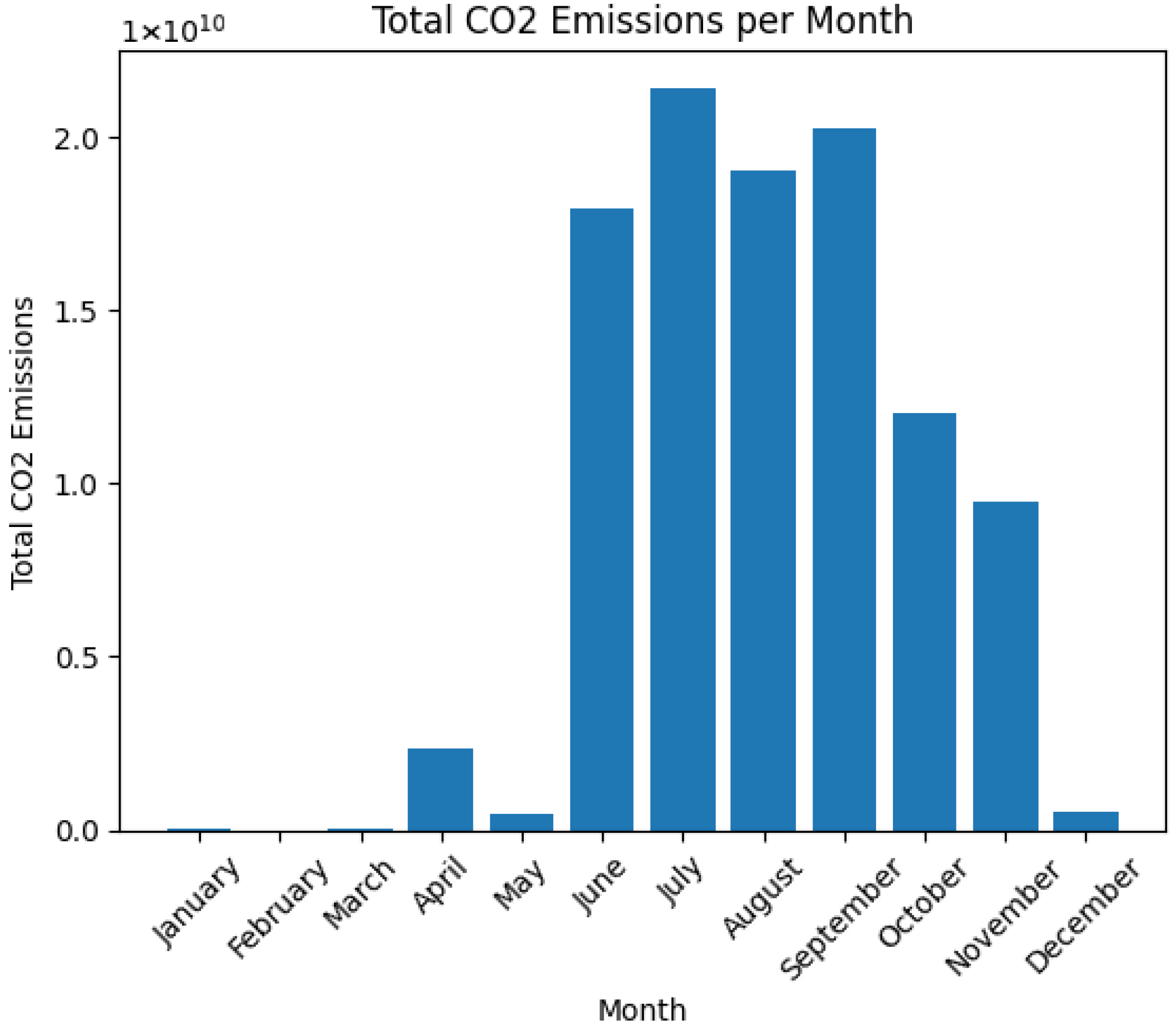
Cruise traffic shows a clear seasonal pattern, increasing from spring and peaking between August and October (see
Figure 12). Most ship arrivals occur during the summer and early autumn months, while winter activity remains very limited. CO
2 emissions follow the seasonal cruise traffic pattern, increasing significantly from late spring and peaking during the summer months (July–September), before declining towards the end of the season (see
Figure 13).
The inventory developed in this study therefore provides a robust quantitative baseline that can support future time-resolved air quality assessments and scenario-based mitigation analyses.
The dominance of hotelling emissions observed in this study has direct implications for coastal air quality management. Because these emissions occur in close proximity to urban areas, their potential contribution to local concentration increments is likely to be more relevant than emissions occurring during open-sea navigation. Although atmospheric dispersion modelling is beyond the scope of the present work, the quantified emission inventory provides the necessary emission input framework for future air quality simulations and health impact assessments. By identifying berth-related emissions as the primary contributor within the port boundary, the results support targeted mitigation measures that may effectively reduce near-port pollutant exposure.
5. Uncertainty and Sensitivity Analysis
Emission inventory studies inherently involve uncertainties associated with emission factors, activity data, operational assumptions, and data imputation procedures. In this study, uncertainty sources are discussed in accordance with the [
19] and the methodological considerations outlined in [
14].
According to [
19], emission factor uncertainties (95% confidence interval) for maritime transport may approximately range as follows: NO
x: ±20–40%, SO
x: ±10–30%.
PM: ±25–50%, Fuel consumption: ±10–30%. The emission factors adopted in this study are consistent with IMO and EMEP/EEA reference datasets. Therefore, their associated uncertainties are assumed to fall within these established intervals. As highlighted in the [
14], uncertainty in non-CO
2 pollutants is generally higher than for CO
2, as CO
2 emissions are directly linked to fuel consumption through well-defined carbon content relationships. Load factors applied to main and auxiliary engines constitute an additional source of uncertainty. Variability in actual operational conditions—including maneuvering intensity, hotelling energy demand, and auxiliary engine usage patterns—may influence instantaneous emission rates. In line with the EMEP/EEA framework, moderate deviations in assumed load factors would proportionally affect calculated emissions. However, sensitivity considerations indicate that such variations would not alter the overall phase dominance observed in this study, namely the predominance of hotelling emissions over manoeuvring emissions across all pollutants. The inventory is primarily based on ship-specific installed engine power obtained from the IHS database, combined with call-level operational data. This reduces uncertainty associated with fleet-average assumptions. For approximately 10% of vessels where installed power data were unavailable, the Trozzi regression formula was applied as a proxy estimation method. Among these vessels, only one ship falls below 20,000 GT, the class for which higher regression errors were observed during validation testing. Given the limited number of imputed cases and their relatively small contribution to total annual emissions, the impact of this estimation uncertainty on aggregated pollutant totals is considered minor.
The IMO [
14] identifies three principal sources of uncertainty in shipping emission inventories: fuel consumption estimation, emission factor variability, and operational modeling assumptions (e.g., engine load, activity duration, fleet coverage).
The methodology adopted in the present study aligns with the bottom-up approach described by IMO. Emissions are calculated using ship-level technical parameters and port-call-specific activity data, rather than aggregated national fuel statistics. According to IMO, such bottom-up approaches generally provide more robust and spatially resolved estimates than simplified top-down methods, particularly at regional and port scales.
While uncertainties inherent to emission factors and operational assumptions remain unavoidable, the use of vessel-specific installed power data and phase-resolved activity modeling significantly enhances estimate reliability compared to proxy-based or fully aggregated approaches.
Overall, the adopted methodology corresponds to a Tier 2 bottom-up inventory framework. Although a full probabilistic uncertainty propagation analysis (e.g., Monte Carlo simulation) is beyond the scope of this study, the uncertainty ranges discussed above provide a transparent methodological context for interpreting the reported annual emission totals. The results should therefore be understood as robust port-level baseline estimates consistent with current international best practices.
6. Discussion and Conclusions
This study provides an activity-based, bottom-up emission inventory for cruise ship operations at Istanbul Galataport in 2024, covering 164 cruise calls from 53 different vessels. The results show that hotelling is the dominant phase for both CO2 (GHG) and air pollutants (NOx, SOx, PM), driven by extended berth durations and auxiliary power demand. Total annual emissions are estimated to be approximately 31360 t of CO2, 370 t of NOx, 350 t of SOx, and 44 t of PM.
The results clearly demonstrate that hotelling is the dominant emission phase. More than 90% of total CO2 emissions originate from at-berth operations, while hotelling also accounts for the largest share of NOx and SOx emissions. This dominance is driven by extended berth durations combined with sustained auxiliary engine loads (40% MCR assumed), required to meet onboard hotel-service demand. In contrast, manoeuvring—limited to 0.8 h per call—contributes only a marginal fraction of annual totals.
From a fleet-structure perspective, the dataset includes vessels ranging from <10,000 GT to >175,000 GT, with installed main engine power exceeding 70 MW in the largest units. The regression-based evaluation of missing engine data shows that the [
19] passenger–ship relationship yields a mean absolute percentage error (MAPE) of 11–19% for ships above 50,000 GT, confirming its suitability for medium-to-large cruise vessels, while higher uncertainty is observed for smaller ships (<20,000 GT).
When compared with international benchmarks, the Galataport inventory falls within the range reported in previous port-level and global assessments. Annual CO
2 emissions (31,360 t·y
−1) are consistent with values reported by [
19,
22], while NO
x (370 t·y
−1) and SO
x (350 t·y
−1) lie between the lower estimates of [
21] and higher values in subsequent studies. This alignment supports the methodological robustness of the adopted bottom-up framework.
The phase dominance observed in this study, particularly the prevalence of hotelling emissions, has important implications for coastal air quality. As highlighted in previous studies, ship emissions at berth contribute significantly to near-port concentrations of NO
x, SO
2, and particulate matter, especially in densely populated coastal urban areas [
24,
25]. NO
x emissions play a critical role in ozone formation under suitable meteorological conditions, while emissions contribute to secondary sulfate aerosol formation, influencing fine particulate matter levels.
Although the present study does not include atmospheric dispersion or concentration modelling, the quantified emission inventory provides a necessary input dataset for subsequent air quality impact assessments. By identifying hotelling as the dominant emission phase, the results support targeted mitigation strategies—such as shore power implementation—that may directly reduce near-port pollutant exposure.
Overall, the quantitative evidence confirms that cruise ship operations at Galataport represent a relevant localized emission source within the urban core of Istanbul. Given that more than 90% of total emissions occur during hotelling, mitigation strategies should prioritize at-berth measures, including shore power implementation, low-sulfur or alternative fuels, and optimization of auxiliary engine operation. The inventory offers a quantitative baseline for evaluating at-berth mitigation options such as shore power and improved hotel-load management. Uncertainties mainly relate to emission factors, assumed load factors, and gap-filling for missing vessel data; these limitations are now explicitly discussed. The inventory developed in this study provides a consistent quantitative baseline for future monitoring, scenario analysis, and policy-oriented evaluations aimed at reducing shipping-related air pollution in urban port environments. Future work will integrate dispersion/exposure modelling and scenario analysis.