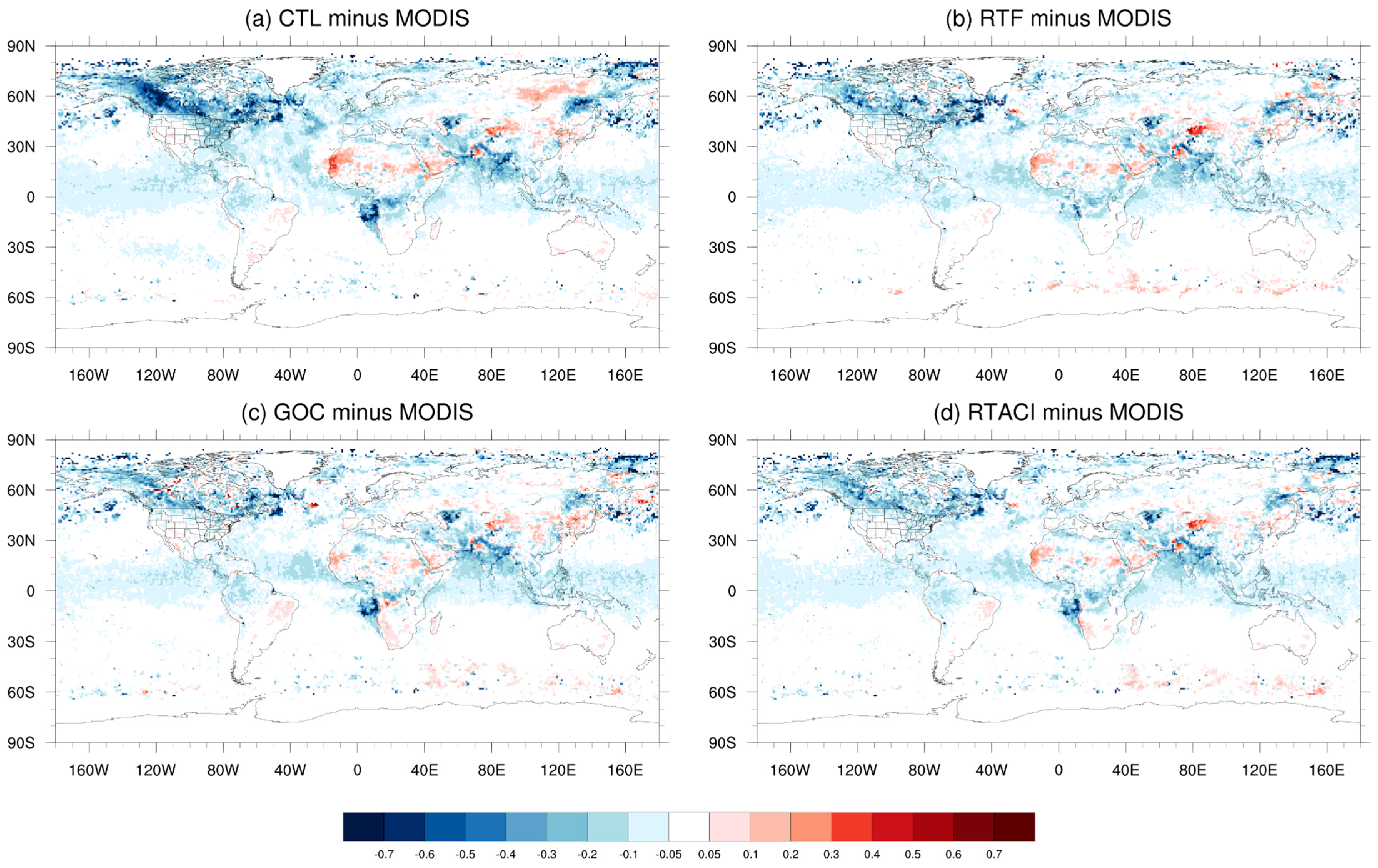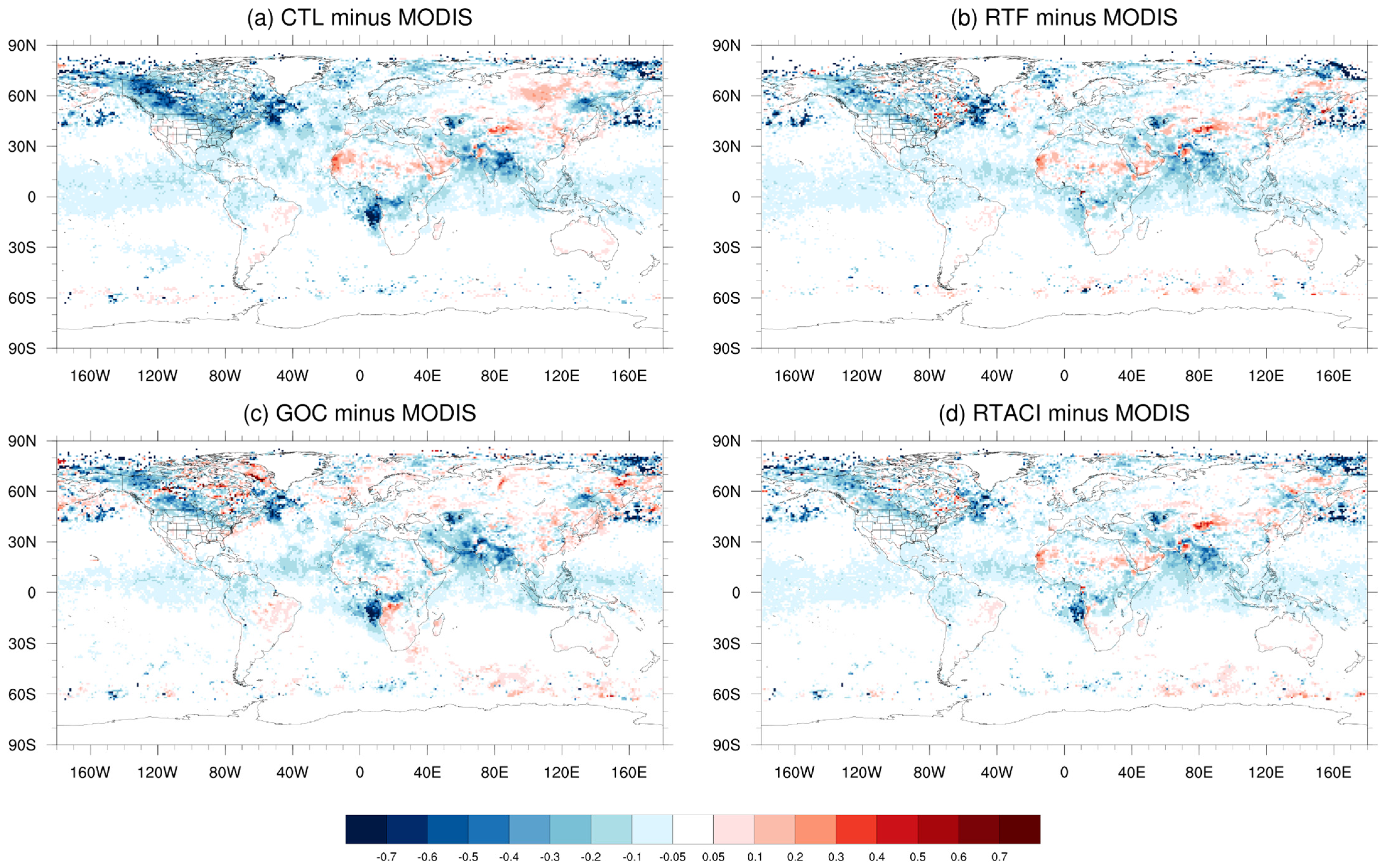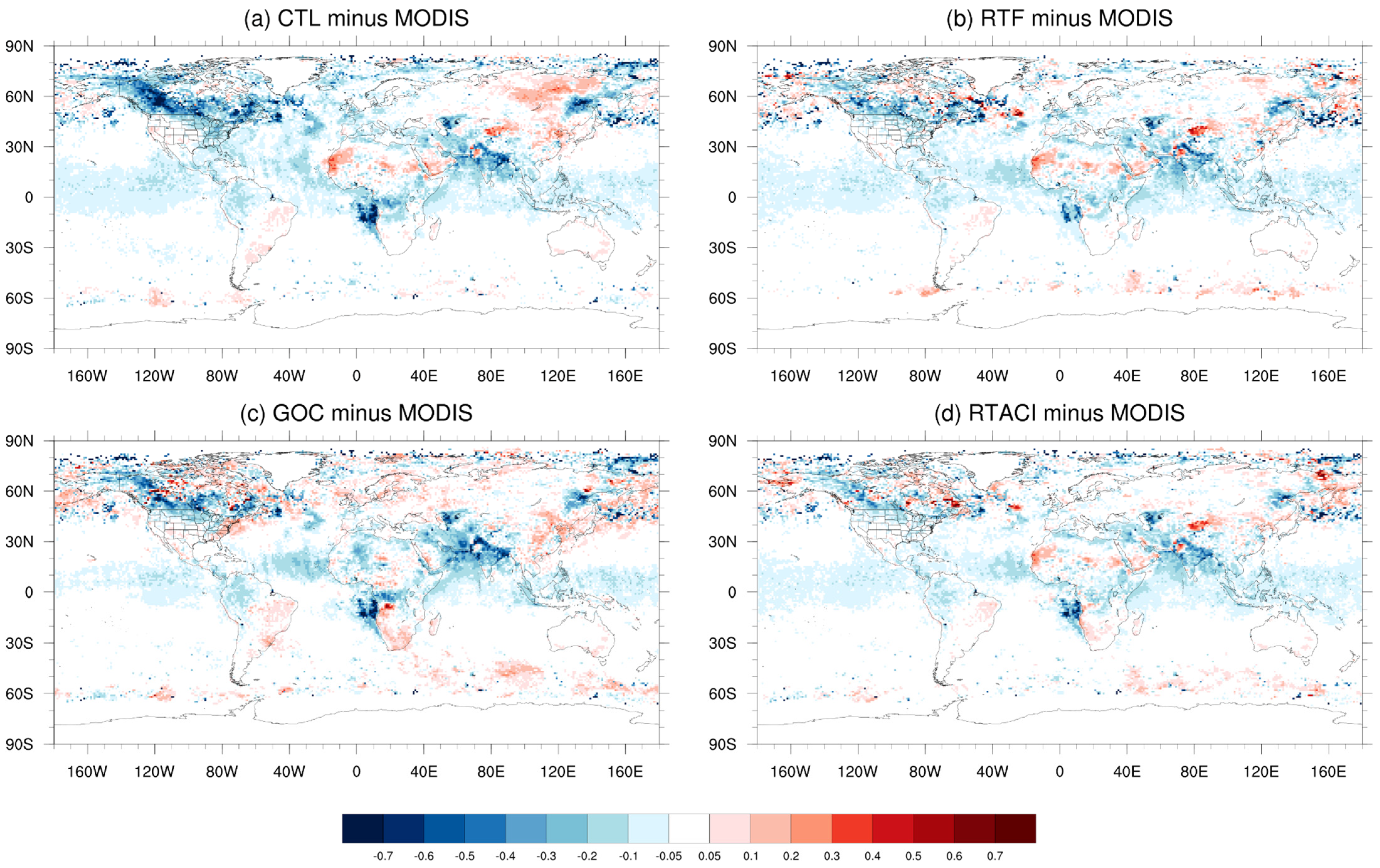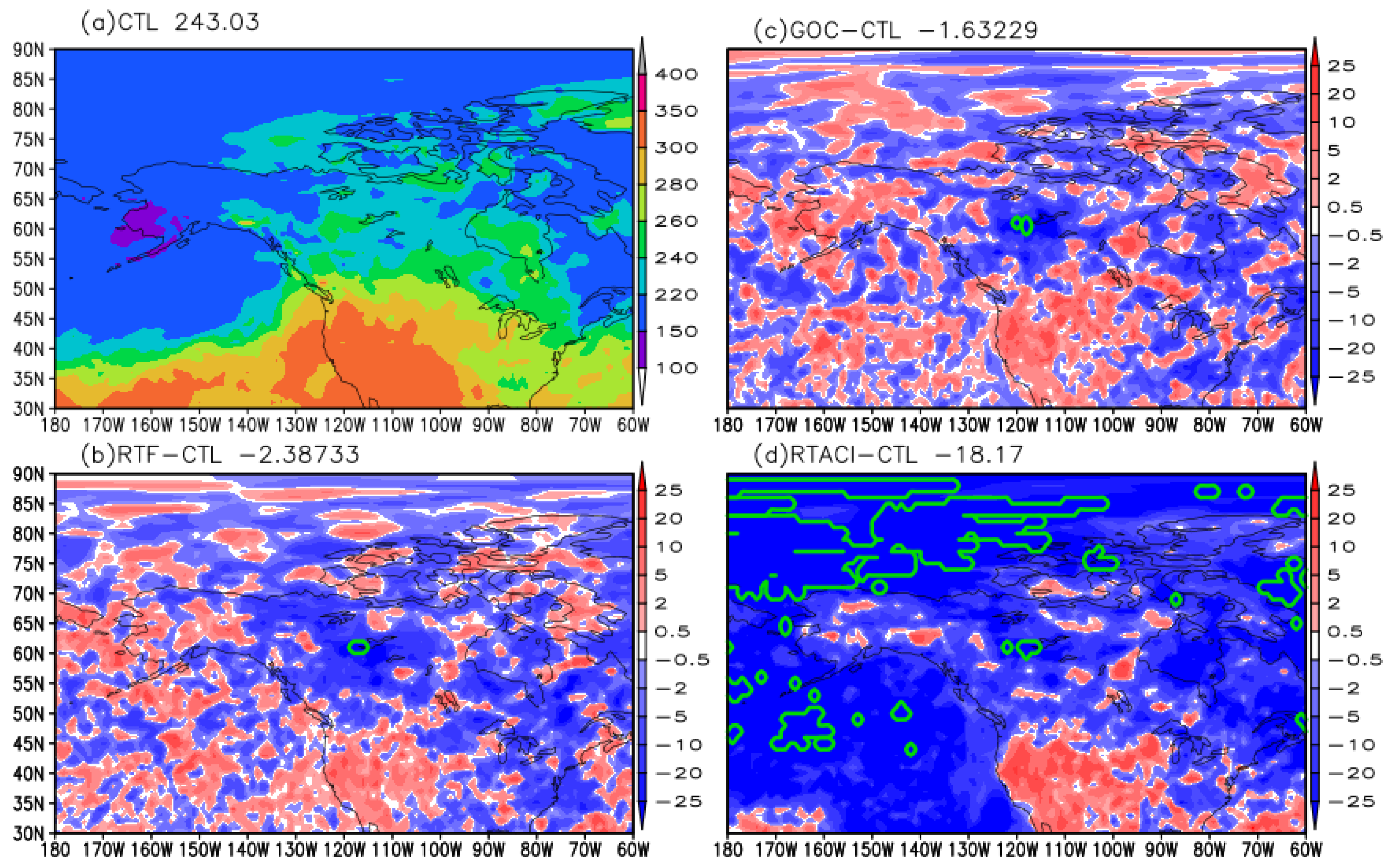

Direct and Indirect Effects of Aerosols During the 2023 Canadian Wildfires



Abstract
1. Introduction
2. Experimental Design and Model Description
3. Results
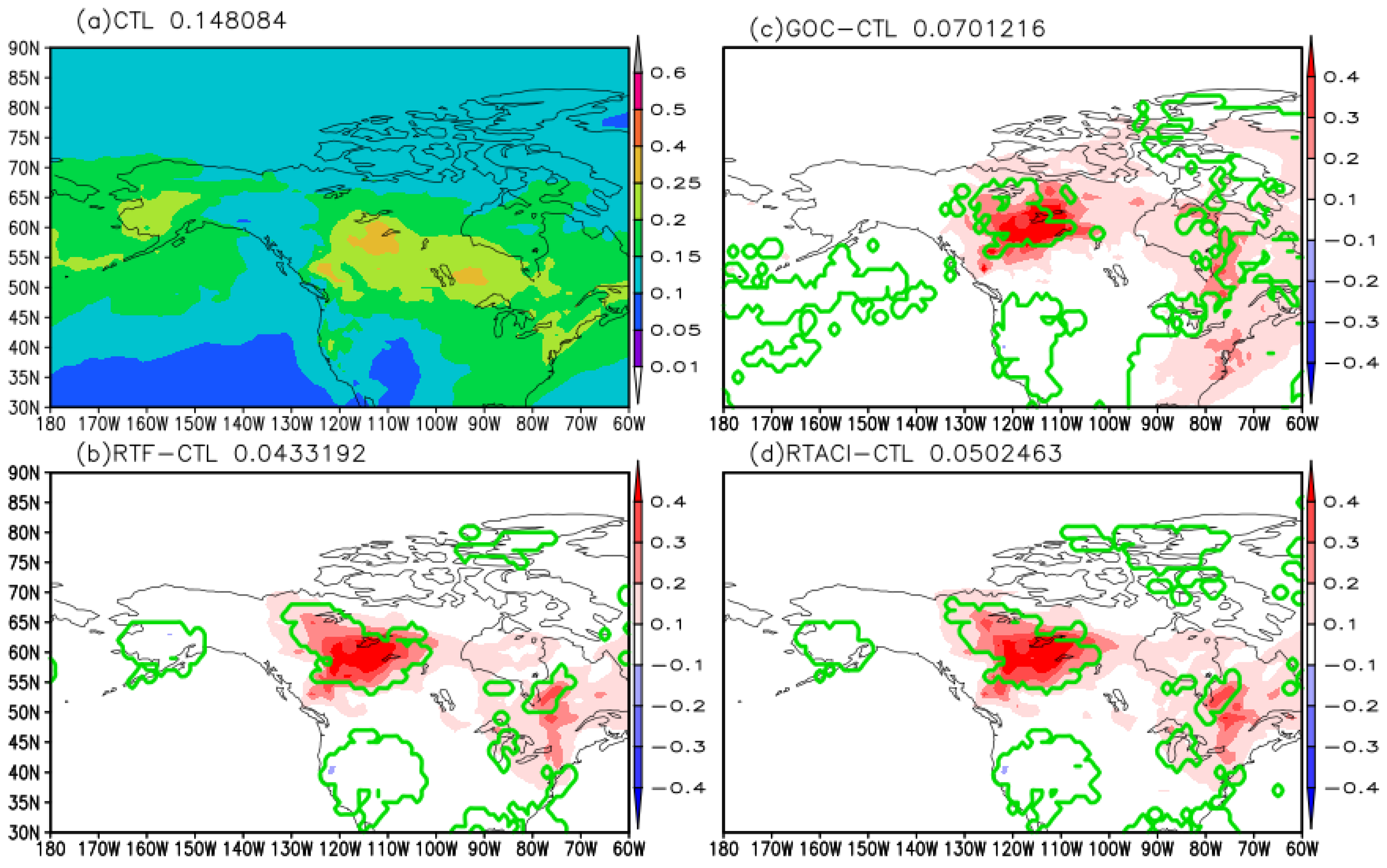
3.1. Effects on Aerosol Optical Depth
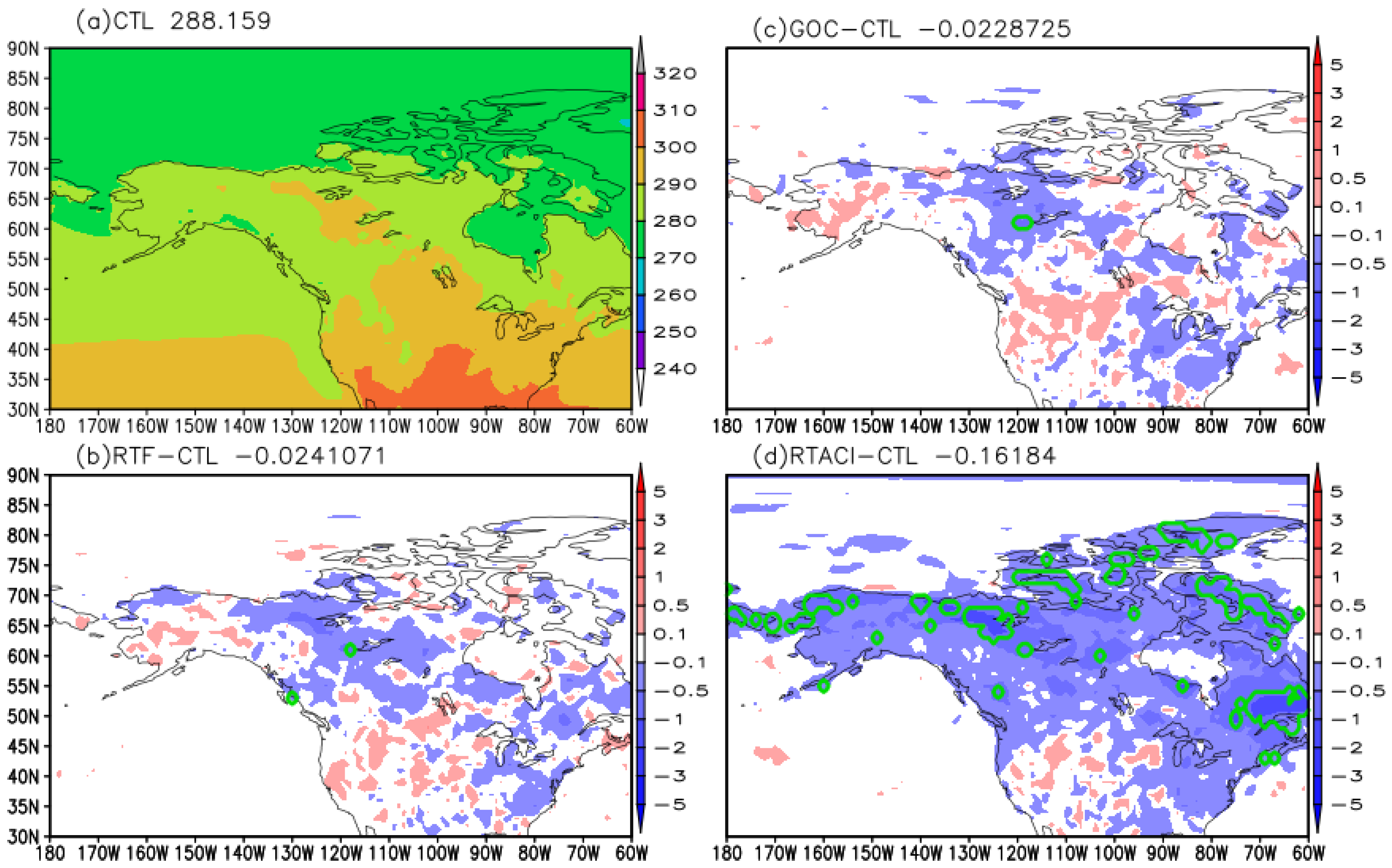
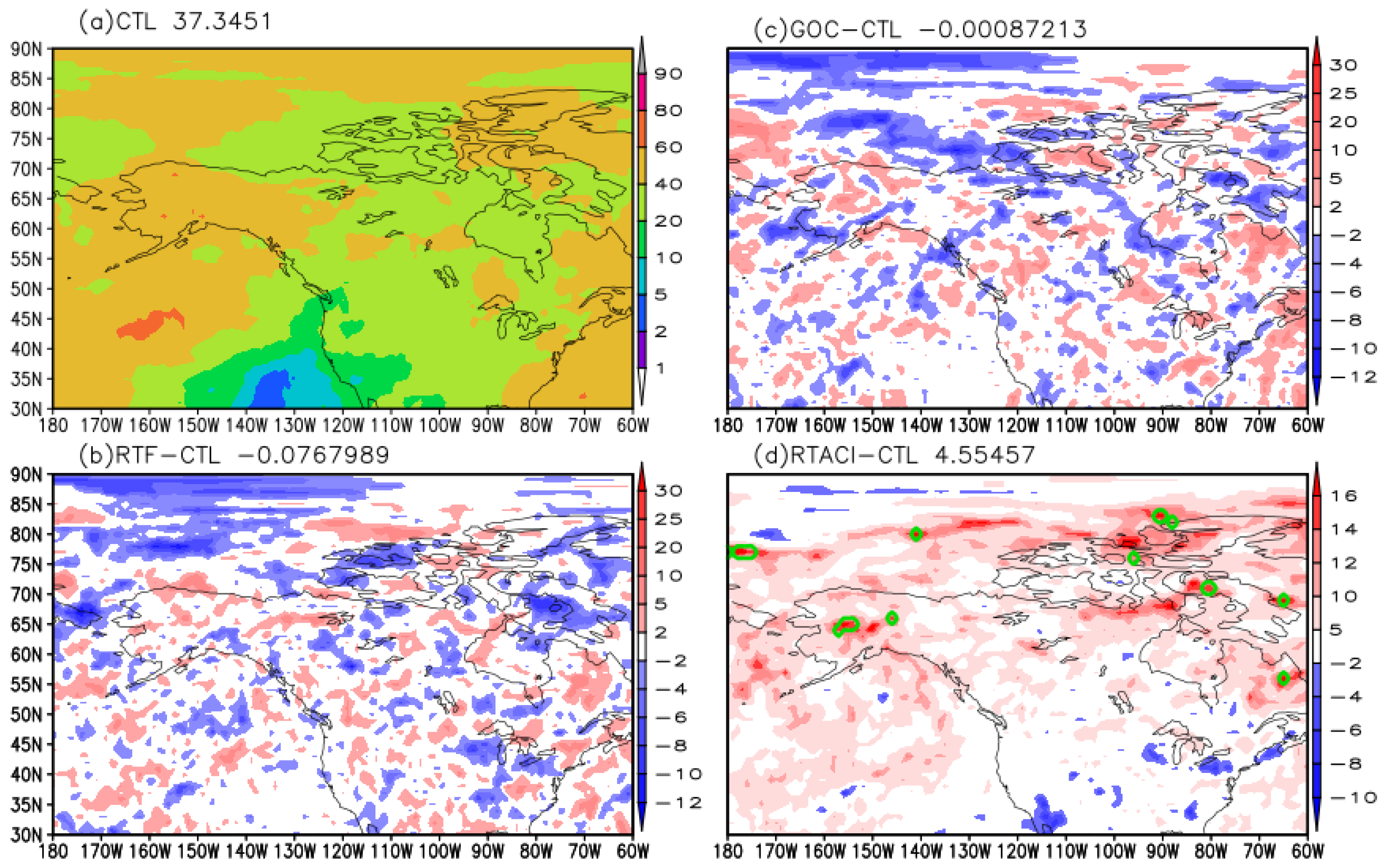
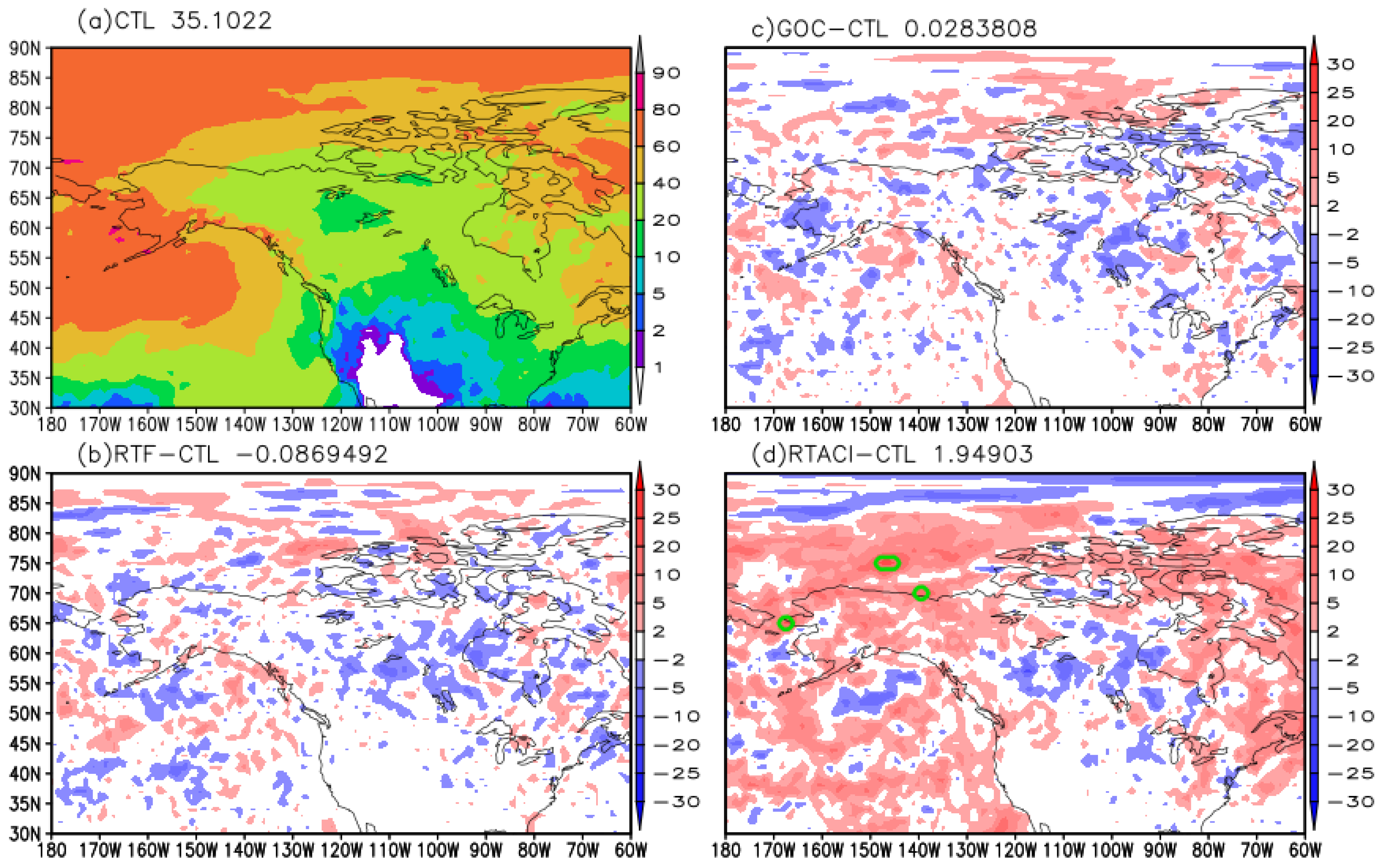
3.2. Effects on Radiation Fluxes
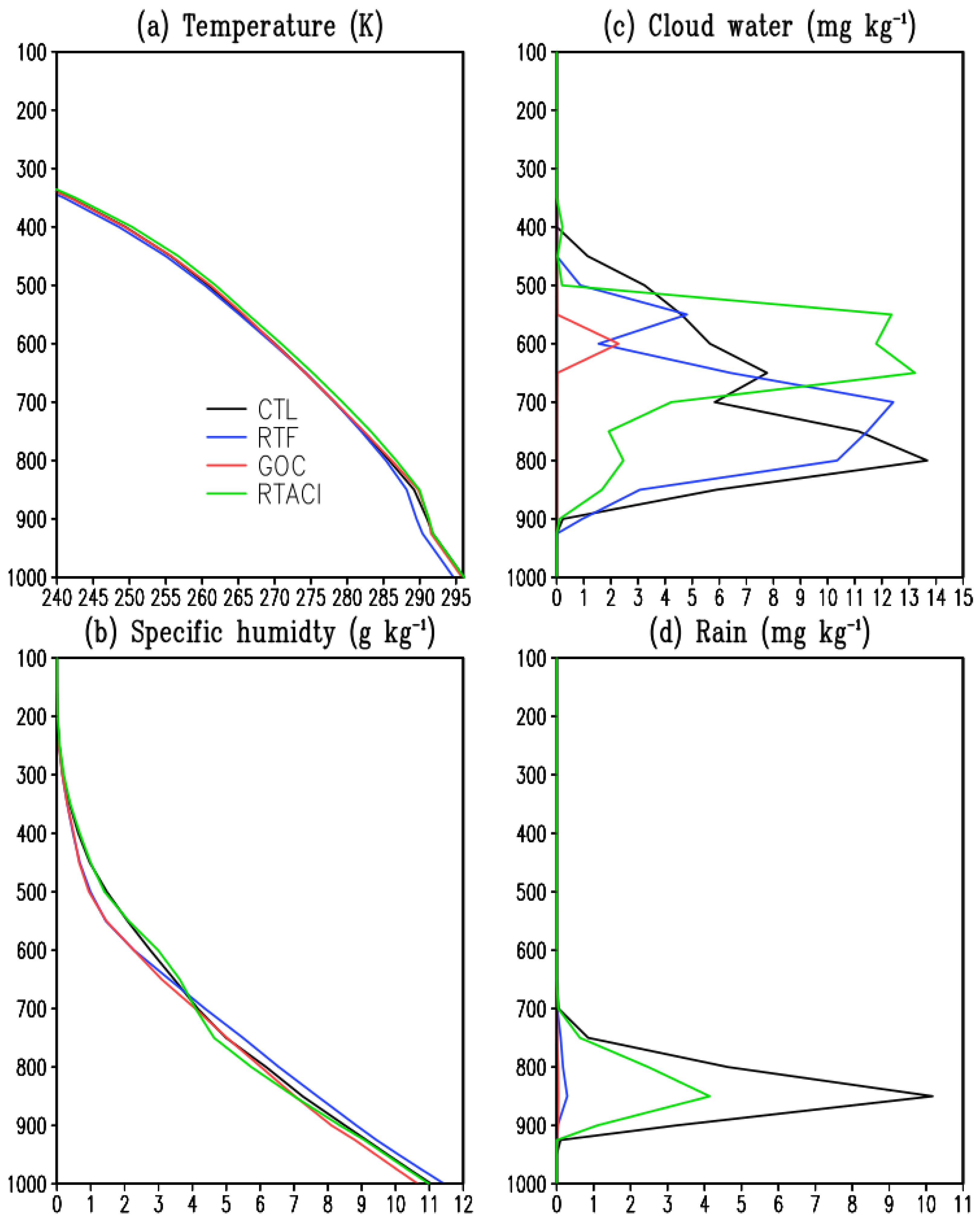
3.3. A Case Study
3.4. Impact on Large-Scale NWP Forecasting Performance
4. Discussion and Conclusions
Author Contributions
Funding
Institutional Review Board Statement
Informed Consent Statement
Data Availability Statement
Acknowledgments
Conflicts of Interest
References
- Jones, M.W.; Kelley, D.I.; Burton, C.A.; Di Giuseppe, F.; Barbosa, M.L.F.; Brambleby, E.; Hartley, A.J.; Lombardi, A.; Mataveli, G.; McNorton, J.R.; et al. State of Wildfires 2023–2024. Earth Syst. Sci. Data 2024, 16, 3601–3685. [Google Scholar] [CrossRef]
- Liu, Y.; Williams, E.; Li, Z.; Guha, A.; Lapierre, J.; Stock, M.; Heckman, S.; Zhang, Y.; DiGangi, E. Lightning enhancement in moist convection with smoke-laden air advected from Australian wildfires. Geophys. Res. Lett. 2021, 48, e2020GL092355. [Google Scholar] [CrossRef]
- Hulstrom, R.L.; Stoffel, T.L. Some effects of the Yellowstone fire smoke cloud on incident solar irradiance. J. Clim. 1990, 3, 1485–1490. [Google Scholar] [CrossRef][Green Version]
- Peace, M.; Mattner, T.; Mills, G.; Kepert, J.; McCaw, L. Fire-modified meteorology in a coupled fire–atmosphere model. J. Appl. Meteorol. Clim. 2015, 54, 704–720. [Google Scholar] [CrossRef]
- Kaufman, Y.J.; Fraser, R.S. The effect of smoke particles on clouds and climate forcing. Science 1997, 277, 1636–1639. [Google Scholar] [CrossRef]
- Kaufman, Y.J.; Nakajima, T. Effect of Amazon smoke on cloud microphysics and albedo-Analysis from satellite imagery. J. Appl. Meteorol. Clim. 1993, 32, 729–744. [Google Scholar] [CrossRef]
- Verma, S.; Prakash, D.; Ricaud, P.; Payra, S.; Attie’, J.-L.; Soni, M. A new classification of aerosol sources and types as measured over Jaipur, India. Aerosol Air Qual. Res. 2015, 15, 985–993. [Google Scholar] [CrossRef]
- Mamouri, R.-E.; Ansmann, A.; Ohneiser, K.; Knopf, D.A.; Nisantzi, A.; Bühl, J.; Engelmann, R.; Skupin, A.; Seifert, P.; Baars, H.; et al. Wildfire smoke triggers cirrus formation: Lidar observations over the eastern Mediterranean. Atmos. Chem. Phys. 2023, 23, 14097–14114. [Google Scholar] [CrossRef]
- Ramanathan, V.; Crutzen, P.J.; Kiehl, J.T.; Rosenfeld, D. Aerosols, climate, and the hydrological cycle. Science 2001, 294, 2119–2124. [Google Scholar] [CrossRef]
- Rosenfeld, D. TRMM observed first direct evidence of smoke from forest fires inhibiting rainfall. Geophys. Res. Lett. 1999, 26, 3105–3108. [Google Scholar] [CrossRef]
- Twomey, S. The influence of pollution on the shortwave albedo of clouds. J. Atmos. Sci. 1977, 34, 1149–1152. [Google Scholar] [CrossRef]
- Vaezi, R.B.; Martin, M.R.; Hosseinpour, F. Impacts of wildfire smoke aerosols on radiation, clouds, precipitation, climate, and air quality. Atmos. Environ. X 2025, 26, 100322. [Google Scholar] [CrossRef]
- Zhang, Y.; Fan, J.; Shrivastava, M.; Homeyer, C.R.; Wang, Y.; Seinfeld, J.H. Notable impact of wildfires in the western United States on weather hazards in the central United States. Proc. Natl. Acad. Sci. USA 2022, 119, e2207329119. [Google Scholar] [CrossRef]
- Zhu, H.; Zhao, H.; Yang, S.; Zhou, R.; Wang, Y.; Zou, Y.; Zhao, C.; Li, R. Smoke aerosols elevate precipitation top and latent heat to the upper atmosphere globally. npj Clim. Atmos. Sci. 2025, 8, 170. [Google Scholar] [CrossRef]
- Hansen, J.; Sato, M.; Ruedy, R. Radiative forcing and climate response. J. Geophys. Res. Atmos. 1997, 102, 6831–6864. [Google Scholar] [CrossRef]
- Koren, I.; Kaufman, Y.J.; Remer, L.A.; Martins, J.V. Measurement of the effect of Amazon smoke on inhibition of cloud formation. Science 2004, 303, 1342–1345. [Google Scholar] [CrossRef]
- Jiang, Y.; Yang, X.-Q.; Liu, X.; Qian, Y.; Zhang, K.; Wang, M.; Li, F.; Wang, Y.; Lu, Z. Impacts of wildfire aerosols on global energy budget and climate: The role of climate feedbacks. J. Clim. 2020, 33, 3351–3366. [Google Scholar] [CrossRef]
- Xu, L.; Qing, Z.; William, J.R.; Yang, C.; Hailong, W.; Po-Lun, M.; James, T.R. The influence of fire aerosols on surface climate and gross primary production in the Energy Exascale Earth System Model (E3SM). J. Clim. 2021, 34, 7219–7238. [Google Scholar] [CrossRef]
- Robock, A. Surface cooling due to forest fire smoke. J. Geophys. Res. Atmos. 1991, 96, 20869–20878. [Google Scholar] [CrossRef]
- Potter, B.E.; McEvoy, D. Weather factors associated with extremely large fires and fire growth days. Earth Interact. 2021, 25, 160–176. [Google Scholar] [CrossRef]
- Conrick, R.; Mass, C.F.; Boomgard-Zagrodnik, J.P.; Ovens, D. The Influence of Wildfire Smoke on Cloud Microphysics during the September 2020 Pacific Northwest Wildfires. Weather Forecast 2021, 36, 1519–1536. [Google Scholar] [CrossRef]
- Yang, F.; Tallapragada, V.; Kain, J.S.; Wei, H.; Yang, R.; Yudin, V.A.; Moorthi, S.; Han, J.; Hou, Y.T.; Wang, J.; et al. Model Upgrade Plan and Initial Results from a Prototype NCEP Global Forecast System Version 16. In Proceedings of the 10th Conference on Transition of Research to Operations, 100th AMS Annual Meeting, Boston, MA, USA, 19 August 2019; Available online: https://ams.confex.com/ams/2020Annual/meetingapp.cgi/Paper/362797 (accessed on 14 July 2024).
- Thompson, G.; Field, P.R.; Rasmussen, R.M.; Hall, W.D. Explicit forecasts of winter precipitation using an improved bulk microphysics scheme. Part II: Implementation of a new snow parameterization. Mon. Weather Rev. 2008, 136, 5095–5115. [Google Scholar] [CrossRef]
- Thompson, G.; Rasmussen, R.M.; Manning, K. Explicit forecasts of winter precipitation using an improved bulk microphysics scheme. Part I: Description and sensitivity analysis. Mon. Weather Rev. 2004, 132, 519–542. [Google Scholar] [CrossRef]
- Cheng, A.; Yang, F. Aerosol, Clouds and Radiation Interactions in the NCEP Unified Forecast Systems. Meteorology 2025, 4, 14. [Google Scholar] [CrossRef]
- Mlawer, E.J.; Taubman, S.J.; Brown, P.D.; Iacono, M.J.; Clough, S.A. Radiative transfer for inhomogeneous atmospheres: RRTM, a validated correlated-k model for the l ongwave. J. Geophys. Res. 1997, 102, 16663–16682. [Google Scholar] [CrossRef]
- Mlawer, E.J.; Iacono, M.J.; Pincus, R.; Barker, H.W.; Oreopoulos, L.; Mitchell, D.L. Contributions of the ARM Program to Radiative Transfer Modeling for Climate and Weather Applications, The Atmospheric Radiation Measurement Program: The First 20 Years. Meteorol. Monogr. 2016, 57, 15.1–15.19. [Google Scholar] [CrossRef]
- Buchard, V.; Randles, C.A.; da Silva, A.M.; Darmenov, A.; Colarco, P.R.; Govindaraju, R.; Ferrare, R.; Hair, J.; Beyersdorf, A.J.; Ziemba, L.D.; et al. The MERRA-2 Aerosol Reanalysis, 1980-Onward, Part II: Evaluation and Case Studies. J. Clim. 2017, 30, 6851–6872. [Google Scholar] [CrossRef] [PubMed]
- Randles, C.A.; Da Silva, A.M.; Buchard, V.; Colarco, P.R.; Darmenov, A.; Govindaraju, R.; Smirnov, A.; Holben, B.; Ferrare, R.; Hair, J.; et al. The MERRA-2 Aerosol Reanalysis, 1980 Onward. Part I: System Description and Data Assimilation Evaluation. J. Clim. 2017, 30, 6823–6850. [Google Scholar] [CrossRef] [PubMed]
- Chin, M.; Ginoux, P.; Kinne, S.; Torres, O.; Holben, B.N.; Duncan, B.N.; Martin, R.V.; Logan, J.A.; Higurashi, A.; Nakajima, T. Tropospheric aerosol optical thickness from the GOCART model and comparisons with satellite and Sun photometer measurements. J. Atmos. Sci. 2002, 59, 461–483. [Google Scholar] [CrossRef]
- Colarco, P.; da Silva, A.; Chin, M.; Diehl, T. Online simulations of global aerosol distributions in the NASA GEOS-4 model and comparisons to satellite and ground-based aerosol optical depth. J. Geophys. Res. Atmos. 2010, 115, D14207. [Google Scholar] [CrossRef]
- Pan, L.; Bhattacharjee, P.S.; Zhang, L.; Montuoro, R.; Baker, B.; McQueen, J.; Grell, G.A.; McKeen, S.A.; Kondragunta, S.; Zhang, X.; et al. Analysis of the GEFS-Aerosols annual budget to better understand aerosol predictions simulated in the model. Geosci. Model. Dev. 2023, 17, 431–447. [Google Scholar] [CrossRef]
- Zhang, L.; Montuoro, R.; McKeen, S.A.; Baker, B.; Bhattacharjee, P.S.; Grell, G.A.; Henderson, J.; Pan, L.; Frost, G.J.; McQueen, J.; et al. Development and evaluation of the aerosol forecast member in the National Center for Environment Prediction (NCEP)’s global ensemble forecast system (GEFS-Aerosols v1). Geosci. Model Dev. 2022, 15, 5337–5369. [Google Scholar] [CrossRef]
- Wang, J.; Bhattacharjee, P.S.; Tallapragada, V.; Lu, C.-H.; Kondragunta, S.; da Silva, A.; Zhang, X.; Chen, S.-P.; Wei, S.-W.; Darmenov, A.S.; et al. The implementation of NEMS GFS Aerosol Component (NGAC) Version 2.0 for global multispecies forecasting at NOAA/NCEP—Part 1: Model descriptions. Geosci. Model Dev. 2018, 11, 2315–2332. [Google Scholar] [CrossRef]
- Shen, J.; Cohen, R.C.; Wolfe, G.M.; Jin, X. Impacts of wildfire smoke aerosols on near-surface ozone photochemistry. Atmos. Chem. Phys. 2025, 25, 8701–8718. [Google Scholar] [CrossRef]
- Cheng, A.; Yang, F. Direct radiative effects of aerosols on numerical weather forecasts—A comparison of two aerosol datasets in the NCEP GFS. Weather Forecast 2023, 38, 753–772. [Google Scholar] [CrossRef]
- Mulcahy, J.P.; Walters, D.N.; Bellouin, N.; Milton, S.F. Impacts of increasing the aerosol complexity in the Met Office global numerical weather prediction model. Atmos. Chem. Phys. 2014, 14, 4749–4778. [Google Scholar] [CrossRef]
- Kato, S.; Rose, F.G.; Rutan, D.A.; Thorsen, T.J.; Loeb, N.G.; Doelling, D.R.; Huang, X.; Smith, W.L.; Su, W.; Ham, S.-H. Surface Irradiances of Edition 4.0 Clouds and the Earth’s Radiant Energy System (CERES) Energy Balanced and Filled (EBAF) data product. J. Clim. 2018, 31, 4501–4527. [Google Scholar] [CrossRef]
- Koch, D.; Del Genio, A.D. Black carbon absorption effects on cloud cover: Review and synthesis. Atmos. Chem. Phys. 2010, 10, 7685–7696. [Google Scholar] [CrossRef]
- Rodwell, M.J.; Jung, T. Understanding the local and global impacts of model physics changes: An aerosol example. Q. J. R. Meteorol. Soc. 2008, 134, 1479–1497. [Google Scholar] [CrossRef]
- Reale, O.; Lau, K.M.; da Silva, A. Impact of interactive aerosol on the African Easterly Jet in the NASA GEOS-5 global forecasting system. Weather Forecast 2011, 26, 504–519. [Google Scholar] [CrossRef]







| Aerosol | ARI | ACI |
|---|---|---|
| MERRA2 2014-2023 (EXP CTL) | X | |
| MERRA2 three-hourly real-time forcing (EXP RTF) | X | |
| aerosols forecasted from GOCART (EXP GOC) | X | |
| MERRA2 three-hourly real-time forcing (EXP RTACI) | X | X |
| RMSE | Bias | |||||||
|---|---|---|---|---|---|---|---|---|
| CTL | RTF | GOC | RTACI | CTL | RTF | GOC | RTACI | |
| Day1 | 0.136 | 0.116 | 0.1277 | 0.118 | −0.051 | −0.044 | −0.04 | −0.042 |
| Day5 | 0.138 | 0.119 | 0.144 | 0.121 | −0.049 | −0.043 | −0.037 | −0.038 |
| Day10 | 0.139 | 0.122 | 0.159 | 0.126 | −0.045 | −0.036 | −0.028 | −0.03 |
| RMSE | Bias | |||||||
|---|---|---|---|---|---|---|---|---|
| CTL | RTF | GOC | RTACI | CTL | RTF | GOC | RTACI | |
| Day1 | 0.122 | 0.105 | 0.114 | 0.105 | −0.045 | −0.036 | −0.032 | −0.035 |
| Day5 | 0.123 | 0.108 | 0.13 | 0.109 | −0.043 | −0.033 | −0.029 | −0.03 |
| Day10 | 0.124 | 0.111 | 0.147 | 0.114 | −0.04 | −0.029 | −0.023 | −0.025 |
| TOA_UP_SW | Global | North America |
|---|---|---|
| CTL | 17.3856 | 23.127 |
| RTF | 17.3221 | 22.9259 |
| GOC | 17.1588 | 22.6171 |
| RTACI | 23.1889 | 22.0543 |
| Surface DN SW | Global | North America |
|---|---|---|
| CTL | 21.9616 | 28.6287 |
| RTF | 21.5634 | 27.4383 |
| GOC | 21.9064 | 27.9882 |
| RTACI | 27.7747 | 27.9135 |
Disclaimer/Publisher’s Note: The statements, opinions and data contained in all publications are solely those of the individual author(s) and contributor(s) and not of MDPI and/or the editor(s). MDPI and/or the editor(s) disclaim responsibility for any injury to people or property resulting from any ideas, methods, instructions or products referred to in the content. |
© 2026 by the authors. Licensee MDPI, Basel, Switzerland. This article is an open access article distributed under the terms and conditions of the Creative Commons Attribution (CC BY) license.
Share and Cite
Cheng, A.; Pan, L.; Bhattacharjee, P.S.; Yang, F. Direct and Indirect Effects of Aerosols During the 2023 Canadian Wildfires. Atmosphere 2026, 17, 337. https://doi.org/10.3390/atmos17040337
Cheng A, Pan L, Bhattacharjee PS, Yang F. Direct and Indirect Effects of Aerosols During the 2023 Canadian Wildfires. Atmosphere. 2026; 17(4):337. https://doi.org/10.3390/atmos17040337
Chicago/Turabian StyleCheng, Anning, Li Pan, Partha S. Bhattacharjee, and Fanglin Yang. 2026. "Direct and Indirect Effects of Aerosols During the 2023 Canadian Wildfires" Atmosphere 17, no. 4: 337. https://doi.org/10.3390/atmos17040337
APA StyleCheng, A., Pan, L., Bhattacharjee, P. S., & Yang, F. (2026). Direct and Indirect Effects of Aerosols During the 2023 Canadian Wildfires. Atmosphere, 17(4), 337. https://doi.org/10.3390/atmos17040337