


Monitoring Aerosol Dynamics in the Beijing–Tianjin–Hebei Region: A High-Resolution, All-Day AOD Dataset from 2018 to 2023

Abstract
1. Introduction
2. Data and Methods
2.1. Data
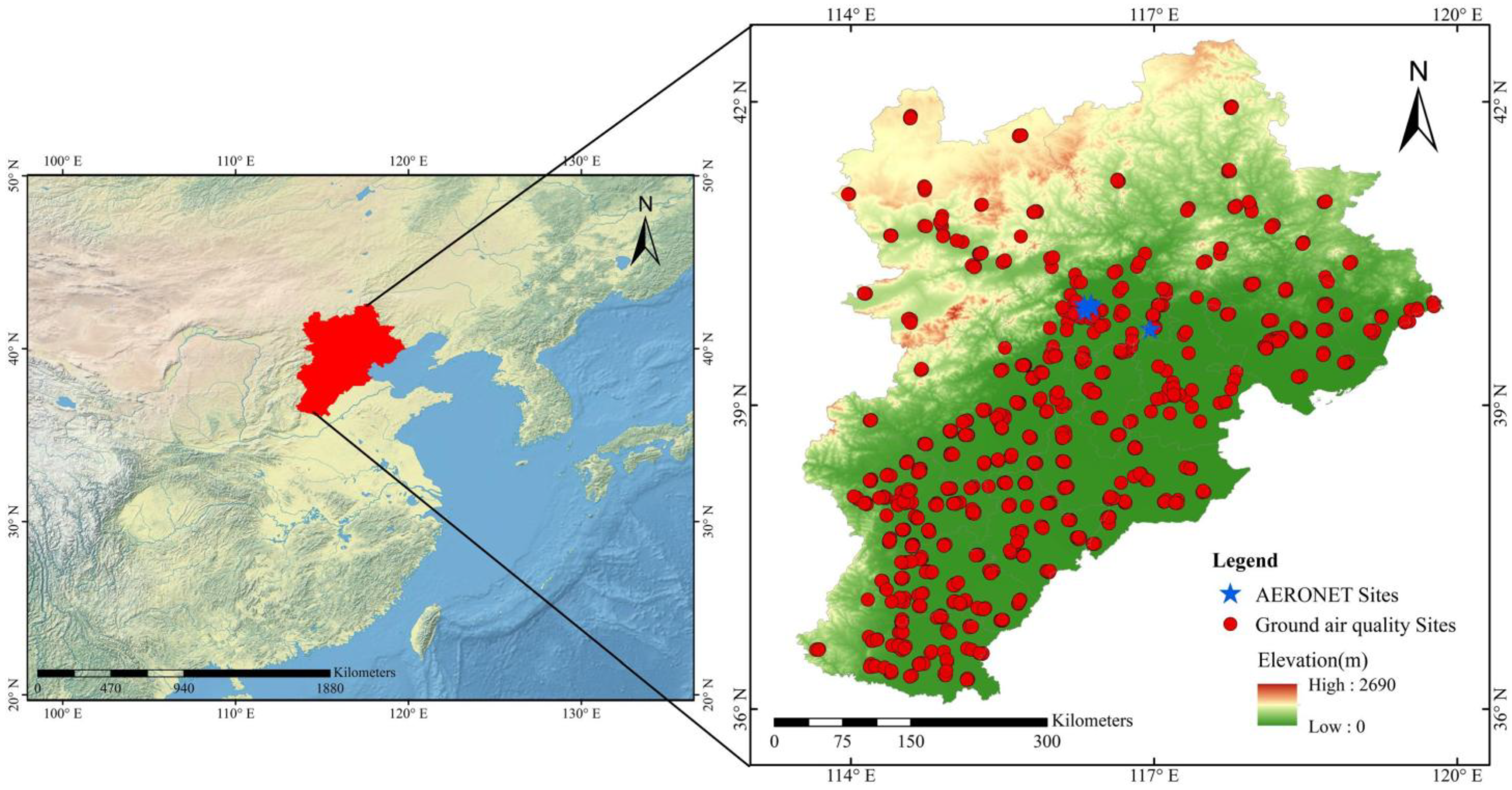
2.1.1. Surface Air Quality Data
2.1.2. Meteorological Data
2.1.3. AOD Products
2.1.4. Geographic Data
2.2. Methods
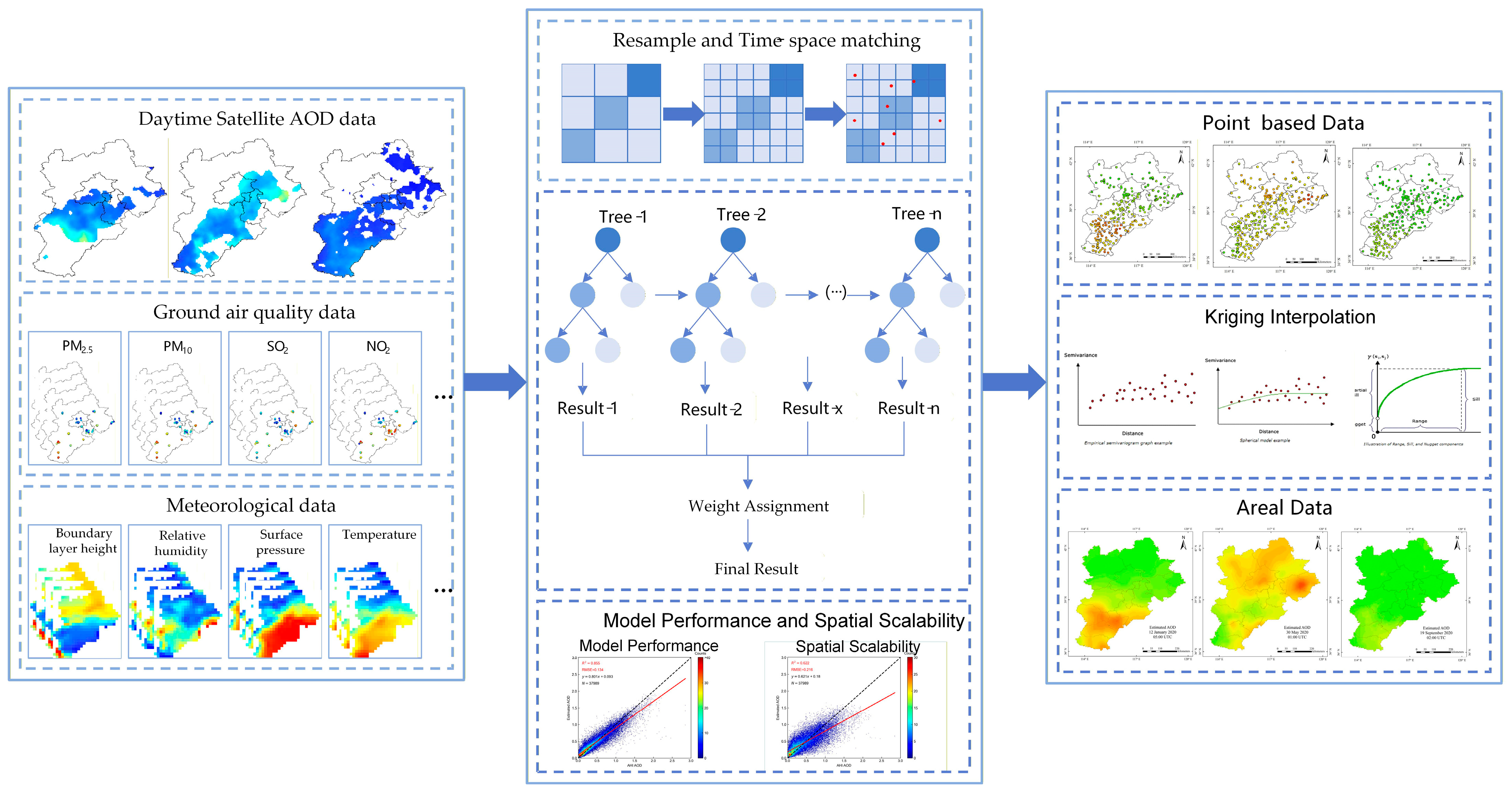
2.2.1. All-Day AOD Estimation Workflow
2.2.2. Data Preprocessing
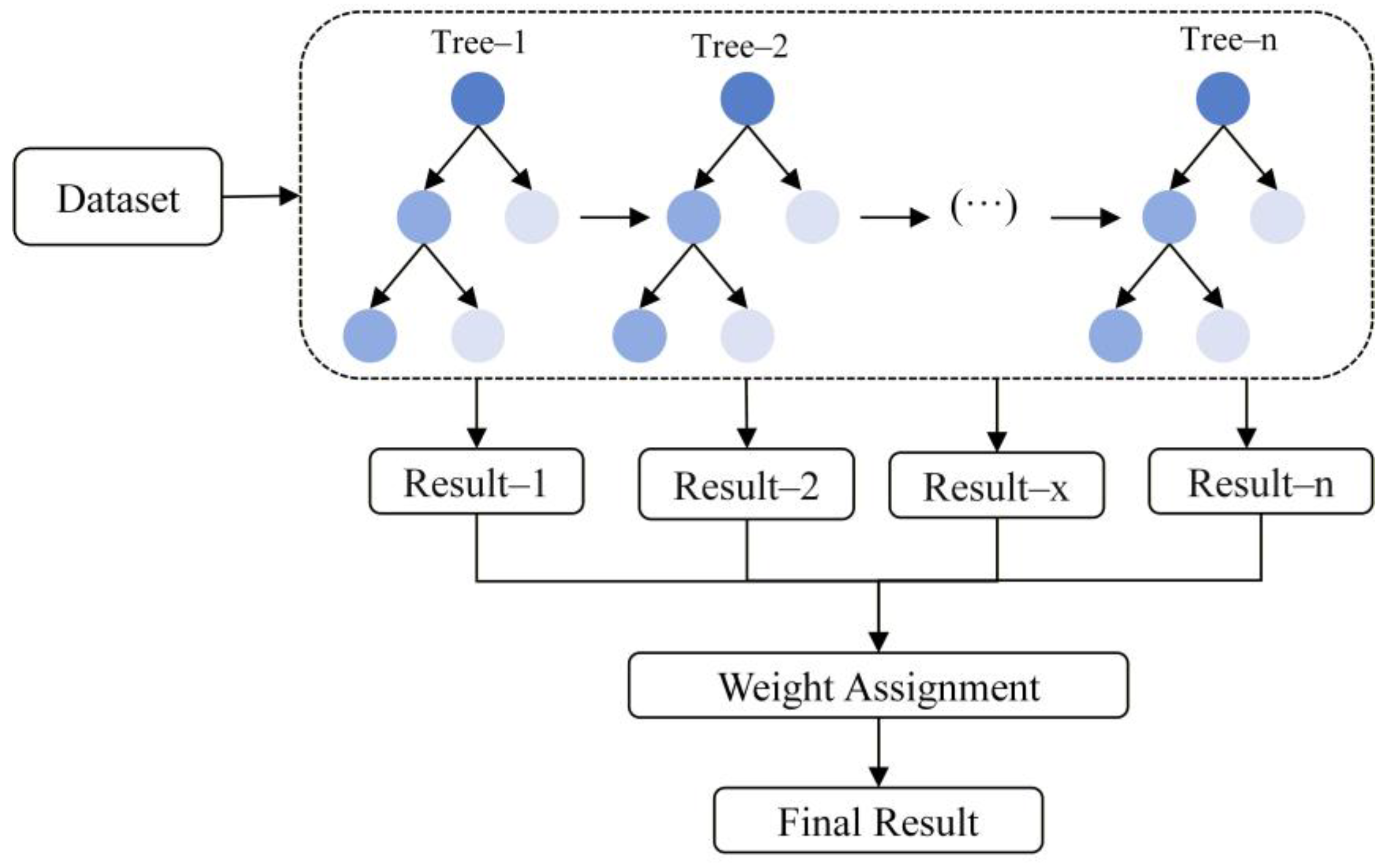
2.2.3. Construction of All-Day AOD Estimation Model
2.2.4. Kriging Interpolation
2.2.5. Model Evaluation
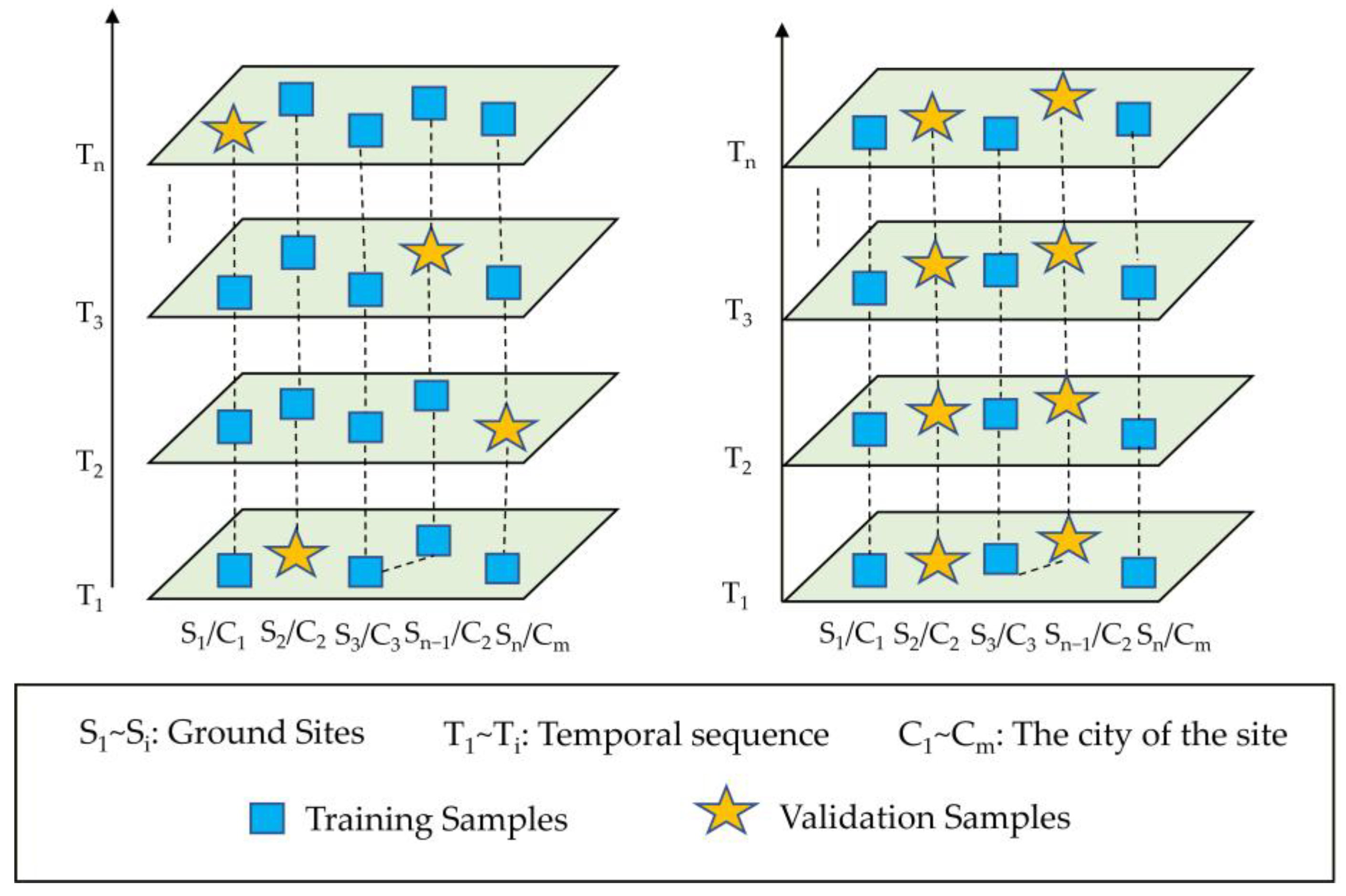
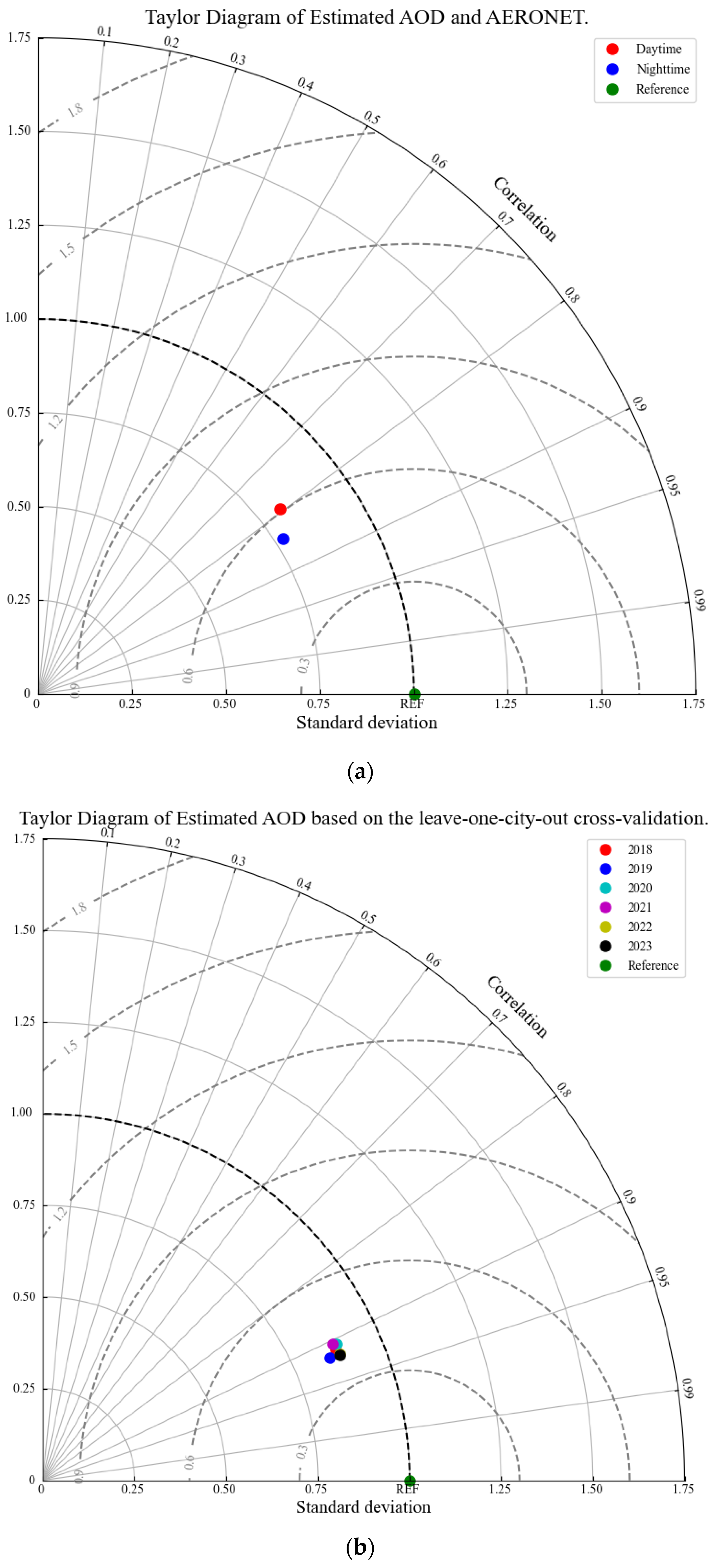
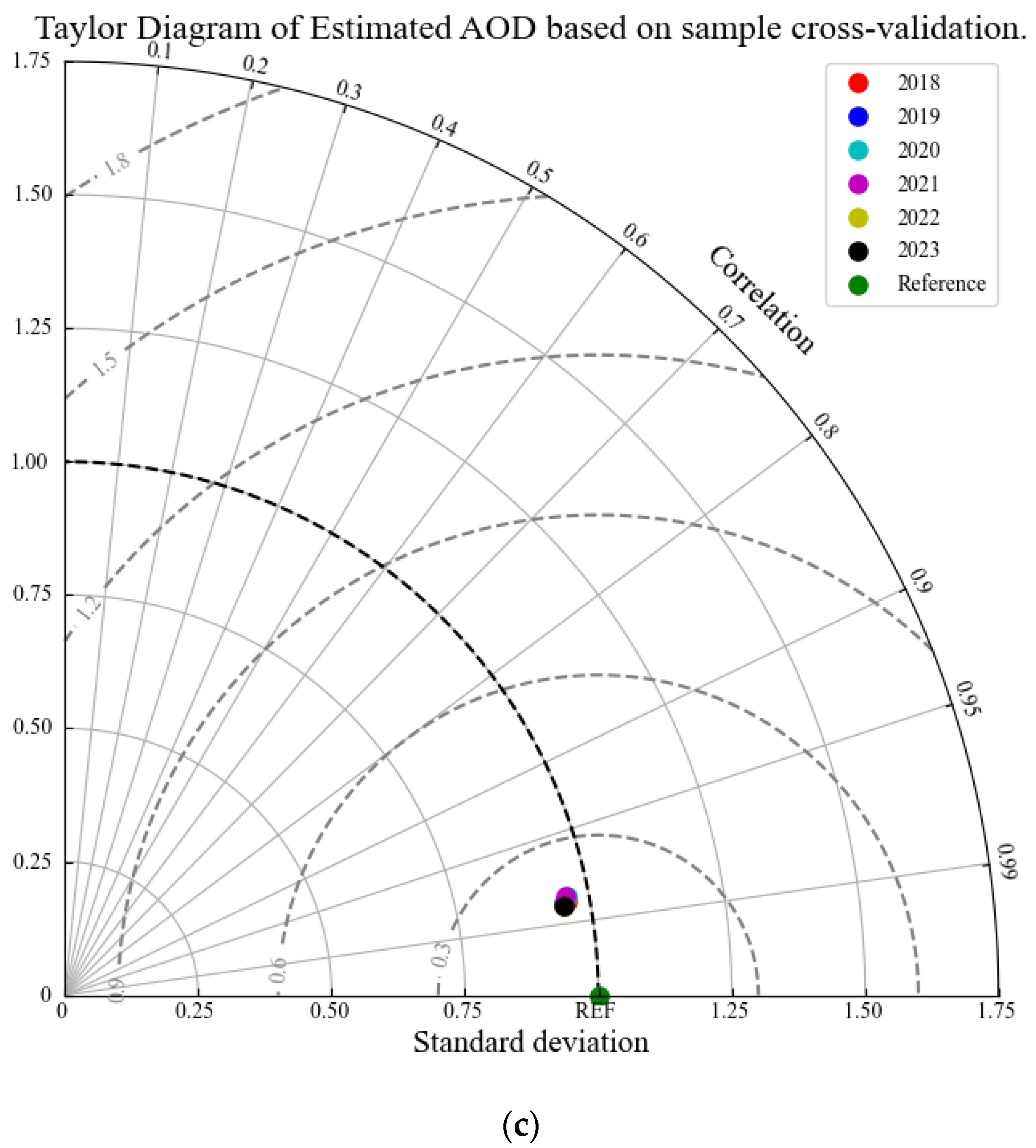
- The ten-fold cross-validation method based on sample data involved dividing the dataset into 10 subsets, using 9 of these subsets as training data, while the remaining subset was utilized for validation. This process was repeated 10 times to evaluate the trained model with the test dataset.
- The leave-one-city-out cross-validation approach consisted of partitioning the dataset based on “city”. In this research, there were 13 cities, resulting in 13 distinct subsets. The data from 12 of these cities served as training data, while the data from the one remaining city was utilized for validation. This procedure was performed 13 times to assess the performance of the trained model using the test dataset.
3. Results
3.1. Model Performance
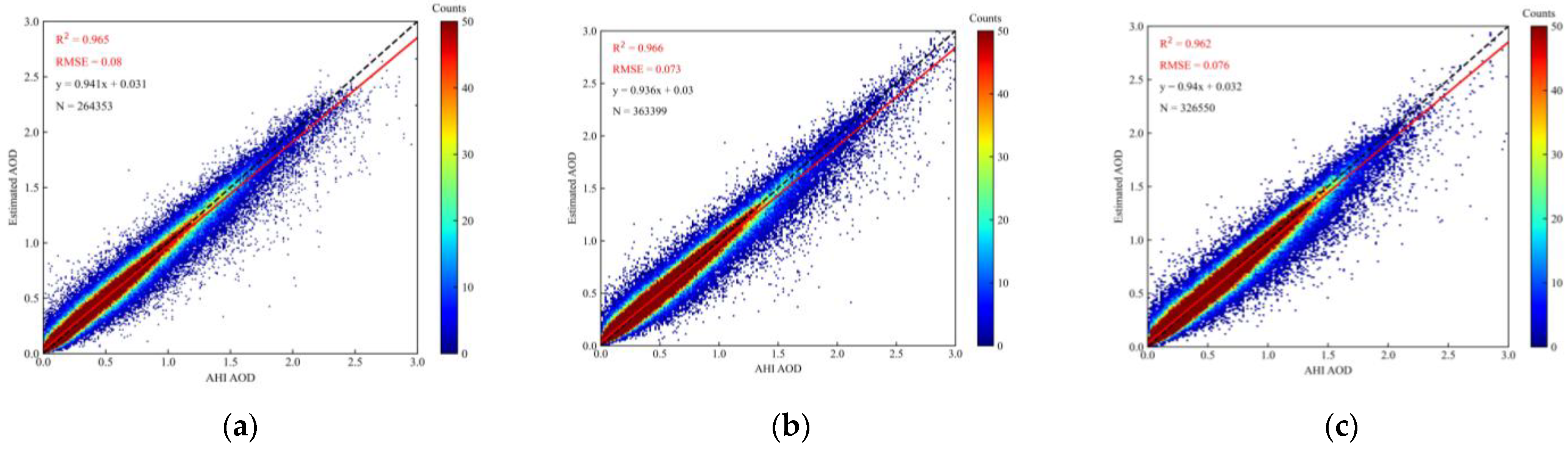
3.1.1. Sample-Based Cross-Validation
3.1.2. Cross-Validation Based on Leave-One-City-Out
3.2. Comparison with AOD Products
3.2.1. Model Accuracy Assessment
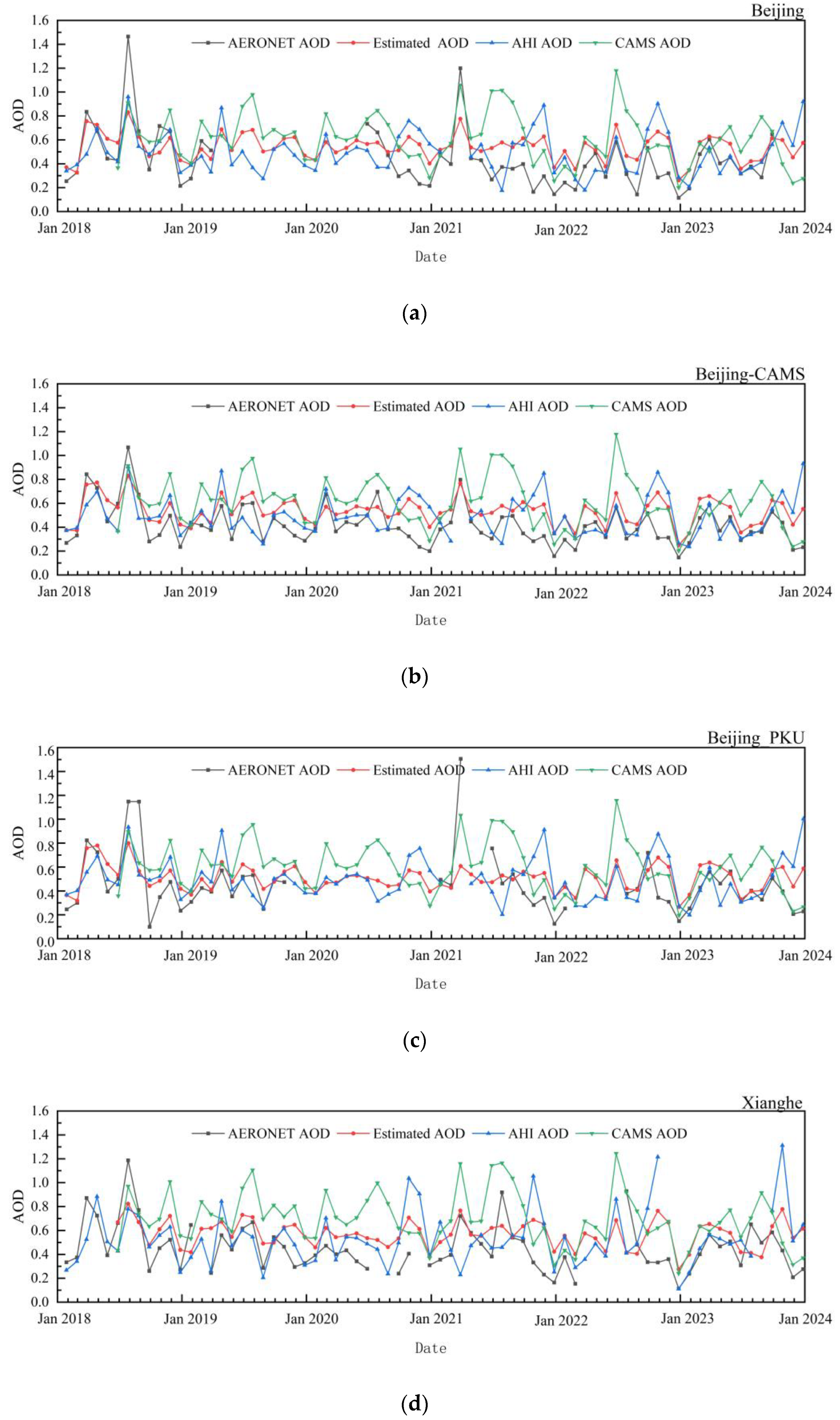
3.2.2. Time Comparison
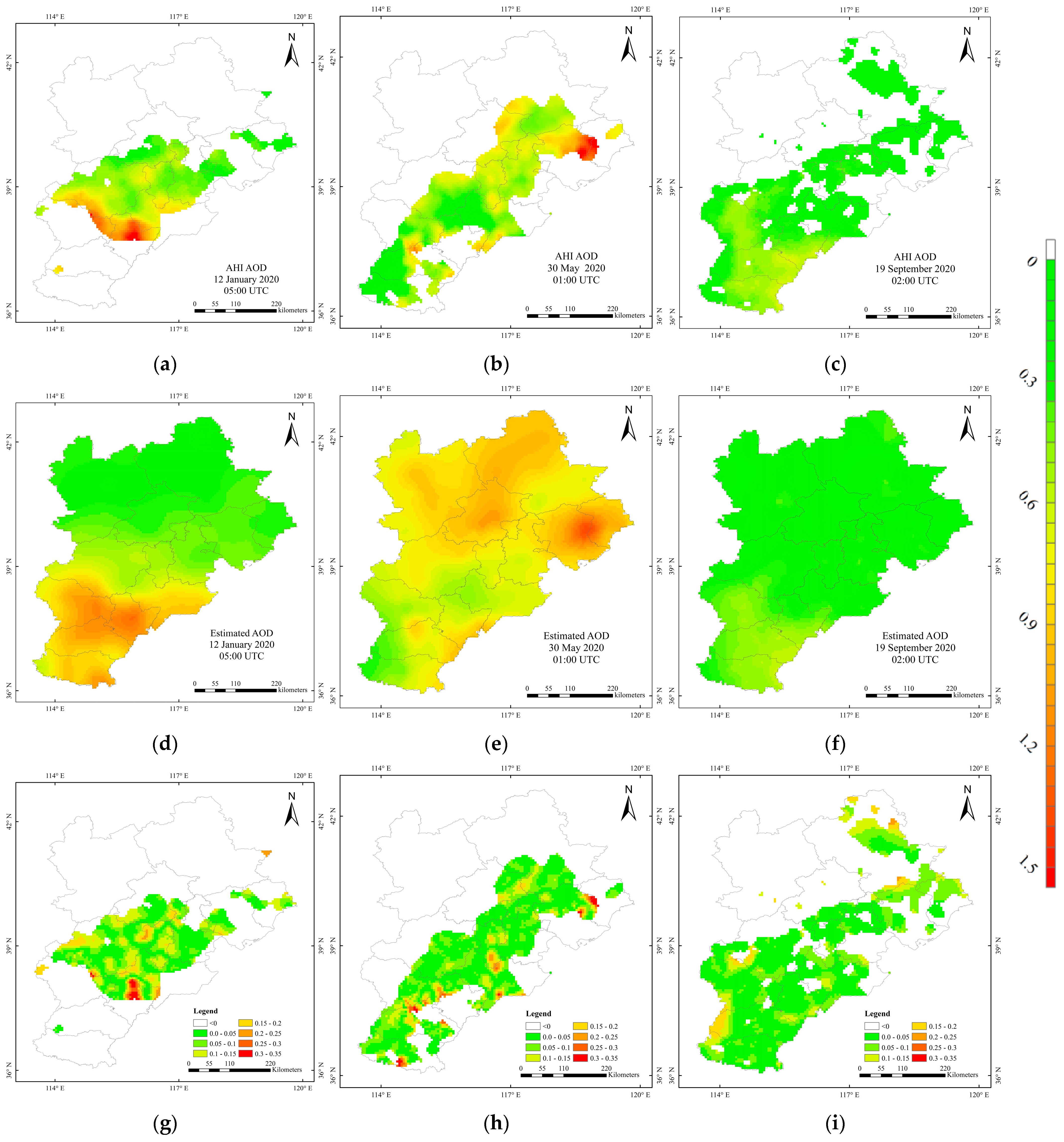
3.2.3. Spatial Comparison
3.3. Temporal and Spatial Distribution of AOD in the Whole Day
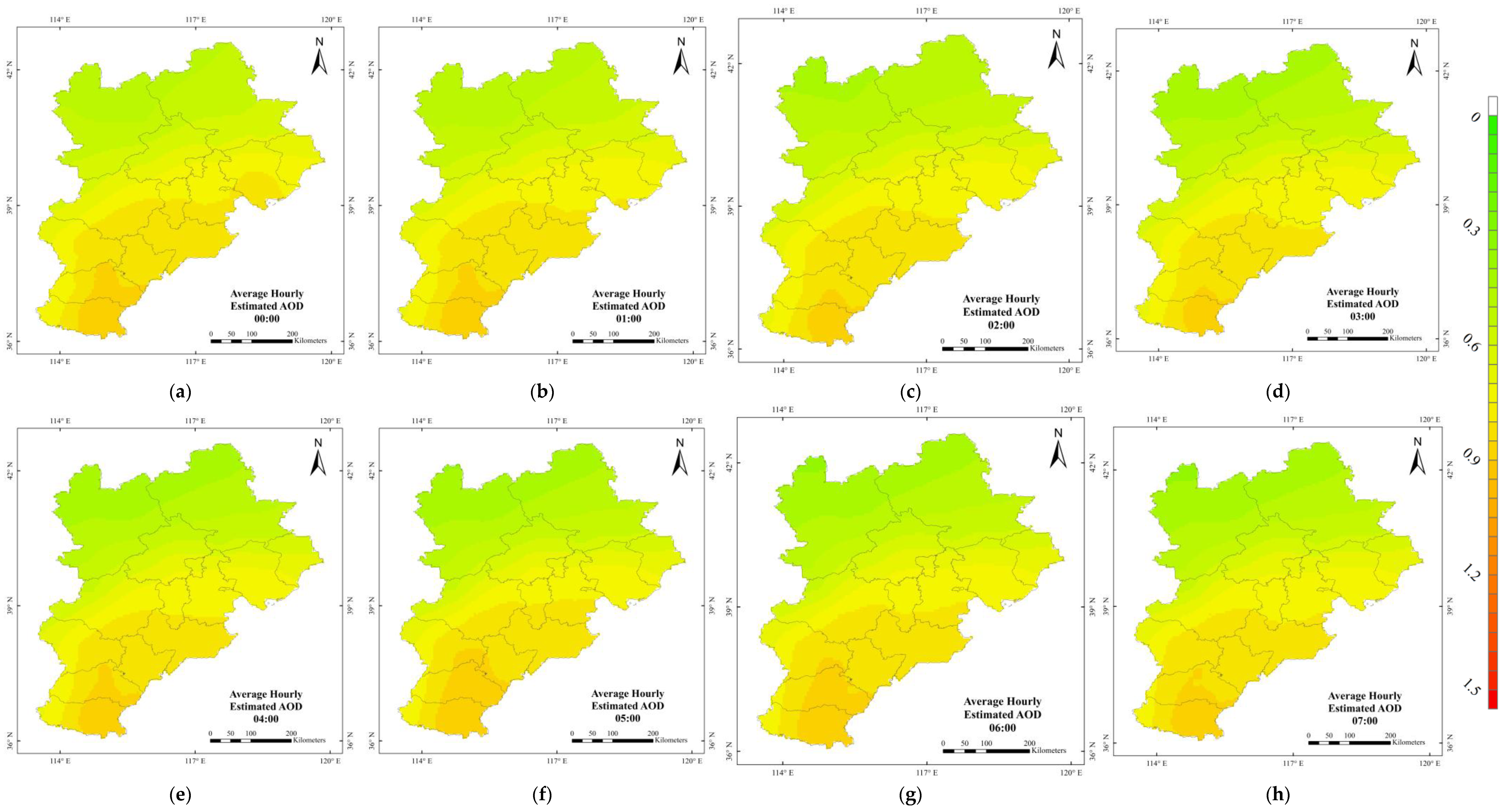
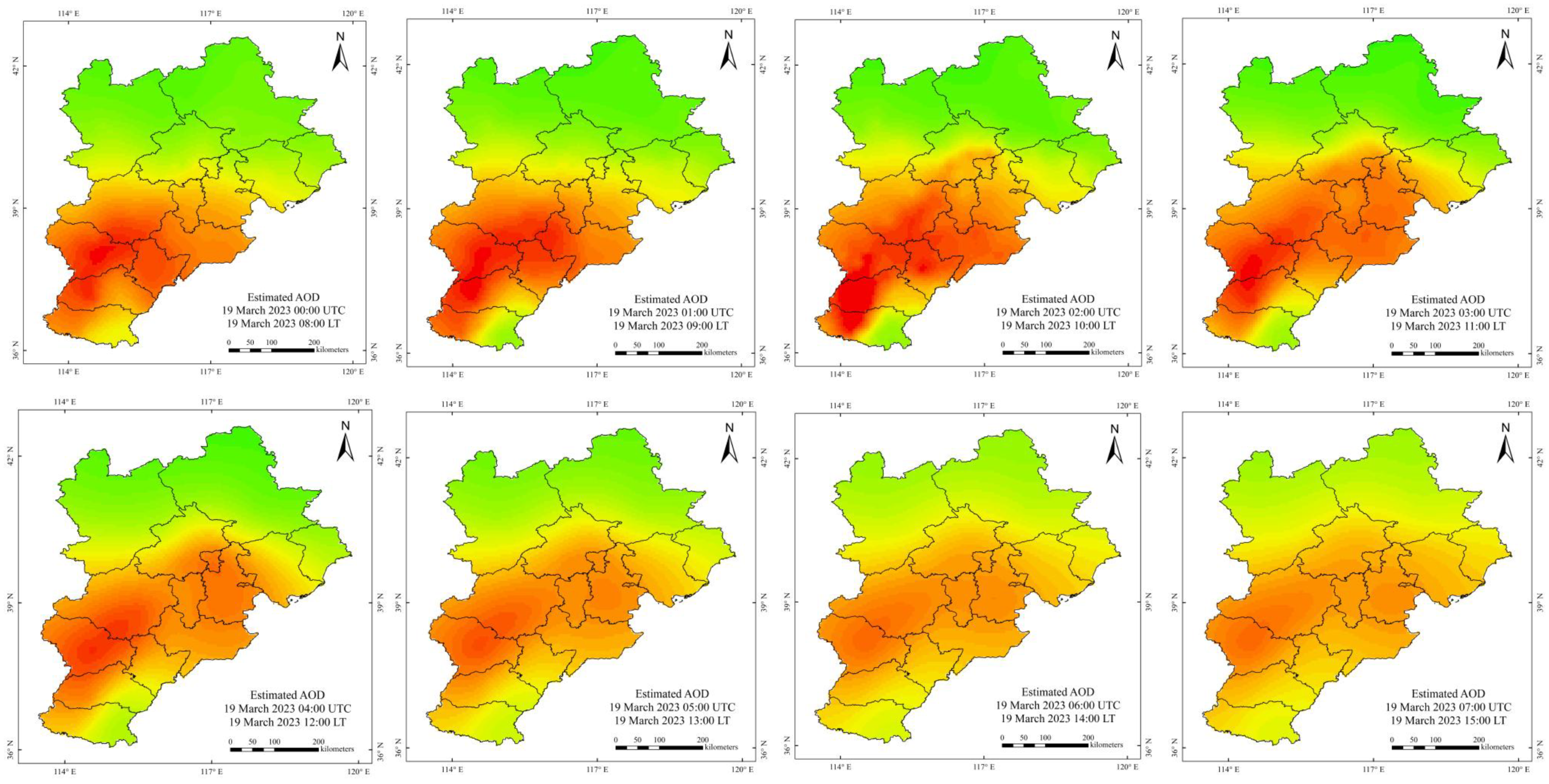
3.3.1. Circadian Cycle
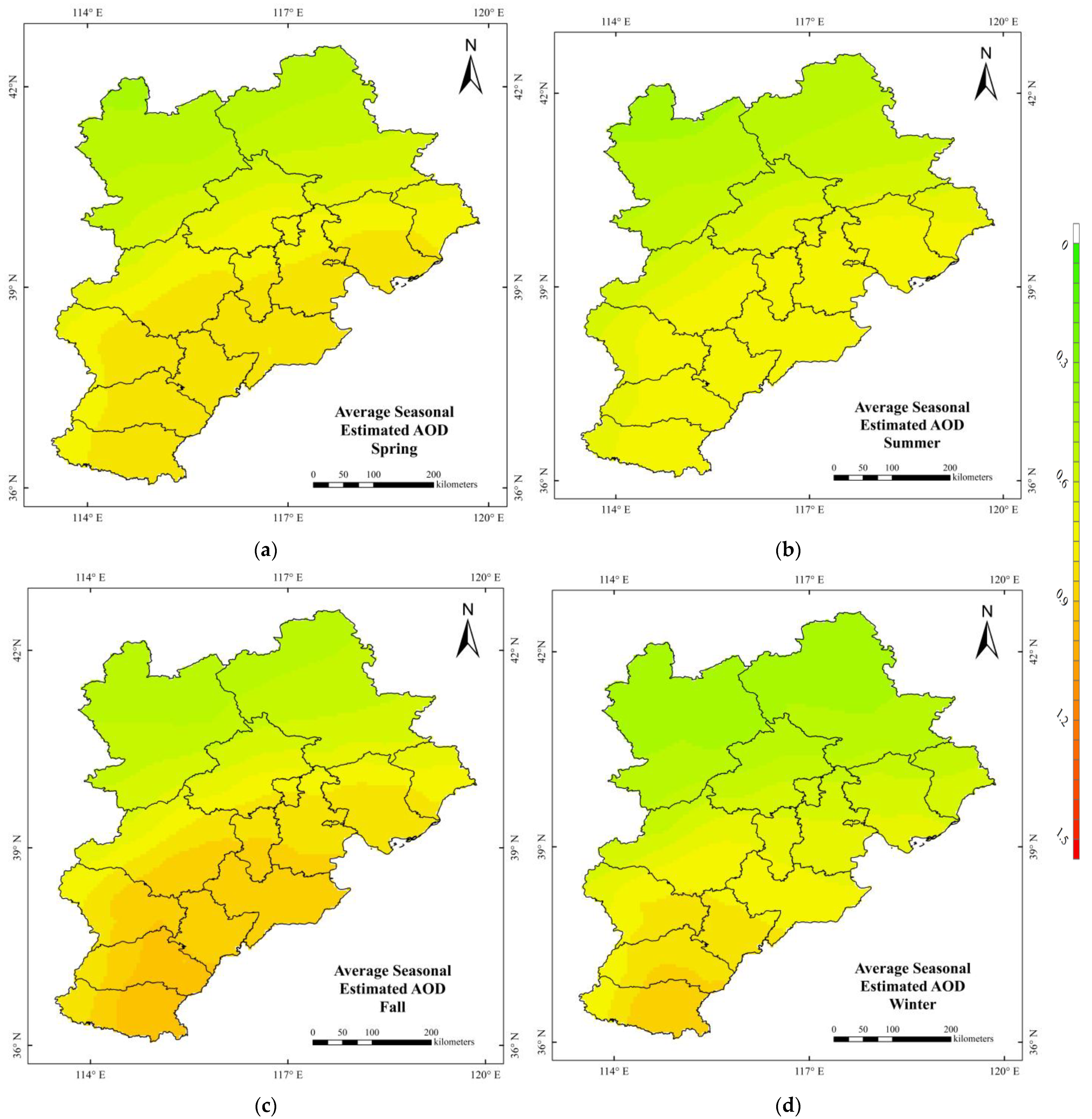
3.3.2. Seasonal Averages
3.3.3. Annual Average
4. Discussion
5. Conclusions
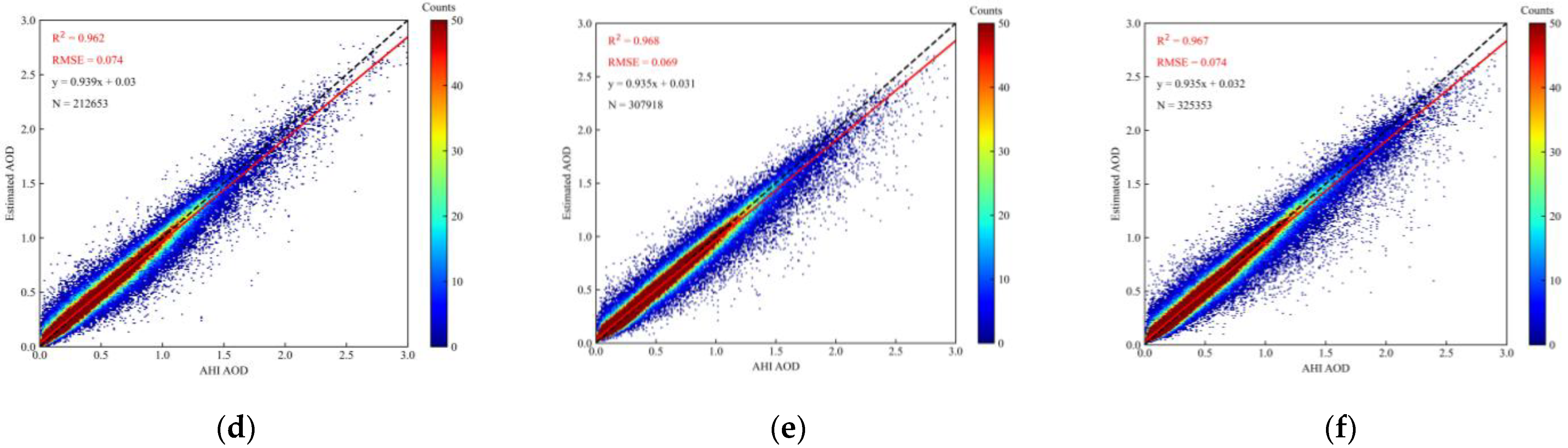
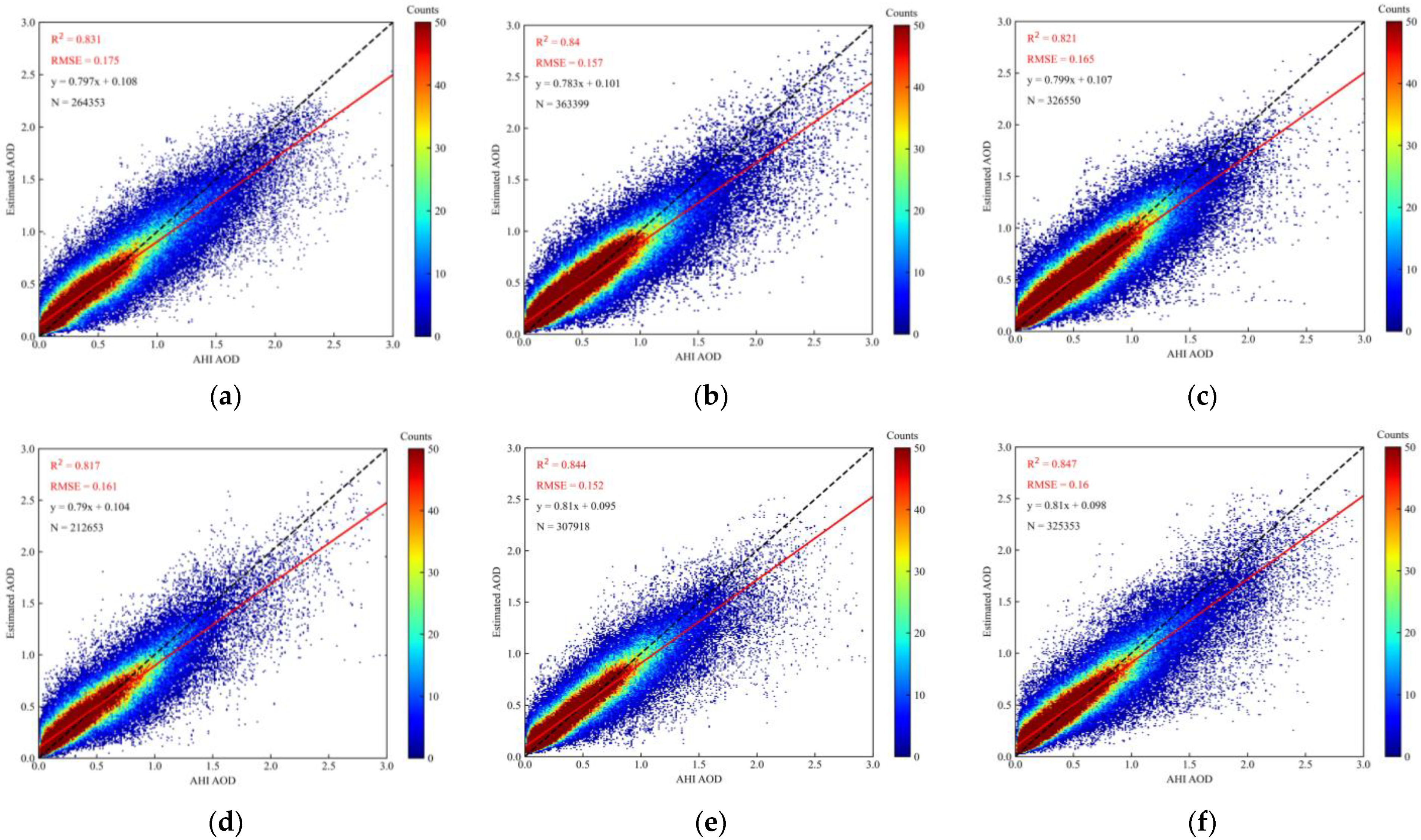
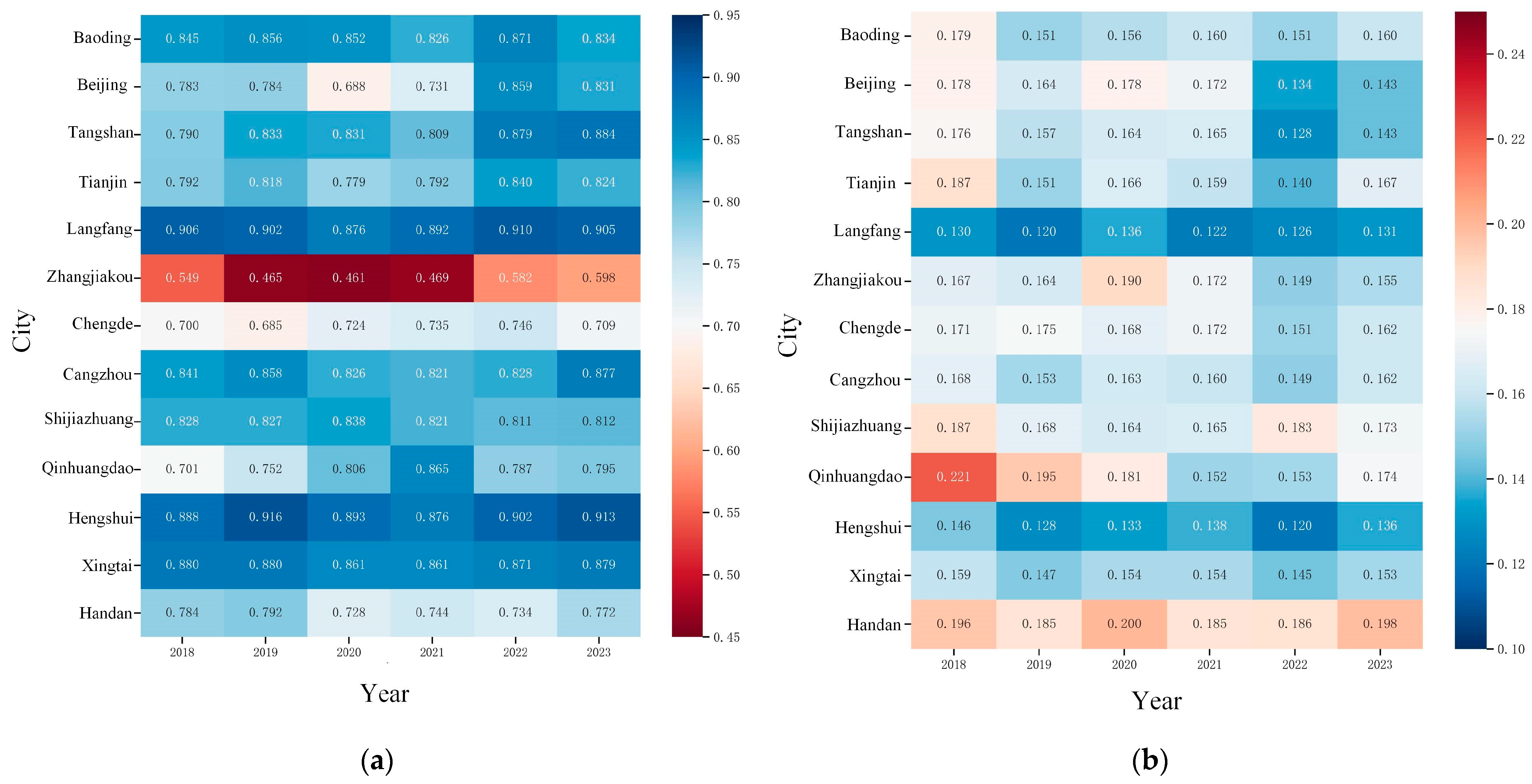
- The model exhibited high accuracy, as evidenced by the results from sample cross-validation and leave-one-city-out cross-validation methods. In the case of sample cross-validation, the model achieved R2 values above 0.96 and RMSE values below 0.1. Similarly, the leave-one-city-out cross-validation method resulted in R2 values exceeding 0.8 and RMSE values under 0.2.
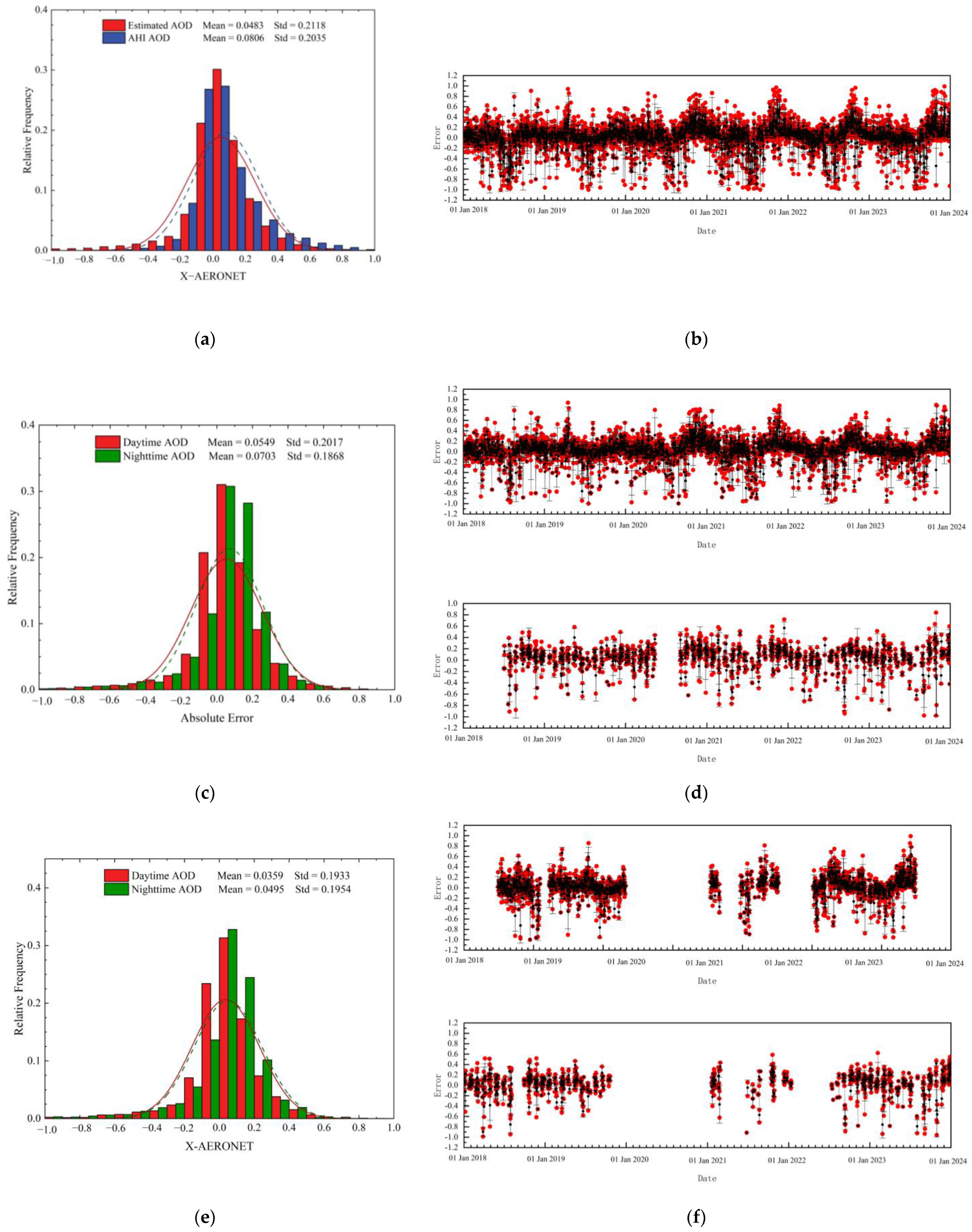
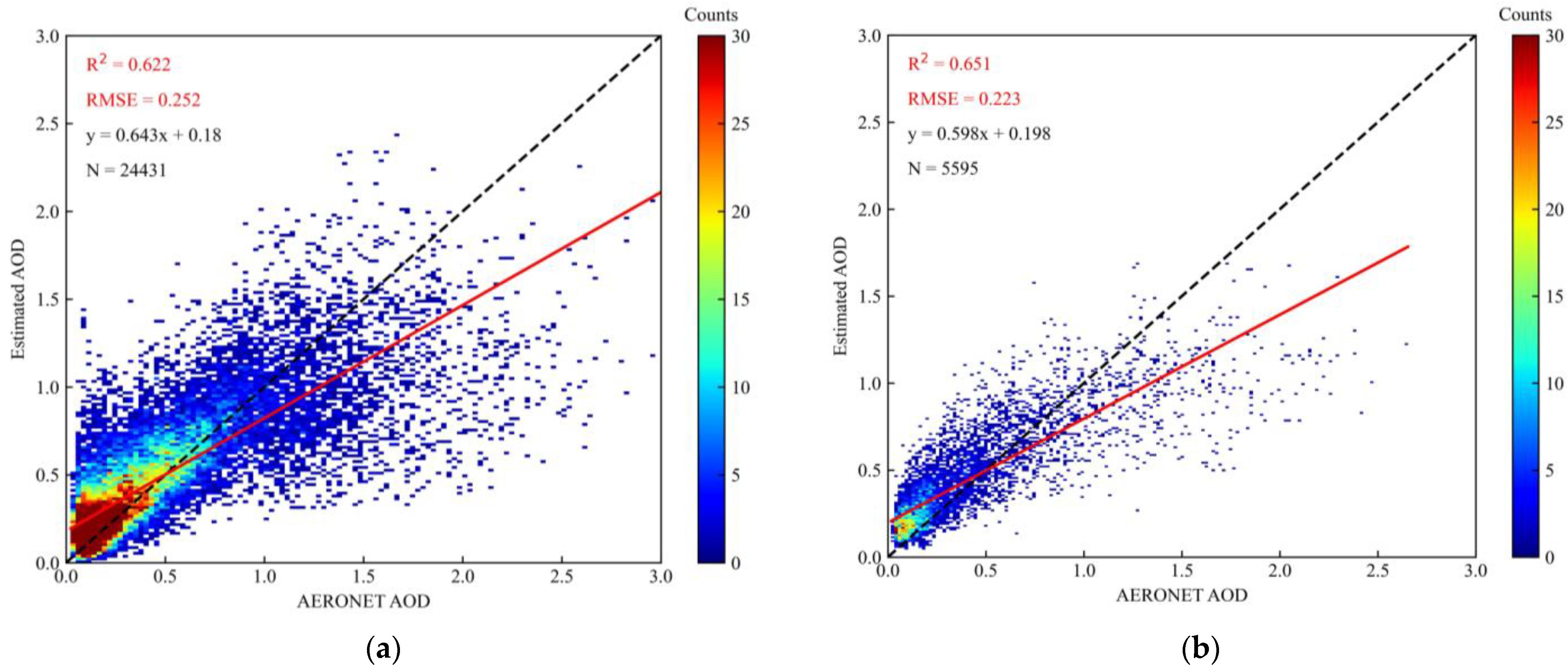
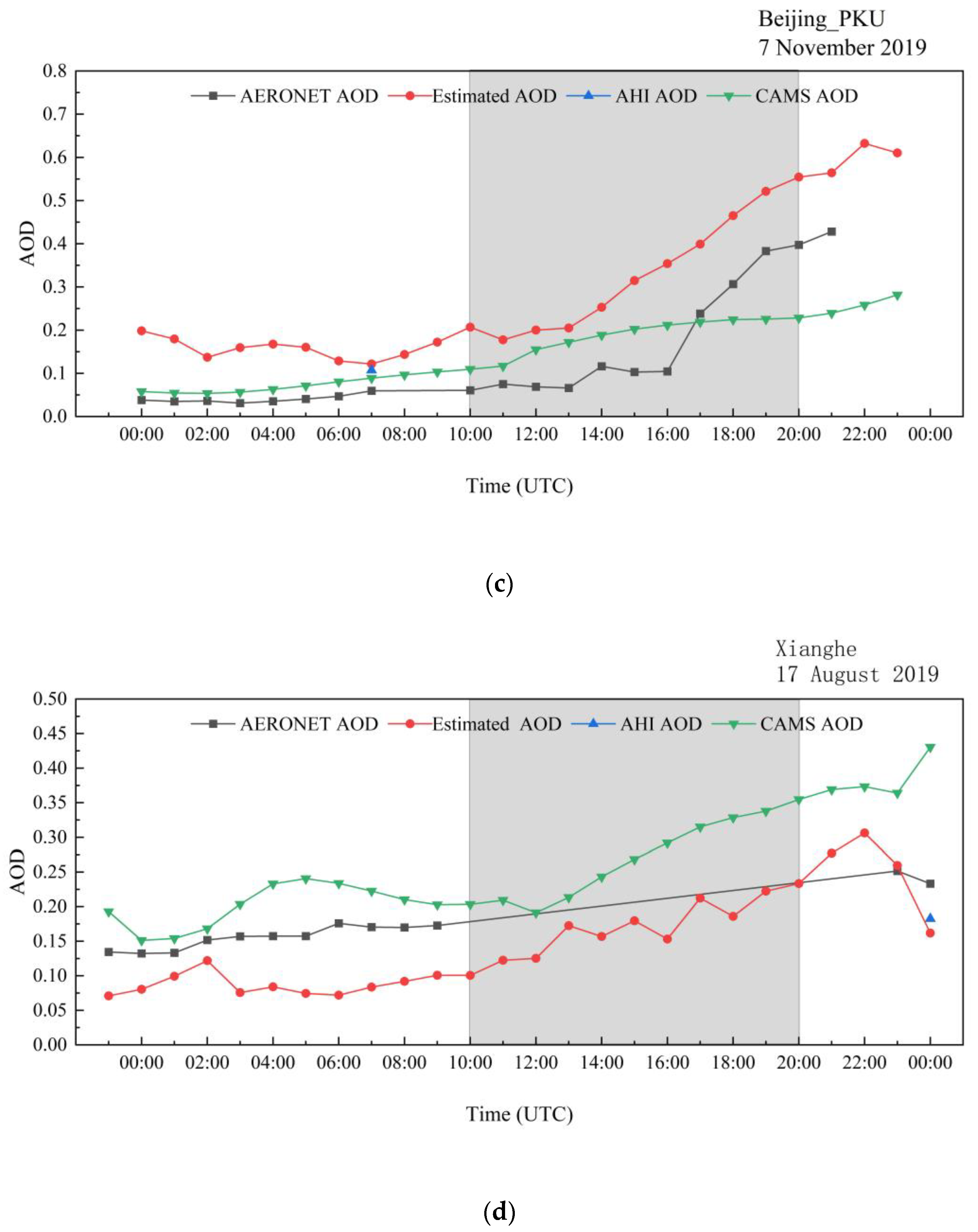
- Compared to existing AOD products, the R2 value for daytime estimated AOD in relation to AERONET AOD was 0.622 with an RMSE of 0.252. For nighttime estimated AOD against AERONET AOD, the R2 was calculated to be 0.651, with a corresponding RMSE of 0.223. Notably, the difference between the estimated AOD and that obtained from AERONET was predominantly within the range of −1 to 1. The minimal estimation error underscored the stability and reliability of the derived AOD.
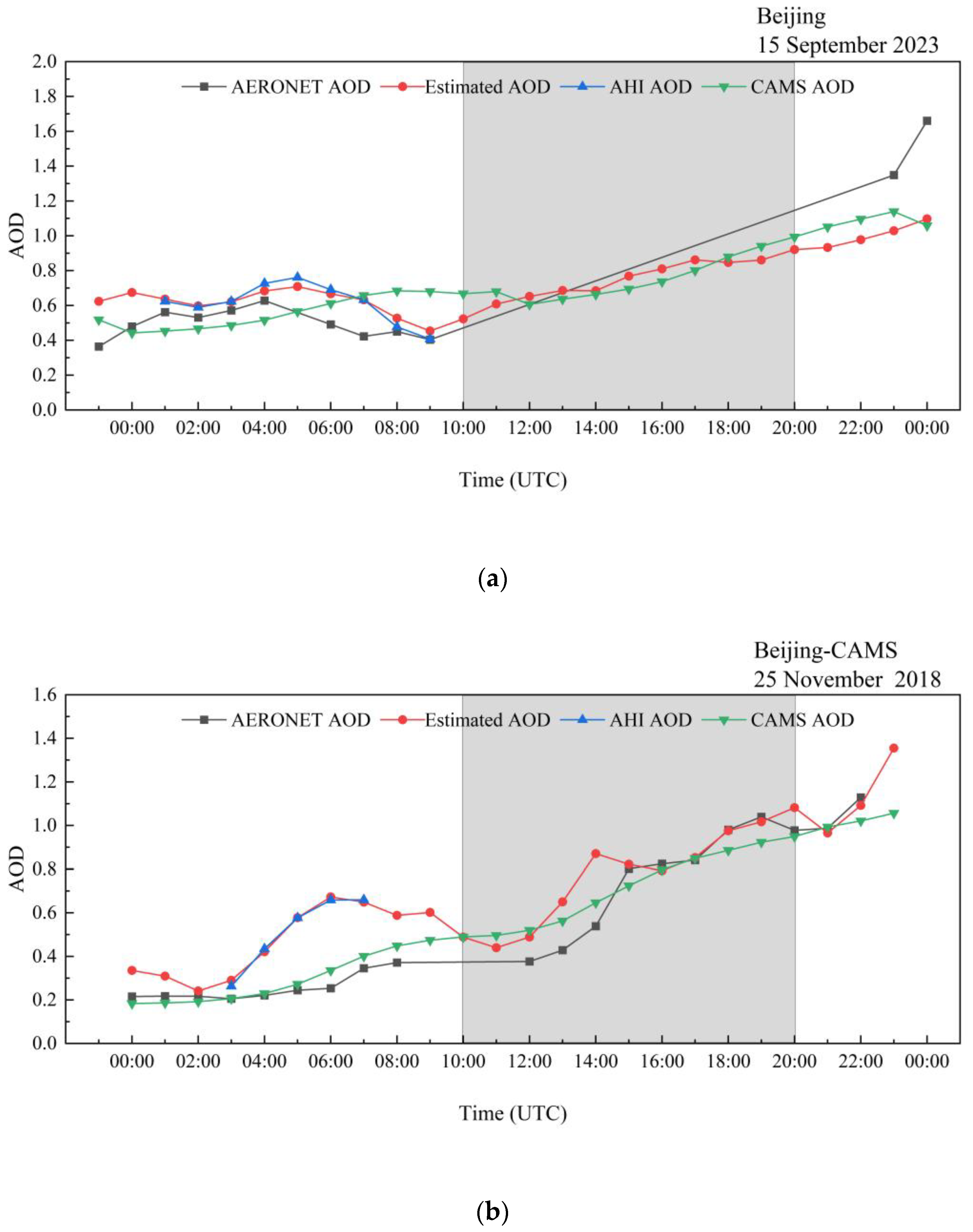
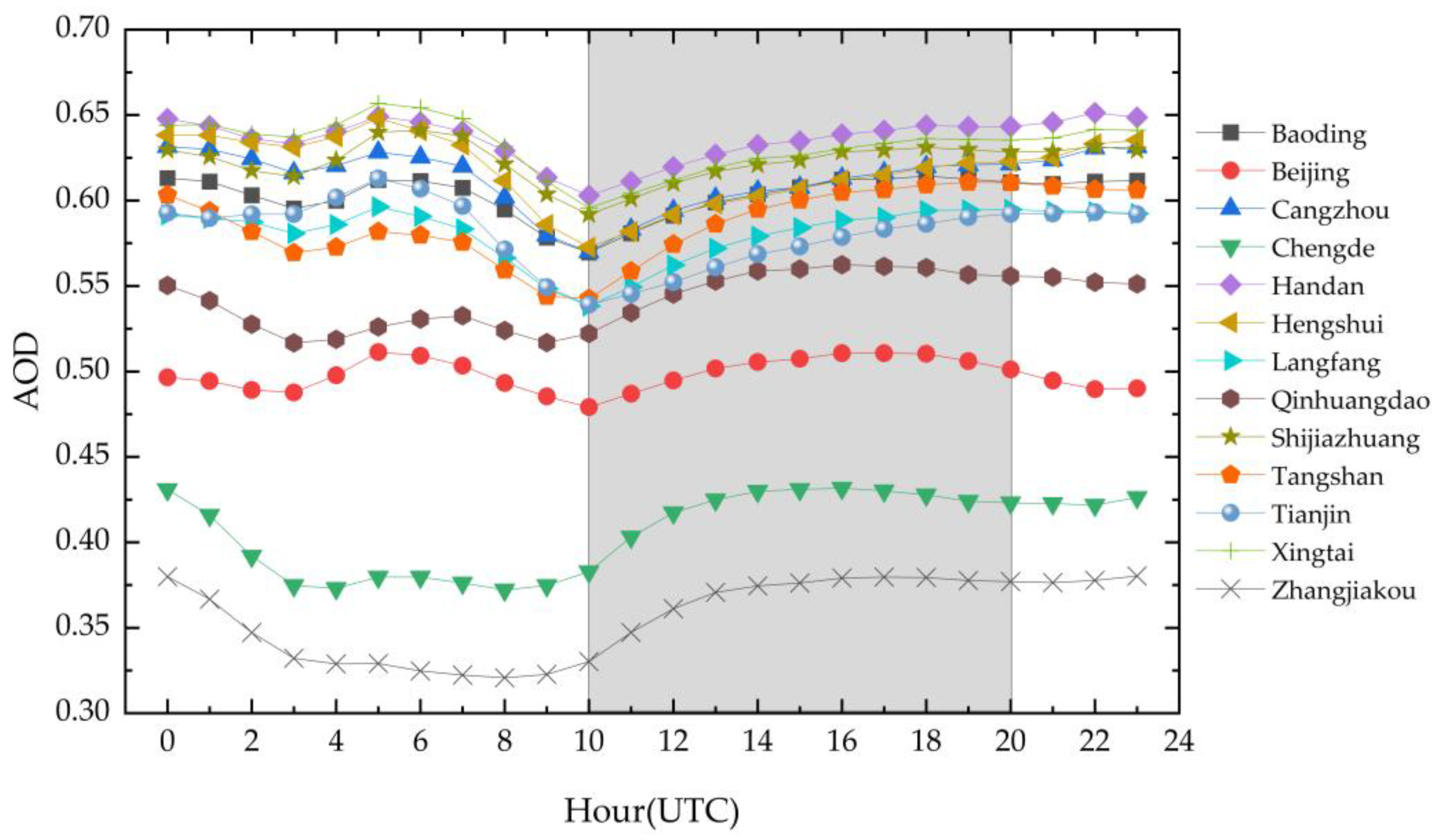
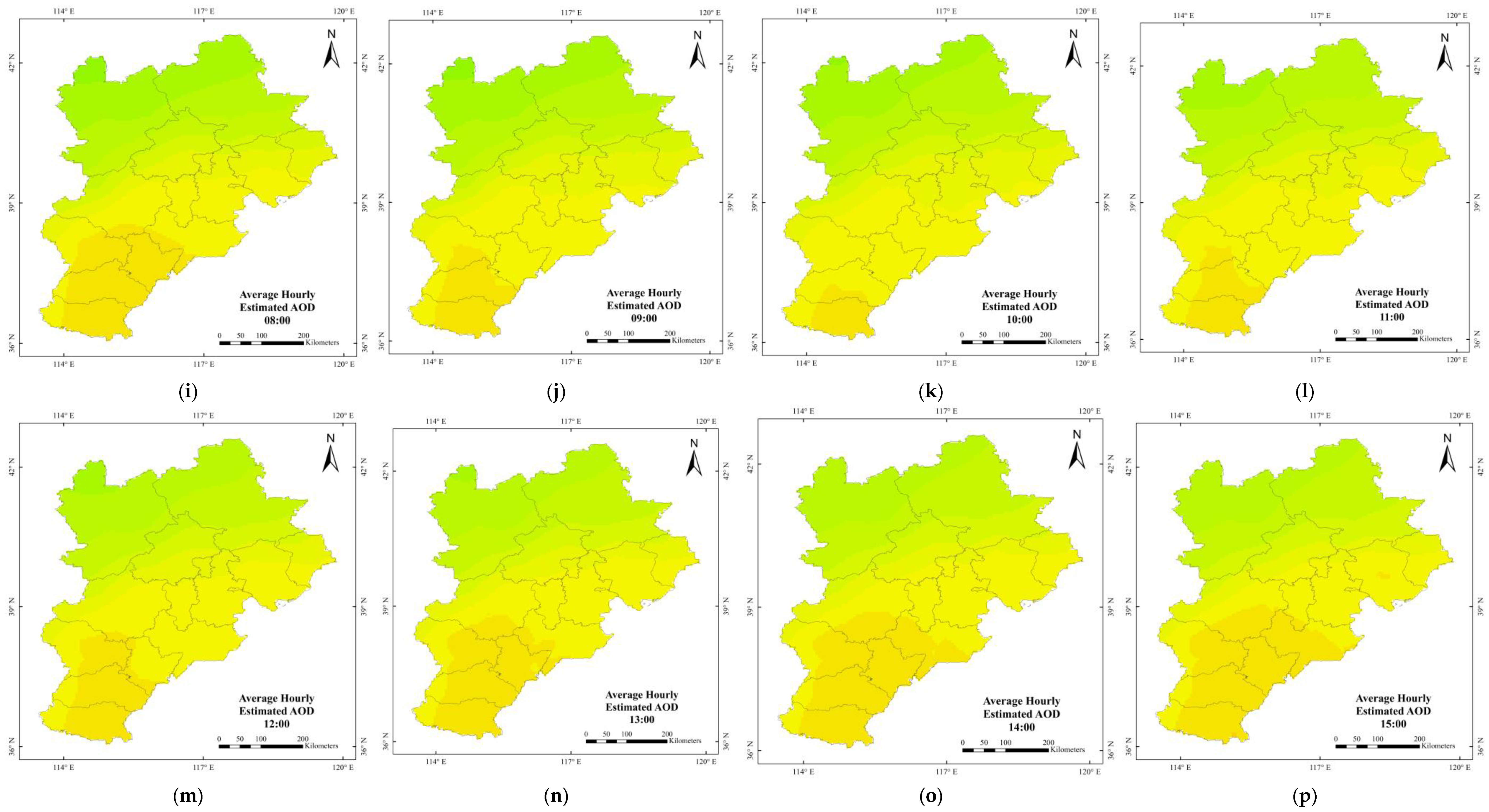
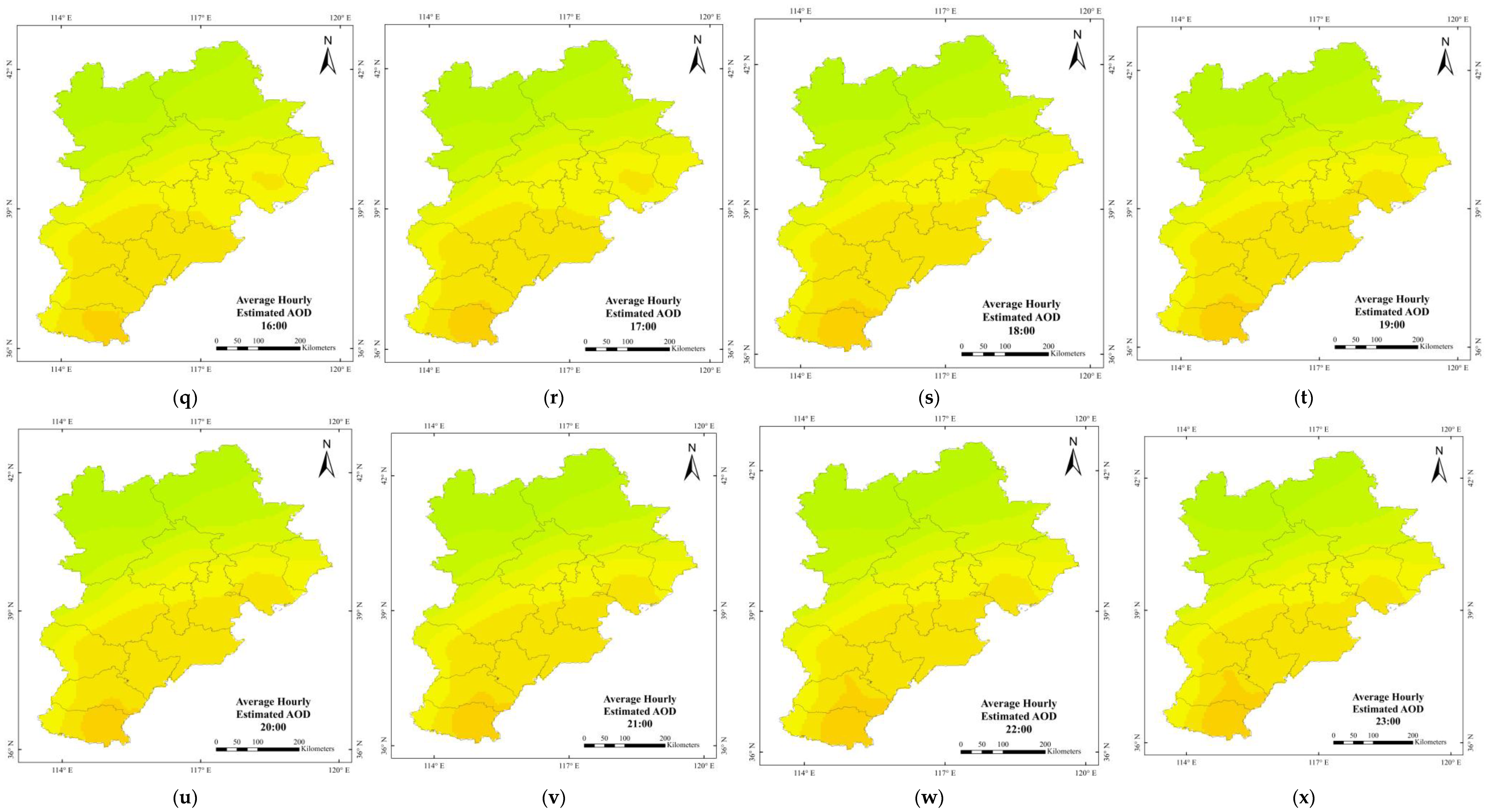
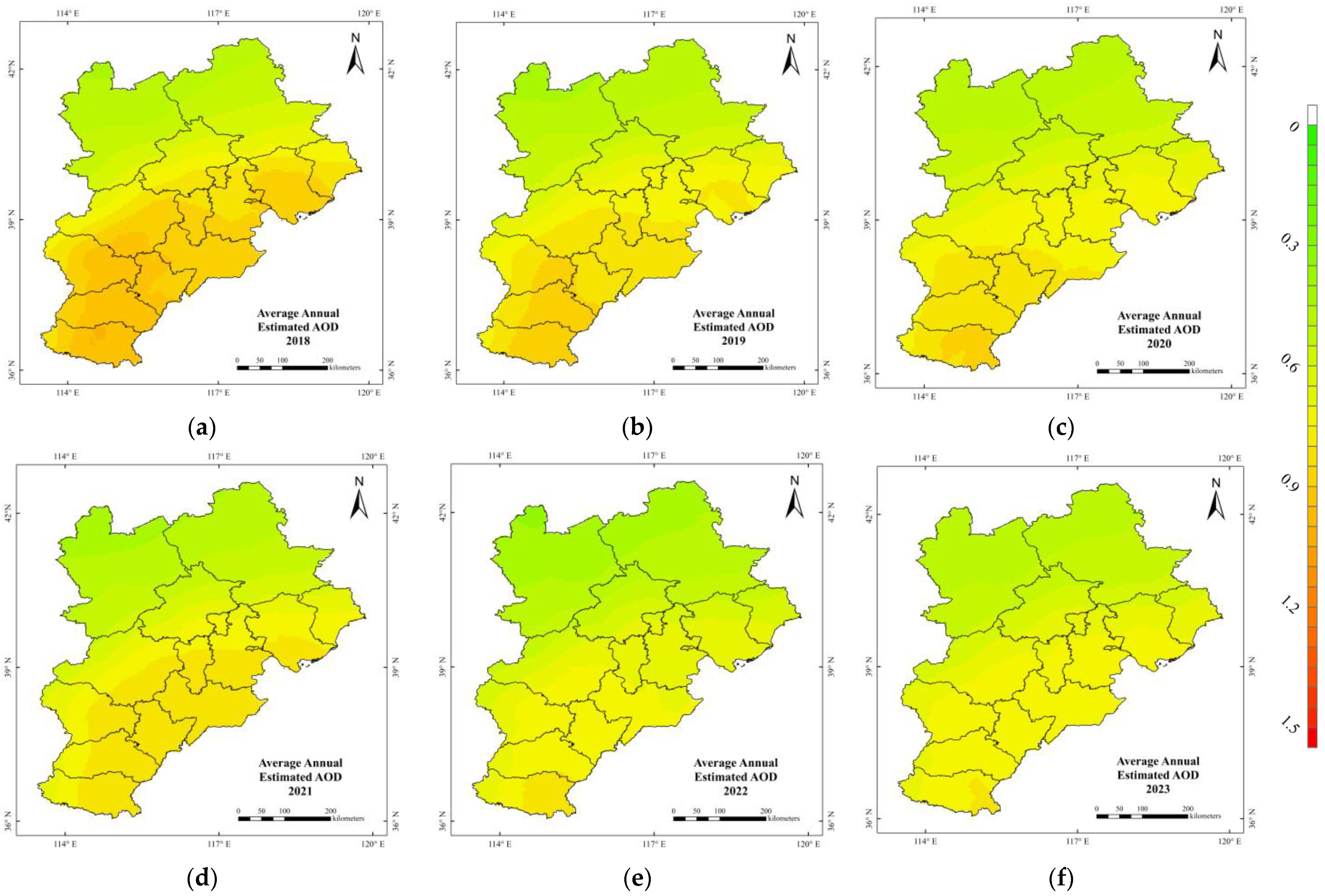
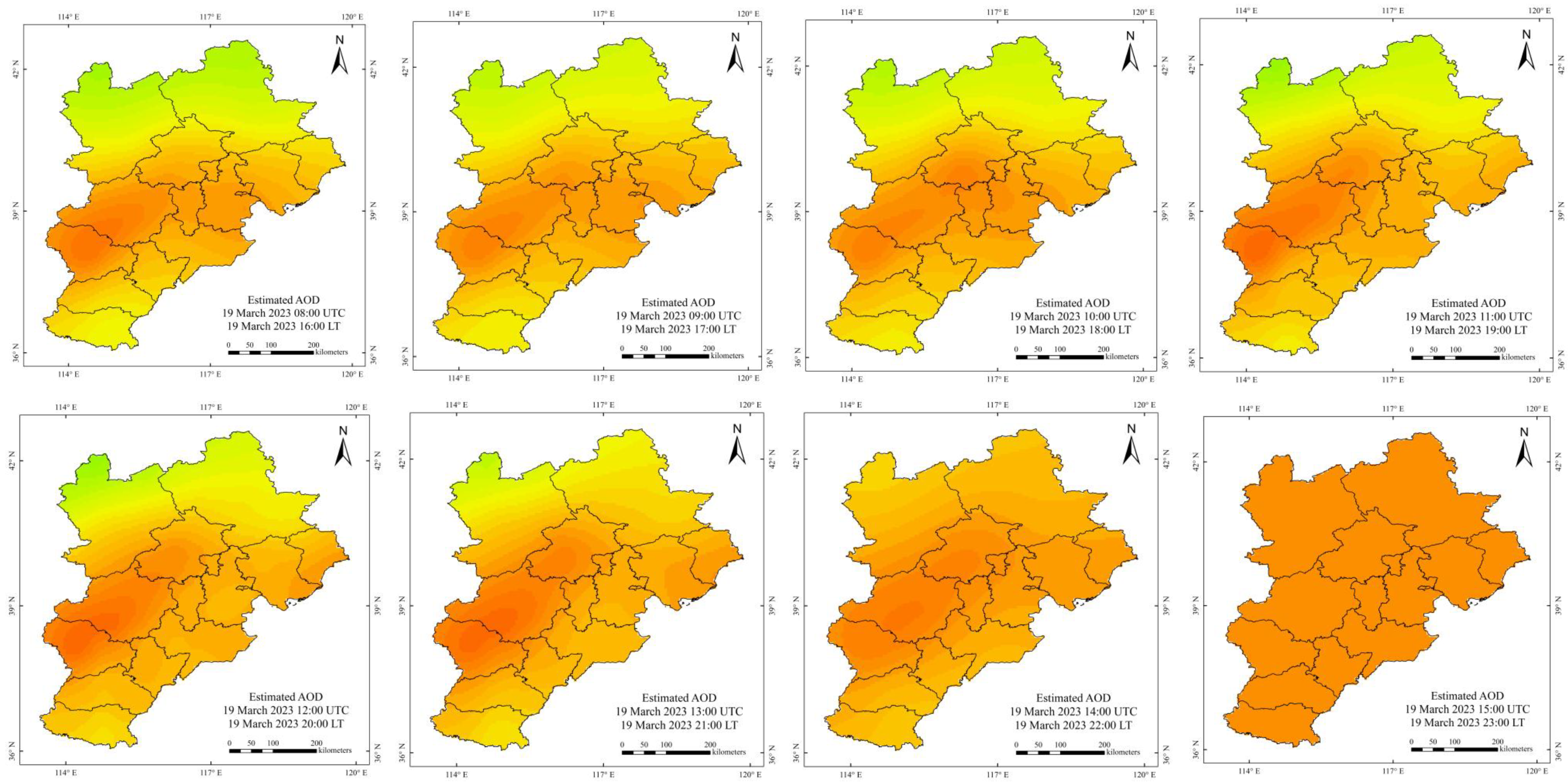
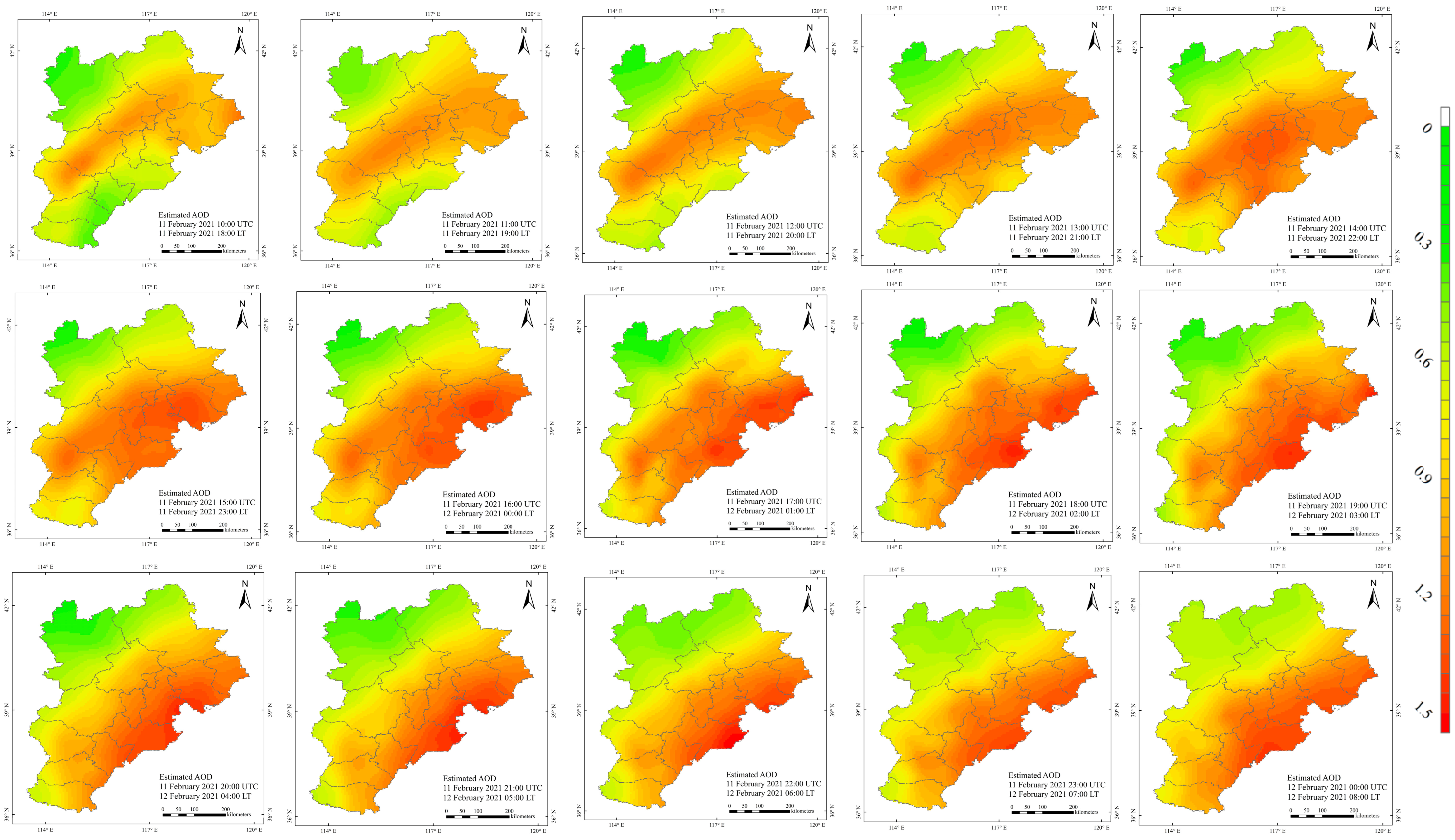
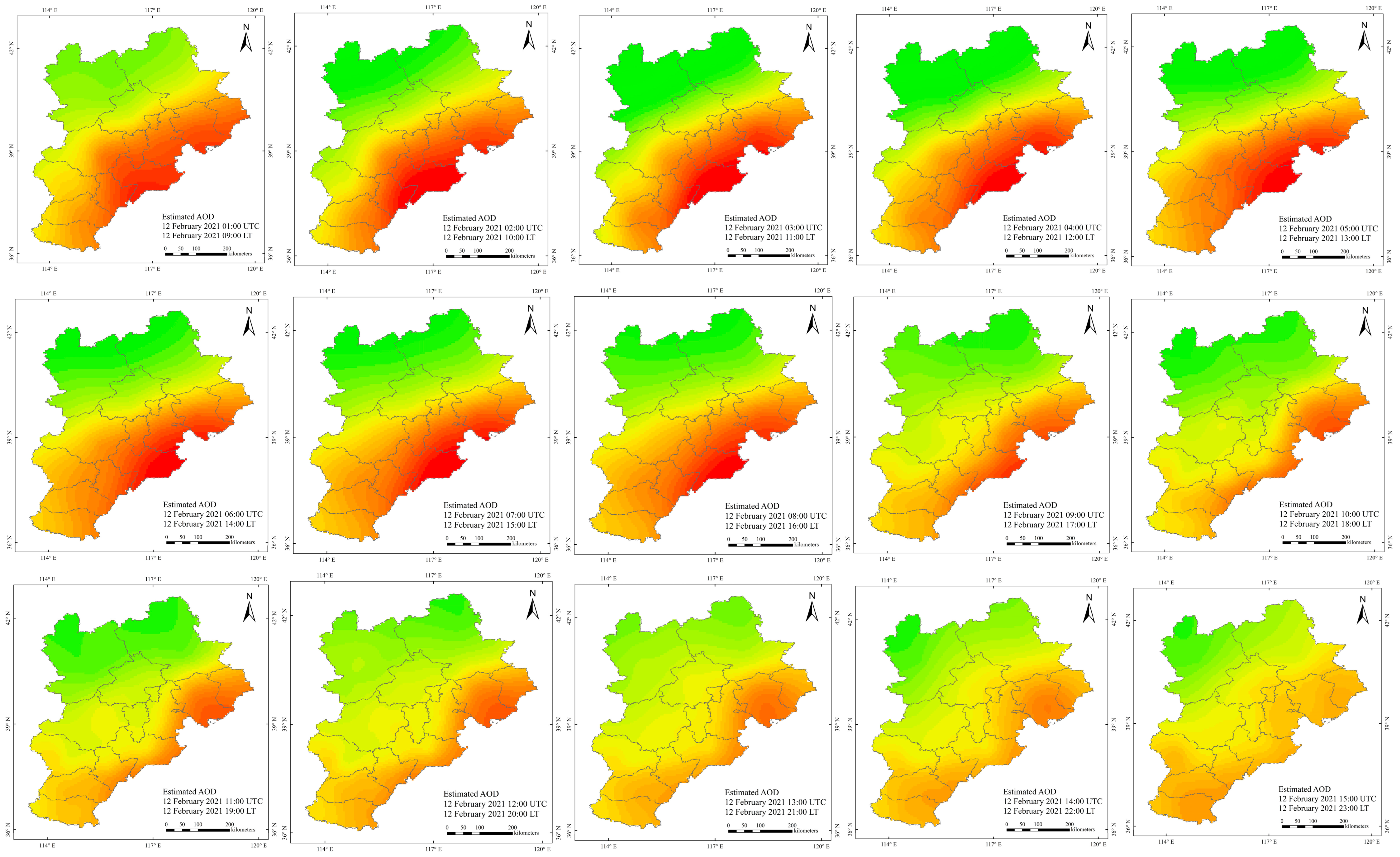
- The annual mean AOD generally decreased with intermittent increases from 2018 to 2023, reflecting both sustained decline and short-term variability. The AOD in the BTH showed notable seasonal changes, displaying elevated levels during spring and autumn, while summer and winter recorded decreased values. The diurnal variation in AOD initially decreased during the day, then increased and decreased again, and finally increased at night.
Author Contributions
Funding
Institutional Review Board Statement
Informed Consent Statement
Data Availability Statement
Acknowledgments
Conflicts of Interest
Abbreviations
| BTH | Beijing–Tianjin–Hebei |
| AOD | Aerosol optical depth |
| AERONET | Aerosol Robotic Network |
| AHI | Advanced Himawari Imager |
| ECMWF | European Centre for Medium-Range Weather Forecasts |
| U10 | 10 m u-component of wind |
| V10 | 10 m u-component of wind |
| SP | Surface pressure |
| BLH | Boundary layer height |
| T2M | 2 m temperature |
| RH | Relative humidity |
| T | Temperature |
| U | U-component of wind |
| V | V-component of wind |
| JAXA | Japan Aerospace Exploration Agency |
| NDVI | Normalized Difference Vegetation Index |
| CMG | Climate Modeling Grid |
| SRTM | Shuttle Radar Topography Mission |
| UTC | Coordinated Universal Time |
| GBDT | Gradient boosting decision tree |
Appendix A

| 2018 | 2019 | 2020 | 2021 | 2022 | 2023 |
|---|---|---|---|---|---|
| Zhangjiakou (29) | Zhangjiakou (25) | Zhangjiakou (23) | Zhangjiakou (23) | Zhangjiakou (17) | Zhangjiakou (18) |
| Chengde (32) | Chengde (29) | Chengde (27) | Chengde (30) | Chengde (26) | Chengde (25) |
| Qinhuangdao (38) | Qinhuangdao (41) | Qinhuangdao (34) | Beijing (33) | Qinhuangdao (28) | Qinhuangdao (31) |
| Beijing (51) | Beijing (42) | Beijing (38) | Qinhuangdao (34) | Beijing (30) | Beijing (32) |
| Langfang (52) | Langfang (46) | Langfang (42) | Langfang (37) | Langfang (36) | Tangshan (40) |
| Tianjin (52) | Changzhou (50) | Changzhou (47) | Tianjin (39) | Tangshan (37) | Langfang (40) |
| Changzhou (59) | Tianjin (51) | Tianjin (48) | Changzhou (40) | Tianjin (37) | Tianjin (41) |
| Tangshan (60) | Tangshan (54) | Tangshan (49) | Hengshui (42) | Changzhou (39) | Shijiazhuang (44) |
| Hengshui (62) | Hengshui (56) | Baoding (50) | Baoding (43) | Baoding (43) | Baoding (44) |
| Baoding (67) | Baoding (58) | Hengshui (52) | Tangshan (43) | Hengshui (43) | Hengshui (44) |
| Xingtai (69) | Shijiazhuang (63) | Xingtai (53) | Xingtai (43) | Shijiazhuang (46) | Changzhou (44) |
| Handan (69) | Xingtai (65) | Handan (57) | Handan (46) | Xingtai (48) | Xingtai (45) |
| Shijiazhuang (72) | Handan (66) | Shijiazhuang (58) | Shijiazhuang (46) | Handan (51) | Handan (47) |
Appendix B
| Parameter | N_Estimators | Max_Depth | Learning_Rate | Min_Child_Weight | |
|---|---|---|---|---|---|
| Year | |||||
| 2018 | 341 | 28 | 0.0914 | 23.8111 | |
| 2019 | 365 | 30 | 0.0748 | 4.6974 | |
| 2020 | 339 | 27 | 0.2122 | 3.0407 | |
| 2021 | 337 | 25 | 0.1530 | 23.8375 | |
| 2022 | 332 | 21 | 0.0277 | 10.7043 | |
| 2023 | 332 | 21 | 0.0277 | 10.7043 | |
Appendix C


References
- Peng, J.; Hu, M.; Shang, D.; Wu, Z.; Du, Z.; Tan, T.; Wang, Y.; Zhang, F.; Zhang, R. Explosive Secondary Aerosol Formation during Severe Haze in the North China Plain. Environ. Sci. Technol. 2021, 55, 2189–2207. [Google Scholar] [CrossRef] [PubMed]
- IPCC. Climate Change 2007: Mitigation of Climate Change; Cambridge University Press: Cambridge, UK, 2007. [Google Scholar] [CrossRef]
- Xie, Y. Development of Hourly AOD Dataset Based on Geostationary Satellites and Fusion of Multi-Source AOD Datasets. Master’s Thesis, Chinese Academy of Sciences (Institute of Remote Sensing and Digital Earth), Beijing, China, 2019. Available online: https://d.wanfangdata.com.cn/thesis/Y3600084 (accessed on 7 January 2026).
- Barreto, Á.; Cuevas, E.; Granados-Muñoz, M.-J.; Alados-Arboledas, L.; Romero, P.M.; Gröbner, J.; Kouremeti, N.; Almansa, A.F.; Stone, T.; Toledano, C.; et al. The New Sun-Sky-Lunar Cimel CE318-T Multiband Photometer—A Comprehensive Performance Evaluation. Atmos. Meas. Tech. 2016, 9, 631–654. [Google Scholar] [CrossRef]
- Giles, D.M.; Slutsker, I.; Schafer, J.; Sorokin, M.G.; Smirnov, A.; Eck, T.F.; Holben, B.; Welton, E.J. Uncertainty and Bias in AERONET Nighttime AOD Measurements. In Proceedings of the AGU Fall Meeting Abstracts; 1 December 2019; Volume 2019, p. A23R-3050. Available online: https://ui.adsabs.harvard.edu/abs/2019AGUFM.A23R3050G (accessed on 15 December 2025).
- Zhang, W.; Liu, S.; Chen, X.; Mi, X.; Gu, X.; Yu, T. Estimation of All-Day Aerosol Optical Depth in the Beijing–Tianjin–Hebei Region Using Ground Air Quality Data. Remote Sens. 2024, 16, 1410. [Google Scholar] [CrossRef]
- Mishchenko, M.I.; Geogdzhayev, I.V.; Cairns, B.; Carlson, B.E.; Chowdhary, J.; Lacis, A.A.; Liu, L.; Rossow, W.B.; Travis, L.D. Past, Present, and Future of Global Aerosol Climatologies Derived from Satellite Observations: A Perspective. J. Quant. Spectrosc. Radiat. Transf. 2007, 106, 325–347. [Google Scholar] [CrossRef]
- Wei, X.; Chang, N.B.; Bai, K.; Gao, W. Satellite Remote Sensing of Aerosol Optical Depth: Advances, Challenges, and Perspectives. Crit. Rev. Environ. Sci. Technol. 2020, 50, 1640–1725. [Google Scholar] [CrossRef]
- Ma, Y.; Zhang, W.; Zhang, L.; Wu, Y.; Tang, J.; Fu, Y. Research Progress of Atmospheric Remote Sensing Based on Satellite Nighttime Low-Light Data. J. Atmos. Environ. Opt. 2024, 19, 125–141. [Google Scholar] [CrossRef]
- Barreto, Á.; Román, R.; Cuevas, E.; Berjón, A.J.; Almansa, A.F.; Toledano, C.; González, R.; Hernández, Y.; Blarel, L.; Goloub, P.; et al. Assessment of Nocturnal Aerosol Optical Depth from Lunar Photometry at the Izaña High Mountain Observatory. Atmos. Meas. Tech. 2017, 10, 3007–3019. [Google Scholar] [CrossRef]
- Wang, J.; Zhou, M.; Xu, X.; Roudini, S.; Sander, S.P.; Pongetti, T.J.; Miller, S.D.; Reid, J.S.; Hyer, E.; Spurr, R. Development of a Nighttime Shortwave Radiative Transfer Model for Remote Sensing of Nocturnal Aerosols and Fires from VIIRS. Remote Sens. Environ. 2020, 241, 111727. [Google Scholar] [CrossRef]
- Perrone, M.R.; Lorusso, A.; Romano, S. Diurnal and Nocturnal Aerosol Properties by AERONET Sun-Sky-Lunar Photometer Measurements along Four Years. Atmos. Res. 2022, 265, 105889. [Google Scholar] [CrossRef]
- Zhou, M.; Wang, J.; Chen, X.; Xu, X.; Colarco, P.R.; Miller, S.D.; Reid, J.S.; Kondragunta, S.; Giles, D.M.; Holben, B. Nighttime Smoke Aerosol Optical Depth over the U.S. Rural Areas: First Retrieval from VIIRS Moonlight Observations. Remote Sens. Environ. 2021, 267, 112717. [Google Scholar] [CrossRef]
- Miller, S.D.; Combs, C.L.; Kidder, S.Q.; Lee, T.F. Assessing Moonlight Availability for Nighttime Environmental Applications by Low-Light Visible Polar-Orbiting Satellite Sensors. J. Atmos. Ocean. Technol. 2012, 29, 538–557. [Google Scholar] [CrossRef]
- Kocifaj, M.; Bará, S. Diffuse Light around Cities: New Perspectives in Satellite Remote Sensing of Nighttime Aerosols. Atmos. Res. 2022, 266, 105969. [Google Scholar] [CrossRef]
- Zhang, J.; Reid, J.S.; Miller, S.D.; Turk, F.J. Strategy for Studying Nocturnal Aerosol Optical Depth Using Artificial Lights. Int. J. Remote Sens. 2008, 29, 4599–4613. [Google Scholar] [CrossRef]
- Johnson, R.S.; Zhang, J.; Hyer, E.J.; Miller, S.D.; Reid, J.S. Preliminary Investigations toward Nighttime Aerosol Optical Depth Retrievals from the VIIRS Day/Night Band. Atmos. Meas. Tech. 2013, 6, 1245–1255. [Google Scholar] [CrossRef]
- McHardy, T.M.; Zhang, J.; Reid, J.S.; Miller, S.D.; Hyer, E.J.; Kuehn, R.E. An Improved Method for Retrieving Nighttime Aerosol Optical Thickness from the VIIRS Day/Night Band. Atmos. Meas. Tech. 2015, 8, 4773–4783. [Google Scholar] [CrossRef]
- Zhang, J.; Jaker, S.L.; Reid, J.S.; Miller, S.D.; Solbrig, J.; Toth, T.D. Characterization and Application of Artificial Light Sources for Nighttime Aerosol Optical Depth Retrievals Using the Visible Infrared Imager Radiometer Suite Day/Night Band. Atmos. Meas. Tech. 2019, 12, 3209–3222. [Google Scholar] [CrossRef]
- Wang, X.; Mu, X.; Yan, G. Quantitative Analysis of Aerosol Influence on Suomi-NPP VIIRS Nighttime Light in China. IEEE J. Sel. Top. Appl. Earth Obs. Remote Sens. 2020, 13, 3557–3568. [Google Scholar] [CrossRef]
- Jiang, M.; Chen, L.; He, Y.; Hu, X.; Liu, M.; Zhang, P. Nighttime Aerosol Optical Depth Retrievals from VIIRS Day/Night Band Data. Natl. Remote Sens. Bull. 2022, 26, 493–504. [Google Scholar] [CrossRef]
- Li, H.; Hu, S.; Ma, S.; Tan, Z.; Ai, W.; Yan, W. Retrieving Nighttime Aerosol Optical Depth Using Combined Measurements of Satellite Low Light Channels and Ground-Based Integrating Spheres. Int. J. Remote Sens. 2024, 45, 7902–7914. [Google Scholar] [CrossRef]
- Meng, Y.; Zhou, J.; Wang, Z.; Tang, W.; Ma, J.; Zhang, T.; Long, Z. Retrieval of Nighttime Aerosol Optical Depth by Simultaneous Consideration of Artificial and Natural Light Sources. Sci. Total Environ. 2023, 896, 166354. [Google Scholar] [CrossRef]
- Chen, X.; Zhang, W.; He, J.; Zhang, L.; Guo, H.; Li, J.; Gu, X. Mapping PM2.5 Concentration from the Top-of-Atmosphere Reflectance of Himawari-8 via an Ensemble Stacking Model. Atmos. Environ. 2024, 330, 120560. [Google Scholar] [CrossRef]
- Li, T.; Li, B.; Han, Z.; Zhang, W.; Yang, X. Nighttime PM2.5 Concentration Estimation Based on NPP-VIIRS and Interpretable Machine Learning: The Case of Beijing–Tianjin–Hebei Region. IEEE J. Sel. Top. Appl. Earth Obs. Remote Sens. 2025, 18, 11047–11059. [Google Scholar] [CrossRef]
- Jiang, M.; Sun, W.; Yang, G.; Zhang, D. Modelling Seasonal GWR of Daily PM2.5 with Proper Auxiliary Variables for the Yangtze River Delta. Remote Sens. 2017, 9, 346. [Google Scholar] [CrossRef]
- Hersbach, H.; Bell, B.; Berrisford, P.; Hirahara, S.; Horányi, A.; Muñoz-Sabater, J.; Nicolas, J.; Peubey, C.; Radu, R.; Schepers, D.; et al. The ERA5 Global Reanalysis. Q. J. R. Meteorol. Soc. 2020, 146, 1999–2049. [Google Scholar] [CrossRef]
- He, J.; Zhang, W.; Liu, S.; Zhang, L.; Liu, Q.; Gu, X.; Yu, T. Applicability Analysis of Three Atmospheric Radiative Transfer Models in Nighttime. Atmosphere 2024, 15, 126. [Google Scholar] [CrossRef]
- Inness, A.; Ades, M.; Agustí-Panareda, A.; Barré, J.; Benedictow, A.; Blechschmidt, A.-M.; Dominguez, J.J.; Engelen, R.; Eskes, H.; Flemming, J.; et al. The CAMS Reanalysis of Atmospheric Composition. Atmos. Chem. Phys. 2019, 19, 3515–3556. [Google Scholar] [CrossRef]
- Ma, Y.; Zhang, W.; Chen, X.; Zhang, L.; Liu, Q. High Spatial Resolution Nighttime PM2.5 Datasets in the Beijing–Tianjin–Hebei Region from 2015 to 2021 using VIIRS/DNB and Deep Learning Model. Remote Sens. 2023, 15, 4271. [Google Scholar] [CrossRef]
- Farr, T.G.; Rosen, P.A.; Caro, E.; Crippen, R.; Duren, R.; Hensley, S.; Kobrick, M.; Paller, M.; Rodriguez, E.; Roth, L.; et al. The Shuttle Radar Topography Mission. Rev. Geophys. 2007, 45, RG000183. [Google Scholar] [CrossRef]
- Chen, Y.; Jiao, S.; Gu, X.; Li, S. Decoding the Spatiotemporal Effects of Industrial Clusters on Carbon Emissions in a Chinese River Basin. J. Clean. Prod. 2025, 516, 145851. [Google Scholar] [CrossRef]
- Zhang, H.; Zhan, Y.; Li, J.; Chao, C.-Y.; Liu, Q.; Wang, C.; Jia, S.; Ma, L.; Biswas, P. Using Kriging Incorporated with Wind Direction to Investigate Ground-Level PM2.5 Concentration. Sci. Total Environ. 2021, 751, 141813. [Google Scholar] [CrossRef]
- Wang, Z.; Chen, P.; Wang, R.; An, Z.; Qiu, L. Estimation of PM2.5 Concentrations with High Spatiotemporal Resolution in Beijing Using the ERA5 Dataset and Machine Learning Models. Adv. Space Res. 2023, 71, 3150–3165. [Google Scholar] [CrossRef]









| Category | Variable | Content | Units | Spatial Solution | Temporal Resolution | |
|---|---|---|---|---|---|---|
| Ground data | PM2.5 | 1 h average | μg/m3 | site | Hourly | |
| PM10 | 1 h average | μg/m3 | site | Hourly | ||
| SO2 | Average sulfur dioxide in one hour | μg/m3 | site | Hourly | ||
| NO2 | Average nitrogen dioxide in one hour | μg/m3 | site | Hourly | ||
| O3 | One-hour average of ozone | μg/m3 | site | Hourly | ||
| CO | Average of carbon monoxide | μg/m3 | site | Hourly | ||
| Meteorological data | Single-level | BLH | Boundary layer height | m | 0.25° | Hourly |
| SP | Surface pressure | Pa | 0.25° | Hourly | ||
| T2M | 2 m temperature | K | 0.25° | Hourly | ||
| U10 | 10 m u-component of wind | m/s | 0.25° | Hourly | ||
| V10 | 10 m v-component of wind | m/s | 0.25° | Hourly | ||
| Multi-level | RH | Relative humidity | % | 0.25° | Hourly | |
| T | Temperature | K | 0.25° | Hourly | ||
| U | u-component of wind | m/s | 0.25° | Hourly | ||
| V | v-component of wind | m/s | 0.25° | Hourly | ||
| Geographical data | NDVI | Normalized difference segmentation index | - | 0.05° | 16 days | |
| DEM | Digital elevation model | m | - | - | ||
| Satellite data | AOD | Aerosol optical depth | - | 0.05° | Hourly | |
Disclaimer/Publisher’s Note: The statements, opinions and data contained in all publications are solely those of the individual author(s) and contributor(s) and not of MDPI and/or the editor(s). MDPI and/or the editor(s) disclaim responsibility for any injury to people or property resulting from any ideas, methods, instructions or products referred to in the content. |
© 2026 by the authors. Licensee MDPI, Basel, Switzerland. This article is an open access article distributed under the terms and conditions of the Creative Commons Attribution (CC BY) license.
Share and Cite
Yang, J.; Zhang, B.; Yang, Y.; Liu, S.; Li, B.; Zhang, W.; Yang, X. Monitoring Aerosol Dynamics in the Beijing–Tianjin–Hebei Region: A High-Resolution, All-Day AOD Dataset from 2018 to 2023. Atmosphere 2026, 17, 168. https://doi.org/10.3390/atmos17020168
Yang J, Zhang B, Yang Y, Liu S, Li B, Zhang W, Yang X. Monitoring Aerosol Dynamics in the Beijing–Tianjin–Hebei Region: A High-Resolution, All-Day AOD Dataset from 2018 to 2023. Atmosphere. 2026; 17(2):168. https://doi.org/10.3390/atmos17020168
Chicago/Turabian StyleYang, Jinyu, Boqiong Zhang, Yiyao Yang, Sijia Liu, Bo Li, Wenhao Zhang, and Xiufeng Yang. 2026. "Monitoring Aerosol Dynamics in the Beijing–Tianjin–Hebei Region: A High-Resolution, All-Day AOD Dataset from 2018 to 2023" Atmosphere 17, no. 2: 168. https://doi.org/10.3390/atmos17020168
APA StyleYang, J., Zhang, B., Yang, Y., Liu, S., Li, B., Zhang, W., & Yang, X. (2026). Monitoring Aerosol Dynamics in the Beijing–Tianjin–Hebei Region: A High-Resolution, All-Day AOD Dataset from 2018 to 2023. Atmosphere, 17(2), 168. https://doi.org/10.3390/atmos17020168