Article

A Comparative Study of Pilot Reports and In Situ EDR Measurements of Aircraft Turbulence

1
College of Air Traffic Management, Civil Aviation University of China, Tianjin 300300, China
2
College of Electronic Information and Automation, Civil Aviation University of China, Tianjin 300300, China
3
Hong Kong Observatory, Hong Kong 999077, China
4
Flight Dispatch Department, China Eastern Airlines, Shanghai 201100, China
5
China Academy of Civil Aviation Science and Technology, Beijing 100028, China
*
Author to whom correspondence should be addressed.
Atmosphere 2025, 16(12), 1414; https://doi.org/10.3390/atmos16121414
Submission received: 20 November 2025 / Revised: 12 December 2025 / Accepted: 17 December 2025 / Published: 18 December 2025
(This article belongs to the Special Issue Aviation Meteorology: Developments and Latest Achievements)

Abstract

Accurate characterization of aircraft turbulence is vital for aviation safety and efficiency. This study leverages 2021 data from nationwide Pilot Reports (PIREPs) and China Eastern Airlines’ in situ Eddy Dissipation Rate (EDR) measurements to systematically compare these two primary turbulence monitoring sources. We quantify their consistencies and discrepancies in capturing turbulence intensity and spatiotemporal patterns to assess their respective value and limitations. The findings indicate that while the diurnal and monthly variation trends of turbulence distributions are generally consistent between the two datasets, significant differences exist in intensity distribution, vertical profiles, and spatial patterns. By examining 242 turbulence events concurrently recorded by both China Eastern Airlines’ EDR and pilot reports, the study identifies a spatial discrepancy within 40 km and an average reporting delay of approximately two minutes in PIREPs, with the delay becoming more pronounced as turbulence intensity increases. Furthermore, pilot-reported “severe” turbulence corresponds to EDR values notably lower than the ICAO standard, revealing a systematic overestimation bias.

1. Introduction

Recent incidents involving severe turbulence on Singapore Airlines and Turkish Airlines in May 2024, resulting in passenger fatalities and injuries, have starkly underscored that turbulence remains one of the most significant threats to aviation safety. Beyond the immediate risk of harm, turbulence can cause structural damage to aircraft and lead to excessive fuel consumption, potentially incurring millions of dollars in annual economic losses for airlines globally [1,2]. Furthermore, mounting evidence indicates that the frequency and intensity of turbulence are increasing due to climate change [3,4,5,6,7,8,9]. These factors collectively heighten public concern and make accurate turbulence observation and forecasting more critical than ever.
Historically, Pilot Reports (PIREPs) have served as a primary source of routine turbulence observations for the aviation community and have been widely used in related research [10,11,12,13]. These reports, submitted by pilots to air traffic control upon encountering turbulence, typically include key parameters such as the location, altitude, time, and intensity of the encounter [14,15]. Although valuable for tactical turbulence avoidance, PIREPs are subject to several well-documented shortcomings that affect their utility for turbulence forecasting and verification [10,14]. These shortcomings include: (1) spatial and temporal displacements between the reported and actual turbulence event; (2) subjective and aircraft-dependent intensity assessments; (3) a general lack of “smooth air” (null) reports; and (4) discretionary reporting behavior, where pilots often report only encounters that significantly impact flight operations [16].
To address these challenges, the National Center for Atmospheric Research (NCAR) developed an in situ turbulence reporting system based on the NCAR In Situ Turbulence Detection Algorithm—also referred to as the In Situ EDR Algorithm [17,18,19]. This system generates routine, fully automated reports that are independent of aircraft type and provide high temporal and spatial accuracy. Its core output is the eddy dissipation rate, derived from the cube root of the dissipation rate of turbulent kinetic energy, which serves as a quantitative and objective metric of atmospheric turbulence intensity. Having been the established standard for aircraft turbulence reporting by the International Civil Aviation Organization (ICAO) since 2001, EDR also serves as a unified reference for various observing platforms, including radar [20]. This consistency makes it the preferred and universally comparable metric for both turbulence forecasting and nowcasting. Deployed across numerous commercial airlines and aircraft types, the system has accumulated an extensive archive of high-resolution in situ EDR observations [19]. Unsurprisingly, this objective, high-resolution dataset has rapidly gained traction within the research community and has become an invaluable resource for analyzing and forecasting aviation turbulence [21,22,23,24].
However, comparative studies between PIREPs and EDR data remain scarce, particularly in mainland China. In recent years, major Chinese airlines, such as Air China and China Eastern Airlines, have equipped portions of their fleets with systems capable of recording EDR [25,26]. However, research on aircraft turbulence has been limited, primarily constrained by data accessibility. This study bridges this gap by utilizing a comprehensive dataset of nationwide PIREPs and EDR data from China Eastern Airlines for the year 2021. We conduct a systematic analysis to compare the spatiotemporal distribution characteristics of aircraft turbulence derived from these two sources. Furthermore, through an examination of 242 co-located turbulence events—each documented by both a PIREP and an EDR record—we perform a detailed comparative analysis of reporting discrepancies in spatial location, temporal latency, and perceived turbulence intensity.

2. Data and Methods

2.1. PIREPs

The PIREPs used in this study were collected by the Meteorological Center of the Civil Aviation Administration of China throughout 2021. A quality control procedure was applied to remove duplicate entries and reports lacking essential location or flight information, resulting in 4553 valid reports retained for analysis.
Turbulence intensity in PIREPs is originally classified into five categories: light (LGT), light-to-moderate (LGT-MOD), moderate (MOD), moderate-to-severe (MOD-SEV), and severe (SEV). It should be noted that PIREPs generally lack reports of “smooth air” conditions, which are explicitly categorized as NIL in this study. To maintain consistency with EDR-based standards and align with established practices in the literature, the hybrid categories were reclassified into discrete levels: LGT-MOD was reassigned to MOD, and MOD-SEV to SEV [15]. This recategorization enables more direct and robust comparison with quantitative EDR data. The final distribution shows MOD reports as the most frequent category, comprising 76.8% of all reports, followed by SEV at 20.6%, with LGT accounting for only 2.6%, as summarized in Table 1.

2.2. In Situ EDR Measurements

The EDR data used in this study were provided by China Eastern Airlines (CEA) and cover the full calendar year of 2021. The global distribution of the observations is shown in Figure 1. The dataset comprises EDR records collected from 606 aircraft, including multiple Boeing and Airbus models such as the A320 and B737 series [25]. The fleet consisted of 520 medium-aircraft (85.8%) and 86 heavy-aircraft (14.2%). A total of 7,341,350 EDR records were analyzed, of which 6,616,268 records (84.5%) fall within the geographical domain of 15–55° N, 70–140° E, defined as the study region. Within this region, medium-aircraft contributed 6,230,547 records (94.17%), and heavy-aircraft contributed 385,721 records (5.83%).
Since late 2018, CEA has been equipping its commercial fleet with automated systems that implement the vertical wind-based EDR estimation algorithm [19,25]. The EDR data used in this study follow an ICAO-compliant, NCAR-type framework. However, the detailed onboard implementations are proprietary to the aircraft manufacturers and are not publicly available. Therefore, the EDR dataset analyzed here is provided by the airline in a unified, internally processed format. A key advantage of this method is that it provides an aircraft-independent measure of turbulence intensity, in contrast to accelerometer-based approaches, which are influenced by aircraft-specific characteristics such as type, weight, and airspeed [16,19]. Each data record includes essential metadata such as flight number, observation time, geographic location and meteorological parameters (temperature, wind speed, and direction), in addition to the core 1-min mean and peak EDR values (in m2/3 s−1). Data acquisition follows a dual-mode operation: routine records are downlinked at regular 20-min intervals, while an enhanced recording mode is automatically triggered when a turbulence encounter is detected (1-min peak EDR > 0.1 m2/3 s−1), capturing and transmitting continuous data for the subsequent 5-min period [16]. The dataset used in this study has undergone comprehensive quality control procedures—including gross validity, temporal consistency, internal consistency, and spatial checks—ensuring its reliability for scientific analysis.
All EDR values were classified into turbulence intensity categories in accordance with the latest ICAO EDR-based standards [20]. The classification thresholds are defined as follows: NIL (0–0.1), LGT (0.1–0.2), MOD (0.2–0.45), and SEV (>0.45). These thresholds are specified for medium-aircraft, which account for 94% of the EDR data used in this study, thereby supporting the applicability of this standard to our dataset. The resulting intensity distribution is presented in Table 1. In contrast to the PIREPs, the EDR data indicate that 93.5% of the records fall into the NIL and LGT categories, while MOD and SEV events collectively account for only 6.5% of the total. This highlights a substantial disparity in turbulence intensity representation between the two data sources. The stark contrast in distributions stems from fundamental differences in data collection mechanisms: PIREPs are subjectively reported, primarily during more significant turbulence encounters, whereas EDR systems provide objective, continuous recordings across the full spectrum of turbulence conditions, including the prevalent light and null cases [27].
The temporal scope of this study is the calendar year 2021. It is acknowledged that the COVID-19 pandemic during this period likely reduced overall flight operations, which may affect the absolute frequency of turbulence reports presented. However, the core comparative analysis of this paper focuses on the systematic discrepancies between PIREPs and EDR, which are inherent properties of the respective reporting systems and are considered less sensitive to variations in total traffic volume.

2.3. Event Matching

To enable a direct, event-based comparison between PIREPs and in situ EDR measurements, objective matching criteria were necessary to identify co-located turbulence encounters. We adopted well-established spatiotemporal thresholds from prior literature, whereby a PIREP and the maximum peak EDR report from the same aircraft were considered a matched pair if they occurred within 15 min, 150 km, and 1200 ft (366 m) vertically of each other [19]. Based on these criteria, a total of 248 matched events were initially identified. Because the ICAO EDR intensity thresholds are defined for medium aircraft, and to avoid type-dependent bias in the subsequent analysis, all matched events from heavy aircraft (6 cases in total) were removed. The final event-based comparison presented in Section 3.2 is therefore based on 242 medium-aircraft matched events. A sensitivity analysis using narrower and wider matching thresholds is provided in Supplementary Table S1, showing that the results are robust to reasonable variations in the spatiotemporal criteria.

3. Results

3.1. Comparative Spatiotemporal Distribution Patterns

3.1.1. Temporal Distribution

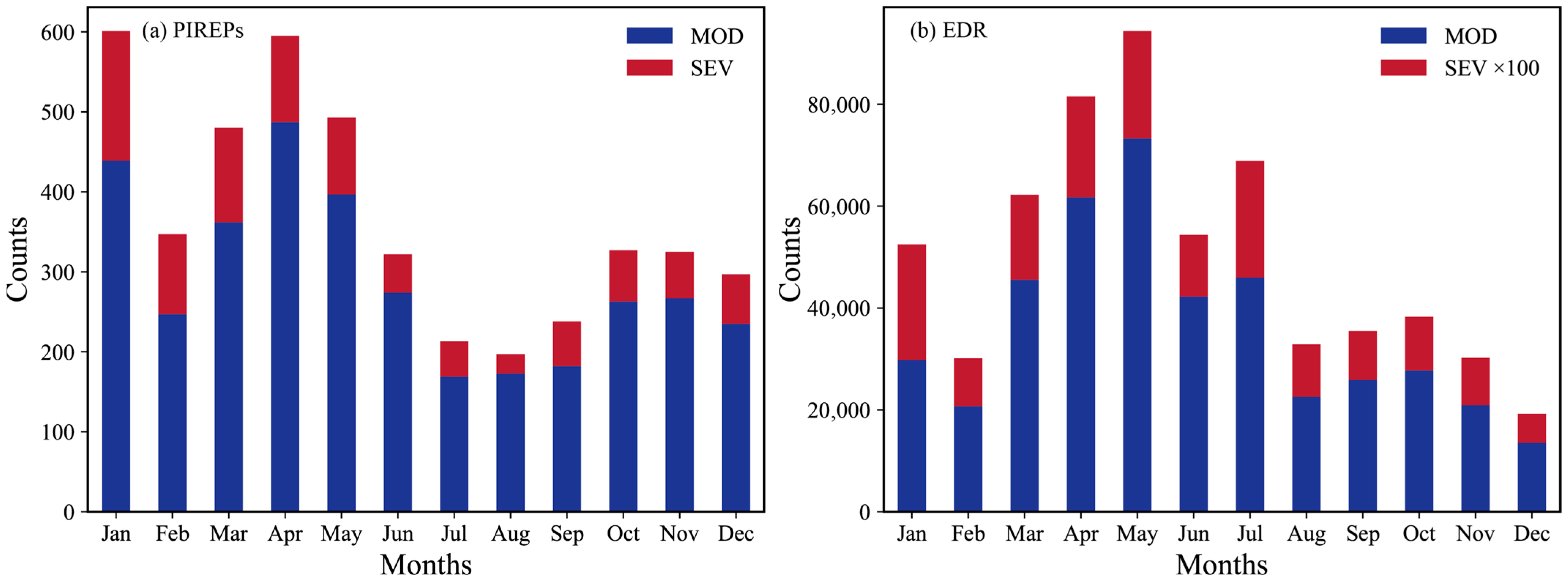
The monthly distributions of both PIREPs and EDR records exhibit a consistent seasonal trend, with aviation turbulence over China occurring more frequently during the winter and spring months (Figure 2). This pattern corresponds to the seasonal intensification of the jet stream and related synoptic-scale systems, which are known to produce more frequent clear-air turbulence (CAT) during these periods [7,12,25,28]. Both datasets show a notable decrease in turbulence events in February, a phenomenon largely attributable to the significant reduction in flight operations during the COVID-19 pandemic. This observed dip has also been documented in other studies [29]. Figure 2 presents the monthly variation in moderate MOD and SEV turbulence events—those with substantial impact on flight operations. LGT events were excluded from this main analysis due to their overwhelming prevalence in the EDR dataset, which could obscure the interpretation of more significant turbulence. The monthly distribution of LGT events is provided in Figure S1 for reference. Despite the marked difference in absolute report numbers between the two datasets—with EDR counts being substantially higher due to continuous recording—the relative temporal patterns remain coherent across all intensity categories.
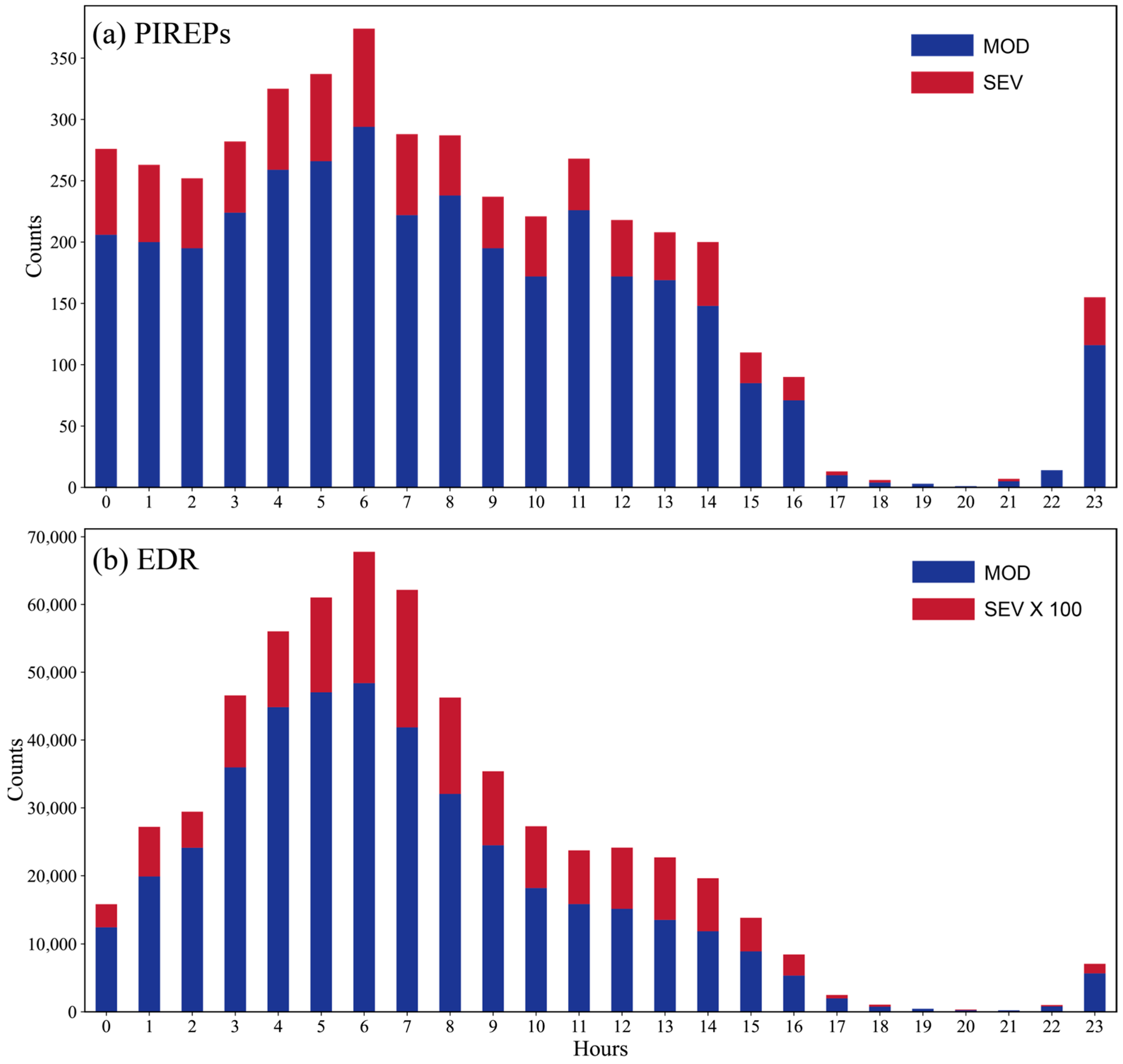
A clear diurnal cycle is evident in the observed turbulence data across the study region (Figure 3 and Figure S2). Both PIREPs and EDR records show a pronounced peak during local daytime and early evening hours, with activity concentrated between approximately 08:00 and 23:00 Beijing Time (00:00–15:00 UTC), reaching a distinct maximum around 14:00 Beijing Time (06:00 UTC). In contrast, very few reports are recorded during the late night and early morning hours (16:00–23:00 UTC), which aligns with the significant reduction in flight operations during this period and is consistent with findings from previous studies [12,25,30]. This diurnal pattern closely aligns with variations in flight density, reinforcing the strong influence of traffic volume on turbulence encounter records.

3.1.2. Altitude Distribution

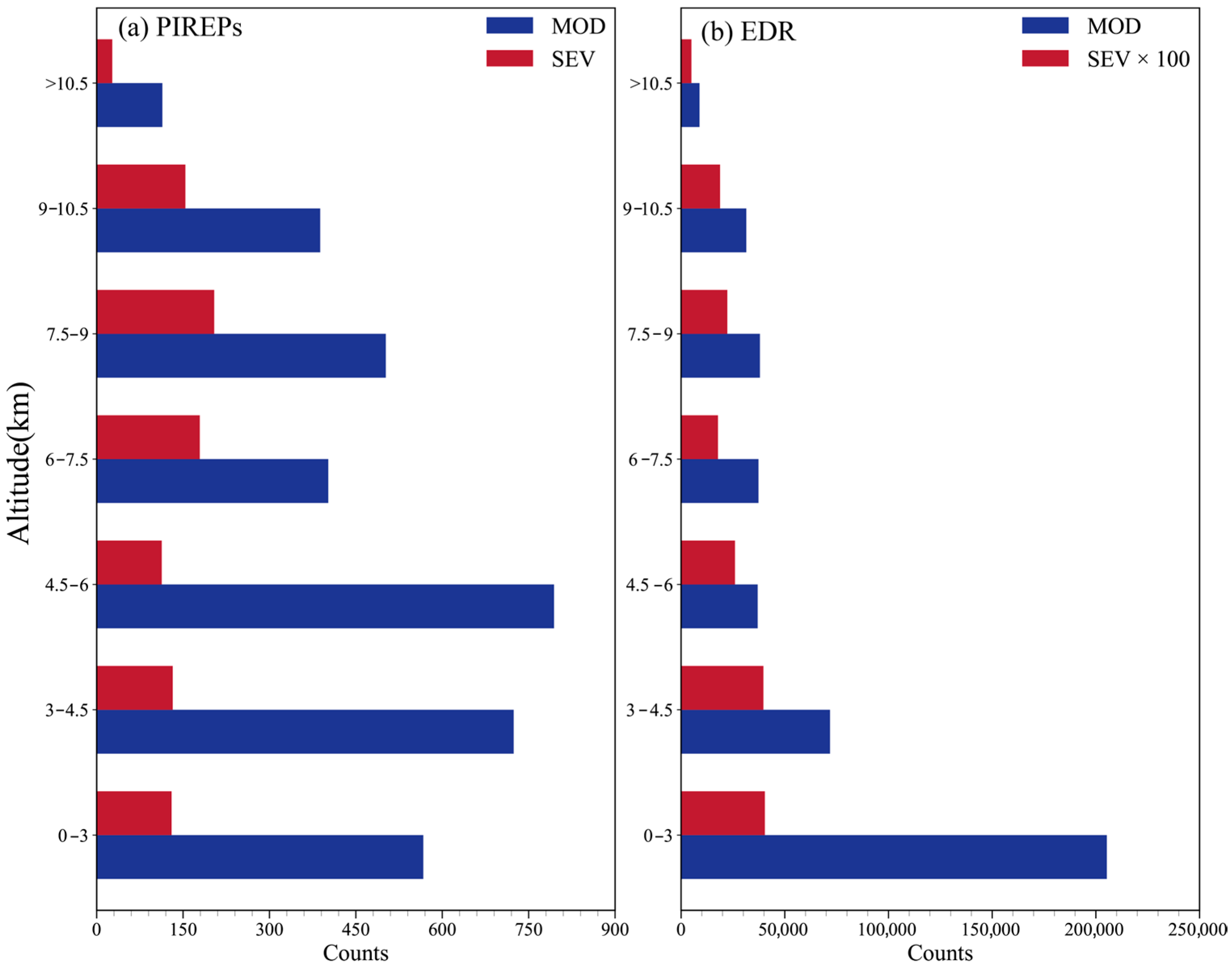
The vertical distributions reveal notable differences between the two datasets, as illustrated in Figure 4. EDR-recorded turbulence shows a concentration in lower altitudes, with approximately 48% of events occurring below 3 km—primarily during takeoff and landing phases. In contrast, PIREPs are more frequently reported between 3 km and 6 km, accounting for about 45% of the total. This disparity highlights the fundamental difference between automated, continuous monitoring across all flight phases and selective pilot reporting that tends to focus on the cruise phase of flight [19,27].
Both datasets indicate a clear shift in turbulence severity with altitude. Above 6 km, the proportion of severe turbulence increases markedly. In PIREPs, the fraction of severe cases among moderate-or-higher intensity reports rises from about 15% below 6 km to approximately 27% above that height. Similarly, EDR data show an increase from 0.3% to 0.6% across the same altitude threshold.
It should be noted that turbulence below 6 km can arise from multiple mechanisms, including in-cloud and convectively induced turbulence [13,31]. The enhanced proportion of severe events above 6 km is consistent with the well-documented prevalence of CAT in the upper troposphere and lower stratosphere, although CAT is not the sole mechanism even at these levels. CAT typically develops in cloud-free, statically stable layers with strong vertical shear and is a major contributor to upper-level turbulence, as reported in many earlier studies [32,33]. CAT leaves no visual cues and is undetectable by conventional airborne radar systems, making it particularly hazardous for aviation [34,35].

3.1.3. Spatial Distribution

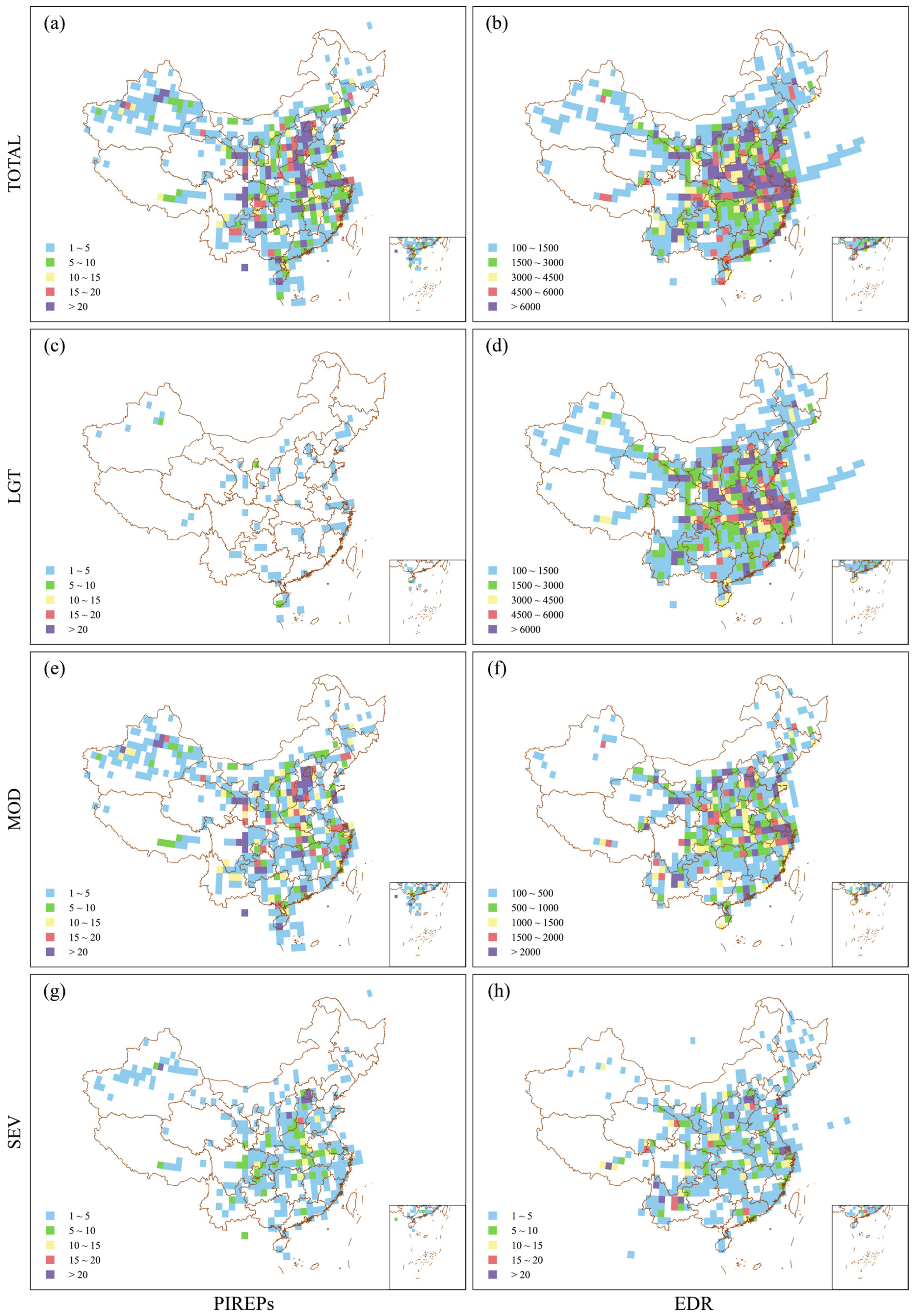
The spatial distribution of aircraft turbulence over China, as depicted in Figure 5, reveals both consistencies and notable disparities between PIREPs and EDR observations across all intensity levels. Overall, both datasets identify eastern and central China as the primary regions of high turbulence frequency, a pattern closely aligned with the high-density air traffic routes in these areas [30]. However, distinct differences emerge in the geographical detail and density patterns. PIREPs (left column) exhibit more concentrated “hotspots,” with reports heavily clustered around major navigational aids and airports, such as those in the Beijing, Shanghai, and Guangzhou flight information regions. This reflects the reliance on verbal reporting relative to fixed landmarks. To further account for the influence of air-traffic density on the spatial patterns, a normalized representation showing the proportions of LGT, MOD, and SEV turbulence within each grid box is provided in Supplementary Figure S4. In contrast, the EDR data (right column) provide a more continuous and widespread coverage, capturing turbulence along entire flight paths with finer spatial resolution. This allows for the identification of turbulent areas beyond the immediate vicinity of major hubs, particularly over western China and mountainous regions like the Tibetan Plateau.
This difference is particularly striking in the distribution of SEV (Figure 5g,h). EDR observations reveal that severe turbulence is not randomly scattered but shows a relatively higher frequency of occurrence in southwestern China, particularly near the southeastern edge of the Qinghai-Tibet Plateau and other areas with complex topography. Conversely, the spatial pattern of severe turbulence reports in PIREPs fails to clearly capture this specific geographical distribution characteristic.

3.2. Discrepancies from Matched Events

3.2.1. Spatiotemporal Discrepancy

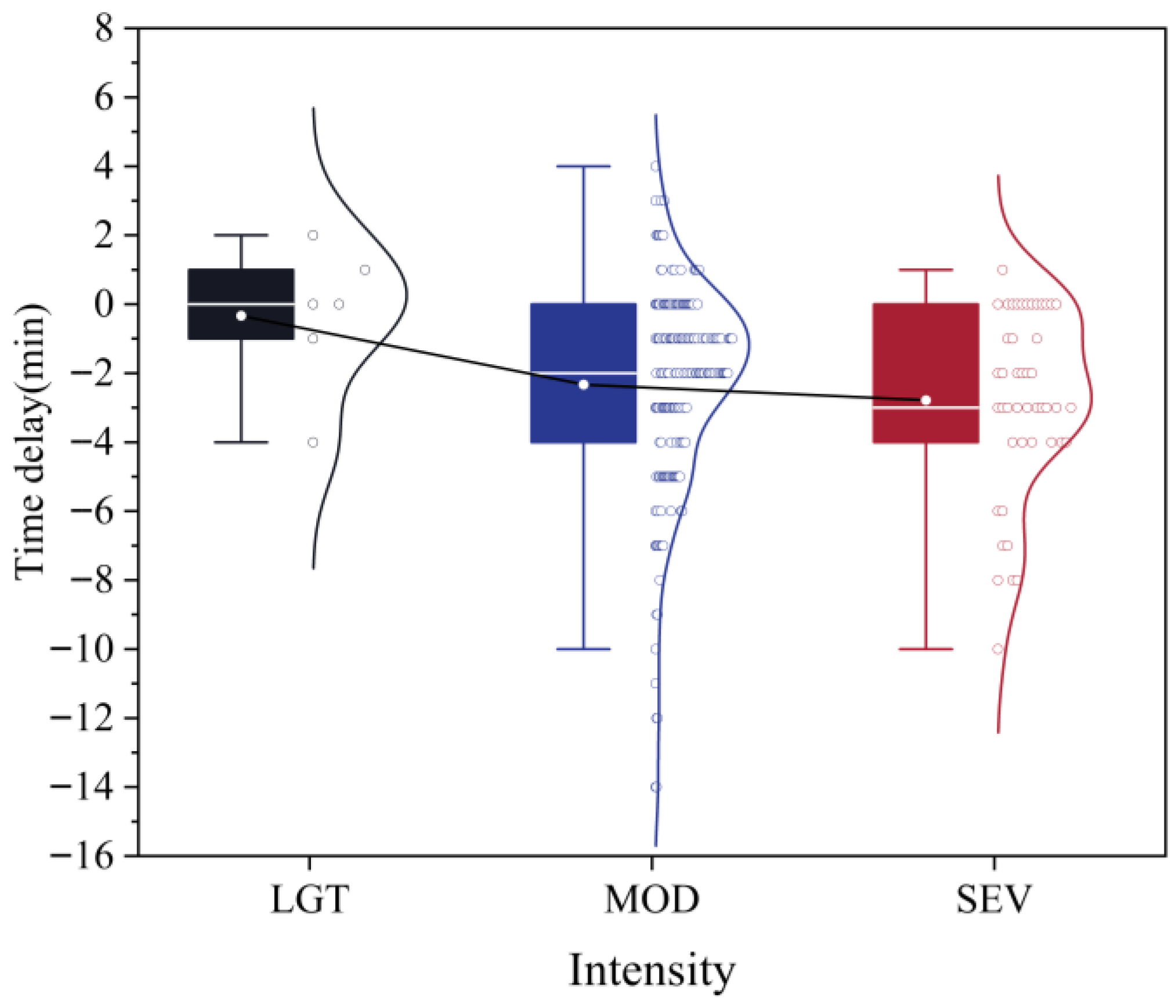
Analysis of the 242 matched events reveals a systematic temporal delay in PIREPs compared to the corresponding EDR recordings. As shown in Figure 6, the median reporting delay is approximately 2 min, with the majority of reports occurring within 5 min of the actual turbulence encounter. This latency can be attributed to the operational procedures involved in pilot reporting. Upon encountering turbulence, pilots must prioritize aircraft control and ensure flight stability before initiating verbal communication with air traffic control [19,36]. The reporting process itself—including verbal description, relay through ATC, and subsequent data entry—introduces additional delays [15,27].
Notably, the magnitude of the delay exhibits a positive correlation with reported turbulence intensity. As illustrated in Figure 6 and Table 2, SEV show significantly longer median delays compared to MOD and LGT intensity reports. This pattern reflects standard cockpit operating priorities. During more intense turbulence encounters, pilots must first focus on stabilizing the aircraft and maintaining safe flight conditions before initiating any communication, in accordance with the widely applied “Aviate–Navigate–Communicate” principle. The PIREP reporting procedure itself does not differ across turbulence categories; rather, severe turbulence inherently requires a longer period of aircraft control and workload management, which naturally increases the reporting delay.
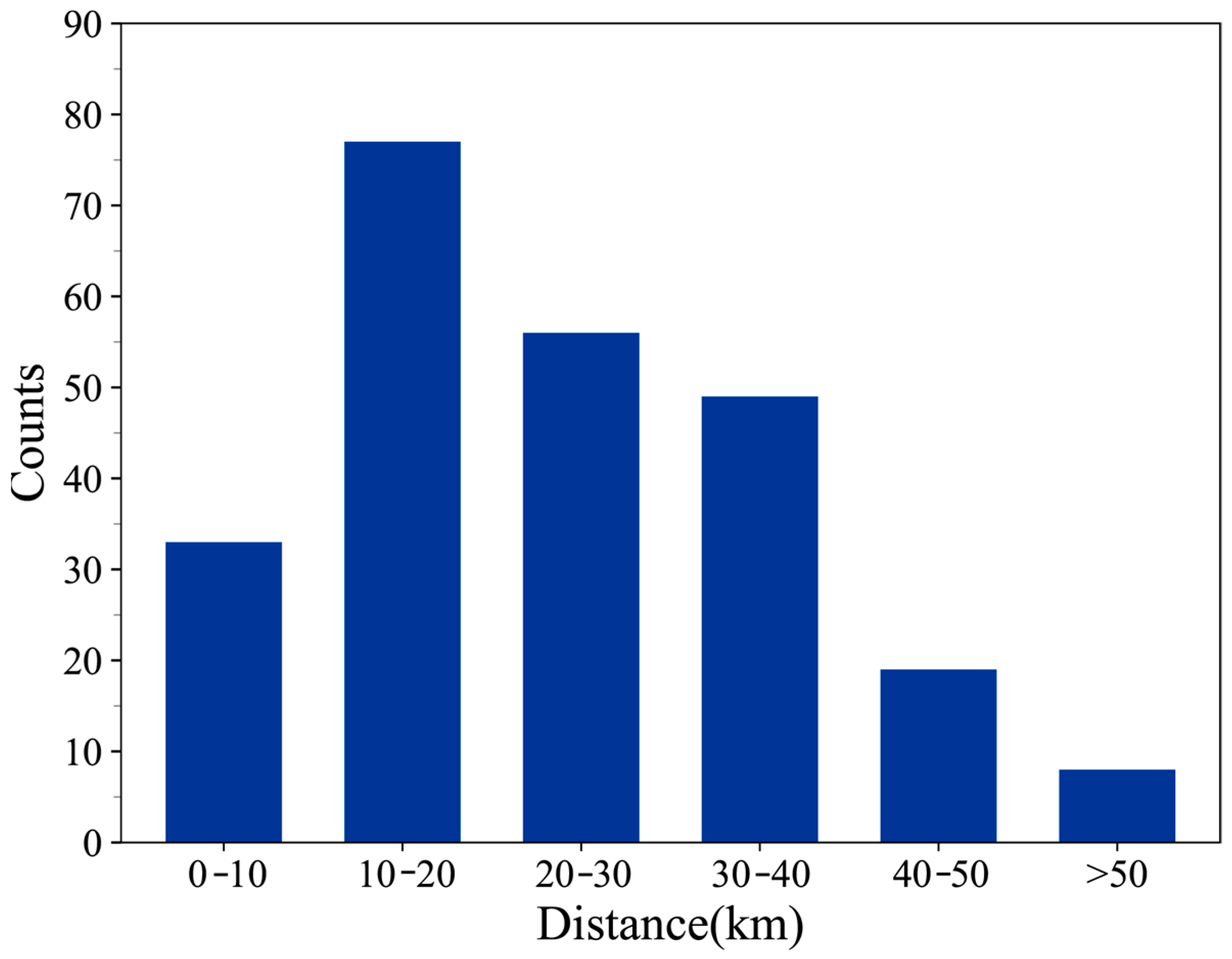
In addition to temporal discrepancies, the matched events also reveal a systematic spatial misalignment between PIREPs and EDR records. As shown in Figure 7 and Table 2, approximately 89% of matched pairs are located within 40 km of each other, with a median displacement of about 25 km. This finding is consistent with earlier studies [19].
These spatial deviations can be attributed to the nature of verbal pilot reporting under operational conditions. When encountering severe turbulence, pilots prioritize aircraft control over immediate reporting, often resulting in delayed submissions and less accurate recollection of the event’s precise location [14]. Furthermore, PIREPs frequently lack standardized positional references. Pilots typically describe locations using approximate terms relative to navigational aids (e.g., VOR stations) or geographical landmarks. In practice, if a pilot reports being “near” a navigational aid, the location is recorded using the aid’s predefined coordinates; if an offset is indicated (e.g., “30 km north of the beacon”), the position is estimated accordingly [30]. This reliance on descriptive rather than real-time GPS-based positioning introduces a consistent systematic error into PIREP location data.

3.2.2. Intensity Discrepancy

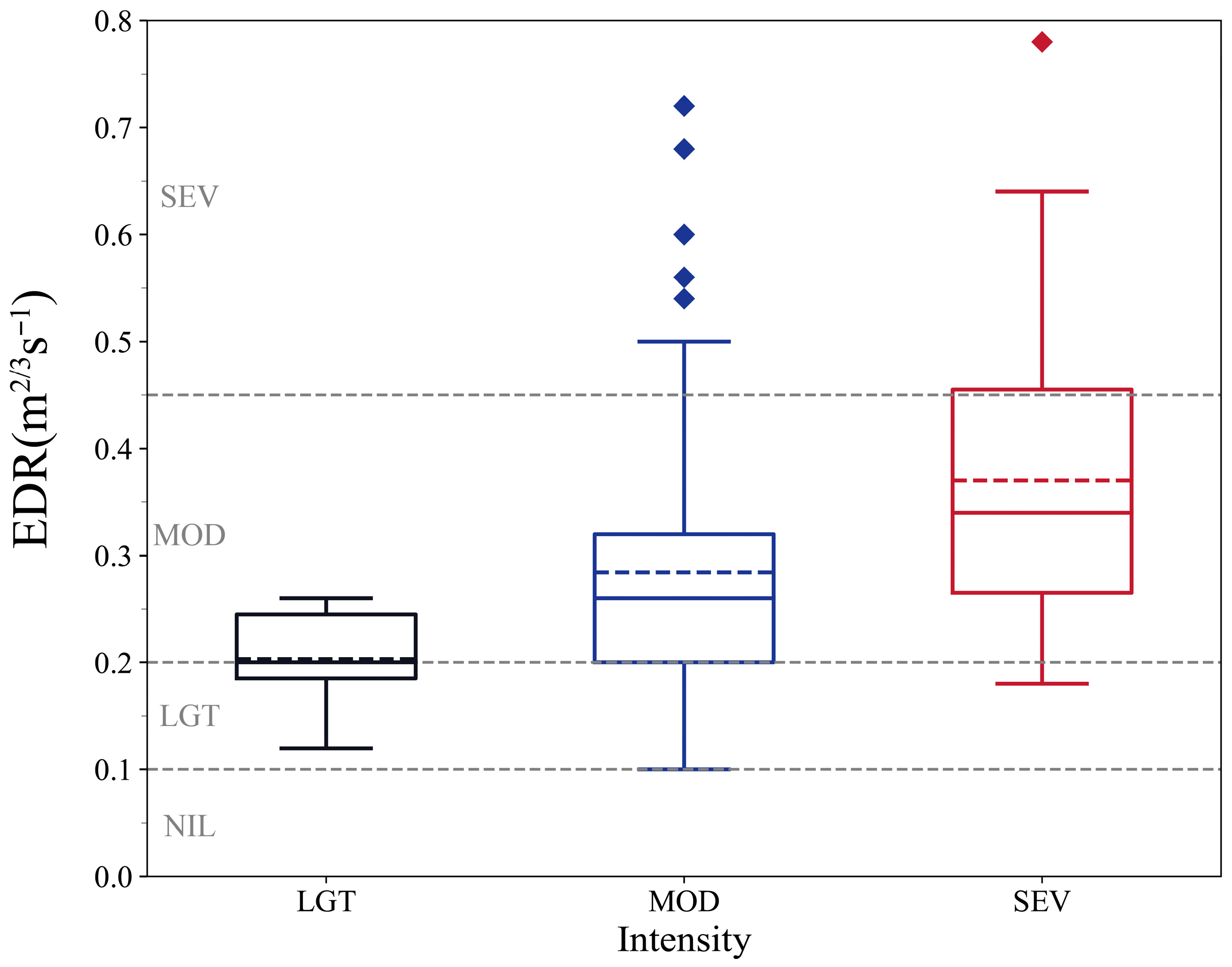
As summarized in Table 2 and illustrated in Figure 8, pilots exhibited a strong tendency to overestimate turbulence intensity compared to the objective ICAO EDR standards. The most notable discrepancy was observed in SEV category. According to ICAO standards, the threshold for severe turbulence is defined as EDR > 0.45 m2/3 s−1. However, among the 46 PIREPs classified by pilots as severe, the corresponding EDR values predominantly fell between 0.25 and 0.45 m2/3 s−1, with fewer than 28% of these subjectively reported “severe” events actually meeting the ICAO objective criteria for severe intensity.
For moderate MOD turbulence, approximately 73% of pilot-reported events corresponded to EDR values within the ICAO-defined moderate range of 0.2–0.45 m2/3 s−1. About 8% of reports exceeded the upper limit of this range, while another 19% fell below the moderate threshold. Only six matched events were identified for LGT turbulence. Among these, three events had EDR values between 0.1–0.2 m2/3 s−1, consistent with the ICAO light turbulence standard, while the other three exceeded this range. Given this very small sample size (six cases), caution is warranted in interpreting the LGT-related statistics.
This systematic bias can be attributed to two main factors. First, pilot-reported intensity is inherently subjective, influenced by individual experience, specific flight phase, and situational context. Second, the ICAO EDR thresholds, particularly the value for severe turbulence (EDR > 0.45), remain a topic of ongoing debate [19,37]. Since the EDR threshold standards were first incorporated into ICAO Annex 3 in 2001, they have undergone three revisions (this study employs the latest 2018 version) [20]. Nonetheless, this and other studies indicate that the current severe turbulence threshold may be set excessively high for operational contexts, warranting further re-evaluation [19].
It is also worth noting that EDR itself shows a degree of aircraft-type dependence [19,38]. Supplementary Table S2 demonstrates that wide-body aircraft exhibit systematically lower median and upper-tail EDR values than narrow-body aircraft, which is physically consistent with their greater inertia. This further supports our decision to remove heavy aircraft from the matched-event analysis to avoid type-related biases.

4. Discussion

4.1. Comparative Advantages and Integration of PIREPs and EDR Data

In situ EDR data provide a valuable resource for verifying and refining turbulence nowcasting and forecasting algorithms, owing to their higher reporting frequency, aircraft independence, and superior spatiotemporal accuracy compared to PIREPs [19,24,36]. However, the high installation costs prevent EDR systems from being universally deployed across all aircraft or airlines in China, and access to such data remains challenging. In contrast, despite issues of subjectivity and spatiotemporal bias, PIREPs offer unique advantages. Unlike EDR records—which are dominated by NIL and light turbulence events—PIREPs contain a higher proportion of moderate and severe turbulence reports. These accounts reflect pilots’ direct operational experience and are systematically compiled by the Civil Aviation Meteorological Center, covering all regions of China and multiple airlines [30].
Both data sources exhibit complementary imbalances in intensity distribution: PIREPs include too few NIL and light turbulence reports, while EDR datasets capture very few severe turbulence events. Recent advances in aviation turbulence forecasting in China have therefore emphasized integrating both types of data to overcome their respective limitations, with the goal of establishing a more comprehensive and accurate aviation turbulence database for China [29].
To enhance the quality of future PIREPs, the NTSB has proposed several key recommendations [36]. First, it advocates for the systematic collection of smooth-air and light-turbulence reports. As underscored in existing studies, even accounts of calm conditions are valuable for delineating turbulence-free zones. Such data can effectively support the refinement of existing turbulence products and algorithms or facilitate the development of new ones. Second, the NTSB recommends adopting automated technology to capture critical data elements—such as aircraft type, time, location, and altitude—directly from air traffic control displays. This approach would significantly improve positional accuracy while eliminating reliance on pilot voice reports.

4.2. Real-Time Data Transmission and Meteorological Application

Both PIREPs and EDR data hold significant value, particularly given the scarcity of high-altitude meteorological observations. EDR and more comprehensive Quick Access Recorder (QAR) data—which include temperature and wind field information—offer high temporal and spatial resolution [39]. With numerous aircraft in flight at any time, they constitute a vast and underutilized observational network.
With advances in new-generation broadband communication technologies such as 5G-based Air-to-Ground communication and satellite links, real-time transmission of in-flight data is becoming technically feasible [40]. Such high-value upper-air observations have already been assimilated in real time into operational turbulence forecast and nowcast systems, as demonstrated by Pearson and Sharman [41], significantly improving aviation meteorology applications such as turbulence prediction. This capability would support real-time in-flight warnings and optimized route planning. Recent developments in AI- and machine-learning–based turbulence prediction further highlight the potential of data-driven approaches for future operational integration [29,42].
China’s Civil Aviation Next-Generation Aviation Broadband Communication Technology Roadmap explicitly identifies 5G application scenarios and services aimed at achieving real-time QAR data transmission and enabling digitalized, intelligent meteorological information sharing [43]. Leveraging the Civil Aviation Flight Data Monitoring Base and the Civil Aviation Big Data Center, an intelligent decision-making system will be established. This system will enable automated situational awareness and assisted decision-making, supporting safety, operational efficiency, service assurance, and passenger experience through digitalization and intelligent solutions—ultimately enhancing the safety, efficiency, and service quality of Chinese civil aviation.
A logical and valuable extension of this work involves the meteorological classification of turbulence sources (e.g., clear-air, convective, mountain wave) for the matched events, utilizing auxiliary datasets such as satellite imagery and reanalysis data. Such analysis could further elucidate the physical mechanisms behind the observed reporting discrepancies and is the focus of ongoing research.

5. Conclusions

This study conducted a systematic comparative analysis of two primary sources of aircraft turbulence observations over China—nationwide PIREPs and in situ EDR measurements from China Eastern Airlines in 2021. By quantifying their consistencies and discrepancies in spatiotemporal distribution and intensity assessment, this research provides crucial empirical evidence for understanding and applying these two key datasets.
In terms of spatiotemporal distribution, PIREPs and EDR data show strong consistency. Both indicate that aviation turbulence over China occurs more frequently in winter and spring and exhibits a distinct diurnal cycle closely associated with flight traffic density. However, spatially, EDR data provided a more continuous and detailed mapping, crucially revealing a higher frequency of severe turbulence over topographically complex regions such as the southeastern Qinghai-Tibet Plateau, which was largely absent in the PIREP records. An in-depth analysis of 242 matched events reveals significant reporting discrepancies in PIREPs. A median temporal delay of approximately two minutes was identified between the EDR-recorded event and the subsequent pilot report, with this latency increasing alongside turbulence intensity. Spatially, about 89% of the matched pairs were located within 40 km of each other. Regarding turbulence intensity assessment, PIREPs indicate a higher proportion of events classified as “severe” relative to the current ICAO-recommended severe EDR threshold. Most events reported as “severe” correspond to EDR values below the objective ICAO standard (EDR > 0.45). This discrepancy stems not only from the subjectivity of pilot assessment but may also indicate that the current ICAO EDR threshold for severe turbulence is set too high for operational practice, warranting further review.
PIREPs and EDR data each have strengths and limitations in turbulence monitoring, making them highly complementary. EDR provides objective, continuous, and high-precision quantitative measurements, serving as a valuable resource for algorithm validation and refined forecasting. In contrast, PIREPs capture pilots’ subjective experiences during critical operational scenarios and offer broader geographical coverage. Looking ahead, integrating these two data sources to build a more comprehensive turbulence database will enhance China’s aviation turbulence monitoring and forecasting capabilities. Promoting real-time data transmission and assimilation applications based on new technologies such as 5G will ultimately support safer and more efficient flight operations.

Supplementary Materials

The following supporting information can be downloaded at: https://www.mdpi.com/article/10.3390/atmos16121414/s1, Figure S1. Monthly variation of light (LGT), moderate (MOD) and severe (SEV) turbulence events derived from PIREPs and EDR data in 2021. Note that the EDR SEV counts are scaled by a factor of 100 for visualization purposes. Figure S2. Diurnal cycle of light (LGT) moderate (MOD) and severe (SEV) turbulence events derived from PIREPs and EDR data in 2021 (UTC). Note that the EDR SEV counts are scaled by a factor of 100 for visualization purposes. Figure S3. Altitude distribution of turbulence events from (a) PIREPs and (b) EDR data. Light (LGT), moderate (MOD), and severe (SEV) turbulence are represented by black, blue, and red bars, respectively. Note that the EDR SEV counts are scaled by a factor of 100 for visualization purposes. Figure S4. Proportional occurrence of LGT, MOD, and SEV turbulence within each 1° × 1° grid box, expressed as the fraction of total turbulence reports in that grid. Table S1. Sensitivity of Matched PIREP–EDR Events to Different Matching Thresholds. Table S2. EDR distribution by aircraft type.

Author Contributions

Conceptualization, J.S. and Z.Z.; methodology, J.S.; software, Y.L. and Z.Y.; validation, J.S., Y.L. and K.W.; formal analysis, Y.Y.L.; resources, W.G., Y.Y.L. and P.-W.C.; data curation, Y.L. and Y.Y.L.; writing—original draft preparation, J.S.; writing—review and editing, J.S., K.W., Y.B., P.-W.C. and Z.Z.; project administration, J.S. and Z.Z.; funding acquisition, J.S. All authors have read and agreed to the published version of the manuscript.

Funding

This research was funded by the Natural Science Foundation of Tianjin, grant number 24JCQNJC00190, Fundamental Research Funds for the Central Universities, grant number 3122020027 and China Meteorological Service Association, grant number CMSA2024MD012.

Institutional Review Board Statement

Not applicable.

Informed Consent Statement

Not applicable.

Data Availability Statement

Data available on request due to restrictions privacy.

Acknowledgments

During the preparation of this manuscript, the authors used DeepSeek-V3.2 to improve language and readability. The authors have thoroughly reviewed and edited the output and take full responsibility for the content of this publication.

Conflicts of Interest

The authors declare no conflicts of interest.

Abbreviations

The following abbreviations are used in this manuscript:
PIREPsPilot Reports
EDREddy Dissipation Rate
NCARNational Center for Atmospheric Research
ICAOInternational Civil Aviation Organization
LGTLight
LGT-MODLight-to-Moderate
MODModerate
MOD-SEVModerate-to-Severe
SEVSevere
NILNull
CEAChina Eastern Airlines
CATClear-air Turbulence
QARQuick Access Recorder

References

  1. Wolff, J.K.; Sharman, R.D. Climatology of Upper-Level Turbulence over the Contiguous United States. J. Appl. Meteorol. Climatol. 2008, 47, 2198–2214. [Google Scholar] [CrossRef]
  2. Gultepe, I.; Sharman, R.; Williams, P.D.; Zhou, B.; Ellrod, G.; Minnis, P.; Trier, S.; Griffin, S.; Yum, S.S.; Gharabaghi, B.; et al. A Review of High Impact Weather for Aviation Meteorology. Pure Appl. Geophys. 2019, 176, 1869–1921. [Google Scholar] [CrossRef]
  3. Alberti, T.; Faranda, D.; Rapella, L.; Coppola, E.; Lepreti, F.; Dubrulle, B.; Carbone, V. Impacts of Changing Atmospheric Circulation Patterns on Aviation Turbulence over Europe. Geophys. Res. Lett. 2024, 51, e2024GL111618. [Google Scholar] [CrossRef]
  4. Prosser, M.C.; Williams, P.D.; Marlton, G.J.; Harrison, R.G. Evidence for Large Increases in Clear-Air Turbulence over the Past Four Decades. Geophys. Res. Lett. 2023, 50, e2023GL103814. [Google Scholar] [CrossRef]
  5. Lee, J.H.; Kim, J.H.; Sharman, R.D.; Kim, J.; Son, S.W. Climatology of Clear-Air Turbulence in Upper Troposphere and Lower Stratosphere in the Northern Hemisphere Using ERA5 Reanalysis Data. J. Geophys. Res. Atmos. 2022, 128, e2022JD037679. [Google Scholar] [CrossRef]
  6. Kim, S.H.; Kim, J.H.; Chun, H.Y.; Sharman, R.D. Global Response of Upper-Level Aviation Turbulence from Various Sources to Climate Change. npj Clim. Atmos. Sci. 2023, 6, 92. [Google Scholar] [CrossRef]
  7. Lv, Y.; Guo, J.; Li, J.; Han, Y.; Xu, H.; Guo, X.; Cao, L.; Gao, W. Increased Turbulence in the Eurasian Upper-Level Jet Stream in Winter: Past and Future. Earth Space Sci. 2021, 8, e2020EA001556. [Google Scholar] [CrossRef]
  8. Williams, P.D. Increased Light, Moderate, and Severe Clear-Air Turbulence in Response to Climate Change. Adv. Atmos. Sci. 2017, 34, 576–586. [Google Scholar] [CrossRef]
  9. Williams, P.D.; Joshi, M.M. Intensification of Winter Transatlantic Aviation Turbulence in Response to Climate Change. Nat. Clim. Change 2013, 3, 644–648. [Google Scholar] [CrossRef]
  10. Sharman, R.; Tebaldi, C.; Wiener, G.; Wolff, J. An Integrated Approach to Mid-and Upper-Level Turbulence Forecasting. Wea. Forecast. 2006, 21, 268–287. [Google Scholar] [CrossRef]
  11. Kim, J.-H.; Chun, H.-Y.; Sharman, R.D.; Keller, T.L. Evaluations of Upper-Level Turbulence Diagnostics Performance Using the Graphical Turbulence Guidance (Gtg) System and Pilot Reports (PIREPs) over East Asia. J. Appl. Meteorol. Climatol. 2011, 50, 1936–1951. [Google Scholar] [CrossRef]
  12. Li, K.; Chen, X.; A, L.; Wu, K.; Liu, H.; Dai, F.; Yang, T.; Yu, J.; Wang, K. Analysis of the Relationship Between Upper-Level Aircraft Turbulence and the East Asian Westerly Jet Stream. Atmosphere 2024, 15, 1138. [Google Scholar] [CrossRef]
  13. Lane, T.P.; Sharman, R.D.; Trier, S.B.; Fovell, R.G.; Williams, J.K. Recent Advances in the Understanding of Near-Cloud Turbulence. Bull. Amer. Meteor. Soc. 2012, 93, 499–515. [Google Scholar] [CrossRef]
  14. Schwartz, B. The Quantitative Use of PIREPs in Developing Aviation Weather Guidance Products. Wea. Forecast. 1996, 11, 372–384. [Google Scholar] [CrossRef]
  15. Hu, B.; Chen, D.; Gu, L. A Statistical Analysis of Aircraft Turbulence Pilot Reports in China in Past Decade. J. Civ. Aviat. Flight 2021, 32, 63–73. [Google Scholar]
  16. Meymaris, G.; Sharman, R.D.; Cornman, L.; Deierling, W. The NCAR In Situ Turbulence Detection Algorithm; NCAR TN-560 + EDD Deierling; National Science Foundation: Alexandria, VA, USA, 2019. [Google Scholar]
  17. Cornman, L.B.; Morse, C.S.; Cunning, G. Real-Time Estimation of Atmospheric Turbulence Severity from in-Situ Aircraft Measurements. J. Aircr. 1995, 32, 171–177. [Google Scholar] [CrossRef]
  18. Cornman, L.B.; Meymaris, G.; Limber, M. An Update on the FAA Aviation Weather Research Program’s In Situ Turbulence Measurement and Reporting System. In Proceedings of the 11th AMS Conference on Aviation, Range, and Aerospace Meteorology, Hyannis, MA, USA, 4–8 October 2004. [Google Scholar]
  19. Sharman, R.D.; Cornman, L.B.; Meymaris, G.; Pearson, J.; Farrar, T. Description and Derived Climatologies of Automated In Situ Eddy-Dissipation-Rate Reports of Atmospheric Turbulence. J. Appl. Meteorol. Climatol. 2014, 53, 1416–1432. [Google Scholar] [CrossRef]
  20. International Civil Aviation Organization. Annex 3—Meteorological Service for International Air Navigation; International Civil Aviation Organization: Montreal, QC, Canada, 2018. [Google Scholar]
  21. Sharman, R.D.; Pearson, J.M. Prediction of Energy Dissipation Rates for Aviation Turbulence. Part I: Forecasting Nonconvective Turbulence. J. Appl. Meteorol. Climatol. 2017, 56, 317–337. [Google Scholar] [CrossRef]
  22. Kim, J.-H.; Sharman, R.; Strahan, M.; Scheck, J.W.; Bartholomew, C.; Cheung, J.C.H.; Buchanan, P.; Gait, N. Improvements in Nonconvective Aviation Turbulence Prediction for the World Area Forecast System. Bull. Amer. Meteor. Soc. 2018, 99, 2295–2311. [Google Scholar] [CrossRef]
  23. Lee, D.-B.; Chun, H.-Y.; Kim, J.-H. Evaluation of Multimodel-Based Ensemble Forecasts for Clear-Air Turbulence. Wea. Forecast. 2019, 35, 507–521. [Google Scholar] [CrossRef]
  24. Ko, H.C.; Chun, H.Y.; Sharman, R.D.; Kim, J.H. Comparison of Eddy Dissipation Rate Estimated from Operational Radiosonde and Commercial Aircraft Observations in the United States. J. Geophys. Res. Atmos. 2023, 128, e2023JD039352. [Google Scholar] [CrossRef]
  25. Hu, B.; Ding, J.; Liu, G.; Tang, J. Objective Verification of Clear-Air Turbulence (CAT) Diagnostic Performance in China Using In Situ Aircraft Observation. J. Atmos. Ocean. Technol. 2022, 39, 903–914. [Google Scholar] [CrossRef]
  26. Cai, X.; Wan, Z.; Wu, W.; Yang, B.; Yi, Z. An Ensemble Prediction Method of Aviation Turbulence Based on the Energy Dissipation Rate. Chin. J. Atmos. Sci. 2023, 47, 1085–1098. [Google Scholar] [CrossRef]
  27. Eick, D.E. Ntsb Recommendations to Prevent Turbulence-Related Injuries in Air Carrier Operations. In Proceedings of the 102nd Annual AMS Meeting 2022, Houston, TX, USA, 1 January 2022; p. 314. [Google Scholar]
  28. Liman, A.; Wang, J.; Feng, J. Spatiotemporal Characteristics of High Altitude Turbulence over Eastern China and Their Relationship with the Equatorial Central and Eastern Pacific Sea Surface Temperature. Chin. J. Atmos. Sci. 2016, 40, 1073–1088. [Google Scholar] [CrossRef]
  29. Shao, J.; Zhuang, Z.; Yu, Z.; Lin, K.; Wu, K.; Leung, Y.Y.; Chan, P.W. The Prospective Application of Machine Learning in Turbulence Forecasting over China. J. Appl. Meteorol. Climatol. 2024, 63, 1273–1285. [Google Scholar] [CrossRef]
  30. Li, K.; Wu, K.; Liu, H.; Xu, W.; Li, G.; Yang, Z.; Liu, G.; Duan, B. Spatiotemporal Distribution Patterns of Turbulence on Major High-Altitude Aircraft Routes in China. Trans. Atmos. Sci. 2024, 47, 789–797. [Google Scholar] [CrossRef]
  31. Sharman, R.D.; Trier, S.B. Influences of Gravity Waves on Convectively Induced Turbulence (Cit): A Review. Pure Appl. Geophys. 2018, 176, 1923–1958. [Google Scholar] [CrossRef]
  32. Chambers, E. Clear Air Turbulence and Civil Jet Operations. Aeronaut. J. 1955, 59, 613–628. [Google Scholar] [CrossRef]
  33. Sharman, R.; Lane, T. (Eds.) Aviation Turbulence: Processes, Detection, Prediction; Springer: Cham, Switzerland, 2016. [Google Scholar]
  34. Ellrod, G.P.; Knapp, D.I. An Objective Clear-Air Turbulence Forecasting Technique: Verification and Operational Use. Wea. Forecast. 1992, 7, 150–165. [Google Scholar] [CrossRef]
  35. Dutton, J.A.; Panofsky, H.A. Clear Air Turbulence: A Mystery May Be Unfolding. Science 1970, 167, 937–944. [Google Scholar] [CrossRef]
  36. National Transportation Safety Board. Preventing Turbulence-Related Injuries in Air Carrier Operations Conducted Under Title 14 Code of Federal Regulations Part 121; National Transportation Safety Board: Washington, DC, USA, 2021.
  37. International Civil Aviation Organization. Proposed Revision to Eddy Dissipation Rate (EDR) Values in Annex 3; International Civil Aviation Organization: Exeter, UK, 2017. [Google Scholar]
  38. Kim, S.-H.; Chun, H.-Y.; Chan, P.W. Comparison of Turbulence Indicators Obtained from In Situ Flight Data. J. Appl. Meteorol. Climatol. 2017, 56, 1609–1623. [Google Scholar] [CrossRef]
  39. Zhuang, Z.; Lin, K.; Zhang, H.; Chan, P.-W. Detection of Turbulence Anomalies Using a Symbolic Classifier Algorithm in Airborne Quick Access Record (QAR) Data Analysis. Adv. Atmos. Sci. 2024, 41, 1438–1449. [Google Scholar] [CrossRef]
  40. Matti, E.; Johns, O.; Khan, S.; Gurtov, A.; Josefsson, B. Aviation Scenarios for 5G and Beyond. In Proceedings of the 2020 AIAA/IEEE 39th Digital Avionics Systems Conference (DASC), San Antonio, TX, USA, 11–15 October 2020; pp. 1–10. [Google Scholar]
  41. Pearson, J.M.; Sharman, R.D. Prediction of Energy Dissipation Rates for Aviation Turbulence. Part II: Nowcasting Convective and Nonconvective Turbulence. J. Appl. Meteorol. Climatol. 2017, 56, 339–351. [Google Scholar] [CrossRef]
  42. Lee, Y.-S.; Chun, H.-Y. Machine Learning Application and Operational Strategy for Global Low-Level Aviation Turbulence Forecasting. npj Clim. Atmos. Sci. 2025, 8, 381. [Google Scholar] [CrossRef]
  43. Civil Aviation Administration of China. China’s New Generation Aviation Broadband Communication Technology Roadmap; Civil Aviation Administration of China: Beijing, China, 2021.
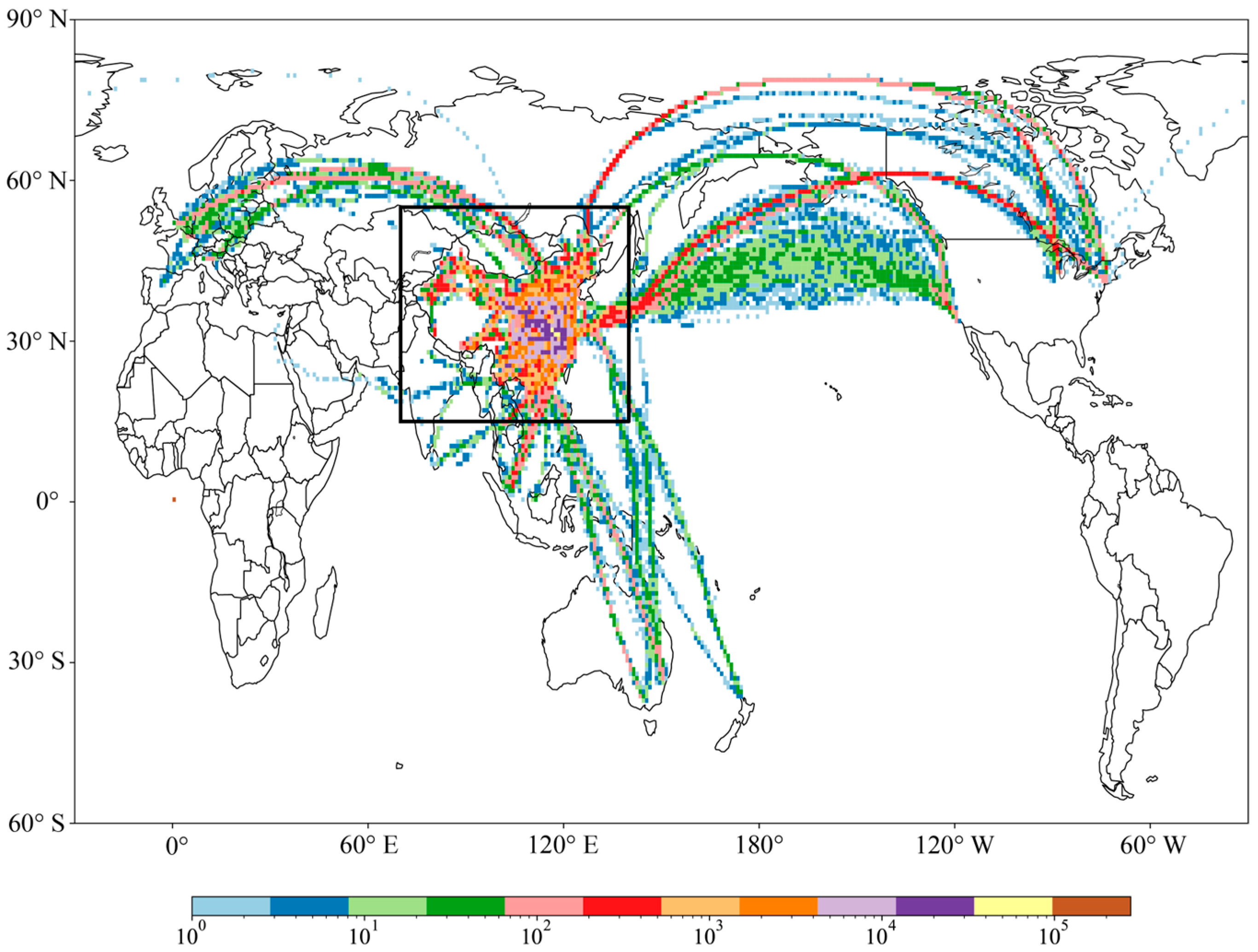
Figure 1. Global distribution of the in situ aircraft observations (color shading) in 2021. The number of observations are counted in each 1° × 1° grid box. The black box indicates the study region.
Atmosphere 16 01414 g001
Figure 2. Monthly variation in moderate (MOD) and severe (SEV) turbulence events derived from (a) PIREPs and (b) EDR data in 2021. Note that the EDR SEV counts are scaled by a factor of 100 for visualization purposes.
Atmosphere 16 01414 g002
Figure 3. Diurnal cycle of moderate (MOD) and severe (SEV) turbulence events derived from (a) PIREPs and (b) EDR data in 2021 (UTC). Note that the EDR SEV counts are scaled by a factor of 100 for visualization purposes.
Atmosphere 16 01414 g003
Figure 4. Altitude distribution of turbulence events from (a) PIREPs and (b) EDR data. Note that the EDR SEV counts are scaled by a factor of 100 for visualization purposes.
Atmosphere 16 01414 g004
Figure 5. Comparative spatial distribution of aircraft turbulence over China in 2021, derived from (a,c,e,g) Pilot Reports (PIREPs) and (b,d,f,h) in situ EDR measurements. The panels from top to bottom represent the distribution of all turbulence events, and those categorized as Light (LGT), Moderate (MOD), and Severe (SEV) intensity, respectively.
Atmosphere 16 01414 g005
Figure 6. Combined visualization of reporting time delays (negative = PIREP later) for the matched turbulence events. For each pilot-reported intensity category, the boxplot displays the interquartile range (IQR), with the lower and upper edges corresponding to the 25th and 75th percentiles. The white horizontal line inside each box denotes the median, and the white circular marker indicates the mean value. All individual matched-event delays are plotted as dots to the right of each box. A smooth kernel density estimation (KDE) curve is drawn along these points to illustrate the underlying density pattern.
Atmosphere 16 01414 g006
Figure 7. Cumulative distribution of spatial displacement between PIREP and EDR locations for the 242 matched turbulence events.
Atmosphere 16 01414 g007
Figure 8. Box plots of in situ EDR peak values, grouped by pilot-reported intensity for the 242 matched events. Within each box, the solid line represents the mean, and the dashed line represents the median. Individual outliers are plotted as rhombuses. The grey dashed lines indicate the ICAO EDR intensity thresholds for medium aircraft (LGT: 0.1–0.2, MOD: 0.2–0.45, SEV: >0.45).
Atmosphere 16 01414 g008
Table 1. Distribution of turbulence intensity categories in the PIREPs and EDR datasets.
Data SourceNILLGTMODSEVTOTAL
PIREPs011834959404553
EDR4,561,1541,623,383430,03017016,616,268
Table 2. Statistical summary of reporting discrepancies for the 242 matched turbulence events. Metrics include horizontal and vertical displacement, time delay (negative = PIREP later), and the measured EDR value, grouped by pilot-reported intensity.
IntensityNo. of Samples 25th PercentileMedian75th PercentileAvg
LGT6Distance (km)13.1621.7127.0422.46
Time (s)−45.000.0045.00−20.00
Vertical displacement (ft)−58.78−23.78−12.23−44.23
EDR value0.180.200.240.20
MOD190Distance (km)14.1224.0634.1024.66
Time (s)−240.00−120.000.00−139.89
Vertical displacement (ft)−291.54−32.17114.47−29.13
EDR value0.200.260.320.28
SEV46Distance (km)16.8426.7238.6228.94
Time (s)−240.00−180.000.00−166.96
Vertical displacement (ft)−592.46−67.14439.75−56.09
EDR value0.280.340.460.37
TOTAL242Distance (km)14.8024.8234.9425.42
Time (s)−240.00−120.000.00−142.07
Vertical displacement (ft)−327.28−33.78142.81−34.63
EDR value0.220.280.360.30
Disclaimer/Publisher’s Note: The statements, opinions and data contained in all publications are solely those of the individual author(s) and contributor(s) and not of MDPI and/or the editor(s). MDPI and/or the editor(s) disclaim responsibility for any injury to people or property resulting from any ideas, methods, instructions or products referred to in the content.