


Abstract
For effective management and prevention, wildfire risk prediction needs to consider the substantial impacts of climate change on wildfire patterns. This study analyzed the probability of wildfire occurrence in South Korea using the Maximum Entropy (MaxEnt) model and predicted future wildfire occurrence under shared socioeconomic pathway (SSP) climate change scenarios. The model utilized historical fire occurrence data and was trained using 12 environmental variables encompassing climate, topography, vegetation, and socioeconomic factors. Future wildfire risk was predicted under the SSP2-4.5 and SSP5-8.5 scenarios for 2041–2060 and 2081–2100. Increased average temperature and solar radiation were key drivers of elevated wildfire risk, whereas increased precipitation and relative humidity reduced this risk. Under current conditions, 367,027 ha (6.52%) within the study area were classified as high-risk based on the MaxEnt model output (p > 0.6). Under both SSP scenarios, a decline in the at-risk area was observed over time. This study provides fundamental data for wildfire management and prevention strategies in South Korea and provides quantitative evidence on the potential impact of climate-related environmental changes on wildfires.
1. Introduction
Wildfires are natural disasters that substantially threaten ecosystems and human lives worldwide, and their frequency and intensity have continuously increased due to climate change [1,2]. These disasters not only cause environmental damage, such as air pollution, soil erosion, and water degradation, but also directly impact human health and safety [3]. Many studies suggest that the risk of wildfires remains high in the near future [4,5]. Consequently, innovative technological approaches are urgently needed to predict and respond to wildfires.
In South Korea, fires predominantly occur in spring (February to April). While the primary causes of wildfires are anthropogenic (such as accidental fires from hikers and waste incineration), climate change exacerbates their distribution and damage, requiring greater prevention and response efforts [6,7]. However, real-world fire prevention efforts can sometimes deviate from model-based projections, reflecting the complexity of wildfire dynamics. Despite these potential discrepancies, predicting wildfire probabilities under changing climatic conditions remains essential for effective fire management and prevention.
Various techniques for predicting wildfire occurrence have been developed, with the Maximum Entropy (MaxEnt) model demonstrating exceptional performance. Initially utilized for predicting species distribution based on occurrence data, the MaxEnt model has recently been applied to predict natural disasters, such as wildfires [8,9,10]. Unlike other machine learning methods, such as random forest, which require both presence and absence data, often necessitating the random generation of non-occurrence points, the MaxEnt model can predict fire occurrence using only presence data; that is, it analyzes the relationship with environmental variables without requiring absence data. This makes it useful for predicting wildfire risk in multivariate contexts [11,12]. The MaxEnt model is particularly advantageous in regions where fire occurrence data are unevenly distributed and can be effectively applied, such as South Korea, where anthropogenic fires are frequent [13].
Recently, various machine learning models have been applied to predict wildfire risk, including random forest, support vector machine, artificial neural network, gradient boosting machine, and deep learning models [14]. These models improve the accuracy of wildfire predictions globally by capturing complex nonlinear relationships between environmental variables and fire occurrence [15]. Some studies have conducted wildfire risk assessments on a global scale using machine learning approaches, demonstrating their effectiveness in diverse environmental conditions [16].
The shared socioeconomic pathway (SSP) scenarios of the Intergovernmental Panel on Climate Change (IPCC) are widely used to enhance the accuracy of wildfire risk predictions under climate change. These scenarios delineate different pathways of climate change based on global socioeconomic development and greenhouse gas (GHG) emission levels [17,18,19]. In particular, SSP2-4.5 assumes moderate climate mitigation and economic development, reflecting fire probabilities under current climate policies, and SSP5-8.5 assumes continued industrialization and fossil fuel use, reflecting the extreme risks of fires in a climate crisis [20,21].
Despite advances in wildfire prediction models, the integration of high-resolution spatiotemporal data and future climate scenarios remains challenging, specifically for South Korea. Studies in related fields have emphasized the necessity of integrating temporal and spatial dynamics for improved accuracy. A recent study on the optimization of spatiotemporal emission controls in power systems highlighted the importance of incorporating atmospheric dispersion and localized environmental variables. Such methodologies can inform the development of representative wildfire prediction models and enable more precise forecasts under changing environmental conditions [22].
Climate change, rising temperatures, decreasing precipitation, and lower humidity levels substantially increase wildfire risk. Environmental variables such as topography and vegetation density also play crucial roles [23,24,25]. A study on the impacts of climate change on fire-affected areas and GHG emissions in the Mediterranean projected a 20–130% increase in fire-affected areas by 2070, depending on the region. The northern Mediterranean and mountainous areas are expected to be the most severely impacted [26]. In South Korea, models that combine geographic and climatic variables are actively being developed. Recently, machine learning-based predictive models have enabled more accurate predictions. For instance, logistic regression and random forest models showed improved prediction accuracy when integrating meteorological data with geographic variables such as farmland density [27]. However, to our knowledge, no study has combined the MaxEnt model with SSP scenarios to predict wildfire risk in South Korea, considering a comprehensive set of environmental and socioeconomic variables. This study fills this gap by providing a novel approach that integrates high-resolution spatiotemporal data with future climate scenarios, offering a more accurate prediction of wildfire risk under climate change.
This study aimed to analyze the spatiotemporal impacts of climate change on wildfire risk in South Korea using the MaxEnt model and SSP scenarios. By combining historical fire occurrence data with various environmental variables, including climate, topography, vegetation, and socioeconomic variables, we identified high-risk areas. Under the SSP2-4.5 and SSP5-8.5 scenarios, we analyzed wildfire risk under predicted climate change scenarios. The analysis focused on distinct periods, 2041–2060 and 2081–2100, to evaluate the near- and long-term impacts of climate change on wildfire risk.
Our approach is unique in that it not only integrates the MaxEnt model with SSP scenarios but also incorporates socioeconomic factors specific to South Korea, such as population density and land-use changes, which have not been extensively explored in previous studies. By doing so, we provide a more comprehensive understanding of the factors influencing wildfire risk, enabling more effective fire management and policy development in the context of climate change.
2. Data and Methods
2.1. Study Area
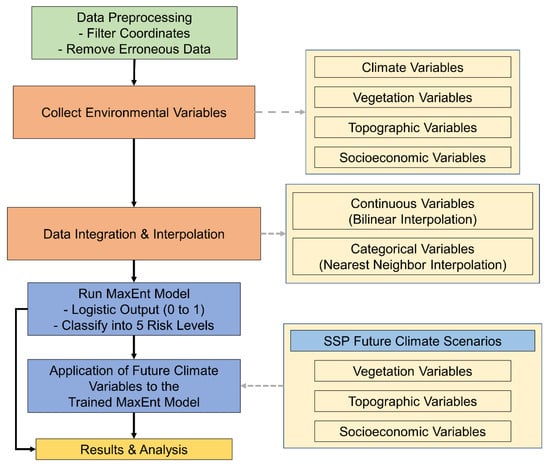
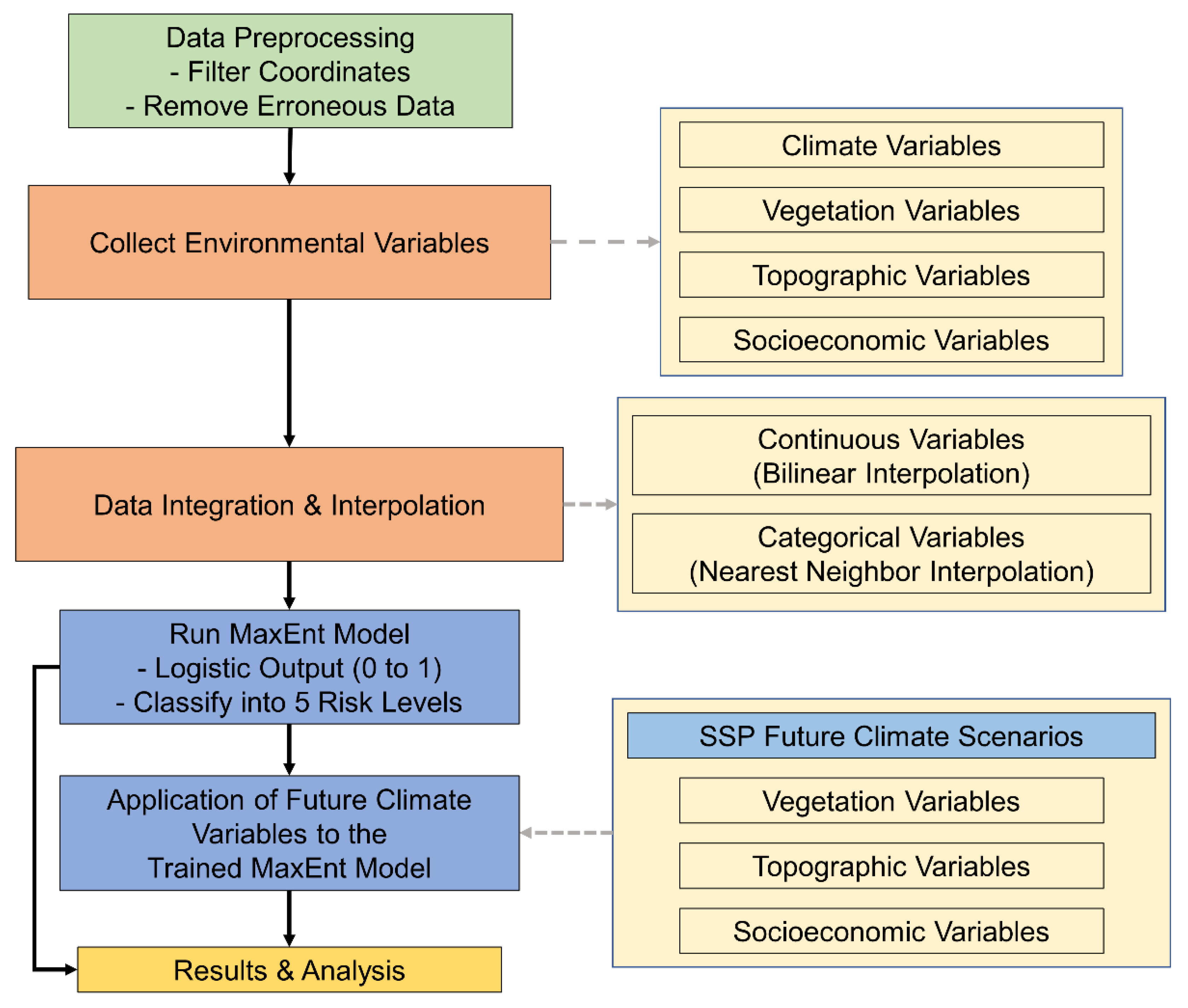
The area covered 33°9′–38°35′ N and 124° 54′–131° 6′ E. Considering climate variability over time, fire prediction was performed in the near future (2041–2060) and far future (2081–2100). All data processing and analysis were conducted using QGIS version 3.38.3 and R version 4.4.0 (Figure 1).
Figure 1.
Flowchart of wildfire risk assessment through conditioning of variables and application of MaxEnt model.
2.2. Wildfire Location Data
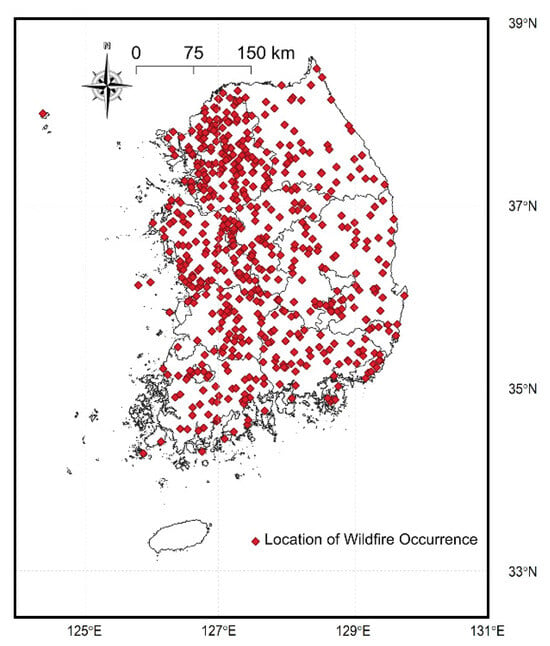
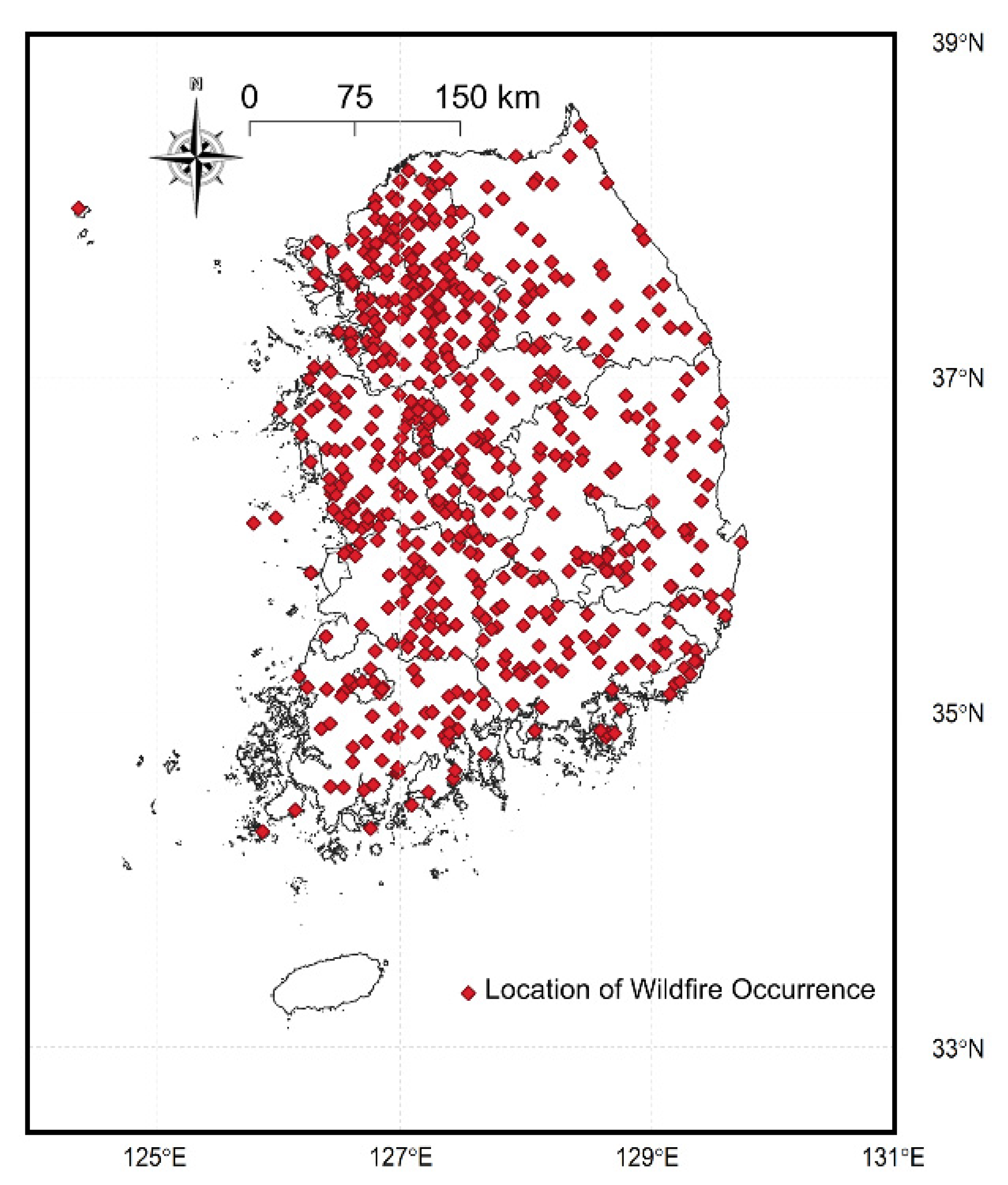
Wildfire location data, provided by the Korean Forestry Service and collected by the Forest Fire Prevention Division, include all wildfire incidents reported across the country. The records include the date and time, time of extinguishment, location, cause, damaged area, temperature, wind speed, wind direction, effective humidity, and coordinates of the affected area. The coordinates were provided in the WGS84 system and were converted to the Universal Transverse Mercator-Korea (UTM-K) system for spatial analysis. Although multiple factors can cause wildfires, the proportion of wildfires in South Korea caused by natural factors, such as lightning or volcanic activity, is substantially lower than that in other countries. Over 2014–2023, accidental fires caused by hikers, waste incineration, farmland burning, and cigarettes were the most frequent. March, April, and February had the highest occurrences, accounting for 25%, 22%, and 14% of total fires, respectively [28]. Thus, the current study used wildfire occurrence data from February, March, and April 2023 and 2024. Before analysis, data were cleaned by removing duplicate records and verifying the accuracy of geographic coordinates. Sites with erroneous coordinates were identified by checking for inconsistencies or impossibilities (e.g., coordinates located outside the land boundaries) and excluded from the dataset. Additionally, we excluded any sites that were missing environmental data. The final dataset comprised a total of 378 fire occurrence points (Figure 2).
Figure 2.
Wildfire occurrences in South Korea during February–April 2023 and 2024.
2.3. MaxEnt Model
The MaxEnt model is based on the maximum entropy theory and is used to predict occurrence probabilities. It has been primarily applied to predict the spatial distribution of species using only occurrence data [29,30,31]. The application of the MaxEnt model in wildfire prediction is particularly effective because it can predict the likelihood of wildfire occurrence based solely on the relationship between occurrence data and environmental variables without analyzing the differences between occurrence and non-occurrence data [32,33].
The core principle of the MaxEnt model is to maximize the entropy of the given data to find the most uniform probability distribution. The information entropy H(X) for a given event X is calculated using Equation (1):
where represents the probability of event X occurring at location x. The model estimates the likelihood of occurrence at each location based on these probabilities.
The goal of the MaxEnt model is to make predictions that minimize uncertainty while making full use of the available data. When an environmental variable Y is introduced, the conditional entropy of X is defined as (Equation (2)):
which represents the probability of event X occurring, given the environmental variable Y. The MaxEnt model uses this conditional probability distribution to make predictions that incorporate the maximum possible uncertainty.
The MaxEnt version 3.4.4 model used in this study can be downloaded from https://biodiversityinformatics.amnh.org/open_source/maxent/ (accessed on 22 December 2024). The wildfire occurrence data were in CSV format, whereas the environmental data were structured in raster format (ASCII). The model used 80% of the total fire occurrence data for training and the remaining 20% for validation. During model training, the maximum number of iterations was set to 500, and a convergence threshold of 0.00001 was used to prevent overfitting and improve prediction accuracy.
The MaxEnt model predicts the probability of wildfire occurrence in a given region based only on presence data and analyzes the correlation between occurrence and environmental variables. The model outputs the predicted probability of wildfire occurrence as a value between 0 and 1. Based on these probabilities, this study classified wildfire risk into five levels. The risk levels were divided into equal intervals based on the predicted probability (p), with areas where p ≥ 0.6 designated as high-risk areas.
The MaxEnt model has some limitations. The reliability of its predictions depends heavily on the quality and completeness of occurrence data. Additionally, the model may not fully capture complex environmental interactions under the limited selection of variables.
The performance of the MaxEnt model was evaluated using the receiver operating characteristic (ROC) curve, which plots the relationship between the true positive and false positive rates, and the area under the ROC curve (AUC) value, which indicates the model’s predictive performance. An AUC value ≥ 0.7 indicates high model accuracy [34]. The jackknife test was then used to evaluate the contribution and importance of each environmental variable. Contribution refers to the degree to which each variable influences the model during training, whereas importance refers to the changes in the AUC value associated with the removal of a specific variable [35]. In this study, SSP climate change scenarios were applied as the environmental variables in the MaxEnt model to analyze the likelihood of future wildfire occurrence.
2.4. SSP Scenarios
Changes in meteorological variables under climate change scenarios were applied to the MaxEnt model to predict high-risk areas in South Korea. The climate change scenarios were based on the national climate change standard for South Korea produced by the National Institute of Meteorological Sciences (NIMS). The standard scenarios were derived from the latest GHG pathway (SSP) scenarios from the 6th Assessment Report of the IPCC and have been downscaled for the East Asia region. The 25 km resolution climate change scenario was designed by NIMS to provide more precise climate predictions for the East Asian region using data from global climate change scenarios. It uses global climate models, such as UKESM1 (approximately 135 km resolution), and reflects the region’s geographical and climatic characteristics.
For more detailed climate predictions in South Korea, weather observation data from 2000 to 2019 (ASOS, AWS) were subjected to precipitation interpolation to produce 1 km-resolution climate data (based on the 2000–2019 average). The 25 km resolution East Asian climate change scenario data were then objectively analyzed and downscaled to a 1 km resolution, with seasonal variations removed for each grid. Subsequently, these deviations were combined with observed climate values at a 31 km resolution, and the resulting South Korean climate change scenarios at a 1 km resolution reflected the changes derived from future climate scenarios.
The South Korean scenarios include SSP1-2.6, SSP2-4.5, SSP3-7.0, and SSP5-8.5, encompassing a spatial range of 33–39° N and 124.5–132° E and a temporal range of 2000–2100 (Table 1). Temporal resolutions are available in daily, monthly, and annual formats, and the data include temperature, precipitation, relative humidity, mean wind speed, solar radiation, extreme climate indices, and application indices. The standard national climate change scenarios used in this study were verified using the MK-PRISM and jackknife methods, which evaluate the simulation performance of high-resolution gridded observational data. The verification results demonstrated that the estimates were reliable and accurately reproduced the observed values [36,37]. In this study, the SSP2-4.5 and SSP5-8.5 scenarios were applied to predict the likelihood of wildfire occurrence in South Korea.
Table 1.
Definitions and characteristics of climate scenarios based on the shared socioeconomic pathway (SSP) framework.
2.5. Environmental Variables
The environmental variables affecting wildfire occurrence were classified into climate, topography, vegetation, and socioeconomic variables. Climate variables were adjusted according to future changes based on the SSP scenarios, and topographic, vegetation, and socioeconomic variables were assumed to remain constant at all times and were uniformly applied in the analysis. All environmental variables were interpolated to a spatial resolution of 100 × 100 m to match the output resolution of the MaxEnt model. Continuous variables were interpolated using the bilinear method in the raster package 3.6-14 (https://cran.r-project.org/web/packages/raster/index.html; accessed on 2 October 2024) of RStudio, whereas categorical variables were interpolated using the nearest neighbor method. The processed environmental variables were then converted into ASCII format for analysis with the MaxEnt model [38,39].
2.5.1. Climate Variables
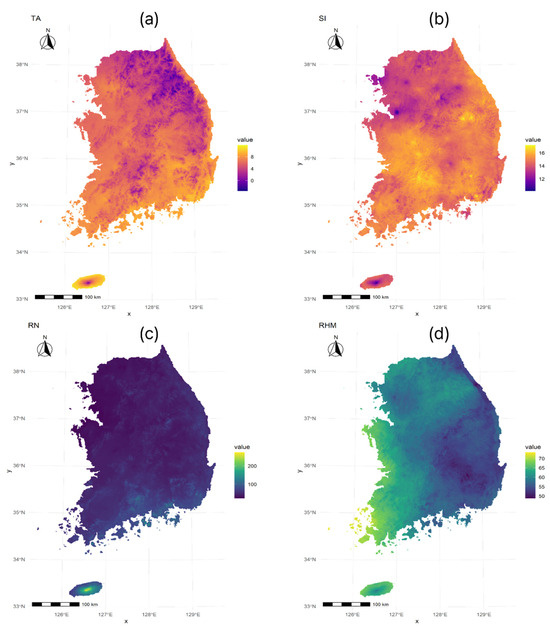
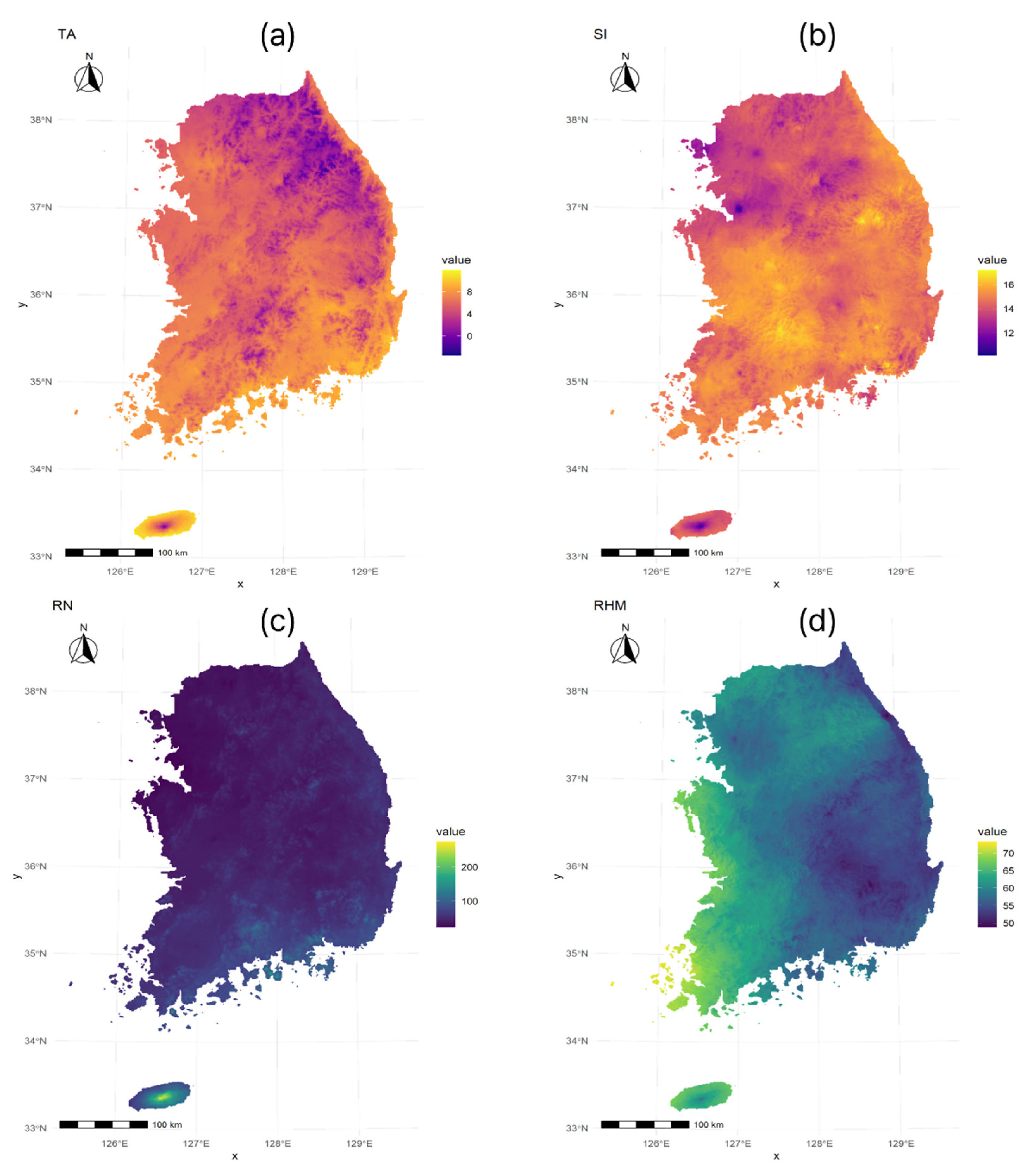
The climate variables included average temperature (TA), relative humidity (RHM), precipitation (RN), and solar radiation (SI) (Figure 3). These were obtained from the national climate change standard scenarios for South Korea. Strong interactions between environmental variables can lead to multicollinearity and bias the prediction results. We evaluated multicollinearity based on the linear correlations between variables. Colinear variables with a Pearson correlation coefficient of ≥0.8 were removed [40,41]. For example, maximum TA (TAMAX) and minimum TA (TAMIN) showed strong positive correlations with TA (coefficients of 0.9 and 0.94, respectively); thus, TA was selected as the representative variable. We calculated the average climate variable values for the study period for use in the MaxEnt model. In the trained MaxEnt model, we used the same climate variables for the same period across different scenarios and simulation times.
Figure 3.
Spatial distribution of climate variables for February–April 2023 and 2024 in South Korea: (a) average temperature (TA), (b) solar radiation (SI), (c) precipitation (RN), and (d) relative humidity (RHM).
2.5.2. Vegetation Variables
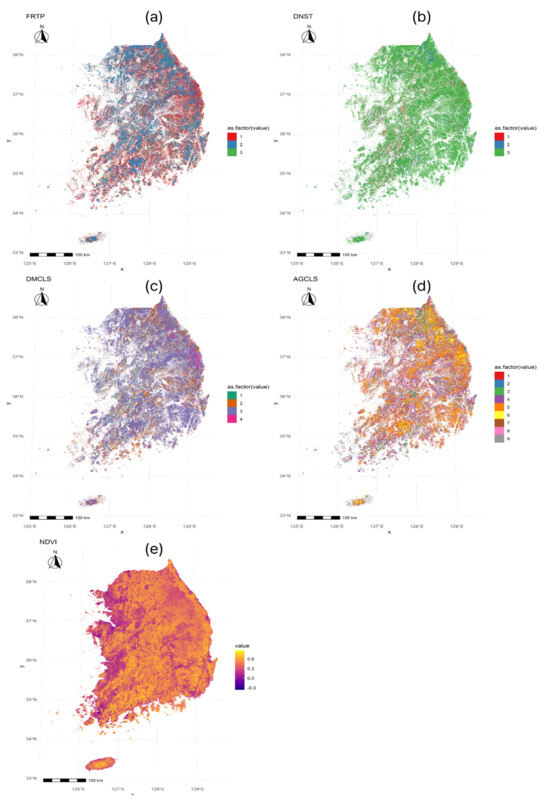
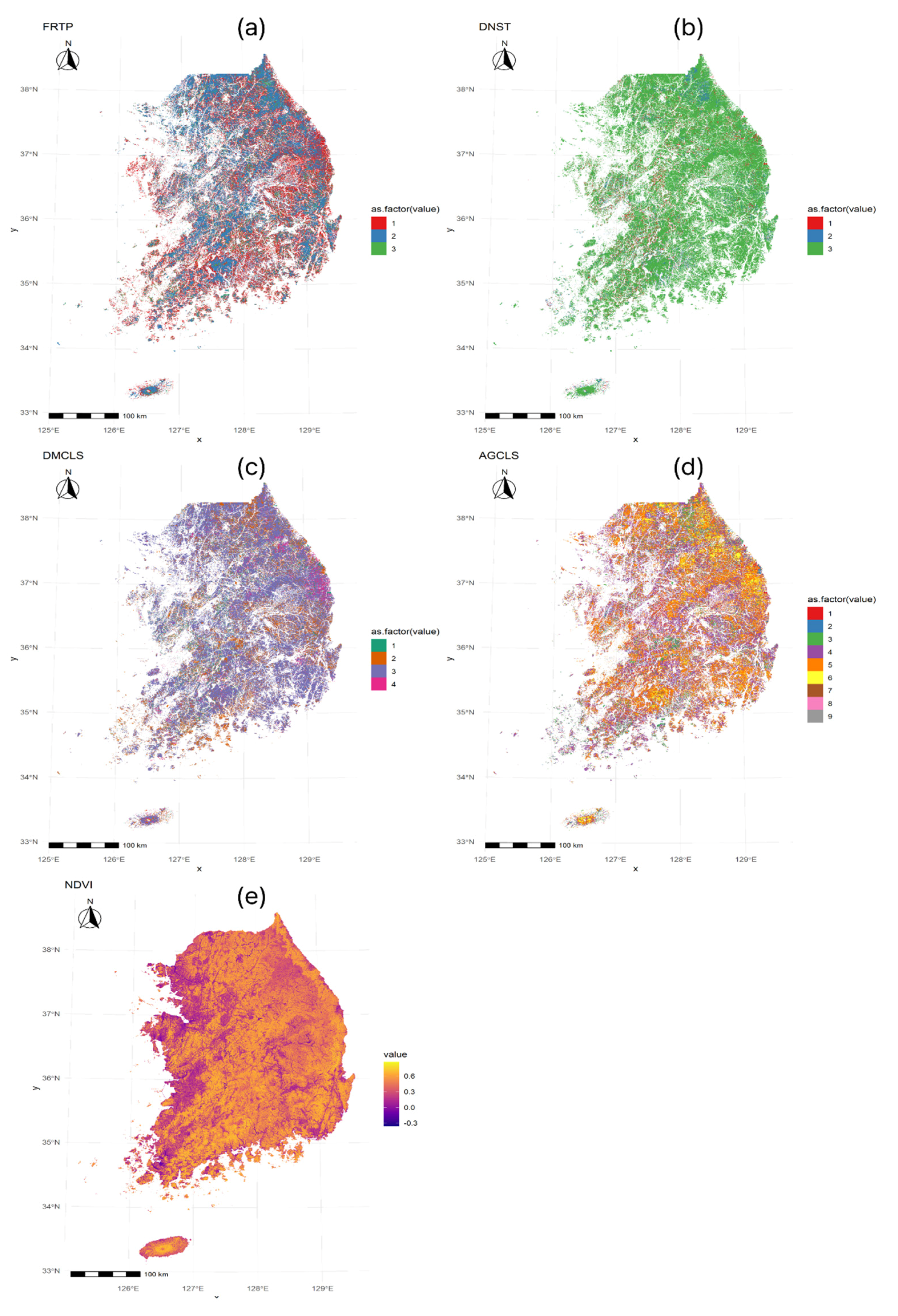
The vegetation variables included forest type (FRTP), canopy density (DNST), diameter class (DMCLS), age class (AGCLS), and normalized difference vegetation index (NDVI) (Figure 4). The first four variables were derived from the forest-type map provided by the Korea Forest Service’s Forest Spatial Information Service (https://map.forest.go.kr/forest/; accessed on 4 November 2024). This map represents the distribution of forests across the Korean peninsula and includes various attributes. It is one of the key thematic maps produced on a national scale by government agencies, along with topographic, soil, and geological maps [42]. The forest-type map is provided in a 1:5000 scale as an SHP file; the variable attribute values were preprocessed into raster format using QGIS.
Figure 4.
Spatial distribution of vegetation variables in South Korea: (a) forest type (FRTP), (b) canopy density (DNST), (c) diameter class (DMCLS), (d) age class (AGCLS), and (e) normalized difference vegetation index (NDVI).
In the MaxEnt model, categorical variables must be input in numeric form [43,44]. For FRTP, values of 1, 2, and 3 represented coniferous, broadleaf, and mixed forests, respectively. Coniferous forests are defined as areas where >75% of the canopy is occupied by coniferous trees, whereas broadleaf forests have canopies with >75% broadleaf tree coverage. Mixed forests have a conifer–broadleaf ratio of 1:3. For DNST, values of 1, 2, and 3 represented low, medium, and high densities. Low DNST refers to areas where <50% of the canopy is occupied by trees, medium DNST refers to 51–70% canopy coverage, and high DNST refers to >71% canopy coverage. For DMCLS, values of 1, 2, 3, and 4 represented seedling, small-diameter, medium-diameter, and large-diameter trees, respectively. Seedling stands included those where >51% of trees had a diameter at breast height (DBH) of <6 cm, small-diameter stands had a DBH of 6–18 cm, medium-diameter stands had a DBH of 18–30 cm, and large-diameter stands had a DBH of >30 cm. AGCLS was categorized into classes 1 to 9, representing 10-year intervals based on stands with >50% canopy coverage. For example, class 1 represented trees aged 1–10 years, and class 9 represented trees older than 81 years. Finally, NDVI data were sourced from the Korea Institute of Geoscience and Mineral Resources (https://www.kigam.re.kr/; accessed on 16 December 2024). The NDVI dataset was derived from processed Landsat satellite images of South Korea, with a resolution of 30 m, available in ASCII, grid, and GeoTIFF formats. The NDVI is a commonly used index for assessing live green vegetation in remote sensing data. Generally, values between -1 and 0 indicate dead vegetation, 0 to 0.33 represent unhealthy vegetation, 0.33 to 0.66 represent moderately healthy vegetation, and 0.66 to 1 indicate very healthy vegetation [45,46].
2.5.3. Topographic Variables
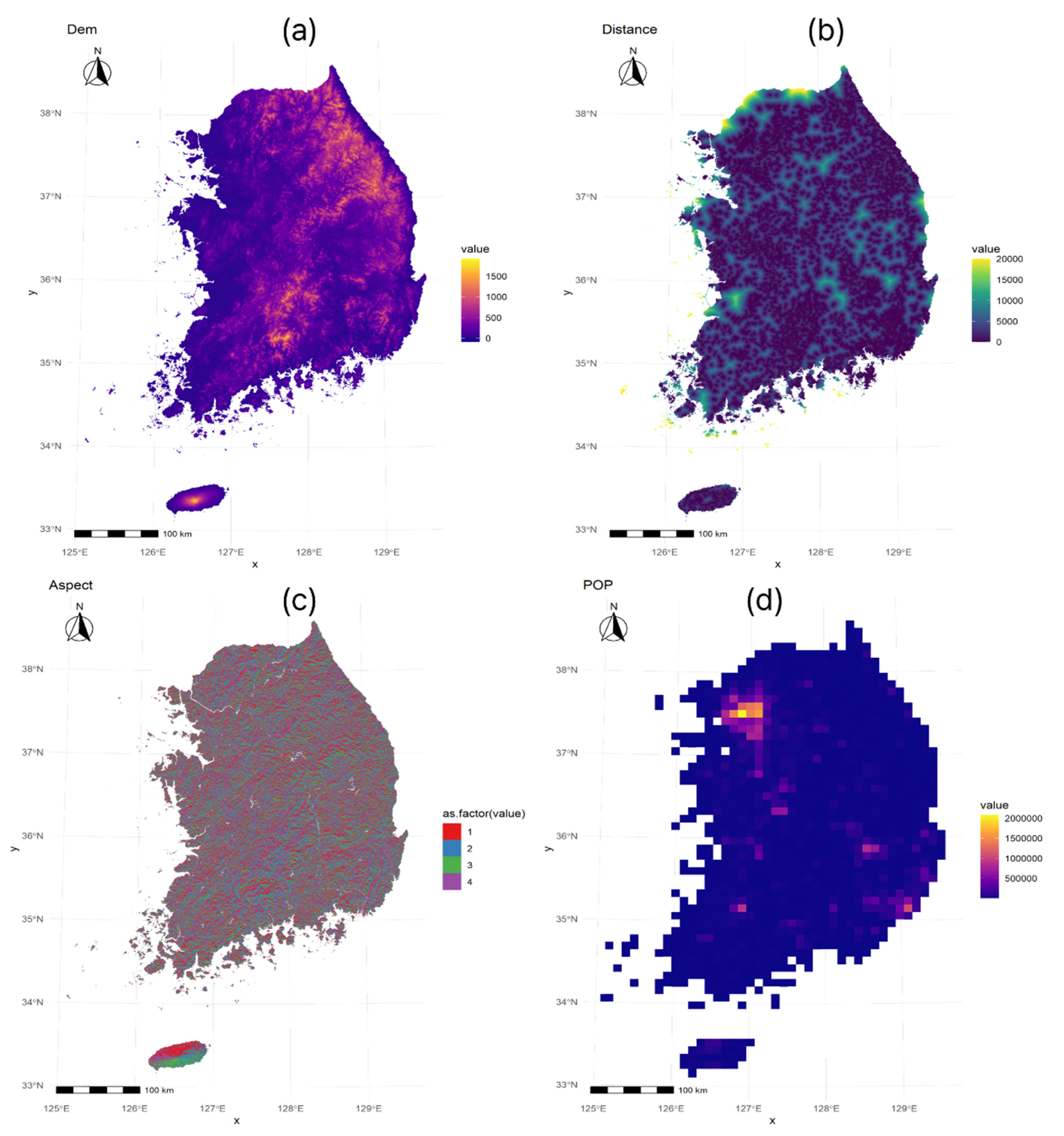
Three topographic variables were used in the analysis (Figure 5). The digital elevation model (DEM) was sourced from the National Geographic Information Institute (https://map.ngii.go.kr/mn/mainPage.do; accessed on 16 December 2024). DEM data provide three-dimensional spatial information that can be applied in administration, environment, agriculture, forestry, national defense, and disaster prevention. We used 90 m resolution DEM data from 2020. The grid-based aspect, or slope direction, was derived from the elevation information using the built-in aspect extraction tool in QGIS. The aspect was classified into four directions: north (1), east (2), south (3), and west (4) [47,48]. Distance to hiking trails (Distance) was calculated using the hiking trail and forest road shapefiles provided by the Korea Forest Service’s Forest Spatial Information Service. The proximity to trails and roads was calculated using QGIS’s proximity raster tool within 0–20 km [49].
Figure 5.
Spatial distribution of topographic and socioeconomic variables in South Korea: (a) digital elevation model (DEM), (b) distance to hiking trails (Distance), (c) Aspect, and (d) population density (POP).
2.5.4. Socioeconomic Variables
The population density (POP) data were sourced from the National Geographic Information Institute (https://map.ngii.go.kr/mn/mainPage.do; accessed on 16 December 2024). POP is a major driver of wildfires and has been used as a socioeconomic input variable in various studies [50,51,52,53]. POP data were aggregated at the grid level based on the residential address information from the resident registration system, and the analysis was conducted using data with a 10 km resolution (Figure 5). In this study, population density serves as a practical proxy for anthropogenic activity, reflecting how human presence can increase the potential for accidental ignitions. Although comprehensive records of specific negligence-related causes are limited, using population density allows us to incorporate the influence of human factors into the MaxEnt model.
3. Results
3.1. Selection of Predicted Wildfire Occurrence Areas
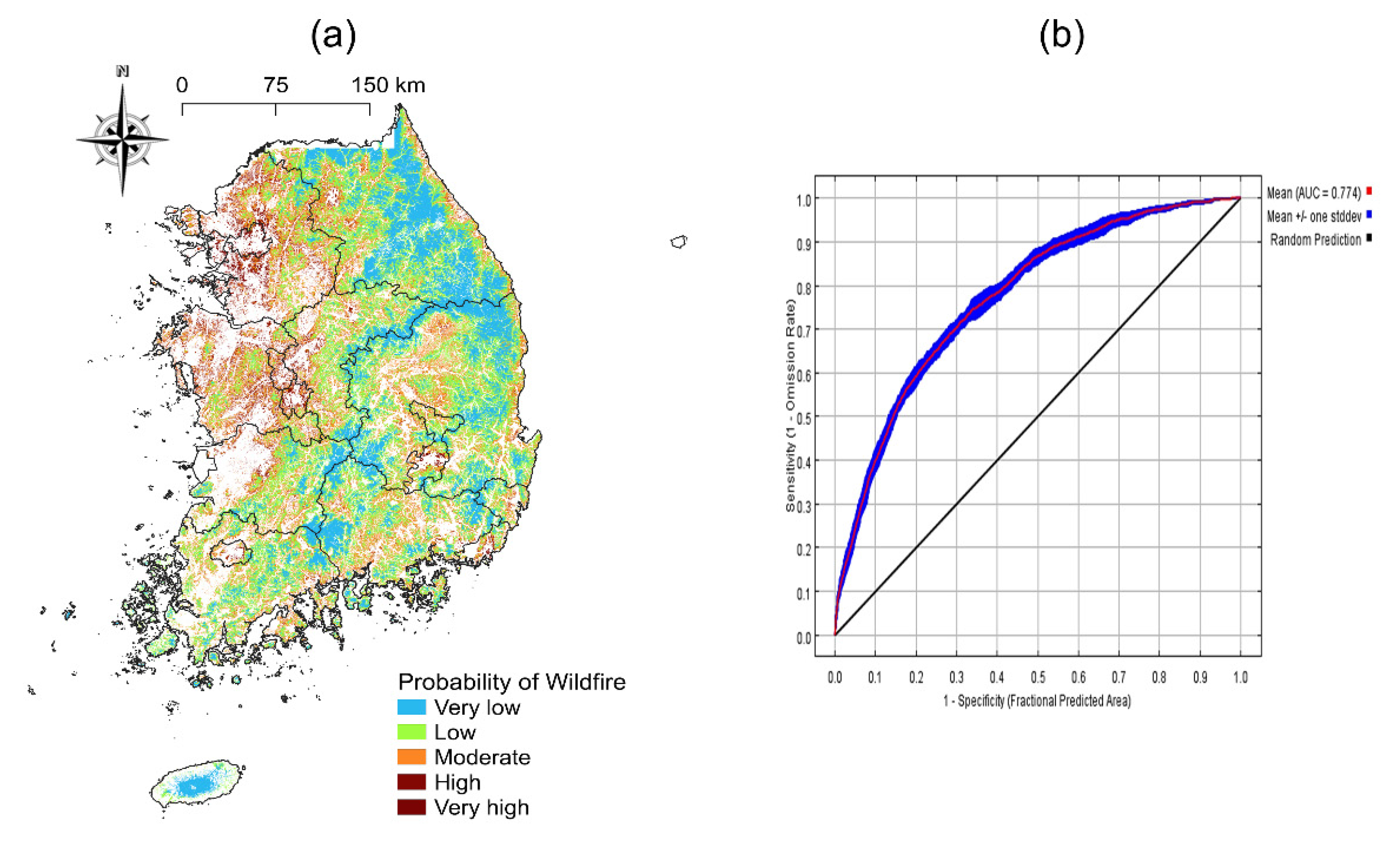
According to the MaxEnt model categorization, areas with a very low probability of wildfire occurrence (0 ≤ p < 0.2) covered 1,604,334 ha, accounting for 28.52% of the total study area. Areas with a low probability of fire occurrence (0.2 ≤ p < 0.4) covered 2,292,339 ha or 40.75% of the total area and were widely distributed across the country. Areas with a moderate probability of fire occurrence (0.4 ≤ p < 0.6) totaled 1,361,247 ha, representing 24.20% of the total area. Areas with a high probability of fire occurrence (0.6 ≤ p < 0.8) covered 352,377 ha, accounting for 6.26% of the total area. Lastly, areas with a very high probability of fire occurrence (0.8 ≤ p ≤ 1) totaled 14,650 ha, representing 0.26% of the total area.
Areas with a high to very high probability (p ≥ 0.6) of fire occurrence covered 367,027 ha, which was 6.52% of the total study area. The overall predictive accuracy of the MaxEnt model, as evaluated by the AUC value, was 0.774. Considering that the prediction was conducted at a spatial resolution of 100 m across the entire country, the model demonstrated high accuracy (Figure 6).
Figure 6.
Results of current-era wildfire occurrence predictions: (a) map of wildfire occurrence probabilities and (b) receiver operating characteristic (ROC) curve [area under the curve (AUC): 0.774].
3.2. Model Validation
We validated the model performance in identifying wildfire-prone areas by analyzing data at the administrative district level (Table 2). To achieve this, ASC files containing wildfire risk data derived from the MaxEnt model were imported into QGIS and then segmented by administrative district and reclassified according to wildfire risk level.
Table 2.
Area covered by each wildfire-risk grade by administrative district (ha) and number of wildfires.
To verify the correspondence between predicted high-risk areas and those with historically high-frequency fires, we aggregated the high-risk areas (p ≥ 0.6) by administrative district and analyzed the precision of the predicted wildfires to the actual wildfires reported from January 2023 to November 2024 using a Pearson correlation analysis.
The strong positive correlation between the predicted and actual high-risk areas (0.84) reflects the high reliability of the MaxEnt model in identifying wildfire-prone areas. These results support the high predictive accuracy of the model and reflect its potential in the early identification of high-risk areas during disaster prevention and management.
3.3. Relationship Between Predicted Wildfire Areas and Environmental Variables
3.3.1. Contribution of Environmental Variables
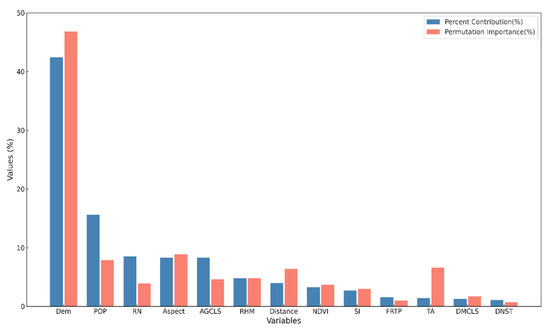
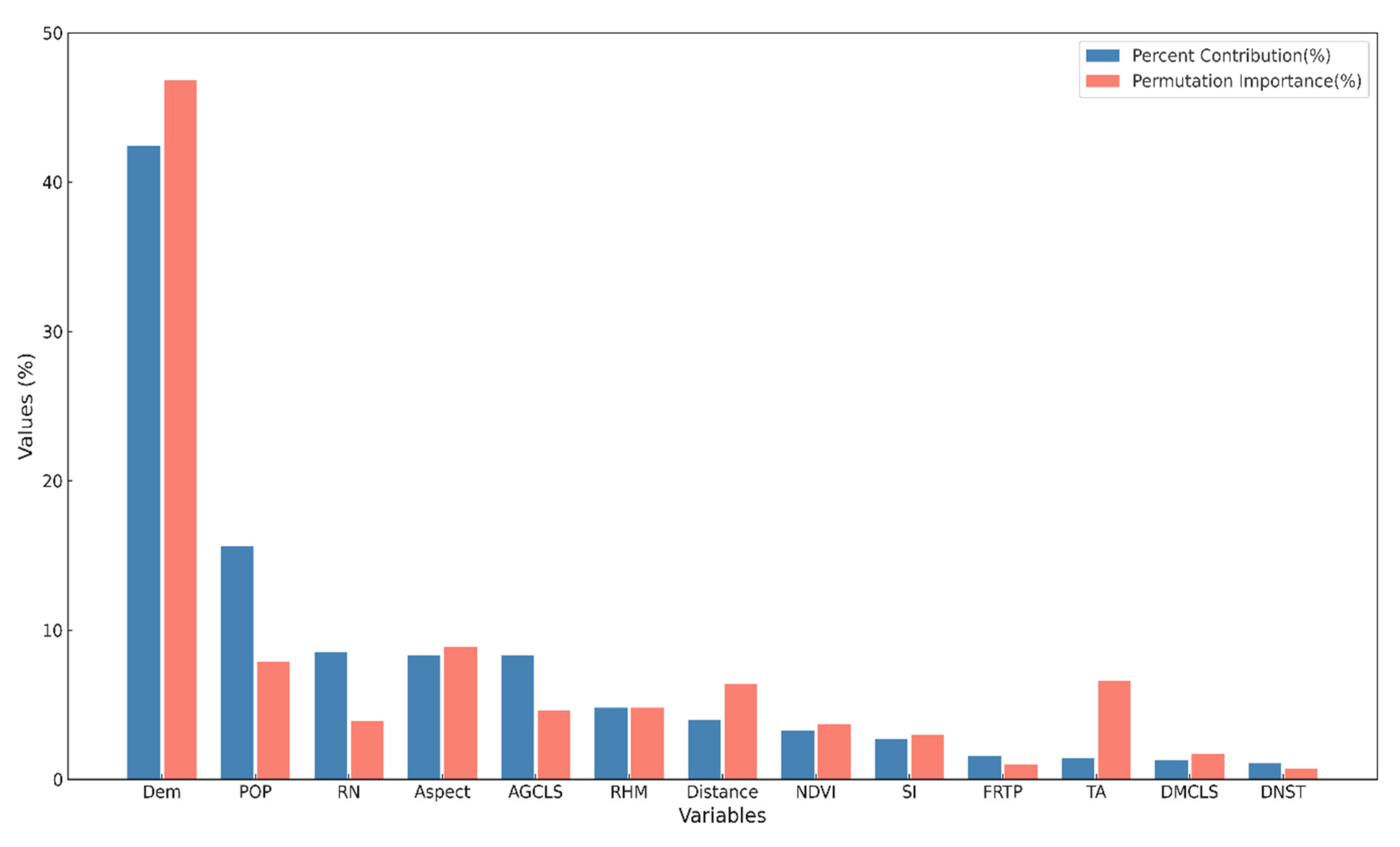
To understand the relationship between wildfire occurrence and the environmental variables, we analyzed the percentage contribution and permutation importance of the environmental variables in the MaxEnt model (Figure 7). The percentage contribution represents the degree to which each variable contributes to the logistic regression output of the model, that is, how much a variable influences the overall model outcome, with variables that hold greater weights in the logistic regression equation having more substantial direct impacts on model predictions. The permutation importance reflects a variable’s indirect importance and is based on the effect of random permutations of the data on the model’s prediction accuracy. If randomly altering a variable causes a substantial decrease in model performance, that variable is considered to be highly important to the model.
Figure 7.
Contribution and importance of each environmental variable in the MaxEnt model.
DEM (42.4%), POP (15.6%), RN (8.5%), and Aspect (8.3%) had the highest percentage contributions, while DEM (46.8%), Aspect (8.9%), POP (7.9%), and TA (6.6%) had the highest permutation importance. This is consistent with the results of previous studies. Previous research using MaxEnt indicated a higher probability of wildfires in urban and eastern coastal regions, particularly in lowland forests and densely populated areas. A previous variable contribution analysis showed that POP and DEM substantially affected the probability of wildfire occurrence, with elevation exhibiting a negative correlation with wildfire occurrence probability [54].
3.3.2. Response Curves of Environmental Variables
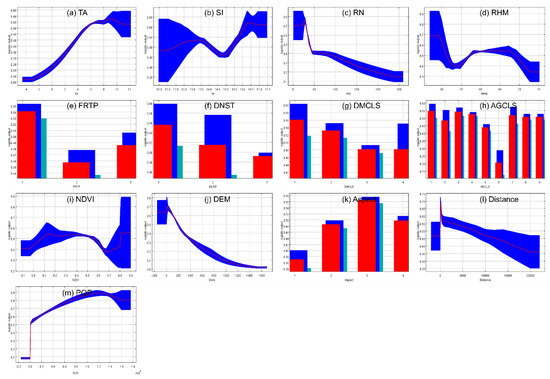
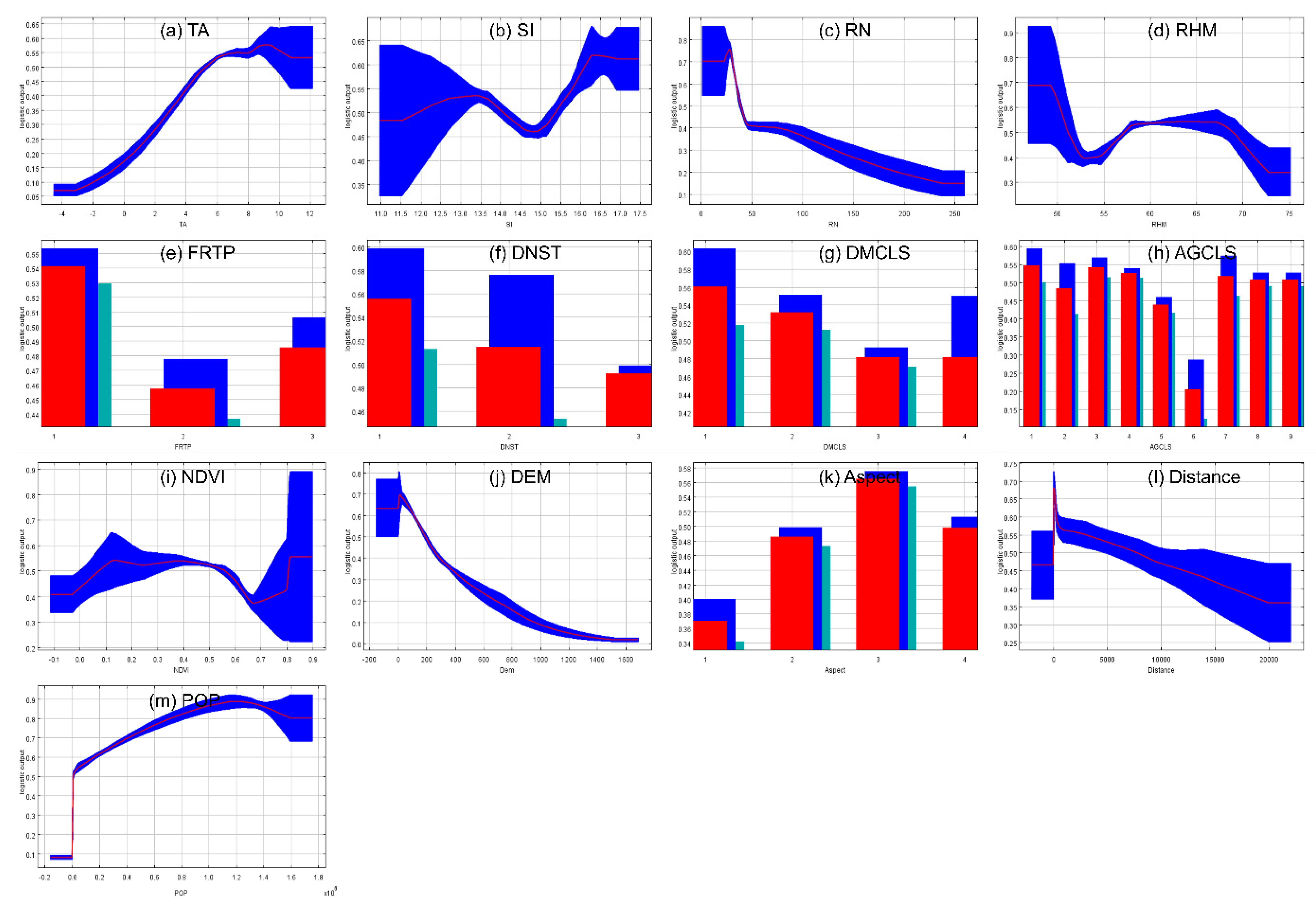
Various environmental variables affected wildfire occurrence (Figure 8). Of the climate variables, TA and SI showed positive correlations with wildfire occurrence, indicating that higher TA and SI values were associated with an increased risk. In contrast, RN and RHM had negative correlations with fire occurrence, suggesting that higher RN and RHM values reduced the likelihood of fires.
Figure 8.
Relationship between environmental variables and wildfire occurrence. The red line (or bars) indicates the mean, while the blue and green represent the standard deviation.
In terms of the FRTP, coniferous forests were the most vulnerable to wildfires, followed by mixed and broadleaf forests. For DNST, areas with low DNST had the highest wildfire risk, whereas moderate- and high-DNST areas showed a lower vulnerability. For the DMCLS, seedling trees were the most susceptible to fire, followed by small, medium, and large trees, with wildfire risk decreasing as tree size increased. For the AGCLS, the youngest trees (class 1) had the highest risk of fire, whereas fire risk decreased with tree age. In terms of the NDVI, the highest wildfire risk was observed at NDVI values of 0.1–0.2; the risk sharply decreased when NDVI values were below 0.5.
In terms of the DEM, higher elevations had a lower wildfire risk. For the Aspect, southern slopes were the most vulnerable to fires, followed by west, east, and northern slopes. In terms of Distance, areas closer to hiking trails had a higher risk of fire, with the risk decreasing rapidly as Distance increased. Finally, wildfire risk increased with POP.
3.4. Application of SSP Scenarios
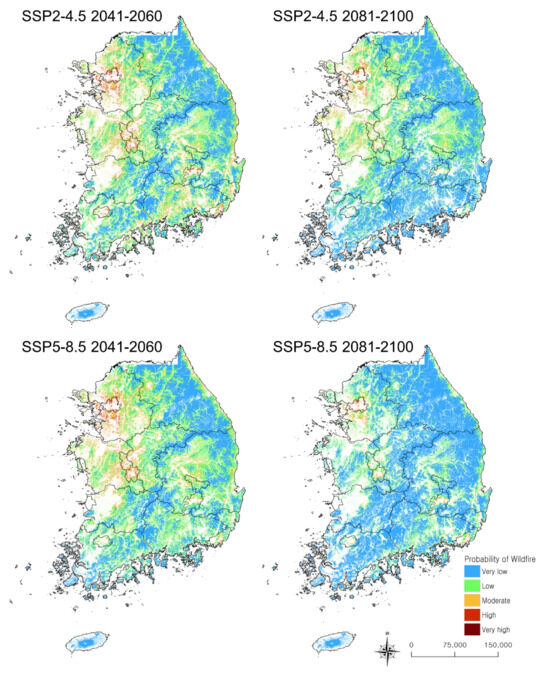
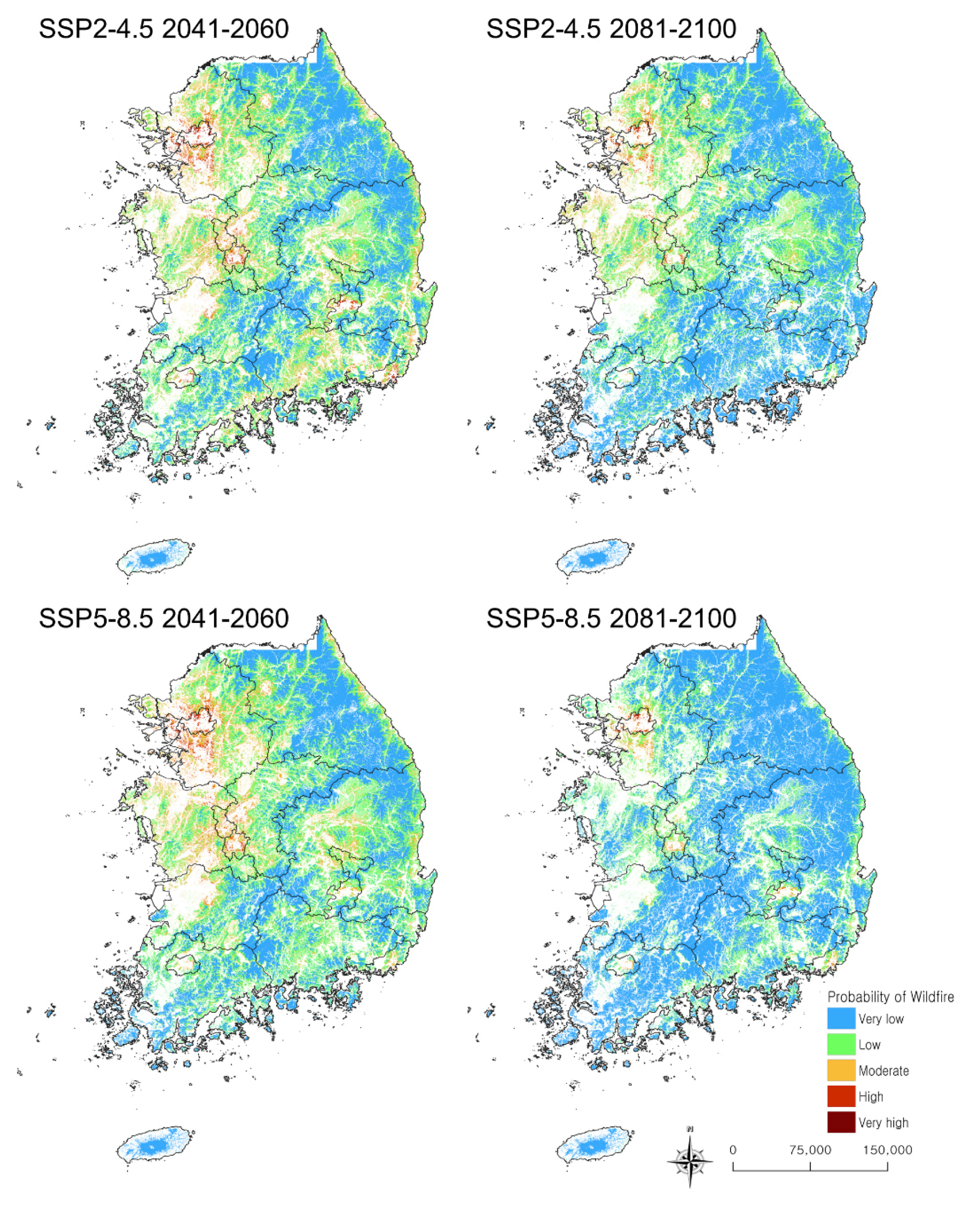
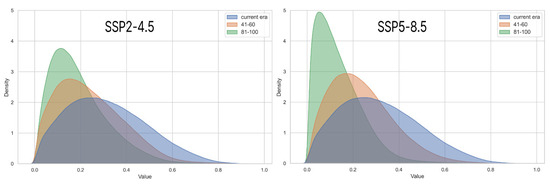
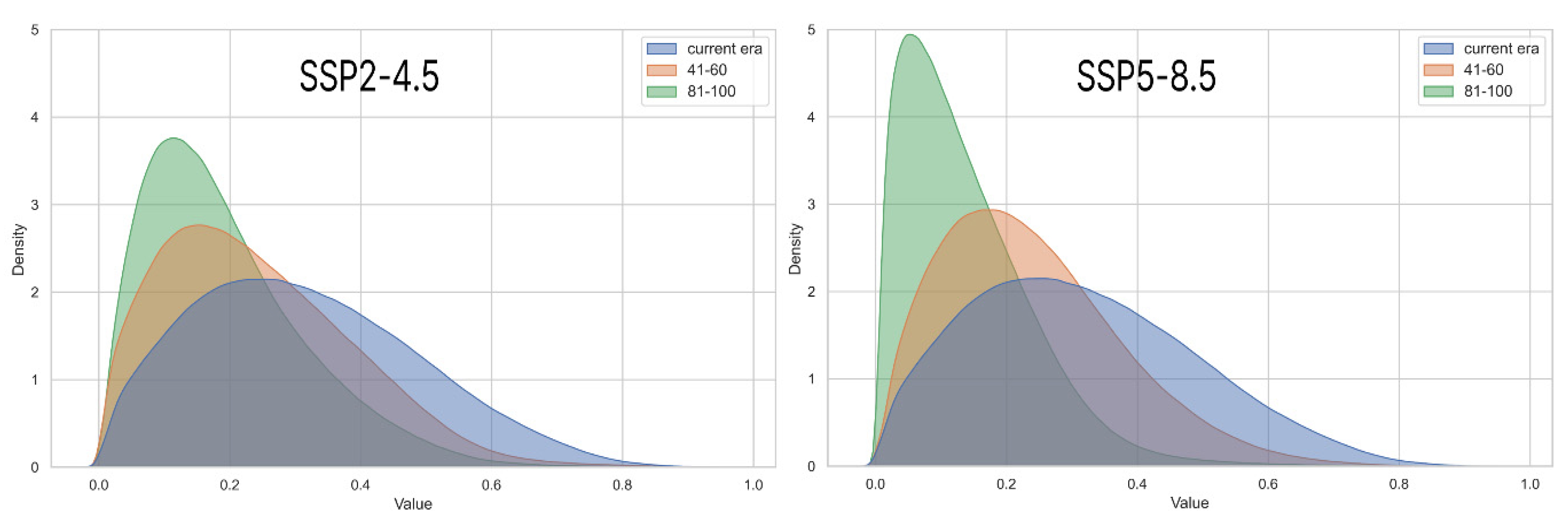
This study applied the SSP2-4.5 and SSP5-8.5 scenarios to simulate changes in the predicted high-risk (p ≥ 0.6) areas for 2041–2060 and 2081–2100 (Figure 9). Under the SSP2-4.5 scenario, the predicted area decreased in 2041–2060 and 2081–2100 compared with the present area. The predicted high-risk areas covered 86,269 ha in 2041–2060 and 29,024 ha in 2081–2100. Similarly, in the SSP5-8.5 scenario, the predicted area decreased over time, with high-risk areas covering 76,308 ha in 2041–2060 and 13,494 ha in 2081–2100. In both scenarios, high-risk wildfire areas clearly decreased in 2041–2060 and 2081–2100, though this reduction was greatest in the SSP5-8.5 scenario. The probability densities for 2041–2060 were similar in both scenarios. However, by 2081–2100, the density of occurrences with 0 ≤ p < 0.2 was greater in the SSP5-8.5 scenario than in the SSP2-4.5 scenario (Figure 10).
Figure 9.
Predicted wildfire probability in South Korea under the SSP2-4.5 and SSP5-8.5 scenarios for 2041–2060 and 2081–2100.
Figure 10.
Probability density of predicted wildfire occurrence under the SSP2-4.5 and SSP5-8.5 scenarios for the current and future (2041–2060 and 2081–2100) periods.
4. Discussion
This study used the MaxEnt model to predict wildfires in South Korea at a 100 m grid resolution, using occurrence locations as the dependent variable and climate, topographic, vegetation, and socioeconomic variables as independent variables. By applying SSP scenarios, we predicted the potential for future wildfires under representative future climate conditions. The response curves of wildfire occurrence and climate variables indicated that increasing TA and SI values were associated with increasing wildfire risk. Conversely, higher RN and RHM were found to reduce wildfire risk. These findings are consistent with those of previous studies [55,56]. Coniferous forests played an important role in wildfire occurrence and were the most vulnerable vegetation type due to their high resin content [57]. Areas with low DNST were more prone to fires, likely owing to their higher sensitivities to wind and humidity changes, which can accelerate fire spread [58,59].
The current study demonstrated that topography plays an important role in wildfires. The MaxEnt model indicated that areas with low DEM values and southern slopes were more prone to wildfires [60,61]. The DEM, in particular, substantially impacts climate, vegetation, and POP. As altitude increases, temperature decreases, thereby reducing the potential for wildfires. In high-altitude regions, the lower temperatures slow down the drying rate of plants, contributing to a reduction in wildfire risk. Higher altitudes tend to receive more RN, further suppressing wildfire occurrence. Conversely, low-altitude areas display warmer and drier climates, increasing the likelihood of wildfires [62,63]. Furthermore, extremely high altitudes reduce vegetation density, limiting the availability of fuel for ignition and potentially decreasing the risk of wildfires. Similarly, POP is closely related to altitude: high-altitude regions generally have lower POP and less human activity, which reduces anthropogenic-based wildfire risk [64]. These findings indicate that topographical variables, combined with climate, vegetation, and social variables, significantly impact the occurrence of wildfires. In the case of southern slopes, increased SI leads to higher temperatures and lower RHM, significantly elevating wildfire risk [65]. Therefore, when establishing wildfire management strategies and selecting priority areas for forest management, topographical characteristics must be considered. Furthermore, in terms of socioeconomic variables, areas with higher POP had a higher likelihood of fire occurrence, suggesting that human-induced variables (such as accidental fires from hikers and waste burning) are key causes of wildfires in South Korea [66,67].
Wildfire risk was predicted to decrease under both the SSP2-4.5 and SSP5-8.5 scenarios, owing to the substantial changes in TA, SI, RN, and RHM. Both scenarios projected increases in TA and SI, which raise wildfire risk, but also increases in RN and RHM, which lower wildfire risk [68]. The predicted decrease in wildfire risk in the MaxEnt analysis is likely due to the higher contributions of RN and RHM compared with those of TA and SI. The seasonal characteristics of wildfires in South Korea, mainly in spring (February–April), are closely related to the decreased humidity and RN. The global impacts of climate change are expected to exacerbate the frequency and intensity of fires under these conditions [69]. In the SSP5-8.5 extreme climate change scenario, the increases in RN and RHM were predicted to reduce fire risk even further than in the SSP2-4.5 scenario. This suggests that changes in RN patterns due to climate change could substantially influence wildfire risk and that monitoring these changes will be critical for managing fire risk in the future [70,71].
Overall, these results underscore the importance of managing fire risks in response to climate change and highlight the need for careful monitoring of rainfall patterns as a critical variable in fire risk management. The findings of this study provide valuable insights for predicting wildfire risk in areas vulnerable to climate change and offer a useful tool for future fire management and prevention strategies. The MaxEnt model demonstrated its capability to accurately predict fire risk by integrating various environmental variables and presence data, even in areas with complex environmental interactions [72]. Thus, this model can effectively identify high-risk wildfire areas in advance for the development of tailored fire prevention and management strategies that are responsive to climate change.
5. Conclusions
This study applied the MaxEnt model and SSP scenarios to predict wildfire occurrence in South Korea and the potential changes in future high-risk wildfire areas. The impact of each environmental variable on fire risk was also quantitatively assessed. Of the climate variables, increasing TA and SI greatly increased the likelihood of wildfires, whereas increasing RN and RHM greatly reduced fire risk. These findings provide a valuable foundation for assessing the impact of climate change on fire occurrence patterns. Under both the SSP2-4.5 and SSP5-8.5 scenarios, high-risk wildfire areas decreased over time. In the more extreme climate change scenario, SSP5-8.5 increased RN, and RHM significantly reduced fire risk. This study provides important information for developing fire management and prevention strategies by predicting fire occurrence at a high spatial resolution (100 m). It also provides new insights into the potential future dynamics of wildfire risk in South Korea under climate change scenarios. Unlike previous studies that predominantly focused on the increasing risk due to rising temperatures, our results suggest that increased RN and RHM may reduce wildfire risk in the future in South Korea and similar landscapes, even under more extreme climate change conditions. This highlights the importance of considering the combined effects of multiple climatic variables rather than temperature increases. Importantly, the high-resolution MaxEnt model offers a valuable tool for identifying high-risk areas and facilitating targeted fire management.
Author Contributions
Conceptualization, J.C. and H.C.; methodology, J.C.; software, J.C.; validation, J.C. and H.C.; formal analysis, J.C.; investigation, J.C.; resources, J.C.; data curation, J.C.; writing—original draft preparation, J.C.; writing—review and editing, J.C.; visualization, J.C.; supervision, H.C.; project administration, H.C. All authors have read and agreed to the published version of the manuscript.
Funding
This work was supported by the Basic Science Research Program through the National Research Foundation of Korea (NRF), funded by the Ministry of Education (No. 2023R1A2C1007799), and the R&D Program for Forest Science Technology (Project No. RS-2024-00402624), provided by the Korea Forest Service (Korea Forestry Promotion Institute).
Institutional Review Board Statement
Not applicable.
Informed Consent Statement
Not applicable.
Data Availability Statement
The original contributions presented in this study are included in the article. Further inquiries related to data may be directed to Jukyeong Choi at ju6891@kanwon.ac.kr.
Conflicts of Interest
The authors declare no conflicts of interest.
References
- Jain, P.; Castellanos-Acuna, D.; Coogan, S.C.P.; Abatzoglou, J.T.; Flannigan, M.D. Observed increases in extreme fire weather driven by atmospheric humidity and temperature. Nat. Clim. Chang. 2022, 12, 63–70. [Google Scholar] [CrossRef] [Scilit]
- Halofsky, J.E.; Peterson, D.L.; Harvey, B.J. Changing wildfire, changing forests: The effects of climate change on fire regimes and vegetation in the Pacific Northwest, USA. Fire Ecol. 2020, 16, 1–26. [Google Scholar] [CrossRef] [Scilit]
- Martin, D.; Tomida, M.; Meacham, B. Environmental impact of fire. Fire Sci. Rev. 2016, 5, 1–21. [Google Scholar] [CrossRef] [Scilit]
- Wasserman, T.N.; Mueller, S.E. Climate influences on future fire severity: A synthesis of climate-fire interactions and impacts on fire regimes, high-severity fire, and forests in the Western United States. Fire Ecol. 2023, 19, 1–22. [Google Scholar] [CrossRef] [Scilit]
- Kalogiannidis, S.; Kalfas, D.; Paschalidou, M.; Chatzitheodoridis, F. Synergistic impacts of climate change and wildfires on agricultural sustainability—A Greek case study. Climate 2024, 12, 144. [Google Scholar] [CrossRef] [Scilit]
- Won, M.; Yoon, S.; Jang, K. Developing Korean forest fire occurrence probability model reflecting climate change in the spring of 2000s. Korean J. Agric. Forest Meteorol. 2016, 18, 199–207. [Google Scholar] [CrossRef] [Scilit]
- Sung, M.-K.; Lim, G.-H.; Choi, E.-H.; Lee, Y.-Y.; Won, M.-S.; Koo, K.-S. Climate change over Korea and its relation to the wildfire occurrence. Atmosphere 2010, 20, 27–35. [Google Scholar]
- Yang, X.; Jin, X.; Zhou, Y. Wildfire risk assessment and zoning by integrating Maxent and GIS in Hunan Province, China. Forests 2021, 12, 1299. [Google Scholar] [CrossRef] [Scilit]
- Göltas, M.; Ayberk, H.; Kücük, O. Forest fire occurrence modeling in Southwest Turkey using MaxEnt machine learning technique. iForest Biogeosci. For. 2024, 17, 10–18. [Google Scholar] [CrossRef] [Scilit]
- Mori, N.; Yamashita, M.; Inoue, M.N. Integration of satellite remote sensing and MaxEnt modeling for improved detection and management of forest pests. Environ. Monit. Assess. 2024, 196, 616. [Google Scholar] [CrossRef] [Scilit]
- Syfert, M.M.; Smith, M.J.; Coomes, D.A. The effects of sampling bias and model complexity on the predictive performance of MaxEnt species distribution models. PLoS ONE 2013, 8, e55158. [Google Scholar] [CrossRef] [Scilit]
- Sari, F. Assessment of the effects of different variable weights on wildfire susceptibility. Eur. J. Forest Res. 2024, 143, 651–670. [Google Scholar] [CrossRef] [Scilit]
- Vacchiano, G.; Foderi, C.; Berretti, R.; Marchi, E.; Motta, R. Modeling anthropogenic and natural fire ignitions in an inner-Alpine valley. Nat. Hazards Earth Syst. 2018, 18, 935–948. [Google Scholar] [CrossRef] [Scilit]
- Xie, Y.; Peng, M. Forest fire forecasting using ensemble learning approaches. Neural Comput. Appl. 2019, 31, 4541–4550. [Google Scholar] [CrossRef] [Scilit]
- Koh, J. Gradient boosting with extreme-value theory for wildfire prediction. Extremes 2023, 26, 273–299. [Google Scholar] [CrossRef] [Scilit]
- Jones, M.W.; Kelley, D.I.; Burton, C.A.; Di Giuseppe, F.; Barbosa, M.L.F.; Brambleby, E.; Hartley, A.J.; Lombardi, A.; Mataveli, G.; McNorton, J.R.; et al. State of wildfires 2023–2024. Earth Syst. Sci. Data 2024, 16, 3601–3685. [Google Scholar] [CrossRef] [Scilit]
- Dupuy, J.-L.; Fargeon, H.; Martin-StPaul, N.; Pimont, F.; Ruffault, J.; Guijarro, M.; Hernando, C.; Madrigal, J.; Fernandes, P. Climate change impact on future wildfire danger and activity in Southern Europe: A review. Ann. For. Sci. 2020, 77, 1–24. [Google Scholar] [CrossRef] [Scilit]
- Quilcaille, Y.; Batibeniz, F.; Ribeiro, A.F.S.; Padrón, R.S.; Seneviratne, S.I. Fire weather index data under historical and SSP projections in CMIP6 from 1850 to 2100. Earth Syst. Sci. Data Discuss. 2022, 2022, 1–31. [Google Scholar] [CrossRef] [Scilit]
- Synolakis, C.E.; Karagiannis, G.M. Wildfire risk management in the era of climate change. PNAS Nexus 2024, 3, pgae151. [Google Scholar] [CrossRef] [Scilit]
- Nazarenko, L.S.; Tausnev, N.; Russell, G.L.; Rind, D.; Miller, R.L.; Schmidt, G.A.; Bauer, S.E.; Kelley, M.; Ruedy, R.; Ackerman, A.S.; et al. Future climate change under SSP emission scenarios with GISS-E2. J. Adv. Model. Earth Syst. 2022, 14, e2021. [Google Scholar] [CrossRef] [Scilit]
- Gidden, M.J.; Riahi, K.; Smith, S.J.; Fujimori, S.; Luderer, G.; Kriegler, E.; Van Vuuren, D.P.; van den Berg, M.; Feng, L.; Klein, D.; et al. Global emissions pathways under different socioeconomic scenarios for use in CMIP6: A dataset of harmonized emissions trajectories through the end of the century. Geosci. Model Dev. 2019, 12, 1443–1475. [Google Scholar] [CrossRef] [Scilit]
- Dai, H.; Huang, G.; Zeng, H. Multi-objective optimal dispatch strategy for power systems with spatio-temporal distribution of air pollutants. Sustain. Cities Soc. 2023, 98, 104801. [Google Scholar] [CrossRef] [Scilit]
- Liu, Z.; Eden, J.M.; Dieppois, B.; Blackett, M. A global view of observed changes in fire weather extremes: Uncertainties and attribution to climate change. Clim. Change 2022, 173, 14. [Google Scholar] [CrossRef] [Scilit]
- Beygi Heidarlou, H.; Gholamzadeh Bazarbash, M.; Borz, S.A. Unveiling the role of climate and environmental dynamics in shaping forest fire patterns in northern Zagros, Iran. Land 2024, 13, 1453. [Google Scholar] [CrossRef] [Scilit]
- Celis, N.; Casallas, A.; Lopez-Barrera, E.A.; Felician, M.; De Marchi, M.; Pappalardo, S.E. Climate change, forest fires, and territorial dynamics in the Amazon rainforest: An integrated analysis for mitigation strategies. ISPRS Int. J. Geo Inf. 2023, 12, 436. [Google Scholar] [CrossRef] [Scilit]
- van der Schriek, T.; Varotsos, K.V.; Karali, A.; Giannakopoulos, C. Wildfire burnt area and associated greenhouse gas emissions under future climate change scenarios in the Mediterranean: Developing a robust estimation approach. Fire 2024, 7, 324. [Google Scholar] [CrossRef] [Scilit]
- Lee, C.; Lim, M.; Lee, Y. Machine learning for big data analytics in development of wildfire prediction models. J. Korean Soc. Hazard Mitig. 2023, 23, 29–39. [Google Scholar] [CrossRef] [Scilit]
- Ahn, H.-Y.; Lee, B.-D.; Ko, S.-J.; Kim, J.-H.; Kwon, C.-G. Understanding Forest Fires in 2024; National Institute of Forest Science: Seoul, Republic of Korea, 2024; p. 1105. Available online: https://www.innovation.go.kr/ucms/bbs/B0000003/view.do?nttId=16071&menuNo=300193 (accessed on 14 March 2024).
- Agrawal, N.; Nelson, P.V.; Low, R.D. A novel approach for predicting large wildfires using machine learning towards environmental justice via environmental remote sensing and atmospheric reanalysis data across the United States. Remote Sens. 2023, 15, 5501. [Google Scholar] [CrossRef] [Scilit]
- Ali, S.; Makanda, T.A.; Umair, M.; Ni, J. MaxEnt model strategies to studying current and future potential land suitability dynamics of wheat, soybean and rice cultivation under climatic change scenarios in East Asia. PLoS ONE 2023, 18, e0296182. [Google Scholar] [CrossRef] [Scilit]
- Kim, H.; Lee, D.K.; Mo, Y.; Kil, S.; Park, C.; Lee, S. Prediction of landslides occurrence probability under climate change using MaxEnt model. J. Environ. Impact Assess. 2013, 22, 39–50. [Google Scholar] [CrossRef] [Scilit]
- Cao, Y.; Wang, M.; Liu, K. Wildfire susceptibility assessment in Southern China: A comparison of multiple methods. Int. J. Disaster Risk Sci. 2017, 8, 164–181. [Google Scholar] [CrossRef] [Scilit]
- Martín, Y.; Zúñiga-Antón, M.; Rodrigues Mimbrero, M. Modelling temporal variation of fire-occurrence towards the dynamic prediction of human wildfire ignition danger in northeast Spain. Geom. Nat. Hazards Risk 2019, 10, 385–411. [Google Scholar] [CrossRef] [Scilit]
- Phillips, S.J.; Dudík, M. Modeling of species distributions with MaxEnt: New extensions and a comprehensive evaluation. Ecography 2008, 31, 161–175. [Google Scholar] [CrossRef] [Scilit]
- Elith, J.; Phillips, S.J.; Hastie, T.; Dudík, M.; Chee, Y.E.; Yates, C.J. A statistical explanation of MaxEnt for ecologists. Divers. Distrib. 2011, 17, 43–57. [Google Scholar] [CrossRef] [Scilit]
- Kim, M.K.; Kim, S.; Kim, J.; Heo, J.; Park, J.S.; Kwon, W.T.; Suh, M.S. Statistical downscaling for daily precipitation in Korea using combined PRISM, RCM, and quantile mapping: Part 1, methodology and evaluation in historical simulation. Asia Pac. J. Atmos. Sci. 2016, 52, 79–89. [Google Scholar] [CrossRef] [Scilit]
- Jeong, H.G.; Ahn, J.B.; Lee, J.; Shim, K.M.; Jung, M.P. Improvement of daily precipitation estimations using PRISM with inverse-distance weighting. Theor. Appl. Climatol. 2020, 139, 923–934. [Google Scholar] [CrossRef] [Scilit]
- Schnase, J.L.; Carroll, M.L.; Gill, R.L.; Tamkin, G.S.; Li, J.; Strong, S.L.; Maxwell, T.P.; Aronne, M.E.; Spradlin, C.S.; Aronne, M.E.; et al. Toward a Monte Carlo approach to selecting climate variables in MaxEnt. PLoS ONE 2021, 16, e0237208. [Google Scholar] [CrossRef] [Scilit]
- Wiese, D.; Escalante, A.A.; Murphy, H.; Henry, K.A.; Gutierrez-Velez, V.H. Integrating environmental and neighborhood factors in MaxEnt modeling to predict species distributions: A case study of Aedes albopictus in southeastern Pennsylvania. PLoS ONE 2019, 14, e0223821. [Google Scholar] [CrossRef] [Scilit]
- Chan, J.Y.L.; Leow, S.M.H.; Bea, K.T.; Cheng, W.K.; Phoong, S.W.; Hong, Z.W.; Chen, Y.L. Mitigating the multicollinearity problem and its machine learning approach: A review. Mathematics 2022, 10, 1283. [Google Scholar] [CrossRef] [Scilit]
- Khan, A.M.; Li, Q.; Saqib, Z.; Khan, N.; Habib, T.; Khalid, N.; Majeed, M.; Tariq, A.; Tariq, A. MaxEnt modelling and impact of climate change on habitat suitability variations of economically important chilgoza pine (Pinus gerardiana Wall.) in South Asia. Forests 2022, 13, 715. [Google Scholar] [CrossRef] [Scilit]
- Kim, K.M.; Kim, C.M.; Jun, E.J. Study on the standard for 1: 25,000 scale digital forest type map production in Korea. J. Korean Assoc. Geogr. Inf. Stud. 2009, 12, 143–151. [Google Scholar]
- Fourcade, Y.; Engler, J.O.; Rödder, D.; Secondi, J. Mapping species distributions with MAXENT using a geographically biased sample of presence data: A performance assessment of methods for correcting sampling bias. PLoS ONE 2014, 9, e97122. [Google Scholar] [CrossRef] [Scilit] [PubMed]
- Fitzgibbon, A.; Pisut, D.; Fleisher, D. Evaluation of Maximum Entropy (Maxent) machine learning model to assess relationships between climate and corn suitability. Land 2022, 11, 1382. [Google Scholar] [CrossRef] [Scilit]
- Huang, S.; Tang, L.; Hupy, J.P.; Wang, Y.; Shao, G. A commentary review on the use of normalized difference vegetation index (NDVI) in the era of popular remote sensing. J. For. Res. 2021, 32, 1–6. [Google Scholar] [CrossRef] [Scilit]
- Goward, S.N.; Markham, B.; Dye, D.G.; Dulaney, W.; Yang, J. Normalized difference vegetation index measurements from the advanced very high resolution radiometer. Remote Sens. Environ. 1991, 35, 257–277. [Google Scholar] [CrossRef] [Scilit]
- Minh, N.Q.; Huong, N.T.T.; Khanh, P.Q.; Hien, L.P.; Bui, D.T. Impacts of resampling and downscaling digital elevation model and its morphometric factors: A comparison of Hopfield neural network, bilinear, bicubic, and kriging interpolations. Remote Sens. 2024, 16, 819. [Google Scholar] [CrossRef] [Scilit]
- Mesa-Mingorance, J.L.; Ariza-López, F.J. Accuracy assessment of digital elevation models (DEMs), a critical review of practices of the past three decades. Remote Sens. 2020, 12, 2630. [Google Scholar] [CrossRef] [Scilit]
- Medrano, F.A. Effects of raster terrain representation on GIS shortest path analysis. PLoS ONE 2021, 16, e0250106. [Google Scholar] [CrossRef] [Scilit]
- Reilley, C.; Crandall, M.S.; Kline, J.D.; Kim, J.B.; de Diego, J. The influence of socioeconomic factors on human wildfire ignitions in the Pacific Northwest, USA. Fire 2023, 6, 300. [Google Scholar] [CrossRef] [Scilit]
- Knorr, W.; Kaminski, T.; Arneth, A.; Weber, U. Impact of human population density on fire frequency at the global scale. Biogeosciences 2014, 11, 1085–1102. [Google Scholar] [CrossRef] [Scilit]
- Park, I.W.; Mann, M.L.; Flint, L.E.; Flint, A.L.; Moritz, M. Relationships of climate, human activity, and fire history to spatiotemporal variation in annual fire probability across California. PLoS ONE 2021, 16, e0254723. [Google Scholar] [CrossRef] [Scilit] [PubMed]
- Kwak, H.B.; Lee, W.K.; Lee, S.Y.; Won, M.S.; Koo, K.S.; Lee, B.D.; Lee, M.B. Cause-specific spatial point pattern analysis of wildfire in Korea. J. Korean Soc. For. Sci. 2010, 99, 259–266. [Google Scholar]
- Kim, S.J.; Lim, C.H.; Kim, G.S.; Lee, J.; Geiger, T.; Rahmati, O.; Son, Y.; Lee, W.K.; Lee, W.K. Multi-temporal analysis of forest fire probability using socio-economic and environmental variables. Remote Sens. 2019, 11, 86. [Google Scholar] [CrossRef] [Scilit]
- Jolly, W.M.; Cochrane, M.A.; Freeborn, P.H.; Holden, Z.A.; Brown, T.J.; Williamson, G.J.; Bowman, D.M.J.S. Climate-induced variations in global wildfire danger from 1979 to 2013. Nat. Commun. 2015, 6, 7537. [Google Scholar] [CrossRef] [Scilit]
- Jones, M.W.; Abatzoglou, J.T.; Veraverbeke, S.; Andela, N.; Lasslop, G.; Forkel, M.; Smith, A.J.P.; Burton, C.; Betts, R.A.; van der Werf, G.R.; et al. Global and regional trends and drivers of fire under climate change. Rev. Geophys. 2022, 60, e2020. [Google Scholar] [CrossRef] [Scilit]
- Doerr, S.H.; Woods, S.W.; Martin, D.A.; Casimiro, M. “Natural background” soil water repellency in conifer forests of the north-western USA: Its prediction and relationship to wildfire occurrence. J. Hydrol. 2009, 371, 12–21. [Google Scholar] [CrossRef] [Scilit]
- Farid, A.; Alam, M.K.; Goli, V.S.N.S.; Akin, I.D.; Akinleye, T.; Chen, X.; Cheng, Q.; Cleall, P.; Cuomo, S.; Foresta, V.; et al. A review of the occurrence and causes for wildfires and their impacts on the geoenvironment. Fire 2024, 7, 295. [Google Scholar] [CrossRef] [Scilit]
- Moreau, G.; Chagnon, C.; Achim, A.; Caspersen, J.; D’Orangeville, L.; Sánchez-Pinillos, M.; Thiffault, N. Opportunities and limitations of thinning to increase resistance and resilience of trees and forests to global change. Forestry 2022, 95, 595–615. [Google Scholar] [CrossRef] [Scilit]
- Bahadori, N.; Razavi-Termeh, S.V.; Sadeghi-Niaraki, A.; Al-Kindi, K.M.; Abuhmed, T.; Nazeri, B.; Choi, S.M. Wildfire susceptibility mapping using deep learning algorithms in two satellite imagery dataset. Forests 2023, 14, 1325. [Google Scholar] [CrossRef] [Scilit]
- Holden, Z.A.; Jolly, W.M. Modeling topographic influences on fuel moisture and fire danger in complex terrain to improve wildland fire management decision support. Forest Ecol. Manag. 2011, 262, 2133–2141. [Google Scholar] [CrossRef] [Scilit]
- Parisien, M.A.; Snetsinger, S.; Greenberg, J.A.; Nelson, C.R.; Schoennagel, T.; Dobrowski, S.Z.; Moritz, M.A. Spatial variability in wildfire probability across the western United States. Int. J. Wildland Fire 2012, 21, 313–327. [Google Scholar] [CrossRef] [Scilit]
- Lan, Z.; Su, Z.; Guo, M.; Alvarado, C.; Guo, F.; Hu, H.; Wang, G. Are climate factors driving the contemporary wildfire occurrence in China? Forests 2021, 12, 392. [Google Scholar] [CrossRef] [Scilit]
- Kolanek, A.; Szymanowski, M.; Raczyk, A. Human activity affects forest fires: The impact of anthropogenic factors on the density of forest fires in Poland. Forests 2021, 12, 728. [Google Scholar] [CrossRef] [Scilit]
- Sun, J.; Qi, W.; Huang, Y.; Xu, C.; Yang, W. Facing the wildfire spread risk challenge: Where are we now and where are we going? Fire 2023, 6, 228. [Google Scholar] [CrossRef] [Scilit]
- Jo, H.W.; Krasovskiy, A.; Hong, M.; Corning, S.; Kim, W.; Kraxner, F.; Lee, W.K. Modeling historical and future forest fires in South Korea: The FLAM optimization approach. Remote Sens. 2023, 15, 1446. [Google Scholar] [CrossRef] [Scilit]
- Kwak, H.; Lee, W.K.; Saborowski, J.; Lee, S.Y.; Won, M.S.; Koo, K.S.; Lee, M.B.; Kim, S.N.; Kim, S.N. Estimating the spatial pattern of human-caused forest fires using a generalized linear mixed model with spatial autocorrelation in South Korea. Int. J. Geogr. Inf. Sci. 2012, 26, 1589–1602. [Google Scholar] [CrossRef] [Scilit]
- An, S.; Park, G.; Jung, H.; Jang, D. Assessment of future drought index using SSP scenario in Rep. of Korea. Sustainability 2022, 14, 4252. [Google Scholar] [CrossRef] [Scilit]
- Lim, C.H.; Yoo, S.; Choi, Y.; Jeon, S.W.; Son, Y.; Lee, W.K. Assessing climate change impact on forest habitat suitability and diversity in the Korean Peninsula. Forests 2018, 9, 259. [Google Scholar] [CrossRef] [Scilit]
- Tang, W.; Tilmes, S.; Lawrence, D.M.; Li, F.; He, C.; Emmons, L.K.; Buchholz, R.R.; Xia, L.; Xia, L. Impact of solar geoengineering on wildfires in the 21st century in CESM2/WACCM6. Atmos. Chem. Phys. 2023, 23, 5467–5486. [Google Scholar] [CrossRef] [Scilit]
- Intergovernmental Panel on Climate Change. Climate Change 2021: The Physical Science Basis. The Working Group I contribution to the Sixth Assessment Report of the Intergovernmental Panel on Climate Change; Cambridge University Press: Cambridge, UK; New York, NY, USA, 2021. [Google Scholar]
- De Angelis, A.; Ricotta, C.; Conedera, M.; Pezzatti, G.B. Modelling the meteorological forest fire niche in heterogeneous pyrologic conditions. PLoS ONE 2015, 10, e0116875. [Google Scholar] [CrossRef] [Scilit]

Disclaimer/Publisher’s Note: The statements, opinions and data contained in all publications are solely those of the individual author(s) and contributor(s) and not of MDPI and/or the editor(s). MDPI and/or the editor(s) disclaim responsibility for any injury to people or property resulting from any ideas, methods, instructions or products referred to in the content. |
© 2024 by the authors. Licensee MDPI, Basel, Switzerland. This article is an open access article distributed under the terms and conditions of the Creative Commons Attribution (CC BY) license (https://creativecommons.org/licenses/by/4.0/).