Article

Evaluation of the CAS-ESM2-0 Performance in Simulating the Global Ocean Salinity Change

1
Eco-Environmental Monitoring and Research Center, Pearl River Valley and South China Sea Ecology and Environment Administration, Ministry of Ecology and Environment, PRC, Guangzhou 510611, China
2
International Center for Climate and Environment Sciences, Institute of Atmospheric Physics, Chinese Academy of Sciences, Beijing 100029, China
*
Author to whom correspondence should be addressed.
Atmosphere 2023, 14(1), 107; https://doi.org/10.3390/atmos14010107
Submission received: 8 December 2022 / Revised: 25 December 2022 / Accepted: 27 December 2022 / Published: 3 January 2023
(This article belongs to the Special Issue Climate Change on Ocean Dynamics)

Abstract

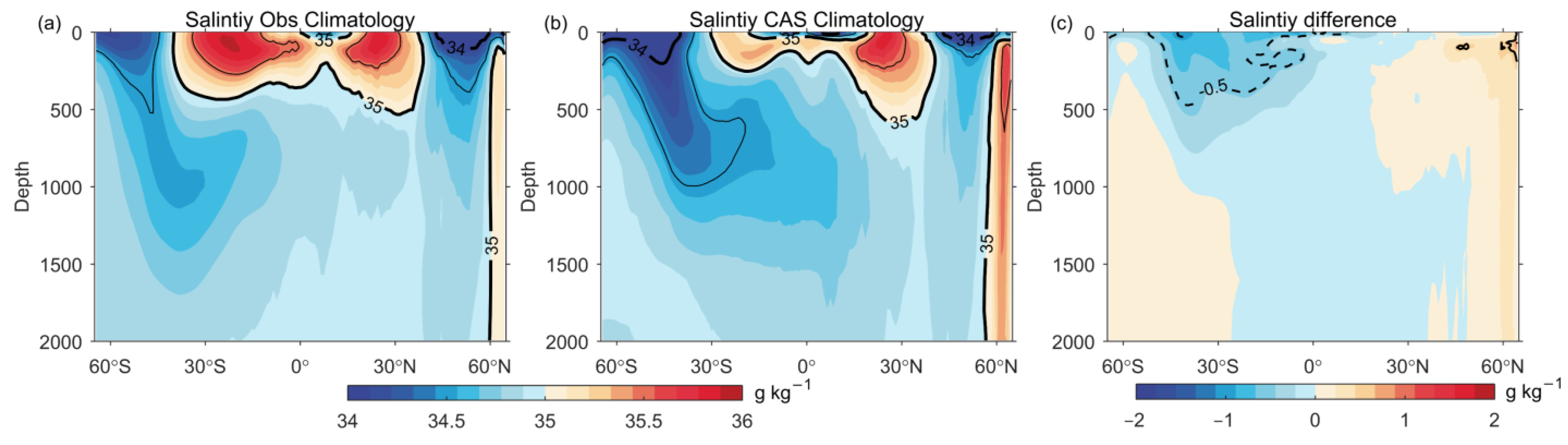
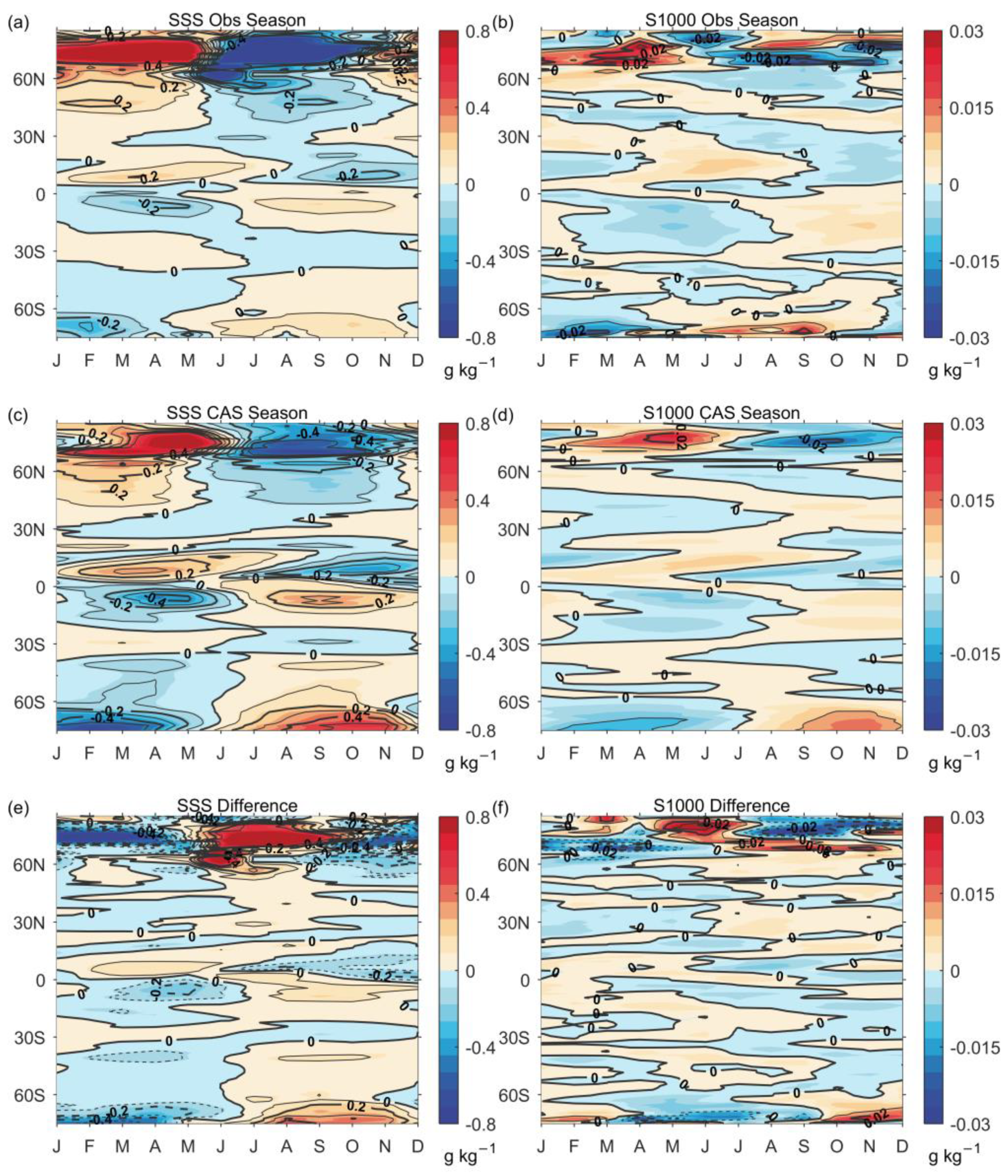
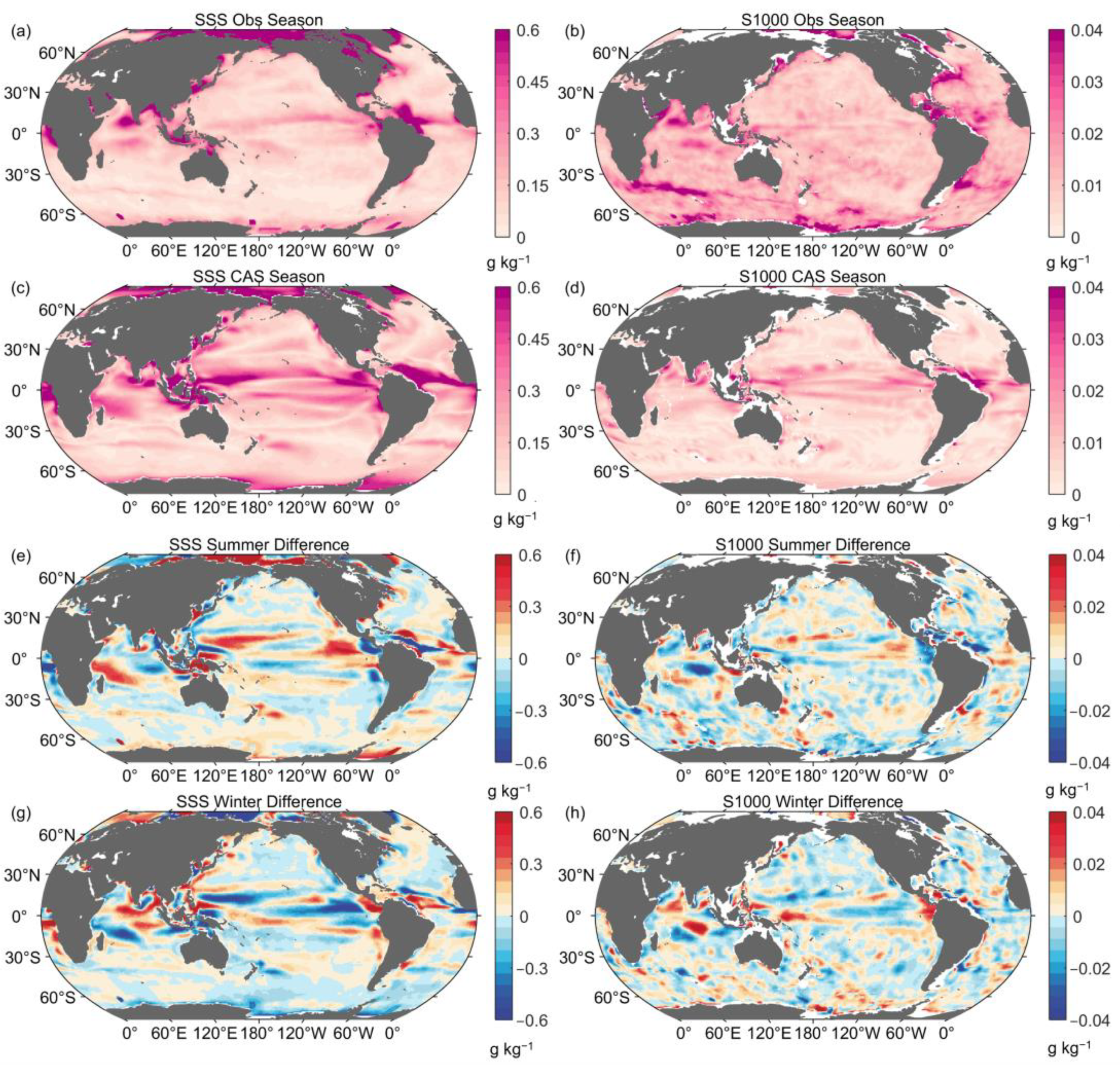
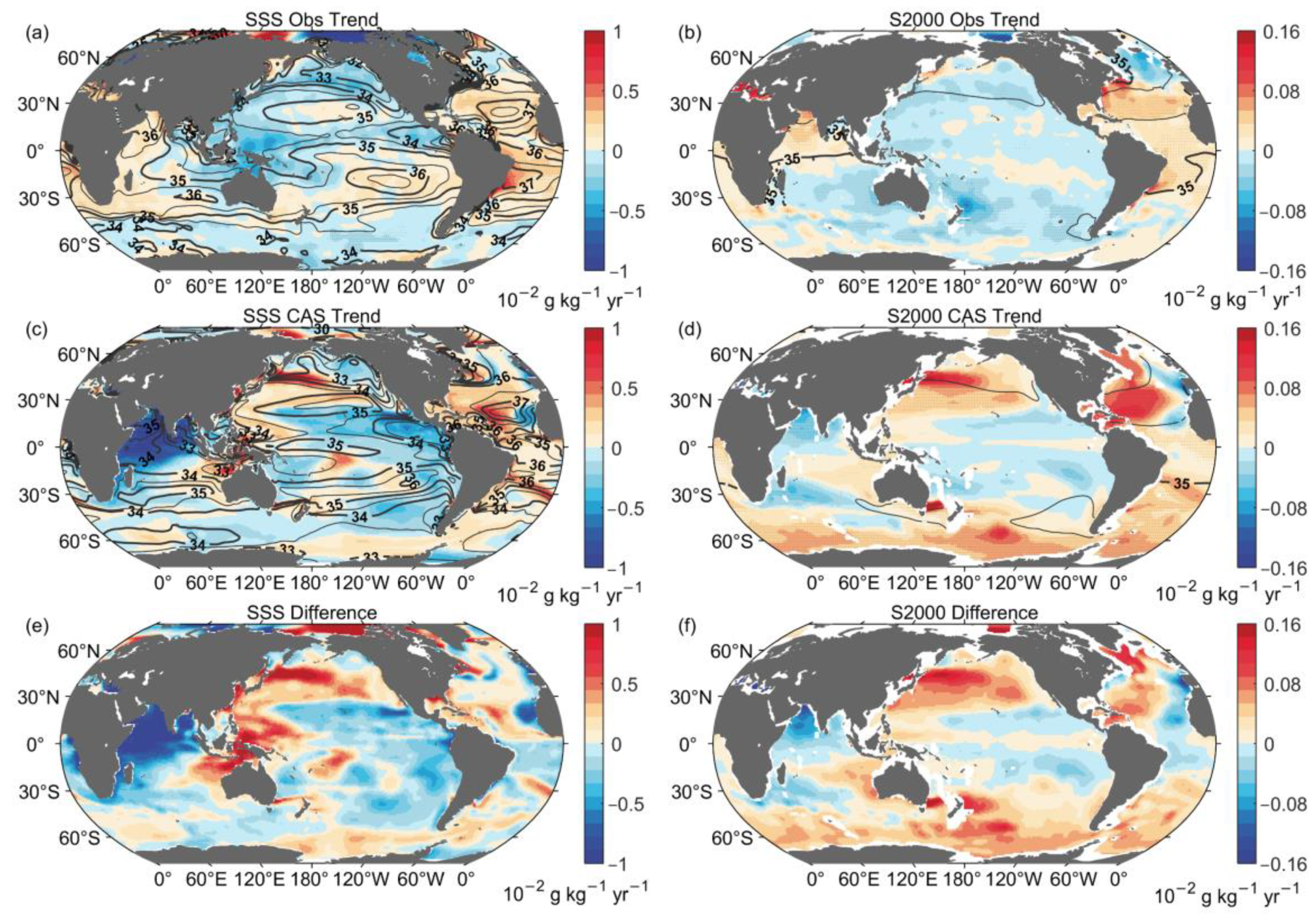
The second version of the Chinese Academy of Sciences Earth System Model, CAS-ESM2-0, is a newcomer that contributes to Coupled Model Intercomparison Project simulations in the community. We evaluated the model’s performance in simulating the salinity for climatology, seasonal cycles, long-term trends, and time series of climatic metrics by comparing it with the ensemble mean of available gridded observations. The results showed that CAS-ESM2-0 could reproduce large-scale patterns of ocean salinity climatology and seasonal variations, despite the fresh biases in the low- and mid-latitudes for climatology, stronger seasonal variation of sea surface salinity within 20° S–20° N, and large uncertainty with the zonal-band structure for 0–1000 m averaged salinity. For long-term changes, the model revealed increased contrast between the salinity of the Atlantic and Pacific basins. However, regional differences in locations and strengths for salinity pattern amplification suggest substantial uncertainty when simulating regional multidecadal salinity changes. The simulated variations in climate metrics for salinity pattern amplification are consistent with the observations and will continue to intensify until the end of this century. Our assessment provides new features of the CAS-ESM2-0 model and supports further studies on model development.
Keywords: ocean salinity; CAS-ESM2-0; Coupled Model Intercomparison Project Phase 6 (CMIP6) ocean salinity; CAS-ESM2-0; Coupled Model Intercomparison Project Phase 6 (CMIP6)