Abstract
A sample of FeCl3-modified phoenix tree fruit char (MPTFC) was prepared using pyrolysis and a facile chemical immersion method; it was proposed as an effective sorbent for Hg0 adsorption in flue gas. The BET, SEM, FTIR, and XPS methods were adopted for the characterizations of the sorbents, and a series of Hg0 adsorption tests were conducted on a bench-scale Hg0 removal setup in the lab. The morphological analysis of the sorbent indicated that the hollow fiber in phoenix tree fruit (PTF) shifted to organized directional porous tubular columns in phoenix tree fruit char (PTFC) after pyrolysis. The surface area of MPTFC increased slightly in comparison with PTF and PTFC. The MPTFC showed excellent performance for Hg0 adsorption at 200 °C in flue gas ambiance, and the Hg0 removal efficiency approached 95% with 5% (wt.%) FeCl3 modification. The presence of O2 may help to activate the MPTFC for Hg0 adsorption in flue gas, thus greatly promoting Hg0 adsorption capability. NO had a positive effect on Hg0 adsorption, while the presence of SO2 in flue gas restrained Hg0 adsorption by MPTFC. Functional groups, such as C-Cl and Fe-O, were successfully decorated on the surface of PTFC by FeCl3 modification, which contributed greatly to Hg0 adsorption. In addition, C=O, lattice oxygen (Oα), and adsorbed oxygen (Oβ) also contributed to Hg0 adsorption and oxidization.
1. Introduction
Mercury (Hg) in the atmosphere is characterized by hypertoxicity, bioaccumulation, and persistence; it is detrimental to both the environment and public health worldwide [1,2,3]. Most of the Hg in the ecosystem originates from human activities, and it is important to control anthropogenic Hg emissions. Coal-fired power plants are considered to be one of the major emission sources of Hg in the atmosphere [4]. To reduce Hg emissions from coal-fired electricity generation, the strictest emission limitations (GB13223-2011) in the world have been announced and put into practice by the Chinese Environmental Ministry. Besides the standards set for conventional sources of pollution, such as PMs, SO2, and NO, clear emission limitations have also been issued, for the first time, for pollution caused by non-conventional heavy metals such as Hg. Recently, a stricter standard with a maximum Hg emission concentration of 1 μg/m3 was proposed for abating Hg emissions from coal-fired power plants [5,6]. Herein, we state that controlling Hg emissions from coal-fired electricity generation is an urgent and significant issue.
Although Hg is present in coal in trace amounts, the total emissions are nevertheless very significant because of the heavy and long-term use of coal as the major source of energy in China [7,8,9,10]. Hg first evaporates as Hg0 vapor during coal combustion; then, a series of chemical reactions occur over a wide range of temperature drops in the flue gas. Hg releases into the atmosphere as three major species, namely Hg0, Hg2+, and Hgp. Hg2+ is easily dissolved in water; thus, it is removed by wet flue gas desulfurization (WFGD) systems. HgP is captured by electrostatic precipitators (ESPs) together with particles. However, Hg0 is hard to remove because of its chemical stability. Therefore, the removal of Hg0 from flue gas is an important problem that poses several difficulties [11,12].
The use of sorbents for the post-combustion removal of Hg0 from flue gas is one promising technology. Many sorbents have been developed for Hg0 adsorption, including carbon-based and non-carbon sorbents [13]. Carbon-based materials, such as activated carbon, show a strong Hg0 adsorption capability. Hg0 is adsorbed on the surface of carbon-based sorbents by surface reactions among Hg0 and surface functional groups. Functional groups that include oxygen, halogens, sulfur, and active metal agents can be functionalized on the surface of the sorbents, enhancing the capability for Hg0 adsorption [14,15,16,17,18]. Activated carbon (AC) has also been adopted for use in Hg0 removal in industrial applications worldwide. However, one of the disadvantages of AC is its high cost for large-scale commercial applications. Therefore, developing low-cost carbon-based sorbents for Hg0 adsorption is essential [19,20,21].
Biomass, which is abundant and easily obtained in nature, is one of the promising candidates for use as a carbon-based substrate for Hg0 adsorption [22,23]. Research has been conducted on modified sargassum chars, waste tea char, seaweed chars, and modified bamboo char to investigate their Hg0 adsorption capabilities [24,25,26,27,28,29]. However, some chars prepared from biomass possess undeveloped pore structures, which result in poor chemical kinetics and mass transfer performance, thus limiting the diffusion of Hg0 in the sorbents. In addition, some of the surface functional groups on the char may break away from the sorbents at high temperatures, thus decreasing Hg0 adsorption capacity.
Phoenix tree fruit (PTF), which is common and abundant in cities all over the world, is the fruit of the French sycamore. The flocculant of the PTF is fiber-shaped with pores, suggesting its potential adsorption capability. The hollow fiber microstructures may be helpful for mass transfer and diffusion, thus promoting the adsorption capability of PTF. However, PTF is not well utilized as a biomass source. For the first time, we use PTF as the raw biomass material to develop a carbon-based material with porous structures for Hg0 adsorption. In this work, we report the properties of FeCl3-modified phoenix tree fruit char (MPTFC) and its capability for Hg0 adsorption. The effects of temperature and the flue gas components on the performance of Hg0 adsorption are also thoroughly presented. We hope to establish a possible pathway for the utilization of PTF for Hg0 reduction in industrial applications.
2. Materials and Methods
2.1. Char Preparation from Phoenix Tree Fruit and FeCl3 Modification
First, the char (PTFC) was prepared by pyrolysis from phoenix tree fruit (PTF) in an N2 atmosphere at a flow rate of 300 mL/min for 30 min at 600 °C. After that, the phoenix tree fruit char (PTFC) was then modified with FeCl3 by a facile chemical immersion method in solutions with different concentrations of FeCl3. Solid FeCl3 was first diluted in DI water to produce FeCl3-containing solutions with weight percentages of 1%, 3%, 5%, and 7%. Then, 1 g PTFC was mixed with 3 mL of each of the FeCl3 solutions of different concentrations in a beaker with magnetic stirring for 60 min. Then, the mixture system was ultrasound shocked for 10 min. After that, the mixtures were filtered and transferred to an oven to dry at 105 °C for 12 h. The modified PTFC (MPTFC) was obtained.
2.2. Analytical Methods
Several characterization methods, namely BET, SEM, EDS, FTIR, and XPS, were adopted for the characterization of MPTFC. The specific area (BET) analysis was adopted for measuring the surface area of the sorbents, and the BET analysis was conducted using the Micrometrics TriStar II 3020 from the United States of America. The SEM analysis method was used for micro-morphology observations, and the tests were conducted on the QUANTA200 from the FEI company at Wuhan University. In addition, the energy dispersive spectrometer (EDS) method was used to identify the elemental distributions in the sorbents in order to confirm the success of the Fe–Cl impregnations. The EDS analysis was conducted using the Horiba 7021-H. Further, the Nicolet 6700 Fourier transform infrared (FTIR) spectrometer was adopted to identify the molecular surface structure and the functional groups on the surface of the sorbents. The FTIR measurements were conducted at Wuhan University. In addition, X-ray photoelectron spectroscopy (XPS) was used for elemental valence state characterizations on the surface of the sorbents. The XPS equipment we used in the experiments was the G2f20 from TECNAI; the reference calibration junction energy was 284.6 eV, and the error was ±0.3 eV.
2.3. Hg Adsorption Experiments
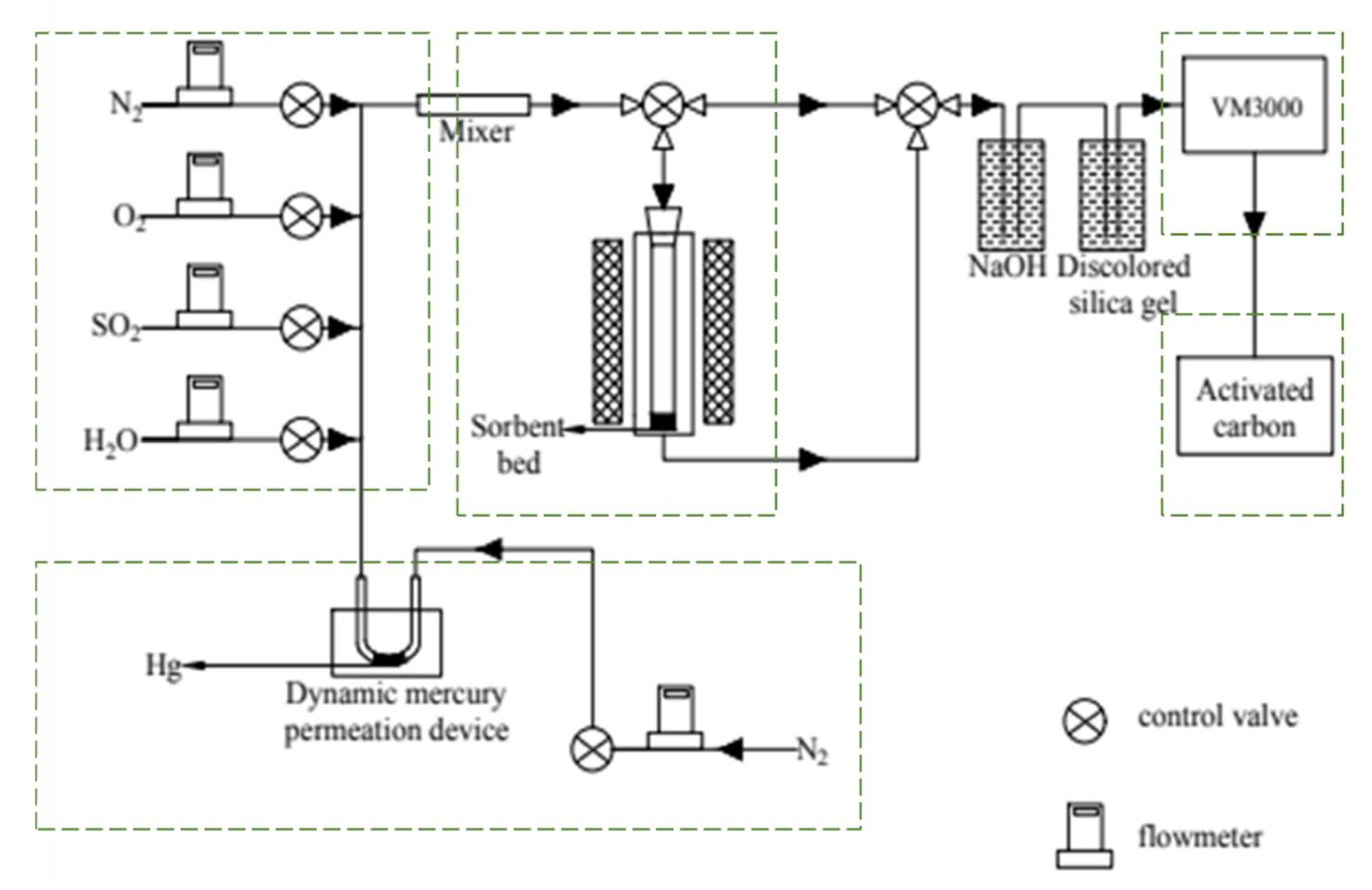
The Hg0 removal setup is shown in Figure 1. The experimental system can be divided into five major parts, namely the gas feeding and mixture system, the Hg0 generation system, the main reaction system, the Hg0 monitoring system, and the exhaust purification system.
Figure 1.
Bench-scale experimental system for Hg0 adsorption.
The gas feeding system chiefly consisted of sources of O2, N2, NO, and SO2 with a mass flow controller for control of the flow rate. The simulated flue gas was mostly composed of the 4 gases listed above, with proportions chosen to simulate the components of flue gas. The Hg0 generation system used a Dynacalibrator Model 500 mercury penetration tube. The steady Hg0 generation system also consisted of a water bath, N2 as a carrier gas with a flow rate of 300 mL/min, a U-shaped tube for Hg0 penetration, and a tube holder. The initial Hg0 concentration was maintained at 50µg/m3 by controlling the temperature of the water bath at 60 °C. The main part of the adsorption reaction system was a vertical fixed bed, which mainly consisted of an electric furnace and an annular quartz tube reactor. The diameter of the inner tube was 14 mm with a quartz sieve plate. During the reactions, the sorbents were placed in the plate covered by quartz wool to inhibit the blowing of the sorbent during gas feeding. During the experiment, the Hg0 vapor passed through the sorbents, and the Hg0 adsorption reactions occurred in the gas–solid reaction system. A VM3000 from Mercury Instruments in Germany was used for Hg0 online monitoring, and the detection precision was about 0.1 μg/m3. The exhaust first passed through activated carbon to dispose of the remaining Hg0 before it was sucked into a vent.
A series of experiments were conducted, and the detailed experimental arrangements are as listed in Table 1. The Hg0 removal efficiency η is calculated by using the following Equation (1):
where η is the Hg0 removal efficiency; Ct and C0 stand for the Hg0 concentration at t seconds and the initial Hg0 concentration, respectively.
Table 1.
Hg0 adsorption experiments on MPTFCs.
3. Results and Discussions
3.1. Properties of the Phoenix Tree Fruit
The proximate and ultimate analyses of PTF are shown in Table 2. It can be observed that the major components are volatiles (72.08%) and fixed carbon (15.93%). However, the moisture and ash contents are relatively low, only accounting for 5.41% and 6.58%, respectively. The high content of volatiles in the materials was the basis for concluding that a flourishing porous structure would result when the char was prepared by pyrolysis; this would enhance adsorption capability. The major elements in PTF are C and O, at around 66% and 35%, respectively. Meanwhile, the contents of H, N, and S are relatively low. The abundance of C and O in PTF creates more chances to form oxygen-containing functional groups during pyrolysis. Those oxygen-containing groups are believed to benefit the promotion of Hg0 adsorption capability. Meanwhile, the lower contents of N and S reduce the possibility of N- and S-bearing gas emissions during pyrolysis, thus reducing the potential environmental pollution caused by pyrolysis.
Table 2.
Proximate and ultimate analyses of the phoenix tree fruit.
3.2. SEM Observations
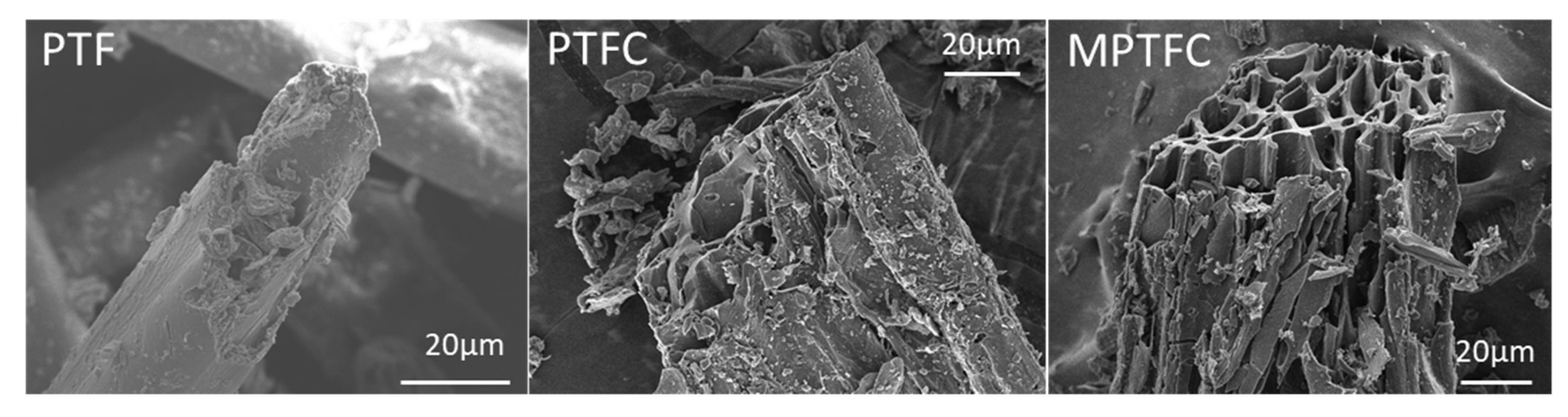
The SEM observations for PTF, PTFC, and MPTFC are shown in Figure 2. It can be seen that the original PTF has a hollow fiber shape with compact layer structures, and the diameter of the fiber is about 20 μm. Both the surface and the inner layer of the fiber seem to be smooth and without pores. However, the micro-morphology of PTFC is very different in comparison to that of PTF. The hollow fiber shape shifts to organized directional tubular columns. A single tubular structure is about 10 μm in diameter, while the column is about 50 μm in diameter. Some cracks and pores can also be observed on the surface of the tubular structure. Those alterations in morphology are highly suspected to result from the release of volatiles during pyrolysis. The violent gas explosion from the inside of the PTF caused the expansion of the layer structures, thus producing the organized tubular columns. Those changes benefited PTFC in terms of adsorption because of the relatively higher number of porous structures. The micro-morphology of MPTFC is almost the same as that of PTFC, which indicates that the FeCl3 modifications only functionalized the surface of the material.
Figure 2.
SEM observations of the sorbents.
3.3. BET Analysis of the Sorbents
The BET(BET surface area, SBET, m2/g) analysis results are shown in Table 3. The results reveal that the surface area of PTF is around 2.4 m2/g, and the surface area of PTFC is around 3.4 m2/g. The increase in the surface area from PTF to PTFC is highly suspected to be linked to the volatilization of the volatile matter, including CO2 and H2O. The release of those gas components produces porous structures, thus increasing the surface area. However, the surface area of MPTFC is larger in comparison with PTF and PTFC. The concentrations of the precursor also have some impact on the surface area. When the concentration of FeCl3 increased from 3% (wt.%) to 5% (wt.%), the surface area increased from 5.8 m2/g to 10.6 m2/g. However, when the concentration increased to 7% (wt.%), the surface area decreased slightly to 8.4 m2/g; this is highly suspected to be linked to the blocking of the pores and tubular channels by the higher concentration of the Fe–Cl precursor.
Table 3.
Surface area of the sorbents (m2/g).
3.4. Hg0 Adsorption Performance
3.4.1. Effects of Temperature on Hg0 Removal by PTFC
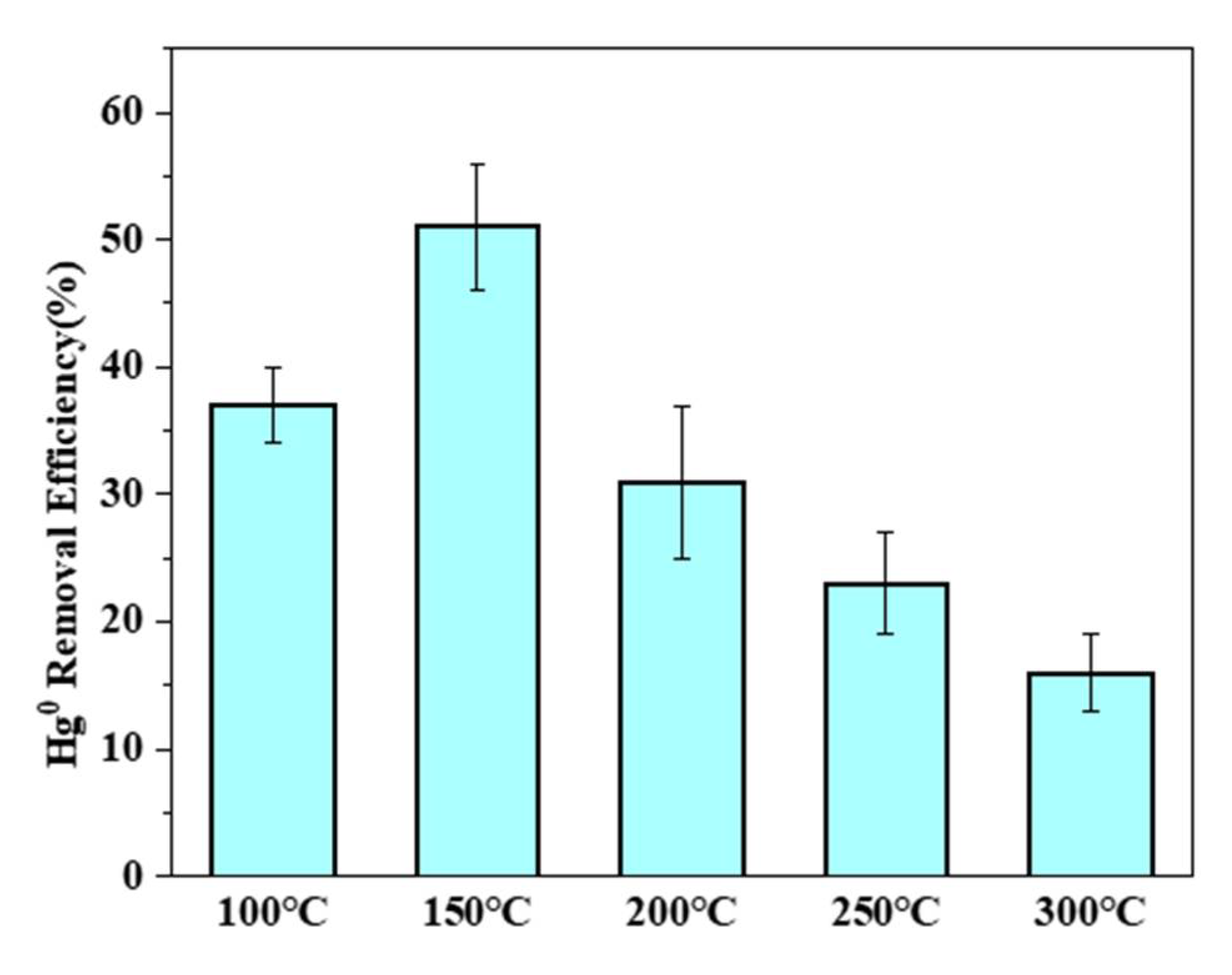
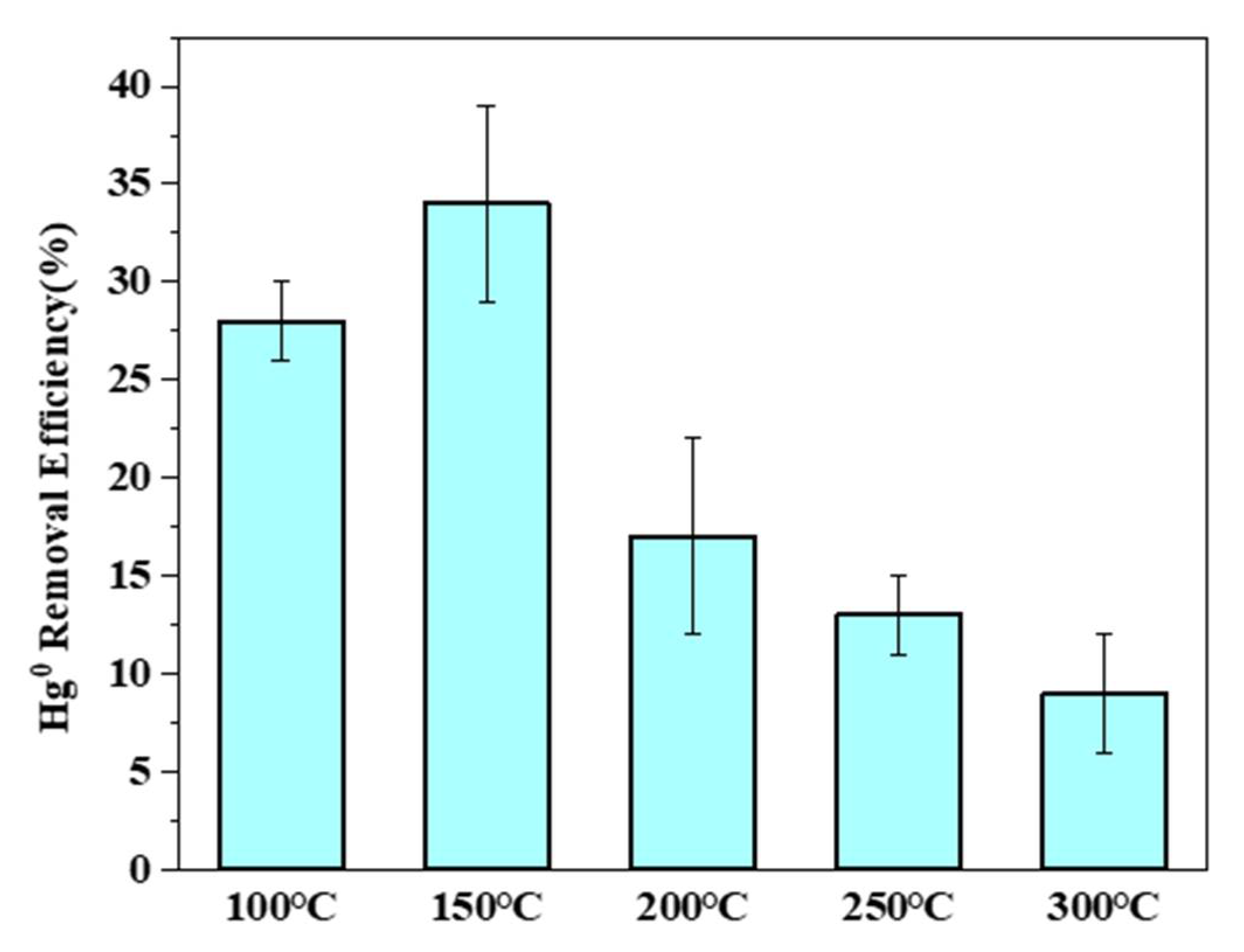
To evaluate the effects of temperature on the performance efficiency of PTFC for Hg0 removal, we conducted the Hg0 adsorption experiments at different temperatures in the N2 ambiance. The Hg0 removal efficiencies as a function of temperature are shown in Figure 3. It can be seen that the optimal temperature for Hg0 adsorption by PTFC was 150 °C; the efficiency was greater than 50%. As the temperature increased, the Hg0 removal efficiency of PTFC decreased, falling to 16% when the temperature increased to 300 °C. The results indicate that physical adsorption may dominate the Hg0 adsorption of PTFC in N2 +8% O2 ambiance. Hg0 was physically adsorbed on the surface of the PTFC and then diffused in the tubular columns in the gas flow fields. The binding force between the Hg0 and the PTFC was weak, thus, it was desorbed as temperature increased as a result of the intensification of molecular motion.
Figure 3.
Hg0 removal efficiency of PTFC as a function of temperature.
3.4.2. Effects of Temperature on Hg0 Removal by MPTFC
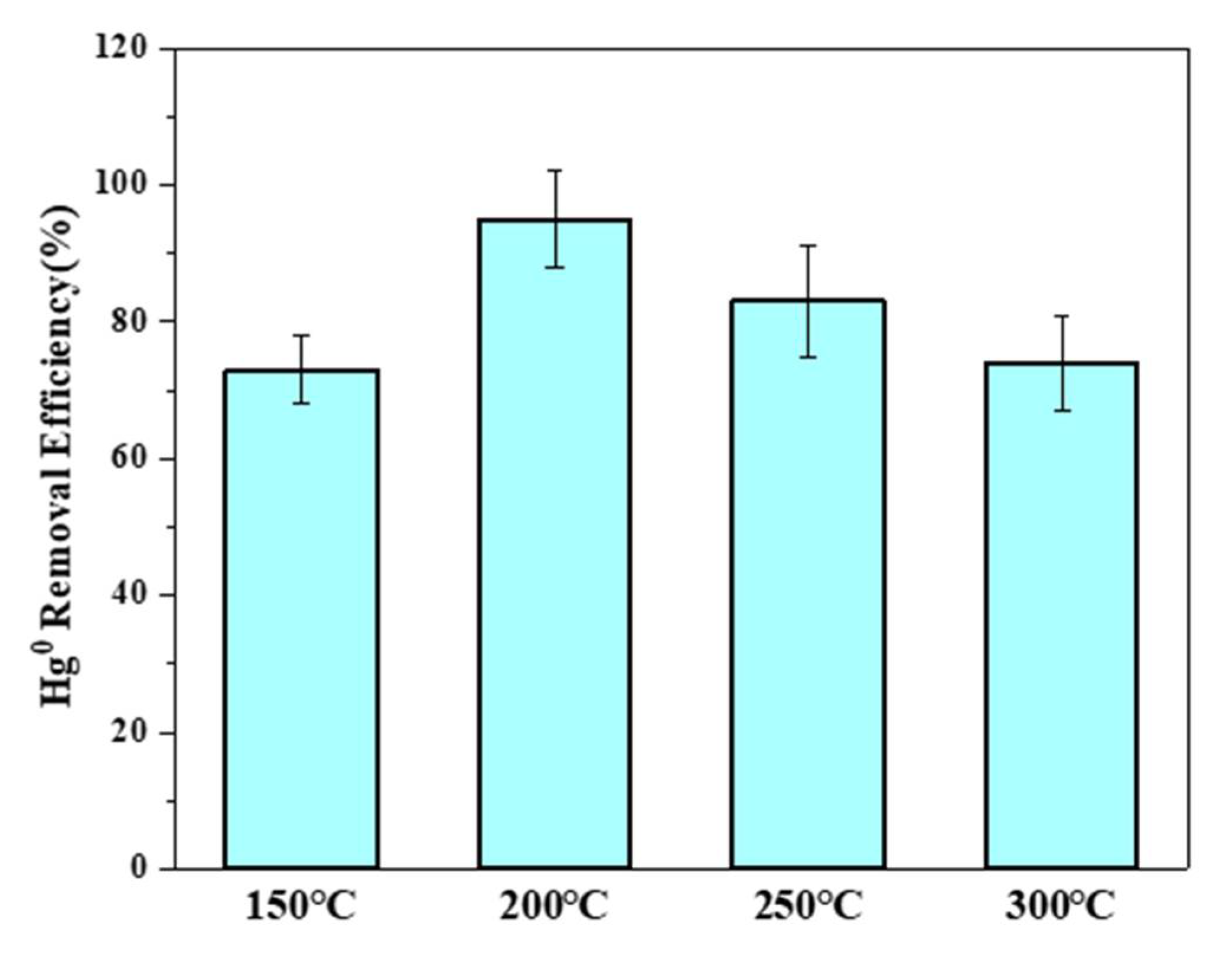
The Hg0 adsorption capabilities of MPTFC as a function of temperature are shown in Figure 4. It can be seen that FeCl3 modification of PTFC can greatly promote Hg0 adsorption capability in comparison with PTFC. However, temperature also has an impact on MPTFC’s efficacy for Hg0 removal. Its Hg0 removal efficiency increased from 73% to 95% when the temperature increased from 150 °C to 200 °C, respectively. However, the Hg0 removal efficiency decreased to 83% and 74% when the temperature continued increasing to 250 °C and 300 °C, respectively. It can be concluded that the optimal temperature for Hg0 adsorption by MPTFC is 200 °C, which is slightly different from that of PTFC. It can be inferred that the Hg0 adsorption mechanisms are different for PTFC and MPTFC. Regarding PTFC, Hg0 physical adsorption on the surface of the sorbent is more likely to be the dominating reaction. However, high temperature intensifies molecular thermal motion, thus weakening the surface force of Hg0 adsorption by PTFC [30,31]. However, when the Fe–Cl functional groups are introduced on the surface of the sorbent, both physical and chemical adsorption reactions occur. The increase in temperature in a certain range promotes chemisorption reactions, thus enhancing the Hg0 adsorption capability.
Figure 4.
Effects of temperature on the Hg0 removal capability of MPTFC.
3.4.3. Effects of FeCl3 Concentrations on MPTFC for Hg0 Removal
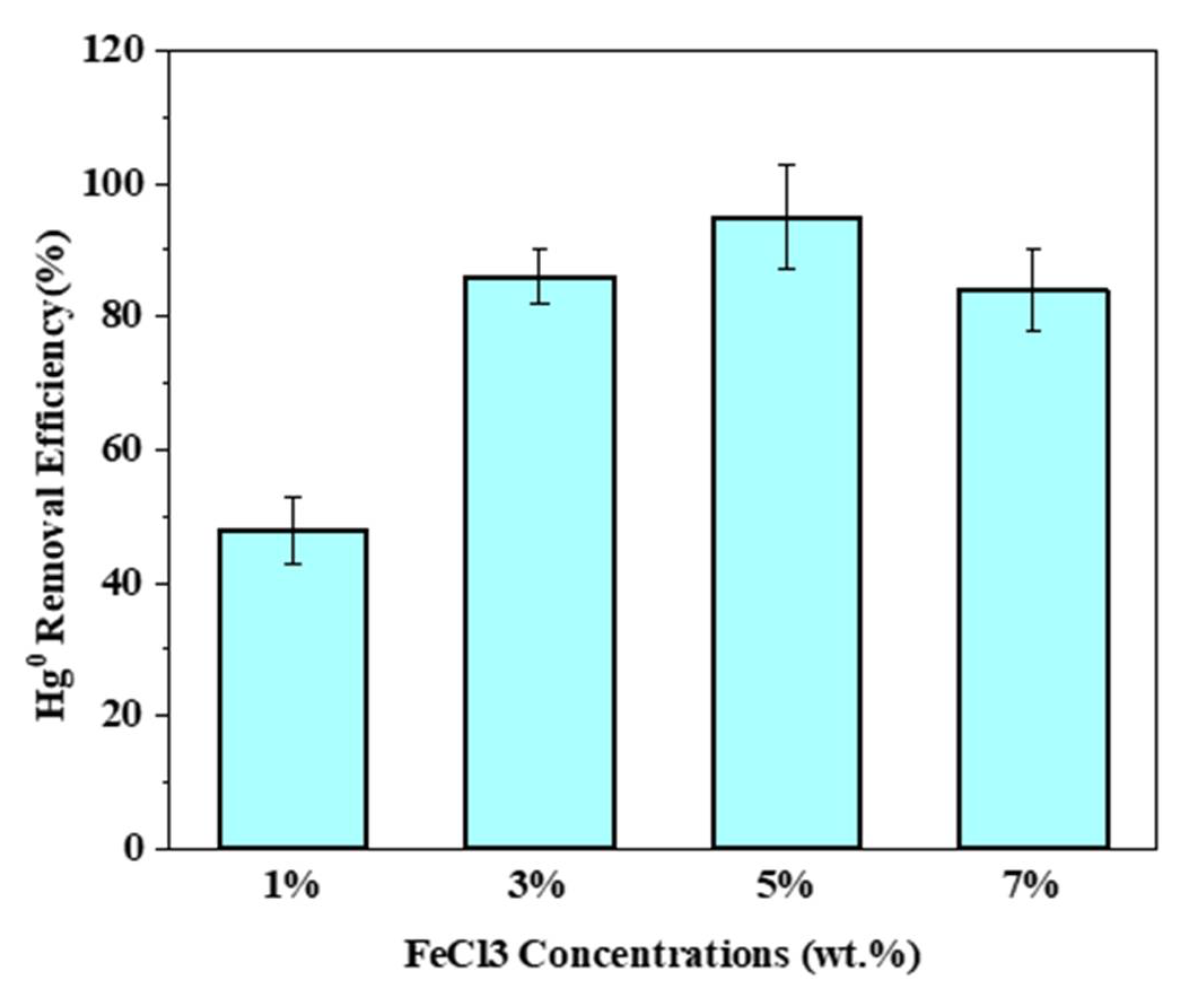
The FeCl3 precursor we used for the PTFC modifications was prepared in a concentration gradient from 1% (wt.%) to 7% (wt.%) with intervals of 2% (wt.%). The series of MPTFCs with different levels of FeCl3 modifications was tested for Hg0 adsorption capability at 200 °C in N2 + 8%O2 ambiance. The Hg0 removal efficiencies for all MPTFCs are shown in Figure 5.
Figure 5.
Hg0 adsorption by MPTFCs with different concentrations of FeCl3 as a precursor.
The introduction of FeCl3 to PTFC can help promote Hg0 adsorption capability. The Hg0 removal capabilities of MPTFC showed an increasing trend with increasing concentrations of FeCl3 from 1% (wt.%) to 5% (wt.%). The corresponding Hg0 removal efficiencies increased from 48% to 95%. However, Hg0 removal efficiency decreased to 84% when the FeCl3 concentration continued increasing to 7% (wt.%). This result indicates that the most optimal concentration of FeCl3 as a precursor for PTFC modification was 5% (wt.%). It can be seen that the presence of Fe3+ and Cl− had positive consequences for Hg0 oxidization, thus enhancing the chemisorption reactions for Hg0 on the surface. Fe3+ has a strong oxidization capability in reactions, while Cl− is easy to complex with Hg-containing compounds, thus causing Hg0 oxidization in the reaction. In addition, the modification of PTFC with FeCl3 also enlarged the surface area of the sorbents, which contributed to Hg0 removal. The BET analysis also indicated that the surface area of MPTFC with the 5% FeCl3 pretreatment was the highest in comparison with the other MPTFCs.
3.4.4. Effects of O2 on Hg0 Removal by the Sorbents
Here, we discuss the effects of the presence of O2 on the adsorption capabilities of MPTFC. The MPTFC modified with 5% FeCl3 was tested for its Hg0 adsorption capability in N2 ambiance at different temperatures. The results are shown in Figure 6. It can be observed that MPTFC did not perform as well as in the ambiance containing O2. The Hg0 removal efficiency decreased significantly in comparison with that observed in the 8% O2 + N2 ambiance. This result indicates that O2 played a key role in Hg0 oxidization in the reactions. The highest Hg0 removal efficiency was observed at 150 °C, with an efficiency of less than 35%. The Hg0 removal efficiency was only 17% at 200 °C. It can also be inferred that physical adsorption probably dominated the Hg0 removal reactions in the absence of O2. Though Fe3+ and Cl− have very strong oxidization abilities, their reactions with Hg0 can only be activated and accelerated with the presence of O2. The presence of O2 in the feeding gas serves as a supplement for adsorbed oxygen and lattice oxygen in reactions, which is of significance for Hg0 oxidization.
Figure 6.
Hg0 adsorption capabilities of MPTFC in N2 ambiance.
3.4.5. Effects of Flue Gas Composition on the Hg0 Removal Performance of MPTFC
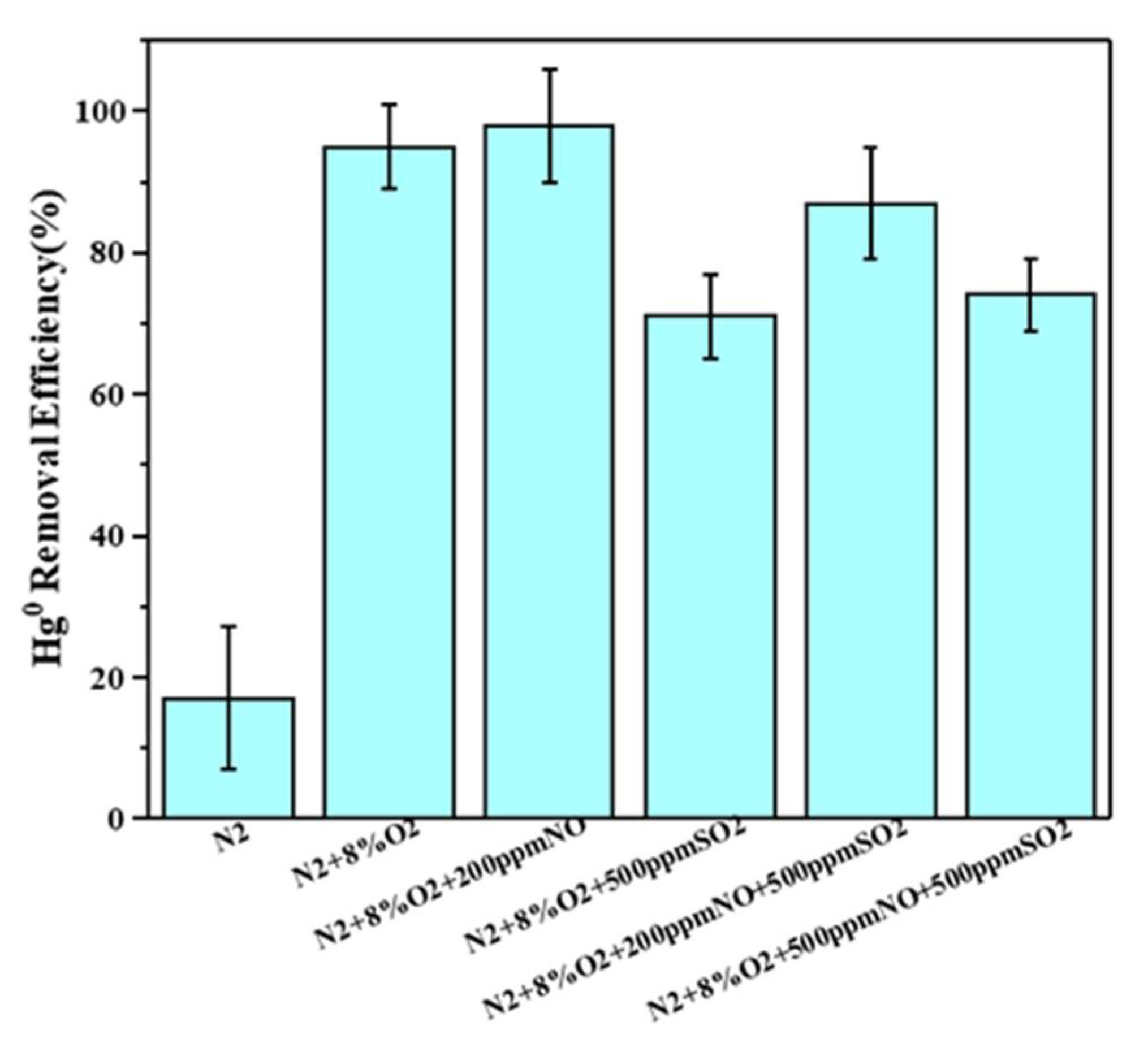
In order to evaluate the impact of the flue gas components on Hg0 adsorption of MPTFC, certain concentrations of NO and SO2 were introduced into the reaction system in the experiments; the results are shown in Figure 7. It can be observed that the gas components had some impact on Hg0 removal capability. Specifically, Hg0 removal efficiency in N2 was around 17%, whereas Hg0 removal efficiency was boosted to around 95% when O2 was introduced into the reaction system. When 200 ppm NO was added into the reaction system, Hg0 removal efficiency increased to 98%. However, Hg0 removal efficiency decreased to 71% when 500 ppm SO2 was added into the reaction system, indicating the inhibiting effects of the SO2 injection. When both NO and SO2 were present in the reaction system, an improvement in Hg0 adsorption capability was observed, and the Hg0 removal efficiency increased to 87% in comparison with the SO2-only ambiance. It can also be observed that an increase of NO in the flue gas from 200 ppm to 500 ppm inhibited Hg0 adsorption capability slightly, which was probably due to competitive adsorption between NO and Hg0 on the surface of the MPTFC. When NO was at a low concentration, the presence of NO promoted Hg0 adsorption capability. This result was probably because the NO adsorbed on the surface formed NO2 and NO, and those activated species reacted with Hg0 to form HgO and Hg (NO3)2.
Figure 7.
Gas component effects on the Hg0 adsorption of MPTFC.
3.5. FTIR Measurements of MPTFC
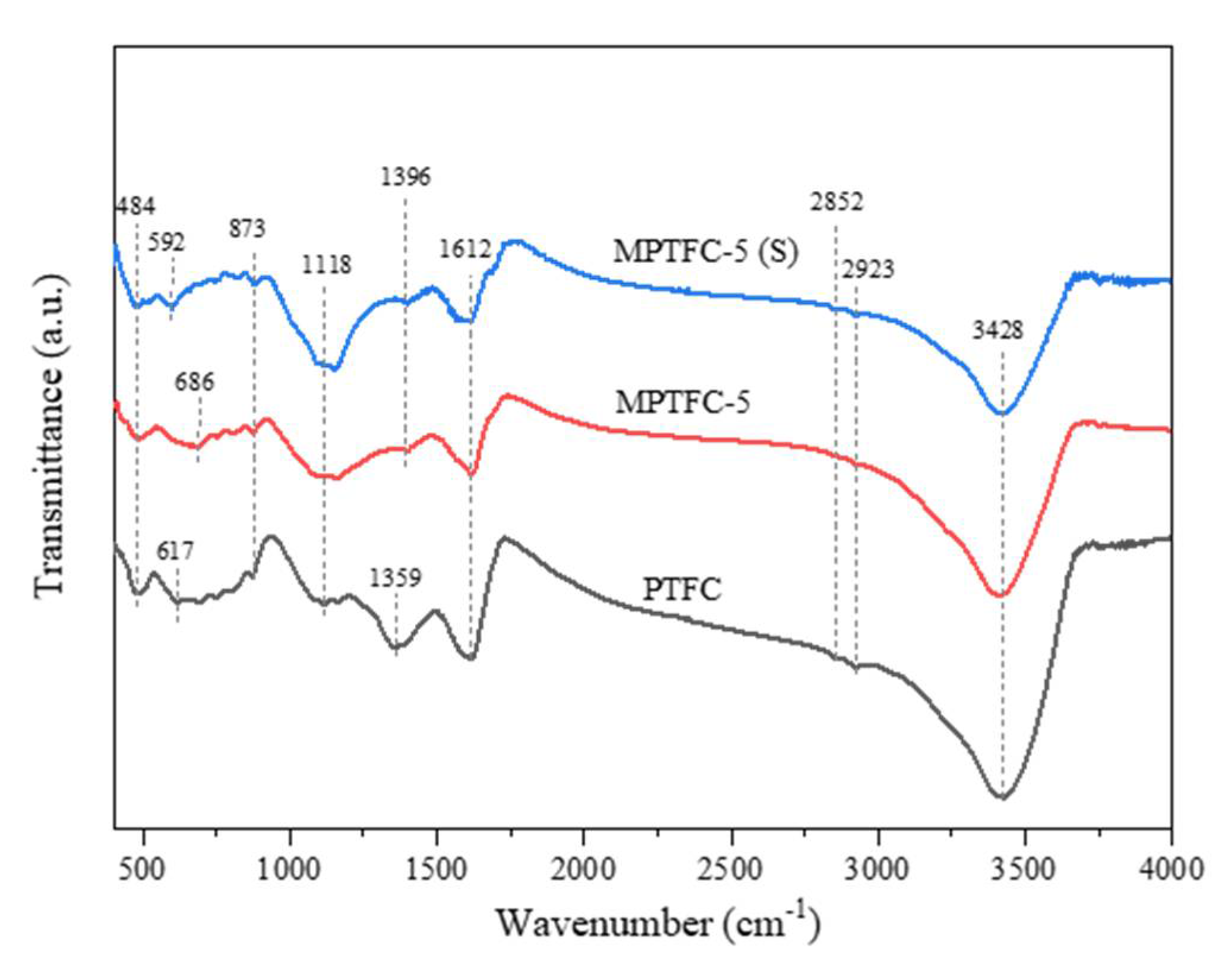
Figure 8 shows the FTIR spectrums of PTFC, MPTFC, and spent MPTFC(S). It is evident that, after MPTFC was modified using FeCl3 as a precursor, an obvious in-plane bending vibration of the C–H bond can be found at 1396 cm−1 in comparison with PTFC. In addition, the C–Cl bonding of MPTFC can also be found in the wavenumber of 686 cm−1, indicating that Cl− was successfully modified on the surface of PTFC. There is also a Fe–O characteristic peak showing in the wavenumber of 592 cm−1 for MPTFC(S), which is not identified for PTFC. This result indicates that the chemical reactions between FeCl3 and PTFC occurred in the sample preparation. The presence of C–Cl and Fe–O in the sample indicates that FeCl3 transformed into Cl-containing and Fe-containing active functional groups. Both of them contribute to Hg0 adsorption. Further, it can also be observed that some of the carbon-containing functional groups disappeared after the Hg0 adsorption reactions, indicating possible reactions between Hg0 and those carbon-containing functional groups.
Figure 8.
FTIR spectrums of PTFC, MPTFC, and MPTFC(S).
3.6. XPS Analysis of MPTFC before and after the Reactions
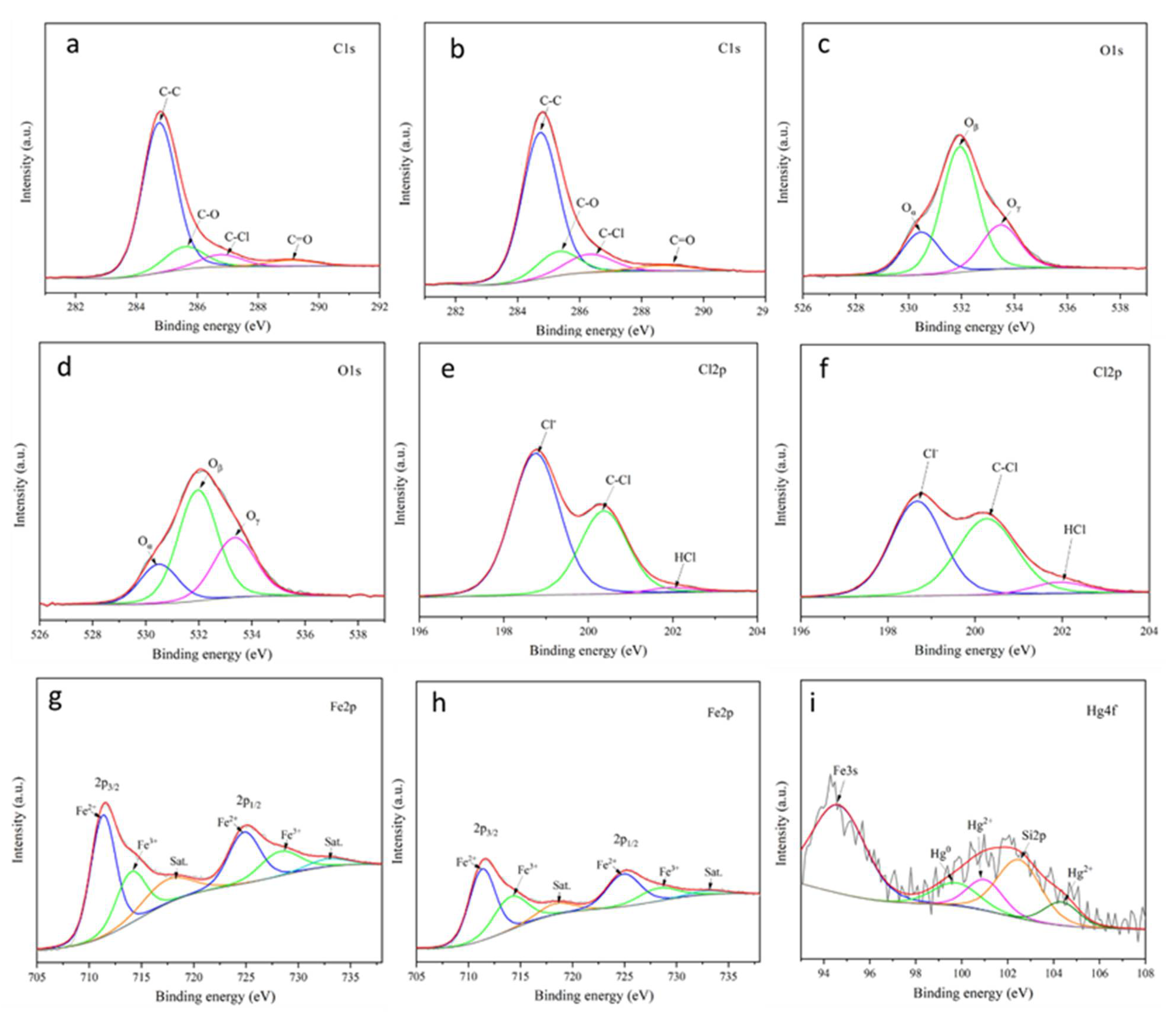
For a deep understating of the Hg0 adsorption mechanisms of MPTFC, XPS analysis was adopted for the identified C 1s, O 1s, Cl 2p, Fe 2p, and Hg 4f spectrums for the sorbents before and after the reactions. The results are displayed in Figure 9. The C 1s spectrums for MPTFC before and after the Hg0 adsorption experiments are shown in Figure 9a,b. Four major peaks can be observed, which are assigned as follows: C–C or C–H bonding at 284.3–284.8 eV, C–O or C–OH bonding at 284.9–285.6 eV, C–Cl bonding at 286.0–286.9 eV, and C=O bonding at 288.5–289.1 eV [32]. The relative contents of those C-bonding functional groups before and after the reactions are shown in Table 4. It can be observed that the content of the C–Cl and C=O functional groups decreased slightly after Hg0 adsorption, while the contents of the C–O, C–C, and C–H functional groups increased after the reactions. This result indicates that C=O probably transformed into C–O or C–OH and further transformed into C–C or C–H groups. The decrease in C–Cl indicates that C–Cl was probably involved in the Hg0 adsorption process in the reaction. These results are in accordance with the FTIR results.
Figure 9.
XPS spectrums of C 1s, O 1s, Cl 2p, Cl 2p, and Hg 4f of MPTFCs. (a,b) The C 1s spectrums for MPTFC before (a) and after (b) the Hg0 adsorption experiments; (c,d) The O 1s spectrums for MPTFC before (c) and after (d) the Hg0 adsorption experiments; (e,f) The Cl 2p spectrums before (e) and after (f) the reactions; (g,h) The Fe 2p spectrums of MPTFC before (g) and after (h) the reactions; (i) The Hg 4f spectrums for spent MPTFC.
Table 4.
C-bonding functional groups before and after reactions on MPTFC.
The O 1s spectrums for MPTFC before and after the Hg0 adsorption experiments are shown in Figure 9c,d. It can be observed that lattice oxygen (Oα), adsorbed oxygen (Oβ), and H2O molecular oxygen (Oγ) can all be identified in the spectrums [33], which are assigned as 530.1–530.9 eV, 531.3–532.0 eV, and 532.6–533.5 eV, respectively. It can be observed that the content of Oα reduced from 20.9% to 17.29%, while Oβ decreased from 87.83% to 51.15%. The consumption of Oα and Oβ indicates that both were involved in the Hg0 adsorption reactions [34].
The Cl 2p spectrums before and after the reactions are shown in Figure 9e,f. It can be observed that Cl− and C–Cl are assigned as 198–198.9 eV and 199.6–200.4 eV, respectively [35]. The content of Cl− increased from 48.98% to 61.84%, while the C–Cl content decreased from 44.76% to 36.65%. It can be inferred that, during the process of Hg0 adsorption, C–Cl bonds were consumed, and Cl− was produced in the reactions. Both XPS and FTIR confirmed that C–Cl was found to be involved in the Hg0 adsorption reactions.
The Fe 2p spectrums of MPTFC before and after the reactions are shown in Figure 9g,h. The Fe2+ assigned to both 711.3–711.4 eV and 724.82 eV can be observed [36]. In addition, Fe3+ at 713.9–714 eV, 728.2–728.3 eV, and 732.7–732.8 eV can also be seen. Making a comparison between MPTFC before and after the reactions, it can be found that the content of Fe2+ increased from 54.24% to 57.93%, while that of Fe3+ decreased from 45.76% to 42.25%. This result indicates that Fe3+ was involved in Hg0 removal during the experiment and then transformed to Fe2+. The Fe-bearing oxides, probably Fe2O3 produced by FeCl3 decomposition, may have provided lattice oxygen (Oα) that reacted with Hg0 on the surface of the sorbent, thus forming the HgO- and Fe2+-bearing oxides, such as FeO and Fe3O4 [37].
The Hg 4f spectrums for spent MPTFC are shown in Figure 9i. Several peaks can be observed. Characteristic peaks of Hg2+ can be observed at 101 eV and 104.35 eV [38], while Hg0 can be found at 99.76 eV. The obvious peaks of Hg2+ confirm that Hg0 was oxidized to form Hg2+. The presence of Hg0 is highly suspected to result from physical adsorption on the surface of MPTFC. The presence of Cl− with Hg2+ is highly suspected to easily form Hg2Cl2 or HgCl2. Both physical and chemical adsorptions occurred on MPTFC in the reactions. Several species, such as O2, Fe3+, and Cl−, were great contributors to Hg0 oxidation in the reactions.
4. Conclusions
An effective Hg0 adsorbent, namely FeCl3-modified phoenix tree fruit char (MPTFC), was developed using pyrolysis of phoenix tree fruit (PTF) combined with a FeCl3 chemical immersion method. MPTFC was tested for Hg0 adsorption capability in flue gas at different temperatures. Several analytical methods, specifically SEM, BET, EDS, FTIR, and XPS, were adopted to characterize the physicochemical properties of the sorbents. Phoenix tree fruit char (PTFC) presented as a tubular column micro-structure, which offered benefits for Hg0 diffusion and adsorption. The FeCl3 modification of PTFC only functionalized the surface of the sorbent without any alternations to the micro-structure of PTFC. Functional groups, such as C–Cl and Fe–O, were successfully decorated on the surface of PTFC after FeCl3 modification. MPTFC exhibited an excellent Hg0 adsorption capability of around 95% with 5% (wt.%) FeCl3 modification at 200 °C in flue gas. O2 was important for Hg0 adsorption for MPTFCs. The presence of NO at a certain concentration also promoted Hg0 removal efficiency, while SO2 had negative impacts on Hg0 adsorption. Functional groups, such as C–Cl and Fe–O, played a key role in Hg0 adsorption, while C=O, lattice oxygen (Oα), and adsorbed oxygen (Oβ) also contributed to Hg0 adsorption and oxidization. Both the physical and chemical adsorption of Hg0 on MPTFC occurred, and most of the Hg0 on MPTFC probably oxidized to HgO and Hg2Cl2/HgCl2.
Author Contributions
Conceptualization, C.T. and W.C.; methodology, Z.H., W.C. and M.L.; validation, C.T.; writing—original draft preparation, W.C.; writing—review and editing, C.T.; supervision, C.T. All authors have read and agreed to the published version of the manuscript.
Funding
This research was funded by the National Natural Science Foundation of China (Grant Nos. 52176127 and 51506066).
Institutional Review Board Statement
Not applicable.
Informed Consent Statement
Not applicable.
Data Availability Statement
Not applicable.
Acknowledgments
The authors gratefully acknowledge the financial support from the National Natural Science Foundation of China (Grant Nos. 52176127 and 51506066).
Conflicts of Interest
The authors declare no conflict of interest.
References
- Li, H.; Zhu, L.; Wang, J.; Li, L.; Shih, K. Development of Nano-Sulfide Sorbent for Efficient Removal of Elemental Mercury from Coal Combustion Fuel Gas. Environ. Sci. Technol. 2016, 50, 9551–9557. [Google Scholar] [CrossRef] [PubMed]
- Chen, L.; Liang, S.; Liu, M.; Yi, Y.; Mi, Z.; Zhang, Y.; Li, Y.; Qi, J.; Meng, J.; Tang, X.; et al. Trans-provincial health impacts of atmospheric mercury emissions in China. Nat. Commun. 2019, 10, 1–12. [Google Scholar] [CrossRef] [PubMed] [Green Version]
- Xu, Y.; Luo, G.; Zhang, Q.; Li, Z.; Zhang, S.; Cui, W. Cost-effective sulfurized sorbents derived from one-step pyrolysis of wood and scrap tire for elemental mercury removal from flue gas. Fuel 2020, 285, 119221. [Google Scholar] [CrossRef]
- Liu, H.; Chang, L.; Liu, W.; Xiong, Z.; Zhao, Y.; Zhang, J. Advances in mercury removal from coal-fired flue gas by mineral adsorbents. Chem. Eng. J. 2020, 379, 122263. [Google Scholar] [CrossRef]
- Wu, Q.; Wang, S.; Liu, K.; Li, G.; Hao, J. Emission-Limit-Oriented Strategy To Control Atmospheric Mercury Emissions in Coal-Fired Power Plants toward the Implementation of the Minamata Convention. Environ. Sci. Technol. 2018, 52, 11087–11093. [Google Scholar] [CrossRef]
- Yang, Y.; Liu, J.; Ding, J.; Yu, Y.; Zhang, J. Mercury/oxygen reaction mechanism over CuFe2O4 catalyst. J. Hazard. Mater. 2022, 424, 127556. [Google Scholar] [CrossRef]
- Sasmaz, E.; Kirchofer, A.; Jew, A.D.; Saha, A.; Abram, D.; Jaramillo, T.F.; Wilcox, J. Mercury chemistry on brominated activated carbon. Fuel 2012, 99, 188–196. [Google Scholar] [CrossRef]
- Wang, S.; Hao, J. Air quality management in China: Issues, challenges, and options. J. Environ. Sci. 2012, 24, 2–13. [Google Scholar] [CrossRef]
- Yang, W.; Wang, Z.; Liu, Y. Review on Magnetic Adsorbents for Removal of Elemental Mercury from Flue Gas. Energy Fuels 2020, 34, 13473–13490. [Google Scholar] [CrossRef]
- Zhao, S.; Pudasainee, D.; Duan, Y.; Gupta, R.; Liu, M.; Lu, J. A review on mercury in coal combustion process: Content and occurrence forms in coal, transformation, sampling methods, emission and control technologies. Prog. Energy Combust. Sci. 2019, 73, 26–64. [Google Scholar] [CrossRef]
- Zhou, Q.; Tao, X.; Di, G.; Shang, Y.; Lu, P.; Xu, G.; Liu, M.; Zheng, Y.; Dong, L. SO2 Tolerance and Mechanism of Elemental Mercury Removal from Flue Gas by a Magnetic Recyclable Fe6Mn0.8Ce0.2Oy Sorbent. Energy Fuels 2021, 35, 5101–5109. [Google Scholar] [CrossRef]
- Li, H.; Zu, H.; Yang, Z.; Yang, J.; Xu, H.; Qu, W. The adsorption mechanisms of Hg0 on marcasite-type metal selenides: The influences of metal-terminated site. Chem. Eng. J. 2021, 406, 126723. [Google Scholar] [CrossRef]
- Yang, J.; Xu, H.; Zhao, Y.; Li, H.; Zhang, J. Mercury Removal from Flue Gas by Noncarbon Sorbents. Energy Fuels 2021, 35, 3581–3610. [Google Scholar] [CrossRef]
- Wu, S.; Li, H.; Li, L.; Wu, C.-Y.; Zhang, J.; Shih, K. Effects of flue-gas parameters on low temperature NO reduction over a Cu-promoted CeO2–TiO2 catalyst. Fuel 2015, 159, 876–882. [Google Scholar] [CrossRef]
- Zhang, J.; Duan, Y.; Zhou, Q.; Zhu, C.; She, M.; Ding, W. Adsorptive removal of gas-phase mercury by oxygen non-thermal plasma modified activated carbon. Chem. Eng. J. 2016, 294, 281–289. [Google Scholar] [CrossRef]
- Zheng, J.-M.; Shah, K.J.; Zhou, J.-S.; Pan, S.-Y.; Chiang, P.-C. Impact of HCl and O2 on removal of elemental mercury by heat-treated activated carbon: Integrated X-ray analysis. Fuel Process. Technol. 2017, 167, 11–17. [Google Scholar] [CrossRef]
- Tang, R.; Yang, W.; Wang, H.; Zhou, J.; Zhang, Z.; Wu, S. Preparation of Fly-Ash-Modified Bamboo-Shell Carbon Black and Its Mercury Removal Performance in Simulated Flue Gases. Energy Fuels 2016, 30, 4191–4196. [Google Scholar] [CrossRef]
- Yang, J.; Zhao, Y.; Zhang, J.; Zheng, C. Removal of elemental mercury from flue gas by recyclable CuCl2 modified magnetospheres catalyst from fly ash. Part 1. Catalyst characterization and performance evaluation. Fuel 2016, 164, 419–428. [Google Scholar] [CrossRef]
- Yang, W.; Chen, H.; Han, X.; Ding, S.; Shan, Y.; Liu, Y. Preparation of magnetic Co-Fe modified porous carbon from agricultural wastes by microwave and steam activation for mercury removal. J. Hazard. Mater. 2020, 381, 120981. [Google Scholar] [CrossRef]
- Li, H.; Feng, S.; Yang, Z.; Yang, J.; Liu, S.; Hu, Y.; Zhong, L.; Qu, W. Density Functional Theory Study of Mercury Adsorption on CuS Surface: Effect of Typical Flue Gas Components. Energy Fuels 2019, 33, 1540–1546. [Google Scholar] [CrossRef]
- Zhang, X.; Duan, Y.; Wang, H.; Ren, S.; Wei, H. Effect of flue gas components on Hg0 oxidation and adsorption by modified walnut shell coke in O2/CO2 atmosphere. Asia-Pac. J. Chem. Eng. 2020, 15, e2423. [Google Scholar] [CrossRef]
- Gao, L.; Li, C.; Zhang, J.; Du, X.; Li, S.; Zeng, J.; Yi, Y.; Zeng, G. Simultaneous removal of NO and Hg0 from simulated flue gas over CoOx-CeO2 loaded biomass activated carbon derived from maize straw at low temperatures. Chem. Eng. J. 2018, 342, 339–349. [Google Scholar] [CrossRef]
- Shan, Y.; Yang, W.; Li, Y.; Liu, Y.; Pan, J. Preparation of microwave-activated magnetic bio-char adsorbent and study on removal of elemental mercury from flue gas. Sci. Total Environ. 2019, 697, 134049. [Google Scholar] [CrossRef]
- Yang, W.; Liu, Z.; Xu, W.; Liu, Y. Removal of elemental mercury from flue gas using sargassum chars modified by NH4Br reagent. Fuel 2018, 214, 196–206. [Google Scholar] [CrossRef]
- Shen, B.; Tian, L.; Li, F.; Zhang, X.; Xu, H.; Singh, S. Elemental mercury removal by the modified bio-char from waste tea. Fuel 2017, 187, 189–196. [Google Scholar] [CrossRef]
- Yang, W.; Liu, Y.; Pan, J. Experimental and kinetic study on Hg0 removal by microwave/hydrogen peroxide modified seaweed-based porous biochars. Environ. Technol. Innov. 2021, 22, 101411. [Google Scholar] [CrossRef]
- Altaf, A.R.; Teng, H.; Zheng, M.; Ashraf, I.; Arsalan, M.; Rehman, A.U.; Gang, L.; Pengjie, W.; Ren, Y.; Lu, X. One-step synthesis of renewable magnetic tea-biochar derived from waste tea leaves for the removal of Hg0 from coal-syngas. J. Environ. Chem. Eng. 2021, 9, 105313. [Google Scholar] [CrossRef]
- Li, Y.; Liu, Y.; Yang, W.; Liu, L.; Pan, J. Adsorption of elemental mercury in flue gas using biomass porous carbons modified by microwave/hydrogen peroxide. Fuel 2021, 291, 120152. [Google Scholar] [CrossRef]
- Shen, B.; Liu, Z.; Xu, H.; Wang, F. Enhancing the absorption of elemental mercury using hydrogen peroxide modified bamboo carbons. Fuel 2019, 235, 878–885. [Google Scholar] [CrossRef]
- Lee, S.J.; Seo, Y.-C.; Jurng, J.; Lee, T.G. Removal of gas-phase elemental mercury by iodine- and chlorine-impregnated activated carbons. Atmos. Environ. 2004, 38, 4887–4893. [Google Scholar] [CrossRef]
- Cai, J.; Shen, B.; Li, Z.; Chen, J.; He, C. Removal of elemental mercury by clays impregnated with KI and KBr. Chem. Eng. J. 2014, 241, 19–27. [Google Scholar] [CrossRef]
- Tan, Z.; Niu, G.; Chen, X. Removal of elemental mercury by modified bamboo carbon. Chin. J. Chem. Eng. 2015, 23, 1875–1880. [Google Scholar] [CrossRef]
- Xu, W.; Adewuyi, Y.G.; Liu, Y.; Wang, Y. Removal of elemental mercury from flue gas using CuOx and CeO2 modified rice straw chars enhanced by ultrasound. Fuel Process. Technol. 2018, 170, 21–311. [Google Scholar] [CrossRef]
- Xie, Y.; Li, C.; Zhao, L.; Zhang, J.; Zeng, G.; Zhang, X.; Zhang, W.; Tao, S. Experimental study on Hg0 removal from flue gas over columnar MnOx-CeO2/activated coke. Appl. Surf. Sci. 2015, 333, 59–67. [Google Scholar] [CrossRef]
- Li, G.; Wu, Q.; Wang, S.; Li, Z.; Liang, H.; Tang, Y.; Zhao, M.; Chen, L.; Liu, K.; Wang, F. The influence of flue gas components and activated carbon injection on mercury capture of municipal solid waste incineration in China. Chem. Eng. J. 2017, 326, 561–569. [Google Scholar] [CrossRef]
- Han, L.; He, X.; Yue, C.; Hu, Y.; Li, L.; Chang, L.; Wang, H.; Wang, J. Fe doping Pd/AC sorbent efficiently improving the Hg0 removal from the coal-derived fuel gas. Fuel 2016, 182, 64–72. [Google Scholar] [CrossRef]
- Liu, D.; Xu, W.; Liu, Y. Seaweed bio-chars modified with metal chloride for elemental mercury capture from simulated flue gas. Atmos. Pollut. Res. 2020, 11, 122–130. [Google Scholar] [CrossRef]
- Zhao, L.; Li, C.; Zhang, J.; Zhang, X.; Zhan, F.; Ma, J.; Xie, Y.; Zeng, G. Promotional effect of CeO2 modified support on V2O5–WO3/TiO2 catalyst for elemental mercury oxidation in simulated coal-fired flue gas. Fuel 2015, 153, 361–369. [Google Scholar] [CrossRef]
Publisher’s Note: MDPI stays neutral with regard to jurisdictional claims in published maps and institutional affiliations. |
© 2022 by the authors. Licensee MDPI, Basel, Switzerland. This article is an open access article distributed under the terms and conditions of the Creative Commons Attribution (CC BY) license (https://creativecommons.org/licenses/by/4.0/).