
Article

Improving Combustion Technology for Cooking Activities for Pollutant Emission Reduction and Carbon Neutrality
1
School of Chemical Engineering and Technology, Department of Basic Courses, Xuzhou College of Industrial Technology, Xuzhou 221140, China
2
National Engineering Research Center of Coal Preparation and Purification, School of Chemical Engineering and Technology, China University of Mining and Technology, Xuzhou 221116, China
*
Author to whom correspondence should be addressed.
Atmosphere 2022, 13(4), 561; https://doi.org/10.3390/atmos13040561
Submission received: 21 February 2022 / Revised: 20 March 2022 / Accepted: 28 March 2022 / Published: 30 March 2022
(This article belongs to the Section Air Pollution Control)

Abstract

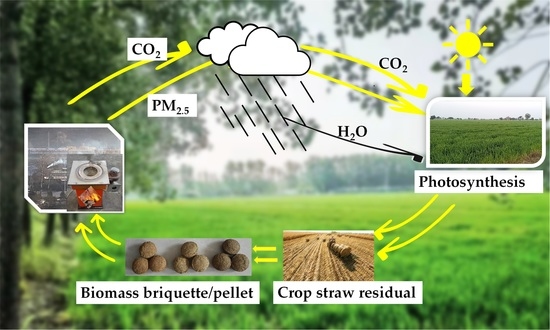
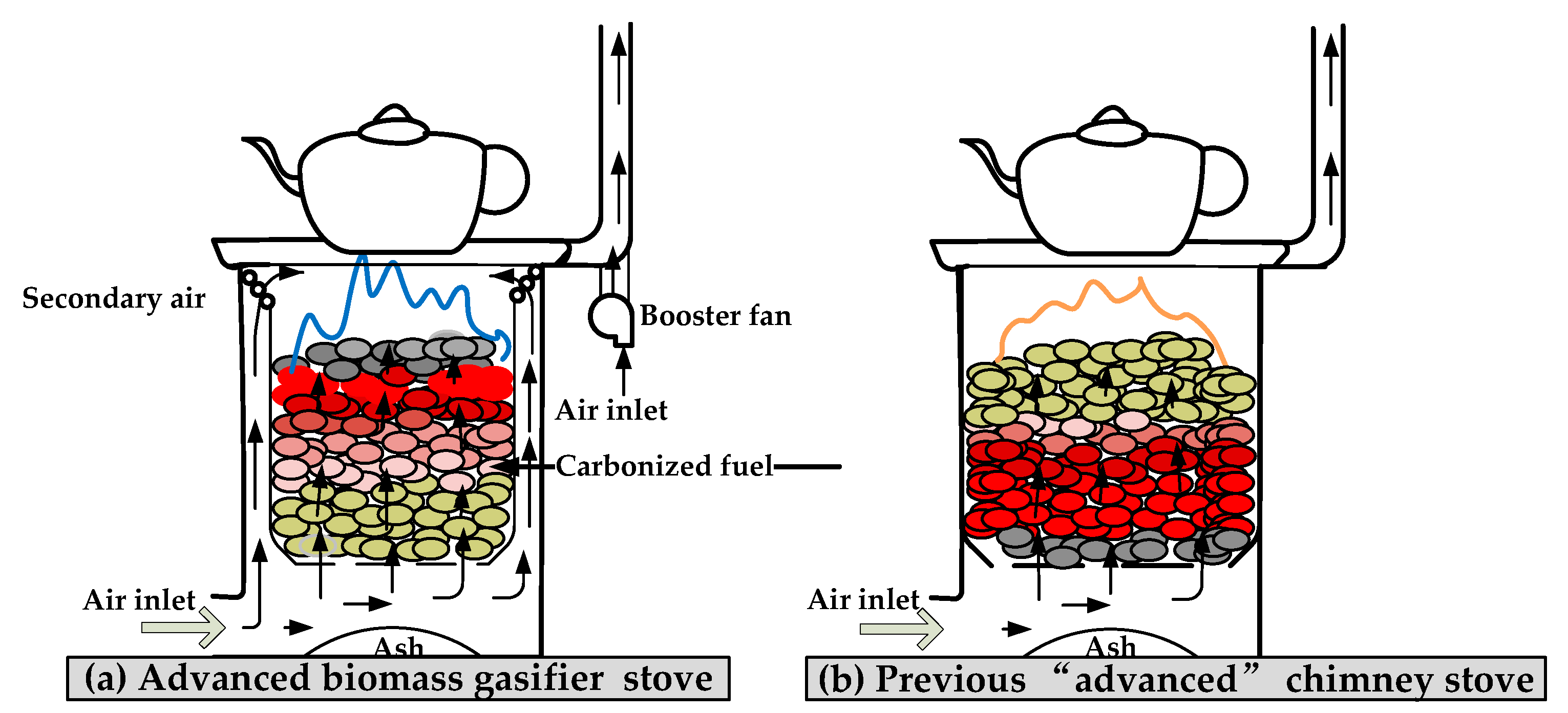
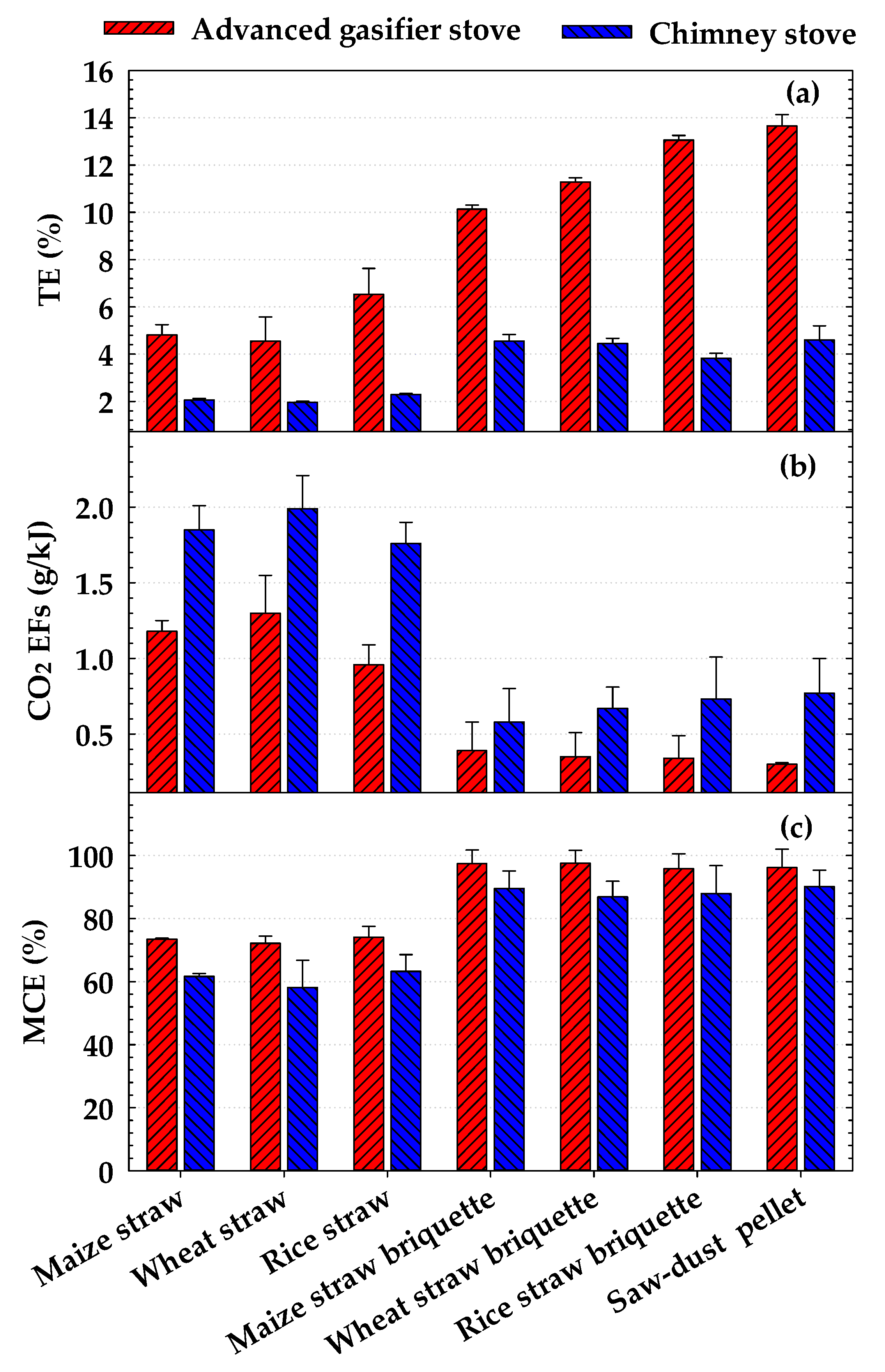
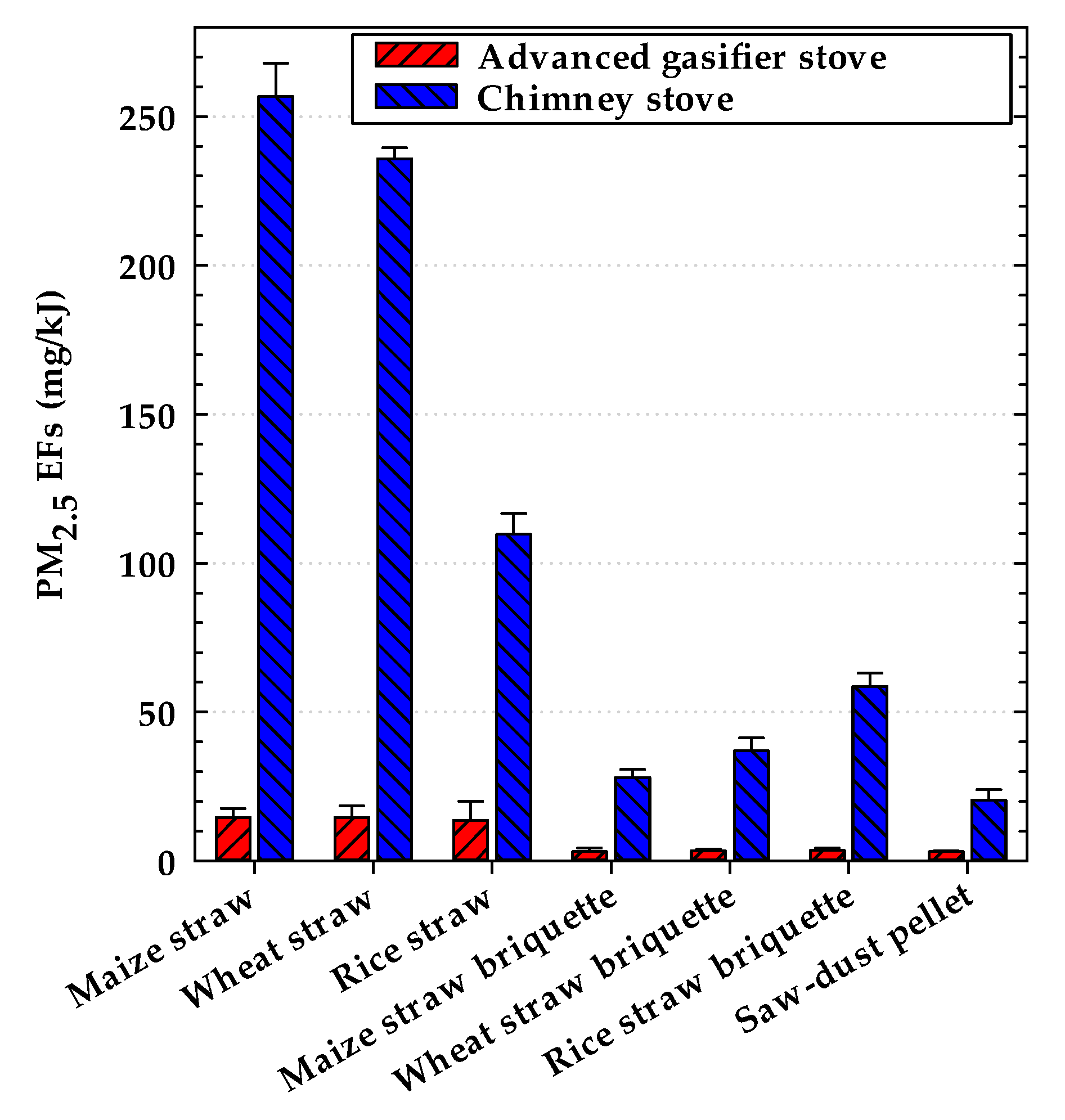
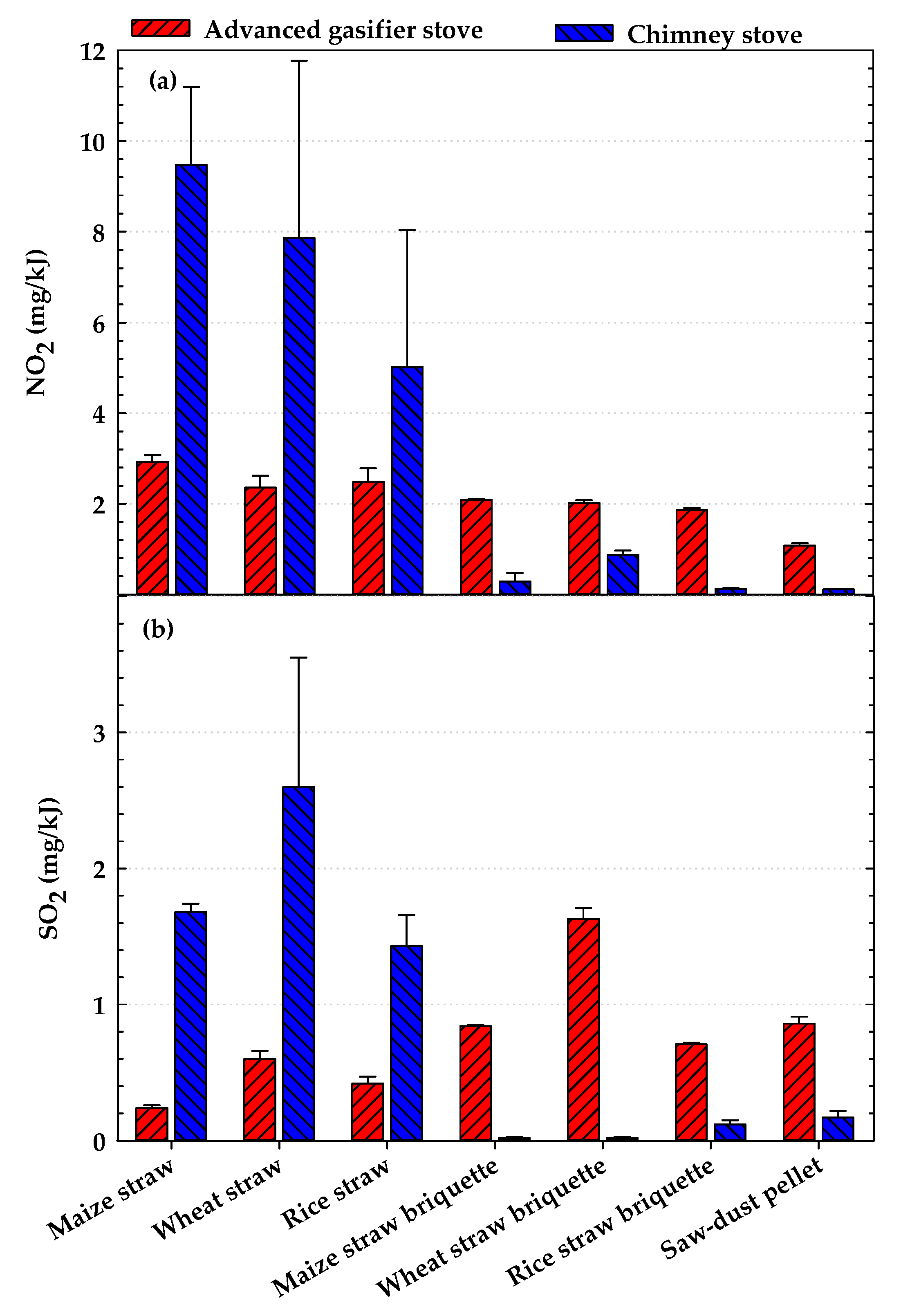
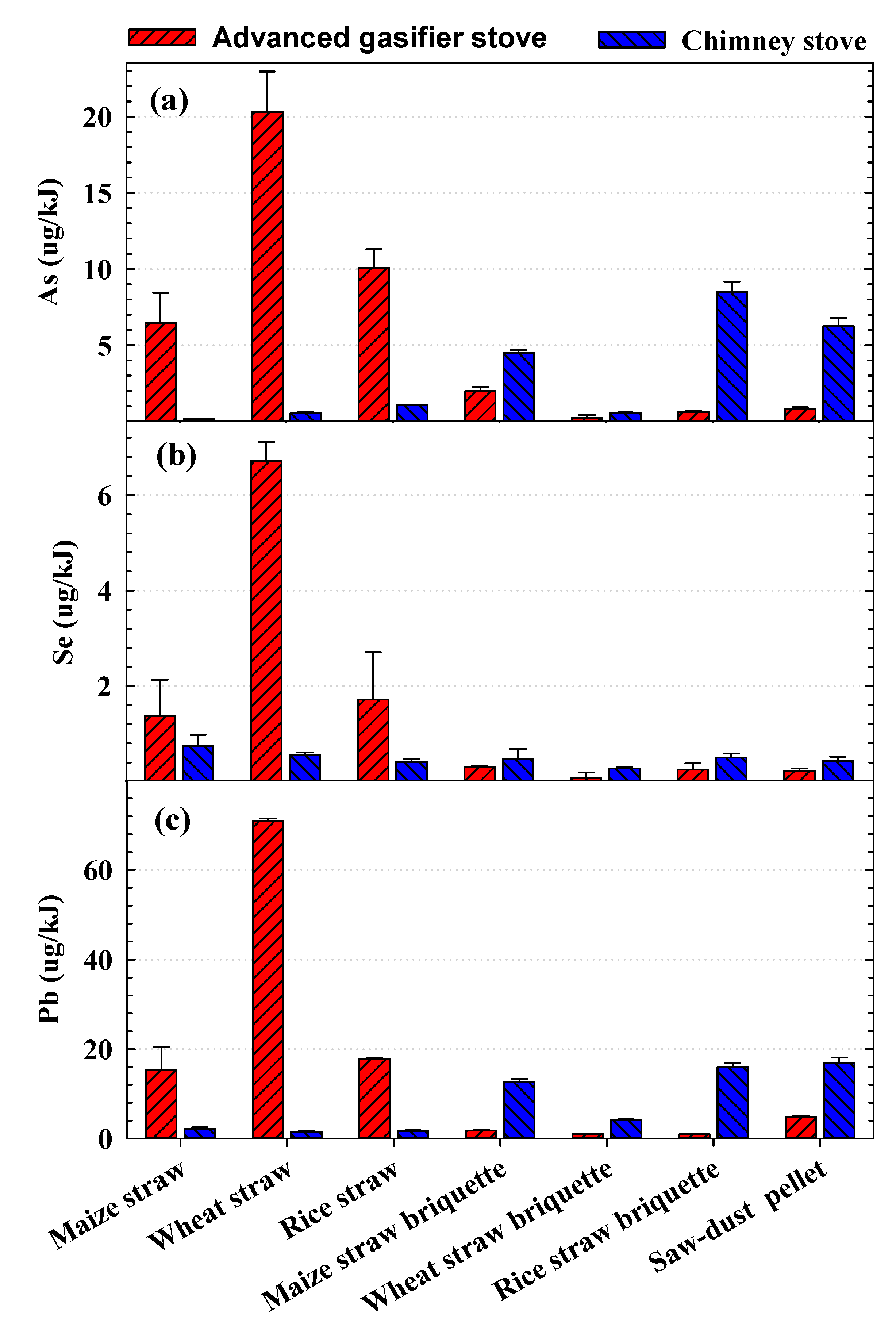
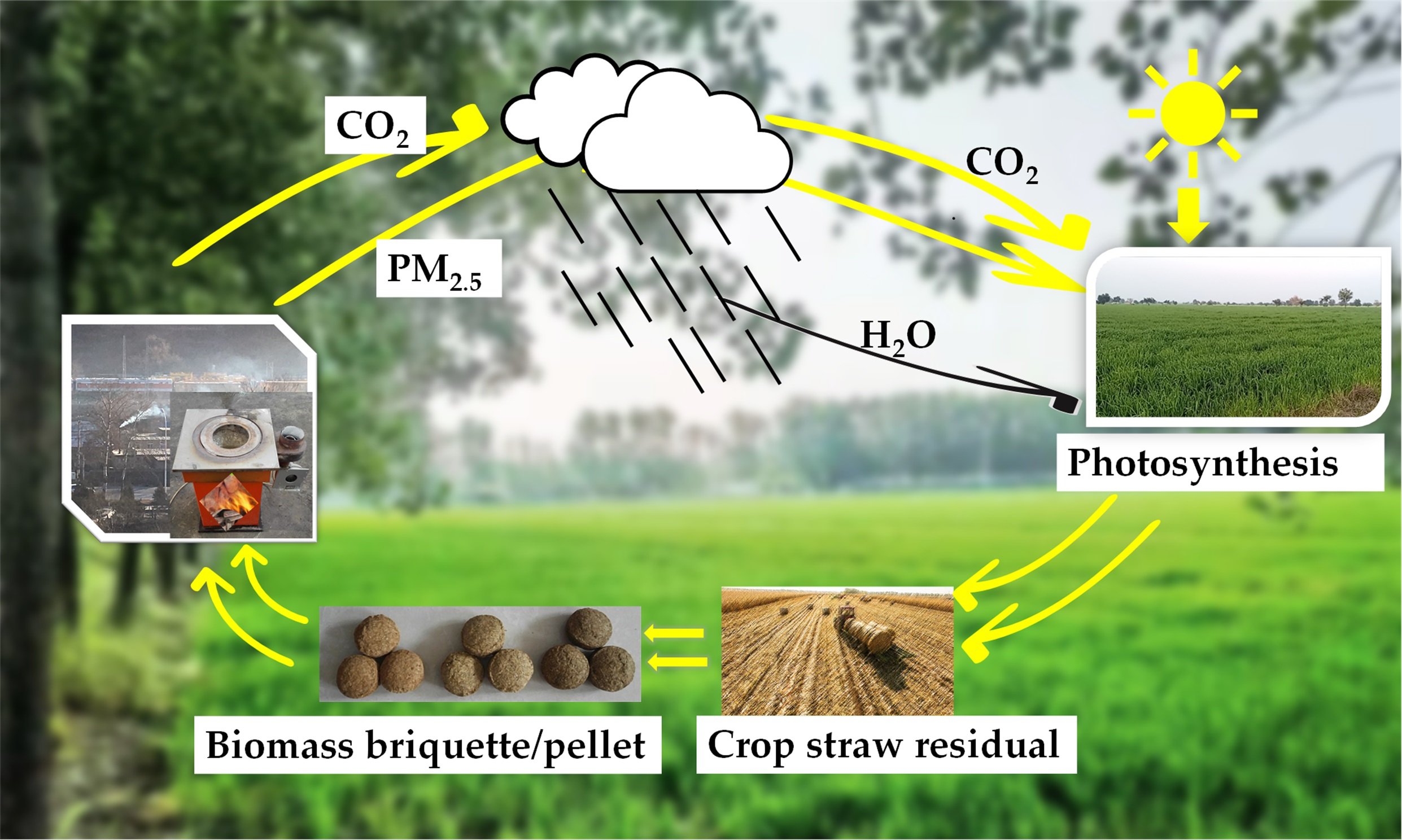
Inefficient residential solid fuel combustion contributes significantly to ambient and indoor air pollutants. It consumes large quantities of fuel and produces harmful effects on health. Improvements in residential biomass cooking stoves have great potential for energy savings and emission reduction. This study presents an advanced biomass gasifier cooking stove to overcome the disadvantages of high-pollutant emissions from widely used stoves in China. The most innovative features of the stove are (1) negative pressure produced by a jet fan located at the junction of the chimney, and (2) combustion and carbonization processes taking place in the same chamber. Compared with a traditional chimney stove, the advanced biomass gasifier cooking stove presented higher TE (thermal efficiency) and comprehensively lower pollutant emissions when raw crop straws, crop straw briquettes, and pellets were burned in it. Approximately 40% CO2 and 90% of PM2.5 (the aerodynamic diameter was less than or equal to 2.5 μm) EFs (emission factors) were eliminated, and TE drastically tripled. Furthermore, biomass briquette/pellet was identified as more suitable than raw biomass as a fuel to be burned in the new stove, especially because the raw biomass displayed an increase in the EFs of As, Se, and Pb when burned in the new stove. The advancement in biomass cooking stove technology is a practical approach to reducing the emissions of CO2, PM2.5, and other hazardous pollutants.
Keywords: stove technology; CO2 emissions; biomass combustion stove technology; CO2 emissions; biomass combustion
Graphical Abstract