


Abstract
Basic analysis of the flow field and aerosol deposition under different conditions when a spreader contains an upper airway tract is important to accurately predict the transmission of virus-laden aerosols. An upper airway was included to simulate aerosol transport and deposition. A flow field was simulated by the Transition SST model for validation. The simulation results show that, in the absence of the upper airway structure, an over-predicted aerosol deposition rate will occur. Higher upper-stream air velocity enhanced the intensity but added complexity to the recirculating flow between two manikins and increased the deposition rate of aerosol in the disseminator. A low-temperature environment can reduce the deposition rate of aerosol particles on the body of the disseminator due to a strong thermal plume. Therefore, the structure of the upper airway should be considered when predicting respiratory aerosol in order to increase the accuracy of aerosol propagation prediction.
1. Introduction
Human respiratory activities can act as sources of infectious disease transmission [1]. The World Lung Foundation has reported over four million deaths each year caused by acute respiratory infections (ARIs), such as smallpox (1970), measles (1985), tuberculosis (1990), SARS (2003), H1N1 (2009), and COVID-19 (2019), in which infectious bacteria and viruses spread through tiny droplets that are released from respiratory secretions when a person breathes, coughs, sneezes, or speaks, and they can pose a major health risk if they come into contact with another person’s mucous membranes [2]. Early studies have thoroughly studied coughing and sneezing [3,4], which are generally considered to have a higher risk of infection, and some influenza viruses have been found in human respiration. Fabian’s research group [5] reported that fine particles produced during exhalation may contain influenza viruses and that aerosols of fine particles may play a role in the transmission of diseases. According to Edwards et al. [6], 55% of the population under study exhaled 98% of particulate matter, and they concluded that those classified as “high producers” produced more particles over time during normal exhalations than during relatively infrequent coughs or sneezes. Consequently, based on disease control and health considerations, accurate prediction of high flow and high-frequency respiration in human life should also be of concern.
To study the breathing process of the human body, previous researchers have studied the airflow distribution in the respiratory tract and outside the nostrils. Haghnegahdar et al. [7] found that when exhaling through the nose, the airflow develops from the airflow out of the lungs, when the airflow deviates to the front wall of the trachea, a vortex is formed, and with the flow of air in the nasal cavity, the intensity of turbulence increases when the exhaled flow reaches the nasal cavity, and when airflow reaches the nostril, the flow velocity is smaller near the wall and larger near the center. Zhang et al. [8] modeled the transport and deposition of inhaled multicomponent aerosols in the human airway. Chen used the Transition Shear Stress Transport (SST) model to investigate the transport and deposition of multicomponent droplets in an idealized oropharyngeal airway. The transition SST model was shown to apply to air–solid flow in airway studies [9]. Most studies on the transmission and deposition of aerosol particles outside the human body during respiration have oversimplified the nostril structure. For example, Li et al. [10] studied the initial momentum of a cough jet and droplet diffusion caused by room airflow with the help of a breathing dummy with simplified inlet and outlet airflow velocities, angles, and temperatures to mimic the nostrils and mouth. Gupta et al. [11] measured the mouth and nose opening area of 25 healthy human subjects and developed a simplified set of equations that can be used to generate breathing and talking processes in CFD simulations. Yixian Zhang et al. [12] applied a model with a real nose angle to mouth coughing and nasal breathing with different air supply temperatures, air supply relative humidity, number of air changes, and air exchange methods. The results of the study confirmed that breathing activity has a direct and significant effect on virus transmission and showed that breathing-airflow velocity plays a key role in the accuracy of the simulation results. When exhaling, the airflow passes from the trachea into the pharynx and then passes through the nasal cavity and leaves the nostrils, with the pharynx creating a jet of airflow to the nasal cavity. So far, the boundary conditions of nostrils are generally set as a circular surface parallel to the ground, or a simple shape and direction according to the human body structure [13,14,15], ignoring the impact of the human nasal cavity structure on the exhaled airflow, which may reduce the complexity of virus transmission and over-predict the risk of virus transmission. Therefore, it is necessary to couple the human respiratory tract with the space outside the human body, and systematically study how the respiratory tract affects the deposition effect of aerosol particles outside the human body.
Environmental temperature and wind speed affect the spread of viruses. It has been shown by Yu Feng et al. [16] that suspended microdroplets are subject to convective effects and different ambient winds which increase the complexity of aerosol transmission and potential health hazards for nearby people. Numerous studies on viral transmission have shown a positive correlation between ambient temperature and an increase in human cases affecting the risk and survival of the virus in the air and on surfaces [17,18,19]. In this regard, it is interesting to study the effect of ambient temperature and ambient wind speed on the flow field and on the deposition of aerosols when the airway is considered in a numerical simulation.
The purpose of this paper is to study the distribution of the flow field and the deposition effect of aerosol particles when the respiratory tract is contained, and further study the propagation of aerosol exhaled by the spreader under different ambient temperatures and wind speeds. A human model with a real respiratory tract was obtained through 3D computed tomography and digital reconstruction. The expiratory phenomena of volunteers were recorded by the schlieren technique, and the flow field was qualitatively analyzed. Then the accuracy of the numerical simulation was verified by comparing the results of the numerical simulation and experimental measurements. The effects of the respiratory tract, temperature, and wind speed on the flow field and aerosol deposition under different conditions were obtained through numerical simulation. It was found that the presence of the respiratory tract had a significant impact on aerosol deposition.
2. Materials and Methods
2.1. Geometry Model
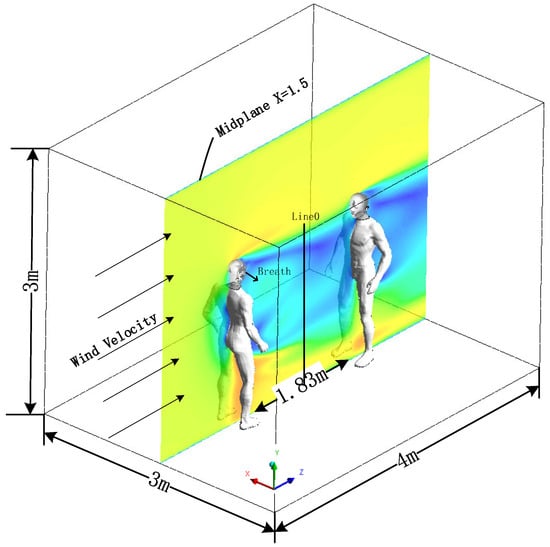
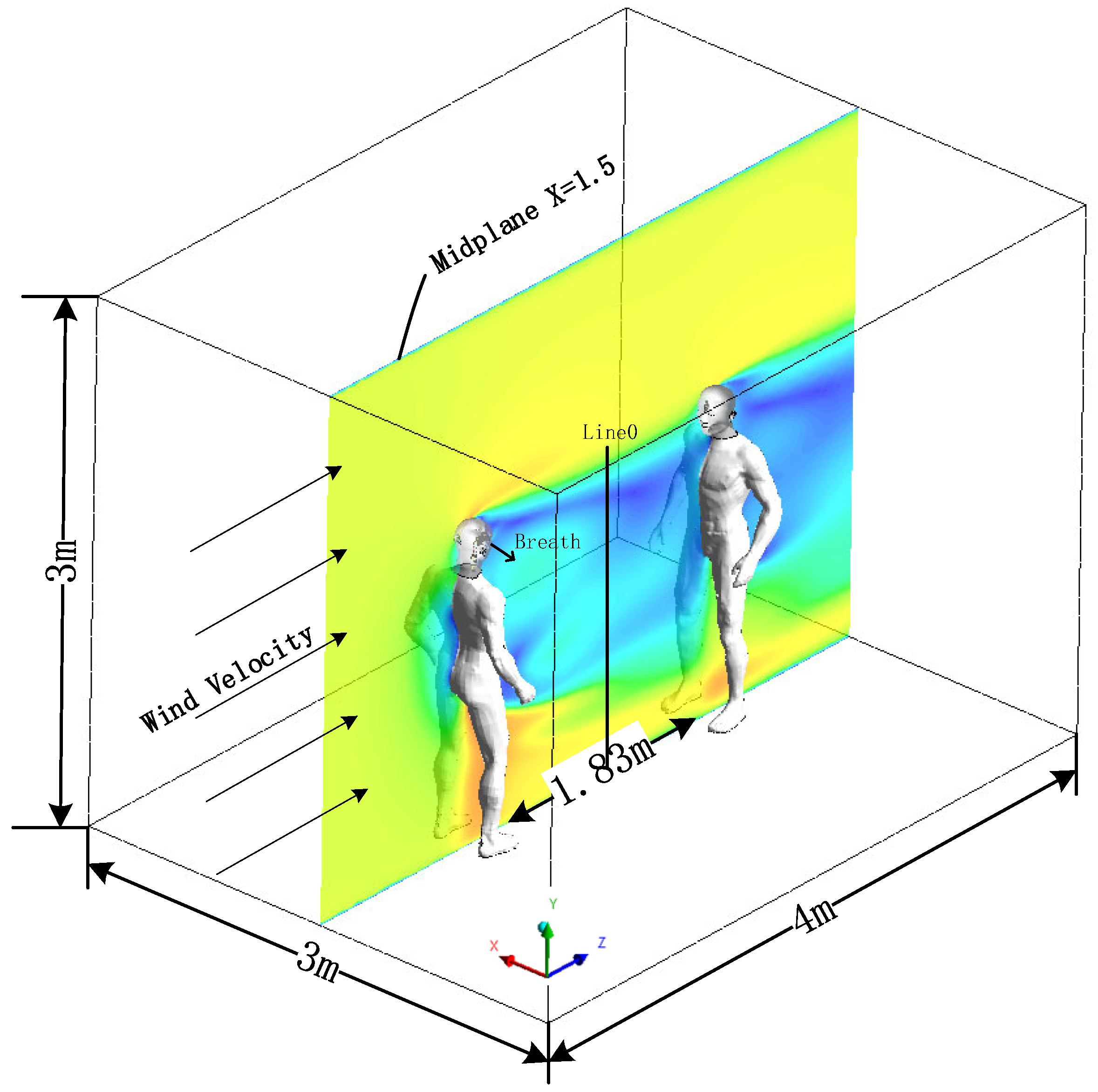
A human-to-human respiratory particulate matter transmission scenario was created, a rectangular calculation region was defined, and the distance between two people was set to 1.83 m according to the "social distance" proposed by the CDC (Centers for Disease Control and Prevention) during an epidemic [20,21]. According to the actual height of the volunteers, the height of the left human (the spreader) body was set to 1.82 m; the right human body model (the receiver) was the same as the left model except for a respiratory structure (Figure 1).
Figure 1.
Schematic of the computational domain with two virtual humans.
2.2. Governing Equations
The effect of the respiratory jet on the propagation characteristics of virus-carrying droplets was effectively predicted by solving the continuity and momentum equations of the flow field using the Transition SST Model and solving the discrete phase using the Discrete Phase Model (DPM), respectively, and is described below.
2.2.1. Fluid Phase
A transverse tapering process in the nasopharyngeal airway and a rapid increase in airflow velocity result in a laminar to turbulent transition process and separation of airflow from facial skin when exhaled from the nasal cavity. This, therefore, requires numerical forecasting to accurately capture transitional phenomena. Traditional RANS (Reynolds averaged N-S equation) is a method that closes the Reynolds mean equation for turbulent flow by decomposing the instantaneous motion that satisfies the kinetic equation into two parts: mean motion and pulsating motion, with a contribution to the pulsating term realized by Reynolds stress term, and then assuming Reynolds stress terms based on respective empirical, experimental, and other methods. The RANS method, however, is not accurate enough to reflect layer turbulence transitions and separation events. The transition SST model is better than the traditional RANS method for turbulent flow simulation [22] and is also suitable for solid air flow in airway studies [23]. We use the transitional SST model to resolve laminar–turbulent and turbulent transitions. The control equation for the fluid phase is as follows:
where and are the correction and damage terms based on the turbulent kinetic energy of the original SST turbulence model, using an intermittency factor γ. The intermittency γ can be solved by the following equation:
As a critical Reynolds number, is required to calculate the transition source term, the transport scalar is used in the transport equation below to calculate .
Details of the transition SST model and corrections for separation-induced transitions are documented in the literature [24,25].
2.2.2. Discrete Phase
Euler and Lagrange are two major mathematical models for describing particle movement. Lagrange is more appropriate for such sparse two-phase flows where the volume fraction of droplet particles is less than 10% [26], and we employ a discrete phase model (DPM) based on Lagrange for the solution. Taking into account the large particle-to-air density ratio, negligible droplet rotation, and limited thermophoresis, the trajectory of the droplet is computed by solving the advection equation for the discrete phase, i.e.,
where, , , are the traction, lift, Brownian motion, and gravity, respectively. Specifically, this can be expressed by the following equation:
where is the particle diameter, is the Cunningham correction factor and the drag coefficient is defined as:
the constants , , and are determined by the particulate Reynolds number.
2.3. Grids and Boundary Conditions
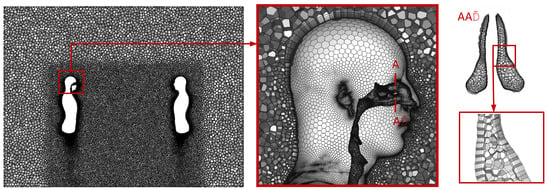
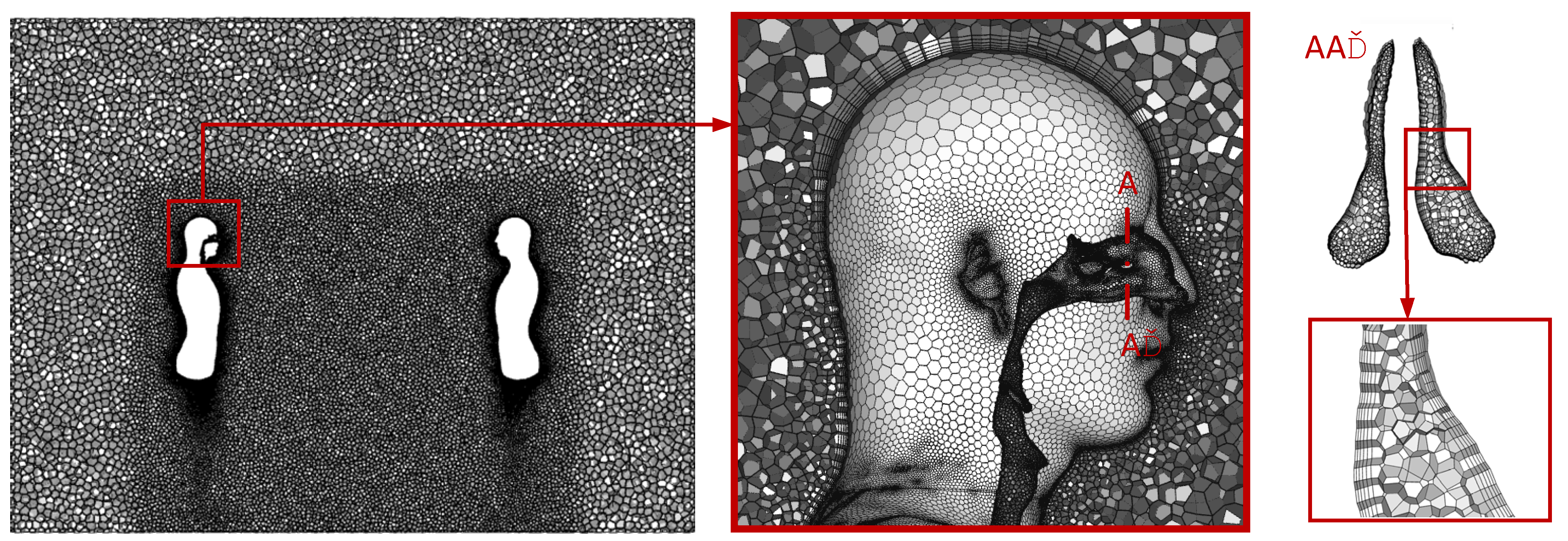
An unstructured hybrid polyhedron plus prism meshes were generated using ANSYS Fluent Meshing 2020R2 (ANSYS Inc., Canonsburg, PA, USA). Five prism layers were created near the wall to contain viscous sublayers for accurate calculation of near-wall gradients, as detailed in the mesh (Figure 2).
Figure 2.
The hybrid mesh details.
When the respiratory tract is not included, the entrance surface is established according to the structure of the volunteers’ nostrils. The total area of the nostrils is 253 mm2. The direction of the nostril exhalation speed is perpendicular to the nostril surface, and the left nostril speed is x = 0.30 m/s, y = −0.88 m/s, z = 0.33 m/s; the velocity of the right nostril is x = −0.43 m/s, y = −0.85 m/s, z = 0.26 m/s. When the respiratory tract is included, the lowest section of the respiratory tract is the entrance surface with an area of 261 mm2 and an entrance velocity of y = 0.98 m/s, and the coordinate direction is shown in Figure 1. The exhalation jet and airway temperature were set at 310 K and the expiratory flow at 15 L/min. The isothermal no-slip wall boundary conditions were used for the human surface and the inner wall of the airway, and the ambient wind speeds were set at 0.5 m/s, 1 m/s, and 2 m/s, respectively, with inlet temperatures of 291 K, 297 K, and 303 K, respectively. The potentially most dangerous wind direction from the spreader (left in Figure 1) to the receiver (right in Figure 1) was used. The nose or airway outlet was set as the entrance condition.
A wide range of particle sizes were used in the present study. In particular, healthy individuals produce particles with diameters of 0.01–100 μm when breathing [27,28], and 99% of people exhale particles with a diameter of 5 μm or less. Despite the small number of particles above 5 μm, it is of greater interest how droplets of a wider size range are influenced and deposited by structures. This paper, therefore, investigates particle sizes of 0.1 μm, 0.3 μm, 0.5 μm, 1 μm, and 2 μm in diameter, with droplet densities set at 1000 kg/m3 [29]. The error caused by the random effect of turbulence on particle trajectories can be reduced by using a turbulent diffusion model to account for the effect of eddies on particle deposition; hence, the discrete random walk (DRW) model was used [30]. Furthermore, the DRW model has been used for exhaled droplet studies in other spaces [31,32].
2.4. Grid Independence and Model Validation
The accuracy of the simulation results is very important. Therefore, it was necessary to verify the independence of the grid, the mathematical model, and the independence of the number of particles. The verification results mainly included the following:
- The wind speed under different grid numbers was compared, and 7.1 million grids were selected for simulation.
- The results of the validation of the respiratory flow field model and the particle transport and deposition model showed that the transitional SST model can well predict the flow field outside the respiratory tract, and the DPM model can be used to predict the indoor particle deposition.
- The results of particle independence verification showed that when the number of particles was more than 110,000, the absolute value of the difference between the particle deposition rate and the maximum particle deposition was less than 0.02%. Therefore, 110,000 particles were also used in the following simulation.
The specific verification process is included in the Supplementary Information.
2.5. Simulation Setup
ANSYS Fluent 2020 R2 (ANSYS Inc., Canonsburg, PA, USA) was used to simulate the mean field of exhaled particulate matter transported by ambient airflow onto surrounding objects. The flow field was simulated for six different conditions to study the factors affecting the particle deposition rate, as shown in Table 1. Six conditions were designed to examine three different effects: Conditions A and B examined the effect on the airway; Conditions A, D, and E examined the velocity effect; and Conditions A, C, and F examined the temperature effect. Among them, the case containing the respiratory tract was referred to as CA, and the case without the respiratory tract was referred to as NCA. Once the flow field converged, 110,000 particles with different diameters (e.g., 0.1, 0.3, 0.5, 1, 2, etc.) were released outside the transmitter’s airway. We compiled a C++ program to generate a matrix on the entrance surface and assigned initial conditions (position, velocity, temperature, etc.) to particles at each position. In the NCA case, particles were released on the left and right nostril surfaces, the incident direction was perpendicular to the nostril plane, and the number of particles released from the left and right nostrils was the same. In the CA case, particles were released at the trachea, and the inlet direction was perpendicular to the trachea inlet surface. The flow velocity of particles was set as 0.98 m/s and 0.96 m/s, respectively, according to the flow field velocity, and the temperature was 37 °C. The particle type was set to inert particles. Particles were deposited when they collided with any surface, and their spatial location was recorded as droplets deposited at the boundary or escaped through the exit.
Table 1.
Boundary condition setting for numerical simulation.
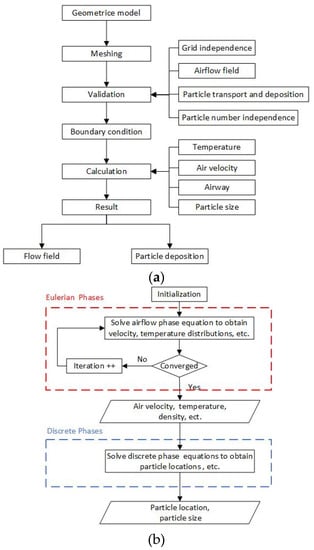
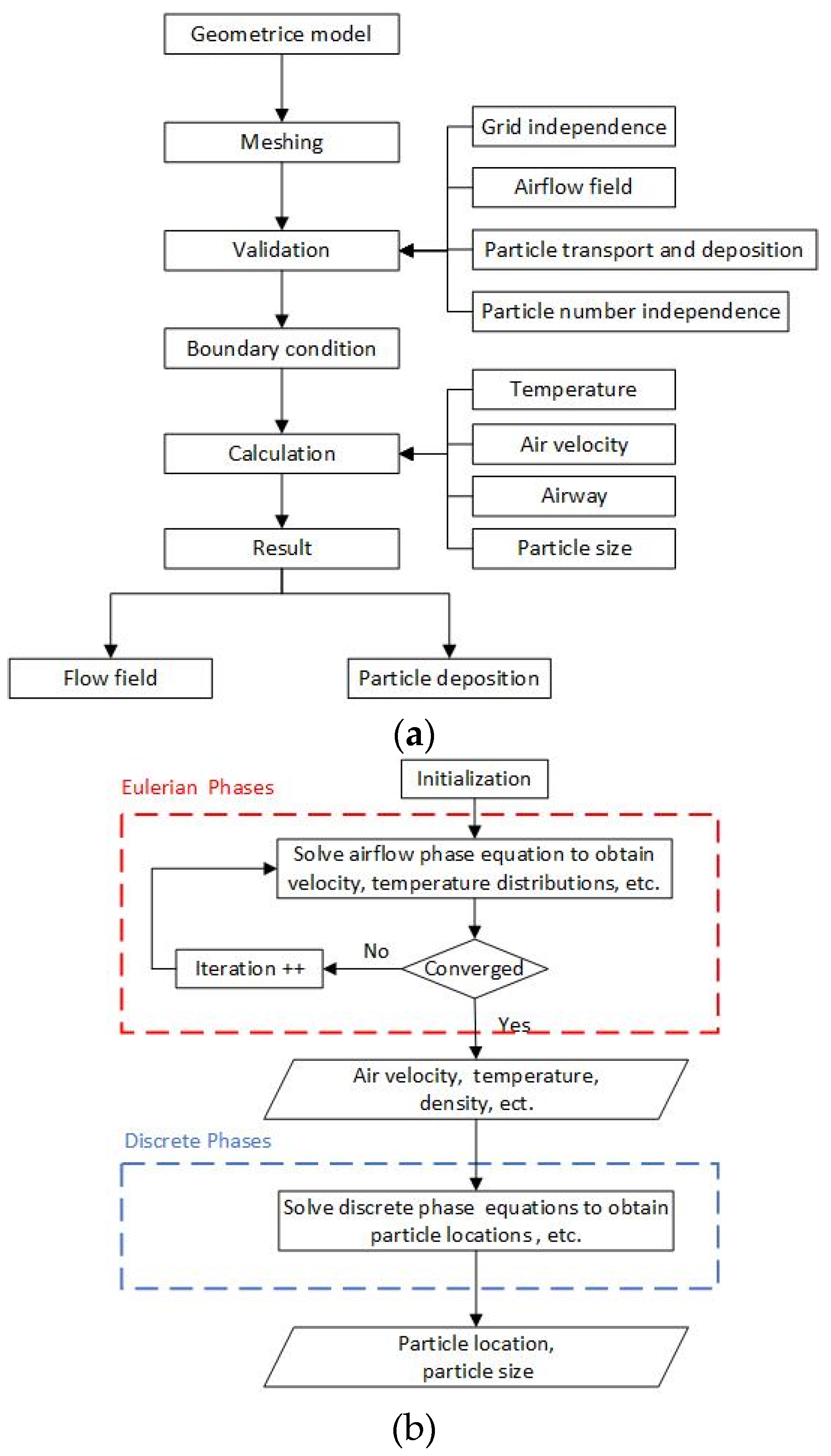
Figure 3a briefly depicts the entire workflow. We first set up a human body and a room as the computational fluid domain and divided the continuous fluid domain into the mesh. To ensure the accuracy of the calculation results, we tested the independence of the cell number of the mesh and the number of released particles. Detailed methods are described in Section 2.4. The boundary conditions included the boundary type (e.g., wall, inlet, and outlet), flow variables at the inlet and outlet (e.g., flow velocity and temperature), and particle variables at the inlet (e.g., particle location and velocity). Then, we started the simulation until it converged. Finally, the flow field and particle distribution were analyzed. More specifically, the turbulent flow was solved by the Euler method using the transition SST model under the steady flow assumption. The discrete phase, i.e., the exhaled particles, was diluted in the air. Therefore, one-way coupling, which means that only the effect of the air on the particle is considered, was applied in this simulation. When the simulation of the fluid flow converged, then the motion of the particles was calculated. The calculation process is shown in Figure 3b. Note that the simulation for the validation of the schlieren experiment is transient.
Figure 3.
Workflow and calculation process: (a) Research route and structure; (b) Solving process using the Euler–Lagrange method.
3. Results and Discussion
3.1. Airflow Field
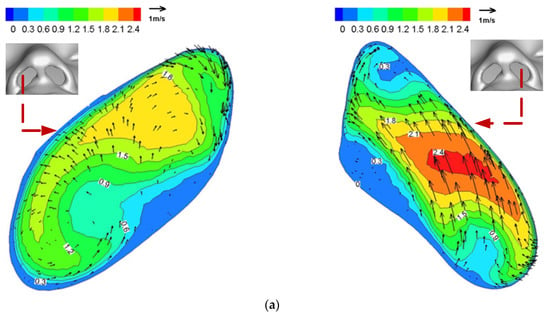
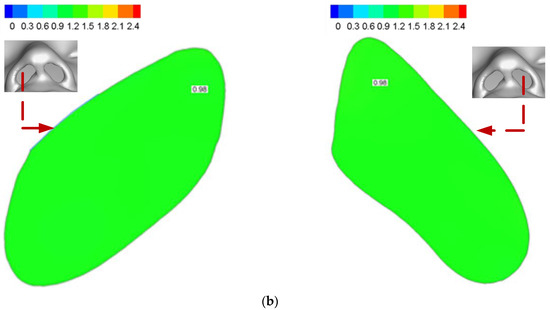
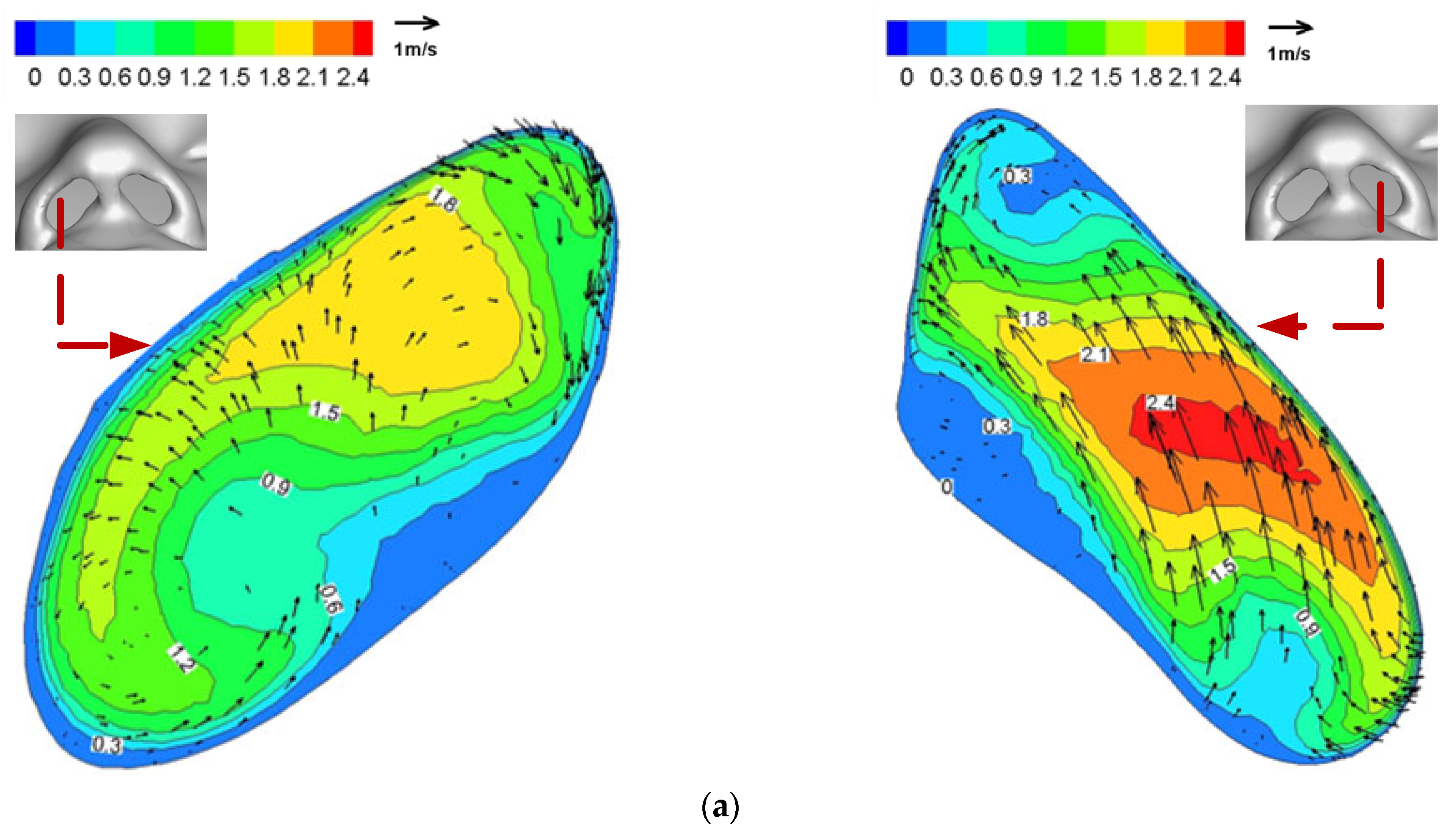
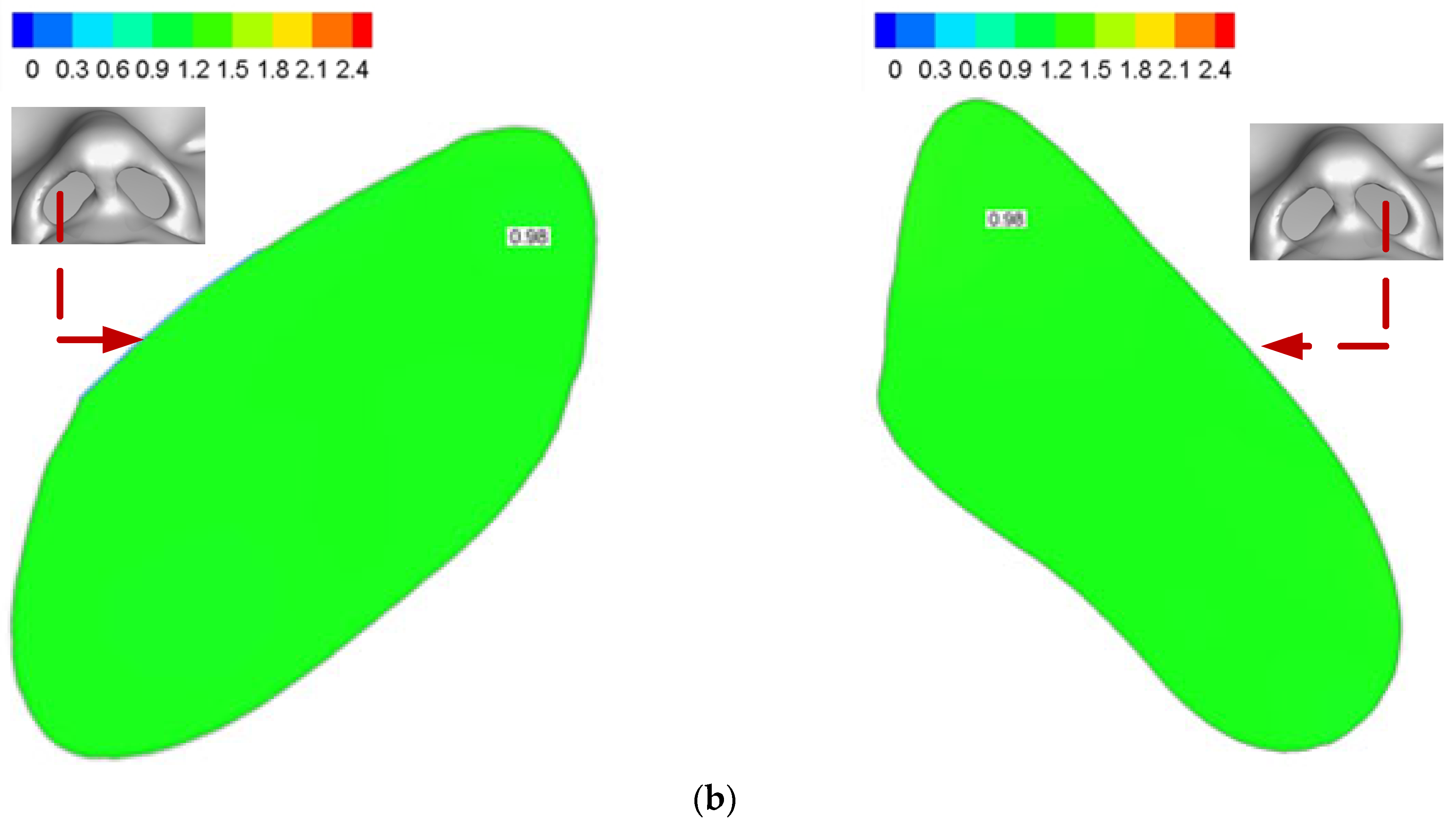
Figure 4 shows the airflow at the nostril and the tangential vector diagram. Among them, Figure 4a shows the velocity distribution on the plane of the left (left side of Figure 4a) and right (right side of Figure 4a) nostrils with the respiratory tract. It can be seen that the velocity in the middle of the nostrils is fast, while the velocity in the edge area is slowed down due to the influence of the boundary layer. The average velocity values of the left and right nostrils are 0.626 m/s and 0.697 m/s through integration. The vector arrow can tell that the velocity direction forms a vortex at the nostrils. This increases the complexity of the airflow at the outlet. Figure 4b shows that the velocity distribution of the nostril plane without the nasal structure is a fixed value of 0.98, so there is a significant difference between the velocity distribution of the outlet airflow with or without the nasal structure.
Figure 4.
Nebulogram and tangent vector diagram of velocity distribution at nostril: (a) Vin = 1 m/s, T = 291 K, CA; (b) Vin = 1 m/s, T = 291 K, NCA.
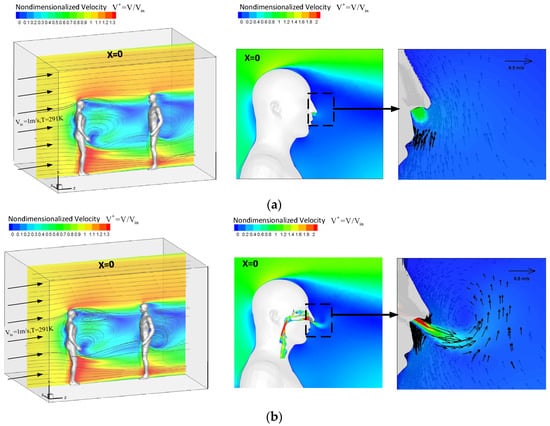
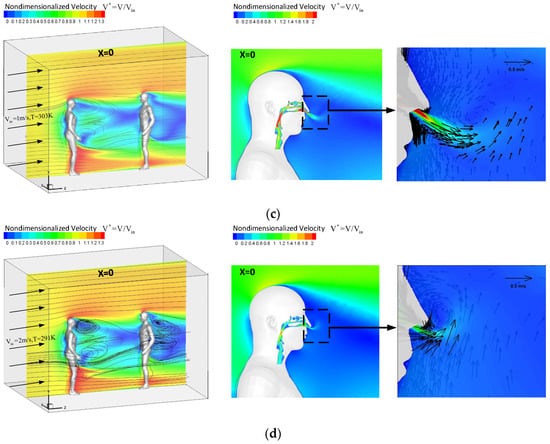
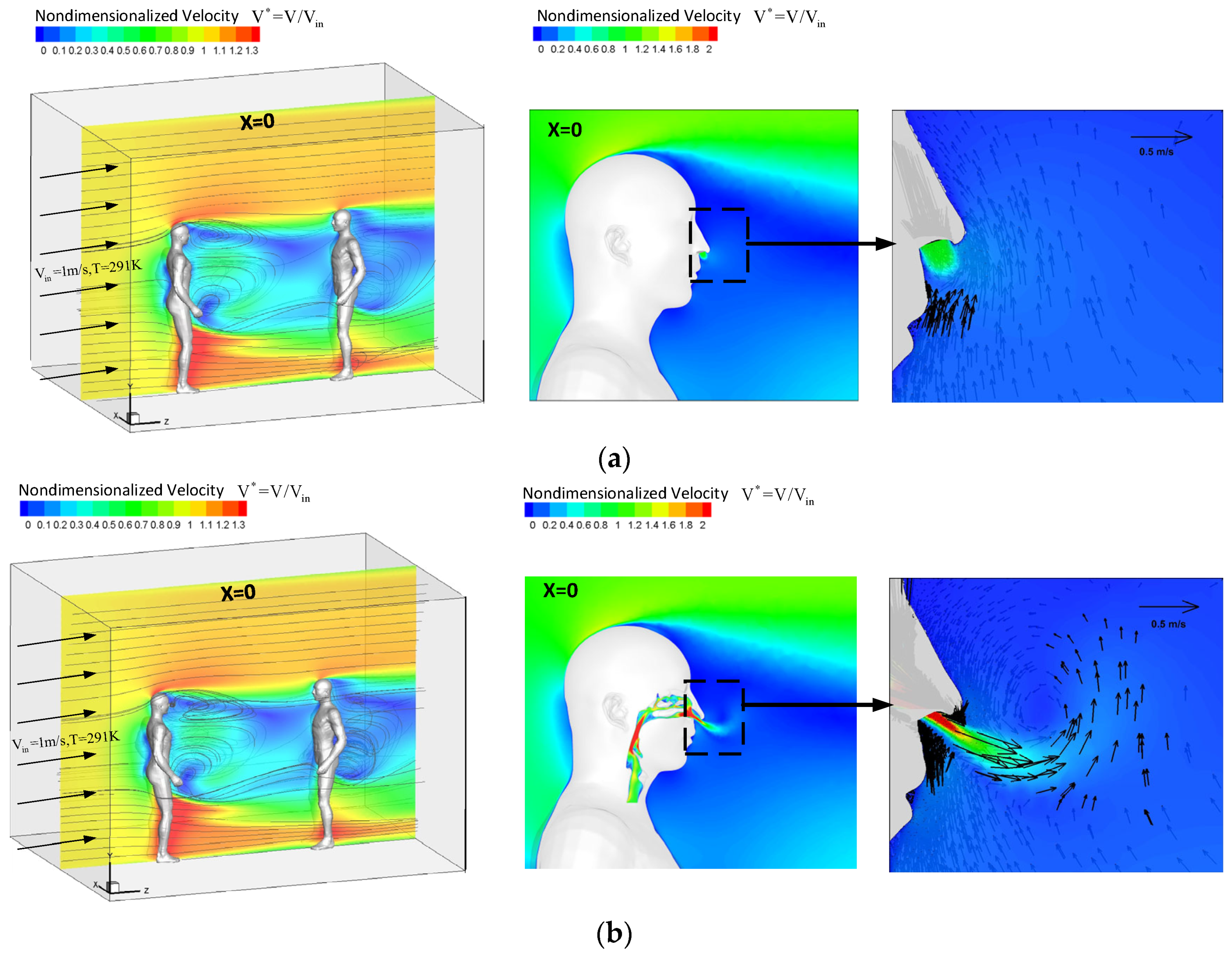
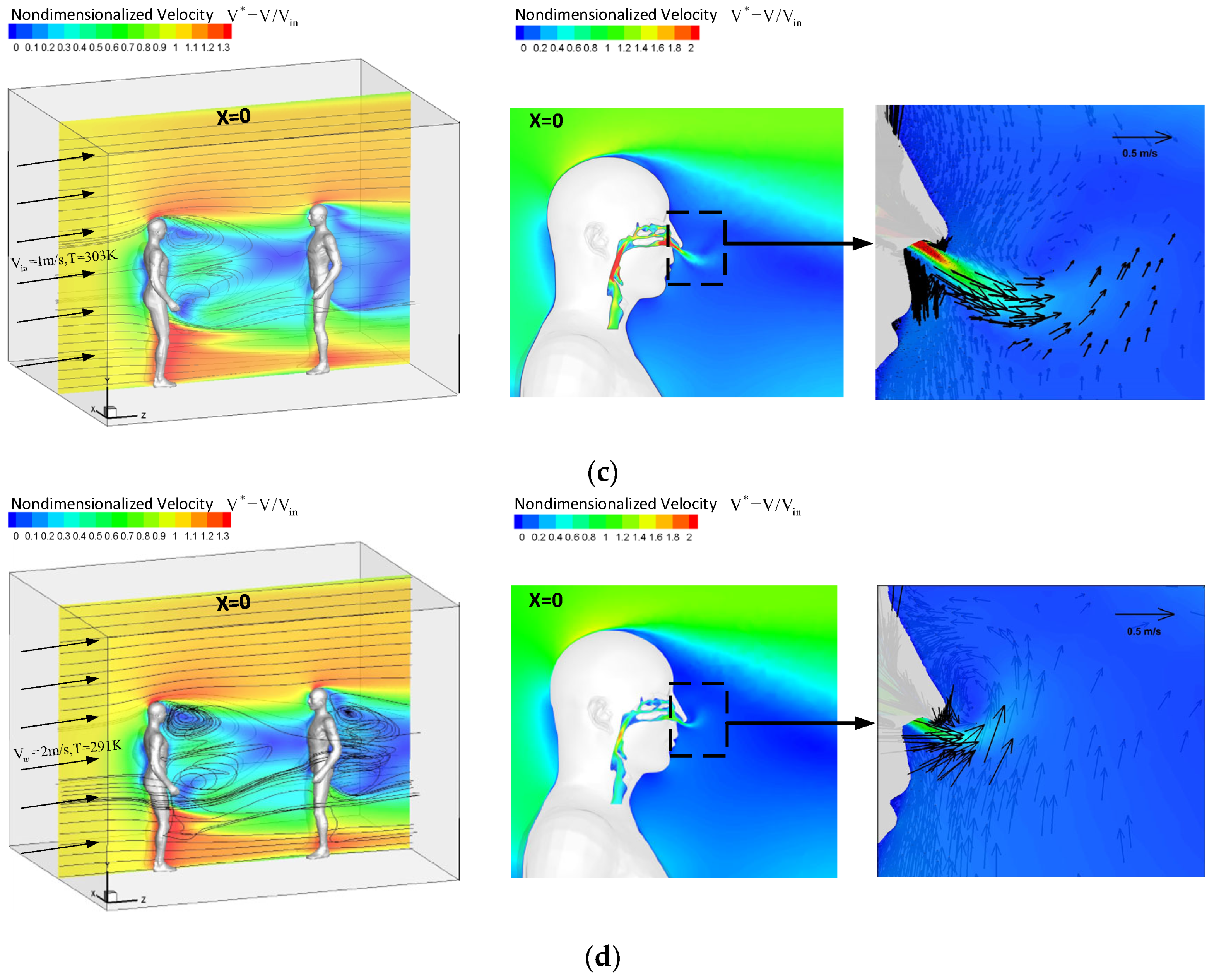
Figure 5a–d show the air velocity clouds with streamlines at plane X = 0 and the local velocity clouds of the spreader head in the steady state. The presence or absence of transmitters containing the respiratory tract had no significant effect on the velocity distribution of indoor flow. When the disseminator did not contain the respiratory tract, the exhaled air flowed out evenly with the shape and direction of the nostrils as the boundary, which had greater kinetic energy and angle (a) than the working condition with the expiratory tract, and the airflow direction was inclined to both sides of the human body. When a person with a respiratory tract exhales, the airflow enters the narrow respiratory system from the throat of the communicator, passes through the narrow, curved, wavy, and complex respiratory tract, and the flow rate locally increases in the narrow throat area. The flow rate reaches the highest point in the nasal vestibule. The flow rate near the wall is small, and the flow rate at the center is large. Due to the influence of the nasal cavity structure, the airflow at this time is similar to the gradually expanding jet, and the axial momentum decreases. At the same time, the jet angle is small, and the airflow flows to the front of the propagator, rising under the influence of temperature. The vector images of Case A and Case B have obvious differences. When the respiratory tract is included, obvious vortices will be generated in front of the face, resulting in more complex flow fields. With the temperature of the incoming airflow increasing, the temperature gradient between the environment and the human body decreases, the degree of deflection of exhaled airflow decreases (c), the influence of the heat plume on the incoming air velocity decreases, and the airflow line near the right person’s head moves significantly downward, completely covering the right-hand person’s face. With Vin increasing, the exhaled airflow velocity becomes smaller than the flow velocity of the room and there is no significant change in the dimensionless volume velocity distribution in the computational domain, but horizontal airflow through the human body creates a vortex between the two individuals, and the strength and complexity of the recirculating flow are increased, as can be seen in the flow line in face X = 0 (d).
Figure 5.
The initial contour line of dimensionless wind speed (V* = V/Vin) at plane X = 0 and local enlarged cloud map and vector map under different conditions: (a) Vin = 1 m/s, T = 291 K, NCA; (b) Vin = 1 m/s, T = 291 K, CA, (c) Vin = 1 m/s, T = 303 K, CA; (d) Vin = 2 m/s, T = 291 K, CA.
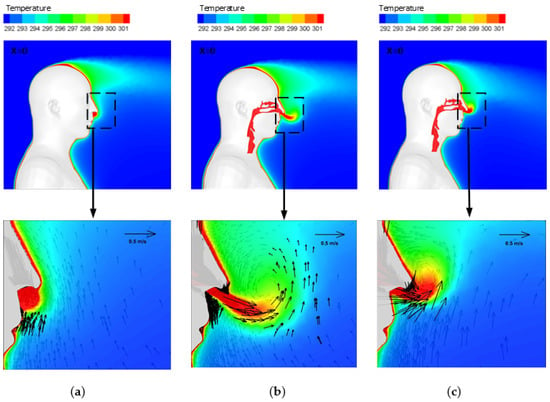
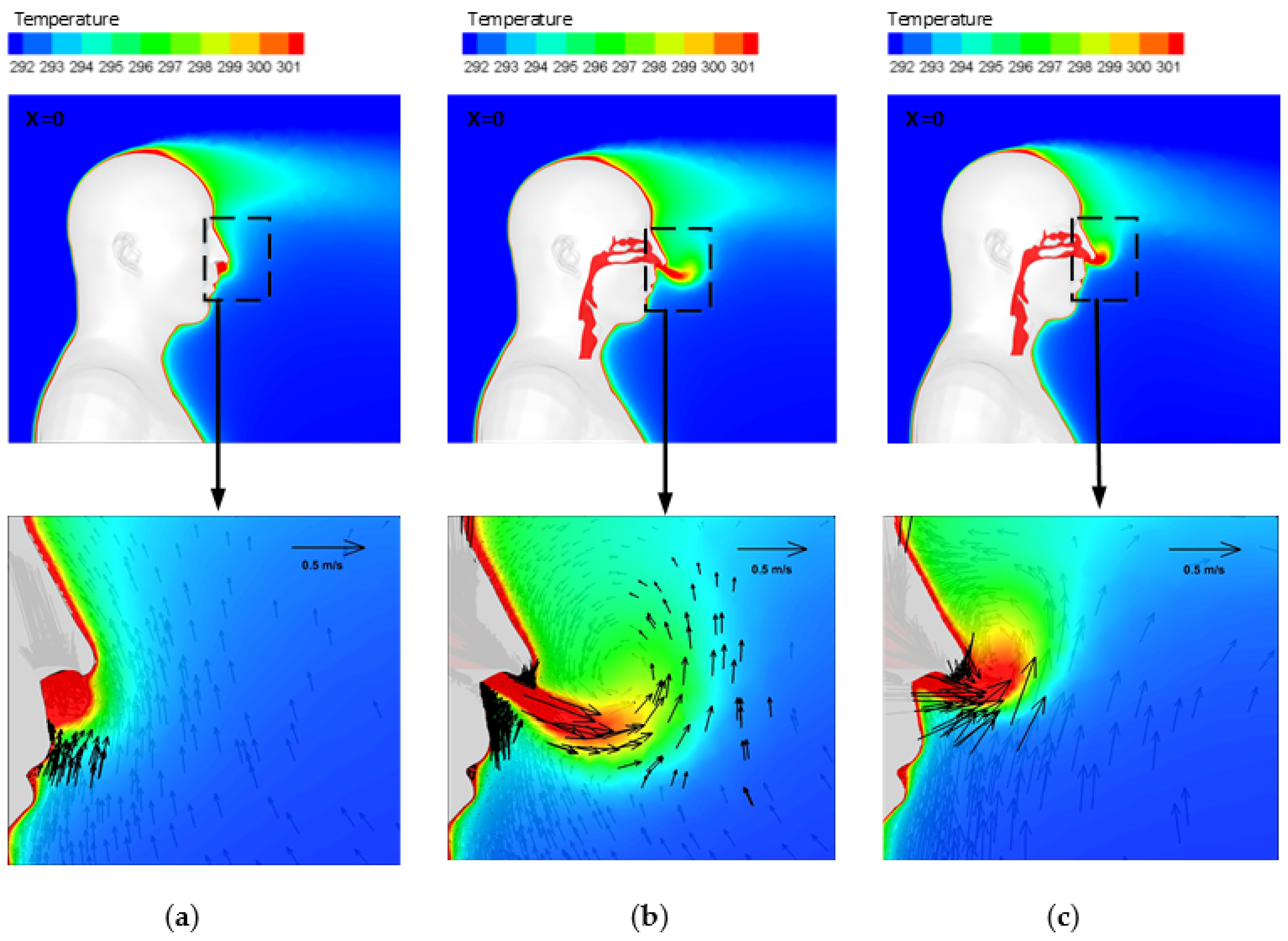
Figure 6 shows the local spreader head temperature cloud at the X = 0 plane under the steady-state field. Under the action of environmental wind, the thermal plume mainly concentrates on the human face. In the absence of our respiratory tract, the high-temperature air column flows mainly to the sides and the thermal plume on the face of the person is smaller (Figure 6a), whereas, when the respiratory tract is included, the respiratory jet rushes out of the airway and flows forward, forming a more intense thermal plume on the person’s face (Figure 6b). As Vin increases, due to wind speed, the thermal plume on the spreader’s face moves downward and the respiratory jet exiting the nasal cavity moves for a shorter time. It can be observed from the local vector diagram that when there is a respiratory tract, there is an obvious downdraft in front of the face, which forms a vortex when mixed with the exhaled airflow. The updraft at the lower part does not affect the exhaled airflow. When the respiratory tract is not included, there is an obvious updraft in front of the face. It is speculated that the updraft determines the breathing area in advance due to the heat convection caused by body heat. When the velocity increases, the range of vortex mixing airflow may become smaller due to the pressure.
Figure 6.
Air temperature program and local vector diagram of the left human head in X = 0 plane under different conditions: (a) Vin = 1 m/s, T = 291 K, NCA; (b) Vin = 1 m/s, T = 291 K, CA; (c) Vin = 2 m/s, T = 291 K, CA.
3.2. Particle Dispersion and Fate
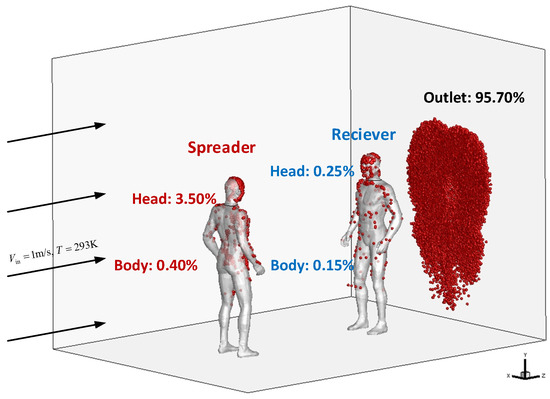
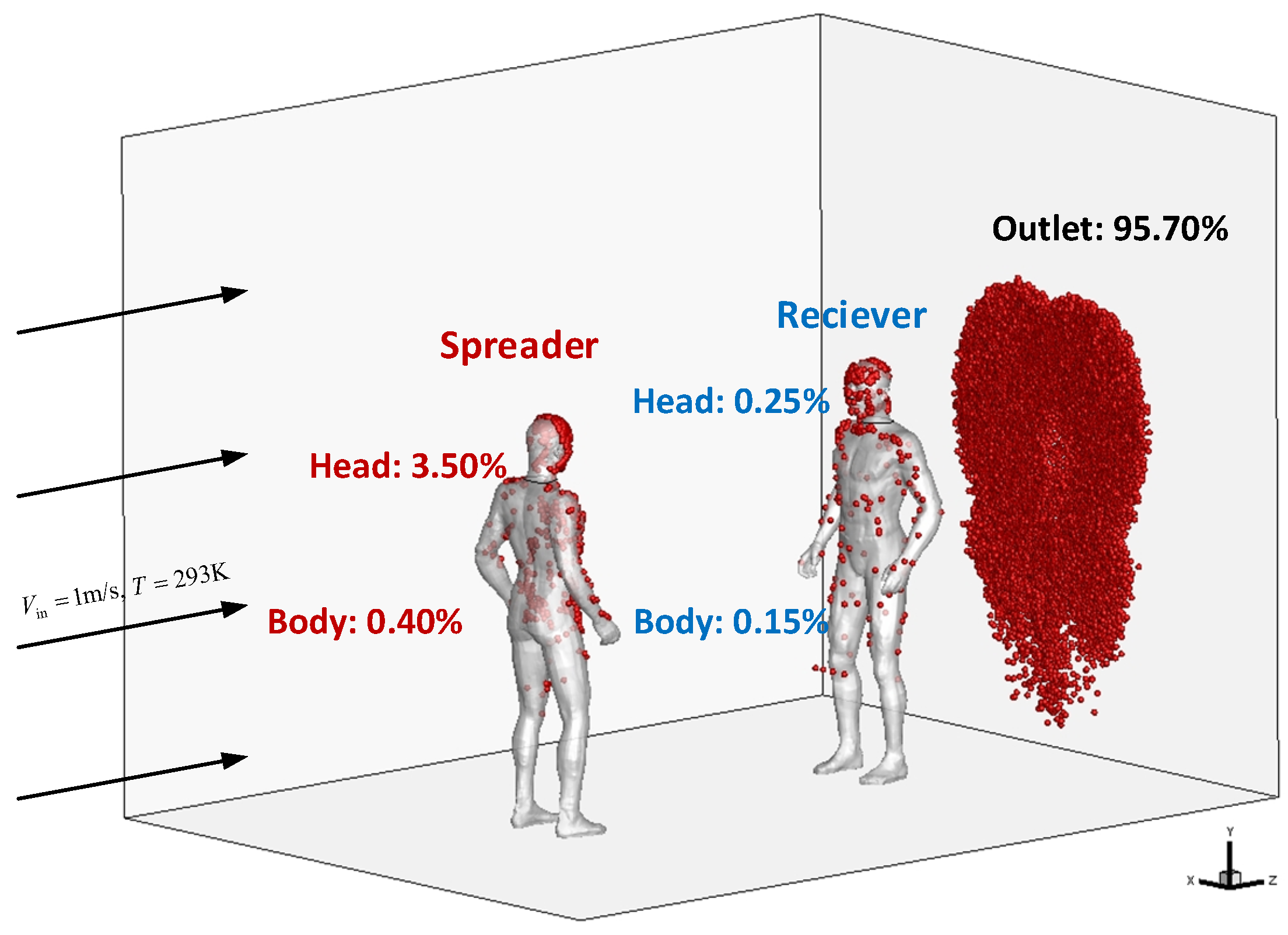
Figure 7 depicts the deposition of particles when a person with a respiratory tract exhales 0.3 μm particles at an ambient wind speed of 1 m/s and an ambient temperature of 293 K. The largest proportion of particulate matter was found at the exit, where it was distributed in a ‘heart-shaped’ pattern, and wearing a mask is effective in reducing the chance of small particles adhering directly to the face. The relatively small amount of particulate matter deposited on the head and body of the person being transported is due to the effect of the body’s thermal plume, which continues to move through the body.
Figure 7.
Deposition of 0.3 μm particle in Condition A.
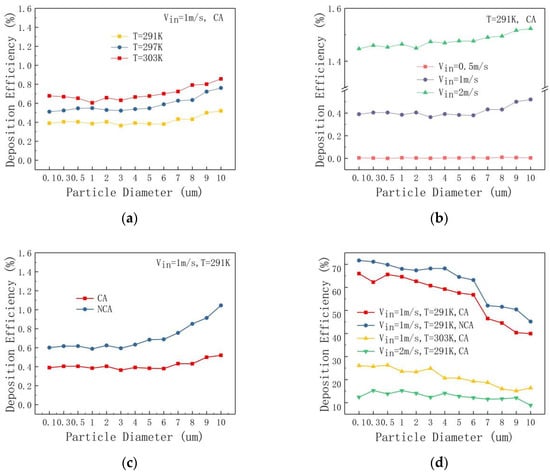
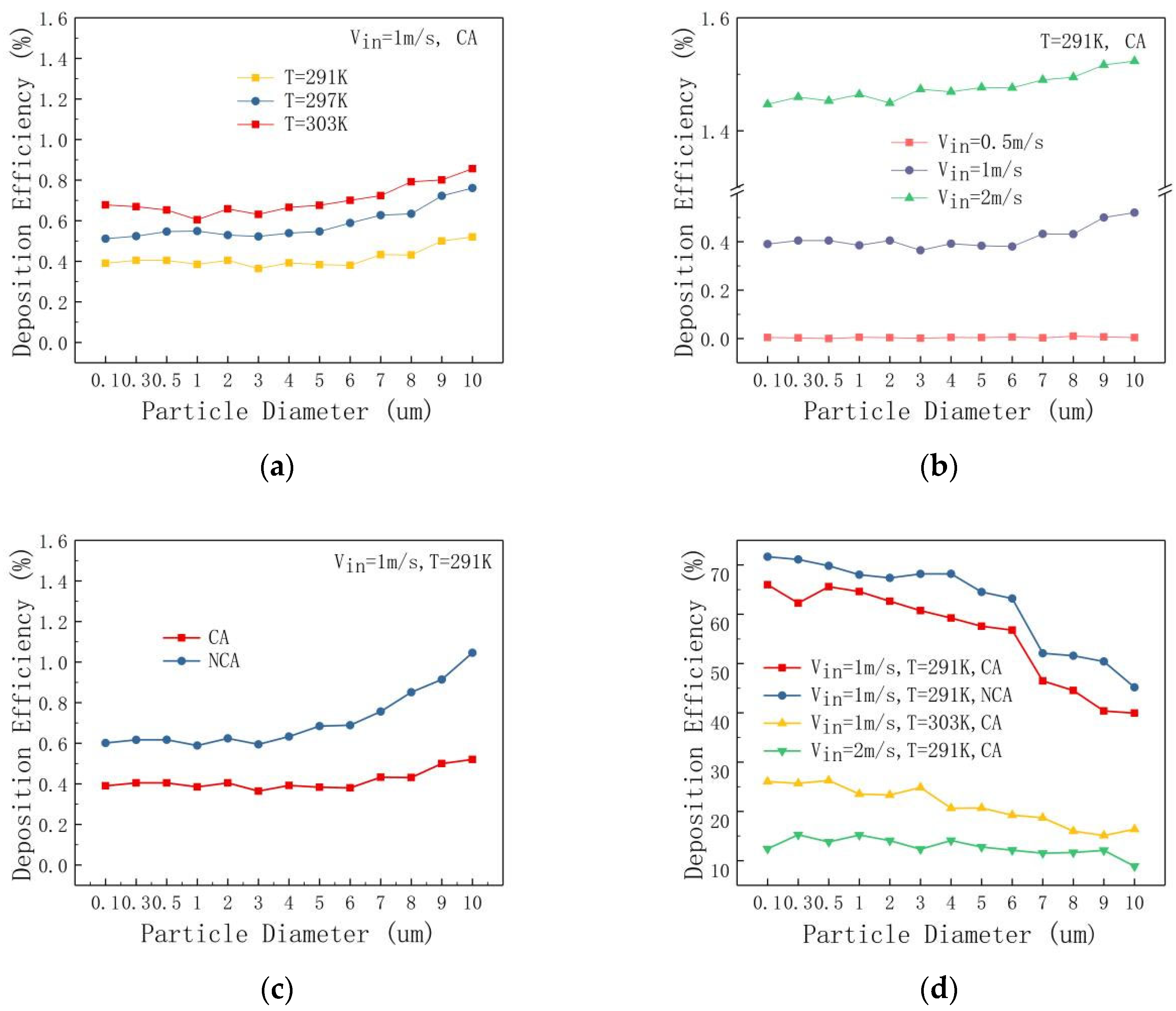
Figure 8a describes the deposition rate of particles with different diameters on the receiver (right side of Figure 1) at different temperatures under severe convection conditions. For particles of the same diameter, DE at low ambient temperature was lower than that at high ambient temperature. The boundary layer of the human body continuously exchanges heat with the external space. At a lower ambient temperature, the temperature gradient between the human body and the environment increases, forming strong convection with the surrounding air. Particles migrate in the direction of temperature reduction in the continuous fluid due to the effect of the temperature field [33], thus inhibiting the deposition of particles on the body of the person being transmitted [34]. At the same temperature, large particles are relatively less affected by thermal plumes. Figure 8b compares the deposition rate of particles on the disseminator at different speeds. For particles of the same diameter, stronger winds cause more particles to deposit on the disseminator. This was because the stronger secondary flow caused by high wind speed and momentum can change the trajectory of droplets with a larger diameter. These droplets circulate along the streamline before deposition due to gravity sedimentation, and inertial impact occurs. The increase in ambient wind enhances the degree of turbulence, which controls the movement of micron-sized particles and accelerates their diffusion due to their good following characteristics [35]. DE increases with the increase in particle diameter. When the deposition is affected by gravity and the human thermal plume, the contribution of the human thermal plume decreases with the increase in particle size, thus increasing the amount of particle deposition.
Figure 8.
Wind velocity, temperature, and respiratory tract effect on particulate deposition in healthy humans: (a) DE at different wind speeds; (b) DE at different temperatures; (c) DE in the absence of respiratory tract; (d) Exposure to risk.
In the absence of the respiratory tract, the deposition rate of particles in the disseminator is significantly higher than that in the presence of the respiratory tract (Figure 8c). First of all, the structure of the human nasal and respiratory tract is narrow. The inlet of the expiratory jet with respiratory tract is similar to the gradually expanding jet, and the jet without respiratory tract is similar to the jet with an equal diameter. Compared to the same diameter jet, most of the axial momentum of the tapered jet was converted into the radial momentum [36], which resulted in faster attenuation of the axial velocity, shorter penetration distance, and greater diffusion angle compared to the horizontal jet with the same entrance area. When there was no nasal airway, the axial velocity was large, so it also had large inertia. Under the influence of airflow, aerosols flowed in the direction perpendicular to the nasal cavity, with a smaller diffusion angle. Under the influence of airflow, the aerosol diffused more widely when it left the nasal cavity. Secondly, the face structure had a certain impact on the exhalation jet. The jet was limited by the face boundary, and the expansion movement of the jet was affected. The distance between the exhalation jet and the face was small, the volume of air entrained was small, the external flow rate was large, the static pressure was small, and the lower static pressure was large. The difference between the upper and lower pressure made the airflow stick to the face of the person, and the effect of wall attachment made the airflow close to the wall. However, due to the different angles and velocities of the incoming airflow, different pressure gradients were generated in this area, resulting in different degrees of deflection of the local airflow based on the free jet. The attachment process of the airflow on the face structure was very sensitive to inclination [37]. When the human body had no respiratory tract, due to the large axial velocity, there was no deflection at the exit, so it was easier to stick to the face and move to the front of the human body, and the movement spread further. Therefore, under the action of inlet structure and facial structure, the initial diffusion range of particles within the respiratory tract was large. At the same time, the effect of environmental wind speed may enhance the probability of attaching to the transported person. At present, the influence of wind on particle deposition is not clear, and further research is needed under different wind speeds and directions.
Figure 8d depicts the ratio of the amount of particulate matter deposited on the right-hand side of the head of the dispersed person to the amount of particulate matter on the whole body, reflecting the exposure risk of the dispersed person in the environment. In the absence of the respiratory tract, the proportion of particles deposited on the head was slightly higher than that in the presence of the respiratory tract. The airflow streamline shows (Figure 5b) that the airflow near the ground passed between the legs of the left virtual human and rose to the head area of the right virtual human, and the particles flowed to the face along with the airflow direction. When the respiratory tract was not included, the initial diffusion of particles was small and the axial kinetic energy was large. The position of exhaled aerosol was closer to the middle and lower part of the room, which was vulnerable to the influence of the lower flow field to improve the deposition rate of the face. The boundary layer continuously exchanges heat with outer space, forming a relatively stable thermal stratification and updraft. During the rising process, the airflow swept the sediment particles close to the body into the upper space of the room, which increased the concentration of particles in the human head, increasing the risk of infection, increasing the temperature difference, and enhancing the convection effect, so the exposure risk increased. An increase in wind speed led to stronger convection, stronger wind speed destroyed the boundary layer formed by the body of a healthy person, gravity and convection effects dominate, the body thermal plume had less effect, and therefore the percentage of particulate matter on the body increased and the risk decreased. The larger the diameter of the particulate matter, the more pronounced the effect of gravity on it and the greater the amount of particulate matter distributed over the body.
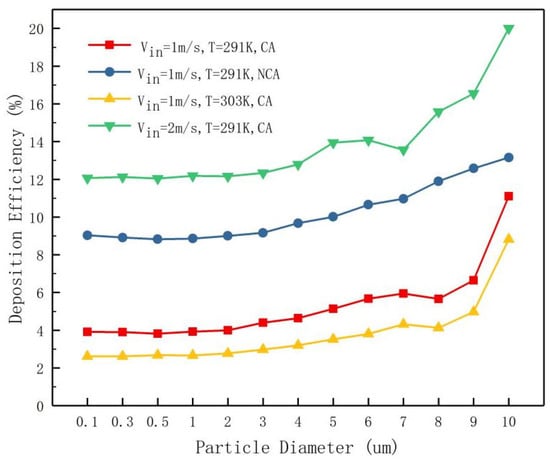
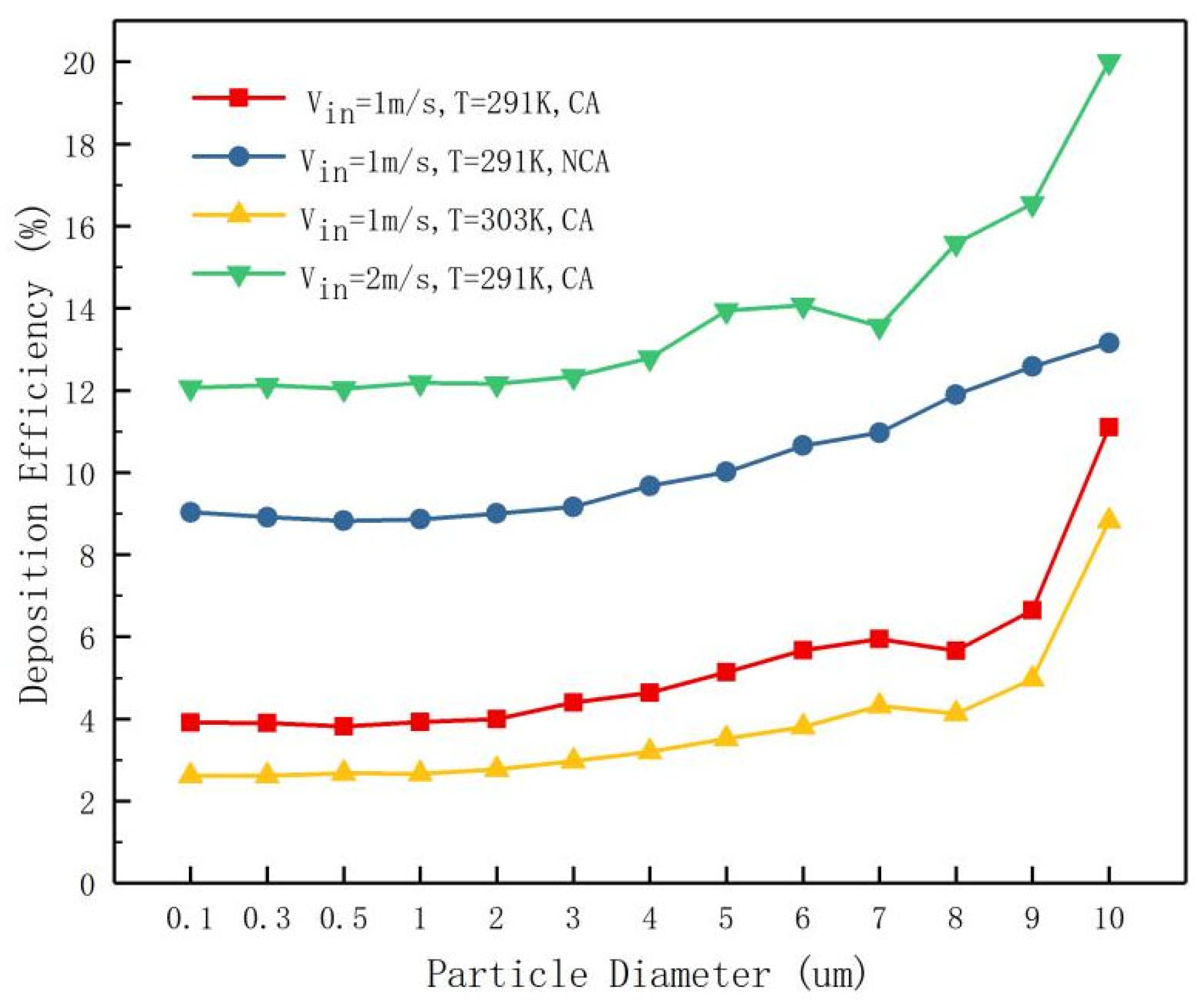
Figure 9 shows the deposition rates of particulate matter of different diameters on the body of the left human (transmitter) for different ambient temperatures, different ambient velocities, and without the respiratory tract. Overall, there was lower DE with the respiratory tract than without the respiratory tract under the same conditions. The increase in DE may be due to greater kinetic energy at the nostrils, which carries the particulate movement, and the weaker obstruction of the particulate matter by the body thermal plume. As the temperature increases, the weakening of the thermal plume around the body leads to a decrease in the Reynolds number of the gas flow, a decrease in turbulent kinetic energy, and an increase in the exposure of the particulate matter to the ambient wind speed, and, therefore, a decrease in the amount of particulate matter deposited on the transmitter. For the same ambient temperature, the DE rises at increasing wind speeds, and the local airflow velocity in the recirculation zone between two people has a higher velocity magnitude and turbulence intensity as higher wind speeds enter the calculated zone. Consequently, the convective effect was more dominant, so it influenced larger droplets and overcame their inertia, forcing them to follow a reverse recirculation flow. It is therefore necessary to disinfect items touched by the transmitter promptly to avoid increasing the risk of contact transmission.
Figure 9.
Wind velocity, temperature, and respiratory tract effect on particulate deposition in infected humans.
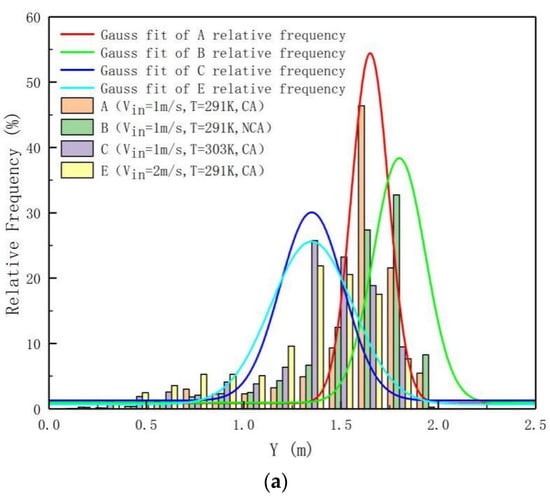
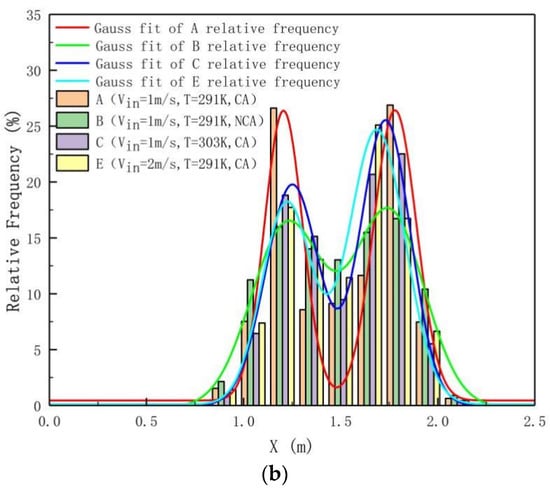
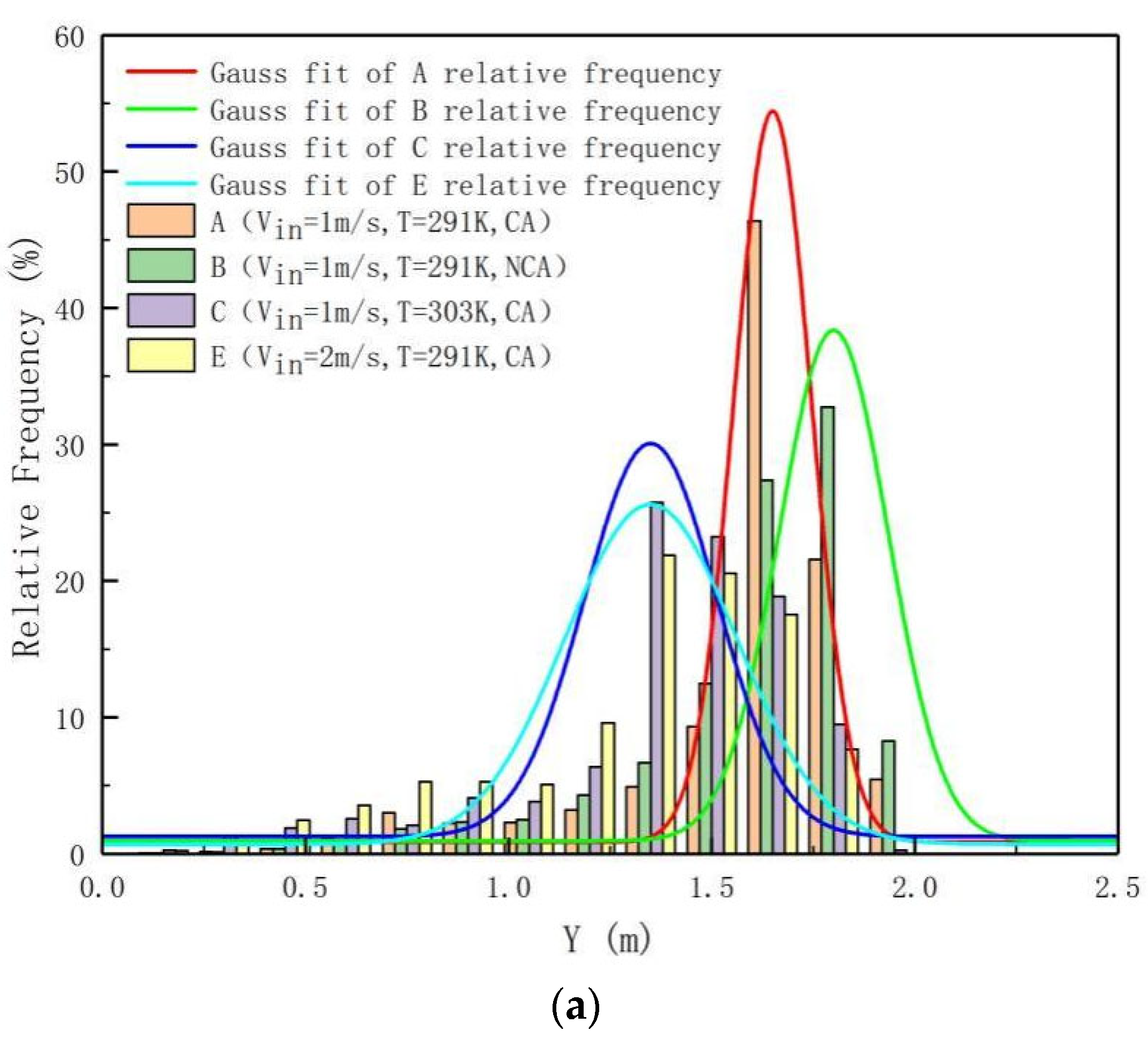
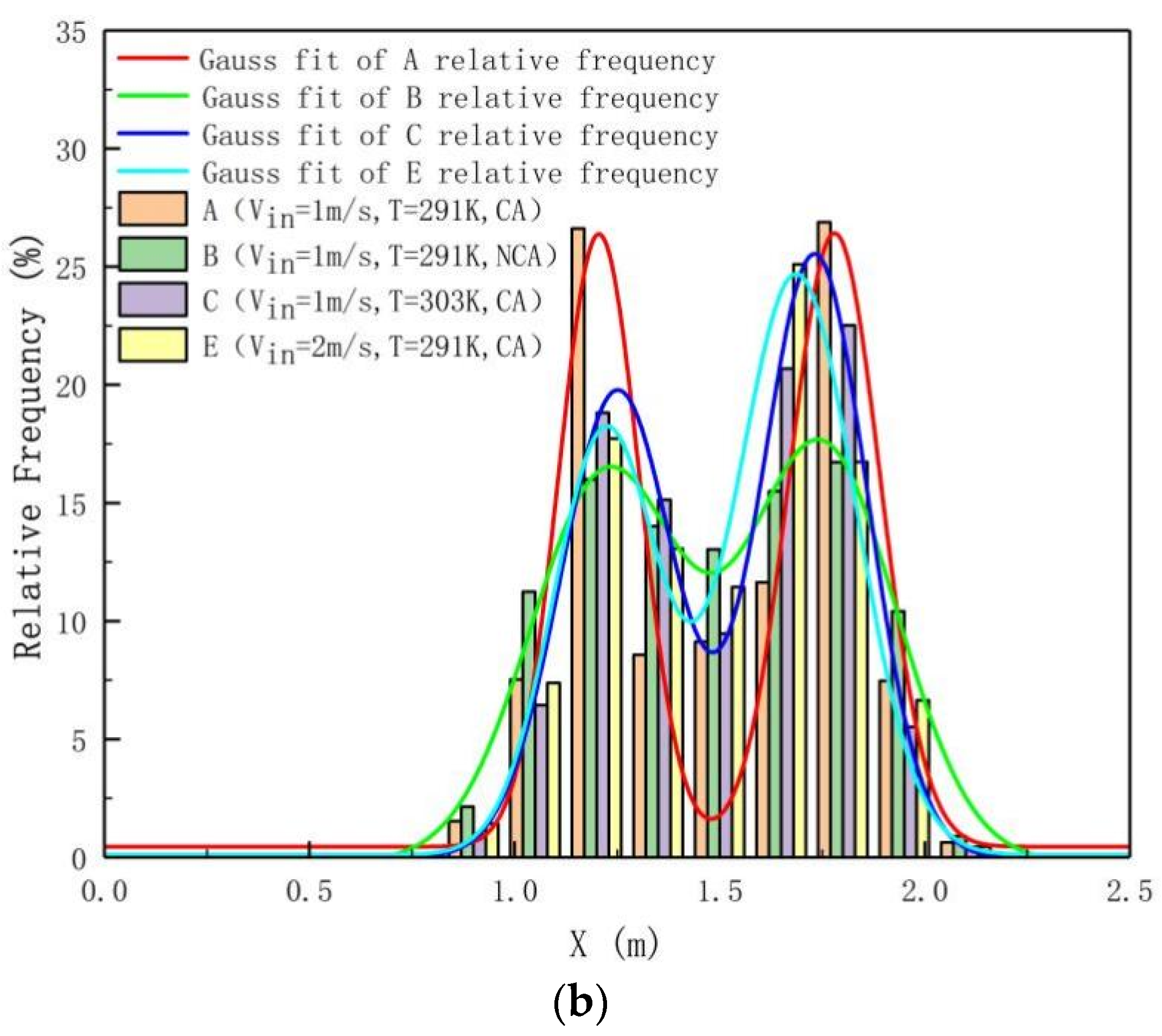
Figure 10 reflects the frequency distribution of 0.3 μm particles in different directions on the exit surface for different ambient temperatures, different ambient velocities, and in the absence of the respiratory tract. RF is defined as:
where is the number of particles deposited with a diameter of 0.3 μm per 0.15 m intervals in the x or y direction on the exit surface, and is the total number of particles deposited on the exit surface.
Figure 10.
Wind velocity, temperature, and respiratory tract affect the frequency distribution of particulate matter: (a) RF in the Y direction; (b) RF in the X direction.
Interestingly, when there was a respiratory tract, the peak value of particulate matter deposition rate was 1.65 m in the y direction, while when there was no respiratory tract, the peak value appeared at 1.8 m. The former peak value was slightly lower than the latter. The former may have been affected by the initial jet structure, resulting in a large initial diffusion range of particles, so that some particles were affected by the uniform ambient wind around the human body, and the deposition was slightly lower than the breathing height. When the respiratory tract was not included, the airflow was more involved in the eddy current between the two people. When the temperature increased, the temperature gradient between the human body and the environment decreased, the contribution of the human thermal plume and the exhaled thermal plume decreased, and the particulate matter was mainly deposited in the y direction at 1.35 m and spread more widely. As the velocity increased, the convective effect increased and the particulate matter was less affected by the thermal plume, and the peak deposition decreased (Figure 10a). Figure 10b describes the bimodal distribution of particles in the x direction, with the peak values mainly at 1.2 m and 1.8 m. The reduction in particle number between the two peaks was mainly due to the blocking effect of the human body. When the respiratory tract was not included, the initial diffusion of particles was relatively concentrated, and the deposition in the x direction was also relatively concentrated. With the increase in temperature gradient, the thermal plume increased, causing particles to move back around the human body. At the same time, with the increase in wind speed, the thermal plume effect was weakened and the particle distribution was more uniform.
4. Conclusions
To slow down the spread of respiratory viruses through airborne transmission, it is crucial to accurately predict the spread of viruses by analyzing the properties of the flow field and the site of particle deposition under various circumstances using numerical simulation methods. This study shows that the complex structure of the nasal and respiratory tract makes it difficult to accurately predict the risk of virus transmission without considering the respiratory tract. Therefore, it is strongly recommended that people consider respiratory tract structure when predicting the spread of respiratory viruses. The main conclusions are as follows.
- Feasibility of the method
Through the observation experiment of ripple shadow, the flow field characteristics of the whole breathing process were obtained, which provides a reference condition for the numerical simulation of the breathing jet, and verifies the feasibility, effectiveness, and accuracy of the numerical simulation method.
- 2.
- Influence of particulate matter based on real nasal respiratory tract model
The influence of respiratory tract structure on particulate transport and deposition is complex. Although considering the orientation of the nostrils can improve accuracy to some extent, the non-uniformity of the actual airflow velocity at the nostrils and the reduced kinetic energy are also critical to particulate transport. The relative error of 0.3 μm can reach 52.4% in both cases and disregarding the respiratory tract structure leads to over-prediction of infection risk. However, we are just a single case, and still need more simulations and experimental comparisons. Our results only represent the human health prevention status related to exposure.
- 3.
- Effect of environmental factors on particulate matter
An increase in ambient temperature and a reduction in the thermal plume effect can significantly increase the deposition rate of the transmitted person, e.g., in this study, at 303 K compared to 291 K, the deposition rate of 0.3 μm particulate matter increased by 1.7 times, and the diffusion range increased, thus increasing the risk of particulate matter transmission at elevated temperatures. The effect of wind on virus transport and deposition is complex, with an increased risk of particle deposition on the transmitted body at high wind speeds. High wind speeds, such as 2 m/s in this study, increased the deposition of 0.3 μm on the transmitted body by a factor of 3.6 compared to the initial ambient wind speed of 1 m/s. Particle deposition is more dispersed at high wind speeds, increasing the risk of transmission. Particles sized 0.3 μm at 1 m/s ambient wind speed increase the percentage of particles on the head of the transmitted person by 60% compared to the head at 2 m/s, and wearing a mask significantly reduces the risk of exposure.
This work studied the air distribution and aerosol deposition including a real respiratory model. The results show that the respiratory system has a significant influence on aerosol deposition rate, and various characteristics (wind speed, ambient temperature, particle size) are considered. These findings help to improve the accuracy of predicting social distance and to control the spread of infectious diseases through air transmission. Secondly, the application of the schlieren method inspired researchers to consider using the schlieren method in the analysis of thermal comfort, HVAC, indoor air quality, and health science. However, other aspects, including aerosol evaporation and the viscous boundary layer in the respiratory tract, have been ignored. By considering the above factors, future research can more accurately reflect how respiratory structure affects aerosol propagation. In addition, since the simulation used in this study only uses steady-state respiration, more general conclusions are needed to consider the impact of unsteady-state respiration.
Supplementary Materials
The following supporting information can be downloaded at: https://www.mdpi.com/article/10.3390/atmos13122050/s1, Figure S1: Grid independence verification, Figure S2: Schlieren experimental calculation domain and real respiratory tract structure, Figure S3: Comparison of density cloud map and schlieren experiment at the same time: (a) t = 0.4 s; (b) t = 1 s; (c) t = 1.5 s, Figure S4: Measured and the calculated velocity and concentration profiles at the center plane at X = 0.4 m: (a) Velocity profile; (b) Particle concentration profile, Figure S5: Particle number independence test [26,38,39,40].
Author Contributions
Conceptualization and methodology, J.W., H.X. and X.C.; formal analysis, J.W., H.X. and X.C.; supervision, H.X.; experimental work, J.W., X.Q. and Z.Z.; software, J.W., X.C., X.X. and J.S.; writing—original draft preparation, J.W.; review and editing, all authors. All authors have read and agreed to the published version of the manuscript.
Funding
National Natural Science Foundation of China, Qinglan Project of Jiangsu Province, Grant Number is 51976091.
Institutional Review Board Statement
Not applicable.
Informed Consent Statement
Informed consent was obtained from all the subjects involved in the study. Written informed consent has been obtained from the patient(s) to publish this paper.
Data Availability Statement
The data are available from the corresponding author by request.
Conflicts of Interest
The authors declare no conflict of interest.
References
- Xu, C.; Nielsen, P.V.; Gong, G. Measuring the exhaled breath of a manikin and human subjects. Indoor Air 2015, 25, 188–197. [Google Scholar] [CrossRef] [Scilit]
- Córdova, A.; Latasa, I. Respiratory Flows As A Method For Safely Preventing The Coronavirus Transmission (COVID-19). Apunts Sports Med. 2020, 55, 81–85. [Google Scholar] [CrossRef] [Scilit]
- Morawska, L.; Johnson, G.R.; Ristovski, Z.D.; Hargreaves, M.; Mengersen, K.; Corbett, S.; Chao, C.Y.H.; Katoshevski, D. Size distribution, and sites of origin of droplets expelled from the human respiratory tract during expiratory activities. J. Aerosol. Sci. 2008, 40, 256–269. [Google Scholar] [CrossRef] [Scilit]
- Chen, W.Z.; Zhang, N.; Wei, J.J.; Yen, H.L.; Li, Y.G. Short-range airborne route dominates exposure of respiratory infection during close contact. Build Environ. 2020, 176, 106859. [Google Scholar] [CrossRef] [Scilit]
- Fabian, P.; Mcdevitt, J.J.; Dehaan, W.H.; Fung, R.O.; Cowling, B.J.; Chan, K.H.; Leung, G.M.; Milton, D.K. Influenza virus in human exhaled breath: An observational study. PLoS ONE 2008, 3, e2691. [Google Scholar] [CrossRef] [Scilit] [PubMed]
- Edwards, D.A.; Man, J.C.; Brand, P.; Katstra, J.P.; Sommerer, K.; Stone, H.A.; Nardell, E.; Scheuch, G. Inhaling to mitigate exhaled bioaerosols. Proc. Natl. Acad. Sci. USA 2004, 101, 17383–17388. [Google Scholar] [CrossRef] [Scilit]
- Haghnegahdar, A.; Zhao, J.; Feng, Y. Lung aerosol dynamics of airborne influenza A virus-laden droplets and the resultant immune system responses: An in silico study. J. Aerosol. Sci. 2019, 134, 34–55. [Google Scholar] [CrossRef] [Scilit]
- Zhang, Z.; Kleinstreuer, C.; Chong, S.K.; Cheng, Y.S. Vaporizing Microdroplet Inhalation, Transport, and Deposition in a Human Upper Airway Model. J. Aerosol. Sci. 2004, 38, 36–49. [Google Scholar] [CrossRef]
- Kiasadegh, M.; Emdad, H.; Ahmadi, G.; Abouali, O. Transient numerical simulation of airflow and fibrous particles in a human upper airway model. J. Aerosol. Sci. 2020, 140, 105480. [Google Scholar] [CrossRef] [Scilit]
- Li, X.P.; Niu, J.L.; Gao, N. Spatial distribution of human respiratory droplet residuals and exposure risk for the co-occupant under different ventilation methods. HVAC&R RES. 2011, 17, 432–445. [Google Scholar]
- Gupta, J.K.; Lin, C.H.; Chen, Q. Characterizing exhaled airflow from breathing and talking. Indoor Air 2010, 20, 31–39. [Google Scholar] [CrossRef] [Scilit] [PubMed]
- Zhang, Y.X.; Feng, G.H.; Bi, Y.; Cai, Y.L.; Zhang, Z.; Cao, G.Y. Distribution of droplet aerosols generated by mouth coughing and nose breathing in an air-conditioned room. Sustain. Cities Soc. 2019, 51, 101721–101730. [Google Scholar] [CrossRef] [Scilit]
- Rencken, G.K.; Rutherford, E.K.; Ghanta, N.; Kongoletos, J.; Glicksman, L. Patterns of SARS-CoV-2 Aerosol Spread in Typical Classrooms. Build. Environ. 2021, 204, 108167–108188. [Google Scholar] [CrossRef] [Scilit] [PubMed]
- Feng, G.H.; Bi, Y.; Zhang, Y.X.; Cai, Y.L.; Huang, K.L. Study on the motion law of aerosols produced by human respiration under the action of a thermal plume of different intensities—ScienceDirect. Sustain. Cities Soc. 2022, 54, 101935–101947. [Google Scholar] [CrossRef] [Scilit] [PubMed]
- Ivanov, M.; Mijorski, S. Assessment of Transient CFD Techniques for Virtual Thermal Manikins’ Breathing Simulations. Environ. Sci.-Proc. Imp. 2019, 6, 241–251. [Google Scholar]
- Feng, Y.; Marchal, T.; Sperry, T.; Yi, H. Influence of wind and relative humidity on the social distancing effectiveness to prevent COVID-19 airborne transmission: A numerical study. J. Aerosol. Sci. 2020, 147, 105585–105594. [Google Scholar] [CrossRef] [Scilit]
- Wang, J.Y.; Tang, K.; Feng, K.; Lin, X.; Lv, W.F.; Chen, K.; Wang, F. Impact of temperature and relative humidity on the transmission of COVID-19: A modeling study in China and the United States. BMJ Open 2021, 11, 043863. [Google Scholar] [CrossRef] [Scilit]
- Jahangiri, M.; Jahangiri, M.; Najafgholipour, M. The sensitivity and specificity analyses of ambient temperature and population size on the transmission rate of the novel coronavirus (COVID-19) in different provinces of Iran. Sci. Total. Environ. 2020, 728, 138872. [Google Scholar] [CrossRef] [Scilit]
- Usmani, M.; Jamal, Y.; Gangwar, M.; Magers, B.; Chaves, G.J.; Wu, C.Y.; Colwell, R.; Jutla, A. Asymmetric Relationship between Ambient Air Temperature and Incidence of COVID-19 in the Human Population. Am. J. Trop. Med. Hyg. 2022, 106, 877–885. [Google Scholar] [CrossRef] [Scilit]
- Centers for Disease Control and Prevention. Available online: https://blogs.cdc.gov/publichealthmatters/2020/04/essential-errands (accessed on 20 April 2020).
- Xie, X.J.; Li, Y.; Chwang, A.T.Y.; Ho, P.L.; Seto, W.H. How far droplets can move in indoor environments--revisiting the Wells evaporation-falling curve. Indoor Air 2007, 17, 211–225. [Google Scholar] [CrossRef] [Scilit]
- Menter, F.R.; Langtry, R.V.; Lker, S. Transition modeling for general purpose CFD codes. Flow Turbul. Combust. 2006, 77, 277–303. [Google Scholar] [CrossRef] [Scilit]
- Zhang, Z.; Kleinstreuer, C. Laminar-to-turbulent fluid–nanoparticle dynamics simulations: Model comparisons and nanoparticle-deposition applications. Int. J. Numer. Methods Eng. 2011, 27, 1930–1950. [Google Scholar] [CrossRef] [Scilit]
- Menter, F.R.; Langtry, R.B.; Völker, S. Transition Modelling for General Purpose CFD Codes. Engineer. Eng. Turbul. Model. Exp. 2005, 77, 31–48. [Google Scholar]
- Menter, F.R.; Langtry, R.B.; Likki, S.R.; Suzen, Y.B.; Huang, P.G.; Völker, S. A Correlation-Based Transition Model Using Local Variables—Part I: Model Formulation. J. Turbomach. 2004, 128, 413–422. [Google Scholar] [CrossRef] [Scilit]
- Chen, F.; Yu, S.; Lai, A. Modeling particle distribution and deposition in indoor environments with a new drift-flux model. Atmos. Environ. 2006, 40, 357–367. [Google Scholar] [CrossRef] [Scilit]
- Gralton, J.; Tovey, E.; McLaws, M.L.; Rawlinson, W.D. The role of particle size in aerosolized pathogen transmission: A review. J. Infect. 2011, 62, 1–13. [Google Scholar] [CrossRef] [Scilit] [PubMed]
- Fairchild, C.I.; Stampfer, J.F. Particle Concentration in Exhaled Breath. AIHAJ 1987, 48, 948–950. [Google Scholar] [CrossRef] [PubMed]
- Gao, N.P.; Niu, J.L.; Morawska, L. Distribution characteristics of respiratory aerosols in enclosed environments. J. Southeast Univ. 2010, 2, 811–818. [Google Scholar]
- Kavousi, F.; Behjat, Y.; Shahhosseini, S. Optimal design of drainage channel geometry parameters in vane demister liquid–gas separators. Chem. Eng. Res. Des. 2013, 91, 1212. [Google Scholar] [CrossRef] [Scilit]
- Chao, C.; Wan, M.P. A study of the dispersion of expiratory aerosols in unidirectional downward and ceiling-return type airflows using a multiphase approach. Indoor Air 2006, 16, 296–312. [Google Scholar] [CrossRef] [Scilit]
- Zhao, B.; Yang, C.; Yang, X.; Liu, S. Particle dispersion and deposition in ventilated rooms: Testing and evaluation of different Eulerian and Lagrangian models. Build. Environ. 2008, 43, 388–397. [Google Scholar] [CrossRef] [Scilit]
- Walsh, J.K.; Weimer, A.W.; Hrenya, C.M. Thermophoretic deposition of aerosol particles in laminar tube flow with mixed convection. JAS 2006, 37, 715–734. [Google Scholar] [CrossRef] [Scilit]
- Gao, N.; He, Q.; Niu, J. Numerical study of the lock-up phenomenon of human exhaled droplets under a displacement ventilated room. Build. Simul. China 2012, 5, 51–60. [Google Scholar] [CrossRef] [Scilit]
- Yu, L.; Wei, G.; Wang, D.Z.; Wang, C. Direct Numerical Simulation on Turbulent Transportation and Thermophoretic Deposition of Micron-Sized Particles in Rectangle Channel. In Proceedings of the 2016 International Conference on Environment, Climate Change, and Sustainable Development (ECCSD 2016), Beijing, China, 28 May 2016. [Google Scholar]
- Park, A.W.; Reitz, R.D. A gas jet superposition model for CFD modeling of group-hole nozzle sprays. Int. J. Heat Fluid Flow 2009, 30, 1193–1201. [Google Scholar] [CrossRef] [Scilit]
- Pulat, W.P.; Beyazoglu, E. Computational investigation of confined wall inclination effects on impinging jet fluid flow and heat transfer. Int. J. Therm. Sci. 2021, 163, 106749. [Google Scholar] [CrossRef] [Scilit]
- Chen, X.; Feng, Y.; Zhong, W.; Kleinstreuer, C. Numerical investigation of the interaction, transport, and deposition of multicomponent droplets in a simple mouth-throat model. JAS 2017, 105, 108–127. [Google Scholar] [CrossRef] [Scilit]
- Settles, G.S.; Hargather, M.J. A review of recent developments in schlieren and shadowgraph techniques. Meas. Sci. Technol. 2017, 28, 042001. [Google Scholar] [CrossRef] [Scilit]
- Bivolarova, M.; Ondráček, J.; Melikov, A.; Ždímal, V. A comparison between tracer gas and aerosol particles distribution indoors: The impact of ventilation rate, interaction of airflows, and presence of objects. Indoor Air 2017, 27, 1201–1212. [Google Scholar] [CrossRef] [Scilit]

Publisher’s Note: MDPI stays neutral with regard to jurisdictional claims in published maps and institutional affiliations. |
© 2022 by the authors. Licensee MDPI, Basel, Switzerland. This article is an open access article distributed under the terms and conditions of the Creative Commons Attribution (CC BY) license (https://creativecommons.org/licenses/by/4.0/).