Humanization of the rpb9 Locus in Fission Yeast Reveals Conserved and Divergent Roles of rpb9 and Human POLR2I

 , ,
, ,
Abstract
1. Introduction
2. Materials and Methods
2.1. Yeast Culturing and Manipulation
2.2. Endogenous Humanization of rpb9 in S. pombe
2.3. Yeast Spotting Assays
2.4. Western Blotting
2.5. Live-Cell Microscopy
2.6. Chronological Aging Assay
2.7. Chromatin Immunoprecipitation
2.8. RNA RT-qPCR
2.9. Sequence Alignment Analyses
2.10. Protein Structure Analyses
3. Results
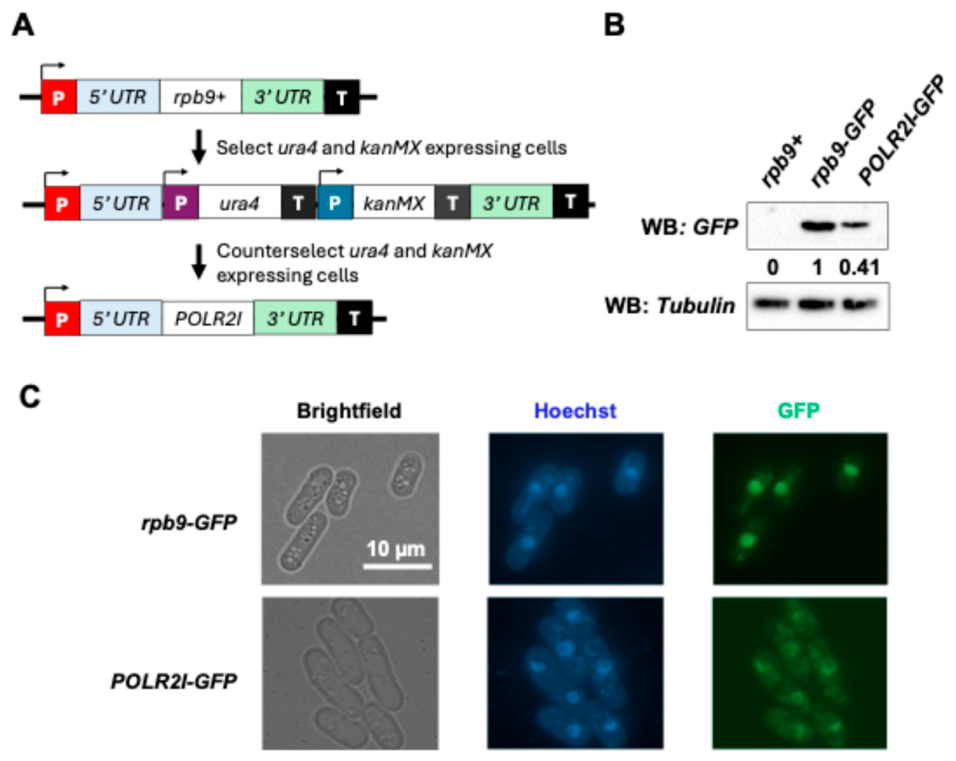
3.1. Swapping the Endogenous rpb9 Gene for PORL2I in the S. pombe Genome
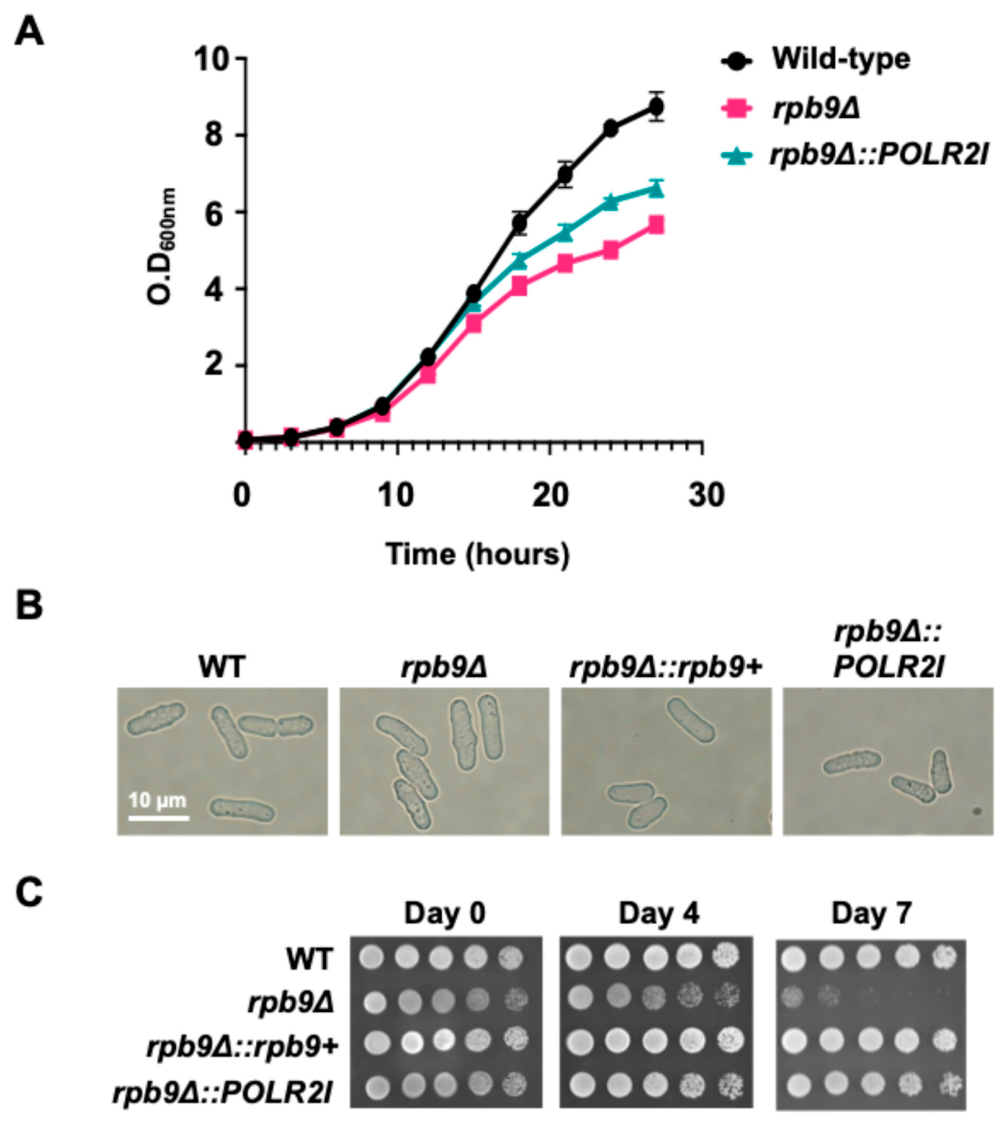
3.2. Characterizing Effects of POLR2I on S. pombe Cell Growth in Non-Selective Media
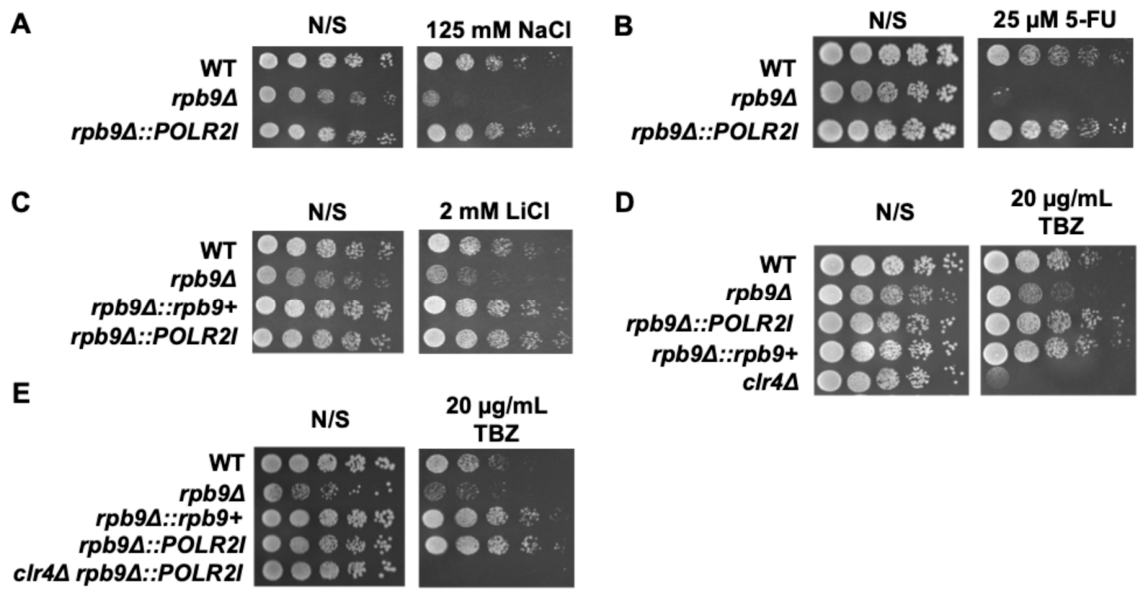
3.3. POLR2I Complements Defects in Stress Responses in rpb9Δ Cells
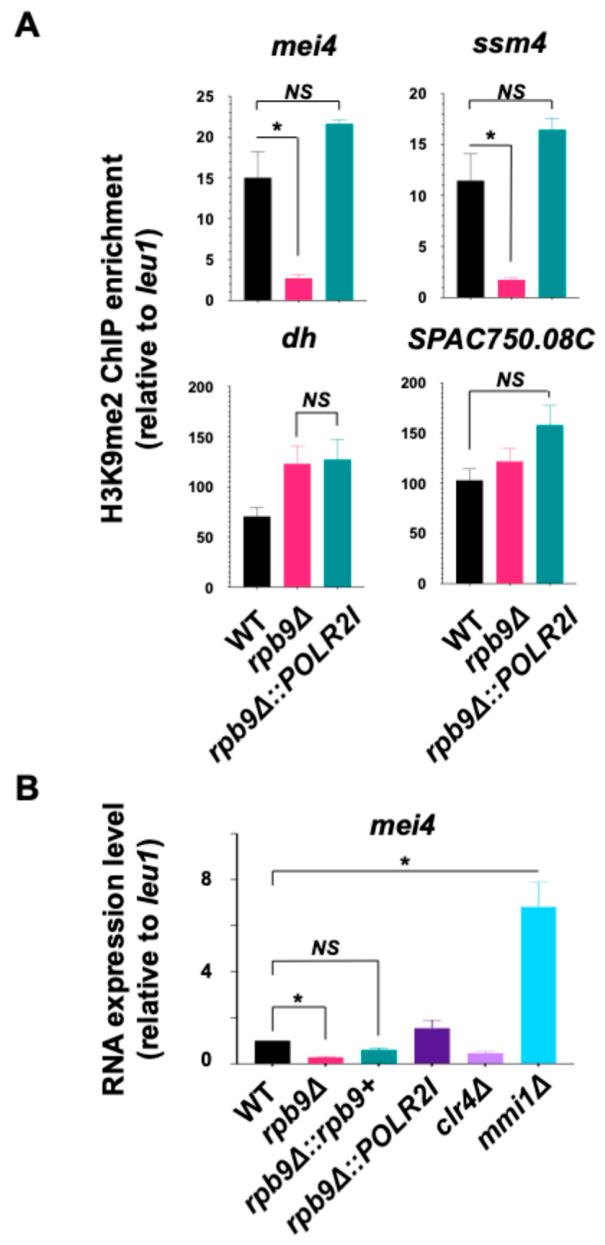
3.4. Rpb9 and POLR2I Promote Facultative Heterochromatin Formation in S. pombe Cells
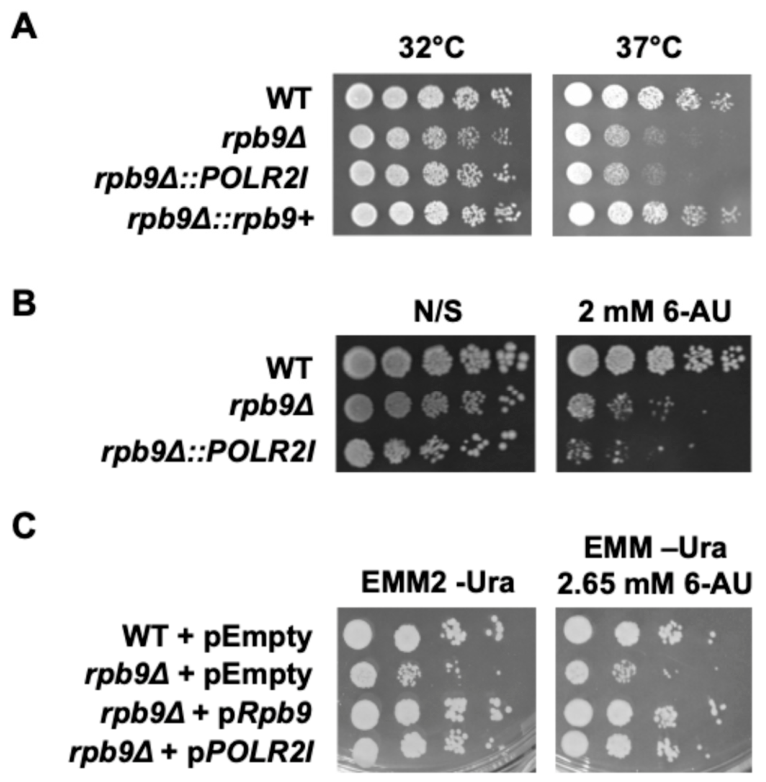
3.5. Endogenously Expressed POLR2I Does Not Complement Growth Defects of rpb9Δ Cells Under 37 °C Heat Stress or in the Presence of 6-Azauracil (6-AU)
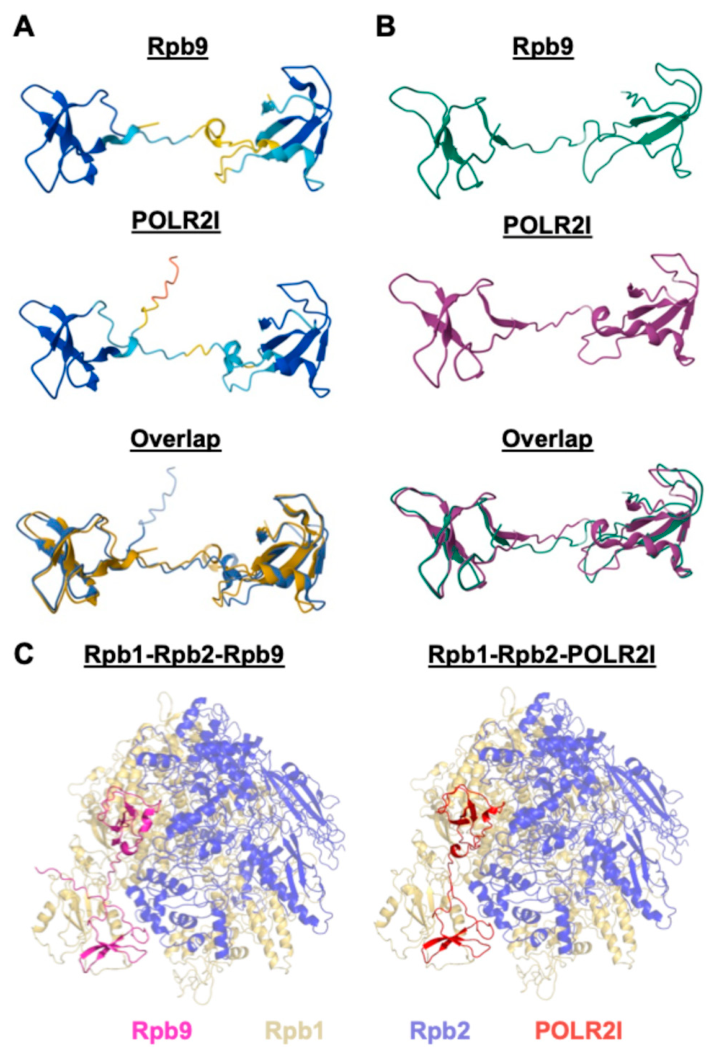
3.6. Structural Similarities and Divergences of S. pombe Rbp9 and Human POLR2I
4. Discussion
Supplementary Materials
Author Contributions
Funding
Institutional Review Board Statement
Informed Consent Statement
Data Availability Statement
Acknowledgments
Conflicts of Interest
Abbreviations
| Pol II | RNA polymerase II |
| ORF | Open reading frame |
| UTR | Untranslated region |
| cDNA | Complementary DNA |
| YEA | Yeast extract with adenine and glucose |
| PMG | Pombe minimal glutamate |
| qPCR | Quantitative polymerase chain reaction |
| ChIP | Chromatin immunoprecipitation |
| H3K9me2 | Di-methylation of histone H3 at lysine 9 |
| 5-FOA | 5-fluoroorotic acid |
| 5-FU | 5-fluorouracil |
| 6-AU | 6-azauracil |
| MPA | Mycophenolic acid |
| TBZ | Thiabendazole |
| S. cerevisiae | Saccharomyces cerevisiae |
| S. pombe | Schizosaccharomyces pombe |
| rpb9Δ | Endogenous deletion of the rpb9 gene |
| rpb9Δ::rpb9+ | Endogenous rpb9 swapped for rpb9 |
| rpb9Δ::POLR2I | Endogenous rpb9 swapped for POLR2I |
References
- Lee, T.I.; Young, R.A. Transcriptional regulation and its misregulation in disease. Cell 2013, 152, 1237–1251. [Google Scholar] [CrossRef]
- Shine, M.; Gordon, J.; Schärfen, L.; Zigackova, D.; Herzel, L.; Neugebauer, K.M. Co-transcriptional gene regulation in eukaryotes and prokaryotes. Nat. Rev. Mol. Cell Biol. 2024, 25, 534–554. [Google Scholar] [CrossRef] [PubMed]
- Corbett, A.H. Post-transcriptional regulation of gene expression and human disease. Curr. Opin. Cell Biol. 2018, 52, 96–104. [Google Scholar] [CrossRef] [PubMed]
- Hirose, Y.; Manley, J.L. RNA polymerase II and the integration of nuclear events. Genes Dev. 2000, 14, 1415–1429. [Google Scholar] [CrossRef] [PubMed]
- Cramer, P.; Bushnell, D.A.; Fu, J.; Gnatt, A.L.; Maier-Davis, B.; Thompson, N.E.; Burgess, R.R.; Edwards, A.M.; David, P.R.; Kornberg, R.D. Architecture of RNA polymerase II and implications for the transcription mechanism. Science 2000, 288, 640–649. [Google Scholar] [CrossRef]
- Cramer, P.; Bushnell, D.A.; Kornberg, R.D. Structural basis of transcription: RNA polymerase II at 2.8 Ångstrom resolution. Science 2001, 292, 1863–1876. [Google Scholar] [CrossRef]
- Gnatt, A.L.; Cramer, P.; Fu, J.; Bushnell, D.A.; Kornberg, R.D. Structural basis of transcription: An RNA polymerase II elongation complex at 3.3 Å resolution. Science 2001, 292, 1876–1882. [Google Scholar] [CrossRef]
- Murakami, K.; Tsai, K.-L.; Kalisman, N.; Bushnell, D.A.; Asturias, F.J.; Kornberg, R.D. Structure of an RNA polymerase II preinitiation complex. Proc. Natl. Acad. Sci. USA 2015, 112, 13543–13548. [Google Scholar] [CrossRef]
- Phatnani, H.P.; Greenleaf, A.L. Phosphorylation and functions of the RNA polymerase II CTD. Genes Dev. 2006, 20, 2922–2936. [Google Scholar] [CrossRef]
- Hsin, J.-P.; Manley, J.L. The RNA polymerase II CTD coordinates transcription and RNA processing. Genes Dev. 2012, 26, 2119–2137. [Google Scholar] [CrossRef]
- Buratowski, S. Progression through the RNA polymerase II CTD cycle. Mol. Cell 2009, 36, 541–546. [Google Scholar] [CrossRef]
- Spåhr, H.; Calero, G.; Bushnell, D.A.; Kornberg, R.D. Schizosacharomyces pombe RNA polymerase II at 3.6-Å resolution. Proc. Natl. Acad. Sci. USA 2009, 106, 9185–9190. [Google Scholar] [CrossRef]
- Sentenac, A. Eukaryotic RNA polymerase. Crit. Rev. Biochem. 1985, 18, 31–90. [Google Scholar] [CrossRef] [PubMed]
- Bernecky, C.; Herzog, F.; Baumeister, W.; Plitzko, J.M.; Cramer, P. Structure of transcribing mammalian RNA polymerase II. Nature 2016, 529, 551–554. [Google Scholar] [CrossRef]
- Myer, V.E.; Young, R.A. RNA polymerase II holoenzymes and subcomplexes. J. Biol. Chem. 1998, 273, 27757–27760. [Google Scholar] [CrossRef]
- Woychik, N.A.; Lane, W.S.; Young, R.A. Yeast RNA polymerase II subunit RPB9 is essential for growth at temperature extremes. J. Biol. Chem. 1991, 266, 19053–19055. [Google Scholar] [CrossRef]
- Bhardwaj, V.; Vishwakarma, P.; Lynn, A.; Sharma, N. Deletion of the non-essential Rpb9 subunit of RNA polymerase II results in pleiotropic phenotypes in Schizosaccharomyces pombe. Biochim. Biophys. Acta (BBA)—Proteins Proteom. 2021, 1869, 140654. [Google Scholar] [CrossRef]
- Hull, M.W.; McKune, K.; Woychik, N.A. RNA polymerase II subunit RPB9 is required for accurate start site selection. Genes Dev. 1995, 9, 481–490. [Google Scholar] [CrossRef] [PubMed]
- Hemming, S.A.; Jansma, D.B.; Macgregor, P.F.; Goryachev, A.; Friesen, J.D.; Edwards, A.M. RNA polymerase II subunit Rpb9 regulates transcription elongation in vivo. J. Biol. Chem. 2000, 275, 35506–35511. [Google Scholar] [CrossRef] [PubMed]
- Awrey, D.E.; Weilbaecher, R.G.; Hemming, S.A.; Orlicky, S.M.; Kane, C.M.; Edwards, A.M. Transcription elongation through DNA arrest sites: A multistep process involving both RNA polymerase II subunit RPB9 and TFIIS. J. Biol. Chem. 1997, 272, 14747–14754. [Google Scholar] [CrossRef]
- Li, S.; Smerdon, M.J. Rpb4 and Rpb9 mediate subpathways of transcription-coupled DNA repair in Saccharomyces cerevisiae. EMBO J. 2002, 21, 5921–5929. [Google Scholar] [CrossRef]
- Ziegler, L.M.; Khaperskyy, D.A.; Ammerman, M.L.; Ponticelli, A.S. Yeast RNA polymerase II lacking the Rpb9 subunit is impaired for interaction with transcription factor IIF. J. Biol. Chem. 2003, 278, 48950–48956. [Google Scholar] [CrossRef] [PubMed]
- Muste Sadurni, M.; Saponaro, M. Deregulations of RNA pol II subunits in cancer. Appl. Biosci. 2023, 2, 459–476. [Google Scholar] [CrossRef]
- Long, N.P.; Lee, W.J.; Huy, N.T.; Lee, S.J.; Park, J.H.; Kwon, S.W. Novel biomarker candidates for colorectal cancer metastasis: A meta-analysis of in vitro studies. Cancer Inform. 2016, 15, CIN-S40301. [Google Scholar] [CrossRef] [PubMed]
- Gaponova, A.V.; Deneka, A.Y.; Beck, T.N.; Liu, H.; Andrianov, G.; Nikonova, A.S.; Nicolas, E.; Einarson, M.B.; Golemis, E.A.; Serebriiskii, I.G. Identification of evolutionarily conserved DNA damage response genes that alter sensitivity to cisplatin. Oncotarget 2016, 8, 19156. [Google Scholar] [CrossRef]
- You, S.; Xu, J.; Wu, B.; Wu, S.; Zhang, Y.; Sun, Y.; Zhang, N. Comprehensive bioinformatics analysis identifies POLR2I as a key gene in the pathogenesis of hypertensive nephropathy. Front. Genet. 2021, 12, 698570. [Google Scholar] [CrossRef]
- Ehrenhofer-Murray, A.E.; Gossen, M.; Pak, D.T.; Botchan, M.R.; Rine, J. Separation of origin recognition complex functions by cross-species complementation. Science 1995, 270, 1671–1674. [Google Scholar] [CrossRef]
- Huang, H.; Gehan, M.A.; Huss, S.E.; Alvarez, S.; Lizarraga, C.; Gruebbling, E.L.; Gierer, J.; Naldrett, M.J.; Bindbeutel, R.K.; Evans, B.S. Cross-species complementation reveals conserved functions for EARLY FLOWERING 3 between monocots and dicots. Plant Direct 2017, 1, e00018. [Google Scholar] [CrossRef]
- Hamza, A.; Tammpere, E.; Kofoed, M.; Keong, C.; Chiang, J.; Giaever, G.; Nislow, C.; Hieter, P. Complementation of yeast genes with human genes as an experimental platform for functional testing of human genetic variants. Genetics 2015, 201, 1263–1274. [Google Scholar] [CrossRef]
- Lee, M.G.; Nurse, P. Complementation used to clone a human homologue of the fission yeast cell cycle control gene cdc2. Nature 1987, 327, 31–35. [Google Scholar] [CrossRef]
- Kachroo, A.H.; Vandeloo, M.; Greco, B.M.; Abdullah, M. Humanized yeast to model human biology, disease and evolution. Dis. Models Mech. 2022, 15, dmm049309. [Google Scholar] [CrossRef]
- McKune, K.; Moore, P.A.; Hull, M.W.; Woychik, N.A. Six human RNA polymerase subunits functionally substitute for their yeast counterparts. Mol. Cell. Biol. 1995, 15, 6895–6900. [Google Scholar] [CrossRef][Green Version]
- Ólafsson, G.; Haase, M.A.; Boeke, J.D. Humanization reveals pervasive incompatibility of yeast and human kinetochore components. G3 Genes Genomes Genet. 2024, 14, jkad260. [Google Scholar] [CrossRef] [PubMed]
- Bhardwaj, V.; Sharma, N. Absence of the Rpb9 subunit of RNA polymerase II reduces the chronological life span in fission yeast. J. Basic Microbiol. 2022, 62, 900–910. [Google Scholar] [CrossRef] [PubMed]
- Krawchuk, M.D.; Wahls, W.P. High-efficiency gene targeting in Schizosaccharomyces pombe using a modular, PCR-based approach with long tracts of flanking homology. Yeast 1999, 15, 1419–1427. [Google Scholar] [CrossRef]
- Grimm, C.; Kohli, J.; Murray, J.; Maundrell, K. Genetic engineering of Schizosaccharomyces pombe: A system for gene disruption and replacement using the ura4 gene as a selectable marker. Mol. Gen. Genet. MGG 1988, 215, 81–86. [Google Scholar] [CrossRef]
- Horton, R.M.; Cai, Z.; Ho, S.N.; Pease, L.R. Gene splicing by overlap extension: Tailor-made genes using the polymerase chain reaction. Biotechniques 2013, 54, 129–133. [Google Scholar] [CrossRef]
- Nirmal, M.B.; Pearce, M.E.; Liu, C.T.; Finkel, J.M.; Darrow, K.S.; Vo, T.V. Deletion of Elongator Protein 1 (Elp1) relieves heterochromatin defects in a Pol II mutant of Schizosaccharomyces pombe. Genetics 2025, 232, iyaf258. [Google Scholar] [CrossRef]
- Abramson, J.; Adler, J.; Dunger, J.; Evans, R.; Green, T.; Pritzel, A.; Ronneberger, O.; Willmore, L.; Ballard, A.J.; Bambrick, J. Accurate structure prediction of biomolecular interactions with AlphaFold 3. Nature 2024, 630, 493–500. [Google Scholar] [CrossRef]
- Bähler, J.; Wu, J.Q.; Longtine, M.S.; Shah, N.G.; Mckenzie, A., III; Steever, A.B.; Wach, A.; Philippsen, P.; Pringle, J.R. Heterologous modules for efficient and versatile PCR-based gene targeting in Schizosaccharomyces pombe. Yeast 1998, 14, 943–951. [Google Scholar] [CrossRef]
- Boeke, J.D.; La Croute, F.; Fink, G.R. A positive selection for mutants lacking orotidine-5′-phosphate decarboxylase activity in yeast: 5-fluoro-orotic acid resistance. Mol. Gen. Genet. MGG 1984, 197, 345–346. [Google Scholar] [CrossRef]
- Sharp, P.M.; Cowe, E.; Higgins, D.G.; Shields, D.C.; Wolfe, K.H.; Wright, F. Codon usage patterns in Escherichia coli, Bacillus subtilis, Saccharomyces cerevisiae, Schizosaccharomyces pombe, Drosophila melanogaster and Homo sapiens; a review of the considerable within-species diversity. Nucleic Acids Res. 1988, 16, 8207–8211. [Google Scholar] [CrossRef]
- Hiraoka, Y.; Kawamata, K.; Haraguchi, T.; Chikashige, Y. Codon usage bias is correlated with gene expression levels in the fission yeast Schizosaccharomyces pombe. Genes Cells 2009, 14, 499–509. [Google Scholar] [CrossRef]
- Dyer, S.C.; Austine-Orimoloye, O.; Azov, A.G.; Barba, M.; Barnes, I.; Barrera-Enriquez, V.P.; Becker, A.; Bennett, R.; Beracochea, M.; Berry, A.; et al. Ensembl 2025. Nucleic Acids Res. 2024, 53, D948–D957. [Google Scholar] [CrossRef]
- Awan, A.R.; Manfredo, A.; Pleiss, J.A. Lariat sequencing in a unicellular yeast identifies regulated alternative splicing of exons that are evolutionarily conserved with humans. Proc. Natl. Acad. Sci. USA 2013, 110, 12762–12767. [Google Scholar] [CrossRef]
- Montañés, J.C.; Huertas, M.; Moro, S.G.; Blevins, W.R.; Carmona, M.; Ayté, J.; Hidalgo, E.; Albà, M.M. Native RNA sequencing in fission yeast reveals frequent alternative splicing isoforms. Genome Res. 2022, 32, 1215–1227. [Google Scholar] [CrossRef] [PubMed]
- Kuhn, A.N.; Käufer, N.F. Pre-mRNA splicing in Schizosaccharomyces pombe: Regulatory role of a kinase conserved from fission yeast to mammals. Curr. Genet. 2003, 42, 241–251. [Google Scholar] [CrossRef]
- Gutz, H.; Heslot, H.; Leupold, U.; Loprieno, N. Schizosaccharomyces pombe. In Bacteria, Bacteriophages, and Fungi: Volume 1; Springer: Berlin/Heidelberg, Germany, 1974; pp. 395–446. [Google Scholar]
- Burtner, C.R.; Murakami, C.J.; Kennedy, B.K.; Kaeberlein, M. A molecular mechanism of chronological aging in yeast. Cell Cycle 2009, 8, 1256–1270. [Google Scholar] [CrossRef] [PubMed]
- Mojardín, L.; Botet, J.; Moreno, S.; Salas, M. Chromosome segregation and organization are targets of 5′-Fluorouracil in eukaryotic cells. Cell Cycle 2015, 14, 206–218. [Google Scholar] [CrossRef] [PubMed]
- Rodríguez-López, M.; Bordin, N.; Lees, J.; Scholes, H.; Hassan, S.; Saintain, Q.; Kamrad, S.; Orengo, C.; Bähler, J. Broad functional profiling of fission yeast proteins using phenomics and machine learning. eLife 2023, 12, RP88229. [Google Scholar] [CrossRef]
- Davidse, L.C.; Flach, W. Interaction of thiabendazole with fungal tubulin. Biochim. Biophys. Acta (BBA)—Gen. Subj. 1978, 543, 82–90. [Google Scholar] [CrossRef]
- Walker, G.M. Cell cycle specificity of certain antimicrotubular drugs in Schizosaccharomyces pombe. Microbiology 1982, 128, 61–71. [Google Scholar] [CrossRef]
- Farooq, Z.; Abdullah, E.; Banday, S.; Ganai, S.A.; Rashid, R.; Mushtaq, A.; Rashid, S.; Altaf, M. Vigilin protein Vgl1 is required for heterochromatin-mediated gene silencing in Schizosaccharomyces pombe. J. Biol. Chem. 2019, 294, 18029–18040. [Google Scholar] [CrossRef]
- Khanduja, J.S.; Joh, R.I.; Perez, M.M.; Paulo, J.A.; Palmieri, C.M.; Zhang, J.; Gulka, A.O.; Haas, W.; Gygi, S.P.; Motamedi, M. RNA quality control factors nucleate Clr4/SUV39H and trigger constitutive heterochromatin assembly. Cell 2024, 187, 3262–3283.e23. [Google Scholar] [CrossRef]
- Allshire, R.C.; Ekwall, K. Epigenetic regulation of chromatin states in Schizosaccharomyces pombe. Cold Spring Harb. Perspect. Biol. 2015, 7, a018770. [Google Scholar] [CrossRef]
- Zofall, M.; Yamanaka, S.; Reyes-Turcu, F.E.; Zhang, K.; Rubin, C.; Grewal, S.I. RNA elimination machinery targeting meiotic mRNAs promotes facultative heterochromatin formation. Science 2012, 335, 96–100. [Google Scholar] [CrossRef]
- Vo, T.V.; Das, J.; Meyer, M.J.; Cordero, N.A.; Akturk, N.; Wei, X.; Fair, B.J.; Degatano, A.G.; Fragoza, R.; Liu, L.G. A proteome-wide fission yeast interactome reveals network evolution principles from yeasts to human. Cell 2016, 164, 310–323. [Google Scholar] [CrossRef]
- Vo, T.V.; Dhakshnamoorthy, J.; Larkin, M.; Zofall, M.; Thillainadesan, G.; Balachandran, V.; Holla, S.; Wheeler, D.; Grewal, S.I. CPF recruitment to non-canonical transcription termination sites triggers heterochromatin assembly and gene silencing. Cell Rep. 2019, 28, 267–281.e5. [Google Scholar] [CrossRef]
- Xie, G.; Vo, T.V.; Thillainadesan, G.; Holla, S.; Zhang, B.; Jiang, Y.; Lv, M.; Xu, Z.; Wang, C.; Balachandran, V. A conserved dimer interface connects ERH and YTH family proteins to promote gene silencing. Nat. Commun. 2019, 10, 251. [Google Scholar] [CrossRef]
- Cam, H.P.; Sugiyama, T.; Chen, E.S.; Chen, X.; FitzGerald, P.C.; Grewal, S.I. Comprehensive analysis of heterochromatin-and RNAi-mediated epigenetic control of the fission yeast genome. Nat. Genet. 2005, 37, 809–819. [Google Scholar] [CrossRef]
- Tatebayashi, K.; Kato, J.; Ikeda, H. Isolation of a Schizosaccharomyces pombe rad21ts mutant that is aberrant in chromosome segregation, microtubule function, DNA repair and sensitive to hydroxyurea: Possible involvement of Rad21 in ubiquitin-mediated proteolysis. Genetics 1998, 148, 49–57. [Google Scholar] [CrossRef]
- Nonaka, N.; Kitajima, T.; Yokobayashi, S.; Xiao, G.; Yamamoto, M.; Grewal, S.I.; Watanabe, Y. Recruitment of cohesin to heterochromatic regions by Swi6/HP1 in fission yeast. Nat. Cell Biol. 2002, 4, 89–93. [Google Scholar] [CrossRef]
- Zhang, K.; Mosch, K.; Fischle, W.; Grewal, S.I. Roles of the Clr4 methyltransferase complex in nucleation, spreading and maintenance of heterochromatin. Nat. Struct. Mol. Biol. 2008, 15, 381–388. [Google Scholar] [CrossRef]
- Tashiro, S.; Asano, T.; Kanoh, J.; Ishikawa, F. Transcription-induced chromatin association of RNA surveillance factors mediates facultative heterochromatin formation in fission yeast. Genes Cells 2013, 18, 327–339. [Google Scholar] [CrossRef]
- Liu, Z.; Song, X.; Thillainadesan, G.; Sugiyama, T. The nuclear poly (A)-binding protein Pab2/PABPN1 promotes heterochromatin assembly through the formation of Pab2 nuclear condensates. PLoS Genet. 2025, 21, e1011647. [Google Scholar] [CrossRef]
- Grenier St-Sauveur, V.; Soucek, S.; Corbett, A.H.; Bachand, F. Poly (A) tail-mediated gene regulation by opposing roles of Nab2 and Pab2 nuclear poly (A)-binding proteins in pre-mRNA decay. Mol. Cell. Biol. 2013, 33, 4718–4731. [Google Scholar] [CrossRef]
- Zhou, H.; Liu, Q.; Shi, T.; Yu, Y.; Lu, H. Genome-wide screen of fission yeast mutants for sensitivity to 6-azauracil, an inhibitor of transcriptional elongation. Yeast 2015, 32, 643–655. [Google Scholar] [CrossRef]
- Lee, D.; Redfern, O.; Orengo, C. Predicting protein function from sequence and structure. Nat. Rev. Mol. Cell Biol. 2007, 8, 995–1005. [Google Scholar] [CrossRef]
- Sakurai, H.; Kimura, M.; Ishihama, A. Identification of the gene and the protein of RNA polymerase II subunit 9 (Rpb9) from the fission yeast Schizosaccharomyces pombe. Gene 1998, 221, 11–16. [Google Scholar] [CrossRef]
- Florez Ariza, A.J.; Lue, N.Z.; Grob, P.; Kaeser, B.; Fang, J.; Kassube, S.A.; Nogales, E. Structural insights into transcriptional regulation by the helicase RECQL5. Nat. Struct. Mol. Biol. 2025, 32, 1721–1730. [Google Scholar] [CrossRef]
- Zhang, Y.; Skolnick, J. Scoring function for automated assessment of protein structure template quality. Proteins Struct. Funct. Bioinform. 2004, 57, 702–710. [Google Scholar] [CrossRef] [PubMed]
- Carugo, O.; Pongor, S. A normalized root-mean-spuare distance for comparing protein three-dimensional structures. Protein Sci. 2001, 10, 1470–1473. [Google Scholar] [CrossRef]
- Nott, A.; Meislin, S.H.; Moore, M.J. A quantitative analysis of intron effects on mammalian gene expression. RNA 2003, 9, 607–617. [Google Scholar] [CrossRef]
- Shaul, O. How introns enhance gene expression. Int. J. Biochem. Cell Biol. 2017, 91, 145–155. [Google Scholar] [CrossRef] [PubMed]
- Harigaya, Y.; Tanaka, H.; Yamanaka, S.; Tanaka, K.; Watanabe, Y.; Tsutsumi, C.; Chikashige, Y.; Hiraoka, Y.; Yamashita, A.; Yamamoto, M. Selective elimination of messenger RNA prevents an incidence of untimely meiosis. Nature 2006, 442, 45–50. [Google Scholar] [CrossRef]
- Lee, N.N.; Chalamcharla, V.R.; Reyes-Turcu, F.; Mehta, S.; Zofall, M.; Balachandran, V.; Dhakshnamoorthy, J.; Taneja, N.; Yamanaka, S.; Zhou, M. Mtr4-like protein coordinates nuclear RNA processing for heterochromatin assembly and for telomere maintenance. Cell 2013, 155, 1061–1074. [Google Scholar] [CrossRef]
- Faber, M.W.; Vo, T.V. Long RNA-mediated chromatin regulation in fission yeast and mammals. Int. J. Mol. Sci. 2022, 23, 968. [Google Scholar] [CrossRef]
- Liu, J.; Gao, M.; He, J.; Wu, K.; Lin, S.; Jin, L.; Chen, Y.; Liu, H.; Shi, J.; Wang, X. The RNA m6A reader YTHDC1 silences retrotransposons and guards ES cell identity. Nature 2021, 591, 322–326. [Google Scholar] [CrossRef] [PubMed]



| Genotype | Expected Growth in the Presence of G418 Drug 1 | Expected Growth in the Presence of 5-FOA Drug 2 |
|---|---|---|
| rpb9+ | Not viable | Viable |
| rpb9Δ::ura4-kanMX | Viable | Not viable |
| rpb9Δ::POLR2I | Not viable | Viable |
Disclaimer/Publisher’s Note: The statements, opinions and data contained in all publications are solely those of the individual author(s) and contributor(s) and not of MDPI and/or the editor(s). MDPI and/or the editor(s) disclaim responsibility for any injury to people or property resulting from any ideas, methods, instructions or products referred to in the content. |
© 2026 by the authors. Licensee MDPI, Basel, Switzerland. This article is an open access article distributed under the terms and conditions of the Creative Commons Attribution (CC BY) license.
Share and Cite
Finkel, J.M.; Williams, M.G.; Nirmal, M.B.; Pandey, S.; Howe, E.D.; Liu, C.T.; Lohman, J.R.; Sharma, N.; Vo, T.V. Humanization of the rpb9 Locus in Fission Yeast Reveals Conserved and Divergent Roles of rpb9 and Human POLR2I. Genes 2026, 17, 606. https://doi.org/10.3390/genes17060606
Finkel JM, Williams MG, Nirmal MB, Pandey S, Howe ED, Liu CT, Lohman JR, Sharma N, Vo TV. Humanization of the rpb9 Locus in Fission Yeast Reveals Conserved and Divergent Roles of rpb9 and Human POLR2I. Genes. 2026; 17(6):606. https://doi.org/10.3390/genes17060606
Chicago/Turabian StyleFinkel, Jared M., Micah G. Williams, Mamta B. Nirmal, Samakshi Pandey, Erik D. Howe, Cameron T. Liu, Jeremy R. Lohman, Nimisha Sharma, and Tommy V. Vo. 2026. "Humanization of the rpb9 Locus in Fission Yeast Reveals Conserved and Divergent Roles of rpb9 and Human POLR2I" Genes 17, no. 6: 606. https://doi.org/10.3390/genes17060606
APA StyleFinkel, J. M., Williams, M. G., Nirmal, M. B., Pandey, S., Howe, E. D., Liu, C. T., Lohman, J. R., Sharma, N., & Vo, T. V. (2026). Humanization of the rpb9 Locus in Fission Yeast Reveals Conserved and Divergent Roles of rpb9 and Human POLR2I. Genes, 17(6), 606. https://doi.org/10.3390/genes17060606