Diverse Processes Drive the Origination and Maturation of an Array of Enhancers and Silencers During a Vast Evolutionary Timescale of a Bicistronic Gene


Highlights
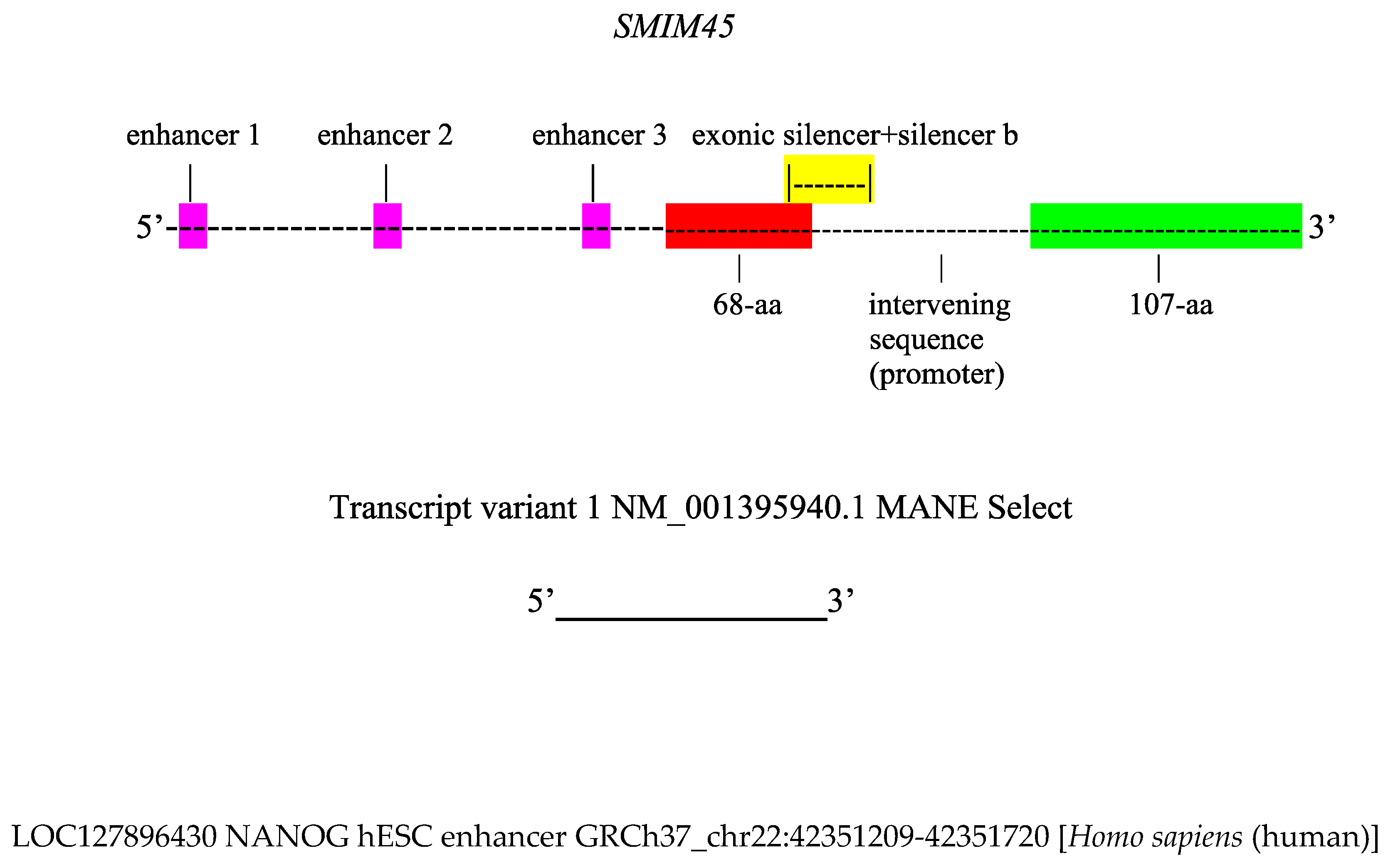
- SMIM45, a bicistronic gene, has evolved a complex array of enhancers and silencers over hundreds of millions of years.
- The silencer LOC130067579 (ATAC-STARR-seq lymphoblastoid silent region 13815) is a novel silencer that partially overlaps an ORF and is termed an exonic silencer; LOC130067579 comprises two segments with distinct evolutionary origins.
- Evolutionary pressure results in producing a high GC and CpG dinucleotide content in the exonic silencer via biased nearest-neighbor mutations.
- The presence of these distinct, multifaceted regulatory elements suggests SMIM45 represents a new class of bicistronic genes.
- The exonic silencer appears to be the first of its kind as it displays unique properties.
- The high GC and CpG content of the exonic silencer support the concept that this silencer suppresses the 107 aa cistron in somatic tissues.
- Conversely, the intricate regulatory apparatus of SMIM45 points to complex regulation of the 107-aa protein cistron that is expressed in human embryonic brain tissues.
Abstract
1. Introduction
Background on SMIM45
2. Results
2.1. Evolution of Exonic Silencer: Cultivator Fixes Bases in Silencer
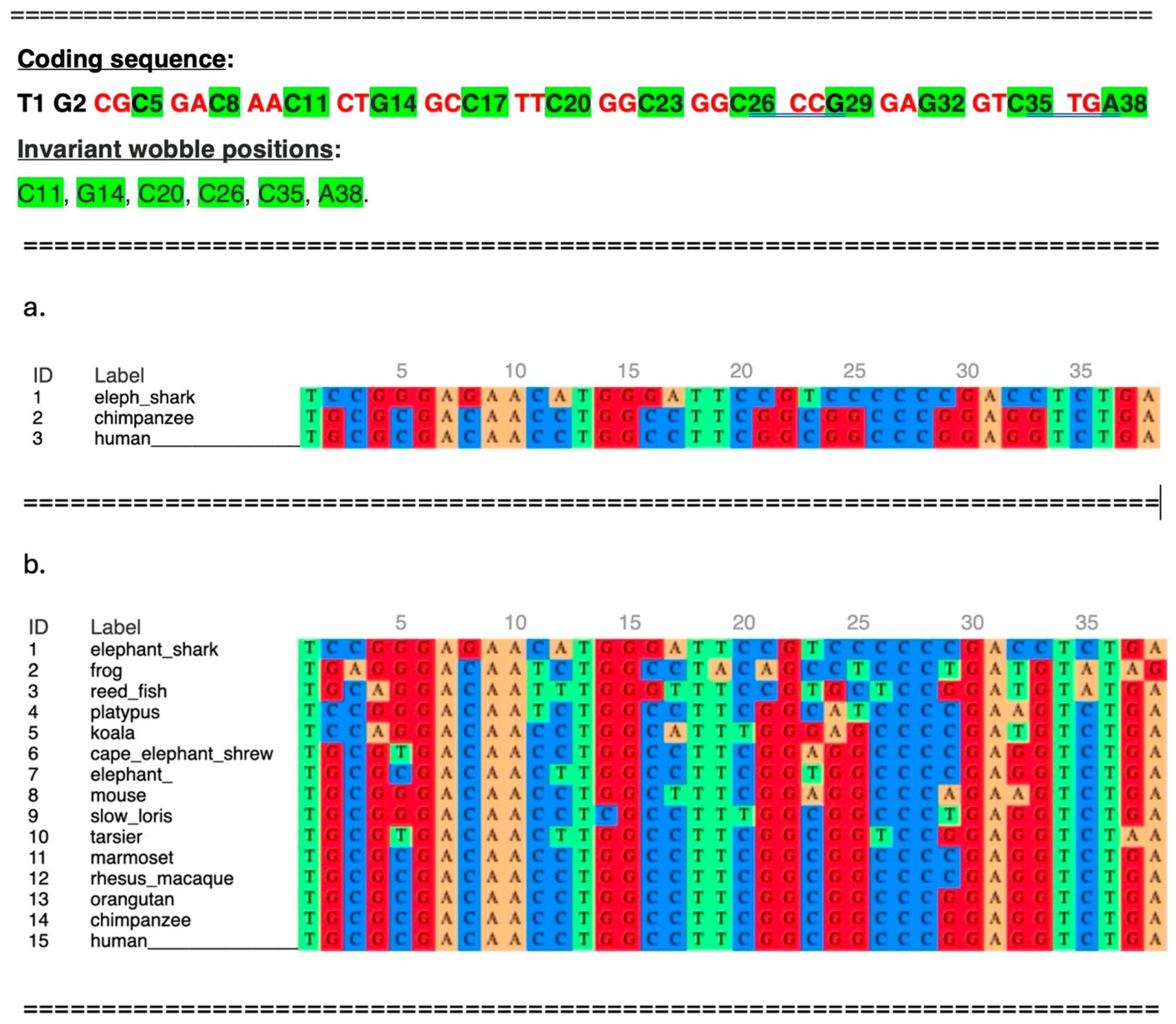
2.2. Evolution of Exonic Silencer: Further Development via Biased Mutations at Nearest-Neighbor Invariant Bases
2.3. Silencer B (Segment of Silencer LOC130067579 Within the Promoter): Detection of Species-Specific Sequences
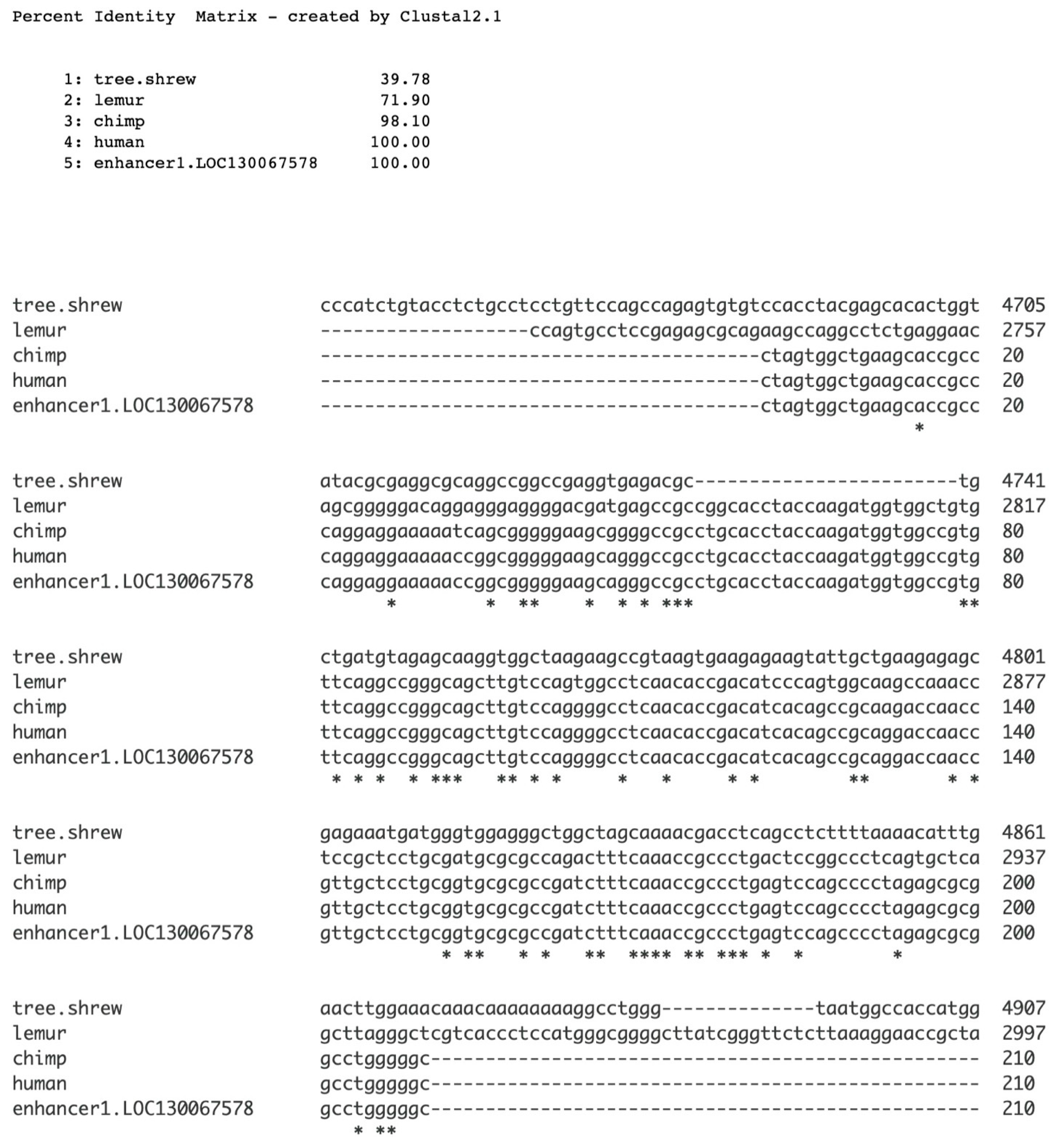
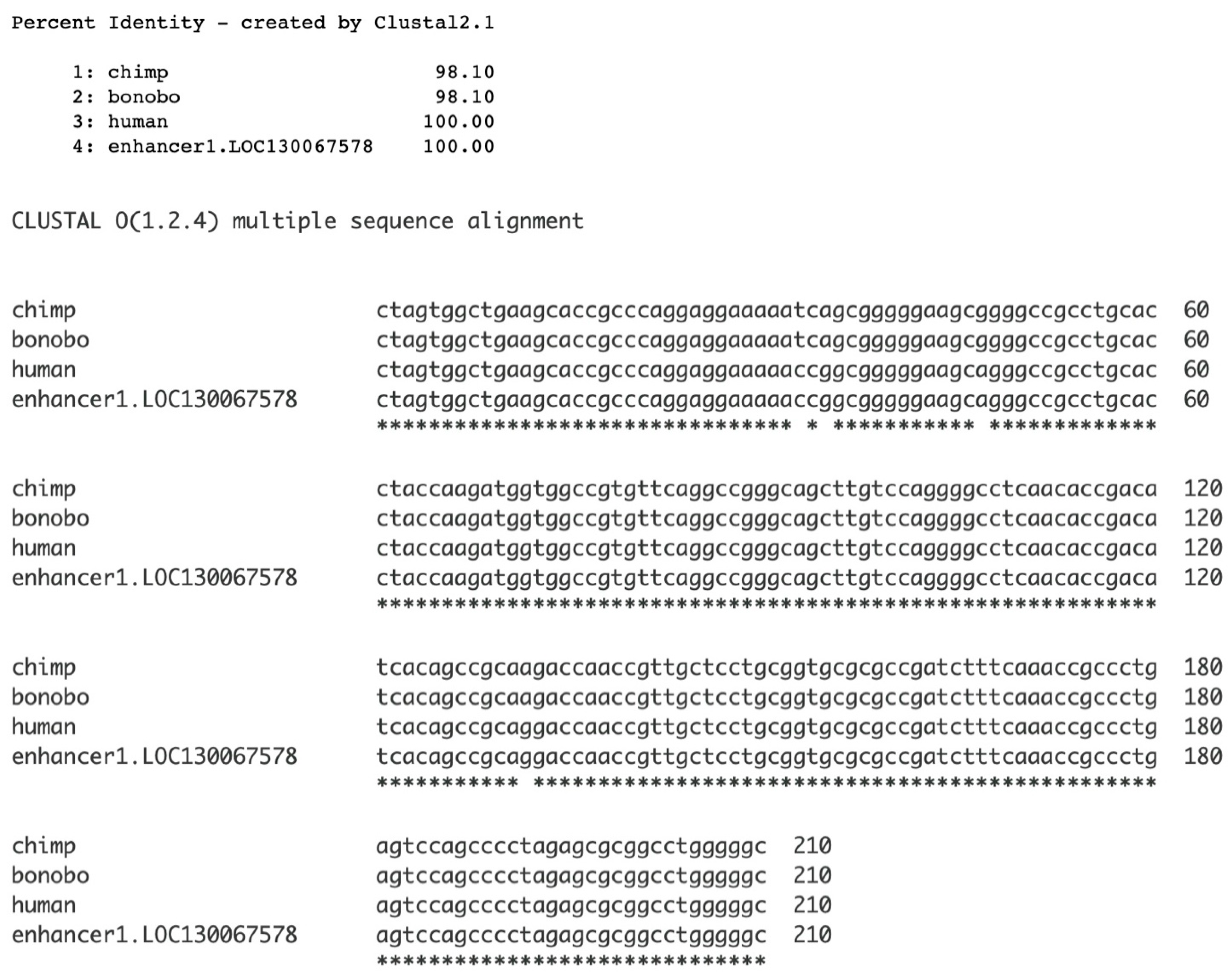
2.4. Enhancer 1: Sequence Origin and Completion
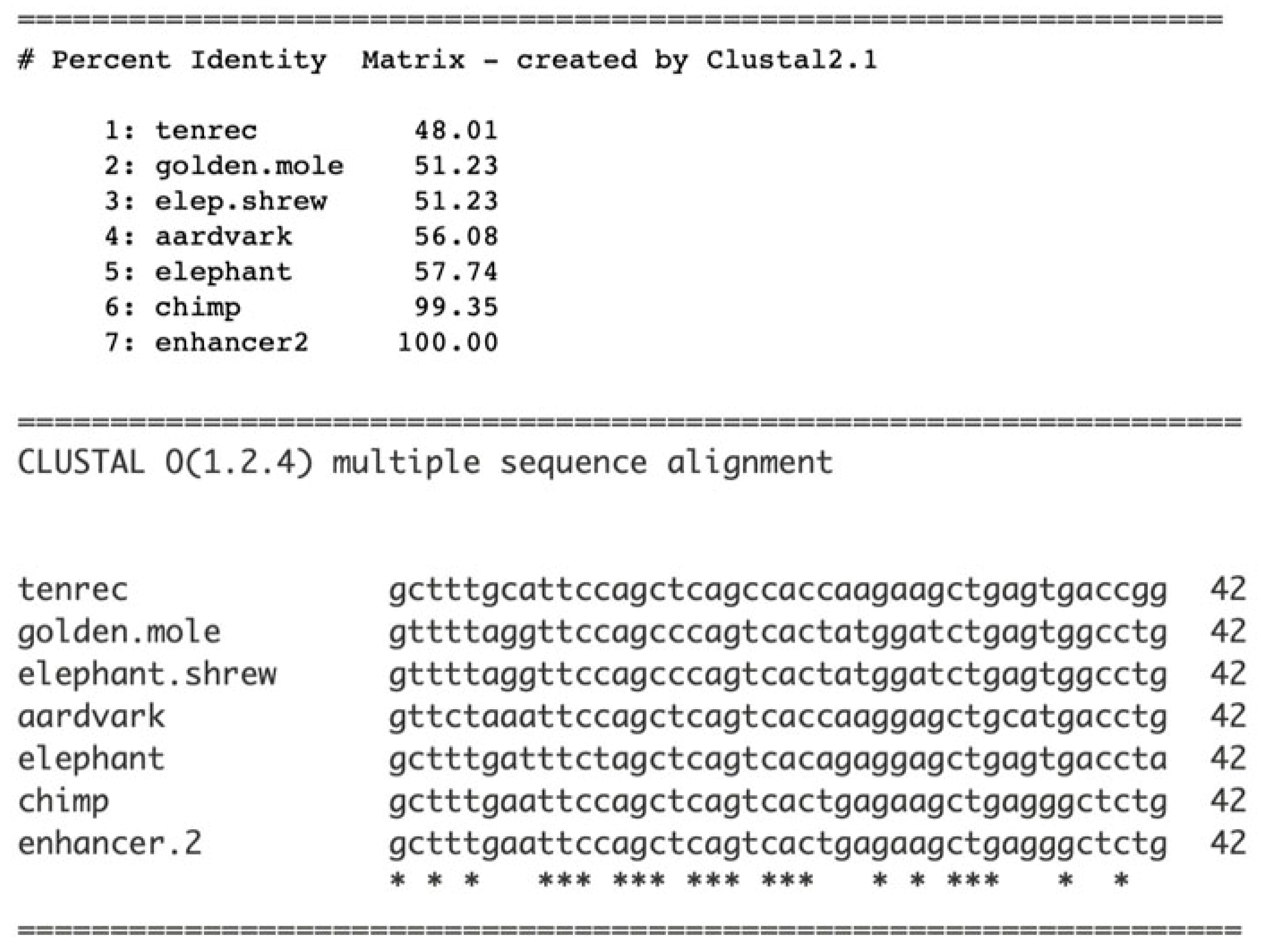
2.5. Enhancer 2, LOC127896429 H3K4me1hesc Enhancer GRCh37_chr22:42346983-42347610
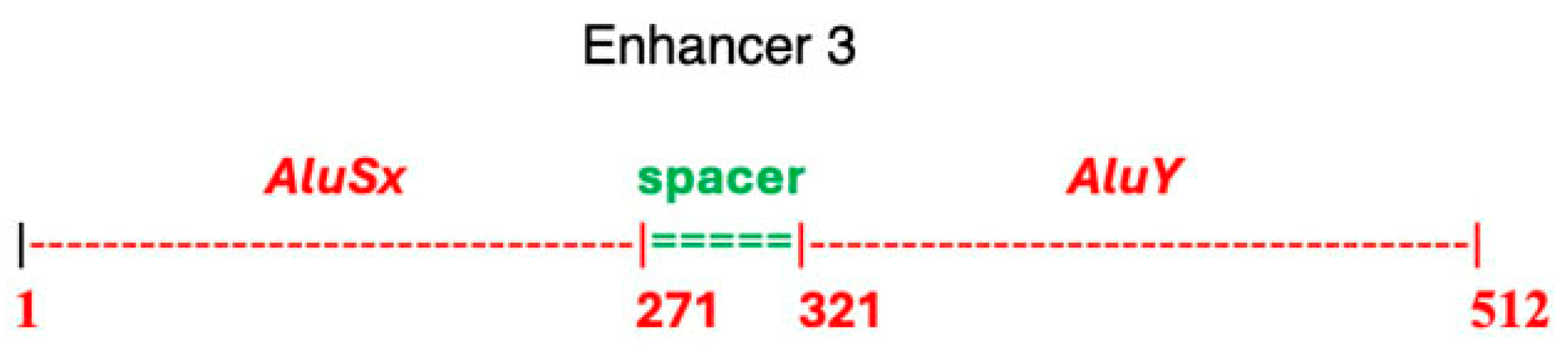
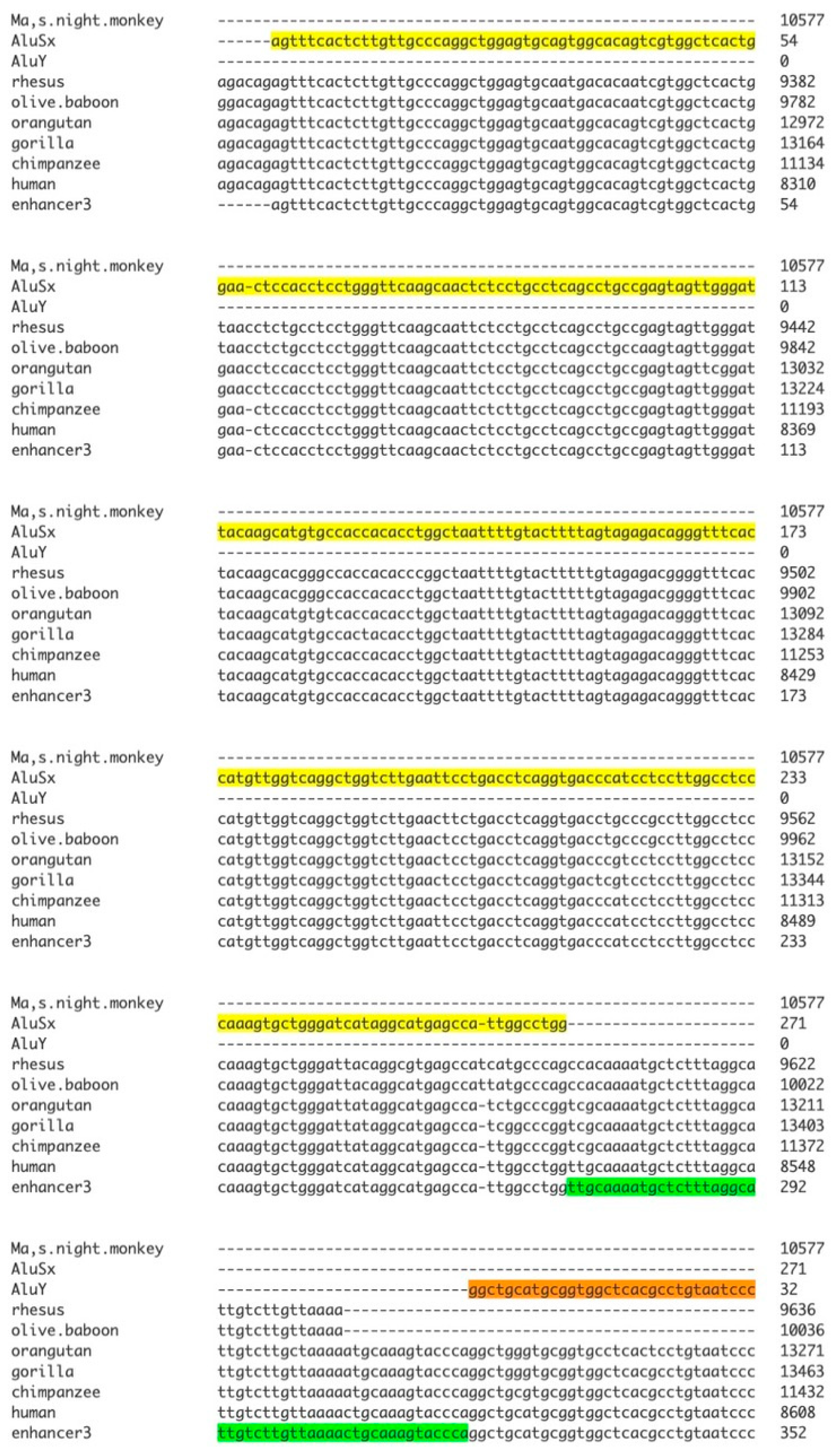
2.6. Enhancer 3, LOC127896430 NANOG Enhancer GRCh37_chr22:42351209-42351720 Homo sapiens: Birth by Alu Insertions
3. Discussion
4. Conclusions
5. Methods
5.1. Source of Properties of Human SMIM45
5.2. SMIM45 in Other Species
5.3. Nucleotide and Amino Acid Sequence Alignments
5.4. CpG Pairs in Silencer B (In the Promoter)
5.5. Sequences of Silencer LOC130067579 ATAC-STARR-seq Lymphoblastoid Silent Region 13815 and Its Segments
5.6. Determinations of Alus in Enhancer 3
5.7. Translation of Nucleotide Sequence
Supplementary Materials
Funding
Institutional Review Board Statement
Informed Consent Statement
Data Availability Statement
Conflicts of Interest
Abbreviations
References
- Gray, T.A.; Saitoh, S.; Nicholls, R.D. An imprinted, mammalian bicistronic transcript encodes two independent proteins. Proc. Natl. Acad. Sci. USA 1999, 96, 5616–5621. [Google Scholar] [CrossRef] [PubMed]
- Lu, Y.; Zhang, Y.; Hang, X.; Qu, W.; Lubec, G.; Chen, C.; Zhang, C. Genome-wide computational identification of bicistronic mRNA in humans. Amino Acids 2013, 44, 597–606. [Google Scholar] [CrossRef] [PubMed]
- Wu, B.; Cox, M.P. Characterization of Bicistronic Transcription in Budding Yeast. mSystems 2021, 6, e01002-20. [Google Scholar] [CrossRef] [PubMed]
- Park, J.; Farris, S. Spatiotemporal Regulation of Transcript Isoform Expression in the Hippocampus. Front. Mol. Neurosci. 2021, 14, 694234. [Google Scholar] [CrossRef] [PubMed]
- Dueñas, M.A.; Craig, R.J.; Gallaher, S.D.; Moseley, J.L.; Merchant, S.S. Leaky ribosomal scanning enables tunable translation of bicistronic ORFs in green algae. Proc. Natl. Acad. Sci. USA 2025, 122, e2417695122. [Google Scholar] [CrossRef] [PubMed]
- Alghoul, F.; Laure, S.; Eriani, G.; Martin, F. Translation inhibitory elements from Hoxa3 and Hoxa11 mRNAs use uORFs for translation inhibition. eLife 2021, 10, e66369. [Google Scholar] [CrossRef] [PubMed]
- Delihas, N. Evolution of a Human-Specific De Novo Open Reading Frame and Its Linked Transcriptional Silencer. Int. J. Mol. Sci. 2024, 25, 3924. [Google Scholar] [CrossRef] [PubMed]
- Xiao, C.; Mo, F.; Lu, Y.; Xiao, Q.; Yao, C.; Li, T.; Qi, J.; Liu, X.; Chen, J.-Y.; Zhang, L.; et al. Reply to: Identification of old coding regions disproves the hominoid de novo status of genes. Nat. Ecol. Evol. 2024, 8, 1831–1834. [Google Scholar] [CrossRef]
- Xu, X.; Zhang, J.; Mo, F.; Chen, J.Y.; Delihas, N.; Zhang, L.; An, N.A.; Li, C.Y.; Liu, X.; Xiao, C. Origin of functional de novo genes in humans from “hopeful monsters”. Wiley Interdiscip. Rev. RNA 2024, 15, e1845. [Google Scholar] [CrossRef]
- Raj, A.; Wang, S.H.; Shim, H.; Harpak, A.; Li, Y.I.; Engelmann, B.; Stephens, M.; Gilad, Y.; Pritchard, J.K. Thousands of novel translated open reading frames in humans inferred by ribosome footprint profiling. eLife 2016, 5, e13328. [Google Scholar] [CrossRef] [PubMed]
- Pennacchio, L.A.; Bickmore, W.; Dean, A.; Nobrega, M.A.; Bejerano, G. Enhancers: Five essential questions. Nat. Rev. Genet. 2013, 14, 288–295. [Google Scholar] [CrossRef] [PubMed]
- Levine, M. Transcriptional enhancers in animal development and evolution. Curr. Biol. 2010, 20, R754–R763. [Google Scholar] [CrossRef] [PubMed]
- Maurya, S.S. Role of Enhancers in Development and Diseases. Epigenomes 2021, 5, 21. [Google Scholar] [CrossRef] [PubMed]
- Hnisz, D.; Abraham, B.J.; Lee, T.I.; Lau, A.; Saint-André, V.; Sigova, A.A.; Hoke, H.A.; Young, R.A. Super-Enhancers in the Control of Cell Identity and Disease. Cell 2013, 155, 934–947. [Google Scholar] [CrossRef] [PubMed]
- Whyte, W.A.; Orlando, D.A.; Hnisz, D.; Abraham, B.J.; Lin, C.Y.; Kagey, M.H.; Rahl, P.B.; Lee, T.I.; Young, R.A. Master transcription factors and mediator establish super-enhancers at key cell identity genes. Cell 2013, 153, 307–319. [Google Scholar] [CrossRef] [PubMed]
- Ko, J.Y.; Oh, S.; Yoo, K.H. Functional Enhancers As Master Regulators of Tissue-Specific Gene Regulation and Cancer Development. Mol. Cells 2017, 40, 169–177. [Google Scholar] [CrossRef] [PubMed]
- Moorthy, S.D.; Davidson, S.; Shchuka, V.M.; Singh, G.; Malek-Gilani, N.; Langroudi, L.; Martchenko, A.; So, V.; Macpherson, N.N.; Mitchell, J.A. Enhancers and super-enhancers have an equivalent regulatory role in embryonic stem cells through regulation of single or multiple genes. Genome Res. 2017, 27, 246–258. [Google Scholar] [CrossRef] [PubMed]
- Segert, J.A.; Gisselbrecht, S.S.; Bulyk, M.L. Transcriptional Silencers: Driving Gene Expression with the Brakes On. Trends Genet. 2021, 37, 514–527. [Google Scholar] [CrossRef] [PubMed]
- Huang, D.; Petrykowska, H.M.; Kumar, D.; Kardava, L.; Moir, S.; Afzali, B.; Elnitski, L.; Ovcharenko, I. Super-silencers are crucial for development and carcinogenesis in B cells. Nat. Commun. 2025, 16, 8395. [Google Scholar] [CrossRef] [PubMed]
- Emera, D.; Yin, J.; Reilly, S.K.; Gockley, J.; Noonan, J.P. Origin and evolution of developmental enhancers in the mammalian neocortex. Proc. Natl. Acad. Sci. USA 2016, 113, E2617–E2626. [Google Scholar] [CrossRef] [PubMed]
- Lee, U.; Mozeika, S.M.; Zhao, L. A Synergistic, Cultivator Model of De Novo Gene Origination. Genome Biol. Evol. 2024, 16, evae103. [Google Scholar] [CrossRef] [PubMed]
- Hansen, T.J.; Hodges, E. ATAC-STARR-seq reveals transcription factor-bound activators and silencers within chromatin-accessible regions of the human genome. Genome Res. 2022, 32, 1529–1541. [Google Scholar] [CrossRef] [PubMed]
- Ahituv, N. Exonic enhancers: Proceed with caution in exome and genome sequencing studies. Genome Med. 2016, 8, 14. [Google Scholar] [CrossRef] [PubMed]
- Pang, B.; Snyder, M.P. Systematic identification of silencers in human cells. Nat. Genet. 2020, 52, 254–263. [Google Scholar] [CrossRef] [PubMed]
- An, N.A.; Zhang, J.; Mo, F.; Luan, X.; Tian, L.; Shen, Q.S.; Li, X.; Li, C.; Zhou, F.; Zhang, B.; et al. De novo genes with an lncRNA origin encode unique human brain developmental functionality. Nat. Ecol. Evol. 2023, 7, 264–278. [Google Scholar] [CrossRef]
- Davis, A.A.; Temple, S. A self-renewing multipotential stem cell in embryonic rat cerebral cortex. Nature 1994, 372, 263–266. [Google Scholar] [CrossRef] [PubMed]
- Boyer, L.A.; Lee, T.I.; Cole, M.F.; Johnstone, S.E.; Levine, S.S.; Zucker, J.P.; Guenther, M.G.; Kumar, R.M.; Murray, H.L.; Jenner, R.G.; et al. Core transcriptional regulatory circuitry in human embryonic stem cells. Cell 2005, 122, 947–956. [Google Scholar] [CrossRef] [PubMed]
- Zeitlinger, J. Seven myths of how transcription factors read the cis-regulatory code. Curr. Opin. Syst. Biol. 2020, 23, 22–31. [Google Scholar] [CrossRef] [PubMed]
- Liang, L.; Cao, C.; Ji, L.; Cai, Z.; Wang, D.; Ye, R.; Chen, J.; Yu, X.; Zhou, J.; Bai, Z.; et al. Complementary Alu sequences mediate enhancer-promoter selectivity. Nature 2023, 619, 868–875. [Google Scholar] [CrossRef] [PubMed]
- Yan, J.; Luo, R.; Rosen, B.P.; Liu, D.; Wong, W.; Leslie, C.S.; Huangfu, D. Discovery of NANOG enhancers and their essential roles in self-renewal and differentiation in human embryonic stem cells. Stem Cell Rep. 2025, 20, 102511. [Google Scholar] [CrossRef] [PubMed]
- Arndt, P.F.; Burge, C.B.; Hwa, T. DNA sequence evolution with neighbor-dependent mutation. J. Comput. Biol. 2003, 10, 313–322. [Google Scholar] [CrossRef] [PubMed]
- Branco, M.R.; Chuong, E.B. Crossroads between transposons and gene regulation. Philos. Trans. R. Soc. Lond. B Biol. Sci. 2020, 375, 20190330. [Google Scholar] [CrossRef] [PubMed]
- Häsler, J.; Strub, K. Alu elements as regulators of gene expression. Nucleic Acids Res. 2006, 34, 5491–5497. [Google Scholar] [CrossRef] [PubMed]
- Su, M.; Han, D.; Boyd-Kirkup, J.; Yu, X.; Liang, L.; Han, J.J. Evolution of Alu elements toward enhancers. Cell Rep. 2014, 7, 376–385. [Google Scholar] [CrossRef] [PubMed]
- Chen, L.L.; Yang, L. ALUternative Regulation for Gene Expression Trends. Trends Cell Biol. 2017, 27, 480–490. [Google Scholar] [CrossRef] [PubMed]
- Borsari, B.; Villegas-Mirón, P.; Pérez-Lluch, S.; Turpin, I.; Laayouni, H.; Segarra-Casas, A.; Bertranpetit, J.; Guigó, R.; Acosta, S. Enhancers with tissue-specific activity are enriched in intronic regions. Genome Res. 2021, 31, 1325–1336. [Google Scholar] [CrossRef] [PubMed]
- Storer, J.; Hubley, R.; Rosen, J.; Wheeler, T.J.; Smit, A.F. The Dfam community resource of transposable element families, sequence models, and genome annotations. Mob. DNA 2021, 12, 2. [Google Scholar] [CrossRef] [PubMed]
- Jauch, R.; Ng, C.K.; Saikatendu, K.S.; Stevens, R.C.; Kolatkar, P.R. Crystal structure and DNA binding of the homeodomain of the stem cell transcription factor Nanog. J. Mol. Biol. 2008, 376, 758–770. [Google Scholar] [CrossRef] [PubMed]
- Pu, J.; Wang, Z.; Cong, H.; Chin, J.S.R.; Justen, J.; Finet, C.; Yew, J.Y.; Chung, H. Repression precedes independent evolutionary gains of a highly specific gene expression pattern. Cell Rep. 2021, 37, 109896. [Google Scholar] [CrossRef] [PubMed]
- Dekker, J. GC- and AT-rich chromatin domains differ in conformation and histone modification status and are differentially modulated by Rpd3p. Genome Biol. 2007, 8, R116. [Google Scholar] [CrossRef] [PubMed]
- Fenouil, R.; Cauchy, P.; Koch, F.; Descostes, N.; Cabeza, J.Z.; Innocenti, C.; Ferrier, P.; Spicuglia, S.; Gut, M.; Gut, I.; et al. CpG islands and GC content dictate nucleosome depletion in a transcription-independent manner at mammalian promoters. Genome Res. 2012, 22, 2399–2408. [Google Scholar] [CrossRef] [PubMed]
- Yang, H.; Li, D.; Cheng, C. Relating gene expression evolution with CpG content changes. BMC Genom. 2014, 15, 693. [Google Scholar] [CrossRef] [PubMed]
- Zhu, X.; Huang, L.; Wang, C.; Li, G.; Deng, B.; Kong, D.; Wang, X.; Chang, R.; Gu, Y.; Wen, Q.; et al. Uncovering the whole genome silencers of human cells via Ss-STARR-seq. Nat. Commun. 2025, 16, 723. [Google Scholar] [CrossRef] [PubMed] [PubMed Central]
- Zhang, Y.; Chen, K.; Tang, S.C.; Cai, Y.; Nambu, A.; See, Y.X.; Fu, C.; Raju, A.; Lebeau, B.; Ling, Z.; et al. Super-silencer perturbation by EZH2 and REST inhibition leads to large loss of chromatin interactions and reduction in cancer growth. Nat. Struct. Mol. Biol. 2025, 32, 137–149. [Google Scholar] [CrossRef] [PubMed]
- Li, S.; Hannenhalli, S.; Ovcharenko, I. De novo human brain enhancers created by single-nucleotide mutations. Sci. Adv. 2023, 9, eadd2911. [Google Scholar] [CrossRef] [PubMed]
- Heurtier, V.; Owens, N.; Gonzalez, I.; Mueller, F.; Proux, C.; Mornico, D.; Clerc, P.; Dubois, A.; Navarro, P. The molecular logic of Nanog-induced self-renewal in mouse embryonic stem cells. Nat. Commun. 2019, 10, 1109. [Google Scholar] [CrossRef] [PubMed]
- Madeira, F.; Madhusoodanan, N.; Lee, J.; Eusebi, A.; Niewielska, A.; Tivey, A.R.N.; Lopez, R.; Butcher, S. The EMBL-EBI Job Dispatcher sequence analysis tools framework in 2024. Nucleic Acids Res. 2024, 52, W521–W525. [Google Scholar] [CrossRef] [PubMed]
- Katoh, K.; Rozewicki, J.; Yamada, K.D. MAFFT online service: Multiple sequence alignment, interactive sequence choice and visualization. Brief. Bioinform. 2019, 20, 1160–1166. [Google Scholar] [CrossRef] [PubMed]
- Gasteiger, E.; Gattiker, A.; Hoogland, C.; Ivanyi, I.; Appel, R.D.; Bairoch, A. ExPASy: The proteomics server for in-depth protein knowledge and analysis. Nucleic Acids Res. 2003, 31, 3784–3788. [Google Scholar] [CrossRef] [PubMed]




| Enhancer | General Properties | Reference |
|---|---|---|
| Enhancer 1 LOC130067578 ATAC-STARR-seq Lymphoblastoid active region 19151 | Binds transcription factor activators and silencers within chromatin-accessible regions | [22] |
| Enhancer 2 LOC127896429 H3K4me1 hESC enhancer | Active in embryonic stem cells and associated with activation of gene expression | [15] |
| Enhancer 2 LOC127896429 embedded silencer, silent region_13814 | Binds repressor transcription factors and prevents transcription; essential to secure gene expression in specific tissues at specific times (spatiotemporally). | [28] |
| Enhancer 3 LOC127896430 NANOG hESC enhancer | Alus act as enhancers and can regulate nearby promoters; NANOG is a regulator of human embryonic stem cell (hESC) identity | [29,30] |
| Invariant Base | 5′ of Invariant Base |
|---|---|
| C3 | G2 |
| G6 | C5 |
| A9 | C8 |
| T13 | C12 |
| T18 | C17 |
| C26 | G25 |
| T34 | G33 |
| Invariant Base | 3′ of Invariant Base |
| A10 | C11 |
| G22 | T23 |
| G15 | C16 |
| C20 | G21 |
| C28 | G29 |
| A31 | G32 |
Disclaimer/Publisher’s Note: The statements, opinions and data contained in all publications are solely those of the individual author(s) and contributor(s) and not of MDPI and/or the editor(s). MDPI and/or the editor(s) disclaim responsibility for any injury to people or property resulting from any ideas, methods, instructions or products referred to in the content. |
© 2026 by the author. Licensee MDPI, Basel, Switzerland. This article is an open access article distributed under the terms and conditions of the Creative Commons Attribution (CC BY) license.
Share and Cite
Delihas, N. Diverse Processes Drive the Origination and Maturation of an Array of Enhancers and Silencers During a Vast Evolutionary Timescale of a Bicistronic Gene. Genes 2026, 17, 519. https://doi.org/10.3390/genes17050519
Delihas N. Diverse Processes Drive the Origination and Maturation of an Array of Enhancers and Silencers During a Vast Evolutionary Timescale of a Bicistronic Gene. Genes. 2026; 17(5):519. https://doi.org/10.3390/genes17050519
Chicago/Turabian StyleDelihas, Nicholas. 2026. "Diverse Processes Drive the Origination and Maturation of an Array of Enhancers and Silencers During a Vast Evolutionary Timescale of a Bicistronic Gene" Genes 17, no. 5: 519. https://doi.org/10.3390/genes17050519
APA StyleDelihas, N. (2026). Diverse Processes Drive the Origination and Maturation of an Array of Enhancers and Silencers During a Vast Evolutionary Timescale of a Bicistronic Gene. Genes, 17(5), 519. https://doi.org/10.3390/genes17050519