1. Introduction
Plum (
P. salicina L.) is a commercially important fruit crop cultivated worldwide, valued for its distinctive flavor and nutritional properties [
1]. Fruit quality is largely determined by flesh texture, a key attribute that drives consumer preference and influences postharvest life, including storage potential and susceptibility to mechanical damage [
2,
3]. A major challenge for many commercial cultivars is the textural changes that occur during ripening and storage. This process reduces shelf life and increases the incidence of physical injuries and physiological disorders, resulting in significant economic losses [
4,
5]. Therefore, understanding the molecular basis of texture development and softening is essential for plum breeding.
Changes in fruit texture are closely associated with cell wall modification and alterations in intercellular adhesion [
6]. Homogalacturonan (HG) is a major pectic polysaccharide in fleshy fruit cell walls, and its degree and pattern of methylesterification contribute to tissue mechanical properties [
7,
8]. Pectin methylesterases (PMEs) catalyze HG demethylesterification and generate negatively charged carboxyl groups that can modify the accessibility of HG to polygalacturonases and pectate lyases [
9,
10]. Thus, PME-mediated remodeling can both drive fruit softening and maintain local cell wall stability.
Evidence from stone fruits and other fleshy fruits indicates that PME contributes to texture regulation through multiple mechanisms. One major role of PME is to act early in pectin remodeling by modifying homogalacturonan properties and thereby affecting its accessibility to downstream polygalacturonases and pectate lyases. In apricot, PME activity increases at the color change stage, and PME-mediated modification has been proposed to prepare pectic substrates for polygalacturonase (PG), supporting an early role in fruit softening [
11]. PME is also involved in the integration of postharvest signals, particularly under different temperature regimes. In peach, low-temperature storage suppresses PG, pectate lyase (PL), and PME activities and is accompanied by increased expression of C-repeat binding factor (CBF) genes, suggesting that cold-responsive signaling restrains pectin degradation and helps maintain firmness during storage [
12]. By contrast, temperature fluctuations during cold-chain transport induce
PaPME3,
PaPME4, and
PaPG1–PaPG3, enhance PME and PG activities, and accelerate the breakdown of sodium carbonate-soluble pectin, thereby promoting softening [
13]. In addition, different PME isoforms may influence specific texture attributes rather than firmness alone. In apple,
MdMYB44 increases fruit fragility through direct activation of MdPME3. Likewise, in tomato, strong reduction in PME activity causes a marked loss of tissue integrity during senescence but has only a limited effect on firmness during ripening [
14,
15]. In
Prunus, chilling-induced mealiness is closely associated with abnormal pectin solubilization and depolymerization, as well as increased pectin gel formation, suggesting that the balance between pectin demethylesterification and subsequent hydrolysis is disrupted under chilling conditions [
16,
17].
Recent studies have provided new insights into the molecular basis of fruit development and ripening in plums. In Japanese plum, ethylene-related treatments have been associated with differential DNA methylation during ripening, suggesting that DNA methylation contributes to the regulation of this process [
18]. More broadly, fruit development and ripening are governed by coordinated phytohormonal, metabolic, transcriptomic, and epigenetic regulation, together with extensive cell wall remodeling [
19]. The use of combined high-coverage and low-coverage whole-genome sequencing has enabled the identification of phenological QTLs and candidate genes in Japanese plum, providing valuable genomic resources for further trait dissection and breeding [
20].
Although PME gene families have been characterized in related
Prunus species, their specific roles in plum texture variation remain poorly understood [
21]. A key gap is the lack of a genome-wide PME dataset for
P. salicina that integrates family classification, duplication patterns, and structural characteristics. At the phenotypic level, plum texture evaluation has largely focused on a limited set of traits, while attributes such as flesh compactness and fragility have received considerably less attention [
22,
23]. Furthermore, studies that combine population-scale texture phenotyping with association analysis based on gene expression across fruit developmental stages remain scarce. This limits the efficient identification of candidate genes for plum breeding.
We combined genome-wide analysis of the PsPME gene family with multi-trait phenotyping to investigate its role in plum texture variation. A complete PsPME dataset was assembled, including information on chromosomal locations, phylogeny, duplication events, gene structures, and regulatory features. Natural variation in four flesh texture traits was evaluated in 55 plum accessions. Contrasting cultivars were then selected for expression analysis during fruit development, and correlation analysis identified candidate genes associated with texture. These findings provide a foundation for functional studies and offer practical resources for texture improvement and marker-assisted breeding in plum.
2. Materials and Methods
2.1. Genome-Wide Identification of the PsPME Gene Family in Plum
Genome-wide identification of the pectin methylesterase (PME) gene family was performed using the genome of
P. salicina L. The genome assembly (FASTA) and genome annotation (GFF3) files were downloaded from the Genome Database for Rosaceae (
https://www.rosaceae.org/Analysis/9450778, accessed on 5 July 2025) [
24]. Protein sequences of
Arabidopsis thaliana PMEs were retrieved from TAIR (release TAIR10) and used as queries for homology-based searches.
A combination of HMMER and BLASTp searches was used to identify putative
PsPME proteins [
25,
26]. The hidden Markov model (HMM) profile of the Pectinesterase catalytic domain (Pfam: PF01095; release 37.1) was used to search the predicted plum proteome with HMMER (v3.4) using an E-value cutoff of
. In parallel, PME protein sequences from
A. thaliana were used as queries for BLASTp searches against the same dataset using BLAST+ (v2.17.0), with thresholds of E-value
, sequence identity
, and query coverage
. Candidate proteins identified by both approaches were merged, and redundant sequences were removed.
Candidate proteins were further validated using the NCBI Conserved Domain Database (CDD, v3.21) and SMART (v10) [
27,
28]. Only proteins containing a complete Pectinesterase catalytic domain (PF01095) were retained as
PsPME family members, whereas sequences with truncated catalytic domains or lacking conserved catalytic residues were excluded. Both proteins containing only the PME catalytic domain and those harboring an N-terminal PME inhibitor-like domain together with a complete PME catalytic domain were retained.
2.2. Physicochemical Characterization and Subcellular Localization Prediction of PsPME Proteins
Physicochemical properties of
PsPME proteins, including amino acid length, molecular weight, theoretical isoelectric point, instability index, and grand average of hydropathicity, were calculated using the ProtParam module in Biopython (v1.86) [
29]. Analyses were conducted using the final non-redundant protein set, in which only the longest isoform per gene locus was retained for downstream analyses to avoid redundancy. Subcellular localization was predicted from full-length protein sequences using DeepLoc (v2.0) [
30].
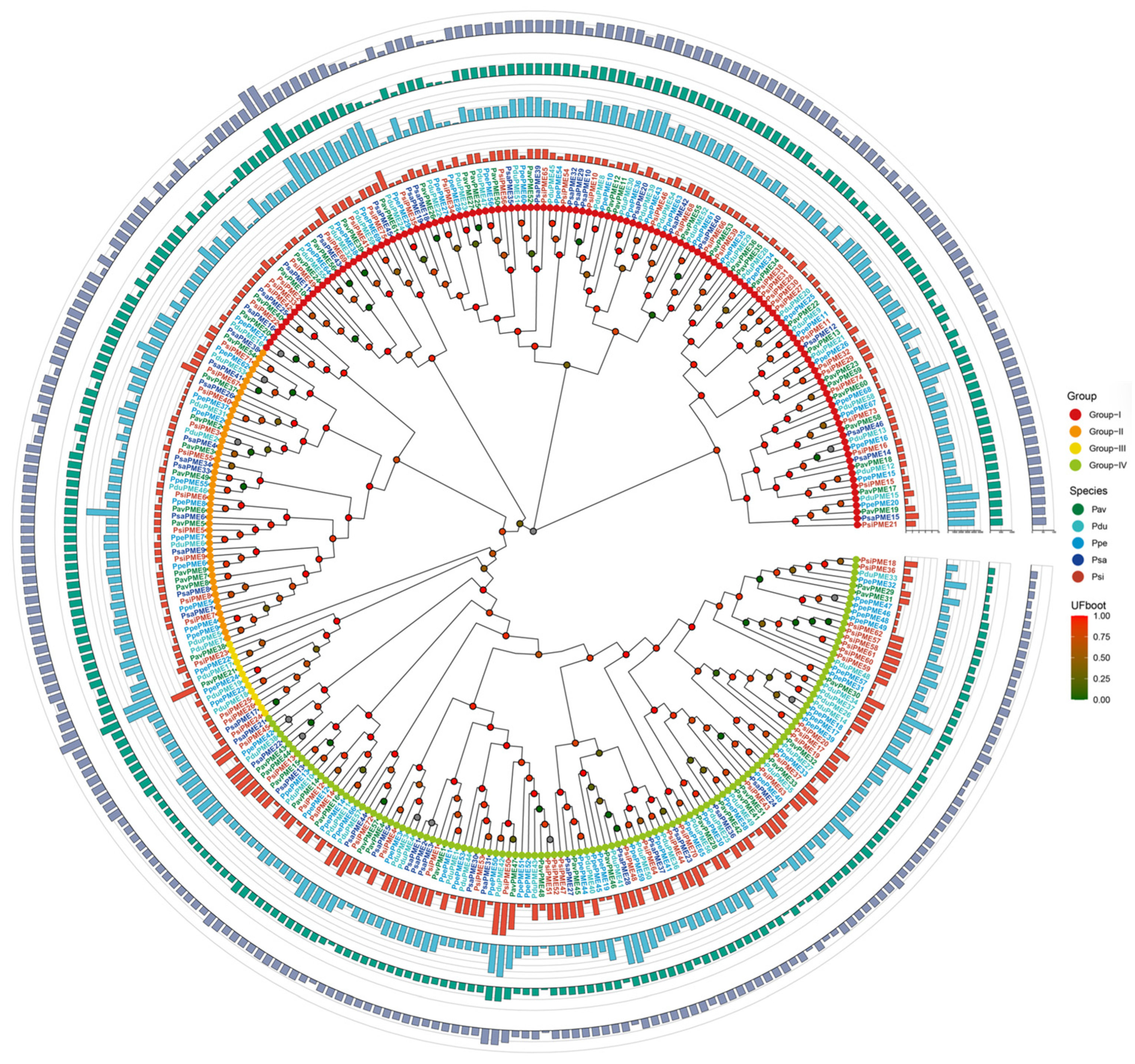
2.3. Phylogenetic Analysis of PME Proteins in Representative Prunus Species
To investigate the evolutionary relationships of the PME family, protein sequences were collected from five
Prunus species, including plum (
P. salicina), sweet cherry (
P. avium,
https://www.rosaceae.org/Analysis/9262820, accessed on 5 July 2025), peach (
P. persica,
https://www.rosaceae.org/Analysis/24764266, accessed on 5 July 2025), Siberian apricot (
P. sibirica,
https://www.rosaceae.org/Analysis/9955981, accessed on 5 July 2025), and almond (
P. dulcis,
https://www.rosaceae.org/Analysis/20220996, accessed 5 on July 2025). For these species, PME family members were identified following the same pipeline as for
P. salicina, in which candidate proteins were first retrieved by sequence similarity searches and subsequently retained only if they contained the conserved PME catalytic domain. The validated PME protein sequences were then aligned using MUSCLE (v5.1.0) [
31], and poorly aligned regions were removed with trimAl (v1.5.1) using the “-automated1” option [
32]. An approximate maximum-likelihood phylogenetic tree was constructed from the refined alignment using IQ-TREE (v2.3.6) [
33], with branch support assessed by 1000 ultrafast bootstrap replicates. The final tree was visualized in R (v4.5.2) using the treeio (v1.34) and ggtree (v4.0.4) packages.
2.4. Gene Structure, Domain Architecture, and Conserved Motif Analysis of PsPME Genes
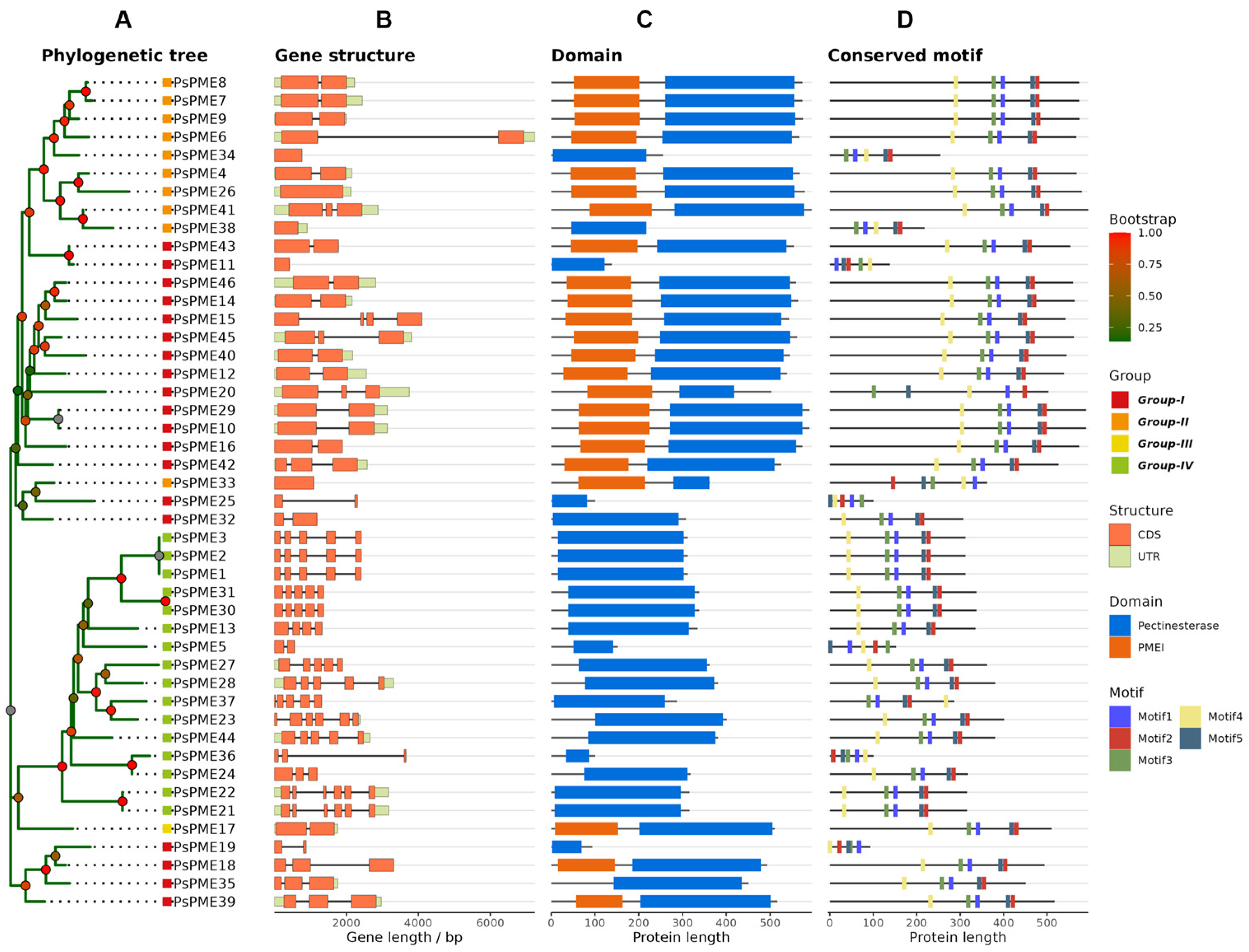
Gene structure features, including exon–intron organization, exon number, and arrangement patterns, were extracted from the plum genome annotation file (GFF3 format). For comparative analysis among subgroups, exon–intron structures were visualized together with the phylogenetic tree. Protein domain architectures were identified using the NCBI Conserved Domain Database (CDD, v3.21) and SMART (v10) and were examined across phylogenetic clades. Conserved motifs in full-length
PsPME protein sequences were identified using MEME (v5.5.9), with the maximum number of motifs set to 10 and other parameters kept at their default settings [
34]. An integrated visualization of the phylogenetic tree, gene structures, domain compositions, and motif distributions was generated in R (v4.5.2) using the ggtree (v4.0.4), ggplot2 (v4.0.1), and aplot (v0.2.9) packages.
2.5. Genes Duplication Pattern, Ka/Ks Estimation, and Synteny Analysis of PME Genes
To investigate the expansion pattern of the
PsPME gene family in plum, duplication analysis was conducted using DupGen_finder (v1.0.0), which incorporates the MCScanX algorithm for duplication classification [
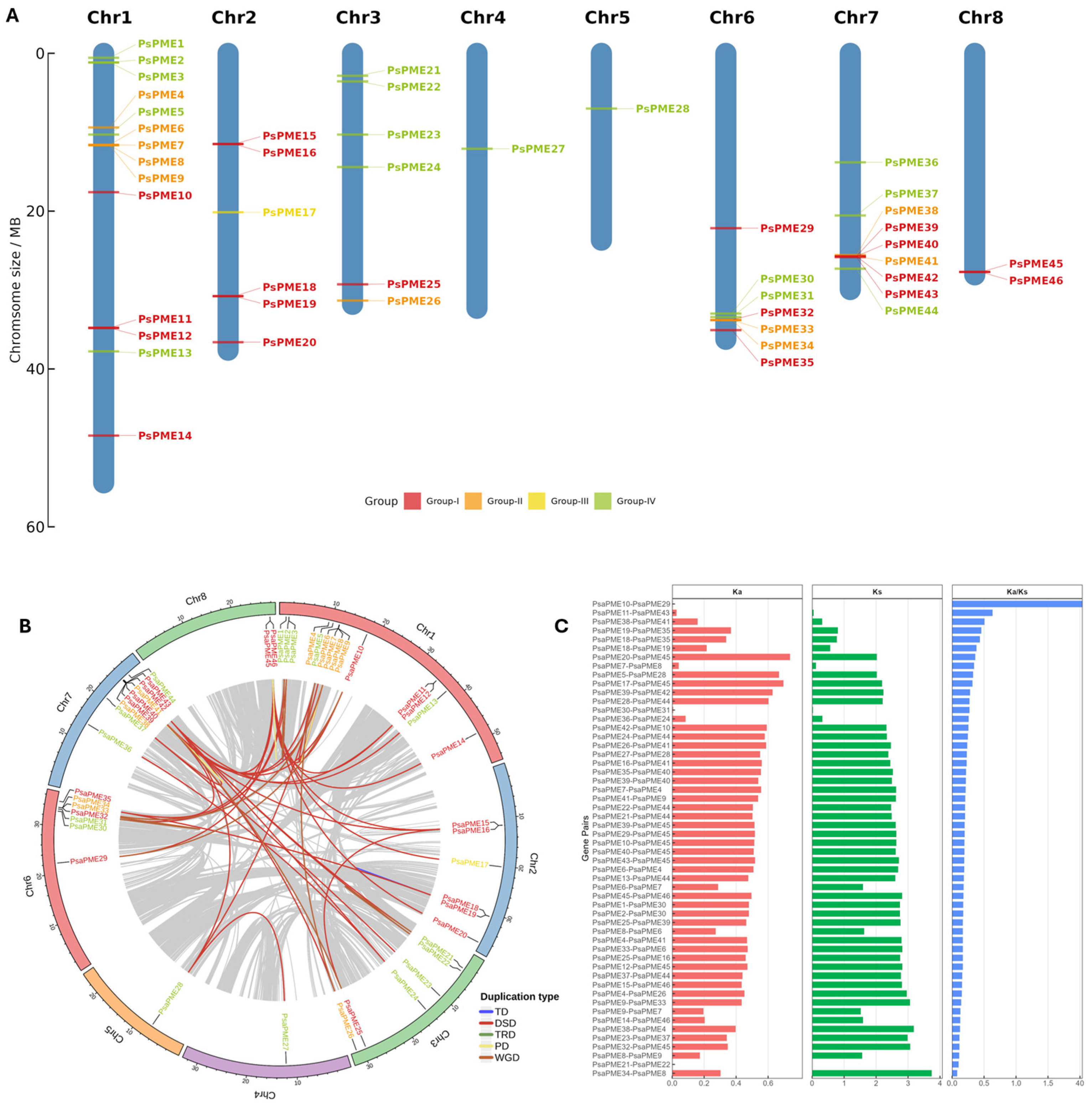
35]. Duplicated genes were classified into five types: whole-genome duplication (WGD), tandem duplication (TD), proximal duplication (PD), dispersed duplication (DSD), and transposed duplication (TRD). For the identified duplicated
PsPME gene pairs, nonsynonymous substitution rates (Ka), synonymous substitution rates (Ks), and Ka/Ks ratios were estimated using ParaAT (v2.0) [
36], with protein sequences first aligned by ClustalW2 (v2.1) [
37] and then converted into codon alignments.
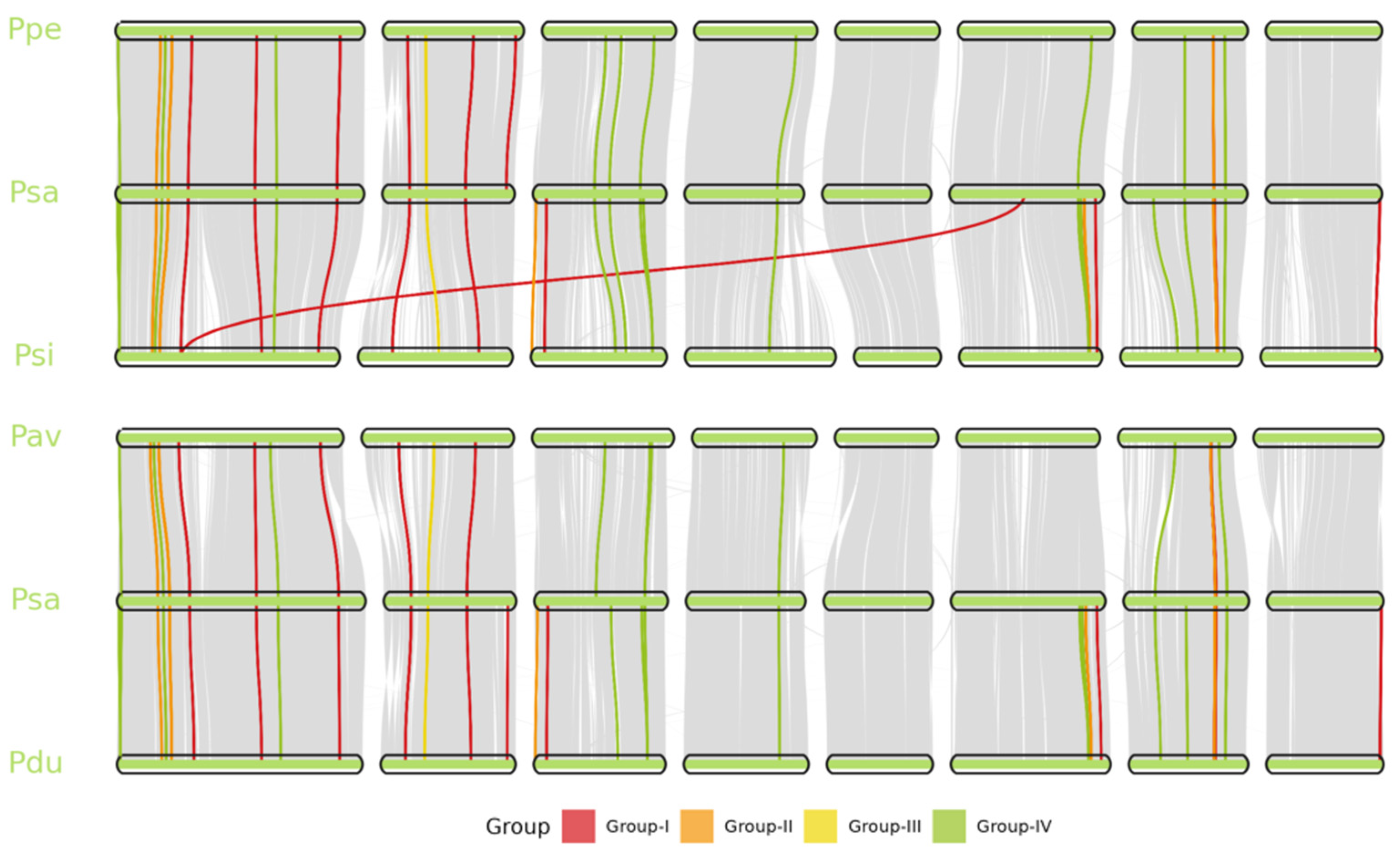
To evaluate the evolutionary conservation and divergence of PME genes across Prunus species, comparative synteny analysis was conducted using plum (P. salicina, Psa) as the reference genome. Pairwise collinearity analyses were performed between Psa and four representative Prunus species, including sweet cherry (P. avium, Pav), peach (P. persica, Ppe), Siberian apricot (P. sibirica, Psi), and almond (P. dulcis, Pdu). PME genes in the other four Prunus species were identified using the same pipeline as that applied to PsPME. Based on these datasets, homologous gene pairs between P. salicina and each of the other four Prunus species were inferred through sequence similarity searches. Syntenic blocks were then identified using MCScanX based on sequence homology and genomic positional information. PME genes located within these syntenic blocks were subsequently extracted to infer putative orthologous relationships and to evaluate the conservation of corresponding loci across the compared genomes. The results were visualized in R (v4.5.2), with chromosomal distributions and Ka/Ks statistics plotted using ggplot2 (v4.0.1), syntenic relationships and duplication events were displayed as Circos plots using circlize (v0.4.17), and multi-panel figures were assembled using aplot (v0.2.9).
2.6. Cis-Element and Transcription Factor Binding Site Analysis of PsPME Gene Promoters
To analyze putative promoter regulatory features of
PsPME genes in plum, the annotated 5′ end of the representative transcript retained for each locus (the longest isoform) was used as an annotation-based proxy for the transcription start site (TSS). Promoter regions were defined as the 2 kb upstream sequences relative to the proxy TSS and were extracted with BEDTools (v2.30.0) in a strand-aware manner according to transcript orientation. When the upstream interval was shorter than 2 kb because of scaffold or chromosome boundaries, the longest available upstream sequence was retained [
38]. Cis-acting elements in
PsPME promoters were predicted using PlantCARE [
39], and the predicted elements were summarized by element type across promoters. Transcription factor binding sites were scanned with FIMO (MEME Suite v5.5.3) [
40] using the CIS-BP Plants v1.0 motif library with a threshold of
p ≤ 1 × 10
−5, and the predicted sites were summarized by transcription factor family and site number across
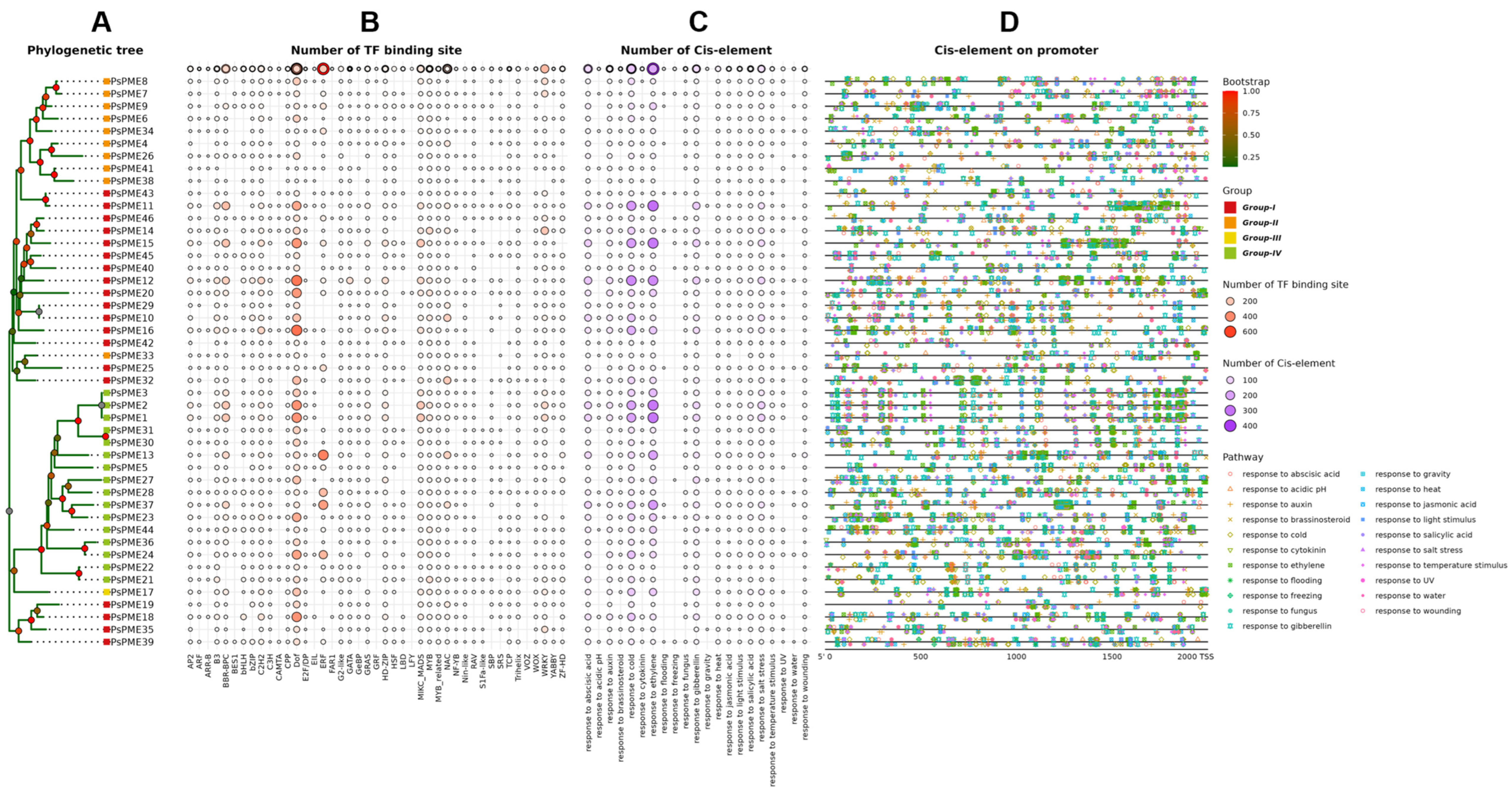
PsPME promoters for comparative analysis and visualization. All cis-element and transcription factor binding site (TFBS) results were integrated and visualized in R (v4.5.2). Phylogenetic trees were rendered with ggtree (v4.0.4), cis-element and TFBS annotation tracks were generated with ggplot2 (v4.0.1), and multi-panel figures were assembled using aplot (v0.2.9).
2.7. Fruit Texture Phenotyping of 55 Plum Germplasm Accessions
A total of 55 plum germplasm accessions were included for fruit texture phenotyping. All plant materials were cultivated under a uniform field management regime at the Yuanyang Experimental Station, Chinese Academy of Forestry (Yuanyang County, Henan, China; 35°04′ N, 113°58′ E). Fruits were collected at commercial maturity, and detailed information on the 55 plum accessions is provided in
Supplementary Table S3. To minimize variation associated with differences in fruit maturity and sample heterogeneity, only healthy fruits with uniform external appearance, comparable size and color, and no visible symptoms of pests, diseases, or mechanical injury were selected for analysis.
For each accession, three healthy and representative trees grown under the same field conditions were selected as biological replicates, and six fruits were randomly harvested from each tree for texture evaluation. To reduce spatial variation within individual fruits, six evenly distributed and undamaged sites in the equatorial region of each fruit were subjected to puncture testing. The values obtained from the six puncture sites were averaged to generate a single texture value for each fruit. After harvest, the samples were transported to the laboratory and allowed to equilibrate at room temperature for 2 h. Surface moisture was removed immediately before measurement, and all texture measurements were completed within 6 h after harvest to minimize potential bias associated with short-term postharvest storage.
Fruit texture was assessed by a peeled puncture assay using a TA.XT Plus texture analyzer (Stable Micro Systems, Godalming, UK) equipped with a 2 mm cylindrical flat-ended probe and a 30 kg load cell. The test speed was set to 10 mm/s, the trigger force to 25 g, and the penetration depth to 4 mm. Force–displacement curves were recorded using Texture Exponent 7.0 software. Based on the instrument output, four texture-related parameters describing flesh mechanical properties were obtained for comparative analysis, including flesh firmness, flesh fragility, flesh compactness, and flesh fiber index.
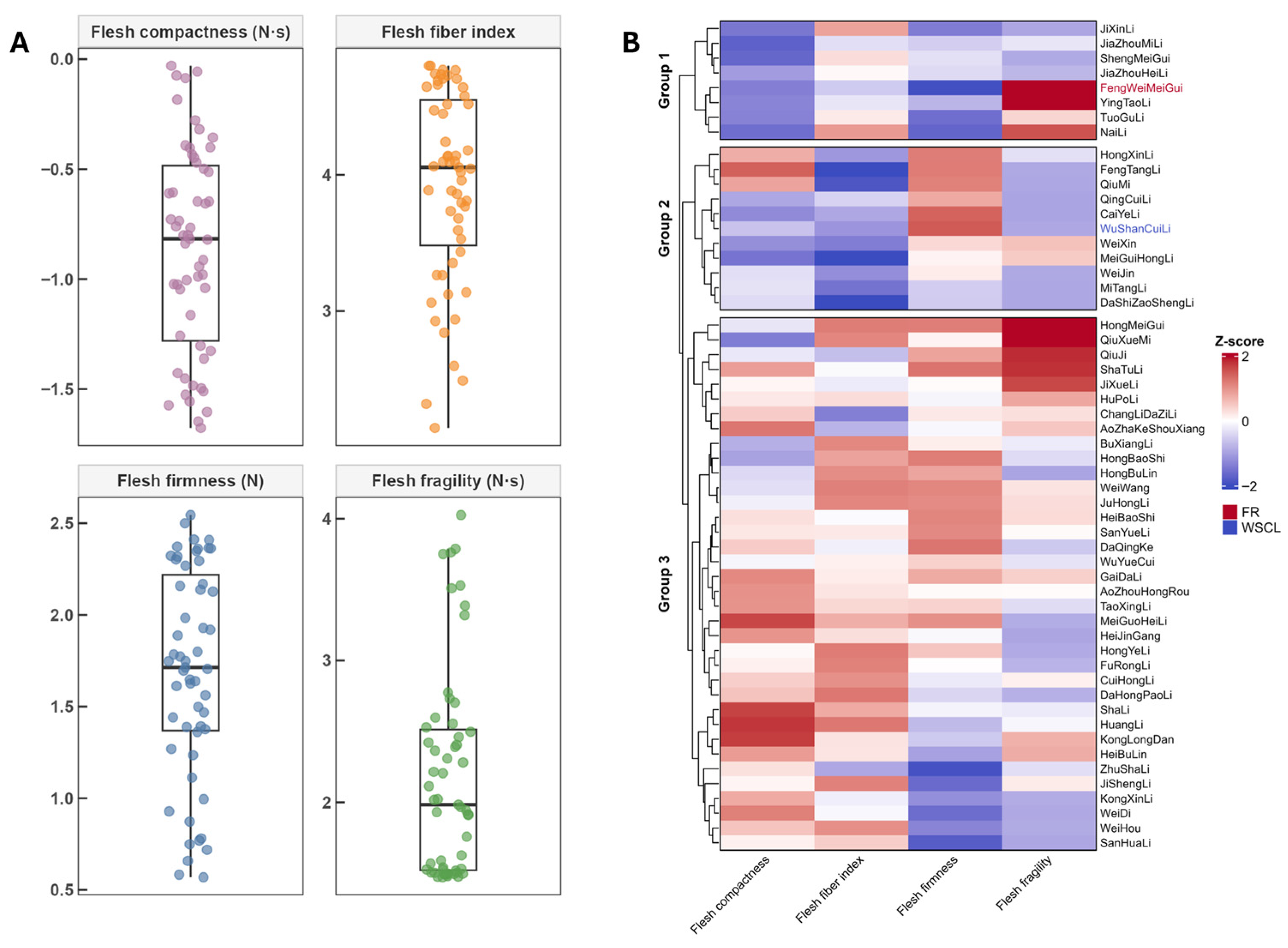
These data were analyzed and visualized in R (v4.5.2). To classify the 55 plum accessions according to flesh mechanical properties, accession-level trait values were standardized by Z-score transformation and subjected to hierarchical clustering using Euclidean distance and Ward’s minimum variance method [
41]. The standardized trait matrix together with the corresponding clustering dendrogram was visualized using ComplexHeatmap to illustrate similarities and differences in fruit texture among accessions. In addition, distribution plots of individual texture traits were generated using ggplot2 (v4.0.2).
2.8. RNA Extraction and qRT-PCR Analysis
To investigate the expression patterns of PsPME genes during plum fruit development, qRT-PCR analysis was performed using two representative cultivars with clearly contrasting flesh textures, selected based on the fruit texture phenotyping results obtained from the 55 plum germplasm accessions described above. These two cultivars were the firm-fleshed cultivar ‘Wushancuili’ (WSCL) and the soft-fleshed cultivar ‘Fengweimeigui’ (FR). Fruit samples were collected at three developmental stages, namely S1 (cell division stage), S2 (fruit expansion stage), and S3 (ripening stage). Stage assignment was based on published phenological information and the actual fruit developmental characteristics of the two cultivars under field conditions. Accordingly, fruit samples were collected at specific representative time points defined by days after full bloom (DAFB). In the firm-fleshed cultivar ‘Wushancuili’ (WSCL), samples were collected at 15 DAFB for S1 (cell division stage), 55 DAFB for S2 (fruit expansion stage), and 90 DAFB for S3 (ripening stage). In the soft-fleshed cultivar ‘Fengweimeigui’ (FR), the corresponding sampling points were 12 DAFB for S1, 45 DAFB for S2, and 78 DAFB for S3, respectively. For each cultivar at each developmental stage, three biological replicates were collected. Flesh tissues were immediately frozen in liquid nitrogen after sampling and stored at −80 °C until RNA extraction.
Total RNA was extracted using TRIzol reagent (TransGen Biotech, Beijing, China) according to the manufacturer’s instructions. RNA concentration and purity were assessed using a NanoDrop 2000 spectrophotometer (Thermo Fisher Scientific, Waltham, MA, USA), and RNA integrity was checked by agarose gel electrophoresis. Genomic DNA contamination was removed by DNase I treatment (Solarbio, Beijing, China). No-template controls and no-reverse-transcription controls were included to monitor reagent contamination and potential genomic DNA carryover. First-strand cDNA was synthesized from 1 μg of total RNA using the PrimeScript RT reagent Kit (TaKaRa, Dalian, China) at 37 °C for 15 min, followed by 85 °C for 5 s. Quantitative PCR was performed using 2× SYBR Green qPCR Premix (Universal) (Beijing Koton Biotechnology Co., Ltd., Beijing, China) on a LightCycler 480 II Real-Time PCR System (Roche Diagnostics, Basel, Switzerland). The amplification program consisted of an initial denaturation at 95 °C for 30 s, followed by 35 cycles of 95 °C for 10 s, primer-specific annealing for 10 s, and 72 °C for 30 s. Melting-curve analysis was performed after amplification to confirm product specificity.
qRT-PCR assays were performed for all candidate
PsPME genes included in the expression analysis. Genes were then screened according to amplification quality, Ct values, and expression divergence between the two cultivars across developmental stages. Genes showing weak or unstable amplification signals (Ct > 35), limited expression divergence, particularly at S2 and S3 (fold change < 2.0), were not retained for detailed presentation in the main text. Based on these criteria, 15 genes were finally selected for further analysis and discussion, whereas the quantitative results for the remaining genes are shown in
Figure S1.
Gene-specific primers were designed using Primer-BLAST and are listed in
Table S1.
ACT2 was used as the internal reference gene [
42]. Each biological replicate was analyzed with three technical replicates, and the mean Ct value was used for subsequent calculations. When technical replicates did not meet the preset consistency criteria, outlying values were excluded or the assay was repeated. Relative expression levels were first calculated using the 2
−ΔΔCt method. To facilitate comparison of expression patterns across samples and developmental stages, the mean expression value for each gene was calculated based on three biological replicates and three technical replicates for all samples, and the highest mean value of that gene was set to 1, with the expression levels of the remaining samples expressed relative to this maximum value. For statistical analysis, expression values derived from the 2
−ΔΔCt calculation were log2-transformed before hypothesis testing. At each developmental stage, expression differences between ‘WSCL’ and ‘FR’ were evaluated for each gene using a two-sided Welch’s
t-test based on three biological replicates. The resulting
p-values were adjusted across all gene-by-stage comparisons using the Benjamini–Hochberg method to control the false discovery rate, and adjusted
p < 0.05 was considered statistically significant.
2.9. Correlation Analysis Between PsPME Expression and Fruit Texture Traits
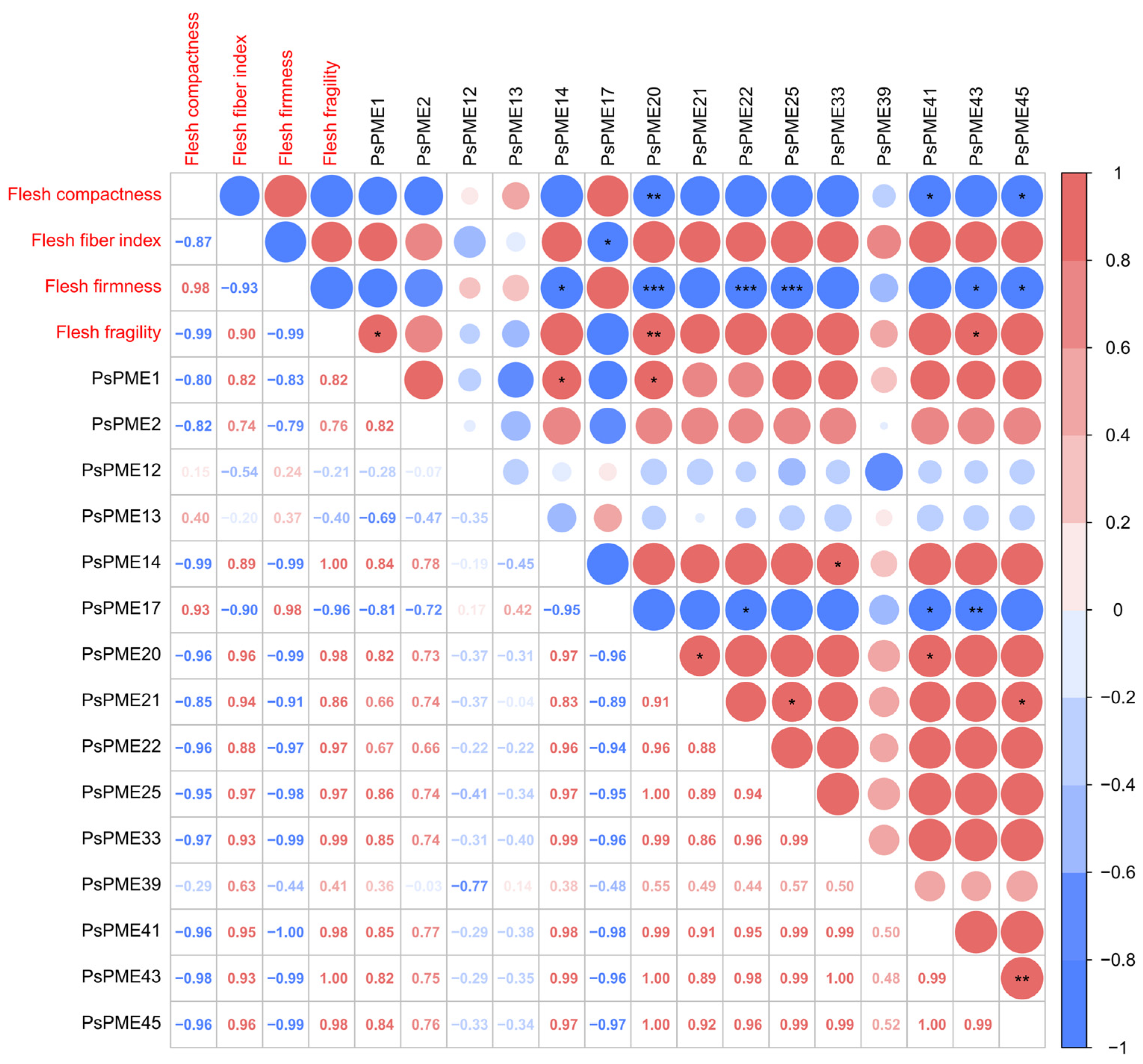
Pearson correlation analysis was performed to evaluate the relationships between PsPME expression and fruit texture traits across three developmental stages (S1–S3) using R (v4.5.2). The analysis included two plum cultivars with contrasting flesh textures, ‘WSCL’ and ‘FR’, with three biological replicates collected for each cultivar at each developmental stage, resulting in a total of 18 samples (2 cultivars × 3 stages × 3 biological replicates; n = 18). For each gene–trait pair, the Pearson correlation coefficient (r) and corresponding two-sided p-value were calculated using the stats::cor.test() function. To account for multiple testing across all gene–trait combinations, p-values were adjusted using the Benjamini–Hochberg method, and the adjusted p-values were used to control the false discovery rate. Correlations with adjusted p-values < 0.05 were considered statistically significant. The correlation matrix was visualized using the corrplot package (v0.95).
4. Discussion
PMEs have been widely involved in fruit texture regulation through their roles in pectin demethylesterification, which affects cell wall properties and contributes to softening during ripening [
43]. In this study, genome-wide analysis identified 46 members of the
PsPME family. For comparison, PME family members were also identified in four related
Prunus species—
P. sibirica,
P. persica,
P. dulcis, and
P. avium—with 75, 69, 59, and 61 genes detected, respectively, indicating that plum possesses a relatively small PME family among the species examined. Phylogenetic analysis further showed that PME proteins from plum and the four related species clustered into four major conserved clades. Together, these findings indicate that the
PsPME family is evolutionarily conserved but still exhibits structural and regulatory diversity that may underlie functional differentiation during plum fruit development.
Promoter analysis showed that
PsPME genes contain abundant regulatory elements related to phytohormones, environmental signals, and abiotic stress responses, suggesting that these genes may respond to multiple cues associated with fruit ripening and texture formation. Gene duplication analysis further indicated that dispersed duplication represented the predominant mode of
PsPME family expansion. Most duplicated gene pairs had Ka/Ks ratios below 1, consistent with purifying selection during evolution. One exception was the
PsPME10–PsPME29 pair, which showed an unusually high Ka/Ks value. This ratio was most likely inflated by an extremely low Ks value, pointing to a very recent duplication event [
44]. Overall, these results suggest that although most
PsPME genes have remained evolutionarily constrained, a few members may have undergone recent divergence that contributed to regulatory or functional specialization.
Fruit texture phenotyping across 55 plum cultivars revealed marked variation in four core mechanical traits, namely flesh firmness, flesh fragility, flesh fiber index, and flesh compactness. Hierarchical clustering of the standardized trait matrix separated the cultivars into three distinct texture types. A previous study on plum cultivars likewise classified the materials into distinct clusters on the basis of fruit texture data [
45], supporting the use of mechanical phenotypes for texture classification. At the population level, cultivars with higher flesh firmness generally also showed coordinated changes in flesh fragility and other mechanical traits, indicating that these traits reflect linked variation in flesh mechanical properties. This phenotypic framework guided the selection of two representative cultivars with contrasting flesh textures, namely ‘WSCL’ (firm-flesh) and ‘FR’ (soft-flesh), for subsequent expression analysis.
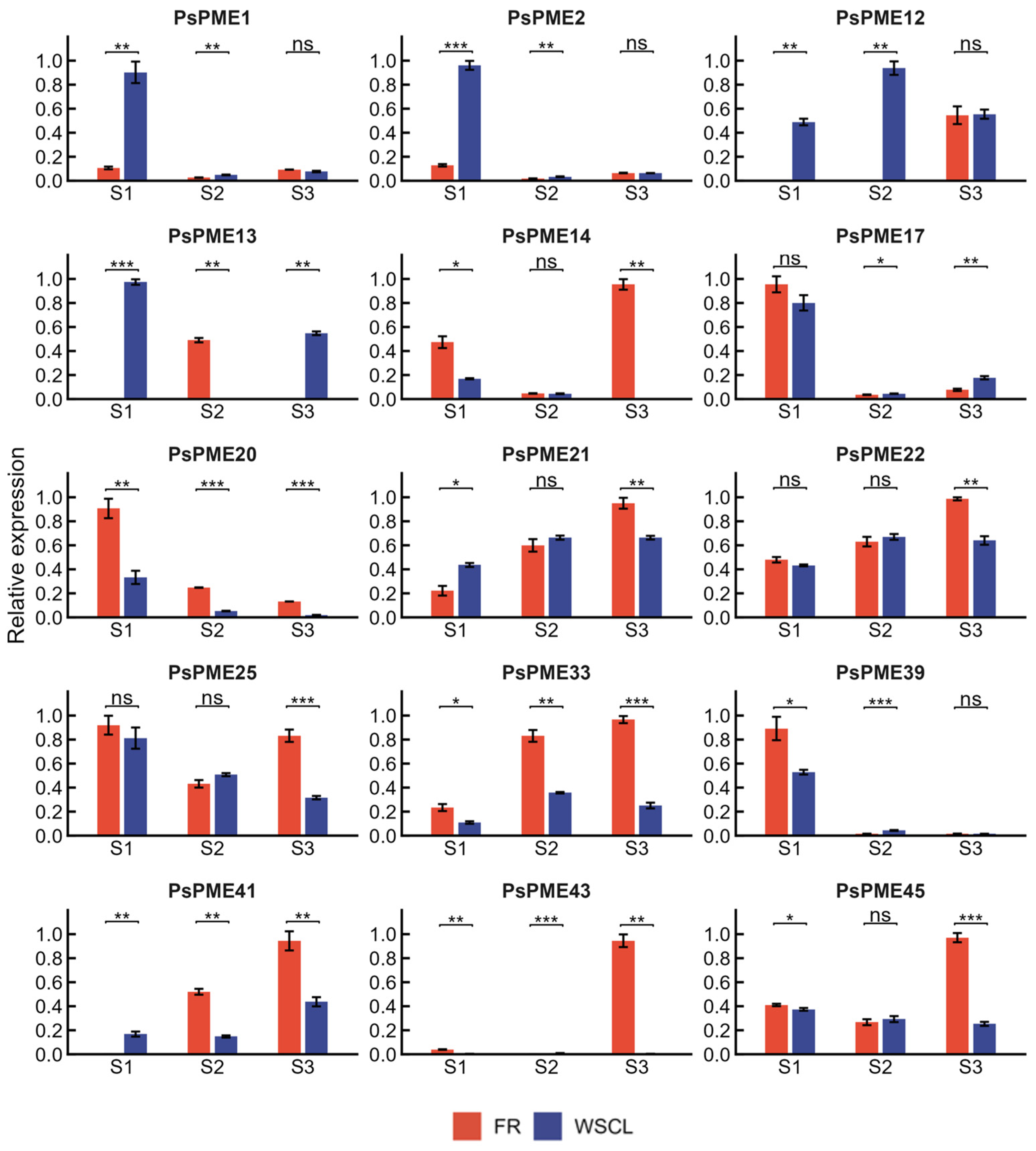
qRT-PCR analysis of 15 selected
PsPME genes revealed distinct stage- and cultivar-dependent expression profiles during fruit development in ‘WSCL’ and ‘FR’.
PsPME1,
PsPME2, and
PsPME12 showed relatively higher expression in ‘WSCL’ at early developmental stages, whereas these differences were less evident at the ripening stage. By contrast,
PsPME20 and
PsPME33 maintained consistently higher expression in ‘FR’ throughout development. Divergence between the two cultivars became more pronounced at S3, when
PsPME14,
PsPME22,
PsPME25, and
PsPME45 all showed significantly higher expression in ‘FR’. In addition,
PsPME21,
PsPME41, and
PsPME43 exhibited marked shifts in cultivar-preferential expression across development. These patterns suggest that different
PsPME family members may act at different stages of plum fruit development in a cultivar-dependent manner, with some contributing primarily at early stages and others playing a stronger role during ripening. This interpretation is consistent with the stage-dependent expression reported for PME genes during peach fruit ripening [
46].
Correlation analysis further linked plum fruit texture variation to
PsPME expression. Among the measured traits, flesh firmness showed the strongest associations with candidate gene expression, with
PsPME20,
PsPME22, and
PsPME25 being significantly negatively correlated with flesh firmness. In addition,
PsPME20 was positively correlated with flesh fragility, suggesting that this gene may be involved not only in firmness decline but also in fracture-related properties of the tissue. This interpretation is biologically plausible because pectin remodeling affects cell-to-cell adhesion, cell wall stiffness, and tissue integrity, all of which are central to the structural changes that accompany fruit softening. Comparable evidence has been reported in other fruit crops. In strawberry, genome-wide and functional analyses showed that PME-mediated cell wall remodeling is a key component of fruit softening, and
FvPME38 was identified as an important regulator of fruit firmness [
47]. In European pear,
PcPME63 was identified as a key gene closely associated with post-cold-storage softening and firmness decline [
48]. In peach, transcript profiling of PME and PME inhibitor (
PMEI) family members also revealed clear ripening stage-dependent expression patterns, suggesting that different PME family members may contribute to texture formation at different stages of fruit development [
49]. Collectively, these observations indicate that the correlations detected in plum are not isolated and support the view that PME-mediated pectin modification is broadly involved in softening and texture differentiation in fleshy fruits.
The present results therefore support the hypothesis that specific PsPME genes contribute to plum fruit softening and texture differentiation through pectin modification and cell wall remodeling during fruit development and ripening. Within this framework, flesh firmness appears to be the texture trait most strongly associated with PsPME activity, whereas PsPME20 may also influence flesh fragility and fracture-related behavior. By integrating population-level phenotyping, cultivar-level expression profiling, and gene–trait association analysis, this study narrows the relatively large PsPME family to a smaller set of biologically meaningful candidate genes.
This study also has several limitations. The qRT-PCR analysis was conducted in only two contrasting cultivars, and the observed gene–trait correlations, although informative, do not by themselves establish causality. In addition, the effects of PME genes on fruit texture are likely influenced by multiple factors, including enzyme activity, pectin methylesterification patterns, calcium cross-linking, and interactions with other cell wall-modifying enzymes. Further work combining biochemical characterization with functional validation will be required to define the precise contributions of individual PsPME genes to plum fruit softening and texture differentiation.
From a breeding and production perspective, the candidate genes identified here, especially PsPME20, PsPME22, and PsPME25, represent promising targets for future functional validation, marker development, and germplasm evaluation. These genes may facilitate the selection of plum cultivars with improved flesh firmness, more desirable texture characteristics, and better postharvest performance. Thus, this study not only advances the biological interpretation of plum fruit texture formation but also provides a practical basis for texture-oriented plum breeding and postharvest quality improvement.
5. Conclusions
In this study, we identified 46 PsPME genes in plum (P. salicina) and characterized their phylogenetic relationships, structural features, duplication patterns, promoter cis-elements, and expression profiles. These analyses showed that the PsPME family is evolutionarily conserved in plum, while also retaining structural and regulatory diversity that may underlie functional differentiation among family members.
More importantly, our results support the biological hypothesis that specific PsPME genes contribute to plum fruit softening and texture differentiation by participating in pectin remodeling and cell wall modification during fruit development and ripening. Phenotypic evaluation of 55 plum accessions revealed substantial variation in texture-related traits and provided the basis for selecting two cultivars with contrasting flesh textures for expression analysis. By integrating developmental expression profiling with gene–trait correlation analysis, PsPME20, PsPME22, and PsPME25 were prioritized as candidate genes associated with flesh firmness, while PsPME20 also showed additional associations with flesh compactness and flesh fragility. These findings suggest that some PsPME members may influence not only firmness decline, but also other mechanical properties of plum flesh during ripening. Overall, this study provides a genome-wide resource for the PsPME gene family in plum and offers biologically meaningful candidate genes for future functional validation. From an applied perspective, these genes may serve as potential targets for molecular marker development, texture-oriented breeding, and postharvest quality improvement in plum.




 ,
,