A CRISPR-Based Mutagenesis Strategy for Examining CLAG3 Helix 44 Contribution to Malaria Parasite Nutrient Uptake Channels



Abstract
1. Introduction
2. Materials and Methods
2.1. In Vitro P. falciparum Culture
2.2. DNA Transfection to Produce CLAG3 Truncation and α-H44 Mutants
2.3. Sorbitol Transport Assays
2.4. Immunoblots
2.5. Indirect Immunofluorescence Assays (IFA)
2.6. Parasite Expansion in PGIM
2.7. Statistics
3. Results
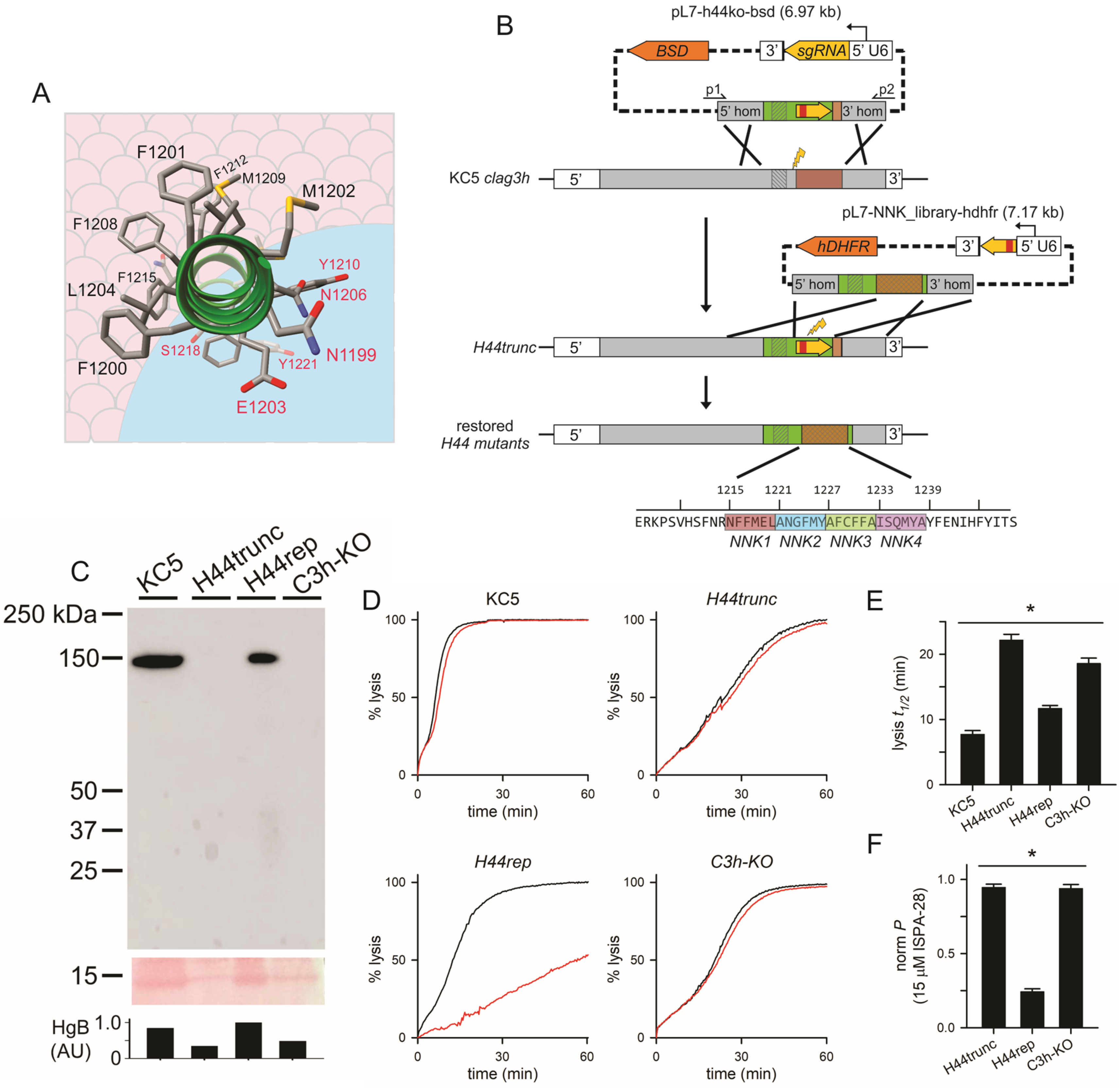
3.1. A Two-Step Transfection Strategy to Facilitate Site-Directed Mutagenesis and Evaluation of α-Helix 44′s Role
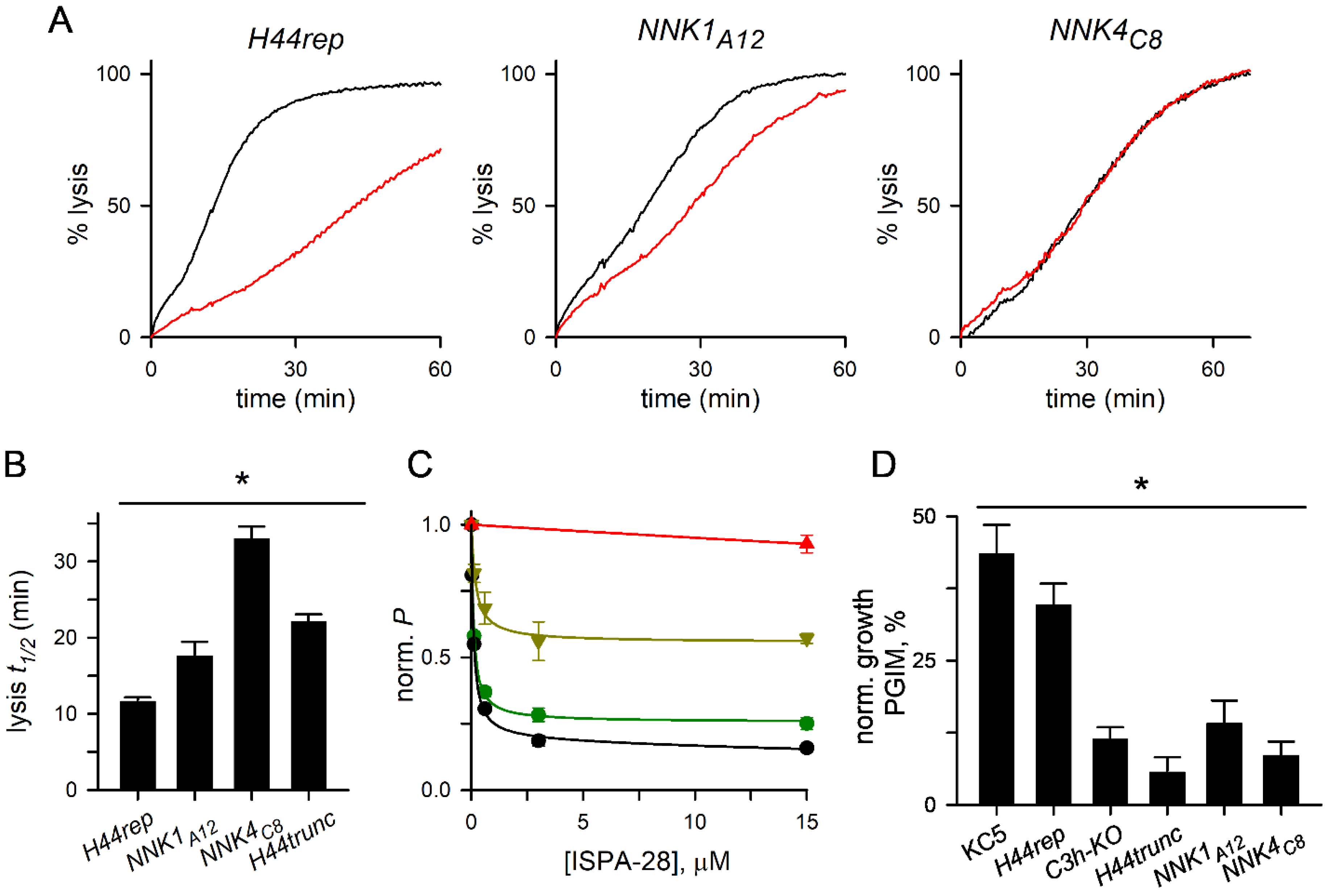
3.2. α-H44 Is Required for CLAG3-Associated Solute Transport
3.3. Transfection Yields a Diverse Collection of α-H44 Mutants
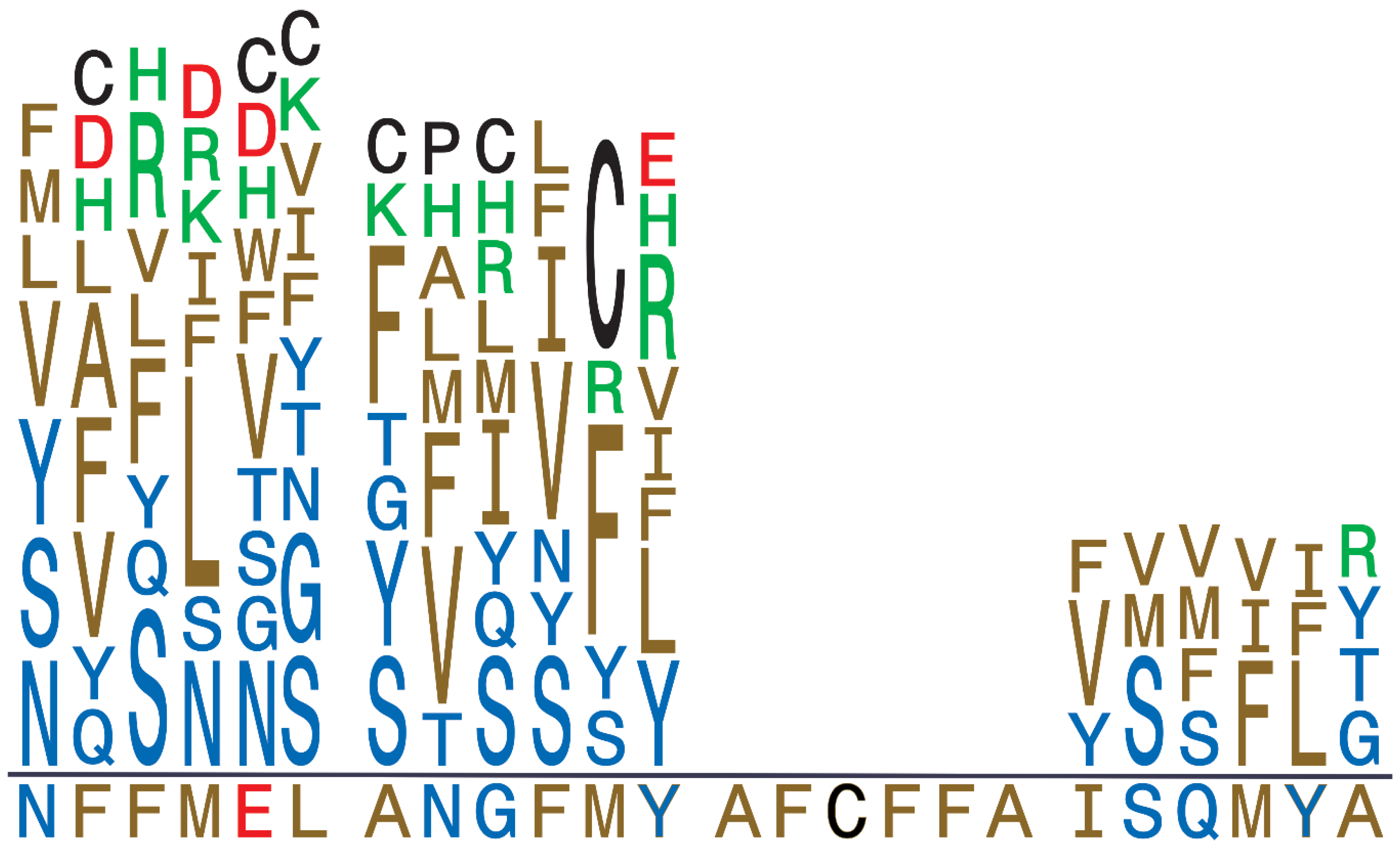
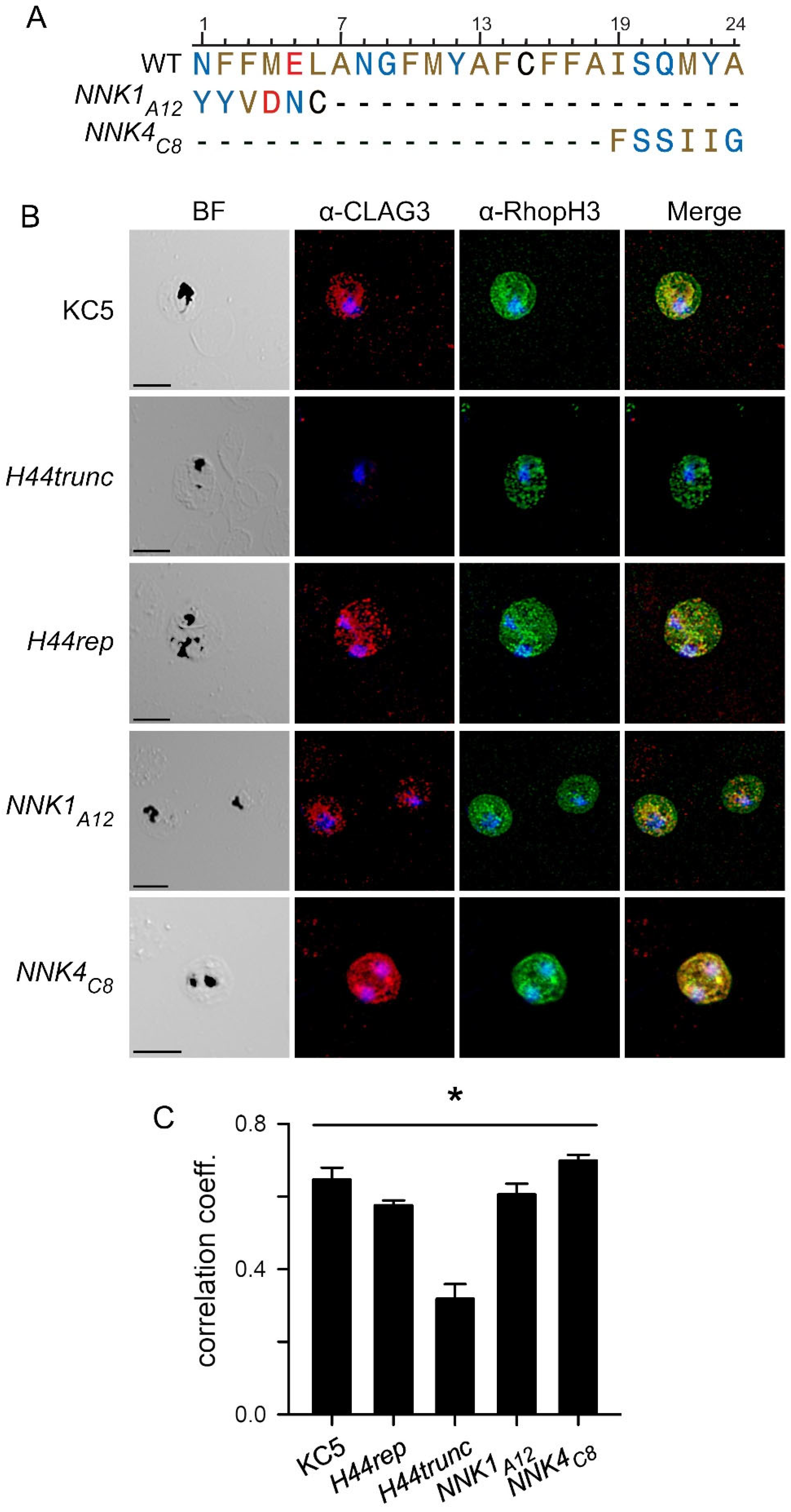
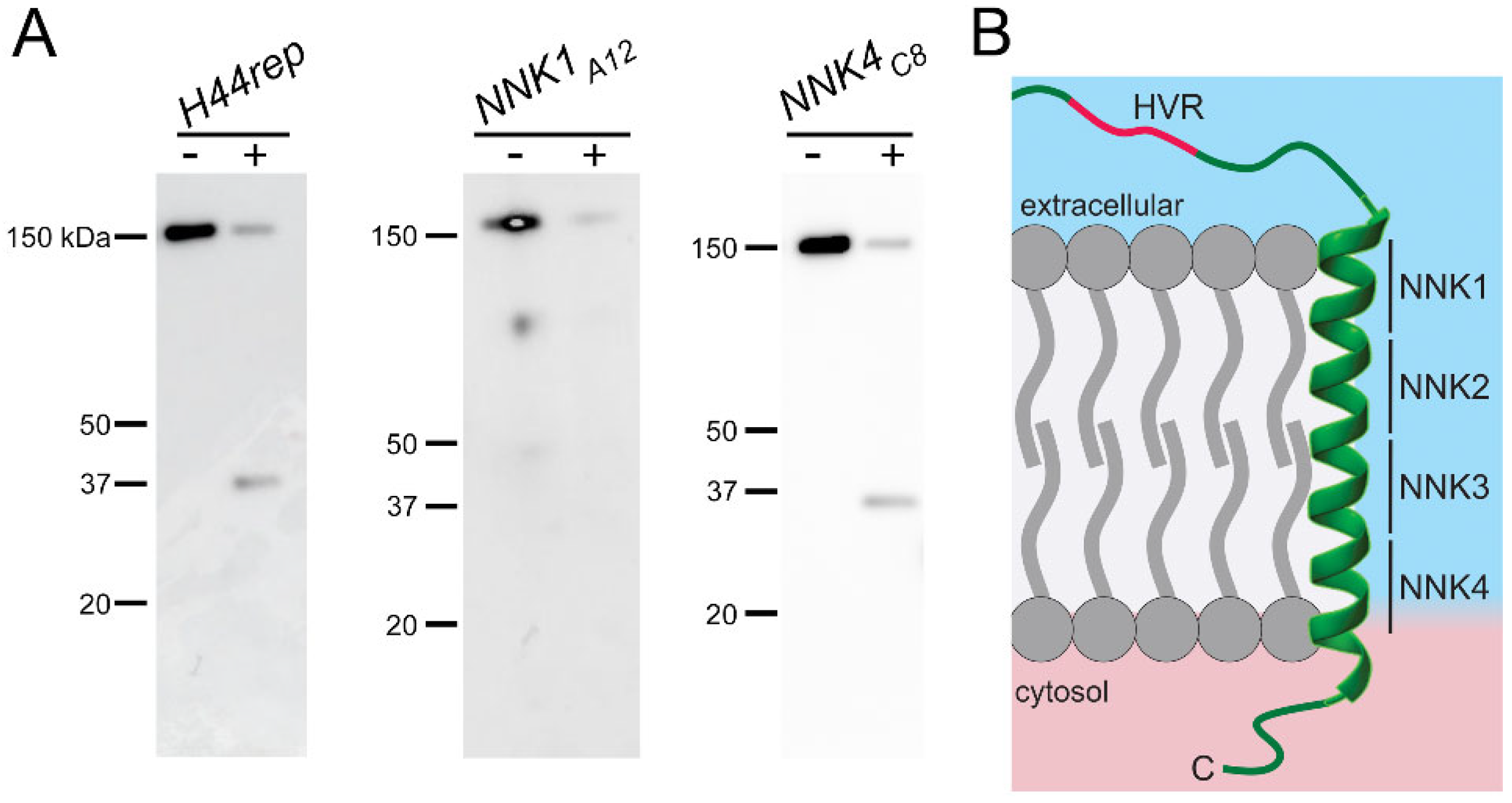
3.4. Two NNK Mutants with Distinct Phenotypes
4. Discussion
Author Contributions
Funding
Institutional Review Board Statement
Informed Consent Statement
Data Availability Statement
Conflicts of Interest
Abbreviations
| α-H44 | Alpha helix 44 |
| CLAG2 | Cytoadherence-linked antigen, expressed from chromosome 2 |
| CLAG3 | Cytoadherence-linked antigen, expressed from chromosome 3 |
| DAPI | 4′,6-diamidino-2-phenylindole |
| HVR | Hypervariable region |
| PAM | Protospacer adjacent motif |
| PSAC | Plasmodial surface anion channel |
References
- Hviid, L.; Jensen, A.T. PfEMP1—A Parasite Protein Family of Key Importance in Plasmodium falciparum Malaria Immunity and Pathogenesis. Adv. Parasitol. 2015, 88, 51–84. [Google Scholar] [CrossRef] [PubMed]
- Tan, J.; Pieper, K.; Piccoli, L.; Abdi, A.; Perez, M.F.; Geiger, R.; Tully, C.M.; Jarrossay, D.; Maina Ndungu, F.; Wambua, J.; et al. A LAIR1 insertion generates broadly reactive antibodies against malaria variant antigens. Nature 2016, 529, 105–109. [Google Scholar] [CrossRef]
- Saito, F.; Hirayasu, K.; Satoh, T.; Wang, C.W.; Lusingu, J.; Arimori, T.; Shida, K.; Palacpac, N.M.Q.; Itagaki, S.; Iwanaga, S.; et al. Immune evasion of Plasmodium falciparum by RIFIN via inhibitory receptors. Nature 2017, 552, 101–105. [Google Scholar] [CrossRef] [PubMed]
- Hadjimichael, E.; Deitsch, K.W. Variable surface antigen expression, virulence, and persistent infection by Plasmodium falciparum malaria parasites. Microbiol. Mol. Biol. Rev. 2025, 89, e0011423. [Google Scholar] [CrossRef] [PubMed]
- Gupta, A.; Bokhari, A.A.B.; Pillai, A.D.; Crater, A.K.; Gezelle, J.; Saggu, G.; Nasamu, A.S.; Ganesan, S.M.; Niles, J.C.; Desai, S.A. Complex nutrient channel phenotypes despite Mendelian inheritance in a Plasmodium falciparum genetic cross. PLoS Pathog. 2020, 16, e1008363. [Google Scholar] [CrossRef]
- Kaneko, O. Erythrocyte invasion: Vocabulary and grammar of the Plasmodium rhoptry. Parasitol. Int. 2007, 56, 255–262. [Google Scholar] [CrossRef]
- Nguitragool, W.; Bokhari, A.A.; Pillai, A.D.; Rayavara, K.; Sharma, P.; Turpin, B.; Aravind, L.; Desai, S.A. Malaria parasite clag3 genes determine channel-mediated nutrient uptake by infected red blood cells. Cell 2011, 145, 665–677. [Google Scholar] [CrossRef]
- Ito, D.; Schureck, M.A.; Desai, S.A. An essential dual-function complex mediates erythrocyte invasion and channel-mediated nutrient uptake in malaria parasites. eLife 2017, 6, e23485. [Google Scholar] [CrossRef]
- Counihan, N.; Chisholm, S.A.; Bullen, H.E.; Srivastava, A.; Sanders, P.R.; Jonsdottir, T.K.; Weiss, G.E.; Ghosh, S.; Crabb, B.S.; Creek, D.J.; et al. Plasmodium falciparum parasites deploy RhopH2 into the host erythrocyte to obtain nutrients, grow and replicate. eLife 2017, 6, e23217. [Google Scholar] [CrossRef]
- Schureck, M.A.; Darling, J.E.; Merk, A.; Shao, J.; Daggupati, G.; Srinivasan, P.; Olinares, P.D.B.; Rout, M.P.; Chait, B.T.; Wollenberg, K.; et al. Malaria parasites use a soluble RhopH complex for erythrocyte invasion and an integral form for nutrient uptake. eLife 2021, 10, e65282. [Google Scholar] [CrossRef]
- Ahmad, M.; Manzella-Lapeira, J.; Saggu, G.; Ito, D.; Brzostowski, J.A.; Desai, S.A. Live-cell FRET reveals that malaria nutrient channel proteins CLAG3 and RhopH2 remain associated throughout their tortuous trafficking. mBio 2020, 11, e01354-20. [Google Scholar] [CrossRef] [PubMed]
- Vincensini, L.; Fall, G.; Berry, L.; Blisnick, T.; Braun, B.C. The RhopH complex is transferred to the host cell cytoplasm following red blood cell invasion by Plasmodium falciparum. Mol. Biochem. Parasitol. 2008, 160, 81–89. [Google Scholar] [CrossRef] [PubMed]
- Sharma, P.; Rayavara, K.; Ito, D.; Basore, K.; Desai, S.A. A CLAG3 mutation in an amphipathic transmembrane domain alters malaria parasite nutrient channels and confers leupeptin resistance. Infect. Immun. 2015, 83, 2566–2574. [Google Scholar] [CrossRef] [PubMed]
- Lyko, B.; Hammershaimb, E.A.; Nguitragool, W.; Wellems, T.E.; Desai, S.A. A high-throughput method to detect Plasmodium falciparum clones in limiting dilution microplates. Malar. J. 2012, 11, 124. [Google Scholar] [CrossRef]
- Pillai, A.D.; Nguitragool, W.; Lyko, B.; Dolinta, K.; Butler, M.M.; Nguyen, S.T.; Peet, N.P.; Bowlin, T.L.; Desai, S.A. Solute restriction reveals an essential role for clag3-associated channels in malaria parasite nutrient acquisition. Mol. Pharmacol. 2012, 82, 1104–1114. [Google Scholar] [CrossRef]
- Dunn, K.W.; Kamocka, M.M.; McDonald, J.H. A practical guide to evaluating colocalization in biological microscopy. Am. J. Physiol. Cell Physiol. 2011, 300, C723–C742. [Google Scholar] [CrossRef]
- Iriko, H.; Kaneko, O.; Otsuki, H.; Tsuboi, T.; Su, X.Z.; Tanabe, K.; Torii, M. Diversity and evolution of the rhoph1/clag multigene family of Plasmodium falciparum. Mol. Biochem. Parasitol. 2008, 158, 11–21. [Google Scholar] [CrossRef]
- Shao, J.; Arora, G.; Manzella-Lapeira, J.; Brzostowski, J.A.; Desai, S.A. Kinetic tracking of Plasmodium falciparum antigens on infected erythrocytes with a novel reporter of protein insertion and surface exposure. mBio 2022, 13, e0040422. [Google Scholar] [CrossRef]
- Doench, J.G.; Hartenian, E.; Graham, D.B.; Tothova, Z.; Hegde, M.; Smith, I.; Sullender, M.; Ebert, B.L.; Xavier, R.J.; Root, D.E. Rational design of highly active sgRNAs for CRISPR-Cas9-mediated gene inactivation. Nat. Biotechnol. 2014, 32, 1262–1267. [Google Scholar] [CrossRef]
- Nov, Y. When second best is good enough: Another probabilistic look at saturation mutagenesis. Appl. Environ. Microbiol. 2012, 78, 258–262. [Google Scholar] [CrossRef]
- Potchen, N.B.; Silva, T.M.; Kalia, I.; Lack, J.B.; Desai, S.A. Nutrient stress dramatically increases malaria parasite clag2 copy number to increase host cell permeability and enable pathogen survival. PLoS Pathog. 2025, 21, e1013321. [Google Scholar] [CrossRef]
- Gupta, A.; Balabaskaran-Nina, P.; Nguitragool, W.; Saggu, G.S.; Schureck, M.A.; Desai, S.A. CLAG3 self-associates in malaria parasites and quantitatively determines nutrient uptake channels at the host membrane. mBio 2018, 9, e02293-17. [Google Scholar] [CrossRef] [PubMed]
- Carrasquilla, M.; Adjalley, S.; Sanderson, T.; Marin-Menendez, A.; Coyle, R.; Montandon, R.; Rayner, J.C.; Pance, A.; Lee, M.C.S. Defining multiplicity of vector uptake in transfected Plasmodium parasites. Sci. Rep. 2020, 10, 10894. [Google Scholar] [CrossRef] [PubMed]
- Ghorbal, M.; Gorman, M.; Macpherson, C.R.; Martins, R.M.; Scherf, A.; Lopez-Rubio, J.J. Genome editing in the human malaria parasite Plasmodium falciparum using the CRISPR-Cas9 system. Nat. Biotechnol. 2014, 32, 819–821. [Google Scholar] [CrossRef] [PubMed]
- Zhang, M.; Wang, C.; Otto, T.D.; Oberstaller, J.; Liao, X.; Adapa, S.R.; Udenze, K.; Bronner, I.F.; Casandra, D.; Mayho, M.; et al. Uncovering the essential genes of the human malaria parasite Plasmodium falciparum by saturation mutagenesis. Science 2018, 360, eaap7847. [Google Scholar] [CrossRef]
- Nguitragool, W.; Rayavara, K.; Desai, S.A. Proteolysis at a specific extracellular residue implicates integral membrane CLAG3 in malaria parasite nutrient channels. PLoS ONE 2014, 9, e93759. [Google Scholar] [CrossRef]
- Renthal, R. Helix insertion into bilayers and the evolution of membrane proteins. Cell Mol. Life Sci. 2010, 67, 1077–1088. [Google Scholar] [CrossRef]
- Bond, P.J.; Sansom, M.S. Insertion and assembly of membrane proteins via simulation. J. Am. Chem. Soc. 2006, 128, 2697–2704. [Google Scholar] [CrossRef]
- Ginsburg, H.; Stein, W.D. The new permeability pathways induced by the malaria parasite in the membrane of the infected erythrocyte: Comparison of results using different experimental techniques. J. Membr. Biol. 2004, 197, 113–134. [Google Scholar] [CrossRef]
- Verloo, P.; Kocken, C.H.; Van der Wel, A.; Tilly, B.C.; Hogema, B.M.; Sinaasappel, M.; Thomas, A.W.; De Jonge, H.R. Plasmodium falciparum-activated chloride channels are defective in erythrocytes from cystic fibrosis patients. J. Biol. Chem. 2004, 279, 10316–10322. [Google Scholar] [CrossRef]
- Egee, S.; Lapaix, F.; Decherf, G.; Staines, H.M.; Ellory, J.C.; Doerig, C.; Thomas, S.L. A stretch-activated anion channel is up-regulated by the malaria parasite Plasmodium falciparum. J. Physiol. 2002, 542, 795–801. [Google Scholar] [CrossRef] [PubMed]
- Duranton, C.; Huber, S.; Tanneur, V.; Lang, K.; Brand, V.; Sandu, C.; Lang, F. Electrophysiological properties of the Plasmodium falciparum-induced cation conductance of human erythrocytes. Cell Physiol. Biochem. 2003, 13, 189–198. [Google Scholar] [CrossRef] [PubMed]
- Doyle, D.A.; Morais, C.J.; Pfuetzner, R.A.; Kuo, A.; Gulbis, J.M.; Cohen, S.L.; Chait, B.T.; MacKinnon, R. The structure of the potassium channel: Molecular basis of K+ conduction and selectivity. Science 1998, 280, 69–77. [Google Scholar] [CrossRef] [PubMed]
- Shen, H.; Zhou, Q.; Pan, X.; Li, Z.; Wu, J.; Yan, N. Structure of a eukaryotic voltage-gated sodium channel at near-atomic resolution. Science 2017, 355, eaal4326. [Google Scholar] [CrossRef]
- He, L.; Yu, Z.; Geng, Z.; Huang, Z.; Zhang, C.; Dong, Y.; Gao, Y.; Wang, Y.; Chen, Q.; Sun, L.; et al. Structure, gating, and pharmacology of human Ca(V)3.3 channel. Nat. Commun. 2022, 13, 2084. [Google Scholar] [CrossRef]
- Lee, S.J.; Schillings, J.; de Vries, R.; Matamoros, M.; de Groot, B.L.; Nichols, C.G. From selective permeation to physiology in potassium channels. Function 2025, 6, zqaf050. [Google Scholar] [CrossRef]
- Sather, W.A.; McCleskey, E.W. Permeation and selectivity in calcium channels. Annu. Rev. Physiol. 2003, 65, 133–159. [Google Scholar] [CrossRef]
- Dutzler, R. The structural basis of ClC chloride channel function. Trends Neurosci. 2004, 27, 315–320. [Google Scholar] [CrossRef]
- Levring, J.; Chen, J. Structural identification of a selectivity filter in CFTR. Proc. Natl. Acad. Sci. USA 2024, 121, e2316673121. [Google Scholar] [CrossRef]
- Mindell, J.A.; Maduke, M. ClC chloride channels. Genome Biol. 2001, 2, reviews3003.1. [Google Scholar] [CrossRef]
- Bokhari, A.A.; Mita-Mendoza, N.K.; Fuller, A.; Pillai, A.D.; Desai, S.A. High guanidinium permeability reveals dehydration-dependent ion selectivity in the plasmodial surface anion channel. Biomed. Res. Int. 2014, 2014, 741024. [Google Scholar] [CrossRef]
- Colombini, M. Structure and mode of action of a voltage dependent anion-selective channel (VDAC) located in the outer mitochondrial membrane. Ann. N. Y. Acad. Sci. 1980, 341, 552–563. [Google Scholar] [CrossRef]
- Benz, R.; Schmid, A.; Hancock, R.E. Ion selectivity of gram-negative bacterial porins. J. Bacteriol. 1985, 162, 722–727. [Google Scholar] [CrossRef] [PubMed]
- Schlichter, L.C.; Grygorczyk, R.; Pahapill, P.A.; Grygorczyk, C. A large, multiple-conductance chloride channel in normal human T lymphocytes. Pflug. Arch. 1990, 416, 413–421. [Google Scholar] [CrossRef] [PubMed]
- Rostovtseva, T.K.; Nestorovich, E.M.; Bezrukov, S.M. Partitioning of differently sized poly(ethylene glycol)s into OmpF porin. Biophys. J. 2002, 82, 160–169. [Google Scholar] [CrossRef] [PubMed]
- Eisenman, G.; Horn, R. Ionic selectivity revisited: The role of kinetic and equilibrium processes in ion permeation through channels. J. Membr. Biol. 1983, 76, 197–225. [Google Scholar] [CrossRef]
- Ribeiro, J.M.; Garriga, M.; Potchen, N.; Crater, A.K.; Gupta, A.; Ito, D.; Desai, S.A. Guide RNA selection for CRISPR-Cas9 transfections in Plasmodium falciparum. Int. J. Parasitol. 2018, 48, 825–832. [Google Scholar] [CrossRef]
- Hsu, P.D.; Scott, D.A.; Weinstein, J.A.; Ran, F.A.; Konermann, S.; Agarwala, V.; Li, Y.; Fine, E.J.; Wu, X.; Shalem, O.; et al. DNA targeting specificity of RNA-guided Cas9 nucleases. Nat. Biotechnol. 2013, 31, 827–832. [Google Scholar] [CrossRef]
- Pillai, A.D.; Addo, R.; Sharma, P.; Nguitragool, W.; Srinivasan, P.; Desai, S.A. Malaria parasites tolerate a broad range of ionic environments and do not require host cation remodeling. Mol. Microbiol. 2013, 88, 20–34. [Google Scholar] [CrossRef]


Disclaimer/Publisher’s Note: The statements, opinions and data contained in all publications are solely those of the individual author(s) and contributor(s) and not of MDPI and/or the editor(s). MDPI and/or the editor(s) disclaim responsibility for any injury to people or property resulting from any ideas, methods, instructions or products referred to in the content. |
© 2026 by the authors. Licensee MDPI, Basel, Switzerland. This article is an open access article distributed under the terms and conditions of the Creative Commons Attribution (CC BY) license.
Share and Cite
Gonzalez-Chavez, Z.; Siddiqui, M.A.; Ganesan, S.; Desai, S.A. A CRISPR-Based Mutagenesis Strategy for Examining CLAG3 Helix 44 Contribution to Malaria Parasite Nutrient Uptake Channels. Genes 2026, 17, 462. https://doi.org/10.3390/genes17040462
Gonzalez-Chavez Z, Siddiqui MA, Ganesan S, Desai SA. A CRISPR-Based Mutagenesis Strategy for Examining CLAG3 Helix 44 Contribution to Malaria Parasite Nutrient Uptake Channels. Genes. 2026; 17(4):462. https://doi.org/10.3390/genes17040462
Chicago/Turabian StyleGonzalez-Chavez, Zabdi, Mansoor A. Siddiqui, Sundar Ganesan, and Sanjay A. Desai. 2026. "A CRISPR-Based Mutagenesis Strategy for Examining CLAG3 Helix 44 Contribution to Malaria Parasite Nutrient Uptake Channels" Genes 17, no. 4: 462. https://doi.org/10.3390/genes17040462
APA StyleGonzalez-Chavez, Z., Siddiqui, M. A., Ganesan, S., & Desai, S. A. (2026). A CRISPR-Based Mutagenesis Strategy for Examining CLAG3 Helix 44 Contribution to Malaria Parasite Nutrient Uptake Channels. Genes, 17(4), 462. https://doi.org/10.3390/genes17040462