Clinical and Molecular Characterization of Pakistani Mucopolysaccharidosis Families with SGSH and GALNS Deficiencies

 ,
,  , ,
, ,
Abstract
1. Introduction
2. Materials and Methods
2.1. Family Enrollment and Ethical Approval
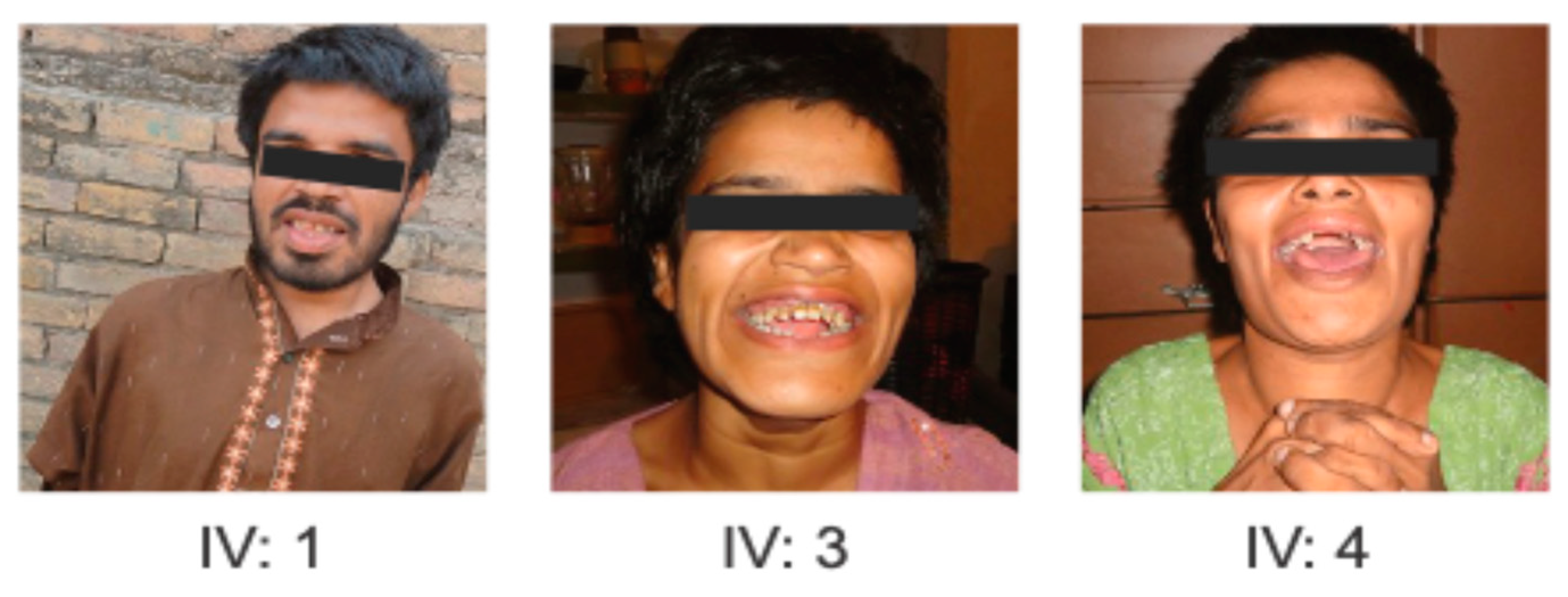
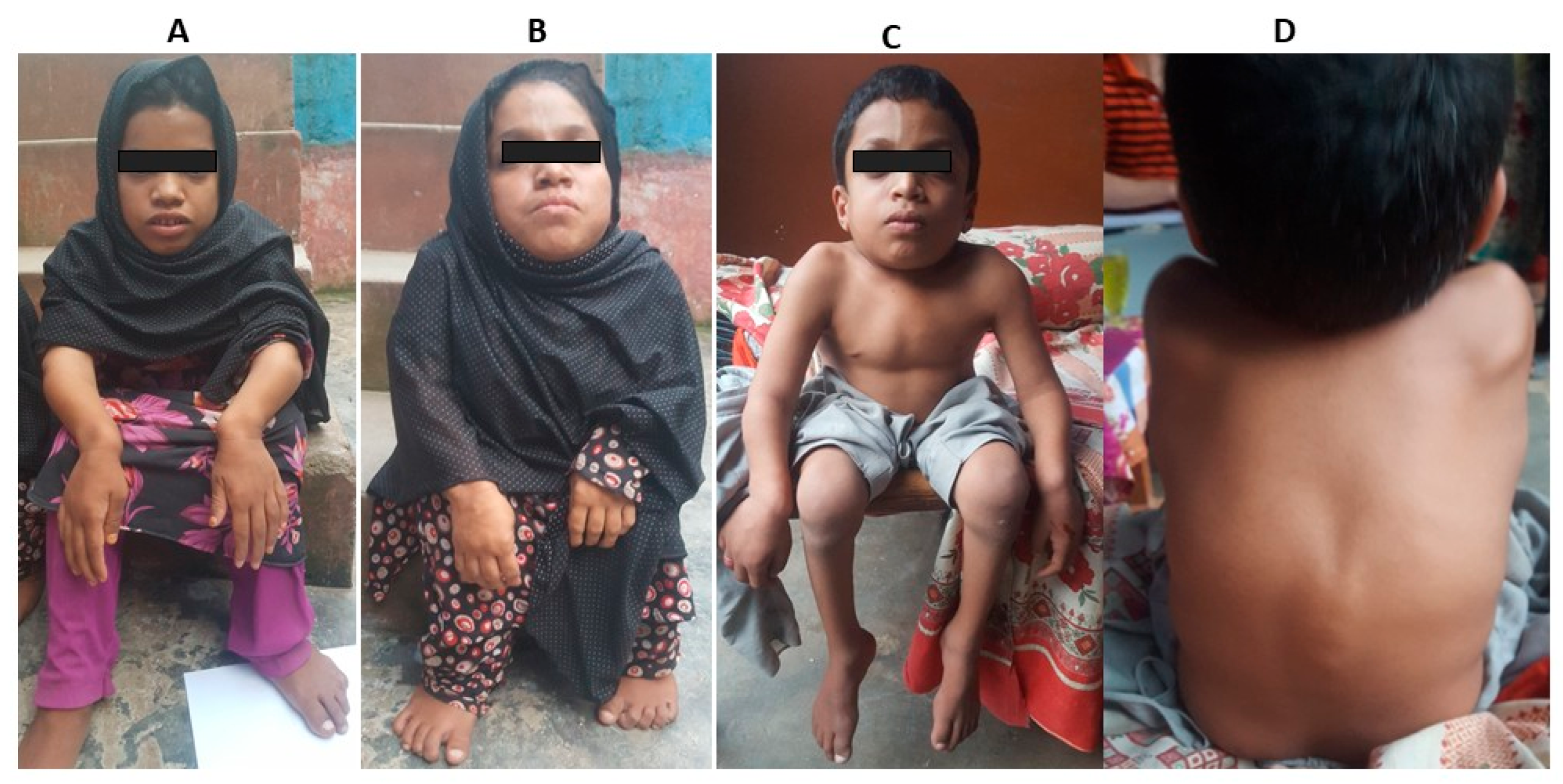
2.2. Clinical Features
2.3. Whole Exome Sequencing and Variant Detection
2.4. In Silico Functional and Structural Analysis
3. Results
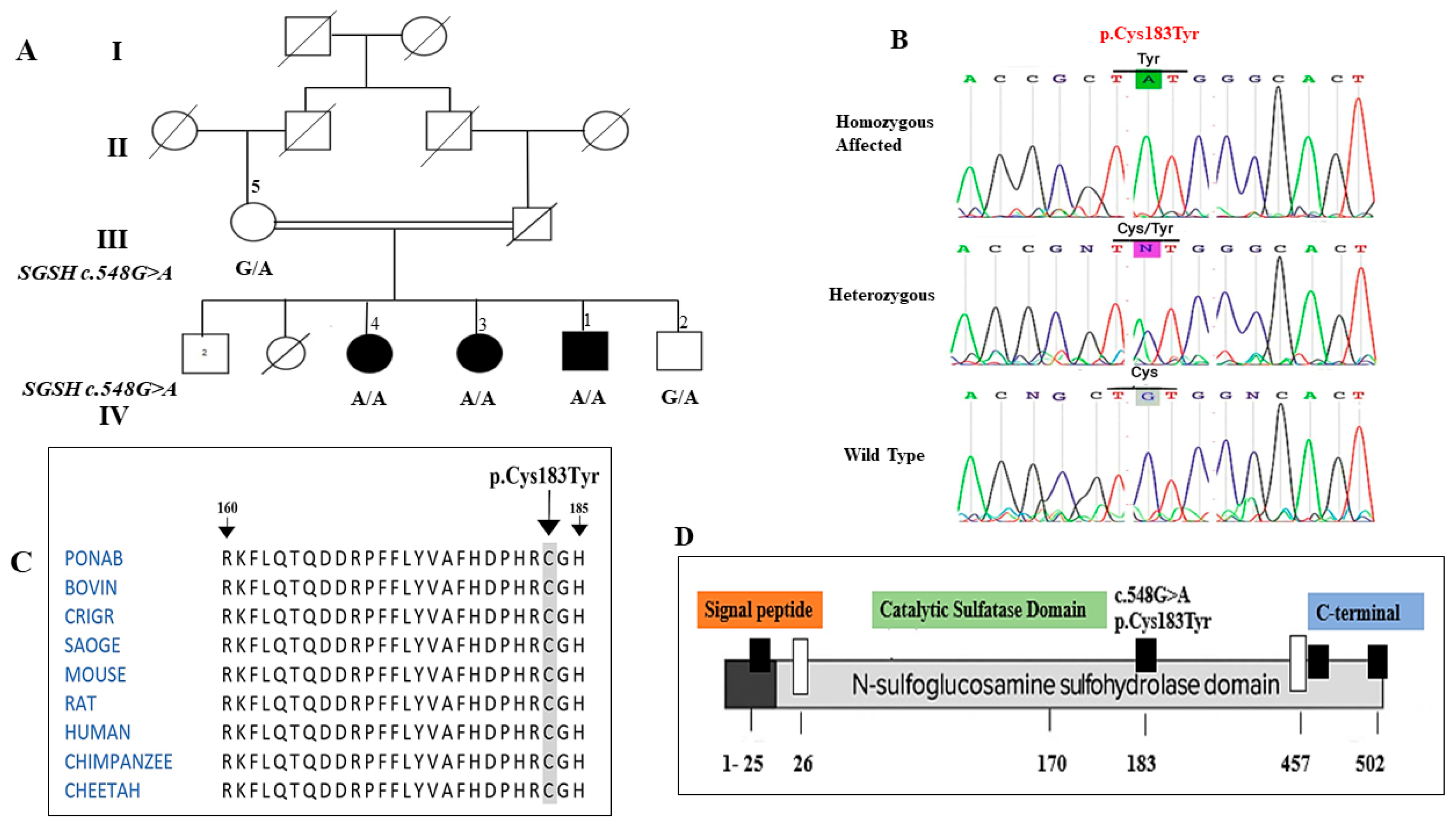
3.1. Whole-Exome Sequencing and Variant Identification
3.2. Segregation and Sanger Validation
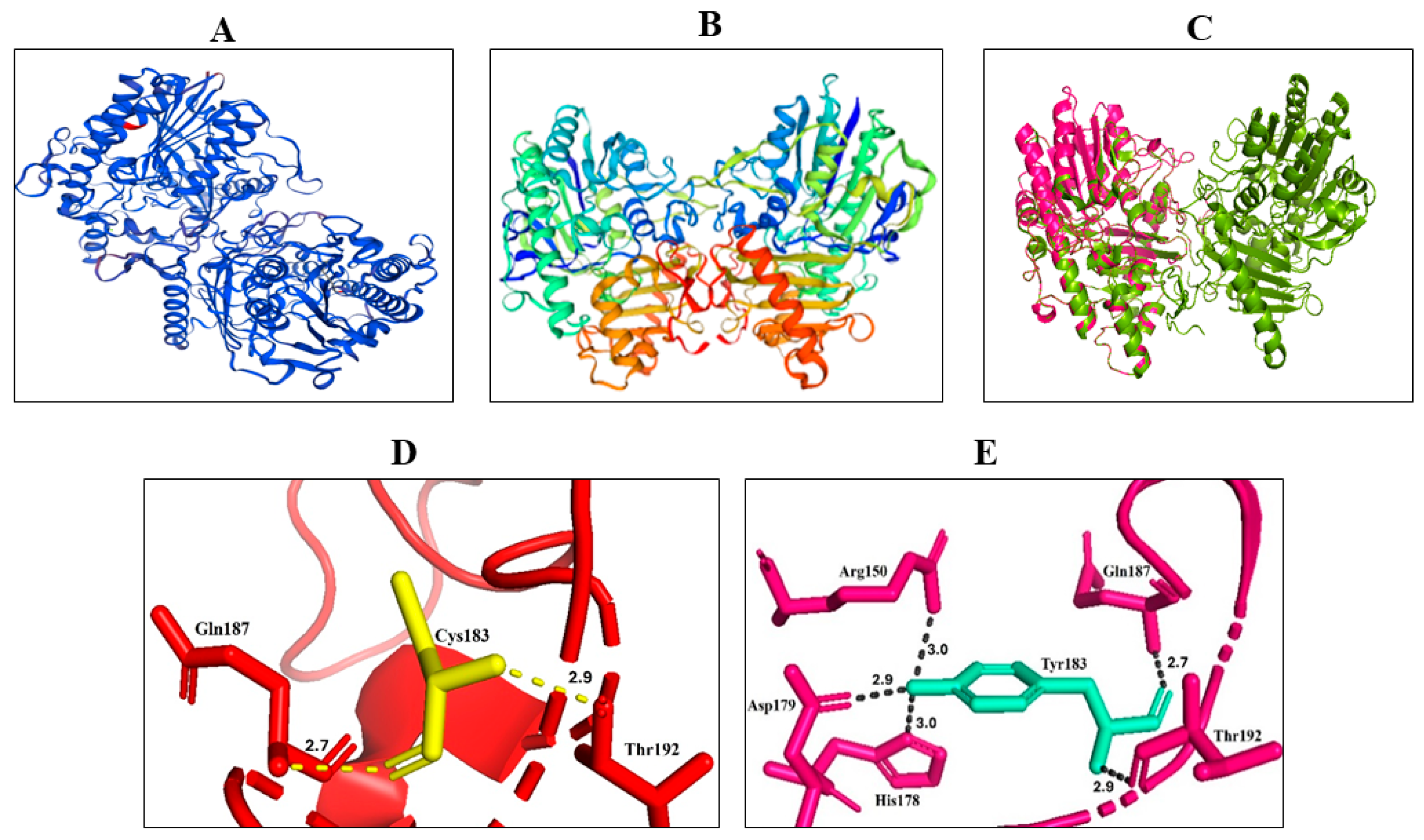
3.3. Protein Modeling and Stability Analysis
4. Discussion
Limitations of the Study
5. Conclusions
Author Contributions
Funding
Institutional Review Board Statement
Informed Consent Statement
Data Availability Statement
Acknowledgments
Conflicts of Interest
Abbreviations
| ACMG | American College of Medical Genetics and Genomics |
| CMMC | Center for Molecular Medicine Cologne |
| GAGs | Glycosaminoglycans |
| GALNS | Galactosamine (N-acetyl)-6-sulfatase |
| HS | Heparan sulfate |
| KS | Keratan sulfate |
| MAF | Minor allele frequency |
| MPS | Mucopolysaccharidosis |
| MPS IIIA | Mucopolysaccharidosis Type IIIA (Sanfilippo A syndrome) |
| MPS IVA | Mucopolysaccharidosis Type IVA (Morquio A syndrome) |
| NCBI | National Center for Biotechnology Information |
| PolyPhen-2 | Polymorphism Phenotyping v2 |
| SGSH | N-sulfoglucosamine sulfohydrolase |
| SIFT | Sorting Intolerant From Tolerant |
| VUS | Variant of uncertain significance |
| WES | Whole-exome sequencing |
References
- Parenti, G.; Andria, G.; Ballabio, A. Lysosomal storage diseases: From pathophysiology to therapy. Annu. Rev. Med. 2015, 66, 471–486. [Google Scholar] [CrossRef] [Scilit] [PubMed]
- Marques, A.R.; Saftig, P. Lysosomal storage disorders–challenges, concepts and avenues for therapy: Beyond rare diseases. J. Cell Sci. 2019, 132, jcs221739. [Google Scholar] [CrossRef] [Scilit] [PubMed]
- Parenti, G.; Giugliani, R. The mucopolysaccharidoses. In Physician’s Guide to the Diagnosis, Treatment, and Follow-Up of Inherited Metabolic Diseases; Springer: Berlin/Heidelberg, Germany, 2022; pp. 1267–1286. [Google Scholar]
- Lipiński, P.; Różdżyńska-Świątkowska, A.; Wiśniewska, K.; Rusecka, J.; Ługowska, A.; Żuber, Z.; Jezela-Stanek, A.; Cyske, Z.; Gaffke, L.; Pierzynowska, K.; et al. Mucopolysaccharidoses—What Clinicians Need to Know: A Clinical, Biochemical, and Molecular Overview. Biomolecules 2025, 15, 1448. [Google Scholar] [CrossRef] [Scilit]
- Linhart, A.; Elliott, P.M. The heart in Anderson-Fabry disease and other lysosomal storage disorders. Heart 2007, 93, 528–535. [Google Scholar] [CrossRef] [Scilit]
- Jurecka, A.; Ługowska, A.; Golda, A.; Czartoryska, B.; Tylki-Szymańska, A. Prevalence rates of mucopolysaccharidoses in Poland. J. Appl. Genet. 2015, 56, 205–210. [Google Scholar] [CrossRef] [Scilit]
- Khan, S.A.; Peracha, H.; Ballhausen, D.; Wiesbauer, A.; Rohrbach, M.; Gautschi, M.; Mason, R.W.; Giugliani, R.; Suzuki, Y.; Orii, K.E.; et al. Epidemiology of mucopolysaccharidoses. Mol. Genet. Metab. 2017, 121, 227–240. [Google Scholar] [CrossRef] [Scilit]
- Federhen, A.; Pasqualim, G.; de Freitas, T.F.; Gonzalez, E.A.; Trapp, F.; Matte, U.; Giugliani, R. Estimated birth prevalence of mucopolysaccharidoses in Brazil. Am. J. Med. Genet. Part A 2020, 182, 469–483. [Google Scholar] [CrossRef] [Scilit]
- Meikle, P.J.; Hopwood, J.J.; Clague, A.E.; Carey, W.F. Prevalence of lysosomal storage disorders. JAMA 1999, 281, 249–254. [Google Scholar] [CrossRef] [Scilit]
- Gómez, A.M.; García-Robles, R.; Suárez-Obando, F. Estimation of the mucopolysaccharidoses frequencies and cluster analysis in the Colombian provinces of Cundinamarca and Boyacá. Biomedica 2012, 32, 602–609. [Google Scholar]
- AlSayed, M.; Arafa, D.; Al-Khawajha, H.; Afqi, M.; Al-Sanna’a, N.; Sunbul, R.; Faden, M. Consensus-based expert recommendations on the management of MPS IVa and VI in Saudi Arabia. Orphanet J. Rare Dis. 2024, 19, 269. [Google Scholar] [CrossRef] [Scilit]
- Bidchol, A.M.; Dalal, A.; Shah, H.; S, S.; Nampoothiri, S.; Kabra, M.; Gupta, N.; Danda, S.; Gowrishankar, K.; Phadke, S.R.; et al. GALNS mutations in Indian patients with mucopolysaccharidosis IVA. Am. J. Med. Genet. Part A 2014, 164, 2793–2801. [Google Scholar] [CrossRef] [Scilit] [PubMed]
- Hussain, R.; Bittles, A.H. The prevalence and demographic characteristics of consanguineous marriages in Pakistan. J. Biosoc. Sci. 1998, 30, 261–275. [Google Scholar] [CrossRef] [Scilit] [PubMed]
- Gul, R.; Firasat, S.; Hussain, M.; Tufail, M.; Ahmad, W.; Afshan, K. Neurological manifestations in Pakistani lysosomal storage disorders patients and molecular characterization of Gaucher disease. Genetika 2021, 53, 1017–1029. [Google Scholar] [CrossRef] [Scilit]
- Gul, R.; Firasat, S.; Hussain, M.; Akbar, F.; Fatima, K.; Sabar, M.F.; Afshan, K. Genetic Variants in Mucopolysaccharidosis Type I Patients from Pakistan: Identification of a Novel 14-Nucleotide Deletion and A Highly Prevalent Missense Variant in a Cohort of 10 Families. Pak. J. Zool. 2025, 58, 325–334. [Google Scholar]
- Tyebkhan, G. Declaration of Helsinki: The ethical cornerstone of human clinical research. Indian J. Dermatol. Venereol. Leprol. 2003, 69, 245–247. [Google Scholar]
- Zulfiqar, S.; Tariq, M.; Ramzan, S.; Khan, A.; Sher, M.; Ali, Z.; Dahl, N.; Abdullah, U.; Baig, S.M. Identification of a novel variant in GPR56/ADGRG1 gene through whole exome sequencing in a consanguineous Pakistani family. J. Clin. Neurosci. 2021, 94, 8–12. [Google Scholar] [CrossRef] [Scilit]
- Rasool, S.; Baig, J.M.; Moawia, A.; Ahmad, I.; Iqbal, M.; Waseem, S.S.; Asif, M.; Abdullah, U.; Makhdoom, E.U.H.; Kaygusuz, E.; et al. An update of pathogenic variants in ASPM, WDR62, CDK5RAP2, STIL, CENPJ, and CEP135 underlying autosomal recessive primary microcephaly in 32 consanguineous families from Pakistan. Mol. Genet. Genom. Med. 2020, 8, e1408. [Google Scholar] [CrossRef] [Scilit]
- Brunet, T.; Jech, R.; Brugger, M.; Kovacs, R.; Alhaddad, B.; Leszinski, G.; Riedhammer, K.M.; Westphal, D.S.; Mahle, I.; Mayerhanser, K.; et al. De novo variants in neurodevelopmental disorders—Experiences from a tertiary care center. Clin. Genet. 2021, 100, 14–28. [Google Scholar] [CrossRef] [Scilit]
- Sidhu, N.S.; Schreiber, K.; Pröpper, K.; Becker, S.; Usón, I.; Sheldrick, G.M.; Gärtner, J.; Krätzner, R.; Steinfeld, R. Structure of sulfamidase provides insight into the molecular pathology of mucopolysaccharidosis IIIA. Biol. Crystallogr. 2014, 70, 1321–1335. [Google Scholar] [CrossRef] [Scilit]
- Ruijter, G.; Valstar, M.; van de Kamp, J.M.; Van der Helm, R.; Durand, S.; Van Diggelen, O.; Gärtner, J.; Krätzner, R.; Steinfeld, R. Clinical and genetic spectrum of Sanfilippo type C (MPS IIIC) disease in The Netherlands. Mol. Genet. Metab. 2008, 93, 104–111. [Google Scholar] [CrossRef] [Scilit]
- Héron, B.; Mikaeloff, Y.; Froissart, R.; Caridade, G.; Maire, I.; Caillaud, C.; Levade, T.; Chabrol, B.; Feillet, F.; Ogier, H.; et al. Incidence and natural history of mucopolysaccharidosis type III in France and comparison with United Kingdom and Greece. Am. J. Med. Genet. Part A 2011, 155, 58–68. [Google Scholar] [CrossRef] [Scilit]
- Nidiffer, F.; Kelly, T. Developmental and degenerative patterns associated with cognitive, behavioural and motor difficulties in the Sanfilippo syndrome: An epidemiological study. J. Ment. Defic. Res. 1983, 27, 185–203. [Google Scholar] [PubMed]
- Neufeld, E.F.; Muenzer, J. The Metabolic and Molecular Bases of Inherited Disease; Scriver, C.R., Beaudet, A.L., Sly, W.S., Valle, D., Eds.; Springer: Berlin/Heidelberg, Germany, 2001. [Google Scholar]
- Fukuda, S.; Yamada, N.; Tomatsu, S.; Sukegawa, K.; Montaño, A.M.; Hopwood, J.J.; Muller, V.; Orii, T.; Kondo, N. Mucopolysaccharidosis IVA: A novel splice acceptor site mutation in intron 4 of theN-acetylgalactosamine-6-sulfate sulfatase gene in an afghanistan girl with classical morquio disease. Jpn. J. Hum. Genet. 1997, 42, 317–322. [Google Scholar] [PubMed]
- Leal, A.F.; Pachajoa, H. Recent advances in mucopolysaccharidosis IVA treatment. Orphanet J. Rare Dis. 2025, 20, 512. [Google Scholar] [CrossRef] [Scilit]
- Regier, D.S.; Oetgen, M.; Tanpaiboon, P. Mucopolysaccharidosis type IVA. In GeneReviews® [Internet]; University of Washington: Seattle, WA, USA, 2021. [Google Scholar]
- Osipova, L.; Kuzenkova, L.; Namazova-Baranova, L.; Gevorkyan, A.; Podkletnova, T.; Vashakmadze, N. Sanfilippo syndrome. Ann. Russ. Acad. Med. Sci. 2015, 70, 419–427. [Google Scholar] [CrossRef] [Scilit]
- Dũng, V.C.; Tomatsu, S.; Montaño, A.M.; Gottesman, G.; Bober, M.B.; Mackenzie, W.; Maeda, M.; Mitchell, G.A.; Suzuki, Y.; Orii, T. Mucopolysaccharidosis IVA: Correlation between genotype, phenotype and keratan sulfate levels. Mol. Genet. Metab. 2013, 110, 129–138. [Google Scholar] [CrossRef] [Scilit]
- Stepien, K.M.; Burton, B.K.; Bober, M.B.; Campeau, P.M.; Ellaway, C.; Bhattacharya, K.; Guffon, N.; Hinds, D.; Hunt, A.; Lail, A.; et al. Long-term outcomes of elosulfase alfa enzyme replacement therapy in adults with MPS IVA: A sub-analysis of the Morquio A Registry Study (MARS). Orphanet J. Rare Dis. 2025, 20, 548. [Google Scholar]
- Choi, H.-J.; Sriram, A.; Sargiotto, C.; Fajardo-Martinez, V. Enzyme Replacement Therapy & Other Therapeutic Frontiers in Infantile Metabolic Disorders. NeoReviews 2025, 26, e835–e846. [Google Scholar] [CrossRef] [Scilit]
- Borges, P.; Pasqualim, G.; Giugliani, R.; Vairo, F.; Matte, U. Estimated prevalence of mucopolysaccharidoses from population-based exomes and genomes. Orphanet J. Rare Dis. 2020, 15, 324. [Google Scholar] [CrossRef] [Scilit]
- Lee, C.-L.; Chang, Y.-H.; Chuang, C.-K.; Chiu, H.-C.; Tu, Y.-R.; Lo, Y.-T.; Lin, H.-Y.; Lin, S.-P. Integrating Genetic Counseling in the Management of Mucopolysaccharidoses. In Genetic Counselling—Navigating the Future; IntechOpen: London, UK, 2024. [Google Scholar]





| Clinical Feature | Family 1—SGSH (MPS IIIA) | Family 2—GALNS (MPS IVA) |
|---|---|---|
| Individuals | IV:1, IV:3, IV:4 | V:1, V:3, V:4 |
| Age at Examination | 23–28 years | 5–12 years |
| Natural History | Phase 1: Normal early milestones. Phase 2: Cognitive/behavioral decline (~4 years). Phase 3: Severe motor decline/spasticity (late teens). | Infancy: Onset of kyphoscoliosis (~8–10 months). Early Childhood: Delayed walking (~5 years) due to skeletal dysplasia. |
| Onset | Early childhood | Congenital/early infancy |
| Growth Parameters | Normal | Short-trunk dwarfism; severe growth delay |
| Intellectual Status | Severe to profound disability | Normal intellect |
| Speech and Language | Minimal speech; poor comprehension | Age-appropriate speech |
| Behavioral Features | Aggression, hyperactivity, wandering | None were significant |
| Facial Features | Relatively mild facial coarsening; broad nasal bridge | Broad mouth, prominent cheekbones, wide-set eyes |
| Skeletal Findings | Mild spasticity; no major deformities | Dysostosis multiplex (Kyphoscoliosis, hip dysplasia, pectus carinatum) |
| Tone/Movement | Spasticity of hands and feet | Joint laxity; no spasticity |
| Audiometry/Hearing | Not performed | Not performed |
| Echocardiography | Not performed | Not performed |
| Ocular (Slit-lamp) | No corneal clouding (Visual inspection); Slit-lamp not performed | No corneal clouding (Visual inspection); Slit-lamp not performed |
| Abdominal Ultrasound | No hepatosplenomegaly reported | No hepatosplenomegaly reported |
| Radiology (X-rays) | Not performed | Not performed; pathognomonic physical features of dysostosis multiplex (e.g., pectus carinatum and kyphoscoliosis) were identified via clinical examination. Formal radiography was unavailable due to regional resource limitations and geographic constraints. |
| Current Status | Bed-bound or severely limited mobility | Ambulatory with significant gait abnormalities |
| Feature | Family 1—SGSH (MPS IIIA Associated) c.548G>A; p.Cys183Tyr | Family 2—GALNS (MPS IVA Associated) c.423-1G>A (Splice-Site Variant) |
|---|---|---|
| Variant identified | SGSH c.548G>A (p.Cys183Tyr), homozygous | GALNS c.423-1G>A (splice-site), homozygous |
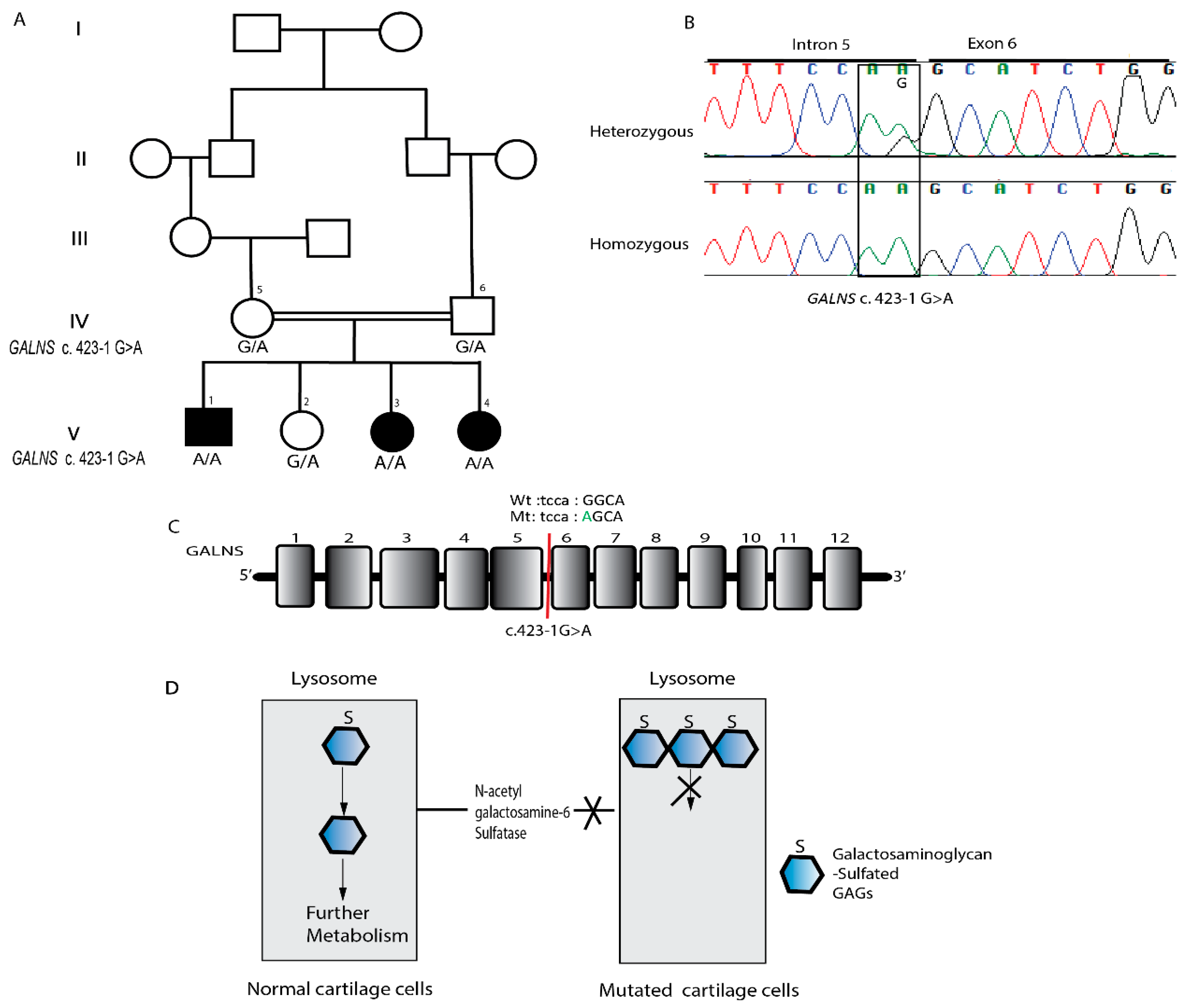
| Segregation | All affected siblings homozygous; parents and unaffected members heterozygous | All affected individuals homozygous; parents and unaffected members heterozygous |
| Mutation type | Missense | Splice-site |
| Conservation | Cys183 highly conserved across vertebrates | N/A (splice-site) |
| MutationTaster | 0.999 (disease-causing) | 0.9 (disease-causing) |
| SIFT | 0.00 (not tolerated) | N/A |
| PROVEAN | –8.901 (deleterious) | N/A |
| PolyPhen-2 | 0.918 (possibly damaging) | 1 (probably damaging) |
| Structural impact | Disruption of catalytic domain, loss of disulfide bond, altered polar interactions | Likely affects splicing → abnormal protein or loss of function |
| Variant (HGVS) | Criteria | Evidence/Justification | Strength |
|---|---|---|---|
| SGSH (NM_000199.5) | PM2 | Absent from control populations (gnomAD, ExAC, 1000 Genomes). | Moderate |
| c.548G>A | PP3 | Multiple in silico tools (PolyPhen-2, SIFT, REVEL) predict a deleterious effect on the protein. | Supporting |
| p.Cys183Tyr | PP1 | Co-segregation with disease in three affected siblings within a consanguineous family. | Supporting |
| PP4 | Patient phenotype (developmental regression, mild coarsening) is highly specific for MPS IIIA. | Supporting | |
| Classification | Likely Pathogenic (Total: 1 Moderate + 3 Supporting). | ||
| GALNS (NM_000512.5) | PVS1 | Splice-site mutation (canonical -1 position) predicted to cause exon 6 skipping/loss of function. | Very Strong |
| c.423-1G>A | PM2 | Extremely rare in global population databases. | Moderate |
| (Splice site) | PP4 | Clinical features (skeletal dysplasia, short stature) are pathognomonic for MPS IVA. | Supporting |
| PS4 | Previously reported as a founder mutation in the Pakistani population. | Strong | |
| Classification | Pathogenic (Total: 1 Very Strong + 1 Strong + 1 Moderate + 1 Supporting). |
Disclaimer/Publisher’s Note: The statements, opinions and data contained in all publications are solely those of the individual author(s) and contributor(s) and not of MDPI and/or the editor(s). MDPI and/or the editor(s) disclaim responsibility for any injury to people or property resulting from any ideas, methods, instructions or products referred to in the content. |
© 2026 by the authors. Licensee MDPI, Basel, Switzerland. This article is an open access article distributed under the terms and conditions of the Creative Commons Attribution (CC BY) license.
Share and Cite
Awan, F.N.; Zulfiqar, S.; Eiman, L.; Asif, M.; Hussain, M.S.; Dahl, N.; Baig, S.M.; Oda, H. Clinical and Molecular Characterization of Pakistani Mucopolysaccharidosis Families with SGSH and GALNS Deficiencies. Genes 2026, 17, 401. https://doi.org/10.3390/genes17040401
Awan FN, Zulfiqar S, Eiman L, Asif M, Hussain MS, Dahl N, Baig SM, Oda H. Clinical and Molecular Characterization of Pakistani Mucopolysaccharidosis Families with SGSH and GALNS Deficiencies. Genes. 2026; 17(4):401. https://doi.org/10.3390/genes17040401
Chicago/Turabian StyleAwan, Farheen Nasir, Shumaila Zulfiqar, Liza Eiman, Maria Asif, Muhammad Sajid Hussain, Niklas Dahl, Shahid Mahmood Baig, and Hirotsugu Oda. 2026. "Clinical and Molecular Characterization of Pakistani Mucopolysaccharidosis Families with SGSH and GALNS Deficiencies" Genes 17, no. 4: 401. https://doi.org/10.3390/genes17040401
APA StyleAwan, F. N., Zulfiqar, S., Eiman, L., Asif, M., Hussain, M. S., Dahl, N., Baig, S. M., & Oda, H. (2026). Clinical and Molecular Characterization of Pakistani Mucopolysaccharidosis Families with SGSH and GALNS Deficiencies. Genes, 17(4), 401. https://doi.org/10.3390/genes17040401