Elucidation of Response Mechanism of Potato to Nitrogen Stress by Physiological and Transcriptional Analyses
 ,
,
Abstract
1. Introduction
2. Materials and Methods
2.1. Plant Materials and Experimental Treatments
2.2. Physiological and Biochemical Parameter Assays
2.3. Transcriptomic Analysis
2.4. Weighted Gene Co-Expression Network Analysis (WGCNA)
2.5. Quantitative Real-Time PCR (qRT-PCR) Analysis
2.6. Measurement of Yield and Yield Components
2.7. Statistical Analysis
3. Results
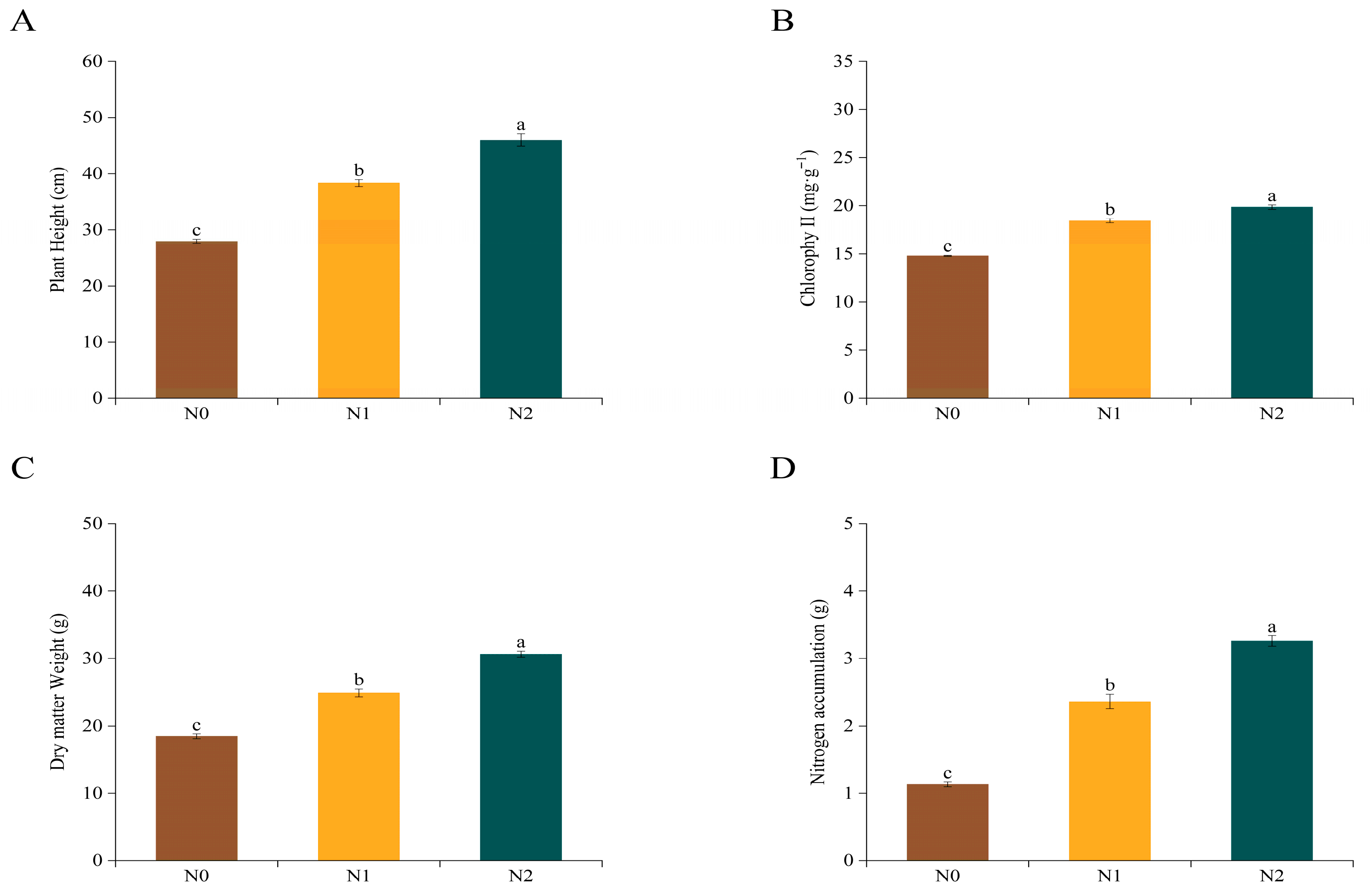
3.1. Morphological Responses of Potato Plants to Various Nitrogen Supply Levels
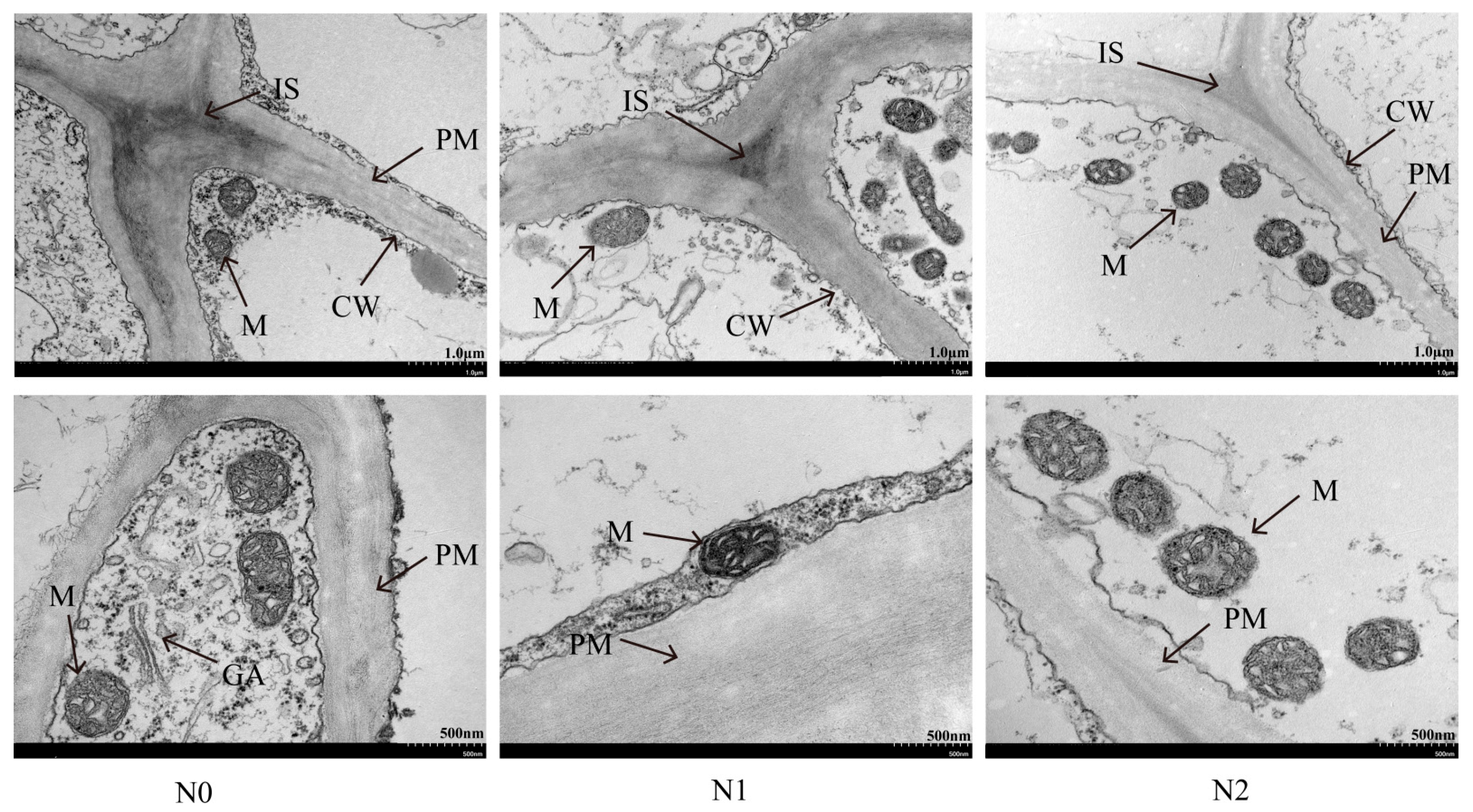
3.2. Ultrastructural Changes in Potato Stolon Cells Under Various Nitrogen Supply Levels
3.3. Quality Assessments of Transcriptome Sequencing Data
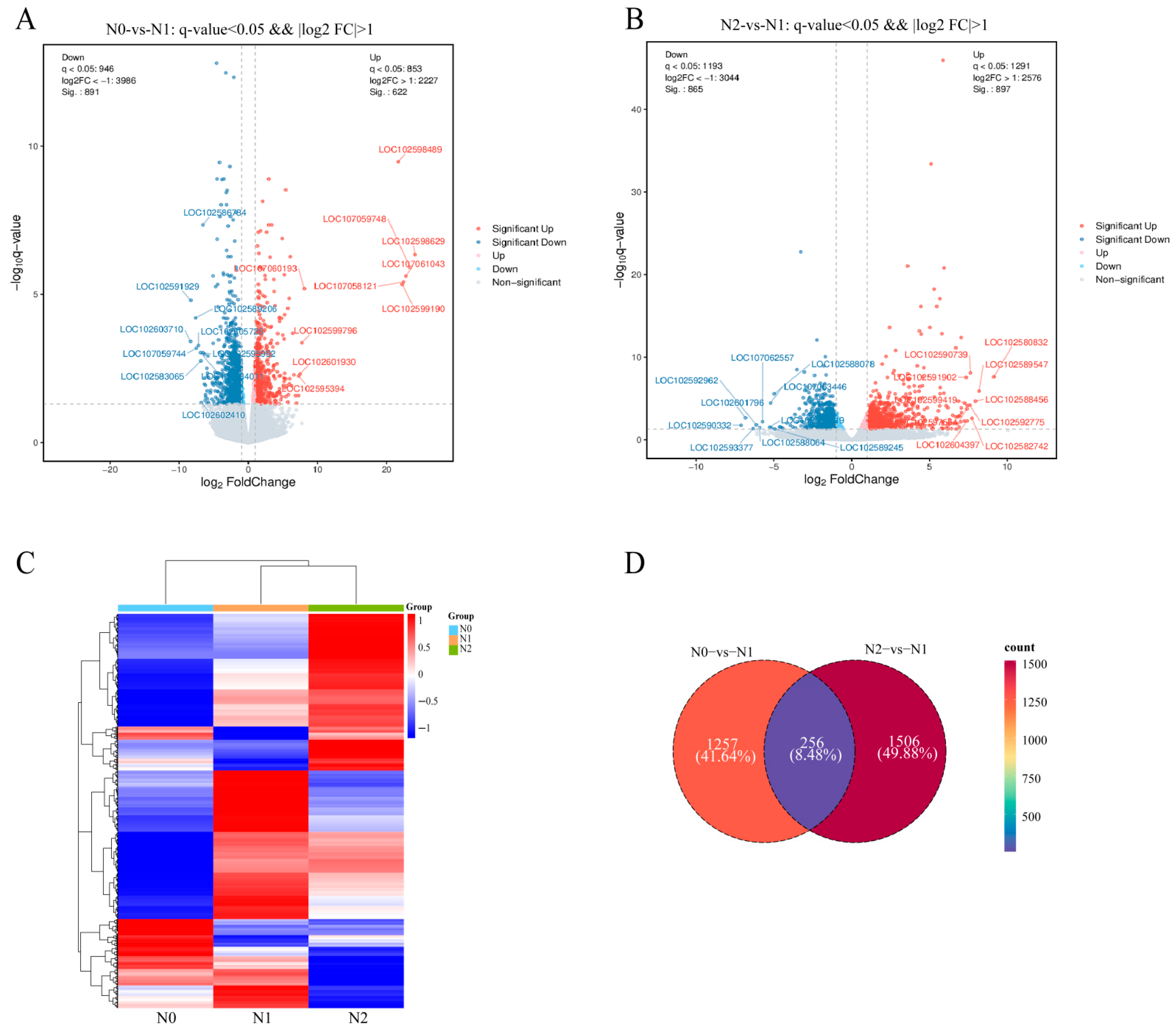
3.4. Differential Gene Expression Analyses
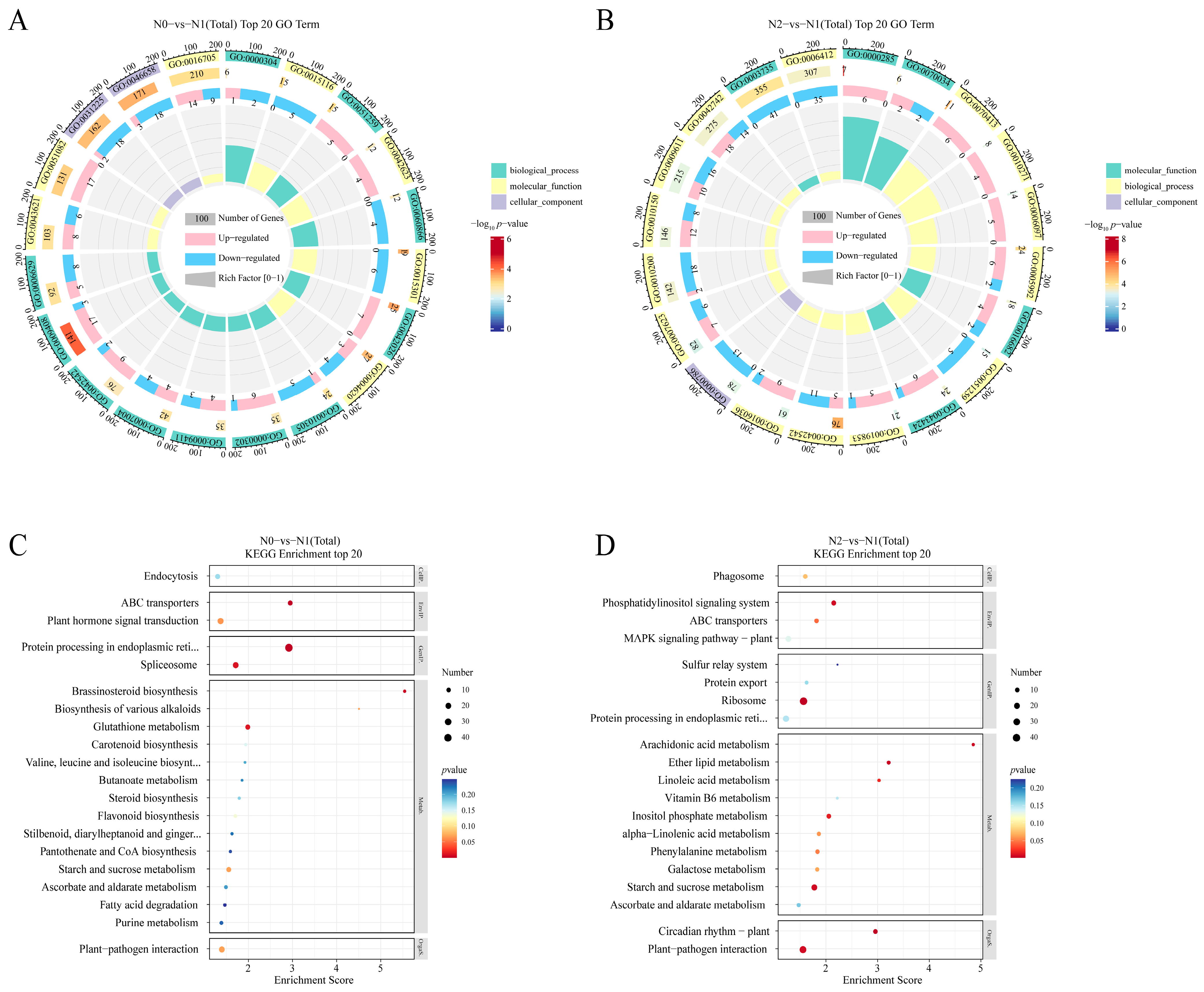
3.5. GO and KEGG Pathway Analysis of DEGs
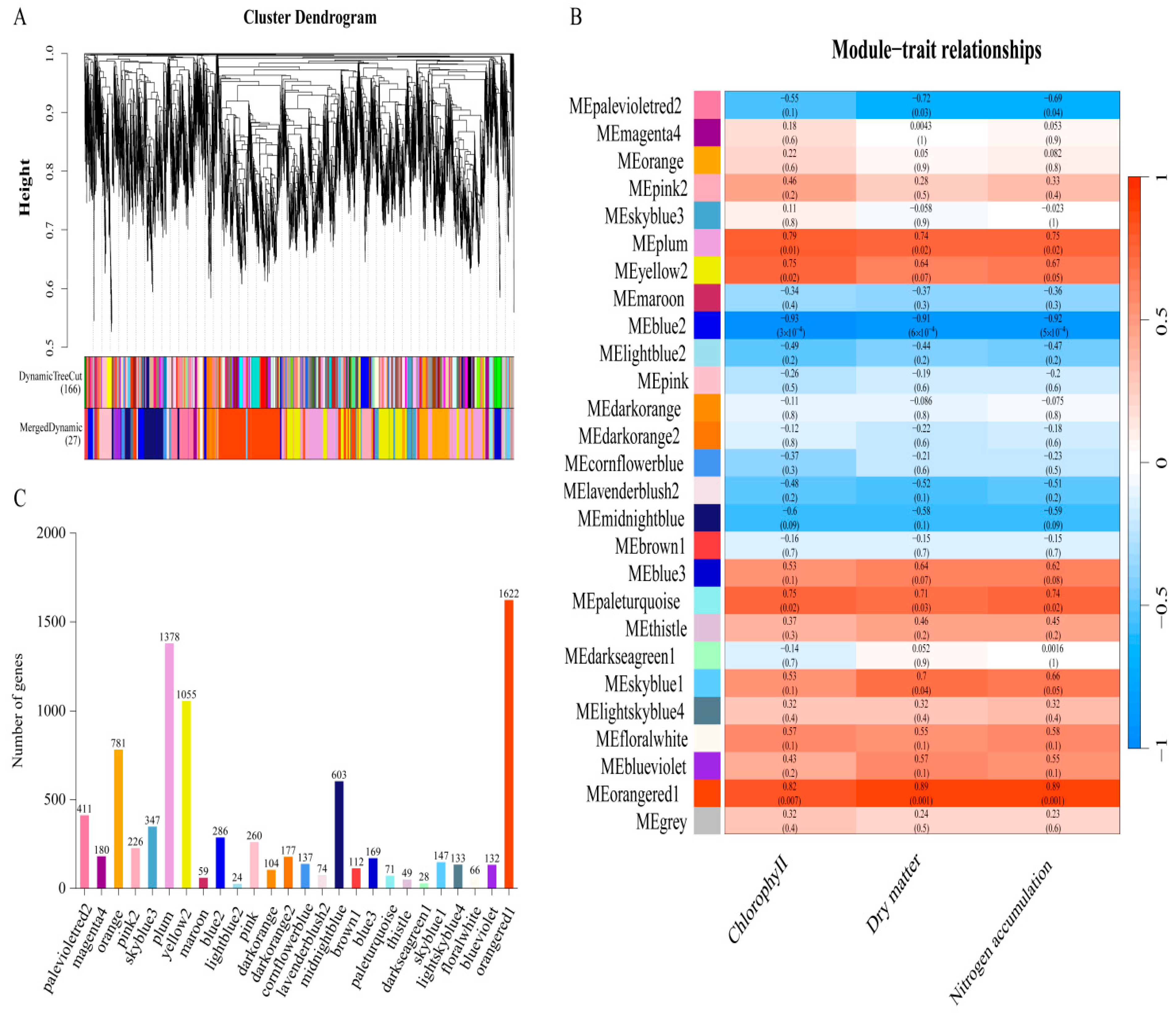
3.6. Co-Expression Network Construction and Module Analysis of Potato Stolons
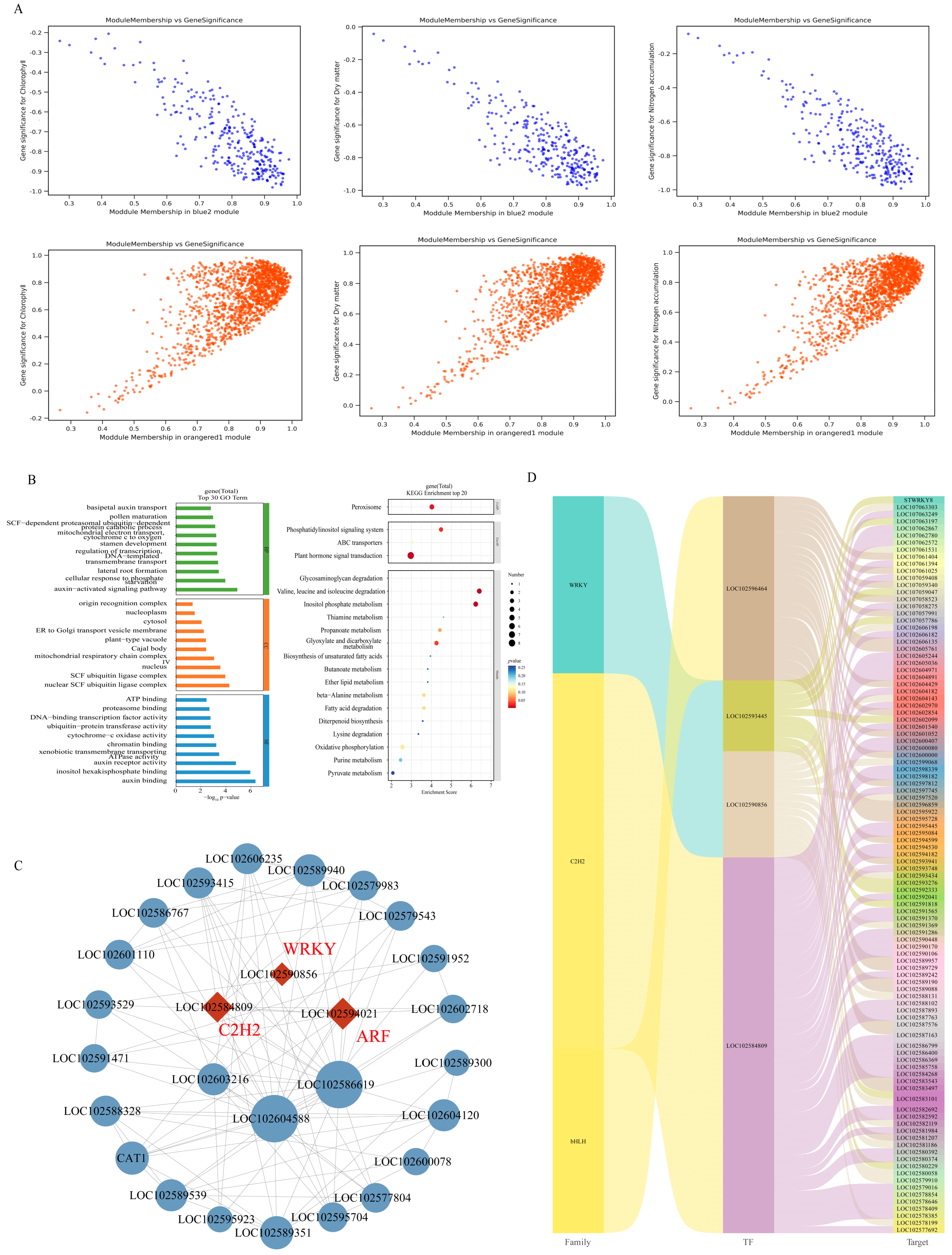
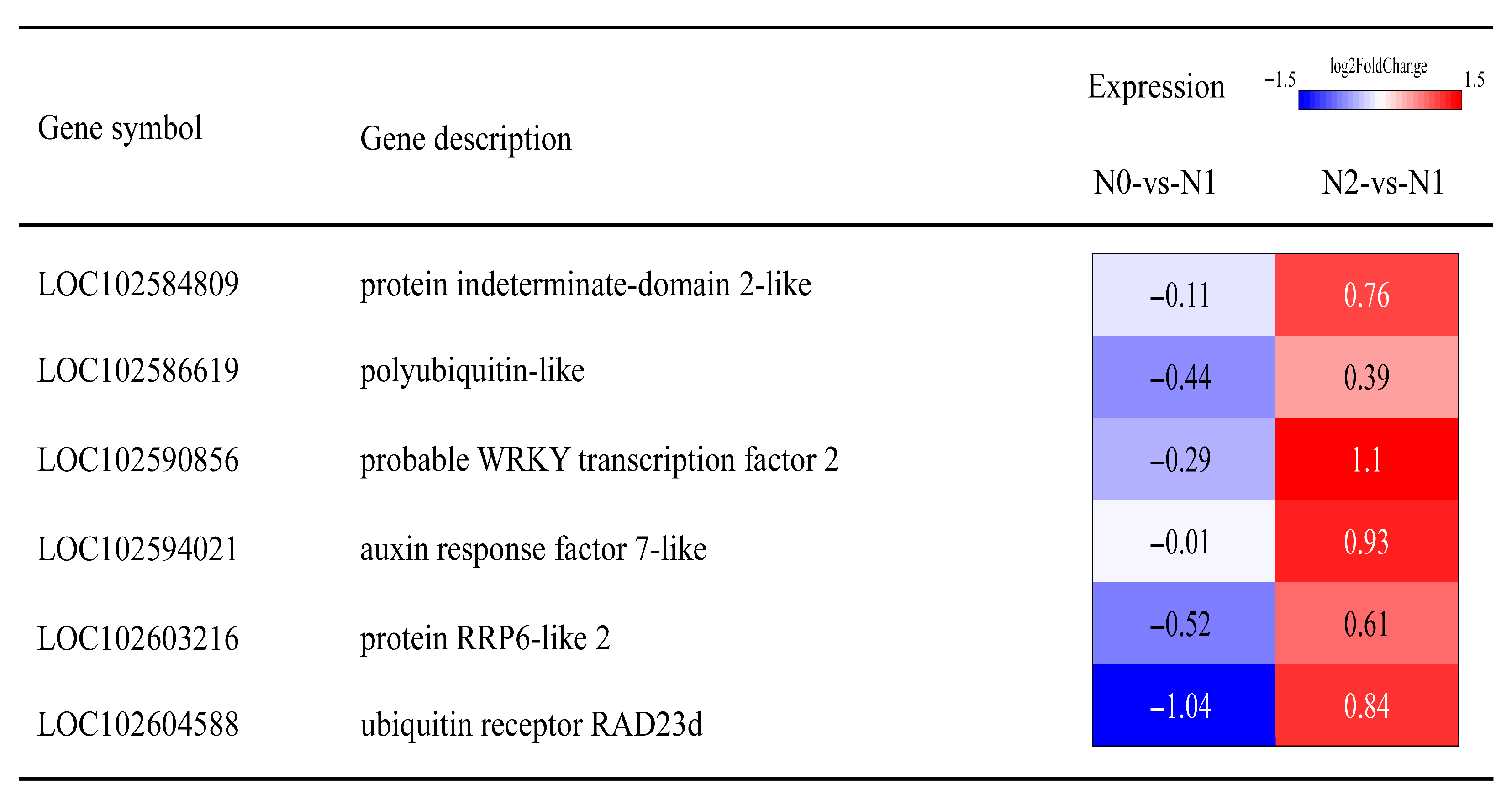
3.7. Identification of Hub Genes and Transcription Factors (TFs) in the Candidate Modules
3.8. Changes in Potato Yield and Yield Components Under Different Nitrogen Levels
4. Discussion
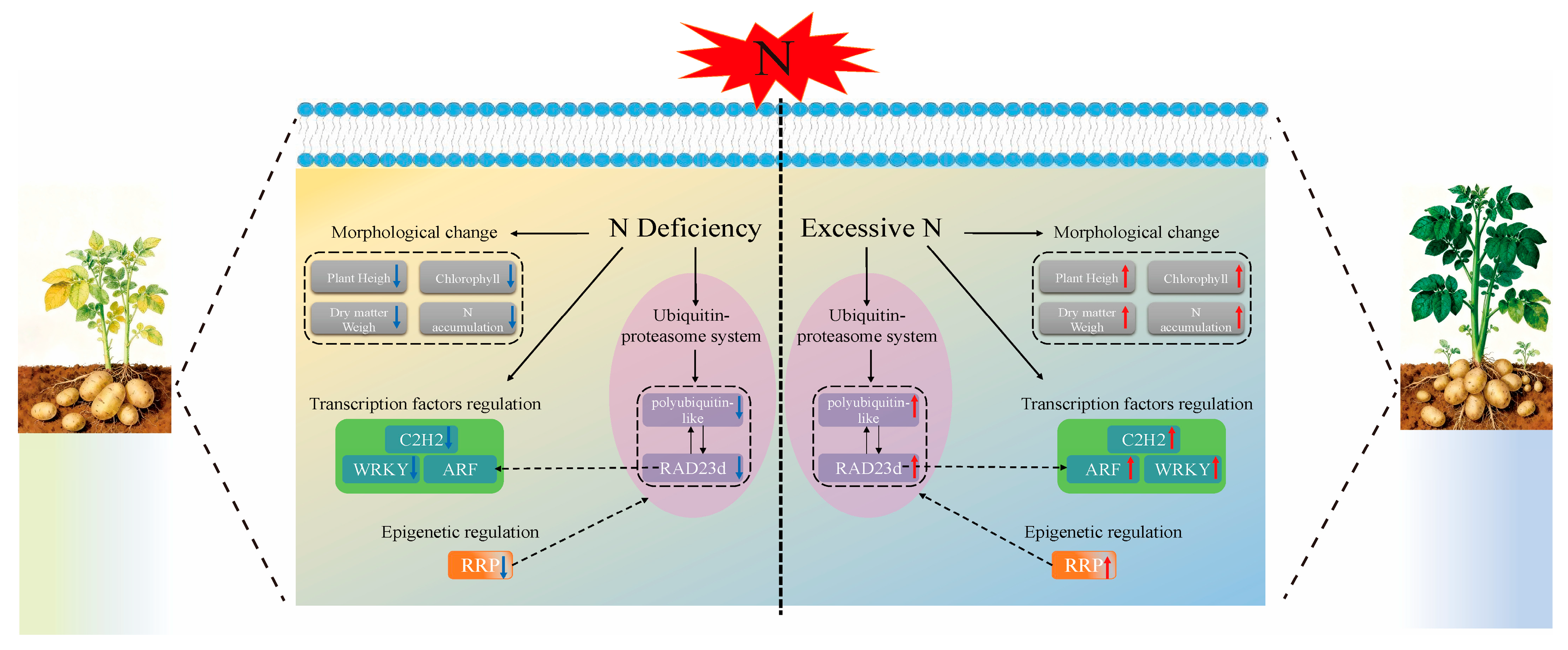
5. Conclusions
Supplementary Materials
Author Contributions
Funding
Institutional Review Board Statement
Informed Consent Statement
Data Availability Statement
Conflicts of Interest
References
- Tiwari, J.K.; Buckseth, T.; Devi, S.; Varshney, S.; Sahu, S.; Patil, V.U.; Zinta, R.; Ali, N.; Moudgil, V.; Singh, R.K.; et al. Physiological and genome-wide RNA-sequencing analyses identify candidate genes in a nitrogen-use efficient potato cv. Kufri Gaurav. Plant Physiol. Biochem. 2020, 154, 171–183. [Google Scholar] [CrossRef] [PubMed]
- Ševčíková, H.; Mašková, P.; Tarkowská, D.; Mašek, T.; Lipavská, H. Carbohydrates and gibberellins relationship in potato tuberization. J. Plant Physiol. 2017, 214, 53–63. [Google Scholar] [CrossRef] [PubMed]
- Hannapel, D.J.; Sharma, P.; Lin, T.; Banerjee, A.K. The Multiple Signals That Control Tuber Formation. Plant Physiol. 2017, 174, 845–856. [Google Scholar] [CrossRef]
- Aliche, E.B.; Theeuwen, T.P.J.M.; Oortwijn, M.; Visser, R.G.F.; Linden, C.G.V.D. Carbon partitioning mechanisms in POTATO under drought stress. Plant Physiol. Biochem. 2019, 146, 211–219. [Google Scholar] [CrossRef]
- Kumar, A.; Kondhare, K.R.; Malankar, N.N.; Banerjee, A.K. StE(z)2, a Polycomb group methyltransferase and deposition of H3K27me3 and H3K4me3 regulate the expression of tuberization genes in potato. J. Exp. Bot. 2020, 72, 426–444. [Google Scholar] [CrossRef]
- Raspor, M.; Motyka, V.; Ninkovi, S.; Malbeck, J.; Dragievi, I. Overexpressing AtCKX1 in Potato Plants grown In Vitro: The Effects on Cytokinin Composition and Tuberization. J. Plant Growth Regul. 2020, 40, 37–47. [Google Scholar] [CrossRef]
- Zierer, W.; Rüscher, D.; Sonnewald, U.; Sonnewald, S. Tuber and Tuberous Root Development. Annu. Rev. Plant Biol. 2021, 72, 551–580. [Google Scholar] [CrossRef]
- Bedu, M.; Marmagne, A.; Masclaux-Daubresse, C.; Chardon, F. Transcriptional Plasticity of Autophagy-Related Genes Correlates with the Genetic Response to Nitrate Starvation in Arabidopsis Thaliana. Cells 2020, 9, 1021. [Google Scholar] [CrossRef]
- dos Santos, M.G.; Ribeiro, R.M.P.; de Albuquerque, J.R.T.; Lins, H.A.; Barros Júnior, A.P.; Neto, F.B.; da Silveira, L.M.; Soares, E.B.; de Souza, A.R.E. Production performance of sesame cultivars under different nitrogen rates in two crops in the Brazilian semi-arid region. Ind. Crops Prod. 2018, 124, 1–8. [Google Scholar] [CrossRef]
- Dutt, S.; Manjul, A.S.; Raigond, P.; Singh, B.; Siddappa, S.; Bhardwaj, V.; Kawar, P.G.; Patil, V.U.; Kardile, H.B. Key players associated with tuberization in potato: Potential candidates for genetic engineering. Crit. Rev. Biotechnol. 2017, 37, 942–957. [Google Scholar] [CrossRef] [PubMed]
- Sigler, W.A.; Ewing, S.A.; Jones, C.A.; Payn, R.A.; Miller, P.; Maneta, M. Water and nitrate loss from dryland agricultural soils is controlled by management, soils, and weather. Agric. Ecosyst. Environ. 2020, 304, 107158. [Google Scholar] [CrossRef]
- Yang, R.; Sun, Y.; Zhu, X.; Jiao, B.; Sun, S.; Chen, Y.; Li, L.; Wang, X.; Zeng, Q.; Liang, Q.; et al. The tuber-specific StbHLH93 gene regulates proplastid-to-amyloplast development during stolon swelling in potato. New Phytol. 2024, 241, 1676–1689. [Google Scholar] [CrossRef]
- Chang, D.C.; Park, C.S.; Kim, S.Y.; Kim, S.J.; Lee, Y.B. Physiological Growth Responses by Nutrient Interruption in Aeroponically Grown Potatoes. Am. J. Potato Res. 2008, 85, 315–323. [Google Scholar] [CrossRef]
- Zheng, H.; Wang, Y.; Zhao, J.; Shi, X.; Ma, Z.; Fan, M. Tuber formation as influenced by the C: N ratio in potato plants. J. Plant Nutr. Soil Sci. 2018, 181, 686–693. [Google Scholar] [CrossRef]
- Pourazari, F.; Andersson, M.; Weih, M. Altered Tuber Yield in Genetically Modified High-Amylose and Oil Potato Lines Is Associated With Changed Whole-Plant Nitrogen Economy. Front. Plant Sci. 2018, 9, 342. [Google Scholar] [CrossRef]
- Duan, W.; Zhang, H.; Xie, B.; Wang, B.; Zhang, L. Impacts of nitrogen fertilization rate on the root yield, starch yield and starch physicochemical properties of the sweet potato cultivar Jishu 25. PLoS ONE 2019, 14, e0221351. [Google Scholar] [CrossRef]
- Qiqige, S.; Jia, L.; Qin, Y.; Chen, Y.; Fan, M. Effects of different nitrogen forms on potato growth and development. J. Plant Nutr. 2017, 40, 1651–1659. [Google Scholar] [CrossRef]
- Gao, Y.; Jia, L.; Hu, B.; Alva, A.; Fan, M. Potato Stolon and Tuber Growth Influenced by Nitrogen Form. Plant Prod. Sci. 2014, 17, 138–143. [Google Scholar] [CrossRef]
- Guo, H.; Pu, X.; Jia, H.; Zhou, Y.; Ye, G.; Yang, Y.; Na, T. Transcriptome analysis reveals multiple effects of nitrogen accumulation and metabolism in the roots, shoots, and leaves of potato (Solanum tuberosum L.). BMC Plant Biol. 2022, 22, 282. [Google Scholar] [CrossRef] [PubMed]
- Feng, N.; Yu, M.; Li, Y.; Jin, D.; Zheng, D. Prohexadione-calcium alleviates saline-alkali stress in soybean seedlings by improving the photosynthesis and up-regulating antioxidant defense. Ecotoxicol. Environ. Saf. 2021, 220, 112369. [Google Scholar] [CrossRef] [PubMed]
- Bradstreet, R.B. Kjeldahl Method for Organic Nitrogen. Anal. Chem. 1954, 26, 169–234. [Google Scholar] [CrossRef]
- Ding, K.; Shan, Y.; Wang, L.; Zhang, Y.; Tian, G. Transcriptomics combined with physiological analysis and metabolomics revealed the response of potato tuber formation to nitrogen. BMC Plant Biol. 2024, 24, 1109. [Google Scholar] [CrossRef]
- Chen, S.; Zhou, Y.; Chen, Y.; Gu, J. fastp: An ultra-fast all-in-one FASTQ preprocessor. Bioinformatics 2018, 34, i884–i890. [Google Scholar] [CrossRef]
- Kim, D.; Langmead, B.; Salzberg, S.L. HISAT: A fast spliced aligner with low memory requirements. Nat. Methods 2015, 12, 357–360. [Google Scholar] [CrossRef] [PubMed]
- Roberts, A.; Trapnell, C.; Donaghey, J.; Rinn, J.L.; Pachter, L. Improving RNA-Seq expression estimates by correcting for fragment bias. Genome Biol. 2011, 12, R22. [Google Scholar] [CrossRef] [PubMed]
- Anders, S.; Pyl, P.T.; Huber, W. HTSeq—A Python framework to work with high-throughput sequencing data. Bioinformatics 2015, 31, 166–169. [Google Scholar] [CrossRef]
- Tarazona, S.; Garcia-Alcalde, F.; Dopazo, J.; Ferrer, A.; Conesa, A. Differential expression in RNA-seq: A matter of depth. Genome Res. 2011, 21, 2213–2223. [Google Scholar] [CrossRef]
- Song, Z.Y.; Chao, F.; Zhuo, Z.; Ma, Z.; Li, W.; Chen, G. Identification of hub genes in prostate cancer using robust rank aggregation and weighted gene co-expression network analysis. Aging 2019, 11, 4736–4756. [Google Scholar] [CrossRef] [PubMed]
- Livak, K.J.; Schmittgen, T.D. Analysis of Relative Gene Expression Data using Real-Time Quantitative PCR and the 2−ΔΔCT Method. Methods 2002, 25, 402–408. [Google Scholar] [CrossRef]
- Duan, W.; Zhang, H.; Xie, B.; Wang, B.; Hou, F.; Li, A.; Dong, S.; Qin, Z.; Wang, Q.; Zhang, L. Nitrogen utilization characteristics and early storage root development in nitrogen-tolerant and nitrogen-susceptible sweet potato. Physiol. Plant. 2021, 173, 1090–1104. [Google Scholar] [CrossRef]
- Ueda, Y.; Ohtsuki, N.; Kadota, K.; Tezuka, A.; Nagano, A.J.; Kadowaki, T.; Kim, Y.; Miyao, M.; Yanagisawa, S. Gene regulatory network and its constituent transcription factors that control nitrogen-deficiency responses in rice. New Phytol. 2020, 227, 1434–1452. [Google Scholar] [CrossRef] [PubMed]
- Roumeliotis, E.; Kloosterman, B.; Oortwijn, M.; Kohlen, W.; Bouwmeester, H.J.; Visser, R.G.F.; Bachem, C.W.B. The effects of auxin and strigolactones on tuber initiation and stolon architecture in potato. J. Exp. Bot. 2012, 63, 4539–4547. [Google Scholar] [CrossRef]
- Yu, B.; Liu, J.; Wu, D.; Liu, Y.; Cen, W.; Wang, S.; Li, R. Weighted gene coexpression network analysis-based identification of key modules and hub genes associated with drought sensitivity in rice. BMC Plant Biol. 2020, 20, 478. [Google Scholar]
- Lu, Y.; Rosenfeld, R.; Simon, I.; Nau, G.J.; Bar-Joseph, Z. A probabilistic generative model for GO enrichment analysis. Nucleic Acids Res. 2008, 36, e109. [Google Scholar] [CrossRef]
- Du, J.; Li, M.; Yuan, Z.; Guo, M.; Song, J.; Xie, X.; Chen, Y. A decision analysis model for KEGG pathway analysis. BMC Bioinform. 2016, 17, 407. [Google Scholar] [CrossRef]
- Theodoulou, F.L. Plant ABC Transporters. Biochim. Biophys. Acta 2000, 1465, 79–103. [Google Scholar] [CrossRef]
- Posor, Y.; Jang, W.; Haucke, V. Phosphoinositides as membrane organizers. Nat. Rev. Mol. Cell Biol. 2022, 23, 797–816. [Google Scholar] [CrossRef]
- Dixon, D.P.; Skipsey, M.; Edwards, R. Roles for glutathione transferases in plant secondary metabolism. Phytochemistry 2010, 71, 338–350. [Google Scholar] [CrossRef] [PubMed]
- Wang, S.; Pei, J.; Li, J.; Tang, G.; Zhao, J.; Peng, X.; Nie, S.; Ding, Y.; Wang, C. Sucrose and starch metabolism during Fargesia yunnanensis shoot growth. Physiol. Plant. 2020, 168, 188–204. [Google Scholar] [CrossRef] [PubMed]
- Ren, J.; Guo, P.; Zhang, H.; Shi, X.; Ai, X.; Wang, J.; Jiang, C.; Zhao, X.; Liu, X.; Yu, H. Comparative physiological and coexpression network analyses reveal the potential drought tolerance mechanism of peanut. BMC Plant Biol. 2022, 22, 460. [Google Scholar] [CrossRef]
- Luo, Y.; Pang, D.; Jin, M.; Chen, J.; Wang, Z. Identification of plant hormones and candidate hub genes regulating flag leaf senescence in wheat response to water deficit stress at the grain-filling stage. Plant Direct 2019, 3, e00152. [Google Scholar] [CrossRef] [PubMed]
- Varshavsky, A. The ubiquitin system. Trends Biochem. Sci. 1997, 22, 383–387. [Google Scholar] [CrossRef]
- Hochstrasser, M. Origin and function of ubiquitin-like proteins. Nature 2009, 458, 422–429. [Google Scholar] [CrossRef]
- Raasi, S. Rad23 Ubiquitin-associated Domains (UBA) Inhibit 26 S Proteasome-catalyzed Proteolysis by Sequestering Lysine 48-linked Polyubiquitin Chains. J. Biol. Chem. 2003, 278, 8951–8959. [Google Scholar] [CrossRef]
- Zhang, X.-L.; Gong, X.-Q.; Su, X.-J.; Yu, H.-X.; Cheng, S.-Y.; Huang, J.-W.; Li, D.-Y.; Lei, Z.-L.; Li, M.-J.; Ma, F.-W. The ubiquitin-binding protein MdRAD23D1 mediates drought response by regulating degradation of the proline-rich protein MdPRP6 in apple (Malus domestica). Plant Biotechnol. J. 2023, 21, 1560–1576. [Google Scholar] [CrossRef]
- Li, J.; Chu, H.; Zhang, Y.; Mou, T.; Wu, C.; Zhang, Q.; Xu, J. The Rice HGW Gene Encodes a Ubiquitin-Associated (UBA) Domain Protein That Regulates Heading Date and Grain Weight. PLoS ONE 2012, 7, e34231. [Google Scholar] [CrossRef]
- Song, X.J.; Huang, W.; Shi, M.; Zhu, M.Z.; Lin, H.X. A QTL for rice grain width and weight encodes a previously unknown RING-type E3 ubiquitin ligase. Nat. Genet. 2007, 39, 623–630. [Google Scholar] [CrossRef] [PubMed]
- Wang, S.; Wu, K.; Qian, Q.; Liu, Q.; Li, Q.; Pan, Y.; Ye, Y.; Liu, X.; Wang, J.; Zhang, J.; et al. Non-canonical regulation of SPL transcription factors by a human OTUB1-like deubiquitinase defines a new plant type rice associated with higher grain yield. Cell Res. 2017, 27, 1142–1156. [Google Scholar] [CrossRef]
- Zhang, H.; Tang, K.; Qian, W.; Duan, C.; Wang, B.; Zhang, H.; Wang, P.; Zhu, X.; Lang, Z.; Yang, Y.; et al. An Rrp6-like Protein Positively Regulates Noncoding RNA Levels and DNA Methylation in Arabidopsis. Mol. Cell 2014, 54, 418–430. [Google Scholar] [CrossRef]
- Noman, A.; Liu, Z.; Aqeel, M.; Zainab, M.; Khan, M.I.; Hussain, A.; Ashraf, M.F.; Li, X.; Weng, Y.; He, S. Basic leucine zipper domain transcription factors: The vanguards in plant immunity. Biotechnol. Lett. 2017, 39, 1779–1791. [Google Scholar] [CrossRef] [PubMed]
- Liu, Y.; Guan, X.; Liu, S.; Yang, M.; Ren, J.; Guo, M.; Huang, Z.; Zhang, Y. Genome-Wide Identification and Analysis of TCP Transcription Factors Involved in the Formation of Leafy Head in Chinese Cabbage. Int. J. Mol. Sci. 2018, 19, 847. [Google Scholar] [CrossRef]
- Han, G.; Lu, C.; Guo, J.; Qiao, Z.; Sui, N.; Qiu, N.; Wang, B. C2H2 Zinc Finger Proteins: Master Regulators of Abiotic Stress Responses in Plants. Front. Plant Sci. 2020, 11, 115. [Google Scholar] [CrossRef]
- Kundu, A.; Das, S.; Basu, S.; Kobayashi, Y.; Koyama, H.; Ganesan, M.; Whelan, J. GhSTOP1, a C2H2 type zinc finger transcription factor is essential for aluminum and proton stress tolerance and lateral root initiation in cotton. Plant Biol. 2019, 21, 35–44. [Google Scholar] [CrossRef]
- Yang, K.; Li, C.-Y.; Jian-Ping An, J.-P.; Da-Ru Wang, D.-R.; Wang, X.; Wang, C.-K.; You, C.-X. The C2H2-type zinc finger transcription factor MdZAT10 negatively regulates drought tolerance in apple. Plant Physiol. Biochem. 2021, 167, 390–399. [Google Scholar] [CrossRef]
- Sun, Z.; Liu, R.; Guo, B.; Huang, K.; Wang, L.; Han, Y.; Li, H.; Hou, S. Ectopic expression of GmZAT4, a putative C2H2-type zinc finger protein, enhances PEG and NaCl stress tolerances in Arabidopsis thaliana. 3 Biotech 2019, 9, 166. [Google Scholar] [CrossRef]
- Sun, S.J.; Guo, S.Q.; Yang, X.; Bao, Y.M.; Tang, H.J.; Sun, H.; Huang, J.; Zhang, H.S. Functional analysis of a novel Cys2/His2-type zinc finger protein involved in salt tolerance in rice. J. Exp. Bot. 2010, 61, 2807–2818. [Google Scholar] [CrossRef]
- Zhang, X.; Guo, X.; Lei, C.; Cheng, Z.; Lin, Q.; Wang, J.; Wu, F.; Wang, J.; Wan, J. Overexpression of SlCZFP1, a Novel TFIIIA-type Zinc Finger Protein from Tomato, Confers Enhanced Cold Tolerance in Transgenic Arabidopsis and Rice. Plant Mol. Biol. Rep. 2011, 29, 185–196. [Google Scholar] [CrossRef]
- Li, S.; Khoso, M.A.; Xu, H.; Zhang, C.; Liu, Z.; Wagan, S.; Dinislam, K.; Liu, L. WRKY Transcription Factors (TFs) as Key Regulators of Plant Resilience to Environmental Stresses: Current Perspective. Agronomy 2024, 14, 2421. [Google Scholar] [CrossRef]
- Dong, Q.; Tian, Y.; Zhang, X.; Duan, D.; Zhang, H.; Yang, K.; Jia, P.; Luan, H.; Guo, S.; Qi, G.; et al. Overexpression of the transcription factor MdWRKY115 improves drought and osmotic stress tolerance by directly binding to the MdRD22 promoter in apple. Hortic. Plant J. 2024, 10, 629–640. [Google Scholar] [CrossRef]
- Ge, M.; Tang, Y.; Guan, Y.; Lv, M.; Zhou, C.; Ma, H.; Lv, J. TaWRKY31, a novel WRKY transcription factor in wheat, participates in regulation of plant drought stress tolerance. BMC Plant Biol. 2024, 24, 27. [Google Scholar] [CrossRef] [PubMed]
- Yu, Y.; Wu, Y.; He, L. A wheat WRKY transcription factor TaWRKY17 enhances tolerance to salt stress in transgenic Arabidopsis and wheat plant. Plant Mol. Biol. 2023, 113, 171–191. [Google Scholar] [CrossRef] [PubMed]
- Chen, Y.; Kong, X.; Yang, L.; Fu, M.; Zhang, S. Genome-Wide Identification of WRKY Family Genes and the Expression Profiles in Response to Nitrogen Deficiency in Poplar. Genes 2022, 13, 2324. [Google Scholar] [CrossRef]
- You, J.; Xiao, W.; Zhou, Y.; Shen, W.; Ye, L.; Yu, P.; Yu, G.; Duan, Q.; Zhang, X.; He, Z.; et al. The APC/CTAD1-WIDE LEAF 1-NARROW LEAF 1 pathway controls leaf width in rice. Plant Cell 2022, 34, 4313–4328. [Google Scholar] [CrossRef] [PubMed]
- Boer, D.R.; Freire-Rios, A.; Vandenberg, W.M.; Saaki, T.; Manfield, I.; Kepinski, S.; López-Vidrieo, I.; Franco-Zorrilla, J.M.; Devries, S.; Solano, R. Structural Basis for DNA Binding Specificity by the Auxin-Dependent ARF Transcription Factors. Cell 2014, 156, 577–589. [Google Scholar] [CrossRef]
- Calderón Villalobos, L.I.A.; Lee, S.; De Oliveira, C.; Ivetac, A.; Brandt, W.; Armitage, L.; Sheard, L.B.; Tan, X.; Parry, G.; Mao, H. A combinatorial TIR1/AFB-Aux/IAA co-receptor system for differential sensing of auxin. Nat. Chem. Biol. 2016, 8, 477–485. [Google Scholar] [CrossRef]
- Liu, Y.; Ma, N.; Gao, Z.; Hua, Y.; Cao, Y.; Yin, D.; Jia, Q.; Wang, D. Systematic analysis of theARFgene family inFagopyrum dibotrysand its potential roles in stress tolerance. Genetica 2024, 152, 159–178. [Google Scholar] [CrossRef]
- Maraschin, F.D.S.; Memelink, J.; Offringa, R. Auxin-induced, SCFTIR1-mediated poly-ubiquitination marks AUX/IAA proteins for degradation. Plant J. 2009, 59, 100–109. [Google Scholar] [CrossRef]
- Boughton, A.J.; Zhang, D.; Singh, R.K.; Fushman, D. Polyubiquitin and ubiquitin-like signals share common recognition sites on proteasomal subunit Rpn1. J. Biol. Chem. 2021, 296, 100450. [Google Scholar] [CrossRef] [PubMed]
- Elsasser, S.; Chandler-Militello, D.; Muller, B.; Hanna, J.; Finley, D. Rad23 and Rpn10 Serve as Alternative Ubiquitin Receptors for the Proteasome. J. Biol. Chem. 2004, 279, 26817–26822. [Google Scholar] [CrossRef]



| Treatment | Tuber Number Per Plant | Tuber Weight Per Plant (g) | Commodity Rate > 50 g (%) | Tuber Dry Weight Per Plant (g) |
|---|---|---|---|---|
| N0 | 6.67 ± 0.67 b | 192.37 ± 4.83 c | 53.63 ± 1.91 b | 53.80 ± 0.72 b |
| N1 | 8.33 ± 0.33 b | 370.37 ± 6.66 a | 80.22 ± 3.23 a | 86.37 ± 2.85 a |
| N2 | 11.33 ± 0.88 a | 218.50 ± 9.83 b | 51.22 ± 0.64 b | 59.67 ± 1.75 b |
Disclaimer/Publisher’s Note: The statements, opinions and data contained in all publications are solely those of the individual author(s) and contributor(s) and not of MDPI and/or the editor(s). MDPI and/or the editor(s) disclaim responsibility for any injury to people or property resulting from any ideas, methods, instructions or products referred to in the content. |
© 2026 by the authors. Licensee MDPI, Basel, Switzerland. This article is an open access article distributed under the terms and conditions of the Creative Commons Attribution (CC BY) license.
Share and Cite
Ding, K.; Shan, Y.; Wang, L.; Song, J.; Yang, M.; Zhang, Y.; Wang, L.; Sun, X.; Li, M.; Tian, G.; et al. Elucidation of Response Mechanism of Potato to Nitrogen Stress by Physiological and Transcriptional Analyses. Genes 2026, 17, 308. https://doi.org/10.3390/genes17030308
Ding K, Shan Y, Wang L, Song J, Yang M, Zhang Y, Wang L, Sun X, Li M, Tian G, et al. Elucidation of Response Mechanism of Potato to Nitrogen Stress by Physiological and Transcriptional Analyses. Genes. 2026; 17(3):308. https://doi.org/10.3390/genes17030308
Chicago/Turabian StyleDing, Kaixin, Ying Shan, Lichun Wang, Jiling Song, Mengping Yang, Yong Zhang, Lei Wang, Xuhong Sun, Mingxue Li, Guokui Tian, and et al. 2026. "Elucidation of Response Mechanism of Potato to Nitrogen Stress by Physiological and Transcriptional Analyses" Genes 17, no. 3: 308. https://doi.org/10.3390/genes17030308
APA StyleDing, K., Shan, Y., Wang, L., Song, J., Yang, M., Zhang, Y., Wang, L., Sun, X., Li, M., Tian, G., Li, F., & Wang, H. (2026). Elucidation of Response Mechanism of Potato to Nitrogen Stress by Physiological and Transcriptional Analyses. Genes, 17(3), 308. https://doi.org/10.3390/genes17030308