A Predictive Transcriptomic Approach to the Resveratrol-Mediated Reversal of Hypothalamic Alterations in a Mouse Model of Obesity

 , , , , and
Abstract
1. Introduction
2. Materials and Methods
2.1. Experimental Model of Obesity and RSV Treatment
- Control (C), fed a standard diet (LabDiet 5001, St. Louis, MO, USA).
- Obesity (Ob), fed a high-fat diet (HFD; D12492, Research Diets, New Brunswick, NJ, USA).
- Obesity treated with RSV (Ob + RSV), fed the same HFD and treated with 2.25 mg/kg body weight of resveratrol (RSV; Sigma-Aldrich, CAS No. 501-36-0, St. Louis, MO, USA).
2.2. Tissue Collection and Hypothalamus Dissection
2.3. Total RNA Extraction and Quality Assessment
2.4. RNA Sequencing and Bioinformatic Analysis
2.5. Differential Gene Expression Analysis
2.6. Functional Enrichment Analysis
2.7. Statistical Analysis
3. Results
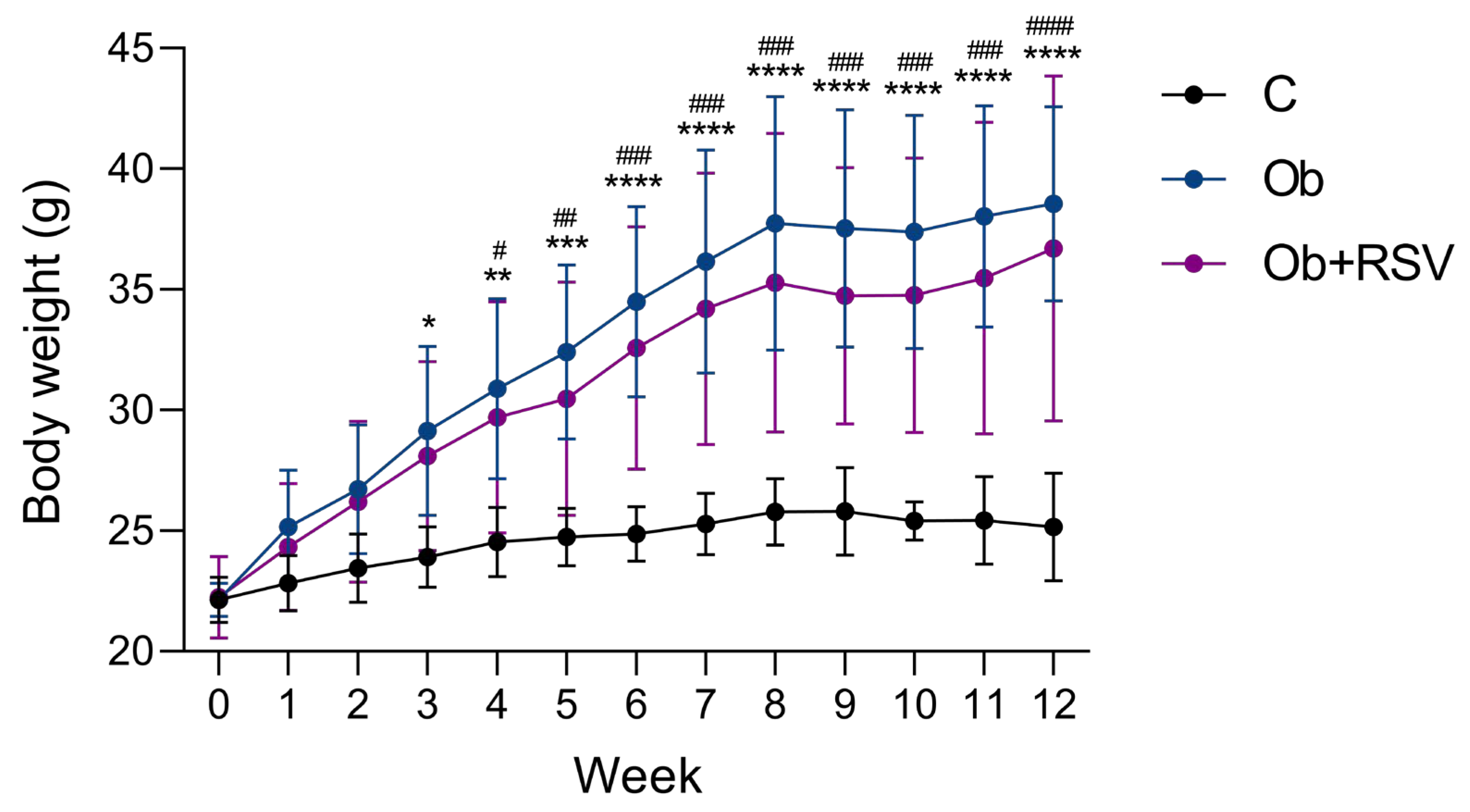
3.1. Effect of RSV on Body Weight in an Obesity Model
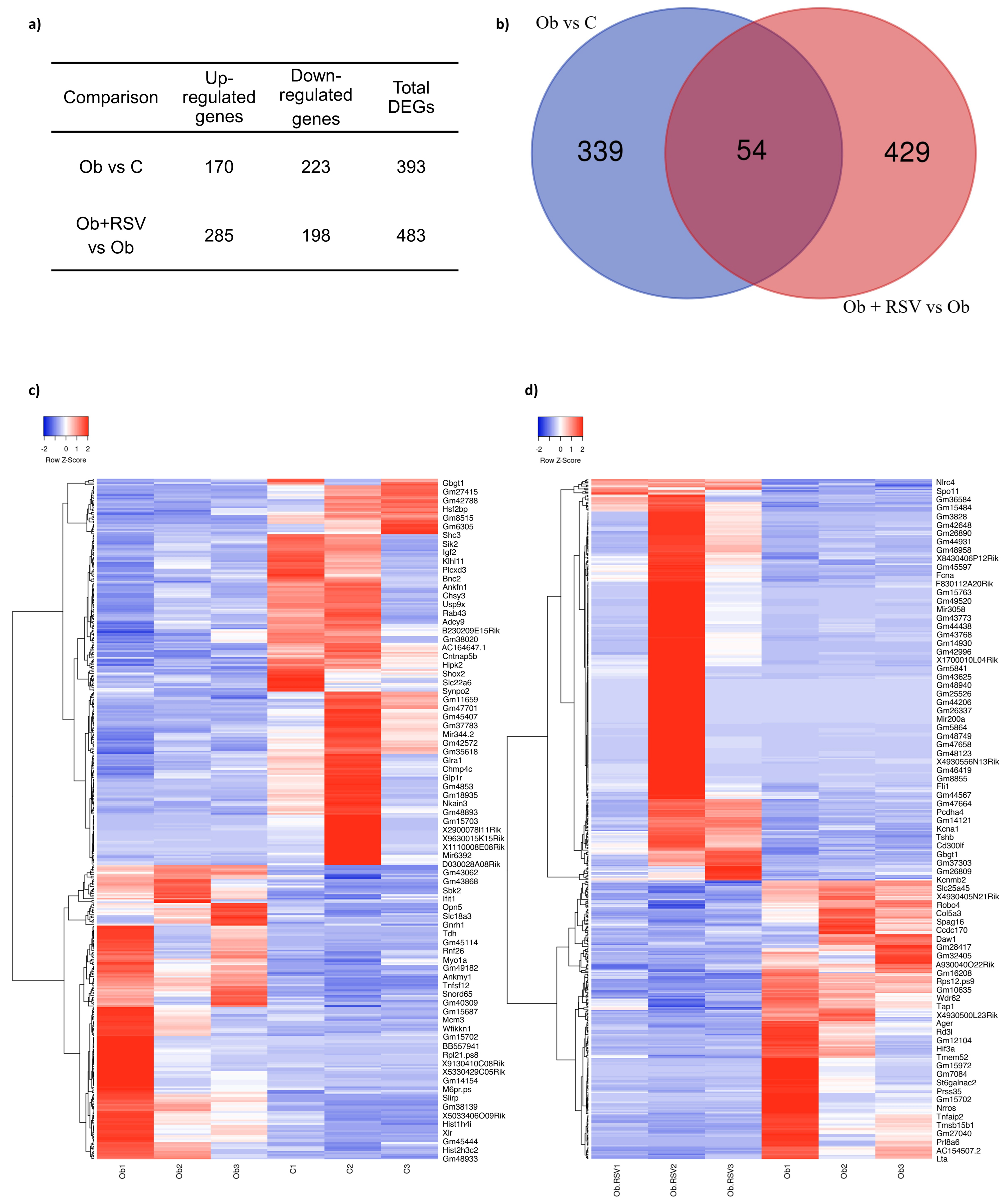
3.2. Global Transcriptomic Analysis of Differentially Expressed Genes in the Hypothalamus
3.3. Classification of Resveratrol-Regulated Genes
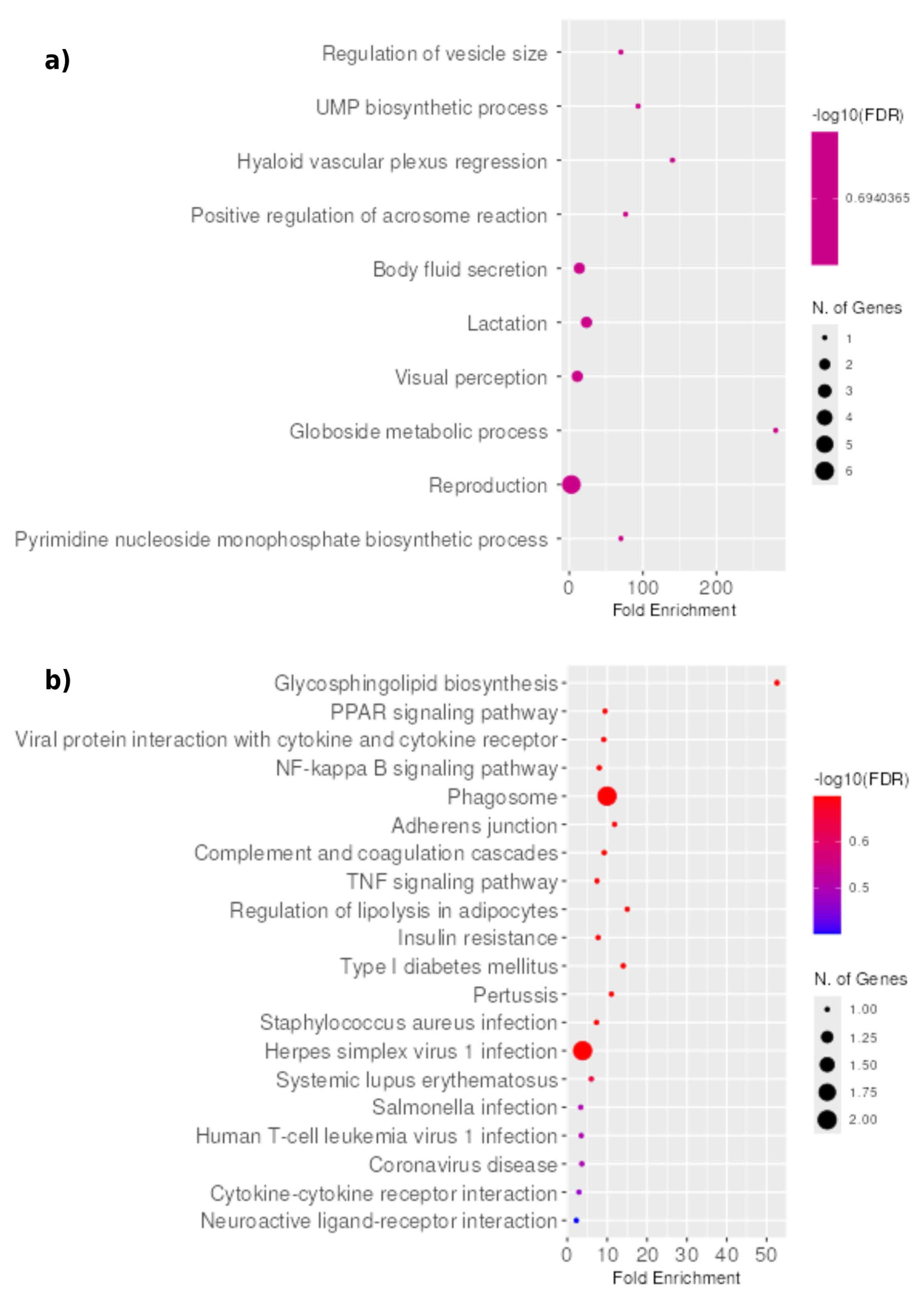
3.4. GO and KEGG Pathway Enrichment Analyses
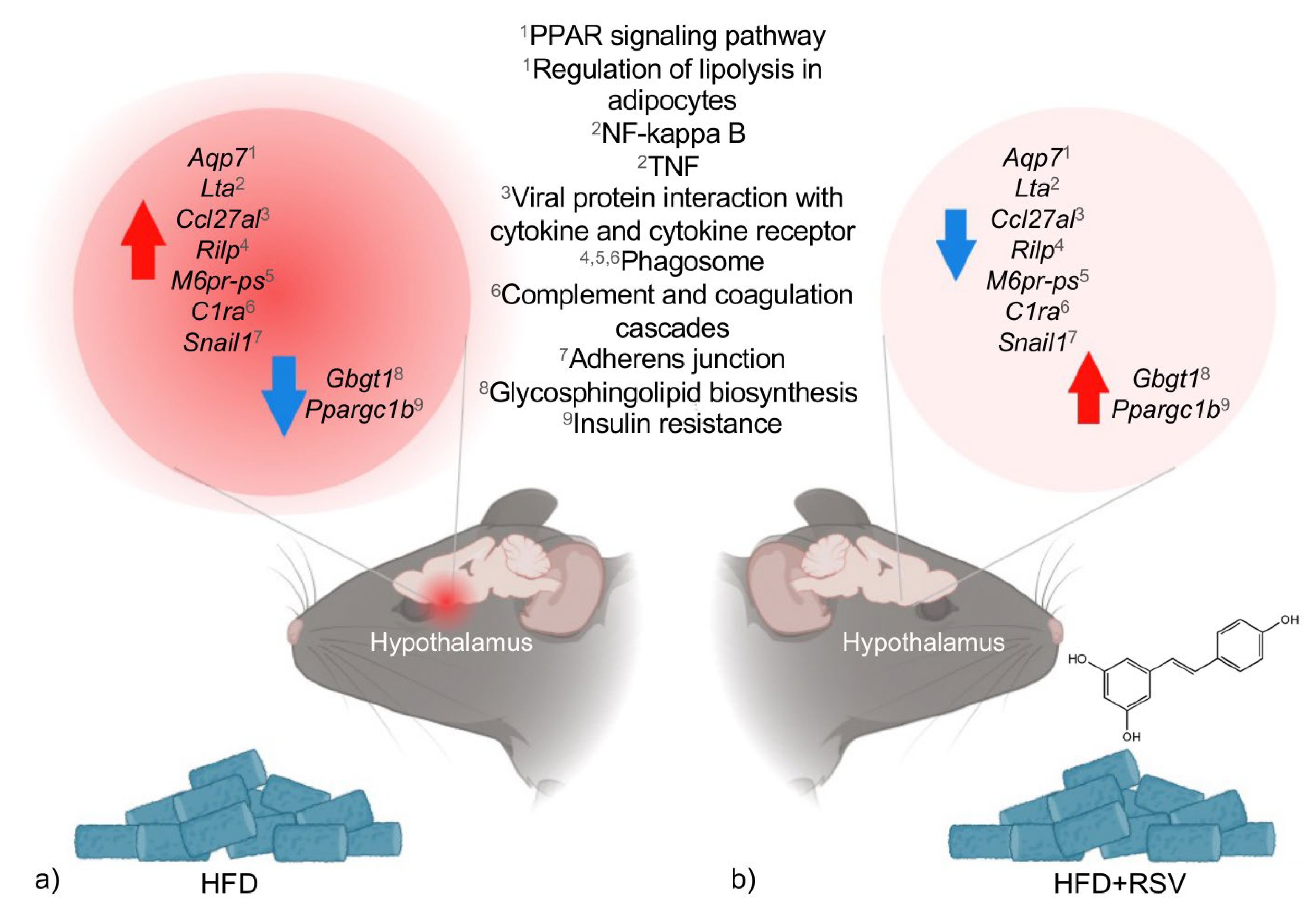
3.5. Key Obesity-Related Genes Modulated by Resveratrol
4. Discussion
Supplementary Materials
Author Contributions
Funding
Institutional Review Board Statement
Informed Consent Statement
Data Availability Statement
Conflicts of Interest
References
- World Heald Organization (WHO). Obesity and Overweight. 2025. Available online: https://www.who.int/news-room/fact-sheets/detail/obesity-and-overweight (accessed on 27 January 2026).
- Sanchez, C.; Calson, C.; Gautier, N.; Noser, P.; Salvi, J.; Villet, M.; Fleuriot, L.; Peltier, C.; Schlich, P.; Brau, F.; et al. Dietary fatty acid composition drives neuroinflammation and impaired behavior in obesity. Brain Behav. Immun. 2024, 117, 330–346. [Google Scholar] [CrossRef]
- Li, E.; Ji, J.; Zong, G.; Liu, H.; Sun, Y.; Wei, L.; Xia, Z.; Yang, X.; Huang, D.; Zhang, Y. Myeloid PGC1β attenuates high-fat-diet induced inflammation via mitochondrial fission/mtDNA/Nlrp3 pathway. Biochim. Biophys. Acta Mol. Basis Dis. 2025, 1871, 167528. [Google Scholar] [CrossRef] [PubMed]
- Chen, Y.; Zhang, S.; Ye, L.; Chen, H.; Ma, P.; Wu, D. High-intensity interval training improves hypothalamic inflammation by suppressing HIF-1α signaling in microglia of male C57BL/6J mice. FASEB J. 2024, 38, e23770. [Google Scholar] [CrossRef] [PubMed]
- Ubaldo-Reyes, L.M.; Espitia-Bautista, E.; Barajas-Martínez, A.; Martínez-Tapia, R.; Rodríguez-Mata, V.; Noriega-Navarro, R.; Escalona, R.; Castillo-Hernández, J.; Pérez-Torres, A.; Navarro, L. High-fat diet-induced blood-brain barrier dysfunction: Impact on allodynia and motor coordination in rats. Int. J. Mol. Sci. 2024, 25, 11218. [Google Scholar] [CrossRef] [PubMed]
- Buckman, L.B.; Hasty, A.H.; Flaherty, D.K.; Buckman, C.T.; Thompson, M.M.; Matlock, B.K.; Weller, K.; Ellacott, K.L. Obesity induced by a high-fat diet is associated with increased immune cell entry into the central nervous system. Brain Behav. Immun. 2014, 35, 33–42. [Google Scholar] [CrossRef]
- Lee, Y.H.; Hsu, H.C.; Kao, P.C.; Shiao, Y.J.; Yeh, S.H.; Shie, F.S.; Hsu, S.M.; Yeh, C.W.; Liu, H.K.; Yang, S.B.; et al. Augmented insulin and leptin resistance of high fat diet-fed APPswe/PS1dE9 transgenic mice exacerbate obesity and glycemic dysregulation. Int. J. Mol. Sci. 2018, 19, 2333. [Google Scholar] [CrossRef]
- Forzisi-Kathera-Ibarra, E.; Jo, C.; Castillo, L.; Gaur, A.; Lad, P.; Bortolami, A.; Roser, C.; Venkateswaran, S.; Dutto, S.; Selby, M.; et al. KCNB1-Leptin receptor complexes couple electric and endocrine function in the melanocortin neurons of the hypothalamus. FASEB J. 2024, 38, e70111. [Google Scholar] [CrossRef]
- Zhuang, S.; Liu, S.; Li, R.; Duan, H. Electroacupuncture alleviates insulin resistance and impacts the hypothalamic IRS-1/PI3K/AKT pathway and miRNA-29a-3p in a rat model of type 2 diabetes. Acupunct. Med. 2025, 43, 104–113. [Google Scholar] [CrossRef]
- Zhang, S.; Lu, Y.; Liu, Y.; Kang, Q.; Yao, Q.; Li, Y.; Chen, S.; Liu, Y.; Du, J.; Xiong, Y.; et al. Identification of C1q/TNF-related protein 4 as a novel appetite-regulating peptide that reduces food intake in Siberian sturgeon (Acipenser baerii). Comp. Biochem. Physiol. A Mol. Integr. Physiol. 2024, 289, 111574. [Google Scholar] [CrossRef]
- Manceau, R.; Anthony, P.; Hryhorczuk, C.; Labbé, P.; Thorin-Trescases, N.; Fulton, S.; Thorin, E. Sexually dimorphic effects of angiopoietin-like 2 on energy metabolism and hypothalamic neuropeptide regulation. Int. J. Obes. 2025, 49, 1116–1124. [Google Scholar] [CrossRef]
- De Paula, G.C.; Simões, R.F.; Garcia-Serrano, A.M.; Duarte, J.M.N. High-fat and High-sucrose Diet-induced Hypothalamic Inflammation Shows Sex Specific Features in Mice. Neurochem. Res. 2024, 49, 3356–3366. [Google Scholar] [CrossRef]
- Yang, B.; Wang, Q.; Li, Y.; Zhang, S.; Sun, Y.; Wei, Y.; Jiang, Q.; Huang, Y. Resveratrol inhibits white adipose deposition by the ESR1-mediated PI3K/AKT signaling pathway. Cell. Signal. 2024, 124, 111448. [Google Scholar] [CrossRef] [PubMed]
- Stilgenbauer, L.; Chen, Q.; Pungi, D.; James, N.; Jayarathne, H.; Koshko, L.; Scofield, S.; Zhang, K.; Sadagurski, M. Microglial ER stress response via IRE1α regulates diet-induced metabolic imbalance and obesity in mice. Mol. Metab. 2025, 95, 102128. [Google Scholar] [CrossRef] [PubMed]
- Statello, L.; Guo, C.J.; Chen, L.L.; Huarte, M. Gene regulation by long non-coding RNAs and its biological functions. Nat. Rev. Mol. Cell Biol. 2021, 22, 96–118. [Google Scholar] [CrossRef] [PubMed]
- Li, J.; Long, J.; Zhang, Q.; Shen, H.; Guo, A.Y.; Ma, Z.; Zhang, G. Hypothalamic long noncoding RNA AK044061 is involved in the development of dietary obesity in mice. Int. J. Obes. 2021, 45, 2638–2647. [Google Scholar] [CrossRef]
- Faghihi, M.; Wahlestedt, C. Regulatory roles of natural antisense transcripts. Nat. Rev. Mol. Cell Biol. 2009, 10, 637–643. [Google Scholar] [CrossRef]
- Barman, P.; Reddy, D.; Bhaumik, S. Mechanisms of Antisense Transcription Initiation with Implications in Gene Expression, Genomic Integrity and Disease Pathogenesis. Non-Coding RNA 2019, 5, 11. [Google Scholar] [CrossRef]
- Alipoo, B.; Nikouei, S.; Rezaeinejad, F.; Malakooti-Dehkordi, S.N.; Sabati, Z.; Ghasemi, H. Long non-coding RNAs in metabolic disorders: Pathogenetic relevance and potential biomarkers and therapeutic targets. J. Endocrinol. Investig. 2021, 44, 2015–2041. [Google Scholar] [CrossRef]
- Ali, F.; Shehzad, A.; Shahzad, R.; Khan, S.; Rashan, L.; Taha, M. Cannabis oil protects against valproic acid-induced autism spectrum disorder by reducing oxidative stress. Dev. Neurobiol. 2025, 85, e22969. [Google Scholar] [CrossRef]
- Sharma, D.; Mishra, S.; Jha, G.; Tomar, B.; Kanchan, S.; Kapoor, R.; Sushma; Gupta, S.; Shukla, S.; Rath, S.K. Hydro-alcoholic extract of cynodon dactylon ameliorates malathion-induced neurocognitive behavior and neurotoxicity. Neuromol. Med. 2025, 27, 39. [Google Scholar] [CrossRef]
- de Oliveira, L.F.N.; Maia, C.S.C.; Nogueira, M.D.A.; Dias, T.D.S.; Firmino, M.A.D.; Loureiro, A.P.M.; Marzola, E.L.; Nunes, P.I.G.; Santos, F.A.; Freire, W.B.S.; et al. Cashew nut consumption reduces waist circumference and oxidative stress in adolescents with obesity: A randomized clinical trial. Nutr. Res. 2025, 134, 60–72. [Google Scholar] [CrossRef]
- Cao, Q.; Gu, L.; Wang, L.; Sun, G.; Ying, T.; Su, H.; Wang, W.; Sun, Z. Resveratrol alleviates endoplasmic reticulum stress-induced cell death and improves functional prognosis after traumatic brain injury in mice. J. Appl. Biomed. 2024, 22, 99–106. [Google Scholar] [CrossRef]
- Beheshtkhoo, N.; Jadidi Kouhbanani, M.A.; Daghighi, S.M.; Shakouri Nikjeh, M.; Esmaeili, Z.; Khosravani, M.; Adabi, M. Effect of oral resveratrol-loaded nanoliposomes on hyperlipidemia via toll-like receptor 3 and TIR domain-containing adaptor inducing interferon-β protein expression in an animal model. J. Liposome Res. 2025, 35, 225–251. [Google Scholar] [CrossRef]
- Khamis, M.M.; Moselhy, S.S.; Rihan, S. Role of trans-resveratrol in ameliorating biochemical and molecular alterations in obese rats induced by a high fructose/fat diet. Sci. Rep. 2025, 15, 7879. [Google Scholar] [CrossRef] [PubMed]
- Ispiryan, A.; Kraujutiene, I.; Viskelis, J. Retaining resveratrol content in berries and berry products with agricultural and processing techniques: Review. Processes 2024, 12, 1216. [Google Scholar] [CrossRef]
- Sarroca, S.; Gatius, A.; Rodríguez-Farré, E.; Vilchez, D.; Pallás, M.; Griñán-Ferré, C.; Sanfeliu, C.; Corpas, R. Resveratrol confers neuroprotection against high-fat diet in a mouse model of Alzheimer’s disease via modulation of proteolytic mechanisms. J. Nutr. Biochem. 2021, 89, 108569. [Google Scholar] [CrossRef] [PubMed]
- Su, X.; Li, Q.; Yang, M.; Zhang, W.; Liu, X.; Ba, Y.; Deng, Q.; Zhang, Y.; Han, L.; Huang, H. Resveratrol protects against a high-fat diet-induced neuroinflammation by suppressing mitochondrial fission via targeting SIRT1/PGC-1α. Exp. Neurol. 2024, 380, 114899. [Google Scholar] [CrossRef]
- Sovrani, V.; Bobermin, L.D.; Sesterheim, P.; Rezena, E.; Cioccari, M.S.; Netto, C.A.; Gonçalves, C.A.; Leipnitz, G.; Quincozes-Santos, A. Glioprotective effects of resveratrol in hypothalamic astrocyte cultures obtained from interferon receptor knockout (IFNα/βR-/-) mice. In Vitro Cell. Dev. Biol. Anim. 2023, 59, 366–380. [Google Scholar] [CrossRef]
- Safahani, M.; Aligholi, H.; Noorbakhsh, F.; Djalali, M.; Pishva, H.; Modarres Mousavi, S.M.; Alizadeh, L.; Gorji, A.; Koohdani, F. Switching from high-fat diet to foods containing resveratrol as a calorie restriction mimetic changes the architecture of arcuate nucleus to produce more newborn anorexigenic neurons. Eur. J. Nutr. 2019, 58, 1687–1701. [Google Scholar] [CrossRef]
- Bissacotti, B.F.; da Silveira, M.V.; Assmann, C.E.; Copetti, P.M.; Santos, A.F.D.; Fagan, S.B.; da Rocha, J.A.; Schetinger, M.R.; Morsch, V.M.; Bottari, N.B.; et al. Resveratrol alleviates inflammatory response through P2X7/NLRP3 signaling pathway: In silico and in vitro evidence from activated microglia. Pharmaceuticals 2025, 18, 950. [Google Scholar] [CrossRef]
- Cheng, K.; Song, Z.; Zhang, H.; Li, S.; Wang, C.; Zhang, L.; Wang, T. The therapeutic effects of resveratrol on hepatic steatosis in high-fat diet-induced obese mice by improving oxidative stress, inflammation and lipid-related gene transcriptional expression. Med. Mol. Morphol. 2019, 52, 187–197. [Google Scholar] [CrossRef] [PubMed]
- Andrade, J.M.; Paraíso, A.F.; de Oliveira, M.V.; Martins, A.M.; Neto, J.F.; Guimarães, A.L.; de Paula, A.M.; Qureshi, M.; Santos, S.H. Resveratrol attenuates hepatic steatosis in high-fat fed mice by decreasing lipogenesis and inflammation. Nutrition 2014, 30, 915–919. [Google Scholar] [CrossRef] [PubMed]
- Ding, S.; Jiang, J.; Wang, Z.; Zhang, G.; Yin, J.; Wang, X.; Wang, S.; Yu, Z. Resveratrol reduces the inflammatory response in adipose tissue and improves adipose insulin signaling in high-fat diet-fed mice. PeerJ 2018, 6, e5173. [Google Scholar] [CrossRef] [PubMed]
- Pan, Q.R.; Ren, Y.L.; Liu, W.X.; Hu, Y.J.; Zheng, J.S.; Xu, Y.; Wang, G. Resveratrol prevents hepatic steatosis and endoplasmic reticulum stress and regulates the expression of genes involved in lipid metabolism, insulin resistance, and inflammation in rats. Nutr. Res. 2015, 35, 576–584. [Google Scholar] [CrossRef]
- Jiang, M.; He, J.; Gu, H.; Yang, Y.; Huang, Y.; Xu, X.; Liu, L. Protective effect of resveratrol on obesity-related osteoarthritis via alleviating JAK2/STAT3 signaling pathway is independent of SOCS3. Toxicol. Appl. Pharmacol. 2020, 388, 114871. [Google Scholar] [CrossRef]
- Wang, Z.; Gerstein, M.; Snyder, M. RNA-Seq: A revolutionary tool for transcriptomics. Nat. Rev. Genet. 2009, 10, 57–63. [Google Scholar] [CrossRef]
- Stuart, J.M.; Segal, E.; Koller, D.; Kim, S.K. A gene-coexpression network for global discovery of conserved genetic modules. Science 2003, 302, 249–255. [Google Scholar] [CrossRef]
- Ideker, T.; Krogan, N.J. Differential network biology. Mol. Syst. Biol. 2012, 8, 565. [Google Scholar] [CrossRef]
- Subramanian, A.; Tamayo, P.; Mootha, V.K.; Mukherjee, S.; Ebert, B.L.; Gillette, M.A.; Paulovich, A.; Pomereoy, S.; Golub, T.R.; Lander, E.S.; et al. Gene set enrichment analysis: A knowledge-based approach for interpreting genome-wide expression profiles. Proc. Natl. Acad. Sci. USA 2005, 102, 15545–15550. [Google Scholar] [CrossRef]
- González-Rodríguez, Á.; Santamaría, B.; Mas-Gutierrez, J.A.; Rada, P.; Fernández-Millán, E.; Pardo, V.; Álvarez, C.; Cuadrado, A.; Ros, M.; Serrano, M.; et al. Resveratrol treatment restores peripheral insulin sensitivity in diabetic mice in a sirt1-independent manner. Mol. Nutr. Food Res. 2015, 59, 1431–1442. [Google Scholar] [CrossRef]
- Haynes, W. Benjamini–Hochberg Method. In Encyclopedia of Systems Biology; Dubitzky, W., Wolkenhauer, O., Cho, K.H., Yokota, H., Eds.; Springer: New York, NY, USA, 2013. [Google Scholar] [CrossRef]
- Chang, C.-C.; Lin, K.-Y.; Peng, K.-Y.; Day, Y.-J.; Hung, L.-M. Resveratrol exerts anti-obesity effects in high-fat diet obese mice and displays differential dosage effects on cytotoxicity, differentiation, and lipolysis in 3T3-L1 cells. Endocr. J. 2016, 63, 169–178. [Google Scholar] [CrossRef]
- Ibars-Serra, M.; Pascual-Serrano, A.; Ardid-Ruiz, A.; Doladé, N.; Aguilar-González, S.; Cirasino, J.; Muguerza, B.; Suárez, M.; Keijer, J.; Arola-Arnal, A.; et al. Resveratrol Prevents Weight Gain, Counteracts Visceral Adipose Tissue Dysfunction, and Improves Hypothalamic Leptin Sensitivity in Diet-Induced Obese Rats. Mol. Nutr. Food Res. 2025, 69, e70075. [Google Scholar] [CrossRef] [PubMed]
- Wijesinghe, S.N.; Nicholson, T.; Tsintzas, K.; Jones, S.W. Involvements of long noncoding RNAs in obesity-associated inflammatory diseases. Obes. Rev. 2021, 69, e70075. [Google Scholar] [CrossRef] [PubMed]
- Liu, Z.; Zhang, Z.; Song, G.; Wang, X.; Xing, H.; Wang, C. Resveratrol Alleviates Skeletal Muscle Insulin Resistance by Downregulating Long Noncoding RNA. Int. J. Endocrinol. 2022, 2022, 2539519. [Google Scholar] [CrossRef] [PubMed]
- Lu, M.; Yu, Z.; Yang, X.; Yang, Z.; Xu, T.; Yu, Z.; Jing, X.; An, L.; Zhang, J.; Xu, B. Electroacupuncture stimulation induced M1/M2 polarization in white adipose tissues by activating the Y1 receptor in obese mice to reduce chronic inflammation. Adipocyte 2025, 14, 2524638. [Google Scholar] [CrossRef]
- Pamir, N.; McMillen, T.S.; Edgel, K.A.; Kim, F.; LeBoeuf, R.C. Deficiency of lymphotoxin-α does not exacerbate high-fat diet-induced obesity but does enhance inflammation in mice. Am. J. Physiol. Endocrinol. Metab. 2012, 302, E961–E971. [Google Scholar] [CrossRef]
- James Bates, R.E.; Browne, E.; Schalks, R.; Jacobs, H.; Tan, L.; Parekh, P.; Magliozzi, R.; Calabrese, M.; Mazarakis, N.D.; Reynolds, R. Lymphotoxin-alpha expression in the meninges causes lymphoid tissue formation and neurodegeneration. Brain 2022, 145, 4287–4307. [Google Scholar] [CrossRef]
- Gunsolly, C.; Nicholson, J.D.; Listwak, S.J.; Ledee, D.; Zelenka, P.; Verthelyi, D.; Chapoval, S.; Keegan, A.; Tonelli, L.H. Expression and regulation in the brain of the chemokine CCL27 gene locus. J. Neuroimmunol. 2010, 225, 82–90. [Google Scholar] [CrossRef]
- Yan, K.; Zhang, P.; Jin, J.; Chen, X.; Guan, H.; Li, Y. Integrative analyses of hub genes and their association with immune infiltration in adipose tissue, liver tissue and skeletal muscle of obese patients after bariatric surgery. Adipocyte 2022, 11, 190–201. [Google Scholar] [CrossRef]
- Okekawa, A.; Wada, T.; Onogi, Y.; Takeda, Y.; Miyazawa, Y.; Sasahara, M.; Tsuneki, H.; Sasaoka, T. Platelet-derived growth factor signaling in pericytes promotes hypothalamic inflammation and obesity. Mol. Med. 2024, 30, 21. [Google Scholar] [CrossRef]
- Sindhu, S.; Kochumon, S.; Shenouda, S.; Wilson, A.; Al-Mulla, F.; Ahmad, R. The cooperative induction of CCL4 in human monocytic cells by TNF-α and palmitate requires MyD88 and involves MAPK/NF-κB signaling pathways. Int. J. Mol. Sci. 2019, 20, 4658. [Google Scholar] [CrossRef] [PubMed]
- Mir, M.M.; Alfaifi, J.; Sohail, S.K.; Rizvi, S.F.; Akhtar, M.T.; Alghamdi, M.A.A.; Mir, R.; Wani, J.I.; Sabah, Z.U.; Alhumaydhi, F.A.; et al. The role of pro-inflammatory chemokines CCL-1, 2, 4, and 5 in the etiopathogenesis of type 2 diabetes mellitus in subjects from the asir region of Saudi Arabia: Correlation with different degrees of obesity. J. Pers. Med. 2024, 14, 743. [Google Scholar] [CrossRef]
- Hult, A.K.; McSherry, E.; Möller, M.; Olsson, M.L. Gbgt1 is allelically diverse but dispensable in humans and naturally occurring anti-fors1 shows an abo-restricted pattern. Transfusion 2018, 58, 2036–2045. [Google Scholar] [CrossRef] [PubMed]
- Li, J.; Huang, Q.; Yang, C.; Yu, C.; Zhang, Z.; Chen, M.; Ren, P.; Qiu, M. Molecular regulation of differential lipid molecule accumulation in the intramuscular fat and abdominal fat of chickens. Genes 2023, 14, 1457. [Google Scholar] [CrossRef] [PubMed]
- da Silva, I.V.; Cardoso, C.; Méndez-Giménez, L.; Camoes, S.P.; Frühbeck, G.; Rodríguez, A.; Miranda, J.P.; Soveral, G. Aquaporin-7 and aquaporin-12 modulate the inflammatory phenotype of endocrine pancreatic beta-cells. Arch. Biochem. Biophys. 2020, 691, 108481. [Google Scholar] [CrossRef]
- Lee, J.C.; Park, S.M.; Kim, I.Y.; Sung, H.; Seong, J.K.; Moon, M.H. High-fat diet-induced lipidome perturbations in the cortex, hippocampus, hypothalamus, and olfactory bulb of mice. Biochim. Biophys. Acta 2018, 1863, 980–990. [Google Scholar] [CrossRef]
- Uchitomi, R.; Nakai, S.; Matsuda, R.; Onishi, T.; Miura, S.; Hatazawa, Y.; Kamei, Y. Genistein, daidzein, and resveratrols stimulate PGC-1β-mediated gene expression. Biochem. Biophys. Rep. 2018, 17, 51–55. [Google Scholar] [CrossRef]
- Fang, X.; Sun, D.; Wang, Z.; Yu, Z.; Liu, W.; Pu, Y.; Wang, D.; Huang, A.; Liu, M.; Xiang, Z.; et al. MiR-30a positively regulates the inflammatory response of microglia in experimental autoimmune encephalomyelitis. Neurosci. Bull. 2017, 33, 603–615. [Google Scholar] [CrossRef]
- Kamei, Y.; Ohizumi, H.; Fujitani, Y.; Nemoto, T.; Tanaka, T.; Takahashi, N.; Kawada, T.; Miyoshi, M.; Ezaki, O.; Kakizuka, A. PPARgamma coactivator 1beta/ERR ligand 1 is an ERR protein ligand, whose expression induces a high-energy expenditure and antagonizes obesity. Proc. Natl. Acad. Sci. USA 2003, 100, 12378–12383. [Google Scholar] [CrossRef]
- Vega, R.B.; Kelly, D.P. A role for estrogen-related receptor alpha in the control of mitochondrial fatty acid beta-oxidation during brown adipocyte differentiation. J. Biol. Chem. 1997, 272, 31693–31699. [Google Scholar] [CrossRef]
- Sun, C.; Jiang, L.; Liu, Y.; Shen, H.; Weiss, S.J.; Zhou, Y.; Rui, L. Adipose Snail1 regulates lipolysis and lipid partitioning by suppressing adipose triacylglycerol lipase expression. Cell Rep. 2016, 17, 2015–2027. [Google Scholar] [CrossRef]
- Khobrekar, N.V.; Valle, R.B. A RILP-regulated pathway coordinating autophagosome biogenesis with transport. Autophagy 2020, 16, 1537–1538. [Google Scholar] [CrossRef]
- Bajic, G.; Degn, S.E.; Thiel, S.; Andersen, G.R. Complement activation, regulation, and molecular basis for complement related diseases. EMBO J. 2015, 34, 2735–2757. [Google Scholar] [CrossRef]
- Belbasis, L.; Morris, S.; van Duijn, C.; Bennett, D.; Walters, R. Mendelian randomization identifies proteins involved in neurodegenerative diseases. Brain 2025, 148, 2412–2428. [Google Scholar] [CrossRef]
- Wang, X.L.; Kooijman, S.; Gao, Y.; Tzeplaeff, L.; Cosquer, B.; Milanova, I.; Wolff, S.E.; Korpel, N.; Champy, M.F.; Petit-Demoulière, B.; et al. Microglia-specific knock-down of Bmal1 improves memory and protects mice from high fat diet-induced obesity. Mol. Psychiatry 2021, 26, 6336–6349. [Google Scholar] [CrossRef]
- Rege, S.D.; Kumar, S.; Wilson, D.N.; Tamura, L.; Geetha, T.; Mathews, S.T.; Huggins, K.W.; Broderick, T.L.; Babu, J.R. Resveratrol Protects the Brain of Obese Mice from Oxidative Damage. Oxidative Med. Cell. Longev. 2013, 2013, 419092. [Google Scholar] [CrossRef]
- Ma, X.; Sun, Z.; Han, X.; Li, S.; Jiang, X.; Chen, S.; Zhang, J.; Lu, H. Neuroprotective Effect of Resveratrol via Activation of Sirt1 Signaling in a Rat Model of Combined Diabetes and Alzheimer’s Disease. Front. Neurosci. 2020, 13, 1400. [Google Scholar] [CrossRef] [PubMed]




| Gene Biotype | Ensembl Gene ID | KEGG Symbol | Gene Name | Log2 FC Ob vs. C | Log2 FC Ob + RSV vs. Ob |
|---|---|---|---|---|---|
| Antisense | ENSMUSG00000085323 | 9130410C08Rik | RIKEN cDNA 9130410C08 gene | 3.88 | −6.26 |
| ENSMUSG00000098720 | Gm27239 | Predicted gene 27239 | 1.77 | −2.29 | |
| ENSMUSG00000087004 | Gm14154 | Predicted gene 14154 | 4.40 | −4.46 | |
| ENSMUSG00000092130 | D030025P21Rik | RIKEN cDNA D030025P21 gene | 5.61 | −5.64 | |
| ENSMUSG00000085134 | Gm11659 | Predicted gene 11659 | −3.99 | 4.25 | |
| LincRNA | ENSMUSG00000116256 | Gm32405 | Predicted gene 32405 | 5.36 | −5.39 |
| ENSMUSG00000109149 | Gm19656 | Predicted gene 19656 | 3.45 | −3.58 | |
| ENSMUSG00000086952 | Gm12596 | Predicted gene 12596 | 5.42 | −5.45 | |
| ENSMUSG00000111399 | Gm47328 | Predicted gene 47328 | 5.86 | −5.88 | |
| ENSMUSG00000097819 | Gm26813 | Predicted gene 26813 | 5.14 | −5.17 | |
| ENSMUSG00000111970 | Gm47715 | Predicted gene 47715 | 5.42 | −5.45 | |
| ENSMUSG00000086464 | Gm15835 | Predicted gene 15835 | −5.20 | 4.57 | |
| ENSMUSG00000114148 | Gm47701 | Predicted gene 47701 | −1.99 | 2.04 | |
| ENSMUSG00000115545 | Gm48908 | Predicted gene 48908 | −5.75 | 6.26 | |
| Processed pseudogene | ENSMUSG00000112048 | Gm48750 | Predicted gene 48750 | 5.28 | −5.31 |
| ENSMUSG00000080849 | Gm15702 | Predicted gene 15702 | 4.35 | −5.12 | |
| ENSMUSG00000115593 | Gm4824 | Predicted gene 4824 | 4.48 | −3.62 | |
| ENSMUSG00000083305 | Gm13315 | Predicted gene 13315 | 4.03 | −6.36 | |
| ENSMUSG00000080832 | M6pr-ps | Mannose-6-phosphate receptor pseudogene | 2.65 | −3.48 | |
| UP | ENSMUSG00000080888 | Gm14387 | Predicted gene 14387 | −4.53 | 5.30 |
| PT | ENSMUSG00000053749 | Gm9920 | Predicted gene 9920 | 5.44 | −5.47 |
| TEC | ENSMUSG00000109679 | Gm45342 | Predicted gene 45342 | −5.38 | 5.50 |
| ENSMUSG00000111107 | Gm48737 | Predicted gene 48737 | −5.46 | 5.24 | |
| ENSMUSG00000107647 | Gm44445 | Predicted gene 44445 | −4.57 | 4.98 | |
| Protein coding | ENSMUSG00000060981 | Hist1h4h | Histone cluster 1 H4h | 1.42 | −1.39 |
| ENSMUSG00000025401 | Myo1a | Myosin IA | 1.13 | −1.23 | |
| ENSMUSG00000021345 | Prl8a6 | Prolactin family 8, subfamily a, member 6 | 5.27 | −5.29 | |
| ENSMUSG00000024402 | Lta | Lymphotoxin A | 1.96 | −2.64 | |
| ENSMUSG00000054626 | Xlr | X-linked lymphocyte-regulated | 3.54 | −3.63 | |
| ENSMUSG00000095247 | Ccl27a | Chemokine (C-C motif) ligand 27A | 3.92 | −4.90 | |
| ENSMUSG00000024175 | Tekt4 | Tektin 4 | 1.21 | −1.46 | |
| ENSMUSG00000053877 | Srcap | Snf2-related CREBBP activator protein | −1.19 | 1.50 | |
| ENSMUSG00000027801 | Tm4sf4 | Transmembrane 4 superfamily member 4 | 3.25 | −4.97 | |
| ENSMUSG00000023153 | Tmem52 | Transmembrane protein 52 | 1.44 | −1.50 | |
| ENSMUSG00000021506 | Pitx1 | Paired-like homeodomain transcription factor 1 | 4.72 | −3.36 | |
| ENSMUSG00000042821 | Snail1 | Snail family zinc finger 1 | 2.66 | −2.59 | |
| ENSMUSG00000028427 | Aqp7 | Aquaporin 7 | 5.37 | −5.40 | |
| ENSMUSG00000055172 | C1ra | Complement component 1, r subcomponent A | 3.41 | −2.81 | |
| ENSMUSG00000044814 | Olfr543 | Olfactory receptor 543 | −3.02 | 3.24 | |
| ENSMUSG00000073514 | Dok6 | Docking protein 6 | −1.35 | 1.53 | |
| ENSMUSG00000090053 | Palm2 | Paralemmin 2 | −1.48 | 1.73 | |
| ENSMUSG00000026829 | Gbgt1 | Globoside alpha-1,3-N-acetylgalactosaminyltransferase 1 | −2.70 | 2.97 | |
| ENSMUSG00000033871 | Ppargc1b | Peroxisome proliferative activated receptor, gamma, coactivator 1 beta | −1.93 | 1.35 | |
| ENSMUSG00000025776 | Crispld1 | Cysteine-rich secretory protein LCCL domain containing 1 | −1.23 | 2.17 | |
| ENSMUSG00000075596 | B130006D01Rik | RIKEN cDNA B130006D01 gene | −5.12 | 5.76 | |
| ENSMUSG00000038195 | Rilp | Rab interacting lysosomal protein | 1.01 | −2.13 | |
| ENSMUSG00000043972 | Opn5 | Opsin 5 | 3.27 | −5.98 | |
| ENSMUSG00000000263 | Glra1 | Glycine receptor, alpha 1 subunit | −2.41 | 2.82 | |
| ENSMUSG00000038048 | Cntnap5c | Contactin associated protein-like 5C | −2.40 | 2.62 | |
| ENSMUSG00000047773 | Ankfn1 | Ankyrin-repeat and fibronectin type III domain containing 1 | −2.00 | 1.45 | |
| ENSMUSG00000073016 | Uprt | Uracil phosphoribosyltransferase | −2.81 | 2.31 | |
| ENSMUSG00000068130 | Zfp442 | Zinc finger protein 442 | −2.42 | 2.96 | |
| ENSMUSG00000097271 | Gm9903 | Predicted gene 9903 | −4.38 | 5.18 | |
| ENSMUSG00000096768 | Gm47283 | Predicted gene, 47283 | 1.01 | −1.05 |
| KEGG Pathway | KEGG Symbol | Gene Name | Log2 FC Ob vs. C | Log2 FC Ob + RSV vs. Ob |
|---|---|---|---|---|
| Glycosphingolipid biosynthesis | Gbgt1 | Globoside alpha-1,3-N-acetylgalactosaminy ltransferase 1 | ↓ −2.70 | ↑ 2.97 |
| PPAR signaling pathway | Aqp7 | Aquaporin 7 | ↑ 5.37 | ↓ −5.40 |
| Regulation of lipolysis in adipocytes | ||||
| Viral protein interaction with cytokine and cytokine receptor | Ccl27a | Chemokin e (C-C motif) ligand 27A | ↑ 3.92 | ↓ −4.90 |
| NF-κB | Lta | Lymphotoxin alpha (TNF superfamily, member 1) | ↑ 1.96 | ↓ −2.64 |
| TNF | ||||
| Phagosome | Rilp | Rab interacting lysosomal protein | ↑ 1.01 | ↓ −2.13 |
| M6pr-ps | Mannose-6-phosphate receptor, pseudogene | ↑ 2.65 | ↓ −3.48 | |
| C1ra | Complement component 1, r subcomponent A | ↑ 3.41 | ↓ −2.81 | |
| Complement and coagulation cascades | C1ra | Complement component 1, r subcomponent A | ↑ 3.41 | ↓ −2.81 |
| Adherens junction | Snail1 | Snail family zinc finger 1 | ↑ 2.66 | ↓ −2.59 |
| Insulin resistance | Ppargc1b | Peroxisome proliferative activated receptor, gamma, coactivator 1 beta | ↓ −1.46 | ↑ 1.28 |
Disclaimer/Publisher’s Note: The statements, opinions and data contained in all publications are solely those of the individual author(s) and contributor(s) and not of MDPI and/or the editor(s). MDPI and/or the editor(s) disclaim responsibility for any injury to people or property resulting from any ideas, methods, instructions or products referred to in the content. |
© 2026 by the authors. Licensee MDPI, Basel, Switzerland. This article is an open access article distributed under the terms and conditions of the Creative Commons Attribution (CC BY) license.
Share and Cite
De la Cruz-Concepción, B.; Mendoza-Bello, J.M.; Beltrán-Anaya, F.O.; Ramírez, M.; Flores-Cortez, Y.A.; Damian-Sánchez, G.; Flores-Alfaro, E.; Parra-Rojas, I.; Del Moral-Hernández, O.; Cruz, M.; et al. A Predictive Transcriptomic Approach to the Resveratrol-Mediated Reversal of Hypothalamic Alterations in a Mouse Model of Obesity. Genes 2026, 17, 297. https://doi.org/10.3390/genes17030297
De la Cruz-Concepción B, Mendoza-Bello JM, Beltrán-Anaya FO, Ramírez M, Flores-Cortez YA, Damian-Sánchez G, Flores-Alfaro E, Parra-Rojas I, Del Moral-Hernández O, Cruz M, et al. A Predictive Transcriptomic Approach to the Resveratrol-Mediated Reversal of Hypothalamic Alterations in a Mouse Model of Obesity. Genes. 2026; 17(3):297. https://doi.org/10.3390/genes17030297
Chicago/Turabian StyleDe la Cruz-Concepción, Brenda, Juan Miguel Mendoza-Bello, Fredy Omar Beltrán-Anaya, Mónica Ramírez, Yaccil Adilene Flores-Cortez, Gema Damian-Sánchez, Eugenia Flores-Alfaro, Isela Parra-Rojas, Oscar Del Moral-Hernández, Miguel Cruz, and et al. 2026. "A Predictive Transcriptomic Approach to the Resveratrol-Mediated Reversal of Hypothalamic Alterations in a Mouse Model of Obesity" Genes 17, no. 3: 297. https://doi.org/10.3390/genes17030297
APA StyleDe la Cruz-Concepción, B., Mendoza-Bello, J. M., Beltrán-Anaya, F. O., Ramírez, M., Flores-Cortez, Y. A., Damian-Sánchez, G., Flores-Alfaro, E., Parra-Rojas, I., Del Moral-Hernández, O., Cruz, M., & Espinoza-Rojo, M. (2026). A Predictive Transcriptomic Approach to the Resveratrol-Mediated Reversal of Hypothalamic Alterations in a Mouse Model of Obesity. Genes, 17(3), 297. https://doi.org/10.3390/genes17030297