Article

A Predictive Transcriptomic Approach to the Resveratrol-Mediated Reversal of Hypothalamic Alterations in a Mouse Model of Obesity


by
Brenda De la Cruz-Concepción
1,
Juan Miguel Mendoza-Bello
1,
Fredy Omar Beltrán-Anaya
2,
Mónica Ramírez
3,
Yaccil Adilene Flores-Cortez
1,
Gema Damian-Sánchez
1,
Eugenia Flores-Alfaro
4,
Isela Parra-Rojas
5,
Oscar Del Moral-Hernández
2,
Miguel Cruz
6,* and
Mónica Espinoza-Rojo
1,*
1
Laboratorio de Biología Molecular y Genómica, Facultad de Ciencias Químico-Biológicas, Universidad Autónoma de Guerrero, Av. Lázaro Cárdenas S/N, Ciudad Universitaria, Chilpancingo 39086, Guerrero, Mexico
2
Laboratorio de Diagnóstico e Investigación en Salud, Facultad de Ciencias Químico-Biológicas, Universidad Autónoma de Guerrero, Av. Lázaro Cárdenas S/N, Ciudad Universitaria, Chilpancingo 39086, Guerrero, Mexico
3
Laboratorio de Proteómica y Genómica Funcional, Facultad de Ciencias Químico-Biológicas, Universidad Autónoma de Guerrero, Av. Lázaro Cárdenas S/N, Ciudad Universitaria, Chilpancingo 39086, Guerrero, Mexico
4
Laboratorio de Epidemiología Clínica y Molecular, Facultad de Ciencias Químico-Biológicas, Universidad Autónoma de Guerrero, Av. Lázaro Cárdenas S/N, Ciudad Universitaria, Chilpancingo 39086, Guerrero, Mexico
5
Laboratorio de Investigación en Obesidad y Diabetes, Facultad de Ciencias Químico-Biológicas, Universidad Autónoma de Guerrero, Av. Lázaro Cárdenas S/N, Ciudad Universitaria, Chilpancingo 39086, Guerrero, Mexico
6
Unidad de Investigación Médica en Bioquímica, Hospital de Especialidades, Centro Médico Nacional Siglo XXI, Instituto Mexicano del Seguro Social, Av. Cuauhtémoc 330, Colonia Doctores, Ciudad de Mexico 06720, Mexico
*
Authors to whom correspondence should be addressed.
Genes 2026, 17(3), 297; https://doi.org/10.3390/genes17030297
Submission received: 28 January 2026 / Revised: 19 February 2026 / Accepted: 26 February 2026 / Published: 28 February 2026
(This article belongs to the Section Human Genomics and Genetic Diseases)

Abstract

Background: Obesity is associated with hypothalamic dysfunction characterized by neuroinflammation and altered transcriptional programs. While resveratrol (RSV) has shown beneficial metabolic effects in peripheral tissues, its central effects on hypothalamic gene expression in obesity remain poorly understood. This study provides the first predictive transcriptomic analysis of the hypothalamic response to RSV in a mouse model of diet-induced obesity. C57BL/6 male mice were fed a high-fat diet (HFD) to induce obesity and then subsequently treated with RSV. Methods: Hypothalamic RNA was extracted and analyzed using RNA sequencing. Differentially expressed genes (DEGs) were identified and functionally analyzed through KEGG pathway analysis. Results: Although RSV did not significantly alter body weight, it reversed the expression of several HFD-induced DEGs. Key genes modulated by RSV included Aqp7, Ccl27a, Lta, Rilp, M6pr-ps, C1ra, Snail1, Gbgt1, and Ppargc1b, which are involved in inflammation, lipid metabolism, mitochondrial function, and immune signaling. Pathway enrichment analysis revealed significant modulation of TNF and NF-κB signaling, cytokine–cytokine receptor interactions, glycosphingolipid biosynthesis, and phagosome-related activity. Remarkably, 45% of RSV-responsive transcripts were non-coding RNAs, suggesting epigenetic regulation. Conclusions: RSV reprograms the hypothalamic transcriptome in obesity, targeting both coding and non-coding RNAs associated with inflammation and metabolic regulation, independently of weight loss. These findings identify RSV as a potential central modulator of metabolic dysfunction and highlight the hypothalamus as a promising therapeutic target in obesity-related disease.

1. Introduction

Obesity represents a growing global pandemic and is currently acknowledged as one of the primary risk factors affecting human health. It is defined as an excessive accumulation of lipids due to an imbalance between energy intake and expenditure [1]. Obesity caused by the consumption of a high-fat diet (HFD) is characterized by increased circulating levels of lipopolysaccharides [2] and pro-inflammatory cytokines, such as interleukin-6 (IL-6) and tumor necrosis factor-alpha (TNF-α), which trigger low-grade chronic inflammation in peripheral organs [3] and in the central nervous system (CNS) [2,4].
In the CNS, an HFD disrupts neuronal communication, impairs the function of the blood–brain barrier (BBB) [5], and promotes the recruitment of peripheral immune cells, facilitating the entry of pro-inflammatory mediators into the brain and activating microglia [6]. These effects are particularly evident in the hypothalamus, which is located near the median eminence, a region where the BBB is more permeable and maintains close communication with peripheral signals [2].
Within the hypothalamus, diet-induced obesity alters nutrient-sensing mechanisms, feeding behavior regulation, and energy homeostasis [4]. These alterations include disrupted insulin and leptin signaling hormones secreted by the pancreas and adipose tissue, respectively, in response to glucose levels and increased adipocyte energy stores [7]. These hormones bind to their receptors (IR and LepR, respectively) on first-order neurons in the hypothalamus [8], activating the phosphoinositide 3-kinase (PI3K)/protein kinase B (AKT) and the Janus kinase (JAK)/signal transducer and activator of transcription 3 (STAT3) pathways [8,9]. These signaling cascades regulate the expression of anorexigenic genes (e.g., Proopiomelanocortin (Pomc) and Cocaine- and amphetamine-regulated transcript (Cart)) [10], as well as orexigenic genes (e.g., Neuropeptide Y (Npy) and Agouti-related protein (Agrp)) [9,10,11].
Chronic HFD consumption in mice promotes systemic metabolic dysfunction and alters the hypothalamic expression of genes involved in food intake regulation, thereby stimulating appetite and increasing caloric intake [12,13,14], ultimately contributing to obesity.
In addition to protein-coding genes, growing evidence indicates that non-coding RNAs, particularly long non-coding RNAs (lncRNAs) and antisense transcripts, play a critical role in the regulation of hypothalamic inflammation and metabolic homeostasis. lncRNAs modulate gene expression through transcriptional, post-transcriptional, and epigenetic mechanisms, influencing metabolic and inflammatory signaling pathways and responding to nutritional and hormonal cues in key metabolic tissues [15,16]. Similarly, antisense RNAs fine-tune gene expression by regulating mRNA stability, transcriptional interference, and chromatin modifications, contributing to the control of metabolic and immune-related genes [17,18]. Dysregulation of these non-coding regulatory layers has been increasingly implicated in chronic inflammation and metabolic dysfunction associated with obesity, highlighting their potential relevance as mediators of central metabolic regulation [15,16,19].
In addition to HFD-induced hypothalamic neuroinflammation, obesity triggers increased production of reactive oxygen species and reduced antioxidant defenses, resulting in oxidative stress [4]. Oxidative stress contributes to insulin and leptin resistance and alters the function of effector molecules, including the aforementioned neuropeptides, as well as genes involved in inflammation [14]. Therefore, both neuroinflammation and oxidative stress play a critical role in gene expression changes that disrupt hypothalamic function and promote the persistence of obesity.
Natural compounds with antioxidant properties have shown promise in counteracting oxidative stress [20,21] and have demonstrated beneficial effects in obesity management [22]. Among these, resveratrol (RSV) [13,23,24,25], a polyphenolic compound abundant in grapes, berries, and red wine [26], has attracted considerable attention for its anti-inflammatory, antioxidant, neuroprotective, and anti-obesogenic properties [13,23,24,25].
RSV has been shown to confer neuroprotection through several mechanisms, many of which are associated with its antioxidant and anti-inflammatory actions [27,28,29]. In HFD-fed murine models with obesity, RSV supplementation protects against neuroinflammation, pyroptosis, and neuronal damage [28]; modulates proteolytic activity [27]; reduces neuronal apoptosis; and promotes hypothalamic neurogenesis toward anorexigenic POMC neurons [30].
In addition, RSV modulates the expression of various genes disrupted in obesity, including Sirtuin 1 (Sirt1) [28], Toll-like receptor 4 (Tlr4), Tumor necrosis factor (Tnf), Interleukin 1β (Il1b), Il6 [31,32,33], Il10 [26], Nuclear factor kappa-B (Nfkb), C-C motif chemokine ligand 2 (Ccl2) [33,34], and C-C chemokine receptor 2 (Ccr2) [34]. RSV also influences the expression of metabolic genes such as Peroxisome proliferator-activated receptor delta (Ppard), gamma (Pparg), and ATP citrate lyase (Acly) [33,34,35], as well as Leptin (Lep), Leptin receptor (Lepr), Suppressor of cytokine signaling 3 (Socs3) [36] and Insulin receptor substrate 1 (Irs1) [34].
Together, these findings support the hypothesis that antioxidant interventions may mitigate the transcriptomic alterations associated with diet-induced obesity.
The aim of this study was to characterize the transcriptomic alterations in the hypothalamus of HFD-induced mice with obesity, and to determine whether RSV supplementation modulates these changes in gene expression. To address this, we applied a predictive transcriptomic and bioinformatic approach to identify DEGs and the signaling pathways through which RSV may exert therapeutic effects in obesity. Unlike conventional descriptive RNA-seq studies, which primarily report differential gene expression profiles [37], this integrative strategy combines differential expression analysis with functional enrichment and pathway-based interpretation [38,39,40] to identify the coordinated gene networks and signaling pathways potentially targeted by resveratrol. This approach enabled the identification of candidate genes and signaling pathways with hypothalamic dysfunction, providing new insights into the central actions of RSV in obesity.

2. Materials and Methods

The feed for the standard diet (LabDiet 5001, St. Louis, MO, USA) and high-fat diet (HFD; Research Diets D12492, New Brunswick, NJ, USA) was obtained from commercial suppliers. Resveratrol (RSV; CAS No. 501-36-0) was purchased from Sigma-Aldrich (St. Louis, MO, USA), and TRIzol reagent (CAS No. 15596018) was obtained from Invitrogen (Carlsbad, CA, USA). All reagents used in this study were of analytical grade and confirmed to be of high purity.

2.1. Experimental Model of Obesity and RSV Treatment

Male C57BL/6 mice, 8 weeks old (n = 5 per group), were obtained from the Biotherium of the Faculty of Chemical-Biological Sciences, Autonomous University of Guerrero. All procedures involving animals were conducted in accordance with the Mexican guidelines (NOM-062-ZOO-1999) for the care and use of laboratory animals and approved by the Institutional Animal Care and Use Committee (CICUAL-01/2019) of the Autonomous University of Guerrero.
Mice were housed under controlled conditions (22 ± 2 °C; 50–60% humidity; 12 h light/12 h dark cycle) with ad libitum access to food and water. Animals were randomly assigned to three experimental groups:
  • Control (C), fed a standard diet (LabDiet 5001, St. Louis, MO, USA).
  • Obesity (Ob), fed a high-fat diet (HFD; D12492, Research Diets, New Brunswick, NJ, USA).
  • Obesity treated with RSV (Ob + RSV), fed the same HFD and treated with 2.25 mg/kg body weight of resveratrol (RSV; Sigma-Aldrich, CAS No. 501-36-0, St. Louis, MO, USA).
Each group consisted of five animals for body weight measurements, and three samples of the animals were sent for RNA-seq analysis. The HFD regimen was initiated at week 8 in the Ob and Ob + RSV groups, while the C group remained on a standard diet. Beginning at week 16, RSV was administered daily for 4 weeks by oral gavage (diluted in saline solution) at a dose of 2.25 mg/kg/day using an esophageal cannula. The RSV dose was selected based on previously reported studies demonstrating the metabolic effects of this antioxidant in HFD-fed murine models [41].
The C and Ob groups received an equivalent volume of saline. Body weight was recorded weekly throughout the study.

2.2. Tissue Collection and Hypothalamus Dissection

At the end of the treatment period, animals were anesthetized with sodium pentobarbital (126 mg/kg; Cheminova, Mexico City, Mexico) and euthanized. The brain was rapidly removed, and the hypothalamus was dissected and washed with phosphate-buffered saline (pH 7.4). Tissue samples were immediately processed or stored at −80 °C until RNA extraction.

2.3. Total RNA Extraction and Quality Assessment

Total RNA was extracted from the hypothalamus using TRIzol reagent (Invitrogen, CAS No. 15596018; Carlsbad, CA, USA), following the manufacturer’s instructions. Tissue homogenization was performed using a PRO 200 homogenizer (PRO Scientific Inc., Oxford, CT, USA).
RNA purity and concentration were assessed using a NanoDrop 2000c spectrophotometer (Thermo Fisher Scientific, Waltham, MA, USA), considering samples with A260/A280 ratios ≥ 1.9 and concentrations ≥ 20 ng/μL as acceptable. All RNA samples were stored at −80 °C until sequencing.

2.4. RNA Sequencing and Bioinformatic Analysis

mRNA sequencing was performed by Novogene Co., Ltd. (Sacramento, CA, USA). Quality control metrics included Q20, Q30 scores, and GC content. Clean reads were aligned to the reference mouse genome using HISAT2 (v2.0.5). Gene-level quantification was performed using featureCounts (v1.5.0-p3). Transcript abundance was normalized as fragments per kilobase of transcript per million mapped reads (FPKM).

2.5. Differential Gene Expression Analysis

Differential expression analysis was conducted using the DESeq2 R package (v1.20.0) with three biological replicates per group. p-values were adjusted using the Benjamini–Hochberg procedure [42] to control the false discovery rate (FDR). Genes with adjusted p < 0.05 and log2 FC ≥ 1 were considered DEGs.

2.6. Functional Enrichment Analysis

DEGs were annotated using the clusterProfiler R package (v3.8.1), which enabled the identification of gene families and their biological functions in the mouse genome based on public databases. Gene ontology (GO) enrichment analysis was conducted to determine the biological significance of each DEG in terms of biological process, molecular function, and cellular component. Additionally, statistical enrichment analysis of DEG was performed using the Kyoto encyclopedia of Genes and Genomes (KEGG) to identify associated signaling pathways. GO terms and KEGG pathways with an adjusted p < 0.05 and |log2 fold change| ≥ 1. were considered significantly enriched.

2.7. Statistical Analysis

Body weight data were analyzed using two-way ANOVA followed by Tukey’s multiple comparisons test. Results are presented as mean ± standard deviation (SD). Statistical analyses were performed using GraphPad Prism (v9.3.1), and p < 0.05 was considered statistically significant.

3. Results

3.1. Effect of RSV on Body Weight in an Obesity Model

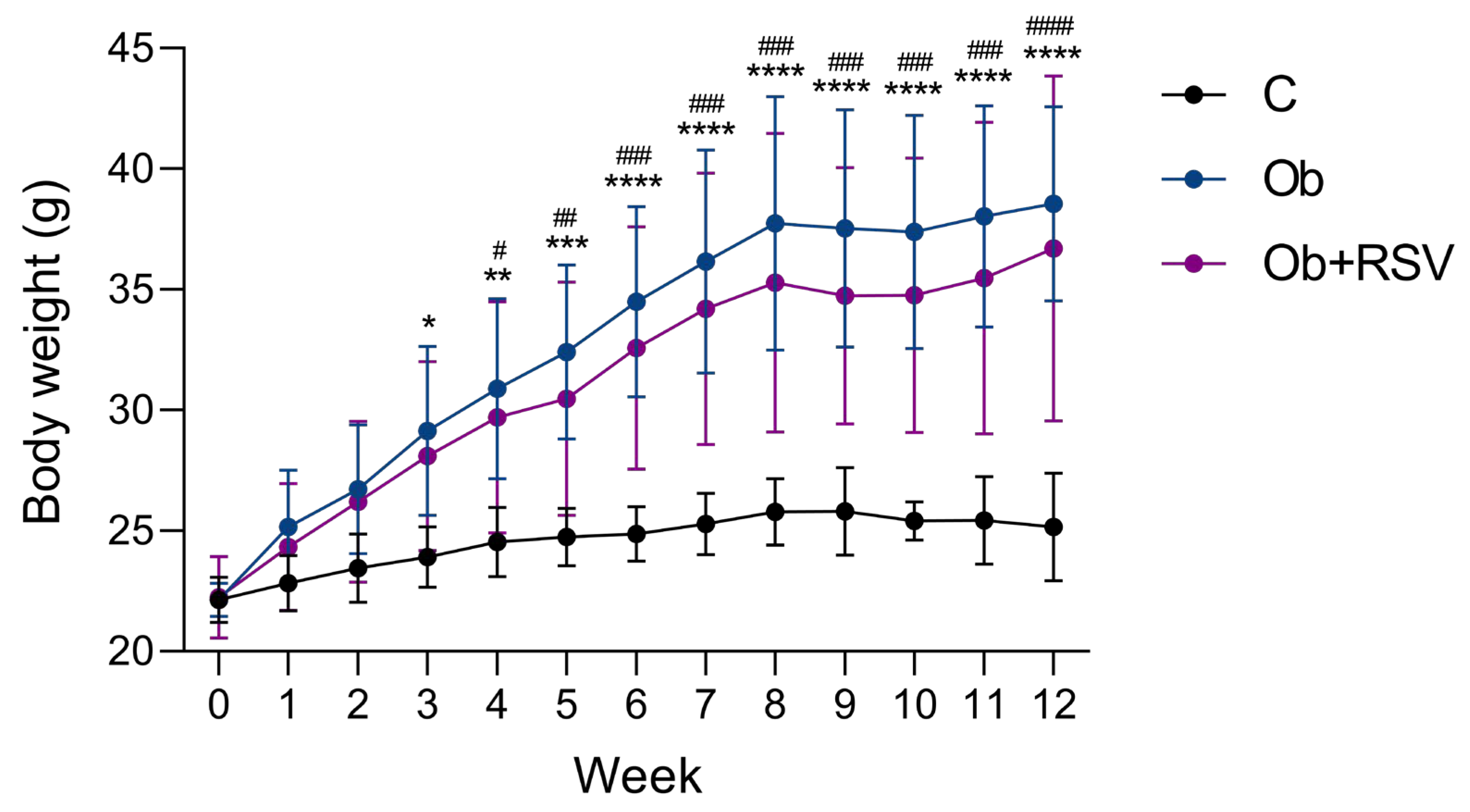
To induce obesity, mice were fed an HFD for eight weeks. One group remained with obesity (Ob), while the other received RSV treatment (Ob + RSV) during the final four weeks of the HFD regimen. A control group (C) was maintained on a standard diet. A significant increase in body weight was observed in both groups with obesity (Ob and Ob + RSV) compared with the control group, beginning at week 4 and persisting through week 12 (p < 0.05; Figure 1). However, no significant difference in body weight gain was detected between the Ob and Ob + RSV groups, indicating that RSV did not significantly affect weight gain under the experimental conditions.

3.2. Global Transcriptomic Analysis of Differentially Expressed Genes in the Hypothalamus

To investigate the global gene expression landscape, RNA-seq analysis was performed. Prior to differential gene expression analysis, the constructed libraries were subjected to quality control, ensuring their suitability (Supplementary Materials).
To identify hypothalamic DEGs associated with obesity and those modulated by RSV, gene-level counts were estimated for the three study groups based on gene length and the number of reads assigned to each gene. Differential expression analysis was performed using DESeq2, with DEGs defined by an adjusted p < 0.05 and |log2 fold change| ≥ 1.
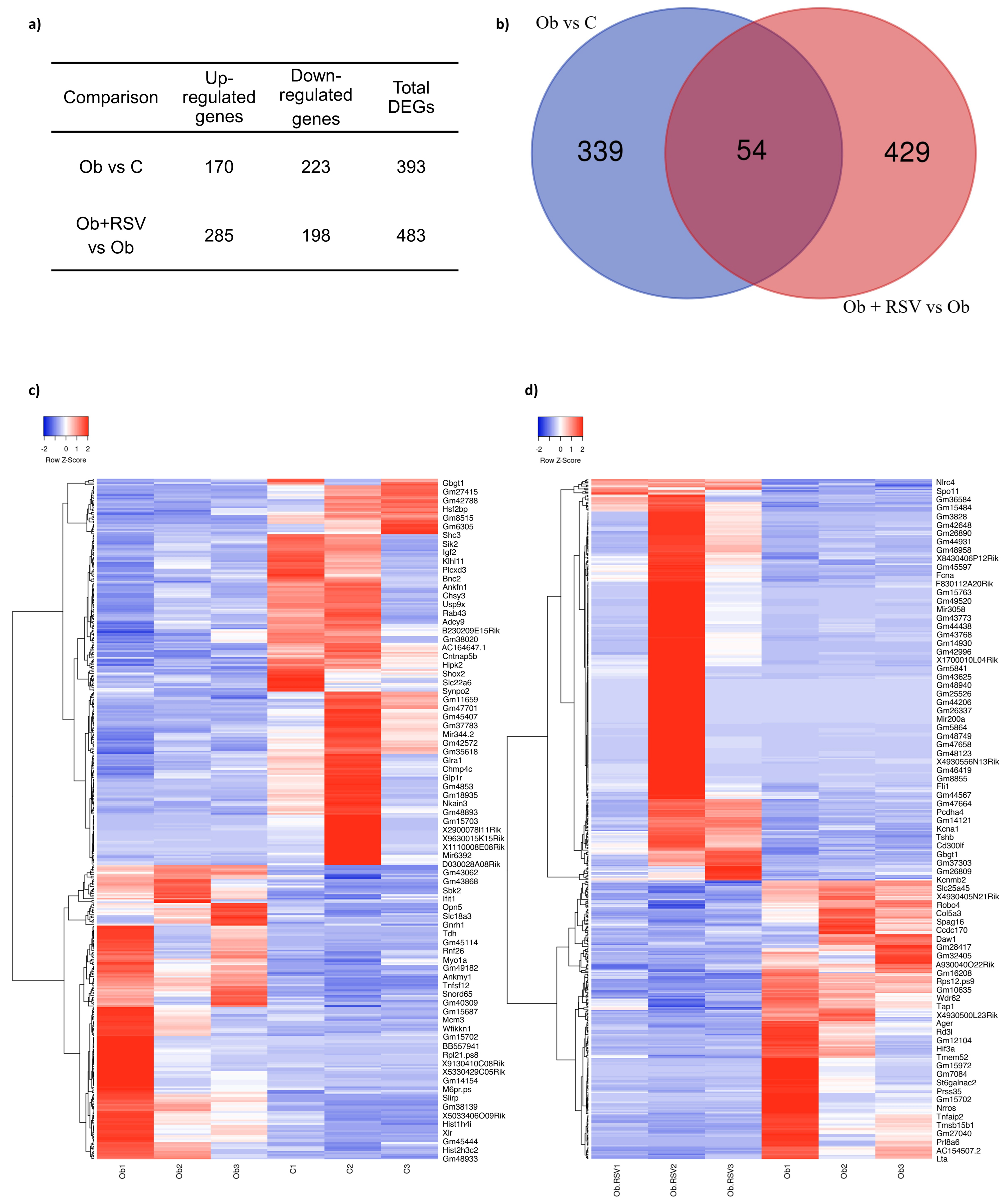
RNA-seq analysis of hypothalamic tissue revealed 393 DEGs in Ob vs. C and 483 DEGs in Ob + RSV vs. C (adjusted p < 0.05 and log2 fold change (FC) ≥ 1) (Figure 2a). Of these, 54 genes were shared between the Ob vs. C and Ob + RSV vs. Ob comparisons (Figure 2b), indicating that RSV modulates a subset of obesity-induced gene expression changes.
Hierarchical clustering showed distinct transcriptomic profiles across the three groups. Heatmaps revealed obesity-associated gene alterations (Figure 2c) and their partial normalization in response to RSV (Figure 2d).

3.3. Classification of Resveratrol-Regulated Genes

Among the 54 DEGs modulated by RSV in mice with obesity, 55% were protein-coding genes (53.3% downregulated and 46.7% upregulated), whereas a substantial proportion (45%) corresponded to non-coding RNAs. This highlights non-coding transcriptional regulation as a prominent feature of the RSV-responsive hypothalamic transcriptome. The non-coding fraction included antisense RNAs (20.8%, 80% downregulated), long intergenic non-coding RNAs (37.5%, 66.7% downregulated), pseudogenes (20.8%, all downregulated), unprocessed pseudogenes (4.2%, all upregulated), processed transcripts (4.2%, all downregulated), and transcripts to be experimentally confirmed (TEC; 12.5%, all upregulated). Gene classifications and expression data are detailed in Table 1.
Notably, the high proportion of non-coding RNAs among RSV-responsive genes represents a distinctive feature of this transcriptomic response, distinguishing it from profiles dominated by protein-coding genes and highlighting the prominence of non-coding transcripts in the hypothalamic response to RSV under obesogenic conditions.

3.4. GO and KEGG Pathway Enrichment Analyses

To further predict the biological effects of RSV in the hypothalamus of mice with obesity, GO and KEGG pathway enrichment analyses were performed using the 54 RSV-responsive DEGs.
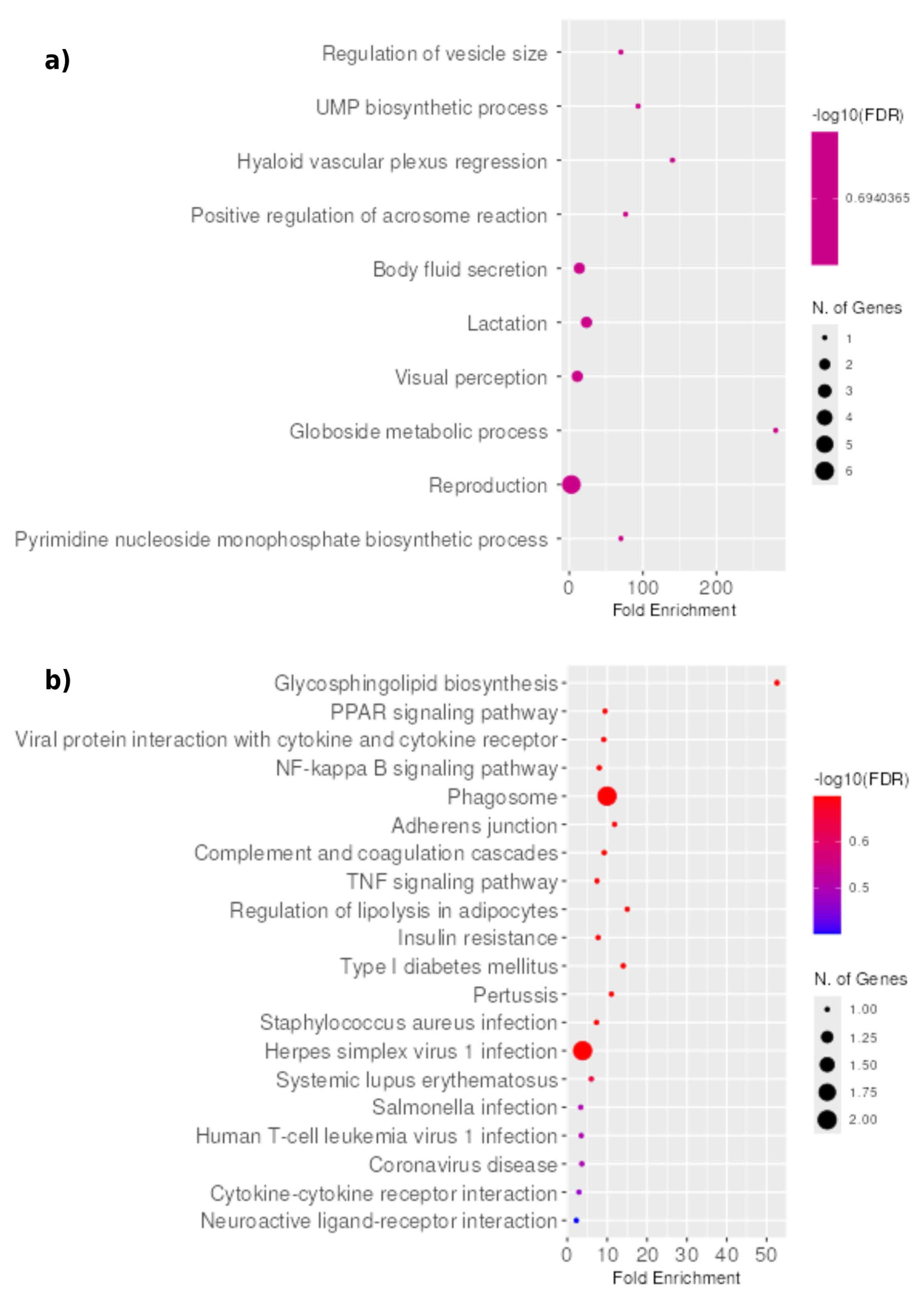
GO enrichment analysis identified biological processes including globoside metabolism, UMP biosynthesis, regression of the hyaloid vascular plexus, regulation of acrosome reaction and regulation of vesicle size (Figure 3a). Although diverse, these processes converge on lipid handling and vesicular dynamics, both of which are relevant to hypothalamic metabolic regulation.
KEGG pathway analysis revealed enrichment in pathways related to lipid metabolism, inflammation, and insulin resistance, including regulation of lipolysis in adipocytes, PPAR signaling, TNF signaling, NF-κB signaling, and complement cascades (Figure 3b). These enriched pathways support the prediction of RSV-mediated modulation of inflammatory and metabolic signaling within the hypothalamus.

3.5. Key Obesity-Related Genes Modulated by Resveratrol

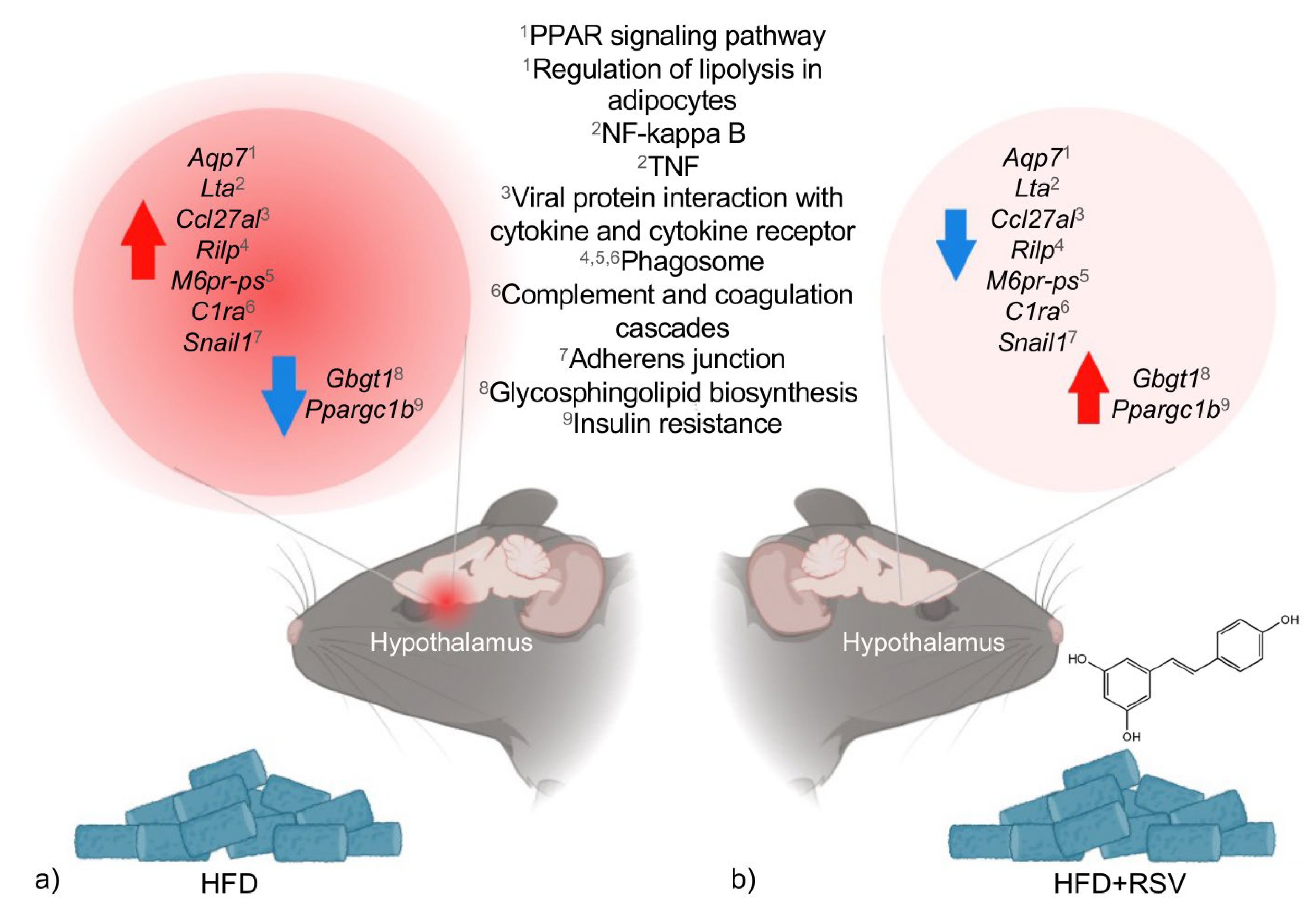
RSV significantly modulated the expression of nine genes that were dysregulated by HFD-induced obesity. Of these, seven genes were upregulated in obesity and downregulated following RSV treatment, including Aquaporin 7 (Aqp7), Chemokine (C-C motif) ligand 27A (Ccl27a), Lymphotoxin alpha (Lta), Rab interacting lysosomal protein (Rilp), Mannose-6-phosphate receptor pseudogene (M6pr-ps), Complement component 1, r subcomponent A (C1ra), and Snail family zinc finger 1 (Snail1), and two genes were downregulated in obesity and upregulated by RSV, including Globoside alpha-1,3-N-acetylgalactosaminyltransferase 1 (Gbgt1) and Peroxisome proliferator-activated receptor gamma coactivator 1 beta (Ppargc1b). Table 2 presents the RSV-regulated DEGs in the context of obesity, along with the KEGG signaling pathways influenced by these genes.
These genes are implicated in processes such as inflammation, immune response, lipid metabolism, and insulin resistance, which are mechanisms predicted to be reprogrammed by RSV. Figure 4 illustrates the genes and biological functions regulated by RSV.

4. Discussion

In this study, we examined the impact of RSV treatment on the hypothalamic transcriptome of mice with HFD-induced obesity. Although several studies have reported that higher doses of RSV reduce body weight in animals fed an HFD [43,44], at the dose used in the present study, RSV administration did not significantly reduce body weight (Figure 1). Nevertheless, RSV exerted a marked effect on transcriptomic modulation. Our transcriptomic analyses revealed that RSV modulates a specific subset of genes involved in inflammation, immune response, lipid metabolism, and energy homeostasis in the hypothalamus. These findings support the hypothesis that RSV can exert neuroprotective and metabolic effects independent of weight loss, consistent with previous reports in rodent models of obesity [27].
Interestingly, a significant proportion (45%) of RSV-modulated transcripts were non-coding RNAs, including lncRNAs, antisense RNAs, and pseudogenes. Emerging evidence indicates that lncRNAs are key regulators of inflammatory signaling pathways and metabolic control in the context of obesity and insulin resistance [45]. Moreover, RSV has been shown to modulate the expression of hundreds of lncRNAs, reversing dysregulated transcriptomes in insulin-resistant skeletal muscle; for instance, the lncRNA NONMMUT044897.2 was downregulated upon RSV treatment, leading to improved insulin sensitivity via the SOCS1 pathway [46]. Although the functions of most RSV-modulated non-coding RNAs in the hypothalamus remain to be explored, their regulation suggests a potential epigenetic mechanism through which RSV exerts central metabolic and anti-inflammatory effects.
Consistent with the literature, our results suggest that an HFD promotes lipid accumulation in visceral adipose tissue, which in turn triggers systemic low-grade inflammation characterized by the release of pro-inflammatory cytokines, free fatty acids, and adipokines [6,12,13,47]. These factors impair hypothalamic function and disrupt circuits regulating energy balance and appetite, leading to a pro-inflammatory transcriptional profile in the hypothalamus [12,13]. In our model, an HFD altered hypothalamic gene expression, while RSV treatment counteracted these changes (Figure 2). KEGG analysis (Figure 3b) revealed that RSV-enriched pathways included NF-κB and TNF signaling, driven by modulation of genes such as Lta and Ccl27a, both of which are implicated in neuroinflammation and metabolic dysfunction [48,49,50].
Lta, encoding lymphotoxin-α, is upregulated in obesity and contributes to inflammation, insulin resistance, and weight gain, while its inhibition confers metabolic protection [48,49]. Similarly, Ccl27a, a chemokine involved in T-cell recruitment and neuroinflammatory signaling [50], was downregulated by RSV in our study. Elevated expression of chemokines, including Ccl2, Ccl4, and Ccl27a, has been reported in humans and murine specimens with obesity, correlating with inflammation and insulin resistance, and these expression levels are reduced following interventions such as bariatric surgery [50,51]. In the CNS, Ccl27 promotes T-cell chemotaxis and plays a role in hypothalamic inflammation [47]. Furthermore, HFD-induced microglial activation and chemokine overexpression have been associated with reduced energy expenditure and obesity progression [14].
The RSV-mediated downregulation of Lta and Ccl27a observed here may thus reflect a central anti-inflammatory mechanism with potential metabolic benefits. These findings support the proposed therapeutic value of targeting the chemokine-receptor signaling axis to mitigate neuroinflammation and metabolic dysfunction in obesity and related diseases [52,53,54].
RSV also modulated genes involved in lipid and glycerol metabolism. Gbgt1, which participates in glycosphingolipid biosynthesis [55], was upregulated by RSV. Altered glycosphingolipid metabolism has been linked to disrupted lipid handling in metabolic tissues [56], suggesting a potential protective role for RSV through modulation of membrane lipid composition.
Aqp7, an aquaglyceroporin involved in glycerol transport, was upregulated in obesity, likely to reflect increased glycerol availability due to HFD-induced lipolysis [57]. RSV treatment reduced Aqp7 expression, which may be metabolically beneficial, as excessive glycerol influx can contribute to lipotoxicity, oxidative stress, and impaired insulin signaling in the hypothalamus [58]. These findings suggest that RSV-mediated downregulation of Aqp7 may help protect hypothalamic function under obesogenic conditions.
RSV also restored the expression of Ppargc1b, a key regulator of mitochondrial function and energy metabolism that was reduced in obesity. The upregulation of Ppargc1b is consistent with studies demonstrating its protective effects against obesity-induced inflammation, insulin resistance, and mitochondrial dysfunction [3,59]. Knockout studies have linked Ppargc1b deficiency to increased fat accumulation, systemic inflammation, and impaired glucose metabolism, whereas its overexpression enhances fatty acid oxidation and energy expenditure, thereby conferring resistance to diet-induced obesity [60,61,62]. These findings suggest that RSV may exert protective metabolic effects, at least in part through Ppargc1b-mediated pathways.
In addition, RSV normalized the expression of Snail1, a gene associated with adiposity and metabolic dysfunction [63]. Given that Snail1 deletion leads to reduced adipocyte size and fat mass, its downregulation by RSV suggests potential anti-obesogenic effects. Furthermore, RSV suppressed obesity-induced overexpression of Rilp, M6pr-ps, and C1ra, genes involved in phagosome activation, complement signaling, and coagulation. These pathways are linked to microglial overactivation and excessive phagocytosis, processes associated with neurodegeneration [64,65,66,67]. By dampening these signals, RSV may confer neuroprotective effects by limiting complement-mediated synaptic loss, a phenomenon implicated in Alzheimer’s disease [66,67].
To our knowledge, this is the first study to investigate the impact of RSV on the hypothalamic transcriptome in an HFD-induced obesity model. The integration of RNA-seq and pathway analyses provides novel insight into predictive molecular targets and regulatory networks through which RSV may exert central effects. These findings highlight the potential of RSV as a modulator of hypothalamic inflammation and metabolic dysfunction, although functional validation is still required. The selected dose has previously been shown to exert metabolic effects in HFD-fed mice, supporting its suitability for exploratory transcriptomic analysis [41]. A limitation of this study is the use of a single RSV dose; therefore, dose-dependent transcriptomic effects were not assessed. Notably, despite using a relatively low dose (2.25 mg/kg), we detected significant modulation of hypothalamic gene expression. In contrast, other studies have required higher RSV doses to demonstrate overt neuroprotective and anti-inflammatory effects [68,69]. These findings suggest that transcriptomic changes may be detectable at lower doses, even in the absence of pronounced systemic or weight-related effects.
Future studies should evaluate how these transcriptomic signatures translate into changes in hypothalamic neuronal activity, systemic metabolism, and behavior. The pronounced modulation of non-coding RNAs further emphasizes the need for mechanistic studies assessing their roles in central metabolic regulation. Moreover, given the absence of significant weight loss in our model, it will be essential to determine the dose dependency, long-term efficacy, and translational feasibility of RSV, considering its limited bioavailability and complex pharmacokinetics.
In summary, RSV modulated the expression of hypothalamic genes dysregulated by obesity, including Aqp7, Ccl27a, Lta, Rilp, M6pr-ps, C1ra, Snail1, Gbgt1, and Ppargc1b. These transcriptional changes involve pathways associated with inflammation, lipid metabolism, immune activation, and mitochondrial function. Notably, RSV’s central effects appear to occur at least in part independently of body weight changes and involve coordinated regulation of both coding and non-coding RNAs. Together, these findings provide predictive insights into the molecular mechanisms through which RSV may ameliorate hypothalamic dysfunction in obesity.

Supplementary Materials

The following supporting information can be downloaded at: https://www.mdpi.com/article/10.3390/genes17030297/s1, Table S1: Summary of hypothalamus sequencing data.

Author Contributions

Conceptualization, M.E.-R.; Methodology, B.D.l.C.-C., Y.A.F.-C. and G.D.-S.; Software, F.O.B.-A.; Validation, J.M.M.-B.; Formal analysis, I.P.-R.; Investigation, B.D.l.C.-C., Y.A.F.-C. and M.C.; Resources, M.E.-R.; Data curation, J.M.M.-B. and E.F.-A.; Writing—original draft, B.D.l.C.-C.; Writing—review & editing, O.D.M.-H. and M.E.-R.; Visualization, M.R. and O.D.M.-H.; Supervision, F.O.B.-A.; Project administration, M.C.; Funding acquisition, M.E.-R. All authors have read and agreed to the published version of the manuscript.

Funding

This work was supported by the Secretariat of Science, Humanities, Technology and Innovation (SECIHTI-Mexico, Grant No. 1560315). B.D.l.C-C. is a doctoral student of the Doctoral Program in Biomedical Sciences at UAGro and received a doctoral fellowship from SECIHTI (CVU 829255).

Institutional Review Board Statement

All procedures involving animals were conducted in accordance with the Mexican guidelines (NOM-062-ZOO-1999) for the care and use of laboratory animals and ap-proved by the Institutional Animal Care and Use Committee (CICUAL-01/2019) of the Autonomous University of Guerrero (10 October 2019).

Informed Consent Statement

Not applicable.

Data Availability Statement

The original contributions presented in this study are included in the article/Supplementary Materials. Further inquiries can be directed to the corresponding authors.

Conflicts of Interest

The authors declare no conflicts of interest.

References

  1. World Heald Organization (WHO). Obesity and Overweight. 2025. Available online: https://www.who.int/news-room/fact-sheets/detail/obesity-and-overweight (accessed on 27 January 2026).
  2. Sanchez, C.; Calson, C.; Gautier, N.; Noser, P.; Salvi, J.; Villet, M.; Fleuriot, L.; Peltier, C.; Schlich, P.; Brau, F.; et al. Dietary fatty acid composition drives neuroinflammation and impaired behavior in obesity. Brain Behav. Immun. 2024, 117, 330–346. [Google Scholar] [CrossRef]
  3. Li, E.; Ji, J.; Zong, G.; Liu, H.; Sun, Y.; Wei, L.; Xia, Z.; Yang, X.; Huang, D.; Zhang, Y. Myeloid PGC1β attenuates high-fat-diet induced inflammation via mitochondrial fission/mtDNA/Nlrp3 pathway. Biochim. Biophys. Acta Mol. Basis Dis. 2025, 1871, 167528. [Google Scholar] [CrossRef] [PubMed]
  4. Chen, Y.; Zhang, S.; Ye, L.; Chen, H.; Ma, P.; Wu, D. High-intensity interval training improves hypothalamic inflammation by suppressing HIF-1α signaling in microglia of male C57BL/6J mice. FASEB J. 2024, 38, e23770. [Google Scholar] [CrossRef] [PubMed]
  5. Ubaldo-Reyes, L.M.; Espitia-Bautista, E.; Barajas-Martínez, A.; Martínez-Tapia, R.; Rodríguez-Mata, V.; Noriega-Navarro, R.; Escalona, R.; Castillo-Hernández, J.; Pérez-Torres, A.; Navarro, L. High-fat diet-induced blood-brain barrier dysfunction: Impact on allodynia and motor coordination in rats. Int. J. Mol. Sci. 2024, 25, 11218. [Google Scholar] [CrossRef] [PubMed]
  6. Buckman, L.B.; Hasty, A.H.; Flaherty, D.K.; Buckman, C.T.; Thompson, M.M.; Matlock, B.K.; Weller, K.; Ellacott, K.L. Obesity induced by a high-fat diet is associated with increased immune cell entry into the central nervous system. Brain Behav. Immun. 2014, 35, 33–42. [Google Scholar] [CrossRef]
  7. Lee, Y.H.; Hsu, H.C.; Kao, P.C.; Shiao, Y.J.; Yeh, S.H.; Shie, F.S.; Hsu, S.M.; Yeh, C.W.; Liu, H.K.; Yang, S.B.; et al. Augmented insulin and leptin resistance of high fat diet-fed APPswe/PS1dE9 transgenic mice exacerbate obesity and glycemic dysregulation. Int. J. Mol. Sci. 2018, 19, 2333. [Google Scholar] [CrossRef]
  8. Forzisi-Kathera-Ibarra, E.; Jo, C.; Castillo, L.; Gaur, A.; Lad, P.; Bortolami, A.; Roser, C.; Venkateswaran, S.; Dutto, S.; Selby, M.; et al. KCNB1-Leptin receptor complexes couple electric and endocrine function in the melanocortin neurons of the hypothalamus. FASEB J. 2024, 38, e70111. [Google Scholar] [CrossRef]
  9. Zhuang, S.; Liu, S.; Li, R.; Duan, H. Electroacupuncture alleviates insulin resistance and impacts the hypothalamic IRS-1/PI3K/AKT pathway and miRNA-29a-3p in a rat model of type 2 diabetes. Acupunct. Med. 2025, 43, 104–113. [Google Scholar] [CrossRef]
  10. Zhang, S.; Lu, Y.; Liu, Y.; Kang, Q.; Yao, Q.; Li, Y.; Chen, S.; Liu, Y.; Du, J.; Xiong, Y.; et al. Identification of C1q/TNF-related protein 4 as a novel appetite-regulating peptide that reduces food intake in Siberian sturgeon (Acipenser baerii). Comp. Biochem. Physiol. A Mol. Integr. Physiol. 2024, 289, 111574. [Google Scholar] [CrossRef]
  11. Manceau, R.; Anthony, P.; Hryhorczuk, C.; Labbé, P.; Thorin-Trescases, N.; Fulton, S.; Thorin, E. Sexually dimorphic effects of angiopoietin-like 2 on energy metabolism and hypothalamic neuropeptide regulation. Int. J. Obes. 2025, 49, 1116–1124. [Google Scholar] [CrossRef]
  12. De Paula, G.C.; Simões, R.F.; Garcia-Serrano, A.M.; Duarte, J.M.N. High-fat and High-sucrose Diet-induced Hypothalamic Inflammation Shows Sex Specific Features in Mice. Neurochem. Res. 2024, 49, 3356–3366. [Google Scholar] [CrossRef]
  13. Yang, B.; Wang, Q.; Li, Y.; Zhang, S.; Sun, Y.; Wei, Y.; Jiang, Q.; Huang, Y. Resveratrol inhibits white adipose deposition by the ESR1-mediated PI3K/AKT signaling pathway. Cell. Signal. 2024, 124, 111448. [Google Scholar] [CrossRef] [PubMed]
  14. Stilgenbauer, L.; Chen, Q.; Pungi, D.; James, N.; Jayarathne, H.; Koshko, L.; Scofield, S.; Zhang, K.; Sadagurski, M. Microglial ER stress response via IRE1α regulates diet-induced metabolic imbalance and obesity in mice. Mol. Metab. 2025, 95, 102128. [Google Scholar] [CrossRef] [PubMed]
  15. Statello, L.; Guo, C.J.; Chen, L.L.; Huarte, M. Gene regulation by long non-coding RNAs and its biological functions. Nat. Rev. Mol. Cell Biol. 2021, 22, 96–118. [Google Scholar] [CrossRef] [PubMed]
  16. Li, J.; Long, J.; Zhang, Q.; Shen, H.; Guo, A.Y.; Ma, Z.; Zhang, G. Hypothalamic long noncoding RNA AK044061 is involved in the development of dietary obesity in mice. Int. J. Obes. 2021, 45, 2638–2647. [Google Scholar] [CrossRef]
  17. Faghihi, M.; Wahlestedt, C. Regulatory roles of natural antisense transcripts. Nat. Rev. Mol. Cell Biol. 2009, 10, 637–643. [Google Scholar] [CrossRef]
  18. Barman, P.; Reddy, D.; Bhaumik, S. Mechanisms of Antisense Transcription Initiation with Implications in Gene Expression, Genomic Integrity and Disease Pathogenesis. Non-Coding RNA 2019, 5, 11. [Google Scholar] [CrossRef]
  19. Alipoo, B.; Nikouei, S.; Rezaeinejad, F.; Malakooti-Dehkordi, S.N.; Sabati, Z.; Ghasemi, H. Long non-coding RNAs in metabolic disorders: Pathogenetic relevance and potential biomarkers and therapeutic targets. J. Endocrinol. Investig. 2021, 44, 2015–2041. [Google Scholar] [CrossRef]
  20. Ali, F.; Shehzad, A.; Shahzad, R.; Khan, S.; Rashan, L.; Taha, M. Cannabis oil protects against valproic acid-induced autism spectrum disorder by reducing oxidative stress. Dev. Neurobiol. 2025, 85, e22969. [Google Scholar] [CrossRef]
  21. Sharma, D.; Mishra, S.; Jha, G.; Tomar, B.; Kanchan, S.; Kapoor, R.; Sushma; Gupta, S.; Shukla, S.; Rath, S.K. Hydro-alcoholic extract of cynodon dactylon ameliorates malathion-induced neurocognitive behavior and neurotoxicity. Neuromol. Med. 2025, 27, 39. [Google Scholar] [CrossRef]
  22. de Oliveira, L.F.N.; Maia, C.S.C.; Nogueira, M.D.A.; Dias, T.D.S.; Firmino, M.A.D.; Loureiro, A.P.M.; Marzola, E.L.; Nunes, P.I.G.; Santos, F.A.; Freire, W.B.S.; et al. Cashew nut consumption reduces waist circumference and oxidative stress in adolescents with obesity: A randomized clinical trial. Nutr. Res. 2025, 134, 60–72. [Google Scholar] [CrossRef]
  23. Cao, Q.; Gu, L.; Wang, L.; Sun, G.; Ying, T.; Su, H.; Wang, W.; Sun, Z. Resveratrol alleviates endoplasmic reticulum stress-induced cell death and improves functional prognosis after traumatic brain injury in mice. J. Appl. Biomed. 2024, 22, 99–106. [Google Scholar] [CrossRef]
  24. Beheshtkhoo, N.; Jadidi Kouhbanani, M.A.; Daghighi, S.M.; Shakouri Nikjeh, M.; Esmaeili, Z.; Khosravani, M.; Adabi, M. Effect of oral resveratrol-loaded nanoliposomes on hyperlipidemia via toll-like receptor 3 and TIR domain-containing adaptor inducing interferon-β protein expression in an animal model. J. Liposome Res. 2025, 35, 225–251. [Google Scholar] [CrossRef]
  25. Khamis, M.M.; Moselhy, S.S.; Rihan, S. Role of trans-resveratrol in ameliorating biochemical and molecular alterations in obese rats induced by a high fructose/fat diet. Sci. Rep. 2025, 15, 7879. [Google Scholar] [CrossRef] [PubMed]
  26. Ispiryan, A.; Kraujutiene, I.; Viskelis, J. Retaining resveratrol content in berries and berry products with agricultural and processing techniques: Review. Processes 2024, 12, 1216. [Google Scholar] [CrossRef]
  27. Sarroca, S.; Gatius, A.; Rodríguez-Farré, E.; Vilchez, D.; Pallás, M.; Griñán-Ferré, C.; Sanfeliu, C.; Corpas, R. Resveratrol confers neuroprotection against high-fat diet in a mouse model of Alzheimer’s disease via modulation of proteolytic mechanisms. J. Nutr. Biochem. 2021, 89, 108569. [Google Scholar] [CrossRef] [PubMed]
  28. Su, X.; Li, Q.; Yang, M.; Zhang, W.; Liu, X.; Ba, Y.; Deng, Q.; Zhang, Y.; Han, L.; Huang, H. Resveratrol protects against a high-fat diet-induced neuroinflammation by suppressing mitochondrial fission via targeting SIRT1/PGC-1α. Exp. Neurol. 2024, 380, 114899. [Google Scholar] [CrossRef]
  29. Sovrani, V.; Bobermin, L.D.; Sesterheim, P.; Rezena, E.; Cioccari, M.S.; Netto, C.A.; Gonçalves, C.A.; Leipnitz, G.; Quincozes-Santos, A. Glioprotective effects of resveratrol in hypothalamic astrocyte cultures obtained from interferon receptor knockout (IFNα/βR-/-) mice. In Vitro Cell. Dev. Biol. Anim. 2023, 59, 366–380. [Google Scholar] [CrossRef]
  30. Safahani, M.; Aligholi, H.; Noorbakhsh, F.; Djalali, M.; Pishva, H.; Modarres Mousavi, S.M.; Alizadeh, L.; Gorji, A.; Koohdani, F. Switching from high-fat diet to foods containing resveratrol as a calorie restriction mimetic changes the architecture of arcuate nucleus to produce more newborn anorexigenic neurons. Eur. J. Nutr. 2019, 58, 1687–1701. [Google Scholar] [CrossRef]
  31. Bissacotti, B.F.; da Silveira, M.V.; Assmann, C.E.; Copetti, P.M.; Santos, A.F.D.; Fagan, S.B.; da Rocha, J.A.; Schetinger, M.R.; Morsch, V.M.; Bottari, N.B.; et al. Resveratrol alleviates inflammatory response through P2X7/NLRP3 signaling pathway: In silico and in vitro evidence from activated microglia. Pharmaceuticals 2025, 18, 950. [Google Scholar] [CrossRef]
  32. Cheng, K.; Song, Z.; Zhang, H.; Li, S.; Wang, C.; Zhang, L.; Wang, T. The therapeutic effects of resveratrol on hepatic steatosis in high-fat diet-induced obese mice by improving oxidative stress, inflammation and lipid-related gene transcriptional expression. Med. Mol. Morphol. 2019, 52, 187–197. [Google Scholar] [CrossRef] [PubMed]
  33. Andrade, J.M.; Paraíso, A.F.; de Oliveira, M.V.; Martins, A.M.; Neto, J.F.; Guimarães, A.L.; de Paula, A.M.; Qureshi, M.; Santos, S.H. Resveratrol attenuates hepatic steatosis in high-fat fed mice by decreasing lipogenesis and inflammation. Nutrition 2014, 30, 915–919. [Google Scholar] [CrossRef] [PubMed]
  34. Ding, S.; Jiang, J.; Wang, Z.; Zhang, G.; Yin, J.; Wang, X.; Wang, S.; Yu, Z. Resveratrol reduces the inflammatory response in adipose tissue and improves adipose insulin signaling in high-fat diet-fed mice. PeerJ 2018, 6, e5173. [Google Scholar] [CrossRef] [PubMed]
  35. Pan, Q.R.; Ren, Y.L.; Liu, W.X.; Hu, Y.J.; Zheng, J.S.; Xu, Y.; Wang, G. Resveratrol prevents hepatic steatosis and endoplasmic reticulum stress and regulates the expression of genes involved in lipid metabolism, insulin resistance, and inflammation in rats. Nutr. Res. 2015, 35, 576–584. [Google Scholar] [CrossRef]
  36. Jiang, M.; He, J.; Gu, H.; Yang, Y.; Huang, Y.; Xu, X.; Liu, L. Protective effect of resveratrol on obesity-related osteoarthritis via alleviating JAK2/STAT3 signaling pathway is independent of SOCS3. Toxicol. Appl. Pharmacol. 2020, 388, 114871. [Google Scholar] [CrossRef]
  37. Wang, Z.; Gerstein, M.; Snyder, M. RNA-Seq: A revolutionary tool for transcriptomics. Nat. Rev. Genet. 2009, 10, 57–63. [Google Scholar] [CrossRef]
  38. Stuart, J.M.; Segal, E.; Koller, D.; Kim, S.K. A gene-coexpression network for global discovery of conserved genetic modules. Science 2003, 302, 249–255. [Google Scholar] [CrossRef]
  39. Ideker, T.; Krogan, N.J. Differential network biology. Mol. Syst. Biol. 2012, 8, 565. [Google Scholar] [CrossRef]
  40. Subramanian, A.; Tamayo, P.; Mootha, V.K.; Mukherjee, S.; Ebert, B.L.; Gillette, M.A.; Paulovich, A.; Pomereoy, S.; Golub, T.R.; Lander, E.S.; et al. Gene set enrichment analysis: A knowledge-based approach for interpreting genome-wide expression profiles. Proc. Natl. Acad. Sci. USA 2005, 102, 15545–15550. [Google Scholar] [CrossRef]
  41. González-Rodríguez, Á.; Santamaría, B.; Mas-Gutierrez, J.A.; Rada, P.; Fernández-Millán, E.; Pardo, V.; Álvarez, C.; Cuadrado, A.; Ros, M.; Serrano, M.; et al. Resveratrol treatment restores peripheral insulin sensitivity in diabetic mice in a sirt1-independent manner. Mol. Nutr. Food Res. 2015, 59, 1431–1442. [Google Scholar] [CrossRef]
  42. Haynes, W. Benjamini–Hochberg Method. In Encyclopedia of Systems Biology; Dubitzky, W., Wolkenhauer, O., Cho, K.H., Yokota, H., Eds.; Springer: New York, NY, USA, 2013. [Google Scholar] [CrossRef]
  43. Chang, C.-C.; Lin, K.-Y.; Peng, K.-Y.; Day, Y.-J.; Hung, L.-M. Resveratrol exerts anti-obesity effects in high-fat diet obese mice and displays differential dosage effects on cytotoxicity, differentiation, and lipolysis in 3T3-L1 cells. Endocr. J. 2016, 63, 169–178. [Google Scholar] [CrossRef]
  44. Ibars-Serra, M.; Pascual-Serrano, A.; Ardid-Ruiz, A.; Doladé, N.; Aguilar-González, S.; Cirasino, J.; Muguerza, B.; Suárez, M.; Keijer, J.; Arola-Arnal, A.; et al. Resveratrol Prevents Weight Gain, Counteracts Visceral Adipose Tissue Dysfunction, and Improves Hypothalamic Leptin Sensitivity in Diet-Induced Obese Rats. Mol. Nutr. Food Res. 2025, 69, e70075. [Google Scholar] [CrossRef] [PubMed]
  45. Wijesinghe, S.N.; Nicholson, T.; Tsintzas, K.; Jones, S.W. Involvements of long noncoding RNAs in obesity-associated inflammatory diseases. Obes. Rev. 2021, 69, e70075. [Google Scholar] [CrossRef] [PubMed]
  46. Liu, Z.; Zhang, Z.; Song, G.; Wang, X.; Xing, H.; Wang, C. Resveratrol Alleviates Skeletal Muscle Insulin Resistance by Downregulating Long Noncoding RNA. Int. J. Endocrinol. 2022, 2022, 2539519. [Google Scholar] [CrossRef] [PubMed]
  47. Lu, M.; Yu, Z.; Yang, X.; Yang, Z.; Xu, T.; Yu, Z.; Jing, X.; An, L.; Zhang, J.; Xu, B. Electroacupuncture stimulation induced M1/M2 polarization in white adipose tissues by activating the Y1 receptor in obese mice to reduce chronic inflammation. Adipocyte 2025, 14, 2524638. [Google Scholar] [CrossRef]
  48. Pamir, N.; McMillen, T.S.; Edgel, K.A.; Kim, F.; LeBoeuf, R.C. Deficiency of lymphotoxin-α does not exacerbate high-fat diet-induced obesity but does enhance inflammation in mice. Am. J. Physiol. Endocrinol. Metab. 2012, 302, E961–E971. [Google Scholar] [CrossRef]
  49. James Bates, R.E.; Browne, E.; Schalks, R.; Jacobs, H.; Tan, L.; Parekh, P.; Magliozzi, R.; Calabrese, M.; Mazarakis, N.D.; Reynolds, R. Lymphotoxin-alpha expression in the meninges causes lymphoid tissue formation and neurodegeneration. Brain 2022, 145, 4287–4307. [Google Scholar] [CrossRef]
  50. Gunsolly, C.; Nicholson, J.D.; Listwak, S.J.; Ledee, D.; Zelenka, P.; Verthelyi, D.; Chapoval, S.; Keegan, A.; Tonelli, L.H. Expression and regulation in the brain of the chemokine CCL27 gene locus. J. Neuroimmunol. 2010, 225, 82–90. [Google Scholar] [CrossRef]
  51. Yan, K.; Zhang, P.; Jin, J.; Chen, X.; Guan, H.; Li, Y. Integrative analyses of hub genes and their association with immune infiltration in adipose tissue, liver tissue and skeletal muscle of obese patients after bariatric surgery. Adipocyte 2022, 11, 190–201. [Google Scholar] [CrossRef]
  52. Okekawa, A.; Wada, T.; Onogi, Y.; Takeda, Y.; Miyazawa, Y.; Sasahara, M.; Tsuneki, H.; Sasaoka, T. Platelet-derived growth factor signaling in pericytes promotes hypothalamic inflammation and obesity. Mol. Med. 2024, 30, 21. [Google Scholar] [CrossRef]
  53. Sindhu, S.; Kochumon, S.; Shenouda, S.; Wilson, A.; Al-Mulla, F.; Ahmad, R. The cooperative induction of CCL4 in human monocytic cells by TNF-α and palmitate requires MyD88 and involves MAPK/NF-κB signaling pathways. Int. J. Mol. Sci. 2019, 20, 4658. [Google Scholar] [CrossRef] [PubMed]
  54. Mir, M.M.; Alfaifi, J.; Sohail, S.K.; Rizvi, S.F.; Akhtar, M.T.; Alghamdi, M.A.A.; Mir, R.; Wani, J.I.; Sabah, Z.U.; Alhumaydhi, F.A.; et al. The role of pro-inflammatory chemokines CCL-1, 2, 4, and 5 in the etiopathogenesis of type 2 diabetes mellitus in subjects from the asir region of Saudi Arabia: Correlation with different degrees of obesity. J. Pers. Med. 2024, 14, 743. [Google Scholar] [CrossRef]
  55. Hult, A.K.; McSherry, E.; Möller, M.; Olsson, M.L. Gbgt1 is allelically diverse but dispensable in humans and naturally occurring anti-fors1 shows an abo-restricted pattern. Transfusion 2018, 58, 2036–2045. [Google Scholar] [CrossRef] [PubMed]
  56. Li, J.; Huang, Q.; Yang, C.; Yu, C.; Zhang, Z.; Chen, M.; Ren, P.; Qiu, M. Molecular regulation of differential lipid molecule accumulation in the intramuscular fat and abdominal fat of chickens. Genes 2023, 14, 1457. [Google Scholar] [CrossRef] [PubMed]
  57. da Silva, I.V.; Cardoso, C.; Méndez-Giménez, L.; Camoes, S.P.; Frühbeck, G.; Rodríguez, A.; Miranda, J.P.; Soveral, G. Aquaporin-7 and aquaporin-12 modulate the inflammatory phenotype of endocrine pancreatic beta-cells. Arch. Biochem. Biophys. 2020, 691, 108481. [Google Scholar] [CrossRef]
  58. Lee, J.C.; Park, S.M.; Kim, I.Y.; Sung, H.; Seong, J.K.; Moon, M.H. High-fat diet-induced lipidome perturbations in the cortex, hippocampus, hypothalamus, and olfactory bulb of mice. Biochim. Biophys. Acta 2018, 1863, 980–990. [Google Scholar] [CrossRef]
  59. Uchitomi, R.; Nakai, S.; Matsuda, R.; Onishi, T.; Miura, S.; Hatazawa, Y.; Kamei, Y. Genistein, daidzein, and resveratrols stimulate PGC-1β-mediated gene expression. Biochem. Biophys. Rep. 2018, 17, 51–55. [Google Scholar] [CrossRef]
  60. Fang, X.; Sun, D.; Wang, Z.; Yu, Z.; Liu, W.; Pu, Y.; Wang, D.; Huang, A.; Liu, M.; Xiang, Z.; et al. MiR-30a positively regulates the inflammatory response of microglia in experimental autoimmune encephalomyelitis. Neurosci. Bull. 2017, 33, 603–615. [Google Scholar] [CrossRef]
  61. Kamei, Y.; Ohizumi, H.; Fujitani, Y.; Nemoto, T.; Tanaka, T.; Takahashi, N.; Kawada, T.; Miyoshi, M.; Ezaki, O.; Kakizuka, A. PPARgamma coactivator 1beta/ERR ligand 1 is an ERR protein ligand, whose expression induces a high-energy expenditure and antagonizes obesity. Proc. Natl. Acad. Sci. USA 2003, 100, 12378–12383. [Google Scholar] [CrossRef]
  62. Vega, R.B.; Kelly, D.P. A role for estrogen-related receptor alpha in the control of mitochondrial fatty acid beta-oxidation during brown adipocyte differentiation. J. Biol. Chem. 1997, 272, 31693–31699. [Google Scholar] [CrossRef]
  63. Sun, C.; Jiang, L.; Liu, Y.; Shen, H.; Weiss, S.J.; Zhou, Y.; Rui, L. Adipose Snail1 regulates lipolysis and lipid partitioning by suppressing adipose triacylglycerol lipase expression. Cell Rep. 2016, 17, 2015–2027. [Google Scholar] [CrossRef]
  64. Khobrekar, N.V.; Valle, R.B. A RILP-regulated pathway coordinating autophagosome biogenesis with transport. Autophagy 2020, 16, 1537–1538. [Google Scholar] [CrossRef]
  65. Bajic, G.; Degn, S.E.; Thiel, S.; Andersen, G.R. Complement activation, regulation, and molecular basis for complement related diseases. EMBO J. 2015, 34, 2735–2757. [Google Scholar] [CrossRef]
  66. Belbasis, L.; Morris, S.; van Duijn, C.; Bennett, D.; Walters, R. Mendelian randomization identifies proteins involved in neurodegenerative diseases. Brain 2025, 148, 2412–2428. [Google Scholar] [CrossRef]
  67. Wang, X.L.; Kooijman, S.; Gao, Y.; Tzeplaeff, L.; Cosquer, B.; Milanova, I.; Wolff, S.E.; Korpel, N.; Champy, M.F.; Petit-Demoulière, B.; et al. Microglia-specific knock-down of Bmal1 improves memory and protects mice from high fat diet-induced obesity. Mol. Psychiatry 2021, 26, 6336–6349. [Google Scholar] [CrossRef]
  68. Rege, S.D.; Kumar, S.; Wilson, D.N.; Tamura, L.; Geetha, T.; Mathews, S.T.; Huggins, K.W.; Broderick, T.L.; Babu, J.R. Resveratrol Protects the Brain of Obese Mice from Oxidative Damage. Oxidative Med. Cell. Longev. 2013, 2013, 419092. [Google Scholar] [CrossRef]
  69. Ma, X.; Sun, Z.; Han, X.; Li, S.; Jiang, X.; Chen, S.; Zhang, J.; Lu, H. Neuroprotective Effect of Resveratrol via Activation of Sirt1 Signaling in a Rat Model of Combined Diabetes and Alzheimer’s Disease. Front. Neurosci. 2020, 13, 1400. [Google Scholar] [CrossRef] [PubMed]
Figure 1. Effect of RSV on body weight. Body weight was compared among the experimental groups: control (C), obesity (Ob), and obesity treated with resveratrol (Ob + RSV). Significant differences in body weight were observed among all groups starting from week 2 of feeding with either the high-fat diet (HFD) or standard diet (C). Data are presented as mean ± SD and were analyzed using two-way ANOVA followed by Tukey’s multiple comparisons test. * p < 0.05 Ob vs. C, ** p < 0.01 Ob vs. C, *** p < 0.001 Ob vs. C, **** p < 0.0001 Ob vs. C. # p < 0.05 Ob + RSV vs. C, ## p < 0.01 Ob + RSV vs. C; ### p < 0.001 Ob + RSV vs. C, #### p < 0.0001 Ob + RSV vs. C.
Genes 17 00297 g001
Figure 2. Differential gene expression in the hypothalamus. (a) Number of upregulated and downregulated genes identified in the different mouse models. (b) Venn diagram showing differentially expressed genes (DEGs), including 54 overlapping genes identified under obesity conditions and modulated by resveratrol treatment. (c) Heatmap of DEGs in the Ob vs. C comparison. (d) Heatmap of DEGs in the Ob + RSV vs. Ob comparison. Red indicates high expression levels; blue indicates low expression levels (adjusted p < 0.05 and log2 fold change ≥ 1).
Genes 17 00297 g002
Figure 3. Functional enrichment analysis of biological processes by Gene Ontology (GO) and KEGG pathways associated with RSV-regulated DEGs in the hypothalamus of mice with obesity. (a) Enriched GO biological processes. (b) Enriched KEGG signaling pathways. The y-axis shows the names of the enriched GO terms or KEGG pathways, while the x-axis represents the enrichment score. The color gradient indicates statistical significance, expressed as −log10 of the false discovery rate (FDR), and the size of each bubble corresponds to the number of differentially expressed genes (DEGs) associated with each term. Only terms with an adjusted p < 0.05 and |log2 fold change| ≥ 1 were included in the analysis.
Genes 17 00297 g003
Figure 4. KEGG signaling pathways associated with gene expression changes induced by HFD and modulated by RSV in the hypothalamus. (a) DEGs and associated KEGG pathways identified in the hypothalamus of HFD-fed mice compared with controls. (b) DEGs and KEGG pathways modulated by RSV treatment in HFD-induced mice with obesity. Red upward arrows indicate upregulated genes, whereas blue downward arrows indicate downregulated genes in each experimental comparison. Superscript numbers next to each gene indicate the corresponding KEGG pathways (numbered in the central panel) to which each gene is functionally annotated.
Genes 17 00297 g004
Table 1. Differentially expressed genes (DEGs) by biotype in the hypothalamus of obese mice and RSV-treated obese mice.
Gene BiotypeEnsembl Gene IDKEGG SymbolGene NameLog2 FC
Ob vs. C
Log2 FC
Ob + RSV vs. Ob
AntisenseENSMUSG000000853239130410C08RikRIKEN cDNA 9130410C08 gene3.88−6.26
ENSMUSG00000098720Gm27239Predicted gene 272391.77−2.29
ENSMUSG00000087004Gm14154Predicted gene 141544.40−4.46
ENSMUSG00000092130D030025P21RikRIKEN cDNA D030025P21 gene5.61−5.64
ENSMUSG00000085134Gm11659Predicted gene 11659−3.994.25
LincRNAENSMUSG00000116256Gm32405Predicted gene 324055.36−5.39
ENSMUSG00000109149Gm19656Predicted gene 196563.45−3.58
ENSMUSG00000086952Gm12596Predicted gene 125965.42−5.45
ENSMUSG00000111399Gm47328Predicted gene 473285.86−5.88
ENSMUSG00000097819Gm26813Predicted gene 268135.14−5.17
ENSMUSG00000111970Gm47715Predicted gene 477155.42−5.45
ENSMUSG00000086464Gm15835Predicted gene 15835−5.204.57
ENSMUSG00000114148Gm47701Predicted gene 47701−1.992.04
ENSMUSG00000115545Gm48908Predicted gene 48908−5.756.26
Processed pseudogeneENSMUSG00000112048Gm48750Predicted gene 487505.28−5.31
ENSMUSG00000080849Gm15702Predicted gene 157024.35−5.12
ENSMUSG00000115593Gm4824Predicted gene 48244.48−3.62
ENSMUSG00000083305Gm13315Predicted gene 133154.03−6.36
ENSMUSG00000080832M6pr-psMannose-6-phosphate receptor pseudogene2.65−3.48
UPENSMUSG00000080888Gm14387Predicted gene 14387−4.535.30
PTENSMUSG00000053749Gm9920Predicted gene 99205.44−5.47
TECENSMUSG00000109679Gm45342Predicted gene 45342−5.385.50
ENSMUSG00000111107Gm48737Predicted gene 48737−5.465.24
ENSMUSG00000107647Gm44445Predicted gene 44445−4.574.98
Protein codingENSMUSG00000060981Hist1h4hHistone cluster 1 H4h1.42−1.39
ENSMUSG00000025401Myo1aMyosin IA1.13−1.23
ENSMUSG00000021345Prl8a6Prolactin family 8, subfamily a, member 65.27−5.29
ENSMUSG00000024402LtaLymphotoxin A1.96−2.64
ENSMUSG00000054626XlrX-linked lymphocyte-regulated3.54−3.63
ENSMUSG00000095247Ccl27aChemokine (C-C motif) ligand 27A3.92−4.90
ENSMUSG00000024175Tekt4Tektin 41.21−1.46
ENSMUSG00000053877SrcapSnf2-related CREBBP activator protein−1.191.50
ENSMUSG00000027801Tm4sf4Transmembrane 4 superfamily member 43.25−4.97
ENSMUSG00000023153Tmem52Transmembrane protein 521.44−1.50
ENSMUSG00000021506Pitx1Paired-like homeodomain transcription factor 14.72−3.36
ENSMUSG00000042821Snail1Snail family zinc finger 12.66−2.59
ENSMUSG00000028427Aqp7Aquaporin 75.37−5.40
ENSMUSG00000055172C1raComplement component 1, r subcomponent A3.41−2.81
ENSMUSG00000044814Olfr543Olfactory receptor 543−3.023.24
ENSMUSG00000073514Dok6Docking protein 6−1.351.53
ENSMUSG00000090053Palm2Paralemmin 2−1.481.73
ENSMUSG00000026829Gbgt1Globoside alpha-1,3-N-acetylgalactosaminyltransferase 1−2.702.97
ENSMUSG00000033871Ppargc1bPeroxisome proliferative activated receptor, gamma, coactivator 1 beta−1.931.35
ENSMUSG00000025776Crispld1Cysteine-rich secretory protein LCCL domain containing 1−1.232.17
ENSMUSG00000075596B130006D01RikRIKEN cDNA B130006D01 gene−5.125.76
ENSMUSG00000038195RilpRab interacting lysosomal protein1.01−2.13
ENSMUSG00000043972Opn5Opsin 53.27−5.98
ENSMUSG00000000263Glra1Glycine receptor, alpha 1 subunit−2.412.82
ENSMUSG00000038048Cntnap5cContactin associated protein-like 5C−2.402.62
ENSMUSG00000047773Ankfn1Ankyrin-repeat and fibronectin type III domain containing 1−2.001.45
ENSMUSG00000073016UprtUracil phosphoribosyltransferase−2.812.31
ENSMUSG00000068130Zfp442Zinc finger protein 442−2.422.96
ENSMUSG00000097271Gm9903Predicted gene 9903−4.385.18
ENSMUSG00000096768Gm47283Predicted gene, 472831.01−1.05
Note: log2FC: Log2 fold change in gene expression. Only genes showing differential expression between groups with an adjusted p < 0.05 and log2 fold change ≥ 1 are shown. Biotypes: UP, unprocessed pseudogene; PT, processed transcript; TEC, to be experimentally confirmed. Groups: Ob, obese; C, control; Ob + RSV, obese treated with resveratrol.
Table 2. Genes regulated by RSV in the hypothalamus of mice with obesity and their impact on signaling pathways.
KEGG PathwayKEGG SymbolGene NameLog2 FC
Ob vs. C
Log2 FC
Ob + RSV vs. Ob
Glycosphingolipid biosynthesisGbgt1Globoside alpha-1,3-N-acetylgalactosaminy
ltransferase 1
−2.70 2.97
PPAR signaling pathwayAqp7Aquaporin 75.37−5.40
Regulation of lipolysis in adipocytes
Viral protein interaction with cytokine and cytokine receptorCcl27aChemokin e (C-C motif) ligand 27A3.92−4.90
NF-κBLtaLymphotoxin alpha (TNF superfamily, member 1)1.96−2.64
TNF
PhagosomeRilpRab interacting lysosomal protein1.01−2.13
M6pr-psMannose-6-phosphate receptor, pseudogene2.65−3.48
C1raComplement component 1, r subcomponent A3.41−2.81
Complement and coagulation cascadesC1raComplement component 1, r subcomponent A3.41−2.81
Adherens junctionSnail1Snail family zinc finger 12.66−2.59
Insulin resistancePpargc1bPeroxisome proliferative activated receptor, gamma, coactivator 1 beta−1.461.28
Note: log2FC: Log2 fold change in gene expression. Only genes showing differential expression between groups with an adjusted p < 0.05 and |log2 fold change| ≥ 1 are shown. Up: , down: . Groups: Ob, obesity; C, control; Ob + RSV, obesity treated with resveratrol.
Disclaimer/Publisher’s Note: The statements, opinions and data contained in all publications are solely those of the individual author(s) and contributor(s) and not of MDPI and/or the editor(s). MDPI and/or the editor(s) disclaim responsibility for any injury to people or property resulting from any ideas, methods, instructions or products referred to in the content.