1. Introduction
Cervical squamous cell carcinoma (CESC) and uterine corpus endometrial carcinoma (UCEC) are significant gynecological cancers with different causes but a considerable impact on global health. Cervical cancer poses a major public health issue, with approximately 604,127 new cases and 341,831 deaths worldwide in 2020, translating to an age-standardized incidence rate of 13.3 per 100,000 women [
1]. The disease burden is unevenly distributed, with the highest rates of incidence and mortality in low-resource areas, especially in sub-Saharan Africa, highlighting disparities in access to vaccination, screening, and treatment services [
2] Data on global distribution further reveal that cervical cancer incidence and mortality rates decrease as the Human Development Index increases, indicating a clear socioeconomic gradient in disease burden [
1]. Regional statistics show significant variability, with some African nations having the highest incidence rates globally, underscoring stark international differences in disease risk and outcomes [
1]. Notably, cervical cancer is largely preventable and treatable if detected early, underscoring the importance of screening and timely diagnosis in reducing mortality [
2]. Conversely, UCEC shows a different epidemiological pattern, with rising incidence linked to aging populations and hormonal/metabolic risk factors. In 2020, there were about 417,367 cases and 97,370 deaths from endometrial cancer worldwide, representing roughly 2.2% of all newly diagnosed cancers [
3]. The disease burden is greater in developed regions and is closely associated with estrogen exposure and demographic risk factors. Unlike cervical cancer, many UCEC cases are identified early due to symptoms like abnormal uterine bleeding, highlighting the significance of clinical recognition for a favorable prognosis [
3]. These epidemiological differences highlight the necessity for molecular biomarkers that can enhance diagnostic stratification and early detection across gynecologic cancers, especially in areas where screening infrastructure is limited [
3].
High-risk HPV is the main cause of cervical cancer. It keeps making E6 and E7 proteins from high-risk types like HPV-16/18 [
4]. These proteins stop p53 and pRB, which control cell growth, leading to uncontrolled cell growth. These proteins also affect other cell growth signals, making cancer more likely. E6 and E7 also cause DNA changes by skipping cell division checks, helping cancer spread [
4]. In contrast, HPV is not a major cause of endometrial cancer (UCEC). A study of 29 studies (1026 cases) showed about 10% had HPV DNA, with no higher risk compared to normal tissue, meaning UCEC is mostly not caused by HPV. UCEC is mainly influenced by hormones and genetic changes, like PTEN, PIK3CA, KRAS, CTNNB1, and FGFR2, which create different types of cancer with specific treatment needs [
5]. Because cervical cancer is caused by HPV and UCEC is not, we need tests that work for both types to find and treat them early. In HPV-driven cervical cancer, the E7 protein binds to and breaks down RB, causing p16 to increase, showing RB pathway problems. E7’s effect on RB increases E2F activity and cell growth, matching past findings that HPV16 E7 breaks down RB and activates E2F [
5,
6]. In practice, p16 testing is a good indicator of high-risk HPV disease about 95% of HPV-related cancers show strong p16 positivity, making it useful in pathology [
6]. However, p16 is not completely specific: some HPV-independent cancers also show high p16, which can confuse HPV-related diagnosis [
4]. In practice, p16 testing is a standard tool for HPV-related lesions, with studies showing over 99% of CIN3 cases are p16-positive, while benign samples rarely are [
7]. In contrast, UCEC is mostly not caused by HPV, with a study showing about 10% HPV DNA presence and no higher risk compared to normal tissue, so p16’s value in UCEC is unclear [
6]. Given these differences and p16’s imperfect specificity, we need tests that work for both HPV and non-HPV gynecologic tumors, with strong test performance.
CDKN2A is markedly and consistently overexpressed in cervical cancers associated with HPV, a result of RB inactivation by E7 and the subsequent compensatory rise in p16 levels [
4]. Therefore, a thorough multi-omics analysis that integrates transcriptomic, proteomic, and clinical outcome data is essential to clarify CDKN2A dysregulation across gynecologic cancers and to determine if UCEC exhibits a pattern similar to HPV-driven tumors [
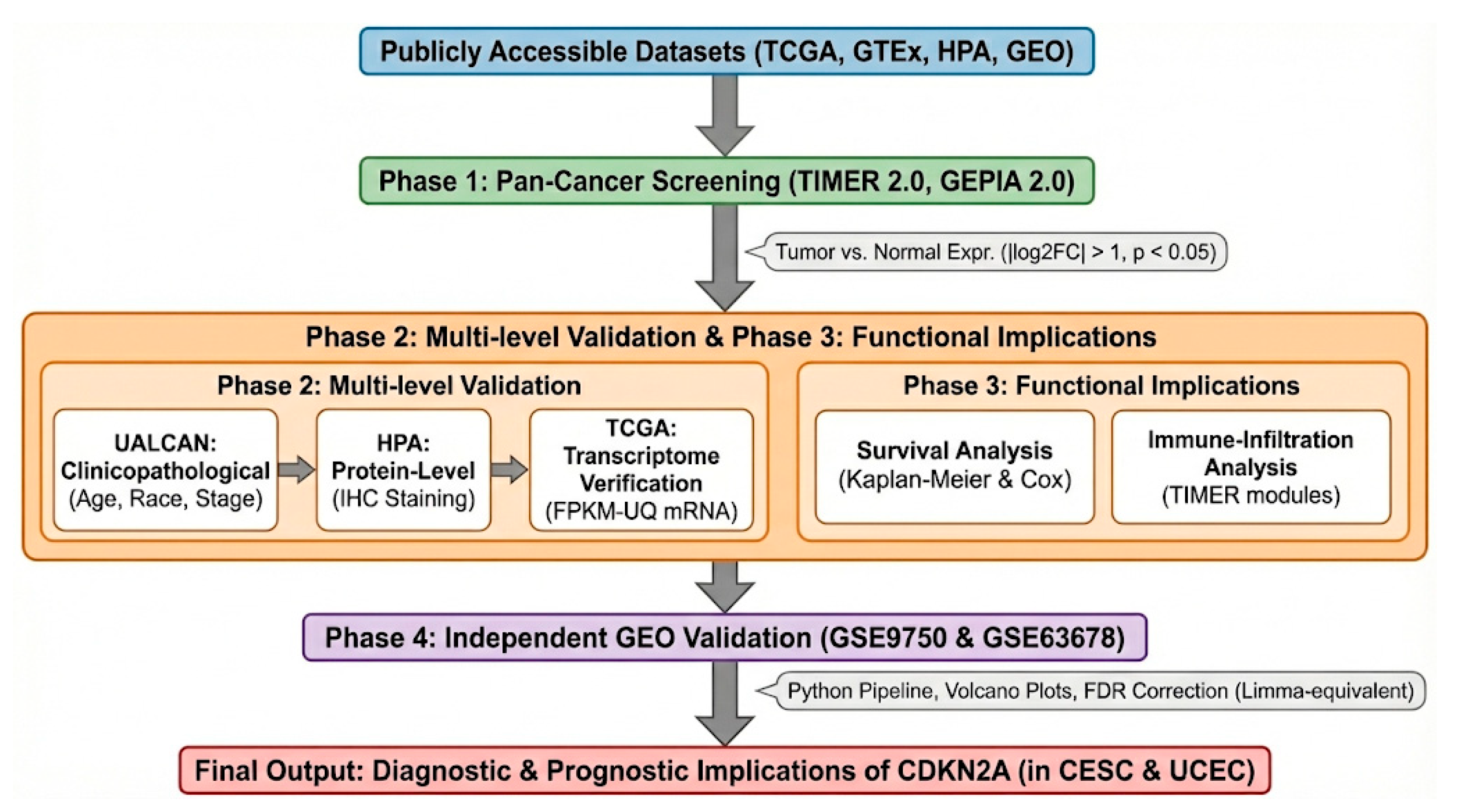
4]. This research aimed to determine the diagnostic and prognostic relevance of CDKN2A (p16^INK4a^) in HPV-associated cervical cancer and endometrial carcinoma through an integrated approach involving transcriptomic and proteomic analyses. Recognizing the role of HPV in inducing CDKN2A expression in cervical neoplasia, we investigated whether this molecular signature is similarly present in endometrial cancer by analyzing datasets from TCGA, GEPIA, UALCAN, HPA, and GEO. Our analyses focused on differential expression, clinicopathological associations, immune infiltration, survival outcomes, and cross-validation using GSE9750 and GSE63678. We suggested that HPV-driven dysregulation results in CDKN2A (p16^INK4a^) overexpression in cervical cancer and hypothesized that this pattern is also evident in endometrial carcinoma, thereby reinforcing its potential as a diagnostic biomarker. Additionally, we anticipated that CDKN2A expression levels would be linked to survival outcomes and variations in the immune microenvironment in a manner specific to the tumor type.
3. Results
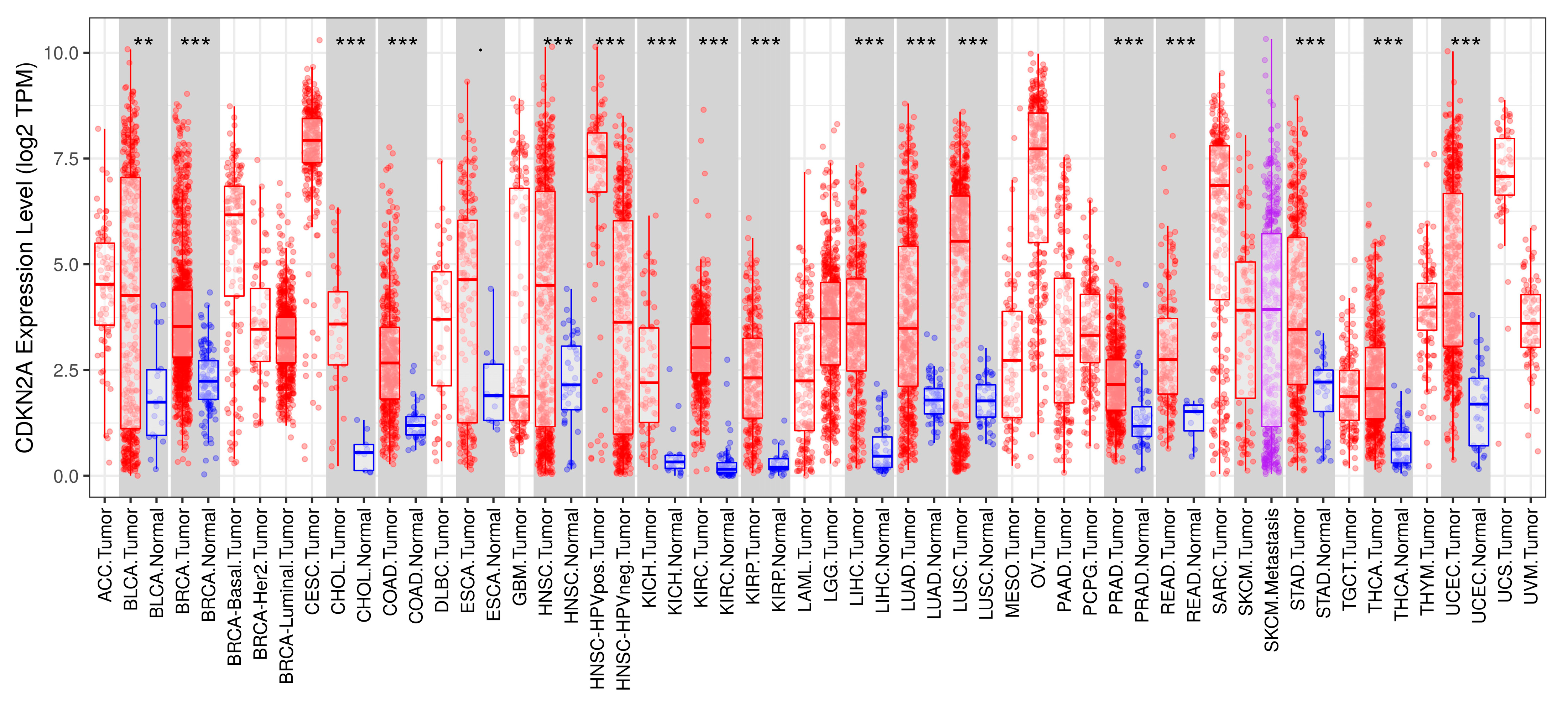
The first set of analyses examined expression profile of CDKN2A across different cancer types using the TIMER database (TIMER,
https://cistrome.shinyapps.io/timer/, accessed on 21 September 2025). The expression of CDKN2A was significantly elevated in tumor tissues compared to matched normal tissues across the majority of cancer types. As illustrated in
Figure 2, CDKN2A (log2 TPM) levels were upregulated in most TCGA tumor cohorts, including BLCA, BRCA, CESC, CHOL, COAD, ESCA, GBM, HNSC, KIRC, KIRP, LGG, LIHC, LUAD, LUSC, PAAD, PRAD, READ, SARC, STAD, THCA, and UCEC, with
p-values ranging from 0.01 to 0.0001. Only a limited number of cancers exhibited no significant difference in expression between tumor and adjacent normal tissues. Across multiple cohorts, boxplots and jitter distributions consistently demonstrated a higher median CDKN2A expression in tumors (red) compared to normal tissues (blue), indicating its frequent dysregulation in malignancy.
To validate the expression pattern of CDKN2A observed in TIMER across similar cancer types, we further analyzed data using the GEPIA database (
http://gepia.cancer-pku.cn, accessed on 21 September 2025). The results, presented in
Supplementary Figure S1, revealed that CDKN2A is significantly upregulated in multiple cancer types when comparing tumor tissues with their matched normal controls. Significant overexpression was observed in BLCA, BRCA, CESC, COAD, HNSC, KICH, KIRC, LIHC, LUAD, LUSC, PRAD, READ, STAD, THCA, and UCEC, as indicated by
p < 0.05. For each of these cancers, tumor samples exhibited a noticeably higher median CDKN2A expression level, highlighting a consistent dysregulation pattern across diverse tumor types. This finding supports the potential role of CDKN2A in tumorigenesis and malignant progression across multiple solid cancers. After filtering the GEPIA dataset to exclude cancer types with downregulated CDKN2A expression, a refined panel of tumors was identified that consistently demonstrated significant CDKN2A overexpression compared with normal tissues. The final set of up-regulated cancers included BLCA, BRCA, CESC, COAD, HNSC, KICH, KIRC, KIRP, LIHC, LUAD, LUSC, READ, STAD, and UCEC, all showing a marked elevation in CDKN2A levels (
p < 0.05). As illustrated in
Supplementary Figure S2, tumor samples in these cancer types exhibited a noticeably higher median CDKN2A expression relative to matched normal tissues, confirming a recurrent pattern of CDKN2A activation across multiple solid tumors. This refinement step further strengthens the evidence that CDKN2A upregulation is a common molecular feature in malignancies with proliferative and cell-cycle dysregulation.
Supplementary Figure S3 illustrates Kaplan–Meier survival analyses comparing early- and late-stage patient cohorts, generated using refined GEPIA filtering parameters. The analysis revealed no statistically significant difference in survival between the stage groups (log-rank
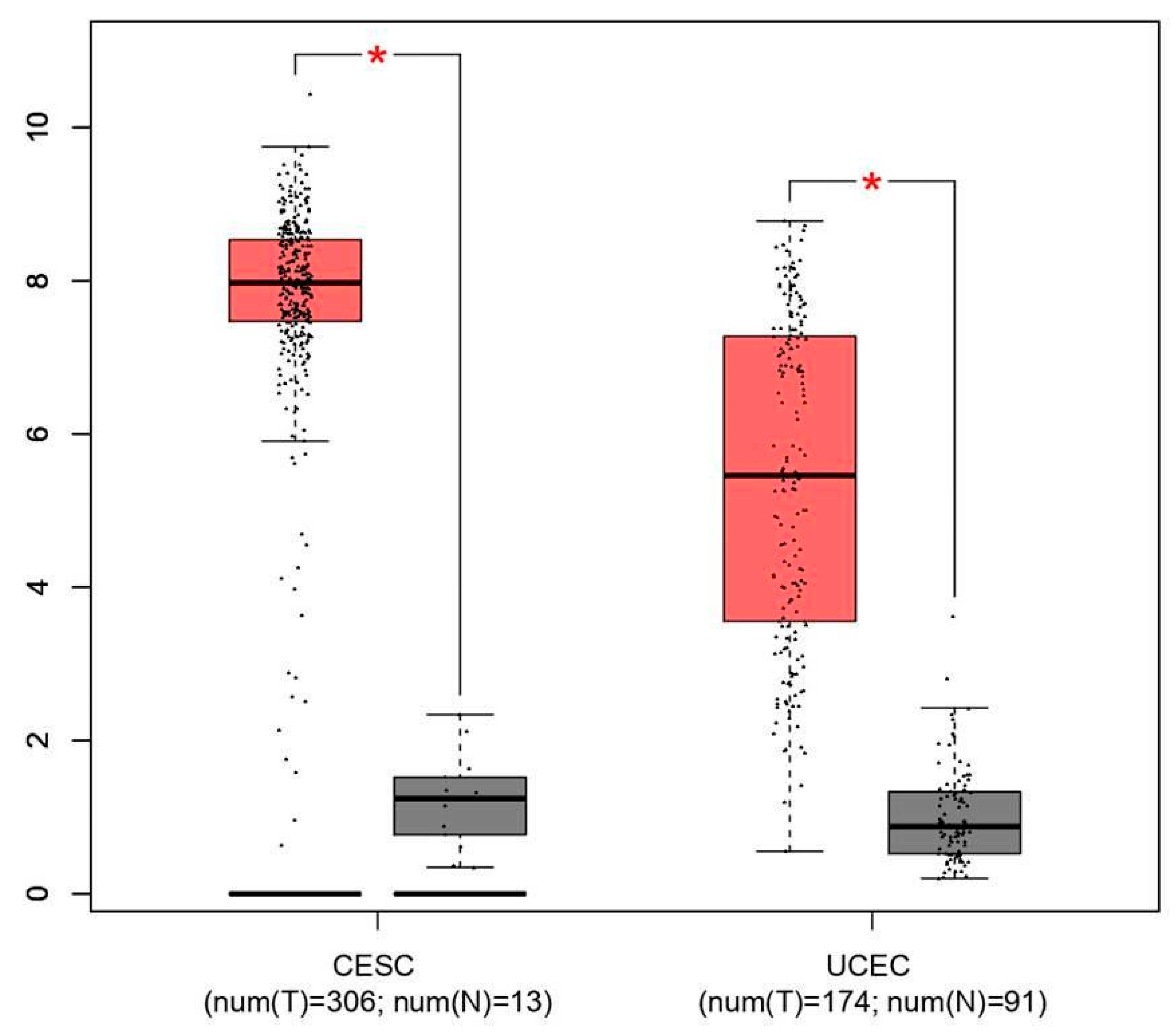
p = 0.57). This outcome is likely attributable to limited statistical power due to the small sample size of late-stage cases, rather than the absence of established stage-dependent prognostic effects. Consequently, this exploratory comparison was not utilized to inform tumor-type prioritization. Instead, the selection of cervical squamous cell carcinoma (CESC) and uterine corpus endometrial carcinoma (UCEC) for subsequent analyses was predicated on consistent CDKN2A overexpression identified through integrated differential expression analyses. Both cancer types exhibited clear tumor–normal expression separation (
p < 0.05;
Figure 3), thereby supporting their suitability for biomarker-focused investigation.
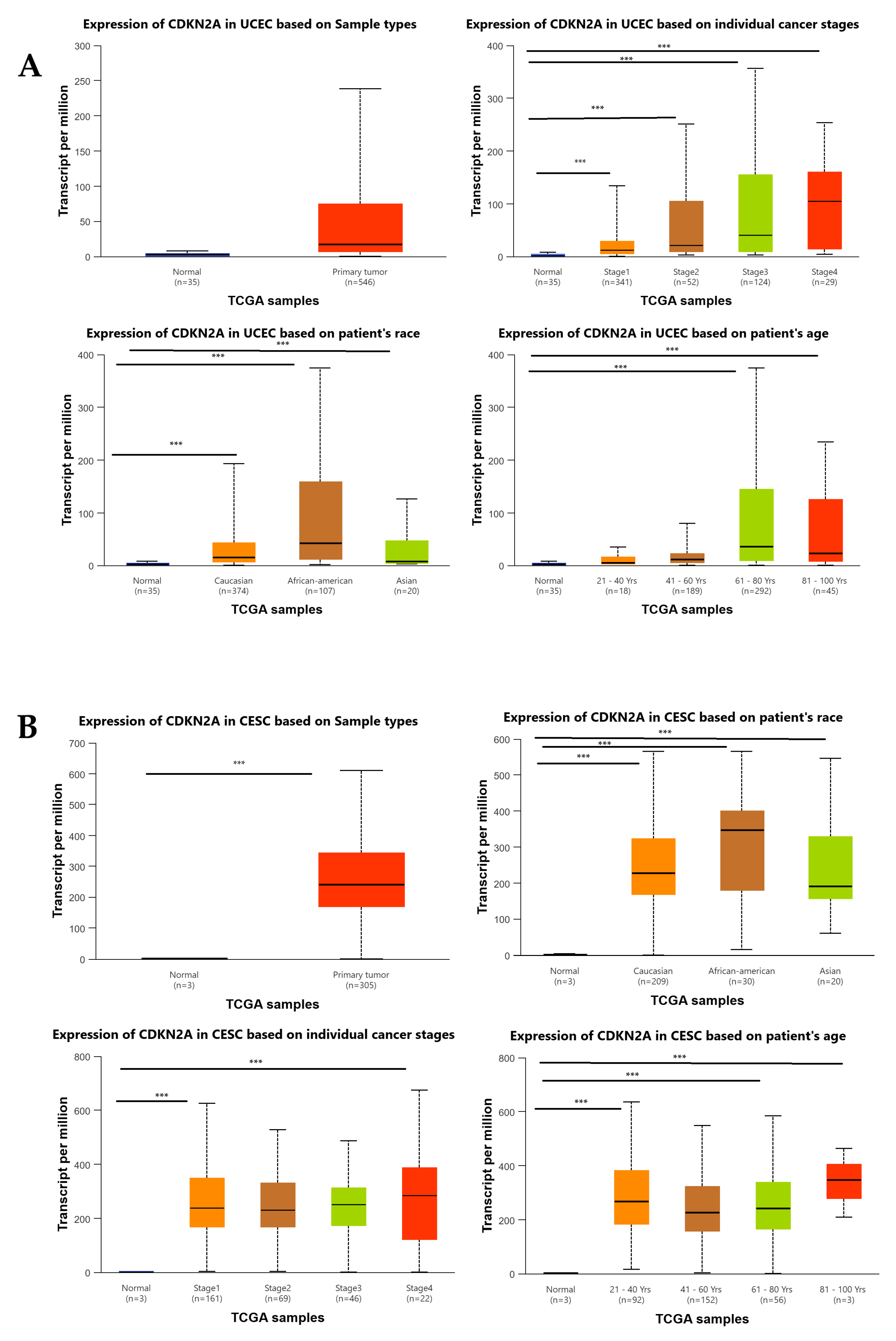
To further investigate the dysregulation of CDKN2A in gynecologic cancers, we examined its expression in UCEC and CESC using UALCAN, taking into account various clinical and demographic factors (
Figure 4A,B). In both cancer types, CDKN2A expression was significantly higher in primary tumor samples compared to normal tissues (
p < 0.0001), reinforcing its strong link to malignant transformation. In UCEC (
Figure 4A), CDKN2A expression showed a progressive increase with advancing tumor stages, with significantly elevated levels in stages 1–4 compared to normal endometrial tissue (
p < 0.0001). Age stratification revealed a clear age-dependent expression pattern, with individuals aged 61–80 years and 81–100 years exhibiting the highest CDKN2A levels (
p < 0.0001). Additionally, racial comparisons indicated that African American patients had significantly higher CDKN2A expression than Caucasian and Asian groups (
p < 0.001), suggesting potential molecular differences among ethnic populations. In CESC (
Figure 4B), a similar pattern was observed. CDKN2A expression was significantly elevated across all tumor stages compared to normal samples (
p < 0.001), with consistently high levels from stage 1 through stage 4. Expression also varied significantly among racial groups, with African American patients showing the highest CDKN2A levels, followed by Caucasian and Asian patients (
p < 0.001). Furthermore, age-group analysis revealed that tumor tissues from patients aged 21–40, 41–60, and 61–80 years all exhibited significantly higher CDKN2A expression than normal cervix samples (
p < 0.0001). Overall, these UALCAN findings indicate that CDKN2A overexpression is not only tumor-specific but also associated with key clinical and demographic factors, including tumor stage, age, and race, highlighting its potential as a biologically relevant diagnostic and prognostic biomarker in both UCEC and CESC.
Analysis of
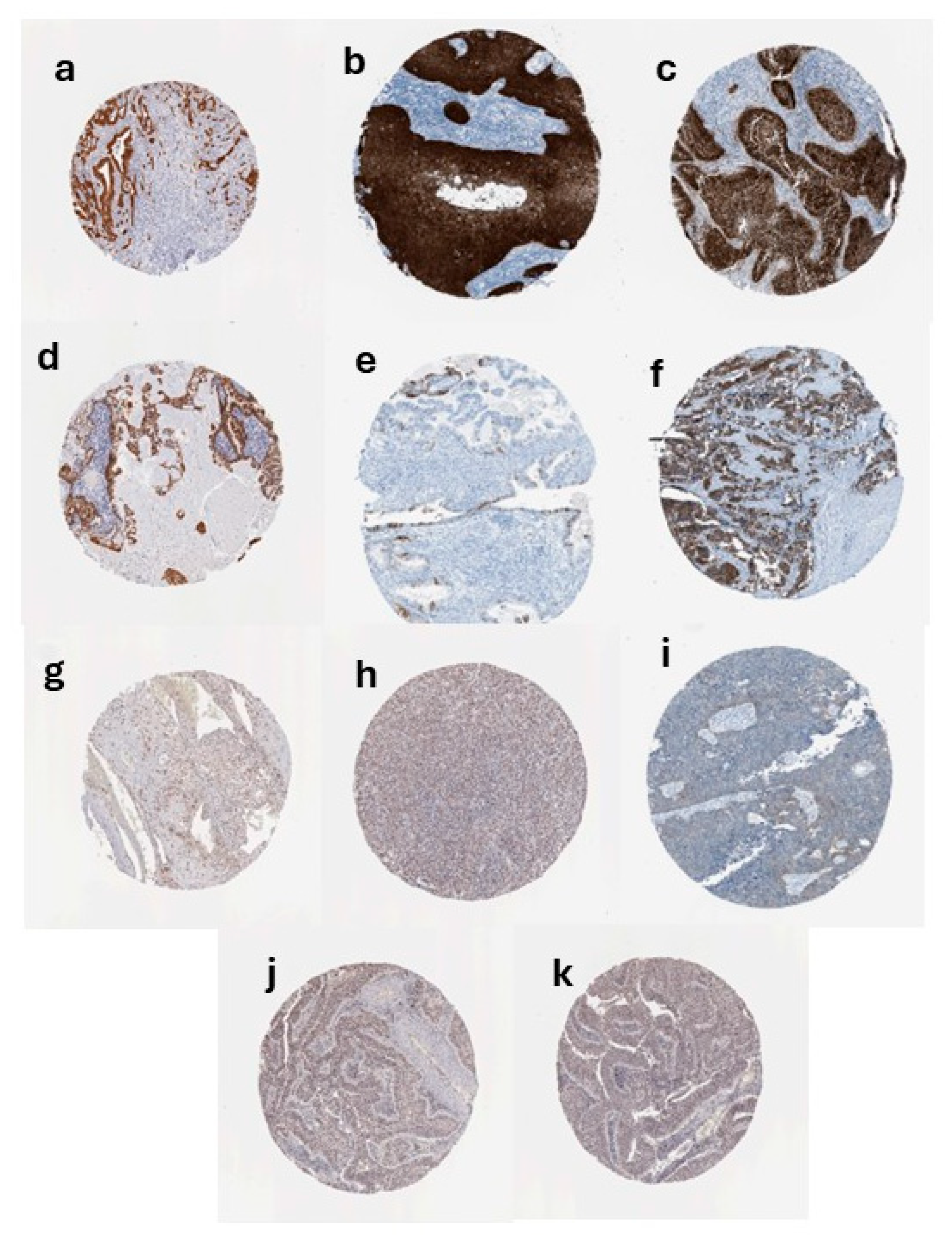
Figure 5 indicates that CDKN2A protein expression is markedly increased in CESC compared with normal cervical epithelium, as demonstrated by immunohistochemistry data from the HPA. Tumor cores exhibit a range of positive staining intensities: Strong nuclear and cytoplasmic staining in neoplastic epithelial cells (a–c), Moderate staining (d–f), and Low/weak staining (g–i), while normal cervix shows minimal to absent staining (j–k). Staining in tumors is predominantly localized to the nuclei with concurrent cytoplasmic signal, and is most conspicuous in the carcinoma cell nests; stromal elements are largely negative. These protein-level findings corroborate the transcriptomic overexpression observed in CESC and support the feasibility of CDKN2A/p16^INK4a^ as a tissue biomarker in cervical cancer. p16^INK4a^ IHC is widely used in cervical pathology and has recognized diagnostic and prognostic utility in HPV-associated disease, aligning with our IHC observations [
7].
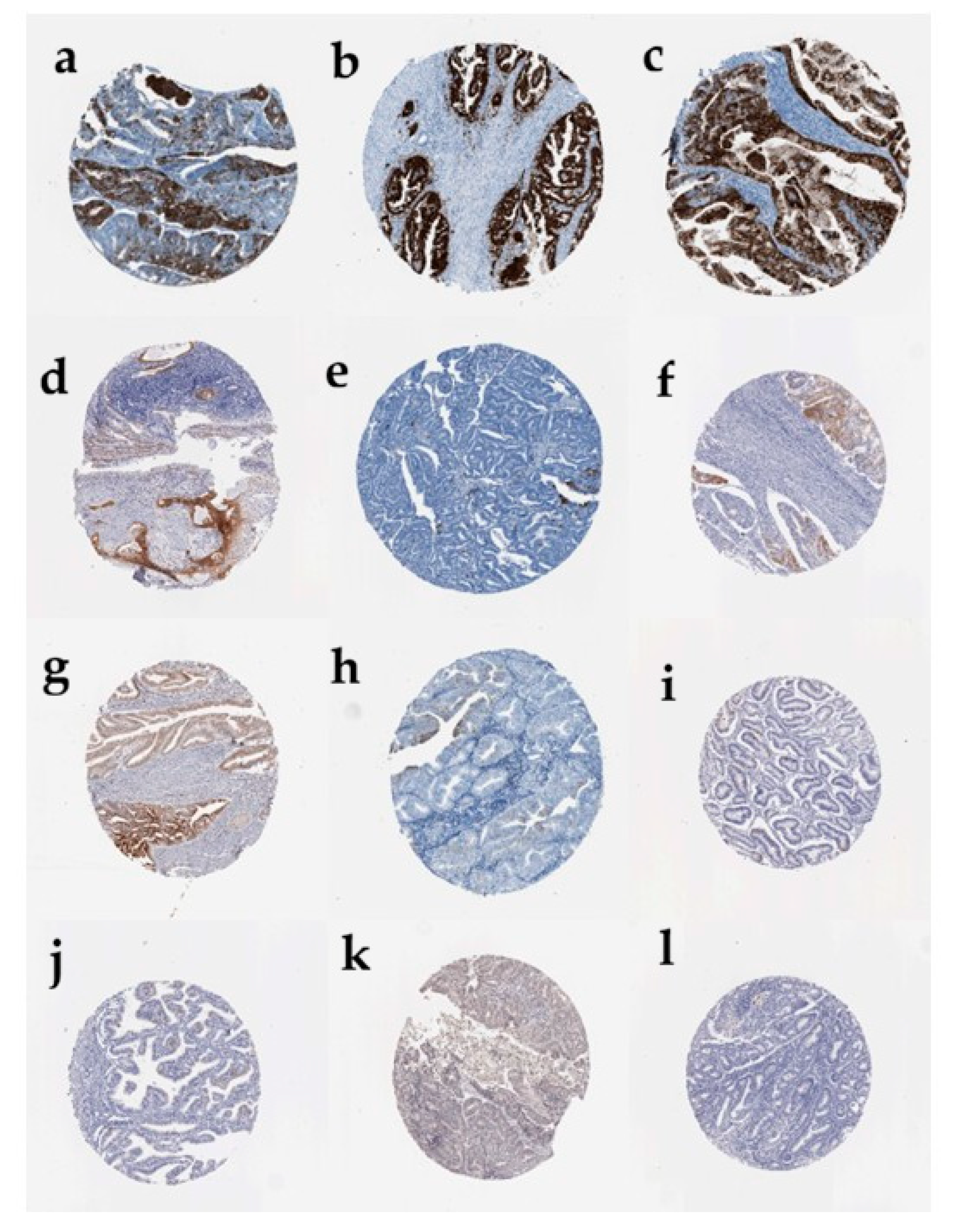
The Human Protein Atlas’s immunohistochemical analysis has revealed a marked increase in CDKN2A protein expression in endometrial carcinoma (UCEC) tissues compared to normal endometrial epithelium. Tumor samples displayed a spectrum of staining intensities, with a subset of UCEC tissues showing strong nuclear and cytoplasmic CDKN2A positivity (a–c), while other tumor cores exhibited moderate (d–f) or low/weak staining (g–i). In contrast, normal endometrial glandular tissue showed minimal or absent CDKN2A staining (j–l), indicating very low basal protein expression in non-malignant uterine epithelium. The staining pattern in tumors was predominantly localized to the nuclei of neoplastic epithelial cells, with variable cytoplasmic involvement, while the surrounding stromal regions remained largely negative. This protein-level overexpression corroborates the transcriptomic findings in UCEC and underscores the potential of CDKN2A as a clinically relevant diagnostic and prognostic biomarker in endometrial cancer (
Figure 6).
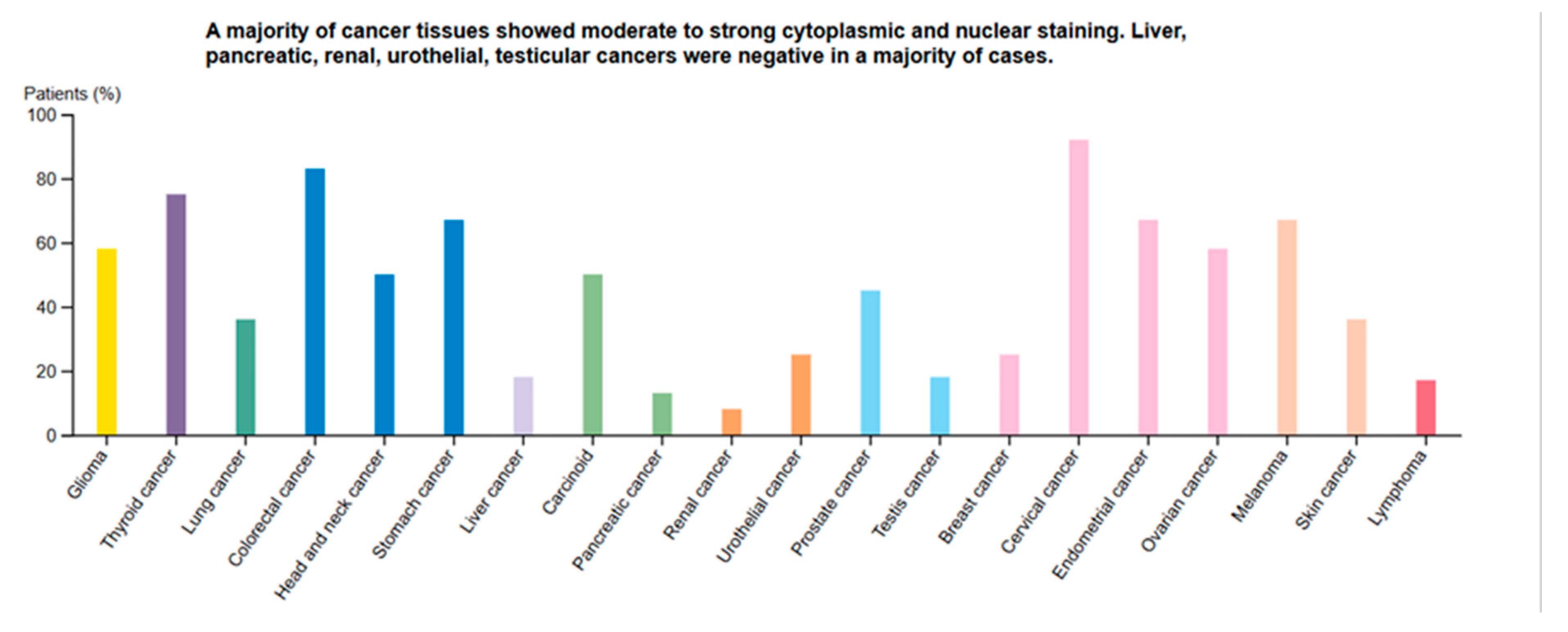
To evaluate the distribution of CDKN2A protein expression across various tumor types, we examined immunohistochemical data from the Human Protein Atlas (HPA) Pathology Atlas (
Figure 7). The bar chart summarizes the percentage of patient samples exhibiting moderate to strong cytoplasmic and nuclear staining for CDKN2A across 17 cancer types. The results indicated that CDKN2A was highly expressed in a majority of cervical (~90%) and endometrial (~65%) cancer tissues, confirming its consistent upregulation in gynecological malignancies. Elevated expression was also observed in colorectal, lung, thyroid, and head and neck cancers, with more than 50% of patient samples showing positive staining. In contrast, liver, pancreatic, renal, urothelial, and testicular cancers demonstrated low or absent CDKN2A staining in most cases, suggesting tissue-specific regulation of CDKN2A expression. Overall, these outcomes support the widespread yet variable expression of CDKN2A protein among human cancers, with particularly high prevalence in cervical and endometrial cancers, further validating its potential as a diagnostic and prognostic biomarker in gynecologic oncology.
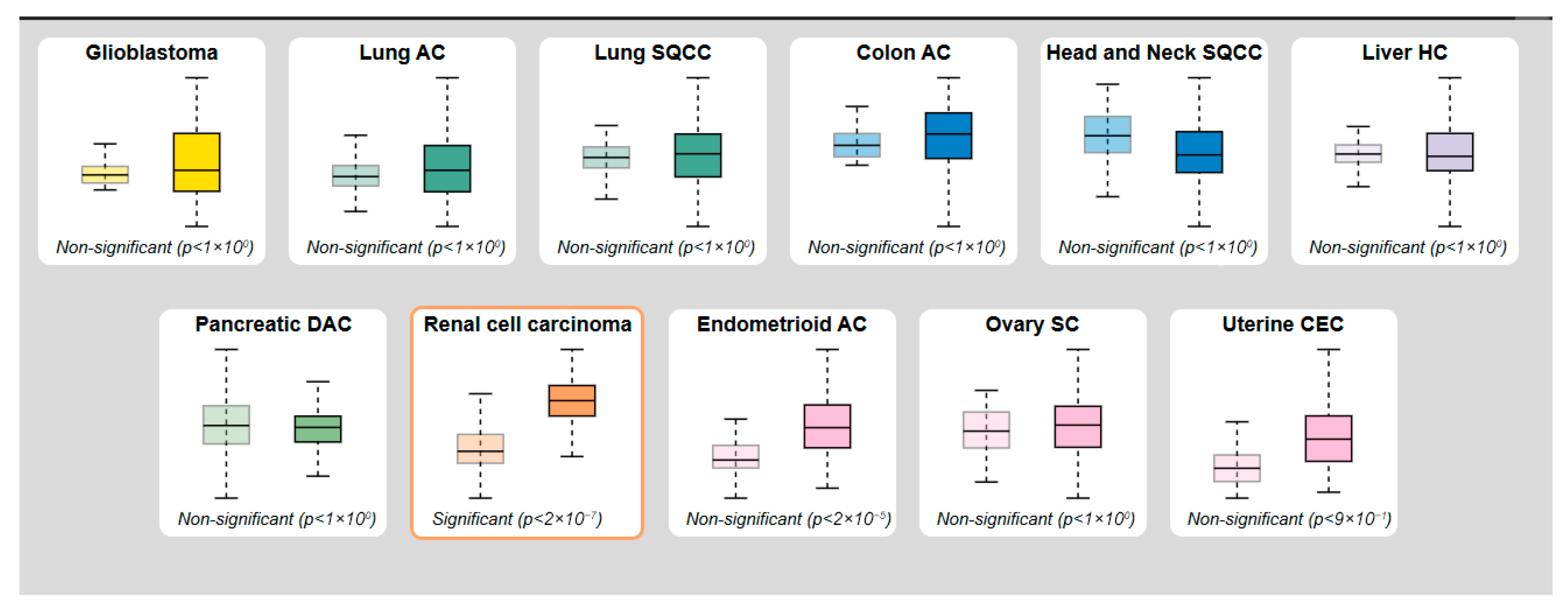
To further validate CDKN2A transcript levels across various malignancies, RNA sequencing data from the TCGA dataset integrated in the Human Protein Atlas (HPA) were analyzed (
Figure 8). The boxplot analysis compared CDKN2A mRNA expression between tumor and corresponding normal tissues across multiple cancer types. Among the cancers examined, renal cell carcinoma exhibited a statistically significant increase in CDKN2A expression (
p < 2 × 10
−7), while other tumor types, including cervical squamous cell carcinoma (CESC) and endometrioid adenocarcinoma (UCEC), displayed non-significant expression differences (
p > 0.05). Analysis of TCGA RNA-seq data accessed through the Human Protein Atlas indicated no statistically significant tumor–normal differences in CDKN2A transcript levels in either CESC or UCEC. The interpretation of this observation requires caution due to the limited availability of normal samples in TCGA-only comparisons, which compromises statistical power. Conversely, integrated analyses utilizing GEPIA, which merges TCGA tumor samples with GTEx normal tissues, have revealed markedly elevated CDKN2A expression patterns. Independent validation through GEO datasets has further corroborated the increased expression across various cohorts. In total, these findings imply that the differences observed across platforms are indicative of variations in cohort composition rather than biological contradictions. Consequently, conclusions are drawn from integrative multi-cohort evidence rather than relying on single-dataset comparisons alone.
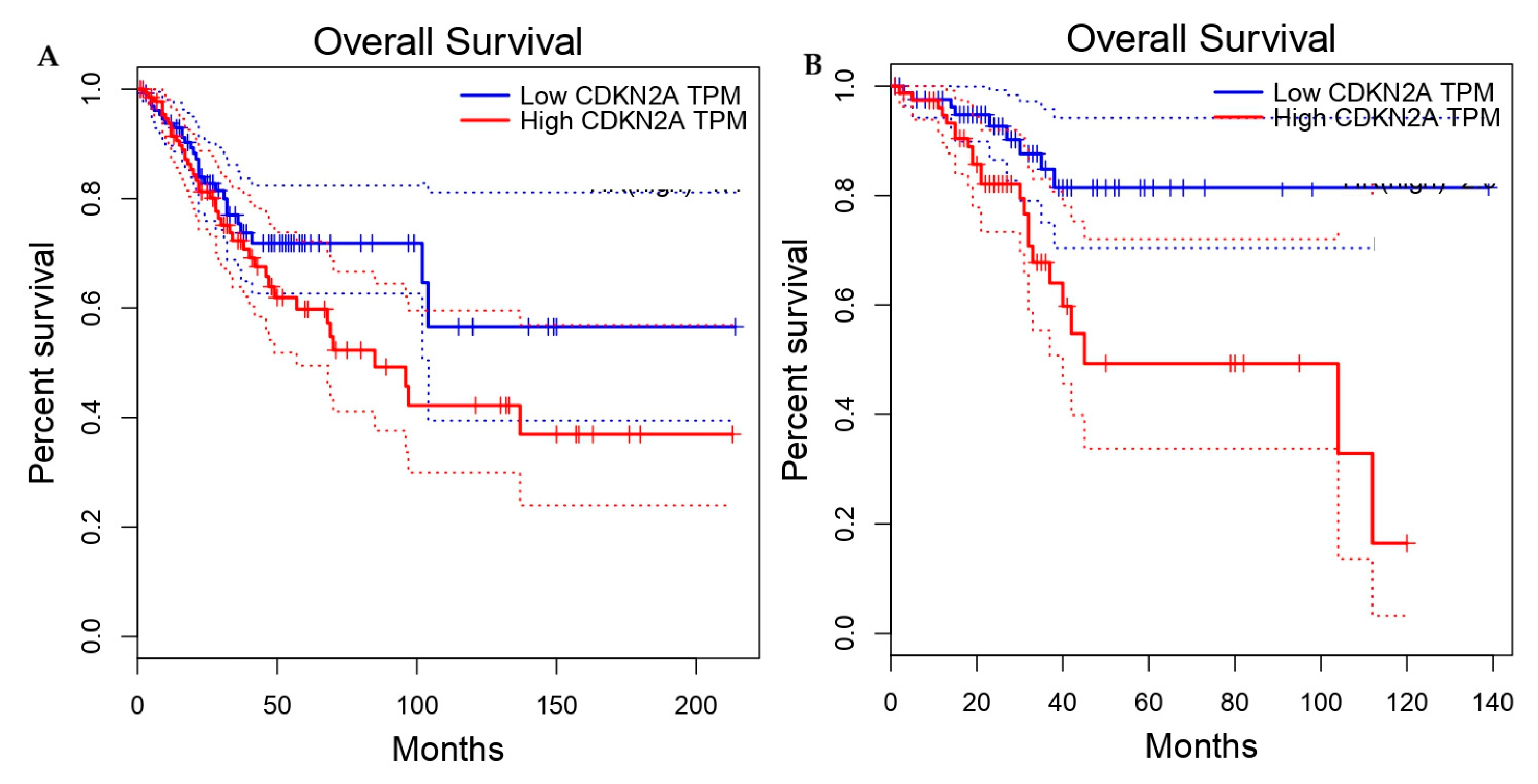
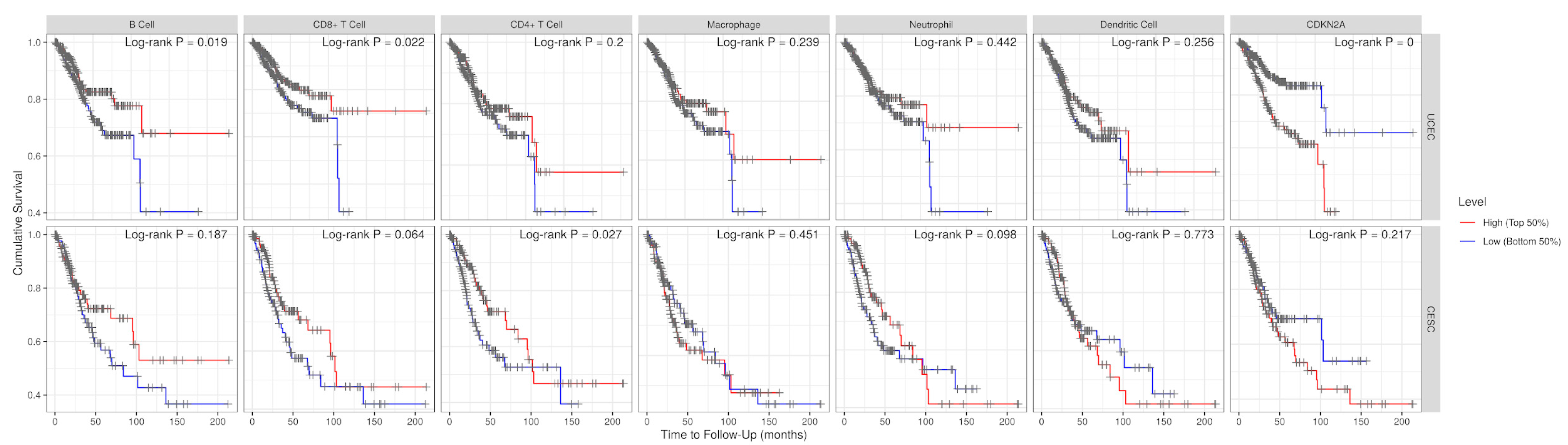
Preliminary assessments of baseline survival were conducted using Kaplan–Meier stratification derived from GEPIA, based on median CDKN2A expression, to determine primary prognostic effects. Subsequent analyses utilizing TIMER were employed to investigate immune-contexture interactions affecting survival patterns. These analyses should be regarded as complementary mechanistic investigations rather than primary prognostic evidence. The Kaplan–Meier survival analysis, stratified by median CDKN2A expression levels, demonstrated distinct prognostic patterns across different tumor types. In CESC, increased CDKN2A expression did not show a statistically significant correlation with overall survival (log-rank
p = 0.13; HR = 1.4), indicating a limited capacity for prognostic differentiation (
Figure 9A). Conversely, in UCEC, a significant correlation was identified between elevated CDKN2A expression and reduced survival rates (log-rank
p = 0.0055; HR = 2.9), highlighting the prognostic relevance that is contingent on the tumor context (
Figure 9B). These results are consistent with the presence of tumor-specific regulatory mechanisms and emphasize the necessity of assessing CDKN2A within the molecular framework specific to each disease. Survival analyses demonstrated tumor-specific differences in the prognostic relevance of CDKN2A expression. In cervical squamous cell carcinoma (CESC), higher CDKN2A expression showed no statistically significant association with overall survival (log-rank
p = 0.217; HR = 1.37, 95% CI 0.85–2.19). This lack of prognostic discrimination is biologically consistent with HPV-driven tumorigenesis, where p16 overexpression represents an early and nearly ubiquitous consequence of E7-mediated RB pathway inactivation. Because most tumor cells already exhibit maximal pathway activation, variation in CDKN2A expression is unlikely to stratify outcome. In contrast, uterine corpus endometrial carcinoma (UCEC) analysis revealed a significant association between elevated CDKN2A expression and poorer overall survival (log-rank
p = 0.0023; HR = 3.13, 95% CI 1.44–6.76). This finding suggests that CDKN2A upregulation in UCEC reflects tumor-context-specific biological processes distinct from viral oncogenesis. Age-associated increases in p16 expression and links to cellular senescence pathways may contribute to enrichment within aggressive molecular subtypes or stress-induced checkpoint activation states. Accordingly, prognostic interpretation of CDKN2A must remain tumor-context dependent and strictly aligned with statistical evidence (
Figure 10).
4. Validation
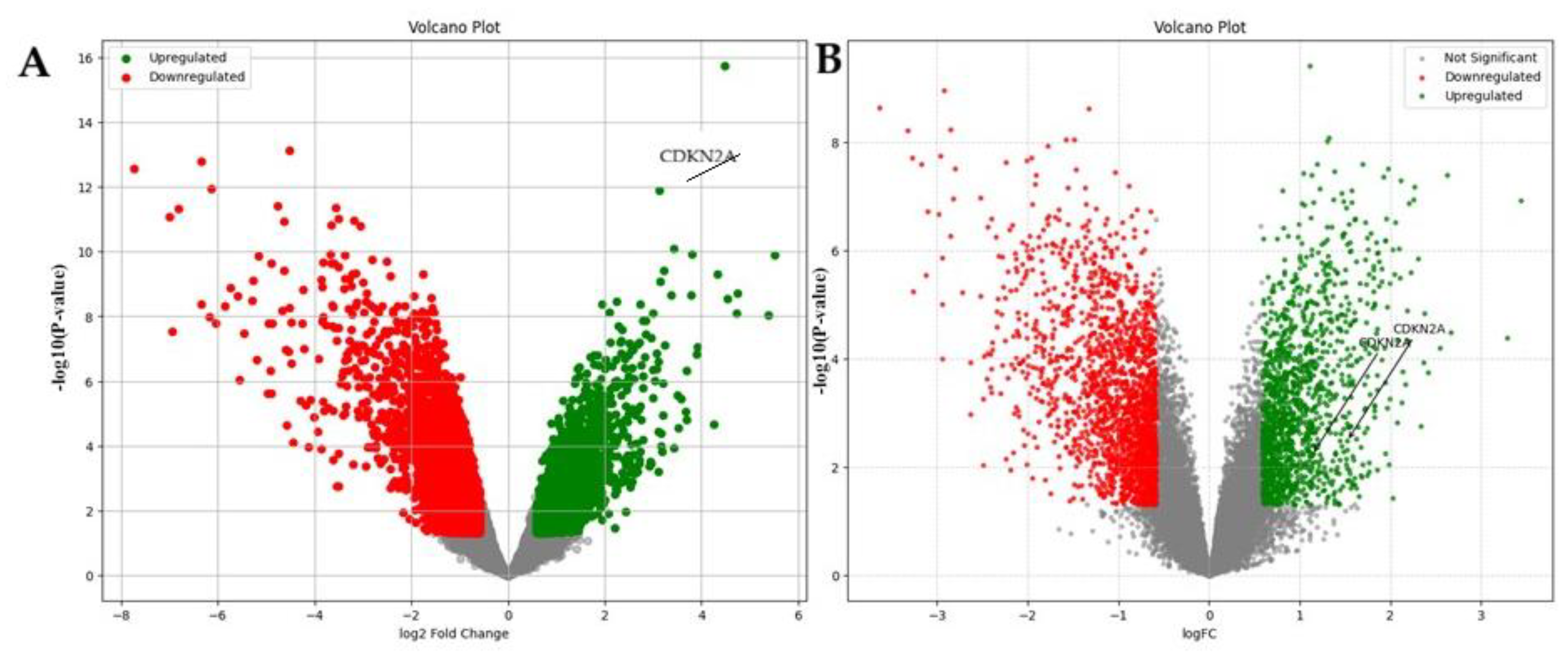
To validate CDKN2A differential expression at the transcriptomic level, we examined two independent GEO microarray datasets related to cervical cancer (GSE9750;
Figure 11A) and endometrial cancer (GSE63678;
Figure 11B). In both datasets, CDKN2A emerged as one of the significantly upregulated genes in tumor samples compared to normal tissues, as indicated by its position in the upper right quadrant of the volcano plots. The distinct separation of CDKN2A from non-significant genes, along with its high log
2 fold-change and low
p-value, underscores robust transcriptional activation in both cancer types. These findings validate the overexpression of CDKN2A in independent cohorts and affirm its consistency as a tumor-associated gene signature in gynecologic malignancies.
CDKN2A demonstrated consistent tumor-associated dysregulation across transcriptomic and proteomic platforms, with particularly pronounced effects at the protein level, as evidenced by strong tumor-specific staining in immunohistochemistry. RNA-based findings varied among cohorts, with significant elevation observed in integrated GEPIA and GEO analyses, whereas TCGA-only comparisons did not yield statistical significance. These findings highlight the necessity of multi-platform interpretation when assessing biomarker behavior. The IHC staining showed strong p16^INK4a^ presence in tumor tissues, while normal tissues had little or no staining, highlighting its specific overexpression in tumors. These findings confirm that CDKN2A is a reliable marker to tell apart cancerous from non-cancerous gynecologic tissues. This matches current medical practice, where p16^INK4a^ staining helps diagnose HPV-related cervical cancer. For prognosis, CDKN2A showed different patterns depending on the cancer type. Higher CDKN2A levels were linked to worse survival in CESC, suggesting a negative outlook for cervical cancer. However, its impact on UCEC survival was limited or neutral, possibly due to differences in tumor types, molecular subtypes, or immune environments.
In short, CDKN2A is a strong diagnostic marker for cervical and endometrial cancers, backed by consistent data. While it is a clear prognostic marker in CESC, it is less so in UCEC, showing the need to consider specific tumor contexts and biological factors that might affect protein levels.
Diagnostic Classification Performance of CDKN2A in Independent GEO Cohorts:
To formally assess the discrimination between tumor and normal samples, we conducted a cross-validated ROC analysis utilizing independent GEO datasets. In the CESC dataset GSE9750 (n = 65; 41 tumor, 24 normal), CDKN2A exhibited exceptional diagnostic discrimination, achieving a cross-validated AUC of 0.982 (95% CI: 0.946–1.000). At the Youden-optimal threshold, sensitivity was 95.1%, specificity was 100%, and balanced accuracy was 0.976. The ROC curve indicated nearly complete separation between tumor and normal samples, corroborating the robust classification performance. Conversely, in the UCEC dataset GSE63678 (n = 35; 18 tumor, 17 normal), CDKN2A displayed moderate discriminatory capability, with a cross-validated AUC of 0.761 (95% CI: 0.587–0.909). Sensitivity and specificity at the optimal threshold were 77.8% and 70.6%, respectively, with a balanced accuracy of 0.742. The broader confidence interval reflects the smaller cohort size and increased heterogeneity. These results provide quantitative evidence supporting CDKN2A as a potent diagnostic marker in CESC and a potential diagnostic adjunct in UCEC, with performance contingent on the cohort.
5. Discussion
This research offers a thorough multi-omics assessment of CDKN2A (p16^INK4a^) expression in cervical squamous cell carcinoma (CESC) and uterine corpus endometrial carcinoma (UCEC). By integrating transcriptomic, proteomic, and clinical outcome data from a variety of independent sources, we confirm that CDKN2A is consistently dysregulated in both types of cancer, with particularly pronounced tumor-specific protein expression. These findings endorse CDKN2A as a dependable diagnostic biomarker in gynecologic oncology, although its prognostic value may vary depending on the context. Further pan-cancer analysis revealed extensive CDKN2A upregulation across a range of tumor types, corroborating previous TCGA-based studies that identify p16^INK4a^ activation as a prevalent molecular characteristic of malignant transformation, linked to the disruption of the RB–E2F cell-cycle checkpoint [
13]. In the context of cervical cancer, the overexpression of CDKN2A is mechanistically linked to high-risk human papillomavirus (HPV) infection. The HPV E7 oncoprotein interacts with and facilitates the degradation of the retinoblastoma (RB) tumor suppressor protein, resulting in deregulated E2F transcriptional activity and a compensatory increase in p16^INK4a^ expression. This molecular feedback mechanism explains the characteristic strong and diffuse nuclear and cytoplasmic p16 staining observed in HPV-driven cervical neoplasia [
14]. Our results align with previous molecular and histopathological studies that demonstrate a close correlation between p16 overexpression, RB loss, and high-risk HPV infection in cervical tumors [
4,
14] Consequently, p16^INK4a^ immunohistochemistry is widely recognized as a surrogate marker for transforming HPV infection and is routinely used in diagnostic practice. The diagnostic importance of p16^INK4a^ in cervical pathology is well-established in international guidelines. The College of American Pathologists (CAP) and the American Society for Colposcopy and Cervical Pathology (ASCCP) advocate for p16 immunostaining in the classification of high-grade squamous intraepithelial lesions and in resolving morphologically ambiguous cases. Extensive clinicopathological studies report p16 positivity in over 95–99% of CIN3 lesions and invasive cervical carcinomas, with minimal expression in benign cervical epithelium. The strong protein-level expression observed in our CESC cohort is thus consistent with current clinical standards and underscores the diagnostic reliability of CDKN2A in HPV-associated cervical disease.
In contrast to cervical cancer, uterine corpus endometrial carcinoma (UCEC) is largely independent of human papillomavirus (HPV) involvement. Meta-analyses and molecular investigations reveal that only a minor fraction of endometrial carcinomas contain HPV DNA, indicating that HPV is not a significant etiological factor in this malignancy [
5]. Instead, UCEC is primarily driven by hormonal dysregulation and recurrent genetic alterations in PTEN, PIK3CA, KRAS, CTNNB1, and TP53, which define distinct molecular subtypes [
5]. Despite this fundamental etiological distinction, our analyses identified significant overexpression of CDKN2A at the protein level in a considerable subset of UCEC samples. These findings align with previous reports of p16^INK4a^ overexpression in high-grade serous and dedifferentiated endometrial carcinomas, where it is believed to result from oncogenic stress, RB pathway disruption, or epigenetic deregulation rather than viral oncogenesis [
15,
16]. While p16 overexpression in cervical cancer is classically attributed to HPV-mediated RB inactivation, elevated CDKN2A expression may also arise through HPV-independent mechanisms relevant to UCEC biology. CDKN2A functions as a key mediator of cellular senescence, and its expression increases with aging and stress-induced chromatin depression, leading to CDK4/6 inhibition and cell-cycle arrest [
17]. Oxidative stress and DNA-damage signaling can further induce p16 independently of viral pathways [
18], linking its expression to genomic instability and cellular stress responses. In addition, oncogene activation or tumor-suppressor loss may trigger senescence programs that elevate p16 as an antiproliferative safeguard. These mechanisms collectively provide biological plausibility for p16 elevation in HPV-negative malignancies and support interpreting CDKN2A upregulation in UCEC as a marker of cell-cycle dysregulation rather than viral oncogenesis [
18].
In addition, consideration should be given to the molecular heterogeneity of endometrial cancer, particularly the “p53-mutant” or serous-like phenotype. Uterine serous carcinomas frequently exhibit diffuse p16 overexpression despite the absence of HPV infection, demonstrating that CDKN2A activation in these tumors reflects HPV-independent oncogenic processes rather than viral signaling [
19].
Immunophenotypic studies further show that tumors displaying mutation-type p53 staining together with strong p16 positivity are strongly associated with serous histology, indicating distinct pathogenic mechanisms compared with endometrioid subtypes [
19]. This phenotype is consistent with the high prevalence of TP53 mutation and protein accumulation observed in serous endometrial carcinoma [
19]. Prior experimental studies have shown that oncogenic stress and CDK4/6–pRB axis disruption can induce p16 expression; however, our analysis cannot confirm these mechanisms and instead demonstrates expression associations consistent with such models [
20].
This suggests that p16 induction represents a convergent molecular response to cell-cycle dysregulation shared by both HPV-dependent and HPV-independent gynecologic tumors. Analyzing CDKN2A transcript expression across various datasets necessitates consideration of the cohort structure specific to each platform. Comparisons limited to TCGA, as derived from HPA, revealed non-significant differences between tumor and normal samples, likely due to the limited representation of normal samples. Conversely, integrated analyses from GEPIA and independent validation through GEO consistently indicated elevated expression patterns. These findings suggest that the apparent discrepancies are attributable to statistical limitations rather than biological contradictions. Therefore, conclusions are drawn from convergent evidence across multiple cohorts rather than inferring post-transcriptional regulation without experimental validation. In contrast, immunohistochemistry showed strong and consistent p16 protein accumulation in tumor tissues. The apparent discrepancy between transcriptomic datasets requires cautious interpretation. The lack of significant CDKN2A mRNA differences observed in TCGA-derived comparisons should not be interpreted as evidence of biological discordance, as these analyses rely on a very limited number of normal samples for certain tumor types, resulting in reduced statistical power. In contrast, GEPIA integrates TCGA tumor data with GTEx normal tissue cohorts, providing a more representative baseline and likely explaining the significant upregulation observed in our analysis. Independent validation using GEO datasets further supports transcriptional elevation of CDKN2A across platforms. Collectively, these findings indicate that differences across analytical outputs are primarily attributable to dataset composition and sampling limitations rather than post-transcriptional regulatory mechanisms. Accordingly, interpretation of CDKN2A mRNA expression in this study is based on integrated and independently validated cohorts, while TCGA-only comparisons are acknowledged as methodologically constrained. These findings highlight the necessity of integrating proteomic data with transcriptomic analyses when evaluating candidate biomarkers for clinical use. Survival analyses have identified tumor-type-specific variations in the prognostic significance of CDKN2A expression. The survival curves, generated through explicit median-based stratification, further underscore the context-dependent prognostic behavior of CDKN2A, revealing non-significant discrimination in HPV-driven cervical tumors and significant risk stratification in endometrial carcinoma. In cervical squamous cell carcinoma (CESC), elevated CDKN2A expression showed no statistically significant association with overall survival (log-rank
p = 0.217; HR = 1.37, 95% CI 0.85–2.19). This limited prognostic discrimination is biologically consistent with HPV-driven tumorigenesis, in which p16 overexpression represents an early and nearly ubiquitous consequence of E7-mediated RB pathway inactivation [
21,
22]. Because most cervical tumor cells already exhibit maximal pathway activation, variation in CDKN2A expression is unlikely to stratify clinical outcome, reinforcing its role as a diagnostic rather than prognostic biomarker.
In contrast, uterine corpus endometrial carcinoma (UCEC) demonstrated a significant association between elevated CDKN2A expression and poorer overall survival (log-rank
p = 0.0023; HR = 3.13, 95% CI 1.44–6.76). This suggests that CDKN2A upregulation in endometrial cancer reflects tumor-context-specific biological processes distinct from viral oncogenesis. Age-associated increases in p16 expression and links to cellular senescence pathways may contribute to enrichment within aggressive molecular subtypes or reflect stress-induced checkpoint activation. Collectively, these findings underscore that CDKN2A should not be interpreted as a universal prognostic marker; rather, its clinical implications are strongly tumor-dependent and must be evaluated in the context of underlying molecular etiology (
Figure 9).
The context-dependent nature of CDKN2A function across tumor types further underscores the importance of interpreting this biomarker within its molecular and tissue-specific landscape. While CDKN2A overexpression in gynecologic malignancies reflects cell-cycle checkpoint activation and stress-response signaling, melanoma represents a contrasting paradigm in which CDKN2A is frequently inactivated or deleted. Germline mutations in CDKN2A constitute a major hereditary risk factor for melanoma, and loss of its function enables escape from oncogene-induced senescence triggered by activating BRAF mutations. These opposing biological behaviors highlight the role of p16 as a cellular stress sensor: overexpressed when regulatory pathways are overwhelmed and absent when checkpoint control is eliminated. Incorporating this perspective reinforces the view that CDKN2A cannot be interpreted as a uniform biomarker across cancers but must be evaluated within tumor-specific molecular context [
23].
Independent validation using GEO microarray datasets (GSE9750 for CESC and GSE63678 for UCEC) has confirmed the significant upregulation of CDKN2A in both malignancies, thereby supporting the reproducibility of our findings across various platforms. The alignment observed between RNA-based validation and protein-level immunohistochemistry enhances the credibility of CDKN2A as a diagnostic marker for distinguishing between malignant and non-malignant gynecologic tissues. Clinically, these findings extend the role of p16 beyond HPV-associated cervical neoplasia, indicating its potential utility in the stratification of endometrial tumors, especially high-grade subtypes that may be challenging to differentiate morphologically [
4,
6]. From a translational standpoint, these results highlight the significance of CDKN2A as a marker of cell-cycle dysregulation in gynecologic oncology. In cervical cancer, p16^INK4a^ immunohistochemistry remains a vital diagnostic tool for confirming HPV-driven lesions. In endometrial carcinoma, evaluating CDKN2A expression may help identify biologically aggressive subgroups and could complement molecular classification schemes [
24]. Moreover, as p16 overexpression indicates disruption of the CDK4/6–RB axis, These findings emphasize the significance of CDKN2A as an indicator of cell-cycle dysregulation. Although earlier experimental research suggests that targeting the CDK4/6 pathway or modulating the immune system may have therapeutic potential, the current study does not investigate treatment responses. Therefore, these implications should be considered as generating hypotheses rather than providing conclusions with direct clinical application. In summary, this research delivers a comprehensive multi-omics analysis of CDKN2A (p16^INK4a^) in the context of both HPV-associated CESC and HPV-independent UCEC. By synthesizing data from transcriptomic, proteomic, clinical, and independent validation sources, we identify tumor-specific patterns of CDKN2A dysregulation with unique diagnostic implications. The findings are further substantiated by formal diagnostic classification analysis using independent GEO cohorts. In CESC, CDKN2A demonstrates outstanding tumor–normal discrimination, evidenced by a cross-validated AUC of 0.982, along with high sensitivity and specificity, achieving near-complete separation between malignant and normal tissues. This performance is consistent with its recognized role as a surrogate marker for HPV-mediated RB pathway inactivation, underscoring its robust diagnostic utility in cervical pathology. In contrast, CDKN2A shows moderate and cohort-dependent discrimination in UCEC (AUC = 0.761), indicative of greater molecular heterogeneity and HPV-independent oncogenic processes. Although CDKN2A expression is elevated at the protein level in a significant subset of UCEC cases, its classification performance suggests it should be considered a diagnostic adjunct rather than a standalone biomarker in endometrial carcinoma. Overall, these results highlight the importance of interpreting CDKN2A expression within the specific tumor context. In CESC, CDKN2A upregulation is a biologically coherent outcome of HPV-driven RB disruption, providing strong tumor–normal discriminatory power. In UCEC, CDKN2A overexpression may reflect alternative oncogenic stress pathways or senescence-associated processes independent of HPV. However, because this study is based on transcriptomic and proteomic association data, these mechanistic interpretations remain hypothesis-generating and require direct functional validation. Importantly, this study represents an integrative bioinformatics analysis of publicly available datasets. While the observed expression patterns are biologically consistent with established RB pathway biology and senescence-associated signaling, direct mechanistic conclusions cannot be drawn without experimental validation elevated in integrated cohorts.



 ,
,