The Role of COL1A1, COL5A1, ACTN3, MMP3, and GDF5 Gene Variants in Common Sports Injuries: Systematic Review of ACL Rupture, Achilles Tendinopathy, and Stress Fractures



Abstract
1. Introduction
- •
- COL1A1 (Collagen Type I Alpha 1 Chain): Encodes a subunit of type I collagen, the primary structural protein found in ligaments, tendons, and bone. A well-studied variant in this gene (the rs1800012 polymorphism in the Sp1-binding site) alters collagen fibril properties, which can reduce tissue tensile strength. As a result, this variant has been associated with an increased risk of soft tissue injuries, such as ligament tears and tendon ruptures [16,17].
- •
- COL5A1 (Collagen Type V Alpha 1 Chain): This gene encodes a component of type V collagen, which serves as a regulator of collagen fibril formation and organisation in connective tissue. The rs12722 polymorphism of COL5A1 has been associated with variability in tissue flexibility and stiffness, and it is known to affect one’s susceptibility to tendinopathy and ligament injuries. In particular, this polymorphism is associated with a greater prevalence of Achilles tendinopathy and ACL ruptures, suggesting that collagen V reflects a person’s ability for structural tissue integrity and resilience to injury in tendons and ligaments [30].
- •
- ACTN3 (Alpha-Actinin-3): Encodes α-actinin-3, a protein predominantly present in fast-twitch (type II) muscle fibres, which serve an important role in the performance of fast, explosive movements. A common polymorphism in the gene, R577X, either permits the presence (R allele) or absence (X allele) of the functional protein α-actinin-3. The absence of α-actinin-3 (XX genotype) changes muscle fibre composition and may compromise power output and fatigue resistance. Genotype XX has been associated with increased risk for specific musculoskeletal injuries, particularly those incurred while participating in sports that require powerful sprinting, jumping, or rapid directional changes, in which protection by fast-twitch fibres is critical [31].
- •
- GDF5 (Growth Differentiation Factor 5): Encodes a growth factor that plays an important role in joint development, maintenance of cartilage, and tissue repair. Polymorphisms in GDF5 (e.g., rs143383) reduce the production of growth factor and impede cartilage formation and repair. The genetic variant is well characterised for its association with increased risk of osteoarthritis in weight-bearing joints, which leads to the inference that there is a higher risk of joint injuries and increased recovery time from tissue damage [32].
- •
- MMP3 (Matrix Metalloproteinase-3): Encodes an enzyme that degrades extracellular matrix components and is active in tissue remodelling and repair after injury. A functional polymorphism in the MMP3 gene promoter (commonly referred to as the 5A/6A polymorphism) influences the level of MMP3 expression. The high-activity variant can lead to more aggressive matrix breakdown, whereas the low-activity variant might slow tissue remodelling. These differences in MMP3 activity have been linked to variability in recovery rates and injury severity—for example, certain alleles are associated with a greater risk of tendinopathies and ligament damage due to either insufficient repair or excessive degradation of collagen fibres [33].
2. Materials and Methods
3. Results
3.1. ACL-Related Genetic Association Studies
3.1.1. COL1A1
3.1.2. COL5A1
3.1.3. MMP3
3.2. Achilles Tendinopathy (AT)/Rupture Studies
3.2.1. COL5A1
3.2.2. MMP3
3.3. Stress Fracture Studies
3.3.1. COL1A1
3.3.2. COL5A1
3.3.3. GDF5
3.4. Broader Muscle and Soft Tissue Injuries
4. Discussion
4.1. Interpretation of Key Findings of ACL Rupture
4.2. Achilles Tendinopathy/Rupture
4.3. Stress Fracture
4.4. Broader Muscle and Soft Tissue Injuries
4.5. Limitations and Future Directions
4.6. Clinical Implications and Future Directions
5. Conclusions
Supplementary Materials
Author Contributions
Funding
Institutional Review Board Statement
Informed Consent Statement
Data Availability Statement
Acknowledgments
Conflicts of Interest
References
- Hoenig, T.; Hollander, K.; Popp, K.L.; Fredericson, M.; Kraus, E.A.; Warden, S.J.; Tenforde, A.S. International Delphi consensus on bone stress injuries in athletes. Br. J. Sports Med. 2025, 59, 78–90. [Google Scholar] [CrossRef]
- Mansfield, K.; Dopke, K.; Koroneos, Z.; Bonaddio, V.; Adeyemo, A.; Aynardi, M. Achilles tendon ruptures and repair in athletes—A review of sports-related Achilles injuries and return to play. Curr. Rev. Musculoskelet. Med. 2022, 15, 353–361. [Google Scholar] [CrossRef]
- Filbay, S.R.; Skou, S.T.; Bullock, G.S.; Le, C.Y.; Räisänen, A.M.; Toomey, C.; Ezzat, A.M.; Hayden, A.; Culvenor, A.G.; Whittaker, J.L.; et al. Long-term quality of life, work limitation, physical activity, economic cost and disease burden following ACL and meniscal injury: A systematic review and meta-analysis for the OPTIKNEE consensus. Br. J. Sports Med. 2022, 56, 1465–1474. [Google Scholar] [CrossRef]
- Saragiotto, B.T.; Di Pierro, C.; Lopes, A.D. Risk factors and injury prevention in elite athletes: A descriptive study of the opinions of physical therapists, doctors and trainers. Braz. J. Phys. Ther. 2014, 18, 137–143. [Google Scholar] [CrossRef]
- Aicale, R.; Tarantino, D.; Maffulli, N. Overuse injuries in sport: A comprehensive overview. J. Orthop. Surg. Res. 2018, 13, 309. [Google Scholar] [CrossRef]
- Taimela, S.; Kujala, U.M.; Osterman, K. Intrinsic risk factors and athletic injuries. Sports Med. 1990, 9, 205–215. [Google Scholar] [CrossRef]
- Bulgay, C.; Çakır, V.O.; Ergün, M.A. The importance of genetic factors in sports injuries. In Innovative Research in Sport Sciences; Dalkılıç, M., Ed.; Duvar Publishing: Izmir, Turkey, 2023; pp. 35–52. [Google Scholar]
- Semenova, E.A.; Hall, E.C.R.; Ahmetov, I.I. Genes and athletic performance: The 2023 update. Genes 2023, 14, 1235. [Google Scholar] [CrossRef]
- Maffulli, N.; Margiotti, K.; Longo, U.G.; Loppini, M.; Fazio, V.M.; Denaro, V. The genetics of sports injuries and athletic performance. Muscles Ligaments Tendons J. 2013, 3, 173–189. [Google Scholar] [CrossRef]
- Varillas-Delgado, D.; Del Coso, J.; Gutiérrez-Hellín, J.; Aguilar-Navarro, M.; Muñoz, A.; Maestro, A.; Morencos, E. Genetics and sports performance: The present and future in the identification of talent for sports based on DNA testing. Eur. J. Appl. Physiol. 2022, 122, 1811–1830. [Google Scholar] [CrossRef]
- Goodlin, G.T.; Roos, A.K.; Roos, T.R.; Hawkins, C.; Beache, S.; Baur, S.; Kim, S.K. Applying personal genetic data to injury risk assessment in athletes. PLoS ONE 2015, 10, e0122676. [Google Scholar] [CrossRef]
- Boden, B.P.; Sheehan, F.T. Mechanism of non-contact ACL injury: OREF Clinical Research Award 2021. J. Orthop. Res. 2022, 40, 531–540. [Google Scholar] [CrossRef]
- Boden, B.P.; Sheehan, F.T.; Torg, J.S.; Hewett, T.E. Noncontact anterior cruciate ligament injuries: Mechanisms and risk factors. J. Am. Acad. Orthop. Surg. 2010, 18, 520–527. [Google Scholar] [CrossRef]
- Gianakos, A.L.; Arias, C.; Batailler, C.; Servien, E.; Mulcahey, M.K. Sex-specific considerations in anterior cruciate ligament injuries in the female athlete: State of the art. J. ISAKOS 2024, 9, 100325. [Google Scholar] [CrossRef]
- Bahr, R.; Krosshaug, T. Understanding injury mechanisms: A key component of preventing injuries in sport. Br. J. Sports Med. 2005, 39, 324–329. [Google Scholar] [CrossRef]
- Posthumus, M.; September, A.V.; Keegan, M.; O’Cuinneagain, D.; Van der Merwe, W.; Schwellnus, M.P.; Collins, M. Genetic risk factors for anterior cruciate ligament ruptures: COL1A1 gene variant. Br. J. Sports Med. 2009, 43, 352–356. [Google Scholar] [CrossRef]
- Lulińska-Kuklik, E.; Rahim, M.; Domańska-Senderowska, D.; Ficek, K.; Michałowska-Sawczyn, M.; Moska, W.; Kaczmarczyk, M.; Brzeziański, M.; Brzeziańska-Lasota, E.; Cięszczyk, P.; et al. Interactions between COL5A1 gene and risk of the anterior cruciate ligament rupture. J. Hum. Kinet. 2018, 62, 65–71. [Google Scholar] [CrossRef]
- Maffulli, N.; Sharma, P.; Luscombe, K.L. Achilles tendinopathy: Aetiology and management. J. R. Soc. Med. 2004, 97, 472–476. [Google Scholar] [CrossRef]
- Kozlovskaia, M.; Vlahovich, N.; Ashton, K.J.; Hughes, D.C. Biomedical risk factors of Achilles tendinopathy in physically active people: A systematic review. Sports Med.-Open 2017, 3, 20. [Google Scholar] [CrossRef]
- Medina Pabón, M.A.; Naqvi, U. Achilles Tendinopathy. In StatPearls; StatPearls Publishing: Treasure Island, FL, USA, 2023. Available online: https://www.ncbi.nlm.nih.gov/books/NBK538149/ (accessed on 8 August 2025).
- September, A.V.; Cook, J.; Handley, C.J.; van der Merwe, L.; Schwellnus, M.P.; Collins, M. Variants within the COL5A1 gene are associated with Achilles tendinopathy in two populations. Br. J. Sports Med. 2009, 43, 357–365. [Google Scholar] [CrossRef]
- Raleigh, S.M.; van der Merwe, L.; Ribbans, W.J.; Smith, R.K.; Schwellnus, M.P.; Collins, M. Variants within the MMP3 gene are associated with Achilles tendinopathy: Possible interaction with the COL5A1 gene. Br. J. Sports Med. 2009, 43, 514–520. [Google Scholar] [CrossRef]
- Warden, S.J.; Edwards, W.B.; Willy, R.W. Preventing bone stress injuries in runners with optimal workload. Curr. Osteoporos. Rep. 2021, 19, 298–307. [Google Scholar] [CrossRef]
- da Rocha Lemos Costa, T.M.; Borba, V.Z.C.; Correa, R.G.P.; Moreira, C.A. Stress fractures. Arch. Endocrinol. Metab. 2022, 66, 765–773. [Google Scholar] [CrossRef]
- Zhao, L.; Chang, Q.; Huang, T.; Huang, C. Prospective cohort study of the risk factors for stress fractures in Chinese male infantry recruits. J. Int. Med. Res. 2016, 44, 787–795. [Google Scholar] [CrossRef]
- Miyamoto-Mikami, E.; Kumagai, H.; Tanisawa, K.; Taga, Y.; Hirata, K.; Kikuchi, N.; Kamiya, N.; Kawakami, R.; Midorikawa, T.; Kawamura, T.; et al. Female athletes genetically susceptible to fatigue fracture are resistant to muscle injury: Potential role of COL1A1 variant. Med. Sci. Sports Exerc. 2021, 53, 1855–1864. [Google Scholar] [CrossRef]
- Juginović, A.; Kekić, A.; Aranza, I.; Biloš, V.; Armanda, M. Next-generation approaches in sports medicine: The role of genetics, omics, and digital health in optimizing athlete performance and longevity—A narrative review. Life 2025, 15, 1023. [Google Scholar] [CrossRef]
- Ribbans, W.J.; September, A.V.; Collins, M. Tendon and ligament genetics: How do they contribute to disease and injury? A narrative review. Life 2022, 12, 663. [Google Scholar] [CrossRef]
- Guth, L.M.; Roth, S.M. Genetic influence on athletic performance. Curr. Opin. Pediatr. 2013, 25, 653–658. [Google Scholar] [CrossRef]
- Lv, Z.T.; Gao, S.T.; Cheng, P.; Liang, S.; Yu, S.Y.; Yang, Q.; Chen, A.M. Association between polymorphism rs12722 in COL5A1 and musculoskeletal soft tissue injuries: A systematic review and meta-analysis. Oncotarget 2017, 9, 15365–15374. [Google Scholar] [CrossRef]
- Yang, N.; MacArthur, D.G.; Gulbin, J.P.; Hahn, A.G.; Beggs, A.H.; Easteal, S.; North, K. ACTN3 genotype is associated with human elite athletic performance. Am. J. Hum. Genet. 2003, 73, 627–631. [Google Scholar] [CrossRef]
- Liu, J.; Cai, W.; Zhang, H.; He, C.; Deng, L. Rs143383 in the growth differentiation factor 5 (GDF5) gene is significantly associated with osteoarthritis (OA): A comprehensive meta-analysis. Int. J. Med. Sci. 2013, 10, 312–319. [Google Scholar] [CrossRef]
- Guo, R.; Aizezi, A.; Fan, Y.; Ji, Z.; Li, W.; Li, Y.; Wang, Z.; Ning, K. Association between matrix metalloproteinase-3 gene polymorphisms and tendon-ligament injuries: Evidence from a meta-analysis. BMC Sports Sci. Med. Rehabil. 2022, 14, 26. [Google Scholar] [CrossRef]
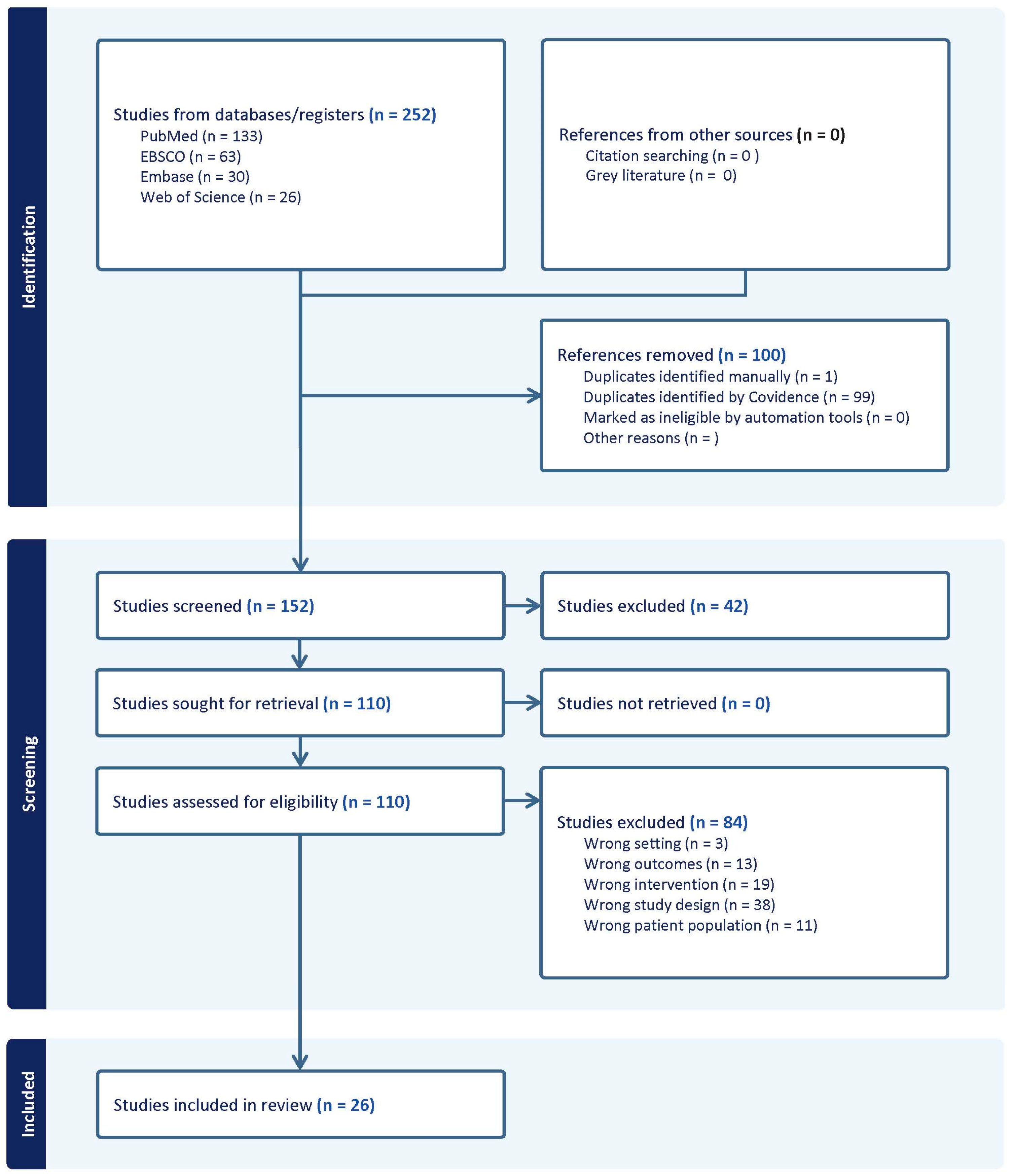
- Page, M.J.; McKenzie, J.E.; Bossuyt, P.M.; Boutron, I.; Hoffmann, T.C.; Mulrow, C.D.; Shamseer, L.; Tetzlaff, J.M.; Akl, E.A.; Brennan, S.E.; et al. The PRISMA 2020 statement: An updated guideline for reporting systematic reviews. BMJ 2021, 372, n71. [Google Scholar] [CrossRef]
- Covidence Systematic Review Software; Veritas Health Innovation: Melbourne, Australia, 2023. Available online: https://www.covidence.org (accessed on 15 May 2025).
- Clos, E.; Pruna, R.; Lundblad, M.; Artells, R.; Esquirol Caussa, J. ACTN3 single nucleotide polymorphism is associated with non-contact musculoskeletal soft-tissue injury incidence in elite professional football players. Knee Surg. Sports Traumatol. Arthrosc. 2019, 27, 4055–4061. [Google Scholar] [CrossRef]
- Del Coso, J.; Rodas, G.; Buil, M.Á.; Sánchez-Sánchez, J.; López, P.; González-Ródenas, J.; Gasulla-Anglés, P.; López-Samanes, Á.; Hernández-Sánchez, S.; Iztueta, A.; et al. Association of the ACTN3 rs1815739 polymorphism with physical performance and injury incidence in professional women football players. Genes 2022, 13, 1635. [Google Scholar] [CrossRef]
- Rodas, G.; Moreno-Pérez, V.; Del Coso, J.; Florit, D.; Osaba, L.; Lucia, A. Alpha-actinin-3 deficiency might affect recovery from non-contact muscle injuries: Preliminary findings in a top-level soccer team. Genes 2021, 12, 769. [Google Scholar] [CrossRef]
- Massidda, M.; Voisin, S.; Culigioni, C.; Piras, F.; Cugia, P.; Yan, X.; Eynon, N.; Calò, C.M. ACTN3 R577X polymorphism is associated with the incidence and severity of injuries in professional football players. Clin. J. Sport Med. 2019, 29, 57–61. [Google Scholar] [CrossRef]
- de Almeida, K.Y.; Cetolin, T.; Marrero, A.R.; Aguiar Junior, A.S.; Mohr, P.; Kikuchi, N. A pilot study on the prediction of non-contact muscle injuries based on ACTN3 R577X and ACE I/D polymorphisms in professional soccer athletes. Genes 2022, 13, 2009. [Google Scholar] [CrossRef]
- Posthumus, M.; September, A.V.; O’Cuinneagain, D.; van der Merwe, W.; Schwellnus, M.P.; Collins, M. The COL5A1 gene is associated with increased risk of anterior cruciate ligament ruptures in female participants. Am. J. Sports Med. 2009, 37, 2234–2240. [Google Scholar] [CrossRef]
- Brown, K.L.; Seale, K.B.; El Khoury, L.Y.; Posthumus, M.; Ribbans, W.J.; Raleigh, S.M.; Collins, M.; September, A.V. Polymorphisms within the COL5A1 gene and regulators of the extracellular matrix modify the risk of Achilles tendon pathology in a British case-control study. J. Sports Sci. 2017, 35, 1475–1483. [Google Scholar] [CrossRef]
- Brazier, J.; Antrobus, M.R.; Callus, P.C.; Herbert, A.J.; Stebbings, G.K.; Martin, D.; Day, S.H.; Kilduff, L.P.; Bennett, M.A.; Erskine, R.M.; et al. Variants within the MMP3 and COL5A1 genes associate with soft tissue injury history in elite male rugby athletes. J. Sci. Med. Sport 2025, 28, 720–726. [Google Scholar] [CrossRef]
- O’Connell, K.; Knight, H.; Ficek, K.; Leonska-Duniec, A.; Maciejewska-Karlowska, A.; Sawczuk, M.; Stepien-Slodkowska, M.; O’Cuinneagain, D.; van der Merwe, W.; Posthumus, M.; et al. Interactions between collagen gene variants and risk of anterior cruciate ligament rupture. Eur. J. Sport Sci. 2015, 15, 341–350. [Google Scholar] [CrossRef]
- Perini, J.A.; Lopes, L.R.; Guimarães, J.A.M.; Goes, R.A.; Pereira, L.F.A.; Pereira, C.G.; Mandarino, M.; Villardi, A.M.; de Sousa, E.B.; Cossich, V.R.A. Influence of type I collagen polymorphisms and risk of anterior cruciate ligament rupture in athletes: A case-control study. BMC Musculoskelet. Disord. 2022, 23, 154. [Google Scholar] [CrossRef]
- Briški, N.; Vrgoč, G.; Knjaz, D.; Janković, S.; Ivković, A.; Pećina, M.; Lauc, G. Association of the matrix metalloproteinase 3 (MMP3) single nucleotide polymorphisms with tendinopathies: A case–control study in high-level athletes. Int. Orthop. 2021, 45, 1163–1168. [Google Scholar] [CrossRef]
- Simunic-Briski, N.; Vrgoč, G.; Knjaz, D.; Janković, S.; Dembic, Z.; Lauc, G. MMP3 single-nucleotide polymorphisms are associated with noncontact ACL injuries in competing high-level athletes. J. Orthop. Res. 2024, 42, 109–114. [Google Scholar] [CrossRef]
- Gibbon, A.; Hobbs, H.; van der Merwe, W.; Raleigh, S.M.; Cook, J.; Handley, C.J.; Posthumus, M.; Collins, M.; September, A.V. The MMP3 gene in musculoskeletal soft tissue injury risk profiling: A study in two independent sample groups. J. Sports Sci. 2017, 35, 655–662. [Google Scholar] [CrossRef]
- Malila, S.; Yuktanandana, P.; Saowaprut, S.; Jiamjarasrangsi, W.; Honsawek, S. Association between matrix metalloproteinase-3 polymorphism and anterior cruciate ligament ruptures. Genet. Mol. Res. 2011, 10, 4158–4165. [Google Scholar] [CrossRef]
- McCabe, K.; Collins, C. Can genetics predict sports injury? The association of the genes GDF5, AMPD1, COL5A1 and IGF2 on soccer player injury occurrence. Sports 2018, 6, 21. [Google Scholar] [CrossRef]
- Jacob, Y.; Anderton, R.S.; Cochrane Wilkie, J.L.; Rogalski, B.; Laws, S.M.; Jones, A.; Spiteri, T.; Hince, D.; Hart, N.H. Genetic variants within NOGGIN, COL1A1, COL5A1, and IGF2 are associated with musculoskeletal injuries in elite male Australian Football League players: A preliminary study. Sports Med.-Open 2022, 8, 126. [Google Scholar] [CrossRef]
- Varamenti, E.; Pullinger, S.A.; Kollias, P.; Chini, V. Identification of specific injury-related SNPs in high-level athletes of Arab origin: A pilot study. Heliyon 2024, 10, e37285. [Google Scholar] [CrossRef]
- Brazier, J.; Antrobus, M.R.; Herbert, A.J.; Callus, P.C.; Khanal, P.; Stebbings, G.K.; Day, S.H.; Heffernan, S.M.; Kilduff, L.P.; Bennett, M.A.; et al. Gene variants previously associated with reduced soft-tissue injury risk: Part 2—Polygenic associations with elite status in rugby. Eur. J. Sport Sci. 2023, 23, 1779–1788. [Google Scholar] [CrossRef]
- Rodas, G.; Cáceres, A.; Ferrer, E.; Balagué-Dobón, L.; Osaba, L.; Lucia, A.; González, J.R. Sex differences in the association between risk of anterior cruciate ligament rupture and COL5A1 polymorphisms in elite footballers. Genes 2022, 14, 33. [Google Scholar] [CrossRef]
- Collins, M.; Posthumus, M.; Schwellnus, M.P. The COL1A1 gene and acute soft tissue ruptures. Br. J. Sports Med. 2010, 44, 1063–1064. [Google Scholar] [CrossRef]
- Wells, G.A.; Shea, B.; O’Connell, D.; Peterson, J.; Welch, V.; Losos, M.; Tugwell, P. The Newcastle–Ottawa Scale (NOS) for Assessing the Quality of Nonrandomised Studies in Meta-Analyses; Ottawa Hospital Research Institute: Ottawa, ON, Canada, 2011. [Google Scholar]
- Miyamoto-Mikami, E.; Miyamoto, N.; Kumagai, H.; Hirata, K.; Kikuchi, N.; Zempo, H.; Kimura, N.; Kamiya, N.; Kanehisa, H.; Naito, H.; et al. COL5A1 rs12722 polymorphism is not associated with passive muscle stiffness and sports-related muscle injury in Japanese athletes. BMC Med. Genet. 2019, 20, 192. [Google Scholar] [CrossRef]
- Gkritzali, E.; Akam, L.; Mastana, S. Role of COL5A1 gene polymorphism (rs12722) in lower limb musculoskeletal injuries among adults: A systematic review and meta-analysis. J. Res. Pract. Musculoskelet. Syst. 2024, 8, 60–70. [Google Scholar] [CrossRef]
- Gutiérrez-Hellín, J.; Baltazar-Martins, G.; Aguilar-Navarro, M.; Ruiz-Moreno, C.; Oliván, J.; Del Coso, J. Effect of ACTN3 R577X genotype on injury epidemiology in elite endurance runners. Genes 2021, 12, 76. [Google Scholar] [CrossRef]
- Guo, R.; Ji, Z.; Gao, S.; Aizezi, A.; Fan, Y.; Wang, Z.; Ning, K. Association of COL5A1 gene polymorphisms and musculoskeletal soft tissue injuries: A meta-analysis based on 21 observational studies. J. Orthop. Surg. Res. 2022, 17, 129. [Google Scholar] [CrossRef]
- Kania, K.; Colella, F.; Riemen, A.H.K.; Wang, H.; Howard, K.A.; Aigner, T.; Dell’ACcio, F.; Capellini, T.D.; Roelofs, A.J.; De Bari, C. Regulation of Gdf5 expression in joint remodelling, repair and osteoarthritis. Sci. Rep. 2020, 10, 157. [Google Scholar] [CrossRef]
- Contrò, V.; Schiera, G.; Abbruzzo, A.; Bianco, A.; Amato, A.; Sacco, A.; Macchiarella, A.; Palma, A.; Proia, P. An innovative way to highlight the power of each polymorphism on elite athletes phenotype expression. Eur. J. Transl. Myol. 2018, 28, 7186. [Google Scholar] [CrossRef]


| Injury Type | Mechanism | Intrinsic Risk Factors | Extrinsic Risk Factors | Genetic Risk Loci Identified |
|---|---|---|---|---|
| ACL Rupture | Non-contact pivoting, deceleration, or awkward landing movements [12] | Female sex (≈2–8× higher risk), generalised joint laxity, anatomical differences (e.g., narrow intercondylar notch, increased Q-angle) [13,14] | Fatigue-induced neuromuscular control deficits, poor shoe–surface traction, high sport-specific loading [15] | COL1A1, COL5A1 [16,17] |
| Achilles Tendinopathy | Repetitive strain and microtrauma to the Achilles tendon [18] | Prior tendon injury, lower-limb biomechanical deviations (e.g., overpronation), reduced plantar-flexor strength, elevated BMI [19] | Rapid training load increase, hard surfaces, inadequate footwear, fluoroquinolone exposure [20] | COL5A1, MMP3 [21,22] |
| Stress Fracture | Cumulative bone overload [23] | Low bone mineral density, menstrual dysfunction (female athlete triad), low lean body mass, history of stress fractures [24] | Overtraining, insufficient recovery, poor nutrition, rigid training surfaces, RED-S [24] | COL1A1, GDF5 [25,26] |
| Study | Country | Athlete Status | Design | Sample Size | Gene/SNP | Outcome | Main Results |
|---|---|---|---|---|---|---|---|
| Clos et al. 2019 [36] | Spain/ Sweden | Elite professional footballers | Prospective cohort | N = 43 (19 RR, 21 RX, 3 XX) | ACTN3 rs1815739 (R577X) | Non-contact musculoskeletal soft tissue injury rate | XX genotype: 2.78 injuries/season vs. RR 1.51; XX had higher injury incidence. |
| Del Coso et al. 2022 [37] | Spain | Professional women footballers | Cross-sectional cohort + follow-up | N = 191 | ACTN3 rs1815739 (R577X) | Non-contact injuries; RTP; performance tests | No significant differences in injury incidence across genotypes. |
| Rodas et al. 2021 [38] | Spain | Elite male and female footballers | Retrospective cohort | N = 46 | ACTN3 rs1815739 (R577X) | Muscle injury incidence; days to injury | XX genotype: all injured ≥ 1×; RR and RX had more injury-free players. |
| Massidda et al. 2019 [39] | Italy | Professional male footballers | Case–control | N = 257 cases, 265 controls | ACTN3 rs1815739 (R577X) | Number of muscle injuries; severity; time-loss | XX genotype: 2.66× higher odds of injury vs. RR. |
| de Almeida et al. 2022 [40] | Brazil | Male professional footballers | Observational cohort | N = 83 | ACTN3 rs1815739; ACE I/D | Injury incidence; severity | ACTN3 XX: ↑ severe injury risk (OR = 5.14, p = 0.007). |
| Zhao et al. 2016 [25] | China | Male infantry recruits, 8-week basic training | Prospective cohort | 1398 (189 stress fractures, 1209 controls) | GDF5 rs143383 | Stress fractures (metatarsal, tibia, femur, pelvis, femoral neck) | Stress fracture incidence was 13.5%. T allele of GDF5 rs143383 was significantly more frequent in cases (79.1% vs. 68.4%; OR 1.75, 95% CI 1.35–2.28). |
| Posthumus et al. 2009 [41] | South Africa | Physically active (mixed) | Case–control | N = 129 ACL cases, 216 controls | COL5A1 rs12722 (C/T) | ACL rupture | Females: CC underrepresented (protective); TT overrepresented in cases. |
| Brown et al. 2017 [42] | UK | Mixed (active individuals) | Case–control | N = 112 Achilles cases, 227 controls | COL5A1 rs12722, rs3196378 + ECM | Achilles tendinopathy | COL5A1 rs12722 C allele protective; ECM variants also implicated. |
| Lulińska-Kuklik et al. 2018 [17] | Poland | Professional male soccer players | Case–control | 134 ACLR cases, 211 controls | COL5A1 rs12722 (C/T), rs13946 (C/T) | ACL rupture (non-contact) | No general differences for rs12722/rs13946. rs13946 is significant under the dominant model (p = 0.039). C–C haplotype protective (overrepresented in controls, p = 0.038). |
| Brazier et al. 2025 [43] | UK/Ireland/South Africa | Elite male rugby players | Case–control | N = 184 | 13 SNPs incl. COL5A1 rs12722, rs3196378; MMP3 rs679620, rs591058, rs650108; plus COL1A1, COL3A1, COLGALT1, KDR, MIR608, NID1, TIMP2, VEGFA | Tendon rupture, tendinopathy, ligament sprain & rupture | MMP3 rs679620 TT genotype higher risk of ligament injury (rupture/sprain); the T allele is protective of tendons. COL5A1 rs12722 C allele has higher risk of tendon rupture (OR = 8.3). COL5A1 rs12722–rs3196378 T-C haplotype has higher risk across tendon rupture, ligament sprain, and total injured athletes. |
| Posthumus et al. 2009 [16] | South Africa | Physically active Caucasians | Case–control | N = 117 ACL cases, 130 controls | COL1A1 rs1800012 | ACL rupture | TT genotype absent in cases (protective); family history ↑ risk. |
| O’Connell et al. 2015 [44] | South Africa & Poland. | Physically active Caucasians | Case–control | 333 ACL rupture cases/378 controls | COL5A1 rs12722, COL12A1 rs970547, COL3A1 rs1800255, COL6A1 rs35796750 | ACL rupture | Variants in COL5A1 rs12722 and COL12A1 rs970547 are independently associated with ACL rupture risk in females; the combined COL5A1–COL12A1 haplotype is significantly more frequent in female cases. |
| Perini et al. 2022 [45] | Brazil | Competitive athletes (mixed sports) | Case–control | N = 338 total (146 ACL, 192 controls) | COL1A1 rs1107946; COL1A2 rs412777, rs42524, rs2621215 | ACL rupture | COL1A2 rs42524 CC (≈6×) & rs2621215 GG (≈4×) ↑ non-contact ACL risk; COL1A1 rs1107946 protective only with COL1A2 wildtype. |
| Miyamoto-Mikami et al. 2021 [26] | Japan | Elite & collegiate athletes | Two-stage genetic + prospective | Stage 1 n = 1667; Stage 2 n = 508 | COL1A1 rs1107946 | Fatigue fracture; muscle injury; BMD; stiffness | Females: C allele ↑ fatigue fracture (OR ≈ 2.4) and ↓ muscle injury (OR ≈ 0.46); ↓ BMD & stiffness; ↑ α1 homotrimers. |
| Raleigh et al. 2009 [22] | SA/UK | Active adults | Case–control | 75 AT, 39 rupture, 98 controls | MMP3 rs679620/rs591058/rs650108; COL5A1 rs12722 | Achilles tendinopathy & rupture | AT: rs679620 GG, rs591058 CC, rs650108 AA ↑ risk; ATG haplotype protective; COL5A1 T + MMP3 G ↑ risk; no rupture effect. |
| Briški et al. 2021 [46] | Croatia | High-level athletes (cases) & retired athletes (controls) | Case–control | 63 AT vs. 92 controls | MMP3 rs591058/rs650108/rs679620 | Achilles tendinopathy | rs650108 GG (OR = 2.46) & rs679620 AA (OR = 3.14) ↑ risk; C–A–G haplotype protective. |
| Simunic-Briski et al. 2024 [47] | Croatia | High-level athletes & retired athletes | Case–control | 95 ACL vs. 92 controls | MMP3 rs591058/rs650108/rs679620 | Non-contact ACL rupture | Risk genotypes: rs591058 TT, rs650108 GG, rs679620 AA; T–G–A haplotype risk; C–A–G protective. |
| Gibbon et al. 2017 [48] | Australia & South Africa | Recreationally active; matched controls/cases | Case–control genetic association study | Australia: 200 control, TEN: 85 South Africa: 232 CON, 234 ACL | MMP3: rs679620 (A/G), rs591058 (T/C), rs650108 (G/A), rs3025058 (5A/6A promoter) | Achilles tendinopathy, ACL rupture | South Africa: rs3025058 (6A allele, linked to rs679620) ↑ risk of Achilles tendinopathy (OR 2.88, 95% CI 1.4–6.1, p = 0.012). Australia: 6A-G-C-G haplotype ↓ risk (29% CON vs. 20% TEN, p = 0.037). No associations with ACL rupture. |
| Malila et al. 2011 [49] | Thailand | Active adults | Case–control | 86 ACL vs. 100 controls | MMP3 −1612 5A/6A | ACL rupture | No overall effect; contact-ACL cases had higher 5A+ (OR = 2.25). |
| McCabe et al. 2018 [50] | UK | Professional, semi-pro & amateur soccer | Cross-sectional (season follow-up) | N = 289 | GDF5 rs143383; AMPD1 rs17602729; COL5A1 rs12722; IGF2 rs680 | Ankle & knee injuries; availability | GDF5 TT & IGF2 GG ↑ injuries; AMPD1 CC & COL5A1 TT protective. |
| Jacob et al. 2022 [51] | Australia | Elite male AFL players | 7-season prospective cohort | N = 46; 992 injuries | COL5A1 rs12722; COL1A1 rs1800012; NOGGIN; IGF2, etc. | Muscle, tendon, ligament, bone injuries | COL5A1 TT ↑ muscle & bone injuries; COL1A1 TT ↑ ligament injuries; NOGGIN GG ↑ muscle; IGF2 CC ↑ tendon injuries. |
| Varamenti et al. 2024 [52] | Qatar (Arab origin) | High-level male athletes | Pilot cohort/case–control | N = 30 | COL5A1 rs12722; rs10735810 | Soft tissue & stress fractures | COL5A1 TT protective for muscle/tendon; VDR CT/TT ↑ stress-fracture risk; TT ↑ severe fractures. |
| September et al. 2009 [21] | SA & Australia | Active adults | Case–control | SA: 93 AT vs. 132 ctrls; AUS: 85 AT vs. 210 ctrls | COL5A1 rs12722; rs13946; rs3196378 (and others) | Chronic Achilles tendinopathy | rs12722 CC protective (AUS OR = 0.42; SA OR = 0.38). rs3196378 AC ↑ risk (AUS). SA haplotype TC ↑ risk. |
| Brazier et al. 2023 [53] | UK/Ireland/South Africa | Elite male rugby vs. non-athletes | Case–control (polygenic) | RA: n = 663, NA: n = 909 | 13 SNPs incl. COL5A1 rs12722/rs3196378; MMP3; VEGFA, etc. | Elite status (proxy for reduced injury) | Elite players had higher mean total gene score (TGS); best MDR model: COL5A1 rs12722 + rs3196378 + MIR608 rs4919510 (CC-CC-CC) predictive of elite status. |
| Rodas et al. 2022 [54] | Spain | FC Barcelona elite footballers | Prospective cohort | N = 46 (24 F, 22 M) | COL5A1 rs13946, rs16399, rs1134170, rs71746744, rs3196378, rs12722 | ACL rupture (history) | Females: rs13946 CC ↑ ACL risk; sex interaction significant; haplotype with rs13946-C overrepresented in injured females. |
| Collins et al. 2010 [55] | South Africa & Sweden | Recreational and competitive athletes | Case–control (pooled analysis) | 350 CL, 126 SD, 41 ATR, 581 controls | COL1A1 rs1800012 (Sp1-binding site) | Acute soft tissue ruptures (ACL, shoulder dislocation, Achilles tendon) | TT genotype rare but protective. Significantly underrepresented in injury groups vs. controls (e.g., OR = 15 for CL rupture, p = 0.0002). Supports TT as protective against acute ruptures. |
| Study | Sel1 | Sel2 | Sel3 | Sel4 | Comp | Out1 | Out2 | Out3 | Total | Risk of Bias |
|---|---|---|---|---|---|---|---|---|---|---|
| Varamenti et al. 2024 [52] | * | * | * | * | * | 5 | High | |||
| Rodas et al. 2021 [38] | * | * | * | * | * | * | * | 7 | Low | |
| Del Coso et al. 2022 [37] | * | * | * | * | * | * | 6 | Moderate | ||
| Zhao et al. 2016 [25] | * | * | * | * | * | * | * | 7 | Low | |
| de Almeida et al. 2022 [40] | * | * | * | * | * | * | 6 | Moderate | ||
| Rodas et al. 2022 [54] | * | * | * | * | * | * | * | 7 | Low | |
| Clos et al. 2019 [36] | * | * | * | * | * | * | 7 | Low | ||
| Jacob et al. 2022 [51] | * | * | * | * | * | * | * | * | 8 | Low |
| Miyamoto-Mikami et al. 2021 [26] | * | * | * | * | * | * | * | * | 8 | Low |
| Study | Sel1 | Sel2 | Sel3 | Sel4 | Comp | Exp1 | Exp2 | Exp3 | Total | Risk of Bias |
|---|---|---|---|---|---|---|---|---|---|---|
| Posthumus et al. 2009 [16] | * | * | * | * | * | * | * | 7 | Low | |
| Raleigh et al. 2009 [22] | * | * | * | * | * | * | * | 7 | Low | |
| September et al. 2009 [21] | * | * | * | * | * | * | * | 7 | Low | |
| Collins et al. 2010 [55] | * | * | * | * | * | * | * | 7 | Low | |
| Malila et al. 2011 [49] | * | * | * | * | * | * | 6 | Moderate | ||
| Perini et al. 2022 [45] | * | * | * | * | * | * | * | 7 | Low | |
| Massidda et al. 2019 [39] | * | * | * | * | * | * | * | 7 | Low | |
| Brazier et al. 2025 [43] | * | * | * | * | * | * | * | 7 | Low | |
| Brazier et al. 2023 [53] | * | * | * | * | * | * | 6 | Moderate | ||
| Gibbon et al. 2017 [48] | * | * | * | * | * | * | * | * | 8 | Low |
| Lulińska-Kuklik et al. 2018 [17] | * | * | * | * | * | * | * | * | 8 | Low |
| Simunic-Briski et al. 2024 [47] | * | * | * | * | * | * | * | * | 8 | Low |
| Brown et al. 2017 [42] | * | * | * | * | * | * | * | 7 | Low | |
| Posthumus et al. 2009 [41] | * | * | * | * | * | * | * | 7 | Low | |
| O’Connell et al. 2015 [44] | * | * | * | * | * | * | * | 7 | Low | |
| Briški et al. 2021 [46] | * | * | * | * | * | * | * | 7 | Low | |
| McCabe et al. 2018 [50] | * | * | 2 | High |
Disclaimer/Publisher’s Note: The statements, opinions and data contained in all publications are solely those of the individual author(s) and contributor(s) and not of MDPI and/or the editor(s). MDPI and/or the editor(s) disclaim responsibility for any injury to people or property resulting from any ideas, methods, instructions or products referred to in the content. |
© 2026 by the authors. Licensee MDPI, Basel, Switzerland. This article is an open access article distributed under the terms and conditions of the Creative Commons Attribution (CC BY) license.
Share and Cite
Abboud, S.; Akam, E.; Hunter, D.J.; Mastana, S. The Role of COL1A1, COL5A1, ACTN3, MMP3, and GDF5 Gene Variants in Common Sports Injuries: Systematic Review of ACL Rupture, Achilles Tendinopathy, and Stress Fractures. Genes 2026, 17, 212. https://doi.org/10.3390/genes17020212
Abboud S, Akam E, Hunter DJ, Mastana S. The Role of COL1A1, COL5A1, ACTN3, MMP3, and GDF5 Gene Variants in Common Sports Injuries: Systematic Review of ACL Rupture, Achilles Tendinopathy, and Stress Fractures. Genes. 2026; 17(2):212. https://doi.org/10.3390/genes17020212
Chicago/Turabian StyleAbboud, Shahd, Elizabeth Akam, David John Hunter, and Sarabjit Mastana. 2026. "The Role of COL1A1, COL5A1, ACTN3, MMP3, and GDF5 Gene Variants in Common Sports Injuries: Systematic Review of ACL Rupture, Achilles Tendinopathy, and Stress Fractures" Genes 17, no. 2: 212. https://doi.org/10.3390/genes17020212
APA StyleAbboud, S., Akam, E., Hunter, D. J., & Mastana, S. (2026). The Role of COL1A1, COL5A1, ACTN3, MMP3, and GDF5 Gene Variants in Common Sports Injuries: Systematic Review of ACL Rupture, Achilles Tendinopathy, and Stress Fractures. Genes, 17(2), 212. https://doi.org/10.3390/genes17020212