The Citric Acid Cycle Modulates Neurologic Health and Is a Therapeutic Target of Dietary and Genetic Modification in Metabolic Disease

 , ,
, ,
Abstract
1. Introduction
2. Materials and Methods
2.1. Drosophila Genetics
2.2. Specialty Media
2.3. Mechanical Stress Seizure Induction
2.4. Lifespan Assays
2.5. Circadian Assays
2.6. Data Analyses
3. Results
3.1. The CAC Is a Promising Therapeutic Target for ME
3.2. Flies Lacking Both OXPHOS and Glycolytic ATP Are Viable and Benefit from Ketogenic and Anaplerotic Treatments
3.3. Genetic Interference with the CAC in the Brain Produces Defects in Circadian Rhythms
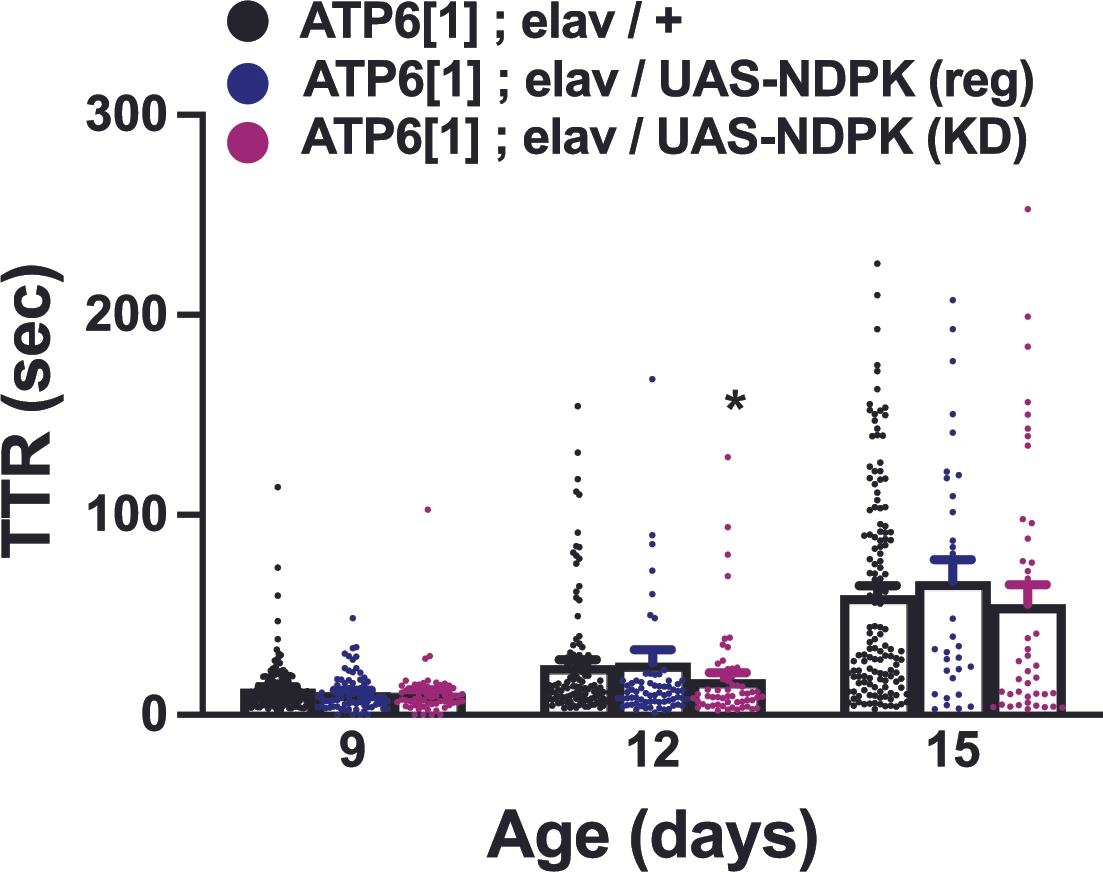
3.4. Nucleoside Diphosphate Kinase (NDPK) Is Necessary for Seizure Amelioration by the Ketogenic Diet in ME
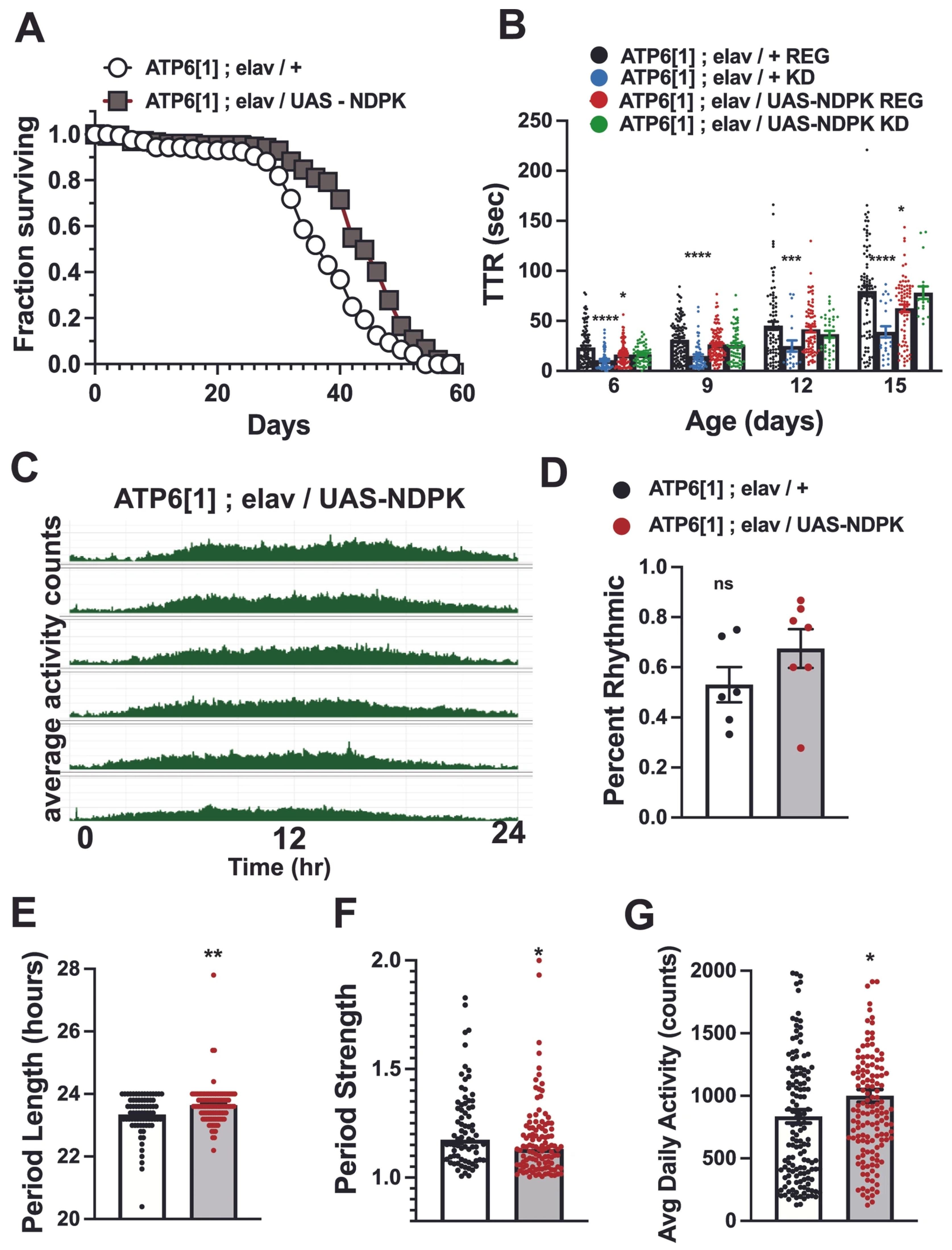
3.5. Overexpression of NDPK Improves Lifespan, Seizures, and Circadian Rhythms in ME
4. Discussion
4.1. Anaplerosis as a Translational Therapy in ME
4.2. The Citric Acid Cycle as a Critical Factor in Maintaining Healthy Circadian Rhythms
4.3. The CAC as a Critical Source of ATP in Metabolic Disease
5. Conclusions
Author Contributions
Funding
Institutional Review Board Statement
Informed Consent Statement
Data Availability Statement
Acknowledgments
Conflicts of Interest
References
- Wilson, D.M., III; Cookson, M.R.; Van Den Bosch, L.; Zetterberg, H.; Holtzman, D.M.; Dewachter, I. Hallmarks of neurodegenerative diseases. Cell 2023, 186, 693–714. [Google Scholar] [CrossRef] [Scilit]
- Kovac, S.; Abramov, A.Y.; Walker, M.C. Energy depletion in seizures: Anaplerosis as a strategy for future therapies. Neuropharmacology 2013, 69, 96–104. [Google Scholar] [CrossRef] [Scilit]
- Singh, A.; Kukreti, R.; Saso, L.; Kukreti, S. Oxidative Stress: A Key Modulator in Neurodegenerative Diseases. Molecules 2019, 24, 1583. [Google Scholar] [CrossRef] [Scilit]
- Liu, H.; Wang, S.; Wang, J.; Guo, X.; Song, Y.; Fu, K.; Gao, Z.; Liu, D.; He, W.; Yang, L.L. Energy metabolism in health and diseases. Signal Transduct. Target. Ther. 2025, 10, 69. [Google Scholar] [CrossRef] [Scilit] [PubMed]
- Dewanjee, S.; Chakraborty, P.; Bhattacharya, H.; Chacko, L.; Singh, B.; Chaudhary, A.; Javvaji, K.; Pradhan, S.R.; Vallamkondu, J.; Dey, A.; et al. Altered glucose metabolism in Alzheimer’s disease: Role of mitochondrial dysfunction and oxidative stress. Free Radic. Biol. Med. 2022, 193, 134–157. [Google Scholar] [CrossRef] [Scilit]
- Ardanaz, C.G.; Ramirez, M.J.; Solas, M. Brain Metabolic Alterations in Alzheimer’s Disease. Int. J. Mol. Sci. 2022, 23, 3785. [Google Scholar] [CrossRef] [Scilit] [PubMed]
- Wang, W.; Zhao, F.; Ma, X.; Perry, G.; Zhu, X. Mitochondria dysfunction in the pathogenesis of Alzheimer’s disease: Recent advances. Mol. Neurodegener. 2020, 15, 30. [Google Scholar] [CrossRef] [Scilit] [PubMed]
- Chhimpa, N.; Singh, N.; Puri, N.; Kayath, H.P. The Novel Role of Mitochondrial Citrate Synthase and Citrate in the Pathophysiology of Alzheimer’s Disease. J. Alzheimer’s Dis. 2023, 94, S453–S472. [Google Scholar] [CrossRef] [Scilit]
- Maruthiyodan, S.; Mumbrekar, K.D.; Guruprasad, K.P. Involvement of mitochondria in Alzheimer’s disease pathogenesis and their potential as targets for phytotherapeutics. Mitochondrion 2024, 76, 101868. [Google Scholar] [CrossRef] [Scilit]
- Park, J.S.; Davis, R.L.; Sue, C.M. Mitochondrial Dysfunction in Parkinson’s Disease: New Mechanistic Insights and Therapeutic Perspectives. Curr. Neurol. Neurosci. Rep. 2018, 18, 21. [Google Scholar] [CrossRef] [Scilit]
- Moon, H.E.; Paek, S.H. Mitochondrial Dysfunction in Parkinson’s Disease. Exp. Neurobiol. 2015, 24, 103–116. [Google Scholar] [CrossRef] [Scilit]
- Monzio Compagnoni, G.; Di Fonzo, A.; Corti, S.; Comi, G.P.; Bresolin, N.; Masliah, E. The Role of Mitochondria in Neurodegenerative Diseases: The Lesson from Alzheimer’s Disease and Parkinson’s Disease. Mol. Neurobiol. 2020, 57, 2959–2980. [Google Scholar] [CrossRef] [Scilit] [PubMed]
- Choong, C.J.; Mochizuki, H. Involvement of Mitochondria in Parkinson’s Disease. Int. J. Mol. Sci. 2023, 24, 17027. [Google Scholar] [CrossRef] [Scilit]
- Schmidt, S.; Stautner, C.; Vu, D.T.; Heinz, A.; Regensburger, M.; Karayel, O.; Trumbach, D.; Artati, A.; Kaltenhauser, S.; Nassef, M.Z.; et al. A reversible state of hypometabolism in a human cellular model of sporadic Parkinson’s disease. Nat. Commun. 2023, 14, 7674. [Google Scholar] [CrossRef] [Scilit]
- Geronzi, U.; Lotti, F.; Grosso, S. Oxidative stress in epilepsy. Expert. Rev. Neurother. 2018, 18, 427–434. [Google Scholar] [CrossRef] [Scilit]
- Fabisiak, T.; Patel, M. Crosstalk between neuroinflammation and oxidative stress in epilepsy. Front. Cell Dev. Biol. 2022, 10, 976953. [Google Scholar] [CrossRef] [Scilit]
- Waldbaum, S.; Patel, M. Mitochondria, oxidative stress, and temporal lobe epilepsy. Epilepsy Res. 2010, 88, 23–45. [Google Scholar] [CrossRef] [Scilit]
- Wu, H.; Liu, Y.; Li, H.; Du, C.; Li, K.; Dong, S.; Meng, Q.; Zhang, H. TRAK1-Mediated Abnormality of Mitochondrial Fission Increases Seizure Susceptibility in Temporal Lobe Epilepsy. Mol. Neurobiol. 2021, 58, 1237–1247. [Google Scholar] [CrossRef] [Scilit] [PubMed]
- Wells, J.; Swaminathan, A.; Paseka, J.; Hanson, C. Efficacy and Safety of a Ketogenic Diet in Children and Adolescents with Refractory Epilepsy-A Review. Nutrients 2020, 12, 1809. [Google Scholar] [CrossRef] [Scilit] [PubMed]
- Gano, L.B.; Patel, M.; Rho, J.M. Ketogenic diets, mitochondria, and neurological diseases. J. Lipid Res. 2014, 55, 2211–2228. [Google Scholar] [CrossRef] [Scilit]
- Stafstrom, C.E.; Rho, J.M. The ketogenic diet as a treatment paradigm for diverse neurological disorders. Front. Pharmacol. 2012, 3, 59. [Google Scholar] [CrossRef] [Scilit]
- Borowicz-Reutt, K.; Krawczyk, M.; Czernia, J. Ketogenic Diet in the Treatment of Epilepsy. Nutrients 2024, 16, 1258. [Google Scholar] [CrossRef] [Scilit] [PubMed]
- Canafoglia, L.; Franceschetti, S.; Antozzi, C.; Carrara, F.; Farina, L.; Granata, T.; Lamantea, E.; Savoiardo, M.; Uziel, G.; Villani, F.; et al. Epileptic phenotypes associated with mitochondrial disorders. Neurology 2001, 56, 1340–1346. [Google Scholar] [CrossRef] [Scilit] [PubMed]
- DiMauro, S.; Schon, E.A. Mitochondrial respiratory-chain diseases. N. Engl. J. Med. 2003, 348, 2656–2668. [Google Scholar] [CrossRef] [Scilit] [PubMed]
- Inczedy-Farkas, G.; Trampush, J.W.; Perczel Forintos, D.; Beech, D.; Andrejkovics, M.; Varga, Z.; Remenyi, V.; Bereznai, B.; Gal, A.; Molnar, M.J. Mitochondrial DNA mutations and cognition: A case-series report. Arch. Clin. Neuropsychol. 2014, 29, 315–321. [Google Scholar] [CrossRef] [Scilit]
- Ng, Y.S.; Turnbull, D.M. Mitochondrial disease: Genetics and management. J. Neurol. 2016, 263, 179–191. [Google Scholar] [CrossRef] [Scilit]
- Olah, J.; Orosz, F.; Keseru, G.M.; Kovari, Z.; Kovacs, J.; Hollan, S.; Ovadi, J. Triosephosphate isomerase deficiency: A neurodegenerative misfolding disease. Biochem. Soc. Trans. 2002, 30, 30–38. [Google Scholar] [CrossRef]
- Ramezani, R.J.; Stacpoole, P.W. Sleep disorders associated with primary mitochondrial diseases. J. Clin. Sleep. Med. 2014, 10, 1233–1239. [Google Scholar] [CrossRef] [Scilit]
- Charif, M.; Gueguen, N.; Ferre, M.; Elkarhat, Z.; Khiati, S.; LeMao, M.; Chevrollier, A.; Desquiret-Dumas, V.; Goudenege, D.; Bris, C.; et al. Dominant ACO2 mutations are a frequent cause of isolated optic atrophy. Brain Commun. 2021, 3, fcab063. [Google Scholar] [CrossRef] [Scilit]
- Salminen, A.; Kaarniranta, K.; Hiltunen, M.; Kauppinen, A. Krebs cycle dysfunction shapes epigenetic landscape of chromatin: Novel insights into mitochondrial regulation of aging process. Cell. Signal. 2014, 26, 1598–1603. [Google Scholar] [CrossRef] [Scilit]
- Magro, G.; Laterza, V.; Tosto, F. Leigh Syndrome: A Comprehensive Review of the Disease and Present and Future Treatments. Biomedicines 2025, 13, 733. [Google Scholar] [CrossRef] [Scilit]
- Ciafaloni, E.; Santorelli, F.M.; Shanske, S.; Deonna, T.; Roulet, E.; Janzer, C.; Pescia, G.; DiMauro, S. Maternally inherited Leigh syndrome. J. Pediatr. 1993, 122, 419–422. [Google Scholar] [CrossRef] [Scilit] [PubMed]
- Baldo, M.S.; Vilarinho, L. Molecular basis of Leigh syndrome: A current look. Orphanet J. Rare Dis. 2020, 15, 31. [Google Scholar] [CrossRef] [Scilit] [PubMed]
- Finsterer, J. Neuropathy, Ataxia, and Retinitis Pigmentosa Syndrome. J. Clin. Neuromuscul. Dis. 2023, 24, 140–146. [Google Scholar] [CrossRef] [Scilit]
- Celotto, A.M.; Chiu, W.K.; Van Voorhies, W.; Palladino, M.J. Modes of metabolic compensation during mitochondrial disease using the Drosophila model of ATP6 dysfunction. PLoS ONE 2011, 6, e25823. [Google Scholar] [CrossRef] [Scilit]
- Celotto, A.M.; Frank, A.C.; McGrath, S.W.; Fergestad, T.; Van Voorhies, W.A.; Buttle, K.F.; Mannella, C.A.; Palladino, M.J. Mitochondrial encephalomyopathy in Drosophila. J. Neurosci. 2006, 26, 810–820. [Google Scholar] [CrossRef] [Scilit]
- Fogle, K.J.; Mobini, C.L.; Paseos, A.S.; Palladino, M.J. Sleep and circadian defects in a Drosophila model of mitochondrial encephalomyopathy. Neurobiol. Sleep. Circadian Rhythm. 2019, 6, 44–52. [Google Scholar] [CrossRef] [Scilit]
- Palladino, M.J. Modeling mitochondrial encephalomyopathy in Drosophila. Neurobiol. Dis. 2010, 40, 40–45. [Google Scholar] [CrossRef] [Scilit] [PubMed]
- Fogle, K.J.; Hertzler, J.I.; Shon, J.H.; Palladino, M.J. The ATP-sensitive K channel is seizure protective and required for effective dietary therapy in a model of mitochondrial encephalomyopathy. J. Neurogenet. 2016, 30, 247–258. [Google Scholar] [CrossRef] [Scilit]
- Fogle, K.J.; Smith, A.R.; Satterfield, S.L.; Gutierrez, A.C.; Hertzler, J.I.; McCardell, C.S.; Shon, J.H.; Barile, Z.J.; Novak, M.O.; Palladino, M.J. Ketogenic and anaplerotic dietary modifications ameliorate seizure activity in Drosophila models of mitochondrial encephalomyopathy and glycolytic enzymopathy. Mol. Genet. Metab. 2019, 126, 439–447. [Google Scholar] [CrossRef] [Scilit]
- Ma, H.; O’Farrell, P.H. Selections that isolate recombinant mitochondrial genomes in animals. eLife 2015, 4, e07247. [Google Scholar] [CrossRef] [Scilit] [PubMed]
- Ma, H.; O’Farrell, P.H. Selfish drive can trump function when animal mitochondrial genomes compete. Nat. Genet. 2016, 48, 798–802. [Google Scholar] [CrossRef] [Scilit] [PubMed]
- Ganetzky, B.; Wu, C.F. Indirect Suppression Involving Behavioral Mutants with Altered Nerve Excitability in Drosophila melanogaster. Genetics 1982, 100, 597–614. [Google Scholar] [CrossRef] [Scilit]
- Cichewicz, K.; Hirsh, J. ShinyR-DAM: A program analyzing Drosophila activity, sleep and circadian rhythms. Commun. Biol. 2018, 1, 25. [Google Scholar] [CrossRef] [Scilit]
- Han, W.; Zhang, B.; Zhao, W.; Zhao, W.; He, J.; Qiu, X.; Zhang, L.; Wang, X.; Wang, Y.; Lu, H.; et al. Ketogenic beta-hydroxybutyrate regulates beta-hydroxybutyrylation of TCA cycle-associated enzymes and attenuates disease-associated pathologies in Alzheimer’s mice. Aging Cell 2025, 24, e14368. [Google Scholar] [CrossRef] [Scilit] [PubMed]
- Imdad, K.; Abualait, T.; Kanwal, A.; AlGhannam, Z.T.; Bashir, S.; Farrukh, A.; Khattak, S.H.; Albaradie, R.; Bashir, S. The Metabolic Role of Ketogenic Diets in Treating Epilepsy. Nutrients 2022, 14, 5074. [Google Scholar] [CrossRef] [Scilit]
- Jarrett, S.G.; Milder, J.B.; Liang, L.P.; Patel, M. The ketogenic diet increases mitochondrial glutathione levels. J. Neurochem. 2008, 106, 1044–1051. [Google Scholar] [CrossRef] [Scilit]
- Rho, J.M. How does the ketogenic diet induce anti-seizure effects? Neurosci. Lett. 2017, 637, 4–10. [Google Scholar] [CrossRef] [Scilit]
- Stafford, P.; Abdelwahab, M.G.; Kim, D.Y.; Preul, M.C.; Rho, J.M.; Scheck, A.C. The ketogenic diet reverses gene expression patterns and reduces reactive oxygen species levels when used as an adjuvant therapy for glioma. Nutr. Metab. 2010, 7, 74. [Google Scholar] [CrossRef] [Scilit]
- Pascual, J.M.; Liu, P.; Mao, D.; Kelly, D.I.; Hernandez, A.; Sheng, M.; Good, L.B.; Ma, Q.; Marin-Valencia, I.; Zhang, X.; et al. Triheptanoin for glucose transporter type I deficiency (G1D): Modulation of human ictogenesis, cerebral metabolic rate, and cognitive indices by a food supplement. JAMA Neurol. 2014, 71, 1255–1265. [Google Scholar] [CrossRef] [Scilit]
- Thomas, N.K.; Willis, S.; Sweetman, L.; Borges, K. Triheptanoin in acute mouse seizure models. Epilepsy Res. 2012, 99, 312–317. [Google Scholar] [CrossRef] [Scilit]
- Willis, S.; Stoll, J.; Sweetman, L.; Borges, K. Anticonvulsant effects of a triheptanoin diet in two mouse chronic seizure models. Neurobiol. Dis. 2010, 40, 565–572. [Google Scholar] [CrossRef] [Scilit]
- Celotto, A.M.; Frank, A.C.; Seigle, J.L.; Palladino, M.J. Drosophila model of human inherited triosephosphate isomerase deficiency glycolytic enzymopathy. Genetics 2006, 174, 1237–1246. [Google Scholar] [CrossRef] [Scilit]
- Hrizo, S.L.; Palladino, M.J. Hsp70- and Hsp90-mediated proteasomal degradation underlies TPI sugarkill pathogenesis in Drosophila. Neurobiol. Dis. 2010, 40, 676–683. [Google Scholar] [CrossRef] [Scilit] [PubMed]
- Roland, B.P.; Zeccola, A.M.; Larsen, S.B.; Amrich, C.G.; Talsma, A.D.; Stuchul, K.A.; Heroux, A.; Levitan, E.S.; VanDemark, A.P.; Palladino, M.J. Structural and Genetic Studies Demonstrate Neurologic Dysfunction in Triosephosphate Isomerase Deficiency Is Associated with Impaired Synaptic Vesicle Dynamics. PLoS Genet. 2016, 12, e1005941. [Google Scholar] [CrossRef] [Scilit] [PubMed]
- Fergestad, T.; Bostwick, B.; Ganetzky, B. Metabolic disruption in Drosophila bang-sensitive seizure mutants. Genetics 2006, 173, 1357–1364. [Google Scholar] [CrossRef] [Scilit]
- Picaud, S.; Kavanagh, K.L.; Yue, W.W.; Lee, W.H.; Muller-Knapp, S.; Gileadi, O.; Sacchettini, J.; Oppermann, U. Structural basis of fumarate hydratase deficiency. J. Inherit. Metab. Dis. 2011, 34, 671–676. [Google Scholar] [CrossRef] [Scilit]
- De Meirleir, L. Defects of pyruvate metabolism and the Krebs cycle. J. Child. Neurol. 2002, 17, 26–34. [Google Scholar] [CrossRef] [Scilit]
- Attwood, P.V.; Muimo, R. The actions of NME1/NDPK-A and NME2/NDPK-B as protein kinases. Lab. Invest. 2018, 98, 283–290. [Google Scholar] [CrossRef] [Scilit] [PubMed]
- Boissan, M.; Dabernat, S.; Peuchant, E.; Schlattner, U.; Lascu, I.; Lacombe, M.L. The mammalian Nm23/NDPK family: From metastasis control to cilia movement. Mol. Cell. Biochem. 2009, 329, 51–62. [Google Scholar] [CrossRef] [Scilit]
- Timmons, L.; Shearn, A. Role of AWD/nucleoside diphosphate kinase in Drosophila development. J. Bioenerg. Biomembr. 2000, 32, 293–300. [Google Scholar] [CrossRef] [Scilit] [PubMed]
- Ciarlone, S.L.; Grieco, J.C.; D’Agostino, D.P.; Weeber, E.J. Ketone ester supplementation attenuates seizure activity, and improves behavior and hippocampal synaptic plasticity in an Angelman syndrome mouse model. Neurobiol. Dis. 2016, 96, 38–46. [Google Scholar] [CrossRef] [Scilit]
- Ai, R.; Mao, L.; Jin, X.; Campos-Marques, C.; Zhang, S.Q.; Pan, J.; Lagartos-Donate, M.J.; Cao, S.Q.; Barros-Santos, B.; Nobrega-Martins, R.; et al. NAD(+) reverses Alzheimer’s neurological deficits via regulating differential alternative RNA splicing of EVA1C. Sci. Adv. 2025, 11, eady9811. [Google Scholar] [CrossRef] [Scilit]
- Hou, Y.; Lautrup, S.; Cordonnier, S.; Wang, Y.; Croteau, D.L.; Zavala, E.; Zhang, Y.; Moritoh, K.; O’Connell, J.F.; Baptiste, B.A.; et al. NAD(+) supplementation normalizes key Alzheimer’s features and DNA damage responses in a new AD mouse model with introduced DNA repair deficiency. Proc. Natl. Acad. Sci. USA 2018, 115, E1876–E1885. [Google Scholar] [CrossRef] [Scilit] [PubMed]
- Zhang, H.; Ryu, D.; Wu, Y.; Gariani, K.; Wang, X.; Luan, P.; D’Amico, D.; Ropelle, E.R.; Lutolf, M.P.; Aebersold, R.; et al. NAD(+) repletion improves mitochondrial and stem cell function and enhances life span in mice. Science 2016, 352, 1436–1443. [Google Scholar] [CrossRef] [Scilit]
- Swerdlow, R.H.; Bothwell, R.; Hutfles, L.; Burns, J.M.; Reed, G.A. Tolerability and pharmacokinetics of oxaloacetate 100 mg capsules in Alzheimer’s subjects. BBA Clin. 2016, 5, 120–123. [Google Scholar] [CrossRef] [Scilit]
- Gyanwali, B.; Lim, Z.X.; Soh, J.; Lim, C.; Guan, S.P.; Goh, J.; Maier, A.B.; Kennedy, B.K. Alpha-Ketoglutarate dietary supplementation to improve health in humans. Trends Endocrinol. Metab. 2022, 33, 136–146. [Google Scholar] [CrossRef] [Scilit]
- Yulug, B.; Altay, O.; Li, X.; Hanoglu, L.; Cankaya, S.; Lam, S.; Velioglu, H.A.; Yang, H.; Coskun, E.; Idil, E.; et al. Combined metabolic activators improve cognitive functions in Alzheimer’s disease patients: A randomised, double-blinded, placebo-controlled phase-II trial. Transl. Neurodegener. 2023, 12, 4. [Google Scholar] [CrossRef] [Scilit]
- Ketron, G.L.; Grun, F.; Grill, J.D.; Feldman, H.H.; Rissman, R.A.; Brewer, G.J. Pharmacokinetic and pharmacodynamic assessment of oral nicotinamide in the NEAT clinical trial for early Alzheimer’s disease. Alzheimer’s Res. Ther. 2025, 17, 59. [Google Scholar] [CrossRef] [Scilit]
- Gindri, I.M.; Ferrari, G.; Pinto, L.P.S.; Bicca, J.; Dos Santos, I.K.; Dallacosta, D.; Roesler, C.R.M. Evaluation of safety and effectiveness of NAD in different clinical conditions: A systematic review. Am. J. Physiol. Endocrinol. Metab. 2024, 326, E417–E427. [Google Scholar] [CrossRef] [Scilit] [PubMed]
- Vidoni, E.D.; Choi, I.Y.; Lee, P.; Reed, G.; Zhang, N.; Pleen, J.; Mahnken, J.D.; Clutton, J.; Becker, A.; Sherry, E.; et al. Safety and target engagement profile of two oxaloacetate doses in Alzheimer’s patients. Alzheimer’s Dement. 2021, 17, 7–17. [Google Scholar] [CrossRef] [Scilit] [PubMed]
- Eckel-Mahan, K.; Sassone-Corsi, P. Metabolism and the circadian clock converge. Physiol. Rev. 2013, 93, 107–135. [Google Scholar] [CrossRef] [Scilit]
- Eckel-Mahan, K.L.; Patel, V.R.; de Mateo, S.; Orozco-Solis, R.; Ceglia, N.J.; Sahar, S.; Dilag-Penilla, S.A.; Dyar, K.A.; Baldi, P.; Sassone-Corsi, P. Reprogramming of the circadian clock by nutritional challenge. Cell 2013, 155, 1464–1478. [Google Scholar] [CrossRef] [Scilit] [PubMed]
- Emery, P. Connecting Circadian Genes to Neurodegenerative Pathways in Fruit Flies. PLoS Genet. 2015, 11, e1005266. [Google Scholar] [CrossRef] [Scilit]
- Gangitano, E.; Gnessi, L.; Lenzi, A.; Ray, D. Chronobiology and Metabolism: Is Ketogenic Diet Able to Influence Circadian Rhythm? Front. Neurosci. 2021, 15, 756970. [Google Scholar] [CrossRef] [Scilit]
- Hood, S.; Amir, S. Neurodegeneration and the Circadian Clock. Front. Aging Neurosci. 2017, 9, 170. [Google Scholar] [CrossRef] [Scilit]
- Vaidya, A.T.; Top, D.; Manahan, C.C.; Tokuda, J.M.; Zhang, S.; Pollack, L.; Young, M.W.; Crane, B.R. Flavin reduction activates Drosophila cryptochrome. Proc. Natl. Acad. Sci. USA 2013, 110, 20455–20460. [Google Scholar] [CrossRef] [Scilit] [PubMed]
- Rutter, J.; Reick, M.; Wu, L.C.; McKnight, S.L. Regulation of clock and NPAS2 DNA binding by the redox state of NAD cofactors. Science 2001, 293, 510–514. [Google Scholar] [CrossRef] [Scilit]
- Grover, D.; Ford, D.; Brown, C.; Hoe, N.; Erdem, A.; Tavare, S.; Tower, J. Hydrogen peroxide stimulates activity and alters behavior in Drosophila melanogaster. PLoS ONE 2009, 4, e7580. [Google Scholar] [CrossRef] [Scilit]
- Pekovic-Vaughan, V.; Gibbs, J.; Yoshitane, H.; Yang, N.; Pathiranage, D.; Guo, B.; Sagami, A.; Taguchi, K.; Bechtold, D.; Loudon, A.; et al. The circadian clock regulates rhythmic activation of the NRF2/glutathione-mediated antioxidant defense pathway to modulate pulmonary fibrosis. Genes. Dev. 2014, 28, 548–560. [Google Scholar] [CrossRef] [Scilit]
- Rey, G.; Reddy, A.B. Interplay between cellular redox oscillations and circadian clocks. Diabetes Obes. Metab. 2015, 17, 55–64. [Google Scholar] [CrossRef] [Scilit] [PubMed]
- Klaessens, S.; Stroobant, V.; De Plaen, E.; Van den Eynde, B.J. Systemic tryptophan homeostasis. Front. Mol. Biosci. 2022, 9, 897929. [Google Scholar] [CrossRef] [Scilit] [PubMed]
- Mutafova-Yambolieva, V.N.; Hwang, S.J.; Hao, X.; Chen, H.; Zhu, M.X.; Wood, J.D.; Ward, S.M.; Sanders, K.M. Beta-nicotinamide adenine dinucleotide is an inhibitory neurotransmitter in visceral smooth muscle. Proc. Natl. Acad. Sci. USA 2007, 104, 16359–16364. [Google Scholar] [CrossRef] [Scilit]
- Cho, H.U.; Kim, S.; Sim, J.; Yang, S.; An, H.; Nam, M.H.; Jang, D.P.; Lee, C.J. Redefining differential roles of MAO-A in dopamine degradation and MAO-B in tonic GABA synthesis. Exp. Mol. Med. 2021, 53, 1148–1158. [Google Scholar] [CrossRef] [Scilit] [PubMed]


Disclaimer/Publisher’s Note: The statements, opinions and data contained in all publications are solely those of the individual author(s) and contributor(s) and not of MDPI and/or the editor(s). MDPI and/or the editor(s) disclaim responsibility for any injury to people or property resulting from any ideas, methods, instructions or products referred to in the content. |
© 2026 by the authors. Licensee MDPI, Basel, Switzerland. This article is an open access article distributed under the terms and conditions of the Creative Commons Attribution (CC BY) license.
Share and Cite
Fogle, K.J.; Lindley, S.K.; Satterfield, S.L.; Amsalu, B.A.; Figura, J.R.; Eicher, S.L.; Scherz, L.A.; Palladino, M.J. The Citric Acid Cycle Modulates Neurologic Health and Is a Therapeutic Target of Dietary and Genetic Modification in Metabolic Disease. Genes 2026, 17, 192. https://doi.org/10.3390/genes17020192
Fogle KJ, Lindley SK, Satterfield SL, Amsalu BA, Figura JR, Eicher SL, Scherz LA, Palladino MJ. The Citric Acid Cycle Modulates Neurologic Health and Is a Therapeutic Target of Dietary and Genetic Modification in Metabolic Disease. Genes. 2026; 17(2):192. https://doi.org/10.3390/genes17020192
Chicago/Turabian StyleFogle, Keri J., Sarah K. Lindley, Sidney L. Satterfield, Beakal A. Amsalu, Joseph R. Figura, Samantha L. Eicher, Luke A. Scherz, and Michael J. Palladino. 2026. "The Citric Acid Cycle Modulates Neurologic Health and Is a Therapeutic Target of Dietary and Genetic Modification in Metabolic Disease" Genes 17, no. 2: 192. https://doi.org/10.3390/genes17020192
APA StyleFogle, K. J., Lindley, S. K., Satterfield, S. L., Amsalu, B. A., Figura, J. R., Eicher, S. L., Scherz, L. A., & Palladino, M. J. (2026). The Citric Acid Cycle Modulates Neurologic Health and Is a Therapeutic Target of Dietary and Genetic Modification in Metabolic Disease. Genes, 17(2), 192. https://doi.org/10.3390/genes17020192