Article

Complete Chloroplast Genome Sequence and Phylogenetic Analysis of the Tibetan Medicinal Plant Soroseris hookeriana


1
College of Ecological Environment and Resources, Qinghai Minzu University, Xining 810007, China
2
Qinghai Provincial Key Laboratory of High Value Utilization of Characteristic Economic Plants, Qinghai Minzu University, Xining 810007, China
3
Key Laboratory of Resource Chemistry and Eco-Environmental Protection in Qinghai-Tibet Plateau, Qinghai Minzu University, Xining 810007, China
4
State Key Laboratory of Tibetan Medicine Research and Development, Qinghai University, Xining 810016, China
*
Author to whom correspondence should be addressed.
Genes 2026, 17(1), 24; https://doi.org/10.3390/genes17010024 (registering DOI)
Submission received: 14 November 2025 / Revised: 25 December 2025 / Accepted: 26 December 2025 / Published: 27 December 2025
(This article belongs to the Section Plant Genetics and Genomics)

Abstract

Background/Objectives: Soroseris hookeriana, a Tibetan medicinal plant endemic to the high-altitude Qinghai–Tibet Plateau, possesses significant pharmacological value but lacks fundamental genomic characterization. This study aims to generate and comparatively analyse its complete chloroplast genome. Methods: Total DNA was sequenced, assembled with GetOrganelle, annotated with CPGAVAS2, and compared with eight Asteraceae species; phylogenetic placement was inferred with IQ-TREE from 21 complete plastomes. Results: The circular chloroplast genome is 152,514 bp with a typical quadripartite structure (LSC 84,168 bp, SSC 18,528 bp, two IRs 24,909 bp each). It contains 132 unique genes (87 protein-coding, 37 tRNA, 8 rRNA; 18 duplicated in IRs yield 150 total copies). Twenty-three genes harbour introns; clpP and ycf3 have two. Overall GC content is 37.73%, elevated in IRs (43.12%). Codon usage shows strong A/U bias at the third position; 172 SSRs and 39 long repeats are detected. IR-SC boundaries exhibit the greatest inter-specific variation, notably in ycf1 and ndhF. Conclusions: The complete plastome robustly supports S. hookeriana and Stebbinsia umbrella as sister species (100% bootstrap) and provides essential genomic resources for species identification, population genetics, and studies of high-altitude adaptation.

1. Introduction

The genus Soroseris Stebbins (tribe Cichorieae, Asteraceae) is endemic to the Himalayan Mountains, where species endure extreme environmental conditions including intense solar radiation, hypobaric atmosphere, and pronounced diurnal temperature fluctuations. The genus comprises eight species, all native to China. As a Sino-Himalayan Mountain endemic genus, Soroseris occupies narrow alpine niches that may be vulnerable to climate change, making it a candidate for future ecological monitoring studies [1]. Current research on Soroseris has primarily focused on pharmacological activities and systematic studies [2]. In 2000, Meng et al. first isolated two novel compounds from S. hookeriana subsp. erysimoides: a sesquiterpene lactone (3β,8β-dihydroxy-11αH-guaia-4(15),10(14)-diene-12,6α-olide) and a monoterpenoid ((1R,4R,5R)-5-benzoyloxybornan-2-one). Both compounds exhibited significant inhibitory effects against various bacteria and fungi, with the monoterpenoid showing particularly strong activity against Bacillus subtilis. These findings provide promising leads for natural antimicrobial drug development [3]. While Soroseris species are known to be diploid or tetraploid, fundamental genomic characteristics of the genus remain unreported.
Chloroplasts are among the most essential organelles in plants, possessing their own genetic system that is vital for photosynthesis and carbon fixation [4]. In land plants, the cp genome is highly conserved in structure and composition, with a characteristic quadripartite architecture: a large single-copy (LSC) region, a small single-copy (SSC) region, and two inverted repeat (IR) regions [5]. The genome encodes approximately 110–130 genes, functionally categorized into three groups: photosynthesis-related genes, genes related to chloroplast gene expression, and open reading frames (ORFs) along with other protein-coding genes [6]. Characterized by low molecular weight, moderate sequence variation, and a conserved yet polymorphic nature, the cp genome offers a simplified system for investigating gene evolutionary patterns and holds significant value for species identification and phylogenetic studies of related taxa [7,8]. Chloroplast genomes have been successfully used to resolve maternal ancestry in domesticated chrysanthemums [9] and to reveal evolutionary history in crop plants like pea [10], demonstrating their power for phylogenetic and population genetic studies. Given the widespread genome rearrangements and intron variation across multiple angiosperm lineages [11,12], the draft assembly of the S. hookeriana cp genome will help elucidate the intrinsic links between its chloroplast function, environmental adaptability, and phytochemical properties.
Within the genus Soroseris, S. hookeriana is the most widely distributed species and a valued Tibetan medicinal herb [13]. The whole plant is traditionally used to treat food poisoning and associated symptoms including fever, headache, scalp lesions, and serous fluid accumulation in the thoracic cavity and limb joints [14]. Despite its significant pharmacological importance, the chloroplast genomic architecture of this species remains uncharacterized. Here, we report the first complete chloroplast genome sequence of S. hookeriana, detailing its structural organization, gene content, and IR boundary dynamics. Comparative genomic analyses with selected Asteraceae species illuminate its plastome architecture, while phylogenetic reconstruction clarifies its evolutionary placement within the family. These genomic resources establish a critical foundation for species authentication, population genetics, and sustainable development of S. hookeriana as a medicinal resource.

2. Materials and Methods

2.1. Sample Collection, DNA Extraction, and Sequencing

Plant material was collected on 27 July 2021, from Lajia Town, Maqin County, Guoluo Tibetan Autonomous Prefecture, Qinghai Province, China (Figure 1; 34°31′ N, 100°57′ E, 4060 m altitude). The specimen was identified as S. hookeriana by Dr. Jiuli Wang and is deposited at the Northwest Institute of Plateau Biology, Chinese Academy of Sciences. Total genomic DNA was extracted from fresh leaves using a modified CTAB (cetyltrimethylammonium bromide) method [15]. DNA quality was assessed by 1% agarose gel electrophoresis, and purity and concentration were measured using a NanoDrop 2000c spectrophotometer (Thermo Fisher Scientific, Waltham, MA, USA). Qualified DNA samples were sent to Nanjing Genepioneer Biotechnologies Co., Ltd. (Nanjing, China) for library construction according to the manufacturer’s standard protocols (Detailed protocol parameters are available upon request). After quality control, paired-end (PE) sequencing was performed on an Illumina NovaSeq 6000 platform (Illumina, San Diego, CA, USA) with a read length of 150 bp.

2.2. Genome Assembly and Annotation

Raw reads were filtered using fastp (version 0.20.0, Open Gene Foundation, Shenzhen China) to obtain high-quality sequences [16]. Utilizing the default settings of GetOrganelle (v1.7.5) [17] along with the specified parameter “-R 15 -k 21,45,65,85,105 -F embplant_pt”, the high-quality sequences were processed to generate a circular chloroplast genome of S. hookeriana. For the annotation of this chloroplast genome, the CPGAVAS2 (version 2.0) tool was employed [18]. Any inaccuracies detected in the annotations of individual genes were subsequently corrected manually through the application of CPGView (http://www.1kmpg.cn/pmgview) [19]. The final annotated genome sequence was then deposited in GenBank under the accession number OM935750.1. Additionally, a chloroplast genome map was constructed using Chloroplot (https://irscope.shinyapps.io/Chloroplot/, accessed 20 December 2025; version not specified) [20].

2.3. Analysis of Codon Usage Bias

Codons are fundamental carriers of genetic information for transcription and translation, and their usage bias significantly influences protein translation efficiency and exogenous gene expression [21]. This molecular adaptation mechanism reflects evolutionary responses to environmental changes. The study of codon usage bias in cp genomes facilitates the development of robust chloroplast transgenic systems and elucidates plant genetic evolution and phylogeny [22]. Due to codon degeneracy, multiple synonymous codons can encode the same amino acid, and their non-random usage pattern is termed codon usage bias (CUB). To characterize this bias, relative synonymous codon usage (RSCU) values were calculated for the S. hookeriana cp genome.

2.4. Repeat Sequence Analysis

Repeat sequences contribute to cp genome rearrangement and enhance population genetic diversity [23]. The Microsatellite identification tool (MISA) (IPK, Gatersleben, Germany) was used to identify simple sequence repeats (SSRs) in the S. hookeriana cp genome. The minimum threshold parameters were set as follows: mononucleotide repeats ≥ 8, dinucleotide repeats ≥ 5, and tri-, tetra-, penta-, and hexanucleotide repeats ≥ 3.

2.5. Comparative Genomic Analysis

Eight Asteraceae species were retrieved from GenBank for comparative analysis based on three criteria: (1) phylogenetic proximity to S. hookeriana within subfamily Cichorioideae and tribe Cichorieae, spanning four subtribes (Crepidinae, Hyoseridinae, Lactucinae) for intratribal comparison; (2) inclusion of S. umbrella, the only congeneric species with a published cp genome; and (3) Aster farreri (subfamily Asteroideae) as an outgroup. The selected genomes were: S. umbrella (MN822134.1), Sonchus brachyotus (NC_058614.1), S. oleraceus (NC_048452.1), Paraixeris denticulata (MK622902.1), A. farreri (OQ603808.1), Ixeris repens (NC_057108.1), Faberia sinensis (NC_066728.1), and Lactuca sativa (NC_007578.1). Comparative analysis was performed using the Shuffle-LAGAN mode in mVISTA (https://genome.lbl.gov/vista/mvista/submit.shtml, accessed 20 December 2025; version not specified) [24,25].
In the process of genome evolution, inverted repeat (IR) boundaries are prone to expansion or contraction, which may cause the transfer of specific genes between IR regions and single-copy regions. To determine if there are changes in the size of the boundaries of the four genomic regions. IRSCOPE software [26] (https://irscope.shinyapps.io/irapp/, accessed 20 December 2025; version not specified) was used to perform boundary analysis on cp genomes of nine species, and the structural variation characteristics of the four boundary regions of LSC/IRB, IRB/SSC, SSC/IRA, and Ira/LSC were systematically compared.

2.6. Phylogenetic Analysis

To conduct a comprehensive phylogenetic analysis of S. hookeriana within the family Asteraceae, we downloaded the complete chloroplast genome sequences of 15 species closely related to S. hookeriana from GenBank. These species belong to the subfamily Cichorioideae, tribe Cichorieae, and subtribe Crepidinae: Askellia flexuosa (PP234598.1), Youngia simulatrix (PP234542.1), Ixeridium dentatum (OR805473.1), Ixeris polycephala (MK358415.1), Crepidiastrum lanceolatum (MK358413.1), P. denticulata (MK622902.1), C. sonchifolium (MK358414.1), Lapsanastrum humile (MK358416.1), Youngia japonica (MK358417.1), Y. gracilipes (MT267485.1), S. umbrella (MN822134.1), Taraxacum albidum (LC790150.2), T. hallaisanense (MW067130.1), T. coreanum (MN689809.1), and Crepis rigescens (OM320794.1). Additionally, we obtained the complete chloroplast genome sequences of five species from the subfamily Asteroideae to serve as outgroups: Artemisia hedinii (OP723217.1), Artemisia argyi (OP359056.1), Ajania khartensis (OP723181.1), Achillea alpina (OL684460.1), and Abrotanella trichoachaenia (OR069738.1). These outgroup species were chosen due to their phylogenetic distance from the ingroup taxa, ensuring sufficient sequence divergence for reliable root placement while maintaining phylogenetic relevance.
Incorporating the newly sequenced S. hookeriana (OM935750.1) from this study, a total of 21 Asteraceae species were used for the phylogenetic analysis. Multiple complete chloroplast sequence alignments were generated using MAFFT (version 7.526) [27] and manually refined to ensure accuracy. Phylogenetic analysis was performed using the Maximum Likelihood method implemented in IQ-TREE(version 3.0.1) [28], with the TVM+R4+FO model selected as the best-fitting model for tree construction. Support for the best tree was obtained with 1000 ultrafast bootstrap replicates (-bb 1000 -wbt -alrt 1000).

3. Results

3.1. Characteristics of S. hookeriana cpDNA

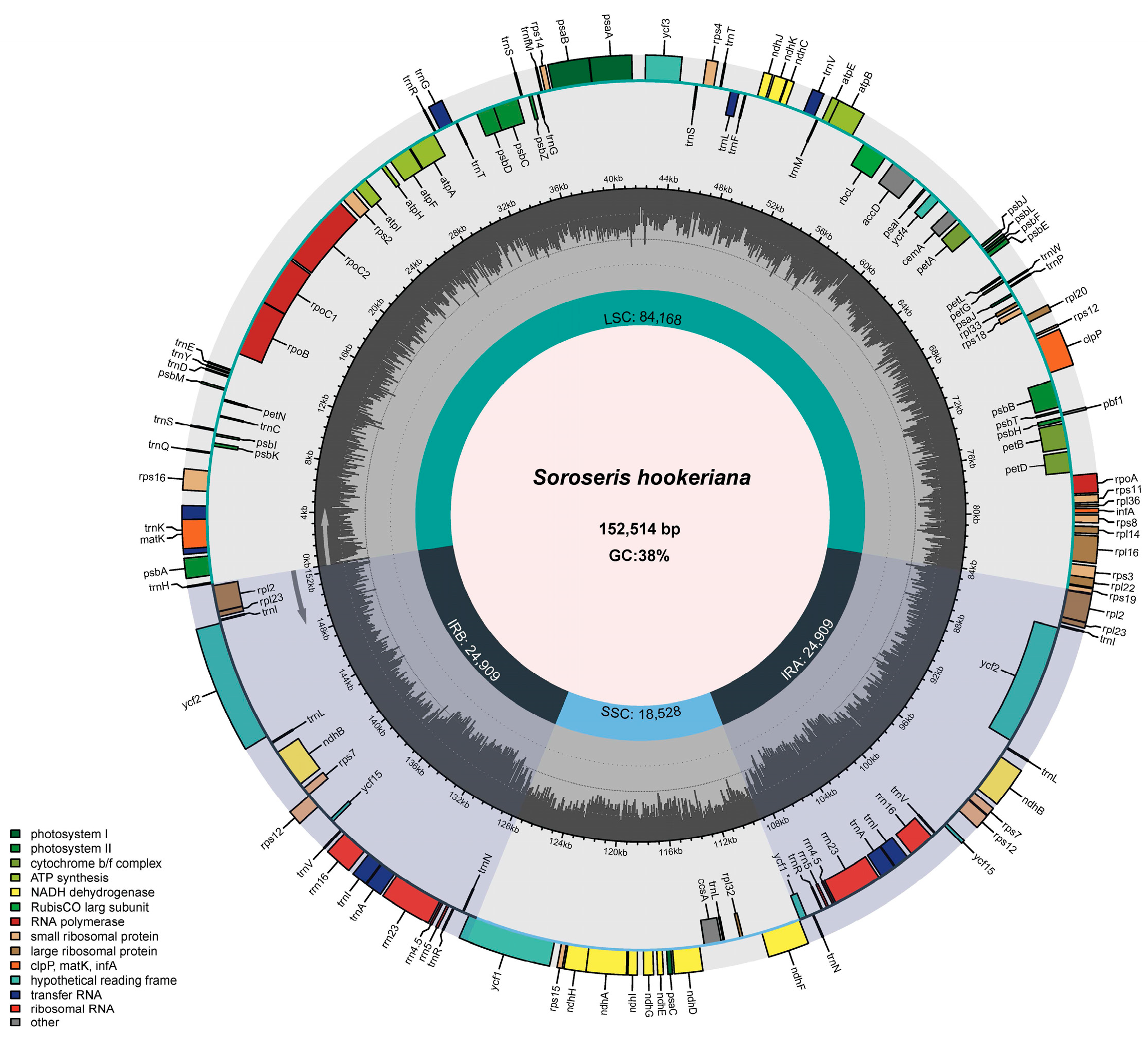
The cp genome of S. hookeriana (152,514 bp) displays a typical quadripartite organization, consisting of a large single-copy region (84,168 bp), a small single-copy region (18,528 bp), and two identical inverted repeat regions (24,909 bp each) (Figure 2; Table 1). Its nucleotide composition is 31.19% T, 31.08% A, 18.78% C, and 18.94% G, yielding an overall GC content of 37.73% that varies regionally: 43.12% in IR, 35.94% in LSC, and 31.34% in SSC.
The cp genome contains 132 unique genes (excluding one pseudogene), including 87 protein-coding genes, 37 tRNA genes, and 8 rRNA genes (Table 2). Eighteen genes are duplicated in the IR regions, resulting in a total of 150 gene copies. The LSC region contains 62 protein-coding and 22 tRNA genes, the SSC region houses 12 protein-coding and a single tRNA gene, and each IR region carries 7 protein-coding, 4 rRNA, and 7 tRNA genes (in duplicate). Functionally, these genes are annotated for photosynthesis, self-replication, envelope proteins, proteases, transcription initiation factors, and other roles.
Twenty-three genes contain introns (Table 3). Among these, 21 genes possess a single intron (13 protein-coding genes and 8 tRNA genes), while two genes, clpP and ycf3, contain two introns each. The largest intron (2536 bp) is trnK-UUU gene whereas the smallest intron (396 bp) is trnL-UAA gene.

3.2. Codon Usage Bias

The sequences of protein-coding genes and tRNA genes were analyzed to calculate the RSCU values for each codon. A total of 62 codon types (26,165 codons) were involved in amino acid encoding (Table 4). Leucine was the most frequently encoded amino acid (2812 codons, 10.75%), whereas cysteine was encoded by the fewest codons (287 codons, 1.10%). Thirty-one codons exhibited RSCU values ≥1, of which 28 ended with A or U. Collectively, these data indicate a pronounced bias toward A/U at the third codon position in the cp genome. For methionine, RSCU values were 1.99 for AUG and 0.006 for GUG. Sequence verification confirmed that GUG occurs exclusively at gene initiation positions, functioning as a start codon for methionine. The extremely low frequency of GUG usage (representing 0.3% of methionine initiation events) demonstrates that only a minimal proportion of genes in S. hookeriana chloroplasts utilize GUG as the start codon. This represents a distinctive feature of the chloroplast translational system, reflecting a specialized regulatory layer and evolutionary strategy.

3.3. Repeat Sequence

For repeat structure analysis, 21 forward (F-type), 16 palindromic (P-type), and 2 reverse (R-type) repeats were detected in the S. hookeriana cp genome; no complement (C-type) repeats were found (Table 5). Repeat lengths ranged from 30 to 60 bp, with the longest repeats (60 bp) including two forward and two reverse repeats. The shortest repeats (30 bp) comprised five forward, six palindromic, and one reverse repeat. The functionally uncharacterized ycf2 gene was predominantly associated with larger repeats (42–60 bp) in the IR regions, while photosystem I-related genes (psaA, psaB, and ycf3) were primarily located in the LSC region. Notably, ycf3 exhibited broad distribution across LSC, SSC, and IR regions, which may enhance photosynthetic efficiency and contribute to the biosynthesis of bioactive compounds underlying the pharmacological properties of S. hookeriana.
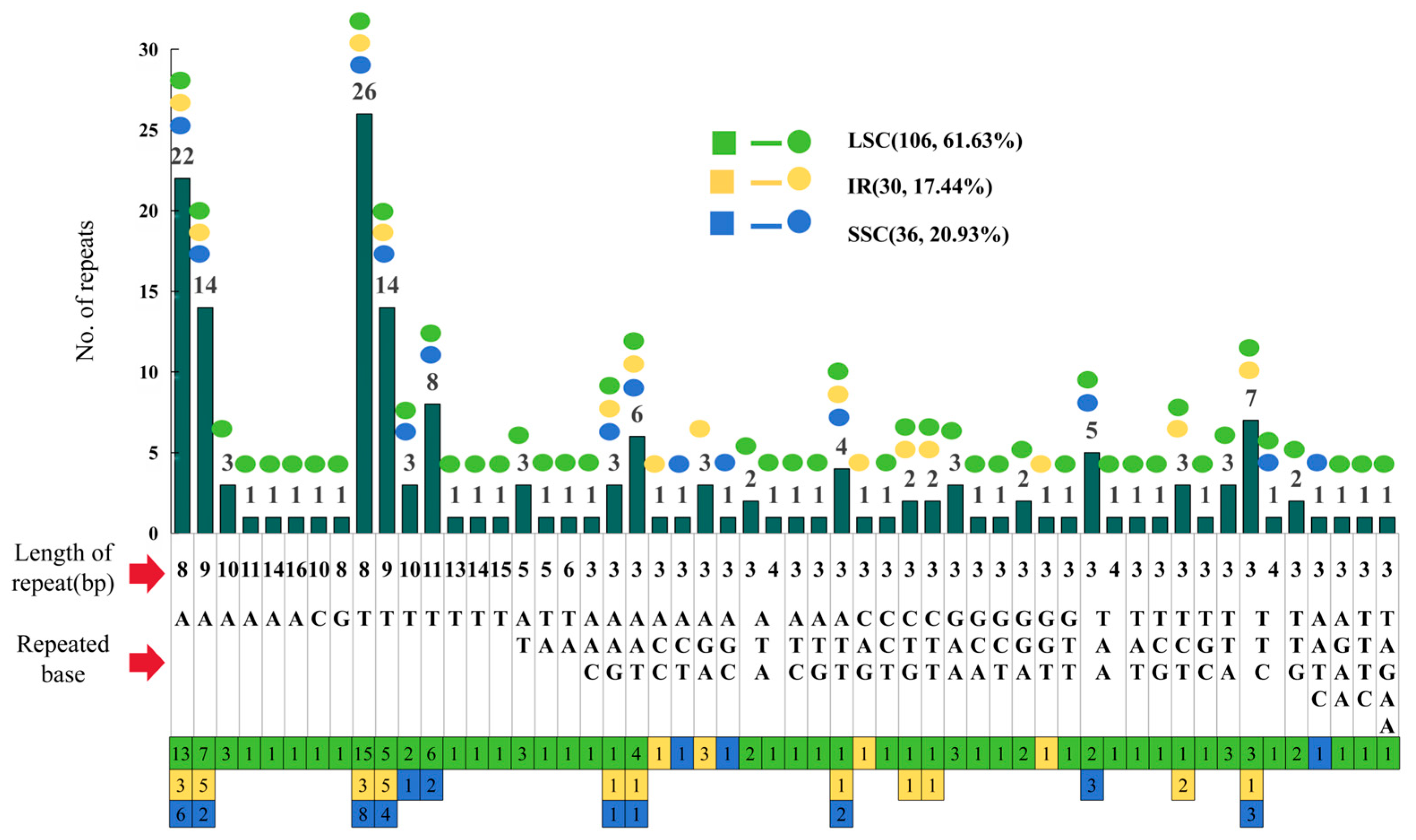
The cp genome contained 172 SSR loci (Figure 3), with 106 (61.63%) distributed in the LSC region and the remainder approximately equally partitioned between IR and SSC regions (Figure 2). These SSRs comprised 98 mononucleotide repeats (56.98%), 5 dinucleotide repeats (2.91%), 65 trinucleotide repeats (37.79%), 3 tetranucleotide repeats (1.74%), and 1 pentanucleotide repeat (0.58%).

3.4. Comparative cp Genome Analysis and IR Boundary Analysis

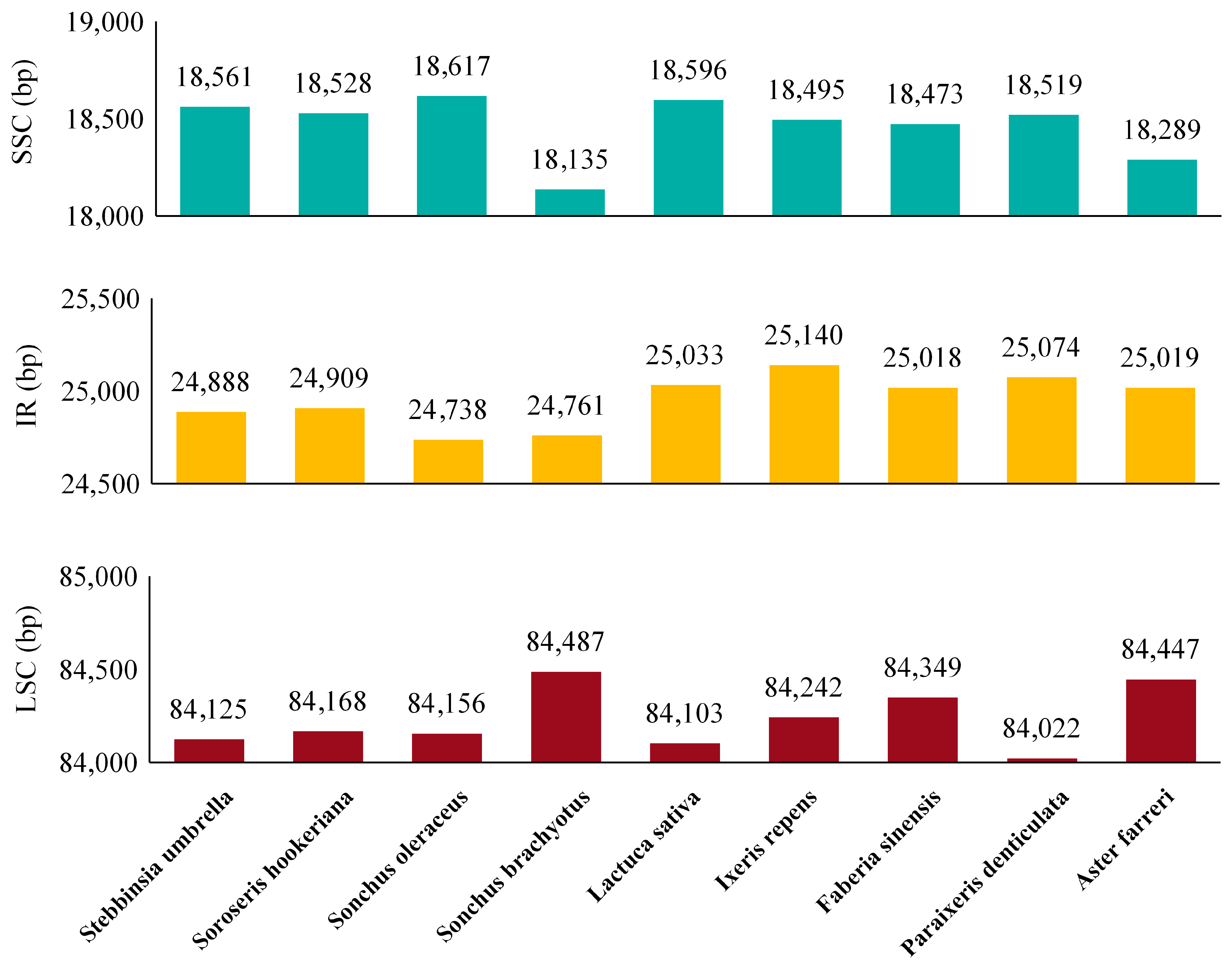
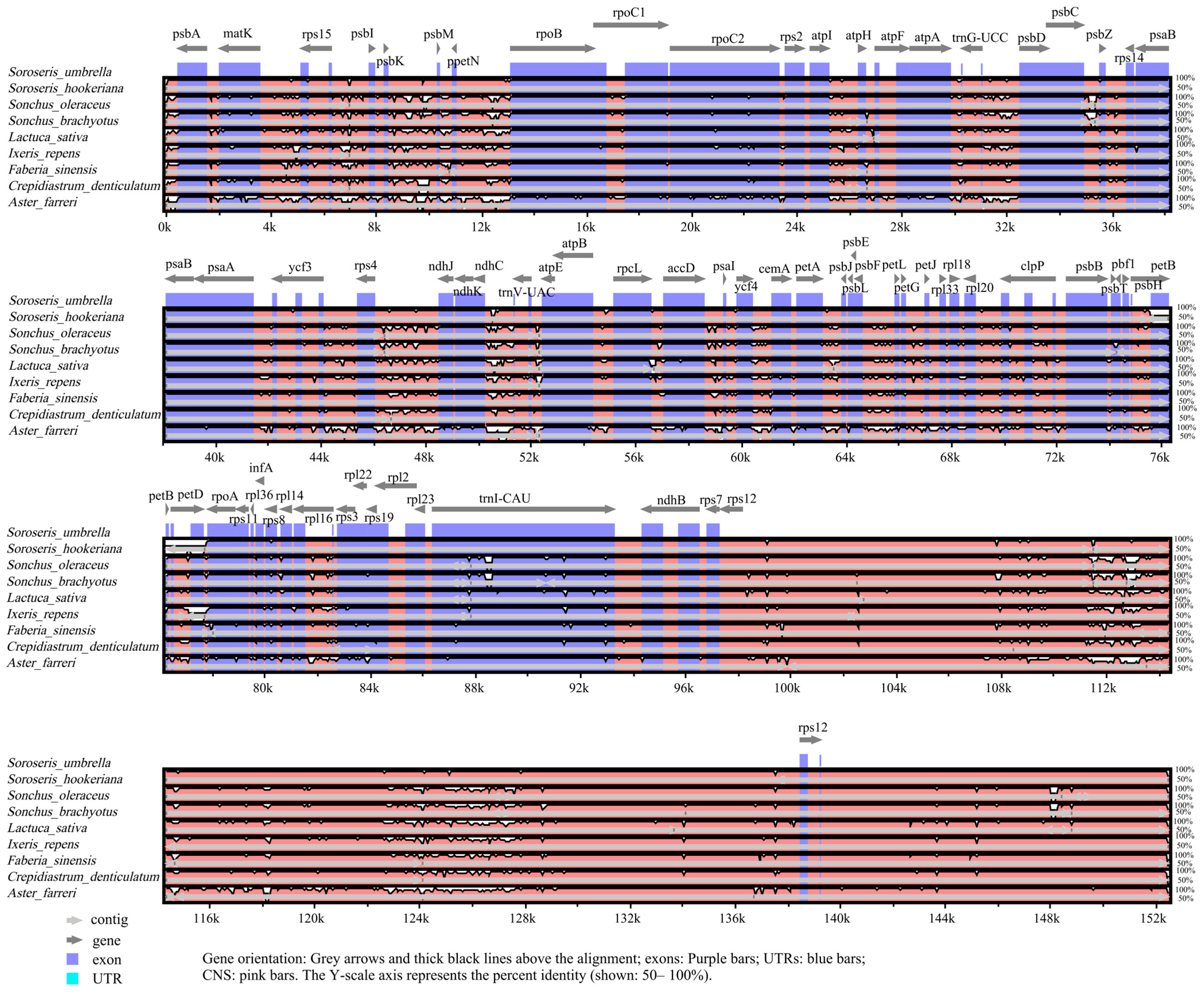
cp genomes of eight Asteraceae species were retrieved from NCBI database for comparative analysis with S. hookeriana. Whole-genome alignment with S. hookeriana using mVISTA revealed that the nine cp genomes ranged from 151,849 to 153,017 bp (Figure 4) and all maintained the typical quadripartite structure. The limited size variation (1168 bp) suggests relatively constrained IR expansion/contraction during evolution in this group.
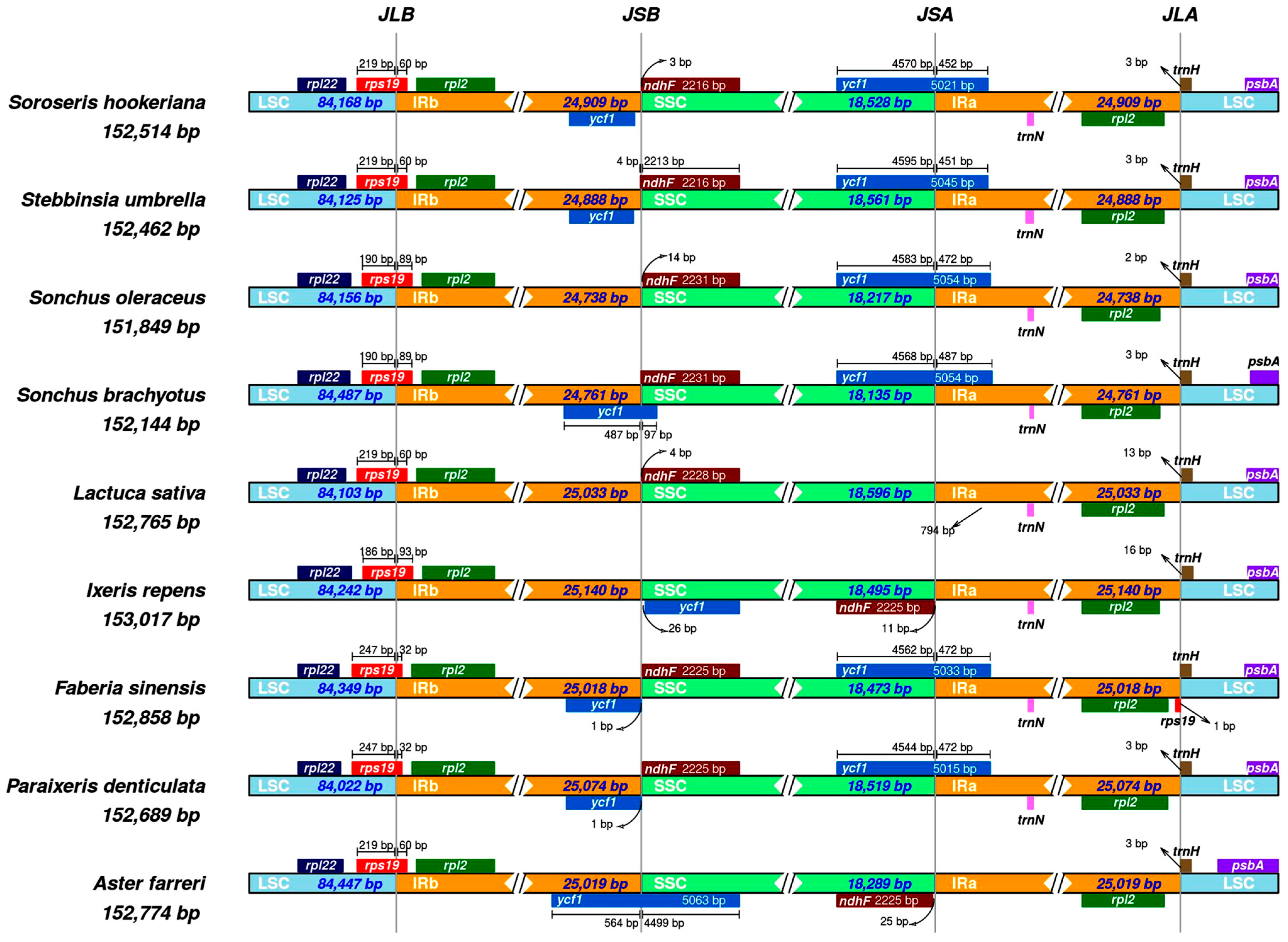
IRScope analysis using S. umbrella as a reference indicated that S. hookeriana IR regions (24,909 bp) were 21 bp larger than those of S. umbrella (24,888 bp) (Figure 4 and Figure 5). The IR expansion extended 43 bp into the LSC region at the JLB junction and 33 bp into the SSC region at the JSB junction, resulting in proportional contraction of the single-copy regions. Comparative gene mapping revealed both conserved and dynamic boundary features across the nine species. The rpl2 gene was consistently located within the IR regions (IRb and IRa) in all species, while rpl2 remained in the LSC region, neither showing boundary displacement. In contrast, ndhF exhibited significant positional shifts. In A. farreri and I. repens, ndhF spanned the IRb/SSC boundary, shifting upstream in the JSA region at distances of 25 bp and 11 bp from the JLA junction, respectively. In S. hookeriana, ndhF completely crossed into the JSA downstream region, fully spanning the IRb/SSC region. The ycf1 gene showed a 24 bp length reduction in S. hookeriana but maintained its canonical distribution across the JSA/SSC and SSC/IRa junctions. Similar patterns were observed in S. brachyotus, S. oleraceus, P. denticulata, and F. sinensis, although ycf1 in S. brachyotus additionally spanned the IRb/SSC region. The ycf1 gene was absent in L. sativa, shifted from upstream of JSB to downstream of JSA in I. repens, and was completely relocated to the IRb/SSC region in A. farreri.
Homology visualization using mVISTA Shuffle-LAGAN mode identified the JLB and JSA boundaries as lineage-specific hotspots of variation (Figure 6). In S. hookeriana, the JLB boundary showed a 43 bp expansion into non-coding regions (white peaks, <70% conservation), suggesting neutral structural evolution. The JSA boundary exhibited a 21 bp expansion with low conservation (<70%) and high sequence divergence in the IRa/SSC intergenic region. Conversely, the JSB boundary displayed a 33 bp contraction with moderate conservation (70–85%) and minor rearrangement at the IRb/SSC junction. Despite these boundary shifts, essential genes including psbA (JLB), ndhF (JSB), ycf1 (JSA), and rpl2 (JLA) showed high conservation (red signals in mVISTA) and remained intact or functional according to IRScope analysis, indicating that boundary variations likely represent neutral structural evolution without compromising core cp genome function.

3.5. Phylogenetic Analyses

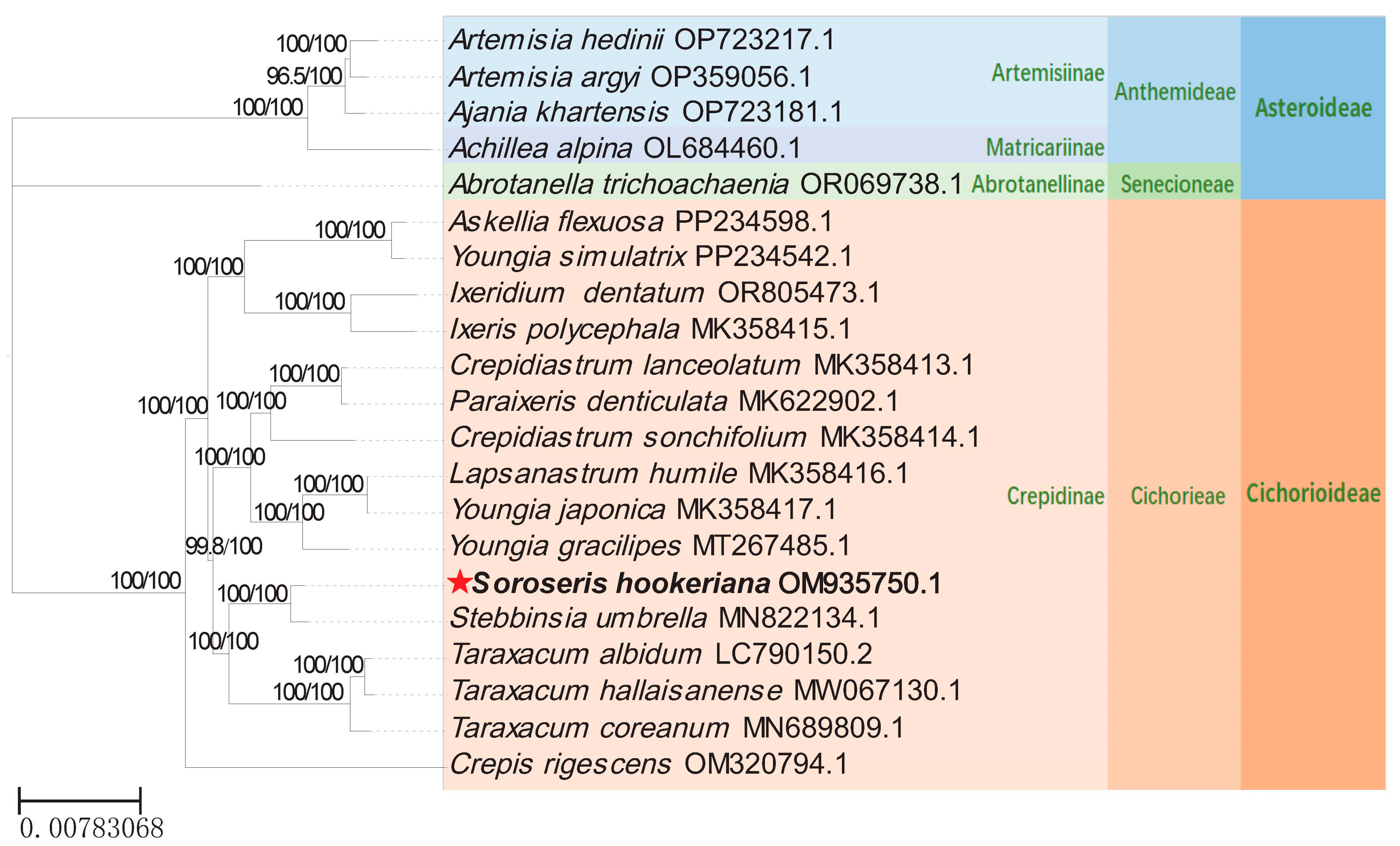
S. hookeriana and S. umbrella are congeneric species that formed a monophyletic clade. This clade was resolved as sister to Taraxacum species with strong bootstrap support (100%) (Figure 7). The genetic distance between S. hookeriana and S. umbrella exceeded interspecific divergence within Taraxacum, confirming that the Soroseris clade is a distinct sister lineage to Taraxacum. S. hookeriana and S. umbrella together constitute this Soroseris clade.

4. Discussion

S. hookeriana is a Tibetan medicinal plant with significant pharmacological value and a narrow endemic distribution in the Sino-Himalayan region. As an alpine specialist occupying narrow niches that may be vulnerable to climate change, it represents a candidate for future ecological monitoring studies. Understanding its genetic evolution is therefore of considerable importance [1]. This study reports the complete cp genome sequencing, assembly, and annotation of S. hookeriana, along with comparative and phylogenetic analyses.
The cp genome exhibits a typical quadripartite structure of 152,514 bp, consistent with most land plant cp genomes [5]. Comparative analysis with other Soroseris species reveals similar genome sizes and gene content, indicating relative conservation within the genus. The chloroplast genome of S. hookeriana contains 132 unique genes, 23 of which harbor introns. The ycf3 gene, encoding a protein essential for photosystem I assembly [29], carries two introns of 738 bp and 699 bp. While photosynthetic activity is known to influence secondary metabolite biosynthesis in plants [30,31], the functional relevance of plastid intron size variation in S. hookeriana cannot be determined from genome data alone and requires future transcriptomic and functional studies.
Codon usage patterns reflect evolutionary history and can guide optimization of heterologous gene expression systems [32]. In S. hookeriana, the overall GC content is 37.73%, with region-specific values of 43.12% (IR), 35.94% (LSC), and 31.34% (SSC)—all below 45%. There are 31 codons with RSCU ≥1 in S. hookeriana cp genome, and 28 end with A/U, demonstrating a clear A/U-ending preference. These observed characteristics establish a distinct codon usage blueprint for this chloroplast genome, providing a foundation for rational heterologous gene design in this system.
RSCU analysis revealed that methionine in the cp genome of S. hookeriana is encoded by both AUG (RSCU = 1.99) and GUG (RSCU = 0.006). The extremely low usage frequency of GUG, accounting for only 0.3% of methionine initiation events, indicates that although the vast majority of genes initiate with AUG, a minority of genes still employ GUG as the methionine codon at the initiation site. Sequence verification confirmed that GUG occurs exclusively at the 5′ terminus of genes, representing a distinctive regulatory feature of chloroplasts compared to the nuclear genome. Previous studies have shown that in tobacco chloroplasts, GUS reporter gene expression initiated with GUG was significantly lower than that initiated with AUG [33]. This “attenuated translation” can provide low-level, precise synthesis of photosynthetic proteins (e.g., the PSII psbC gene product), thereby preventing resource wastage. Literature indicates that chloroplasts utilize non-AUG start codons as an additional layer of gene regulation to balance the degradation and synthesis demands of high-turnover proteins, rather than promoting overexpression [33]. Prokaryotes also employ GUG/UUG as start codons, and this conserved mechanism has persisted throughout the 1.5 billion years of chloroplast evolution, remaining highly conserved from algae to angiosperms and corroborating its cyanobacterial endosymbiotic origin. Although the complete biological significance of non-AUG start codons remains to be fully elucidated, this regulatory layer is indispensable for the dynamic balance of the photosynthetic system.
Chloroplast SSRs (cpSSRs) exhibit uniparental inheritance and are widely used for population genetics, diversity assessment, and maternity analysis [34,35]. The S. hookeriana cp genome contains 172 SSRs, predominantly distributed in the LSC region and comprising mainly mononucleotide and trinucleotide repeats—a pattern consistent with most plants [36]. Mononucleotide SSRs are predominantly A/T types, likely reflecting the thermodynamic stability of A-T base pairing. As cpSSRs serve as valuable markers for investigating genetic resources in medicinal plants, these SSR loci provide a molecular toolkit for population genetics and germplasm conservation of S. hookeriana.
Although IR regions are the most conserved portions of cp genomes, contraction and expansion at IR boundaries are common evolutionary events that contribute to size variation among cp genomes [37,38]. The nine Asteraceae species examined showed IR length variation, indicating dynamic evolutionary processes. Most species exhibited LSC expansion, except P. denticulata and L. sativa, while S. brachyotus and S. oleraceus displayed IR contraction. Length variation in boundary-associated genes such as ycf1, ndhF, and rpl2 likely accounts for these size differences. Despite boundary shifts, the high conservation of key junction genes confirms that the S. hookeriana cp genome follows a relatively stable evolutionary trajectory, consistent with the theory of semi-autonomous plastid evolution.
In S. hookeriana, the essential gene ycf1 spans the IR-SSC boundary, with only 452 bp of its 5021 bp length residing in IRA and 4570 bp in SSC (Figure 4). This positioning, conserved across six related Asteraceae species but absent in L. sativa and A. farreri, reveals structural plasticity of a gene whose loss is lethal in vascular plants [39]. While IR regions typically house crucial genes due to their double-copy nature, the predominant SSC localization of ycf1 suggests a potential regulatory advantage: single-copy status may facilitate precise nuclear-plastid co-regulation [40]. This interpretation aligns with recent frameworks proposing that plastid gene repositioning shaped nuclear-plastid interaction networks during plant terrestrialization [41]. For the high-altitude specialist S. hookeriana, this configuration may represent a compromise between maintaining essential gene function and optimizing transcriptional responsiveness. Future nuclear transcriptome integration will directly test whether ycf1 expression correlates with chloroplast-targeted nuclear regulators, providing insight into how genome architectural variation contributes to environmental adaptation.
Phylogenetic analysis based on cp genome sequences resolved S. hookeriana as sister to S. umbrella with robust support (bootstrap = 100), mirroring previous ITS-based phylogenies [42]. However, given the uniparental inheritance of cp genomes and limited taxon sampling, future studies should incorporate additional Soroseris species and nuclear markers to capture biparental evolutionary signals. Integrating complete plastid and nuclear genomic data will provide a more comprehensive understanding of the genus’s evolutionary history.

5. Conclusions

In this study, we characterized the complete cp genome of S. hookeriana (152,514 bp), which exhibits a typical quadripartite architecture harboring 132 unique genes predominantly localized in the LSC region. CUB analysis shows that natural selection is the primary force shaping its codon preferences. Comparative analysis with eight other Asteraceae species demonstrated relatively conserved plastid genome structure across the family. Phylogenetic analysis robustly supported S. hookeriana as sister to S. umbrella, with this clade forming the sister group to Taraxacum species. The comprehensive data presented in this study provide insight into the evolutionary relationships between species of the family Asteraceae, and provide an assembly of the whole cp genome of S. hookeriana, which may be useful for future breeding and further biological discoveries.

Author Contributions

Conceptualization, J.W.; methodology, J.W. and T.T.; software, T.T.; validation, J.W., X.L. and Y.W.; formal analysis, T.T.; resources, J.W.; data curation, J.W.; visualization X.L. and Y.W.; supervision, J.W. and X.L.; project administration, J.W.; funding acquisition, J.W. All authors have read and agreed to the published version of the manuscript.

Funding

This research was funded by Qinghai Provincial Science and Technology Major Project (Grant No. 2023—SF—A5).

Institutional Review Board Statement

Not applicable.

Informed Consent Statement

Not applicable.

Data Availability Statement

The cp genome sequence of S. hookeriana generated in this study has been deposited in NCBI GenBank under accession number OM935750.1 (Available online: https://www.ncbi.nlm.nih.gov/nuccore/OM935750.1/ (accessed on 25 December 2025)). Data will also be made available on request from the author via email (wang_jiul@163.com).

Conflicts of Interest

The authors declare no conflicts of interest.

References

  1. Stebbins, G.L. Studies in the Cichorieae: Dubyaea and Soroseris, endemics of the Sino-Himalayan region. Mem. Torrey Bot. Club. 1940, 19, 1–76. [Google Scholar]
  2. Lv, J.Y. New Advances in Research of Chemical Contituents and Pharmacological Action of Genus Soroseris. J. Liaoning Univ. Tradit. Chin. Med. 2011, 13, 212–213. [Google Scholar] [CrossRef]
  3. Meng, J.C.; Zhu, Q.X.; Tan, R.X. New antimicrobial mono-and sesquiterpenes from Soroseris hookeriana subsp. erysimoides. Planta Med. 2000, 66, 541–544. [Google Scholar] [CrossRef]
  4. McFadden, G.I. Chloroplast origin and integration. Plant Physiol. 2001, 125, 50–53. [Google Scholar] [CrossRef]
  5. Susann, W.; Gerald, M.S.; Claude, W.P.; Kai, F.M.; Dietmar, Q. The evolution of the plastid chromosome in land plants: Gene content, gene order, gene function. Plant Mol. Biol. 2011, 76, 273–297. [Google Scholar] [CrossRef]
  6. Zhu, T.T.; Zhang, L.C.; Chen, W.S.; Li, Q. Analysis of Chloroplast Genomes in 1342 Plants. Genom. Appl. Biol. 2017, 36, 4323–4333. [Google Scholar] [CrossRef]
  7. Catherine, J.N.; Craig, M.H.; Juan, D.M.; Ainnatul, A.A.; Satomi, H.; Julia, P.; David, E.; Jacqueline, B. Wild Origins of Macadamia Domestication Identified Through Intraspecific Chloroplast Genome Sequencing. Front. Plant Sci. 2019, 10, 334. [Google Scholar] [CrossRef] [PubMed]
  8. Twydord, A.D.; Ness, R.W. Strategies for complete plastid genome sequencing. Mol. Ecol. Res. 2017, 17, 858–868. [Google Scholar] [CrossRef]
  9. Dong, Y.; Cao, Q.; Yu, K.; Wang, Z.; Chen, S.; Chen, F.; Song, A. Chloroplast phylogenomics reveals the maternal ancestry of cultivated chrysanthemums. Genom. Commun. 2025, 2, e019. [Google Scholar] [CrossRef]
  10. Kan, J.; Nie, L.; Wang, M.; Tiwari, R.; Tembrock, L.R.; Wang, J. The Mendelian pea pan-plastome: Insights into genomic structure, evolutionary history, and genetic diversity of an essential food crop. Genom. Commun. 2024, 1, e004. [Google Scholar] [CrossRef]
  11. He, L.; Qian, J.; Sun, Z.Y.; Xu, X.L.; Chen, S.L. Complete chloroplast genome of medicinal plant Lonicera japonica: Genome rearrangement, intron gain and loss, and implications for phylogenetic studies. Molecules 2017, 22, 249. [Google Scholar] [CrossRef] [PubMed]
  12. Jansen, R.K.; Cai, Z.Q.; Raubeson, L.A.; Daniell, H.; de Pamphilis, C.W.; Leebeans-Mack, J.; Müller, K.F.; Guisinger-Bellian, M.; Haberle, R.C.; Hansen, A.K.; et al. Analysis of 81 genes from 64 plastid genomes resolves relationships in angiosperms and identifies genome-scale evolutionary patterns. Proc. Natl. Acad. Sci. USA 2007, 104, 19369–19374. [Google Scholar] [CrossRef] [PubMed]
  13. Heng, L.M.; Zheng, Y.L.; Zhao, Y.B.; Wang, Y.J. Radiation of members of the Soroserishookeriana complex (Asteraceae) on the Qinghai-Tibetan Plateau and their proposed taxonomic treatment. PhytoKeys 2018, 114, 11. [Google Scholar] [CrossRef]
  14. Yu, M. Study on Diversity and Utilization of Medicine Plant Resources in Yushu City. Master’s Thesis, Northwest A&F University, Yangling, China, 2022. [Google Scholar] [CrossRef]
  15. Schenk, J.J.; Becklund, L.E.; Carey, S.J.; Fabre, P.P. What is the “modified” CTAB protocol? Characterizing modifications to the CTAB DNA extraction protocol. Appl. Plant Sci. 2023, 11, e11517. [Google Scholar] [CrossRef] [PubMed]
  16. Chen, S.; Zhou, Y.; Chen, Y.; Gu, J. fastp: An ultra-fast all-in-one FASTQ preprocessor. Bioinformatics 2018, 34, i884–i890. [Google Scholar] [CrossRef]
  17. Jin, J.J.; Yu, W.B.; Yang, J.B.; Song, Y.; DePamphilis, C.W.; Yi, T.S.; Li, D.Z. GetOrganelle: A fast and versatile toolkit for accurate de novo assembly of organelle genomes. Genome Biol. 2020, 21, 241. [Google Scholar] [CrossRef]
  18. Shi, L.; Chen, H.; Jiang, M.; Wang, L.; Wu, X.; Huang, L.; Liu, C. CPGAVAS2, an integrated plastome sequence annotator and analyzer. Nucleic Acids Res. 2019, 47, W65–W73. [Google Scholar] [CrossRef]
  19. Liu, S.; Ni, Y.; Li, J.; Zhang, X.; Yang, H.; Chen, H.; Liu, C. CPGView: A package for visualizing detailed chloroplast genome structures. Mol. Ecol. Resour. 2023, 23, 694–704. [Google Scholar] [CrossRef]
  20. Zheng, S.; Poczai, P.; Hyvönen, J.; Tang, J.; Amiryousefi, A. Chloroplot: An online program for the versatile plotting of organelle genomes. Front. Genet. 2020, 11, 576124. [Google Scholar] [CrossRef]
  21. Quax, T.E.; Claassens, N.J.; Söll, D.; van der Oost, J. Codon Bias as a Means to Fine-Tune Gene Expression. Mol. Cell. 2015, 59, 149–161. [Google Scholar] [CrossRef]
  22. Murray, E.E.; Lotzer, J.; Eberle, M. Codon usage in plant genes. Nucleic Acids Res. 1989, 17, 477–498. [Google Scholar] [CrossRef] [PubMed]
  23. Ebert, D.; Peakall, R.O.D. Chloroplast simple sequence repeats (cpSSRs): Technical resources and recommendations for expanding cpSSR discovery and applications to a wide array of plant species. Mol. Ecol. Res. 2009, 9, 673–690. [Google Scholar] [CrossRef]
  24. Mayor, C.; Brudno, M.; Schwartz, J.R.; Poliakov, A.; Rubin, E.M.; Frazer, K.A.; Pachter, L.S.; Dubchak, I. VISTA: Visualizing global DNA sequence alignments of arbitrary length. Bioinformatics 2000, 16, 1046–1047. [Google Scholar] [CrossRef]
  25. Frazer, K.A.; Pachter, L.; Poliakov, A.; Rubin, E.M.; Dubchak, I. VISTA: Computational tools for comparative genomics. Nucleic Acids Res. 2004, 32, 273–279. [Google Scholar] [CrossRef]
  26. Amiryousefi, A.; Hyvönen, J.; Poczai, P. IRscope: An online program to visualize the junction sites of chloroplast genomes. Bioinformatics 2018, 34, 3030–3031. [Google Scholar] [CrossRef]
  27. Katoh, K.; Standley, D.M. MAFFT multiple sequence alignment software version 7: Improvements in performance and usability. Mol. Biol. Evol. 2013, 30, 772–780. [Google Scholar] [CrossRef]
  28. Nguyen, L.T.; Schmidt, H.A.; Von Haeseler, A.; Minh, B.Q. IQ-TREE: A fast and effective stochastic algorithm for estimating maximum-likelihood phylogenies. Mol. Biol. Evol. 2015, 32, 268–274. [Google Scholar] [CrossRef] [PubMed]
  29. Naver, H.; Boudreau, E.; Rochaix, J.D. Functional studies of Ycf3: Its role in assembly of photosystem I and interactions with some of its subunits. Plant Cell 2001, 13, 2731–2745. [Google Scholar] [CrossRef]
  30. Boudreau, E.; Takahashi, Y.; Lemieux, C.; Turmel, M.; Rochaix, J.D. The chloroplast ycf3 and ycf4 open reading frames of Chlamydomonas reinhardtii are required for the accumulation of the photosystem I complex. EMBO J. 1997, 16, 6095–6104. [Google Scholar] [CrossRef]
  31. Su, Y.H.; Song, X.Q.; Zheng, J.W.; Cao, M.; Zhang, Z.H.; Tang, Z.H. Effects of moderate ultraviolet radiation enhancement on photosynthetic characteristics and medicinal active components of Dictamnus dasycarpus. Guihaia 2022, 42, 1096–1104. [Google Scholar]
  32. Irimia, M.; Roy, S.W. Spliceosomal introns as tools for genomic and evolutionary analysis. Nucleic Acids Res. 2008, 36, 1703–1712. [Google Scholar] [CrossRef]
  33. Sadhu, L.; Kumar, K.; Kumar, S.; Dass, A.; Pathak, R.; Bhardwaj, A.; Pandey, P.; Cuu, N.V.; Rawat, B.S.; Reddy, V.S. Chloroplasts evolved an additional layer of translational regulation based on non-AUG start codons for proteins with different turnover rates. Sci. Rep. 2023, 13, 896. [Google Scholar] [CrossRef] [PubMed]
  34. Provan, J. Novel chloroplast microsatellites reveal cytoplasmic variation in Arabidopsis thaliana. Mol. Ecol. 2000, 9, 2183–2185. [Google Scholar] [CrossRef]
  35. Flannery, M.L.; Mitchell, F.J.; Coyne, S.; Kavanagh, T.A.; Burke, J.I.; Salamin, N.; Dowding, P.; Hodkinson, T.R. Plastid genome characterisation in Brassica and Brassicaceae using a new set of nine SSRs. Theor. Appl. Genet. 2006, 113, 1221–1231. [Google Scholar] [CrossRef]
  36. Guo, S.; Guo, L.L.; Zhao, W.; Xu, J.; Li, Y.Y.; Zhang, X.Y.; Shen, X.F.; Wu, M.L.; Hou, X.G. Complete chloroplast genome sequence and phylogenetic analysis of Paeonia ostii. Molecules 2018, 23, 246. [Google Scholar] [CrossRef]
  37. Raubeson, L.A.; Peery, R.; Chumley, T.W.; Dziubek, C.; Fourcade, H.M.; Boorem, J.L.; Jansen, R.K. Comparative chloroplast genomics: Analyses including new sequences from the angiosperms Nuphar advena and Ranunculus macranthus. BMC Genom. 2007, 8, 174–201. [Google Scholar] [CrossRef] [PubMed]
  38. Wang, R.J.; Cheng, C.L.; Chang, C.C.; Wu, C.L.; Su, T.M.; Chaw, S.M. Dynamics and evolution of the inverted repeat-large single copy junctions in the chloroplast genomes of monocots. BMC Evol. Biol. 2008, 8, 36–50. [Google Scholar] [CrossRef] [PubMed]
  39. Drescher, A.; Ruf, S.; Calsa, T. The two largest chloroplast genome-encoded open reading frames of higher plants are essential genes. Plant J. 2010, 22, 97–104. [Google Scholar] [CrossRef]
  40. Kunz, C.F.; Goldbecker, E.S.; Vries, J.D. Functional genomic perspectives on plant terrestrialization. Trends Genet. 2025, 41, 617–629. [Google Scholar] [CrossRef]
  41. Goldbecker, E.S.; Vries, J.D. Systems biology of streptophyte cell evolution. Annu. Rev. Plant Biol. 2025, 76, 493–522. [Google Scholar] [CrossRef]
  42. Wang, J.R. The Morphological and Systematic Studies of the Subfamily Cichorioideae Taxa in China (Asteraceae). Ph.D. Thesis, Harbin Normal University, Harbin, China, 2023. [Google Scholar] [CrossRef]
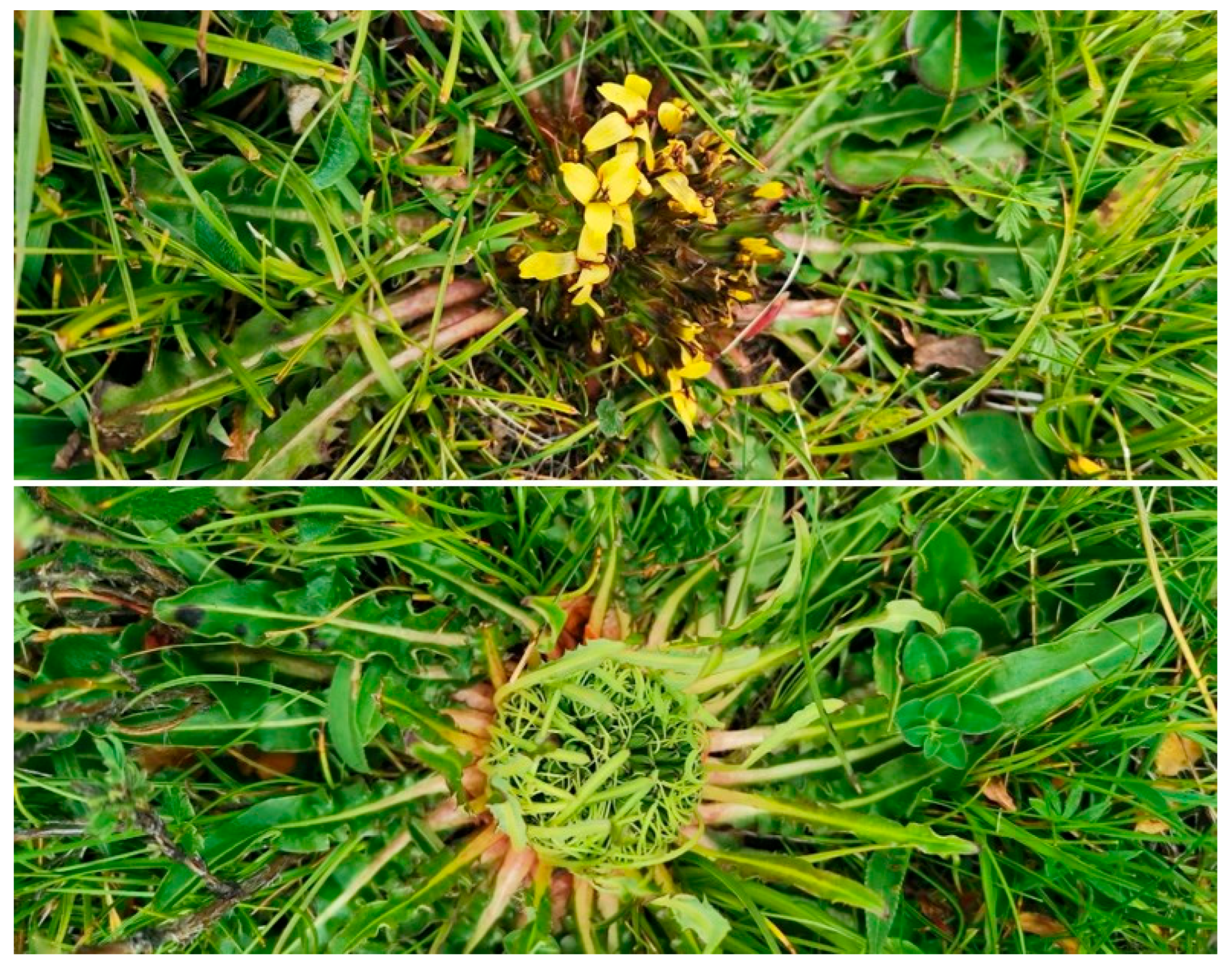
Figure 1. Wild growth of S. hookeriana.
Genes 17 00024 g001
Figure 2. cp genome map of S. hookeriana.
Genes 17 00024 g002
Figure 3. Length and distribution of SSR in the S. hookeriana cp genome.
Genes 17 00024 g003
Figure 4. Comparison of cp genomes in Asteraceae.
Genes 17 00024 g004
Figure 5. Comparison of the borders of the LSC, SSC, and IR regions among nine cp genomes.
Genes 17 00024 g005
Figure 6. Sequence analysis of cp genome with nine Asteraceae species.
Genes 17 00024 g006
Figure 7. Maximum likelihood tree of 21 cp genomes of Asteraceae. Note: Phylogram obtained from the maximum-likelihood analysis of the chloroplast data on IQTree. Branch support values were obtained from 1000 ultrafast bootstrap replicates. Five species from the subfamily Asteroideae were used as outgroups, and the red pentagram indicates S. hookeriana, whose chloroplast genome was obtained in this study.
Genes 17 00024 g007
Table 1. Basic characteristics of cp genome of S. hookeriana.
Nucleotide
Statistics
Percentage of BasesLength (bp)
A (%)C (%)G (%)T (%)GC (%)
Whole cp genome31.0818.7818.9431.1937.73152,514
LSC31.8617.6818.2632.2035.9484,168
SSC34.6716.3415.0033.9931.3418,528
IRA28.6222.3320.8028.2543.1224,909
IRB28.2520.8022.3328.6243.1224,909
Table 2. Statistical table of functional classification of chloroplast genes in S. hookeriana.
CategoryGene GroupGene Name
PhotosynthesisSubunits of photosystem IpsaA,psaB,psaC,psaI,psaJ
Subunits of photosystem IIpsbA,psbB,psbC,psbD,psbE,psbF,psbH,psbI,psbJ,psbK,psbL,psbM,psbT,psbZ
Subunits of NADH dehydrogenasendhA *,ndhB * (2),ndhC,ndhD,ndhE,ndhF, ndhG,ndhH,ndhI,ndhJ,ndhK
Subunits of cytochrome b/f complexpetA,petB *,petD *,petG,petL,petN
Subunits of ATP synthaseatpA,atpB,atpE,atpF *,atpH,atpI
Large subunit of rubiscorbcL
Self-replicationProteins of large ribosomal subunitrpl14,rpl16 *,rpl2 * (2),rpl20,rpl22,rpl23(2), rpl32,rpl33,rpl36
Proteins of small ribosomal subunitrps11,rps12 ** (2),rps14,rps15,rps16 *,rps18,rps19,rps2,rps3,rps4,rps7(2),rps8
Subunits of RNA polymeraserpoA,rpoB,rpoC1 *,rpoC2
Ribosomal RNAsrrn16(2),rrn23(2),rrn4.5(2),rrn5(2)
Transfer RNAstrnA-UGC * (2),trnC-GCA,trnD-GUC,trnE-UUC,trnF-GAA,trnG-GCC,trnG-UCC *,trnH-GUG,trnI-CAU(2),trnI-GAU * (2),trnK-UUU *,trnL-CAA(2),trnL-UAA *,trnL-UAG,trnM-CAU,trnN-GUU(2),trnP-UGG,trnQ-UUG,trnR-ACG(2),trnR-UCU,trnS-GCU,trnS-GGA,trnS-UGA,trnT-GGU,trnT-UGU,trnV-GAC(2),trnV-UAC*,trnW-CCA,trnY-GUA,trnfM-CAU
Other genesMaturasematK
ProteaseclpP **
Envelope membrane proteincemA
Acetyl-CoA carboxylaseaccD
c-type cytochrome synthesis geneccsA
Translation initiation factorinfA
otherpbf1
Genes of unknown functionConserved hypothetical chloroplast ORF# ycf1,ycf1,ycf15(2),ycf2(2),ycf3 **,ycf4
* gene with a single intron; ** gene with two introns; # pseudogene.
Table 3. The length of exons and introns in genes with introns in the S. hookeriana cp genome.
GeneLocationExon I (bp)Intron II (bp)Exon II (bp)Intron II (bp)Exon III (bp)
trnK-UUULSC37253635
rps16LSC40856227
rpoC1LSC4327241641
atpFLSC144707411
trnG-UCCLSC2371247
ycf3LSC124738230699153
trnL-UAALSC3539650
trnV-UACLSC3857535
rps12IRa114-23253726
clpPLSC71625292814228
petBLSC6770642
petDLSC8700475
rpl16LSC91053399
rpl2IRb390665435
ndhBIRb777669756
rps12IRb232-26537114
trnI-GAUIRb3877935
trnA-UGCIRb3882135
ndhASSC5531055539
trnA-UGCIRa3882135
trnI-GAUIRa3877935
ndhBIRa777669756
rpl2IRa390665435
Table 4. RSCU analysis of the amino acids in S. hookeriana cp genome.
Amino AcidCodonNo.RSCUtRNAAmino AcidCodonNo.RSCUtRNA
AlaGCA4191.1736trnA-UGCAsnAAC2830.4412
AlaGCC2240.6276trnA-UGCAsnAAU10001.5588
AlaGCG1590.4452trnA-UGCProCCA3331.2012
AlaGCU6261.7536 ProCCC1990.7176
CysUGC780.5436 ProCCG1610.5808
CysUGU2091.4564 ProCCU4161.5004
AspGAC2140.4068 GlnCAA7201.5238
AspGAU8381.5932 GlnCAG2250.4762
GluGAA9871.4732 ArgAGA4901.8396
GluGAG3530.5268 ArgAGG1850.6948
PheUUC5300.711 ArgCGA3381.269
PheUUU9611.289 ArgCGC1050.3942
GlyGGA6851.5352trnG-UCCArgCGG1260.4728
GlyGGC2030.4548 ArgCGU3541.329
GlyGGG3150.706 SerAGC1150.3402
GlyGGU5821.3044 SerAGU4081.2078
HisCAC1510.4856 SerUCA4101.2138
HisCAU4711.5144 SerUCC3180.9414
IleAUA6900.9387 SerUCG1790.5298
IleAUC4490.6108trnI-GAUSerUCU5971.767
IleAUU10661.4502trnI-GAUThrACA4091.25
LysAAA10271.4682 ThrACC2450.7488
LysAAG3720.5318 ThrACG1340.4096
LeuCUA3850.8214 ThrACU5211.592
LeuCUC1900.4056 ValGUA5231.4912trnV-UAC
LeuCUG1850.3948 ValGUC1830.5216trnV-UAC
LeuCUU6151.3122 ValGUG1920.5472trnV-UAC
LeuUUA8511.8156trnL-UAAValGUU5051.4396
LeuUUG5861.2504trnL-UAATrpUGG4531
MetAUG6271.9936 TyrUAC1890.3826
MetGUG20.0064 TyrUAU7991.6174
Table 5. Long repeat sequences in the S. hookeriana cp genome.
IDRepeat I StartTypeSize (bp)Repeat II StartMismatch (bp)E-ValueGeneRegion
184,169P24,909127,60600-IR
291,414F6091,43204.92 × 10−27ycf2;ycf2IRb;IRb
391,414P60145,19204.92 × 10−27ycf2;ycf2IRb;IRa
491,432P60145,21004.92 × 10−27ycf2;ycf2IRb;IRa
5145,192F60145,21004.92 × 10−27ycf2;ycf2IRa;IRa
656,535F5056,560−17.74 × 10⁻¹⁹rbcL;rbcLLSC;LSC
7111,541P49111,541−13.03 × 10⁻¹⁸IGSSSC;SSC
854,778F4854,79408.26 × 10−20IGSLSC;LSC
974,262P4874,262−28.38 × 10⁻¹⁶pbf1;pbf1LSC;LSC
1046,699P4646,69901.32 × 10−18IGSLSC;LSC
1110,707P4210,70703.38 × 10−16IGSLSC;LSC
1291,414F4291,45003.38 × 10−16ycf2;ycf2IRb;IRb
13145,192F42145,22803.38 × 10−16ycf2;ycf2IRa;IRa
1430,102F4130,11501.35 × 10−15IGSLSC;LSC
1543,376F4198,203−29.98 × 10⁻¹²ycf3;IGSLSC;IRb
1643,376P41138,440−29.98 × 10⁻¹²ycf3;IGSLSC;IRa
1756,546F3956,57102.16 × 10−14rbcL;IGSLSC;LSC
1843,378F39119,515−12.53 × 10⁻¹²ycf3;ndhALSC;SSC
1998,205F39119,515−12.53 × 10⁻¹²IGS;ndhAIRb;SSC
20119,515P39138,440−12.53 × 10⁻¹²ndhA;IGSSSC;IRa
2138,362F3640,586−32.67 × 10⁻⁷psaB;psaALSC;LSC
2295,161F35119,518−39.79 × 10⁻⁷ndhB;ndhAIRb;SSC
23119,518P35141,488−39.79 × 10⁻⁷ndhA;ndhBSSC;IRa
2430,097F3330,123−31.31 × 10⁻⁵IGSLSC;LSC
2554,778F3254,81003.55 × 10−10IGSLSC;LSC
268531F3235,184−34.75 × 10⁻⁵trnS-GCU;trnS-UGALSC;LSC
2759,274R3159,277−25.94 × 10⁻⁶IGSLSC;LSC
288533P3045,13405.67 × 10−9trnS-GCU;trnS-GGALSC;LSC
2912,555F3012,583−22.22 × 10⁻⁵IGSLSC;LSC
30107,071F30107,103−22.22 × 10⁻⁵IGSIRb;IRb
31107,071P30129,551−22.22 × 10⁻⁵IGSIRb;IRa
32107,103P30129,583−22.22 × 10⁻⁵IGSIRb;IRa
33129,551F30129,583−22.22 × 10⁻⁵IGSIRa;IRa
3435,186P3045,134−36.22 × 10⁻⁴trnS-UGA;trnS-GGALSC;LSC
3538,373F3040,597−36.22 × 10⁻⁴psaB;psaALSC;LSC
3667,480F3099,385−36.22 × 10⁻⁴IGSLSC;IRb
3767,480P30137,269−36.22 × 10⁻⁴IGSLSC;IRa
3882,407P3082,409−36.22 × 10⁻⁴rpl16;rpl16LSC;LSC
3931,844R3031,844−22.22 × 10⁻⁵IGSLSC;LSC
Disclaimer/Publisher’s Note: The statements, opinions and data contained in all publications are solely those of the individual author(s) and contributor(s) and not of MDPI and/or the editor(s). MDPI and/or the editor(s) disclaim responsibility for any injury to people or property resulting from any ideas, methods, instructions or products referred to in the content.