Identification and Functional Characterization of the CrRLK1L Gene Family in Salt Tolerance in Rice (Oryza sativa L.)
Abstract
1. Introduction
2. Materials and Methods
2.1. Genome-Wide Identification of the CrRLK1L Gene Family in Rice
2.2. Phylogenetic Analysis of the CrRLK1L Family
2.3. Analysis of Gene Structure, Conserved Motifs, and Phylogeny
2.4. Prediction of Cis-Regulatory Elements in Promoter Regions
2.5. Genome-Wide Duplication of the Rice CrRLK1L
2.6. Gene Expression Pattern Analysis
2.7. Plant Growth Conditions and Treatments
2.8. RT-qPCR Validation
3. Results
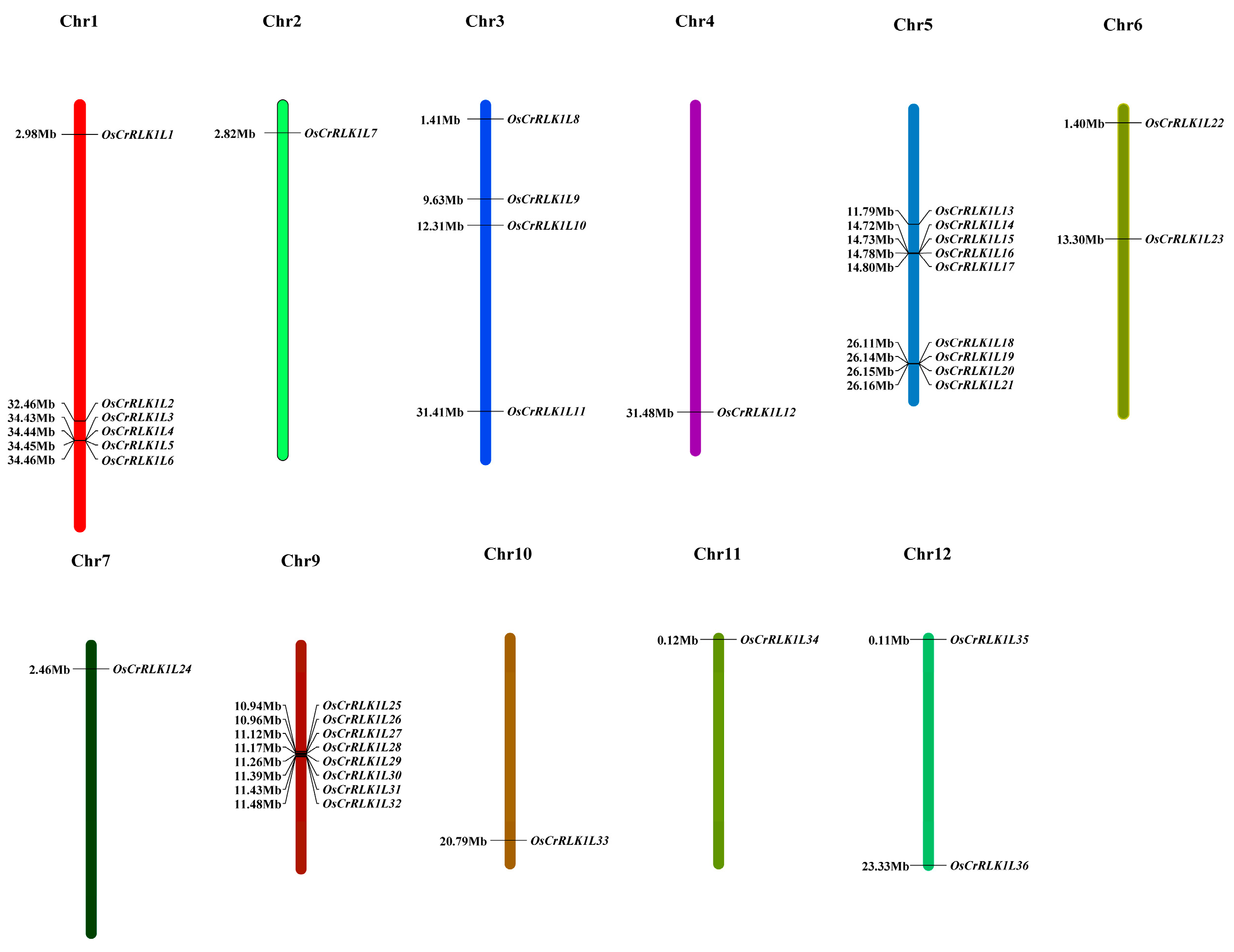
3.1. Identification and Physicochemical Characterization of the CrRLK1L Gene Family
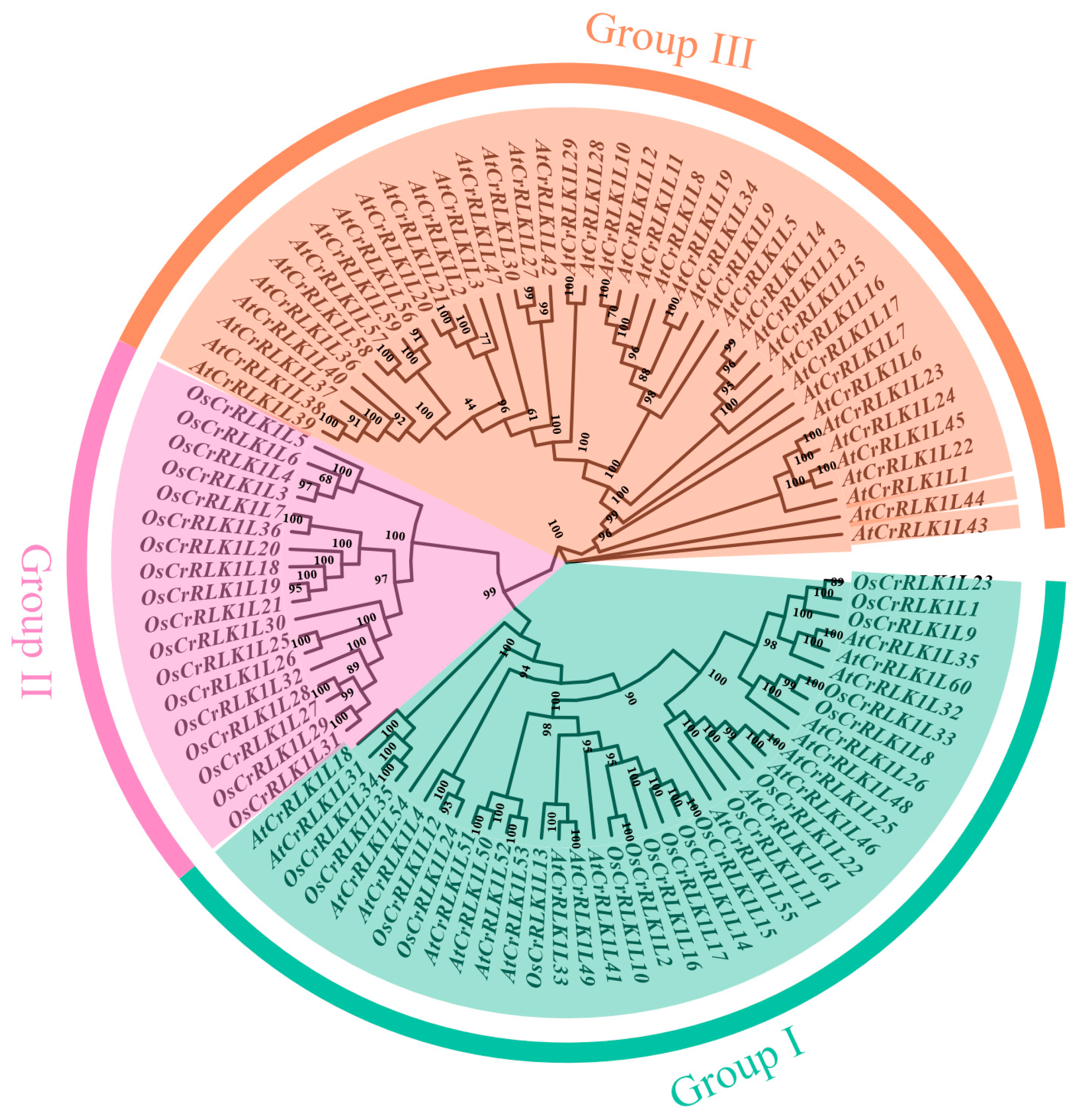
3.2. Phylogenetic Analysis of CrRLK1Ls
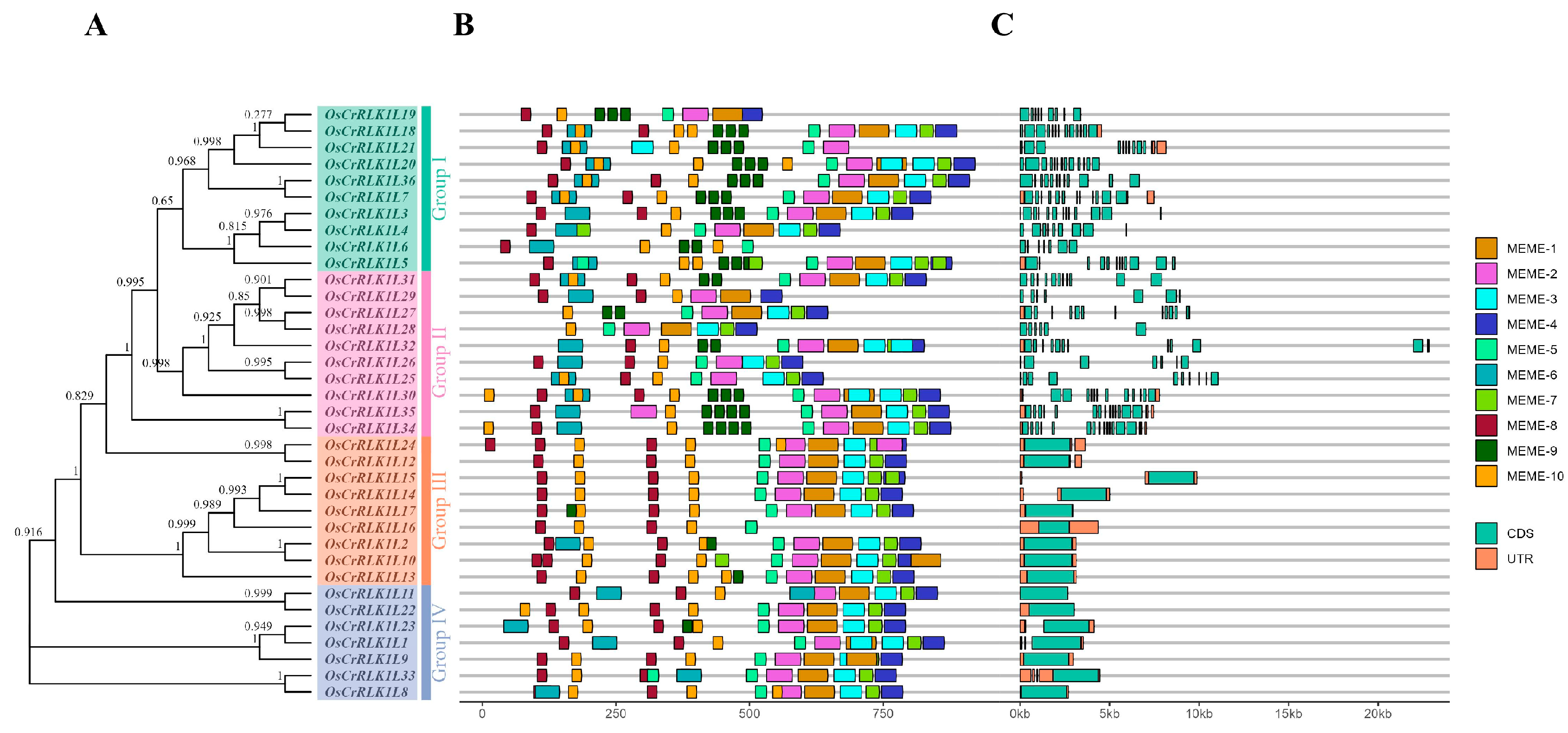
3.3. Protein Domain and Gene Structure Analysis of OsCrRLK1Ls
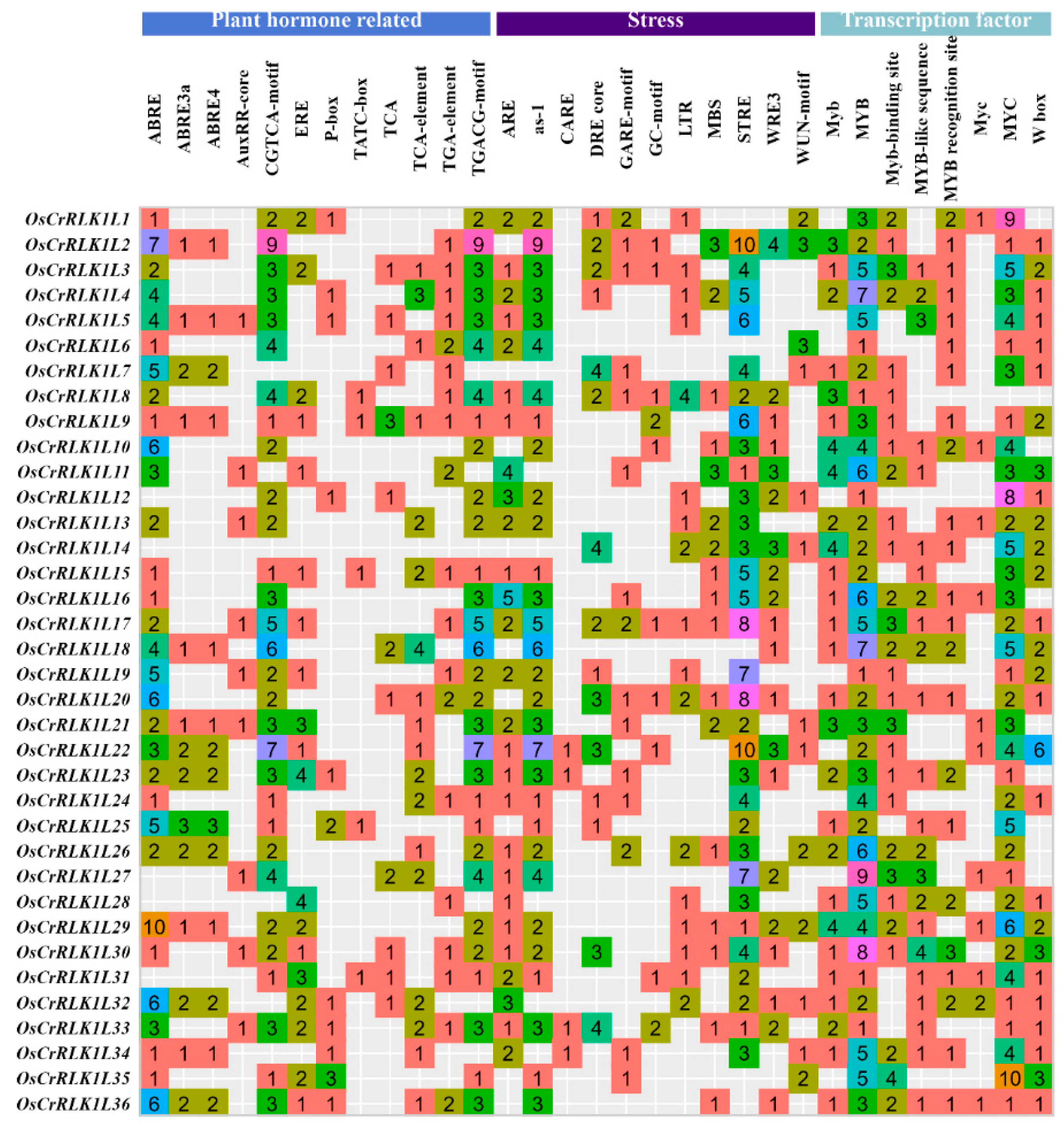
3.4. Analysis of the OsCrRLK1L Gene Promoter
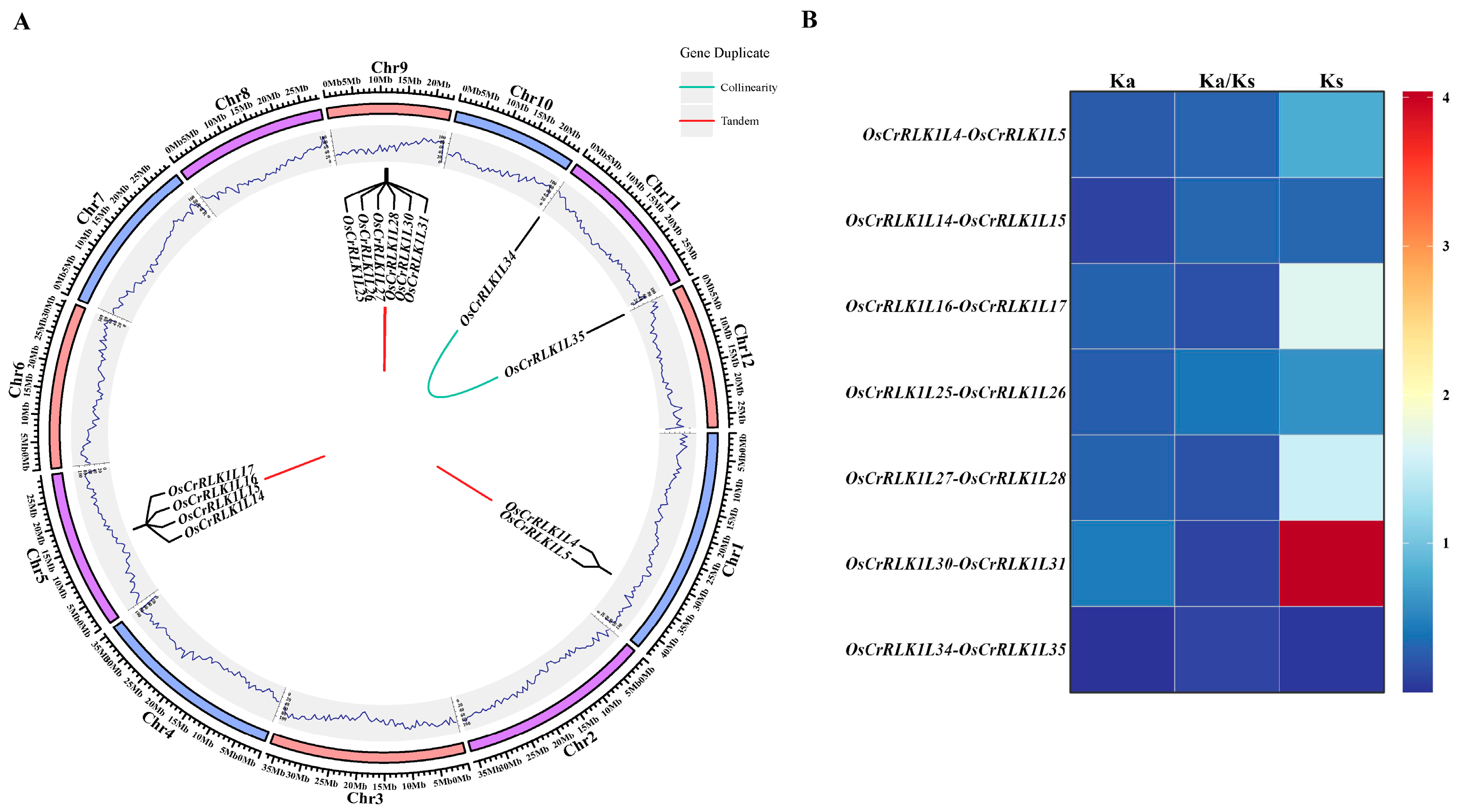
3.5. Analysis of Whole-Genome Duplication in the OsCrRLK1L Gene Family
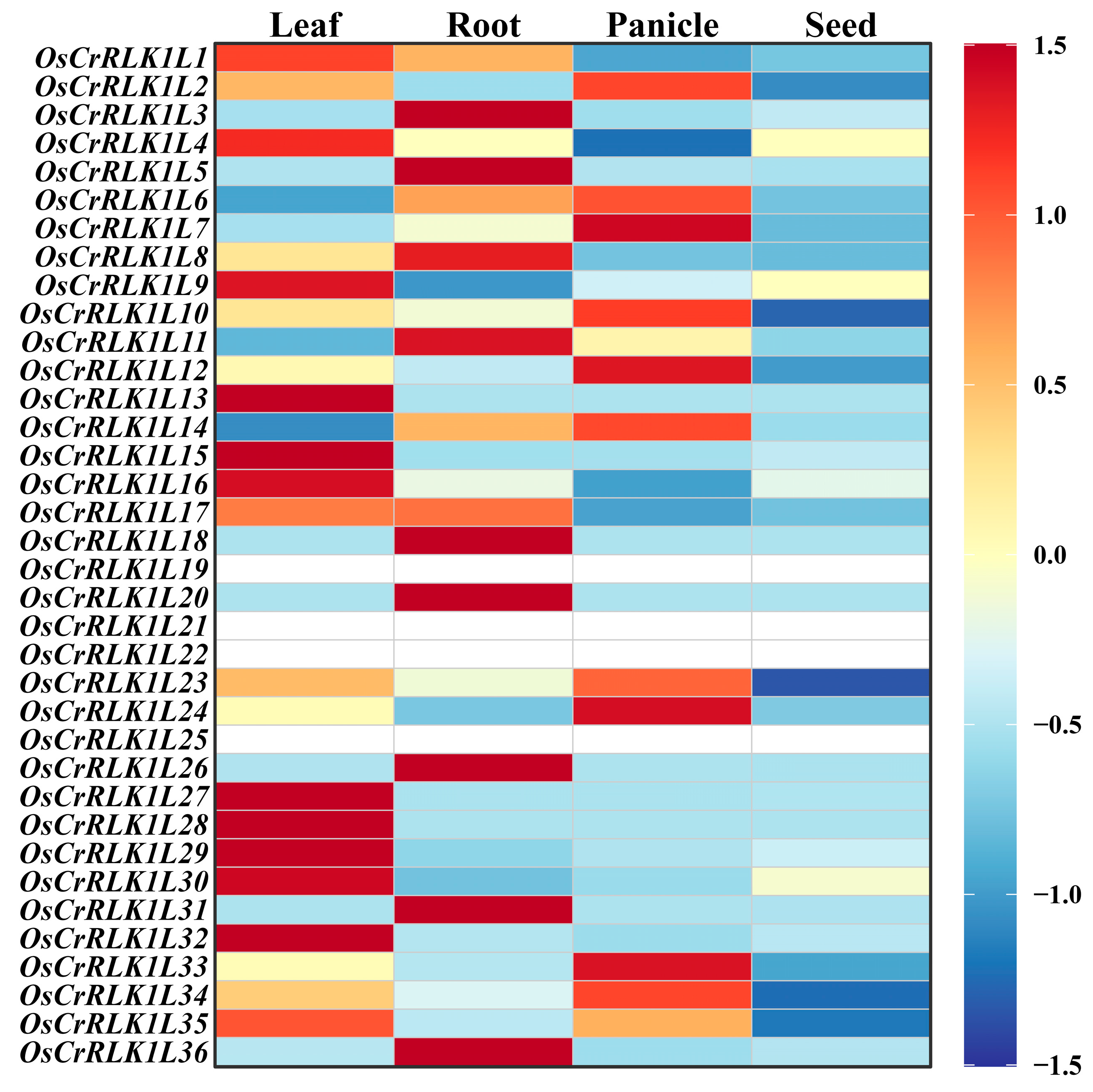
3.6. Analysis of Expression Patterns of OsCrRLK1Ls in Different Tissues
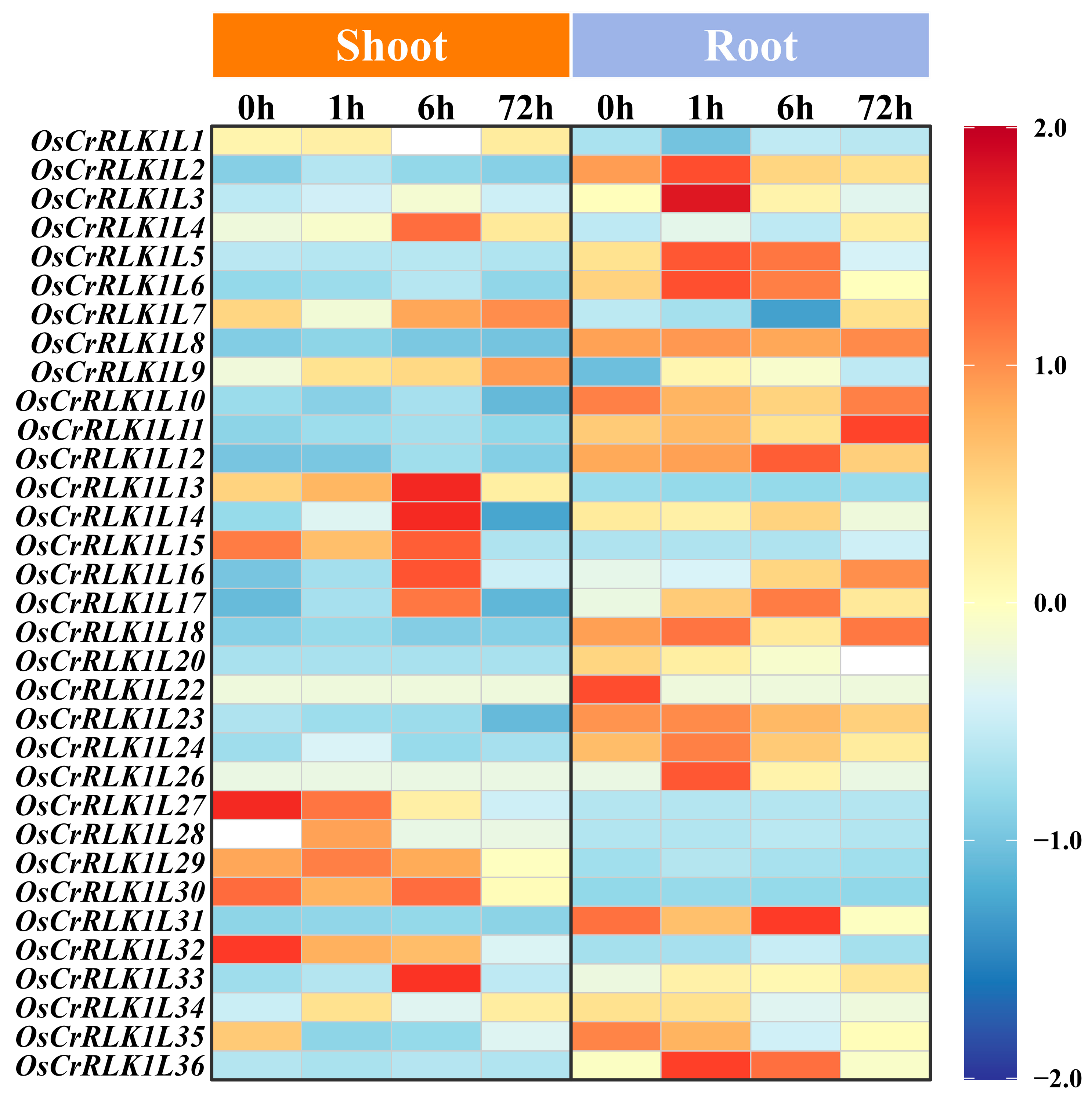
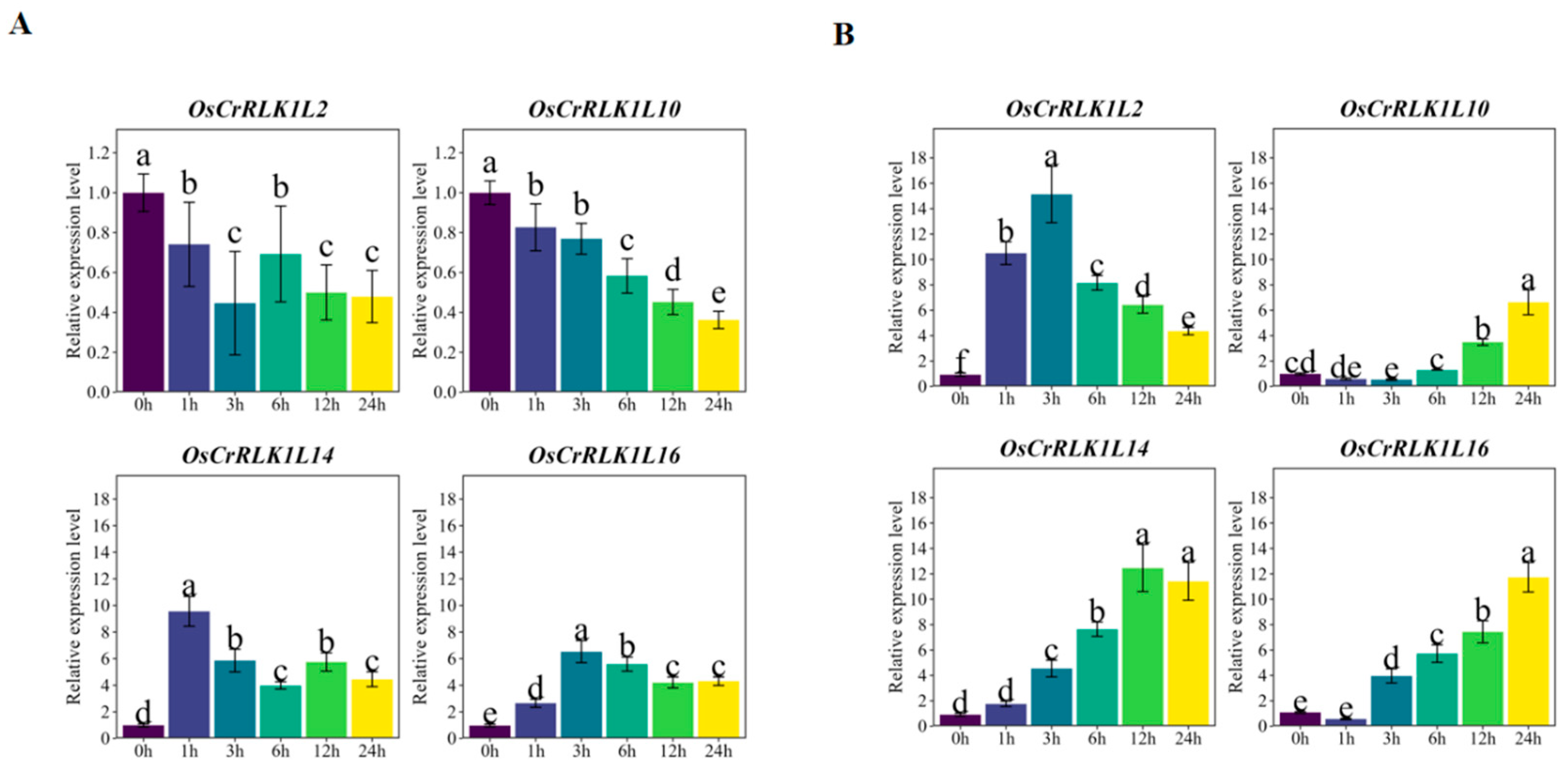
3.7. Expression Pattern and Enrichment Analysis of the OsCrRLK1L Gene Family in Response to Salt Stress
4. Discussion
5. Conclusions
Supplementary Materials
Author Contributions
Funding
Institutional Review Board Statement
Informed Consent Statement
Data Availability Statement
Conflicts of Interest
References
- Bolser, D.; Staines, D.M.; Pritchard, E.; Kersey, P. Plant cellular and molecular responses to high salinity. Annu. Rev. Plant Biol. 2000, 51, 463–499. [Google Scholar]
- Shiu, S.-H.; Bleecker, A.B. Receptor-like kinases from Arabidopsis form a monophyletic gene family related to animal receptor kinases. Proc. Natl. Acad. Sci. USA 2001, 98, 10763–10768. [Google Scholar] [CrossRef] [PubMed]
- Shiu, S.-H.; Karlowski, W.M.; Pan, R.; Tzeng, Y.-H.; Mayer, K.F.; Li, W.-H. Comparative analysis of the receptor-like kinase family in Arabidopsis and rice. Plant Cell 2004, 16, 1220–1234. [Google Scholar] [CrossRef] [PubMed]
- Wu, Y.; Zhou, J.M. Receptor-like Kinases in Plant Innate Immunity. J. Integr. Plant Biol. 2013, 55, 1271–1286. [Google Scholar] [CrossRef]
- Zhu, Q.; Feng, Y.; Xue, J.; Chen, P.; Zhang, A.; Yu, Y. Advances in receptor-like protein kinases in balancing plant growth and stress responses. Plants 2023, 12, 427. [Google Scholar] [CrossRef]
- Rao, S.; Wu, X.; Zheng, H.; Lu, Y.; Peng, J.; Wu, G.; Chen, J.; Yan, F. Genome-wide identification and analysis of Catharanthus roseus RLK1-like kinases in Nicotiana benthamiana. BMC Plant Biol. 2021, 21, 425. [Google Scholar] [CrossRef]
- Yang, H.; Wang, D.; Guo, L.; Pan, H.; Yvon, R.; Garman, S.; Wu, H.-M.; Cheung, A.Y. Malectin/Malectin-like domain-containing proteins: A repertoire of cell surface molecules with broad functional potential. Cell Surf. 2021, 7, 100056. [Google Scholar] [CrossRef]
- Ge, Z.; Dresselhaus, T.; Qu, L.-J. How CrRLK1L Receptor Complexes Perceive RALF Signals. Trends Plant Sci. 2019, 24, 978–981. [Google Scholar] [CrossRef]
- Gawande, N.D.; Sankaranarayanan, S. Genome wide characterization and expression analysis of CrRLK1L gene family in wheat unravels their roles in development and stress-specific responses. Front. Plant Sci. 2024, 15, 1345774. [Google Scholar] [CrossRef]
- Jiang, X.; Cao, J.; Cao, L.; Wang, L.; Che, Z. Genome-wide re-identification of the CrRLK1L family in soybean and functional characterization of GmCrRLK1L2 in salt stress response. Environ. Exp. Bot. 2024, 226, 105903. [Google Scholar] [CrossRef]
- Ma, W.; Du, J.; Yu, X.; Chen, K.; Ming, Y.; Jiang, L.; Chen, T.; Ji, D. Genome-Wide Identification and Analysis of Catharanthus roseus Receptor-like Kinase 1-like Proteins in Eggplant. Plants 2023, 12, 3379. [Google Scholar] [CrossRef]
- Balazadeh, S.; Siddiqui, H.; Allu, A.D.; Matallana-Ramirez, L.P.; Caldana, C.; Mehrnia, M.; Zanor, M.I.; Köhler, B.; Mueller-Roeber, B. A gene regulatory network controlled by the NAC transcription factor ANAC092/AtNAC2/ORE1 during salt-promoted senescence. Plant J. 2010, 62, 250–264. [Google Scholar] [CrossRef] [PubMed]
- Huang, Y.-Y.; Liu, X.-X.; Xie, Y.; Lin, X.-Y.; Hu, Z.-J.; Wang, H.; Wang, L.-F.; Dang, W.-Q.; Zhang, L.-L.; Zhu, Y. Identification of FERONIA-like receptor genes involved in rice-Magnaporthe oryzae interaction. Phytopathol. Res. 2020, 2, 14. [Google Scholar] [CrossRef]
- Jing, X.-Q.; Shi, P.-T.; Zhang, R.; Zhou, M.-R.; Shalmani, A.; Wang, G.-F.; Liu, W.-T.; Li, W.-Q.; Chen, K.-M. Rice kinase OsMRLK63 contributes to drought tolerance by regulating reactive oxygen species production. Plant Physiol. 2023, 194, 2679–2696. [Google Scholar] [CrossRef]
- Santiago, J.; Brandt, B.; Wildhagen, M.; Hohmann, U.; Hothorn, L.A.; Butenko, M.A.; Hothorn, M. Mechanistic insight into a peptide hormone signaling complex mediating floral organ abscission. Elife 2016, 5, e15075. [Google Scholar] [CrossRef]
- Escobar Restrepo, J.M. Molecular Control of Pollen Tube Reception by the Feronia Receptor-Like Kinase in Arabidopsis thaliana. Ph.D. Thesis, University of Zurich, Zurich, Switzerland, 2007. [Google Scholar]
- Acharya, B.R.; Raina, S.; Maqbool, S.B.; Jagadeeswaran, G.; Mosher, S.L.; Appel, H.M.; Schultz, J.C.; Klessig, D.F.; Raina, R. Overexpression of CRK13, an Arabidopsis cysteine-rich receptor-like kinase, results in enhanced resistance to Pseudomonas syringae. Plant J. 2007, 50, 488–499. [Google Scholar] [CrossRef]
- Guo, H.; Ye, H.; Li, L.; Yin, Y. A family of receptor-like kinases are regulated by BES1 and involved in plant growth in Arabidopsis thaliana. Plant Signal Behav. 2009, 4, 784–786. [Google Scholar] [CrossRef]
- Chan, C.; Panzeri, D.; Okuma, E.; Tõldsepp, K.; Wang, Y.-Y.; Louh, G.-Y.; Chin, T.-C.; Yeh, Y.-H.; Yeh, H.-L.; Yekondi, S. STRESS INDUCED FACTOR 2 regulates Arabidopsis stomatal immunity through phosphorylation of the anion channel SLAC1. Plant Cell 2020, 32, 2216–2236. [Google Scholar] [CrossRef]
- Stein, J.C.; Yu, Y.; Copetti, D.; Zwickl, D.J.; Zhang, L.; Zhang, C.; Chougule, K.; Gao, D.; Iwata, A.; Goicoechea, J.L.; et al. Genomes of 13 domesticated and wild rice relatives highlight genetic conservation, turnover and innovation across the genus. Nat. Genet. 2018, 50, 285–296. [Google Scholar]
- Guo, J.; Shan, C.; Zhang, Y.; Wang, X.; Tian, H.; Han, G.; Zhang, Y.; Wang, B. Mechanisms of Salt Tolerance and Molecular Breeding of Salt-Tolerant Ornamental Plants. Front. Plant Sci. 2022, 13, 2022. [Google Scholar] [CrossRef] [PubMed]
- Abdelhamid, M.T.; Sekara, A.; Pessarakli, M.; Alarcón, J.J.; Brestic, M.; El-Ramady, H.; Gad, N.; Mohamed, H.I.; Fares, W.M.; Heba, S.S.; et al. New Approaches for Improving Salt Stress Tolerance in Rice. In Rice Research for Quality Improvement: Genomics and Genetic Engineering: Volume 1: Breeding Techniques and Abiotic Stress Tolerance; Roychoudhury, A., Ed.; Springer: Singapore, 2020; pp. 247–268. [Google Scholar]
- Qin, H.; Li, Y.; Huang, R. Advances and Challenges in the Breeding of Salt-Tolerant Rice. Int. J. Mol. Sci. 2020, 21, 8385. [Google Scholar] [CrossRef]
- Hussain, S.; Zhang, R.; Chen, Y.; Li, J.; Hussain, Q.; Altaf, A.; Chen, Y.; Dai, Q. An overview on salt-induced physiological changes, molecular mechanism of salinity tolerance and application strategies for its management in rice. Cereal Res. Commun. 2024, 52, 1239–1251. [Google Scholar] [CrossRef]
- Bolser, D.; Staines, D.M.; Pritchard, E.; Kersey, P. Ensembl plants: Integrating tools for visualizing, mining, and analyzing plant genomics data. In Plant Bioinformatics: Methods and Protocols; Springer: Berlin/Heidelberg, Germany, 2016; pp. 115–140. [Google Scholar]
- Mistry, J.; Chuguransky, S.; Williams, L.; Qureshi, M.; Salazar, G.A.; Sonnhammer, E.L.; Tosatto, S.C.; Paladin, L.; Raj, S.; Richardson, L.J. Pfam: The protein families database in 2021. Nucleic Acids Res. 2021, 49, D412–D419. [Google Scholar] [CrossRef]
- Jones, P.; Binns, D.; Chang, H.-Y.; Fraser, M.; Li, W.; McAnulla, C.; McWilliam, H.; Maslen, J.; Mitchell, A.; Nuka, G. InterProScan 5: Genome-scale protein function classification. Bioinformatics 2014, 30, 1236–1240. [Google Scholar] [CrossRef]
- Lu, S.; Wang, J.; Chitsaz, F.; Derbyshire, M.K.; Geer, R.C.; Gonzales, N.R.; Gwadz, M.; Hurwitz, D.I.; Marchler, G.H.; Song, J.S.; et al. CDD/SPARCLE: The conserved domain database in 2020. Nucleic Acids Res. 2020, 48, D265–D268. [Google Scholar] [CrossRef]
- Letunic, I.; Doerks, T.; Bork, P. SMART: Recent updates, new developments and status in 2015. Nucleic Acids Res. 2015, 43, D257–D260. [Google Scholar] [CrossRef]
- Azimi, R.; Ozgul, M.; Kenney, M.C.; Kuppermann, B.D. Bioinformatic analysis of small humanin like peptides using AlfaFold-2 and Expasy ProtParam. Investig. Ophthalmol. Vis. Sci. 2024, 65, 1320. [Google Scholar]
- Sharma, V.; Sheikh, I.; Kushwaha, V.; Panwar, A.; Ramniwas, S.; Sharma, A.; Sharma, V.; Sharma, J.; Datta, S.; Sharma, A.K. Tools used in sequence alignment. Bioinform. Drug Discov. 2024, 1, 61. [Google Scholar]
- Bailey, T.L.; Johnson, J.; Grant, C.E.; Noble, W.S. The MEME suite. Nucleic Acids Res. 2015, 43, W39–W49. [Google Scholar] [CrossRef] [PubMed]
- Kumar, S.; Stecher, G.; Suleski, M.; Sanderford, M.; Sharma, S.; Tamura, K. MEGA12: Molecular Evolutionary Genetic Analysis version 12 for adaptive and green computing. Mol. Biol. Evol. 2024, 41, msae263. [Google Scholar] [CrossRef] [PubMed]
- Wang, Y.; Tang, H.; Wang, X.; Sun, Y.; Joseph, P.V.; Paterson, A.H. Detection of colinear blocks and synteny and evolutionary analyses based on utilization of MCScanX. Nat. Protoc. 2024, 19, 2206–2229. [Google Scholar] [CrossRef]
- Wen, B.; Zhang, F.; Wu, X.; Li, H. Characterization of the Tomato (Solanum lycopersicum) Pectin Methylesterases: Evolution, Activity of Isoforms and Expression During Fruit Ripening. Front. Plant Sci. 2020, 11, 2020. [Google Scholar] [CrossRef] [PubMed]
- Wang, D.; Zhang, Y.; Zhang, Z.; Zhu, J.; Yu, J. KaKs_Calculator 2.0: A Toolkit Incorporating γ-Series Methods and Sliding Window Strategies. Genom. Proteom. Bioinform. 2010, 8, 77–80. [Google Scholar] [CrossRef] [PubMed]
- Yu, J.; Wang, J.; Lin, W.; Li, S.; Li, H.; Zhou, J.; Ni, P.; Dong, W.; Hu, S.; Zeng, C. The Genomes of Oryza sativa: A history of duplications. PLoS Biol. 2005, 3, e38. [Google Scholar] [CrossRef] [PubMed]
- Krzywinski, M.; Schein, J.; Birol, I.; Connors, J.; Gascoyne, R.; Horsman, D.; Jones, S.J.; Marra, M.A. Circos: An information aesthetic for comparative genomics. Genome Res. 2009, 19, 1639–1645. [Google Scholar] [CrossRef]
- Hwa, C.S.; Sug, K.J.; Mi, J.K.; Bok, L.S.; Soon, K.M.; Hie, N.B.; Ki, K.Y. Analysis of genes with alternatively spliced transcripts in the leaf, root, panicle and seed of rice using a long oligomer microarray and RNA-Seq. Mol. Cells 2017, 40, 714–730. [Google Scholar] [CrossRef]
- Ndecky, S.; Nguyen, T.H.; Eiche, E.; Cognat, V.; Pflieger, D.; Pawar, N.; Betting, F.; Saha, S.; Champion, A.; Riemann, M. Jasmonate signaling controls negative and positive effectors of salt stress tolerance in rice. J. Exp. Bot. 2023, 74, 3220–3239. [Google Scholar] [CrossRef]
- Zhang, J.; He, X.; Zhou, J.; Dong, Z.; Yu, H.; Tang, Q.; Yuan, L.; Peng, S.; Zhong, X.; He, Y. Selection and verification of standardized reference genes of Angelica dahurica under various abiotic stresses by real-time quantitative PCR. Genes 2024, 15, 79. [Google Scholar] [CrossRef]
- Niu, E.; Cai, C.; Zheng, Y.; Shang, X.; Fang, L.; Guo, W. Genome-wide analysis of CrRLK1L gene family in Gossypium and identification of candidate CrRLK1L genes related to fiber development. Mol. Genet. Genom. 2016, 291, 1137–1154. [Google Scholar] [CrossRef]
- Wang, K.; Xue, B.; He, Y.; Zhao, H.; Liu, B.; Jiang, W.; Jin, P.; Wang, Y.; Zhang, X.; He, X. Evolution, Gene Duplication, and Expression Pattern Analysis of CrRLK1L Gene Family in Zea mays (L.). Int. J. Mol. Sci. 2024, 25, 10487. [Google Scholar] [CrossRef]
- Trouern-Trend, A.J.; Falk, T.; Zaman, S.; Caballero, M.; Neale, D.B.; Langley, C.H.; Dandekar, A.M.; Stevens, K.A.; Wegrzyn, J.L. Comparative genomics of six Juglans species reveals disease-associated gene family contractions. Plant J. 2020, 102, 410–423. [Google Scholar] [CrossRef]
- Bao, Y.; Zhao, R.; Hu, S.; Li, X.; Wang, L.; Wang, J.; Ji, J.; Wang, W.; Zhu, C.; Chen, J.; et al. Genome-Wide Identification and Expression Analysis of CrRLK1-like Gene Family in Potatoes (Solanum tuberosum L.) and Its Role in PAMP-Triggered Immunity. Genes 2025, 16, 308. [Google Scholar] [CrossRef]
- Qiao, Q.; Li, W.; Li, C.; Zhou, Y.; Qiao, W.; Sheng, F.; He, L. Genome-Wide Identification and Expression Analysis of the CrRLK1L Gene Family in Yam (Dioscorea rotundata): Potential Roles in Growth and Tuber Development. Trop. Plant Biol. 2025, 18, 41. [Google Scholar] [CrossRef]
- Li, W.L.S.; Rodrigo, A.G. Covariation of branch lengths in phylogenies of functionally related genes. PLoS ONE 2009, 4, e8487. [Google Scholar] [CrossRef]
- Chaw, S.-M.; Chang, C.-C.; Chen, H.-L.; Li, W.-H. Dating the monocot–dicot divergence and the origin of core eudicots using whole chloroplast genomes. J. Mol. Evol. 2004, 58, 424–441. [Google Scholar]
- Jiao, Y.; Leebens-Mack, J.; Ayyampalayam, S.; Bowers, J.E.; McKain, M.R.; McNeal, J.; Rolf, M.; Ruzicka, D.R.; Wafula, E.; Wickett, N.J. A genome triplication associated with early diversification of the core eudicots. Genome Biol. 2012, 13, R3. [Google Scholar] [CrossRef]
- Gao, S.; Chen, S.; Yang, M.; Wu, J.; Chen, S.; Li, H. Mining salt stress-related genes in Spartina alterniflora via analyzing co-evolution signal across 365 plant species using phylogenetic profiling. aBIOTECH 2023, 4, 291–302. [Google Scholar] [CrossRef] [PubMed]
- Yang, Y.-B.; Yang, C.; Zheng, J.-R.; Xu, L.-Z.; Yao, N. Chloride salt enhances plant resistance to biotic stresses. Front. Plant Sci. 2024, 15, 1385164. [Google Scholar] [CrossRef]
- He, J.; Zhuang, Y.; Li, C.; Sun, X.; Zhao, S.; Ma, C.; Lin, H.; Zhou, H. SIMP1 modulates salt tolerance by elevating ERAD efficiency through UMP1A-mediated proteasome maturation in plants. New Phytol. 2021, 232, 625–641. [Google Scholar] [CrossRef] [PubMed]
- Richter, J.; Watson, J.M.; Stasnik, P.; Borowska, M.; Neuhold, J.; Berger, M.; Stolt-Bergner, P.; Schoft, V.; Hauser, M.-T. Multiplex mutagenesis of four clustered CrRLK1L with CRISPR/Cas9 exposes their growth regulatory roles in response to metal ions. Sci. Rep. 2018, 8, 12182. [Google Scholar] [CrossRef] [PubMed]
- William Roy, S.; Gilbert, W. The evolution of spliceosomal introns: Patterns, puzzles and progress. Nat. Rev. Genet. 2006, 7, 211–221. [Google Scholar] [CrossRef]
- Carle-Urioste, J.C.; Brendel, V.; Walbot, V. A combinatorial role for exon, intron and splice site sequences in splicing in maize. Plant J. 1997, 11, 1253–1263. [Google Scholar] [CrossRef] [PubMed]
- Mattick, J.S.; Gagen, M.J. The evolution of controlled multitasked gene networks: The role of introns and other noncoding RNAs in the development of complex organisms. Mol. Biol. Evol. 2001, 18, 1611–1630. [Google Scholar] [CrossRef]
- Schwartz, S.; Meshorer, E.; Ast, G. Chromatin organization marks exon-intron structure. Nat. Struct. Mol. Biol. 2009, 16, 990–995. [Google Scholar] [CrossRef] [PubMed]
- Roy, S.W.; Penny, D. A very high fraction of unique intron positions in the intron-rich diatom Thalassiosira pseudonana indicates widespread intron gain. Mol. Biol. Evol. 2007, 24, 1447–1457. [Google Scholar] [CrossRef] [PubMed]
- Chung, B.Y.; Simons, C.; Firth, A.E.; Brown, C.M.; Hellens, R.P. Effect of 5’UTR introns on gene expression in Arabidopsis thaliana. BMC Genom. 2006, 7, 120. [Google Scholar] [CrossRef]
- Li, W.; Chu, C.; Zhang, T.; Sun, H.; Wang, S.; Liu, Z.; Wang, Z.; Li, H.; Li, Y.; Zhang, X. Pan-genome analysis reveals the evolution and diversity of Malus. Nat. Genet. 2025, 57, 1274–1286. [Google Scholar] [CrossRef]
- Barrera-Redondo, J.; Coelho, S.M. An evolutionary continuum between non-coding and coding DNA. Nat. Rev. Genet. 2025, 26, 584. [Google Scholar] [CrossRef]
- Du, L.; Ma, Z.; Mao, H. Duplicate genes contribute to variability in abiotic stress resistance in allopolyploid wheat. Plants 2023, 12, 2465. [Google Scholar] [CrossRef]
- Zhang, H.; Zhu, J.; Gong, Z.; Zhu, J.-K. Abiotic stress responses in plants. Nat. Rev. Genet. 2022, 23, 104–119. [Google Scholar] [CrossRef]
- Wang, Y.; Wang, X.; Paterson, A.H. Genome and gene duplications and gene expression divergence: A view from plants. Ann. N. Y. Acad. Sci. 2012, 1256, 1–14. [Google Scholar] [CrossRef]
- Waadt, R.; Seller, C.A.; Hsu, P.-K.; Takahashi, Y.; Munemasa, S.; Schroeder, J.I. Plant hormone regulation of abiotic stress responses. Nat. Rev. Mol. Cell Biol. 2022, 23, 680–694. [Google Scholar] [CrossRef] [PubMed]
- Tamizhselvan, P.; Madhavan, S.; Constan-Aguilar, C.; Elrefaay, E.R.; Liu, J.; Pěnčík, A.; Novák, O.; Cairó, A.; Hrtyan, M.; Geisler, M. Chloroplast auxin efflux mediated by ABCB28 and ABCB29 fine-tunes salt and drought stress responses in Arabidopsis. Plants 2023, 13, 7. [Google Scholar] [CrossRef]
- Li, J.; Li, Q.; Wang, W.; Zhang, X.; Chu, C.; Tang, X.; Zhu, B.; Xiong, L.; Zhao, Y.; Zhou, D.X. DELLA-mediated gene repression is maintained by chromatin modification in rice. EMBO J. 2023, 42, e114220. [Google Scholar] [CrossRef]
- Zhu, Y.; Li, S.; Wang, T.; Ma, M.; Ren, Q.; Wang, J.; Yin, C.; Lin, Y. Heat Stress-Induced Reduction in Bioactive GA Content Decreases Rice Thermotolerance by Causing Membrane Damage Through Accumulated ROS. Food Energy Secur. 2025, 14, e70124. [Google Scholar] [CrossRef]
- Zhou, Y.; Gao, Y.-H.; Zhang, B.-C.; Yang, H.-L.; Tian, Y.-B.; Huang, Y.-H.; Yin, C.-C.; Tao, J.-J.; Wei, W.; Zhang, W.-K. CELLULOSE SYNTHASE-LIKE C proteins modulate cell wall establishment during ethylene-mediated root growth inhibition in rice. Plant Cell 2024, 36, 3751–3769. [Google Scholar] [CrossRef]
- Vishwakarma, K.; Upadhyay, N.; Kumar, N.; Yadav, G.; Singh, J.; Mishra, R.K.; Kumar, V.; Verma, R.; Upadhyay, R.; Pandey, M. Abscisic acid signaling and abiotic stress tolerance in plants: A review on current knowledge and future prospects. Front. Plant Sci. 2017, 8, 161. [Google Scholar] [CrossRef] [PubMed]
- Pokotylo, I.; Hodges, M.; Kravets, V.; Ruelland, E. A ménage à trois: Salicylic acid, growth inhibition, and immunity. Trends Plant Sci. 2022, 27, 460–471. [Google Scholar] [CrossRef] [PubMed]
- Lu, C.; Liu, X.; Tang, Y.; Fu, Y.; Zhang, J.; Yang, L.; Li, P.; Zhu, Z.; Dong, P. A comprehensive review of TGA transcription factors in plant growth, stress responses, and beyond. Int. J. Biol. Macromol. 2024, 258, 128880. [Google Scholar] [CrossRef]
- Zhang, N.; Zhang, H.; Bai, B.; Li, J.; Cao, X.; Mao, X.; Liu, Q.; Wu, C. Jasmonic Acid Activates Transcription Factor SlMYB13 to Enhance Cold Resistance in Tomato. Plant Cell Environ. 2025, 48, 7332–7347. [Google Scholar] [CrossRef]
- Wang, X.; Jiang, H.; Yang, X.; Yuan, S.; Ma, M.; Zhang, Y.; Zhou, Y.; Cheng, F.; Liu, X.; Meng, D. Dual MYB regulation of jasmonate and phenylpropanoid pathways enhances methyl jasmonate-induced defense in postharvest Agaricus bisporus. Postharvest Biol. Technol. 2026, 231, 113949. [Google Scholar] [CrossRef]




Disclaimer/Publisher’s Note: The statements, opinions and data contained in all publications are solely those of the individual author(s) and contributor(s) and not of MDPI and/or the editor(s). MDPI and/or the editor(s) disclaim responsibility for any injury to people or property resulting from any ideas, methods, instructions or products referred to in the content. |
© 2025 by the authors. Licensee MDPI, Basel, Switzerland. This article is an open access article distributed under the terms and conditions of the Creative Commons Attribution (CC BY) license (https://creativecommons.org/licenses/by/4.0/).
Share and Cite
Du, H.; Wang, X.; Hu, J.; Tan, K.; Liu, C.; Ma, B. Identification and Functional Characterization of the CrRLK1L Gene Family in Salt Tolerance in Rice (Oryza sativa L.). Genes 2025, 16, 1454. https://doi.org/10.3390/genes16121454
Du H, Wang X, Hu J, Tan K, Liu C, Ma B. Identification and Functional Characterization of the CrRLK1L Gene Family in Salt Tolerance in Rice (Oryza sativa L.). Genes. 2025; 16(12):1454. https://doi.org/10.3390/genes16121454
Chicago/Turabian StyleDu, Haoqiang, Xingyu Wang, Jifang Hu, Kefei Tan, Chuanzeng Liu, and Bo Ma. 2025. "Identification and Functional Characterization of the CrRLK1L Gene Family in Salt Tolerance in Rice (Oryza sativa L.)" Genes 16, no. 12: 1454. https://doi.org/10.3390/genes16121454
APA StyleDu, H., Wang, X., Hu, J., Tan, K., Liu, C., & Ma, B. (2025). Identification and Functional Characterization of the CrRLK1L Gene Family in Salt Tolerance in Rice (Oryza sativa L.). Genes, 16(12), 1454. https://doi.org/10.3390/genes16121454