Article

Genome-Wide Analysis Unveils the Evolutionary Impact of Allopolyploidization on the 14-3-3 Gene Family in Rapeseed (Brassica napus L.)

MARA Key Laboratory of Crop Ecophysiology and Farming System in the Middle Reaches of the Yangtze River, College of Plant Science and Technology, Huazhong Agricultural University, Wuhan 430070, China
*
Author to whom correspondence should be addressed.
Genes 2025, 16(11), 1305; https://doi.org/10.3390/genes16111305
Submission received: 10 October 2025 / Revised: 28 October 2025 / Accepted: 30 October 2025 / Published: 1 November 2025
(This article belongs to the Section Plant Genetics and Genomics)

Abstract

Background: Polyploidization drives the formation and evolution of angiosperms, profoundly reshaping genomic architecture and function. The 14-3-3 proteins (also known as G-box binding regulators, GRFs) are conserved signaling molecules involved in a range of physiological processes, including developmental signaling and stress responses. Elucidating the evolutionary trajectories of 14-3-3 genes in Brassica napus following allopolyploidization is critical for understanding polyploid crop evolution and developing molecular breeding strategies for improved stress resistance and yield. Results: In this study, forty-eight orthologous 14-3-3 genes were identified in the genome of B. napus, and twenty-two orthologous 14-3-3 genes were found in the genomes of both Brassica rapa and Brassica oleracea. Gene mapping analysis indicated that 14-3-3 genes were broadly distributed across all chromosomes; however, they exhibited significant heterogeneity. Phylogenetic tree construction revealed that 14-3-3 genes can be categorized into two groups: epsilon and non-epsilon genes. Gene structure analysis showed that most non-epsilon genes contain 3-4 exons, while most epsilon genes contain 5-7 exons. Collinearity analysis identified 36 orthologous gene pairs between the A (B. rapa) and C genomes (B. oleracea) but only 28 paralogous gene pairs within the A and C subgenomes of B. napus, indicating that some collinear 14-3-3 genes were lost during allopolyploidization. The Ka/Ks ratios (ratio of non-synonymous to synonymous substitution rate) of the 61 identified duplicated gene pairs were all less than 1, suggesting that these genes underwent purifying selection. Promoter analysis indicated that the average number of cis-acting elements in B. napus 14-3-3 genes was one more than in B. rapa and B. oleracea, implying that allopolyploidization increased the regulatory complexity of 14-3-3 genes. Tissue expression profiling demonstrated that the expression pattern of GRF2 homologs was altered after allopolyploidization. Conclusions: By systematically investigating the copy number, genomic distribution, structure, evolutionary relationships, and expression patterns of 14-3-3 genes in B. napus and its progenitors, this study enhances our understanding of how allopolyploidization promotes gene family evolution.

1. Introduction

Polyploidization is a widespread evolutionary phenomenon in angiosperms [1,2,3,4] and plays a significant role in promoting speciation and evolutionary processes [1,2,3,4]. The formation of new polyploids is frequently accompanied by extensive genomic restructuring [5,6], which can lead to the subfunctionalization or neofunctionalization of homologous genes and concomitant alterations in their expression patterns [5,6]. Polyploidization substantially increases genomic complexity in plants and enhances trait diversity and environmental adaptability [7,8]. As a result, it is frequently utilized in crop domestication [8].
The 14-3-3 proteins were initially identified through separation from bovine brain proteins using column chromatography and electrophoretic mobility analysis [9]. As a component of nearly all eukaryotes, these proteins exhibit broad expression in diverse tissues [10]. 14-3-3 proteins were originally identified in the plant species Arabidopsis thaliana and became known as G-box binding regulators (GRFs) because their genes contain G-box elements [10]. Based on gene structure characteristics, 14-3-3 proteins can be classified into two distinct groups: epsilon and non-epsilon proteins [11]. These proteins play key regulatory roles as activators, repressors, or adaptors in numerous biological processes, such as hormone signaling [12,13,14,15,16], growth and development regulation [17,18,19,20], and stress responses [21,22,23,24,25,26,27]. Genome-wide identification of the 14-3-3 gene family has been conducted in various plant species, such as A. thaliana [10], rice [21], soybean [22], and alfalfa [28]. However, the evolutionary impact of allopolyploidization on this gene family remains poorly understood.
Globally, Brassica napus L. (AACC, 2n = 38) is an important oil crop in agriculture and economics [29]. This species originated approximately 7500 years ago from a natural hybridization event between the diploid progenitors Brassica rapa (AA, 2n = 20) and Brassica oleracea (CC, 2n = 18), which resulted in allotetraploidization [29,30]. This evolutionary event conferred considerable genetic diversity B. napus, inheriting stress resistance and high-yield traits from both parents, and established it as an ideal research model for evolutionary processes driven by allopolyploidization [30]. Recent advances in genome sequencing and high-quality assembly for B. rapa [31], B. oleracea [32], and B. napus [29] have provided deeper insights into its genetic architecture and breeding potential. In this study, we identified and compared 14-3-3 gene families across these three species. Comprehensive analyses were performed on their chromosomal locations, phylogenetic relationships, synteny, gene structures, selection pressures, cis-regulatory elements, and expression profiles to elucidate their evolutionary trajectories following allopolyploidization. Our findings provide important insights into the molecular evolution of 14-3-3 proteins and the identification of target genes to enhance stress resistance and yield in crops. Moreover, this study fills a critical gap in understanding how allopolyploidization shapes functional gene family evolution in Brassica crops and provides candidate genes for molecular breeding.

2. Materials and Methods

2.1. Identification of 14-3-3 Members

To identify putative 14-3-3 gene family members, the 13 known 14-3-3 protein sequences in A. thaliana [10] were used as queries for a BLASTP search against protein datasets of B. napus (v5.0), B. rapa (v1.5), and B. oleracea (v1.1) (available at http://brassicadb.cn, accessed on 26 August 2025) [33] using TBtools-II [34] with an E-value < 1E-5. The conserved domains of all candidate proteins were further verified using CDD (https://www.ncbi.nlm.nih.gov/Structure/cdd/wrpsb.cgi, accessed on 26 August 2025) [35], Pfam (http://pfam.xfam.org/, accessed on 26 August 2025) [36], and SMART (http://smart.embl.de/, accessed on 26 August 2025) [37]. The identified genes were subsequently renamed according to their homology with corresponding A. thaliana orthologs (Table S1).

2.2. Chromosomal Location, Gene Duplication, and Syntenic Analysis

The locations of the 14-3-3 genes were retrieved from the BRAD database. The chromosomal locations of the 14-3-3 genes were mapped using TBtools-II [34]. Gene pairs exhibiting >80% sequence length coverage and >80% identity according to BLASTN alignments were classified as duplicated genes [38]. The Ka/Ks ratios were calculated in TBtools-II via the Nei–Gojobori method, following codon-based MAFFT alignment. Sequences with gaps, stop codons, or Ks > 1 were excluded from the analysis. The time at which duplication events occurred was calculated as follows: T = Ks/2λ (λ = 1.5 × 10⁻⁸). Syntenic relationships were obtained from the BRAD database and visualized using Circos software (V0.69-9, available at http://circos.ca/) to illustrate the syntenic gene pairs [39].

2.3. Characterization of 14-3-3 Proteins

The ProtParam tool, available on the ExPASy server (https://www.expasy.org/, accessed on 26 August 2025) [40], was employed to analyze various physicochemical parameters of the 14-3-3 proteins, such as the molecular weight (MW), grand average of hydropathicity (GRAVY), instability index (II), and isoelectric point (pI).

2.4. Phylogenetic Tree Construction and Analysis

To reconstruct the evolutionary relationships among the 14-3-3 proteins, sequences from A. thaliana, B. napus, B. rapa, and B. oleracea were first aligned with ClustalW, implemented in MEGA7 [41]. From this alignment, a neighbor-joining phylogenetic tree was generated using the same software, with branch support assessed through 1000 bootstrap replications. Then, this tree was visualized and annotated with iTOL (https://ngphylogeny.fr/, accessed on 26 August 2025) [42].

2.5. Gene Structure and Motif Identification

Gene structures and conserved motifs were visualized using TBtools-II [34] and the MEME suite [43], respectively.

2.6. Prediction of Cis-Acting Elements

Cis-acting elements in the 14-3-3 genes’ 2000 bp upstream sequences at the transcription start site (TSS) were predicted using the PlantCARE database (https://bioinformatics.psb.ugent.be/webtools/plantcare/html/, accessed on 26 August 2025) [44].

2.7. Analysis of Gene Expression

RNA-seq data were obtained from a previous study [45]. The raw reads, comprising three biological replicates for each of the four major tissues (flowers, stems, leaves, and siliques), are publicly available in the NCBI database under accession numbers SRR7816633 to SRR7816668. Clean sequence reads were aligned to the reference genome using HISAT2 (v2.1.0) [46] under default settings. Following this alignment, only uniquely mapped reads were considered for subsequent quantification. The gene expression was quantified with the software featureCounts (v1.6.1) [47] by counting reads mapped to the reference genomes. Subsequently, the read counts for each gene were normalized to TPM (transcripts per million). Visualization of the expression profiling data was performed using Microsoft Excel.

3. Results

3.1. Identification of 14-3-3 Genes

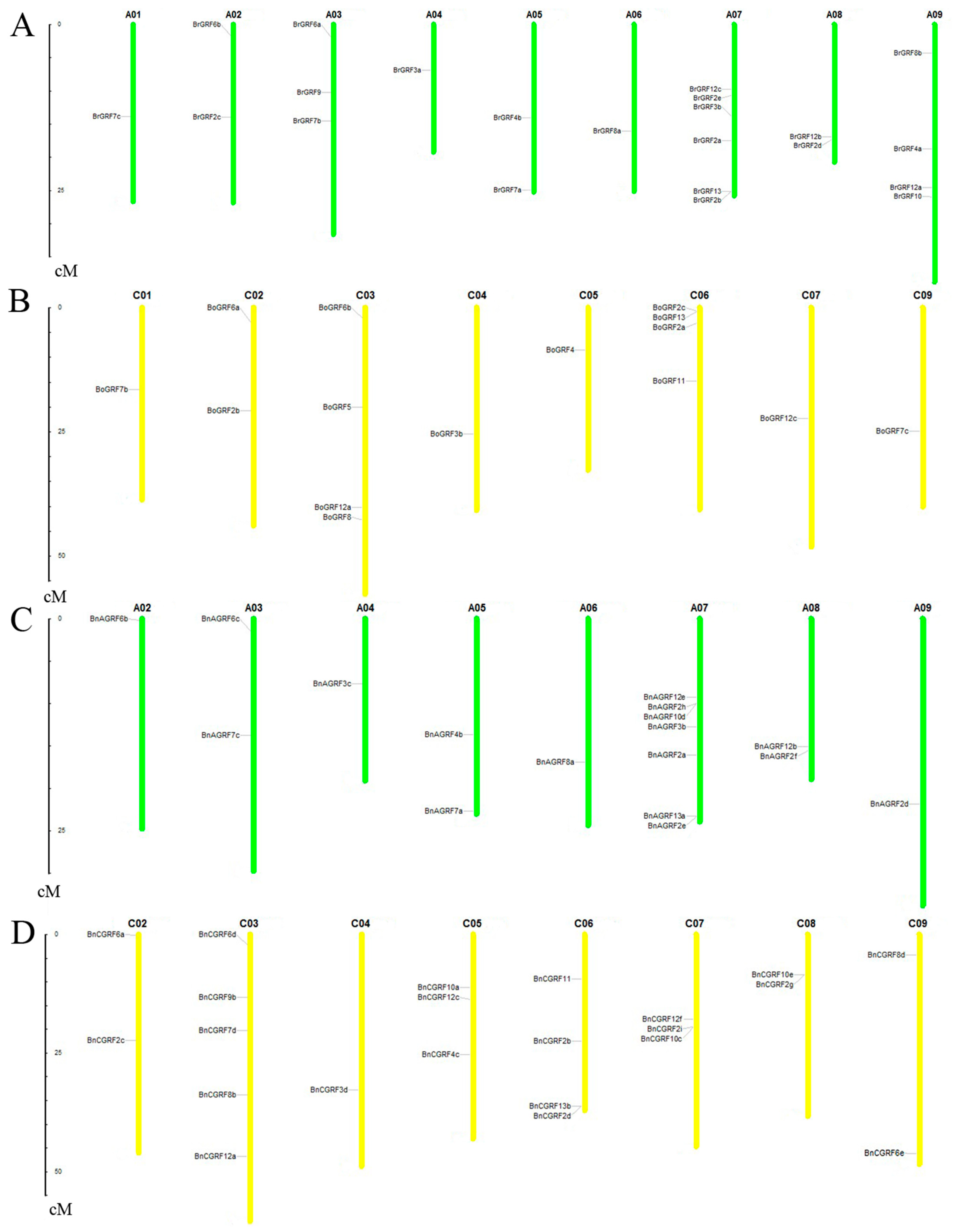
To identify members of the 14-3-3 gene family, the A. thaliana 14-3-3 protein sequences were used as queries to perform a BLASTP search against the genomes of B. napus, B. rapa, and B. oleracea, respectively. After screening for conserved domains, a total of 48 candidate proteins were identified in B. napus, and 22 each were identified in B. rapa and B. oleracea. All identified genes were systematically renamed according to their homology with A. thaliana genes (Table S1). Chromosome localization analysis indicated that the 14-3-3 genes were unevenly distributed across nearly all chromosomes in B. napus, B. rapa, and B. oleracea (Figure 1), suggesting an extended 14-3-3 gene family in these genomes compared to Arabidopsis.

3.2. Phylogenetic Analysis of 14-3-3 Gene Families

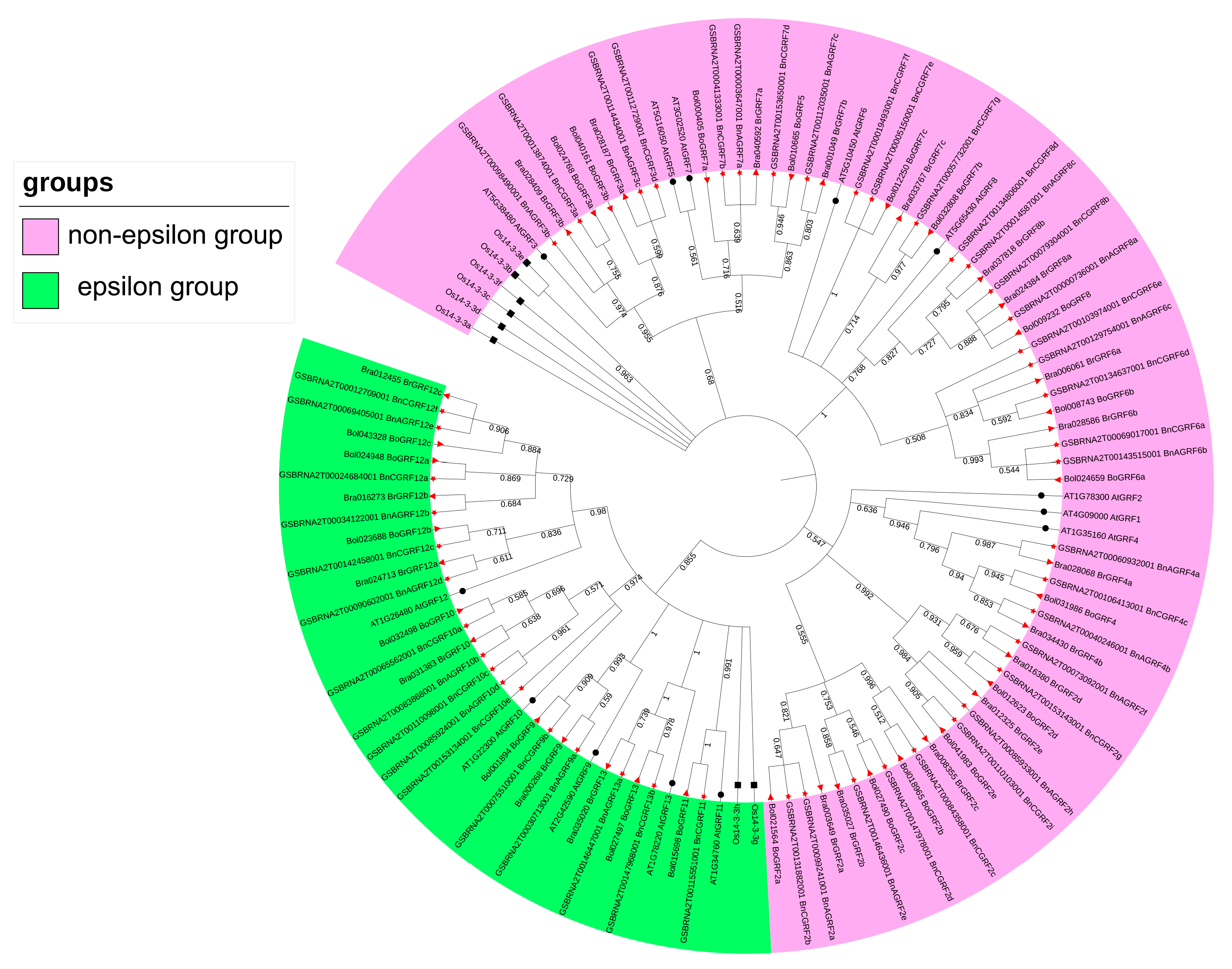
To elucidate the phylogenetic and evolutionary relationships between 14-3 and 3 genes, a phylogenetic tree was constructed using protein sequences from five plant species: A. thaliana, Oryza sativa, B. napus, B. rapa, and B. oleracea. A. thaliana and O. sativa were designated as the outgroup to ensure accurate phylogenetic inference. The resulting tree demonstrated that the 14-3-3 genes were divided into two groups: epsilon and non-epsilon groups (Figure 2). This classification aligns with previously established groupings in A. thaliana [10,11] and rice [21], supporting the high conservation of the 14-3-3 gene family classification across plant species.

3.3. Gene Structure and Motif Analysis

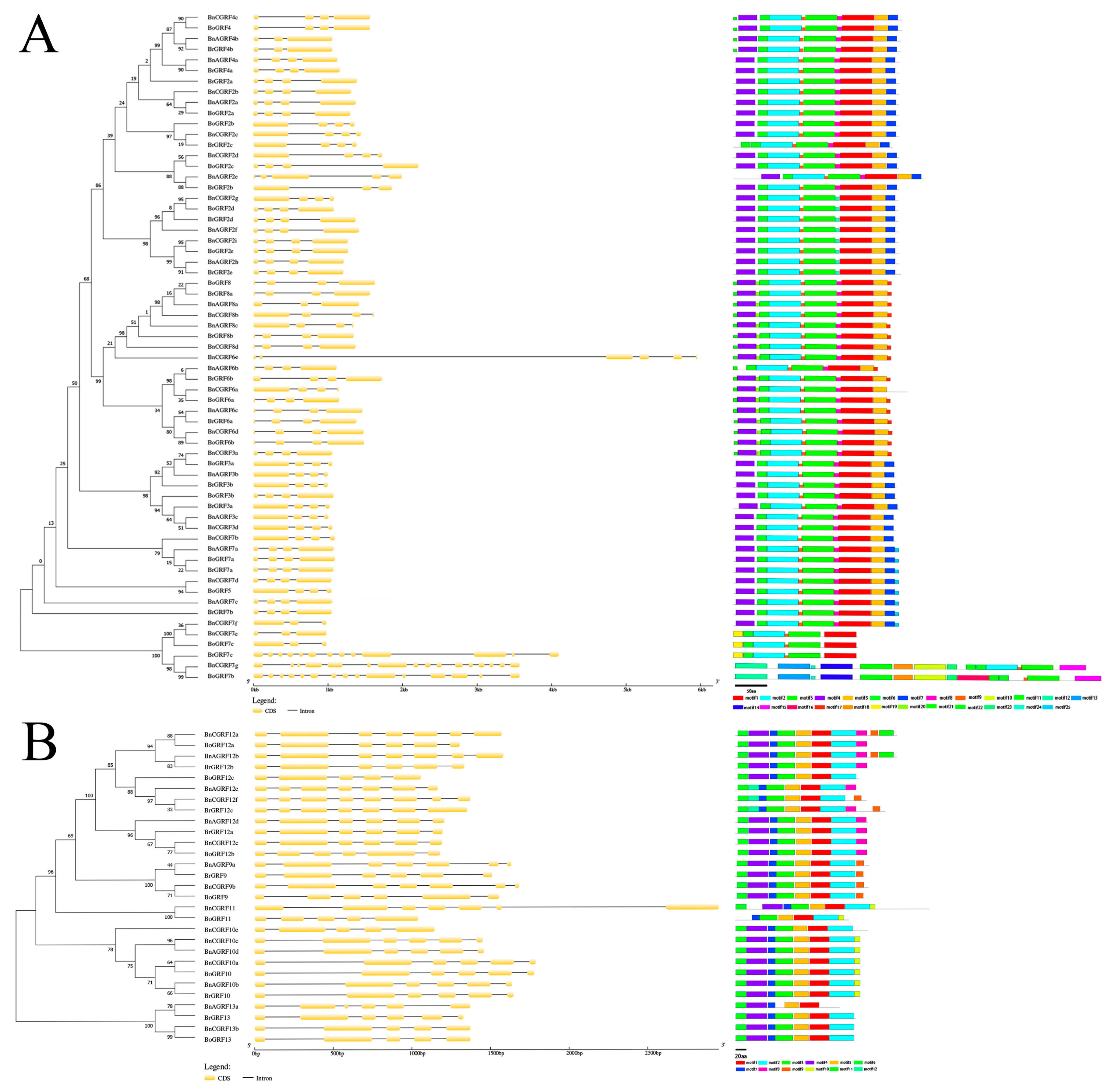
Phylogenetic trees of the 14-3-3 gene families were generated using the neighbor-joining method. The exon–intron structures and conserved motifs were subsequently analyzed separately for the non-epsilon group (Figure 3A) and epsilon group (Figure 3B) in B. napus, B. rapa, and B. oleracea, respectively. Most genes contained 3 or 4 exons in the non-epsilon group (Figure 3A) and 5-7 exons (Figure 3B) in the epsilon group. Genes clustered on the same phylogenetic branch exhibited similar exon–intron architectures, implying evolutionary conservation. The motif analysis revealed 25 motifs in the non-epsilon group (Figure 3A) and 12 motifs in the epsilon group (Figure 3B). Notably, genes on the same branch shared similar motif compositions, although the number and type of motifs differed considerably between the two groups.

3.4. Synteny and Duplicated Gene Analysis of 14-3-3 Genes

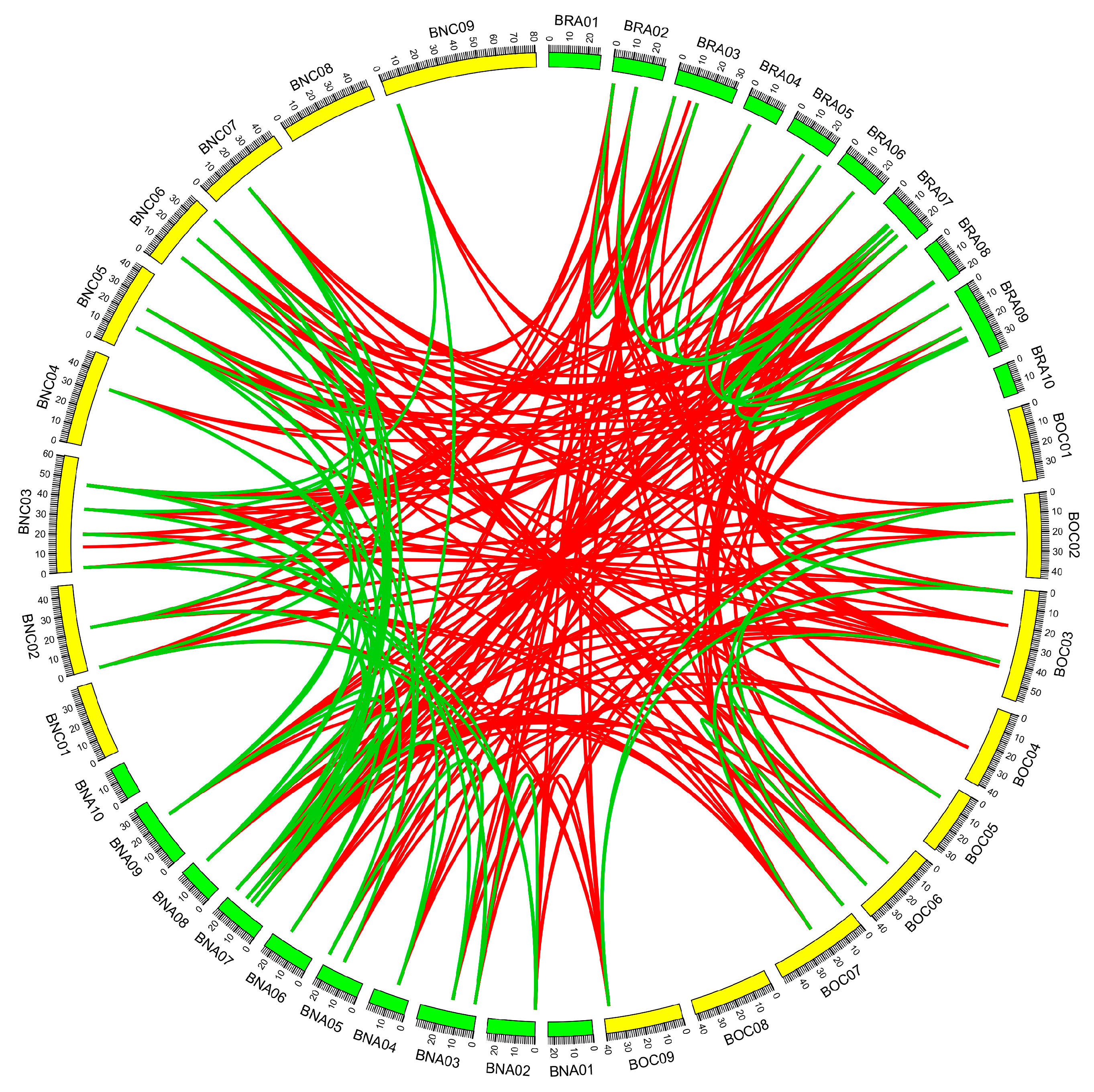
The synteny analysis of 14-3-3 genes was performed using genomic location information from B. napus (An and Cn subgenomes), B. rapa (Ar), and B. oleracea (Cr). As a result, 67 paralogous gene pairs (within An and Cn) and 172 orthologous gene pairs (between An and Ar and Cn and Cr) (Figure 4) were identified, suggesting the potential loss of some syntenic 14-3-3 genes during polyploidization. Additionally, 12, 10, and 39 duplicated gene pairs were detected in the genomes of B. rapa, B. oleracea, and B. napus, respectively (Table 1). These duplication events were estimated to have occurred 1.74–16.72 million years ago (MYA). The Ka/Ks analysis revealed that all 61 duplicated gene pairs exhibited Ka/Ks ratios less than 1, suggesting that they had undergone purifying selection. Furthermore, all duplicated gene pairs except BnAGRF13a-BnCGRF13b were under strong purifying selection (Ka/Ks < 0.5). These results imply that the duplicated 14-3-3 gene pairs in B. napus and its two diploid progenitors were subject to purifying selection pressure following duplication.

3.5. Prediction of Physicochemical Properties of 14-3-3 Proteins

The molecular weight (MW) of 14-3-3 proteins in B. napus and its two diploid progenitors varied from 22,690 Da (BoGRF7c, BnCGRF7e, BnCGRF7f) to 65,584 Da (BnCGRF7g) (Table S1). On average, the MW of B. napus 14-3-3 proteins (30,190 Da) was slightly lower than its diploid progenitors (30,635 Da), which was attributed to polyploidization. The isoelectric point (pI) of 14-3-3 proteins ranged from 4.61 to 9.66. Aside from BoGRF7b/c and BnCGRF7e/f/g, all 14-3-3 proteins were classified as acidic (with pI < 7). Furthermore, all 14-3-3 proteins except BrGRF12c, BrGRF13, BnCGRF10e, and BnAGRF13a exhibited considerable instability indices greater than 40. Conversely, the aliphatic index of all 14-3-3 proteins exceeded 70, suggesting higher thermal stability. Additionally, the grand average of hydropathicity (GRAVY) was negative for all 14-3-3 proteins, consistent with their hydrophilicity.

3.6. Analysis of Cis-Acting Elements in 14-3-3 Genes

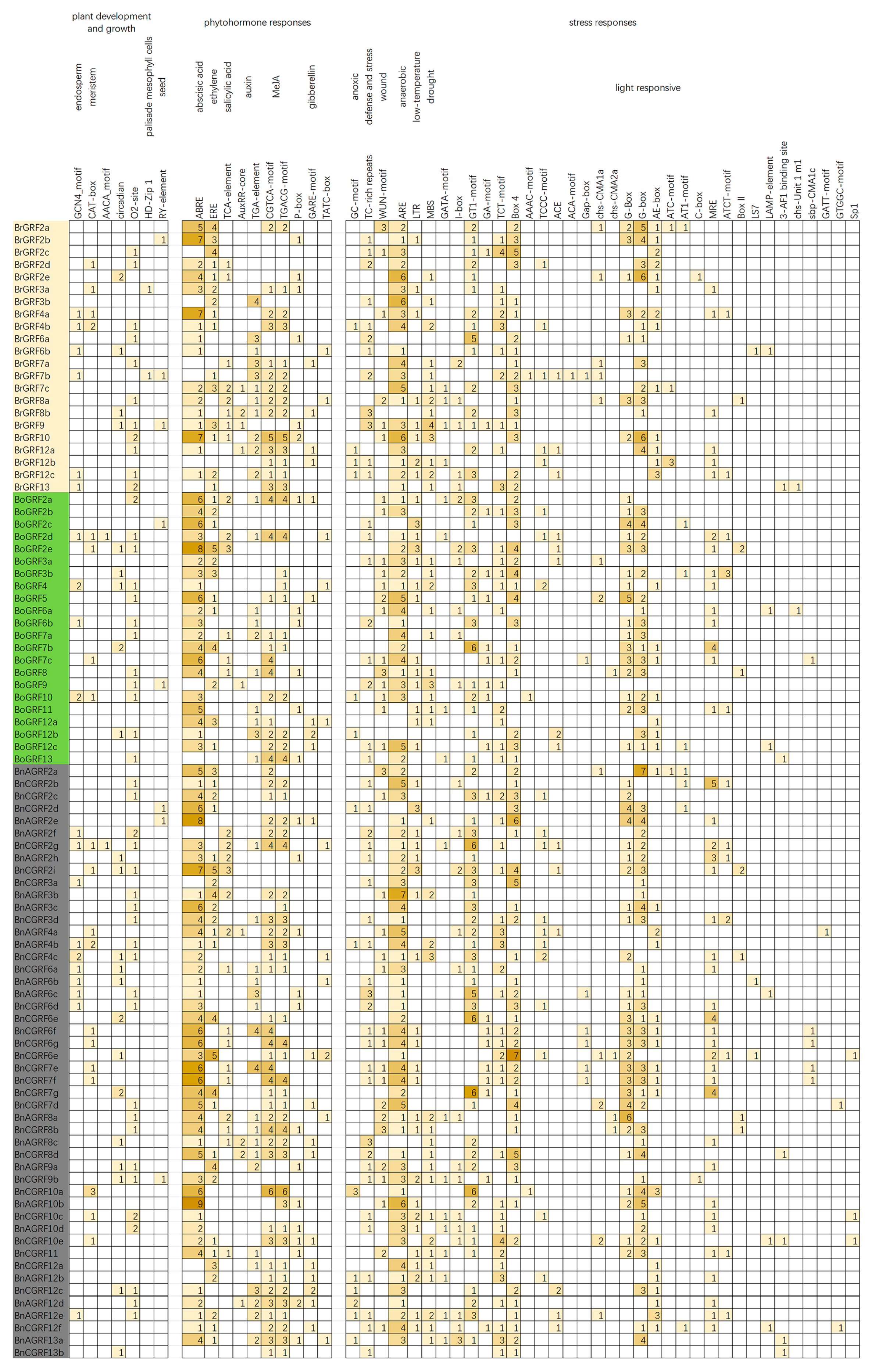
To investigate whether polyploidization influences the potential regulatory functions of 14-3-3 genes, we identified cis-acting elements within the 2000 bp promoter regions upstream of their transcription start sites. Three functional categories of cis-elements were examined: plant development and growth, phytohormone response, and stress responses (Figure 5). On average, the promoter of B. napus 14-3-3 genes contained 26 cis-acting elements, 1 more than those in B. rapa and B. oleracea, which was attributed to polyploidization. Among the plant development and growth-related elements, the GCN4_motif (associated with endosperm expression) and CAT-box (involved in meristem activity) were detected. The 14-3-3 gene promoters were also enriched in phytohormone response-related elements; many genes contained over six ABREs (abscisic acid-responsive elements) and more than four EREs (ethylene-responsive elements), indicating a potential role in hormone regulation. Additionally, cis-elements with light responsiveness such as Box-4 and G-box were abundant in these gene promoters, suggesting their role in light-mediated regulation. Interestingly, multiple ARE elements linked to anaerobic stress induction were also identified. The prevalence of these elements suggests the involvement of 14-3-3 genes in stress response mechanisms.

3.7. Expression Patterns of 14-3-3 Genes in Different Tissues

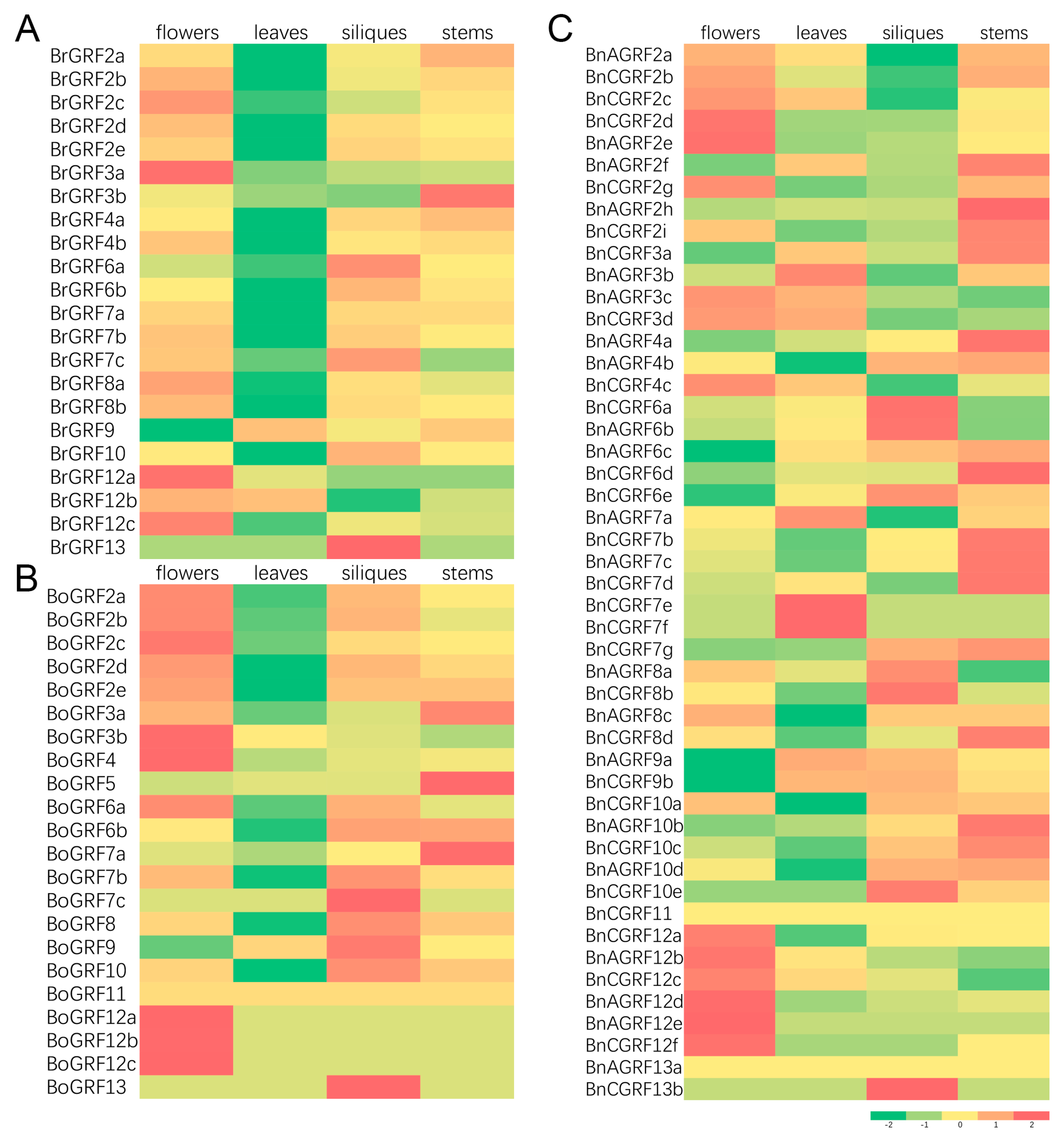
To further investigate the expression and potential biological functions of all identified 14-3-3 genes, their expression profiles across four tissues (leaves, stems, flowers, and siliques) were analyzed using previously published RNA-seq data [45]. Aside from BoGRF11 in B. oleracea and BnAGRF13a in B. napus, which were not expressed in any of the four tissues, all other genes showed detectable expression. As illustrated in Figure 6, BrGRF6b, BoGRF6a, and BnAGRF6b showed notably high expression in flowers and siliques, implying functionally conserved roles. Overall, the average expression level of 14-3-3 genes was higher in flowers, siliques, and stems than in leaves in both B. rapa and B. oleracea. In contrast, B. napus showed higher expression in flowers and stems compared to siliques and leaves (Figure 6). In B. rapa and B. oleracea, the expression of several genes, including GRF2 homologs, was especially low in leaves but significantly higher (1.7- to 2.0-fold) in flowers, siliques, and stems. In B. napus, however, the expression of these homologs was lower in siliques than in other tissues, indicating that polyploidization may have altered the expression patterns.

4. Discussion

Polyploidization is a significant evolutionary driving force of angiosperm diversity, promoting genome reorganization, functional differentiation, and adaptive innovation [48]. In newly formed allotetraploid crops such as B. napus [29], it is important to understand how polyploidy reshapes gene families to decipher the molecular basis of its advantages and unlock genetic potential for crop improvement. This study focuses on the 14-3-3 gene family, a conserved signaling hub, to dissect the multifaceted effects of allopolyploidization. By integrating genomic, structural, regulatory, and expression data, we reveal that polyploidy drives gene family evolution through the coordinated interplay of gene copy number modulation, regulatory network integration, functional conservation, and adaptive divergence. These mechanisms are broadly applicable to fundamental gene families and thus provide potential targets for improving polyploid crops.

4.1. Allopolyploidization as a Driver of Gene Family Expansion

In this study, the increased 14-3-3 gene copy number in B. napus resulted from the combined effects of multiple duplication mechanisms. The genus Brassica shares a common ancestor with A. thaliana [29]. Following phylogenetic divergence, the Brassica lineage underwent a whole-genome triplication event and subsequent genomic rearrangements, ultimately leading to the differentiation of B. rapa and B. oleracea [31,32]. Subsequently, B. napus originated from interspecific hybridization between B. rapa and B. oleracea, followed by natural chromosome doubling [29]. Polyploidization, or whole-genome duplication, significantly drives gene family expansion, while tandem duplication and segmental duplication at the gene level are also common drivers of copy number evolution and family expansion [48]. Notably, all 14-3-3 homologous genes identified in this study were classified as products of segmental duplication, with no tandem duplication events detected, indicating that this is the dominant mechanism for the expansion of this gene family in B. napus. Furthermore, the Ka/Ks ratios of duplicated gene pairs were all less than 1, indicating strong purifying selection, which is attributed to the functional integrity of these genes across species while permitting subtle functional innovations [49,50].
In summary, allopolyploidization is the primary factor driving the numerical expansion of the 14-3-3 gene family in B. napus, further reinforced by frequent segmental duplications. Similar duplication patterns have also been observed in other multigene families in B. napus, such as the WOX [51] and EIL [52] families, reflecting a certain degree of commonality in its genomic evolutionary pathways.

4.2. Polyploidization Drives Regulatory Pattern Diversification

Polyploidization not only influences gene copy number but also profoundly reshapes gene regulatory networks (Figure 5). Promoter analysis revealed that B. napus possesses, on average, one more cis-acting element per 14-3-3 gene compared to its diploid progenitors (Figure 5). This increase suggests that polyploidization may enhance the regulatory complexity of these genes, potentially facilitating their involvement in diverse biological processes. Elements such as ABRE, ERE, G-box, and ARE were abundant, underscoring the roles of 14-3-3 genes in abiotic stress adaptation and developmental regulation [45,53]. This enrichment and diversification of regulatory elements likely stem from the integration and innovation of regulatory modules from two distinct ancestral genomes during polyploid formation. Although the coding sequences of the 14-3-3 genes themselves were conserved under purifying selection, this implies that their expression “switches” became more refined and diverse. Such diversification in regulatory patterns likely provides B. napus with broader flexibility in regulating expression, enabling it to more effectively connect endogenous hormonal signals to external environmental stresses, thereby enhancing the environmental adaptability and plasticity of polyploid plants. This represents an important advantage of polyploids at the regulatory level [54].

4.3. Polyploidization Drives Structural and Biochemical Adaptation of 14-3-3 Proteins

In addition to changes in regulation and expression, the structural and physicochemical properties of 14-3-3 proteins also exhibit notable evolutionary trends. The reduced average molecular weight of B. napus compared to its progenitors may reflect structural optimization, potentially influencing protein interactions or stability (Table S1). The prevalence of acidic isoelectric points and large instability indices (above 40) in most 14-3-3 proteins suggests that they are generally unstable but hydrophilic, which may facilitate flexible signaling mediation in dynamic cellular environments. The high aliphatic index indicates robust thermal stability, a feature likely conserved to ensure functionality under stress conditions [55]. These biochemical characteristics underline the adaptive evolution of 14-3-3 proteins in balancing functional versatility with structural resilience.

4.4. Polyploidization Drives Diversification of Expression Patterns

The ultimate function of genes is reflected in their expression patterns. Tissue-specific expression profiling revealed that allopolyploidization has modified the expression patterns of 14-3-3 genes in B. napus (Figure 6). While genes in diploid species showed high expression in flowers, siliques, and stems, their homologs in B. napus exhibited reduced expression in siliques, indicating that polyploidization may have rewired their transcriptional regulatory networks. Notably, certain genes, such as BrGRF6b, BoGRF6a, and BnAGRF6b, maintained high expression in reproductive tissues across species, suggesting functional conservation. This rewiring of expression patterns is likely closely associated with the changes in regulatory sequences. This diversification in expression patterns provides a foundation for functional innovation in polyploid plants. In B. napus, this may enable optimized growth and developmental programs and potential trait advantages absent in its progenitors. This is crucial for its successful adaptation and domestication [45,56].

4.5. Evolutionary Implications and Future Perspectives

This study elucidates how allopolyploidization has shaped the evolution of the 14-3-3 gene family in B. napus, primarily through driving gene family expansion and reorganization, enhancing regulatory complexity, and diversifying expression patterns. Together, these mechanisms have conferred novel flexibility to the regulation and expression of this otherwise functionally conserved gene family in the context of polyploids. Our findings further provide broader insights into the evolutionary strategies employed by polyploid plants. The coexistence of gene loss, purifying selection, regulatory diversification, and expression reprogramming illustrates the multifaceted impact of allopolyploidization on gene family evolution. In B. napus, the 14-3-3 genes have evolved through a balanced process of genetic conservation and regulatory innovation, enhancing adaptive capacity without compromising core functions. Future research on the functional validation of specific genes, such as those with altered expression or unique regulatory elements, will be crucial for elucidating the mechanistic links between genetic evolution and phenotypic adaptation in polyploid crops. Moreover, the candidate genes identified, particularly those associated with stress and hormone responses, hold the potential to improve crop resilience and productivity through molecular breeding.

Supplementary Materials

The following supporting information can be downloaded at https://www.mdpi.com/article/10.3390/genes16111305/s1, Table S1: The predicated protein information for 14-3-3 genes from B. napus, B. rapa, and B. oleracea.

Author Contributions

S.D.: data curation, formal analysis, methodology, and writing—original draft preparation. J.W.: conceptualization, formal analysis, methodology, and writing—review and editing. All authors have read and agreed to the published version of the manuscript.

Funding

This work was supported by National Key Research and Development Program of China (Grant No. 2023YFD1200205) and Key Research and Development Program of Hubei Province (Grant No. 2024BBB009).

Institutional Review Board Statement

Not applicable.

Informed Consent Statement

Not applicable.

Data Availability Statement

The RNA-seq data came from a previous study [45].

Conflicts of Interest

The authors declare no conflicts of interest.

Abbreviations

The following abbreviations are used in this manuscript:
B. napusBrassica napus
B. rapaBrassica rapa
B. oleraceaBrassica oleracea
A. thalianaArabidopsis thaliana
GRFsG-box binding regulators
MWMolecular weight
GRAVYGrand average of hydropathicity
IIInstability index
pIIsoelectric point
MYAMillion years ago

References

  1. Otto, S.P.; Whitton, J. Polyploid incidence and evolution. Annu. Rev. Genet. 2000, 34, 401–437. [Google Scholar] [CrossRef]
  2. Mayrose, I.; Barker, M.S.; Otto, S.P. Probabilistic models of chromosome number evolution and the inference of polyploidy. Syst. Biol. 2010, 59, 132–144. [Google Scholar] [CrossRef]
  3. Van de Peer, Y.; Mizrachi, E.; Marchal, K. The evolutionary significance of polyploidy. Nat. Rev. Genet. 2017, 18, 411–424. [Google Scholar] [CrossRef]
  4. Wu, Y.; Lin, F.; Zhou, Y.; Wang, J.; Sun, S.; Wang, B.; Zhang, Z.; Li, G.; Lin, X.; Wang, X.; et al. Genomic mosaicism due to homoeologous exchange generates extensive phenotypic diversity in nascent allopolyploids. Natl. Sci. Rev. 2021, 8, nwaa277. [Google Scholar] [CrossRef]
  5. Soltis, P.S.; Marchant, D.B.; Van de Peer, Y.; Soltis, D.E. Polyploidy and genome evolution in plants. Curr. Opin. Genet. Dev. 2015, 35, 119–125. [Google Scholar] [CrossRef]
  6. Tayale, A.; Parisod, C. Natural pathways to polyploidy in plants and consequences for genome reorganization. Cytogenet. Genome Res. 2013, 140, 79–96. [Google Scholar] [CrossRef]
  7. Salman-Minkov, A.; Sabath, N.; Mayrose, I. Whole-genome duplication as a key factor in crop domestication. Nat. Plants 2016, 2, 16115. [Google Scholar] [CrossRef]
  8. Scarrow, M.; Wang, Y.; Sun, G. Molecular regulatory mechanisms underlying the adaptability of polyploid plants. Biol. Rev. Camb. Philos. Soc. 2021, 96, 394–407. [Google Scholar] [CrossRef]
  9. DeLille, J.M.; Sehnke, P.C.; Ferl, R.J. The arabidopsis 14-3-3 family of signaling regulators. Plant Physiol. 2001, 126, 35–38. [Google Scholar] [CrossRef]
  10. Rosenquist, M.; Alsterfjord, M.; Larsson, C.; Sommarin, M. Data mining the Arabidopsis genome reveals fifteen 14-3-3 genes. Expression is demonstrated for two out of five novel genes. Plant Physiol. 2001, 127, 142–149. [Google Scholar] [CrossRef]
  11. Ferl, R.J.; Manak, M.S.; Reyes, M.F. The 14-3-3s. Genome Biol. 2002, 3, REVIEWS3010. [Google Scholar] [CrossRef]
  12. Camoni, L.; Visconti, S.; Aducci, P.; Marra, M. 14-3-3 Proteins in Plant Hormone Signaling: Doing Several Things at Once. Front. Plant Sci. 2018, 9, 297. [Google Scholar] [CrossRef]
  13. Wang, H.; Yang, C.; Zhang, C.; Wang, N.; Lu, D.; Wang, J.; Zhang, S.; Wang, Z.-X.; Ma, H.; Wang, X. Dual role of BKI1 and 14-3-3s in brassinosteroid signaling to link receptor with transcription factors. Dev. Cell. 2011, 21, 825–834. [Google Scholar] [CrossRef]
  14. Takahashi, K.; Hayashi, K.; Kinoshita, T. Auxin activates the plasma membrane H+-ATPase by phosphorylation during hypocotyl elongation in Arabidopsis. Plant Physiol. 2012, 159, 632–641. [Google Scholar] [CrossRef]
  15. Ito, T.; Nakata, M.; Fukazawa, J.; Ishida, S.; Takahashi, Y. Scaffold Function of Ca2+-Dependent Protein Kinase: Tobacco Ca2+-DEPENDENT PROTEIN KINASE1 Transfers 14-3-3 to the Substrate REPRESSION OF SHOOT GROWTH after Phosphorylation. Plant Physiol. 2014, 165, 1737–1750. [Google Scholar] [CrossRef]
  16. Yang, X.; Wang, W.; Coleman, M.; Orgil, U.; Feng, J.; Ma, X.; Ferl, R.; Turner, J.G.; Xiao, S. Arabidopsis 14-3-3 lambda is a positive regulator of RPW8-mediated disease resistance. Plant J. 2009, 60, 539–550. [Google Scholar] [CrossRef]
  17. Taoka, K.-I.; Ohki, I.; Tsuji, H.; Furuita, K.; Hayashi, K.; Yanase, T.; Yamaguchi, M.; Nakashima, C.; Purwestri, Y.A.; Tamaki, S.; et al. 14-3-3 proteins act as intracellular receptors for rice Hd3a florigen. Nature 2011, 476, 332–335. [Google Scholar] [CrossRef]
  18. Kaneko-Suzuki, M.; Kurihara-Ishikawa, R.; Okushita-Terakawa, C.; Kojima, C.; Nagano-Fujiwara, M.; Ohki, I.; Tsuji, H.; Shimamoto, K.; Taoka, K.-I. TFL1-Like Proteins in Rice Antagonize Rice FT-Like Protein in Inflorescence Development by Competition for Complex Formation with 14-3-3 and FD. Plant Cell Physiol. 2018, 59, 458–468. [Google Scholar] [CrossRef]
  19. Mayfield, J.D.; Folta, K.M.; Paul, A.L.; Ferl, R.J. The 14-3-3 Proteins mu and upsilon influence transition to flowering and early phytochrome response. Plant Physiol. 2007, 145, 1692–1702. [Google Scholar] [CrossRef]
  20. Mayfield, J.D.; Paul, A.L.; Ferl, R.J. The 14-3-3 proteins of Arabidopsis regulate root growth and chloroplast development as components of the photosensory system. J. Exp. Bot. 2012, 63, 3061–3070. [Google Scholar] [CrossRef]
  21. Chen, F.; Li, Q.; Sun, L.; He, Z. The rice 14-3-3 gene family and its involvement in responses to biotic and abiotic stress. DNA Res. 2006, 13, 53–63. [Google Scholar] [CrossRef]
  22. Wang, Y.; Ling, L.; Jiang, Z.; Tan, W.; Liu, Z.; Wu, L.; Zhao, Y.; Xia, S.; Ma, J.; Wang, G.; et al. Genome-wide identification and expression analysis of the 14-3-3 gene family in soybean (Glycine max). PeerJ 2019, 7, e7950. [Google Scholar] [CrossRef]
  23. Shao, W.; Chen, W.; Zhu, X.; Zhou, X.; Jin, Y.; Zhan, C.; Liu, G.; Liu, X.; Ma, D.; Qiao, Y. Genome-Wide Identification and Characterization of Wheat 14-3-3 Genes Unravels the Role of TaGRF6-A in Salt Stress Tolerance by Binding MYB Transcription Factor. Int. J. Mol. Sci. 2021, 22, 1904. [Google Scholar] [CrossRef]
  24. Cheng, C.; Wang, Y.; Chai, F.; Li, S.; Xin, H.; Liang, Z. Genome-wide identification and characterization of the 14-3-3 family in Vitis vinifera L. during berry development and cold- and heat-stress response. BMC Genom. 2018, 19, 579. [Google Scholar]
  25. Sun, X.; Luo, X.; Sun, M.; Chen, C.; Ding, X.; Wang, X.; Yang, S.; Yu, Q.; Jia, B.; Ji, W.; et al. A Glycine soja 14-3-3 protein GsGF14o participates in stomatal and root hair development and drought tolerance in Arabidopsis thaliana. Plant Cell Physiol. 2014, 55, 99–118. [Google Scholar]
  26. Yan, J.; He, C.; Wang, J.; Mao, Z.; Holaday, S.A.; Allen, R.D.; Zhang, H. Overexpression of the Arabidopsis 14-3-3 protein GF14 lambda in cotton leads to a "stay-green" phenotype and improves stress tolerance under moderate drought conditions. Plant Cell Physiol. 2004, 45, 1007–1014. [Google Scholar] [CrossRef]
  27. Catalá, R.; López-Cobollo, R.; Castellano, M.M.; Angosto, T.; Alonso, J.M.; Ecker, J.R.; Salinas, J. The Arabidopsis 14-3-3 protein RARE COLD INDUCIBLE 1A links low-temperature response and ethylene biosynthesis to regulate freezing tolerance and cold acclimation. Plant Cell 2014, 26, 3326–3342. [Google Scholar] [CrossRef]
  28. Qin, C.; Cheng, L.; Shen, J.; Zhang, Y.; Cao, H.; Lu, D.; Shen, C. Genome-Wide Identification and Expression Analysis of the 14-3-3 Family Genes in Medicago truncatula. Front. Plant Sci. 2016, 7, 320. [Google Scholar] [CrossRef]
  29. Chalhoub, B.; Denoeud, F.; Liu, S.; Parkin, I.A.P.; Tang, H.; Wang, X.; Chiquet, J.; Belcram, H.; Tong, C.; Samans, B.; et al. Plant genetics. Early allopolyploid evolution in the post-Neolithic Brassica napus oilseed genome. Science 2014, 345, 950–953. [Google Scholar] [CrossRef]
  30. Zhang, Q.; Guan, P.; Zhao, L.; Ma, M.; Xie, L.; Li, Y.; Zheng, R.; Ouyang, W.; Wang, S.; Li, H.; et al. Asymmetric epigenome maps of subgenomes reveal imbalanced transcription and distinct evolutionary trends in Brassica napus. Mol. Plant. 2021, 14, 604–619. [Google Scholar] [CrossRef]
  31. Brassica rapa Genome Sequencing Project Consortium; Wang, X.; Wang, H.; Wang, J.; Sun, R.; Wu, J.; Liu, S.; Bai, Y.; Mun, J.H.; Bancroft, I.; et al. The genome of the mesopolyploid crop species Brassica rapa. Nat. Genet. 2011, 43, 1035–1039. [Google Scholar] [CrossRef]
  32. Liu, S.; Liu, Y.; Yang, X.; Tong, C.; Edwards, D.; Parkin, I.A.P.; Zhao, M.; Ma, J.; Yu, J.; Huang, S.; et al. The Brassica oleracea genome reveals the asymmetrical evolution of polyploid genomes. Nat. Commun. 2014, 5, 3930. [Google Scholar] [CrossRef]
  33. Chen, H.; Wang, T.; He, X.; Cai, X.; Lin, R.; Liang, J.; Wu, J.; King, G.; Wang, X. BRAD V3.0: An upgraded Brassicaceae database. Nucleic Acids Res. 2022, 50, D1432–D1441. [Google Scholar] [CrossRef]
  34. Chen, C.; Wu, Y.; Li, J.; Wang, X.; Zeng, Z.; Xu, J.; Liu, Y.; Feng, J.; Chen, H.; He, Y.; et al. TBtools-II: A "one for all, all for one" bioinformatics platform for biological big-data mining. Mol. Plant. 2023, 16, 1733–1742. [Google Scholar] [CrossRef]
  35. Lu, S.; Wang, J.; Chitsaz, F.; Derbyshire, M.K.; Geer, R.C.; Gonzales, N.R.; Gwadz, M.; I Hurwitz, D.; Marchler, G.H.; Song, J.S.; et al. CDD/SPARCLE: The conserved domain database in 2020. Nucleic Acids Res. 2020, 48, D265–D268. [Google Scholar] [CrossRef]
  36. Mistry, J.; Chuguransky, S.; Williams, L.; Qureshi, M.; Salazar, G.A.; Sonnhammer, E.L.L.; Tosatto, S.C.; Paladin, L.; Raj, S.; Richardson, L.J.; et al. Pfam: The protein families database in 2021. Nucleic Acids Res. 2021, 49, D412–D419. [Google Scholar] [CrossRef]
  37. Letunic, I.; Khedkar, S.; Bork, P. SMART: Recent updates, new developments and status in 2020. Nucleic Acids Res. 2021, 49, D458–D460. [Google Scholar] [CrossRef]
  38. Kong, X.; Lv, W.; Jiang, S.; Zhang, D.; Cai, G.; Pan, J.; Li, D. Genome-wide identification and expression analysis of calcium-dependent protein kinase in maize. BMC Genom. 2013, 14, 433. [Google Scholar] [CrossRef]
  39. Krzywinski, M.; Schein, J.; Birol, I.; Connors, J.; Gascoyne, R.; Horsman, D.; Jones, S.J.; Marra, M.A. Circos: An information aesthetic for comparative genomics. Genome Res. 2009, 19, 1639–1645. [Google Scholar] [CrossRef]
  40. Artimo, P.; Jonnalagedda, M.; Arnold, K.; Baratin, D.; Csardi, G.; de Castro, E.; Duvaud, S.; Flegel, V.; Fortier, A.; Gasteiger, E.; et al. ExPASy: SIB bioinformatics resource portal. Nucleic Acids Res. 2012, 40, W597–W603. [Google Scholar] [CrossRef]
  41. Kumar, S.; Stecher, G.; Tamura, K. MEGA7: Molecular Evolutionary Genetics Analysis Version 7.0 for Bigger Datasets. Mol. Biol. Evol. 2016, 33, 1870–1874. [Google Scholar] [CrossRef]
  42. Letunic, I.; Bork, P. Interactive tree of life (iTOL) v3: An online tool for the display and annotation of phylogenetic and other trees. Nucleic Acids Res. 2016, 44, W242–W245. [Google Scholar] [CrossRef]
  43. Bailey, T.L.; Boden, M.; Buske, F.A.; Frith, M.; Grant, C.E.; Clementi, L.; Ren, J.; Li, W.W.; Noble, W.S. MEME SUITE: Tools for motif discovery and searching. Nucleic Acids Res. 2009, 37, W202–W208. [Google Scholar] [CrossRef]
  44. Lescot, M.; Déhais, P.; Thijs, G.; Marchal, K.; Moreau, Y.; Van de Peer, Y.; Rouzé, P.; Rombauts, S. PlantCARE, a database of plant cis-acting regulatory elements and a portal to tools for in silico analysis of promoter sequences. Nucleic Acids Res. 2002, 30, 325–327. [Google Scholar] [CrossRef]
  45. Li, M.; Wang, R.; Wu, X.; Wang, J. Homoeolog expression bias and expression level dominance (ELD) in four tissues of natural allotetraploid Brassica napus. BMC Genom. 2020, 21, 330. [Google Scholar] [CrossRef]
  46. Kim, D.; Langmead, B.; Salzberg, S.L. HISAT: A fast spliced aligner with low memory requirements. Nat. Methods 2015, 12, 357–360. [Google Scholar] [CrossRef]
  47. Liao, Y.; Smyth, G.K.; Shi, W. featureCounts: An efficient general purpose program for assigning sequence reads to genomic features. Bioinformatics 2014, 30, 923–930. [Google Scholar] [CrossRef]
  48. Liang, Y.; Wan, N.; Cheng, Z.; Mo, Y.; Liu, B.; Liu, H.; Raboanatahiry, N.; Yin, Y.; Li, M. Whole-Genome Identification and Expression Pattern of the Vicinal Oxygen Chelate Family in Rapeseed (Brassica napus L.). Front. Plant Sci. 2017, 8, 745. [Google Scholar] [CrossRef]
  49. Lynch, M.; Conery, J.S. The evolutionary fate and consequences of duplicate genes. Science 2000, 290, 1151–1155. [Google Scholar] [CrossRef]
  50. Roulin, A.; Auer, P.L.; Libault, M.; Schlueter, J.; Farmer, A.; May, G.; Stacey, G.; Doerge, R.W.; Jackson, S.A. The fate of duplicated genes in a polyploid plant genome. Plant J. 2013, 73, 143–153. [Google Scholar] [CrossRef]
  51. Li, M.; Wang, R.; Liu, Z.; Wu, X.; Wang, J. Genome-wide identification and analysis of the WUSCHEL-related homeobox (WOX) gene family in allotetraploid Brassica napus reveals changes in WOX genes during polyploidization. BMC Genom. 2019, 20, 317. [Google Scholar] [CrossRef]
  52. Li, M.; Wang, R.; Liang, Z.; Wu, X.; Wang, J. Genome-wide identification and analysis of the EIN3/EIL gene family in allotetraploid Brassica napus reveal its potential advantages during polyploidization. BMC Plant Biol. 2019, 19, 110. [Google Scholar] [CrossRef]
  53. Shen, Q.; Ho, T.H. Functional dissection of an abscisic acid (ABA)-inducible gene reveals two independent ABA-responsive complexes each containing a G-box and a novel cis-acting element. Plant Cell 1995, 7, 295–307. [Google Scholar]
  54. Nuruzzaman, M.; Sharoni, A.M.; Satoh, K.; Kumar, A.; Leung, H.; Kikuchi, S. Comparative transcriptome profiles of the WRKY gene family under control, hormone-treated, and drought conditions in near-isogenic rice lines reveal differential, tissue specific gene activation. J. Plant Physiol. 2014, 171, 2–13. [Google Scholar] [CrossRef]
  55. Escobedo, A.; Voigt, G.; Faure, A.J.; Lehner, B. Genetics, energetics, and allostery in proteins with randomized cores and surfaces. Science 2025, 389, eadq3948. [Google Scholar] [CrossRef]
  56. Woodhouse, M.R.; Cheng, F.; Pires, J.C.; Lisch, D.; Freeling, M.; Wang, X. Origin, inheritance, and gene regulatory consequences of genome dominance in polyploids. Proc. Natl. Acad. Sci. USA 2014, 111, 5283–5288. [Google Scholar] [CrossRef]
Figure 1. Chromosomal localization of 14-3-3 genes in B. rapa (A), B. oleracea (B), An of B. napus (C), and Cn of B. napus (D). Genes located in unassembled scaffolds are not shown. The number of chromosomes is marked at the top of each, and the scale on the left is given in megabases (Mb).
Genes 16 01305 g001
Figure 2. Phylogenetic trees of 14-3-3 genes from A. thaliana, O. sativa, B. rapa, B. oleracea, and B. napus.
Genes 16 01305 g002
Figure 3. Gene structures and protein domains of 14-3-3 genes. The neighbor-joining phylogenetic trees, gene structures, and motifs of the non-epsilon group (A) and epsilon group (B). Yellow boxes indicate exons, and gray lines represent introns. Different motifs are distinguished by colored boxes.
Genes 16 01305 g003
Figure 4. Collinearity analysis of 14-3-3 genes from B. rapa, B. oleracea, and B. napus. BRA01-10 and BOC01-09 represent chromosomes in B. rapa and B. oleracea, respectively. BNA01-10 and BNC01-09 represent chromosomes in the An and Cn subgenomes in B. napus, respectively. All identified 14-3-3 genes were mapped onto corresponding chromosomes. Red lines link the orthologs, and green lines link the paralogs.
Genes 16 01305 g004
Figure 5. Cis-acting element analysis of 14-3-3 gene promoters from B. rapa (Br), B. oleracea (Bo), and B. napus (Bn).
Genes 16 01305 g005
Figure 6. Expression of 14-3-3 genes in flowers, leaves, siliques, and stems of B. rapa (A), B. oleracea (B), and B. napus (C). Red represents high expression, while green indicates low expression.
Genes 16 01305 g006
Table 1. Estimated Ka/Ks ratios of duplicated 14-3-3 gene pairs in B. napus and its diploid progenitors.
Duplicated Gene PairsKaKsKa/KsDuplication TypeTypes of SelectionTime (MYA)
BrGRF2avs.BrGRF2b0.02080.39660.052446SegmentalPurify selection13.22
BrGRF2avs.BrGRF2c0.02150.35350.06082SegmentalPurify selection11.78333
BrGRF2bvs.BrGRF2c0.03160.33940.093105SegmentalPurify selection11.31333
BrGRF2dvs.BrGRF2e0.04950.47940.103254SegmentalPurify selection15.98
BrGRF3avs.BrGRF3b0.02450.40110.061082SegmentalPurify selection13.37
BrGRF4avs.BrGRF4b0.0340.31140.109184SegmentalPurify selection10.38
BrGRF6avs.BrGRF6b0.05590.37050.150877SegmentalPurify selection12.35
BrGRF7avs.BrGRF7b0.01750.33080.052902SegmentalPurify selection11.02667
BrGRF8avs.BrGRF8b0.01770.42040.042103SegmentalPurify selection14.01333
BrGRF12avs.BrGRF12b0.02650.32980.080352SegmentalPurify selection10.99333
BrGRF12avs.BrGRF12c0.04680.28980.161491SegmentalPurify selection9.66
BrGRF12bvs.BrGRF12c0.03270.32360.101051SegmentalPurify selection10.78667
BoGRF2avs.BoGRF2b0.01760.34430.051118SegmentalPurify selection11.47667
BoGRF2avs.BoGRF2c0.02290.40370.056725SegmentalPurify selection13.45667
BoGRF2bvs.BoGRF2c0.03210.31230.102786SegmentalPurify selection10.41
BoGRF2dvs.BoGRF2e0.05230.50170.104246SegmentalPurify selection16.72333
BoGRF3avs.BoGRF3b0.02440.35220.069279SegmentalPurify selection11.74
BoGRF5vs.BoGRF7a0.01920.32230.059572SegmentalPurify selection10.74333
BoGRF6avs.BoGRF6b0.03020.4220.071564SegmentalPurify selection14.06667
BoGRF12avs.BoGRF12b0.02620.31520.083122SegmentalPurify selection10.50667
BoGRF12avs.BoGRF12c0.06410.32980.19436SegmentalPurify selection10.99333
BoGRF12bvs.BoGRF12c0.04570.32630.140055SegmentalPurify selection10.87667
BnAGRF2avs.BnCGRF2b00.05750SegmentalPurify selection1.916667
BnAGRF2avs.BnCGRF2c0.02410.31050.077617SegmentalPurify selection10.35
BnAGRF2avs.BnCGRF2d0.01940.35850.054114SegmentalPurify selection11.95
BnAGRF2avs.BnAGRF2e0.02080.38820.053581SegmentalPurify selection12.94
BnCGRF2bvs.BnCGRF2c0.02410.34470.069916SegmentalPurify selection11.49
BnCGRF2bvs.BnCGRF2d0.05230.45360.1153SegmentalPurify selection15.12
BnCGRF2bvs.BnAGRF2e0.02080.41630.049964SegmentalPurify selection13.87667
BnCGRF2cvs.BnCGRF2d0.03390.28750.117913SegmentalPurify selection9.583333
BnCGRF2cvs.BnAGRF2e0.03920.3130.12524SegmentalPurify selection10.43333
BnCGRF2dvs.BnAGRF2e0.0050.11250.044444SegmentalPurify selection3.75
BnAGRF3bvs.BnAGRF3c0.0210.45340.046317SegmentalPurify selection15.11333
BnAGRF3bvs.BnCGRF3d0.0210.40950.051282SegmentalPurify selection13.65
BnAGRF3cvs.BnCGRF3d0.00170.11090.015329SegmentalPurify selection3.696667
BnAGRF4bvs.BnCGRF4c0.01170.09320.125536SegmentalPurify selection3.106667
BnCGRF6avs.BnAGRF6c0.03990.44290.090088SegmentalPurify selection14.76333
BnCGRF6avs.BnCGRF6d0.03210.43240.074237SegmentalPurify selection14.41333
BnAGRF6cvs.BnCGRF6d0.00990.13540.073117SegmentalPurify selection4.513333
BnAGRF7avs.BnAGRF7c0.01750.32190.054365SegmentalPurify selection10.73
BnAGRF7avs.BnCGRF7d0.01750.31330.055857SegmentalPurify selection10.44333
BnAGRF7cvs.BnCGRF7d0.00830.1020.081373SegmentalPurify selection3.4
BnAGRF8avs.BnCGRF8b0.00180.16170.011132SegmentalPurify selection5.39
BnAGRF8avs.BnCGRF8d0.01860.42270.044003SegmentalPurify selection14.09
BnCGRF8bvs.BnCGRF8d0.01620.34830.046512SegmentalPurify selection11.61
BnCGRF12avs.BnAGRF12b0.00790.05220.151341SegmentalPurify selection1.74
BnCGRF12avs.BnCGRF12c0.02760.33370.082709SegmentalPurify selection11.12333
BnCGRF12avs.BnAGRF12d0.02440.33450.072945SegmentalPurify selection11.15
BnCGRF12avs.BnAGRF12e0.03890.36730.105908SegmentalPurify selection12.24333
BnCGRF12avs.BnCGRF12f0.08250.40560.203402SegmentalPurify selection13.52
BnAGRF12bvs.BnCGRF12c0.02670.30460.087656SegmentalPurify selection10.15333
BnAGRF12bvs.BnAGRF12d0.02350.30530.076973SegmentalPurify selection10.17667
BnAGRF12bvs.BnAGRF12e0.03520.31920.110276SegmentalPurify selection10.64
BnAGRF12bvs.BnCGRF12f0.0790.37650.209827SegmentalPurify selection12.55
BnCGRF12cvs.BnAGRF12d0.00640.15980.04005SegmentalPurify selection5.326667
BnCGRF12cvs.BnAGRF12e0.04960.28530.173852SegmentalPurify selection9.51
BnCGRF12cvs.BnCGRF12f0.06290.30350.207249SegmentalPurify selection10.11667
BnAGRF12dvs.BnAGRF12e0.0480.25040.191693SegmentalPurify selection8.346667
BnAGRF12dvs.BnCGRF12f0.06320.29560.213802SegmentalPurify selection9.853333
BnAGRF12evs.BnCGRF12f0.00490.13850.035379SegmentalPurify selection4.616667
BnAGRF13avs.BnCGRF13b0.03870.07130.542777SegmentalPurify selection2.376667
Disclaimer/Publisher’s Note: The statements, opinions and data contained in all publications are solely those of the individual author(s) and contributor(s) and not of MDPI and/or the editor(s). MDPI and/or the editor(s) disclaim responsibility for any injury to people or property resulting from any ideas, methods, instructions or products referred to in the content.