
Review

GIGANTEA Unveiled: Exploring Its Diverse Roles and Mechanisms

1
Faculty of Agriculture, Forestry and Food Engineering, Yibin University, Yibin 644000, China
2
Maize Research Institute, Sichuan Agricultural University, Chengdu 611130, China
3
Key Laboratory of Biology and Genetic Improvement of Maize in Southwest Region, Ministry of Agriculture, Chengdu 611130, China
*
Author to whom correspondence should be addressed.
These authors contributed equally to this work.
Genes 2024, 15(1), 94; https://doi.org/10.3390/genes15010094
Submission received: 19 November 2023 / Revised: 9 January 2024 / Accepted: 10 January 2024 / Published: 13 January 2024
(This article belongs to the Special Issue Molecular Mechanisms of Plant Stress Responses)

Abstract

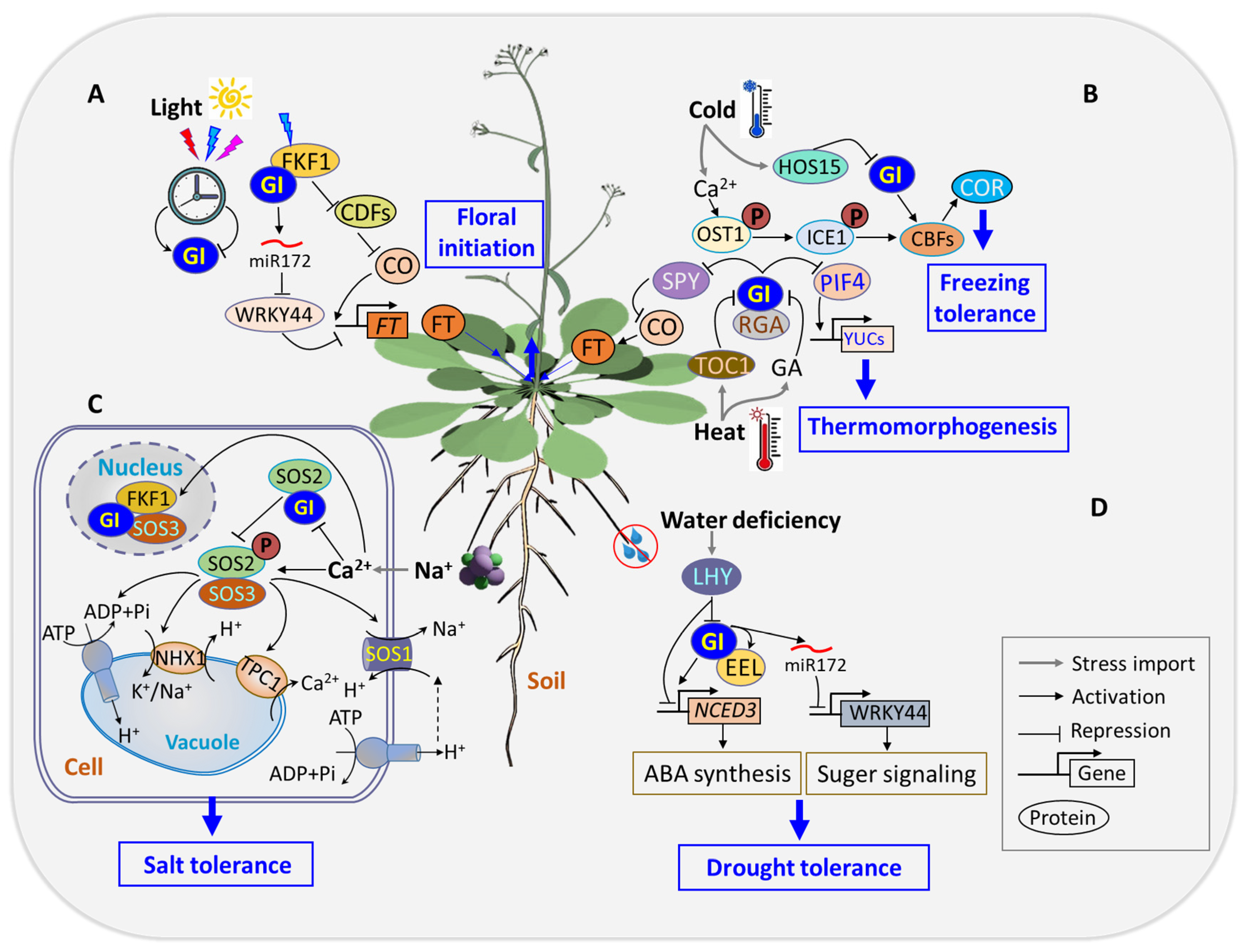
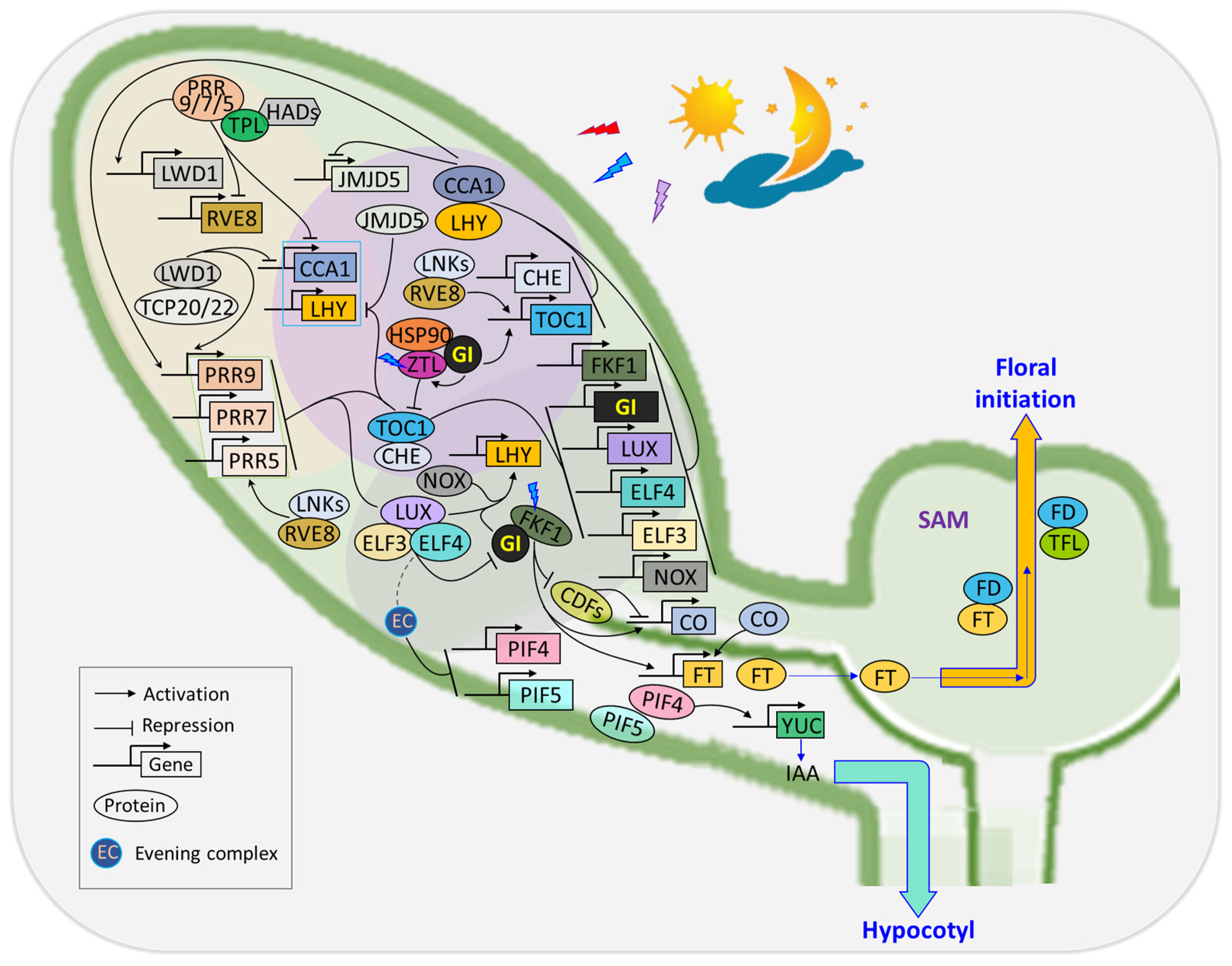
GIGANTEA (GI) is a conserved nuclear protein crucial for orchestrating the clock-associated feedback loop in the circadian system by integrating light input, modulating gating mechanisms, and regulating circadian clock resetting. It serves as a core component which transmits blue light signals for circadian rhythm resetting and overseeing floral initiation. Beyond circadian functions, GI influences various aspects of plant development (chlorophyll accumulation, hypocotyl elongation, stomatal opening, and anthocyanin metabolism). GI has also been implicated to play a pivotal role in response to stresses such as freezing, thermomorphogenic stresses, salinity, drought, and osmotic stresses. Positioned at the hub of complex genetic networks, GI interacts with hormonal signaling pathways like abscisic acid (ABA), gibberellin (GA), salicylic acid (SA), and brassinosteroids (BRs) at multiple regulatory levels. This intricate interplay enables GI to balance stress responses, promoting growth and flowering, and optimize plant productivity. This review delves into the multifaceted roles of GI, supported by genetic and molecular evidence, and recent insights into the dynamic interplay between flowering and stress responses, which enhance plants’ adaptability to environmental challenges.
Keywords: GI; circadian clock; flowering time; stress tolerance; stimulus response GI; circadian clock; flowering time; stress tolerance; stimulus response