Article

Genome-Wide Analysis of Dental Caries Variability Reveals Genotype-by-Environment Interactions

1
Department of Human Genetics, School of Public Health, University of Pittsburgh, Pittsburgh, PA 15261, USA
2
Department of Epidemiology, University of Michigan Medical School, Ann Arbor, MI 48109, USA
3
Department of Community Dentistry and Behavioral Science, College of Dentistry, University of Florida, Gainesville, FL 32610, USA
4
Center for Craniofacial and Dental Genetics, Department of Oral and Craniofacial Sciences, School of Dental Medicine, University of Pittsburgh, Pittsburgh, PA 15219, USA
5
Clinical and Translational Sciences, School of Medicine, University of Pittsburgh, Pittsburgh, PA 15213, USA
*
Author to whom correspondence should be addressed.
Genes 2023, 14(3), 736; https://doi.org/10.3390/genes14030736
Submission received: 4 February 2023 / Revised: 9 March 2023 / Accepted: 15 March 2023 / Published: 17 March 2023
(This article belongs to the Special Issue Advances in Genetic Diseases of Teeth)

Abstract

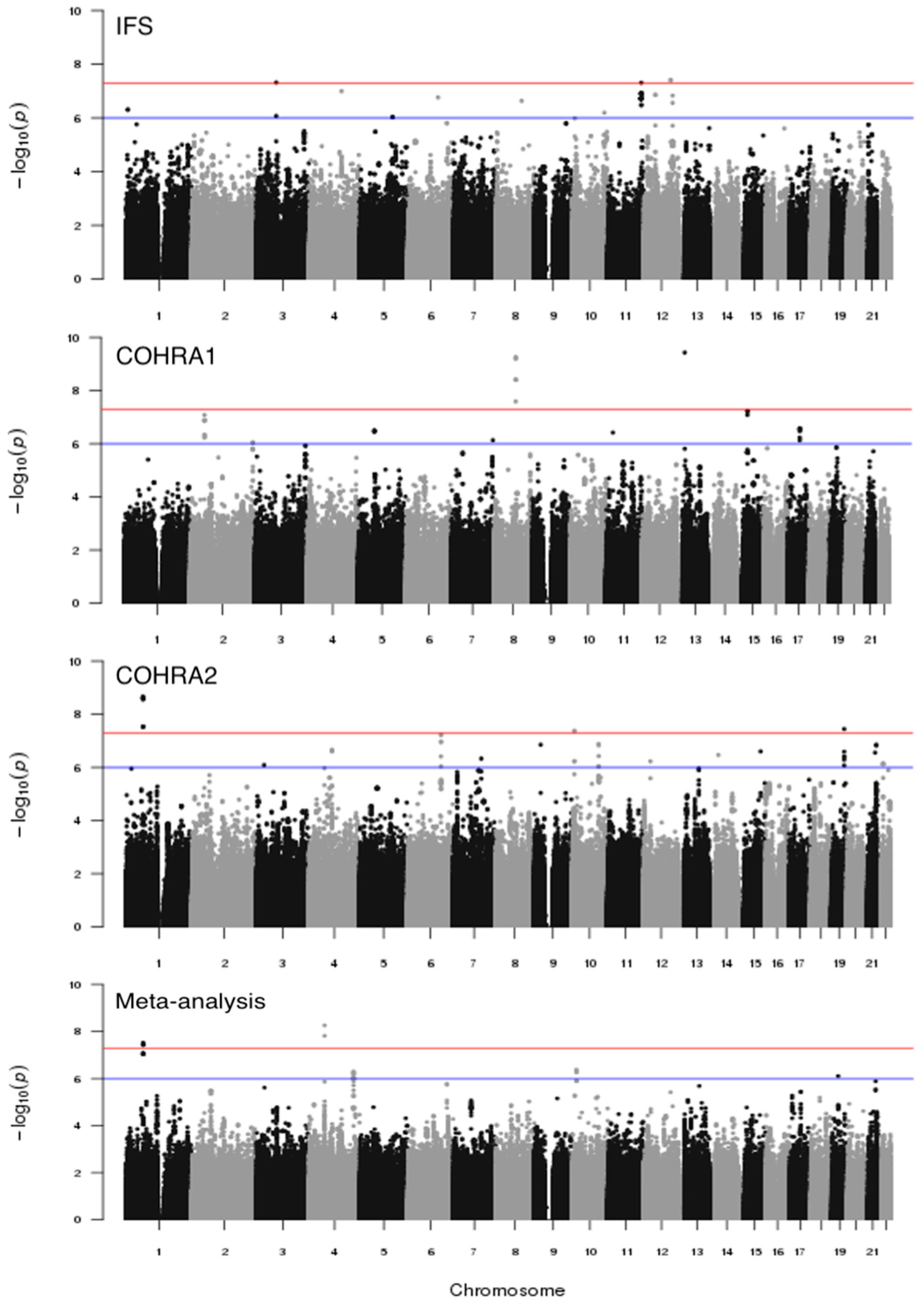
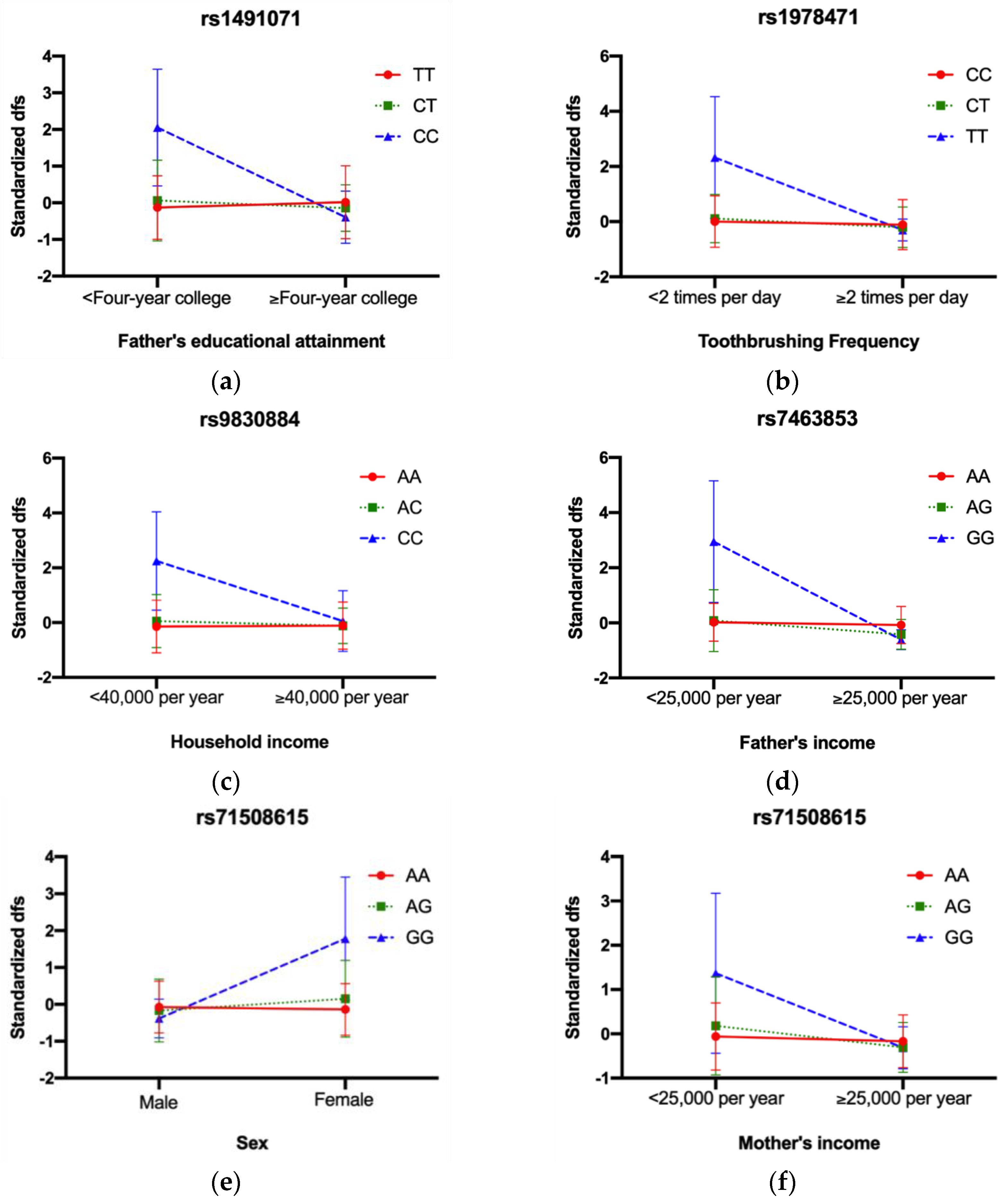
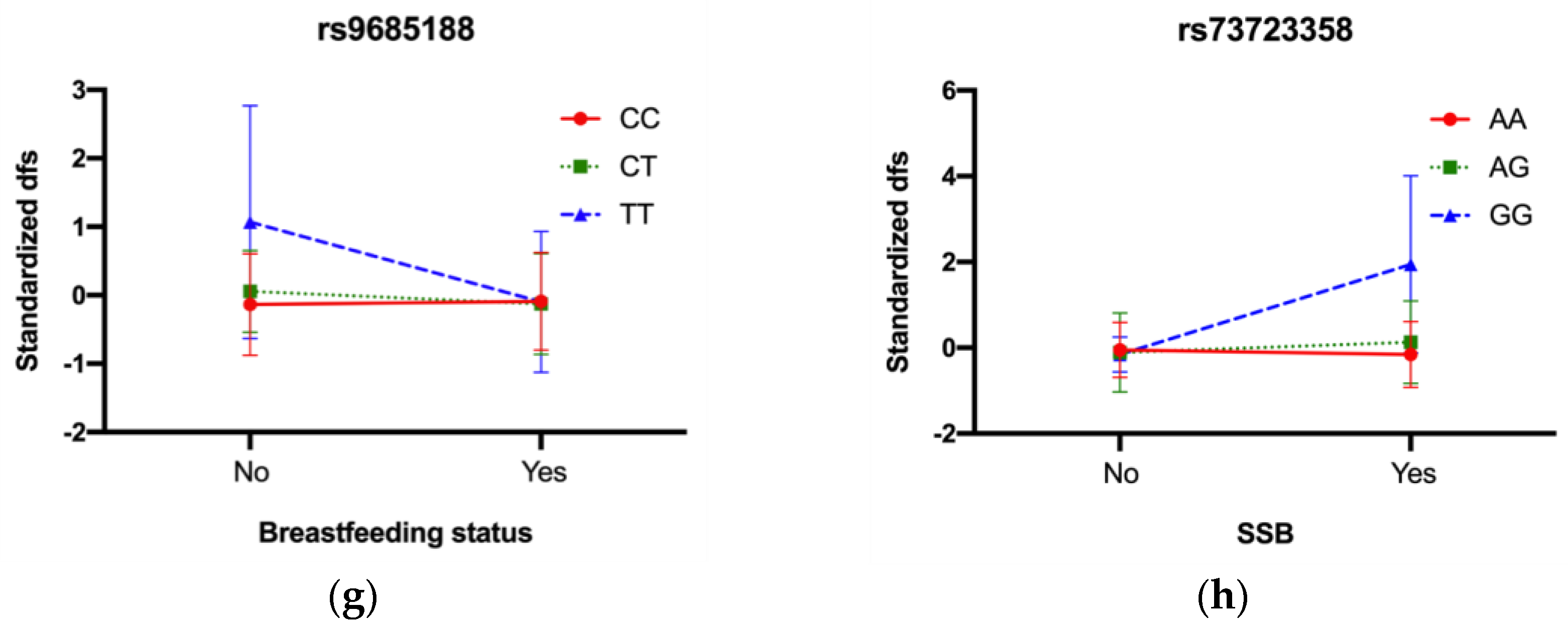
Genotype-by-environment interactions (GEI) may influence dental caries, although their effects are difficult to detect. Variance quantitative trait loci (vQTL) may serve as an indicator of underlying GEI effects. The aim of this study was to investigate GEI effects on dental caries by prioritizing variants from genome-wide vQTL analysis. First, we identified vQTLs from ~4.3 M genome-wide variants in three cohorts of white children aged 3–5 (n = 396, n = 328, n = 773) using Levene’s test. A total of 39 independent vQTLs with p < 1 × 10⁻⁶ were identified, some of which were located in or near genes with plausible biological roles in dental caries (IGFBP7, SLC5A8, and SHH involved in tooth development and enamel mineralization). Next, we used linear regression to test GEI effects on dental caries with the 39 prioritized variants and self-reported environmental factors (demographic, socioeconomic, behavioral, and dietary factors) in the three cohorts separately. We identified eight significant GEIs indicating that children with vQTL risk genotypes had higher caries experience if they had less educated parents, lower household/parental income, brushed their teeth less frequently, consumed sugar-sweetened beverages more frequently, were not breastfed, and were female. We reported the first genome-wide vQTL analysis of dental caries in children nominating several novel genes and GEI for further investigations.
Keywords: genome-wide vQTL; genotype-by-environment interactions; dental caries genome-wide vQTL; genotype-by-environment interactions; dental caries