


Emerging Role of microRNA Dysregulation in Diagnosis and Prognosis of Extrahepatic Cholangiocarcinoma
Abstract
1. Cholangiocarcinoma—Clinical Background
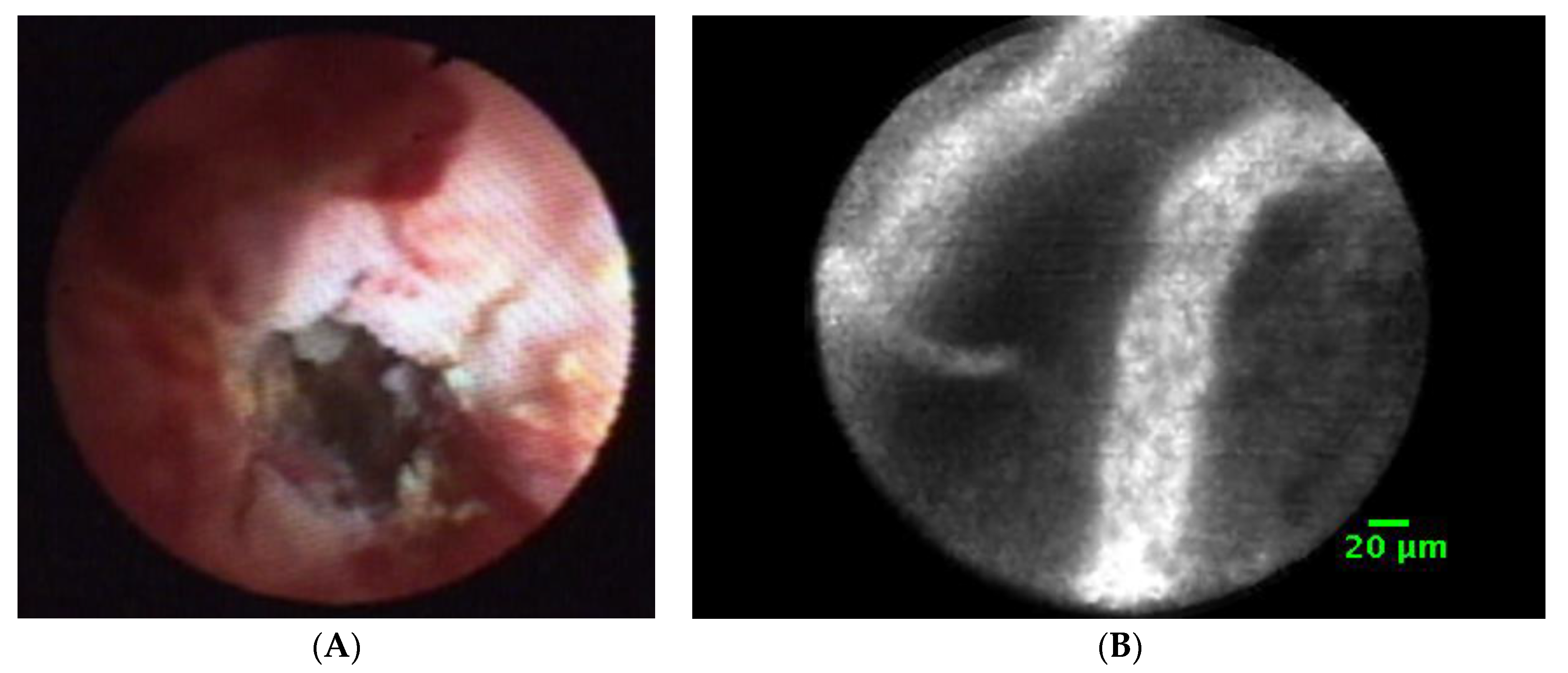
2. Role of Cholangioscopy, Laser Scanning Microscopy, and Next Generation Sequencing (NGS) for Detection of Cholangiocarcinoma
3. MicroRNA in CCA: Emerging Role as Predictors of Cancer Presence
4. MicroRNA Dysregulation and Chemosensitivity of CCA
5. Role of microRNA Dysregulation in Neovascularization
6. Conclusions
Author Contributions
Funding
Institutional Review Board Statement
Informed Consent Statement
Data Availability Statement
Conflicts of Interest
References
- Banales, J.M.; Marin, J.J.G.; Lamarca, A.; Rodrigues, P.M.; Khan, S.A.; Roberts, L.R.; Cardinale, V.; Carpino, G.; Andersen, J.B.; Braconi, C.; et al. Cholangiocarcinoma 2020: The next horizon in mechanisms and management. Nat. Rev. Gastroenterol. Hepatol. 2020, 17, 557–588. [Google Scholar] [CrossRef] [Scilit]
- Bertuccio, P.; Malvezzi, M.; Carioli, G.; Hashim, D.; Boffetta, P.; El-Serag, H.B.; la Vecchia, C.; Negri, E. Global trends in mortality from intrahepatic and extrahepatic cholangiocarcinoma. J. Hepatol. 2019, 71, 104–114. [Google Scholar] [CrossRef] [Scilit] [PubMed]
- Khan, S.A.; Tavolari, S.; Brandi, G. Cholangiocarcinoma: Epidemiology and risk factors. Liver Int. 2019, 39, 19–31. [Google Scholar] [CrossRef] [Scilit] [PubMed]
- Florio, A.A.; Ferlay, J.; Znaor, A.; Ruggieri, D.; Alvarez, C.S.; Laversanne, M.; Bray, F.; McGlynn, K.A.; Petrick, J.L. Global trends in intrahepatic and extrahepatic cholangiocarcinoma incidence from 1993 to 2012. Cancer 2020, 126, 2666–2678. [Google Scholar] [CrossRef] [Scilit] [PubMed]
- Beaufrere, A.; Calderaro, J.; Paradis, V. Combined hepatocellular-cholangiocarcinoma: An update. J. Hepatol. 2021, 74, 1212–1224. [Google Scholar] [CrossRef] [Scilit]
- Clements, O.; Eliahoo, J.; Kim, J.U.; Taylor-Robinson, S.D.; Khan, S.A. Risk factors for intrahepatic and extrahepatic cholangiocarcinoma: A systematic review and meta-analysis. J. Hepatol. 2020, 72, 95–103. [Google Scholar] [CrossRef] [Scilit]
- Izquierdo-Sanchez, L.; Lamarca, A.; la Casta, A.; Buettner, S.; Utpatel, K.; Klumpen, H.J.; Adeva, J.; Vogel, A.; Lleo, A.; Fabris, L.; et al. Cholangiocarcinoma landscape in Europe: Diagnostic, prognostic and therapeutic insights from the ENSCCA Registry. J. Hepatol. 2022, 76, 1109–1121. [Google Scholar] [CrossRef] [Scilit]
- Montal, R.; Lamarca, A.; la Casta, A.; Buettner, S.; Utpatel, K.; Klumpen, H.J.; Adeva, J.; Vogel, A.; Lleo, A.; Fabris, L.; et al. Molecular classification and therapeutic targets in extrahepatic cholangiocarcinoma. J. Hepatol. 2020, 73, 315–327. [Google Scholar] [CrossRef] [Scilit]
- Ghersi, S.; Fuccio, L.; Bassi, M.; Fabbri, C.; Cennamo, V. Current status of peroral cholangioscopy in biliary tract diseases. World J. Gastrointest. Endosc. 2015, 7, 510–517. [Google Scholar] [CrossRef] [Scilit]
- Prinz, C.; Weber, A.; Goecke, S.; Neu, B.; Meining, A.; Frimberger, E. A new peroral mother-baby endoscope system for biliary tract disorders. World J. Gastrointest. Endosc. 2014, 6, 20–26. [Google Scholar] [CrossRef] [Scilit]
- Ishida, Y.; Itoi, T.; Okabe, Y. Types of peroral cholangioscopy: How to choose the most suitable type of cholangioscopy. Curr. Treat Options Gastroenterol. 2016, 14, 210–219. [Google Scholar] [CrossRef] [Scilit] [PubMed]
- Macias, R.I.R.; Cardinale, V.; Kendall, T.J.; Avila, M.A.; Guido, M.; Coulouarn, C.; Braconi, C.; Frampton, A.E.; Bridgewater, J.; Overi, D.; et al. Clinical relevance of biomarkers in cholangiocarcinoma: Critical revision and future directions. Gut 2022, 71, 1669–1683. [Google Scholar] [CrossRef] [Scilit] [PubMed]
- Singhi, A.D.; Nikiforova, M.N.; Chennat, J.; Papachristou, G.I.; Khalid, A.; Rabinovitz, M.; Das, R.; Sarkaria, S.; Ayasso, M.S.; Wald, A.I.; et al. Integrating next-generation sequencing to endoscopic retrograde cholangiopancreatography (ERCP)-obtained biliary specimens improves the detection and management of patients with malignant bile duct strictures. Gut 2020, 69, 52–61. [Google Scholar] [CrossRef] [Scilit] [PubMed]
- Zhou, J.; Liu, Z.; Yang, S.; Li, X. Identification of microRNAs as biomarkers for cholangiocarcinoma detection: A diagnostic meta-analysis. Clin. Res. Hepatol. Gastroenterol. 2017, 41, 156–162. [Google Scholar] [CrossRef] [Scilit] [PubMed]
- Likhitrattanapisal, S.; Kumkate, S.; Ajawatanawong, P.; Wongprasert, K.; Tohtong, R.; Janvilisri, T. Dysregulation of microRNA in cholangiocarcinoma identified through a meta-analysis of microRNA profiling. World J. Gastroenterol. 2020, 26, 4356–4371. [Google Scholar] [CrossRef] [Scilit] [PubMed]
- Shi, T.; Morishita, A.; Kobara, H.; Masaki, T. The Role of microRNAs in Cholangiocarcinoma. Int. J. Mol. Sci. 2021, 22, 26. [Google Scholar]
- Shigehara, K.; Yokomuro, S.; Ishibashi, O.; Mizuguchi, Y.; Arima, Y.; Kawahigashi, Y.; Kanda, T.; Akagi, I.; Tajiri, T.; Yoshida, H.; et al. Real-time PCR-based analysis of the human bile microRNAome identifies miR-9 as a potential diagnostic biomarker for biliary tract cancer. PLoS ONE 2011, 6, e23584. [Google Scholar] [CrossRef] [Scilit]
- Voigtlander, T.; Gupta, S.K.; Thum, S.; Fendrich, J.; Manns, M.P.; Lankisch, T.O.; Thum, T. MicroRNAs in serum and bile of patients with primary sclerosing cholangitis and/or cholangiocarcinoma. PLoS ONE 2015, 10, e0139305. [Google Scholar] [CrossRef] [Scilit]
- Wang, L.J.; He, C.C.; Sui, X.; Cai, M.J.; Zhou, C.Y.; Ma, J.L.; Wu, L.; Wang, H.; Han, S.X.; Zhu, Q. MiR-21 promotes intrahepatic cholangiocarcinoma proliferation and growth in vitro and in vivo by targeting PTPN14 and PTEN. Oncotarget 2015, 6, 5932–5946. [Google Scholar] [CrossRef] [Scilit]
- Correa-Gallego, C.; Maddalo, D.; Doussot, A.; Kemeny, N.; Kingham, T.P.; Allen, P.J.; D’Angelica, M.I.; DeMatteo, R.P.; Betel, D.; Klimstra, D.; et al. Circulating plasma levels of MicroRNA-21 and MicroRNA-221 are potential diagnostic markers for primary intrahepatic cholangiocarcinoma. PLoS ONE 2016, 11, e0163699. [Google Scholar] [CrossRef] [Scilit]
- Liu, C.H.; Huang, Q.; Jin, Z.Y.; Xie, F.; Zhu, C.L.; Liu, Z.; Wang, C. Circulating microRNA-21 as a prognostic, biological marker in cholangiocarcinoma. J. Cancer Res. Ther. 2018, 14, 220–225. [Google Scholar] [PubMed]
- Prinz, C.; Weber, D. MicroRNA (miR) dysregulation during Helicobacter pylori-induced gastric inflammation and cancer development: Critical importance of miR-155. Oncotarget 2020, 11, 894–904. [Google Scholar] [CrossRef] [Scilit] [PubMed]
- Weber, D.; Amar, L.; Godde, D.; Prinz, C. Extensive screening of microRNA populations identifies hsa-miR-375 and hsa-miR-133a-3p as selective markers for human rectal and colon cancer. Oncotarget 2018, 9, 27256–27267. [Google Scholar] [CrossRef] [Scilit] [PubMed]
- Wang, Y.; Gao, X.; Wei, F.; Zhang, X.; Yu, J.; Zhao, H.; Sun, Q.; Yan, F.; Yan, C.; Li, H.; et al. Diagnostic and prognostic value of circulating miR-21 for cancer: A systematic review and meta-analysis. Gene 2014, 533, 389–397. [Google Scholar] [CrossRef] [Scilit]
- Yang, J.; Wang, J.; Zhou, H.; Wang, Y.; Huang, H.; Jin, H.; Lou, Q.; Shah, R.J.; Zhang, X. Endoscopic radiofrequency ablation plus a novel oral 5-fluorouracil compound versus radiofrequency ablation alone for unresectable extrahepatic cholangiocarcinoma. Gastrointest. Endosc. 2020, 92, 1204–1212.e1. [Google Scholar] [CrossRef] [Scilit]
- Jung, J.H.; Lee, H.J.; Lee, H.S.; Jo, J.H.; Cho, I.R.; Chung, M.J.; Park, J.Y.; Park, S.W.; Song, S.Y.; Bang, S. Benefit of neoadjuvant concurrent chemoradiotherapy for locally advanced perihilar cholangiocarcinoma. World J. Gastroenterol. 2017, 23, 3301–3308. [Google Scholar] [CrossRef] [Scilit]
- Katayose, Y.; Nakagawa, K.; Yoshida, H.; Morikawa, T.; Hayashi, H.; Okada, T.; Mizuma, M.; Sakata, N.; Ohtsuka, H.; Fukase, K.; et al. Neoadjuvant chemoradiation therapy for cholangiocarcinoma to improve R0 resection rate: The first report of phase II study. J. Clin. Oncol. 2015, 33, 402. [Google Scholar] [CrossRef] [Scilit]
- Kornek, G.V.; Schuell, B.; Laengle, F.; Gruenberger, T.; Penz, M.; Karall, K.; Depisch, D.; Lang, F.; Scheithauer, W. Mitomycin C in combination with capecitabine or biweekly high-dose gemcitabine in patients with advanced biliary tract cancer: A randomised phase II trial. Ann. Oncol. 2004, 15, 478–483. [Google Scholar] [CrossRef] [Scilit]
- Sumiyoshi, T.; Shima, Y.; Okabayashi, T.; Negoro, Y.; Shimada, Y.; Iwata, J.; Matsumoto, M.; Hata, Y.; Noda, Y.; Sui, K.; et al. Chemoradiotherapy for initially unresectable locally advanced cholangiocarcinoma. World J. Surg. 2018, 42, 2910–2918. [Google Scholar] [CrossRef] [Scilit]
- Valle, J.W.; Wasan, H.; Johnson, P.; Jones, E.; Dixon, L.; Swindell, R.; Baka, S.; Maraveyas, A.; Corrie, P.; Falk, S.; et al. Gemcitabine alone or in combination with cisplatin in patients with advanced or metastatic cholangiocarcinomas or other biliary tract tumours: A multicentre randomised phase II study–The UK ABC-01 Study. Br. J. Cancer 2009, 101, 621–627. [Google Scholar] [CrossRef] [Scilit]
- Di Leva, G.; Garofalo, M.; Croce, C.M. MicroRNAs in cancer. Annu. Rev. Pathol. 2014, 9, 287–314. [Google Scholar] [CrossRef] [Scilit] [PubMed]
- Suh, N. MicroRNA controls of cellular senescence. BMB Rep. 2018, 51, 493–499. [Google Scholar] [CrossRef] [Scilit] [PubMed]
- Sato, F.; Tsuchiya, S.; Meltzer, S.J.; Shimizu, K. MicroRNAs and epigenetics. FEBS J. 2011, 278, 1598–1609. [Google Scholar] [CrossRef] [Scilit] [PubMed]
- Wallis, D.I.; Wu, J.; Wang, X.C. Is 5-hydroxytryptamine mediating descending inhibition in the neonatal rat spinal cord through different receptor subtypes? Eur. J. Pharmacol. 1993, 250, 371–377. [Google Scholar] [CrossRef] [Scilit]
- Friedrich, M.; Pracht, K.; Mashreghi, M.F.; Jack, H.M.; Radbruch, A.; Seliger, B. The role of the miR-148/-152 family in physiology and disease. Eur. J. Immunol. 2017, 47, 2026–2038. [Google Scholar] [CrossRef] [Scilit]
- Shen, L.; Chen, G.; Xia, Q.; Shao, S.; Fang, H. Exosomal miR-200 family as serum biomarkers for early detection and prognostic prediction of cholangiocarcinoma. Int. J. Clin. Exp. Pathol. 2019, 12, 3870–3876. [Google Scholar]
- Feng, B.; Wang, R.; Chen, L.B. Review of miR-200b and cancer chemosensitivity. Biomed. Pharmacother. 2012, 66, 397–402. [Google Scholar] [CrossRef] [Scilit]
- Yao, S.; Yin, Y.; Jin, G.; Li, D.; Li, M.; Hu, Y.; Feng, Y.; Liu, Y.; Bian, Z.; Wang, X.; et al. Exosome-mediated delivery of miR-204-5p inhibits tumor growth and chemoresistance. Cancer Med. 2020, 9, 5989–5998. [Google Scholar] [CrossRef] [Scilit]
- Sui, C.; Meng, F.; Li, Y.; Jiang, Y. miR-148b reverses cisplatin-resistance in non-small cell cancer cells via negatively regulating DNA (cytosine-5)-methyltransferase 1(DNMT1) expression. J. Transl. Med. 2015, 13, 132. [Google Scholar] [CrossRef] [Scilit]
- Huang, J.; Wang, Y.; Guo, Y.; Sun, S. Down-regulated microRNA-152 induces aberrant DNA methylation in hepatitis B virus-related hepatocellular carcinoma by targeting DNA methyltransferase 1. Hepatology 2010, 52, 60–70. [Google Scholar] [CrossRef] [Scilit]
- Xiang, Y.; Ma, N.; Wang, D.; Zhang, Y.; Zhou, J.; Wu, G.; Zhao, R.; Huang, H.; Wang, X.; Qiao, Y.; et al. MiR-152 and miR-185 co-contribute to ovarian cancer cells cisplatin sensitivity by targeting DNMT1 directly: A novel epigenetic therapy independent of decitabine. Oncogene 2014, 33, 378–386. [Google Scholar] [CrossRef] [Scilit] [PubMed]
- Erice, O.; Labiano, I.; Arbelaiz, A.; Santos-Laso, A.; Munoz-Garrido, P.; Jimenez-Aguero, R.; Olaizola, P.; Caro-Maldonado, A.; Martin-Martin, N.; Carracedo, A.; et al. Differential effects of FXR or TGR5 activation in cholangiocarcinoma progression. Biochim. Biophys. Acta Mol. Basis Dis. 2018, 1864, 1335–1344. [Google Scholar] [CrossRef] [Scilit]
- Folkman, J. Angiogenesis: An organizing principle for drug discovery? Nat. Rev. Drug Discov. 2007, 6, 273–286. [Google Scholar] [CrossRef] [Scilit] [PubMed]
- Carmeliet, P.; Jain, R.K. Angiogenesis in cancer and other diseases. Nature 2000, 407, 249–257. [Google Scholar] [CrossRef] [Scilit] [PubMed]
- Huang, M.; Huang, B.; Li, G.; Zeng, S. Apatinib affect VEGF-mediated cell proliferation, migration, invasion via blocking VEGFR2/RAF/MEK/ERK and PI3K/AKT pathways in cholangiocarcinoma cell. BMC Gastroenterol. 2018, 18, 169. [Google Scholar] [CrossRef] [Scilit] [PubMed]
- Salati, M.; Braconi, C. Noncoding RNA in cholangiocarcinoma. Semin. Liver Dis. 2019, 39, 13–25. [Google Scholar] [CrossRef] [Scilit] [PubMed]
- Gradilone, S.A.; O’Hara, S.P.; Masyuk, T.V.; Pisarello, M.J.; LaRusso, N.F. MicroRNAs and benign biliary tract diseases. Semin. Liver Dis. 2015, 35, 26–35. [Google Scholar]
- Shang, A.; Lu, W.Y.; Yang, M.; Zhou, C.; Zhang, H.; Cai, Z.X.; Wang, W.W.; Wang, W.X.; Wu, G.Q. miR-9 induces cell arrest and apoptosis of oral squamous cell carcinoma via CDK 4/6 pathway. Artif. Cells. Nanomed. Biotechnol. 2018, 46, 1754–1762. [Google Scholar] [CrossRef] [Scilit]
- Letelier, P.; Riquelme, I.; Hernandez, A.H.; Guzman, N.; Farias, J.G.; Roa, J.C. Circulating microRNAs as biomarkers in biliary tract cancers. Int. J. Mol. Sci. 2016, 17, 791. [Google Scholar] [CrossRef] [Scilit]
- Song, M.K.; Park, Y.K.; Ryu, J.C. Polycyclic aromatic hydrocarbon (PAH)-mediated upregulation of hepatic microRNA-181 family promotes cancer cell migration by targeting MAPK phosphatase-5, regulating the activation of p38 MAPK. Toxicol. Appl. Pharmacol. 2013, 273, 130–139. [Google Scholar] [CrossRef] [Scilit]
- Kennedy, L.; Francis, H.; Meng, F.; Glaser, S.; Alpini, G. Diagnostic and therapeutic potentials of microRNAs in cholangiopathies. Liver Res. 2017, 1, 34–41. [Google Scholar] [CrossRef] [Scilit] [PubMed]
- Kang, P.C.; Leng, K.M.; Liu, Y.P.; Liu, Y.; Xu, Y.; Qin, W.; Gao, J.J.; Wang, Z.D.; Tai, S.; Zhong, X.Y.; et al. miR-191 inhibition induces apoptosis through reactivating secreted frizzled-related protein-1 in cholangiocarcinoma. Cell. Physiol. Biochem. 2018, 49, 1933–1942. [Google Scholar] [CrossRef] [Scilit] [PubMed]
- Wang, C.; Lu, H.; Luo, C.; Song, C.; Wang, Q.; Peng, Y.; Xin, Y.; Liu, T.; Yang, W. miR-412-5p targets Xpo1 to regulate angiogenesis in hemorrhoid tissue. Gene 2019, 705, 167–176. [Google Scholar] [CrossRef] [Scilit] [PubMed]
- Dong, W.; Liu, J.; Lv, Y.; Wang, F.; Liu, T.; Sun, S.; Liao, B.; Shu, Z.; Qian, J. miR-640 aggravates intervertebral disc degeneration via NF-κB and WNT signalling pathway. Cell Prolif. 2019, 52, e12664. [Google Scholar] [CrossRef] [Scilit]
- Jiang, J.; Ma, B.; Li, X.; Jin, W.; Han, C.; Wang, L.; Wang, H. MiR-1281, a p53-responsive microRNA, impairs the survival of human osteosarcoma cells upon ER stress via targeting USP39. Am. J. Cancer Res. 2018, 8, 1764–1774. [Google Scholar]
- Bian, Y.; Guo, J.; Qiao, L.; Sun, X. miR-3189-3p mimics enhance the effects of S100A4 siRNA on the inhibition of proliferation and migration of gastric cancer cells by targeting CFL2. Int. J. Mol. Sci. 2018, 19, 236. [Google Scholar] [CrossRef] [Scilit]
- Kong, L.; Wu, Q.; Zhao, L.; Ye, J.; Li, N.; Yang, H. Upregulated lncRNA-UCA1 contributes to metastasis of bile duct carcinoma through regulation of miR-122/CLIC1 and activation of the ERK/MAPK signaling pathway. Cell Cycle 2019, 18, 1212–1228. [Google Scholar] [CrossRef] [Scilit]
- Xu, Z.; Liu, G.; Zhang, M.; Zhang, Z.; Jia, Y.; Peng, L.; Zhu, Y.; Hu, J.; Huang, R.; Sun, X. miR-122-5p inhibits the proliferation, invasion and growth of bile duct carcinoma cells by targeting ALDOA. Cell Physiol. Biochem. 2018, 48, 2596–2606. [Google Scholar] [CrossRef] [Scilit]
- Ishigami, K.; Nosho, K.; Koide, H.; Kanno, S.; Mitsuhashi, K.; Igarashi, H.; Shitani, M.; Motoya, M.; Kimura, Y.; Hasegawa, T.; et al. MicroRNA-31 reflects IL-6 expression in cancer tissue and is related with poor prognosis in bile duct cancer. Carcinogenesis 2018, 39, 1127–1134. [Google Scholar] [CrossRef] [Scilit]
- Meijer, L.L.; Puik, J.R.; le Large, T.Y.S.; Heger, M.; Dijk, F.; Funel, N.; Wurdinger, T.; Garajova, I.; van Grieken, N.C.T.; van de Wiel, M.A.; et al. Unravelling the diagnostic dilemma: A MicroRNA panel of circulating MiR-16 and MiR-877 as a diagnostic classifier for distal bile duct tumors. Cancers 2019, 11, 1181. [Google Scholar] [CrossRef] [Scilit]
- Liao, C.H.; Liu, Y.; Wu, Y.F.; Zhu, S.W.; Cai, R.Y.; Zhou, L.; Yin, X.M. microRNA-329 suppresses epithelial-to-mesenchymal transition and lymph node metastasis in bile duct cancer by inhibiting laminin subunit beta 3. J. Cell. Physiol. 2019, 234, 17786–17799. [Google Scholar] [CrossRef] [Scilit] [PubMed]

| MiRNA Dysregulation in Biliary Tract Cancers and Potential Targets | |
|---|---|
| miR-9 | useful diagnostic marker for CCA [17], miR-9 induces cell arrest and apoptosis of carcinoma cells via CDK 4/6 pathway [48] |
| miR-141 | highly overexpressed in CCA cells, correlating with multifocal cholangiocarcinoma and vascular invasion [49] |
| miR-145 | useful diagnostic markers for biliary tract cancer [17] |
| miR-181 | therapeutic targets for the treatment of various diseases. Targets MKP-5 and regulates p38 MAPK activation [50], and regulates NDRG2 to influence carcinogenesis and metastasis [51] |
| miR-191 | miR-191 acts as a potential therapeutic target [52] |
| miR-200b | highly overexpressed in CCA cells, inhibition of miR-200b is associated with sensitivity to gemcitabine [49] |
| miR-412 | differed significantly between patients with PSC and PSC/CCA [18]. miR-412-5p targets Xpo1 to regulate angiogenesis [53] |
| miR-640 | differed significantly between patients with PSC and PSC/CCA [18]. miR-640 acts via NF-kappaB and WNT signaling pathway [54] |
| miR-1281 | differed significantly between patients with PSC and PSC/CCA, also combining miR-1537 with CA19-9 resulted in higher diagnostic values than CA19-9 alone [18]. miR-1281 is a p53-responsive microRNA that impairs the survival of sarcoma cells upon ER stress [55] |
| miR-3189 | differed significantly between patients with PSC and PSC/CCA [18]. miR-3189-3p mimics the effects of S100A4 siRNA upon the inhibition of proliferation and migration of gastric cancer cells by targeting CFL2 [56] |
| miR-204 | negatively regulates Mcl-1 or Bcl-2 expression and facilitates chemotherapeutic drug-triggered apoptosis [41] |
| miR-1537 | Downregulated in CCA [13] |
| miR-152 | Inhibits migration, invasion, and EMT in Intrahepatic Cholangiocarcinoma [38] |
| miR-148a | IL-6 can regulate the expression of methylation-dependent tumor suppressor genes by modulation of miR-148a [39] |
| miR-17-92 | expression of the miR-17-92 cluster is regulated by IL-6/Stat3, a key oncogenic signaling pathway pivotal in cholangiocarcinogenesis [33,40] |
| miR-320 | Promotes tumor angiogeneseis in CCA by negatively regulating expression of Neuropilin-1 [34] |
| miR-101 | inhibits cholangiocarcinoma angiogenesis by direct targeting of VEGF [35] |
| miR-490-3p | attenuates cell migration and angiogenesis in CCA by silencing Akirin2 [36] |
| miR-122 | lncRNA-UCA1 promoted metastasis of bile duct carcinoma cells by regulating miR-122/CLIC1 and activating the ERK/MAPK signaling pathway [57] |
| miR-122-5p | miR-122-5p inhibits proliferation and invasion of bile duct carcinoma cells and promotes cell apoptosis by targeting ALDOA expression [58] |
| miR-31 | miR-31 might be a biomarker that reflects IL-6 expression in bile duct cancer tissues and predicts poor prognosis. Expression in bile duct cancer cells is significantly higher than that in normal bile duct epithelial cells and is significantly associated with shorter survival [59] |
| miR-16 | miR-16 is downregulated in patients with CCA and can be used as biomarker to differentiate from pancreatic ductal adenocarcinoma and benign disease [60] |
| miR-877 | miR-877 is upregulated in CCA and could be used as a diagnostic classifier for distal bile duct tumors [60] |
| miR-329 | miR-329 inhibits bile duct cancer progression through translational repression of laminin subunit β 3, which leads to a suppression of epithelial-to-mesenchymal transition and lymph node metastasis [61] |
Publisher’s Note: MDPI stays neutral with regard to jurisdictional claims in published maps and institutional affiliations. |
© 2022 by the authors. Licensee MDPI, Basel, Switzerland. This article is an open access article distributed under the terms and conditions of the Creative Commons Attribution (CC BY) license (https://creativecommons.org/licenses/by/4.0/).
Share and Cite
Prinz, C.; Frese, R.; Grams, M.; Fehring, L. Emerging Role of microRNA Dysregulation in Diagnosis and Prognosis of Extrahepatic Cholangiocarcinoma. Genes 2022, 13, 1479. https://doi.org/10.3390/genes13081479
Prinz C, Frese R, Grams M, Fehring L. Emerging Role of microRNA Dysregulation in Diagnosis and Prognosis of Extrahepatic Cholangiocarcinoma. Genes. 2022; 13(8):1479. https://doi.org/10.3390/genes13081479
Chicago/Turabian StylePrinz, Christian, Robin Frese, Mashiba Grams, and Leonard Fehring. 2022. "Emerging Role of microRNA Dysregulation in Diagnosis and Prognosis of Extrahepatic Cholangiocarcinoma" Genes 13, no. 8: 1479. https://doi.org/10.3390/genes13081479
APA StylePrinz, C., Frese, R., Grams, M., & Fehring, L. (2022). Emerging Role of microRNA Dysregulation in Diagnosis and Prognosis of Extrahepatic Cholangiocarcinoma. Genes, 13(8), 1479. https://doi.org/10.3390/genes13081479

