
Article

SSR-Based Molecular Identification and Population Structure Analysis for Forage Pea (Pisum sativum var. arvense L.) Landraces


1
Department of Field Crops, Faculty of Agriculture, Ataturk University, 25240 Erzurum, Turkey
2
Department of Biology, Faculty of Science, Cankiri Karatekin University, 18200 Çankırı, Turkey
3
Department of Field Crops, Faculty of Agriculture, Necmettin Erbakan University, 42310 Konya, Turkey
4
Havsa Vocational College Park and Garden Plants, Trakya University, 22030 Edirne, Turkey
5
Botany Unit, Finnish Museum of Natural History, University of Helsinki, P.O. Box 7, FI-00014 Helsinki, Finland
6
Institute of Advanced Studies Kőszeg (iASK), 9731 Kőszeg, Hungary
*
Authors to whom correspondence should be addressed.
Genes 2022, 13(6), 1086; https://doi.org/10.3390/genes13061086
Submission received: 19 May 2022 / Revised: 9 June 2022 / Accepted: 16 June 2022 / Published: 18 June 2022
(This article belongs to the Section Plant Genetics and Genomics)

Abstract

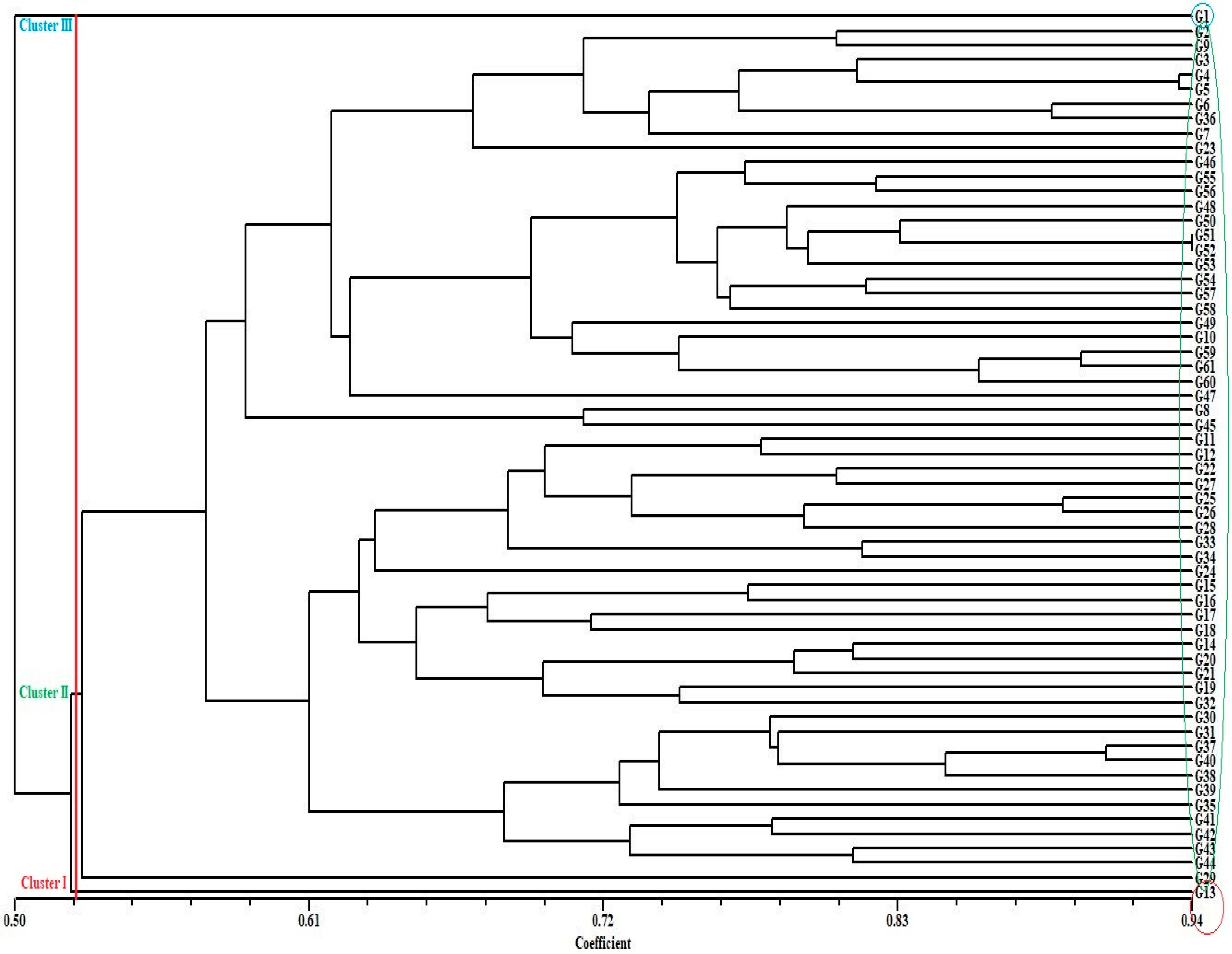
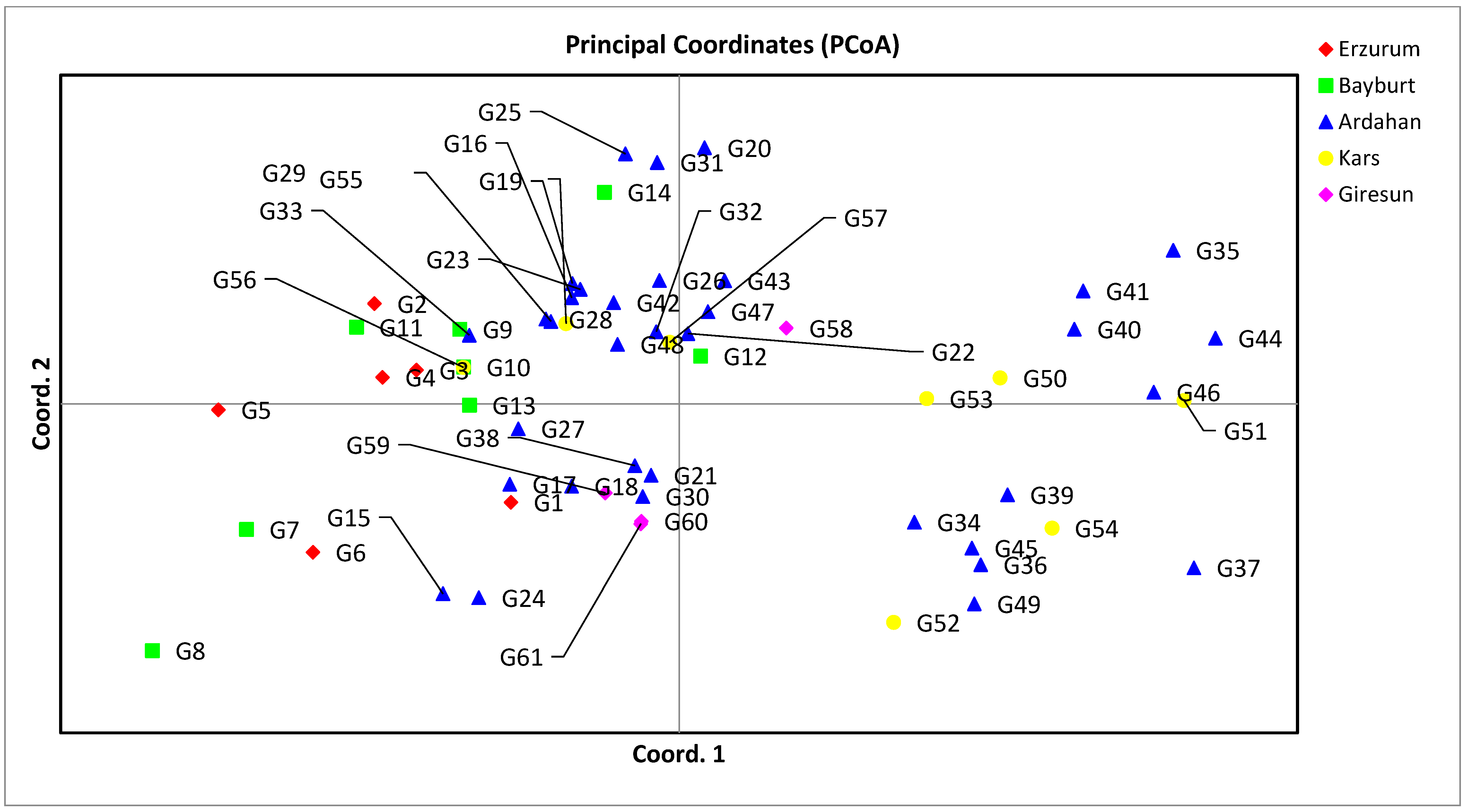
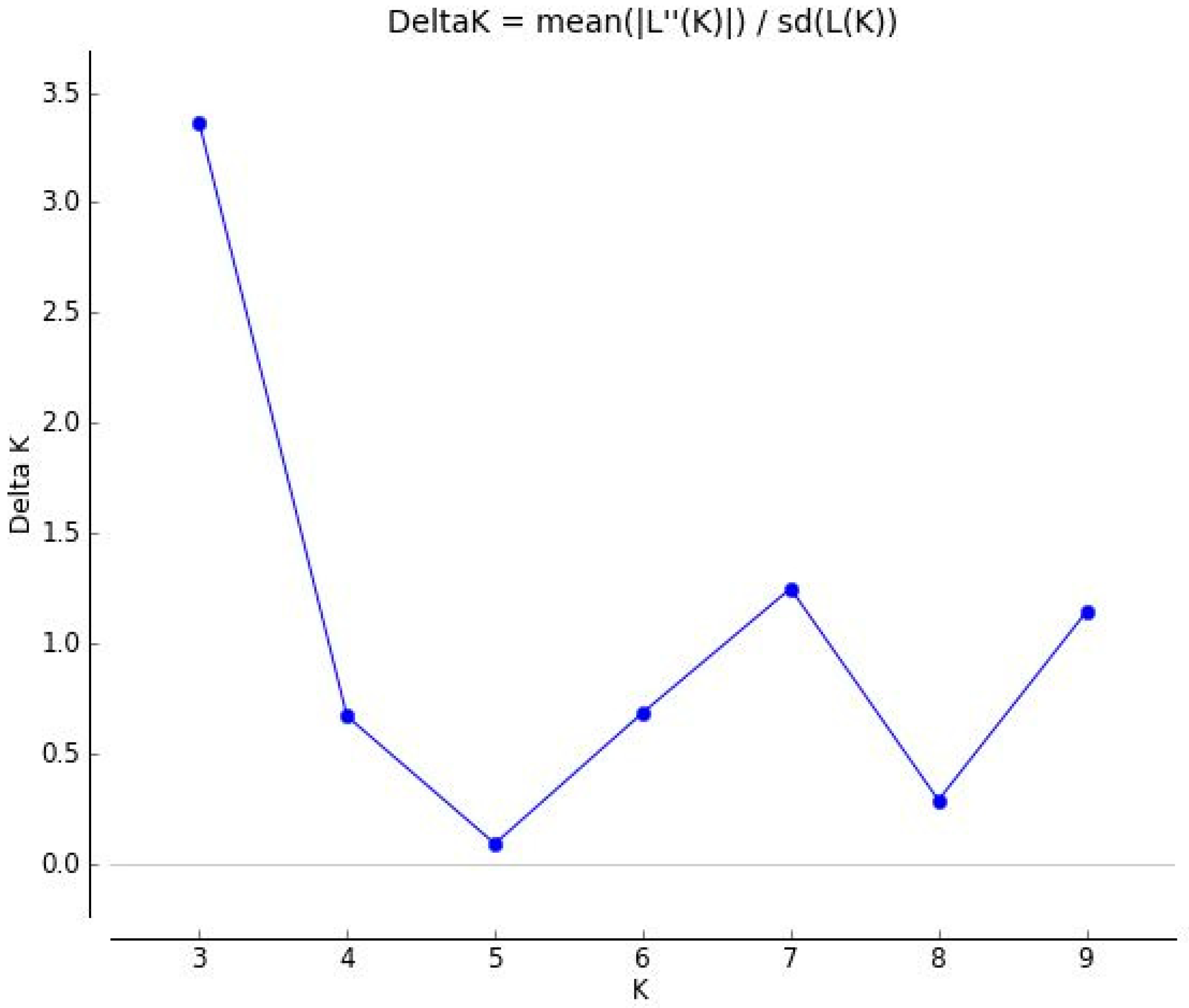
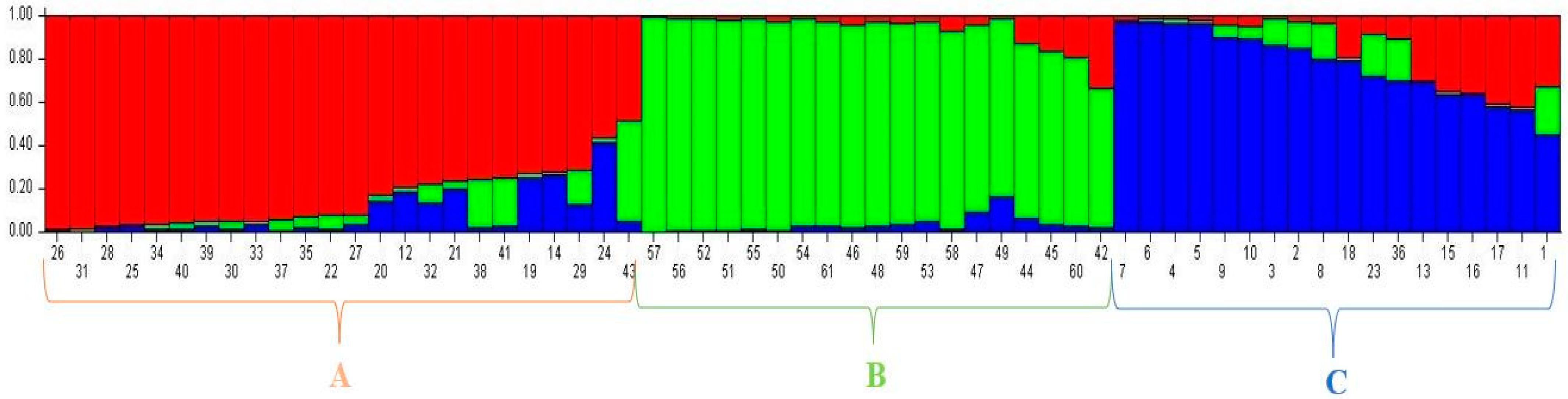
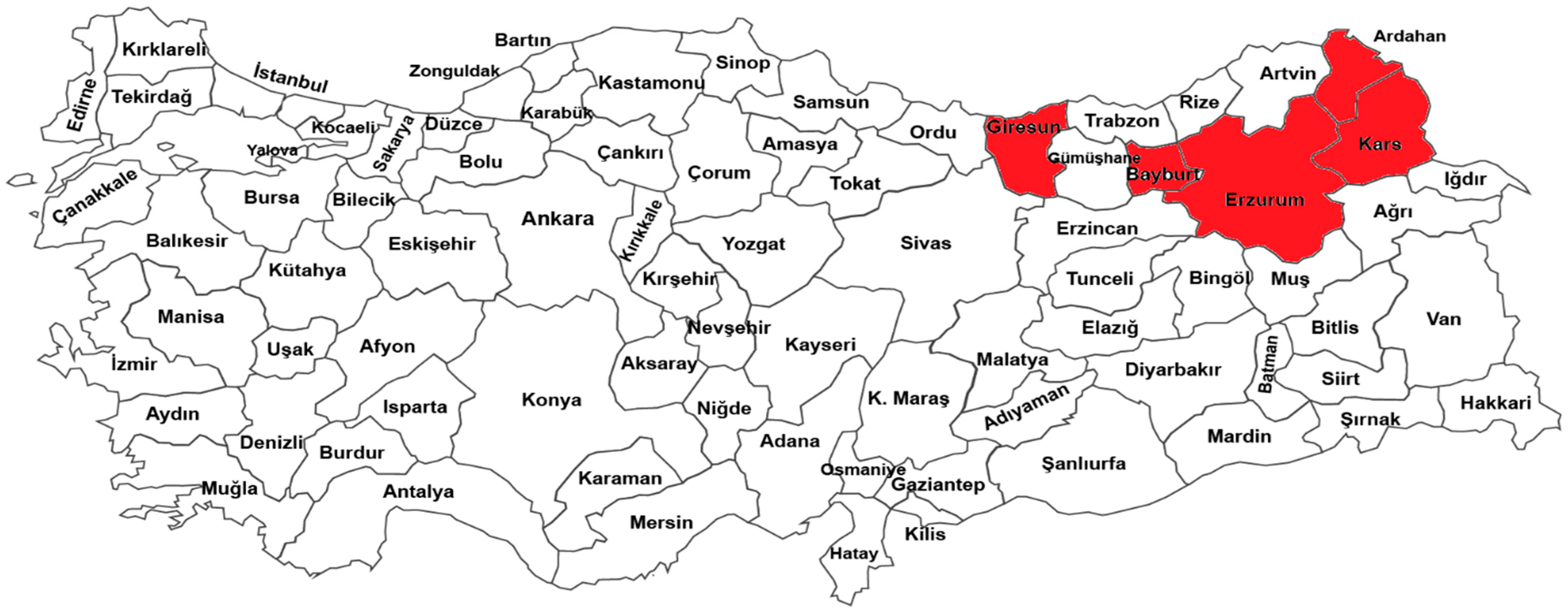
Plant genetic diversity has a significant role in providing traits that can help meet future challenges, such as the need to adapt crops to changing climatic conditions or outbreaks of disease. Our aim in this study was to evaluate the diversity of 61 forage pea specimens (P. sativum ssp. arvense L.) collected from the northeastern Anatolia region of Turkey using 28 simple sequence repeat (SSR) markers. These primers generated a total of 82 polymorphic bands. The number of observed alleles (Na) per primer varied from 2 to 4 with a mean of 2.89 alleles/locus. The mean value of expected heterozygosity (Exp-Het = 0.50) was higher than the mean value of observed heterozygosity (Obs-Het = 0.22). The mean of polymorphic information content (PIC) was 0.41 with a range of 0.03–0.70. The mean number of effective alleles (Ne) was found to be 2.15, Nei’s expected heterozygosity (H) 0.49, and Shannon’s information index (I) 0.81. Cluster analysis through the unweighted pair-group mean average (UPGMA) method revealed that 61 forage pea landraces were divided into three main clusters. Genetic dissimilarity between the genotypes, calculated with the use of NTSYS-pc software, varied between 0.10 (G30 and G34) and 0.66 (G1 and G32). Principal coordinate analysis (PCoA) revealed that three principal coordinates explained 51.54% of the total variation. Moreover, population structure analysis showed that all genotypes formed three sub-populations. Expected heterozygosity values varied between 0.2669 (the first sub-population) and 0.3223 (third sub-population), with an average value of 0.2924. Average population differentiation measurement (Fst) was identified as 0.2351 for the first sub-population, 0.3838 for the second sub-population, and 0.2506 for the third sub-population. In general, current results suggest that SSR markers could be constantly used to illuminate the genetic diversity of forage pea landraces and can potentially be incorporated into future studies that examine the diversity within a larger collection of forage pea genotypes from diverse regions.
Keywords: genetic; molecular markers; structure; UPGMA genetic; molecular markers; structure; UPGMA