Article

DARTS: An Algorithm for Domain-Associated Retrotransposon Search in Genome Assemblies
by
Mikhail Biryukov
and
Kirill Ustyantsev
*
Sector of Molecular and Genetic Mechanisms of Regeneration, Institute of Cytology and Genetics SB RAS, 630090 Novosibirsk, Russia
*
Author to whom correspondence should be addressed.
Submission received: 30 November 2021 / Revised: 16 December 2021 / Accepted: 17 December 2021 / Published: 21 December 2021
(This article belongs to the Special Issue Transposable Elements in Plant Genomes)

Abstract

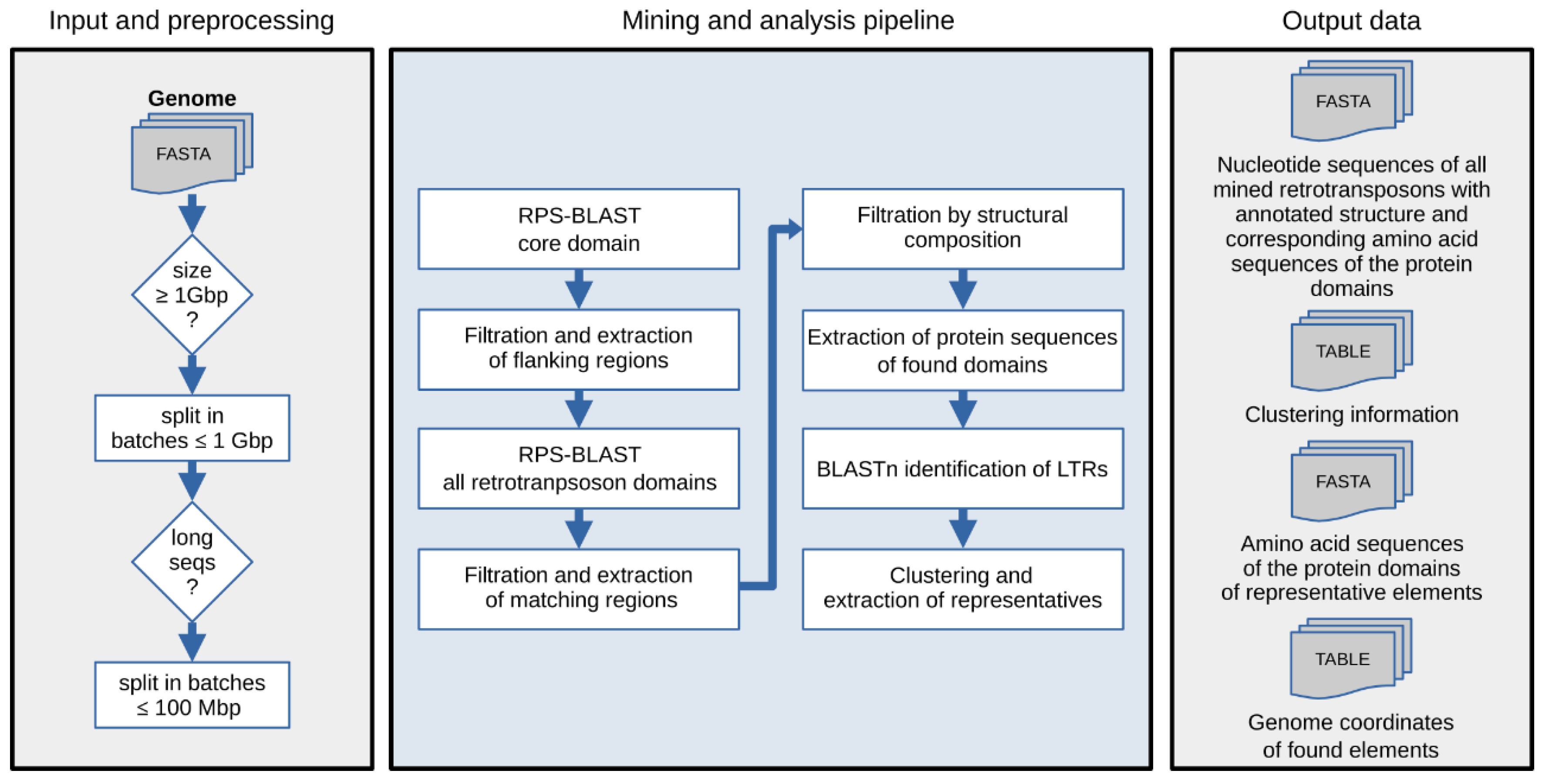
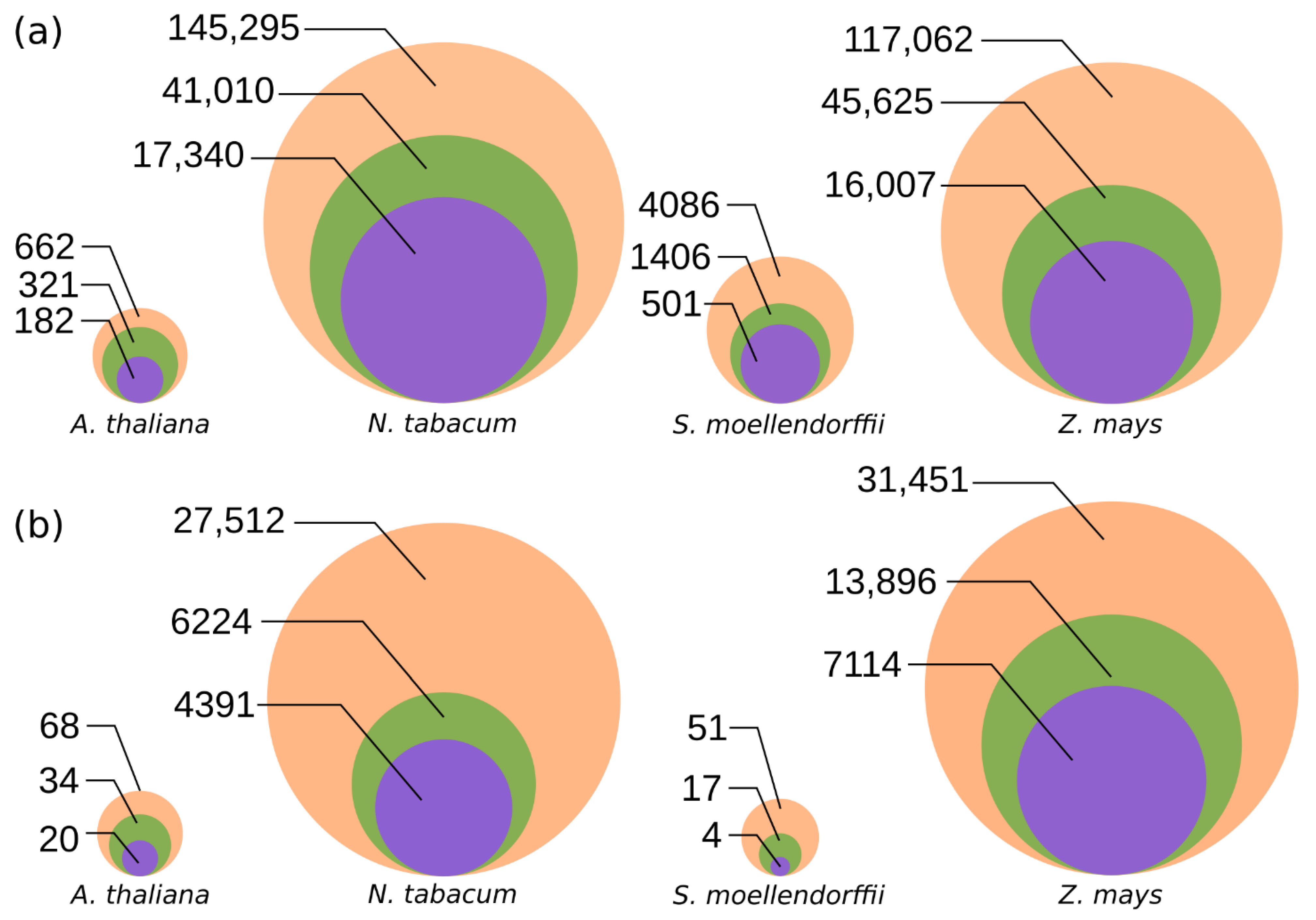
Retrotransposons comprise a substantial fraction of eukaryotic genomes, reaching the highest proportions in plants. Therefore, identification and annotation of retrotransposons is an important task in studying the regulation and evolution of plant genomes. The majority of computational tools for mining transposable elements (TEs) are designed for subsequent genome repeat masking, often leaving aside the element lineage classification and its protein domain composition. Additionally, studies focused on the diversity and evolution of a particular group of retrotransposons often require substantial customization efforts from researchers to adapt existing software to their needs. Here, we developed a computational pipeline to mine sequences of protein-coding retrotransposons based on the sequences of their conserved protein domains—DARTS (Domain-Associated Retrotransposon Search). Using the most abundant group of TEs in plants—long terminal repeat (LTR) retrotransposons (LTR-RTs)—we show that DARTS has radically higher sensitivity for LTR-RT identification compared to the widely accepted tool LTRharvest. DARTS can be easily customized for specific user needs. As a result, DARTS returns a set of structurally annotated nucleotide and amino acid sequences which can be readily used in subsequent comparative and phylogenetic analyses. DARTS may facilitate researchers interested in the discovery and detailed analysis of the diversity and evolution of retrotransposons, LTR-RTs, and other protein-coding TEs.
Keywords: LTR retrotransposons; retroelements; domain annotation; software; automatic pipeline LTR retrotransposons; retroelements; domain annotation; software; automatic pipeline