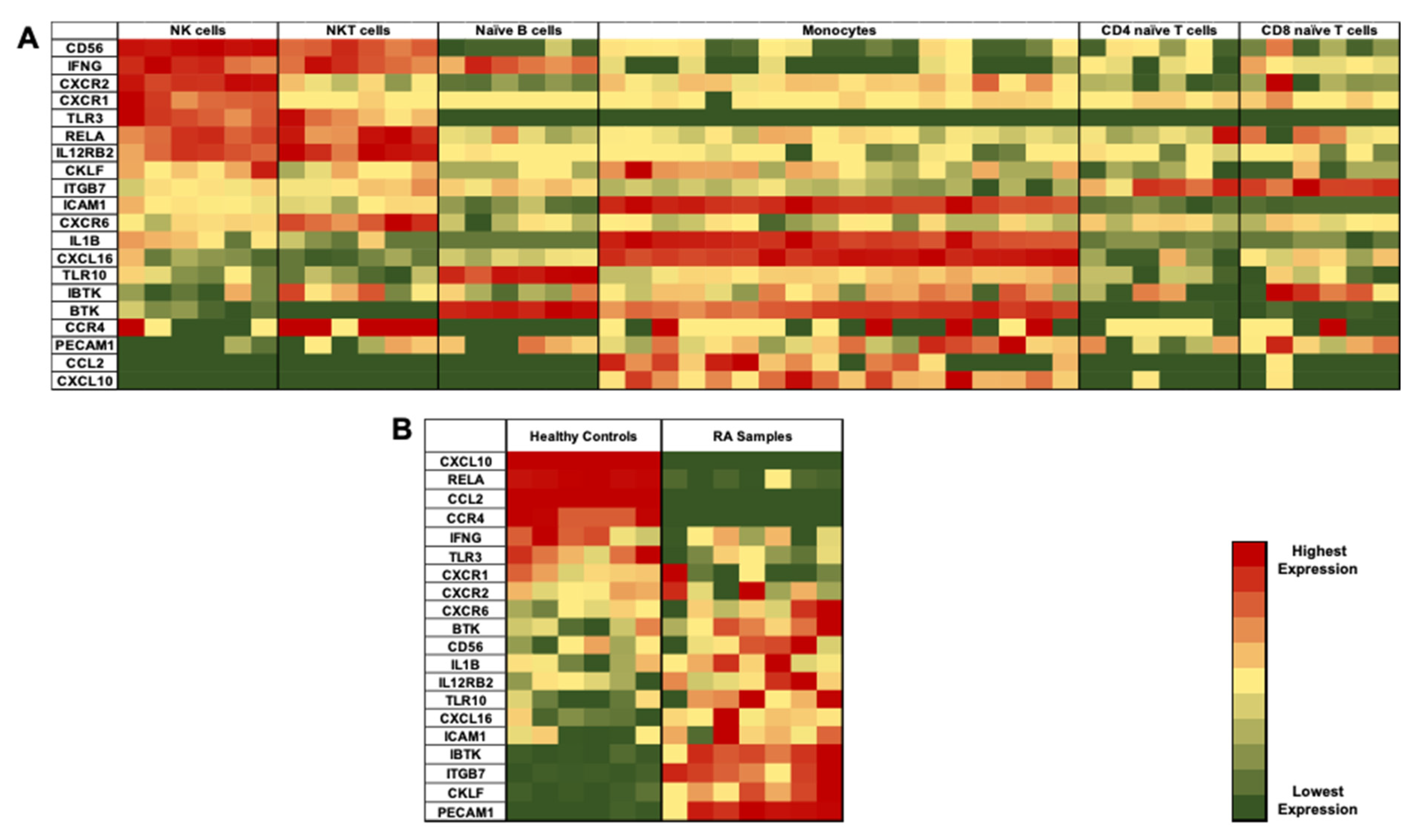
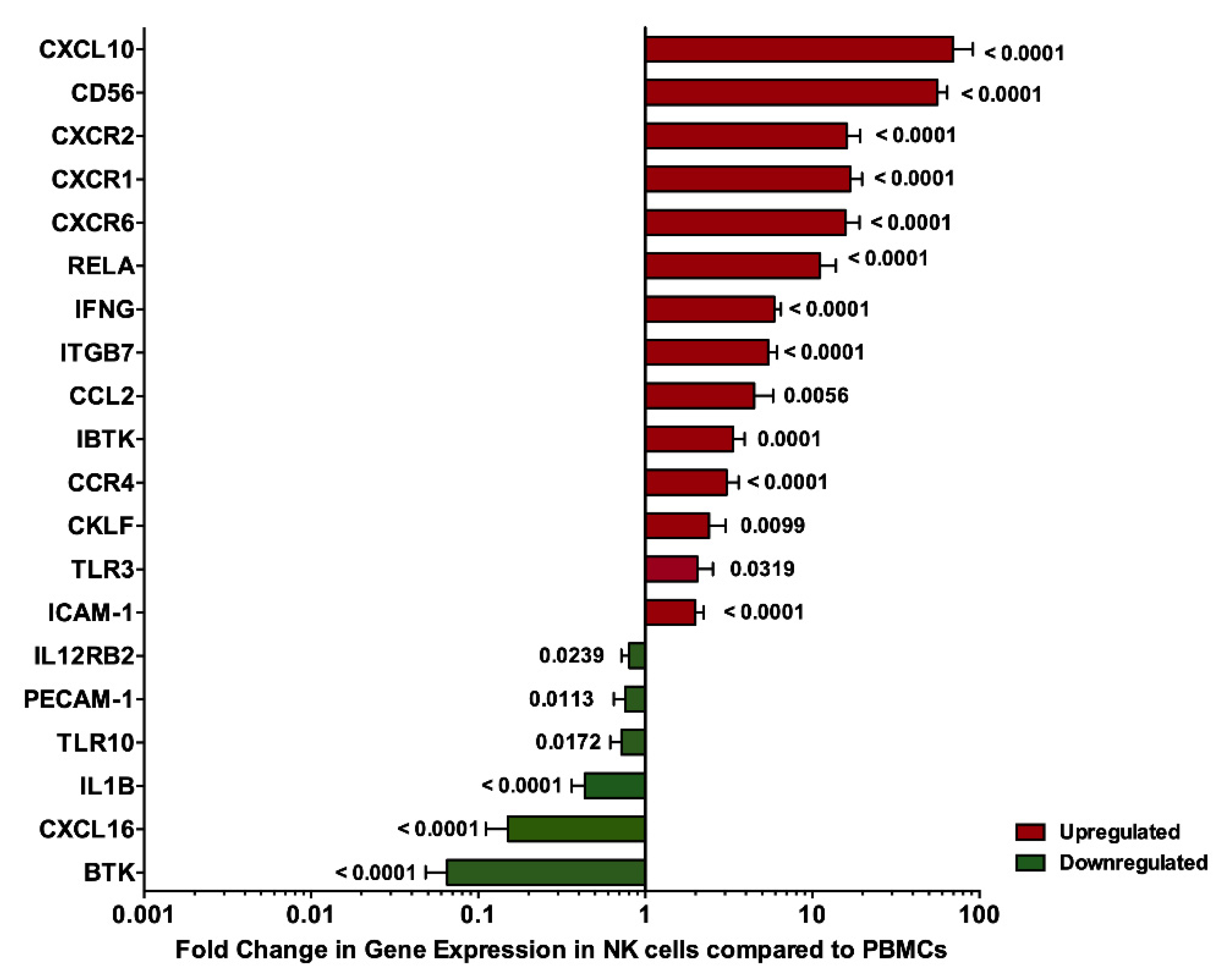
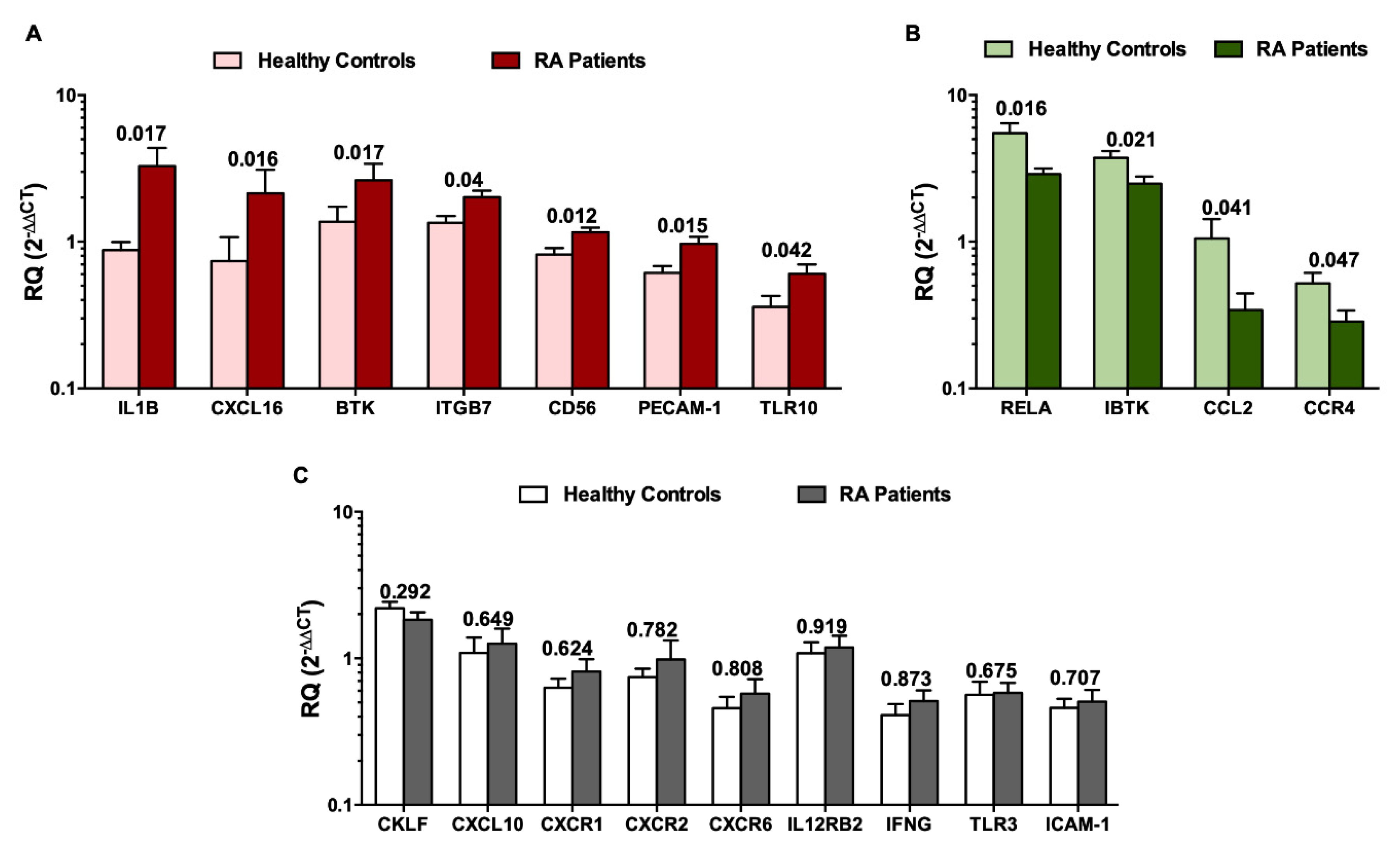
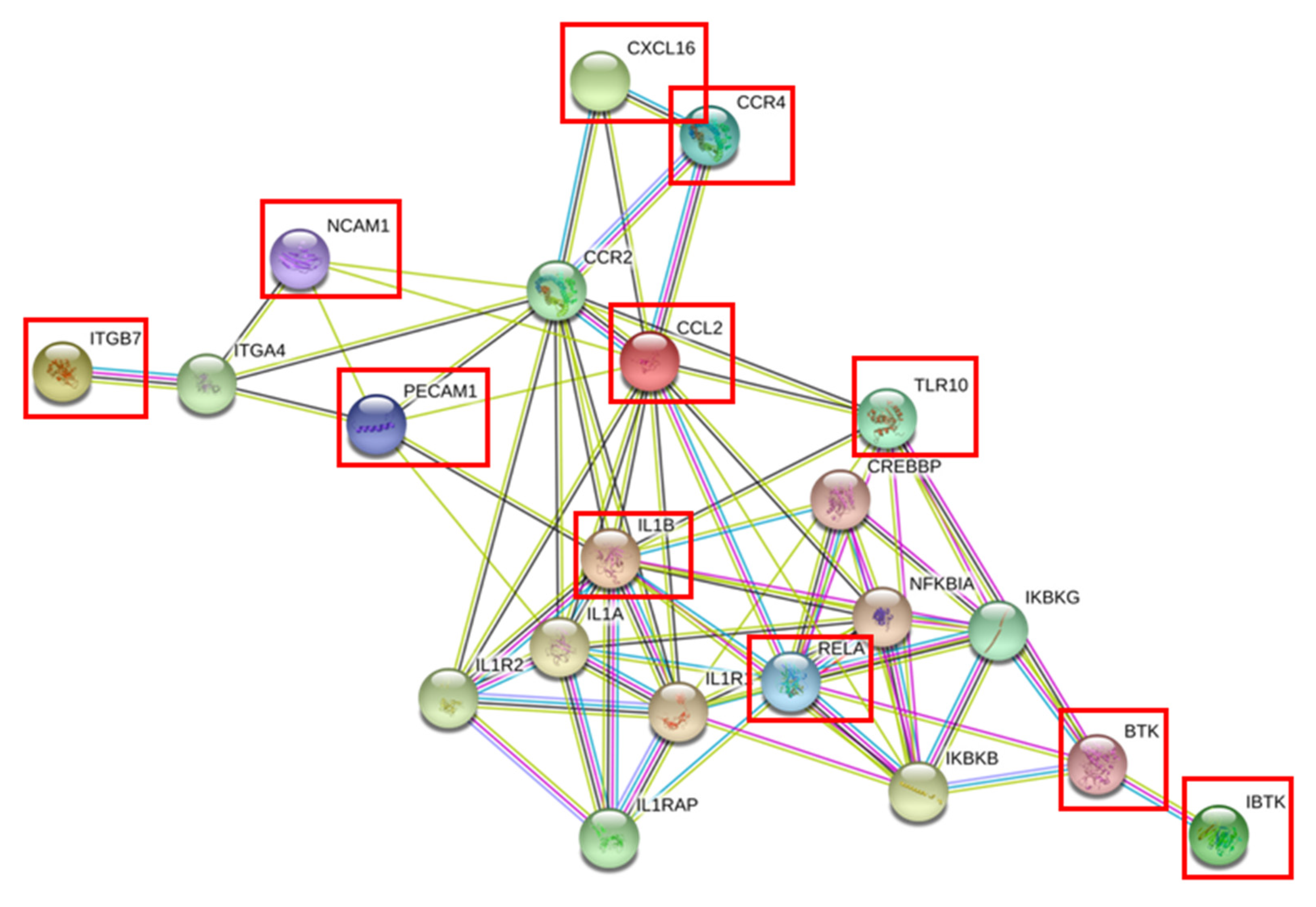
Differentially Expressed Genes of Natural Killer Cells Can Distinguish Rheumatoid Arthritis Patients from Healthy Controls




Abstract
Share and Cite
Elemam, N.M.; Hachim, M.Y.; Hannawi, S.; Maghazachi, A.A. Differentially Expressed Genes of Natural Killer Cells Can Distinguish Rheumatoid Arthritis Patients from Healthy Controls. Genes 2020, 11, 492. https://doi.org/10.3390/genes11050492
Elemam NM, Hachim MY, Hannawi S, Maghazachi AA. Differentially Expressed Genes of Natural Killer Cells Can Distinguish Rheumatoid Arthritis Patients from Healthy Controls. Genes. 2020; 11(5):492. https://doi.org/10.3390/genes11050492
Chicago/Turabian StyleElemam, Noha Mousaad, Mahmood Yaseen Hachim, Suad Hannawi, and Azzam A. Maghazachi. 2020. "Differentially Expressed Genes of Natural Killer Cells Can Distinguish Rheumatoid Arthritis Patients from Healthy Controls" Genes 11, no. 5: 492. https://doi.org/10.3390/genes11050492
APA StyleElemam, N. M., Hachim, M. Y., Hannawi, S., & Maghazachi, A. A. (2020). Differentially Expressed Genes of Natural Killer Cells Can Distinguish Rheumatoid Arthritis Patients from Healthy Controls. Genes, 11(5), 492. https://doi.org/10.3390/genes11050492