Gene Expression Profiling of NFATc1-Knockdown in RAW 264.7 Cells: An Alternative Pathway for Macrophage Differentiation



Abstract
1. Introduction
2. Materials and Methods
2.1. Cell Culture and Osteoclastogenesis In Vitro
2.2. Small Interfering RNA (siRNA) Transfection
2.3. RNA Extraction and cDNA Synthesis
2.4. Quantitative Polymerase Chain Reaction (QPCR)
2.5. RT2 Profiler PCR Array Analysis
2.6. Western Blot
2.7. GO and Pathway Analysis
2.8. Statistical Analysis
3. Results
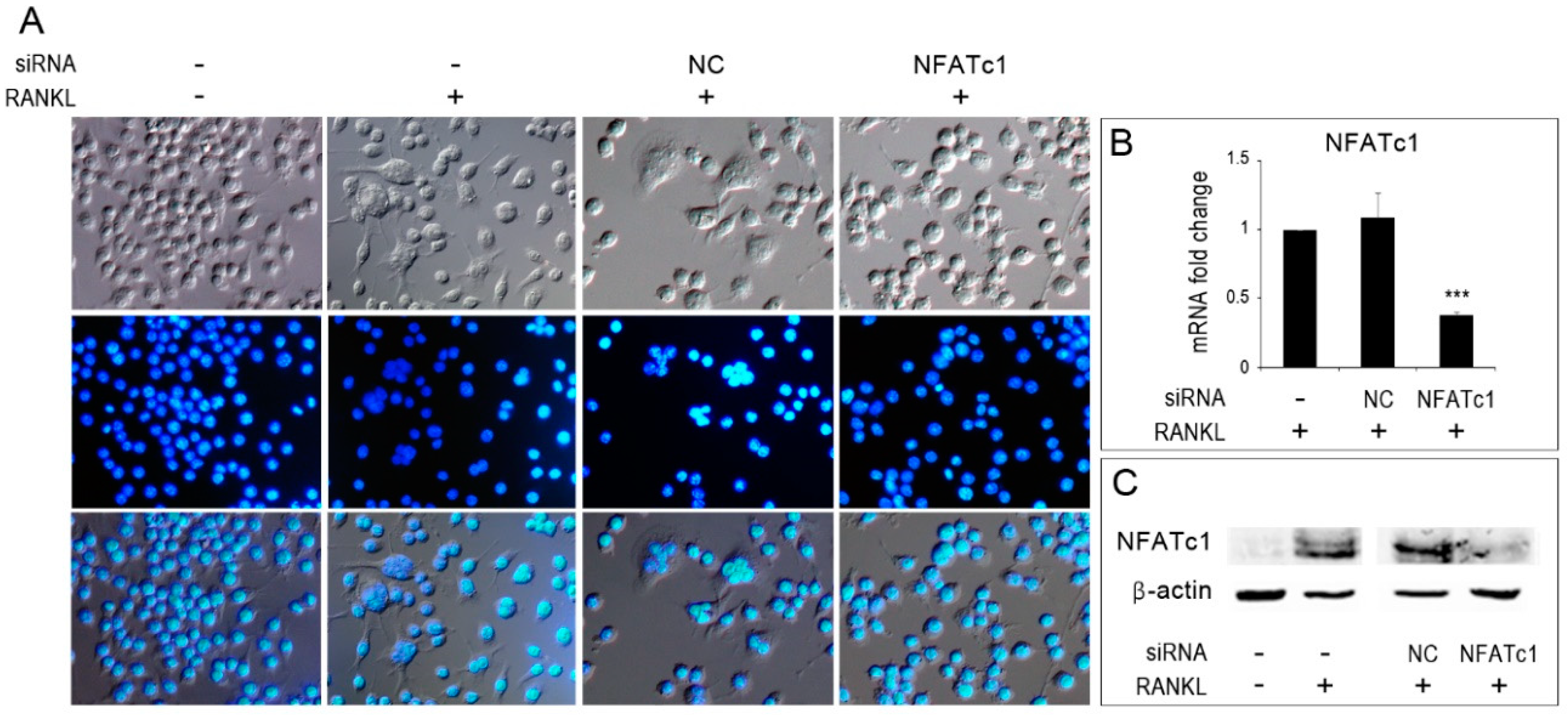
3.1. Effects of NFATc1 Loss on Differentiation into Osteoclasts
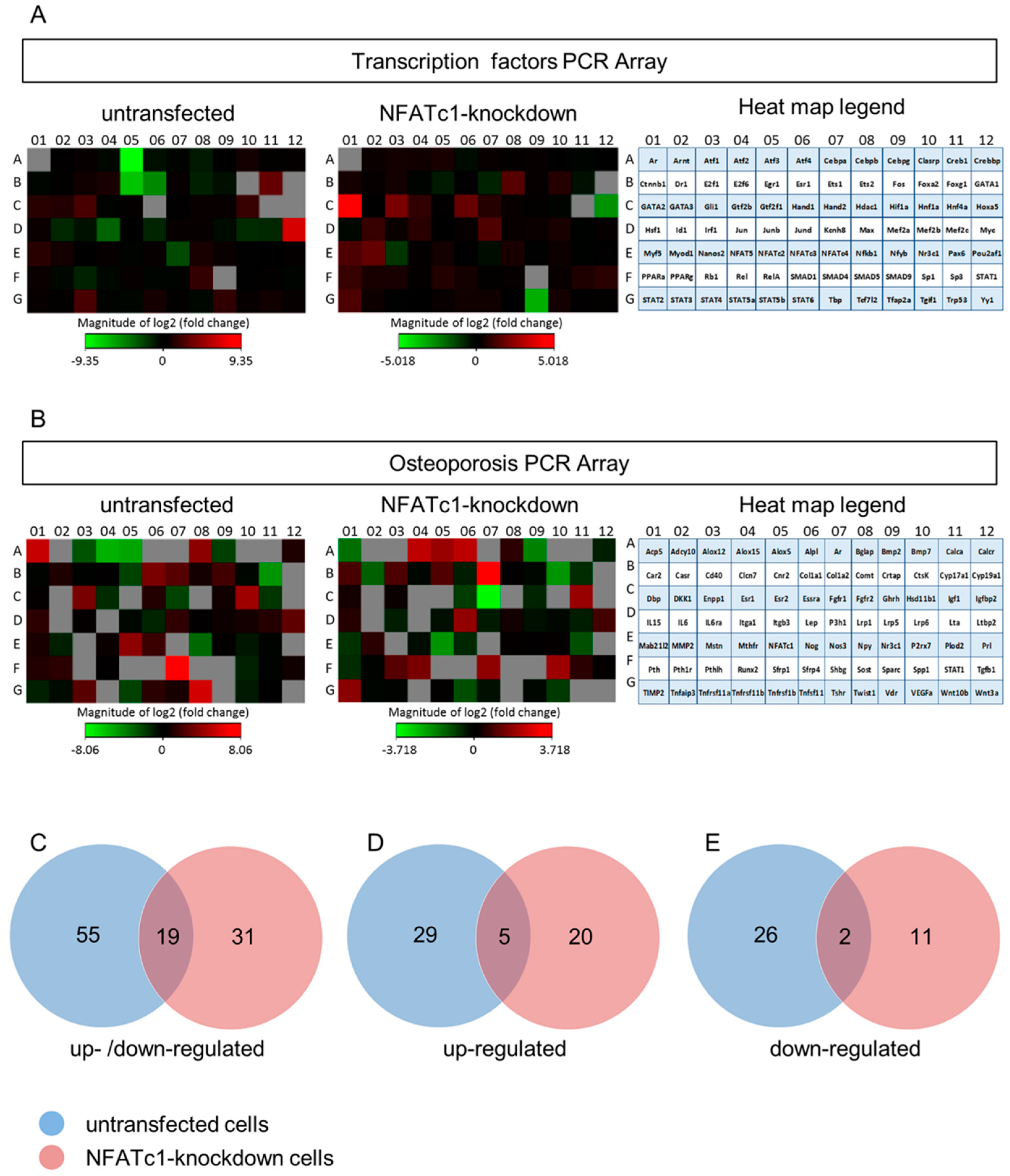
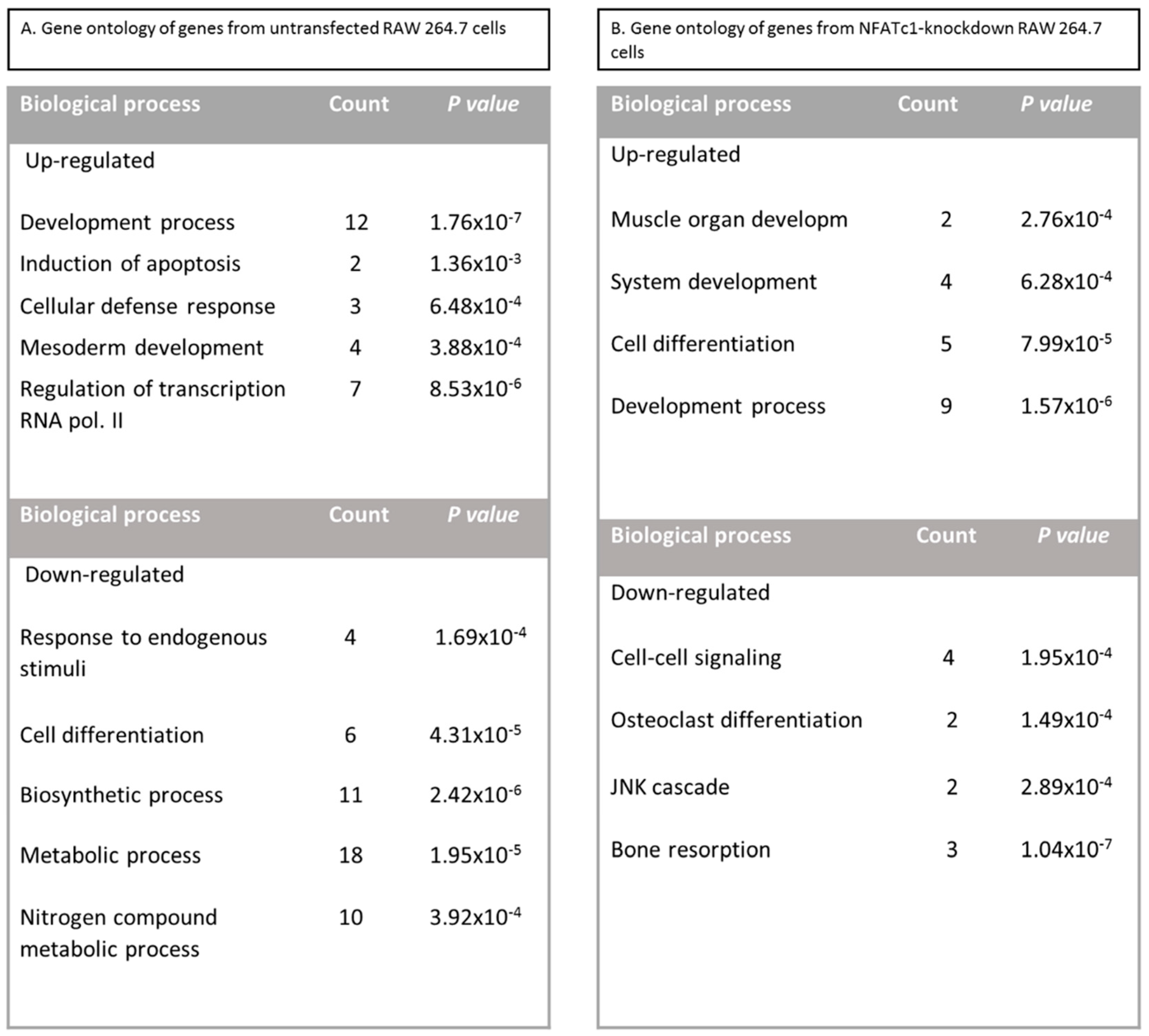
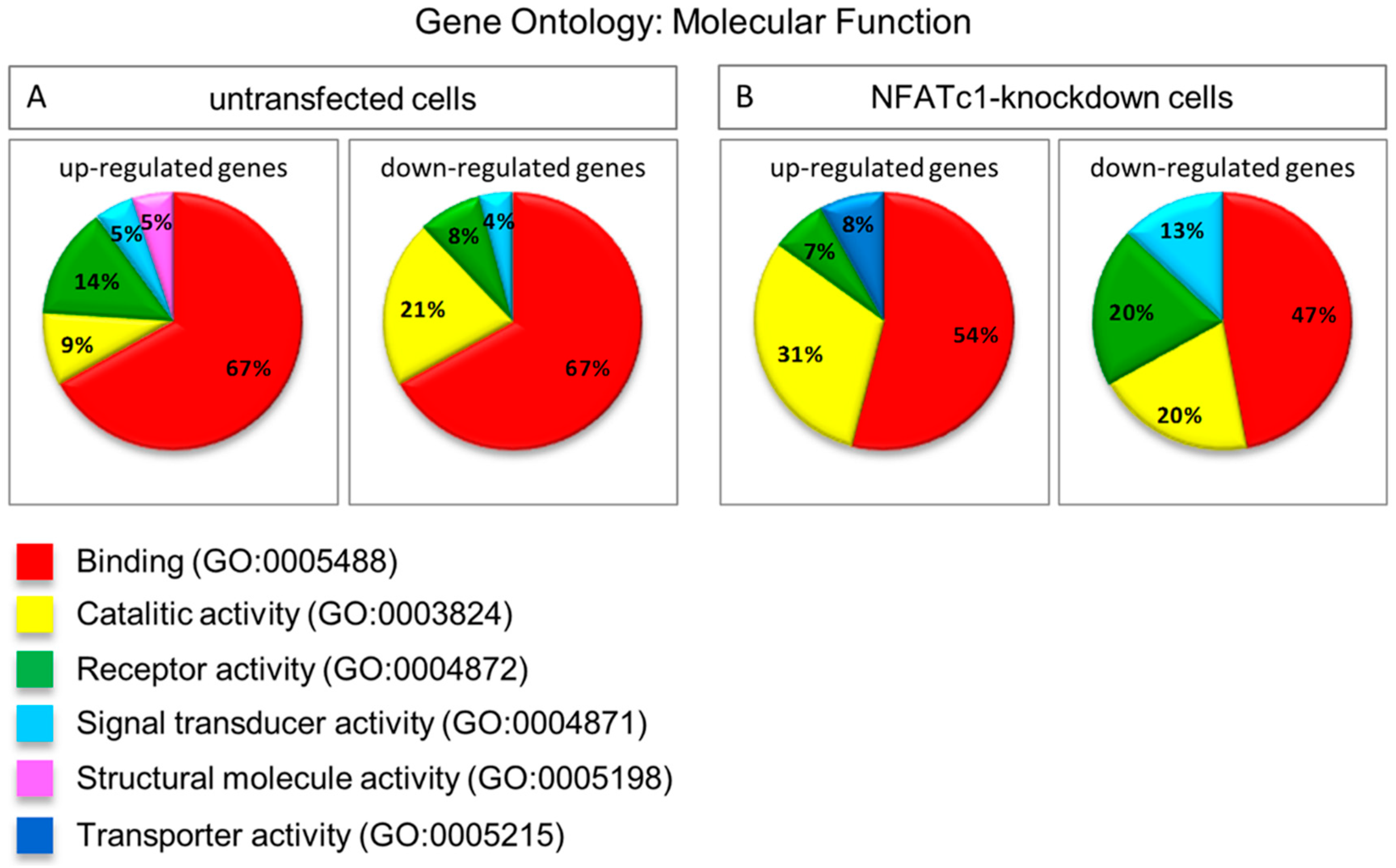
3.2. Expression Profiles of Genes in Pre-Osteoclasts
3.3. Validation of PCR Array Data and Gene Expression Analysis by QPCR and Western Blot
3.4. Identification of Common and Unique Genes Targeted by NFATc1
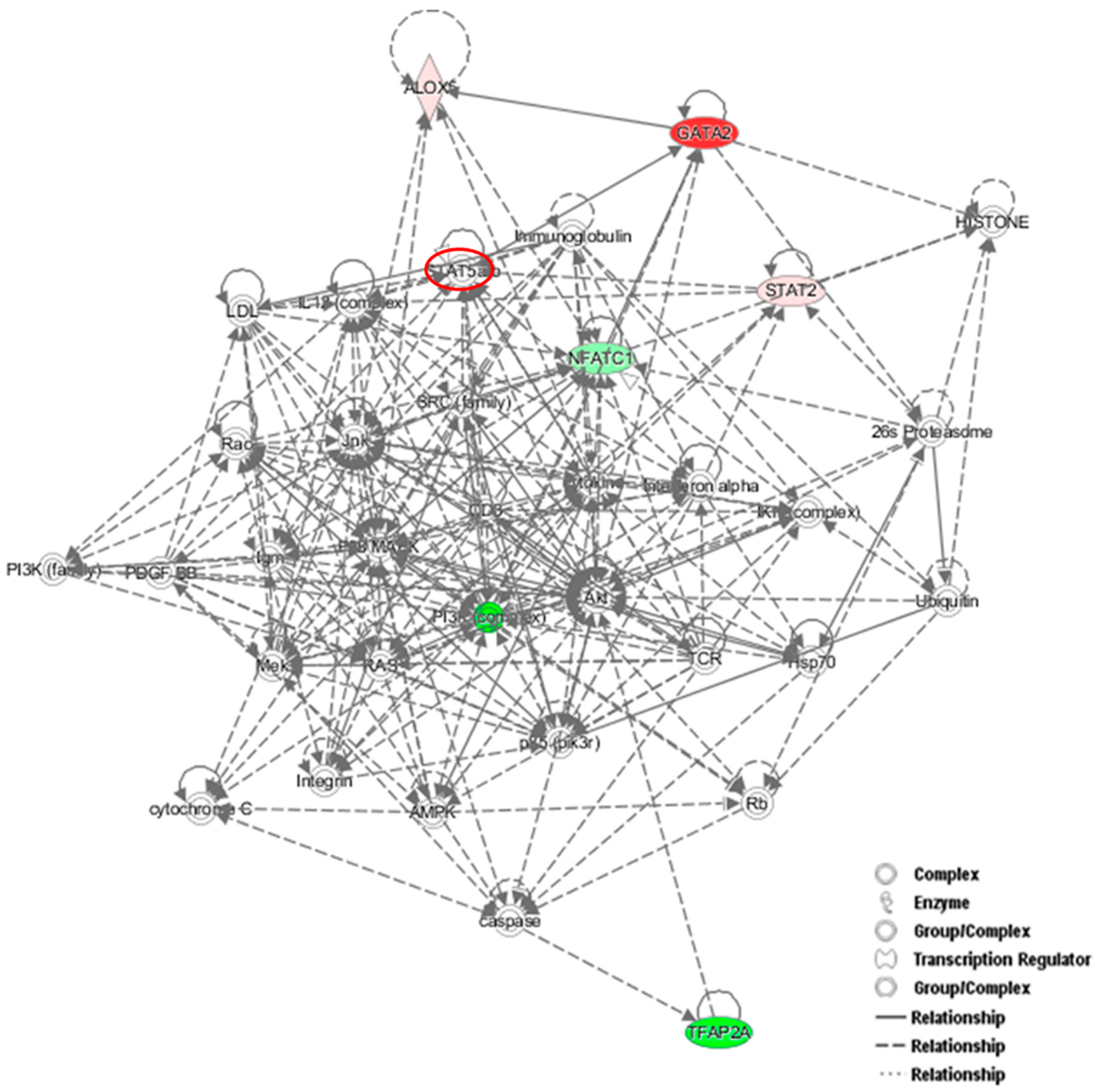
3.5. GATA2 as a New Target of NFATc1
4. Discussion
Supplementary Materials
Author Contributions
Funding
Acknowledgments
Conflicts of Interest
References
- Graf, T.; Enver, T. Forcing cells to change lineages. Nature 2009, 462, 587–594. [Google Scholar] [CrossRef] [Scilit] [PubMed]
- Dahl, R.; Walsh, J.C.; Lancki, D.; Laslo, P.; Iyer, S.R.; Singh, H.; Celeste Simon, M. Regulation of macrophage and neutrophil cell fates by the PU.1:C/EBPα ratio and granulocyte colony-stimulating factor. Nat. Immunol. 2003, 4, 1029–1036. [Google Scholar] [CrossRef] [Scilit] [PubMed]
- Laiosa, C.V.; Stadtfeld, M.; Xie, H.; de Andres-Aguayo, L.; Graf, T. Reprogramming of Committed T Cell Progenitors to Macrophages and Dendritic Cells by C/EBPα and PU.1 Transcription Factors. Immunity 2006, 25, 731–744. [Google Scholar] [CrossRef] [Scilit] [PubMed]
- Tavor, S.; Vuong, P.T.; Park, D.J.; Gombart, A.F.; Cohen, A.H.; Phillip Koeffler, H. Macrophage functional maturation and cytokine production are impaired in C/EBPε-deficient mice. Blood 2002, 99, 1794–1801. [Google Scholar] [CrossRef] [Scilit] [PubMed]
- Bar-Shavit, Z. The osteoclast: A multinucleated, hematopoietic-origin, bone-resorbing osteoimmune cell. J. Cell Biochem. 2007, 102, 1130–1139. [Google Scholar] [CrossRef] [Scilit] [PubMed]
- Arai, F.; Miyamoto, T.; Ohneda, O.; Inada, T.; Sudo, T.; Brasel, K.; Miyata, T.; Anderson, D.M.; Suda, T. Commitment and Differentiation of Osteoclast Precursor Cells by the Sequential Expression of C-Fms and Receptor Activator of Nuclear Factor κb (Rank) Receptors. J. Exp. Med. 1999, 190, 1741–1754. [Google Scholar] [CrossRef] [Scilit]
- Lacey, D.L.; Timms, E.; Tan, H.; Kelley, M.J.; Dunstan, C.R.; Burgess, T.; Elliott, R.; Colombero, A.; Scully, G.E.S.; Hsu, H.; et al. Osteoprotegerin Ligand Is a Cytokine that Regulates Osteoclast Differentiation and Activation. Cell 1998, 93, 165–176. [Google Scholar] [CrossRef] [Scilit]
- Boyle, W.J.; Simonet, W.S.; Lacey, D.L. Osteoclast differentiation and activation. Nature 2003, 423, 337–342. [Google Scholar] [CrossRef] [Scilit]
- Asagiri, M.; Takayanagi, H. The molecular understanding of osteoclast differentiation. Bone 2007, 40, 251–264. [Google Scholar] [CrossRef] [Scilit]
- Takayanagi, H.; Kim, S.; Koga, T.; Nishina, H.; Isshiki, M.; Yoshida, H.; Saiura, A.; Isobe, M.; Yokochi, T.; Inoue, J.I.; et al. Induction and activation of the transcription factor NFATc1 (NFAT2) integrate RANKL signaling in terminal differentiation of osteoclasts. Dev. Cell 2002, 3, 889–901. [Google Scholar] [CrossRef] [Scilit]
- Hwang, S.-Y.; Putney Jr, J.W. Calcium signaling in osteoclasts. Biochim. Biophys. Acta 2011, 1813, 979–983. [Google Scholar] [CrossRef] [Scilit]
- Horsley, V.; Pavlath, G.K. NFAT: Ubiquitous regulator of cell differentiation and adaptation. J. Cell Biol. 2002, 156, 771–774. [Google Scholar] [CrossRef] [Scilit] [PubMed]
- Montana, G.; Lampiasi, N. Substance P induces HO-1 expression in RAW 264.7 cells promoting switch towards M2-like macrophages. PLoS One 2016, 11, 1–17. [Google Scholar] [CrossRef] [Scilit] [PubMed]
- Livak, K.J.; Schmittgen, T.D. Analysis of relative gene expression data using real-time quantitative PCR and the 2^-ΔΔCT Method. Methods 2001, 25, 402–408. [Google Scholar] [CrossRef] [Scilit] [PubMed]
- Shu, J.; Zhang, K.; Zhang, M.; Yao, A.; Shao, S.; Du, F.; Yang, C. GATA family members as inducers for cellular reprogramming to pluripotency. Nat. Publ. Gr. 2015, 25, 169–180. [Google Scholar] [CrossRef] [Scilit] [PubMed]
- Bovolenta, L.A.; Acencio, M.L.; Lemke, N. HTRIdb: an open-access database for experimentally verified human transcriptional regulation interactions. BMC Genomics 2012, 13, 405–414. [Google Scholar] [CrossRef] [Scilit]
- Czimmerer, Z.; Daniel, B.; Horvath, A.; Rückerl, D.; Nagy, G.; Kiss, M.; Peloquin, M.; Budai, M.M.; Cuaranta-Monroy, I.; Simandi, Z.; et al. The Transcription Factor STAT6 Mediates Direct Repression of Inflammatory Enhancers and Limits Activation of Alternatively Polarized Macrophages. Immunity 2018, 48, 75–90. [Google Scholar] [CrossRef] [Scilit]
- Braun, T.; Zwerina, J. Positive regulators of osteoclastogenesis and bone resorption in rheumatoid arthritis. Arthritis Res. Ther. 2011, 13, 235–246. [Google Scholar] [CrossRef] [Scilit]
- Romas, E.; Gillespie, M.T.; Martin, T.J. Involvement of receptor activator of NFκB ligand and tumor necrosis factor-α in bone destruction in rheumatoid arthritis. Bone 2002, 30, 340–346. [Google Scholar] [CrossRef] [Scilit]
- Battaglino, R.; Kim, D.; Fu, J.; Vaage, B.; Fu, X.Y.; Stashenko, P. C-myc is required for osteoclast differentiation. J. Bone Miner. Res. 2002, 17, 763–773. [Google Scholar] [CrossRef] [Scilit]
- Bae, S.; Lee, M.J.; Mun, S.H.; Giannopoulou, E.G.; Yong-Gonzalez, V.; Cross, J.R.; Murata, K.; Giguère, V.; Van Der Meulen, M.; Park-Min, K.H. MYC-dependent oxidative metabolism regulates osteoclastogenesis via nuclear receptor ERRα. J. Clin. Invest. 2017, 127, 2555–2568. [Google Scholar] [CrossRef] [Scilit] [PubMed]
- Zhang, J.; Zhao, H.; Chen, J.; Xia, B.; Jin, Y.; Wei, W.; Shen, J.; Huang, Y. Interferon-β-induced miR-155 inhibits osteoclast differentiation by targeting SOCS1 and MITF. FEBS Lett. 2012, 586, 3255–3262. [Google Scholar] [CrossRef] [Scilit] [PubMed]
- Lu, S.Y.; Li, M.; Lin, Y.L. Mitf regulates osteoclastogenesis by modulating NFATc1 activity. Exp. Cell Res. 2014, 328, 32–43. [Google Scholar] [CrossRef] [Scilit]
- Shimizu, R.; Yamamoto, M. Gene expression regulation and domain function of hematopoietic GATA factors. Semin. Cell Dev. Biol. 2005, 16, 129–136. [Google Scholar] [CrossRef] [Scilit] [PubMed]
- Suzuki, Y.J. Cell signaling pathways for the regulation of GATA4 transcription factor: Implications for cell growth and apoptosis. Cell. Signal. 2011, 23, 1094–1099. [Google Scholar] [CrossRef] [Scilit] [PubMed]
- Weiss, M.J. Transcription factor GATA-1 permits survival and maturation of. Proc. Natl. Acad. Sci. USA 1995, 92, 9623–9627. [Google Scholar] [CrossRef] [Scilit]
- Molkentin, J.D. The zinc finger-containing transcription factors GATA-4, -5, and -6: Ubiquitously expressed regulators of tissue-specific gene expression. J. Biol. Chem. 2000, 275, 38949–38952. [Google Scholar] [CrossRef] [Scilit]
- Peterkin, T.; Gibson, A.; Loose, M.; Patient, R. The roles of GATA-4, -5 and -6 in vertebrate heart development. Semin. Cell Dev. Biol. 2005, 16, 83–94. [Google Scholar] [CrossRef] [Scilit]
- Schachterle, W.; Rojas, A.; Xu, S.; Black, B.L. ETS-dependent regulation of a distal Gata4 cardiac enhancer. Dev. Biol. 2012, 361, 439–449. [Google Scholar] [CrossRef] [Scilit]
- Orlic, D.; Andersont, S.; Biesecker, L.G.; Sorrentino, B.P.; Bodine, D.M. GATA-2, NF-E2, c-fms colony-stimulating. Proc. Natl. Acad. Sci. USA 1995, 92, 4601–4605. [Google Scholar] [CrossRef] [Scilit]
- Yamane, T.; Kunisada, T.; Yamazaki, H.; Nakano, T.; Orkin, S.H.; Hayashi, S.I. Sequential requirements for SCL/tal-1, GATA-2, macrophage colony-stimulating factor, and osteoclast differentiation factor/osteoprotegerin ligand in osteoclast development. Exp. Hematol. 2000, 28, 833–840. [Google Scholar] [CrossRef] [Scilit]
- Wei, W.; Zeve, D.; Wang, X.; Du, Y.; Tang, W.; Dechow, P.C.; Graff, J.M.; Wan, Y. Osteoclast Progenitors Reside in the Peroxisome Proliferator-Activated Receptor -Expressing Bone Marrow Cell Population. Mol. Cell. Biol. 2011, 31, 4692–4705. [Google Scholar] [CrossRef] [Scilit]
- Baba, Y.; Maeda, K.; Yashiro, T.; Inage, E.; Kasakura, K.; Suzuki, R.; Niyonsaba, F.; Hara, M.; Tanabe, A.; Ogawa, H.; et al. GATA2 is a critical transactivator for the human IL1RL1/ST2 promoter in mast cells/basophils: Opposing roles for GATA2 and GATA1 in human IL1RL1/ST2 gene expression. J. Biol. Chem. 2012, 287, 32689–32696. [Google Scholar] [CrossRef] [Scilit] [PubMed]
- Ohmori, S.N.Y.; Moriguchi, T.; Noguchi, Y.; Ikeda, M.; Kobayashi, K.; Tomaru, N.; Ishijima, Y.; Ohneda, O.; Yamamoto, M.; Ohneda, K. GATA2 is critical for the maintenance of cellular identity in differentiated mast cells derived from mouse bone marrow. Blood 2015, 125, 3306–3315. [Google Scholar] [CrossRef] [Scilit]
- Brock, T.G.; Paine, R.; Peters-golden, M. Localization of 5-Lipoxygenase to the Nucleus of Unstimulated Rat Basophilic Leukemia Cells *. J. Biol. Chem. J. Biol. Chem. 1994, 269, 8277–8286. [Google Scholar]
- Amarasekara, D.S.; Yun, H.; Kim, S.; Lee, N.; Kim, H.; Rho, J. Regulation of Osteoclast Differentiation by Cytokine Networks. Immune Netw. 2018, 18, 1–18. [Google Scholar] [CrossRef] [Scilit] [PubMed]
- Speiran, K.; Bailey, D.P.; Fernando, J.; Macey, M.; Barnstein, B.; Kolawole, M.; Curley, D.; Watowich, S.S.; Murray, P.J.; Oskeritzian, C.; et al. Endogenous suppression of mast cell development and survival by IL-4 and IL-10. J. Leukoc. Biol. 2009, 85, 826–836. [Google Scholar] [CrossRef] [Scilit] [PubMed]
- Sica, A.; Mantovani, A. Science in medicine Macrophage plasticity and polarization: in vivo veritas. J. Clin. Invest. 2012, 122, 787–795. [Google Scholar] [CrossRef] [Scilit] [PubMed]
- Cheng, J.; Liu, J.; Shi, Z.; Xu, D.; Luo, S.; Siegal, G.P.; Feng, X.; Wei, S. Interleukin-4 inhibits RANKL-induced NFATc1 expression via STAT6: A novel mechanism mediating its blockade of osteoclastogenesis. J. Cell Biochem. 2011, 112, 3385–3392. [Google Scholar] [CrossRef] [Scilit]
- Minami, T. Mini Review Genome- and epigenome-wide analysis of endothelial cell activation and inflammation. Inflamm. Regen. 2014, 34, 4–6. [Google Scholar] [CrossRef] [Scilit]



| Gene Symbol | Fold Change | Gene Symbol | Fold Change |
|---|---|---|---|
| Acp5 | 41.89 | Alox12 | −6.37 |
| Bglap | 13.96 | Alox15 | −47.76 |
| Col1a1 | 9.77 | Alox5 | −36.52 |
| Col1a2 | 5.00 | Atf3 | −652.73 |
| Crtap | 3.49 | Bmp2 | −4.15 |
| Enpp1 | 9.27 | Cebpb | −2.14 |
| Esrra | 2.12 | Cnr2 | −4.46 |
| GATA2 | 2.59 | Cy17a1 | −26.60 |
| GATA3 | 2.23 | Egr1 | −144.98 |
| Gli1 | 4.79 | Esr1 | −32.59 |
| Hsd11b1 | 19.75 | Ets2 | −2.53 |
| Hnf1a | 3.59 | Fgfr1 | −4.50 |
| Foxg1 | 8.82 | Id1 | −2.89 |
| IL15 | 2.50 | Igf1 | −3.43 |
| Myc | 108.70 | Jun | −11.85 |
| P3h1 | 2.61 | JunD | −2.72 |
| Myf5 | 2.58 | Lep | −2.42 |
| Lta | 2.22 | Mef2b | −3.15 |
| Ltbp2 | 6.05 | Mef2c | −2.98 |
| NFATc1 | 14.63 | MMP2 | −2.23 |
| Nog | 3.07 | NFATc4 | −6.64 |
| Pthr1 | 2.38 | Npy | −9.74 |
| Shbg | 266.84 | Rb1 | −2.65 |
| Smad5 | 3.14 | Spp1 | −2.27 |
| STAT4 | 5.18 | Timp2 | −2.22 |
| Tfap2a | 3.09 | Tnfrsf1b | −4.27 |
| Tnfrsf11a | 5.26 | ||
| Tnfsf11 | 2.42 | ||
| Twist | 51.33 | ||
| 29 | 26 |
| Gene Symbol | Fold Change | Gene Symbol | Fold Change |
|---|---|---|---|
| Alox15 | 5.25 | Acp5 | –3.06 |
| Alox5 | 3.83 | Bmp2 | –3.69 |
| Alpl | 5.18 | Casr | –2.61 |
| Cnr2 | 2.04 | CtsK | –4.51 |
| Col1a2 | 13.16 | Fgfr1 | –12.61 |
| Ets2 | 2.76 | Hoxa5 | –7.29 |
| GATA2 | 32.4 | Nanos2 | –2.12 |
| Gli1 | 4.1 | NFATc1 | –4.46 |
| Igf1 | 3.72 | Plood2 | –2.26 |
| Hand1 | 3.33 | Tfap2 | –10.74 |
| Kcnh8 | 2.52 | Tnfsf11 | –2.22 |
| Lep | 3.51 | ||
| Myf5 | 2.54 | ||
| Myod1 | 3.21 | ||
| Pthlh | 2.10 | ||
| Runx2 | 2.88 | ||
| Shbg | 3.40 | ||
| Spp1 | 3.86 | ||
| STAT2 | 2.44 | ||
| Timp2 | 3.26 | ||
| 20 | 11 |
| Gene Symbol | Untransfected | NFATC1-Knockdown |
|---|---|---|
| Acp5 | 41.89 | −3.06 |
| Alox15 | −47.76 | 5.25 |
| Alox5 | −36.52 | 3.83 |
| Bmp2 | −4.15 | −3.69 |
| Cnr2 | −4.46 | 2.04 |
| Col1a2 | 5 | 13.16 |
| Ets2 | −2.53 | 2.76 |
| Fgfr1 | −4.5 | −12.61 |
| GATA2 | 2.59 | 32.4 |
| Gli1 | 4.79 | 4.1 |
| Igf1 | −3.43 | 3.72 |
| Lep | −2.42 | 3.51 |
| Myf5 | 2.58 | 2.54 |
| NFATc1 | 14.63 | −4.46 |
| Shbg | 266.84 | 3.4 |
| Spp1 | −2.27 | 3.86 |
| Tfap2a | 3.09 | −10.74 |
| Timp2 | −2.22 | 3.26 |
| Tnfsf11 | 2.42 | −2.22 |
| 19 |
© 2019 by the authors. Licensee MDPI, Basel, Switzerland. This article is an open access article distributed under the terms and conditions of the Creative Commons Attribution (CC BY) license (http://creativecommons.org/licenses/by/4.0/).
Share and Cite
Russo, R.; Mallia, S.; Zito, F.; Lampiasi, N. Gene Expression Profiling of NFATc1-Knockdown in RAW 264.7 Cells: An Alternative Pathway for Macrophage Differentiation. Cells 2019, 8, 131. https://doi.org/10.3390/cells8020131
Russo R, Mallia S, Zito F, Lampiasi N. Gene Expression Profiling of NFATc1-Knockdown in RAW 264.7 Cells: An Alternative Pathway for Macrophage Differentiation. Cells. 2019; 8(2):131. https://doi.org/10.3390/cells8020131
Chicago/Turabian StyleRusso, Roberta, Selene Mallia, Francesca Zito, and Nadia Lampiasi. 2019. "Gene Expression Profiling of NFATc1-Knockdown in RAW 264.7 Cells: An Alternative Pathway for Macrophage Differentiation" Cells 8, no. 2: 131. https://doi.org/10.3390/cells8020131
APA StyleRusso, R., Mallia, S., Zito, F., & Lampiasi, N. (2019). Gene Expression Profiling of NFATc1-Knockdown in RAW 264.7 Cells: An Alternative Pathway for Macrophage Differentiation. Cells, 8(2), 131. https://doi.org/10.3390/cells8020131